




Home Blog

Preparing For Nigeria’s Biggest Election

Lagos, Anambra, Imo Voters Were Intimidated - CDD

This is the moment we have all been waiting for. Nigeria‘s most anticipated election, the season Nigerians will perform their civic duties to vote in their preferred/qualified candidate.

With Nigeria’s most important election only three days away, it is critical that all stakeholders take the necessary steps to ensure a successful and peaceful election.

Here are some preparation tips for the upcoming election:

Polling Unit

Know your polling unit: It is critical to know your polling unit because this is where you will vote. Check your voter’s card or go to the Independent National Electoral Commission (INEC) website to find your polling unit.

INEC’s tweet about polling unit

Registration Status

Check your voter registration status. Make sure you’re registered to vote and your name is on the voter list. You can check the status of your voter registration by visiting the INEC website.

Candidates

It is critical to learn about the candidates running for office as well as their platforms. Investigate their track record, promises, and future plans if elected. This will allow you to make an informed decision when voting.

Before going to vote, learn your candidate’s political party and its logo.

Abenol a platform for nation building that connects tech-savvy and educated Nigerians to the grassroots; urged Nigerians to not only vote for a presidential candidate but be involved in all of the elections.

“There are many people seeking to represent you at various levels of government not just the presidency. Each position is of equal importance and the same attention to detail should be given,” Abenol said.

“It is how you exert the control you have over the government, push back bad leadership etc. if the state of Nigeria concerns you so much, you will not leave your card lying around on the day of the election, you will infact come out and vote.”

Electoral Rules

Understand the election rules, including the voting process, time, and location.

Knowing the rules will ensure that you understand what is expected of you and that you do not break any rules inadvertently.

Plan your waka well

Plan ahead of time for transportation to and from the polling place. Make sure you have enough time to get to the polling place and that you have enough resources, such as food, water, and money.

Inform your loved ones about your plans.

Security

Be aware of any security threats in your area and take the necessary precautions. Avoid high-risk areas and report any suspicious activity to the appropriate authorities.

Protect yourself, do not go towards any riot or sponsor it. If you have a security dog feel free to take it along but but it on a leash and do not let it attack anyone.

Do not wear any political outfit!

The federal government may have deployed security personnel to protect cities, but will they be present at all polling places? Protect yourself by using “The N-Alert App” to report any suspicious or violent behavior.

‘The N-Alert App’ is a mobile app that allows you to report any type of crime and receive a quick response because it is routed directly to the command center.

The app is very simple to use, so please encourage anyone you know who is voting to download it and it is available for download on both iOS and Android.


Secure your votes

Don’t just vote and go home. Go early to your polling unit, make sure the electoral materials have not been tampered with and after voting, make sure that your votes are not stolen. Make sure that the electoral officer uploads your vote.

It is easy for your polling unit to be attacked, for your votes to stolen or rendered void if there is no one to stop them. Stay back and make sure that the right thing is done.

“Go early and stay until the votes in your unit have been submitted. Don’t just vote and go home, stay to protect your vote. This will help keep the officials accountable and make election violence less likely,” Laju Iren tweeted.

To summarize, all stakeholders must work together to prepare for Nigeria’s election in three days. We can ensure a successful, peaceful, and transparent election that reflects the will of the people if we follow these guidelines. Let us all work together to make this election a success.

READ ALSO

Eating On A Budget: Save Money By Growing Your Food

First Aquagrico Farms To Build Nigeria's Largest Farmer's Market

Eating on a budget seems like a hard task in Nigeria especially with the rate of inflation and trying to avoid eating rice everyday.

Eating out can be expensive either it is at a big or small restaurant. Buying groceries frequently takes a chunk of your money.

Sometimes we try to count our money to calculate how much we spent; especially when our wallets are slim and our bank accounts are not smiling.

How can we reduce our spending? What can we do to eat healthy while maintaining a budget?

Eating healthy on a budget is not impossible. One of the ways to achieve it is to have a garden and grow your food.

Growing your food might seem extreme or overly expensive. No need to fear, you can start small.

As small as spring onions or pepper then work your way up to other agricultural produce.

Eating on a budget; how to

Growing your own fruits and vegetables is a great way to save money and have fresh produce at your fingertips if you have the space.

Having a steady supply of fresh produce at home can help you save money at the grocery store.

What should you plant?

You can start with the things you usually use; like ginger, spring onions, cabbage or even tomatoes. Take a look at the tools you have and watch videos that will help you decide what to start with, how to plant and when to plant.

How to plant

Watch videos and read articles on how to plant and how to maintain your garden.

Where to plant?

Start on a small scale. Many fruits, vegetables, and herbs can be grown in pots on patios or balconies especially if you don’t have a yard.

Snapchat, Twitter May Be Sanctioned Over Display Of Porn And Nudity

Snapchat, Twitter May Be Sanctioned Over Display Of Porn And Nudity

Snapchat, Twitter, and other social media sites may be sanctioned by the Federal Government over the display of porn and nudity on the Nigerian cyberspace. This is as the National Information Technology Development Agency (NITDA) released the Code of Practice for Interactive Computer Service Platforms/Internet Intermediaries (online platforms).

Part of the order included in the code is that -Snapchat, Twitter, TikTok, and other social media must ensure the removal, disabling, or blocking of access to any non-consensual content, which displays partial or full nudity, sexual acts, deep fake, or revenge porn within 24 hours.

The code mandated the social media platforms to “act expeditiously to remove, disable, or block access to non-consensual content that exposes a person’s private areas, full or partial nudity, sexual act, or revenge porn, where such content is targeted to harass, disrepute, or intimidate an individual. A Platform must acknowledge the receipt of the complaint and take down the content within 24 hours.”

Other things require of Snapchat, Twitter, and other social media platforms

  • The Code of Practice also directs these platforms to take down any unlawful content upon receiving a notice from a user, or an authorised government agency.
  • The platforms were also asked to exercise due diligence to ensure that no unlawful content is uploaded to their platform.
  • Aside from asking each online platform to have a country representative, who will interface with the Nigerian authorities, it also requires any platform with over 100,000 Nigerian users to have an office in Nigeria.
  • Other conditions include registering with the Corporate Affairs Commission as a legal entity, complying with tax obligations, abiding by regulatory and legal demands, and providing information about users on-demand, among others.

BizWatch Nigeria, however, understands that the Code of Practice recently published by the NITDA was designed to safeguard the fundamental human rights of Nigerians and non-Nigerians living in Nigeria, and to regulate interactions on the online platform.

World Bank: Poor Nigerians To Hit 95.1m By End Of 2022

World Bank: Poor Nigerians To Hit 95.1m By End Of 2022

World Bank, in its ‘A Better Future for All Nigerians: 2022 Nigeria Poverty Assessment’ report, disclosed that the number of Nigerians that would plunge into poverty by the end of this year would hit 95.1 million.

While warning that many non-poor Nigerians are only one small shock away from falling into poverty, the Washington-based lender lamented that since President Muhammadu Buhari was first elected into the office of president of Nigeria in 2015, there has been no improvement in the poverty crisis in the country.

According to World Bank, poverty reduction stagnated since 2015, with more Nigerians falling below the poverty line over the years.

Quoting its economists -Jonathan Lain and Jakob Engel, World Bank said rising inflation, persistent population growth, the COVID-19 pandemic, and the war in Ukraine are threatening Nigeria’s poverty reduction aspiration.

“Nigeria’s aspiration to lift all of its people out of poverty by 2030 presents a serious challenge. Even before COVID-19, four in 10 Nigerians lived below the national poverty line – some 80 million people.

“The global pandemic, rising inflation, and ongoing uncertainty related to the war in Ukraine – combined with relentless population growth – have made Nigeria’s poverty-reduction goals more challenging than ever,” the economists were quoted.

Can Buhari truly lift Nigerians out of poverty?

With the factors identified by the World Bank economists, Buhari’s aspiration to lift Nigerians out of poverty has no doubt been met with a major blow.

It would be recalled that in June last year, the President inaugurated the National Steering Committee of the National Poverty Reduction with Growth Strategy chaired by Vice President Yemi Osinbajo.

This, he said, re-echoes his commitment to lifting 100 million Nigerians out of poverty in 10 years, with a well-researched framework for implementation and funding.

The president was quoted in a statement by the Special Adviser to the President on Media and Publicity, Femi Adesina, as saying, “If India can lift 271 million people out of poverty between 2006 and 2016, Nigeria can surely lift 100 million out of poverty in 10 years.

“Fortunately, we have already started but we need to unlock the challenges of slow implementation, inappropriate targeting, and absence of adequate resources.”

Dollar To Naira: This Is Why Banks Are Restricting Access To Forex

Dollar To Naira Exchange Rate Today (Thur. July. 13, 2023)

For travellers, and for others seeking dollar to naira in exchange for one thing or the other, they are likely to experience stricter access to it considering the country’s external reserves that hit a seven-month low after falling to $38.57 billion as of May 25, 2022.

According to figures obtained from the Central Bank of Nigeria (CBN) on movement in external reserves, the reserves which had been fluctuating for weeks now, experienced its lowest of $39.01 billion and $38.39 billion on October 10 and 8, 2021 respectively.

However, as a result of the dollar to naira scarcity, banks are extending the waiting period to access forex for foreign trips, thereby denying travellers with urgent trips access to apply for Personal Travel Allowance or the Business Travel Allowance requests.

The banks have also been reducing the amount a customer can spend on the cards in dollar terms.

Explaining Ecobank Nigeria’s current stand on retail forex transactions for international school fees, accommodation and upkeep payments as well as PTA/BTA requests, the financial institution’s Head, Consumer Banking, Korede Demola-Adeniyi said, “Due to current market trends, we require a 30-day window to complete requests for school fees, accommodation, and upkeep.

According to him, part of the process involved a review of all documents to ensure compliance with regulatory requirements.

“In order to ensure smooth service and allow disbursement of PTA/BTA within the timeline, we request that applications are submitted with the required documentation,’ he added.

Like Ecobank, Access Bank stated: “All requests are reviewed to ensure that they meet regulatory requirements. In addition, due to limited forex availability provided by the Central Bank of Nigeria, we require a 30-day period to fulfill requests for school fees, upkeep, and rent payment.

“However, for PTA/BTA, we request that you submit your application 14 days before your proposed travel date to allow disbursement within the timeline.”

Africa Finance Corporation Launches US$2bn Facility To Support Economic Recovery & Resilience In Africa

In response to economic challenges created by the global pandemic and the Russia-Ukraine conflict, Africa Finance Corporation (AFC) is launching a US$2billion facility to support recovery and resilience in Africa.

AFC has committed to funding up to 50% of the new African Economic Resilience Facility and mobilising the remainder through the Corporation’s network of international partners and investors. The facility will be announced at the AFC Live Infrastructure Solutions Summit today.

The facility will be disbursed through loans from AFC to selected commercial banks, regional development banks and central banks in various African countries, providing them with much needed hard currency liquidity to finance trade and other economic activities in their jurisdictions.

These institutions will be able to leverage AFC’s proven access to global funding to receive financing at competitive rates.

Speaking on the rationale behind the launch, Head of Treasury and Financial Institutions, Banji Fehintola, said: “The COVID-19 pandemic set back Africa’s economic growth trajectory and widened the trade financing gap, while the Russia-Ukraine conflict has added a further set of challenges negatively impacting growth prospects across the continent.

“We are determined to play a leading role in helping the continent’s recovery and resilience, not only though the work we do in bridging Africa’s infrastructure gap, but also through targeted interventions such as this US$2billion economic resilience facility.”

Applications for the African Economic Resilience Facility will open this month through AFC’s website.

Through this funding intervention, AFC will accelerate its developmental impact in Africa, helping to drive the continent to a new phase of growth that is focused on maximum resource value capture and domestic job creation.

Over the last 15 years, AFC has built experience mobilising global capital for critical infrastructure projects in Africa.

The Corporation’s recent bond issues include a US$750million 7-year Eurobond issued in 2021 at AFC’s lowest yield to date. The Corporation also established an independent asset management arm, AFC Capital Partners, with plans to raise US$2 billion to fund climate adaptation infrastructure projects in Africa.

#IWD2022: Is Nigeria Ready For A Female President?

Break The Bias: Is Nigeria Ready For A Female President?

To commemorate International Women’s Day 2022, themed “Break The Bias” BizWatch Nigeria presents Twitter Spaces conversation on Wednesday, March 9th 2022 tagged “Break The Bias: Is Nigeria Ready For A Female President?”

International Women’s Day is marked every year to celebrate women all around the world, eradicate gender bias and fight for gender equality. Clearly, we have a long way to go to achieve gender equality.

Follow this link https://twitter.com/i/spaces/1mrGmaNrdvgGy to join the conversation on Twitter by 7 pm (WAT).

BizWatch Nigeria to mark this year’s International Women’s Day will have a Twitter Spaces Conversation by 7 pm (WAT) to provide solutions to gender bias and to discuss the following;

  • Gender bias
  • Issues in society
  • Empowering young girls and women
  • Gender equality and equity
  • Women in business and leadership
  • The role of the female gender in restoring Nigeria
  • Is Nigeria ready for a female president?
  • The rejected gender bills
  • Under representation of women in politics and government

The aim of this event is to celebrate women, eliminate gender bias and educate people on gender equality.

The speakers for the event are: Hansatu Adegbite, the Executive Director of WiMBIZ, Seyo Body-Lawson; a renowned entrepreneur and photographer, Gbemi Aleke; a Deputy Director of Account Management and Strategy at TBWA Lagos and Betty Abah; a seasoned journalist, women and children’s right activist and the Director of CEE-HOPE. The Twitter Spaces conversation will be hosted by Adepeju Aina, a content creator at BizWatch Nigeria.

Join our conversation on Twitter as we provide solutions to gender equality and as we break the bias!

6 Multinational Oil Companies To Pay ₦249.3b In January – NNPC

EU Seeks Stronger Partnership With NNPC

The Nigerian National Petroleum Company (NNPC) said that a total of ₦249.3 billion for October 2021 domestic crude oil sales by six multinational oil companies operating in the upstream sector will be paid in January 2022.

The NNPC made this known in its latest report on Nigeria’s crude oil export and domestic crude oil sales in the month of October 2021.

This came as the oil firm revealed that it would also deduct ₦270.83 billion from what would be shared by the three tiers of government during the Federal Accounts Allocation Committee meeting in January next year.

It said the ₦270.83 billion was its November 2021 value shortfall. The NNPC posts value shortfalls as a result of what it spends on the monthly subsidy of Premium Motor Spirit, popularly called petrol.

On oil sales, the oil company explained in the report that while the October 2021 crude oil exports of 50,000 barrels under the Production Sharing Contract, valued at $4.18 million was payable in November 2021, the October 2021 domestic crude oil payment expected in January 2022 from the six firms is ₦249.3 billion.

The company further noted that the October 2021 domestic crude oil payable in January 2022 by the NNPC was in line with the 90 days payment terms, adding that the six firms were its Joint Venture partners.

Oil firms

It outlined the firms from where the funds were being expected to include Chevron Nigeria Limited (CNL), Mobil Producing Nigeria (MPN), Shell Petroleum Development Company (SPDC), MidWestern, Pillar and First Exploration and Production.

It said CNL would be paying for 2.268 million barrels of domestic crude valued at ₦73.85 billion, while MPN would remit ₦123.22 billion for 3.8 million barrels of domestic crude oil.

The SPDC and MidWestern would be paying for 828,556 and 100,000 barrels of domestic crude oil valued at ₦26.966 billion and ₦3.25 billion, respectively.

For Pillar and First E&P, the firms would pay for 20,000 and 649,677 barrels of domestic crude oil valued at N650.91m and N21.36bn, respectively.

The report put the total volume of domestic crude oil payable by the firms in January 2022 at 7.666 million barrels, while the value of the commodity was put at ₦249.3 billion.

“This value shortfall consists of ₦220,110,853,427.56 for November and ₦50,720,290,429.00 deferred for recovery in December 2021 FAAC Report.”

Nigeria, Developing Africa Group Sign MoU On Creation Of Intellectual Property Commercialisation Project

Nigeria, Developing Africa Group Sign MoU On Creation Of Intellectual Property Commercialisation Project

The Federal Government has signed a memorandum of understanding (MoU) with Developing Africa Group from UK, to establish the first in Africa first intellectual property rights (IPR) commercialization project in Nigeria.

The Head of Press and Public Relations of the Ministry of industry, Trade and Investment, Ibrahim Haruna disclosed the information.

The Minister of Industry, Trade and Investment,, Adeniyi Adebayo, was quoted as saying that the MoU would enable the group to use IPR as a means of resolving some of the issues and challenges facing Nigeria as well as provide jobs and trade services.

According to the minister, the pilot project was structured for a period of three years.

“This is to address some of the issues surrounding unemployment and allow rural communities in Nigeria to start attracting commercial interests,” he said.

“Since trademarks are crucial to the promotion of trade and economic development, and Nigeria happens to be one of the strong regional hubs of trade in Africa being the continent’s biggest economy.

“It is no surprise that it has attracted the world’s IP governing body in Abuja, as Nigeria hosted one of the only two World Intellectual Property Office’s (WIPO) external offices in Africa.

“Africa in general and Nigeria in particular, faces an enormous challenge of industrialisation and unemployment generation given the significant population growth.

“The African Development Bank estimates that youth unemployment is twice as high as that of adults and that young people account for approximately 60 per cent of the continent’s jobless population.

“The problem is only set to become more acute given estimates that some 12 million young people on the continent enter the job market each year.”

The minister advised the group to collaborate with the WIPO Office in Nigeria to accomplish the goals.

The chairperson of the group, Jamila Ahmadu-Suka, assured that the use of the IPR would introduce a several technology-based projects in the country.

Pipeline Explosion Won’t Disrupt Flow Of Petroleum Products- NNPC

NNPC Says Fuel Scarcity Will End Next Week

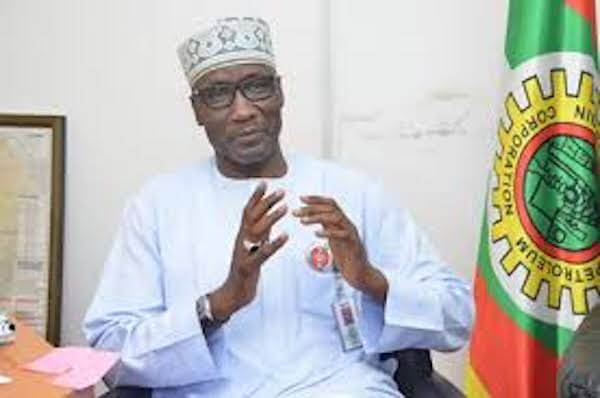
The Nigerian National Petroleum Company (NNPC) has stated that the pipeline fire at Iyana-Odo/Baruwa axis of Lagos will not unsettle the supply of petroleum products across the country.

NNPC’s Group Managing Director, Mele Kyari, stated this on Friday during a visit to the scene of the incident.

The collapse of an electricity transmission tower on the pipeline on Friday resulted in the fire.

The NNPC GMD, who was represented by Isiyaku Abdullahi, managing director, Pipelines and Products Marketing Company (PPMC) Ltd, stated that the fire incident affected a portion of system 2B pipeline within the area, noting that the visit was to ascertain the extent of the incident.

“We want to assure Nigerians that this incident will not affect the supply and distribution of petroleum products across the country,” he said.

Kyari staed further that official of the national oil company were working with the Lagos government and other relevant authorities to permanently put out the fire.

Confirming the incident earlier on Friday, Ibrahim Farinloye, acting coordinator, south-west zonal office of the National Emergency Management Agency (NEMA), said sparks from the collapsed tower led to the fire outbreak.

“The electricity cable collapse led to sparks and the sparks got to spilled petrol around the area which led to the pipeline fire and a subsequent explosion,” he said.

“The pipeline corridor has been known to have spillage often due to activities of vandals.”

The incident caused power outage in parts of Lagos State.

Reps Approve ₦17.126trn As Budget For 2022

Reps Ignore Bill Probiting Health Workers From Going On Strike

The House of Representatives (reps) on Tuesday passed a 2022 budget of ₦17.126 trillion which is higher than the ₦16.391 trillion sum presented by President Muhammadu Buhari.

The Senate is also expected to pass the appropriation bill on Tuesday.

While the major capital, recurrent, debt service, statutory transfers remain untouched, the House made provision for an increase by ₦400 billion for agencies that came forward with financial reports which were not captured in the proposed budget, such as INEC, Ministries of Humanitarian Affairs, the National Assembly, and more.

In passing the bill, the House increased the benchmark price for crude from $57 to $62 per barrel, from which a proposed increase in revenue is expected.

The lawmakers also made provision for 10 percent of monies recovered by EFCC and the National Financial Intelligence Unit to be utilised by the agencies for their operations, to strengthen their fight against corruption.

The budget deficit was increased by N98 billion to accommodate some other requests of national importance which have not been captured in the budget estimates and which could not be covered by the revenue increase.

NNPC Assures On Availability Of Petroleum Products During Yuletide

Why We Further Increase Petrol Prices -Marketers

The Nigerian National Petroleum Company Ltd. (NNPC) says it will continue to work tirelessly to ensure sufficient supply of petrol to every part of the country during and beyond the forthcoming festive period.

Group General Manager, Group Public Affairs Division, NNPC, Garba Muhammad, made this known in a statement in Abuja.

Muhammad expressed appreciation to Nigerians for always heeding its advisories not to engage in panic buying of petrol.

“The NNPC is once again giving Nigerians strong assurance that we have product sufficiency that will last far beyond the festive period.

“Indeed, our stock has risen from a reserve of 1.7 billion litres to over two billion litres within the last one month,” he said.

Muhammad, therefore, urged Nigerians not to engage in panic buying, but to fully enjoy the spirit of the festive season.

While appreciating Nigerians for their understanding and support, he promised that NNPC will not relent, in always ensuring sufficient supply of petrol.

“We wish you all happy celebrations,” he said.

Nigeria’s Headline Inflation Decreased In Nov. To 15.40% – NBS

Crude Oil, Natural Gas Tops Nigeria's Exported Commodities In Q4, 2020 - NBS

Nigeria’s Headline inflation decreased by 0.59 percent to 15.40 percent in November, the National Bureau of Statistics (NBS) has revealed.

Statistician-General of the Federation, Simon Harry, who made the announcement on Wednesday in Abuja during a media conference, also stated that the rebasing of the nation’s economy would take place in 2022 after completing the National Agricultural Sample Census (NASC).

According to him, there has been a consistent decrease in the inflation rate in the last eight months and the figure for November is a decrease from the 15.99 percent recorded in October.

“With this, it means that the declining trend for about eight months portends a positive signal given the favourable economic conditions, the rate of inflation in Nigeria would come down to a bearable level.”

Harry said that on a month-on-month basis, the headline index increased by 1.08 percent in November, which was 0.10 percent higher than the 0.98 percent recorded in October.

The urban inflation rate increased by 15.92 percent (year-on-year) in November from 15.47 percent recorded in November 2020, while the rural inflation rate increased by 14.89 percent in November from 14.33 percent in November 2020.

On a month-on-month basis, however, the urban index rose by 1.12 percent in November, up by 0.10 percent from the 1.02 percent recorded in October, while the rural index also rose by 1.04 percent in November, up by 0.09 percent from the 0.95 percent rate recorded in October.

He also said that the composite food index rose by 17.21 percent in November compared to 18.30 percent in November 2020.

According to him, the rise in the food index was caused by increases in prices of bread and cereals, fish, food product such as potatoes, yam, and other tubers, oil and fats, milk, cheese and eggs, and coffee, tea, and cocoa.

However, on a month-on-month basis, the food sub-index increased by 1.07 percent in November, up by 0.16 percent points from 0.91 percent recorded in October.

Also, the “All items less farm produce’’ or Core inflation, which excludes the prices of volatile agricultural produce stood at 13.85 percent in November, up by 0.61 percent when compared with 11.05 percent recorded in November 2020.

He added that on a month-on-month basis, the core sub-index increased by 1.26 percent in November.

“This was down by 0.46 percent when compared with 0.80 percent recorded in October.

“The highest increases were recorded in prices of gas, liquid fuel, other services such as garments, vehicle spare parts, passenger transport by road, non-durable household goods, jewelry, clocks, and watches.

“Others are passenger transport by air, pharmaceutical products, appliances, articles, and products for personal care, cleaning, repair and hire of clothing and fuels and lubricants for personal transport equipment.”

NCC Conducts Mock Session For 5G

"MTN, Mafab To Roll Out 5G Services From August 24" - NCC

The Nigerian Communications Commission (NCC) says it has successfully carried out a mock session for the 3.5 gigahertz (GHz) spectrum auction for the deployment of the Fifth Generation (5G) network in the country.

Dr. Ikechukwu Adinde, NCC’s spokesman explained that the simulated auction held on Friday in Abuja was preparatory to the main auction scheduled to take place on Monday.

He said the conduct of the simulation exercise was in line with the requirements stipulated in the Information Memorandum (IM) for the 3.5 GHz spectrum auction.

The IM is a document that defines the process for the licensing of the 3.5 GHz spectrum band earlier published on the commission’s website at the inception of the auction process.
“Using the Ascending Clock Auction System for the mock session, the three qualified bidders for the 3.5 GHz spectrum, namely MTN Nigeria, Mafab Communications Ltd, and Airtel Networks Ltd, participated in the software-based simulated auction exercise,” the statement said.

“Following the successful mock auction, the stage is set for the commission to license two slots in the 3.5 GHz spectrum band expected to be picked by successful bidders at the end of the Main Auction on Monday, December 13, 2021.

“The auction on Monday will mark a turning point in Nigeria’s determination to harness the benefits of 5G for the nation’s socio-economic growth as the concrete roll-out of 5G commences in 2022.”

Chairman of NCC Board of Commissioners, Professor Adeolu Akande; the Executive Vice Chairman and Chief Executive Officer of the commission, Professor Umar Danbatta; Executive Commissioner (Technical Services), Ubale Maska, and the Executive Commissioner (Stakeholder Management), Adeleke Adewolu, were among those who witnessed the exercise.

Others include representatives from the bidding companies, senior management staff from relevant departments of the commission, technical consultants, software consultants, legal consultants, and other external observers.

In a brief remark at the mock auction, Danbatta said the commission had taken all necessary steps to ensure due diligence on the credibility of the consultants and to safeguard the integrity of the software solution being used to carry out the implementation of the national assignment.

“This is consistent with the open, credible transparent, and fair manner by which the commission is known to have conducted previous auction processes, which have been locally and globally applauded,” Danbatta was quoted as saying in the statement.

In order to ensure a fail-proof process, Adinde said the NCC also carried out a simulation of the manual process of the auction, aside from the electronic mock.

He explained that this was to make bidders familiar with the manual auction in case of any circumstances on the main action day that may warrant a need to switch to the manual auction.

“It is pertinent to note that the two forms- electronic and manual- are clearly stated in the IM and they follow the same process,” the statement added.

“Representatives of the bidding companies, the commission, the consultants, and other observers at the mock auction expressed satisfaction with the conduct of the simulation exercise, which also provided an opportunity for the commission to perfect the auction process ahead of the main auction.

“The commission had commenced the process for the auction of the 5G spectrum in the last quarter of the 2021 and had, since then, carried out a number of activities ahead of the main auction.”

Fuel May Sell Above N340/litre – Marketers

Marketers Express Concerns Petrol May Sell Above N340/litre

The retail price of Premium Motor Spirit, popularly known as petrol, may be sold above the projected N340/litre in February 2022 once the Federal Government stops its subsidy on the commodity, oil marketers said on Tuesday.

Findings show that both independent and major oil marketers were perfecting plans to begin PMS importation soon as the government ends the subsidy regime.

They have raised concern over the unstable condition in foreign exchange rates and how this would affect petrol price in the coming year.

The Nigerian National Petroleum Company Limited has been the sole importer of petrol into Nigeria for about four years. The inability of marketers to effectively access the United States dollar for the purpose of importing refined crude oil forced them to stop.

The Group Managing Director of NNPC, Mele Kyari, last week, announced at a World Bank event in Abuja that beginning from February 2022, the price of petrol would range between N320 and N340 per litre by which time the Federal Government have removed the subsidy.

He stated that Nigeria would cease to subsidize the commodity in the first quarter of next year, adding that subsidy would have been removed this year but was suspended owing to certain conditions.

According to PUNCH, some marketers on Tuesday stated that the cost of petrol would be above the amount projected, which is between N320 – N340/litres if there was no improvement in the foreign exchange rate.

According to Dealers under the aegis of Independent Petroleum Marketers Association of Nigeria and Petroleum Products Retail Outlets owners Association of Nigeria stated their readiness to import petrol, however, also noted the cost of the commodity would be high in February.

IPMAN and PETROAN members own bulk of the filling stations across the country and currently make purchases from depots before selling to final consumers at their various retail outlets.

“Yes, if there is no subsidy, some marketers can import, but the only thing is that it will be costly. The price will be higher than the projected cost because of the exchange rate,” the National Vice President, IPMAN, Abubakar Maigandi, stated.

He added, “The challenge of accessing forex will definitely affect imports because over 90 per cent of petrol that will be consumed across the country will depend on importation. Also this is because the refineries are not functioning.”

The National Public Relations Officer, IPMAN, Chief Ukadike Chinedu, also stated that the foreign exchange rate would determine the cost of petrol from next year after subsidy removal.

He said, “If the Federal Government says there is no going back on subsidy removal this time round, which is a challenge that has dragged on for about 30 years, then it means that they are going to liberalise the market.

“By liberalising the market it will now help independent and major marketers to be able to freely import petroleum products from any source so that products will be available in Nigeria.”

He added, “However, it is pertinent to note the forces of demand and supply will determine the price of the commodity in Nigeria. So literally, whatever the dollar rate is in the international and local markets will pose the actual challenge to marketers

“The issue of black market and official exchange rates is a serious challenge that we foresee. But we believe that the Federal Government is doing something by meeting with the bureau d’change operators on this, so that whatever is obtainable at the banks is what you get in the open market.”

On whether the forex issue could lead to a higher price than the projected N340/litre, Chinedu replied, “Aside from the adverse effects of the removal of subsidy on the wellbeing of Nigerians, we will, of course, see a price that is higher than what they project.

“The price will be higher. It will be higher because the dollar to a large extent determines the price of petroleum products. If the dollar goes up, the price of petrol will increase, and vice versa.”

The President PETROAN, Billy Gillis-Harry, confirmed the position of IPMAN, as he, however, explained that members of his association were ready to import the commodity.

He said, “At PETROAN we already have a vehicle that is in place to start importation petroleum products, gas and other products. We encourage the government to completely remove subsidy.

On the possibility of higher pump price than the projected N340/litre, Gillis-Harry said, “That is why we said that every single thing about petroleum products should be premised on the forces of the market.

“The forces of demand and supply should determine the price.”

The spokesperson of NNPC, Garba-Deen Muhammad, told our correspondent that the issue of petrol pricing was not the function of the oil firm.

“Price issues are policy matters. NNPC does not fix price, it has no mandate. It operates in the sector as a business concern governed by CAMA Laws,” he stated.

Despite Interventions, Six Million Electricity Consumers On Estimated Billing

Ibadan DisCo Announces Relaunch Of MAPS

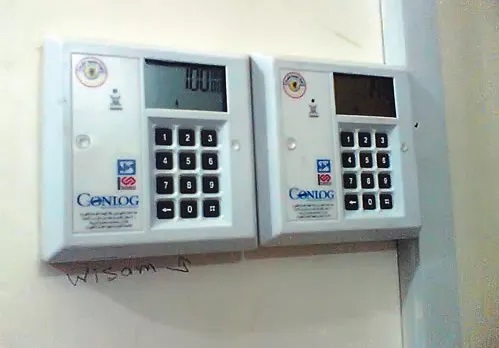
Despite interventions and funding channeled to the distribution of prepaid meters across the country, about six million electricity consumers are still being given estimated billing.

A report by the Nigerian Electricity Regulatory Commission (NERC) in January this year had put the number of meters contracted through the Meter Asset Providers scheme (MAPS) and National Mass Metering Programme (NMMP) at 7,588,972, indicating that over 7.5 million customers will be needing prepaid meters had the time.

However, The PUNCH gathered from the Federal Ministry of Power on Tuesday that the deployment of meters through the NMMP had risen to 750,000.

A combination of meter deployment by both schemes showed that about 1.26 million meters had been deployed out of the over 7.5 million unmetered customers captured by the NERC.

Operators in the sector explained that the deployment of meters this year was basically through the NMMP, as the MAP scheme was not fast in meter provision.

READ ALSO: Stock Exchange: Market Capitalisation Drops By 0.27%

The National Mass Metering Programme, funded by the Central Bank of Nigeria, was instituted in September 2020 to increase the rate of metering through the provision of free meters.

The Meter Asset Providers scheme, on the other hand, took effect on April 3, 2018, introducing meter providers as a new set of service providers in the Nigeria Electricity Supply Industry.

This came as power distributors told our correspondent that meters provided under Phase Zero of the NMMP had so far been deployed to customers.

They stated that many Discos currently lacked meters as only a few were on ground for distribution to the over six million unmetered power users nationwide.

“Under Phase Zero, they (government) had a particular number that they gave to each Disco and the target was to provide about one million meters,” an official with the Association of Nigerian Electricity Distributors, who pleaded not to be named as he was not authorised to speak on the matter, said.

The official added, “Ikeja Disco received over 100,000 meters; Ibadan Disco also got over 100,000 meters; while some others got about 90,000 meters, as the allocations were based on the Disco.”

Explaining how the free meters under Phase Zero of the NMMP were acquired, the ANED official stated that the government worked with meter manufacturers to know their respective capacities.

Thursday Chronicles: The Art Of Negotiating With Reality (And Winning)

Hello, my fellow Survivors of the Struggle! Welcome back to the weekly gathering of the “I-Thought-This-Week-Would-Be-Productive” support group. Grab a cold drink, or a warm one if the office AC is currently trying to turn you into a frozen chicken, and let’s gist.

There is a specific brand of delusion that hits a Nigerian on Sunday night. You’ll be there, smelling like fresh laundry and hope, telling yourself, “This week, I will be a Corporate Titan. I will reply to emails in 0.5 seconds. I will meal prep. I will exercise.” By Monday morning, the 3rd Mainland Bridge (or your local equivalent of purgatory) has already insulted your plans. By Tuesday, your “meal prep” is actually just gala and a dream. And by Thursday? Thursday is when we stop pretending and start wondering if we can retire at 26 with three thousand naira in our savings account.

Living here is basically a PhD program in managing disappointment. You learn very quickly that “I’m on my way” is a philosophical statement, not a geographical one. It could mean “I am currently entering the shower” or “I am in another state entirely.” We live in a land of plot twists. You expect the light to stay on; the transformer says “Not today, my fan.” You expect the bank app to work; the app decides to go on a spiritual retreat. We have become experts at expecting the unexpected while simultaneously hoping for a miracle. It’s a delicate dance, like trying to eat spicy jollof rice while wearing a white shirt; risky, stressful, but we do it anyway.

Adulthood is the ultimate “Expectation vs. Reality” meme. We grew up thinking adults had “The Plan.” Now we realize everyone is just confidently winging it. Your boss is winging it. Your landlord is winging it. Even the person selling you roasted corn is negotiating with the forces of inflation. The funniest part is the “Secret Olympic Games” of adulting, where we all look at each other on LinkedIn and think everyone is winning, while in reality, most of us are just one “per my last email” away from a minor breakdown. We are all doing mental gymnastics, trying to balance our bank balance with our desire to buy things that “make us feel alive.”

Pro Tip: If you see someone looking too calm on a Thursday in this economy, check their ears. They are likely listening to a podcast to drown out the sound of their own responsibilities.

In Nigeria, if you don’t laugh, you will accidentally start an argument with a mannequin. Humour is our oxygen. We laugh when a meeting that could have been a WhatsApp message lasts three hours. We laugh when someone promises us “Heaven and Earth” but delivers “Dust and Vibes.” This laughter isn’t because we are fine; it’s because we are resilient. It’s how we tell life, “You tried to stress me, but I have a meme for this.”

Thursday is the day we audit our souls. You expected to be a millionaire by now, or at least someone who doesn’t contemplate the price of eggs for ten minutes at the supermarket. But look closely. Growth isn’t always about the bank balance. Sometimes growth is: not losing your temper when someone cuts you off in traffic, realizing that “No” is a complete sentence, and understanding that your worth isn’t tied to how many items you ticked off a to-do list that was unrealistic anyway.

Key Take-Home Points for the Tired
1. The Expectation:
“I’ll finish everything today.”
The Reality Check: You will finish what the network allows.
2. ⁠The Expectation: “They promised to pay today.”
⁠The Reality Check: “Today” is a relative term in business.

3. ⁠The Expectation: ⁠”I’ll start my diet.”
⁠⁠The Reality Check: Puff-puff is a vegetable if you believe hard enough.
4. ⁠⁠The Expectation: “I need to be perfect.”
⁠The Reality Check: Being “present” is already a 10/10 performance.

Lessons Worth Carrying into Friday
1. Protect your peace:
It’s the only thing that doesn’t have a VAT charge yet.
2. Lower the bar: Not your standards, just your expectations of people who have already shown you they are “vibes and Insha’Allah.”
3. Celebrate the “Small” Wins: You bathed, you showed up, and you haven’t been arrested for battery. That’s a successful week!
4. Detachment is Wealth: If it’s out of your control, it’s out of your mind.

As we wrap up this week’s chronicles, please remember: you are doing great. Even if your only achievement this week was staying hydrated and not crying during a Zoom call, I am proud of you.
The weekend is hovering on the horizon like a faint hope. Adjust your expectations, forgive yourself for the things you didn’t get to do, and remember that tomorrow is Friday; the international day of “I’ll do it on Monday.”

Go forth and be great, my fellow Survivors. If the world gives you lemons, check the price of sugar before you commit to making lemonade.

Another Thursday is here. We move!

Black gold to green power: How the Middle East crisis is vindicating Nigeria’s solar bet

BII, Stanbic Bank Kenya In Double Commitment To Off-Grid Solar Energy Company Sun King

Nigeria installed 803MW of solar in 2025 — a 141% surge that made it Africa’s second-largest solar installer. The Middle East crisis did not create that story. But it has given it a global strategic frame that Abuja can no longer afford to ignore.

BizWatch Nigeria Analysis  |  March 5, 2026

Key points

  • Brent crude surged 11% following military strikes on Iran before reversing below pre-conflict levels. The brief spike was enough to rattle global energy markets and reinforce the strategic case for distributed renewable energy that cannot be blockaded or sanctioned.
  • Solar and wind energy are estimated to have saved European consumers nearly €100 billion during the Russia-Ukraine energy crisis — a figure now widely cited in policy circles as the clearest financial argument for renewable investment as the Middle East crisis deepens.
  • Gulf states are accelerating their own renewable transitions at historic scale: Saudi Arabia is targeting 130GW of capacity by 2030, while Abu Dhabi’s Masdar has launched the world’s first gigascale 24/7 solar-plus-storage project — 5.2GW of solar paired with 19GWh of battery storage.
  • Nigeria installed 803MW of solar capacity in 2025 — a 141% year-on-year increase — making it Africa’s second-largest solar installer behind only South Africa, according to the Global Solar Council’s Africa Market Outlook 2026–2029.
  • Nigeria’s solar surge is backed by a $750 million World Bank-funded DARES programme — the largest single distributed energy project in World Bank history globally — targeting electricity access for 17.5 million Nigerians and the replacement of 280,000 diesel generators.
  • Nigeria is also positioning itself as a regional manufacturing hub: a 1GW solar panel factory is under development through a public-private partnership, alongside plans for a 1.2GW module assembly plant and an 800MW PV factory.
  • The energy transition is not linear: peak global oil demand is not expected until around 2030, and energy insecurity has historically accelerated coal consumption — a pattern that could repeat if the Middle East crisis disrupts gas supply chains.

A brief oil shock, a lasting strategic lesson

When military strikes on Iran sent Brent crude climbing 11% almost overnight, energy traders held their breath. A full-blown Strait of Hormuz shutdown combined with Houthi attacks in the Red Sea — the feared worst-case scenario — could have driven prices up by as much as 35%. It did not happen. But the world got a stark reminder: the fossil fuel-dependent global economy remains deeply vulnerable to the geopolitics of a volatile region.

What followed has been a fascinating and contradictory set of market reactions. Renewable energy, often discussed in the abstract language of climate policy, is now being aggressively reprioritised in the very concrete language of energy security. The message from global boardrooms and government ministries is increasingly aligned: diversify or remain exposed.

The precedent from Europe is instructive. Solar and wind energy are estimated to have saved European consumers nearly €100 billion during the Russia-Ukraine energy crisis. With Middle East conflict now reprising similar fears, that number is being widely cited in policy circles as the clearest financial case for renewable investment. The logic is straightforward: distributed, domestic clean energy cannot be blockaded, sanctioned, or disrupted by a conflict thousands of miles away.

Investment freeze at the frontlines of conflict

Not all market reactions have been bullish for green energy. Closer to the conflict zone, the instability has created a chilling effect on investment pipelines. Abu Dhabi National Oil Company (ADNOC) froze negotiations on a proposed stake in the Leviathan gas field — a significant signal that even the deep-pocketed sovereign wealth vehicles of the Gulf are reassessing regional deal-making risk.

More broadly, areas like the Sinai Peninsula and the West Bank — which analysts note carry considerable renewable energy potential given their solar irradiance profiles and geography — remain effectively locked out of meaningful investment. Political and security barriers are not merely obstacles: they are deal-killers. Until a credible peace framework emerges, renewable energy developers cannot responsibly commit capital to projects in these zones.

This represents a significant lost opportunity. The Middle East and North Africa (MENA) region is arguably the world’s best-endowed zone for solar energy, with average annual solar irradiation levels among the highest globally. The conflict is, in effect, keeping some of the world’s most productive potential clean energy real estate off the market.

The Gulf paradox: Oil producers racing towards solar

Perhaps the most striking market reaction is unfolding inside the Gulf states themselves. Countries built on petroleum wealth are accelerating their own renewable energy transitions — partly because they read the same security logic as everyone else, and partly because burning oil domestically has a steep opportunity cost when they can export it instead.

Saudi Arabia has set a target to source at least 50% of its electricity from renewables by 2030, underpinned by a goal of 130GW of installed capacity — the most ambitious commitment among all GCC countries. The kingdom is pursuing this through aggressive partnerships, notably with Chinese manufacturers and developers who have emerged as the dominant force in global solar supply chains.

In Abu Dhabi, ambition has already translated into action. In January 2025, Masdar and EWEC jointly launched what is being described as the world’s first 24/7 solar PV and battery storage gigascale project — a 5.2GW solar plant paired with a 19GWh battery storage system. For context, 19GWh of battery storage could power a mid-sized African city for several days. This is not incremental development; it is a structural transformation of regional energy architecture.

Brent crude spike:  11% surge following Iran strikes; reversed below pre-conflict levels

Worst-case scenario:  Strait of Hormuz shutdown could have driven prices up ~35%

EU savings from renewables:  ~€100bn saved during Russia-Ukraine crisis via solar and wind

Saudi Arabia 2030 target:  130GW renewables capacity; 50% of national power mix

Abu Dhabi Masdar project:  5.2GW solar + 19GWh battery — world’s first gigascale 24/7 project

Battery storage cost decline:  $144/kWh in 2023 to $112/kWh in 2025 across Africa

Nigeria’s solar surge: Africa’s quiet frontrunner

While the global energy conversation has focused on Gulf state transitions and European security imperatives, one of the most significant renewable energy stories of 2025 unfolded closer to home. Nigeria installed 803MW of solar capacity in 2025 — a 141% year-on-year increase from the 63.5MW added in 2024 — making it Africa’s second-largest solar installer, behind only South Africa’s 1,602MW, according to the Global Solar Council’s Africa Market Outlook 2026– 2029.

The scale of the leap is worth pausing on. In 2024, Nigeria’s total installed solar capacity stood at 385.7MW. By the end of 2025, the country had added more than double that figure in a single year. Nigeria now accounts for 17% of all solar capacity installed across Africa in 2025 — a continent that itself recorded its strongest-ever year for solar deployment, adding 4,498MW in total, a 54% increase on 2024.

The Global Solar Council’s report attributed Nigeria’s emergence to four converging drivers: rapid expansion in distributed solar systems, persistently high energy prices making solar economically competitive, policy concerns over potential import restrictions that accelerated procurement, and the rollout of the DARES programme — the policy anchor that has transformed Nigeria’s renewable ambition from aspiration into execution.

The DARES Programme: The policy engine behind the numbers

The Nigeria Distributed Access through Renewable Energy Scale-up (DARES) programme is the largest single distributed energy project in World Bank history globally. Financed by a $750 million International Development Association credit and designed to leverage over $1 billion in private capital, DARES is co-funded by the Japan International Cooperation Agency ($200 million), the Global Energy Alliance for People and Planet ($100 million), USAID, the German Development Agency (GIZ), SEforAll, and the African Development Bank.

Its targets are concrete and measurable. The programme aims to provide over 17.5 million Nigerians with new or improved electricity access through solar mini-grids and standalone solar home systems. It will replace more than 280,000 diesel and petrol generator sets — a direct substitution of fossil fuel consumption with clean energy — and provide up to 237,000 MSMEs with reliable electricity for productive use.

DARES builds on the foundation laid by the Nigeria Electrification Project (NEP), which established 125 mini-grids, deployed over one million solar home systems, provided electricity access to more than 5.5 million Nigerians, and created over 5,000 private-sector green jobs. The Rural Electrification Agency, which administers both programmes, estimates that at least 5 million off-grid solar systems are still required to serve underserved communities — the addressable market for this programme is enormous.

“Nigeria’s clean energy transition must create jobs at home. Every panel we assemble here, every inverter we manufacture locally, strengthens our economy, builds skills for our youth, and ensures that we are not just consumers of technology but contributors to the global renewable energy value chain.” — REA Official, 2025 Nigeria Renewable Energy Innovation Forum

Manufacturing ambition: From installer to producer

Nigeria is not content to remain a consumer of solar technology. The country is positioning itself as a regional manufacturing hub for the West African solar market. A 1GW solar panel manufacturing facility is being established through a public-private partnership — the largest in West Africa. Additional plans include a 1.2GW module assembly plant and an 800MW PV factory, coordinated as part of a deliberate industrial strategy to build domestic supply chain capacity.

LONGi Green Energy, one of the world’s largest solar panel manufacturers, has entered a partnership to establish a 500MW to 1GW production facility in Nigeria. The Nigerian Electricity Regulatory Commission (NERC) has also proposed rules allowing solar users to sell excess electricity back to the national grid — a net metering framework that would fundamentally improve the economics of rooftop solar for commercial and residential users and accelerate the transition away from diesel dependency.

The ₦100 billion National Public Sector Solarisation Initiative, announced in 2025, is a further signal of policy intent: government buildings, schools, and health facilities are being targeted for solar conversion, creating an anchor demand base for the domestic manufacturing ecosystem that is being built.

The long game: Why peak oil optimism may be premature

Despite these bullish signals for renewables, a note of caution is warranted. The prediction that the global energy transition will neutralise the strategic relevance of Middle East oil may prove premature. Global peak oil demand is not expected until around 2030, and with output from major non-Gulf fields in structural decline, Persian Gulf producers are expected to play an expanded — not diminished — role in the global oil market over the coming decade.

There is also the uncomfortable dynamic that energy insecurity has historically accelerated coal consumption. When natural gas shortages hit during the Russia-Ukraine crisis, multiple European governments temporarily reversed coal phase-out timelines. A similar pattern, driven by Middle East disruption, could undermine climate commitments and redirect capital away from clean energy at precisely the wrong moment.

Africa’s own solar trajectory, while impressive, carries a financing caveat that the Global Solar Council’s report is candid about: for solar to reach its full potential across the continent, developers need single-digit interest rate debt and leverage ratios of 70% or higher to keep energy prices below 10 cents per kWh. Nigeria’s banking recapitalisation — which is building institutions large enough to finance infrastructure at scale — is directly relevant to this constraint. The energy transition and the financial sector reform are not separate stories.

What this means for Nigeria: Sitting at the intersection

For Nigerian businesses and policymakers, the global energy market’s response to the Middle East conflict carries several direct implications. Nigeria sits at a uniquely complex intersection: an oil exporter benefiting from elevated crude prices, an economy with a persistent electricity deficit that solar is beginning to close, and an emerging manufacturing player in the very technology that the world is racing to deploy.

On the revenue side, any sustained oil price spike provides Nigeria with fiscal breathing room. But the more durable lesson is strategic: the countries that will prosper in the next energy cycle are those that use the oil revenue window to build domestic renewable capacity rather than remaining tethered to volatile commodity revenues indefinitely. Nigeria’s 2025 solar performance suggests that this transition is not merely planned — it is underway.

The comparison with Gulf states is instructive and available to Nigeria for the first time. If Saudi Arabia, with far greater fossil fuel wealth, is investing in 130GW of renewable capacity, the case for Nigerian acceleration becomes harder to argue against. The Middle East conflict has not created this argument. It has dramatically sharpened it — and Nigeria’s own data now gives it the credibility to make the case from a position of demonstrated delivery rather than aspiration.

Africa installed 4,498MW of solar in 2025. By 2029, the continent is projected to install more than 33GW annually — over six times the 2025 total. Nigeria, with its 141% growth rate, its manufacturing ambitions, and its DARES infrastructure, is positioned to capture a disproportionate share of that trajectory. The question is not whether the opportunity exists. It is whether the policy discipline, financing architecture, and grid integration investment can keep pace with the installation momentum that is already building.

What’s being said

John Van Zuylen, CEO of the Africa Solar Industry Association, on the continent’s solar momentum:

“Solar energy has moved beyond a handful of early adopters to become a broader continental priority. What we are seeing is not temporary. It is policies aligning with market dynamics.”

Shubham Chaudhuri, World Bank Country Director for Nigeria, on the DARES programme:

“We are committed to expanding clean energy-based access in Nigeria, with the $750 million Nigeria DARES project being the largest ever single distributed energy project of the World Bank globally. It will benefit over 17.5 million unserved, underserved, rural, and remote Nigerians.”

Abba Abubakar Aliyu, Managing Director of the Rural Electrification Agency, on the scale of Nigeria’s electricity access challenge:

“Between 80 and 90 million Nigerians remain without reliable access to power. Our mission is to close that gap through decentralised solutions that make sense for our communities.”

REA official at the 2025 Nigeria Renewable Energy Innovation Forum, on the manufacturing ambition:

“Nigeria’s clean energy transition must create jobs at home. Every panel we assemble here, every inverter we manufacture locally, strengthens our economy and ensures that we are not just consumers of technology but contributors to the global renewable energy value chain.”

What’s next

  • Africa is projected to install more than 33GW of new solar capacity by 2029 under a medium-growth scenario — a compound annual growth rate of 21%. Nigeria’s trajectory positions it to be a significant and growing share of that total.
  • The DARES programme’s 17.5 million beneficiary target and the 237,000 MSME connections it is designed to enable will be the key performance indicators to track over the next 24–36 months. Execution, not policy, is now the test.
  • Nigeria’s 1GW solar panel manufacturing facility, alongside the 1.2GW module assembly plant and 800MW PV factory, would — if completed — fundamentally change Nigeria’s position in the African solar value chain from consumer to producer. Progress on these facilities in 2026 is a critical watch point.
  • NERC’s proposed net metering rules, if passed, would unlock rooftop solar economics for businesses and households and create a distributed generation base that reduces grid dependency without requiring further central grid investment.
  • Battery storage costs across Africa fell from $144 per kWh in 2023 to $112 per kWh in 2025. Continued decline — driven primarily by Chinese manufacturing scale — will determine how quickly solar-plus-storage reaches economic viability at the community and household level across Nigeria.
  • The Middle East conflict’s ultimate energy legacy will depend on its duration. A short, contained crisis accelerates renewable investment globally. A prolonged conflict risks redirecting capital into fossil fuel security infrastructure, slowing the transition at exactly the wrong moment in the deployment curve.

The bottom line

The Middle East conflict has acted as a geopolitical accelerant for the global energy transition — not uniformly, and not without contradictions, but unmistakably. Oil price volatility is reinforcing the energy security case for renewables. Gulf states are racing to build clean energy capacity at historic scale. And Nigeria — the country most often discussed as a fossil fuel story — has quietly become Africa’s second-largest solar installer, backed by the largest distributed energy project in World Bank history and a manufacturing ambition that could make it a regional supplier rather than just a consumer. For business leaders and investors monitoring global markets from Lagos, the signal is clear. The world is not abandoning oil tomorrow. But a Nigeria that is installing 803MW of solar in a single year, planning gigawatt-scale panel factories, and targeting 17.5 million new electricity connections through renewable energy is not waiting for the world to make up its mind either.

Police begin physical, credential screening for Constable recruitment March 9

KEY POINTS

  • Nigeria Police Force and Police Service Commission to begin screening of constable recruitment applicants on March 9, 2026.
  • Exercise will hold daily at the Police College, Ikeja, from 7:00 a.m. until April 18.
  • Applicants must present mandatory documents and adhere strictly to guidelines or risk disqualification.

MAIN STORY

The Nigeria Police Force (NPF) and the Police Service Commission (PSC) will commence the physical and credential screening for applicants seeking recruitment as General Duty and Specialist Police Constables from March 9, 2026.

The Lagos State Police Command disclosed that the screening exercise will run until April 18, 2026, and will be conducted daily from 7:00 a.m. at the Police College Ikeja.

In a statement issued on Thursday, the Police Public Relations Officer of the command, Abimbola Adebisi, said the exercise is specifically for applicants who are indigenes of Lagos State and have successfully completed the online registration for the 2025/2026 recruitment exercise.

Applicants are expected to appear for the screening dressed in a clean white T-shirt and white shorts while presenting mandatory documents arranged in two white flat files.

The documents required include an invitation slip with assigned table, a credential screening form, original National Identity Number (NIN) printout or card issued by the National Identity Management Commission, O’Level certificate, birth certificate or declaration of age, and a Local Government or State of Origin certificate.

Specialist applicants are also required to present relevant trade test certificates, while all candidates must submit duly completed and signed guarantor forms alongside photocopies and passport photographs of their referees.

THE ISSUES

The police authorities emphasised that failure to present the required documents or adhere to the stipulated guidelines would result in automatic disqualification from the screening process.

Applicants were also advised to attend the exercise strictly on their scheduled dates to ensure smooth coordination and avoid overcrowding.

WHAT’S BEING SAID

The command stressed that the screening exercise is free of charge and will be conducted strictly on merit in line with professional and transparent recruitment standards.

Police spokesperson Adebisi urged members of the public to report any individual or group demanding payment or gratification in connection with the exercise.

WHAT’S NEXT

Following the screening stage, successful applicants are expected to proceed to subsequent phases of the recruitment process as determined by the Nigeria Police Force and the Police Service Commission.

Authorities will provide further updates regarding the recruitment exercise to applicants through official channels.

BOTTOM LINE

The police authorities have assured applicants that the recruitment screening process will be transparent and merit-based, urging candidates to strictly comply with the guidelines to ensure a smooth and credible process.

NECA applauds Oyedele’s nomination as Minister of State for Finance

Nigeria's Debt Service Cost Indicates Debt Crisis - Oyedele

KEY POINTS

  • NECA commends President Bola Tinubu for nominating Taiwo Oyedele as Minister of State for Finance.
  • Appointment seen as a move to strengthen fiscal governance and economic reforms.
  • NECA urges the nominee to prioritise stakeholder engagement and efficient budget implementation.

MAIN STORY

The Nigeria Employers Consultative Association (NECA) has commended Bola Ahmed Tinubu for nominating Taiwo Oyedele as Minister of State for Finance, describing the move as a step towards strengthening Nigeria’s fiscal governance.

The Director-General of NECA, Adewale‑Smart Oyerinde, gave the commendation in an interview with the News Agency of Nigeria (NAN) on Thursday in Abuja.

Oyerinde said the nomination signals the government’s readiness to engage professionals with deep understanding of economic and financial challenges to drive the implementation of the country’s fiscal policies.

Oyedele, 50, is an economist, accountant and public policy expert who, before his nomination, served as Chairman of the Presidential Committee on Fiscal Policy and Tax Reforms.

He also spent 22 years at PricewaterhouseCoopers (PwC), where he rose through the ranks after joining the firm in 2001 to become Fiscal Policy Partner and Africa Tax Leader before heading the presidential tax reform committee.

THE ISSUES

NECA noted that effective fiscal leadership remains critical to tackling Nigeria’s economic challenges, particularly inflationary pressures and the need to improve the country’s business operating environment.

The association stressed that consistent fiscal discipline and well-coordinated economic policies would enhance private sector growth and stimulate job creation across key sectors of the economy.

WHAT’S BEING SAID

Oyerinde said Oyedele’s nomination reflects the President’s commitment to strengthening fiscal reforms and improving the nation’s economic management.

He urged the nominee, if confirmed, to focus on inclusive stakeholder engagement, deepen fiscal policy reforms, and support efficient budget implementation to promote long-term economic stability.

The NECA chief also reaffirmed the association’s readiness to collaborate with government in advancing reforms that would enhance sustainable economic growth and improve business competitiveness in Nigeria.

WHAT’S NEXT

President Tinubu transmitted Oyedele’s nomination to the Senate in a letter addressed to Godswill Akpabio, President of the Senate, requesting legislative confirmation.

If confirmed, Oyedele will succeed Doris Uzoka‑Anite, who has been redeployed to the Ministry of Budget and National Planning as Minister of State.

He is expected to work alongside the Minister of Finance, Wale Edun, to drive the Federal Government’s fiscal policies and support the implementation of Nigeria’s emerging tax reform framework.

BOTTOM LINE

NECA believes Oyedele’s nomination could strengthen Nigeria’s fiscal reforms and economic governance, provided his tenure prioritises transparency, stakeholder collaboration and policies that support private sector growth and economic stability.

President Tinubu initiates Grid Asset Management Company (GAMCO) and civil service exit benefits

KEY POINTS

  • President Bola Tinubu has proposed the establishment of a Grid Asset Management Company (GAMCO) to address structural weaknesses in the electricity transmission segment.
  • The Federal Executive Council (FEC) approved an inter-ministerial committee to work out the operational framework for the new company.
  • The government identified transmission as the primary bottleneck in the power sector unbundling, hindering national industrialization.
  • In a parallel move, FEC approved an additional exit benefit package for retiring civil servants, allowing for up to 100% of their total emoluments.

MAIN STORY

In a direct effort to resolve Nigeria’s persistent electricity challenges, President Bola Tinubu personally presented a memorandum to the Federal Executive Council (FEC) on Wednesday proposing the creation of the Grid Asset Management Company (GAMCO). Minister of Information and National Orientation, Mohammed Idris, explained that while the power sector has been divided into generation, transmission, and distribution since deregulation, the transmission segment remains the area where the “problem mainly is” in the quest for stable power.

The proposed GAMCO is intended to fix the transmission section to facilitate national industrialization. To facilitate this, FEC approved an inter-ministerial committee to examine regulatory, legal, and investment issues, including the interests of existing investors and operators. This committee will include the Ministers of Power, State for Gas, Works, Finance, Science and Technology, the Chairman of the Nigerian Revenue Service, and the Attorney-General of the Federation. Their recommendations will eventually be forwarded to the National Assembly where legislative action is required.

Beyond energy reforms, the FEC approved a significant welfare package for the federal workforce. Under the new resolution, retiring civil servants in treasury-funded Ministries, Departments, and Agencies (MDAs) are now eligible for an additional exit benefit package. This scheme, aligned with the Pension Reform Act, allows eligible retirees to receive up to 100% of their total emoluments. Minister Idris stated that the measure is designed to boost morale and efficiency within the civil service.

WHAT’S BEING SAID

  • “The President has seen that where the problem is mainly in our quest to solve the power problem is largely in the transmission section,” stated Mohammed Idris, Minister of Information and National Orientation.
  • “The President feels that for us to actually industrialise, the power sector must be fixed. That is why he has taken this initiative of looking at how this Grid Asset Management Company will be set up.”
  • “Eligible retirees in treasury-funded MDAs could receive up to 100 per cent of their total emoluments, in line with the Pension Reform Act.”

WHAT’S NEXT

  • The inter-ministerial committee will begin work on the operational framework for GAMCO, addressing the concerns of existing operators.
  • Legislative drafts based on the committee’s findings will be prepared for submission to the National Assembly.
  • The Office of the Head of the Civil Service of the Federation will begin implementing the new exit benefit protocols for upcoming retirees.

BOTTOM LINE

The Bottom Line is that the Tinubu administration is pinpointing transmission as the core obstacle to Nigeria’s energy stability while simultaneously using pension reforms to revitalize the civil service. By professionalizing grid management through GAMCO, the government hopes to finally unlock the industrial potential of the nation.

UN Women warns women’s rights are regressing Worldwide

IWD, Coming 2 America Top Google Search In March
2021 IWD

KEY POINTS

  • No country has achieved full legal equality between men and women, UN Women reports.
  • Rising conflicts, discriminatory laws and weak justice systems are worsening gender inequality.
  • Nearly 90% of organisations tackling violence against women face funding cuts.

MAIN STORY

The UN Women has warned that women’s rights are facing significant setbacks worldwide, with no country yet achieving full legal equality between women and men.

In a new report titled Ensuring and Strengthening Access to Justice for All Women and Girls, the United Nations gender equality agency said legal frameworks in many countries are being reshaped in ways that restrict women’s freedoms, silence their voices and enable abuse to go unpunished.

The report highlights how justice systems across the world are failing to adequately protect women and girls, exposing them to violence, discrimination and impunity amid growing backlash against gender equality.

Speaking on the findings, Sarah Hendriks, Director of Policy, Programme and Intergovernmental Division at UN Women, said global challenges such as democratic backsliding, rising conflicts, economic pressures and shrinking civic spaces were undermining progress on women’s rights.

Despite the challenges, Hendriks noted that progress had been made in the past. She said family law reforms since 1970 had enabled more than 600 million women to access economic opportunities globally.

However, the report warned that discriminatory laws and systemic barriers continue to create a “justice gap”, with women facing greater obstacles to justice than men in nearly 70 per cent of the countries surveyed.

According to the report, women worldwide currently have only 64 per cent of the legal rights enjoyed by men, while 54 per cent of countries still lack consent-based legal definitions of rape.

THE ISSUES

The report identified five major barriers preventing women and girls from accessing justice globally.

These include discriminatory legal frameworks, restrictive social norms, weak implementation of existing laws, reliance on traditional justice systems operating outside state oversight, and the impact of armed conflicts.

The situation is further aggravated by rising global conflicts, which have increased the vulnerability of women and girls to gender-based violence.

WHAT’S BEING SAID

Hendriks warned that organised resistance to gender equality is contributing to the erosion of women’s rights globally.

“Justice systems do not stand apart from these pressures; they actually reflect them,” she said.

“A justice system that does not serve women and girls cannot call itself just. Now is the moment to turn equality from promise into reality in every sphere of life.”

She also expressed concern over declining funding for organisations addressing violence against women and girls, noting that nearly 90 per cent of such groups have reported reductions in essential services.

WHAT’S NEXT

The report outlines eight key recommendations for governments to implement by 2030, including reforms that ensure justice systems are shaped by women’s needs and experiences.

It also calls for increased government funding and stronger institutional support for organisations working to combat gender-based violence and advance women’s rights.

BOTTOM LINE

The UN Women report underscores a troubling global trend: despite decades of progress, women’s rights remain fragile, with systemic barriers, conflict and funding shortages threatening hard-won gains in gender equality.

British Pound Rebounds as Dollar Weakens on Iran War Talks

By Boluwatife Oshadiya | March 5, 2026

Key Points

  • British pound rises to $1.3380 after early-week losses near three-month lollar weakens as reports emerge that Iran may discuss ending the war
  • UK growth forecast for 2026 downgraded to 1.1% from 1.4%

Main Story

The British pound strengthened to around $1.3380 on Thursday, recovering from early-week declines that had pushed the currency close to three-month lows, as the US dollar softened amid reports that Iran may be open to negotiating an end to the ongoing war.

Currency markets entered a phase of cautious consolidation after the dollar retreated from recent highs, with investors closely monitoring geopolitical developments in the Middle East. The shift in sentiment followed reports that Iranian officials had signaled a willingness to discuss potential terms for ending the conflict.

According to the New York Times, operatives linked to Iran’s Ministry of Intelligence reportedly made indirect contact with the US Central Intelligence Agency shortly after coordinated US-Israel attacks began. Israeli officials have reportedly advised Washington to disregard the outreach for the time being.

Despite the pound’s recovery, markets remain cautious as geopolitical uncertainty continues to weigh on investor sentiment. Rising energy prices tied to the conflict are also creating new challenges for monetary policymakers.

The Bank of England now faces growing pressure to balance inflation risks with slowing economic momentum. Market pricing suggests traders see only about a 20% chance of a rate cut this month, sharply lower than the roughly 75% probability expected just a week ago.

Separately, the UK’s economic outlook for 2026 has been revised lower. The Office for Budget Responsibility downgraded its growth forecast for that year to 1.1%, down from the 1.4% projection issued in November.

What’s Being Said

“Gross domestic product will grow slightly slower in 2026 than forecast at November’s autumn budget, but will increase by more than previously expected in 2027 and 2028,” said Rachel Reeves, UK Chancellor of the Exchequer, during her spring statement in the House of Commons.

Reeves added that unemployment is expected to peak later this year before gradually declining between 2027 and 2030, ultimately reaching around 4.1%.

What’s Next

Investors are now closely watching geopolitical developments in the Middle East for signals that diplomatic negotiations could ease market tensions.

Markets will also monitor upcoming Bank of England policy signals and inflation data to assess whether policymakers will maintain current interest rate levels or adjust policy in response to energy-driven inflation pressures.

Euro edges higher as markets reprice ECB rate outlook

salary of a woman. euro banknotes in hands on a green background. Income of women in European countries

By Boluwatife Oshadiya | March 5, 2026

Key Points

  • Euro rises to about $1.165 as dollar softens amid Middle East tensions
  • Dollar index slips to 98.928 after hitting three-month high earlier this week
  • Markets now price roughly 40% chance of ECB rate hike by year-end

Main Story

The euro strengthened modestly to around $1.165 on Thursday, recovering part of its early-week losses as the US dollar eased amid escalating geopolitical tensions in the Middle East.

The US dollar had surged earlier in the week, pushing the DXY dollar index to a three-month high of 99.683. However, the index later retreated by 0.1% to 98.928 as investors reassessed global risk sentiment and monitored developments surrounding the Iran conflict.

In foreign exchange markets, the euro had earlier dropped to $1.1530 — its lowest level since November — before stabilizing above the $1.1600 level. During the Asia-Pacific session the currency slipped to roughly $1.1575 but later rebounded toward $1.1650 during European trading hours.

Despite the rebound, analysts say the euro remains under pressure as geopolitical uncertainty and rising energy costs continue to cloud the economic outlook for the eurozone.

Recent economic data from the region also suggests mixed momentum. February eurozone inflation data showed headline inflation at 1.9% and core inflation at 2.4%, both above market expectations.

Meanwhile, the latest Purchasing Managers’ Index (PMI) readings indicated modest improvement in economic activity. The eurozone composite PMI rose to 51.9, marking its first improvement in three months, although it remains below the 2025 peak of 52.8 recorded last November.

Other economic indicators showed a mixed outlook. Producer prices rose 0.7% in January, although they remain down 2.1% year-on-year, while the eurozone unemployment rate declined to a record low of 6.1%.

What’s Being Said

Market analysts say the euro’s recent weakness reflects both geopolitical risk and expectations surrounding European Central Bank policy.

“The technical damage inflicted on the euro is significant, and while the currency appears oversold, near-term consolidation may be the best outcome until geopolitical tensions ease,” currency analysts said in a market note.

What’s Next

Investors will continue to monitor inflation data and economic activity indicators across the eurozone for clues on the European Central Bank’s next policy move.

Markets currently estimate roughly a 40% probability that the ECB could raise interest rates before the end of the year — a sharp shift from last week, when traders saw a rate cut as equally likely.

NGX Index slips as investors take profits after rally

By Boluwatife Oshadiya, Markets Reporter | March 5, 2026

Key Points

  • NGX All-Share Index falls 0.08% to 196,463.22 points
  • Market capitalisation declines by ₦101.9 billion to ₦126.1 trillion
  • Trading activity weakens as share volume and deal count decline

Main Story

The Nigerian Exchange (NGX) ended its recent rally on Wednesday as investors moved to lock in profits, pushing the benchmark All-Share Index (ASI) down 0.08% to close at 196,463.22 points.

The marginal decline reduced the market’s year-to-date return to 26.25%, while total market capitalisation fell by ₦101.9 billion to settle at ₦126.1 trillion.

Investor sentiment during the session was broadly negative, with market breadth closing at 0.6x as 37 stocks declined compared with 22 gainers.

Among the day’s top performers were PREMPAINTS, which gained 10%, FTGINSURE rising 9.74%, and UACN advancing 7.78%. On the losing side, DANGSUGAR and JAIZBANK each dropped 10%, while CAP declined 9.97%.

Trading activity also slowed compared with the previous session. Total share volume declined by 8.49% to 805.25 million units, while the value of transactions dropped 13.69% to ₦38.42 billion.

The number of deals executed on the exchange fell significantly, dropping 17.8% to 71,312 trades, compared with 86,761 deals recorded in the previous trading session.

VERITASKAP led the volume chart with 56.42 million shares traded, while MTNN topped the value chart with transactions worth ₦7.08 billion.

Sectoral performance was largely negative. The Consumer Goods index recorded the steepest drop at 0.86%, followed by Banking, which fell 0.45%. Oil and Gas and Industrial Goods both slipped by 0.03%.

The Insurance index was the only major sector to post gains, rising 0.33%, while the Commodity index remained unchanged.

What’s Being Said

Market analysts say the decline reflects normal profit-taking following the strong rally recorded on the exchange earlier in the year.

“The modest pullback reflects investors adjusting portfolios after a strong run in equity prices, rather than a broad shift in market fundamentals,” analysts noted in a post-market report.

What’s Next

Investors will be watching corporate earnings releases and macroeconomic signals for cues on the market’s next direction. Market participants are also expected to monitor foreign exchange movements and interest rate expectations, which continue to influence portfolio flows into Nigerian equities.

FEC approves GIS-Enabled alphanumeric digital postcode system for Nigeria

KEY POINTS

  • Federal Executive Council approves nationwide digital postcode system.
  • New GIS-enabled framework to enhance mail delivery, logistics and emergency response.
  • Initiative aligns with Nigeria’s digital economy and national planning goals.

MAIN STORY

The Federal Executive Council (FEC) has approved the implementation of a Geographic Information System (GIS)-enabled alphanumeric digital postcode system for Nigeria, marking a major reform in the country’s addressing and postal infrastructure.

The approval was granted under the leadership of President Bola Tinubu as part of efforts to modernise public infrastructure and strengthen the digital economy.

The new system, developed in collaboration with Nigerian Postal Service (NIPOST), will introduce a geospatially intelligent addressing framework designed to improve location accuracy nationwide and enable faster, more reliable mail and parcel processing.

Postmaster-General of the Federation, Tola Odeyemi, and her team at NIPOST were credited with driving the initiative, which officials say represents a foundational shift from Nigeria’s traditional postcode structure to a more precise, technology-driven system.

According to government officials, the digital postcode system will not only strengthen postal operations but also support broader national objectives, including improved emergency response coordination, enhanced logistics and e-commerce efficiency, and better delivery of government services.

Authorities noted that as Nigeria’s digital economy expands, reliable addressing systems are critical to connecting citizens, businesses and public institutions more efficiently.

THE ISSUES

Nigeria has long grappled with inconsistent and poorly structured addressing systems, complicating mail delivery, logistics operations, tax administration, urban planning and emergency services.

The absence of a standardised, technology-enabled postcode system has also posed challenges for the growth of e-commerce and digital services, particularly in underserved and rapidly urbanising areas.

WHAT’S BEING SAID

Officials described the FEC approval as a key milestone in implementing the Ministry’s Strategic Blueprint for communications, innovation and digital economy reforms.

They emphasised that the GIS-enabled alphanumeric model would provide greater accuracy, national coverage and data integration, positioning Nigeria alongside global best practices in geospatial addressing systems.

The reform, they added, underscores the Federal Government’s commitment to building a modern, inclusive and globally competitive digital economy.

WHAT’S NEXT

Implementation is expected to begin in phases, with collaboration between NIPOST, relevant ministries and technology partners to deploy the new addressing infrastructure nationwide.

Public awareness campaigns and stakeholder engagements are also anticipated to facilitate adoption by businesses, government agencies and citizens.

BOTTOM LINE

The FEC’s approval of a GIS-enabled alphanumeric digital postcode system signals a significant step toward modernising Nigeria’s addressing framework — a foundational reform expected to enhance postal efficiency, strengthen logistics and emergency services, and accelerate the country’s digital transformation agenda.

Naira extends losses as official rate weakens to N1,387

By Boluwatife Oshadiya | March 5, 2026

Key Points

  • Naira depreciates for the 11th straight trading session to N1,387/$ at the official market
  • Intraday rates fluctuate between N1,382 and N1,400 amid limited FX liquidity
  • Nigeria’s external reserves rise slightly to $49.693 billion, CBN data shows

Main Story

The Nigerian naira extended its losing streak against the United States dollar on Wednesday, closing at N1,387 per dollar in the official market, marking the 11th consecutive trading session of depreciation amid persistent foreign exchange demand pressures.

Daily foreign exchange data released by the Central Bank of Nigeria (CBN) showed the currency weakened by 20 basis points from the previous trading day, reflecting continued constraints in FX liquidity required to meet international payment obligations.

Intraday trading suggested some easing of pressure, with the spot rate fluctuating between N1,382 and N1,400 per dollar before settling at N1,382.6500, compared with N1,390 recorded on Tuesday.

Activity in the parallel market also reflected sustained currency pressures, where the naira closed at N1,385 per dollar, highlighting ongoing strain across both the regulated official window and the informal foreign exchange segment.

Foreign exchange dynamics remain a central factor shaping Nigeria’s macro-financial environment. Analysts say the FX reforms introduced in 2023, which unified exchange rate windows and improved price discovery mechanisms, have enhanced market transparency but have not fully resolved supply constraints.

Despite the continued depreciation, Nigeria’s gross external reserves increased slightly to $49.693 billion, up from $49.604 billion, according to the latest figures from the apex bank.

Meanwhile, developments in global commodity markets continued to influence investor sentiment. Brent crude traded at $81.13 per barrel around 4 pm GMT, down 24 cents or 0.3 percent, while West Texas Intermediate (WTI) crude fell 27 cents to $74.30 per barrel.

Oil prices experienced volatile trading during the session as geopolitical tensions escalated following U.S. and Israeli strikes against Iran, which disrupted shipping activity in the Strait of Hormuz for a fifth consecutive day — a key route for Middle East energy exports.

Earlier in the session, Brent crude had surged above $84 per barrel, nearing multi-year highs, before retreating after reports that Iranian intelligence officials signalled openness to negotiations with the U.S. Central Intelligence Agency to de-escalate the conflict.

What’s Being Said

“Foreign exchange reforms introduced in 2023 have improved transparency and price discovery in the FX market,” the Central Bank of Nigeria said in recent commentary on the currency framework.

Market analysts say demand pressures remain strong.

“Nigeria’s import dependence and fiscal financing requirements continue to sustain high demand for dollars even as liquidity improves marginally,” said a Lagos-based currency strategist at an investment advisory firm.

What’s Next

  • Market participants will closely monitor CBN foreign exchange interventions to stabilise liquidity in the coming trading sessions
  • Global oil price volatility linked to Middle East tensions may influence Nigeria’s FX inflows and fiscal outlook
  • Investors are awaiting the next Monetary Policy Committee (MPC) meeting, where policymakers may assess currency stability and inflation dynamics

CBN boosts Gold holdings to $3.5 Billion through domestic purchase programme

Gold Prices

By Boluwatife Oshadiya | March 5, 2026

Key Points

  • CBN increases gold reserves to $3.5 billion through locally sourced bullion purchases
  • Gold refined to London Bullion Market Association Good Delivery standards
  • Programme aims to diversify Nigeria’s external reserves and reduce FX exposure

Main Story

The Central Bank of Nigeria (CBN) has increased its gold reserves to $3.5 billion after taking delivery of newly refined bullion sourced domestically under the country’s National Gold Purchase Programme (NGPP).

The apex bank confirmed the development in a statement on Wednesday, noting that the gold meets London Bullion Market Association (LBMA) Good Delivery standards, the global benchmark for high-quality gold traded in international markets.

According to the CBN, the bullion was aggregated by the Solid Minerals Development Fund (SMDF) through the NGPP, a programme designed to formalise artisanal mining and channel domestically produced gold into Nigeria’s official reserves.

CBN Governor Olayemi Cardoso said the monetary authority acquired the gold in naira, using a pricing structure linked to international LBMA benchmarks.

The arrangement allows Nigeria to accumulate reserve assets without depleting foreign currency holdings.

The central bank said the initiative forms part of a broader strategy to diversify reserve assets, strengthen financial resilience, and reduce vulnerability to external shocks.

Global central banks have increasingly increased gold purchases in recent years as geopolitical tensions and financial market volatility prompt policymakers to seek stable reserve assets.

Nigeria’s move also aligns with efforts to formalise the country’s largely informal gold mining sector, which has historically suffered from limited regulation, smuggling, and weak integration with the formal economy.

What’s Being Said

“Purchasing domestically refined gold without using foreign currency enhances reserve accretion and supports broader macroeconomic stability objectives,” said Olayemi Cardoso, Governor, Central Bank of Nigeria.

SMDF Executive Secretary Fatima Shinkafi described the milestone as validation of the programme’s supply chain oversight.

“The successful delivery of LBMA-standard gold demonstrates the strength of our formalisation framework and due diligence processes,” she said.

Meanwhile, Kurtulus Diamondopoulos, Director of Central Banks and Public Policy at the World Gold Council, commended the programme’s design.

“The Nigerian Gold Purchase Programme aligns with the twelve London Principles for responsible artisanal and small-scale gold sourcing,” she said.

What’s Next

  • The CBN is expected to continue expanding purchases under the Domestic Gold Purchase Programme
  • Policymakers are seeking additional investment in mineral processing infrastructure and exploration
  • Nigeria’s gold strategy may become a key pillar in reserve diversification and mineral sector development

NPA 2025 report shows 24.8% Cargo surge, rising exports signal diversification drive

L-R: Minister of Marine Blue Economy, Adegboyega Oyetola; Managing Director/Chief Executive Officer, Nigerian Ports Authority (NPA), Dr Abubakar Dantsoho when the NPA boss visited the office of the Minister in Abuja...recently.

 KEY POINTS

  • Total cargo throughput rose 24.8% to 129.3 million metric tons in 2025.
  • Container traffic surpassed 2.1 million TEUs, with transshipment up 205.8%.
  • Lekki Port leads in cargo volume and vessel size, reinforcing Nigeria’s regional hub status.

MAIN STORY

Nigeria’s maritime sector recorded one of its strongest performances in recent history in 2025, with total cargo throughput rising by 24.8 percent, according to the 2025 Operational Performance Report released by the Nigerian Ports Authority (NPA).

The report shows that cargo volumes increased from approximately 103.6 million metric tons in 2024 to more than 129.3 million metric tons in 2025 — a surge described by NPA Managing Director, Dr. Abubakar Dantsoho, as one of the most significant annual growth rates in Nigeria’s maritime history.

While imports continued to account for the largest share of cargo traffic at 59.2 percent, exports represented a notable 39 percent of total throughput, with transshipment contributing 1.8 percent. Analysts say the steady rise in outward trade reflects the Federal Government’s push to diversify the economy away from crude oil dependence and strengthen non-oil exports.

Containerised cargo — widely regarded as a barometer of trade activity — also recorded substantial growth. Total container traffic climbed 25.7 percent to exceed 2.1 million Twenty-foot Equivalent Units (TEUs). Export containers grew by 3.1 percent, while import-laden containers surged by 32.8 percent. Transshipment containers saw a dramatic 205.8 percent increase, highlighting Nigeria’s expanding role as a regional logistics hub.

Port performance data show that Lekki Port handled 40.6 percent of the nation’s total cargo throughput, making it the leading facility in the country. Onne Port followed with 19.1 percent, while Apapa Port accounted for 16.7 percent.

In terms of vessel capacity, Lekki Port attracted the largest ships, with an average Gross Registered Tonnage (GRT) of 55,712, slightly above Onne Port’s 53,022 GRT. Tin Can Island Port received vessels averaging 36,909 GRT, while Delta Ports handled ships averaging 17,414 GRT.

Although Tin Can Island Port recorded the highest number of ship calls — accounting for 22.7 percent of total arrivals — Lekki and Onne ports increasingly handled larger vessels, strengthening Nigeria’s ability to process higher-value cargo.

Overall ship traffic rose nearly 12 percent to 4,477 vessels in 2025. Liquid bulk cargo, including fuel and chemicals, remained dominant at 54.7 percent of total cargo, while containerised goods accounted for 24 percent.

THE ISSUES

Despite impressive growth, imports still outweigh exports, underscoring the need for continued efforts to rebalance trade flows. Infrastructure constraints, vessel turnaround times and cargo dwell periods remain critical performance indicators as Nigeria seeks to align with global shipping standards.

The surge in transshipment cargo also places pressure on port infrastructure, requiring sustained investment in capacity expansion and digital systems to maintain competitiveness.

WHAT’S BEING SAID

Dantsoho described the 2025 performance as a milestone that strengthens Nigeria’s standing in regional and global trade.

Maritime analysts say the growth in export and transshipment volumes validates ongoing economic reforms aimed at reducing reliance on oil revenues and enhancing port competitiveness across West and Central Africa.

“This is a pivotal moment for Nigeria’s trade ecosystem,” industry observers noted, pointing to the rapid expansion of container traffic and the increasing size of vessels calling at Nigerian ports.

WHAT’S NEXT

The NPA Managing Director expressed confidence that further growth will be driven by the Federal Government-approved port modernisation programme and the rollout of the National Single Window system.

The comprehensive modernisation initiative aims to rehabilitate ageing infrastructure, deepen berths, expand cargo-handling capacity and deploy advanced digital solutions. Authorities say the reforms are expected to improve vessel turnaround time, reduce cargo dwell time and enhance safety and operational efficiency across the port network.

BOTTOM LINE

The 2025 NPA report signals a transformative phase for Nigeria’s maritime industry. With rising exports, record container volumes and Lekki Port emerging as a dominant gateway, the sector is increasingly central to the Federal Government’s economic diversification strategy and Nigeria’s ambition to become a leading regional trade hub.

Tinubu suspends cashless Airport Toll payments after gridlock

FG Reopens Old Int’l Wing To Reduce Flight Disruptions

By Boluwatife Oshadiya | March 5, 2026

Key Points

  • President Tinubu orders suspension of cashless payment system at federal airports
  • Policy reversal follows severe traffic congestion at Lagos and Abuja airports
  • Government to review electronic payment platform before re-implementation

Main Story

President Bola Ahmed Tinubu has directed the immediate suspension of the newly introduced cashless payment system at federal airport toll gates after the policy triggered widespread traffic congestion and delays for travellers.

The directive was disclosed on Wednesday by Festus Keyamo, Minister of Aviation and Aerospace Development, following a meeting of the Federal Executive Council (FEC) held at the State House in Abuja.

The cashless payment system, introduced earlier this month by the Federal Airports Authority of Nigeria (FAAN), required motorists to pay airport toll charges using prepaid access cards or electronic channels, eliminating cash transactions.

However, the rollout led to long queues at major airport entry points, particularly in Lagos and Abuja, with reports of passengers missing scheduled flights due to delays at toll gates.

Keyamo said the policy was initially designed to improve revenue transparency and eliminate corruption associated with cash collections.

The president has now ordered a temporary return to the previous payment structure while the system undergoes technical review and operational improvements.

What’s Being Said

“The idea of introducing a cashless system was to eliminate corruption at the airports,” said Festus Keyamo, Minister of Aviation and Aerospace Development.

“However, with the introduction of the system, it created a lot of gridlock and Nigerians have been suffering because of the delays.”

Keyamo added that the president has directed authorities to temporarily restore the old system.

“Mr President directed that we should suspend the present system because it creates a lot of gridlock. He said we should go back to status quo and then perfect the system properly.”

What’s Next

  • The aviation ministry will review the digital toll payment platform in collaboration with FAAN
  • Government plans to engage private sector technology partners to redesign the system
  • Authorities are expected to reintroduce an improved electronic payment system once operational bottlenecks are resolved

CBN raises 364-day Treasury Bill rate to 16.73%

By Boluwatife Oshadiya | March 5, 2026

Key Points

  • CBN increased the discount rate on 364-day Treasury bills to 16.73 percent
  • Total investor subscription reached ₦2.344 trillion, far exceeding the ₦1.05 trillion offered
  • One-year bills attracted the strongest demand with over ₦2.1 trillion in bids

Main Story

The Central Bank of Nigeria (CBN) has raised the discount rate on its 364-day Treasury bills by 83 basis points to 16.73 percent, following strong investor demand at the primary market auction held Wednesday.

At the midweek auction, the apex bank offered ₦1.05 trillion worth of Treasury bills across three maturities — ₦100 billion for 91-day bills, ₦150 billion for 182-day bills, and ₦800 billion for the 364-day instruments.

Auction results showed that total subscription reached ₦2.344 trillion, more than double the amount offered, highlighting strong appetite for government securities amid tight liquidity conditions.

Despite the surge in demand, the CBN allotted ₦1.011 trillion worth of Treasury bills to investors, adjusting rates for some maturities in response to bidding patterns.

For the 91-day instrument, investors subscribed ₦80.92 billion, below the ₦100 billion offer size, while ₦64.27 billion was eventually allotted.

Demand for the 182-day bills reached ₦136.54 billion, against the ₦150 billion offered, with ₦91.43 billion allocated to successful bidders.

However, the strongest interest was recorded in the 364-day Treasury bills, where ₦2.128 trillion in bids chased the ₦800 billion offer, leading the CBN to allot ₦856.03 billion.

Yield adjustments were also recorded across the auction. The 91-day bill rate rose slightly by 15 basis points to 15.95 percent, while the 364-day bill rate climbed significantly compared with the previous auction level of 15.90 percent.

Meanwhile, the 182-day Treasury bill rate remained unchanged at 16.65 percent, the same level recorded at the previous auction.

The latest auction outcome reflects continued investor interest in government securities as portfolio managers seek relatively stable yields amid uncertain macroeconomic conditions.

What’s Being Said

“Strong demand at the auction reflects investor preference for risk-free government instruments in the current interest rate environment,” analysts at a Lagos-based investment firm said in a note following the auction results.

Market observers say the large oversubscription for one-year Treasury bills suggests investors are positioning for stable yields amid monetary tightening conditions.

What’s Next

  • The next Treasury bills auction will provide a clearer signal on the direction of short-term interest rates
  • Investors will watch upcoming liquidity conditions in the banking system and CBN open market operations
  • Monetary policy signals from the next MPC meeting may influence future Treasury bill yields

NGX Loses ₦102bn as Dangote Sugar, Jaiz Bank Plunge

Stock Exchange Closes Trading Week With N30bn Gain

By Boluwatife Oshadiya | March 5, 2026

Key Points

  • Nigerian Exchange market capitalisation dropped by about ₦102 billion after selloffs in major stocks
  • Dangote Sugar and Jaiz Bank fell the maximum 10 percent, leading the day’s losers
  • Market breadth weakened with 36 declining stocks compared with 22 gainers

Main Story

Nigeria’s equities market closed lower on Wednesday as heavy selloffs in Dangote Sugar Refinery, Jaiz Bank, and other decliners erased roughly ₦102 billion from the Nigerian Exchange (NGX) market capitalisation.

At the end of trading, the All-Share Index (ASI) slipped 0.08 percent to 196,463.22 points, while total market capitalisation settled at ₦126.1 trillion, reflecting the day’s negative sentiment among investors.

Market data showed that declines in Dangote Sugar Refinery (-10.00%), Jaiz Bank (-10.00%), Ecobank Transnational Incorporated (-4.46%), and International Breweries (-1.64%) outweighed gains recorded in stocks such as MTN Nigeria (+1.28%) and UAC of Nigeria (+7.78%).

Investor sentiment also weakened across the broader market. Market breadth closed at 0.61x, with 36 stocks recording losses compared with 22 gainers.

Among the day’s top performers were Premier Paints (+10.00%), FTN Cocoa Processors (+9.73%), and UACN (+7.78%), while Dangote Sugar, Jaiz Bank, and Chemical and Allied Products (-9.97%) emerged as the worst-performing equities.

Trading activity also slowed during the session. Total trading volume declined by 8.5 percent to 805.3 million shares, while total transaction value fell 13.7 percent to ₦38.4 billion.

On the activity charts, Veritas Kapital Assurance led by volume, accounting for 56.4 million shares traded, equivalent to about 7 percent of total market turnover. Meanwhile, MTN Nigeria topped the value chart with transactions worth ₦7.1 billion, representing 18.4 percent of the day’s trading value.

Sectoral performance remained largely bearish. The Consumer Goods Index dropped 0.86 percent, largely due to the sharp selloff in Dangote Sugar following the release of its audited financial statements. The Banking Index declined 0.45 percent, while the Industrial Goods and Oil & Gas indices both slipped 0.03 percent.

The Insurance Index was the only sectoral gainer, rising 0.33 percent on renewed interest in NEM Insurance (+2.10%), while the Commodity Index closed flat.

What’s Being Said

“The market downturn reflects profit-taking and investor reaction to recent corporate earnings, particularly in consumer goods,” stockbrokers at a Lagos-based brokerage said in a market note reviewed by BizWatch Nigeria.

An independent market analyst added that large-cap stocks remain the main drivers of daily volatility on the NGX, especially when earnings releases trigger sharp trading activity.

What’s Next

  • Investors are expected to continue reacting to recently released corporate earnings across several listed companies
  • Market participants will monitor institutional portfolio adjustments ahead of upcoming dividend announcements
  • Analysts expect volatility in consumer goods stocks following earnings releases and valuation adjustments

Tinubu Moves to Establish Grid Asset Management Company

By Boluwatife Oshadiya | March 5, 2026

Key Points

  • President Tinubu has proposed creating a Grid Asset Management Company to strengthen power transmission
  • Federal Executive Council approved an inter-ministerial committee to develop the framework
  • Government says the initiative aims to fix structural weaknesses in Nigeria’s electricity transmission network

Main Story

President Bola Tinubu has initiated plans to establish a Grid Asset Management Company (GAMCO) as part of broader efforts to strengthen Nigeria’s electricity transmission infrastructure.

The development was disclosed on Wednesday by Minister of Information and National Orientation Mohammed Idris following a meeting of the Federal Executive Council (FEC) presided over by the president at the State House in Abuja.

According to Idris, the proposal was presented directly by the president to the council for deliberation, with the aim of addressing persistent challenges in the country’s electricity value chain.

Nigeria’s power sector was unbundled into generation, transmission, and distribution segments following sector reforms and deregulation. However, the transmission network has remained one of the most critical bottlenecks, limiting the efficiency of electricity supply nationwide.

To move the proposal forward, the council approved the establishment of an inter-ministerial committee tasked with designing the operational and regulatory framework for GAMCO.

The committee will include representatives from several ministries and agencies, including the Ministry of Power, Ministry of Finance, Ministry of Works, Ministry of Science and Technology, and the Office of the Attorney-General of the Federation, alongside the chairman of the Nigerian Revenue Service.

The committee is expected to review legal, regulatory, and investment considerations, including the interests of existing investors and transmission operators in the electricity sector.

Recommendations from the committee will be submitted to the National Assembly where legislative approval may be required.

What’s Being Said

“The president has seen that the major challenge in solving Nigeria’s power problem lies largely within the transmission segment,” Mohammed Idris, Minister of Information and National Orientation, said after the FEC meeting.

“For us to truly industrialise as a nation, the power sector must work effectively. That is why the president has initiated the process to establish this Grid Asset Management Company,” Idris added.

The minister also revealed that the Federal Executive Council approved an enhanced exit benefit package for retiring civil servants under the Contributory Pension Scheme.

“Eligible retirees in treasury-funded MDAs may now receive up to 100 percent of their total emoluments in line with the Pension Reform Act,” Idris said.

What’s Next

  • The inter-ministerial committee will develop the operational and regulatory framework for GAMCO
  • Recommendations requiring legal backing will be submitted to the National Assembly
  • Government is expected to outline implementation timelines once the committee completes its work

Tinubu swears in Olatunji Disu as substantive Inspector-General of Police

KEY POINTS

  • President Tinubu formally swears in Olatunji Disu as substantive IGP at State House.
  • Appointment follows endorsement by Nigeria Police Council.
  • Ceremony also featured inauguration of RMAFC and FCSC commissioners.

MAIN STORY

President Bola Tinubu on Wednesday swore in Olatunji Disu as the substantive Inspector-General of Police (IGP) at a ceremony held at the Council Chambers of the State House, Abuja.

Disu took the oath of office at 2:53 p.m., following the reading of his citation by the State House Director of Information and Public Relations, Mr Abiodun Oladunjoye. The ceremony was witnessed by Vice President Kashim Shettima, cabinet members and other top government officials.

The President arrived at the venue at 2:48 p.m., after which the National Anthem was rendered and citations for the appointees were presented. The swearing-in preceded the Federal Executive Council (FEC) meeting, which commenced at 3:01 p.m.

Disu’s confirmation came days after the Nigeria Police Council unanimously endorsed his appointment as substantive IGP. He had been appointed in an acting capacity following the resignation of his predecessor, Kayode Egbetokun, on February 23, 2026.

Also in attendance were the Secretary to the Government of the Federation, Senator George Akume; National Security Adviser, Nuhu Ribadu; Chief of Staff to the President, Femi Gbajabiamila; Minister of Police Affairs, Senator Ibrahim Gaidam; Minister of the Federal Capital Territory, Nyesom Wike; and Head of the Civil Service of the Federation, Mrs Esther Walson-Jack.

Immediately after Disu’s swearing-in, the President administered the oath of office on newly appointed commissioners of the Revenue Mobilisation Allocation and Fiscal Commission (RMAFC) and the Federal Civil Service Commission (FCSC).

FCSC commissioners sworn in include Prof. Ngbea Gabriel (Benue) and Omoregie Idahagbon (Edo). RMAFC commissioners inaugurated were Abubakar Wamakko (Sokoto), Sen. Marafa Abba (Taraba), Ahmed Waziri (Adamawa), Hadizatu Mustapha (Borno), Helen Bob (Bayelsa) and Oladele Gboyega (Osun).

According to the President’s Special Adviser on Information and Strategy, Bayo Onanuga, several members of the Police Council commended Disu’s track record during Monday’s meeting. Lagos State Governor Babajide Sanwo-Olu reportedly praised Disu’s performance as Commander of the Rapid Response Squad in Lagos between 2015 and 2021, citing his contributions to crime control.

Nasarawa State Governor Abdullahi Sule and Enugu State Governor Peter Mbah also expressed support for the appointment, while Wike lauded Disu’s professionalism, recalling his tenure in Rivers State as Assistant Commissioner of Police in charge of the Criminal Investigation Department and anti-kidnapping unit between 2014 and 2015.

Disu, 59, was born on April 13, 1966, in Lagos State and joined the Nigeria Police Force on May 18, 1992, as a Cadet Assistant Superintendent of Police. He holds qualifications in public administration, forensic investigation, criminology, security studies, legal psychology and entrepreneurship.

Before his elevation, he served as Assistant Inspector-General of Police in charge of the Special Protection Unit and the Force CID Annex in Lagos. Like his predecessor, Disu previously served under Tinubu during his tenure as Lagos State Governor from 1999 to 2007.

During his decoration as acting IGP last week, Tinubu charged him to “make the police better than you met it,” urging him to strengthen discipline, enhance inter-agency collaboration and restore public confidence in the Force.

In his response, Disu pledged to end impunity within the Force and enforce zero tolerance for corruption and human rights abuses.

THE ISSUES

Disu assumes office at a time when the Nigeria Police Force faces mounting public scrutiny over professionalism, accountability and calls for structural reforms, including debates around state policing and the withdrawal of officers from VIP protection duties.

His appointment also follows the recent leadership transition at the top of the Force, raising expectations for stability and reform.

WHAT’S BEING SAID

Supporters within the Police Council and state governors have described Disu as a seasoned officer with a strong operational record.

The President has emphasised the need for discipline, improved collaboration among security agencies and renewed public trust, while Disu has committed to tackling corruption and rights violations within the Force.

WHAT’S NEXT

With his confirmation secured, Disu is expected to consolidate leadership within the Force, implement internal reforms and address operational and policy challenges confronting policing in Nigeria.

Attention will also turn to how he navigates ongoing security concerns and broader conversations around police reform.

BOTTOM LINE

Olatunji Disu’s formal swearing-in marks the beginning of a new chapter for the Nigeria Police Force, with heightened expectations that his leadership will deliver professionalism, accountability and improved public confidence in law enforcement.

AEDC subsidiary partners with Niger State for 24-Hour solar power expansion

40 MW Kesses Solar Facility Becomes Operational In Kenya

KEY POINTS

  • The Niger Electricity Distribution Company (NEDC), a subsidiary of AEDC, is collaborating with the Niger State Government to deploy solar mini-grids and renewable energy solutions.
  • The initiative targets 24-hour solar power for over 180 communities that have lacked meaningful electricity supply for more than a decade.
  • Critical public facilities, including the Government House and major hospitals like IBB Specialist Hospital, will transition to independent solar systems.
  • The partnership aligns with the Electricity Act 2023, promoting decentralized power and local regulation through the Niger State Electricity Regulatory Commission (NSERC).

MAIN STORY

The Abuja Electricity Distribution Company (AEDC), operating through its subsidiary, the Niger Electricity Distribution Company (NEDC), has announced a strategic partnership with the Niger State Government to accelerate rural electrification. According to a statement released on Tuesday by Omede Odekina, the collaboration is focused on deploying solar mini-grids to unserved and underserved regions.

This move supports Governor Mohammed Bago’s administration in its quest to provide reliable energy to over 180 communities that have been in darkness for over ten years.

Central to this green transition is the migration of essential public infrastructure to independent solar power. Key institutions—including the General Hospital, IBB Specialist Hospital, the Niger State Water Board, and various Ministries, Departments, and Agencies (MDAs)—will be moved off the traditional grid onto sustainable solar systems. AEDC Managing Director, Mr. Chijioke Okwuokenye, emphasized that these efforts complement the national push for decentralized power under the Electricity Act 2023, showcasing how government and licensed operators can work together to bypass traditional grid limitations.

NEDC, acting as the licensed intrastate distributor, plans to integrate these mini-grid projects under the NSERC licensing regime. Projects in areas such as Lambata in Gurara Local Government Area are already receiving support through partnerships with the Rural Electrification Agency and international donors. By focusing on hybrid solutions and public-private partnerships, the NEDC aims to reduce reliance on traditional grid extensions where they are not yet viable, fostering industrial growth and enhanced security of supply for businesses and residents throughout Niger State.

WHAT’S BEING SAID

  • “These efforts complement the national push for decentralised power under the Electricity Act 2023 and demonstrate how collaboration between government, regulators, and licensed operators can accelerate progress for our customers,” stated Mr. Chijioke Okwuokenye, AEDC Managing Director.
  • “As the licensed intrastate distributor… NEDC is eager to partner closely with the state government on hybrid solutions and grid integration where feasible,” said Mr. Sam Odekina, Acting Managing Director of NEDC.
  • “This move represents a significant step forward in addressing long-standing energy access challenges.”

WHAT’S NEXT

  • NEDC and state authorities will begin the seamless integration of mini-grid projects in Lambata into the wider NSERC licensing regime.
  • Technical teams are expected to finalize the transition of critical public facilities like the IBB Specialist Hospital to independent solar systems.
  • Further public-private partnership (PPP) opportunities will be explored to scale renewable energy access to additional Local Government Areas in Niger State.

BOTTOM LINE

The Bottom Line is that Niger State is moving toward energy independence through a decentralized, solar-first strategy. NEDC and the state government insist that by bypassing traditional grid constraints, they can finally provide 24-hour power to hundreds of communities while securing the operations of critical public institutions.

Lagos Businesswoman arraigned over alleged N1.8bn fraud

KEY POINTS

  • EFCC arraigns Titilayo Eboh, company and alleged accomplice over N1.8bn fraud.
  • Defendant pleads not guilty; court orders remand pending bail hearing.
  • Prosecution alleges false dollar exchange deal and diversion of N458.2m.

MAIN STORY

The Economic and Financial Crimes Commission (EFCC) on Wednesday arraigned a Lagos-based businesswoman, Titilayo Eboh, before the Ikeja Special Offences Court over an alleged N1.8 billion fraud.

Eboh was docked alongside Chayomi Aluminum Ltd and one Abubakar Funtua, who is currently at large, on a three-count charge bordering on conspiracy, stealing and obtaining money by false pretence.

The defendant pleaded not guilty to the charges.

Following her plea, the prosecution counsel, Mr Nnaemeka Omenwa, urged the court to remand the defendant pending trial. He informed the court that the defence had forwarded a bail application in a related matter before another judge and that clarification was required to determine the appropriate application to respond to.

Defence counsel, Mr Emefo Etudo, told the court he was not involved in the proceedings before the other judge and requested multiple trial dates. He also sought an earlier date for the hearing of the bail application, following discussions with the prosecution.

Justice Mojisola Dada ordered the remand of the defendant and adjourned the matter until March 24 for the hearing of the bail application.

According to the EFCC, the alleged offences were committed between December 2, 2020, and January 25, 2021, in Lagos.

The anti-graft agency alleged that Eboh obtained N1.8 billion from Mr Olamayowa Abdulwasiu-Olabisi and Mr Adekanmi Adedire of Himark Intertrades Ltd under the pretext that she had the dollar equivalent available for exchange at the rate of N420 per dollar, a representation the prosecution claims she knew to be false.

The EFCC further alleged that the defendant dishonestly converted N458.2 million belonging to the complainants to her personal use. The sum is said to represent the equivalent of $1.9 million at an exchange rate of N450 per dollar.

The offences allegedly contravene Sections 1(1)(a) and 1(3) of the Advanced Fee Fraud and Other Fraud Related Offences Act No. 14 of 2006, as well as Section 278(1) of the Criminal Law of Lagos State, 2011.

THE ISSUES

The case highlights ongoing concerns over large-scale financial fraud and currency exchange scams, particularly in high-value transactions involving foreign exchange deals.

It also underscores the EFCC’s continued crackdown on economic crimes and the judicial process surrounding high-profile financial misconduct cases.

WHAT’S BEING SAID

The prosecution maintains that the defendant deliberately misrepresented her capacity to provide foreign currency and diverted substantial funds for personal use.

The defence has denied the allegations, with the defendant pleading not guilty and seeking bail pending trial.

WHAT’S NEXT

The court will hear the bail application on March 24, after which trial dates are expected to be scheduled. The prosecution is also expected to clarify its position on the bail application earlier filed in a related matter.

BOTTOM LINE

With a not-guilty plea entered and bail proceedings pending, the case now shifts to the evidentiary stage, where the court will determine the validity of the N1.8 billion fraud allegations against the Lagos businesswoman and her co-defendants.