NNPC Ltd. says oil licensing rounds and oil block allocations fall under NUPRC’s statutory mandate
Crude oil production rose from 1.60 million barrels per day in April 2025 to 1.67 million barrels per day in April 2026
NNPC says gas output increased five per cent over the same period as it defended its operational performance
Main Story
The Nigerian National Petroleum Company Ltd. (NNPC Ltd.) has rejected criticism of its management over the recently concluded oil licensing round, saying the process falls under the statutory mandate of the Nigerian Upstream Petroleum Regulatory Commission (NUPRC).
NNPC Chief Corporate Communications Officer, Andy Odeh, made the clarification in a statement issued in Abuja following media reports attributed to the Oil and Gas Professionals Forum (OGPF), which questioned the performance of the company’s management under Group Chief Executive Officer, Bayo Ojulari.
Odeh said the Petroleum Industry Act (PIA) 2021 assigns responsibility for conducting oil licensing rounds and allocating oil blocks to NUPRC. He added that NNPC Ltd. has operated as a commercial entity since its incorporation and does not possess regulatory or allocative powers.
The company also defended its production performance under the current leadership. According to NNPC’s Monthly Performance Report, average crude oil production stood at 1.60 million barrels per day (mbpd), including condensate, in April 2025 before rising to 1.67 mbpd in April 2026.
The company said the increase represents approximately 80,000 barrels per day, or six per cent growth. Gas production also rose from 7,354 million standard cubic feet per day (mmscfd) in April 2025 to 7,729 mmscfd in April 2026, representing five per cent growth.
“Since its incorporation, NNPC Ltd. has operated strictly as a commercial entity and does not possess regulatory or allocative powers,” Andy Odeh, Chief Corporate Communications Officer, NNPC Ltd.
What’s Being Said
NNPC said the production figures are documented in its publicly available Monthly Performance Report and urged industry analysts and professional associations to verify information through appropriate channels before publication.
The NUPRC has separately emphasised its regulatory role and its collaboration with NNPC. In February 2026, NUPRC Chief Executive Oritsemeyiwa Eyesan said the two institutions had aligned objectives while stressing the Commission’s responsibility for regulation and efforts to improve the operating environment.
What’s Next
NNPC Ltd. is expected to continue publishing monthly performance data covering crude oil and gas production
NUPRC will retain responsibility for upstream licensing and allocation processes under the PIA framework
NNPC Ltd. says it will continue engaging stakeholders while protecting the reputation of the company and its leadership from what it considers false or unsubstantiated claims
The Bottom Line:
NNPC’s response draws a clear institutional line between its commercial role and NUPRC’s regulatory mandate. The production figures also give the company a measurable basis for defending its current management, shifting the debate from responsibility for licensing to the performance of its core upstream operations.
Nigeria’s total public debt rose to N159.35 trillion in March 2026, up N9.96 trillion from a year earlier
Domestic debt increased N2.55 trillion during the first quarter, driven largely by higher Treasury Bills issuance
A stronger naira reduced the local-currency value of external debt by N2.48 trillion, limiting the quarterly increase in total debt
Main Story
Nigeria’s total public debt rose to N159.35 trillion as of March 31, 2026, as increased domestic borrowing offset the reduction in the naira value of external obligations caused by exchange-rate gains.
The latest figures from the Debt Management Office (DMO) show total public debt increased marginally from N159.28 trillion at the end of December 2025. In dollar terms, however, the debt stock rose from $110.97 billion to $114.95 billion during the quarter. Year-on-year, total debt increased by N9.96 trillion, or 6.67%, from N149.39 trillion in March 2025.
Domestic debt accounted for 54.85% of total public debt in March, compared with 53.27% three months earlier. The DMO reported that domestic obligations increased from N84.85 trillion to N87.40 trillion during the quarter, while Federal Government domestic debt rose by N2.39 trillion to N82.88 trillion.
Treasury Bills accounted for the largest increase among major Federal Government domestic debt instruments. Outstanding Treasury Bills climbed from N13.85 trillion in December 2025 to N16.57 trillion in March 2026, a 19.6% quarterly increase and 30.45% growth from a year earlier.
External debt told a different story. The dollar value increased marginally from $51.86 billion to $51.90 billion, but its naira value fell from N74.43 trillion to N71.95 trillion. The DMO attributed the difference to exchange-rate movements, with its external debt valuation based on N1,386.22/$ at March-end, compared with N1,435.26/$ at December-end.
The DMO data also shows that multilateral lenders remained Nigeria’s largest external creditors, with $23.86 billion outstanding, while Eurobonds accounted for $18.55 billion.
What’s Being Said
The source material provided for this report contains no direct quotation from the DMO, Federal Government, an independent analyst or private-sector stakeholder. BizWatch Nigeria therefore does not insert an unverified quotation.
The DMO data nevertheless indicates that the apparent stability in total debt during the quarter was heavily influenced by the stronger naira, rather than a reduction in borrowing activity.
What’s Next
The Federal Government’s planned borrowing for 2026 remains a key indicator of how quickly domestic debt could expand
Official debt data for subsequent quarters will show whether the increased reliance on domestic borrowing continues
The composition of new borrowing, particularly Treasury Bills and other domestic instruments, will remain important for tracking the Federal Government’s financing strategy
Bottom Line
The Bottom Line: The near-flat quarterly increase in Nigeria’s headline debt stock masks a more significant shift toward domestic borrowing. The stronger naira temporarily reduced the local-currency burden of external debt, but the underlying rise in domestic obligations shows that Nigeria’s borrowing requirement remains substantial.
Nigeria seeks Chinese expertise in water-saving agriculture, soil management and scientific research for the northern region and Lake Chad Basin
Government plans stronger collaboration between Nigerian and Chinese research institutions, universities and industries
Proposed cooperation includes technology transfer, agro-processing and expanded STEM training for Nigerian scientists
Main Story
Nigeria is seeking deeper cooperation with China on water-saving agriculture, soil management and scientific research to tackle land degradation and water scarcity in northern Nigeria and the Lake Chad Basin.
Dr Mukhtar Muhammed, Permanent Secretary, Federal Ministry of Innovation, Science and Technology, disclosed this on Saturday at the “Seasonal Life and Harmonious China” Cultural Exhibition at the China Cultural Centre in Abuja.
Muhammed said Nigeria could adapt lessons from China’s use of science and technology to improve agricultural productivity in areas affected by water shortages and degraded land.
He cited his recent visit to the Yangling High-Tech Agricultural Demonstration Zone in Shaanxi Province, where he observed water-saving irrigation and soil-monitoring technologies designed to support farming in arid conditions.
“Seeing how China has successfully combated land degradation and improved agricultural productivity in the Loess Plateau is a powerful inspiration for our efforts in Northern Nigeria and the Lake Chad region,” Dr Mukhtar Muhammed, Permanent Secretary, Federal Ministry of Innovation, Science and Technology, said.
Muhammed said the proposed partnership would involve Nigerian and Chinese ministries, research institutions, universities and industries, with practical areas including sustainable agriculture, water management, agro-processing and scientific research.
He also said Nigeria would seek to expand scholarships and Science, Technology, Engineering and Mathematics (STEM) training for Nigerian scientists in Chinese universities, particularly in sustainable agriculture and water management.
The government also wants Chinese technology transfer to improve agro-processing and increase the share of value-added agricultural products exported to international markets. Muhammed identified cassava, shea butter and cashew nuts as commodities that could benefit from improved processing technology.
The initiative comes as Nigeria and China mark 55 years of diplomatic relations. Nigeria’s Ministry of Foreign Affairs says the bilateral relationship has expanded into agriculture, telecommunications, infrastructure, energy and human-capacity development.
What’s Being Said
“Cultural exchange is a vital component of China-Africa friendly cooperation. It serves as an important bridge for fostering mutual understanding and affinity between our peoples.” Yang Jianxing, Director, China Cultural Centre in Nigeria, said.
Yang said the centre would continue promoting cooperation in culture, education, youth affairs and tourism while implementing outcomes from the 2024 Forum on China-Africa Cooperation Beijing Summit.
What’s Next
Nigeria is expected to pursue stronger institutional links with Chinese research bodies, universities and industries around sustainable agriculture and water management
The proposed cooperation could support expanded scientific training and technology-transfer programmes for Nigerian researchers and agro-processors
Implementation will determine whether China’s agricultural technologies can be adapted at scale to Nigeria’s northern farming systems and translate into higher-value exports
The Bottom Line:
Nigeria’s proposed partnership with China shifts the focus from importing agricultural know-how to building domestic scientific capacity and processing capability. The value of the initiative will ultimately depend on how effectively technology transfer, research collaboration and farmer-level adoption translate into measurable productivity gains.
Nomy receives the first strike of the Show Ya Sef season
Big Brother cites her repeated defiance of his instructions
The strike is described as her last and final warning
Main Story
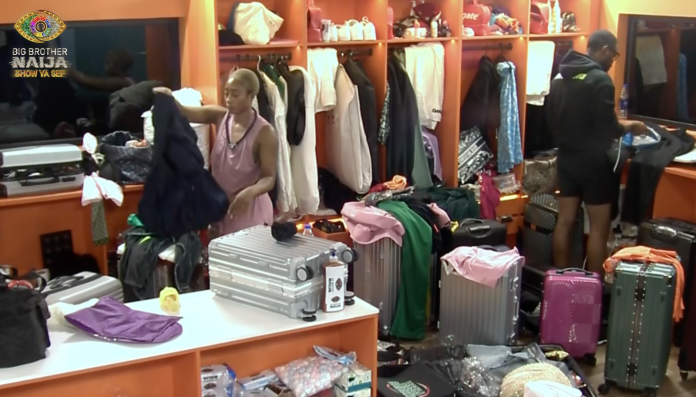
Nomy has received the first strike of the Show Ya Sef season after Big Brother found her guilty of repeatedly defying his instructions in the Big Brother Naija house.
Big Brother addressed the Housemates on Sunday, reminding them that compliance with his instructions is mandatory and that the rules governing the house are not optional.
During the address, Big Brother played a clip highlighting Nomy’s conduct before announcing the disciplinary action.
“Nomy, for constantly defying Big Brother… You are hereby issued a strike,” Big Brother said.
He subsequently described the sanction as Nomy’s “last and final warning.”
Following the announcement, Big Brother again reminded the Housemates that they are required to follow his instructions and respect the authority governing the house.
He warned that further instances of similar behaviour could result in more severe consequences.
The decision means Nomy now has a strike against her on Big Brother Naija Season 11. The development makes her the first Housemate to receive a formal strike in the Show Ya Sef house.
What’s Being Said
“Nomy, for constantly defying Big Brother… You are hereby issued a strike,” Big Brother said during the announcement.
Big Brother also described the disciplinary action as Nomy’s “last and final warning,” signalling that further violations could attract additional consequences.
What’s Next
Nomy will remain in the Big Brother Naija house with a strike against her record. Her conduct going forward will be subject to the same house rules and instructions reiterated by Big Brother.
Further disciplinary action could follow if she is found to repeat the behaviour that led to the strike. BizWatch Nigeria will continue to monitor developments in the Show Ya Sef house and report confirmed updates.
BBNaija Season 11 housemates prepare for Sunday’s live eviction show after Saturday night’s link-up
Goddessa and Araga revisit tensions over trust and her interactions with other housemates at the party
Housemates complete diary sessions, grooming and Biggie’s Gambit missions ahead of the live show
Main Story
Big Brother Naija Season 11 housemates turned from Saturday night celebrations to eviction preparations on Sunday, August 9, as the reality of another live show settled over the Show Ya Sef house.
The morning began slowly after the Saturday Night Link-Up, with several housemates remaining in bed until Biggie sent music into the house to get them moving. As preparations began, attention shifted to grooming, diary sessions and unresolved relationships ahead of the evening’s eviction show.
Goddessa used a conversation with Abi and Sheba to discuss her situation with Araga. She said she believes Araga likes her but feels his ego may be affecting their relationship. She also explained that tensions arose after she ignored his wishes at the link-up and danced with other male housemates.
For Goddessa, the disagreement is largely about trust. She said she and Araga have only recently met and believes he needs to give her room to make her own decisions.
The housemates also entered the diary room for exit sessions, reflecting on their journeys and considering the possibility of leaving the house. Bells described her experience as messy but said she believed the housemates would miss her, while Sultex said Nomy, Neche and Mercedes were among those he believed would not miss him.
Oyin described her journey as a roller coaster of emotions and said Flora was the housemate she believed would genuinely miss her. Aikou told Biggie he was acting as though he expected to be evicted and had put on his shoes as part of his Gambit strategy.
Flora received a Gambit mission requiring her to secretly move wrappers around different parts of the house for Biggie to retrieve without being caught.
Meanwhile, Yusuf addressed tensions involving Bells and Tram. He said he was uncomfortable with Tram’s repeated references to taking his “babe” and explained that he had confronted him about the comments. Yusuf also acknowledged that his relationship with Bells had become complicated and said he now preferred that they remain friends.
As the salon prepared to close, the housemates completed their final grooming sessions before the live show.
What’s Being Said
“There is more to me than what I have shown so far,” Ricky said during a reflective conversation with Yusuf, adding that he believes in redemption.
Goddessa said Araga needs to trust her enough to make her own choices, particularly regarding her interactions with other housemates.
What’s Next
The BBNaija Season 11 Sunday Live Eviction Show is scheduled for 7:00 p.m. WAT on Africa Magic Showcase and Africa Magic Family.
The housemates will find out which of them will leave the Show Ya Sef house as the live show unfolds.
BBNaija Season 11 continues to stream live 24/7 on DStv Channel 198 and GOtv Channel 49.
Bottom Line
The Bottom Line: Sunday’s eviction preparations have highlighted both the uncertainty surrounding the housemates’ individual journeys and tensions developing within their relationships. With the live show set to determine who stays and who leaves, the housemates’ recent choices could carry consequences beyond the party atmosphere of the previous night.
Brent crude fell 9.21% for the week to $81.81 per barrel as optimism over US-Iran diplomacy reduced geopolitical risk
West Texas Intermediate (WTI) declined 9.4% to $76.71 per barrel, while expectations of higher OPEC+ supply added pressure
A 2.5 million-barrel increase in US crude inventories reinforced expectations of a better-supplied market
Main Story
Oil prices fell more than 9% during the week as improving prospects for US-Iran diplomacy eased fears of supply disruptions through the Strait of Hormuz.
International benchmark Brent crude ended at $81.81 per barrel, down 9.21% from $90.11 a week earlier, while US benchmark West Texas Intermediate (WTI) declined 9.4% to $76.71 from $84.67.
The decline followed renewed optimism over diplomatic efforts between Washington and Tehran after US President Donald Trump said talks with Iran had resumed and were making progress.
The prospect of an agreement reducing risks around the Strait of Hormuz encouraged investors to unwind part of the geopolitical premium that had supported crude prices.
Supply expectations also weighed on the market. Major OPEC+ producers agreed to increase collective production by 188,000 barrels per day from September as the group continues to reverse voluntary production cuts introduced in 2023.
US inventory data added further pressure. Commercial crude inventories unexpectedly increased by about 2.5 million barrels during the week, contrary to forecasts for a decline.
Oil prices recovered some ground toward the end of the week as uncertainty around the Strait of Hormuz continued to provide a degree of support.
Iranian Deputy Foreign Minister Kazem Gharibabadi also indicated that discussions with Oman over future shipping arrangements in the strait were nearing completion, while reports of possible restrictions on vessels from countries Tehran considers hostile kept supply concerns in focus.
What’s Being Said
US President Donald Trump said negotiations with Iran had resumed and were making progress, a position that helped reduce the geopolitical risk premium in oil markets.
Iranian Deputy Foreign Minister Kazem Gharibabadi has separately said Tehran was working with Oman on arrangements for shipping through the Strait of Hormuz.
Current reporting, however, indicates that the status of direct US-Iran negotiations remains contested, with Iranian officials disputing some US claims about the talks.
What’s Next
Oil traders will watch developments around the Strait of Hormuz, particularly any agreement that could restore more normal shipping activity through the strategic waterway.
Markets will also monitor OPEC+ production increases and subsequent US inventory data for evidence of whether global supply conditions are loosening further.
The Bottom Line:
The sharp weekly decline shows that oil prices are responding to a combination of lower geopolitical risk and stronger supply expectations. However, continued uncertainty around the Strait of Hormuz means the market remains sensitive to any reversal in diplomatic or shipping developments.
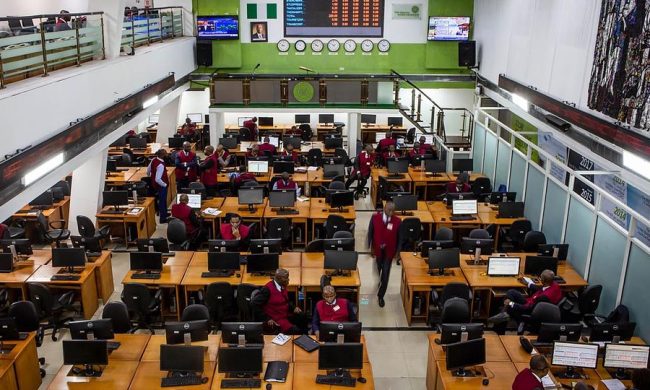
Banking stocks led buying interest as the Nigerian Exchange (NGX) All-Share Index gained 0.15% to close at 245,573.60
Market capitalisation increased by ₦235.12 billion to ₦158.51 trillion as total trading volume rose 185.56%
Twenty-two stocks gained against 24 losers, while the Banking sector advanced 1.53% to lead sectoral performance
Main Story
The Nigerian Exchange (NGX) closed higher as renewed buying interest in major banking stocks lifted the All-Share Index by 0.15% to 245,573.60. Trading data from the local exchange showed that market capitalisation increased by ₦235.12 billion, also representing a 0.15% rise, to ₦158.51 trillion.
The market recorded stronger trading activity, with total volume and value of transactions increasing by 185.56% and 30.27%, respectively. About 1.52 billion shares valued at ₦26.65 billion changed hands across 42,580 deals.
FTGINSURE accounted for 54.33% of total market volume, followed by FCMB at 14.36%, ACCESSCORP at 11.61%, CHAMS at 2.14% and FIRSTHOLDCO at 1.65%, according to trading data.
ACCESSCORP led the value chart, accounting for 17.56% of total transaction value, making it the most traded stock by value during the session.
UPDC led the gainers with a 9.23% increase, followed by CWG at 6.56%, MANSARD at 4.80%, NEIMETH at 4.24%, CUTIX at 4.00% and FIRSTHOLDCO at 3.86%.
On the decliners’ chart, REDSTAREX fell 10.00% to lead the losers, followed by CAP at 9.98%, JOHNHOLT at 9.82%, ABCTRANS at 9.57%, LEGENDINT at 8.70% and TRANSEXPR at 8.51%.
Despite the overall market gain, breadth remained negative, with 22 gainers against 24 losers. Three of the five major sectors declined.
What’s Being Said
Trading data from the Nigerian Exchange showed that banking stocks were the strongest sectoral performers, with the Banking Index gaining 1.53%. The Industrial Goods sector fell 0.37%, Insurance declined 0.21%, while Oil & Gas dropped 0.04%; Consumer Goods was unchanged.
The session’s performance indicates that investor demand for selected banking names helped offset weakness across other major sectors.
What’s Next
Investors will continue to monitor buying interest in major banking stocks and whether the sector can sustain its positive momentum in subsequent sessions.
Market participants will also watch sector rotation and market breadth for signs of whether the broader recovery can extend beyond selected banking and blue-chip counters.
The Bottom Line:
The session showed that banking stocks remain an important source of support for the NGX, but the negative market breadth indicates that the gains were not broad-based. Sustained momentum will depend on whether buying interest spreads beyond the leading banking counters.
The transformation of Nigeria’s transportation system is entering a new phase. As the country increasingly explores cleaner and alternative energy sources for mobility, electric vehicles (EVs) and compressed natural gas (CNG)-powered vehicles are gradually becoming part of the Nigerian motoring environment.
For the Federal Road Safety Corps, the emergence of these vehicles is not merely an energy or environmental conversation. It is fundamentally a road-safety conversation.
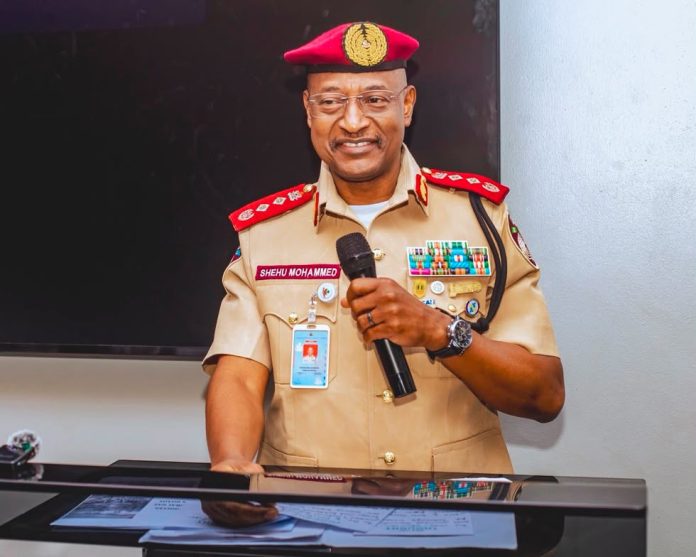
This was the strategic perspective reflected in the presentation and global road-safety engagement of the Corps Marshal, Shehu Mohammed, whose leadership has placed technology, innovation, regulation and safer mobility at the centre of Nigeria’s road-safety agenda.
As Nigeria participates in international discussions on improving global road safety and accelerating progress towards reducing road traffic deaths and injuries, the question is increasingly clear: How prepared is the country to ensure that new vehicle technologies are introduced without creating new safety risks?
Beyond the Fuel Debate: Safety Must Remain the Priority
Interestingly, the FRSC Corps Marshal, Shehu Mohammed was at the recent summit of Nigerian Auto Journalists Association in Lagos. He also gave insight to the Corps’ preparedness towards upscaling its operational and policy alignment to be at sync with Electric and CNG vehicles to ensure safer motoring environment in Nigeria. Without much emphasis, its obvious that CNG and EVs offer important opportunities for Nigeria. EVs eliminate tail pipe emissions, while CNG vehicles can provide an alternative to conventional petrol and diesel propulsion.
However, a change in propulsion technology does not automatically eliminate road crashes. “The EV and CNG initiative aligns with the United Nations Sustainable Development Goals especially the SDG 11 and SDG 123 which provide a strong framework because CNG and EVs contribute to cleaner transportation, reduced emissions, and more sustainable urban mobility through safer roads and transport systems, cleaner air and healthier communities and more resilient infrastructure”. Speaking at the Summit, he added that Nigeria is a signatory to UN convention and as the nation’s lead agency on road safety management and traffic administration, the FRSC has integrated its National Crash Reporting Information System, FRSC Mobile App and the National Community Post Crash Care Initiative which allows for swift community response to road crash emergencies and further drive the success story of the EVs and CNG vehicles in Nigeria as part of measures towards promoting climate action and sustainable transport system.
Worthy of note is the fact that a vehicle may be electric, gas-powered or petrol-driven, but it still operates within the same road environment. It interacts with pedestrians, motorcycles, heavy trucks, cyclists and other vehicles. It is still affected by speeding, poor road design, mechanical failure, driver distraction, fatigue, reckless overtaking and inadequate maintenance.
The implication is significant: Nigeria’s transition to cleaner mobility must be accompanied by an equally deliberate transition to stronger safety standards.
The central message from the road-safety perspective is therefore simple: innovation must never outrun regulation, training and emergency preparedness.
Electric Vehicles: New Technology, New Safety Considerations
Electric vehicles introduce a different technological architecture from conventional vehicles. Their safety profile is influenced by high-voltage battery systems, electronic control systems, sophisticated software and charging infrastructure.
For road users, several issues require particular attention.
Battery-related incidents
Lithium-ion battery systems can present specific challenges when severely damaged, overheated or involved in a crash.
In such situations, emergency responders must understand the vehicle’s high-voltage system and know how to isolate the power source safely. This has implications for Nigeria’s emergency response architecture. Road safety is not only about preventing crashes; it is also about ensuring that rescuers can safely respond when crashes occur.
Silent operation
Many electric vehicles produce significantly less engine noise at low speeds than conventional vehicles. This can create additional risks for pedestrians, particularly in busy urban environments, markets, residential areas and locations with vulnerable road users. The development of a safer motoring environment will therefore require greater public awareness and, where necessary, technological and regulatory responses.
Vehicle repair and maintenance
The arrival of EVs also requires a new generation of technicians trained in high-voltage systems, battery diagnostics and electronic vehicle safety.
Unqualified repairs, unauthorized modifications and the use of incompatible components could create safety risks.
This reinforces a longstanding FRSC principle: a mechanically deficient vehicle has no place on the road, regardless of the type of energy it uses. The Corps Marshal has repeatedly stressed the importance of vehicle roadworthiness and maintenance in preventing avoidable crashes.
CNG Vehicles: Safety Begins with Standards and Proper Conversion
CNG vehicles also offer opportunities for Nigeria, particularly in a country with significant natural-gas resources. But their safety depends heavily on the quality of the vehicle, the integrity of the gas storage system and the competence of the conversion process.
The most important safety principle is that CNG conversion must not be carried out by unqualified persons or in unauthorized facilities.
A poorly installed system can create serious risks, including:
Improperly fitted gas cylinders; Damaged or poorly maintained fuel lines; Inadequate ventilation; Unsafe modifications to vehicle structures; Poor-quality components; and Failure to inspect and maintain the system properly.
For this reason, the expansion of CNG mobility must go hand in hand with effective standards for conversion centres, technicians, inspection, certification and periodic maintenance.
The public must also understand that CNG vehicles require specific safety knowledge. Drivers and fleet operators need to know how to respond to suspected gas leaks, vehicle damage and other emergencies.
The FRSC and the Emerging Mobility Landscape
The role of the FRSC in the era of EVs and CNG vehicles will extend beyond traditional traffic enforcement. The Corps is strategically positioned to contribute to the development of a safer alternative fuel mobility ecosystem through:
Public education and awareness
Motorists need clear, evidence-based information about the safe use of EVs and CNG vehicles. Public enlightenment must address charging, conversion, maintenance, emergency response and safe driving behaviour.
Vehicle inspection and roadworthiness
As the composition of Nigeria’s vehicle fleet changes, inspection systems must evolve to recognise the specific safety requirements of new propulsion technologies.
Training of personnel
FRSC personnel, rescue officers and emergency responders require continuous training to understand the characteristics of electric and CNG vehicles, particularly during crash response and vehicle recovery.
Inter-agency collaboration
The safety of alternative-fuel vehicles requires cooperation among regulators, manufacturers, vehicle importers, conversion centres, emergency services, fire authorities, transport operators and road users.
Technology-driven road safety
The broader future of road safety will increasingly involve intelligent transport systems, connected vehicles, digital enforcement and data-driven interventions.
This is consistent with the FRSC’s stated commitment to innovation and technology-driven road-safety management.
The Safe System Approach Must Guide Nigeria’s Transition
A major lesson from global road safety practice is that responsibility for safety cannot rest entirely on the driver. The Safe System Approach recognises that road safety requires multiple layers of protection involving: safe road users; Safe vehicles; Safe speeds; Safe roads and infrastructure; and effective post-crash care. This approach is particularly relevant to electric and CNG vehicles.
A safer alternative-fuel vehicle cannot compensate for a dangerous road. A well-designed road cannot prevent every crash caused by reckless driving. An advanced vehicle cannot eliminate every risk created by poor maintenance.
Safety therefore depends on the entire system working together.
A Call for Regulation Before Rapid Expansion
As Nigeria increases the adoption of EVs and CNG vehicles, one of the most important policy lessons is the need to ensure that growth is matched by regulation. The country must continuously review: Vehicle safety standards; Importation requirements; CNG conversion standards; EV battery and charging safety; Vehicle inspection procedures; Emergency response protocols; Technician certification; Fire and rescue preparedness; and Public education requirements. The objective should not be to discourage innovation. Rather, it should be to ensure that innovation is introduced responsibly.
As the Corps Marshal’s global road safety engagement underscores, the future of road safety will increasingly be inseparable from technology, but technology must be integrated into a broader system of regulation, enforcement, education, infrastructure and emergency response.
Conclusion: Nigeria is moving towards a more diversified transportation energy system. Electric and CNG vehicles will increasingly become part of the nation’s mobility landscape. The question is no longer simply whether these vehicles are the future. The more important question is whether Nigeria is prepared to make that future safe. The message from the FRSC road-safety perspective is clear: cleaner mobility must also be safer mobility.
As the country embraces new vehicle technologies, safety standards must be built into every stage from manufacturing and importation to conversion, registration, maintenance, driving, crash response and rescue.
Under the leadership of Corps Marshal Shehu Mohammed, the FRSC’s road safety mandate is increasingly situated within this wider global transformation. The Corps’ responsibility is not merely to respond to the vehicles of today, but to help prepare Nigeria for the mobility systems of tomorrow.
The future of transportation may be electric. It may be compressed natural gas, but whatever powers the vehicle, safety must remain the power that drives the journey.
Osondu Ohaeri, a Fellow of the Nigerian Institute of Public Relations is a Deputy Corps Commander and Corps Public Education Officer at the FRSC National Headquarters Abuja
Araga reveals how his connection with Goddessa began after seeing her without makeup
Bells says she struggles to control her reactions during conflicts and considers leaving the House
Housemates vote for the season’s first Most Influential Player of the Week
Main Story
Araga opened up about his growing connection with Goddessa on Day 13 of the Big Brother Naija House, while Bells considered leaving amid continued struggles with conflict.
The day began quietly as housemates woke up, completed their morning routines and prepared for the evening’s Saturday night activities. HoH Sheba later woke the remaining housemates and reminded them to begin their chores and clean the House.
Speaking with Abi, Araga explained that he entered the House determined not to develop feelings for anyone. He said his perspective changed after seeing Goddessa without makeup and appreciating her beauty. He added that he does not like to delay when he develops an interest in someone, prompting him to approach her bed that night.
Araga also said he was interested in seeing how his relationship with Goddessa develops after the show. He discussed plans to expand his business and establish modelling classes, while Abi said she hopes to launch a cooking show and publish cooking books.
The relationship remained a major talking point as Araga and Goddessa spent time together later in the morning. Goddessa told Araga she missed his company while helping with cleaning, after which the pair shared kisses and cuddles. They also revisited their conversation from the previous night, with Araga saying their priority should remain themselves and their connection.
Elsewhere, Bells expressed frustration over her reactions during arguments. She told Mercedes, Yusuf and Martins that she finds it difficult to control what she says when angry and does not enjoy confrontation. She later told the housemates she was packing her bags in preparation for another possible argument.
The day also featured the first MIPOW voting of the season, while Temi Nkem prepared jollof rice and beef for the housemates. Tensions later emerged in the kitchen after Neche discovered that food she had stored in the refrigerator was missing, while Sultex also reported that his food had been tampered with.
What’s Being Said
The supplied report records conversations involving Araga, Goddessa, Bells and other housemates, but does not provide direct quotations suitable for publication under BizWatch Nigeria’s quotation standard. No quote has been added to avoid introducing unsupported material.
What’s Next
The housemates are expected to continue preparations for the Saturday night party
The result of the season’s first Most Influential Player of the Week vote is expected to emerge after the housemates’ private nominations
Bottom Line
The Bottom Line: Day 13 highlighted two contrasting storylines in the House: Araga and Goddessa’s relationship continued to develop, while Bells’ difficulty managing conflict created uncertainty over her future in the competition.
Gerard confronts Kamsy over her interaction with Chimsom Chuka during the Pool Party
Kamsy apologises and explains that alcohol influenced her behaviour
Mercedes wins the Arena Games with 105 points as tensions continue among housemates
Main Story
Gerard confronted Kamsy on Friday over her behaviour towards Chimsom Chuka during the previous night’s Pool Party, telling her that the incident raised concerns about respect and trust in their relationship.
The conversation took place in the lounge after the housemates returned from a yoga session and completed their morning chores. Gerard told Kamsy that his concern was not her dancing with other housemates, but specifically her decision to sit on Chimsom’s shoulders during the party.
Kamsy explained that she had been drinking and said she was struggling in the pool. She also reminded Gerard that he had previously told her he had no problem with her dancing with other people.
Gerard maintained that the issue was about boundaries and said he did not want to be in a position where he had to tell a woman how to behave. He compared the situation with Goddessa’s relationship with Araga, noting that she dances with other men while maintaining what he described as respect for her relationship.
Kamsy apologised and Gerard accepted the apology, although he later explained that the disagreement was connected to deeper trust issues. He told Kamsy that he cares about her but believes trust has to be earned, while reflecting on experiences from his past.
Elsewhere in the house, Chimsom discussed the situation with Goddessa and admitted that their earlier conversation had helped him gain perspective. He said he wanted to speak with Gerard about the situation.
The day also featured the Arena Games, where Mercedes emerged victorious after scoring 105 points. Keivo finished as the first runner-up with 95 points.
What’s Being Said
“If I have to put myself in a position where I have to tell a girl how to act, it’s a problem,” Gerard told Kamsy during their conversation.
Kamsy apologised and attributed her behaviour at the Pool Party partly to alcohol, while Gerard said his concern centred on her actions and the question of trust.
Chimsom later told Goddessa that their earlier discussion had helped him gain perspective and indicated that he wanted to have a conversation with Gerard about the situation.
What’s Next
Gerard and Kamsy are expected to continue navigating their relationship following their conversation about trust and boundaries
Chimsom has indicated that he wants to speak directly with Gerard about the Pool Party incident
The housemates will continue competing in the week’s activities ahead of the next Sunday Live Eviction Show
The Bottom Line:
The Pool Party incident has become another test of the relationships developing inside the Big Brother Naija house, with Gerard’s concerns shifting the conversation from the party itself to trust and personal boundaries.
Meanwhile, Mercedes’ Arena Games victory gives her a strong competitive position as housemates continue to balance relationships, alliances and the demands of the competition.
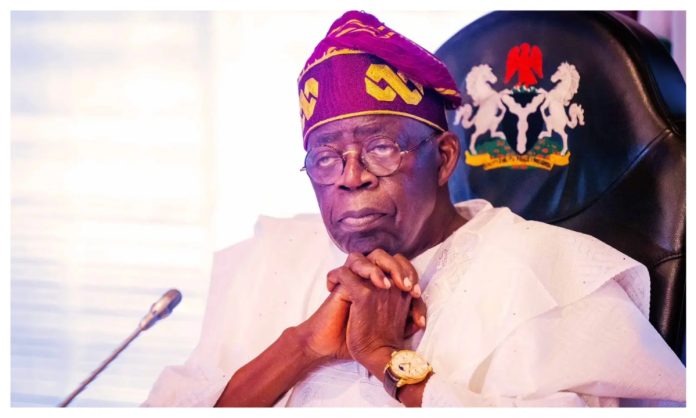
President Bola Tinubu welcomed Nigeria’s admission as the newest National Member Committee of the World Energy Council.
He said the membership would strengthen Nigeria’s voice in global energy discussions.
Tinubu described the development as recognition of Nigeria’s energy reforms and leadership role in Africa.
He pledged Federal Government support for WEC Nigeria’s policy, investment and innovation efforts.
Main story
President Bola Tinubu has welcomed Nigeria’s admission as the newest National Member Committee of the World Energy Council (WEC), describing the development as a vote of confidence in the country’s energy reforms and leadership role in Africa.
The President’s position was contained in a statement issued by his spokesperson, Bayo Onanuga, on Friday in Abuja.
Tinubu said Nigeria’s membership of the century-old global energy body would give the country a stronger platform to participate in shaping international energy policy.
According to him, the membership would strengthen Nigeria’s voice on energy security, equity and sustainability while creating opportunities for the country to contribute to global energy discussions.
The President congratulated the inaugural leadership of WEC Nigeria, led by Abdulrazaq Isa as Chairman and Bala Wunti as Chief Executive Officer.
He also commended members of the inaugural board drawn from the energy industry, regulatory institutions, finance, academia and the Future Energy Leaders community.
Tinubu described Isa as a distinguished industrialist whose investments in indigenous refining and industrial energy had expanded opportunities for Nigerian businesses.
He also described Wunti as an experienced energy strategist and reform advocate whose more than three decades in the sector had contributed to reforms aimed at improving national revenues and restoring investor confidence.
The President said the diverse composition of the WEC Nigeria board would provide the experience, neutrality and credibility required to advance the council’s objectives in Nigeria.
Tinubu said the Federal Government would support WEC Nigeria as a neutral and technology-agnostic platform for policy dialogue, investment mobilisation and innovation.
He added that Nigeria would work with the WEC in London and its global network to promote secure, affordable and sustainable energy.
The issues
Nigeria is seeking to strengthen its position in the global energy system while pursuing reforms across its oil, gas and electricity sectors. Tinubu’s response frames the country’s WEC membership not merely as participation in an international body, but as an opportunity to increase Nigeria’s influence over global energy discussions and attract investment into the sector.
What’s being said
“Nigeria has joined the World Energy Council to lead, not just participate, to ensure Africa’s voice shapes global energy decisions.”– Bola Tinubu, President of Nigeria:
“The development will strengthen Nigeria’s voice on issues of energy security, equity and sustainability.”– Bola Tinubu, President of Nigeria:
“The composition of the board reflects a blend of experienced industry leaders, regulators, finance experts and youth representatives.”– Bola Tinubu, President of Nigeria:
What’s next
WEC Nigeria is expected to begin operating under its inaugural leadership, with the Federal Government indicating its support for the committee’s role in energy policy dialogue, investment mobilisation and innovation.
Bottom line
Tinubu has seized on Nigeria’s entry into the World Energy Council to position the development as evidence of growing confidence in the country’s energy reforms and as an opportunity for Nigeria to exert greater influence on global energy decisions.
MTN Foundation says women make up 43.7 per cent of its beneficiaries.
The partnership will support 200 female entrepreneurs in Kano and Cross River.
Beneficiaries will receive entrepreneurship training, business support and access to funding and markets.
MTN Foundation targets equal male and female participation in its Y’elloPreneur programme by 2030.
Main story
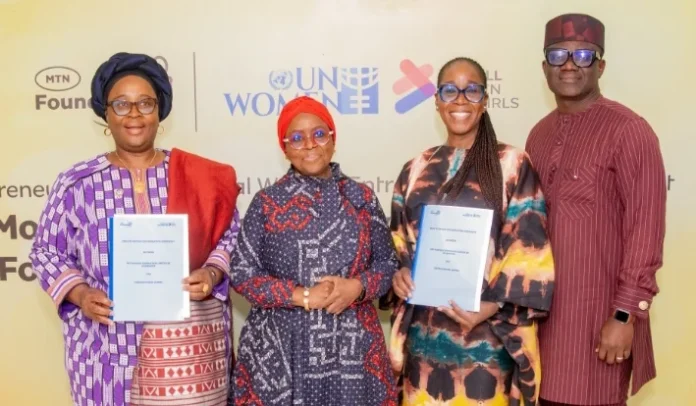
The MTN Foundation and UN Women have partnered to strengthen the economic participation of 200 rural women entrepreneurs in Kano and Cross River states.
The partnership was formalised through a Memorandum of Understanding signed on Friday in Lagos as part of efforts to improve women’s access to skills, finance, markets and business infrastructure.
MTN Foundation Executive Director, Dr Odunayo Sanya, said women currently account for 43.7 per cent of the foundation’s beneficiaries, reflecting its focus on expanding opportunities for women through its interventions.
She said the new programme would be implemented under the Y’elloPreneur initiative and target rural female entrepreneurs who face barriers to business growth.
The beneficiaries will receive entrepreneurship training, business development support, pitching opportunities and access to funding, with training to be delivered through the Enterprise Development Centre.
Sanya said the foundation had previously supported 122 women entrepreneurs with N304 million and had built the capacity of more than 6,000 female entrepreneurs through the Y’elloPreneur initiative.
She said the foundation was working towards achieving equal participation between men and women in the initiative by 2030.
UN Women Country Representative, Beatrice Eyong, said the partnership would also expose rural women to digital opportunities and help them participate more actively in Nigeria’s growing digital economy.
She said Kano and Cross River were selected partly because of their strong agricultural activities, particularly in rice and cassava production, creating opportunities for women to move beyond primary production into value addition.
The Head of Internal Audit and Forensic at MoMo PSB, Dr Howard Edafe, said the financial institution would support the programme by strengthening financial education and inclusion among participating women.
He said beneficiaries would be selected through community-based processes designed to ensure transparency and fairness.
The issues
Rural women entrepreneurs often face overlapping barriers involving access to finance, business skills, digital tools and reliable markets. These constraints can limit the ability of small businesses to expand, particularly in agricultural value chains where access to processing facilities and market opportunities can determine whether producers capture additional value.
What’s being said
“When a woman is empowered, she becomes a multiplier who transforms communities and strengthens the economy.”– Dr Odunayo Sanya, Executive Director, MTN Foundation:
“Without digital inclusion, many rural women will remain excluded from opportunities shaping our future economy.”– Beatrice Eyong, Country Representative, UN Women:
“Our commitment goes beyond today’s signing. We will drive financial inclusion, strengthen financial education and ensure transparent beneficiary selection for successful programme implementation.”– Dr Howard Edafe, Head of Internal Audit and Forensic, MoMo PSB:
What’s next
The selected entrepreneurs are expected to undergo business training, develop proposals and pursue funding opportunities for viable enterprises. The programme will focus on improving women’s access to finance, markets, digital opportunities and productive infrastructure in the two states.
Bottom line
The MTN Foundation and UN Women partnership will target 200 rural women entrepreneurs in Kano and Cross River, combining business training, financial inclusion and market access to address some of the barriers limiting women’s economic participation.
The Armed Forces rescued 363 victims and arrested scores of terrorists and other criminal suspects in one week.
Troops disrupted terrorist logistics networks and recovered arms, ammunition and stolen livestock.
A single operation in Niger State freed 308 abducted persons from Kainji Lake National Park.
Military operations also targeted crude oil theft and illegal refining activities in the South South.
Main story
The Armed Forces of Nigeria (AFN) rescued 363 abducted and trafficked victims and arrested scores of terrorists, informants, logistics suppliers and other criminal suspects during nationwide operations in one week.
The Director of Defence Media Operations, Maj.-Gen. Michael Onoja, disclosed this on Friday in Abuja while giving an update on military operations across the country.
He said the operations also resulted in the recovery of weapons and ammunition, disruption of terrorist supply networks, destruction of illegal oil refining facilities and the neutralisation of terrorists.
The largest rescue operation during the period was recorded under Operation SAVANNAH SHIELD, where troops freed 308 abducted persons from Kainji Lake National Park in Borgu Local Government Area of Niger State.
Onoja said the victims comprised 163 residents of Woro in Kwara State and 145 persons from Niger State, with women and children making up most of those rescued.
In the North East, troops under Operation HADIN KAI rescued 35 victims and arrested suspected terrorist informants and logistics suppliers.
Onoja said troops rescued 31 people on July 31 after stopping an attempted abduction along the Buratai-Kamuya Road in Biu Local Government Area of Borno State.
The victims included 22 adult men, five adult women and four children.
Troops also rescued two women and two children from a terrorist enclave near Amuda Bridge in Gwoza Local Government Area on Aug. 1. The victims had reportedly been held captive since the 2023 farming season.
The defence spokesman said several suspected terrorists and their relatives also surrendered to troops in Gwoza, Konduga and Bama during the period, while 20 suspected terrorists surrendered at Kwuari in Konduga.
In the North West, Operation FANSAN YAMMA troops apprehended 21 people attempting to cross into Birnin Kebbi, with five identified as suspected terrorists and handed over to the Department of State Services.
The operation also led to the arrest of four suspects at Darusa Village Market in Sokoto State, where troops recovered six rustled cattle, mobile phones and N165,000.
Onoja said the Air Component of the operation separately conducted a precision strike against terrorists gathered with about 15 motorcycles at Kampani Bobi and Beri Settlement in Mariga, Niger State.
In the North Central, Operation WHIRL STROKE troops rescued nine kidnapped victims in Benue and Kogi states and arrested suspected criminals, including an alleged gun runner.
Seven victims abducted along the Wukari-Zaki-Biam Road were rescued in Ukum, Benue State, while two others were recovered after a separate kidnapping incident in Oke Ere, Yagba West Local Government Area of Kogi State.
Troops also arrested suspected associates of wanted terrorist leader Mathew, also known as “Full Fire”, after destroying his hideout at Sabongida Leke in Ukum.
In the South South, Operation DELTA SAFE troops rescued 11 kidnapped victims along the Lagos-Benin Road in Ovia North East Local Government Area of Edo State.
The troops also continued operations against crude oil theft, destroying illegal refining sites and recovering suspected stolen crude oil and refined petroleum products.
In the South East, Operation UDO KA troops arrested suspects linked to an ambush on soldiers and recovered weapons and ammunition from camps in Rivers, Delta and Imo states.
The operation also resulted in the arrest of five suspected members of the Indigenous People of Biafra following an attack on Fulani herders in Enugu State.
The issues
The scale of the military’s operations highlights the continued spread of kidnapping, terrorism, banditry, crude oil theft and other organised criminal activities across different regions. The large number of rescued victims also underscores the continuing humanitarian impact of insecurity, particularly on women and children.
What’s being said
“The operations demonstrated the Armed Forces’ sustained commitment to rescuing victims, disrupting criminal networks and denying terrorists freedom of action.”– Maj.-Gen. Michael Onoja, Director of Defence Media Operations:
“The Chief of Defence Staff commended troops for their discipline and commitment and urged Nigerians to continue providing useful information to security agencies.”– Maj.-Gen. Michael Onoja, Director of Defence Media Operations:
“The Armed Forces would sustain the current tempo of operations until peace and stability were fully restored across the country.”– Maj.-Gen. Michael Onoja, quoting Gen. Olufemi Oluyede, Chief of Defence Staff:
What’s next
The military said it would maintain operations against terrorists, kidnappers and other criminal networks while strengthening cooperation with other security agencies, local security groups and communities to improve intelligence gathering.
Bottom line
The military’s latest nationwide operations resulted in 363 rescues and numerous arrests, with troops also disrupting terrorist logistics, recovering weapons and tackling crude oil theft. The scale of the operations reflects the continued security challenges facing several parts of Nigeria.
Abia State Government has inaugurated 20 additional electric buses as part of efforts to expand clean public transportation.
Pi-CNG & EV, MOFI and REA pledged deeper collaboration with the state on clean energy and mobility.
Officials linked energy, agriculture and transportation to job creation, lower transport costs and sustainable economic growth.
Abia Government said the partnership would help attract investment and improve infrastructure.
Main story
Abia State has expanded its clean transportation programme with the addition of 20 electric buses, as the state steps up cooperation with Federal Government agencies on clean energy and mobility.
The new buses were inaugurated during a visit to the state by a delegation led by the Chief Executive Officer of the Ministry of Finance Incorporated (MOFI), Dr Armstrong Takang.
The visit brought together representatives of MOFI, the Presidential Initiative on Compressed Natural Gas and Electric Vehicles (Pi-CNG & EV), the Rural Electrification Agency (REA) and the Abia State Government to discuss opportunities for joint investment in clean energy infrastructure.
The latest deployment adds to efforts to reduce the cost and environmental impact of public transportation while expanding access to cleaner mobility options.
Pi-CNG & EV Executive Chairman, Ismaeel Ahmed, said the development of transportation could not be separated from broader investments in energy and agriculture because the three sectors collectively support economic activity.
He said an efficient transport system helps businesses move goods, connects people to opportunities and creates jobs, making affordable mobility an important part of economic development.
Ahmed said Pi-CNG & EV would work with Abia to increase the use of CNG and develop infrastructure capable of supporting a wider clean-mobility network.
He said the collaboration would involve government agencies, private-sector players and other stakeholders in developing the infrastructure required to make cleaner transportation more accessible and affordable.
Takang said the Federal Government’s development efforts should produce measurable benefits outside the nation’s capital, particularly in communities where infrastructure gaps remain significant.
He identified energy, agriculture and transportation as sectors that could reinforce one another when developed together, creating opportunities for employment, investment and improved livelihoods.
The MOFI chief called for closer cooperation between the Federal agencies and Abia State to ensure that national clean-energy programmes translate into practical projects across the South-East.
REA Managing Director Abba Aliyu was also part of the discussions, which focused on expanding reliable electricity access and developing infrastructure to support sustainable economic activity in Abia.
Governor Alex Otti welcomed the collaboration and said his administration was prepared to work with the Federal Government initiatives to expand clean-energy adoption and improve the state’s transport infrastructure.
He said stronger cooperation could also help position Abia to attract investment into emerging clean-energy and transportation opportunities.
The issues
Nigeria’s transport sector faces high operating costs, while unreliable electricity and limited clean-energy infrastructure continue to constrain economic activity. Expanding electric mobility and CNG adoption could reduce dependence on conventional fuels and lower transportation costs, but wider adoption will depend on adequate charging and refuelling infrastructure, reliable electricity and sustained investment.
What’s being said
“Energy, agriculture and transportation are interconnected sectors that must be developed in an integrated manner to unlock sustainable economic growth.”– Ismaeel Ahmed, Executive Chairman, Presidential Initiative on CNG and Electric Vehicles:
“Transportation fundamentally serves as an enabler of economic activity by facilitating the movement of people and goods, creating jobs, generating wealth and improving livelihoods.”– Ismaeel Ahmed, Executive Chairman, Presidential Initiative on CNG and Electric Vehicles:
“National development must extend beyond Abuja to deliver meaningful impact to communities across the country.”– Armstrong Takang, Chief Executive Officer, Ministry of Finance Incorporated:
“When effectively integrated, energy, agriculture and transportation will become powerful drivers of economic growth, job creation and improved livelihoods.”– Armstrong Takang, Chief Executive Officer, Ministry of Finance Incorporated:
What’s next
Pi-CNG & EV, MOFI, REA and the Abia State Government are expected to strengthen their partnerships around clean mobility, reliable energy access and infrastructure development, with the state seeking to expand electric bus deployment and attract further investment into the clean-energy ecosystem.
Bottom line
The inauguration of 20 additional electric buses and the renewed partnership between Abia and Federal clean-energy agencies signal a broader push to build cleaner transportation infrastructure while using energy and mobility investments to support economic growth.
Housemates lose their first wager after Biggie criticised their presentation for lacking coordination, creativity and imagination
Sheba becomes the first female Head of House while Mercedes wins the Arena Games with 105 points
Biggie introduces prize-money fluctuations and brings back the Most Influential Player of the Week
Main Story
Big Brother Naija Season 11 housemates faced their first major setback in week two after losing their wager presentation as tensions, strategy and competition intensified in the Show Ya Sef house.
The week, themed “Game on”, required the 24 housemates to work collectively on a creative presentation that would establish a season identity for BBNaija Season 11. However, disagreements during preparations spilled into the task, with several housemates involved in heated exchanges.
According to Africa Magic, Biggie’s assessment went beyond the final presentation to include how effectively the housemates collaborated and brought their concept to life. Despite commending their commitment and teamwork, Biggie ruled that the presentation lacked sufficient coordination, creativity and imagination, resulting in the house’s first wager loss of the season.
The week also produced a leadership milestone as Sheba became the first female Head of House of the season. However, the position did not automatically grant access to the HoH Loft. Following the season’s new lucky-dip system, Cassi gained access and selected Nomy to join him.
Biggie also announced changes to the game’s financial stakes, with the housemates now required to protect the cash component of the season’s ₦160 million prize package. The season’s total prize includes ₦100 million in cash and a new SUV.
Meanwhile, the Most Influential Player of the Week (MIPOW) returned, allowing housemates to score one another based on influence within the house.
What’s Being Said
“Big Brother Naija has consistently redefined entertainment in Africa by bringing together authentic storytelling, compelling personalities and moments that resonate with millions of viewers,” said Atinuke Babatunde, Executive Head, Content and Channels, West Africa, MultiChoice.
Africa Magic’s coverage of the season has continued to position the new twists, including The Gambit and changing prize dynamics, as mechanisms designed to increase strategic competition among the housemates.
What’s Next
The housemates are expected to face the consequences of their first wager loss while preparing for the next weekly challenge
The next MIPOW cycle will give housemates another opportunity to influence how their fellow contestants are perceived within the house
The Sunday Live Eviction Show is scheduled for 7:00 PM WAT on Africa Magic, with viewers set to learn which housemate will leave the competition
Bottom Line
The Bottom Line: Week two has moved BBNaija Season 11 beyond introductions and into genuine competition, with teamwork, influence and individual strategy becoming increasingly important. The first wager loss also demonstrates that personality alone will not be enough to navigate a season built around performance and strategic gameplay.
President Donald Trump has signed two executive orders seeking to further restrict birthright citizenship.
One order targets automatic citizenship for children of certain non-U.S. citizens, including foreign government employees and people classified as “alien enemies.”
Another order seeks to curb “birth tourism” by people travelling to the U.S. to give birth.
The move follows a Supreme Court ruling that rejected an earlier attempt to restrict birthright citizenship.
Main story
U.S. President Donald Trump has signed two executive orders aimed at further restricting birthright citizenship and curbing what his administration describes as “birth tourism.”
One of the executive orders seeks to deny automatic U.S. citizenship to certain children born to parents who are not U.S. citizens, including children of foreign government employees and individuals classified as “alien enemies.”
The second order targets “birth tourism,” the practice of travelling to the United States primarily to give birth so that a child acquires U.S. citizenship by birth.
The latest measures form part of the administration’s broader effort to tighten immigration policies and limit access to birthright citizenship.
Earlier in his second term, Trump signed an executive order seeking to deny automatic citizenship to children born to parents who were in the United States temporarily or without lawful permanent residence.
However, the U.S. Supreme Court rejected that order in June, reaffirming that the Citizenship Clause of the 14th Amendment has guaranteed automatic citizenship to individuals born on U.S. soil since 1868.
Although executive orders direct federal government policy, they do not override constitutional provisions or existing laws and remain subject to judicial review.
The issues
Birthright citizenship has long been protected under the 14th Amendment to the U.S. Constitution, which grants citizenship to most people born in the United States. Trump’s latest executive orders are likely to face legal challenges over whether a president can restrict constitutional rights through executive action without congressional approval or a constitutional amendment.
What’s being said
“One order seeks to deny automatic citizenship to certain children whose parents are not U.S. citizens, including children of foreign government employees and people classified as ‘alien enemies.'”– Executive Order signed by U.S. President Donald Trump:
“The other seeks to ban so-called ‘birth tourism,’ a term used to describe people visiting the U.S. for the purpose of giving birth so that their child obtains U.S. citizenship.”– Executive Order signed by U.S. President Donald Trump:
What’s next
The executive orders are expected to face immediate legal scrutiny, with courts likely to determine whether the measures are consistent with the 14th Amendment and existing Supreme Court precedent on birthright citizenship.
Bottom line
Trump’s latest immigration measures renew a long-running legal and political battle over birthright citizenship, but any lasting changes will likely depend on the outcome of expected court challenges.
PTDF says its specialised institutions will support President Bola Tinubu’s goal of building a $1 trillion economy by 2030.
The fund inaugurated a committee to review academic programmes at the General Shehu Musa Yar’Adua University of Geological Sciences and Engineering Technology.
PTDF says the university and a new skills centre in Port Harcourt will develop high-level and technical manpower for the energy sector.
The fund is aligning training programmes with major national oil and gas projects.
Main story
The Petroleum Technology Development Fund (PTDF) says it is aligning its education and workforce development initiatives with President Bola Tinubu’s Renewed Hope Agenda aimed at building a $1 trillion economy by 2030.
The Executive Secretary of PTDF, Prof. Shu’aibu Aliyu, stated this on Friday while inaugurating the Academic Programmes Review Committee for the General Shehu Musa Yar’Adua University of Geological Sciences and Engineering Technology in Kaduna.
Aliyu said the fund had established two specialised institutions to meet the changing needs of the global energy industry.
He identified them as the General Shehu Musa Yar’Adua University of Geological Sciences and Engineering Technology in Kaduna and the Centre for Skills Development and Training in Port Harcourt.
According to him, the university will focus on postgraduate education, advanced research and innovation, while the Port Harcourt centre will train middle-level technical manpower, including technicians and artisans.
Aliyu said the university, formerly known as the College of Petroleum and Energy Studies, had received a licence from the National Universities Commission.
He added that PTDF had introduced a split-site programme that allows students to complete part of their studies in Nigeria and the remainder at partner universities in the United Kingdom and other countries.
The initiative, he said, is intended to reduce foreign exchange spending on overseas education, strengthen local institutions and build globally competitive expertise within Nigeria.
Aliyu also said PTDF was aligning its academic programmes with strategic energy projects, including the AKK Gas Pipeline, the Trans-Saharan Gas Pipeline, the OB3 Gas Trunkline, Olokola LNG, UTM Floating LNG and several deepwater oil developments.
He urged the review committee to assess the university’s academic programmes, research facilities, digital infrastructure and institutional performance to position it as a globally competitive centre of excellence.
Responding on behalf of the committee, Chairman Mr Umar Ibrahim described the assignment as both a national and continental responsibility, stressing the need for Africa to build its own capacity to develop its petroleum resources.
The issues
Nigeria’s energy sector continues to face shortages of highly skilled professionals despite major investments in oil, gas and energy infrastructure. PTDF’s strategy seeks to reduce dependence on overseas training by strengthening domestic institutions while aligning education with the workforce requirements of strategic national projects.
What’s being said
“The recent presidential announcement to make the centre a university demonstrates the political commitment to fully raise its potential in alignment with the vision of Mr President.”– Prof. Shu’aibu Aliyu, Executive Secretary, Petroleum Technology Development Fund (PTDF):
“PTDF is aligning its academic programmes with strategic national energy projects, including the AKK Gas Pipeline, the Trans-Saharan Gas Pipeline, the OB3 Gas Trunkline, Olokola LNG and several deepwater oil developments.”– Prof. Shu’aibu Aliyu, Executive Secretary, Petroleum Technology Development Fund (PTDF):
“We see this assignment not only as a national responsibility but as a continental one.”– Umar Ibrahim, Chairman, Academic Programmes Review Committee:
What’s next
The review committee is expected to evaluate the university’s academic structure and recommend improvements that will strengthen its capacity to produce globally competitive graduates and support Nigeria’s growing energy industry.
Bottom line
PTDF is deepening its investment in specialised education and workforce development to reduce reliance on foreign expertise and build the skilled professionals needed to drive Nigeria’s long-term energy and economic ambitions.
The Federal Government says electricity sector reforms will now be measured by the number of communities and people connected to power.
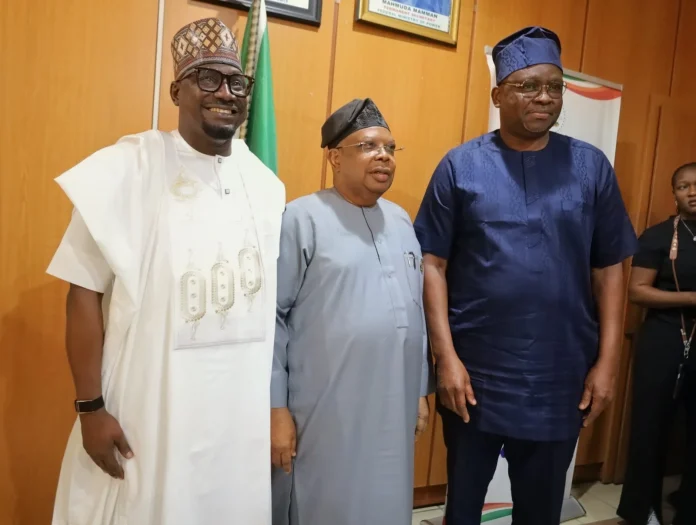
Power Minister Joseph Tegbe inaugurated the new Governing Board of the Rural Electrification Agency (REA).
Former Ekiti State Governor Ayo Fayose will chair the seven-member board.
The government says REA will play a central role in expanding electricity access under the Electricity Act.
Main story
The Federal Government says Nigeria’s electricity sector is shifting its focus from measuring success by installed capacity to assessing how many communities and people gain access to electricity.
Minister of Power, Mr Joseph Tegbe, stated this on Friday while inaugurating the Governing Board of the Rural Electrification Agency (REA) in Abuja.
The News Agency of Nigeria (NAN) reports that former Ekiti State Governor Ayo Fayose will chair the seven-member board, alongside Alhaji Ahmadu Abubakar and Mr Ilyasu Makinta as non-executive directors.
The board also comprises REA Managing Director Mr Abba Aliyu and the agency’s three executive directors.
Tegbe said the REA occupies a strategic position in Nigeria’s power sector because its mandate extends beyond connecting communities to electricity.
He said the agency plays a critical role in ensuring the benefits of power sector reforms reach underserved communities through mini-grids, solar home systems and the electrification of schools, healthcare centres, markets and productive enterprises.
The minister said the board assumed office at a crucial period in the implementation of the Electricity Act and urged members to provide strategic oversight, strengthen institutional governance and ensure accountability in the use of public resources.
He also encouraged the board to deepen partnerships with development partners and the private sector to accelerate rural electrification.
Responding, Fayose thanked President Bola Tinubu for the appointment and said the board would focus on ensuring more Nigerians benefit from electricity access.
He described rural electrification as essential to improving livelihoods and pledged to mobilise the political support and funding needed to deliver the agency’s programmes.
REA Managing Director Abba Aliyu also thanked the President for the opportunity to serve and reaffirmed the agency’s commitment to expanding electricity access to both served and underserved communities.
The issues
More than 80 million Nigerians still lack access to reliable electricity, particularly in rural communities. The REA has become central to the Federal Government’s strategy of expanding electricity access through mini-grids, solar home systems and other decentralised energy solutions under the Electricity Act.
What’s being said
“We are moving from just counting kilowatts and megawatts to how many communities and people were powered in the country.”– Joseph Tegbe, Minister of Power:
“Every mini-grid inaugurated, every solar home system deployed, every market, school, primary healthcare centre, farm, or productive enterprise electrified represents an investment in human capital, economic inclusion, and national prosperity.”– Joseph Tegbe, Minister of Power:
“The assignment given to us is beyond providing electricity but also looking at the population of the country who need to feel the impact of the energy.”– Ayo Fayose, Chairman, Governing Board, Rural Electrification Agency:
“I want to use this window to assure Nigerians that your expectation about my appointment and my colleagues will not be dashed.”– Ayo Fayose, Chairman, Governing Board, Rural Electrification Agency:
What’s next
The new REA board is expected to oversee the implementation of rural electrification projects, strengthen partnerships with development institutions and private investors, and accelerate electricity access for underserved communities across Nigeria.
Bottom line
The Federal Government is repositioning rural electrification as a people-centred development strategy, with the REA expected to play a bigger role in expanding electricity access under ongoing power sector reforms.
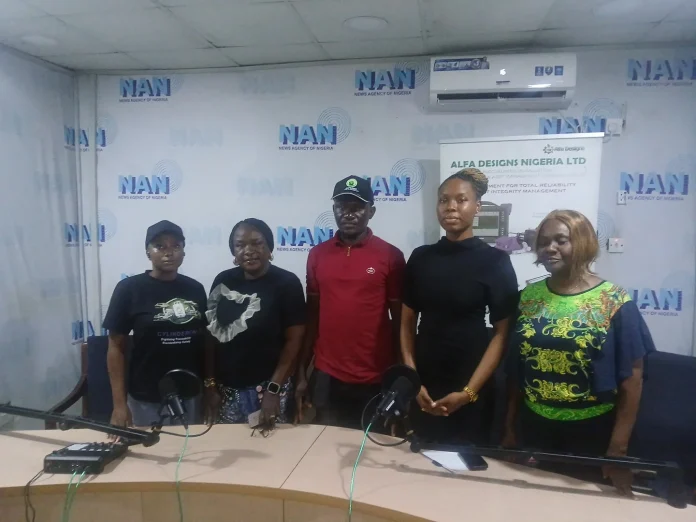
Alpha Design Nigeria Ltd. has developed a patented smart wellhead monitoring system for the oil and gas industry.
The technology remotely monitors wellhead operations and automatically shuts down wells during abnormal conditions.
The company said the innovation will help reduce crude oil theft, pipeline vandalism and environmental risks.
Alpha Design is also expanding CNG infrastructure and industrial engineering solutions to support Nigeria’s energy transition.
Main story
Alpha Design Nigeria Ltd. has developed a patented smart wellhead monitoring system designed to improve operational safety, reduce crude oil losses and enhance efficiency in Nigeria’s oil and gas industry.
The Head of Department at Alpha Design, Mr Ikechukwu Okonkwo, disclosed this in an interview with the News Agency of Nigeria (NAN) on Friday in Lagos.
Okonkwo said the indigenous technology enables operators to remotely monitor wellhead pressure and environmental conditions in real time.
According to him, the system automatically shuts down oil wells whenever it detects abnormal pressure fluctuations, pipeline tampering or other conditions capable of causing explosions.
He said the innovation would help minimise crude oil theft, pipeline vandalism and environmental hazards while improving operational efficiency.
Beyond the smart monitoring system, Okonkwo said the company provides engineering services including pipeline construction, asset integrity management, crane certification, generator repairs, procurement and equipment fabrication.
He added that Alpha Design was expanding its Compressed Natural Gas (CNG) solutions by manufacturing conversion kits that allow diesel-powered generators to operate on diesel and CNG simultaneously or entirely on CNG.
The company also supplies CNG conversion kits for vehicles, tricycles and motorcycles, as well as cylinders, gas cascades and transport trailers.
Okonkwo said wider CNG adoption could reduce fuel costs by more than 60 per cent for businesses and commercial transport operators.
He identified inadequate refuelling infrastructure as the biggest obstacle to wider CNG adoption and disclosed that the company was developing CNG mother stations, daughter stations and mobile refuelling facilities.
According to him, pilot projects are already underway in Ore, Ogun State, Imo State and other underserved locations.
Okonkwo also said Alpha Design operates an industrial Computed Tomography scanning system for engineering research and non-destructive material analysis, enabling detailed three-dimensional assessment of engineering materials without damaging them.
The issues
Nigeria continues to seek indigenous engineering solutions to improve efficiency in the oil and gas industry while reducing dependence on imported technologies. Smart monitoring systems can help reduce production losses, improve environmental protection and strengthen operational safety. At the same time, expanding CNG infrastructure is considered a key component of Nigeria’s strategy to lower energy costs and promote cleaner fuels.
What’s being said
“The system stores operational data for future analysis and allows operators to monitor wellhead conditions remotely, making oil production safer and more efficient.”– Ikechukwu Okonkwo, Head of Department, Alpha Design Nigeria Ltd.:
“CNG offers significant savings and provides a practical alternative for organisations seeking to reduce operating expenses.”– Ikechukwu Okonkwo, Head of Department, Alpha Design Nigeria Ltd.:
What’s next
Alpha Design plans to expand deployment of its smart wellhead monitoring technology while accelerating the development of CNG mother stations, daughter stations and mobile refuelling facilities to improve access to cleaner energy across Nigeria.
Bottom line
By combining indigenous digital monitoring technology with investments in CNG infrastructure, Alpha Design is positioning itself to improve safety, reduce operational costs and support Nigeria’s transition to a more efficient and sustainable energy sector.
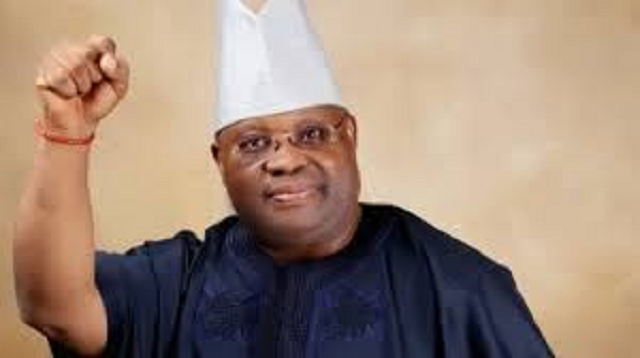
Gov. Ademola Adeleke has pledged further improvements to the Osun-Osogbo Sacred Grove before the 2027 festival.
The state government said roads within the grove had already been rehabilitated.
Stakeholders were urged to preserve the cultural heritage and counter misinformation about the festival.
Traditional rulers and government officials reaffirmed their commitment to protecting the UNESCO heritage site.
Main story
Gov. Ademola Adeleke of Osun has pledged further interventions to address challenges facing the Osun-Osogbo Sacred Grove ahead of the 2027 edition of the annual Osun-Osogbo Festival.
Adeleke made the pledge on Friday at the grand finale of the festival in Osogbo.
Represented by his deputy, Kola Adewusi, the governor said his administration had recently rehabilitated roads within the sacred grove and would undertake additional projects to improve facilities and preserve the heritage site.
He noted that the festival continued to attract thousands of visitors from across Africa and other parts of the world, underscoring its cultural and tourism significance.
Adeleke also cautioned against the spread of misinformation about the festival and urged stakeholders to work together to preserve the traditions associated with the sacred grove.
He reaffirmed his administration’s commitment to initiatives aimed at protecting and promoting Osun’s cultural heritage.
Responding, the Ataoja of Osogboland, Oba Jimoh Oyetunji, commended the governor for ongoing infrastructure projects across the state and appreciated the government’s support for preserving the Osun-Osogbo cultural heritage.
The Commissioner for Culture and Tourism, Mr Bankole Ojo, said the government would continue to preserve the customs and traditions of the people while addressing defective areas within the grove before the 2027 festival.
He added that the state government remained committed to ensuring the safety and security of residents and visitors.
The event was attended by dignitaries, including the Aare Ona Kakanfo of Yorubaland, Gani Adams, alongside tourists from across Africa and other parts of the world.
The News Agency of Nigeria (NAN) reports that the Arugba, a 10-year-old virgin, carried the sacred calabash to the river at about 11:43 a.m. to perform the traditional rites marking the climax of the festival.
The issues
The Osun-Osogbo Festival is one of Nigeria’s foremost cultural events and attracts thousands of local and international visitors annually. Preserving the Osun-Osogbo Sacred Grove, a UNESCO World Heritage Site, is essential to sustaining cultural tourism, protecting Yoruba heritage and supporting the local economy.
What’s being said
“I want to urge the Ataoja of Osogboland, Oba Jimoh Oyetunji, to sustain his efforts in promoting the cultural heritage of the people and contributing to the development of the state.”– Gov. Ademola Adeleke, represented by Deputy Governor Kola Adewusi:
“We appreciate your support and commitment to making the state great at all levels.”– Gov. Ademola Adeleke, represented by Deputy Governor Kola Adewusi:
What’s next
The Osun State Government plans to undertake additional rehabilitation works within the Osun-Osogbo Sacred Grove before the 2027 festival while continuing efforts to preserve the site’s cultural heritage and improve infrastructure for visitors.
Bottom line
Osun State is seeking to strengthen the Osun-Osogbo Festival’s status as a major cultural tourism attraction through infrastructure improvements and continued preservation of one of Nigeria’s most significant heritage sites.