Key points
- Investment Bank of Africa says structural reforms are needed to unlock stronger investment and sustainable economic growth.
- Report identifies unreliable electricity, weak infrastructure and high production costs as Nigeria’s biggest competitiveness challenges.
- IBA projects Nigeria’s economy will grow by 4.1 per cent in 2026 but says growth alone will not improve living standards.
- Investors are advised to prioritise reliable energy, efficient logistics and resilient local supply chains.
Main story
Nigeria can unlock stronger economic growth and become one of Africa’s most attractive investment destinations only by addressing persistent structural challenges in electricity, infrastructure, employment and productivity, according to a new economic framework released by the Investment Bank of Africa (IBA).
The report projects Nigeria’s economy to grow by 4.1 per cent in 2026, in line with the International Monetary Fund’s outlook, but says stronger economic expansion will not translate into higher living standards unless it creates formal jobs, improves productivity, expands local value addition and strengthens foreign exchange earnings.
According to the report, Nigeria’s biggest economic constraint remains its high cost of production, driven by unreliable electricity, poor transport infrastructure, port congestion, dependence on imported equipment, high borrowing costs and policy uncertainty.
It said these structural weaknesses continue to undermine business competitiveness, encourage informality and expose consumer prices to exchange-rate volatility and fuel price shocks.
The framework recommends that investors prioritise projects capable of securing reliable electricity, efficient logistics, resilient local supply chains and predictable cash flows before expanding operations.
It also advises businesses relying on imported equipment or foreign-currency borrowing to generate export or dollar-linked revenue to reduce exchange-rate risks.
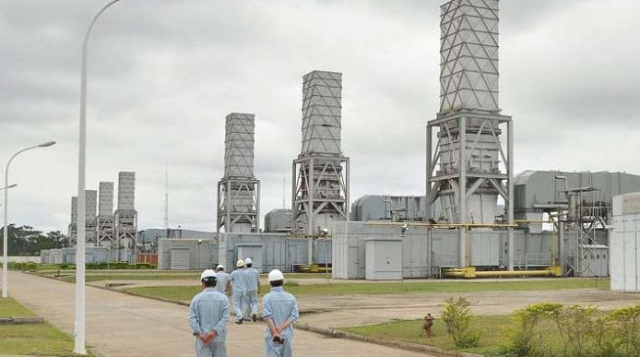
The report identifies electricity as Nigeria’s most significant production bottleneck despite the country’s installed generation capacity.
According to IBA, Nigeria had about 13,625 megawatts of installed generation capacity as of April 2026, but only 4,286MW was available for dispatch while average operational generation stood at 4,048MW.
The report attributes the gap to maintenance challenges, fuel shortages, transmission constraints, distribution inefficiencies and weak commercial performance across the electricity value chain.
It recommends greater investment in grid infrastructure, embedded generation, mini-grids, renewable energy, smart metering and stronger revenue collection to improve power reliability.
IBA also warned that labour underutilisation remains one of Nigeria’s biggest economic risks.
Using its internal analytical framework, the report estimates labour underutilisation at 60.4 per cent, with only 43 per cent of the working-age population actively participating in the labour market. It notes that these figures are internal estimates and not official government statistics.
The report argues that future economic policies should prioritise permanent, productive employment rather than temporary jobs generated during construction projects.
It recommends linking government incentives, procurement and industrial policies to measurable outcomes such as permanent employment, workforce skills development and productivity improvements.
Although macroeconomic indicators have improved, the report says many households have yet to experience corresponding gains in living standards.
According to IBA, stronger foreign exchange reserves and moderating inflation have not translated into higher purchasing power because production costs remain elevated while household incomes continue to face pressure.
The report identifies agriculture, food processing, logistics, housing, digital infrastructure, manufacturing and renewable energy as sectors with strong long-term investment potential.
It says improved food production will only lower food prices if accompanied by investment in irrigation, storage, processing, transport and cold-chain infrastructure.
IBA also recommends evaluating infrastructure projects based on service delivery rather than capital expenditure, while urging investors to view Nigeria as a collection of regional markets with differing infrastructure quality, regulatory conditions, security risks and investment opportunities.
The issues
Nigeria’s economic reforms have improved several macroeconomic indicators, but businesses continue to face structural constraints that raise production costs and limit competitiveness. Persistent electricity shortages, weak transport infrastructure, high financing costs and policy uncertainty remain major obstacles to industrial growth, job creation and foreign investment. The report suggests that addressing these bottlenecks could improve productivity, strengthen export competitiveness and make economic growth more inclusive.
What’s being said
“Nigeria can unlock stronger economic growth and become one of Africa’s most attractive investment destinations only if it addresses persistent structural challenges in power, infrastructure, employment and productivity.” – Investment Bank of Africa (IBA):
“Nigeria’s biggest economic challenge remains the high cost of production, driven by unreliable electricity, transport bottlenecks, port congestion, imported equipment, high borrowing costs and policy uncertainty.” – Investment Bank of Africa (IBA):
“Future economic policies should focus on creating permanent, productive jobs instead of temporary employment generated during construction projects.” – Investment Bank of Africa (IBA):
“Investors should approach Nigeria as a collection of state and regional markets rather than a single national economy.” – Investment Bank of Africa (IBA):
What’s next
IBA expects policymakers, investors and businesses to focus on improving power supply, infrastructure, productivity and employment while strengthening local value chains. The report also urges investors to stress-test projects against inflation, exchange-rate volatility, infrastructure reliability, security risks and policy implementation before deploying capital.
Bottom line
IBA says Nigeria’s long-term investment potential remains strong, but sustained economic growth and improved living standards will depend on tackling structural constraints in electricity, infrastructure, employment and productivity rather than relying on macroeconomic expansion alone.