




Home Blog Page 81

Federal Government considers hydropower integration in flood control projects

Key Points

  • The Federal Government is considering integrating hydropower generation into future flood control projects.
  • The proposal is expected to increase the value of flood control infrastructure and create jobs.
  • The government plans to collaborate with states, the private sector and development partners on flood management.
  • NIHS said further flooding remains possible in the coming weeks due to expected above-normal rainfall.

Main Story

The Federal Government is considering integrating hydropower generation into flood control projects as part of efforts to improve water management, strengthen flood resilience and create employment opportunities.

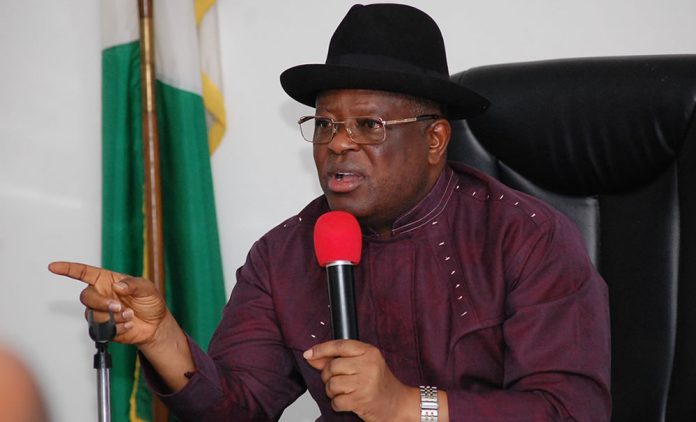
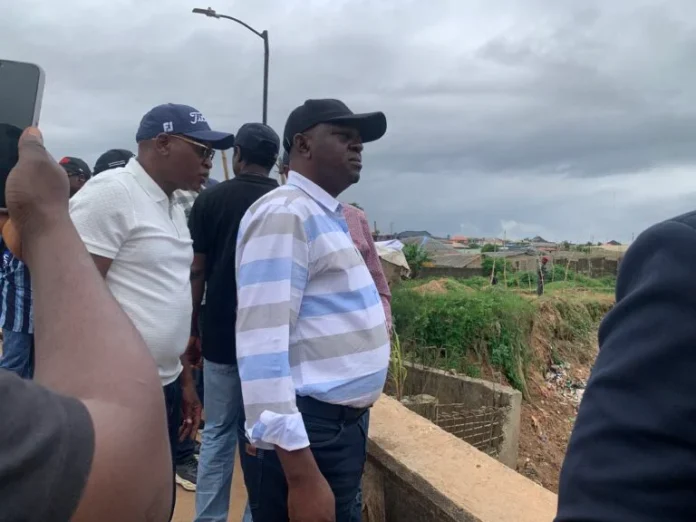
The Minister of Water Resources and Sanitation, Mr Joseph Utsev, disclosed this on Friday after inspecting flood control facilities and flood-affected communities in Lagos State.

Utsev said incorporating hydropower into flood control infrastructure would increase the value of such projects while creating employment through their operation and maintenance.

He said the proposal would be implemented through collaboration between the Federal Government and state governments as part of efforts to strengthen flood resilience across the country.

Utsev said the Federal Government would continue to work with state governments, the private sector and development partners to develop lasting solutions to flooding and improve water infrastructure nationwide.

The Director-General of the Nigeria Hydrological Services Agency, Mr Umar Mohammed, said the minister’s proposal would be considered as part of ongoing technical plans.

Mohammed said Nigeria could still experience flooding in the coming weeks due to climate change and the above-normal rainfall predicted for the year.

He said climate change continued to affect weather and water systems, making flooding more difficult to predict.

Mohammed recalled that the Federal Government presented the 2026 Annual Flood Outlook in April, warning that higher rainfall this year could lead to increased flooding.

The News Agency of Nigeria (NAN) reports that the minister’s visit followed recent flooding in several parts of Lagos after heavy rainfall.

The flooding submerged roads, damaged homes and disrupted businesses and movement.

During the visit, Utsev inspected major drainage channels, flood control facilities and affected communities to assess the extent of the flooding, evaluate existing infrastructure and identify measures to reduce the impact of future flooding.

He also interacted with Lagos State officials and residents on the challenges caused by the flooding and possible measures for improving flood management in the state.

The Issues

Nigeria continues to face flooding risks linked to heavy rainfall and changing weather patterns. The proposed integration of hydropower would seek to make flood control infrastructure serve an additional purpose while providing opportunities for employment and infrastructure maintenance.

What’s Being Said

“Incorporation of hydropower will create jobs because the infrastructure will require regular maintenance and people will be engaged to manage the facilities.” – Joseph Utsev, Minister of Water Resources and Sanitation

“The Honourable Minister suggested incorporating electricity generation into future flood control projects, and this will form part of the options we are considering.” – Umar Mohammed, Director-General, Nigeria Hydrological Services Agency

What’s Next

The Federal Government and state governments are expected to explore the hydropower proposal as part of future flood control projects. Further flooding also remains possible in the coming weeks as more rainfall is expected.

Bottom Line

The Federal Government is looking to combine flood control with electricity generation as it explores ways to make water infrastructure more productive while improving flood resilience and creating jobs.
Enugu begins construction of three 33KV feeders to improve electricity supply

Key Points

  • Enugu State has commenced construction of three new 33KV feeders from the Ugwuaji Transmission Station.
  • The project will serve communities in Nkanu East, Nkanu West, Aninri and Awgu.
  • The state says some affected communities have been without electricity for more than 20 years.
  • The government is targeting improved supply through new feeders, injection substations, smart meters and automation.

Main Story

The Enugu State Government has commenced construction of three new 33KV feeders to improve electricity supply to communities in four Local Government Areas of the state.

The project, which is being developed from the Ugwuaji Transmission Station, will serve communities in Nkanu East, Nkanu West, Aninri and Awgu.

The inauguration followed a stakeholders’ meeting on electricity held at the International Conference Centre, Enugu, on Saturday.

The Managing Director and Chief Executive Officer of the Enugu State Electrification Agency (ESEA), Mr Christopher Ezeoha, said the project was designed to address longstanding electricity challenges in the affected communities.

Ezeoha said Nkanu East and Nkanu West had been underserved because a single feeder currently supplies a large area.

He explained that the Amechi 33KV feeder serves eight council areas, including five in Enugu State and three in Ebonyi State, covering more than 640 kilometres.

According to him, the length of the feeder makes it difficult to identify and resolve faults when they occur, resulting in prolonged power outages.

Ezeoha said some communities, including Nkerifi, Nara and Mburubu, had not had electricity for more than 20 years.

He said the state government had directed the agency to restore electricity to the affected communities but determined that restoring the existing feeder alone would not solve the problem.

Ezeoha said the government would break the long feeder into shorter sections by constructing about three new feeders of roughly 200 kilometres or less each.

He said injection substations would also be installed to transform electricity from 33KV to 11KV and improve the reliability of supply to communities.

Ezeoha said the government expected the project to provide an average of more than 20 hours of electricity daily to the affected communities.

He said the initiative would not be limited to the four LGAs, adding that similar interventions would be extended to other parts of the state, including Nsukka and Uzo-Uwani.

The ESEA chief executive said the state government was also preparing its electricity distribution infrastructure to evacuate power from a proposed 630-megawatt generation facility being developed in the state.

According to him, the long-term objective of the government was to provide reliable electricity supply for 24 hours a day, seven days a week.

Ezeoha said the government also planned to deploy smart prepaid meters and automation technology to improve accountability and enable quick detection and resolution of faults.

He said a Supervisory Control and Data Acquisition (SCADA) system would enable the agency to identify the location of faults almost immediately, allowing technical personnel to respond directly to affected areas rather than searching along hundreds of kilometres of transmission lines.

The ESEA boss appealed to communities to protect electrical infrastructure against vandalism, stressing that the success of the investment depended on collective ownership and protection of the facilities.

The General Manager of the Transmission Company of Nigeria (TCN), Enugu, Dr Tom Inugonum, commended the state government for its efforts to improve electricity supply.

Inugonum said the TCN Enugu region controls transmission infrastructure covering between six and eight states, adding that improved cooperation with the Enugu State Government would help address the state’s power challenges.

He said Enugu receives electricity from three major sources and has several transmission lines serving different parts of the state.

According to him, some transmission and substation projects in the region remain incomplete, limiting the capacity of the power system.

Inugonum also expressed concern over the vandalism of transmission infrastructure, citing the value of substations and other facilities that could be lost if they were not adequately protected.

The State Commissioner for Energy, Mr Enyinna Ogbonna, said electricity was one of the major priorities of Gov. Peter Mbah’s administration.

Ogbonna said reliable electricity was critical to driving the state’s economy and achieving the administration’s target of increasing Enugu’s Gross Domestic Product from about 4.4 billion dollars to 30 billion dollars.

The President-General of Isi-Amagunze, Mr Okey Nwatu, called for greater community involvement in protecting electricity infrastructure.

Nwatu said transformers, cables, switches and other electrical facilities were critical infrastructure that communities must protect to sustain electricity supply.

The Issues

The project is aimed at addressing the limitations of Enugu’s existing electricity distribution infrastructure, particularly the long Amechi feeder, which the state says makes fault detection and repairs difficult and contributes to prolonged outages.

What’s Being Said

“By the time we finish this work, we hope to give them an average of more than 20 hours of daily power supply. That’s what the government has directed us to do.” – Christopher Ezeoha, Managing Director and Chief Executive Officer, ESEA

What’s Next

The state government plans to extend similar electricity interventions to other parts of Enugu, including Nsukka and Uzo-Uwani, while preparing its distribution infrastructure for the proposed 630-megawatt generation facility.

Bottom Line

Enugu is expanding and restructuring its electricity distribution infrastructure through new 33KV feeders, injection substations and planned automation as it seeks to improve supply reliability and restore electricity to communities facing prolonged outages.

Navy recovers 24,000 litres of suspected stolen crude in Rivers

Oil Price Record Slight Increase, Nears $44

Key Points

  • Navy personnel recovered about 24,000 litres of suspected stolen crude oil in Bonny, Rivers.
  • An illegal refining site and two storage pits were discovered during the operation.
  • The operation also uncovered extensive hoses allegedly intended for crude oil theft.
  • Navy says the operation disrupted an emerging crude oil theft network.

Main Story

The Nigerian Navy has recovered approximately 24,000 litres of product suspected to be stolen crude oil during an operation in Bonny Local Government Area of Rivers State.

The Director, Naval Information, Capt. Abiodun Folorunsho, disclosed this in an operational report made available on Saturday in Abuja.

Folorunsho said personnel of the Forward Operating Base (FOB) Bonny carried out the operation following credible intelligence about attempts by criminal elements to establish illegal connections to oil infrastructure around the Bethel Community axis.

He said the operation led to the discovery of an illegal refining site, two pits containing approximately 24,000 litres of suspected stolen crude oil and extensive hoses believed to have been installed to facilitate crude oil theft.

According to him, the illegal facilities and associated materials were subsequently handled in accordance with extant regulations.

Folorunsho said the operation disrupted an emerging crude oil theft network before it could become fully operational.

He added that the action denied suspected economic saboteurs the infrastructure needed to sustain illicit activities that could cause further economic losses to the country.

The naval spokesman reaffirmed the Navy’s commitment to sustaining intelligence-driven operations under Operation DELTA SENTINEL to dismantle illegal refining infrastructure.

He said the service would continue to combat crude oil theft, protect critical oil and gas assets and safeguard Nigeria’s maritime environment and economic interests.

The Issues

The discovery highlights continued attempts to establish illegal connections to oil infrastructure and operate illicit refining facilities in the Niger Delta. Such activities threaten critical oil assets and can result in economic losses.

What’s Being Said

“The successful operation disrupted an emerging crude oil theft network before it could become fully operational.”
— Capt. Abiodun Folorunsho, Director, Naval Information

What’s Next

The Navy says it will sustain intelligence-driven operations under Operation DELTA SENTINEL to target illegal refining activities, crude oil theft and threats to oil and gas infrastructure.

Bottom Line

The recovery of the suspected stolen crude and the discovery of an illegal refining site demonstrate the Navy’s continued focus on disrupting crude oil theft networks and protecting Nigeria’s critical oil and gas assets.

TCN finds suspected vandal dead under collapsed transmission tower

Key Points

  • TCN says a suspected vandal was found dead beneath a collapsed 330kV transmission tower in Delta.
  • The incident occurred on the Ughelli-Benin transmission line.
  • Another nearby transmission tower was also found to have been seriously vandalised.
  • TCN warned that vandalism threatens power supply and puts lives at risk.

Main Story

The Transmission Company of Nigeria (TCN) says its linesmen found the body of a suspected vandal beneath a collapsed transmission tower in Delta State.

TCN management disclosed this in a statement on Saturday, saying the incident occurred on the 330 kilovolt (kV) Ughelli-Benin transmission line.

The discovery was made during an intensive patrol by the Delta Sub-Region Lines Maintenance Department following the tripping of the line on an earth fault.

According to the company, the patrol team traced the fault to Tower 101, where they found the structure had collapsed and the suspected vandal’s body was trapped among the tower members.

Further inspection showed that Tower 101 on the adjacent Ughelli-Sapele 330kV transmission line had also been seriously vandalised, although the structure remained standing at the time of the report.

TCN condemned the vandalism and urged host communities and members of the public to remain vigilant around electricity infrastructure.

The company called on anyone who notices suspicious activities around power installations to report them to security agencies or the nearest TCN office.

TCN said the incident demonstrated the dangers associated with tampering with electricity infrastructure, noting that vandalism could cause power outages, damage national assets and result in loss of life.

The company urged communities, security agencies and the public to work together to protect transmission infrastructure.

The Issues

Vandalism of transmission infrastructure remains a direct threat to the reliability of electricity supply. The Delta incident also highlights the physical danger faced by individuals who tamper with high-voltage transmission facilities.

What’s Next

TCN is urging host communities and the wider public to increase vigilance around transmission installations and report suspected vandalism to the relevant authorities.

Bottom Line

The discovery of a suspected vandal beneath a collapsed transmission tower underscores the dual cost of power infrastructure vandalism: damage to critical national assets and serious risks to human life.

Retired pension officer seeks living wage, stronger pension system

Key Points

  • Retired pension officer Maria Etukudoh has called for better wages for workers and reforms to pension administration.
  • She said many retirees still face delays and hardship while waiting for their benefits.
  • Etukudoh urged government to protect workers during service and ensure financial security after retirement.
  • She acknowledged recent efforts by the Federal Government to clear some outstanding pension obligations.

Main Story

A retired pension officer, Mrs Maria Etukudoh, has called on the government to improve workers’ living wages and strengthen Nigeria’s pension system to ensure public servants enjoy decent livelihoods during their careers and financial security after retirement.

Etukudoh made the appeal at a reception held to mark her retirement from the Federal Civil Service after 25 years of service, where she reflected on her experience in pension administration and the welfare of retired workers.

Having served as Head of the Pension Unit at the Federal Ministry of Finance, she said years of dealing directly with pensioners exposed her to the difficulties many retirees encounter while trying to access their entitlements.

She said a humane pension system should extend beyond the payment of retirement benefits to protecting the dignity and changing welfare needs of pensioners.

According to her, delayed pensions and retirement benefits have left some former public servants in distress despite decades of service to the country.

Etukudoh said she had witnessed pensioners waiting for long periods at government offices in the hope of receiving their benefits, describing such experiences as deeply troubling.

She urged governments at all levels to place greater emphasis on the welfare of both serving and retired workers, arguing that prompt payment of pensions would restore confidence in the public service and encourage younger Nigerians to pursue careers in government.

The retired pension officer, however, acknowledged efforts by the current Federal Government to address some outstanding pension obligations.

She said recent steps to pay some pensioners and proposals to improve contribution rates and exit benefit schemes offered hope that the system could improve further.

Etukudoh added that adequately compensating workers during their years of service and after retirement would encourage greater commitment and productivity within the public sector.

Her husband, Prof. Nkereuwem Etukudoh, Provost of the Federal College of Medical Laboratory Science and Technology, paid tribute to her years of service, describing her retirement as the culmination of decades of dedication to her family and the nation.

He said she would remain active in contributing to society despite leaving the civil service.

The Issues

Etukudoh’s comments highlight continuing concerns about workers’ welfare and pension administration in Nigeria. She argued that protecting public servants should not end when they retire, but should include fair wages while in service and a pension system capable of delivering benefits promptly and with dignity.

What’s Being Said

“The experiences of many pensioners is heartbreaking. The country must urgently reform its pension administration, improve workers’ welfare and provide a living wage capable of sustaining public servants before and after retirement.” – Mrs Maria Etukudoh, retired Head of the Pension Unit, Federal Ministry of Finance.

“There is hope. In this present administration, efforts have been made to pay some outstanding pensioners. There are also plans to improve contribution rates and strengthen exit benefit schemes.” – Mrs Maria Etukudoh, retired Head of the Pension Unit, Federal Ministry of Finance.

What’s Next

Etukudoh urged authorities to build on ongoing pension reforms by ensuring prompt payment of retirement benefits, improving workers’ living wages and strengthening the welfare framework for pensioners.

Bottom Line

The retired pension officer said lasting reform of Nigeria’s pension system must go hand in hand with better wages for workers and stronger protections to ensure public servants are treated with dignity both during service and in retirement.

Oil prices hold steady as USA-Iran contacts continue

By Boluwatife Oshadiya / August 10th 2026

Key Points

  • Brent crude rose 0.01% to $83.56 per barrel while West Texas Intermediate fell 0.15% to $78.06
  • Iran said it is communicating with Washington through mediators rather than holding direct negotiations
  • Uncertainty over the Strait of Hormuz and enforcement of the U.S. blockade continues to keep global oil supply concerns in focus

Main Story

Oil prices were mixed on Monday as investors monitored indirect contacts between the United States and Iran and uncertainty over the possible reopening of the Strait of Hormuz.

International benchmark Brent crude futures for October traded at $83.56 per barrel, up 0.01% from the previous close of $83.55. U.S. benchmark West Texas Intermediate (WTI) futures for September fell 0.15% to $78.06 per barrel from $78.18 in the previous session.

Iranian Foreign Minister Abbas Araghchi said Tehran is not holding direct negotiations with Washington but is exchanging messages through mediators.

“Until the violations of the memorandum of understanding by the United States are over and the United States does not compensate for what it has violated, it is not possible to restart the negotiations,” Araghchi told reporters, according to the Tasnim news agency.

Araghchi added that mediators were continuing efforts to establish a pathway for negotiations. He also said discussions with Oman over a new maritime route through the Strait of Hormuz had made “good progress” and reached their final stage, while stressing that this did not mean the strait would immediately reopen.

Meanwhile, U.S. President Donald Trump said Washington was relying on economic pressure on Iran rather than immediately launching another military offensive. In an interview with Axios, Trump described the contacts as “only semi-negotiating” and said Iran was facing severe financial pressure.

The U.S. Central Command (CENTCOM) also said American forces had redirected 55 commercial vessels, disabled two and boarded two others as part of enforcement of a U.S. blockade against Iran.

The developments have kept the Strait of Hormuz at the centre of oil-market concerns because uncertainty over shipping through the waterway can affect global crude supply expectations.

What’s Being Said

“Mediators are still trying to find new ways to negotiate,” Abbas Araghchi, Iranian Foreign Minister, said.

“We are low-keying it,” Donald Trump, U.S. President, said, describing contacts between Washington and Tehran as “only semi-negotiating.”

No independent market or industry response was provided in the source material.

What’s Next

  • Iran and Oman are expected to continue discussions on arrangements for maritime movement through the Strait of Hormuz
  • Indirect contacts between Washington and Tehran will remain a key factor for markets watching the possibility of a diplomatic resolution
  • Oil traders will continue monitoring shipping activity and enforcement of the U.S. blockade for signals of changes in global supply risk

Bottom Line

The Bottom Line: Oil prices are being pulled between hopes of diplomatic progress and continuing disruption risks around the Strait of Hormuz. Until there is greater clarity on negotiations and maritime access, geopolitical developments will remain a significant influence on crude-price expectations.

CMFC shareholders’ funds rise to N4.3bn after restructuring

Key Points

  • CMFC’s shareholders’ funds rose from a negative N2.3bn to a positive N4.3bn.
  • The company recorded N82.64m income in nine months, compared with zero income a year earlier.
  • Banklink Africa emerged as majority shareholder and committed N6bn to the company’s transition.
  • CMFC has repositioned itself to finance Africa’s critical minerals and commodities sectors.

Main Story

Critical Minerals Financing Corp. Plc (CMFC) has swung from negative shareholders’ funds of N2.3 billion to a positive N4.3 billion within nine months, following a restructuring that transformed the company from Deap Capital Management and Trust Plc (DEAP) into a specialised critical minerals financing institution.

The company disclosed the improvement in its unaudited financial statement for the nine-month period ended June 30, 2026, filed with the Nigerian Exchange Ltd. (NGX).

The financial position also reflected a sharp improvement in net asset value per share, which moved from negative 155 kobo at the end of September 2025 to positive 167 kobo by June 30, 2026.

CMFC generated N82.64 million in income during the period, compared with no income in the corresponding period of 2025. About 90 per cent of the income was generated between March and June.

The company ended the period with more than N6 billion in cash after the restructuring, which followed the entry of Banklink Africa Private Equities Ltd. as a core investor.

Banklink Africa subsequently became the majority shareholder and committed N6 billion to support the company’s corporate transition.

The restructuring also resolved part of the company’s legacy obligations. CMFC paid N430 million to the Asset Management Corporation of Nigeria (AMCON) under a negotiated settlement against an original claim of N2.5 billion.

AMCON, which previously owned about 16 per cent of CMFC’s paid-up capital, ceased to be a shareholder following the restructuring.

CMFC also converted N1.8 billion of legacy debt into 1.069 billion ordinary shares of 50 kobo each after obtaining approval from the Securities and Exchange Commission (SEC). The transaction raised its paid-up capital to 2.570 billion ordinary shares.

The restructuring has coincided with increased activity in the company’s shares on the NGX. More than 1.44 billion CMFC shares were traded between August 2025, when discussions over Banklink Africa’s investment began, and Aug. 7, 2026.

The volume represented about 97 per cent of the 1.5 billion issued and fully paid-up shares at the time and exceeded the roughly 946 million shares traded between May 2023, when the company resumed operations after a decade of inactivity, and July 31, 2025.

Trading activity also increased, with daily transactions rising above 190 deals from fewer than 40 before Banklink Africa’s investment.

CMFC’s share price moved from N1.35 in early August 2025 to N11.43 by Jan. 31, before falling to N3.01 on Aug. 5, when the nine-month results were released.

The company is now focused on providing capital structuring, investment banking, transaction advisory, project development support and financing services to businesses operating in Africa’s minerals and commodities sectors.

Its Chairman, Lamon Rutten, said the restructuring had created a platform for the company to address financing gaps within Africa’s mining industry.

Rutten said CMFC would target companies operating across critical mineral segments including gold, copper, cobalt, lithium, tungsten, tin and tantalum.

“We are strategically positioned to deliver world-class capital structuring, advisory and financing solutions to mining and metals companies operating across gold, copper, cobalt, lithium, tungsten, tin, tantalum and other critical mineral sectors,” he said.

The President and Co-Chief Executive Officer of CMFC, Israel Ovirih, has more than 30 years’ experience in Nigerian and international capital markets and has advised on financing programmes exceeding $1.5 billion across the energy, marine, oil and gas sectors.

The Issues

CMFC’s financial position has improved significantly following the restructuring, with shareholders’ funds moving from negative to positive territory. The company has also increased its paid-up capital through the conversion of legacy debt into equity and secured fresh capital from its new majority shareholder.

What’s Being Said

CMFC’s leadership says the restructuring has created a stronger platform for the company to provide financing, investment banking and advisory services to businesses operating in Africa’s critical minerals and commodities sectors.

What’s Next

CMFC is expected to focus on capital structuring, transaction advisory, project development support and financing solutions for mining and metals companies across critical mineral sectors.

Bottom Line

CMFC has emerged from its restructuring with stronger shareholders’ funds, fresh capital and a new strategic focus on financing Africa’s critical minerals industry.

Leadway targets digital growth, bigger risks after recapitalisation

Leadway Assurance

Key points

  • Leadway Assurance says its post-recapitalisation strategy will focus on digital growth, underwriting capacity and policyholder commitment.
  • The insurer plans to target high-net-worth customers, major infrastructure projects, entrepreneurs and small businesses.
  • The stronger capital base is expected to support larger and more complex risks across key sectors.

Main story

Leadway Assurance Ltd. is targeting digital growth, larger risk underwriting and deeper insurance coverage as part of its strategy following the completion of its recapitalisation exercise under the Nigerian Insurance Industry Reform Act (NIIRA) 2025.

The insurer said the stronger capital base would increase its capacity to underwrite larger and more complex risks, support financial inclusion and expand its contribution to Nigeria’s economic development.

Leadway said its post-recapitalisation strategy would focus on three broad customer and market segments: high-net-worth individuals and premium customers, critical sectors and infrastructure, and digitally driven Nigerians and small business owners.

Targeting larger risks and premium customers

The company said increased capital would allow it to develop more specialised insurance solutions for high-net-worth individuals whose wealth and assets require more complex protection.

It also plans to expand its capacity to underwrite risks associated with major public and private-sector projects, particularly in energy, manufacturing and other large-scale enterprises.

Leadway said its expanded underwriting capacity would also support infrastructure and enterprise insurance across sectors including finance, energy, agriculture and technology.

Digital expansion

The insurer said young Nigerians, entrepreneurs and small business owners would form another important part of its growth strategy as demand increases for convenient and digitally enabled financial services.

It said the digital focus was aligned with the National Insurance Commission’s (NAICOM) efforts to accelerate digitalisation and deepen financial inclusion within the insurance industry.

Chief Executive Officer of Leadway Assurance, Gboyega Lesi, said the company had spent the past several years strengthening its technical capabilities, digital infrastructure and strategic positioning.

According to him, the recapitalisation would allow the company to pursue its growth ambitions at greater scale, including underwriting risks for major enterprises and developing products for younger consumers.

The issues

The completion of the recapitalisation exercise gives Leadway greater capacity to pursue larger risks and expand its customer base. The company is positioning the new capital not simply as a regulatory requirement but as a platform for expansion across digital insurance, infrastructure and enterprise coverage.

What’s being said

Lesi said the company’s next phase would be defined by its ability to operate at greater scale while maintaining its commitment to policyholders.

He also commended NAICOM for establishing what he described as a clear regulatory framework capable of promoting discipline and strengthening confidence in the insurance market.

What’s next

Leadway is expected to expand its underwriting capacity, develop digital insurance solutions and pursue opportunities across infrastructure, energy, manufacturing, agriculture, technology and other sectors while targeting high-net-worth customers and small businesses.

Bottom line

Leadway Assurance is using its completed recapitalisation to move into a new phase focused on larger risks, digital insurance and broader market participation, with the insurer positioning its stronger capital base as a platform for growth rather than merely a regulatory requirement.

Ife monarchs urge political parties to shun violence ahead of Osun poll

Key points

  • Traditional rulers in Ile-Ife have urged political parties to embrace peace before and after the Aug. 15 governorship election.
  • The Obalufe warned that anyone involved in electoral violence would be punished.
  • The Lowa Adimula urged political stakeholders to support the Ooni of Ife’s peace-building efforts.

Main story

Traditional rulers in Ile-Ife, Osun, have appealed to political parties and their supporters to shun violence and preserve peace ahead of the Aug. 15 governorship election.

The Obalufe of Ife, Oba Idowu Adediwura, and Lowa Adimula of Ife, Oba Adekola Adeyeye, made the appeal while speaking with journalists on Sunday in Ile-Ife.

Adediwura urged political actors to avoid actions capable of disrupting the peace of the ancient city, amid rising political tension ahead of the election.

The traditional ruler warned that anyone found engaging in violence would be punished and called on security agencies to apprehend those responsible for electoral violence.

Adeyeye also urged political stakeholders not to undermine the peace-building efforts of the Ooni of Ife, Oba Adeyeye Ogunwusi, Ojaja II, in pursuit of political interests.

He called on political parties to conduct their activities peacefully, stressing that the development and unity of Ile-Ife should remain paramount.

Peace-building efforts

Adeyeye commended the Ooni for his role in maintaining peace and promoting development across Ife land, Osun and Nigeria.

He appealed to political stakeholders to support the Ooni’s peace initiative and work towards ensuring that the election is conducted in a peaceful atmosphere.

The issues

The appeal comes ahead of the Aug. 15 governorship election, with the traditional rulers focusing on preventing political violence and protecting the peace and unity of Ile-Ife.

What’s next

Political parties and their supporters are expected to conduct their campaigns and election-related activities peacefully, while security agencies have been urged to apprehend perpetrators of electoral violence.

Bottom line

Ife traditional rulers are calling on political actors to put the peace and development of the community ahead of political interests as Osun prepares for the Aug. 15 governorship election.

Dollar To Naira Exchange Rate Today, August 10th, 2026

Dollar To Naira Exchange Rate Today (Thur. July. 20, 2023)

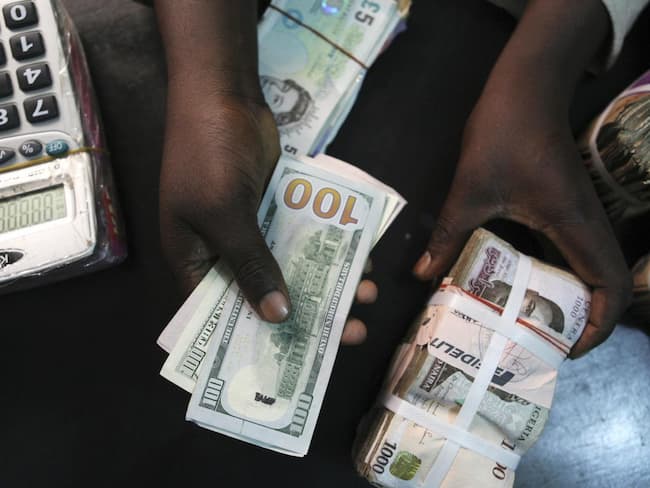
The exchange rate between the Naira and the US dollar, according to the data released on the FMDQ Security Exchange,the official forex trading portal, showed that the naira closed at 1367 per $1 on Monday, August 10th 2026. The naira traded as high as 1363 to the dollar at the investors and exporters (I&E) window on Sunday. This is brought to you by Bizwatch Nigeria.

How much is a dollar to naira today in the black market?

Dollar to naira exchange rate today black market (Aboki dollar rate):

The exchange rate for a dollar to naira at Lagos Parallel Market (Black Market) players sell a dollar for ₦1430 and buy at ₦1415 on Sunday 9th  August, 2026, according to sources at Bureau De Change (BDC).

Please note that the Central Bank of Nigeria (CBN) does not recognize the parallel market (black market), as it has directed individuals who want to engage in Forex to approach their respective banks.

Dollar to Naira Black Market Rate Today

Dollar to Naira (USD to NGN)Black Market Exchange Rate Today
Selling Rate₦1430
Buying Rate₦1415

Dollar to Naira CBN Rate Today

Dollar to Naira (USD to NGN)CBN Rate Today
Highest Rate₦1367
Lowest Rate₦1363

Please note that the rates you buy or sell forex may be different from what is captured in this article because prices vary.

Developing-market firms pay 2 percentage points more to borrow, World Bank says

World Bank Announces Additional $1.5bn To Strengthen Fertilizer Production

Key points

  • Firms in low- and middle-income countries face borrowing costs about two percentage points higher than those in high-income economies.
  • The financing gap is limiting investment, technology adoption, business expansion and job creation.
  • Greater access to foreign investors, deeper domestic bond markets and stronger pension savings could reduce borrowing costs.
  • Lower sovereign borrowing costs also translate into cheaper financing for businesses.

Main story

Companies in low- and middle-income countries pay about two percentage points more in real borrowing costs than firms in high-income economies, according to a new study by the World Bank Group and International Finance Corporation (IFC).

The report, Curbing the Cost of Borrowing for Businesses: The Role of Bond Markets in Low- and Middle-Income Countries, said the financing disadvantage was limiting private-sector investment, technology adoption, business expansion and job creation in developing economies.

The study analysed more than 330,000 corporate bond issuances by about 50,000 companies across 138 countries between 1990 and 2024.

It found that from 2015 to 2024, median corporate borrowing costs in low- and middle-income countries were about two percentage points higher in real terms than in high-income economies. The gap was recorded in both dollar-denominated and local-currency corporate bonds.

The World Bank and IFC said the difference was not solely explained by the perceived risk of individual companies. Global financial conditions, sovereign borrowing costs, the depth of financial markets, access to foreign capital, domestic savings, corporate transparency and firm-level characteristics also influence the cost of finance.

Foreign capital could reduce costs

The study found that reducing barriers to foreign investment and increasing participation in domestic capital markets could expand the pool of capital available to companies.

For firms already borrowing through international bond markets, greater financial liberalisation was associated with an average 1.2 percentage-point reduction in borrowing costs.

The researchers estimated that if the reduction had applied to companies in the 47 least financially open countries, interest payments on international bond issuances could have been about $78 billion lower over the past decade.

However, the report said financial openness alone would not solve the problem, noting that international financial integration and domestic capital-market development should be pursued as complementary measures.

Domestic savings also matter

The report identified pension savings as another potential source of cheaper corporate finance.

It found that pension reforms that created privately managed retirement accounts helped build pools of long-term domestic savings for investment in local capital markets.

The increase in domestic institutional investment was associated with an estimated 150-basis-point reduction in real domestic borrowing yields for existing corporate bond issuers.

The study estimated that applying the effect to companies in 34 countries with relatively small private pension markets could have reduced interest payments by approximately $25 billion over the past decade.

Government borrowing costs affect businesses

The report also found a direct link between sovereign and corporate borrowing costs.

A one-percentage-point reduction in sovereign bond yields was associated with a 76-basis-point reduction in corporate borrowing yields in domestic markets and a 46-basis-point reduction in international markets.

The study said this reflects the role of sovereign bonds as benchmarks for pricing private debt, meaning higher government borrowing costs can raise the cost of finance for companies.

It therefore called for credible fiscal policies, stable inflation, consistent policy frameworks and deeper sovereign bond markets to reduce country-risk premiums and improve the pricing of corporate debt.

The issues

Expensive credit can restrict the ability of businesses in developing economies to invest, adopt technology, expand operations and create jobs. The problem is compounded by shallow domestic bond markets, limited institutional investor participation and weak secondary-market liquidity.

The report argues that reducing corporate borrowing costs requires action beyond monetary policy. Governments need stronger fiscal credibility, deeper capital markets, wider investor participation and larger domestic savings pools, while companies must improve transparency, governance and financial reporting.

What’s being said

The report’s central finding is that the cost of corporate finance is shaped not only by individual company risk but by the broader financial ecosystem in which businesses operate.

What’s next

The World Bank and IFC recommend that developing economies deepen domestic bond markets, expand access to international capital, strengthen institutional savings, improve sovereign debt markets and enforce stronger corporate disclosure and governance standards.

Bottom line

The World Bank and IFC say the roughly two-percentage-point borrowing-cost gap between developing and high-income economies is not inevitable. Deeper capital markets, stronger domestic savings, greater financial openness and credible public finances could make corporate finance cheaper and free more capital for investment and job creation.

FG completes 260 emergency road projects worth N250bn, Umahi says

Key points

  • The Federal Government has completed more than 260 emergency road projects nationwide at a cost exceeding N250 billion.
  • Works Minister Dave Umahi said more than 10 bridges had also been reconstructed in each state over the past three years.
  • Repair works have commenced on the damaged section of Eko Bridge in Lagos.
  • The government has deployed 40 guards to protect the Lagos-Calabar Coastal Highway from abuse and encroachment.

Main story

The Federal Government has completed more than 260 emergency road projects across the country at a cost of over N250 billion in the past three years, the Minister of Works, Sen. Dave Umahi, has said.

Umahi disclosed this on Sunday at a stakeholder engagement and flag-off of road projects in Lagos.

He said the government had also reconstructed more than 10 bridges in each state of the federation within the same period.

The minister said the projects formed part of the administration’s efforts to address critical infrastructure deficits and improve road connectivity across the country.

Umahi also highlighted measures taken by the ministry to strengthen transparency in the execution of federal road projects.

He said the ministry had opened its ongoing projects to scrutiny by the Independent Corrupt Practices and Other Related Offences Commission, which was invited to inspect procurement processes and project execution.

According to him, the ministry had also written to the Economic and Financial Crimes Commission to undertake a similar review.

Eko Bridge repairs

Umahi said the government had commenced remedial works on Eko Bridge in Lagos after identifying serious structural concerns on part of the bridge.

He explained that closing the entire affected section would have caused significant disruption to movement in Lagos, prompting the government to close only part of the carriageway while monitoring the crack daily.

The minister said the crack had not increased and that the immediate remedial work would involve reinstalling about seven piles, bypassing the affected section of the pile cap and installing a new pile cap.

He said the remedial intervention was expected to extend the affected section’s service life by between 15 and 20 years while a permanent solution was being designed.

According to Umahi, the permanent rehabilitation would involve jacking up the affected spans, demolishing the damaged pile caps, installing new pile caps and piers and subsequently replacing the slab.

Highway protection

The minister also explained the deployment of 40 guards to protect the Lagos-Calabar Coastal Highway.

He said the guards had been assigned to prevent hawking, loitering, commercial motorcycling and refuse dumping along the highway.

Umahi also called on the Nigeria Security and Civil Defence Corps to take a more active role in protecting strategic road infrastructure, particularly by preventing illegal parking and other forms of encroachment.

The issues

The scale of emergency road repairs highlights the Federal Government’s response to deteriorating infrastructure across the country, while the condition of Eko Bridge illustrates the maintenance challenges facing major urban infrastructure. The government is also seeking to prevent the newly developed coastal highway from becoming exposed to activities that could damage or obstruct the corridor.

What’s being said

“We have also written to the EFCC to follow suit. It shows transparency, it shows commitment, it shows accountability.” – Dave Umahi, Minister of Works

What’s next

Remedial works will continue on the affected section of Eko Bridge while engineers work on the permanent rehabilitation design. The government is also expected to strengthen enforcement against activities that threaten the Lagos-Calabar Coastal Highway and other strategic road infrastructure.

Bottom line

The Federal Government says it has completed 260 emergency road projects worth more than N250 billion while continuing major bridge repairs and measures to protect strategic highways across the country.

Super Falcons crash out of WAFCON after 1-0 loss to Cameroon

Key points

  • Nigeria lost 1-0 to Cameroon in the WAFCON quarter-finals in Casablanca.
  • Myriam Nyadjou scored the only goal in the 20th minute.
  • The defeat ends Nigeria’s hopes of defending its continental title.
  • The Super Falcons must now rely on the playoff route for 2027 FIFA Women’s World Cup qualification.

Main story

Nigeria’s Super Falcons have been eliminated from the Women’s Africa Cup of Nations after a 1-0 quarter-final defeat to Cameroon in Casablanca, Morocco.

Myriam Nyadjou scored in the 20th minute at the Larbi Zaouli Stadium to give Cameroon the lead, which the Indomitable Lionesses held until the final whistle.

Nigeria responded by increasing the pressure and creating opportunities to draw level, but Cameroon’s defence remained organised and restricted the Super Falcons from finding a clear opening.

Goalkeeper Michaely Bihina was also instrumental in preserving Cameroon’s advantage, making crucial saves as Nigeria pushed for an equaliser.

The Super Falcons continued their search for a goal in the closing stages but could not break through Cameroon’s defence.

The defeat ends Nigeria’s bid to retain the continental title and means the 10-time African champions will not secure automatic qualification for the 2027 FIFA Women’s World Cup through the WAFCON route.

Cameroon, meanwhile, secured its place at the 2027 World Cup in Brazil and remains in contention for the African title.

The issues

Nigeria’s defeat puts its World Cup qualification campaign on a more difficult path. While Cameroon has secured automatic qualification, the Super Falcons will now have to navigate the playoff route to reach the expanded global tournament.

What’s next

Nigeria will now turn its attention to the playoff route for World Cup qualification. Cameroon joins Algeria and Morocco among the African teams that have already secured automatic qualification, while the final automatic African ticket will be determined by the quarter-final between Ghana and Malawi.

Bottom line

Cameroon’s 1-0 victory ended Nigeria’s WAFCON title defence and automatic World Cup qualification hopes, leaving the Super Falcons to pursue the playoff route to Brazil 2027.

Umahi seeks Lagos support for Lagos-Calabar coastal highway service lanes

Key points

  • Works Minister Dave Umahi urged Lagos State to support construction of service lanes and drainage channels along the coastal highway.
  • The additional works followed recent heavy rainfall and flooding in Lagos.
  • Umahi said Lot 1 of the highway had been completed while Lot 2 was more than 80 per cent complete.
  • He urged Nigerians to protect national infrastructure from vandalism.

Main story

The Minister of Works, Sen. Dave Umahi, has called for stronger collaboration with the Lagos State Government as the Federal Government moves to construct service lanes and additional drainage channels along the Lagos-Calabar Coastal Highway.

Umahi made the appeal on Sunday at a stakeholder engagement on the coastal highway and other Federal Government projects in Lagos.

He said the Federal Government would require additional support from the state to address infrastructure and drainage challenges along the highway corridor.

The decision to add service lanes and secondary drainage channels to Sections 1 and 2 of the project followed recent heavy rainfall and flooding in parts of Lagos.

Umahi said both levels of government needed to work together to address the challenges and ensure the highway delivers its intended benefits.

He also gave an update on the progress of the coastal highway, saying Lot 1 had been completed while work on Lot 2 was more than 80 per cent complete.

According to him, construction had also progressed in Calabar and Akwa Ibom, with more than 30 per cent of the work completed.

He said construction had commenced on the 180-kilometre section of the highway, describing it as the largest section of the project.

Umahi assured stakeholders that the Federal Government remained committed to completing the highway within the planned timeframe.

He urged residents and other beneficiaries along the corridor to support the project and protect the infrastructure being developed.

The issues

The Lagos-Calabar Coastal Highway is one of the Federal Government’s major road infrastructure projects, but construction has faced challenges linked to flooding, drainage and the need to integrate the highway with existing local infrastructure. The proposed service lanes and additional drainage channels are intended to improve access and manage water around the affected sections.

What’s being said

“We must join hands to solve this problem for the sake of our people.” – Dave Umahi, Minister of Works:

“We have to come together to protect our national assets.” – Dave Umahi, Minister of Works:

What’s next

The Federal Government is expected to commence construction of the service lanes and additional drainage channels on Sections 1 and 2 of the highway, with the Lagos State Government expected to provide further support for the works.

Bottom line

The Federal Government is expanding the Lagos-Calabar Coastal Highway project in Lagos to include service lanes and additional drainage infrastructure following flooding concerns, with Umahi seeking greater support from the state government.

NAF kills nine ISWAP fighters, commander in Borno air strike

Key points

  • Nigerian Air Force says nine ISWAP fighters were killed in a precision strike in Sambisa Forest.
  • A senior commander, Abu Khalid Al Muhajir, was among those killed.
  • NAF says the operation followed intelligence on terrorist movements in the area.
  • Some of those targeted were reportedly linked to a recent ambush on Nigerian troops in Borno.

Main story

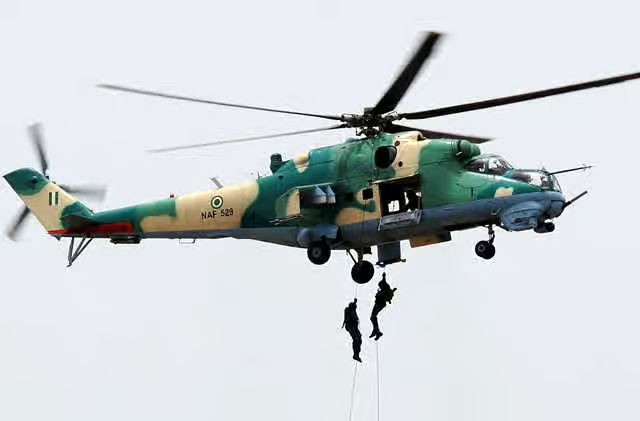
The Nigerian Air Force (NAF) says it has killed nine Islamic State West Africa Province (ISWAP) fighters, including a senior commander, in a precision air strike in Borno State.

NAF Director of Public Relations and Information, Air Commodore Ehimen Ejodame, disclosed this in a statement issued on Sunday in Abuja.

He said the operation was conducted on Saturday in the Sambisa Forest area following intelligence on the movement and activities of ISWAP fighters.

According to Ejodame, the operation began with the deployment of a Remotely Piloted Aircraft for Intelligence, Surveillance and Reconnaissance over the area.

He said the aircraft tracked a group of terrorists moving towards a suspected hideout before the target was positively identified and engaged by NAF aircraft.

A subsequent battle damage assessment confirmed nine terrorists killed and several others wounded, according to the statement.

Among those killed was Abu Khalid Al Muhajir, whom NAF identified as an ISWAP commander responsible for providing special security escorts for senior members of the group.

Ejodame said the commander’s death could affect ISWAP’s ability to protect and move high-value members because of his reported knowledge of routes, terrain and tactical movements connecting terrorist enclaves in Sambisa Forest and surrounding areas.

NAF said intelligence also indicated that some of the fighters affected by the strike were linked to elements suspected of carrying out a recent ambush on Nigerian troops along the Bita-Yamtage axis in Gwoza Local Government Area.

The Air Force said the operation demonstrated the growing use of intelligence-led surveillance and precision strikes to identify terrorist positions before they can regroup.

It added that the strike was expected to disrupt ISWAP’s leadership protection arrangements, movement of senior operatives and coordination across its enclaves.

The issues

The operation comes as Nigerian security forces continue to target terrorist networks in the North East through coordinated air and ground operations. The effectiveness of such campaigns depends heavily on accurate intelligence, surveillance and the ability to strike mobile terrorist formations before they relocate or reorganise.

What’s being said

“Following positive identification and confirmation of the target, NAF aircraft conducted a precision engagement on the location.” – Air Commodore Ehimen Ejodame, NAF Director of Public Relations and Information:

“Beyond the immediate casualties, the operation is expected to disrupt ISWAP’s leadership protection arrangements, movement of high-value personnel and coordination of activities across its enclaves.” – Nigerian Air Force:

What’s next

The NAF said it would sustain intelligence-led air operations in coordination with ground forces as part of efforts to degrade terrorist capabilities and improve security across the North East.

Bottom line

The killing of nine ISWAP fighters and a commander responsible for protecting senior operatives represents another targeted blow against the group’s operations in the Sambisa Forest, according to the Nigerian Air Force.

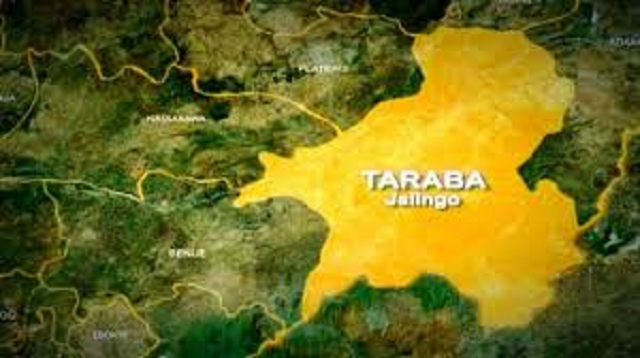
Taraba denies borrowing N1.2trn under Kefas, cites DMO debt data

2 Dead As Police, Army Clash In Taraba State

Key points

  • Taraba Government says claims that it borrowed N1.2 trillion in three years are inaccurate.
  • The state says its domestic debt stood at N85.51 billion as of Dec. 31, 2025.
  • Government says approved credit facilities and proposed financing should not be treated as existing debt.
  • The Finance Commissioner says the state’s borrowing policy is guided by development needs and repayment capacity.

Main story

The Taraba Government has rejected claims that it borrowed N1.2 trillion within three years, saying the figure combines different categories of financing that do not represent the state’s actual debt burden.

Commissioner for Finance, Dr Sarah Adi, dismissed the claim as inaccurate and misleading while addressing journalists in Jalingo on Sunday.

Adi said the latest data from the Debt Management Office (DMO) showed that Taraba’s domestic debt stood at N85.51 billion as of Dec. 31, 2025.

She said the figure was about N2.45 billion lower than the N87.96 billion domestic debt recorded in DMO data covering the period before Gov. Agbu Kefas assumed office.

According to her, the DMO report published in March 2023 reflected the state’s debt position as of Sept. 30, 2022, rather than its position when the report was released.

On external debt, Adi said Taraba’s obligations rose from about $46.47 million at the end of 2022 to approximately $48 million by Dec. 31, 2025.

She described the increase as relatively modest but noted that exchange-rate movements could affect the naira value of the state’s external obligations.

Adi also disputed the treatment of a N206.78 billion commercial bank financing facility approved by the Taraba State House of Assembly in 2023 as current outstanding debt.

She said the facilities involving Zenith Bank, United Bank for Africa, Fidelity Bank and Keystone Bank were backed by designated revenue streams.

The commissioner explained that an approved facility does not necessarily represent the amount currently owed because the actual liability depends on how much was disbursed, repayments made, restructuring and outstanding balances.

She also clarified reports that the state had received N350 billion through a proposed capital-market financing programme.

According to her, the programme remains subject to regulatory, statutory, market and disclosure requirements, with funding expected to be raised in stages.

Adi said an initial tranche of about N35 billion was under consideration and that the N350 billion programme size should not be interpreted as money already received by the state.

The commissioner similarly clarified three financing agreements worth about $268 million signed with the ECOWAS Bank for Investment and Development (EBID) on June 26, 2026.

She said the facilities were intended to finance an integrated industrial park, irrigated rice production and processing, and a 50-megawatt solar power project.

Adi stressed that signing the agreements did not mean the funds had already been disbursed, saying drawdowns remained subject to conditions precedent, regulatory procedures and statutory approvals.

She said Taraba’s financial position should be assessed by distinguishing between existing debt stock, approved facilities, outstanding balances and proposed or undisbursed financing.

According to her, combining figures from the four categories could create a distorted picture of the state’s actual debt burden.

The issues

The dispute centres on how government financing figures are classified. An approved loan facility, a proposed financing programme and a signed but undisbursed loan are not automatically equivalent to outstanding debt. Taraba’s Finance Commissioner therefore argued that the state’s debt position should be assessed using actual disbursements and outstanding balances rather than headline values attached to financing programmes.

What’s being said

“The figure represents a reduction of about N2.45 billion from the N87.96 billion domestic debt recorded in DMO data available before Gov. Agbu Kefas assumed office.” – Sarah Adi, Taraba Commissioner for Finance:

“The true outstanding balance can only be established by examining the amount actually disbursed, repayments made, any restructuring undertaken and the current balances on the respective facilities.” – Sarah Adi, Taraba Commissioner for Finance:

“The facilities are intended to finance an integrated industrial park, irrigated rice production and processing, and a 50-megawatt solar power project.” – Sarah Adi, Taraba Commissioner for Finance:

What’s next

The Taraba Government is expected to continue defending its borrowing position using verified debt and financing records as scrutiny of the state’s finances continues.

Bottom line

Taraba says the N1.2 trillion borrowing claim overstates its actual debt by treating approved, proposed and undisbursed financing as though they were existing liabilities. The state says its verified domestic debt stood at N85.51 billion at the end of 2025.

Nigerian, Chinese writers seek literary collaborations to deepen cultural ties

Public, Private Schools In Lagos To Resume on January 18 - Ministry of Education

Key points

  • Nigerian and Chinese writers expressed readiness to collaborate on literary projects, translation and cultural exchanges.
  • The writers said stronger literary cooperation could deepen mutual understanding and people-to-people ties.
  • Chinese novelist Zhu Shanpo praised the global influence of Nigerian writers including Wole Soyinka and Chinua Achebe.
  • The dialogue also featured a panel discussion and awards for student writers and poets.

Main story

Nigerian and Chinese writers have called for greater collaboration in literature, including translation, cultural exchanges and joint projects, to deepen understanding between both countries.

The call was made at the August Reading and Writers Dialogue organised by the Abuja chapter of the Association of Nigerian Authors (ANA) at the Mamman Vatsa Writers Village.

The forum, themed “The Influence of Literature on Human Progress in China and Nigeria,” brought together writers, students and literary enthusiasts from both countries, with Chinese novelist and poet Zhu Shanpo as guest writer.

Chairman of ANA Abuja, Chukwudi Eze, said literature could provide a platform for Nigerians and Chinese to understand each other’s histories, experiences and aspirations beyond formal diplomatic relations.

He said the engagement with Chinese literary figures reflected the growing relationship between ANA Abuja and the Chinese Embassy, while creating opportunities for writers from both countries to exchange ideas.

Eze said sustained literary engagement could lead to new research, translation initiatives and collaborations involving writers and readers in Nigeria and China.

Shanpo said Chinese and Nigerian writers should build stronger connections by sharing ideas and literary experiences.

He expressed interest in Nigerian literature and cited the international influence of Wole Soyinka and Chinua Achebe as examples of the country’s contribution to global literature.

Shanpo noted that Soyinka’s Nobel Prize in Literature had generated interest in China, while Achebe’s Things Fall Apart had also gained recognition among Chinese writers and readers.

He said greater interaction between writers from both countries could help strengthen their cultural relationship.

Director of the China Cultural Centre in Nigeria, Yuan Jianxing, also called for increased cooperation between Nigerian and Chinese authors through cultural and academic exchanges and capacity-building programmes.

He said literature could help bridge cultural differences by enabling people to share historical narratives and develop a deeper appreciation of each other’s societies.

The dialogue also featured a panel discussion moderated by writer and Professor of Communication and Cultural Studies, Udenta O. Udenta.

The panel included author and human rights activist, Sen. Shehu Sani, Prof. Razinat Mohammed and Jianxing.

The event ended with the presentation of awards to student writers and poets.

The issues

Literary exchanges provide a relatively direct way for countries to build cultural understanding beyond formal diplomatic relations. For Nigeria and China, greater cooperation in writing, translation and academic exchanges could help audiences in both countries gain a better understanding of each other’s histories, societies and contemporary experiences.

What’s being said

“Today, ANA Abuja is proud to stand at the forefront of that noble tradition by creating a platform where Chinese and Nigerian literary voices can engage in meaningful dialogue, exchange ideas, and build lasting friendships.” – Chukwudi Eze, Chairman, ANA Abuja:

“Contemporary literary voices in China and Nigeria need to work together and share ideas that will strengthen cultural ties between them.” – Zhu Shanpo, Chinese novelist and poet:

“Literature bridges cultural divides through sharing of historical narratives.” – Yuan Jianxing, Director, China Cultural Centre in Nigeria:

“There is a need for Chinese and Nigerian authors to work together through cultural and academic exchanges and capacity-building initiatives.” – Yuan Jianxing, Director, China Cultural Centre in Nigeria:

What’s next

The writers are expected to explore literary collaborations, translation projects, cultural exchanges and academic partnerships that can create sustained engagement between Nigerian and Chinese literary communities.

Bottom line

The dialogue has opened another channel for Nigeria-China cultural engagement, with writers from both countries pushing for collaboration in literature, translation and academic exchange to strengthen mutual understanding.

BBNaija evicts Martins and Mercedes in first double eviction

By Boluwatife Oshadiya | August 10, 2026

Key Points

  • Martins becomes the first housemate evicted from the Show Ya Sef House
  • Mercedes follows Martins as the second housemate to leave the competition
  • Chimsom Chuka earns Most Influential Person of the Week status and immunity from the next eviction

Main Story

Big Brother Naija Season 11 has recorded its first double eviction, with Martins and Mercedes leaving the Show Ya Sef House during the second live show on Sunday, August 9.

Martins was the first housemate evicted, followed by Mercedes in the final eviction of the night, according to the official Big Brother Naija report. Their departures reduced the number of housemates competing for the season’s grand prize.

The live show, hosted by Ebuka Obi-Uchendu, also revisited developments from the second week of the competition, including the housemates’ wager preparations and presentation.

Head of House Sheba faced questions about her leadership experience and the pressure that came with the role. She was subsequently asked by Biggie to exercise her Head of House veto power and chose Chimsom Chuka.

Chimsom Chuka was also named the first Most Influential Person of the Week, earning immunity from the next eviction, according to the official show report.

Martins described his eviction as sad but said his overall experience in the house was amazing. He also indicated that he intends to make effective use of the platform gained from his time on the show.

Mercedes’ eviction followed later in the live show. Although disappointed by the outcome, she said she was proud of how she presented herself during her time in the house and expressed plans for her future beyond the competition.

The live show also addressed an ongoing conversation about age differences among the housemates, with Tram discussing his experience and relationships within the house.

What’s Being Said

“My eviction was sad, but the experience overall was amazing, and I’m looking forward to using my new platform well.” Martins, evicted Big Brother Naija housemate.

What’s Next

  • Chimsom Chuka enters the next eviction cycle with immunity after being named Most Influential Person of the Week
  • The remaining housemates will continue competing in the Show Ya Sef House as the season enters its third week
  • The next live show will determine the next stage of the competition and the housemates at risk of leaving

Bottom Line

The Bottom Line: The first double eviction has immediately reshaped the Show Ya Sef House, removing two competitors while giving Chimsom Chuka an early advantage through immunity. The departures also set up a new phase of nominations, alliances and competition among the remaining housemates.

Naira strengthens to N1,365 as reserves rise

By Boluwatife Oshadiya | August 10, 2026

Key Points

  • Naira appreciates 0.19% week-on-week to close at N1,365.69 per dollar at the NFEM
  • External reserves rise 0.15% week-on-week to US$52.00 billion
  • Lower oil prices and Strait of Hormuz uncertainty keep pressure on Nigeria’s external earnings outlook

Main Story

The naira strengthened to N1,365.69 per US dollar at the Nigerian Foreign Exchange Market (NFEM), while Nigeria’s external reserves rose to US$52.00 billion during the week.

Data released by the Central Bank of Nigeria (CBN) showed that the naira gained 0.19% week-on-week, improving from about N1,368 per dollar at the beginning of the previous trading week.

The appreciation came despite sharp liquidity fluctuations in the official foreign exchange market, which caused the currency to surrender some of its earlier gains during the final three trading sessions.

In the parallel market, the naira weakened by 0.06% to N1,410 per dollar, reflecting continued demand from participants in the informal foreign exchange segment.

Meanwhile, Nigeria’s external reserves increased by 0.15% week-on-week to US$52.00 billion, pointing to a marginal improvement in the country’s external liquidity position.

The reserves position comes as global oil markets remain volatile. Brent crude was trading at US$82.22 per barrel at the time of writing, while West Texas Intermediate (WTI) stood at US$77.22 per barrel. Bonny Light declined by 6.04% to US$89.06 per barrel.

The source material attributed the movement in oil prices to easing supply concerns following U.S.-Iran diplomatic discussions aimed at restoring peace in the Middle East and reopening the Strait of Hormuz.

However, uncertainty remained around the negotiations and the reopening of the strategic oil and liquefied natural gas (LNG) transit route. Traders reported that 33 vessels passed through the Strait between Monday and Thursday, compared with 50 vessels during the corresponding period of the previous week.

[Direct quote required before publication: Insert a verified short statement from the CBN, a named market analyst, or another authoritative source on the naira/reserves outlook.]

What’s Being Said

Broadstreet analysts and market participants expect the naira to remain relatively stable in the near term, supported by the improvement in external reserves and continued foreign exchange interventions.

Analysts also expect oil prices to remain volatile as geopolitical developments, Organisation of the Petroleum Exporting Countries and its allies (OPEC+) policy decisions and global demand conditions influence Nigeria’s export earnings and fiscal position.

What’s Next

  • Continued CBN foreign exchange interventions and reserve accumulation will remain important for near-term naira stability
  • Movements in Brent, WTI and Bonny Light will continue to influence Nigeria’s export earnings and external liquidity
  • Developments around the Strait of Hormuz and U.S.-Iran negotiations will remain key variables for global oil supply and prices

Bottom Line

The Bottom Line: The naira’s weekly appreciation and stronger reserves provide a more supportive near-term external liquidity picture, but the improvement remains exposed to oil-market volatility. Sustained currency stability will depend on the durability of reserve accumulation, foreign exchange liquidity and Nigeria’s oil earnings.

CBN offers N700 billion treasury bills as demand stays strong

By Boluwatife Oshadiya | August 10, 2026

Key Points

  • CBN schedules N700 billion Treasury bills across 91-, 182- and 364-day maturities
  • Investors are expected to maintain strong demand for high-yielding sovereign instruments
  • Analysts expect Treasury bill clearing rates to remain broadly stable with a downward bias

Main Story

The Central Bank of Nigeria (CBN) is scheduled to offer N700 billion in Treasury bills to investors this week through a primary market auction. The planned auction covers 91-, 182- and 364-day Nigerian Treasury bills, with the CBN expected to use the issuance to manage excess liquidity in the financial system.

Market participants anticipate strong subscription at the midweek auction, supported by liquidity conditions and continued investor appetite for high-yielding sovereign instruments.

Fixed-income market analysts expect demand for Treasury bills to remain firm as investors seek attractive returns from government-backed securities.

The bulk of the planned issuance is concentrated in the 364-day bill, reinforcing the CBN’s preference for longer-tenor domestic instruments and extending the maturity profile of its domestic debt obligations.

Broadstreet analysts expect clearing rates to remain broadly stable, with a downward bias, particularly on the 364-day tenor.

At the previous primary market auction about two weeks ago, the CBN left spot rates unchanged for the 91- and 182-day Treasury bills but reduced the discount rate on the 364-day instrument. The 364-day bill was significantly oversubscribed.

In the secondary fixed-income market, analysts reported that yields increased by two basis points at both the mid- and long-end segments of the curve. The movement pushed the average market yield up by two basis points to 18.12%.

[Direct quote required before publication: Insert a verified short statement from the CBN, Broadstreet analysts, or another named fixed-income market analyst on the auction outlook.]

What’s Being Said

Broadstreet analysts expect Treasury bill clearing rates to remain broadly stable, with a downward bias, particularly for the 364-day maturity.

Fixed-income analysts also expect investor demand to remain strong, reflecting continued interest in high-yielding sovereign instruments amid liquidity in the financial system.

What’s Next

  • The CBN will conduct the planned primary market auction covering 91-, 182- and 364-day Treasury bills
  • Investors will watch the auction’s subscription levels and clearing rates for signals on short-term fixed-income pricing
  • Secondary-market yields will remain a key indicator of how investors respond to the latest primary-market rates

Bottom Line

The Bottom Line: The N700 billion auction is positioned to absorb liquidity while providing investors with continued access to sovereign fixed-income instruments. The concentration of supply in the 364-day bill means its clearing rate and subscription level will be particularly important market signals.