




Home Blog Page 89

Seplat urges faster gas development to boost energy security

Key points

  • Seplat Energy called for greater collaboration, investment and faster gas development to strengthen Nigeria’s role in global energy markets.
  • The company said Nigeria should capitalise on global energy supply disruptions by improving production reliability and expanding gas infrastructure.
  • Seplat reaffirmed support for Nigeria’s oil and gas production targets and highlighted its growing contribution to domestic gas supply.

Main story

Seplat Energy Plc has called for stronger collaboration, increased investment and accelerated gas development to position Nigeria as a reliable global energy supplier amid shifting geopolitical and energy market dynamics.

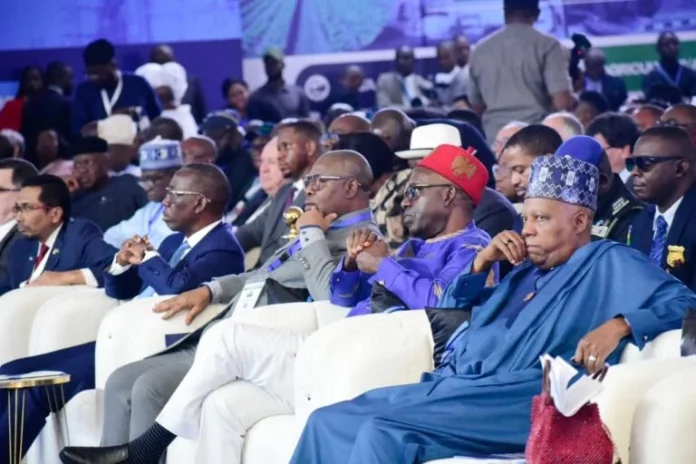
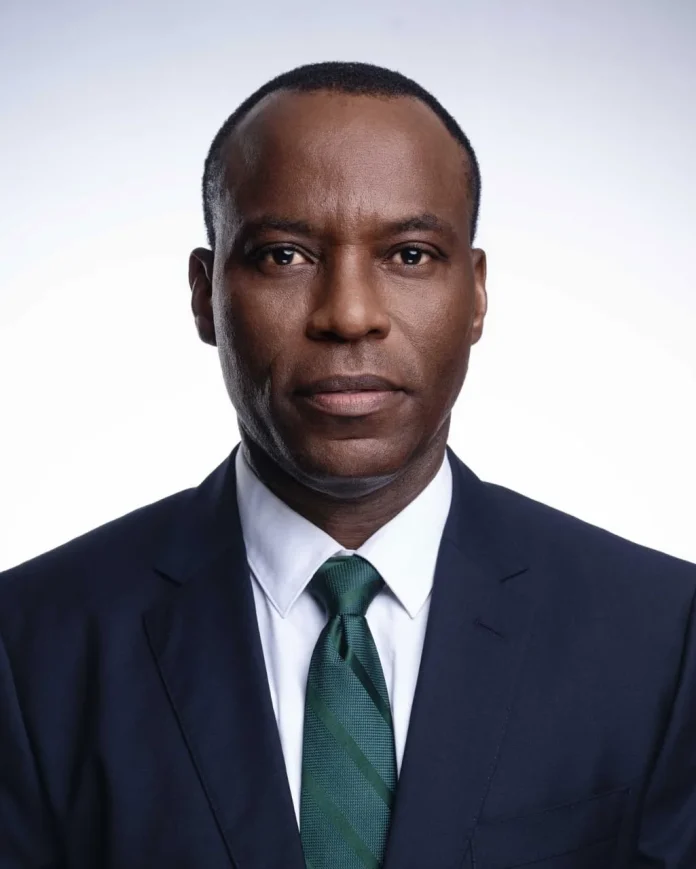
The company’s Chief Executive Officer, Effiong Okon, made the call on Monday while delivering the keynote address at the 49th Nigerian Annual International Conference and Exhibition (NAICE 2026) of the Society of Petroleum Engineers Nigeria Council in Lagos.

Speaking on the conference theme, “Thriving in the Evolving Global Energy Landscape: Collaborative Growth and Resilience,” Okon said energy remains the foundation of economic prosperity and sustainable development.

He said recent geopolitical tensions, including disruptions around the Strait of Hormuz, have reinforced the importance of energy security, creating opportunities for reliable producers to strengthen their position in global markets.

According to him, Nigeria should seize the opportunity by improving production reliability, expanding gas infrastructure, securing supply routes and strengthening investor confidence.

Okon advocated an energy transition centred on “energy addition” rather than “energy subtraction,” arguing that Nigeria requires more electricity, natural gas, responsible oil production and commercially viable renewable energy to support economic growth.

He described natural gas as central to Nigeria’s industrialisation agenda, noting that it could support power generation, fertiliser and petrochemical production, data centres, compressed natural gas, liquefied petroleum gas and cleaner cooking solutions.

The Seplat chief said Africa’s abundant energy resources would only translate into broad-based prosperity through sustained investment in infrastructure, industrialisation and job creation.

Highlighting the company’s performance, Okon said Seplat recorded average working interest production of 131,506 barrels of oil equivalent per day in 2025, representing a 148 per cent increase from the previous year.

He added that the company restored 49 idle offshore wells, increasing gross production capacity by 48,600 barrels of oil equivalent per day.

Okon said Seplat currently supplies up to 30 per cent of Nigeria’s grid-connected gas for electricity generation through its Oben, Sapele and ANOH gas facilities.

He expressed confidence that the company would surpass its 2025 performance in 2026, citing strong operational results recorded in the first half of the year.

The Seplat CEO also reaffirmed the company’s support for the Nigerian National Petroleum Company Limited’s target of producing three million barrels of oil per day and 12 billion standard cubic feet of gas daily by 2030.

He urged industry stakeholders to prioritise infrastructure reliability, expand gas-to-industry projects, produce lower-cost and lower-carbon energy, strengthen public-private collaboration and invest in developing skilled professionals.

Okon also commended the Society of Petroleum Engineers Nigeria Council for sustaining the NAICE conference over the past 49 years, describing it as a leading platform for technical, commercial and policy dialogue.

The issues

Global energy market disruptions are creating opportunities for resource-rich producers, but Nigeria’s ability to benefit will depend on expanding gas infrastructure, improving production reliability and maintaining a stable investment climate.

What’s being said

“The world is asking who can deliver energy reliably when the system is stressed. This is Nigeria’s moment to lead by improving uptime, securing routes, delivering more products to the market and deepening gas infrastructure.” — Effiong Okon, Chief Executive Officer, Seplat Energy.

“Nigeria requires more electricity, gas, responsible oil production and commercially viable renewable energy.” — Effiong Okon.

What’s next

Industry stakeholders are expected to pursue greater collaboration on gas infrastructure, investment and energy security, while Seplat aims to expand production and support Nigeria’s long-term oil and gas output targets.

Bottom line

Seplat believes Nigeria can strengthen its position in global energy markets if it accelerates gas development, improves production reliability and builds stronger partnerships across the energy value chain.

NUPRC seeks stronger industry collaboration for energy growth

Key points

  • NUPRC called for stronger government-industry collaboration to build a resilient and competitive petroleum sector.
  • The commission said stakeholder engagement has helped shape reforms and improve Nigeria’s investment climate.
  • NMDPRA said Nigeria is on course to becoming Africa’s refining hub through regulatory reforms and gas expansion.

Main story

The Nigerian Upstream Petroleum Regulatory Commission (NUPRC) has called for stronger collaboration among government, regulators and industry stakeholders to build a resilient and globally competitive petroleum sector capable of driving economic growth and energy security.

The Chief Executive of NUPRC, Oritsemeyiwa Eyesan, made the call on Monday while delivering a keynote address at the 49th Society of Petroleum Engineers Nigeria Annual International Conference and Exhibition (NAICE 2026) in Lagos.

Eyesan described the conference as one of Africa’s leading technical and strategic energy platforms, saying sustained dialogue and partnerships are essential as the global energy landscape continues to evolve.

She said the conference theme, “Thriving in the Evolving Global Energy Landscape: Collaborative Growth and Resilience,” reflects the realities confronting the oil and gas industry.

According to her, many of the reforms transforming Nigeria’s upstream petroleum sector have been influenced by recommendations from professional engagements and consultations with industry stakeholders.

She said regular engagement with operators has helped the commission establish a more transparent, predictable and investor-friendly regulatory environment.

Eyesan stressed that resilient energy systems, sustained investment and long-term industry growth can only be achieved through collaboration, innovation and practical policy solutions.

She encouraged participants to propose solutions that would strengthen the regulatory framework and improve Nigeria’s investment climate, assuring them that stakeholder recommendations would continue to inform future policies.

The NUPRC chief said Nigeria remains well-positioned to compete globally because of its abundant oil and gas reserves, growing indigenous petroleum industry, skilled workforce, improving regulatory framework and strategic location.

She urged stakeholders to move beyond discussions and work together to build an energy industry capable of supporting sustainable economic growth and national energy security.

Speaking at the conference, the Chief Executive of the Nigerian Midstream and Downstream Petroleum Regulatory Authority (NMDPRA), Rabiu Umar, said Nigeria is on course to becoming Africa’s refining hub.

Umar said the Authority’s regulatory approach would remain firm, fair and fast to encourage investment, strengthen energy security and expand the country’s gas economy.

He noted that the emergence of large-scale private and modular refineries is transforming Nigeria from a crude oil exporter and fuel importer into a producer and exporter of refined petroleum products.

Umar said the NMDPRA is working with the NUPRC to enforce domestic crude supply obligations to ensure adequate feedstock for local refineries.

He added that the Authority is also prioritising pipeline rehabilitation, strategic petroleum storage, nationwide product distribution and expanded gas utilisation through power generation, industries, LPG and Compressed Natural Gas.

The NMDPRA chief further disclosed that another round of gas distribution licences would be issued following the completion of a nationwide gas market mapping exercise.

The issues

Nigeria’s petroleum regulators are seeking to balance energy transition with increased domestic refining, gas development and investment attraction. Achieving these objectives will depend on regulatory certainty, infrastructure development and sustained collaboration between government and industry.

What’s being said

“The best policies and regulations are built through collaboration. By listening, learning, and working together, we are building a regulatory system that is practical, responsive, and forward-looking.” — Oritsemeyiwa Eyesan, Chief Executive, NUPRC.

“Our regulatory approach will be firm, fair, and fast.” — Rabiu Umar, Chief Executive, NMDPRA.

What’s next

Industry stakeholders are expected to develop recommendations from the conference, while regulators continue implementing reforms aimed at expanding refining capacity, strengthening gas infrastructure and improving Nigeria’s investment environment.

Bottom line

Nigeria’s petroleum regulators say stronger collaboration, regulatory certainty and investment in refining and gas infrastructure will be central to building a more competitive and resilient energy sector.

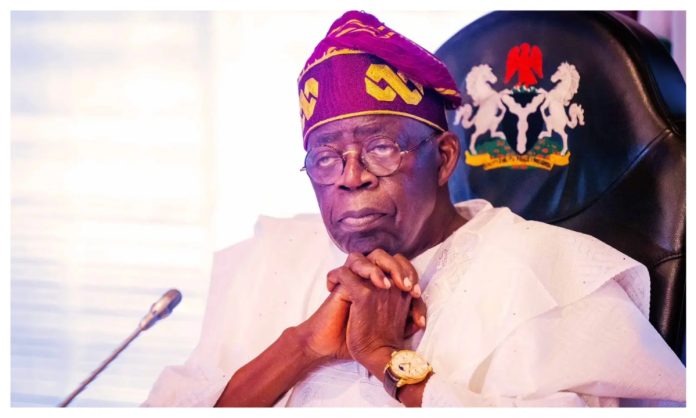
Gbajabiamila: Tinubu to receive draft State Policing Bill September 3

Key points

  • The Presidential Working Group will submit the draft National Policing Bill to President Bola Tinubu on September 3.
  • States will only be allowed to establish police services after meeting prescribed operational and institutional standards.
  • The proposed legislation seeks to create a dual federal-state policing system while preserving national standards and safeguards.
  • The Nigeria Governors’ Forum backed the initiative, describing state policing as a major governance reform.
  • The Attorney-General said national policing standards would prevent abuse and ensure equal protection for all Nigerians.

Main Story

The Chairman of the Presidential Working Group on the National Policing Bill and Chief of Staff to the President, Femi Gbajabiamila, has disclosed that the committee will present the draft executive bill on state policing to President Bola Tinubu on September 3, as part of efforts to establish a legal and operational framework for state police in Nigeria.

Speaking after a meeting of the working group at the Presidential Villa in Abuja, Gbajabiamila explained that although the constitutional amendment process on state policing is progressing, no state would be permitted to commence policing operations until it demonstrates adequate readiness in key operational areas.

According to him, states must satisfy requirements covering recruitment, training, equipment, pensions, financial sustainability, firearms control, complaints handling, independent oversight and other institutional safeguards before receiving approval to operate state police services.

He stressed that the proposed reforms are designed to create a professional, accountable and sustainable dual policing architecture that brings security closer to communities while maintaining national standards and protecting citizens’ rights.

Gbajabiamila noted that the constitutional amendment establishing state police has not yet taken effect because it is still awaiting approval by the required number of state Houses of Assembly. Until then, he said, the Nigeria Police Force remains the country’s only constitutionally recognized police institution.

He added that after completing the draft legislation, the working group will conduct nationwide consultations before the President grants final approval and transmits the executive bill to the National Assembly.

The working group has also opened a public consultation process, inviting memoranda and position papers from Nigerians, civil society organizations, professional bodies, and other stakeholders to strengthen the proposed legislation.

Meanwhile, the Nigeria Governors’ Forum (NGF) reaffirmed its support for the proposed National Policing Bill, describing state policing as one of the Tinubu administration’s most significant governance reforms. Governor Dapo Abiodun of Ogun State said the legislation is intended to provide a workable legal framework rather than centralize policing powers.

Also speaking, the Attorney-General of the Federation and Minister of Justice, Lateef Fagbemi (SAN), said the proposed legislation is aimed at strengthening public safety while ensuring state police cannot be used as instruments of political intimidation or oppression. He added that states unable to establish police services immediately would continue to rely on the Nigeria Police Force until they develop the required capacity.

The Issues

The constitutional amendment creating state police is yet to be completed before implementation can begin.

Differences in the financial and institutional capacity of states may affect the pace of implementation.

Safeguards are required to prevent state police from becoming instruments of political persecution.

National standards and independent oversight will be essential to ensure professionalism, accountability and equal protection across all states.

What’s Being Said

Femi Gbajabiamila, Chairman, Presidential Working Group on the National Policing Bill

“Operational commencement must be based on readiness, not announcement.”

“State police cannot mean 36 state militias.”

“There is no operational state police service anywhere in Nigeria, and the Nigeria Police Force remains the constitutionally recognised police institution.”

Dapo Abiodun, Chairman, Nigeria Governors’ Forum

“Someone has to be responsible for ensuring that the amendment now reflects in a bill that can be operated, and that’s what we’re working on.”

Lateef Fagbemi (SAN), Attorney-General of the Federation

“The main thrust of this bill is to ensure security of life and property, and it is also important that we do not make state policing a weapon of political persecution or oppression.”

What’s Next

The Presidential Working Group will conclude the draft National Policing Bill and submit it to President Tinubu on September 3. Following nationwide consultations and presidential approval, the executive bill will be forwarded to the National Assembly for legislative consideration. States will only be certified to establish police services after satisfying nationally prescribed operational standards and after the constitutional amendment process is completed.

Bottom Line

The proposed National Policing Bill represents a significant step toward establishing state police in Nigeria. However, implementation will depend on constitutional amendments, legislative approval and strict compliance with national operational standards designed to ensure professionalism, accountability and equal protection for all Nigerians.

Adeleke predicts victory, seeks free and fair Osun poll

Key points

  • Governor Ademola Adeleke says he is confident of winning the Aug. 15 Osun governorship election.
  • He urged President Bola Tinubu to ensure police neutrality and credible conduct of the poll.
  • Adeleke called on supporters to protect their votes and remain peaceful on election day.

Main story

Osun State Governor Ademola Adeleke has expressed confidence that he will secure re-election in the Aug. 15 governorship poll if the election is conducted freely and fairly.

Speaking during his re-election campaign in Osogbo on Monday, Adeleke said he was optimistic of victory and urged voters to turn out in large numbers on election day.

The governor also appealed to President Bola Tinubu to direct the Nigeria Police Force to remain professional and impartial throughout the electoral process.

Adeleke alleged that members of the Accord Party were being killed and appealed to the President to prevent further violence.

He warned against any attempt to manipulate the election, saying the poll would serve as an important test ahead of the 2027 general elections and would be closely watched by the international community.

The governor urged his supporters to vote peacefully and remain at polling units until results were officially announced.

He maintained that the outcome of the election should reflect the will of the people and said any political change should come through the ballot box.

The issues

Adeleke’s comments reflect growing concerns over election security and the neutrality of security agencies ahead of the Osun governorship election. The credibility of the poll will depend on a peaceful voting process, effective security management and public confidence in the electoral process.

What’s being said

With God on my side, I am confident of victory. If this election is free and fair, I will win. — Gov. Ademola Adeleke.

We will not accept any attempt to rig this election. Direct the police to act professionally and impartially. — Gov. Ademola Adeleke.

What’s next

Attention will focus on security preparations, the conduct of political campaigns and the readiness of electoral authorities ahead of the Aug. 15 governorship election.

Bottom line

Adeleke has framed the Osun governorship election as a test of Nigeria’s democratic process, expressing confidence in victory while calling for a peaceful, free and credible poll.

Soludo urges Nigerians to embrace locally made fabrics

Key points

  • Gov. Chukwuma Soludo urged Nigerians to buy locally made fabrics to create jobs and strengthen the economy.
  • He said Nigeria’s improved macroeconomic stability presents fresh opportunities for investment.
  • Soludo called for stronger collaboration among federal, state and local governments to drive economic growth.

Main story

Anambra State Governor Chukwuma Soludo has urged Nigerians to embrace locally made fabrics, saying increased patronage would create jobs, reduce import dependence and strengthen the country’s economy.

Soludo made the call on Monday in his goodwill message at the Delta State Economic and Investment Summit in Asaba, themed “Harnessing Our Strengths, Unlocking Our Potential.”

He said the Federal Government’s ongoing economic reforms have created opportunities for states and local governments to redefine their economies and pursue sustainable growth.

The governor stressed that promoting locally manufactured products had become more important than ever, calling for stronger collaboration among the three tiers of government to accelerate economic development.

He lamented Nigeria’s continued dependence on imported fabrics despite the country’s rich textile and fashion industry.

Soludo said his decision to wear the locally produced Akwete fabric had helped boost demand, increasing income and employment opportunities for local producers.

He argued that widespread adoption of Made-in-Nigeria clothing could generate millions of jobs across the country.

The governor also proposed that future investment summits encourage participants to wear locally made outfits to promote indigenous industries and stimulate domestic production.

On the economy, Soludo said Nigeria’s improving macroeconomic stability had created a more predictable environment for both local and foreign investors.

He noted that exchange rate reforms and stronger foreign reserves had improved investor confidence and enhanced the country’s economic outlook.

The governor, however, emphasised that sustainable economic growth required stronger cooperation among federal, state and local governments.

He urged Delta and Anambra states to deepen economic collaboration, particularly following the completion of the Second Niger Bridge, saying both states should position themselves as complementary economic hubs.

Soludo also commended the organisers of the summit for focusing on practical investment outcomes rather than speeches, urging governments to sustain investment promotion beyond periodic conferences.

The summit was attended by Vice President Kashim Shettima, ministers, investors and business leaders, among other stakeholders.

The issues

Soludo’s comments highlight the challenge of translating Nigeria’s manufacturing potential into jobs and industrial growth. While improving macroeconomic stability may attract investment, expanding domestic production and encouraging consumers to buy locally made goods remain key to reducing import dependence and strengthening value chains.

What’s being said

“If all Nigerians deliberately wear Made-in-Nigeria clothing, we could create millions of jobs across the country.” — Chukwuma Soludo, Governor of Anambra State.

“The Second Niger Bridge has brought our states closer. Delta and Anambra should now see themselves as twin economic centres and work more closely in areas of mutual benefit.” — Chukwuma Soludo.

What’s next

State governments are expected to pursue stronger investment partnerships and industrial collaboration, while initiatives promoting Made-in-Nigeria products may receive greater attention as part of broader economic diversification efforts.

Bottom line

Soludo argues that economic reforms alone are not enough, saying sustained support for local industries and stronger intergovernmental collaboration are essential to creating jobs and driving long-term economic growth.

Kogi says ultra-modern market will boost national commerce

Key points

  • Kogi says the Lokoja Ultra Modern Market will become one of Nigeria’s largest commercial hubs.
  • The 25-hectare project will relocate traders from seven markets to reduce congestion and improve safety.
  • Government says the project will create jobs, boost investment and strengthen the state’s economy.

Main story

The Kogi State Government says the Lokoja Ultra Modern Market will transform commerce across Nigeria by leveraging the state’s strategic location and providing one of the country’s largest and most modern trading hubs.

The Commissioner for Information and Communications, Kingsley Fanwo, made the statement on Monday during an inspection of the project site in Lokoja.

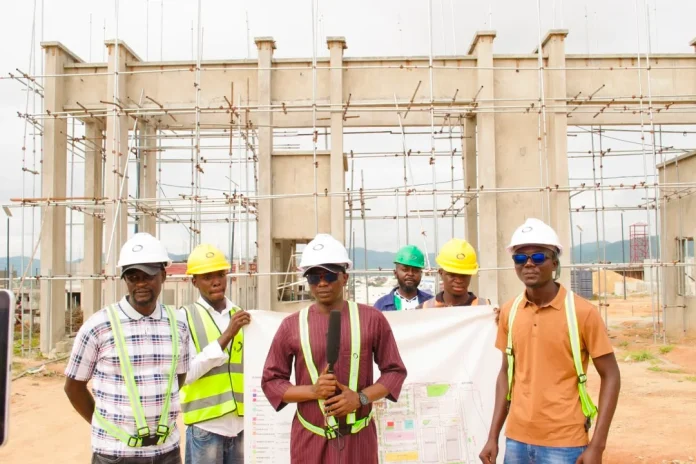
Fanwo said the 25-hectare market would accommodate traders from seven existing markets in Lokoja, creating a well-planned commercial environment designed to improve trade, enhance safety, reduce traffic congestion and stimulate economic growth.

He described the project as a flagship initiative of Governor Ahmed Ododo’s administration and a key component of its Urban Renewal Agenda aimed at transforming Lokoja into a cleaner, smarter and more organised state capital.

According to him, the government is pursuing broader environmental and infrastructure reforms to modernise the city and improve the ease of doing business.

Fanwo said the existing International Market at Nataco had exceeded its capacity and now posed traffic, environmental and safety challenges, adding that traders would begin relocating to the new facility from 2027.

He noted that Kogi’s central location positioned the market to attract traders and investors from across the country.

The commissioner said the facility would include open trading spaces, lock-up shops, market halls, technology hubs, banking facilities, a clinic, fire and security stations, a food court, a modern abattoir, warehouses and extensive parking infrastructure.

He added that the project would create thousands of direct and indirect jobs, support small and medium-sized enterprises, increase internally generated revenue and strengthen Kogi’s position as a commercial and investment destination.

Fanwo described the market, alongside the state’s airport project, as one of the Ododo administration’s legacy infrastructure initiatives.

He also commended President Bola Tinubu’s economic policies, saying they had improved states’ capacity to finance major infrastructure projects.

The issues

The project reflects growing efforts by state governments to use modern market infrastructure as a tool for urban renewal and economic development. Its success will depend on timely completion, effective relocation of traders and sustained investor interest.

What’s being said

“Kogi is at the heart of Nigeria. Every major route passes through the state, making Lokoja an ideal commercial destination. This market has the potential to transform commerce not only in Kogi but across Nigeria.” — Kingsley Fanwo, Kogi Commissioner for Information and Communications.

What’s next

Construction of the market will continue ahead of the planned relocation of traders from existing markets in 2027, while the state government seeks to attract investors and businesses to the new commercial hub.

Bottom line

Kogi is betting that a modern, strategically located market will drive trade, reduce urban congestion and strengthen the state’s role as a national commercial gateway.

Shettima urges states to unlock economic potential for growth

Key points

  • Vice President Kashim Shettima urged states to organise and finance their economic potential to attract investment.
  • He said Tinubu’s economic reforms have improved macroeconomic stability and investor confidence.
  • Shettima described Delta as a prime investment destination and commended its economic diversification drive.

Main story

Vice President Kashim Shettima has urged state governments to harness their comparative advantages by organising, financing and developing their economic potential to attract investment, create jobs and build sustainable economies.

Shettima made the call on Monday while speaking as Special Guest of Honour at the Delta State Economic and Investment Summit in Asaba, themed “Harnessing Our Strengths, Unlocking Our Potential.”

He said the Federal Government had laid the foundation for economic growth through reforms that improved macroeconomic stability, adding that states must now create enabling environments for businesses to thrive.

According to the Vice President, recent fiscal and monetary reforms introduced by President Bola Tinubu have strengthened Nigeria’s economic outlook, restored investor confidence and improved the country’s standing with international credit rating agencies.

He said the improved macroeconomic environment provides states with an opportunity to attract greater private investment and accelerate economic development.

Shettima commended Delta State Governor Sheriff Oborevwori for positioning the state as an attractive destination for local and international investors, describing the initiative as consistent with the Federal Government’s economic agenda.

He noted that Delta possesses significant economic assets, including oil and gas resources, agriculture, solid minerals, a long coastline and an expanding industrial base, which could drive long-term growth if effectively harnessed.

The Vice President stressed that natural resources alone do not create prosperity without deliberate efforts to organise, finance and deploy them productively.

He also praised Delta’s focus on economic diversification through investments in agriculture, the blue economy, manufacturing, logistics and industrial development, describing competition among states for investment as a healthy trend that promotes national development.

Shettima urged investors and development partners to take advantage of opportunities in Delta, assuring them of the Federal Government’s continued support for credible investment initiatives across the country.

The summit brought together government officials, investors, development partners, policymakers and business leaders to explore strategies for accelerating industrialisation and investment in Delta State.

The issues

The Vice President’s remarks reinforce the growing emphasis on subnational economic competitiveness as states increasingly seek private investment to drive growth. Success will depend on how effectively states translate policy reforms, infrastructure development and sectoral strengths into bankable investment opportunities.

What’s being said

Potential has no economic value unless it is organised, financed, and put to work. — Vice President Kashim Shettima.

This is a race we must welcome, a race that proclaims growth rather than conflict, a race in which the prize is employment, prosperity, and human dignity. — Vice President Kashim Shettima.

What’s next

Delta State is expected to engage prospective investors following the summit, while other states may intensify efforts to leverage the improved macroeconomic environment to attract private capital and accelerate economic diversification.

Bottom line

Shettima says Nigeria’s economic reforms have created a stronger investment climate, but lasting growth will depend on how effectively states convert their economic potential into productive investment and jobs.

Here’s how MIPOW and prize money fluctuation work in BBNaija season 11

BBNija

By Boluwatife Oshadiya, Entertainment Correspondent | August 3, 2026

Key Points

  • Big Brother has introduced the Most Influential Player of the Week (MIPOW) as a new weekly reward system for Season 11.
  • Housemates will vote to determine the most influential contestant, with winners sharing a dedicated prize pot at the end of the season.
  • The show’s ₦100 million cash prize is now variable, with ₦5 million deducted for failed tasks and transferred into the MIPOW prize pot.

Main Story

Big Brother Naija Season 11 has unveiled a new gameplay twist that ties individual influence to financial rewards while placing the show’s ₦100 million cash prize at risk throughout the competition.

Under the new format, housemates will compete each week for the title of Most Influential Player of the Week (MIPOW), a recognition determined by fellow contestants rather than through physical or strategic challenges. At the same time, the house must work collectively to protect the season’s ₦100 million cash prize, with poor performances attracting financial penalties.

Unlike the Head of House competition, MIPOW will be decided through a peer-voting system. Every week, each housemate will score fellow contestants on a scale of one to five based on their perceived influence, contribution to the game, entertainment value and overall impact inside the house. The contestant with the highest cumulative score will be crowned MIPOW during the Sunday live show.

Winning the weekly title carries more than prestige. Big Brother announced the creation of a Most Influential Player Prize Pot, which will continue to grow throughout the season before being shared among all weekly MIPOW winners at the end of the competition.

The organisers also introduced a fluctuating cash prize mechanism for the first time in the show’s history. Although the season began with a ₦100 million cash prize, housemates are now responsible for protecting that amount through successful completion of Big Brother’s tasks, challenges and entertainment objectives.

Should the house fail to meet Big Brother’s expectations, ₦5 million will be deducted from the winner’s cash prize. Rather than being forfeited, every deduction will be transferred directly into the MIPOW Prize Pot, increasing the eventual earnings of the season’s most influential players.

The innovation comes as Season 11 raises the overall stakes with a record ₦160 million prize package, comprising ₦100 million in cash and additional prizes, making it the biggest reward in the history of the franchise.

What’s Being Said

Big Brother described the new format as one that places greater responsibility on contestants, telling the housemates: “The prize is yours to protect.”

According to the organisers, the MIPOW system is designed to reward contestants who consistently demonstrate influence, effort and entertainment value, while the fluctuating cash prize ensures that every task and group decision carries financial consequences for the entire house.

What’s Next

  • The first Most Influential Player of the Week (MIPOW) will be announced during the next Sunday Live Show.
  • Housemates will continue competing in weekly tasks that determine whether the ₦100 million cash prize remains intact or suffers further deductions.
  • The MIPOW Prize Pot will continue to grow throughout the season, with all weekly winners sharing the accumulated amount at the end of the competition.

Bottom Line: BBNaija Season 11 has shifted beyond a straightforward race for the grand prize. By linking collective performance to the cash prize and rewarding influence through a separate prize pot, the competition now places equal emphasis on strategy, teamwork and social capital, making every decision inside the house carry financial consequences.

Abia disburses N1.2bn for healthcare, social protection

Key points

  • Abia State disbursed N1.2 billion to 81 vulnerable groups between January and June 2026.
  • The intervention covered healthcare, housing support, disaster relief and education assistance.
  • Government also expanded the World Bank-backed Nigeria for Women project to six additional LGAs.

Main story

The Abia State Government has disbursed N1.2 billion to support 81 vulnerable groups through life-saving medical interventions and other social protection programmes in the first half of 2026.

The Commissioner for Information, Mr Okey Kanu, disclosed this while briefing journalists on the outcome of the State Executive Council meeting in Umuahia.

Kanu said the intervention, implemented through the Ministry of Poverty Alleviation and Social Protection, aligns with the state’s social protection framework aimed at improving the welfare of vulnerable residents.

According to him, beneficiaries received support for life-saving medical treatment, housing assistance for persons with disabilities, emergency housing for disaster victims and educational support for indigent students.

He said the ministry has continued to identify and coordinate urgent medical and humanitarian assistance, while regular monitoring of beneficiaries led to the recovery and refund of N20.9 million to the state treasury.

Kanu also disclosed that the Nchedo Sexual Assault Referral Centre in Aba handled 11 cases of sexual and gender-based violence between July and August, with six suspects arrested and four already prosecuted.

On women empowerment, he said Governor Alex Otti approved N450 million as the state’s counterpart funding for the World Bank-supported Nigeria for Women project.

The programme, previously implemented in three local government areas, has now been extended to Isiala Ngwa South, Ugwunagbo, Arochukwu, Bende, Ikwuano and Ukwa West, increasing the number of participating women affinity groups from 3,000 to 6,000.

Kanu urged eligible women in the newly added local government areas to register with the State Project Implementation Unit to benefit from the initiative.

He added that the Ministry of Works completed direct labour projects at 46 locations across the state, including the desilting of drains and roads in parts of Umuahia to reduce flooding during the rainy season.

The commissioner further disclosed that 26 road projects are currently under contract across the state, although construction has slowed because of the rains.

The issues

The interventions highlight Abia’s focus on strengthening social protection through healthcare, women empowerment and infrastructure. The challenge will be sustaining funding, ensuring transparency in beneficiary selection and translating these interventions into measurable improvements in living standards.

What’s being said

The support covers life-saving medical interventions, housing assistance for persons with disabilities, emergency housing support for disaster victims and educational assistance for indigent students. — Okey Kanu, Abia Commissioner for Information.

The expansion is expected to increase the number of participating women affinity groups in the state from 3,000 to 6,000. — Okey Kanu.

What’s next

The state government is expected to continue implementing its social protection programmes, expand the Nigeria for Women project in the newly added local government areas and accelerate road construction once weather conditions improve.

Bottom line

Abia is combining healthcare support, women empowerment and infrastructure projects to strengthen its social protection agenda, but the long-term impact will depend on sustained implementation and effective oversight.

NBC seeks Court of Appeal’s leave to challenge ruling voiding broadcast fines

Key points

  • The National Broadcasting Commission (NBC) has asked the Court of Appeal for permission to file a fresh appeal against a judgment barring it from imposing fines on broadcasters.
  • The Court of Appeal had earlier struck out the commission’s appeal after it was filed under the incorrect statutory name.
  • The Federal High Court ruled in January 2024 that the NBC lacks the constitutional authority to impose fines because it is not a court of law.
  • The commission argues that the judgment could weaken broadcasting regulation and encourage non-compliance with industry standards.
  • No hearing date has been fixed for the fresh application.

Main Story

The National Broadcasting Commission (NBC) has approached the Court of Appeal in Abuja seeking leave to file a fresh appeal against a Federal High Court judgment that invalidated its powers to impose fines on broadcast stations.

The application follows the Court of Appeal’s decision on June 17, 2026, striking out the commission’s earlier appeal because it was fundamentally defective and therefore incompetent.

In a motion filed through its counsel, Dapo Akinosun (SAN), the NBC asked the appellate court to extend the time within which it can challenge the January 10, 2024 judgment delivered by Justice Rita Ofili-Ajumogobia of the Federal High Court.

The dispute originated from a suit filed by Media Rights Agenda (MRA) challenging the commission’s decision to impose N5 million fines on Multichoice Nigeria Limited, TelCom Satellite Limited, Trust-TV Network Limited and NTA Startimes Limited.

The broadcasters were sanctioned after airing documentaries on banditry and insecurity in Zamfara State, which the NBC alleged were detrimental to Nigeria’s national security.

In her judgment, Justice Ofili-Ajumogobia held that the commission acted unlawfully and unconstitutionally by imposing the fines, ruling that the NBC lacked judicial authority to sanction broadcasters because it is not a court of law.

However, the commission’s initial appeal was struck out after it was filed under the name “Nigerian Broadcasting Commission” instead of its legally recognised statutory name, “National Broadcasting Commission.”

In its fresh application, the NBC argued that the judgment raises significant questions regarding its statutory mandate to regulate the broadcasting industry and enforce compliance with the Nigerian Broadcasting Code.

The commission contended that allowing the judgment to stand without appellate review could undermine its regulatory authority, weaken compliance with broadcasting standards and create uncertainty within the broadcasting sector.

It also maintained that the absence of effective enforcement powers could encourage irresponsible broadcasting practices and increase the dissemination of false, misleading and inflammatory content capable of threatening public order.

The commission further requested leave to introduce an additional ground of appeal questioning the legal capacity of Media Rights Agenda to institute the original suit before the Federal High Court.

The NBC stated that it had instructed its legal team to appeal immediately after the 2024 judgment and argued that the failure of the earlier appeal resulted solely from an inadvertent error in describing its statutory name.

No date has been fixed for the hearing of the application.

The Issues

The case raises questions about the extent of the NBC’s statutory authority to regulate and sanction broadcasters.

The Federal High Court’s judgment could significantly alter the enforcement framework governing Nigeria’s broadcasting industry.

The appeal highlights the legal consequences of procedural errors in court filings.

The outcome could affect future regulatory actions against broadcasters and media organisations.

The case also touches on the balance between media regulation, due process and freedom of expression.

What’s Being Said

National Broadcasting Commission (NBC)

“The subsisting judgment is capable of creating significant uncertainty regarding the commission’s regulatory powers and its ability to effectively discharge its statutory mandate.”

“A weakened regulatory framework could encourage non-compliance with broadcasting standards and lead to the spread of false, misleading and unverified information capable of causing public anxiety, panic and social unrest.”

“The proposed appeal raises substantial issues affecting not only the parties in the suit but also the integrity and orderly regulation of Nigeria’s broadcasting ecosystem.”

What’s Next

The Court of Appeal will determine whether to grant the NBC an extension of time to file a fresh appeal against the Federal High Court judgment.

If the application succeeds, the appellate court will proceed to hear the substantive appeal on the commission’s regulatory powers and the legality of the fines imposed on the affected broadcasters.

The outcome is expected to have significant implications for broadcasting regulation, enforcement of the Nigerian Broadcasting Code and future disputes between regulators and media organisations.

Bottom Line

The NBC’s latest application represents a renewed effort to restore its authority to sanction broadcasters. The Court of Appeal’s eventual decision will shape the future of broadcast regulation in Nigeria and clarify the legal limits of the commission’s enforcement powers.

Lagos ready to host 2026 CAF Awards, says Sanwo-Olu

Key points

  • Lagos State Governor Babajide Sanwo-Olu says the state is fully prepared to host the 2026 CAF Awards.
  • A five-member Confederation of African Football (CAF) delegation inspected the National Theatre in Lagos, the proposed venue for the awards ceremony.
  • The inspection forms part of Nigeria’s preparations to host the 48th CAF Ordinary General Assembly and the annual CAF Awards.
  • Abuja will host the CAF General Assembly on November 21, 2026, while Lagos will stage the CAF Awards ceremony.
  • President Bola Tinubu approved Nigeria’s hosting of both events following a request from CAF President Dr Patrice Motsepe.

Main Story

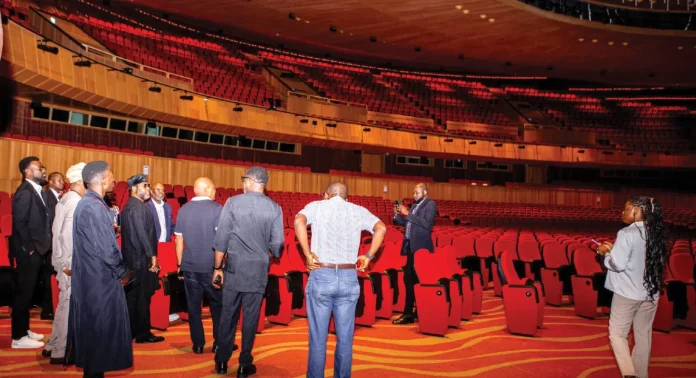
Lagos State Governor Babajide Sanwo-Olu has reaffirmed the state’s readiness to host the 2026 Confederation of African Football (CAF) Awards, following an inspection of the designated venue by a CAF delegation.

The five-member CAF team visited the Wole Soyinka Centre for Culture and Creative Arts, popularly known as the National Theatre, on Monday to assess facilities ahead of the prestigious continental football awards ceremony.

The delegation, which arrived in Nigeria last Thursday, is also evaluating facilities proposed by the country to host the 48th CAF Ordinary General Assembly and the annual CAF Awards.

Leading the inspection team was CAF’s Head of Safety and Security, Dr Christian Emeruwa, alongside Mohammed Bakeer (Technology), Inas Ahmed (Travel and Accommodation), Salah Mostafa (Transport) and Hervé Dassoundo (Branding).

The delegation was received by officials of the Lagos State Sports Commission, led by its Director-General, Lekan Fatodu, who accompanied the team during the inspection of the National Theatre.

Reacting after the exercise, Governor Sanwo-Olu said the state government remains committed to delivering a world-class event that reflects Lagos’ capacity to host major international sporting occasions.

He noted that feedback from the CAF delegation would help fine-tune preparations, stressing that every aspect of the event was receiving careful attention.

Nigeria has hosted the CAF Awards on four previous occasions, with Lagos staging the most recent edition in January 2015.

While Abuja will host the CAF Ordinary General Assembly on November 21, 2026, Lagos will host the awards ceremony recognising Africa’s outstanding footballers, coaches, administrators and other contributors to the game.

Before arriving in Lagos, the CAF delegation inspected facilities at the Nnamdi Azikiwe International Airport, the Bola Ahmed Tinubu International Conference Centre, and the Transcorp Hilton Hotel in Abuja.

The inspection tour is being coordinated by the Nigeria Football Federation (NFF), whose delegation includes Dr Ademola Olajire, Alizor Chuks, Barnabas Joro, Emmanuel Ayanbunmi and Tasiu Riskuwa Shehu.

Nigeria secured the hosting rights for both CAF events after President Bola Tinubu approved the request made by CAF President Dr Patrice Motsepe during the Africa Summit held in Nairobi, Kenya, two months ago.

The Issues

Successful hosting of the CAF Awards requires world-class venue preparation, security, transportation and hospitality services.

The event presents an opportunity for Nigeria to strengthen its reputation as a destination for major international sporting events.

Effective coordination among federal and state agencies, CAF and the Nigeria Football Federation will be critical to delivering a seamless tournament experience.

Hosting the awards could boost tourism, hospitality, business activities and international visibility for Lagos and Nigeria.

What’s Being Said

Babajide Sanwo-Olu, Governor of Lagos State

“We guided them through the venue and gathered their feedback. Hosting an event of this scale means every single detail counts and our team is working hard behind the scenes to make sure we get it right.”

“Lagos is ready and we look forward to putting on a brilliant show for African football.”

What’s Next

CAF is expected to conclude its inspection of Nigeria’s proposed venues before making final preparations for the 48th Ordinary General Assembly and the 2026 CAF Awards.

Lagos State and the Nigeria Football Federation will continue working with CAF to address any recommendations from the inspection team ahead of the awards ceremony, while Abuja prepares to host the General Assembly in November.

Bottom Line

Lagos has intensified preparations to host the 2026 CAF Awards, with the state’s leadership expressing confidence in its readiness. If successfully delivered, the event will reinforce Nigeria’s standing as a capable host of major continental football events while showcasing Lagos as a premier destination for sports and entertainment.

Day 8 live updates: Nomy reignites Bells feud as Head of House race intensifies

BBNaija Season 6 Date Confirmed

By Boluwatife Oshadiya, Entertainment Correspondent | August 3, 2026 | 4:00 PM

Key Points

  • Nomy rules out reconciliation with Bells as tensions from their earlier clash resurface
  • Housemates prepare for the Head of House challenge amid strategy talks, relationship revelations and fresh disagreements
  • Sultex sets the fastest time of 8 minutes, 51 seconds to lead the Head of House contest

Main Story

Tensions remained high in the Big Brother Naija Season 11 “Show Ya Sef” house on Day Eight as unresolved conflicts, relationship conversations and the race for a new Head of House dominated activities ahead of the week’s live nominations.

The day began with outgoing Head of House, Chimsom Chuka, reminding housemates to comply with Biggie’s house rules, warning that poor housekeeping and failure to maintain order could attract sanctions. He also announced that food hoarding would no longer be tolerated during the remainder of his tenure, urging housemates to finish leftover meals instead of allowing them to go to waste.

Discussions later shifted to house dynamics, with several contestants questioning the motives behind some housemates’ actions. Bells suggested that some participants were seeking unnecessary attention, while Sultex expressed confidence that he would emerge as the next Head of House.

One of the day’s biggest talking points came when Nomy revisited her earlier altercation with Bells during a conversation with fellow housemate Aikou. Describing the discussion as a “therapy session,” Nomy maintained that Bells had crossed a line during their disagreement and insisted she had no interest in repairing their relationship.

“Hell no!” Nomy said when asked whether she would consider reconciling with Bells, adding that while she would never become physically violent, she admitted her words could be deeply hurtful when provoked.

Aikou advised her against allowing difficult situations to define her reactions, encouraging her to develop emotional resilience rather than carry past conflicts forward.

Relationship discussions also took centre stage as Tram revealed details about his personal life outside the house. Speaking with Oyin, Mercedes, Keivo and Flora, he disclosed that his relationship had been experiencing difficulties before he entered the competition because his partner opposed his decision to participate in the show.

Elsewhere, wager preparations continued as housemates brainstormed ideas for their weekly presentation, while discussions around possible romantic connections inside the house gathered momentum. Oyin speculated about a possible love triangle involving Chimsom Chuka, Kamsy and Gerard, while Tram described Gerard as someone whose personality was only beginning to emerge.

The atmosphere shifted once Biggie announced that the “This Is Me” talent showcase would hold after the live nominations, prompting less-prepared contestants to scramble for performance ideas.

Another disagreement erupted shortly before the Head of House challenge after Mercedes confronted Oyin over repeatedly mispronouncing her name. Oyin refused to back down, insisting Mercedes was “not her friend,” before Bells and Flora stepped in to calm the situation.

Attention later turned to the Head of House competition, with Gerard setting the initial benchmark before Sultex produced the fastest performance of the day, completing the course in eight minutes and 51 seconds. Abi and Neche, however, were eliminated after failing to complete the challenge successfully.


What’s Being Said

“Hell no!” Nomy said when asked whether she would reconcile with Bells, insisting their previous disagreement had permanently damaged their relationship.

“I have never been physically aggressive and I never will be,” Nomy added, explaining that while she keeps her hands to herself, her words can become harsh when she feels provoked.

Aikou urged Nomy to adopt a different perspective, encouraging her not to allow other people’s actions to dictate how she responds to difficult situations.


What’s Next

  • The Head of House challenge will continue until a winner is confirmed, determining this week’s house leader and strategic advantage.
  • Housemates are expected to participate in the “This Is Me” talent showcase following the Live Nominations Show.
  • Attention will also turn to this week’s nominations as alliances, rivalries and emerging relationships continue to shape the competition.

Bottom Line:

The Bottom Line: Day Eight demonstrated that social dynamics are becoming just as important as competition performance inside the BBNaija house. With unresolved personal conflicts resurfacing and the Head of House contest entering a decisive stage, relationships and strategic positioning are likely to play an even greater role in shaping the week’s nominations and gameplay.

Nigeria revenue service backs unified crypto framework

By Boluwatife Oshadiya, Technology & Policy Correspondent | August 4, 2026

Key Points

  • Nigeria Revenue Service says regulators are working under a unified digital asset framework
  • Presidential Executive Order establishes a coordinated oversight structure for virtual assets
  • Authorities aim to improve compliance while positioning Nigeria as Africa’s digital asset hub

Main Story

The Nigeria Revenue Service (NRS) says Nigerian financial regulators are working together to establish a unified regulatory framework for cryptocurrencies and other digital assets, signalling a coordinated government approach to the country’s fast-growing virtual asset ecosystem.

Speaking after the Second Nigeria Stablecoin Summit in Lagos on Monday, Oni Olushola, Deputy Director and Tax Controller of the NRS Non-Resident Persons Tax Office, said the Central Bank of Nigeria (CBN), Securities and Exchange Commission (SEC), the NRS and the Presidency are aligned on creating an enabling environment for digital asset innovation while strengthening regulatory oversight.

Olushola described the Presidential Executive Order on Virtual Assets Coordination, 2026, as a major milestone that centralises regulatory governance, reduces duplication among agencies and improves the ease of doing business for operators in the sector.

He said the order establishes a Virtual Asset Council, chaired by the Central Bank of Nigeria, to coordinate policy implementation and regulatory supervision across government institutions.

Olushola also noted that although substantial capital flows through Nigeria’s digital asset ecosystem, tax revenues from the industry remain below potential. He urged startups and emerging operators to prioritise regulatory and tax compliance from the early stages of their businesses.

What’s Being Said

“What the President has done is to ensure that the virtual asset sector is stable. The new Presidential Executive Order will help us better understand the crypto business and protect all parties involved,” Oni Olushola, Deputy Director and Tax Controller, Nigeria Revenue Service, said.

Reacting to the development, Nathaniel Luz, President of the Africa Stablecoin Network, said: “For years, the industry operated under a cloud of regulatory ambiguity. The Executive Order provides the clarity needed for institutional participation and positions Nigeria to lead Africa’s digital asset economy.”

What’s Next

  • Regulators are expected to begin implementing the new Virtual Assets Coordination framework in collaboration with industry stakeholders.
  • The newly established Virtual Asset Council will develop harmonised regulatory and compliance guidelines for operators.
  • Digital asset businesses are expected to align with the new tax and compliance framework as implementation progresses.

The Bottom Line: Nigeria’s move toward a unified digital asset regulatory framework marks a significant policy shift. If implemented effectively, it could improve investor confidence, strengthen tax compliance and position the country as a leading hub for digital assets and blockchain innovation across Africa.

Delta earmarks $100m viability fund to de-risk investments, attract private capital – Oborevwori

Key points

  • Delta State has set aside $100 million (about N173 billion) as viability gap funding to de-risk investments.
  • Governor Sheriff Oborevwori says the initiative is aimed at attracting private capital and accelerating economic growth.
  • The state has secured over 12,000 hectares of land for prospective investors across key sectors.
  • Stakeholders at the Delta State Economic and Investment Summit urged greater investment in infrastructure, agriculture, maritime development and industrialisation.
  • The summit attracted top government officials, global investors and development experts, including Vice President Kashim Shettima and WTO Director-General Dr Ngozi Okonjo-Iweala.

Main Story

Delta State Governor Sheriff Oborevwori has announced that the state government has earmarked $100 million (approximately N173 billion) as viability gap funding to de-risk private investments and position Delta as one of Nigeria’s leading investment destinations.

The governor announced on Monday while delivering his keynote address at the Delta State Economic and Investment Summit 2026 in Asaba.

The summit, themed “Harnessing Our Strengths, Unlocking Our Potential,” brought together government officials, development partners, business leaders and international investors to explore opportunities for economic diversification and sustainable growth.

Oborevwori said the investment fund demonstrates his administration’s commitment to building a robust, private sector-driven economy capable of creating jobs, expanding industries and improving the state’s economic competitiveness.

According to him, the summit represents more than a policy dialogue, describing it as a practical commitment to transforming Delta into one of Nigeria’s strongest economies through strategic partnerships with investors.

The governor said Delta remains financially stable despite ongoing investments in infrastructure and other development projects, assuring prospective investors of a conducive business environment.

He noted that the state, with a population of over six million people and an estimated N16 trillion economy, possesses enormous economic potential supported by extensive natural resources, strategic market access and favourable investment conditions.

Oborevwori disclosed that the state government has already secured more than 12,000 hectares of land for investors and identified agriculture, oil and gas, fisheries, oil palm, cassava and rice production as priority sectors for investment.

He also highlighted investments in security infrastructure, stating that the initiatives have made Delta one of Nigeria’s safest states for business and investment.

The governor commended President Bola Tinubu, Vice President Kashim Shettima, investors from China and Brazil, and other stakeholders for supporting the state’s investment drive.

In his remarks, Chairman of the Summit, Augustine Avuru, urged the state to reduce its dependence on oil revenues by expanding investments in agriculture, maritime development, industrialisation and critical infrastructure.

He emphasised that oil-producing economies across the world are strategically investing today’s petroleum revenues in sectors capable of sustaining long-term economic growth after fossil fuels lose their dominance.

Avuru identified Delta’s maritime assets—including the ports in Warri, Sapele, Koko and Burutu, as well as two airports—as strategic advantages that should be leveraged to drive industrial expansion and improve logistics.

He also called for the development of large agricultural land banks, improved transport infrastructure and reliable electricity to stimulate manufacturing, agro-processing and export-oriented industries.

Earlier, Secretary to the State Government and Chairman of the Summit Organising Committee, Dr Kingsley Emu, highlighted Delta’s vast agricultural land, blue economy potential and strategic location as key attractions for investors.

The summit was attended by Vice President Kashim Shettima, WTO Director-General Dr Ngozi Okonjo-Iweala, Professor Patrick Lumumba, Governor Chukwuma Soludo of Anambra State, as well as investors from China, Brazil and other countries.

The Issues

Delta seeks to reduce its dependence on oil and gas by diversifying into agriculture, manufacturing, maritime and other productive sectors.

Infrastructure development, particularly roads, ports, electricity and waterways, remains essential to attracting long-term investments.

Access to serviced industrial land and investment de-risking mechanisms are critical to boosting investor confidence.

The state must sustain improvements in security and ease of doing business to remain competitive.

Effective implementation of investment commitments will determine the long-term success of the initiative.

What’s Being Said

Sheriff Oborevwori, Governor of Delta State

“Our aim today is to partner with prospective investors, with the overriding objective of building a stronger economy.”

“This summit is not a talk show but a commitment of this administration to build an economy that will be second to none in the country.”

“Delta is an investors’ haven, blessed with vast land and a business-friendly climate waiting to be harnessed.”

“Our aim is to build an economy that is private sector-led, create industries, jobs, while ensuring that our ease of doing business remains top-notch.”

Augustine Avuru, Chairman, Delta State Economic and Investment Summit

“This is not just another talk show. This is the beginning of a movement that will redefine Delta’s economy and position the state for long-term prosperity beyond oil.”

“Oil and gas are finite resources. Wise nations are using today’s revenues to create tomorrow’s prosperity through deliberate investments that will benefit generations yet unborn.”

“Government must provide infrastructure and create an enabling environment. The private sector will always invest where confidence, stability, reliable power and business opportunities exist.”

What’s Next

The Delta State Government is expected to operationalise the $100 million Viability Gap Fund, engage prospective investors and accelerate infrastructure projects that support industrialisation.

Stakeholders will also monitor the implementation of recommendations from the summit, including the development of industrial parks, agricultural land banks, maritime infrastructure and policies aimed at strengthening Delta’s position as a leading investment destination.

Bottom Line

By committing $100 million to de-risk investments, Delta State is signalling its determination to attract private capital and diversify its economy beyond oil. Success will ultimately depend on sustained policy implementation, infrastructure development and effective partnerships with investors.

DR Congo, health partners to open largest Ebola treatment centre as outbreak worsens

Key points

  • The Democratic Republic of the Congo (DRC) and health partners will open the country’s largest Ebola treatment centre this week.
  • The new facility will have a 100-bed capacity to improve case detection and patient management.
  • The World Health Organisation (WHO) reported 3,605 confirmed Ebola cases and 1,587 deaths as of July 30.
  • The current outbreak is the largest Ebola outbreak ever recorded in the DRC, surpassing the 2018–2020 epidemic.
  • WHO warned that insecurity, displacement and cross-border movements continue to complicate response efforts.

Main Story

The Democratic Republic of the Congo (DRC), in collaboration with international health partners, is set to inaugurate the country’s largest Ebola treatment centre this week as authorities intensify efforts to contain the country’s worst-ever Ebola outbreak.

According to the United Nations, the new treatment facility will have a 100-bed capacity, significantly expanding the country’s ability to identify suspected Ebola cases, isolate infected patients and provide specialised treatment.

The announcement comes as the World Health Organisation (WHO) confirmed that Ebola infections continue to rise rapidly across the country.

As of July 30, the outbreak had resulted in 3,605 confirmed cases, including 1,587 deaths, since it was first declared in mid-May 2025.

The WHO said the current epidemic has now surpassed the 2018–2020 Ebola outbreak, which recorded 3,317 confirmed cases, making it the largest Ebola outbreak ever documented in the DRC.

During the latest reporting week, health authorities recorded 567 new confirmed cases and 296 deaths, representing the highest weekly figures since the outbreak began and highlighting the accelerating pace of transmission.

According to the UN Office for the Coordination of Humanitarian Affairs (OCHA), the new treatment centre is expected to improve early detection of suspected cases and facilitate the rapid transfer of confirmed patients for specialised care.

The outbreak has spread to five additional provinces over the past two months and is currently affecting 49 health zones, with active transmission continuing in 33 of them.

Ituri Province remains the epicentre of the outbreak, accounting for 88 per cent of confirmed cases and 82.6 per cent of all reported deaths.

The province also hosts approximately 270,000 internally displaced persons living in overcrowded camps, where poor sanitary conditions and frequent population movements have heightened the risk of disease transmission.

To strengthen the response, the United Nations, the United States, the International Medical Corps (IMC) and other humanitarian partners have established additional treatment and transit facilities, including an Ebola transit centre at Kigonze displacement camp near Bunia.

Despite these interventions, the WHO warned that a significant scale-up of response efforts remains necessary to bring the outbreak under control.

The Issues

The outbreak has become the largest Ebola epidemic ever recorded in the DRC.

Ongoing armed conflict and insecurity continue to hinder access to affected communities.

Population displacement, mining-related migration and cross-border movements are accelerating disease transmission.

Overcrowded displacement camps with inadequate sanitation increase the risk of further infections.

Additional funding, healthcare personnel and medical supplies are required to strengthen the response.

What’s Being Said

UN Office for the Coordination of Humanitarian Affairs (OCHA)

“This week, health partners will also inaugurate the biggest treatment centre of the country, with a 100-bed capacity.”

“The facility will make it easier to identify suspected cases more quickly and refer confirmed Ebola patients to treatment centres.”

Carl Skau, Acting Executive Director, World Food Programme (WFP)

“Ebola is moving fast, hitting people already facing conflict and hunger.”

“Communities are key to ending it but need support.”

World Health Organisation (WHO)

“The convergence of insecurity, population displacement and mobility, and cross-border movements complicate response operations and increase the risk of further geographical spread.”

What’s Next

Health authorities and humanitarian partners are expected to commission the new 100-bed Ebola treatment centre and expand surveillance, testing, contact tracing and treatment across affected provinces.

The WHO and its partners will also continue monitoring the outbreak’s spread while mobilising additional resources to strengthen healthcare delivery, improve community engagement and prevent further cross-border transmission.

Bottom Line

The opening of the DRC’s largest Ebola treatment centre marks a significant step in the response to the country’s worst-ever Ebola outbreak. However, with infections and deaths continuing to rise amid insecurity and mass displacement, sustained international support and rapid intervention remain critical to containing the disease.

Okonjo-Iweala urges Delta to leverage global trade opportunities for industrial growth

Key points

  • WTO Director-General, Dr Ngozi Okonjo-Iweala, has urged Delta State to position itself as Nigeria’s next industrial hub by capitalising on emerging global trade opportunities.
  • She said global supply chain shifts and African economic integration present fresh opportunities for investment and export growth.
  • Okonjo-Iweala commended Governor Sheriff Oborevwori’s $100 million Viability Guarantee Fund aimed at de-risking investments.
  • She called for investments in Special Economic Zones, digital infrastructure, agriculture, aquaculture and gas development.
  • The WTO chief stressed that execution, strong institutions and fiscal discipline—not natural resources alone—are essential for sustainable economic development.

Main Story

The Director-General of the World Trade Organisation (WTO), Dr Ngozi Okonjo-Iweala, has called on the Delta State Government to position itself to take advantage of emerging global trade opportunities capable of transforming the state into Nigeria’s next industrial hub.

Okonjo-Iweala made the call on Monday at the Delta State Economic and Investment Summit 2026 held in Asaba, with the theme, “Harnessing Our Strengths, Unlocking Our Potential.”

She said ongoing shifts in global supply chains, driven by geopolitical developments, technological advancements and changing production patterns, were creating new opportunities for economies prepared to invest in industrialisation, infrastructure, digital technology and value-added production.

According to the WTO chief, although the global economy continues to face challenges from rising tariffs, climate change and geopolitical tensions, international trade has remained resilient, offering significant opportunities for countries and regions ready to compete.

She disclosed that global trade in goods and services reached $34.6 trillion in 2025, while Africa’s merchandise exports grew by more than 10 per cent, reflecting the continent’s expanding role in global commerce.

Okonjo-Iweala described the ongoing diversification of global manufacturing away from traditional production centres as a form of “re-globalisation,” noting that Delta State could benefit substantially by creating an enabling environment for investors.

She identified the state’s abundant natural gas reserves, coastline, seaports, fertile agricultural land, solid mineral resources and educational institutions as competitive advantages that could support industrial expansion.

The former Nigerian finance minister also commended Governor Sheriff Oborevwori for launching a $100 million Viability Guarantee Fund, describing it as a strategic initiative that would reduce investment risks and improve investor confidence.

She stressed that sustainable development depends not only on natural resources but also on effective policy implementation, infrastructure maintenance, institutional strength and prudent fiscal management.

To accelerate industrialisation, Okonjo-Iweala urged the state government to establish world-class Special Economic Zones supported by reliable electricity, efficient transport networks, water supply and digital infrastructure.

She further encouraged Delta to prioritise value addition in agriculture by processing commodities locally, improving product quality, expanding access to finance and connecting producers to international markets.

Highlighting opportunities in the blue economy, she noted that Nigeria continues to spend nearly $1 billion annually importing fish despite possessing abundant aquatic resources capable of supporting domestic production.

She therefore called for increased investment in aquaculture, fish processing, cold-chain logistics and sustainable fisheries management.

Okonjo-Iweala also urged the state to maximise its gas resources to support industrial clusters and power generation while investing in digital infrastructure and artificial intelligence to prepare its workforce for the future of global trade.

She encouraged Delta to leverage opportunities provided by the African Continental Free Trade Area (AfCFTA) and concluded by urging the state to build on its existing strengths.

The Issues

Limited infrastructure continues to constrain industrial development and investment attraction.

Heavy dependence on exports of raw materials reduces opportunities for higher-value manufacturing and job creation.

Weak implementation of economic policies can undermine investor confidence despite abundant natural resources.

Nigeria’s significant dependence on imported food products, including fish, highlights gaps in domestic value chains.

The growing digital economy requires increased investment in technology, innovation and workforce development.

What’s Being Said

Dr Ngozi Okonjo-Iweala, Director-General, World Trade Organisation

“Despite global uncertainty, trade has remained resilient. That means opportunities still exist for Delta, Nigeria and Africa. The question is whether we are ready to seize them.”

“The opportunities are here. What remains is for Delta to prioritise, execute and compete for global investments.”

“Fiscal discipline is extremely important. Without it, it will be difficult to build the Delta we all want.”

“What matters is execution. Development comes from proper implementation, maintenance of infrastructure, strong institutions and clear priorities.”

“It is not enough to produce crops. You must process them, improve quality, meet international standards, provide financing backing and connect producers to markets.”

“The future of global trade is increasingly digital. Young people and women are already participating in the digital economy.”

“Don’t neglect the gold in your own backyard.”

What’s Next

Delta State is expected to build on the recommendations from the summit by strengthening its investment climate, expanding industrial infrastructure and implementing policies that promote value-added production.

Stakeholders will also monitor the rollout of the $100 million Viability Guarantee Fund, the development of Special Economic Zones and initiatives aimed at boosting agriculture, gas utilisation, digital innovation and exports under the African Continental Free Trade Area.

Bottom Line

Okonjo-Iweala’s message reinforces the need for Delta State to move beyond resource dependence by investing in infrastructure, industrialisation and digital innovation. With favourable global supply chain shifts and expanding African trade opportunities, the state’s ability to execute sound policies could determine its emergence as a leading investment and manufacturing destination.

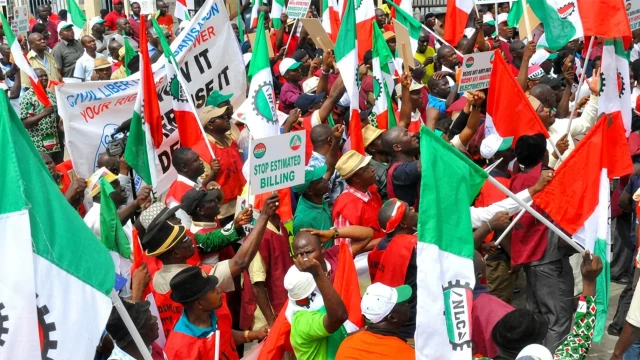
Labour gives FG August 11 ultimatum over unpaid wage award, 40% allowance

Key points

  • The Joint National Public Service Negotiating Council (JNPSNC) has given the Federal Government until August 11, 2026, to address outstanding workers’ welfare issues.
  • Labour is demanding payment of two months’ wage award covering March and April 2026.
  • The union also seeks implementation of the 40 per cent peculiar allowance approved for eligible federal public servants.
  • The JNPSNC accused the Ministry of Finance of failing to respond to two previous letters on the matter.
  • The union warned that failure to engage could trigger industrial unrest across the federal public service.

Main Story

The Joint National Public Service Negotiating Council (JNPSNC), Trade Union Side, has issued an August 11 ultimatum to the Federal Government, demanding urgent action on the payment of outstanding wage awards and the implementation of the 40 per cent peculiar allowance for eligible federal workers.

In a letter addressed to the Minister of Finance and Coordinating Minister of the Economy, Taiwo Oyedele, the council requested an urgent meeting on or before August 11 to resolve the lingering issues, warning that continued delays could result in industrial unrest.

The letter, signed by the National Secretary of the council, Gbenga Olowoyo, on behalf of the National Chairman, Benjamin Yanto, expressed disappointment that two earlier correspondences sent to the ministry had received no response.

According to the union, the meeting is intended to provide an amicable resolution to workers’ welfare concerns and prevent what it described as a brewing industrial crisis within the federal public service.

At the centre of the dispute are two unresolved issues—the implementation of the 40 per cent peculiar allowance, approved by the National Salaries, Incomes and Wages Commission (NSIWC), and the payment of the outstanding wage award for March and April 2026.

The council noted that the allowance was approved through a circular signed by the Executive Chairman of the NSIWC, Eyo Nta, with effect from May 1, 2026, but has yet to be implemented by many Ministries, Departments and Agencies (MDAs).

It also insisted that the outstanding wage awards should have been paid alongside workers’ salaries for the affected months.

The JNPSNC recalled that it first wrote to the finance minister on May 5, 2026, requesting payment of the wage award arrears, before sending another letter on July 9, 2026, seeking both implementation of the allowance and settlement of the outstanding payments.

According to the union, the ministry’s failure to respond has heightened anxiety among federal workers and raised concerns about the government’s commitment to implementing agreements reached with organised labour.

The latest development adds to growing pressure on the Federal Government to fulfil commitments made following the removal of fuel subsidy in 2023, including temporary wage awards introduced to cushion the impact of rising living costs pending the implementation of a new national minimum wage.

The Issues

Delay in paying the outstanding two-month wage award has continued to generate dissatisfaction among federal workers.

Non-implementation of the approved 40 per cent peculiar allowance by several MDAs has fuelled fresh labour agitation.

Continued lack of engagement between government and organised labour raises the risk of industrial action.

Rising inflation and cost-of-living pressures have intensified workers’ demands for full implementation of negotiated welfare agreements.

Any disruption to public service operations could affect service delivery across federal institutions.

What’s Being Said

Joint National Public Service Negotiating Council (JNPSNC)

“The national leadership expects that this meeting will help to address the above-stated outstanding issues to prevent palpable disquiet and the brewing industrial crisis.”

“This request should be seen as a proactive approach from the national leadership to avert drastic actions from workers due to your insensitive silence to our two previous letters.”

The Council on the Finance Ministry’s Response

“To the surprise of the national leadership, none of the letters was responded to, let alone addressing the sensitive issues raised therein.”

What’s Next

The Finance Minister is expected to respond to the union’s request for a meeting before the August 11 deadline.

Should negotiations fail or the outstanding payments remain unresolved, organised labour may consider industrial action, potentially disrupting activities across the federal public service.

Stakeholders will also be watching for the implementation of the 40 per cent peculiar allowance across eligible Ministries, Departments and Agencies, as well as the settlement of outstanding wage award arrears.

Bottom Line

The August 11 ultimatum underscores growing frustration among federal workers over delayed welfare payments and allowances. With organised labour warning of possible industrial action, the Federal Government faces mounting pressure to engage unions and fulfil outstanding commitments to avoid a nationwide disruption in the public service.

NEC approves refinancing of NNPC’s $3.3bn Project Gazelle with new $4.5bn facility

Key points

  • The National Economic Council (NEC) has approved the refinancing of NNPC Limited’s $3.3 billion Project Gazelle facility through a new $4.5 billion financing arrangement.
  • The new facility, known as Project Gazelle 2, will refinance the outstanding $1.5 billion balance of the original loan while providing an additional $3 billion in liquidity.
  • The refinancing reduces pledged crude oil from 90,000 barrels per day to about 78,750 barrels per day, freeing up 11,250 barrels per day for the federation.
  • Finance Minister Taiwo Oyedele said the new arrangement offers more favourable financing terms and supports strategic national priorities.
  • Vice President Kashim Shettima called for stronger, data-driven social protection policies to address multidimensional poverty.

Main Story

The National Economic Council (NEC) has approved the refinancing of NNPC Limited’s $3.3 billion Project Gazelle pre-export finance facility through a new $4.5 billion financing arrangement, aimed at improving the country’s financing structure and unlocking additional liquidity for the federation.

The decision was reached during the 159th meeting of the National Economic Council, held virtually and chaired by Vice President Kashim Shettima.

Under the new arrangement, known as Project Gazelle 2, the outstanding balance of approximately $1.5 billion from the original 2023 facility will be refinanced, while an additional $3 billion will be made available to strengthen Nigeria’s external reserves and support the Federal Government’s fiscal and infrastructure priorities.

Explaining the decision after the meeting, the Minister of Finance, Taiwo Oyedele, said the refinancing had been negotiated on more favourable terms than the original facility.

According to him, the agreement reduces the volume of crude oil pledged under the financing arrangement from 90,000 barrels per day to approximately 78,750 barrels per day, representing a 12.5 per cent reduction.

The revised structure will also release an additional 11,250 barrels per day for the federation while enabling the government to access fresh liquidity at improved financing terms.

Oyedele said the arrangement would strengthen Nigeria’s financing framework while freeing additional resources for strategic national development priorities.

Earlier, Vice President Shettima urged members of the council to adopt responsive, scalable and data-driven social protection policies capable of addressing multidimensional poverty across the country.

He emphasised that government policies are ultimately reflected in citizens’ daily experiences, including food prices, healthcare delivery, education outcomes, family welfare and investor confidence, urging policymakers to ensure their decisions address the country’s pressing socioeconomic realities.

Meanwhile, NNPC has also continued efforts to expand its crude oil marketing activities by issuing fresh tenders for the sale of September cargoes of its newly introduced Cawthorne crude grade and Bonny Light.

According to tender documents, the company is offering 950,000 barrels each of Cawthorne crude, scheduled for loading on September 21–22, and Bonny Light crude, expected to load between September 30 and October 1.

The move comes as Nigeria seeks to increase crude oil production and diversify its export streams following years of oil theft, pipeline vandalism, underinvestment and operational disruptions.

The Issues

  • Nigeria continues to rely on innovative financing mechanisms to support fiscal stability and infrastructure development.
  • Managing crude-backed loans while reducing pledged production remains critical to preserving future oil revenues.
  • Sustaining higher crude oil production is essential to meeting financing obligations and improving foreign exchange earnings.
  • Global oil market volatility and geopolitical tensions could affect crude prices, export revenues and future financing costs.
  • Expanding crude export grades requires sustained investment in production infrastructure and operational efficiency.

What’s Being Said

Taiwo Oyedele, Minister of Finance

“The refinancing has been structured on more favourable terms than the original facility, including reducing pledged crude oil from 90,000 barrels per day to about 78,750 barrels per day.”

“The arrangement releases an additional 11,250 barrels per day for the federation while providing additional liquidity on improved terms and freeing resources for strategic national priorities.”

Kashim Shettima, Vice President and Chairman, National Economic Council

“Every decision we make must assure Nigerians that their government is paying attention to the pulse of the nation and is resolved to respond with competence, compassion and purpose.”

“We must pursue responsive, scalable and data-driven social protection policies capable of tackling multidimensional poverty.”

What’s Next

The Federal Government and NNPC are expected to conclude the implementation of Project Gazelle 2, enabling the refinancing of the existing facility and the disbursement of fresh liquidity.

Attention will also shift to maintaining higher crude oil production, optimising the country’s crude-backed financing arrangements and strengthening external reserves while monitoring developments in the global oil market.

Bottom Line

NEC’s approval of the $4.5 billion Project Gazelle 2 refinancing marks a significant step in Nigeria’s strategy to optimise debt financing, improve fiscal flexibility and unlock additional liquidity while reducing the volume of crude oil committed under existing financing arrangements.

World Bank urges Nigeria, developing economies to embrace AI for faster economic growth

Key points

  • The World Bank says AI could help developing countries achieve in a decade what might otherwise take a century.
  • Nigeria and other developing economies are urged to invest in electricity, internet access, digital skills and strong institutions to unlock AI’s potential.
  • The report finds only 4.5% of jobs in developing countries are at high risk of automation, compared with 14.2% in high-income economies.
  • AI is projected to improve productivity in 16.2% of jobs in developing economies.
  • The World Bank warns that failure to adopt AI strategically could widen inequality and deepen development gaps.

Main Story

The World Bank has called on Nigeria and other developing economies to accelerate the adoption of artificial intelligence (AI), saying the technology offers an unprecedented opportunity to fast-track economic growth, improve public services and enhance productivity.

The recommendation is contained in the World Development Report 2026: The Promise of Artificial Intelligence, released on Monday, which examines the opportunities and risks AI presents for developing countries.

According to the report, developing economies are experiencing their weakest average economic growth in three decades, making AI a critical tool for boosting productivity and improving living standards. However, the World Bank stressed that countries must urgently address deficits in electricity supply, internet connectivity, digital infrastructure, human capital and institutional capacity to fully benefit from the technology.

The report notes that AI poses a lower risk of large-scale job displacement in developing economies than in advanced nations. It estimates that only 4.5 per cent of existing jobs in low- and middle-income countries are vulnerable to automation through generative AI, compared with 14.2 per cent in high-income economies.

Rather than replacing workers, the report argues that AI is more likely to complement labour in developing countries, with 16.2 per cent of jobs expected to experience meaningful productivity improvements—close to the 18.7 per cent projected for advanced economies.

The World Bank said governments and businesses are already deploying AI to analyse data, improve decision-making, enhance public service delivery and strengthen productivity across sectors.

It highlighted the technology’s potential to improve healthcare through better disease diagnosis, support farmers with smarter agricultural advisory services, strengthen tax administration, improve disaster response, enhance education and expand access to social services.

The report, however, warned that the benefits of AI will not be evenly distributed unless governments take deliberate action to close digital and institutional gaps.

It noted that the world’s most advanced AI technologies are currently concentrated in a handful of countries and companies, while many developing economies continue to face unreliable electricity, weak internet infrastructure, inadequate digital skills and limited access to quality data.

The Issues

Inadequate electricity supply remains a major obstacle to large-scale AI adoption in many developing economies.

Poor internet connectivity and digital infrastructure continue to limit access to AI-powered services.

Shortages of digital skills and AI expertise could slow technology adoption across key sectors.

Failure to adopt AI strategically may widen inequality between developed and developing countries.

Concentration of AI development among a few global companies raises concerns about market dominance, public trust, data governance and digital sovereignty.

What’s Being Said

Indermit Gill, Senior Vice President and Chief Economist, World Bank Group

“AI has thrown developing economies a lifeline, and they should seize it. They do not need large models or big data centres to reap its benefits. By adapting small, low-cost AI tools to local conditions, they can bring better medical care, education, judicial services and agricultural extension within reach of millions.”

“But they must hurry: AI is spreading faster and is more context-specific than earlier general-purpose technologies like electricity and the internet. World Development Report 2026 shows how developing countries are responding and succeeding.”

Gaurav Nayyar, Director, World Development Report 2026

“Countries that invest in the right foundations now will be better positioned to benefit from artificial intelligence.”

What’s Next

The World Bank is encouraging developing countries to adopt a phased AI strategy by first deploying existing AI tools, adapting them to local needs and gradually advancing towards more sophisticated AI capabilities as digital infrastructure, skills and institutional capacity improve.

Governments are also expected to prioritise investments in electricity, broadband connectivity, digital education and regulatory frameworks to ensure AI delivers inclusive economic growth while minimising risks.

Bottom Line

The World Bank believes artificial intelligence offers Nigeria and other developing economies a unique opportunity to accelerate development, improve public services and boost productivity. However, realising these gains will depend on how quickly countries strengthen the infrastructure, skills and institutions needed to support widespread AI adoption.

NNPC profit falls 35.4% to N2.28tn in H1 2026 as earnings trail 2025 by N1.25tn

Key points

  • NNPC Limited posted a profit after tax of N2.28 trillion in the first half of 2026, down 35.4% from N3.53 trillion recorded in H1 2025.
  • The company remained profitable throughout the six months, with June recording the highest monthly profit of N535 billion.
  • Revenue rose significantly between April and June, supported by improved crude oil and condensate production.
  • NNPC remitted N6.286 trillion to the Federation Account in H1 2026, lower than the N8.162 trillion remitted during the same period in 2025.
  • Nigeria exceeded its OPEC production quota for the second consecutive month in June 2026 as crude oil output improved.

Main Story

NNPC Limited recorded a profit after tax of N2.28 trillion in the first half of 2026, representing a 35.4 per cent decline from the N3.53 trillion reported during the corresponding period of 2025.

The figures, obtained from the company’s monthly financial performance database and reviewed by Nairametrics, show that although earnings fell year-on-year by approximately N1.25 trillion, the national oil company sustained profitability throughout the first six months of the year.

The company’s monthly profit stood at N385 billion in January before dropping sharply to N136 billion in February, its weakest performance during the period. Earnings rebounded to N276 billion in March and climbed further to N481 billion in April.

Profit remained strong at N462 billion in May before reaching a six-month high of N535 billion in June, reflecting a steady improvement in financial performance as the year progressed.

The H1 2026 results, however, fell short of the exceptionally strong performance recorded in the same period of 2025, when NNPC generated cumulative earnings of approximately N3.53 trillion despite reporting losses in January and March.

Operational data also showed significant improvements in revenue and crude oil production during the review period.

NNPC generated N2.571 trillion in revenue in January with crude oil and condensate production averaging 1.64 million barrels per day (mmbopd). Revenue increased to N2.680 trillion in February despite production easing to 1.51 mmbopd, before rising to N2.774 trillion in March as production recovered to 1.56 mmbopd.

Revenue surged to N4.971 trillion in April on the back of improved production of 1.68 million barrels per day, while May revenue stood at N4.335 trillion as production reached 1.73 million barrels per day, the highest output recorded during the first half of the year.

In June, the company posted N4.389 trillion in revenue, supported by average crude oil and condensate production of 1.72 million barrels per day.

Despite the earnings recorded, statutory remittances to the Federation Account declined. NNPC remitted N6.286 trillion between January and June 2026, compared with N8.162 trillion during the corresponding period of 2025.

The improved production figures coincide with Nigeria’s recovery in crude oil output, with the country exceeding its OPEC production quota for the second consecutive month in June following sustained improvements in operational performance.

The Issues

  • The 35.4 per cent decline in profit highlights continued pressure on NNPC’s earnings despite improved operational performance.
  • Volatility in international crude oil prices remains a major risk to the company’s future profitability.
  • Persistent challenges such as crude oil theft, pipeline vandalism, underinvestment and operational disruptions continue to threaten production sustainability.
  • Lower statutory remittances to the Federation Account could affect government revenues and fiscal planning.
  • Sustaining higher crude oil production remains critical to improving earnings and meeting Nigeria’s OPEC production targets.

What’s Being Said

NNPC Financial Performance Data

NNPC’s financial performance indicates that profitability strengthened steadily from March 2026, culminating in its strongest monthly earnings of N535 billion in June, despite recording significantly lower cumulative profits than the corresponding period of 2025.

Industry Insights

The company’s operational data suggests that sustained improvements in crude oil production and revenue growth helped cushion the impact of fluctuating global oil prices, although future earnings will depend on maintaining production levels and reducing operational disruptions.

What’s Next

NNPC is expected to sustain efforts to improve crude oil production, minimise pipeline disruptions and optimise revenue generation in the second half of 2026.

Industry observers will also monitor international crude oil prices, Nigeria’s compliance with OPEC production targets, statutory remittances to the Federation Account and the company’s ability to maintain the upward momentum recorded between March and June.

Bottom Line

Although NNPC remained profitable throughout the first half of 2026, its earnings fell sharply compared with the previous year. The company’s improving production levels and stronger monthly performance towards June provide positive signals, but sustaining higher output, managing operational risks and navigating volatile global oil markets will be critical to restoring stronger profitability.