





Home Blog Page 88

Oil prices rise as US-Iran peace talks uncertainty supports crude

Oil Prices Drop, Here's Why

By Boluwatife Oshadiya | August 4, 2026, 4:30 PM

Key Points

  • Brent crude climbed to $84.64 per barrel while WTI rose to $80.63 amid renewed geopolitical concerns.
  • Investors remain cautious as US-Iran negotiations have yet to produce a concrete peace agreement.
  • OPEC+ agreed to increase oil production by 188,000 barrels per day from September, limiting further price gains.

Main Story

Global oil prices advanced on Tuesday as uncertainty surrounding ongoing peace negotiations between the United States and Iran renewed concerns over potential supply disruptions from the Middle East.

International benchmark Brent crude for October delivery rose one percent to $84.64 per barrel, up from $83.77 in the previous session. Meanwhile, West Texas Intermediate (WTI) gained 0.5 percent to $80.63 per barrel, compared with $80.25 at Monday’s close.

The gains were driven largely by persistent concerns that hostilities in the Middle East could flare up again despite diplomatic efforts aimed at reaching a lasting agreement between Washington and Tehran. Investors also remained wary of security risks affecting commercial shipping routes, particularly through the Strait of Hormuz, a critical transit point for roughly one-fifth of global oil supplies.

Speaking at the White House after signing executive orders, US President Donald Trump said negotiations with Iran had resumed on Tuesday but accused Tehran of sending conflicting signals during the talks.

“Negotiations with Iran have resumed and are currently underway,” Trump said, adding that the discussions were taking place at Iran’s request with the support of Saudi Arabia, the United Arab Emirates, Qatar and other Gulf states.

However, expectations of additional crude supply from OPEC+ capped stronger price gains. According to a statement from the producers’ alliance, Saudi Arabia, Russia, Iraq, Kuwait, Kazakhstan, Algeria and Oman agreed to raise collective oil production by 188,000 barrels per day beginning in September as part of the gradual reversal of voluntary production cuts introduced in 2023.

The Issues

The latest price movement underscores how geopolitical developments continue to outweigh fundamental supply-demand factors in global oil markets. While diplomatic efforts have reduced immediate tensions, the absence of a definitive agreement between the US and Iran keeps traders focused on the risk of disruptions to crude exports from the Gulf. At the same time, OPEC+’s gradual production increases are intended to stabilise markets and prevent excessive price volatility.

What’s Being Said

“Negotiations with Iran have resumed and are currently underway,” Donald Trump, President of the United States, said, while noting that Gulf nations were supporting efforts to reach a lasting agreement.

Market participants, however, remain cautious as negotiations have yet to produce a breakthrough, leaving geopolitical risks firmly embedded in oil prices despite additional OPEC+ supply.

What’s Next

  • Markets will closely monitor the outcome of ongoing US-Iran negotiations for signs of a formal agreement or renewed tensions.
  • OPEC+ members are expected to implement the agreed 188,000 barrels-per-day production increase from September.
  • Traders will continue watching shipping activity through the Strait of Hormuz for any developments that could affect global crude supply.

Bottom Line

The Bottom Line: Oil markets remain driven by geopolitical uncertainty rather than supply fundamentals. While OPEC+ is gradually restoring production, any setback in US-Iran negotiations could quickly outweigh additional supply and keep crude prices elevated
Bitcoin trades sideways as strategy reduces holdings amid market pressure

By Boluwatife Oshadiya | August 4, 2026, 4:05 PM

Key Points

  • Bitcoin traded sideways around $63,500 as broader cryptocurrency market sentiment remained subdued
  • Strategy Inc. sold 1,638 BTC worth about $105 million to strengthen its balance sheet and fund shareholder obligations
  • Analysts say ETF outflows, a major wallet exploit and corporate selling continue to weigh on short-term market sentiment

Main Story

Bitcoin traded within a narrow range on Tuesday as investors assessed renewed selling pressure from institutional players, with Strategy Inc. reducing its Bitcoin holdings for the first time in months amid a weaker cryptocurrency market.

According to market data, Bitcoin hovered around $63,500, while the total cryptocurrency market capitalisation remained largely unchanged at $2.26 trillion. Ethereum declined 1.1% to $1,870, reflecting cautious investor sentiment across the digital asset market.

The latest pressure followed Strategy Inc.’s sale of 1,638 Bitcoin for approximately $105 million, a move the company said forms part of its evolving capital management strategy rather than a shift away from its long-term Bitcoin conviction.

The company said proceeds from the sale will be used to fund preferred stock dividend obligations and repurchase digital credit securities under its newly introduced Digital Credit Capital Framework.

The transaction comes as Strategy continues to manage the impact of an $8.2 billion quarterly unrealised loss linked to Bitcoin price depreciation. Despite the sale, the company remains one of the world’s largest corporate Bitcoin holders, controlling roughly 4% of the cryptocurrency’s total supply.

Broader market sentiment also remained under pressure following reports of a Coldcard hardware wallet exploit that resulted in the theft of 1,367 BTC, alongside renewed outflows from spot Bitcoin exchange-traded funds (ETFs) after a brief period of inflows in July.

What’s Being Said

Crypto market analysts said the combination of ETF outflows, security concerns and reduced corporate demand has weakened short-term investor confidence.

“The latest developments are bearish for short-term sentiment because they combine a security shock with reduced demand from two major buyer groups—spot ETFs and corporate treasuries,” market analysts said in a research note.

Analysts added that Strategy’s disposal of part of its Bitcoin holdings should not be interpreted as a loss of confidence in the digital asset.

“The sale reflects prudent balance sheet management aimed at maintaining liquidity and meeting debt obligations during a challenging macroeconomic environment rather than abandoning its long-term Bitcoin strategy,” analysts noted.

What’s Next

  • Investors will monitor whether spot Bitcoin ETFs return to net inflows after recent withdrawals.
  • Market participants are expected to watch Bitcoin’s ability to defend the $63,000 support level amid subdued trading activity.
  • Analysts will also assess whether additional corporate treasury sales emerge as companies rebalance portfolios in response to market volatility.

The Bottom Line: Strategy’s decision to monetise part of its Bitcoin holdings signals that even the market’s strongest corporate believers are becoming more focused on liquidity management than aggressive accumulation. While Bitcoin remains resilient above key support levels, institutional flows and corporate treasury decisions are likely to shape price direction in the near term.

Banking system surplus liquidity rises 70% as interbank rates remain mixed

By Boluwatife Oshadiya | August 4, 2026

Key Points

  • Financial system liquidity surged 69.66% to a ₦5.05 trillion surplus following coupon inflows and higher CBN deposit placements
  • Nigerian Interbank Offered Rates traded mixed despite stronger liquidity, with the overnight rate holding at 22.21%
  • Analysts expect fresh OMO and Treasury bill maturities to inject more liquidity, although a ₦2.52 trillion OMO settlement will absorb a significant portion

Main Story

Nigeria’s banking system liquidity climbed sharply to a surplus of ₦5.05 trillion, even as interbank funding rates traded on a mixed note following the Central Bank of Nigeria’s (CBN) latest Open Market Operations (OMO) activities.

According to AIICO Capital Limited, system liquidity rose 69.66% from ₦2.98 trillion, supported by a ₦23.96 billion coupon inflow and a 66.52% increase in CBN Standing Deposit Facility (SDF) placements to ₦4.62 trillion. The improvement comes after the CBN auctioned ₦600 billion in OMO bills, reinforcing efforts to manage excess liquidity while maintaining monetary policy discipline.

Despite the stronger liquidity position, activity in the interbank market remained mixed. Market data showed the overnight Nigerian Interbank Offered Rate (NIBOR) was unchanged at 22.21%, while the three-month tenor also held steady. The one-month and six-month tenors declined by six basis points and eight basis points, respectively, reflecting easing pressure across parts of the short-term funding market.

The Open Repo Rate (OPR) closed at 22.00%, while the Overnight Rate (OVN) settled at 22.12%, suggesting relatively stable funding conditions. Meanwhile, the overnight lending rate edged up by one basis point to 22.15%.

Banks have increasingly shifted excess liquidity into money market instruments as elevated interest rates make aggressive lending less attractive, allowing lenders to preserve depositors’ funds while earning relatively risk-free returns.

The Issues

The latest liquidity rebound highlights the delicate balance the CBN continues to maintain between supporting financial system liquidity and containing inflation through liquidity sterilisation. Although liquidity has improved significantly, the central bank’s continued reliance on OMO auctions means excess cash is likely to remain tightly managed, keeping short-term interest rates elevated and limiting broad-based credit expansion across the economy.

What’s Being Said

“Nigerian Interbank Offered Rates traded on a mixed note, with the overnight rate remaining unchanged at 22.21% despite healthier system liquidity,” analysts at Cowry Asset Management Limited said in a market note.

Herwood Securities Limited expects liquidity conditions to strengthen further this week, citing ₦2.45 trillion in maturing OMO bills and ₦283.78 billion from Treasury bill maturities. However, the firm noted that the ₦2.52 trillion OMO auction settlement scheduled for Monday will simultaneously absorb a substantial share of excess liquidity from the banking system.

What’s Next

  • The market will monitor the impact of the ₦2.52 trillion OMO auction settlement on banking system liquidity and short-term funding rates.
  • Investors are expected to track ₦2.45 trillion in OMO maturities and ₦283.78 billion in Treasury bill repayments for signs of renewed liquidity expansion.
  • Attention will remain on the CBN’s liquidity management strategy ahead of future OMO auctions and broader monetary policy decisions.

Bottom Line

The Bottom Line: Nigeria’s money market remains highly liquid, but the CBN continues to actively sterilise excess cash to preserve its tight monetary policy stance. Unless liquidity injections consistently outpace OMO withdrawals, interbank rates are likely to remain around current levels, keeping funding costs elevated for financial institutions while supporting broader inflation-control efforts.

Sheba asserts authority as BBnaija housemates prepare for wager

By Boluwatife Oshadiya | August 4, 2026

Key Points

  • Sheba takes charge as the new Head of House, urging housemates to take the wager presentation seriously
  • Housemates begin auditions and rehearsals while diary sessions reveal growing emotional and personal struggles
  • Alliances continue to strengthen as tensions emerge over leadership, house dynamics and social relationships

Main Story

Newly crowned Head of House (HoH), Sheba, wasted no time asserting her authority on Day Nine of the Big Brother Naija Season 11 reality show, calling an early morning meeting and demanding greater commitment from fellow housemates ahead of their upcoming wager presentation.

Following the morning workout, Sheba convened the housemates, with several contestants acknowledging how quickly she had settled into her leadership role. As preparations for the week’s wager intensified, Martins reminded the house that success would depend on discipline and collective effort.

The atmosphere shifted later in the morning when Sheba criticised some contestants for failing to take rehearsals seriously.

“You are disrespecting me, Big Brother and the show. We agreed to practise and some of you are not taking it seriously,” Sheba told the housemates, warning that she would begin keeping a list of contestants whose actions were affecting the group’s performance.

Housemates subsequently commenced auditions before a panel of fellow contestants as rehearsals gathered pace.

Away from the group activities, diary room sessions revealed the emotional state of several housemates. Ricky admitted feeling isolated in the house and expressed concerns about the team’s commitment to the wager preparations.

Temi Nkem became emotional while recounting how another contestant’s personal story reminded her of her mother’s life-changing accident, adding that she hoped future Head of House challenges would be less physically demanding.

Yusuf reflected on his growing connection with Bells and paid tribute to his father, describing him as hardworking and expressing gratitude for his sacrifices. Meanwhile, Oyin disclosed that she felt excluded after discovering she had not been invited into conversations during the house’s “conspiracy hour,” saying the experience left her emotionally hurt.

What’s Being Said

“You are disrespecting me, Big Brother and the show. We agreed to practise and some of you are not taking it seriously,” Sheba, Head of House.

“I feel like the housemates don’t like me. It feels like they want me out of the house,” Ricky told Big Brother during his diary session.

What’s Next

  • Housemates will continue rehearsals ahead of this week’s wager presentation.
  • Sheba is expected to enforce stricter discipline as Head of House to improve team coordination.
  • Viewers will be watching to see whether emerging friendships and growing tensions influence future nominations and Sunday’s live eviction show.

The Bottom Line: Sheba’s first full day as Head of House signals a shift towards stricter leadership as the competition enters a more demanding phase. With the wager presentation approaching and emotions running high, teamwork—or the lack of it—could become a decisive factor in the days ahead.

Stanbic IBTC Bank Nigeria PMI rises for sixth straight month as July business activity remains in expansion

By Boluwatife Oshadiya | August 4, 2026

Key Points

  • Nigerian private sector PMI eased to 52.5 in July from 53.4 in June but remained above the 50-point expansion threshold
  • Strong customer demand, competitive pricing and new product launches drove another marked increase in new orders
  • Inflationary pressures softened as both input costs and selling prices rose at slower rates than in June

Main Story

Nigeria’s private sector remained on a growth path in July, with the Stanbic IBTC Bank Nigeria Purchasing Managers’ Index (PMI) recording 52.5, marking the sixth consecutive month of improving business conditions despite a moderation from 53.4 recorded in June.

The latest PMI survey showed that stronger customer demand, alongside competitive pricing strategies and new product launches, continued to support business expansion across the economy. Although the pace of growth slowed to its weakest level in three months, the reading remained comfortably above the neutral 50.0 threshold, signalling continued expansion in private sector activity.

The improvement in demand translated into another marked increase in new business, prompting firms to expand production, recruit additional staff and increase purchasing activity to meet current and anticipated workloads.

Output rose across all four monitored sectors, with the strongest gains recorded in agriculture and manufacturing, while services and wholesale & retail posted more modest increases.

Employment also increased during the month, although hiring slowed to a three-month low as businesses adopted a measured approach to workforce expansion.

Companies further boosted input purchases and inventory levels in preparation for future demand. However, survey respondents noted that logistical bottlenecks continued to delay project completion, leading to a slight increase in outstanding business despite an improvement in supplier delivery performance.

The report also pointed to easing inflationary pressures during July. Input costs increased at the slowest pace in five months, while selling price inflation moderated to its weakest level since February. Businesses nevertheless continued to face elevated fuel and raw material costs, although staff cost inflation softened further.

What’s Being Said

Commenting on the report, Muyiwa Oni, Head of Equity Research, West Africa at Stanbic IBTC Bank, said improving consumer demand remained the key driver of business activity.

“Nigerian businesses reported improved customer demand in July while better pricing and new product launches also helped them to capture new orders arising from the increase in demand. These factors helped to keep the private sector activity in an expansionary territory, although this moderated when compared to June,” Oni said.

He noted that firms also increased purchasing activity to meet current demand and prepare for future workloads, while inflationary pressures continued to ease.

According to Oni, Stanbic IBTC expects Nigeria’s headline inflation to decline further on a year-on-year basis to around 15.72% in July, supported largely by favourable base effects despite anticipated month-on-month price increases.

“We retain our 2026 growth forecasts at 4.1% as we see the oil sector growing by 3.45% year-on-year in 2026, while the non-oil sector is likely to grow by 4.11%,” he added.

However, he warned that persistent insecurity, renewed exchange rate pressures, adverse weather conditions, rising fertiliser costs and global economic uncertainty remain key downside risks to Nigeria’s growth outlook.

What’s Next

  • Investors will closely monitor the release of Nigeria’s official July inflation data to determine whether easing price pressures continue.
  • Businesses are expected to assess whether stronger customer demand can be sustained into the third quarter amid lingering cost and logistics challenges.
  • Markets will also watch for any monetary policy implications if inflation continues to moderate while private sector activity remains in expansion territory.

Bottom Line: Nigeria’s private sector continues to demonstrate resilience despite moderating growth momentum. While softer inflation and stronger demand provide encouraging signals for businesses, sustaining the recovery will depend on easing structural constraints such as logistics disruptions, exchange rate stability and persistent cost pressures.

Leadway unveils unified pension brand with ₦3tn assets

Key points

  • Leadway Holdings has launched Leadway Pension Fund Administrator (Leadway PFA) following the integration of Leadway Pensure and PAL Pensions.
  • The unified pension business manages more than ₦3 trillion in assets for over 1.2 million Retirement Savings Account holders.
  • Contributors’ RSA balances, PINs and account records remain unchanged after the transition.

Main story

Leadway Holdings has unveiled Leadway Pension Fund Administrator (Leadway PFA) as its unified pension brand following the operational integration of Leadway Pensure and PAL Pensions.

The company announced the development in a statement issued on Tuesday in Lagos, saying the integration completes its consolidation process by retiring the two legacy brands under a single identity.

According to the company, the new Leadway PFA manages more than ₦3 trillion in Assets Under Management (AuM) and serves over 1.2 million Retirement Savings Account (RSA) holders across Nigeria.

It said the unified organisation operates on a fully harmonised technology platform designed to improve security, enhance service delivery and provide seamless access for contributors.

The company added that the integration combines the expertise, talent and operational strengths of the two former pension administrators to strengthen investment capacity and deliver sustainable value to contributors.

Leadway assured customers that the transition would not affect their RSA balances, Personal Identification Numbers (PINs) or historical account records, stressing that contributors are not required to take any action.

It said contributors would continue accessing their accounts through existing digital platforms and service centres, which have now been updated to reflect the new brand identity.

The company added that Leadway PFA would focus on prudent pension fund administration, proactive customer service and innovative retirement solutions.

The Managing Director of Leadway PFA, Olusakin Labeodan, said the unveiling marked the successful completion of months of integrating systems, processes and personnel into a stronger organisation.

He said the new institution was created to better protect and grow contributors’ retirement savings while strengthening the company’s position in Nigeria’s pension industry.

Leadway PFA was established through the integration of Leadway Pensure and PAL Pensions under a consolidated governance and operational framework.

The issues

Consolidation within the pension industry is aimed at improving operational efficiency, strengthening investment capacity and enhancing service delivery. Larger pension administrators may also be better positioned to invest in technology and provide more efficient retirement services.

What’s being said

“Leadway PFA is the result of that dedication, creating a stronger and more agile institution built to protect and grow our contributors’ wealth.” — Olusakin Labeodan, Managing Director, Leadway PFA.

“The unified brand underscores our commitment to becoming a trusted partner in retirement planning.” — Olusakin Labeodan.

What’s next

Leadway PFA is expected to continue integrating its operations under the new brand while leveraging its expanded scale and technology platform to improve customer experience and retirement solutions.

Bottom line

By combining Leadway Pensure and PAL Pensions into a single brand managing over ₦3 trillion in assets, Leadway is positioning itself as a larger and more integrated player in Nigeria’s pension industry.

Who qualifies for Kogi’s ₦15,000 health insurance plan?

Health Insurance

The Kogi State Health Insurance Agency (KGSHIA) is stepping up efforts to enroll more residents in its ₦15,000-a-year health insurance plan, particularly those working outside the formal sector.

The renewed campaign follows a performance review meeting with the agency’s frontline marketers, who have been tasked with taking the scheme directly to communities, markets, workplaces and other grassroots locations across the state.

But who exactly is eligible for the plan?

The short answer

The ₦15,000 health insurance plan is open to Kogi State residents who are not covered under the state’s formal sector health insurance scheme.

According to the Executive Secretary of KGSHIA, Dr Adekunle Aledare, the agency wants to correct the misconception that state health insurance is meant only for civil servants.

Instead, the scheme is designed to ensure that every resident, regardless of employment status or income level, can access affordable healthcare.

Who can enroll?

The plan targets people working in the informal economy, including:

  • Traders
  • Artisans
  • Farmers
  • Transport operators
  • Craftsmen
  • Self-employed professionals
  • Members of market associations
  • Cooperative societies
  • Religious organisations
  • Other residents outside the formal workforce

The agency also encourages families, community associations and organised groups to enroll under the scheme. KGSHIA’s Vital Contributory Health Insurance Plan (VITALCHIP) is available to individuals, families and groups at an annual premium of ₦15,000 per enrollee.

How much does it cost?

Subscribers pay an annual premium of ₦15,000.

In return, they are entitled to healthcare services throughout the year at KGSHIA-accredited public and private health facilities across Kogi State’s 21 local government areas. The agency says enrollees under the VITALCHIP plan make a 10 per cent co-payment when receiving covered services.

What healthcare does the plan cover?

While the agency has not released a fresh breakdown alongside its latest enrollment drive, KGSHIA says its benefit package includes access to consultations, emergency care, medicines and other healthcare services provided through its network of accredited facilities. Residents can download the full benefit package from the agency’s website before enrolling.

Why is the government expanding enrollment?

Many Nigerians still pay for healthcare directly from their pockets, often forcing families to delay treatment or incur significant expenses during medical emergencies.

KGSHIA says expanding enrollment among informal sector workers is part of the state’s broader effort to achieve Universal Health Coverage by ensuring that financial constraints do not prevent residents from accessing quality healthcare. The agency was established in 2019 to provide affordable health insurance to all residents of the state.

How can residents enroll?

The agency says residents can enroll through its community marketers or contact KGSHIA directly. Applicants can also choose from the agency’s accredited healthcare providers across the state as part of the enrollment process. More information, including enrollment channels and accredited facilities, is available on the KGSHIA website.

The bottom line

Kogi’s ₦15,000 health insurance plan is no longer being promoted solely as a programme for government workers. It is aimed at the millions of residents in the informal sector—from traders and artisans to farmers and transport workers—who often have no health insurance. By widening enrollment, the state hopes to reduce the financial burden of medical care and move closer to universal health coverage.

FG orders MDAs to comply with Data Protection Act

Key points

  • Federal Government has directed all MDAs to fully comply with the Nigeria Data Protection Act, 2023.
  • Agencies must appoint Data Protection Officers, conduct compliance audits and provide funding for data protection activities.
  • Heads of MDAs will be personally accountable for compliance with the directive.

Main story

The Federal Government has directed all Ministries, Departments and Agencies (MDAs) to fully comply with the Nigeria Data Protection Act (NDP Act), 2023, as part of efforts to strengthen responsible data governance and protect the personal information of Nigerians.

The directive was contained in a circular issued by the Secretary to the Government of the Federation (SGF), George Akume, and announced in a statement on Tuesday by the Head of Legal, Enforcement and Regulations at the Nigeria Data Protection Commission (NDPC), Babatunde Bamigboye.

According to Bamigboye, the directive implements President Bola Tinubu’s instruction that government institutions must rigorously collect and safeguard information in line with the provisions of the NDP Act.

Under the directive, all MDAs are required to comply with the Act as well as regulations, guidelines and directives issued by the NDPC on the processing of personal data.

The circular also mandates every MDA to appoint a qualified Data Protection Officer (DPO) to oversee compliance, advise management on lawful data processing and register the officer’s details with the commission.

It further requires agencies to engage licensed Data Protection Compliance Organisations (DPCOs), where necessary, to support compliance with the law and conduct statutory data protection audits.

In addition, MDAs have been directed to make adequate budgetary provisions for data protection activities, including staff training, public awareness programmes, deployment of technical safeguards and periodic compliance audits.

The agencies are also expected to submit mandatory Data Protection Compliance Audit Returns and other statutory reports to the NDPC within timelines prescribed by law.

The government warned that Permanent Secretaries, Accounting Officers and Chief Executive Officers of MDAs would be personally responsible for ensuring compliance with both the circular and the provisions of the Nigeria Data Protection Act.

The National Commissioner of the NDPC, Vincent Olatunji, commended the Tinubu administration for prioritising the protection of citizens’ privacy and fundamental rights.

He said the commission had established a regulatory clinic to provide technical support to MDAs as part of broader efforts to strengthen Nigeria’s data governance framework and prepare the country for the Fourth Industrial Revolution.

The issues

As government institutions increasingly digitise public services and collect large volumes of personal data, ensuring compliance with data protection laws has become critical to safeguarding privacy, preventing data breaches and strengthening public confidence in government systems.

What’s being said

“Data is the new oil: its value increases the more it is refined and responsibly shared.” — George Akume, Secretary to the Government of the Federation.

“Permanent Secretaries, Accounting Officers and Chief Executive Officers of MDAs will be personally responsible for ensuring institutional compliance.” — Nigeria Data Protection Commission.

What’s next

MDAs are expected to appoint qualified Data Protection Officers, strengthen compliance systems and submit statutory audit returns as the NDPC intensifies implementation of the Nigeria Data Protection Act.

Bottom line

The Federal Government is tightening enforcement of Nigeria’s data protection law by making compliance mandatory for all MDAs and holding their leadership directly accountable for protecting citizens’ personal data.

Oil, gas executives back reforms to drive industry growth

Key points

  • Industry leaders say policy stability, fiscal reforms and local content are reviving investment in Nigeria’s oil and gas sector.
  • Operators announced new gas, deepwater and exploration projects following recent reforms.
  • Indigenous firms were urged to strengthen capacity, financing and collaboration to support future growth.

Main story

Nigeria’s oil and gas industry leaders have identified policy stability, investment incentives and stronger local content implementation as the key factors driving renewed growth in the sector.

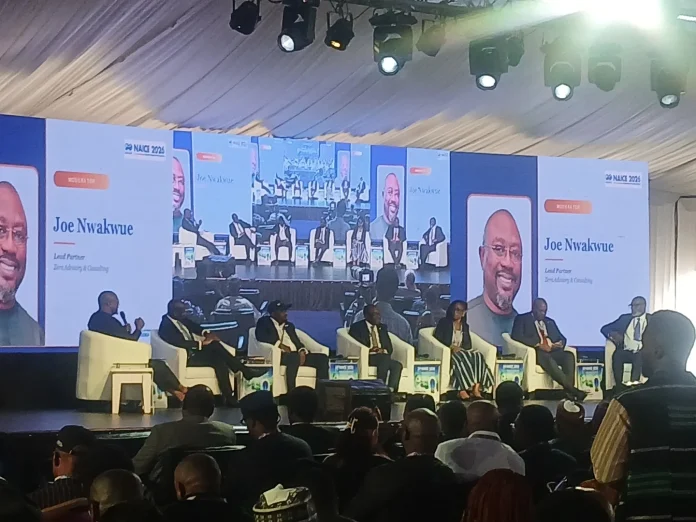
The executives spoke on Tuesday during a panel session at the ongoing Society of Petroleum Engineers (SPE) conference in Lagos.

The session, titled “Policy in Practice: Aligning Fiscal Strategy, Foreign Investment and Local Content for Sustainable Growth in Nigeria,” examined the impact of recent industry reforms on investment and indigenous participation.

Panellists from Chevron Nigeria, TotalEnergies, NNPC Engineering and Technical Company (NETCO) and Heirs Energies agreed that recent policy reforms had improved investor confidence but stressed that sustaining growth would require stronger local capacity and collaboration.

Olusoga Oduselu, General Manager, Policy, Government and Public Affairs at Chevron Nigeria, described sound policy as the foundation for technological advancement, production growth and long-term investment.

He said Chevron has promoted Nigerian content for more than six decades, noting that local content should be viewed as a strategy for building globally competitive Nigerian companies rather than simply increasing domestic participation.

Oduselu cited the Sonam Project and the Agbami project as examples of Chevron’s efforts to strengthen indigenous engineering capabilities through partnerships with Nigerian firms.

Victor Bamidele, Deputy Managing Director, Deepwater District at TotalEnergies, said fiscal reforms had triggered a new phase of investment, leading to the approval of the Ubeta gas project in 2024.

He said production from the project is expected to begin next year, while the company is progressing toward a Final Investment Decision on the Ima project and advancing the Preowei project alongside new exploration activities.

NETCO Managing Director, Salahuddeen Tahir, described the sector’s outlook as one of its most promising in years, attributing the momentum largely to presidential executive orders introduced in February 2024.

He urged indigenous companies to strengthen their technical capacity, embrace technology and form strategic partnerships to execute the growing volume of industry projects.

Heirs Energies Managing Director and Chief Executive Officer, Osa Igiehon, said indigenous operators have transformed the industry, accounting for more than 60 per cent of Nigeria’s oil production.

He said crude oil production had recovered from about 700,000 barrels per day in 2022 to between 1.7 million and 1.8 million barrels daily, driven by policy reforms, improved security and greater indigenous participation.

Igiehon added that Heirs Energies increased production from 25,000 barrels per day in 2021 to more than 55,000 barrels daily while also doubling gas production using a predominantly Nigerian workforce and local contractors.

He called for stronger indigenous service companies, improved access to financing and greater industrialisation to support Nigeria’s target of producing three million barrels of oil per day by 2030.

The issues

Nigeria’s oil and gas industry is experiencing renewed investment following recent regulatory and fiscal reforms. However, sustaining growth will depend on strengthening indigenous capacity, improving access to capital and ensuring consistent policy implementation.

What’s being said

“Sound policy frameworks are the foundation upon which engineering, production and technological advancement thrive.” — Olusoga Oduselu, Chevron Nigeria.

“There is no way to profitably develop these projects without local participation.” — Victor Bamidele, TotalEnergies.

“We have demonstrated what indigenous operators can achieve. The next challenge is building indigenous service companies with the scale, funding and manufacturing capacity to support future growth.” — Osa Igiehon, Heirs Energies.

What’s next

Industry stakeholders are expected to focus on implementing approved projects, expanding indigenous participation and attracting fresh investment as Nigeria works toward its oil production and gas development targets.

Bottom line

Industry leaders believe policy reforms have reopened Nigeria’s oil and gas investment pipeline, but sustaining the momentum will require stronger local capacity, collaboration and consistent policy implementation.

Kogi opens ₦15,000 health insurance to informal workers

Summitech Commits To Digitisation Of Health Records

Key points

  • Kogi residents outside the formal workforce can now access health insurance for an annual premium of ₦15,000.
  • The state is intensifying enrollment under its Informal Sector Health Insurance Plan through community outreach.
  • The scheme covers healthcare services through accredited public and private providers across the state’s 21 LGAs.

Main story

The Kogi State Health Insurance Agency (KGSHIA) has intensified enrollment for its Informal Sector Health Insurance Plan, offering residents outside government employment access to health insurance for an annual premium of ₦15,000.

The Executive Secretary of the agency, Dr. Adekunle Aledare, disclosed this during a performance review meeting with frontline marketers at the agency’s headquarters in Lokoja on Tuesday.

Aledare said the agency is stepping up grassroots awareness to ensure more artisans, traders, transport operators, farmers, craftsmen, self-employed professionals, cooperatives, religious organisations and other informal sector workers enroll in the scheme.

He said one of the agency’s priorities is to dispel the misconception that the state health insurance programme is meant only for government workers.

According to him, the scheme is open to every resident of Kogi State, regardless of employment status, as part of the government’s efforts to achieve Universal Health Coverage.

Aledare explained that subscribers who pay the ₦15,000 annual premium will have access to comprehensive healthcare services through the agency’s network of accredited public and private healthcare providers across the state’s 21 local government areas.

He urged frontline marketers to intensify sensitisation by taking the campaign directly to homes, markets, workplaces, community gatherings and other grassroots platforms.

The executive secretary said the review meeting assessed the marketers’ performance for July, identified operational challenges and developed strategies to improve future outreach.

He also presented official identity cards to the marketers to enhance professionalism, improve identification during field operations and strengthen public confidence in the programme.

Aledare expressed confidence that sustained awareness campaigns would increase enrollment and support the state’s goal of ensuring affordable healthcare for all residents.

The issues

Many Nigerians working in the informal sector remain outside health insurance coverage and rely on out-of-pocket payments for medical treatment. Expanding affordable insurance to this group could improve access to healthcare while reducing the financial burden of illness.

What’s being said

“They are not merely marketing a health insurance product but advancing the government’s vision of achieving Universal Health Coverage.” — Dr. Adekunle Aledare, Executive Secretary, KGSHIA.

“The scheme was open to all residents of the state irrespective of their employment status.” — Dr. Adekunle Aledare.

What’s next

KGSHIA plans to intensify grassroots enrollment campaigns as it seeks to bring more informal sector workers and their families into the state’s health insurance scheme.

Bottom line

Kogi is positioning its ₦15,000 annual health insurance plan as an affordable option for residents outside government employment, aiming to expand healthcare access and reduce out-of-pocket medical expenses.

Think tank proposes green energy corporation for $1tn economy

Key points

  • A policy think tank proposed creating the Nigerian Green Energy and Chemicals Corporation to accelerate Nigeria’s industrialisation.
  • The group said formalising the informal economy and processing strategic minerals could help Nigeria reach a $1 trillion economy within five years.
  • The proposal seeks to boost exports, strengthen the naira and create jobs through value addition.

Main story

The Galadiman Ruwa Centre for Strategic Leadership and Communication (GCSLC/IT) has proposed the establishment of the Nigerian Green Energy and Chemicals Corporation (NGECC) as part of a strategy to help Nigeria achieve a $1 trillion economy within 60 months.

The Chairman of the centre, Jaafaru Sa’ad, made the proposal in an open letter to President Bola Tinubu, a copy of which was made available to the News Agency of Nigeria on Tuesday in Zaria.

Sa’ad said the proposed corporation would process Nigeria’s coal resources into synthetic graphite, advanced carbon materials and silicon composites used in the rapidly growing artificial intelligence industry and other advanced manufacturing sectors.

According to him, the initiative would shift Nigeria from conventional coal utilisation to value-added industrial processing, increasing export earnings, strengthening the naira, supporting industrialisation and improving the country’s long-term competitiveness.

The proposal, titled “The 60-Month Sovereign Acceleration Matrix,” outlines structural reforms aimed at enabling Nigeria to attain a $1 trillion economy within five years, instead of projections that place the target at about 14 years.

Sa’ad said the strategy is built on two key pillars: formalising the informal economy and establishing the proposed Nigerian Green Energy and Chemicals Corporation to unlock the value of Nigeria’s strategic mineral resources.

He said research conducted across more than 200 communities identified millions of traders, artisans and entrepreneurs operating outside the formal economy, adding that bringing them into the formal sector would significantly expand economic output and financial inclusion.

According to him, formalising about 50 million informal-sector operators would increase Gross Domestic Product, reduce poverty, create sustainable opportunities for women and young people, and broaden Nigeria’s tax and revenue base.

Sa’ad also said growing global investment in artificial intelligence infrastructure presents Nigeria with an opportunity to earn more foreign exchange through value-added exports of critical industrial materials.

He urged the Federal Government to adopt bold structural reforms to accelerate economic transformation and expressed the centre’s readiness to collaborate in advancing Nigeria’s digital and industrial development.

The issues

Nigeria continues to pursue policies aimed at expanding its economy beyond oil. The proposal argues that formalising the informal sector and adding value to the country’s mineral resources could accelerate industrialisation, increase export earnings and diversify sources of economic growth.

What’s being said

“The proposal rests on two strategic pillars: formalising the informal economy and establishing the Nigerian Green Energy and Chemicals Corporation to unlock the value of Nigeria’s strategic mineral resources.” — Jaafaru Sa’ad, Chairman, GCSLC/IT.

“Formalising about 50 million informal-sector operators would boost the Gross Domestic Product, reduce poverty, create sustainable opportunities for women and youths, and broaden the country’s tax and revenue base.” — Jaafaru Sa’ad.

What’s next

The proposal is expected to contribute to discussions on Nigeria’s long-term economic strategy, with the Federal Government left to determine whether any of its recommendations will be considered for implementation.

Bottom line

The think tank argues that combining informal sector reforms with value-added processing of Nigeria’s mineral resources could significantly accelerate the country’s journey toward a $1 trillion economy.

How to apply for the 2026 Chevening Scholarships: fully funded UK master’s opportunities now open

By BizWatch Nigeria Education Desk | August 4, 2026

Key Points

  • Applications for the 2026/27 Chevening Scholarships open today, 4 August 2026 at 11:00 UTC, and close on 6 October 2026 at 11:00 UTC
  • The UK Government-funded programme offers fully funded one-year taught master’s degrees at UK universities to emerging leaders committed to sustainable development
  • Successful scholars receive tuition fees, monthly living allowance, return economy flights, visa costs, and access to a global alumni network of more than 60,000 professionals
  • Eligibility requires citizenship of a Chevening-eligible country (including Nigeria), an undergraduate degree qualifying for UK postgraduate study, at least 2,800 hours of work experience after graduation, and a commitment to return home for two years
  • Applicants must select three eligible UK master’s courses and later secure an unconditional offer from at least one by the July 2027 deadline

Main Story

The United Kingdom Government has opened applications for the 2026 Chevening Scholarships, its flagship global programme offering fully funded one-year taught master’s degrees at universities across the UK. Applications opened on 4 August 2026 at 11:00 UTC and will close on 6 October 2026 at 11:00 UTC.

Funded by the UK Foreign, Commonwealth and Development Office (FCDO) and partner organisations, Chevening targets individuals with strong leadership potential, influence and networking skills who are committed to driving sustainable development and addressing global challenges. The programme has supported more than 60,000 professionals from over 140 countries and territories since its establishment in 1983, building a global network of alumni in government, business, academia and civil society.

In Nigeria, the programme forms part of a significant bilateral education partnership. Nigeria has one of the largest Chevening alumni communities in Africa, with more than 1,500 Chevening alumni (and over 4,500 when combined with Commonwealth scholars). Recent cohorts have seen dozens of Nigerians selected annually — 39 Chevening scholars in the 2025 intake alone.

The scholarship covers full tuition fees, a monthly personal living allowance (higher for study in London), return economy flights, visa application costs, an arrival allowance, a departure allowance, and a contribution towards required TB testing where applicable. Scholars also gain access to exclusive networking events, leadership opportunities and lifelong membership of the global Chevening community.

The Issues

Chevening sits at the intersection of education access, leadership development and international cooperation at a time when many emerging professionals face high barriers to postgraduate study abroad. Tuition fees, living costs and travel expenses for a UK master’s degree can exceed tens of thousands of pounds, placing the opportunity beyond the reach of most mid-career candidates without external funding.

The programme’s emphasis on leadership potential and a clear plan for impact after return addresses a structural need in many eligible countries: building a cadre of decision-makers equipped with global networks and skills to tackle shared priorities such as growth and prosperity, climate resilience, security and more inclusive societies. For Nigeria, this aligns with ongoing efforts to strengthen human capital in sectors ranging from public policy and energy to technology and education.

A consistent challenge remains the volume of applications relative to awards. Independent reading committees and embassy/high commission shortlisting processes mean only a fraction of applicants progress. Ineligible applications — often due to insufficient documented work experience or failure to meet the undergraduate degree threshold — are rejected early. The requirement to secure an unconditional university offer after selection adds another layer of pressure and planning.

What’s Being Said

Emma Hennessey, Head of the Scholarships Unit at the UK Foreign, Commonwealth and Development Office, said: “Chevening is looking for exceptional individuals who are ready to collaborate with the UK to help build a more resilient, prosperous, and sustainable future. We are committed to building a diverse and inclusive cohort of global future leaders, so we are particularly interested in receiving applications from under-represented groups. Our scholars and fellows are chosen not only for their achievements, but for their leadership potential, their ability to build meaningful connections, and their commitment to creating lasting impact in their communities and globally. Through access to UK education, networks, and experiences, Chevening equips future leaders with the tools and connections needed to address shared international challenges together. I encourage anyone considering applying to reflect carefully on Chevening’s vision and purpose, and on how their own experiences and ambitions align with the impact our global community is working to achieve.”

British Deputy High Commissioner in Lagos, Jonny Baxter, described the programme as more than a scholarship: “Chevening is far more than a scholarship to study in the UK. It is an opportunity to join a global network of exceptional leaders committed to creating positive change in their communities and beyond. Through a world-class education, exposure to UK values and culture, and lifelong connections with the UK and Chevening alumni, scholars gain the knowledge, skills, and networks needed to address today’s most pressing challenges and advance sustainable development. If you have a clear vision for making a meaningful impact in areas of shared priority between Nigeria and the UK, I encourage you to apply and take the next step in your leadership journey.”

Prospective applicants are encouraged to review the programme’s vision and eligibility requirements on the official Chevening website before applying.

How to Apply: A Step-by-Step Guide

  1. Confirm eligibility before starting You must be a citizen of a Chevening-eligible country or territory (Nigeria qualifies). You must commit to returning to your home country for at least two years after the scholarship ends. You need an undergraduate degree that qualifies you for a UK master’s programme (typically equivalent to a UK upper second-class 2:1 honours; the degree must have been completed at least two years before the application deadline). You must have at least two years’ work experience acquired after your undergraduate degree — equivalent to 2,800 hours. Full-time, part-time, voluntary work and unpaid internships all count; the online system calculates the total. You must not hold British or dual British citizenship (with limited exceptions), must not be resident in the UK at the time of application, and must not have previously studied in the UK on a UK government-funded scholarship (with a five-year rule for former Chevening Fellows).
  2. Research and select three eligible UK master’s courses Chevening supports one-year full-time taught master’s degrees only. On the application form you must nominate three different eligible courses. These can be at the same or different universities but should support a coherent career goal. You do not need an offer at the application stage, but successful candidates who reach interview must later obtain an unconditional offer from at least one of the three by 8 July 2027 (17:00 BST). Use the official Chevening course finder and university websites to check eligibility and entry requirements.
  3. Register on the official portal and complete the eligibility checker Go to chevening.org/apply, select Nigeria (or your country), and follow the link to the online application system once it opens. Complete the eligibility checker. If you pass, you will receive a unique access code — save it securely; you will need it throughout the process. Applications are free; Chevening does not endorse any third-party paid services.
  4. Complete the online application form carefully Sections include personal and immigration details, education history, work experience (up to 15 entries; the system totals the hours), three course choices, two referees, and four essay questions covering leadership and influencing skills, networking and relationship-building, reasons for studying in the UK and course choice, and career plan/impact. Write in your own words. Chevening uses tools to detect plagiarism and AI-generated content. Save progress regularly — sessions time out after inactivity.
  5. Submit before the deadline and prepare for next stages Submit by 6 October 2026 at 11:00 UTC. After the deadline, applications are sifted against eligibility criteria. Independent reading committees assess eligible applications between mid-October 2026 and January 2027. Shortlisted candidates are notified around mid-February 2027 and invited to interview (usually March–April 2027) at the British High Commission or embassy. Interview candidates must upload photo ID, undergraduate degree certificate and two reference letters at least seven working days before the interview. Results are announced from mid-June 2027. Successful candidates then submit their unconditional university offer by the July deadline and begin studies in September/October 2027.

What’s Next

  • Application window: 4 August 2026 (11:00 UTC) to 6 October 2026 (11:00 UTC)
  • Eligibility sift and reading committee assessments: October 2026 – January 2027
  • Shortlisting for interviews: mid-February 2027
  • Interviews: March–April 2027
  • Results announced: from mid-June 2027
  • Unconditional offer deadline: 8 July 2027 (17:00 BST)
  • Studies begin in the UK: September/October 2027

Applicants should monitor the official Chevening website (chevening.org) and their country page for any updates. Official guidance on essays, interviews, work experience calculation and course selection is available in the resource hub.

The Bottom Line: Chevening remains one of the most competitive and comprehensive fully funded pathways for mid-career professionals seeking a UK master’s degree. For Nigerian applicants with demonstrated leadership, clear impact plans and the required experience, the open window offers a genuine opportunity to join a global network while gaining skills that can be applied directly to national and shared international challenges. Preparation — especially accurate work-hour documentation, coherent course choices and authentic essays — will separate strong applications from the rest.

Adeyemi’s lawyers accuse federal agencies of validating fake PFIPC operations

By Boluwatife Oshadiya | August 4, 2026

Key Points

  • Adeyemi’s lawyers say multiple federal institutions officially recognised and interacted with the controversial PFIPC
  • The defence argues the alleged fraud cannot be attributed to one individual if government agencies processed and validated the council
  • The House of Representatives continues its investigation while Adeyemi remains in police custody pending September 30 proceedings

Main Story

Lawyers representing Adeniyi Adeyemi, the man accused of establishing the alleged fake Presidential Foreign Investment Promotion Council (PFIPC), have accused several federal institutions of validating and facilitating the council’s operations, arguing that criminal proceedings should not focus solely on their client.

In a statement issued on Sunday, the legal team questioned how a single individual could allegedly create and sustain a non-existent federal agency that received official recognition, office accommodation, budgetary allocations and administrative support from multiple government institutions.

“If the SGF, the Accountant-General, the Central Bank of Nigeria, the Head of Service, the Budget Office, the EFCC, the National Assembly and the heads of Nigeria’s primary security architecture all verified, processed, funded and officially interacted with this agency over an extended period, how can a single citizen… be held uniquely responsible?” the lawyers said.

The controversy began in October 2025 after the Chief of Staff to the President, Femi Gbajabiamila, petitioned security agencies over the alleged establishment of the PFIPC, which the Federal Government insists was never legally created. Police subsequently charged Adeyemi and two others with forgery, impersonation and obtaining by false pretence.

Adeyemi was arrested last month following a bench warrant issued by the Federal High Court in Abuja after he failed to appear for arraignment. He remains in police custody while the case is scheduled to resume on September 30.

His lawyers further alleged that the Office of the Secretary to the Government of the Federation (OSGF), the Office of the Accountant-General of the Federation (OAGF), the Central Bank of Nigeria (CBN), the Office of the Head of the Civil Service of the Federation (OHCSF), the Budget Office and the National Assembly all processed official documentation relating to the council. They also claimed the PFIPC secured a ₦1.302 billion allocation in the 2026 Appropriation Act before the Federal Government declared it unlawful.

What’s Being Said

“It is an administrative impossibility for an unassisted individual to mislead every arm of the federal government simultaneously without official, high-level institutional sanction,” Adeyemi’s legal team said.

The Federal Government has maintained that the PFIPC never existed as a lawful agency and alleges forged documents enabled the council to obtain official recognition and government approvals.

Separately, the House of Representatives’ ad hoc committee investigating the matter says it has uncovered 29 documents it believes were forged during the council’s operations and has directed the Inspector-General of Police to produce Adeyemi before lawmakers as part of its inquiry.

What’s Next

  • The Federal High Court is scheduled to continue Adeyemi’s criminal trial on September 30.
  • The House of Representatives ad hoc committee is expected to continue its investigation into how the PFIPC obtained official recognition and a ₦1.302 billion budget allocation.
  • Lawmakers are expected to determine whether public officials or government agencies bear responsibility for the approvals granted to the council.

The Bottom Line: The case has evolved beyond allegations against one individual into a broader examination of institutional accountability within Nigeria’s public administration. As both the courts and lawmakers continue their investigations, the outcome could expose weaknesses in government verification processes and influence future safeguards against administrative fraud

Interpol report finds AI linked to more than half of cybercrime in africa

By Boluwatife Oshadiya | August 4, 2026

Key Points

  • INTERPOL says 55% of cybercrimes reported across Africa are now enabled by artificial intelligence
  • Cybercrime-related financial losses in Africa have surged to $484 million, more than double the 2024 figure
  • Financial institutions, telecom operators and government agencies remain the continent’s most targeted sectors

Main Story

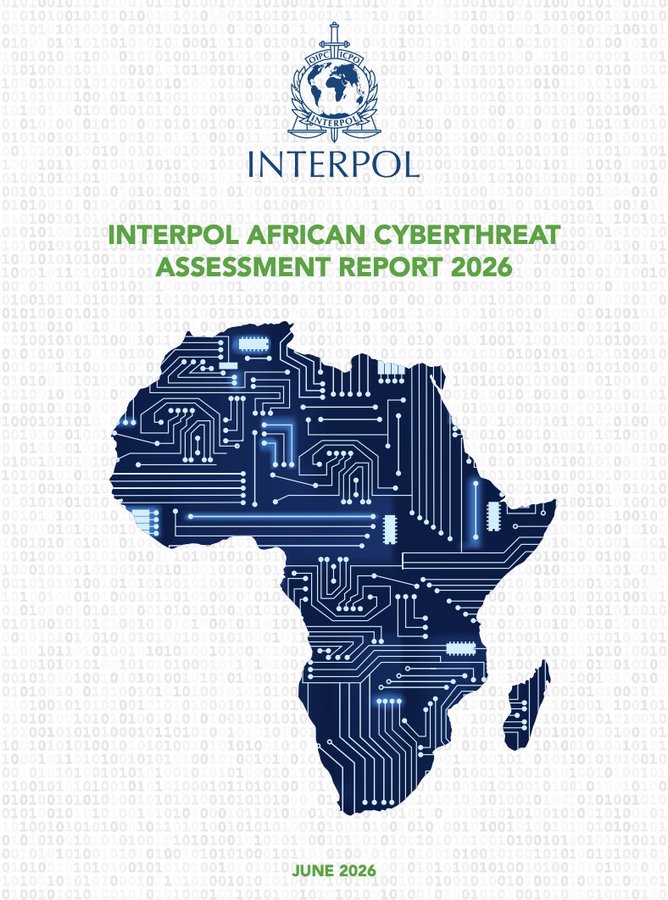
Artificial intelligence is now driving more than half of reported cybercrime cases across Africa, with attacks becoming faster, more sophisticated and increasingly difficult to detect, according to INTERPOL’s African Cyberthreat Assessment Report 2026.

The 40-page report found that 55% of reported cybercrimes on the continent are AI-enabled, highlighting a significant shift from isolated cyber incidents to what the international policing body describes as an industrialised and borderless criminal ecosystem.

The assessment comes as Africa’s digital economy continues to expand rapidly, supported by more than 1.1 billion mobile subscribers recorded in 2025. However, INTERPOL warned that fragmented cybercrime legislation and limited AI capabilities among law enforcement agencies have left many countries vulnerable to increasingly sophisticated attacks.

The report showed that online scams remained the most commonly reported cybercrime in 2025, with criminals exploiting mobile money platforms, social media networks and AI-powered social engineering techniques to target victims.

Financial losses linked to cybercrime have also risen sharply, climbing from $192 million in 2024 to $484 million, largely driven by AI-assisted scams, credential theft and automated phishing campaigns.

INTERPOL further disclosed that 72% of surveyed African countries reported the existence of organised scam centres, with Southern and West Africa recording the highest concentration.

Among the sectors most affected are financial services, telecommunications companies and government institutions, all of which continue to face growing threats from ransomware attacks, business email compromise schemes and AI-generated identity fraud.

One of the report’s major concerns is the increasing use of AI-generated synthetic identities, where criminals combine genuine personal information with fabricated data to bypass biometric verification systems. According to INTERPOL, these identities have been used to open bank accounts, obtain mobile loans and register SIM cards under false identities.

What’s Being Said

“Cybercrime has emerged as one of the most significant criminal threats to the region. AI is automating every stage of a cyberattack from reconnaissance and phishing to extortion and evasion. However, when countries work together, cybercriminal infrastructure can be identified, disrupted and dismantled,” said Neal Jetton, Director of INTERPOL’s Cybercrime Directorate.

The report also noted that coordinated international enforcement efforts are beginning to produce results. Four major operations—Operation Serengeti 2.0, Operation Contender 3.0, Operation Sentinel and Operation Red Card 2.0—resulted in more than 1,500 arrests, the seizure of hundreds of digital devices and the recovery of over $100 million linked to cybercrime.

What’s Next

  • INTERPOL is urging African governments to strengthen cross-border cooperation and standardise digital forensic capabilities.
  • The organisation also recommends greater investment in AI training for law enforcement agencies and stronger public-private partnerships involving banks, telecom operators and technology companies.
  • As African economies continue to digitise, policymakers are expected to face growing pressure to modernise cybercrime legislation and improve information sharing between financial institutions, telecommunications operators and security agencies.

Bottom Line

The Bottom Line: INTERPOL’s latest assessment underscores how artificial intelligence is reshaping Africa’s cyber threat landscape faster than many institutions can respond. Unless governments accelerate legal reforms, strengthen regional cooperation and invest in AI-powered cybersecurity capabilities, the continent’s expanding digital economy could become increasingly exposed to more organised and financially damaging cybercrime.

Dollar To Naira Exchange Rate Today, August 4th, 2026

Dollar To Naira Exchange Rate

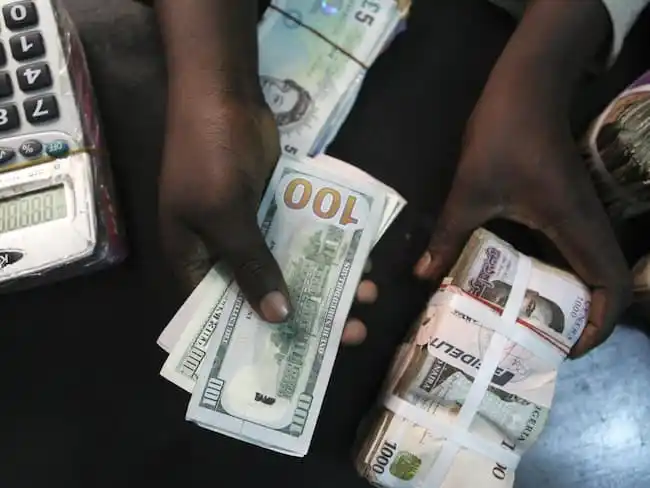
The exchange rate between the Naira and the US dollar, according to the data released on the FMDQ Security Exchange,the official forex trading portal, showed that the naira closed at 1372 per $1 on Tuesday, August 4th 2026. The naira traded as high as 1360 to the dollar at the investors and exporters (I&E) window on Monday. This is brought to you by Bizwatch Nigeria.

How much is a dollar to naira today in the black market?

Dollar to naira exchange rate today black market (Aboki dollar rate):

The exchange rate for a dollar to naira at Lagos Parallel Market (Black Market) players sell a dollar for ₦1425 and buy at ₦1410 on Monday 3rd  August, 2026, according to sources at Bureau De Change (BDC).

Please note that the Central Bank of Nigeria (CBN) does not recognize the parallel market (black market), as it has directed individuals who want to engage in Forex to approach their respective banks.

Dollar to Naira Black Market Rate Today

Dollar to Naira (USD to NGN)Black Market Exchange Rate Today
Selling Rate₦1425
Buying Rate₦1410

Dollar to Naira CBN Rate Today

Dollar to Naira (USD to NGN)CBN Rate Today
Highest Rate₦1372
Lowest Rate₦1360

Please note that the rates you buy or sell forex may be different from what is captured in this article because prices vary.

Nigerian stock market gains ₦288bn as NGX opens august higher

Decline In Nigeria's Equity Market Creating Entry Opportunity For Investors - Analysts

By Boluwatife Oshadiya | August 4, 2026

Key Points

  • Nigerian equities gained ₦288.44 billion as the NGX All-Share Index rose 0.18%
  • Buying interest in banking and industrial stocks offset losses across other sectors
  • Market breadth remained negative with 25 gainers against 39 losers

Main Story

The Nigerian stock market began August on a positive note on Monday, with investors recording a combined gain of ₦288.44 billion as selective buying in medium and large-cap stocks lifted the market despite weak overall breadth.

The Nigerian Exchange (NGX) All-Share Index (ASI) advanced by 446.85 points, or 0.18%, to close at 245,730.53, while total market capitalisation increased to ₦158.61 trillion, reflecting renewed investor appetite after recent bearish trading sessions.

Trading activity, however, weakened. According to market data analysed by Atlass Portfolio Limited, investors exchanged 923.01 million shares worth ₦37.85 billion across 72,544 deals, representing declines of 2.12% in trading volume and 19.02% in transaction value compared with the previous session.

ACCESSCORP emerged as the most actively traded stock by volume, accounting for 18.09% of total transactions, followed by HONYFLOUR (10.15%), STERLINGNG (6.20%), UNIVINSURE (5.62%), and CHAMS (3.67%). By value, ARADEL dominated trading, contributing 12.13% of total market turnover.

On the gainers’ chart, CAVERTON and ETERNA led with 10% appreciation each, while OMATEK, AVACAP, VITAFOAM, FTGINSURE, and MCNICHOLS also posted notable gains.

Losses were broader across the market, with 39 stocks closing lower. ETI recorded the steepest decline after shedding 9.95%, followed by CADBURY, THOMASWY, WAPIC, CMFC, and TRANSEXPR.

Sector performance was mixed. The Insurance, Consumer Goods, and Oil & Gas indices closed lower, while gains in the Banking and Industrial Goods sectors helped the market finish in positive territory.

What’s Being Said

“Approximately 923.01 million units valued at ₦37.85 billion were traded across 72,544 deals during the session,” Atlass Portfolio Limited said in its daily market report, noting that selective buying in banking and industrial stocks helped offset broader market weakness.

What’s Next

  • Investors are expected to monitor the release of additional corporate earnings for the second half of the reporting season.
  • Market participants will also watch for continued institutional buying ahead of upcoming monetary policy and macroeconomic data releases.
  • Analysts expect sector rotation to remain a key driver of market performance in the near term.

The Bottom Line: The NGX has started the month with modest gains, signalling that investors remain willing to accumulate fundamentally strong stocks despite broader market weakness. Sustaining the rally, however, will depend on stronger earnings, improved market breadth, and continued institutional participation.

Naira recovers, gains ₦3.38 at official market

By Boluwatife Oshadiya | August 4, 2026, 9:00 AM

Key Points

  • The naira appreciated by ₦3.38 against the US dollar at the official foreign exchange market
  • The local currency closed at ₦1,364.83/$1 on Monday, compared with ₦1,368.22/$1 on Friday
  • The recovery marks the naira’s first gain after a week of sustained depreciation

Main Story

The naira began August on a stronger footing, appreciating by ₦3.38 against the United States dollar at the official foreign exchange market on Monday, according to data published by the Central Bank of Nigeria (CBN).

Figures on the CBN’s official website showed the domestic currency closed at ₦1,364.83 per dollar, improving from ₦1,368.22/$1 recorded at the close of trading on Friday. The movement represents a 0.2% appreciation in the exchange rate.

Monday’s gain ends a week-long spell of depreciation for the local currency, providing a modest recovery at the start of the new trading month.

The official foreign exchange market has remained under close watch by investors and businesses as the CBN continues efforts to improve liquidity, strengthen price discovery, and stabilise the naira through ongoing foreign exchange market reforms.

What’s Being Said

“The Central Bank of Nigeria remains committed to maintaining a transparent, market-driven foreign exchange system that supports price stability and investor confidence,” the CBN has consistently stated in outlining its foreign exchange reform agenda.

Independent market analysts noted that while Monday’s appreciation is encouraging, sustained exchange rate stability will depend on stronger foreign exchange inflows, improved market liquidity, and continued policy consistency from the apex bank.

What’s Next

  • Investors will monitor whether the naira can sustain its recovery in subsequent trading sessions.
  • Market participants are expected to watch for further CBN interventions and foreign exchange liquidity trends throughout August.
  • Analysts will also assess the impact of global dollar movements and domestic foreign exchange supply on the currency’s performance.

The Bottom Line: Monday’s appreciation offers a positive start to August for the naira, but a single day of gains is unlikely to signal a lasting trend. Sustained stability will depend on continued foreign exchange inflows, consistent monetary policy implementation, and improved market confidence.

PTDF trains journalists to strengthen energy reporting

Key points

  • PTDF launched a capacity-building programme to improve journalists’ understanding of Nigeria’s oil and gas industry.
  • The Fund said informed reporting is essential for transparency, accountability and public understanding of the sector.
  • The programme aims to equip journalists with technical knowledge to produce more accurate and balanced energy stories.

Main story

The Petroleum Technology Development Fund (PTDF) has reaffirmed its commitment to strengthening the capacity of journalists and media stakeholders to promote accurate, balanced and impactful reporting on Nigeria’s oil and gas sector.

The Executive Secretary of PTDF, Shuaibu Aliyu, made this known on Monday at the opening of a capacity-building programme for journalists and media stakeholders in Lagos.

Represented by the Head of Press and External Relations, Dupe Kay-Hambolu, Aliyu said the initiative reflects the Fund’s commitment to promoting informed reporting and improving public understanding of developments in the petroleum industry.

He described the media as a strategic partner in shaping public discourse, promoting transparency and supporting national development.

According to him, reporting on the oil and gas industry requires more than timely news coverage because journalists also need a sound understanding of the sector’s policies, technologies and operational issues.

Aliyu said the programme was designed to equip journalists with a better understanding of the petroleum industry as well as PTDF’s mandate, programmes and interventions to improve the quality of reporting on the sector.

He noted that PTDF considers it important to extend its capacity-building efforts beyond industry professionals to members of the media.

The executive secretary said the Fund remains committed to developing skilled manpower, advancing research and innovation, promoting local content and supporting Nigeria’s energy future.

He added that those achievements should be communicated with clarity, context and credibility to deepen public understanding of the industry.

Aliyu also said the training reinforces the longstanding partnership between PTDF and the media, assuring journalists of continued engagement, openness and mutual respect.

He expressed confidence that participants would leave the programme better equipped to report the complexities of the oil and gas industry with greater depth, accuracy and confidence.

Aliyu also commended the PTDF Press and External Relations Unit for initiating the programme and appreciated BetterWays Nigeria Ltd. for partnering with the Fund to organise the training.

Earlier, the Group Managing Director of BetterWays Nigeria Ltd., Victor Dare, described the oil and gas sector as the cornerstone of Nigeria’s economy.

He said the industry accounts for about 65 per cent of government revenue, more than 85 per cent of export earnings and about 90 per cent of foreign exchange earnings, despite contributing less than 10 per cent to the country’s Gross Domestic Product.

According to Dare, the strategic importance of the sector makes accurate and balanced reporting essential for improving transparency, accountability and public understanding.

He said journalists covering the petroleum industry require specialised knowledge to interpret complex technical issues and communicate them effectively to the public.

The issues

Nigeria’s oil and gas industry is highly technical and strategically important to the economy. Improving journalists’ understanding of the sector could enhance the quality of public discourse, strengthen transparency and help citizens better understand policy and industry developments.

What’s being said

“The media is far more than a conveyor of information; it is a strategic partner in shaping public discourse, promoting transparency, and driving national development.” — Shuaibu Aliyu, Executive Secretary, PTDF.

“News reporting and broadcasting in the oil and gas industry is a crucial aspect of journalism because of the strategic role the sector plays in Nigeria’s survival, stability and sustainable development.” — Victor Dare, Group Managing Director, BetterWays Nigeria Ltd.

What’s next

Participants are expected to apply the knowledge gained from the training to improve the depth, accuracy and balance of reporting on Nigeria’s petroleum industry, while PTDF continues its engagement with media stakeholders.

Bottom line

PTDF believes better-informed journalists will strengthen public understanding of Nigeria’s oil and gas sector through more accurate, balanced and context-rich reporting.

SPE urges collaboration to strengthen Nigeria’s energy sector

Key points

  • SPE called for stronger collaboration, innovation and resilience to improve Nigeria’s competitiveness in the global energy industry.
  • The society said technology, sound policies and partnerships will shape the country’s energy future.
  • SPE highlighted progress in upstream investment, gas development and regulatory reforms while urging stakeholders to sustain momentum.

Main story

The Society of Petroleum Engineers (SPE) has called for stronger collaboration, innovation and resilience to position Nigeria for success in the evolving global energy landscape.

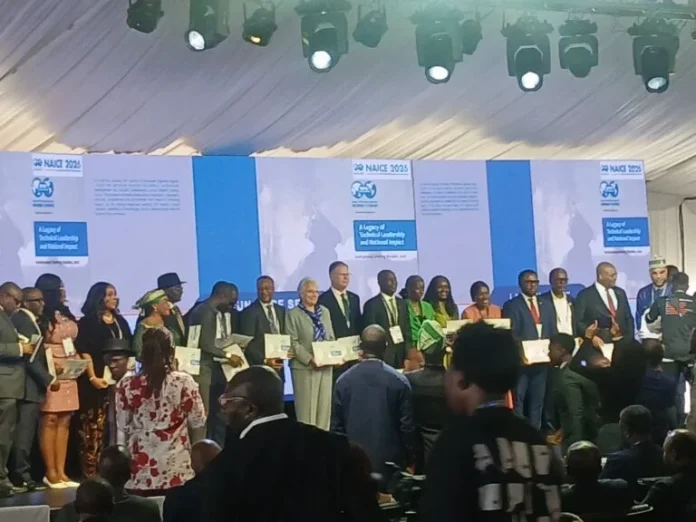
The Chairman of the SPE Nigeria Council, Francis Nwaochei, made the call on Monday at the 49th Nigeria Annual International Conference and Exhibition (NAICE 2026) in Lagos.

Speaking on the conference theme, “Thriving in the Evolving Global Energy Landscape: Collaborative Growth and Resilience,” Nwaochei said Nigeria’s energy future would depend on strong leadership, sound policies, technological innovation and sustained collaboration among government, regulators and industry stakeholders.

He described the theme as a timely call to action, urging participants to focus on practical and implementable solutions that would strengthen Nigeria’s competitiveness in the global energy market.

Nwaochei said the conference comes at a defining moment for the global energy industry and should move beyond identifying challenges to developing workable solutions for the country’s petroleum sector.

He welcomed government officials, regulators, industry executives, investors, academics, students and international delegates, describing their participation as a vote of confidence in Nigeria’s energy industry and its long-term growth prospects.

According to him, the SPE Nigeria Council has more than 17,000 members across the country, supported by over 50 student chapters, making it one of the association’s most active branches globally.

He said NAICE has evolved over nearly five decades into one of Africa’s leading platforms for technical exchange, policy dialogue, investment promotion, technology showcases and professional development.

Highlighting developments in the sector, Nwaochei cited the successful conclusion of the 2025 licensing round, in which 31 companies won 37 oil and gas blocks, as evidence of renewed investor confidence in Nigeria’s upstream industry.

He also pointed to the Federal Government’s Decade of Gas initiative and plans to clear verified debts owed to power generation companies and gas suppliers through a ₦4 trillion bond as key measures to strengthen the country’s energy value chain.

According to him, improving regulatory efficiency, commercialising Nigeria’s gas resources, promoting local content and deploying emerging technologies remain critical to sustainable industry growth.

Nwaochei said delegates would participate in technical presentations, executive panel discussions, workshops, innovation pitch sessions, technology exhibitions, leadership programmes and networking events throughout the conference.

He encouraged students and young professionals to maximise the opportunities for learning and leadership development while announcing that NAICE 2027 would mark the conference’s 50th anniversary.

The issues

Nigeria’s energy industry is pursuing reforms to attract investment and expand gas development, but sustained progress will depend on effective regulation, technological innovation, local capacity development and stronger collaboration across the sector.

What’s being said

“We gather at a defining moment for the global energy industry. The conversations over the next three days must move beyond identifying challenges to developing practical, implementable solutions for Nigeria’s energy sector.” — Francis Nwaochei, Chairman, SPE Nigeria Council.

“Resilience also involves improving the ease of doing business and strengthening local content participation.” — Francis Nwaochei.

What’s next

Stakeholders are expected to use recommendations from the conference to support policy reforms, attract investment and strengthen Nigeria’s position in the global energy industry, while preparations begin for the 50th edition of NAICE in 2027.

Bottom line

The SPE believes Nigeria can strengthen its position in the global energy market by combining sound policies, technological innovation and stronger collaboration to unlock long-term investment and sustainable industry growth.

NUPRC seeks collaboration to strengthen energy sector

Key points

  • NUPRC called for stronger collaboration to build a resilient and globally competitive petroleum sector.
  • The commission said stakeholder engagement has helped shape upstream reforms and improve the investment climate.
  • NMDPRA said Nigeria is positioning itself to become Africa’s refining hub through regulatory reforms and gas expansion.

Main story

The Nigerian Upstream Petroleum Regulatory Commission (NUPRC) has called for stronger collaboration between government and industry stakeholders to build a resilient, globally competitive petroleum sector capable of driving economic growth and strengthening Nigeria’s energy security.

The Chief Executive of NUPRC, Oritsemeyiwa Eyesan, made the call on Monday while delivering a keynote address at the 49th Society of Petroleum Engineers Nigeria Annual International Conference and Exhibition (NAICE 2026) in Lagos.

She said sustained dialogue and partnerships remain essential to positioning Nigeria to thrive amid the rapidly evolving global energy landscape.

Eyesan described the conference as one of Africa’s foremost technical and strategic energy platforms, noting that it has, since 1976, brought together policymakers, regulators, industry leaders, researchers and innovators to shape the future of the oil and gas sector.

She said this year’s theme, “Thriving in the Evolving Global Energy Landscape: Collaborative Growth and Resilience,” reflects the realities confronting the industry.

According to Eyesan, many of the reforms transforming Nigeria’s upstream petroleum sector have been influenced by recommendations from industry engagements and technical contributions made during forums such as the SPE conference.

She said the commission’s consultations with operators and other stakeholders have helped create a more transparent, predictable and investor-friendly regulatory environment.

The NUPRC chief stressed that resilient energy systems, sustained investment and long-term industry growth can only be achieved through strong partnerships.

She urged participants to challenge existing assumptions and develop practical solutions that would strengthen regulatory frameworks and improve the investment climate, assuring them that stakeholder recommendations would continue to shape future policies.

Eyesan said Nigeria’s abundant oil and gas reserves, vibrant indigenous petroleum industry, skilled workforce, improving regulatory framework and strategic location position the country to play a leading role in the evolving global energy landscape.

She called on stakeholders to move beyond discussions and work together to build an energy industry that supports sustainable economic growth and national energy security.

Also speaking, the Chief Executive of the Nigerian Midstream and Downstream Petroleum Regulatory Authority (NMDPRA), Rabiu Umar, said Nigeria is on course to becoming Africa’s refining hub.

Umar said the Authority’s regulatory strategy is anchored on energy security, gas expansion and regulatory excellence, adding that its approach would remain firm, fair and fast to encourage investment and industry growth.

He said the emergence of large-scale private and modular refineries is transforming Nigeria from a crude oil exporter and importer of refined products into a producer and exporter of refined petroleum products.

According to him, the NMDPRA is working closely with the NUPRC to enforce domestic crude supply obligations to ensure local refineries receive adequate feedstock.

Umar said the Authority is also prioritising the rehabilitation of pipeline infrastructure, strategic petroleum storage and nationwide petroleum product distribution to strengthen energy security.

He described natural gas as the cornerstone of Nigeria’s energy transition, noting that the Authority plans to expand gas utilisation across power generation, industries and transportation while promoting the adoption of Liquefied Petroleum Gas and Compressed Natural Gas.

He added that another round of gas distribution licences would be launched following the completion of a nationwide gas market mapping exercise to identify viable distribution clusters.

Umar also said the government remains committed to transitioning to a willing buyer-willing seller gas pricing framework under the Petroleum Industry Act as infrastructure and market conditions improve.

The issues

Nigeria’s energy regulators are seeking to deepen collaboration with industry players as they pursue reforms aimed at attracting investment, expanding domestic refining, accelerating gas development and strengthening the country’s long-term energy security.

What’s being said

“The best policies and regulations are built through collaboration. By listening, learning, and working together, we are building a regulatory system that is practical, responsive, and forward-looking.” — Oritsemeyiwa Eyesan, Chief Executive, NUPRC.

“Our regulatory approach will be firm, fair, and fast.” — Rabiu Umar, Chief Executive, NMDPRA.

What’s next

Regulators are expected to continue implementing reforms to improve the investment climate, expand refining and gas infrastructure, and strengthen collaboration with industry stakeholders to support Nigeria’s energy transition and economic growth.

Bottom line

Nigeria’s petroleum regulators believe stronger collaboration, regulatory certainty and accelerated investment in refining and gas infrastructure will be critical to building a more resilient and globally competitive energy industry.