Thirty-two teams are competing for a N5 million prize package in the second edition of the Lagos Street Soccer Stars Oshodi tournament.
The competition, themed “Oshodi Hidden Talents,” aims to discover grassroots football talents and discourage youth involvement in substance abuse.
The tournament is organised by the Senior Special Assistant to the Lagos State Governor on Grassroots Sports, Adebanji Atewogboye (SKIBANJ), in collaboration with First Bank Nigeria Plc under Sporty Lagos Naija Limited.
The National Drug Law Enforcement Agency (NDLEA) educated participating players on the dangers of drug abuse.
The tournament will run until August 15, 2026.
Main Story
No fewer than 32 grassroots football teams have begun the race for a N5 million prize package following the unveiling of the second season of the Lagos Street Soccer Stars Oshodi tournament by the Lagos State Government.
The tournament, which commenced on Sunday, August 2, 2026, featured the presentation of playing kits to participating teams ahead of a two-week knockout competition designed to identify emerging football talents across the state.
With the theme “Oshodi Hidden Talents,” the initiative seeks to provide opportunities for young footballers while promoting positive social values by steering youths away from substance abuse.
The competition is organised by the Senior Special Assistant to the Governor on Grassroots Sports, Adebanji Atewogboye, popularly known as SKIBANJ, in partnership with First Bank Nigeria Plc under the Sporty Lagos Naija Limited initiative. It also aligns with Governor Babajide Sanwo-Olu’s grassroots sports development agenda across Lagos State’s 57 local government areas.
Speaking during the unveiling ceremony, Atewogboye said the programme was established to identify talented youths, provide them with structure and demonstrate the government’s commitment to investing in their future through sports.
As part of activities marking the opening ceremony, the National Drug Law Enforcement Agency (NDLEA) sensitised participating players on the dangers of substance abuse, urging them to embrace healthy lifestyles to maximise their sporting potential.
The event attracted community leaders, football coaches, residents and political stakeholders despite a light drizzle. Among those in attendance was the All Progressives Congress (APC) Chairman in Oshodi-Isolo Local Government, Saheed Animashaun, who praised the initiative for advancing youth empowerment through sports.
In the opening matches, Dosunmu Street defeated Ariyibi Oke Street via penalties after a goalless draw, Popoola Street secured a 2-1 victory over Adeyemo Street, while Olorunishola Street recorded a convincing 3-1 win against Arowojobe Street.
Other dignitaries present included APC Apex Body Secretary, Mumuni Olori, alongside Femi Akeju, Ipadeola Lawanson, Saheed Dokunmu, Kabiru Oriowo, Dupe Ogundeyi and Linda Jacob.
The competition is sponsored by the Lagos State Government and First Bank Nigeria Plc as title sponsor, with additional support from the King Ogunremi Foundation and Dangote Salt Plc as community sponsors.
The Issues
Limited opportunities for grassroots football talents to gain professional exposure.
Rising cases of substance abuse among young people and the need for sustained awareness campaigns.
The importance of increased public-private partnerships in funding community sports development.
The need for structured youth engagement programmes to reduce crime and social vices through sports.
What’s Being Said
Adebanji Atewogboye, Senior Special Assistant to the Lagos State Governor on Grassroots Sports:
“The programme has been running from last year to identify hidden talents, give them structure, and show that the governor, Sanwo-Olu, is investing in their dreams.”
Ayenigbara Samuel, Chief Superintendent of Narcotics, NDLEA Lagos Strategic Command:
“Footballers can perform naturally well if they abstain from hard drugs. Abuse of drugs is destructive. We urge you to choose life over hard drugs.”
Saheed Animashaun, APC Chairman, Oshodi-Isolo Local Government:
“What we witnessed at the programme is a lifetime programme in Oshodi. We have to appreciate the Lagos State Governor and the Senior Special Assistant to the Governor on Grassroots Sports for putting up the event.”
What’s Next
The knockout competition will continue over the next two weeks, culminating in the grand finale on August 15, 2026, where the winning team will claim the N5 million prize package. Organisers are expected to monitor outstanding talents for future football development opportunities while sustaining anti-drug advocacy among participating youths.
Bottom Line
The Lagos Street Soccer Stars Season 2 tournament underscores the Lagos State Government’s commitment to youth empowerment by combining grassroots football development with drug abuse prevention, providing young talents with a platform to pursue sporting careers while promoting positive community values.
SUNU Health wants stronger legislation to accelerate universal health coverage in Nigeria.
The company says closer collaboration between the NHIA, HMOs, healthcare providers and lawmakers is essential.
It also called for sanctions against healthcare providers that deny services to insured patients.
Main story
The Managing Director of SUNU Health Nigeria Ltd., Dr Moyosore Olomola, has called for stronger legislation to expand health insurance coverage and accelerate Nigeria’s progress towards Universal Health Coverage (UHC).
Speaking in an interview with the News Agency of Nigeria (NAN), Olomola said achieving universal health coverage would require closer collaboration between the National Health Insurance Authority (NHIA), private Health Maintenance Organisations (HMOs), healthcare providers and the National Assembly.
He noted that Nigeria currently has about 22 million health insurance enrollees, only half of the NHIA’s target of 44 million beneficiaries by 2030.
According to Olomola, the relationship between the NHIA and private HMOs should evolve beyond regulation into a stronger partnership that improves healthcare financing and expands access to quality services.
He commended the NHIA for reforms, including tighter accreditation standards, enforcement of minimum capital requirements for HMOs, tariff reviews, digitisation of processes and greater engagement with private operators.
However, he said more reforms were needed, including a transparent tariff review mechanism linked to healthcare inflation, stronger enforcement of mandatory employer enrolment under the NHIA Act, predictable funding through the Basic Health Care Provision Fund and a formal dispute resolution framework between HMOs and the regulator.
Olomola also called for legislation establishing a provider accountability framework, arguing that healthcare providers who deny treatment to insured patients or demand unauthorised payments should face sanctions, including suspension from NHIA accreditation and public disclosure.
He said the proposals were presented during a recent engagement with the Chairman of the House of Representatives Committee on Health Services, Hon. Amos Magaji, as part of efforts to remove barriers to health insurance expansion.
Olomola identified funding constraints, unsuitable premium structures for informal workers, uneven commitment by state governments and poor compliance among healthcare providers as key obstacles to expanding coverage.
He added that SUNU Health is addressing the needs of informal sector workers through community-based enrolment involving cooperatives, trade associations and religious organisations, alongside weekly USSD micro-premium payments and telemedicine services delivered through its partnership with MobiHealth.
Olomola noted that Nigeria’s out-of-pocket healthcare spending remains above 70 per cent of total health expenditure, underscoring the need for stronger health insurance systems, digital claims processing, improved state financing and greater transparency.
The issues
Nigeria’s low health insurance coverage continues to expose millions of citizens to high out-of-pocket medical costs. Expanding enrolment will require not only stronger legislation and regulatory reforms but also improved provider accountability, sustainable financing and insurance products tailored to the country’s large informal workforce.
What’s being said
HMOs are not the NHIA’s adversaries; we are the delivery infrastructure for UHC. Without a sustainable private HMO sector, government cannot achieve its target of 44 million enrolled lives by 2030. — Dr Moyosore Olomola, Managing Director, SUNU Health Nigeria Ltd.
Nigeria has the demographic foundation, the regulatory architecture and growing political will to achieve universal health coverage. What is needed now is disciplined execution and a private sector that sees itself as a genuine partner in a national health mission. — Dr Moyosore Olomola.
What’s next
Attention will shift to whether lawmakers and the NHIA adopt the proposed legislative and regulatory reforms as Nigeria works towards increasing health insurance enrolment to 44 million by 2030.
Bottom line
SUNU Health says achieving universal health coverage will depend on stronger legislation, closer public-private collaboration and reforms that make health insurance more accessible, accountable and sustainable.
Applications for the 2026/2027 Chevening Scholarships open on Aug. 4 and close on Oct. 6.
The fully funded programme supports one-year master’s degrees at UK universities for emerging global leaders.
UK officials urged applicants to demonstrate leadership potential and a commitment to creating positive change.
Main story
The United Kingdom has announced that applications for the 2026/2027 Chevening Scholarships will open on Tuesday, Aug. 4, with prospective candidates having until Oct. 6 to submit their applications.
Funded by the UK’s Foreign, Commonwealth and Development Office (FCDO) and partner organisations, the Chevening Scholarship offers fully funded one-year taught master’s degree programmes at universities across the United Kingdom.
Established in 1983, the programme targets emerging leaders who are committed to driving positive change in their home countries and contributing to solutions to global challenges.
In a statement on Monday, the Head of the Scholarships Unit at the UK Foreign, Commonwealth and Development Office, Emma Hennessey, encouraged qualified candidates to apply.
She said Chevening seeks exceptional individuals willing to work with the UK to build a more resilient, prosperous and sustainable future.
Hennessey added that the programme remains committed to selecting a diverse and inclusive cohort of future leaders, with particular interest in applications from underrepresented groups.
According to her, selection is based not only on academic and professional achievements but also on leadership potential and the ability to create lasting impact.
She noted that access to UK education, international networks and professional experiences equips scholars with the knowledge and connections needed to address shared global challenges.
British Deputy High Commissioner in Lagos, Jonny Baxter, described Chevening as more than an academic scholarship, saying it provides participants with lifelong access to a global network of influential leaders.
He said the combination of world-class education, exposure to UK values and culture, and professional connections enables scholars to tackle pressing development challenges in their communities and countries.
Prospective applicants have been advised to submit their applications through the official Chevening portal and review the programme’s vision and eligibility guidance before applying.
The issues
Chevening remains one of the UK’s flagship international scholarship programmes, combining academic funding with leadership development and global networking. The emphasis on leadership, diversity and long-term impact reflects the UK’s broader objective of strengthening international partnerships through education.
What’s being said
Chevening is looking for exceptional individuals who are ready to collaborate with the UK to help build a more resilient, prosperous and sustainable future. — Emma Hennessey, Head of the Scholarships Unit, UK Foreign, Commonwealth and Development Office.
If you have a clear vision for making a meaningful impact in areas of shared priority between Nigeria and the UK, apply. — Jonny Baxter, British Deputy High Commissioner in Lagos.
What’s next
Applications will remain open until Oct. 6, after which shortlisted candidates will proceed through Chevening’s selection process before successful applicants begin their studies in the United Kingdom for the 2026/2027 academic session.
Bottom line
The UK is inviting aspiring leaders to compete for fully funded Chevening Scholarships, offering an opportunity to pursue postgraduate study while joining a global network of professionals committed to driving positive change.
Nigeria’s All-Share Index slipped 0.84% week-on-week to 245,283.68 points as profit-taking hit banking and industrial counters, even as total trading value surged 32% to ₦404.76 billion
Critical Minerals Financing Corp (CMFC) led all gainers with a 22.78% weekly surge to ₦3.88, riding investor excitement from its recent rebranding from Deap Capital into a specialised mining finance group
AVA Capital debuted on the NGX Main Board on July 31 via listing by introduction at ₦7.50 per share and immediately rallied 10% to ₦8.25 on its first trading day
The Insurance sector was the sole major sectoral outperformer for the week, rising 1.72%, with Consolidated Hallmark Holdings, Lasaco Assurance, and NEM Insurance all featuring in the top-10 gainers’ chart
Despite the weekly pullback, July overall was a strong month — the ASI gained 6.92% month-on-month while market capitalisation added approximately ₦11.11 trillion
■ Main Story
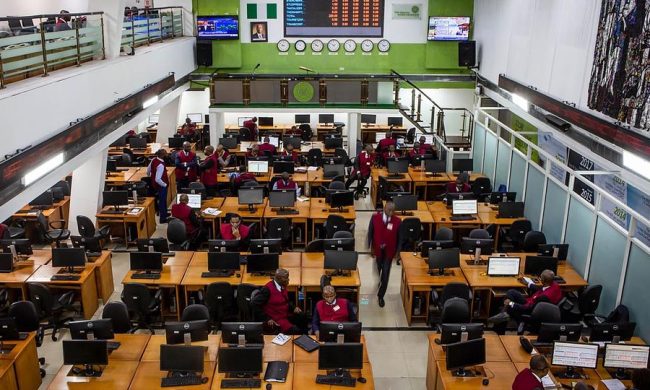
Nigeria’s equities market closed the week ended July 31, 2026, in the red — but a cohort of ten stocks told a very different story, posting gains of between 7.55% and 22.78% as selective buying defied the broader profit-taking that erased roughly ₦887 billion in market capitalisation over the five-day period.
The NGX All-Share Index (ASI) declined 0.84% week-on-week to close at 245,283.68 points, down from 247,357.40 points at the start of the week, according to data compiled by the Nigerian Exchange Group and reported by Nairametrics on August 2, 2026. Market capitalisation settled at approximately ₦158.33 trillion — a weekly drop of roughly ₦887 billion — though the figure was slightly lifted by the listing of AVA Capital’s five billion shares on the final trading day of the week.
Despite the headline weakness, trading activity improved markedly. Investors exchanged 5.119 billion shares worth ₦404.762 billion across 285,223 deals — up 32% in value and 15.5% in volume from the preceding week’s ₦306.143 billion across 255,589 deals. The surge in turnover suggests that profit-takers on one end were met by equally determined bargain hunters on the other.
Year-to-date, the ASI has returned 57.62%, and market capitalisation has gained 59.32% — figures that continue to place the NGX among the strongest-performing equity markets globally in 2026. July itself was a strong month: the ASI rose 6.92% month-on-month from 229,419.18 points at end-June to 245,283.68 points at end-July, recovering from June’s 8.37% correction. Market capitalisation added approximately ₦11.11 trillion during the month.
Market breadth closed negative for the week: 33 gainers, 56 losers, and 58 unchanged — a notable deterioration from 57 gainers and 38 losers in the prior week. Four of five major sectoral indices fell, with Banking emerging as the week’s worst performer. Yet within that broad decline, the ten stocks profiled below outperformed decisively — driven by a mix of rebranding momentum, corporate actions, institutional listings, and sector rotation into insurance and energy counters.
■ Top 10 Best-Performing Stocks — Week Ended July 31, 2026
#
Stock
Weekly Gain
Closing Price
1
Critical Minerals Financing Corp (CMFC)
+22.78%
₦3.88
2
Coronation Infrastructure Fund
+20.92%
₦154.30
3
Thomas Wyatt Nigeria
+20.66%
₦4.38
4
Consolidated Hallmark Holdings
+19.60%
₦8.36
5
Lasaco Assurance
+18.68%
₦2.16
6
VFD Group
+12.21%
₦11.95
7
AVA Capital (AVACAP)
+10.00%
₦8.25
8
Eterna
+8.20%
₦33.00
9
NEM Insurance
+7.89%
₦34.20
10
Transnational Corporation
+7.55%
₦42.00
■ The Issues: Stock-by-Stock Analysis
What drove each of these ten stocks higher in a week when the broader market was falling? BizWatch Nigeria examines the specific catalysts, corporate events, and sectoral dynamics behind each move.
1. Critical Minerals Financing Corp (CMFC) — +22.78% to ₦3.88
The week’s top gainer is also the NGX’s newest story. Critical Minerals Financing Corp — formerly known as Deap Capital Management & Trust Plc — completed its full corporate transformation in June 2026, changing its ticker from DEAPCAP to CMFC and relocating its headquarters from its former address to 1 Akin Adesola Street, Victoria Island, Lagos.
The rebrand was not cosmetic. At their Annual General Meeting in Ikeja, Lagos, in March 2026, DEAPCAP shareholders unanimously approved the company’s pivot into a specialised mining, metals, and commodities finance group — rebranding it as Africa’s first private-sector minerals finance platform. The company received all requisite regulatory approvals and completed its Corporate Affairs Commission filings before the June listing of the new identity on the NGX.
The new strategic focus is centred on capital structuring, investment banking, transaction advisory, project development support, and financing solutions for stakeholders across the mining and commodities value chain. CMFC says it plans to work with mining companies, commodity traders, institutional investors, development finance institutions, and governments across Africa to unlock value from the continent’s mineral resources.
The timing is significant. Global demand for critical minerals — lithium, cobalt, copper, tungsten, tin, tantalum — used in electric vehicle batteries, renewable energy infrastructure, and advanced industrial applications is accelerating. CMFC is positioning itself to be the Nigerian financial intermediary that channels capital to operators in this space.
“The completion of our transition to Critical Minerals Financing Corp Plc marks the beginning of an exciting new phase for the Company. We are strategically positioned to deliver world-class capital structuring, advisory, and financing solutions to mining and metals companies operating across gold, copper, cobalt, lithium, tungsten, tin, tantalum, and other critical minerals.” — Lamon Rutten, Chairman, Critical Minerals Financing Corp Plc
CMFC’s 22.78% weekly gain reflects speculative and strategic investor interest in a new, thematic name at a moment when the global critical minerals narrative is intensifying. Whether operational momentum can sustain the rally will be the key test in the months ahead.
2. Coronation Infrastructure Fund — +20.92% to ₦154.30
The Coronation Infrastructure Fund (CIF) posted the second-strongest weekly performance on the back of a confirmed H1 2026 income distribution — announced via a corporate filing with the NGX on July 16, 2026.
CIF proposed a semi-annual income distribution of ₦8.985 per unit for the half-year ended June 30, 2026. With 87.9 million units outstanding, the total distribution amounted to approximately ₦789.78 million. The qualification date was July 22, 2026, and electronic payments were scheduled for July 28.
The fund reported an operating profit of ₦791.50 million for H1 2026, driven by total income of ₦889.78 million, largely from interest income on infrastructure loans and short-term placements. CIF is a closed-end debt fund managed by Coronation Asset Management, established under a ₦200 billion issuance programme. It listed its 87.9 million units on the NGX in 2025 following what was described as the largest capital raise by a locally managed infrastructure fund in Nigeria.
It is worth noting that the H1 2026 distribution of ₦8.985 per unit is below the ₦10.13 per unit paid in H1 2025 — a decline of approximately 11.3%, as Business Day reported. Analysts attributed the reduction to a shift in the fund’s asset strategy: while H1 2025 saw significant capital held in high-yielding short-term money market placements, by H1 2026 the fund had transitioned fully into its core infrastructure loan strategy, which yields lower but more stable returns over the long term.
“The second quarter reaffirmed the Fund’s focus on disciplined capital deployment and consistent value delivery to our unitholders.” — Mayowa Ikotun, Head of Coronation Infrastructure Fund (as quoted in Nairametrics, July 2026)
Despite the lower distribution year-on-year, investors appear to have responded positively to the certainty of the payout and the fund’s continued operational delivery.
3. Thomas Wyatt Nigeria — +20.66% to ₦4.38
Thomas Wyatt Nigeria extended a rally that first began in early July, when the Nigerian Exchange Regulation Limited lifted a suspension on the stock. NGX Regulation removed the embargo on July 6, 2026, following the company’s filing of outstanding financial statements, according to a notice signed by Bonaventure Onwuji on behalf of the regulatory body.
The resumption of trading after a regulatory suspension often produces sharp repricing as market participants who were locked out of the stock rush to establish positions. Thomas Wyatt’s 20.66% gain during the last week of July suggests that re-rating is still ongoing, as investors factor in the restored compliance status and examine the underlying financial disclosures that had previously been withheld from the market.
Thomas Wyatt Nigeria is a longstanding industrial and equipment company with a presence across several sectors of Nigeria’s economy. BizWatch Nigeria will report separately on the content of the financial filings that prompted the suspension’s lifting once a full review of those statements is completed.
4. Consolidated Hallmark Holdings — +19.60% to ₦8.36
Consolidated Hallmark Holdings was the strongest individual insurance name in what proved to be the sector’s standout week on the NGX. The Insurance Index rose 1.72% for the week — the only major sectoral index to close in positive territory — and Consolidated Hallmark led that charge with a 19.60% gain.
The insurance sector’s continued strength mirrors a pattern observed in prior weeks, Nairametrics noted in its August 2, 2026 report, adding that the sector’s gains came even as broader market sentiment turned cautious. Investors appear to be pricing in improving underwriting performance, capital adequacy progress in light of the NAICOM recapitalisation programme, and sector-specific earnings optimism.
Consolidated Hallmark Holdings operates across life and non-life insurance lines. Its performance places it among the most closely watched mid-cap insurance names on the exchange.
5. Lasaco Assurance — +18.68% to ₦2.16
Lasaco Assurance was the fifth-strongest gainer for the week, also part of the insurance sector’s collective outperformance. With an 18.68% weekly gain, Lasaco continued a run that has seen it attract fresh investor interest in the context of the broader insurance recapitalisation exercise being overseen by the National Insurance Commission (NAICOM).
The insurer has been among the more active mid-tier insurance names on the NGX in 2026, as investors seek exposure to the sector’s anticipated structural reforms and earnings uplift from a modernising claims and underwriting environment. Lasaco’s closing price of ₦2.16 suggests the stock is still in the lower-priced tier, leaving room for further re-rating if fundamentals continue to improve.
6. VFD Group — +12.21% to ₦11.95
VFD Group, the Lagos-based investment holding company with interests spanning microfinance banking, asset management, securities, and real estate, gained 12.21% during the week to close at ₦11.95. The company has built a reputation as one of the more innovative financial conglomerates targeting underserved segments of Nigeria’s financial services market.
VFD Group’s weekly gain came as part of a broader pickup in alternative financial services names. The stock’s movement was not tied to a specific announced corporate action during the week, suggesting that market participants may be rotating into the name ahead of anticipated earnings disclosures or in response to positive developments within its ecosystem of portfolio companies.
7. AVA Capital (AVACAP) — +10.00% to ₦8.25
Friday, July 31, 2026 marked a milestone for AVA Capital Plc: the integrated financial services group was admitted to the Main Board of the Nigerian Exchange through a listing by introduction, with its entire 5 billion ordinary shares of ₦1.00 each listed at ₦7.50 per share under the ticker AVACAP. At the listing price, AVA Capital entered the market with a capitalisation of ₦37.5 billion.
Unlike an initial public offering, no new shares were issued and no fresh capital was raised. The listing was instead described as a strategic transition into the public markets — aimed at enhancing market visibility, strengthening corporate governance transparency, and deepening shareholder engagement. AVA Capital’s subsidiaries — AVA Global Asset Managers, AVA Securities, and AVA Trustees — structured transactions exceeding ₦500 billion in the 2025/2026 financial year, according to the company.
“Our admission to the Nigerian Exchange is a natural progression in AVA Capital’s evolution as a long-term institution. We are stepping into the public market with a solid foundation, an established platform and a commitment to transparency.” — Olukayode Fadahunsi, Managing Director, AVA Capital Plc
The stock closed its debut session at ₦8.25 — a 10% premium above the listing price of ₦7.50 — and was also among the three most traded equities by volume on the day, according to the NGX weekly report. The strong debut signals healthy investor appetite for well-governed indigenous financial institutions making the transition to public markets.
8. Eterna — +8.20% to ₦33.00
Eterna Plc, the downstream oil and gas and lubricants company, gained 8.20% during the week to close at ₦33.00. The stock’s performance fits a broader pattern: the Oil & Gas sector was the strongest major sector on the NGX year-to-date as at end-July, having returned 96.32% in 2026 — the highest sectoral YTD gain on the exchange.
Eterna’s weekly rally aligns with periodic re-ratings of downstream energy names as investors position in anticipation of stronger margins from fuel and lubricant distribution in an environment of improved local refining capacity, following the phased ramp-up of the Dangote Petroleum Refinery. The company has operations spanning petroleum product marketing, distribution, and manufacturing of lubricants, greases, and related products.
9. NEM Insurance — +7.89% to ₦34.20
NEM Insurance rounded out what was a dominant week for insurance stocks, rising 7.89% to ₦34.20. Together with Consolidated Hallmark Holdings and Lasaco Assurance, NEM Insurance formed an insurance trio that helped the sector’s index to a 1.72% weekly gain — the only sectoral index to close positive for the week.
NEM Insurance is one of the more established mid-tier general insurance companies on the NGX, with interests across marine, fire, motor, aviation, and oil and gas insurance lines. The company’s relatively higher closing price of ₦34.20 compared to peers reflects a longer premium history and a more seasoned institutional shareholder base. Analysts covering the insurance sector broadly attribute the sector’s recent strength to a combination of recapitalisation-driven re-rating and rising premium income as Nigerian businesses renew and expand cover.
10. Transnational Corporation (Transcorp) — +7.55% to ₦42.00
Transnational Corporation of Nigeria Plc — Transcorp — closed the week as the tenth-best performer, gaining 7.55% to close at ₦42.00. Transcorp is one of Nigeria’s largest diversified conglomerates, with major interests in power generation (through Transcorp Power), hospitality (Transcorp Hotels), and energy. Transcorp Power, its generation subsidiary, listed separately on the NGX in 2023 and has been among the most closely tracked power sector stocks.
Transcorp’s inclusion in the week’s top performers comes on the back of what has been a strong 2026 for the group, with its year-to-date trajectory buoyed by optimism around Nigeria’s power sector privatisation model and the Eko Atlantic hospitality development. Investor interest in the group has also been supported by the broader conglomerate re-rating that has characterised this year’s NGX rally. Transcorp Power separately reported a dip in H1 pre-tax profit to ₦54.99 billion — down 6.37% — while declaring a ₦1.50 dividend, according to recent reports.
■ Worst-Performing Stocks — Week Ended July 31, 2026
While the gainers’ table told a story of momentum and opportunity, the losers’ chart was equally telling. Ten stocks lost between 11.55% and 18.44% during the week, led by Associated Bus Company, which shed 18.44% to close at ₦5.75.
#
Stock
Weekly Decline
Closing Price
1
Associated Bus Company
–18.44%
₦5.75
2
Fortis Global Insurance
–16.13%
₦2.34
3
Tripple Gee & Company
–15.54%
₦2.88
4
Veritas Kapital Assurance
–15.38%
₦1.43
5
International Breweries
–13.87%
₦11.80
6
Omatek Ventures
–12.90%
₦1.62
7
C&I Leasing
–12.60%
₦5.55
8
The Initiates
–12.50%
₦28.00
9
Austin Laz & Company
–12.40%
₦3.18
10
Haldane McCall
–11.55%
₦2.91
Associated Bus Company extended the weakness recorded in the prior week, while Fortis Global Insurance’s 16.13% decline came amid a notable corporate development: the company listed an additional 15 billion ordinary shares on the NGX’s Daily Official List on July 30, 2026, arising from a conversion of ₦12 billion in debt to equity at ₦0.80 per share. The transaction increased Fortis Global Insurance’s total issued shares from 3.23 billion to 18.23 billion — a massive dilution that explains the share price pressure. International Breweries (-13.87%) and Tripple Gee & Company (-15.54%) also came under selling pressure, with the former continuing to struggle amid headwinds in the consumer goods sector.
The NGX’s sectoral picture for the week ended July 31 was largely one of broad-based pullback, with profit-taking most acute in banking, industrials, and consumer goods.
The Banking Index fell 0.69% for the week to 2,527.59 points, weighed down by selloffs in Access Holdings, Wema Bank, FCMB, and UBA, as investors locked in gains after the sector’s strong recent rally. Yet on a monthly and year-to-date basis, the banking story remains compelling: the Banking Index rose 22.10% in July alone and is up 66.74% year-to-date — one of the market’s biggest value drivers in 2026.
Consumer Goods declined 0.35% for the week and was the weakest major sector on a monthly basis, down 4.11%, even as it holds a modest 10.82% year-to-date gain. The sector continues to face headwinds from squeezed consumer purchasing power, elevated production costs, and foreign exchange exposure.
Insurance was the sole weekly outperformer (+1.72%), a distinction it has now claimed in multiple recent weeks. Year-to-date, two sectors stand out as the market’s dominant performers: Oil & Gas at +96.32% and Industrial Goods at +85.42% — both far ahead of the ASI’s 57.62% YTD return.
■ What’s Being Said
Analysts and market watchers have responded to the week’s developments with a mix of cautious optimism and attention to sectoral dynamics.
“Coronation Infrastructure Fund’s 20.92% weekly gain stands out following its recent H1 2026 distribution announcement, while Thomas Wyatt Nigeria extended a rally that began after its suspension was lifted earlier in July. The insurance sector’s continued strength, led by Consolidated Hallmark, Lasaco Assurance, and NEM Insurance, mirrors a pattern seen in prior weeks, even as broader market sentiment turned cautious.” — Nairametrics Markets Report, August 2, 2026
“The emergence of CMFC aligned with Nigeria’s economic diversification agenda. By optimising the value chain of its critical minerals, Nigeria could deepen economic value retention and position itself as a global supplier of choice in the energy transition economy.” — Lamon Rutten, Chairman, Critical Minerals Financing Corp Plc, June 2026
“Africa is uniquely positioned to become a leading supplier of strategic mineral resources to the world, with rising global demand for critical minerals driven by energy transition technologies, battery manufacturing, advanced industrial applications and renewable energy infrastructure.” — Critical Minerals Financing Corp Plc, June 2026 regulatory filing
“Our admission to the Nigerian Exchange is a natural progression in AVA Capital’s evolution as a long-term institution. We are stepping into the public market with a solid foundation, an established platform and a commitment to transparency.” — Olukayode Fadahunsi, Managing Director, AVA Capital Plc, July 2026
“The stock recorded an active debut, closing among the week’s top ten price gainers with a 10.00% appreciation and featuring among the three most traded equities by volume.” — NGX Weekly Report, week ended July 31, 2026
“The market continues to rank among the strongest-performing equity markets globally in 2026.” — Nigerian Exchange Group Weekly Report, week ended July 31, 2026
From the investor community, reaction to CMFC’s rebrand has been mixed but engaged. Some market participants have drawn a sharp distinction between the branding exercise and operational execution.
“Exactly — the name alone won’t move the needle. What matters now is whether they announce concrete deals, partnerships, or financing structures that actually put them in the critical minerals value chain. A rebrand without operational follow-through is just a ticker change.” — Market observer comment, NSM News Forum, June 2026
■ What’s Next
Looking ahead, the NGX’s near-term trajectory will be shaped by several catalysts and risks:
Earnings season continues: Analysts expect market sentiment to remain mixed as investors continue digesting ongoing H1 2026 corporate earnings releases and assessing management guidance for the second half of the year. Banking and industrial names with strong YTD rallies face the highest bar for positive surprises.
Bargain hunting in banking: Despite the weekly Banking Index decline, analysts believe the sector remains fundamentally attractive. Bargain hunting in names like Access Holdings, UBA, and FCMB — which sold off during the week — could provide near-term support for the index, according to the Nairametrics market outlook for August 2026.
CMFC operational developments: The market will be watching closely for any concrete deal announcements, mining finance transactions, or partnership agreements from Critical Minerals Financing Corp. The company’s share price rally will be tested against the reality of whether its new strategy produces tangible commercial activity.
Insurance recapitalisation deadline: NAICOM’s ongoing recapitalisation programme for the insurance sector continues to drive activity in the space. Investors will track which insurers meet compliance milestones and which may face regulatory pressure, with implications for the pricing of individual names.
AVA Capital’s post-listing performance: Having debuted at a 10% premium on its first day, AVACAP’s ability to sustain or extend those gains will depend on the quality of investor engagement, future earnings disclosures, and the group’s pipeline of transactions in the institutional capital markets space.
■ Bottom Line
The Bottom Line: Nigeria’s equity market ended July 2026 with a small weekly stumble but a strong monthly record intact — and the ten stocks that outperformed during the week reflect something deeper than simple momentum. From CMFC’s thematic pivot into critical minerals finance to AVA Capital’s confident public market debut, from the insurance sector’s persistent re-rating to Coronation Infrastructure Fund’s income-driven rally, the week’s winners were defined by catalysts with structural roots: corporate transformations, sector reforms, income certainty, and governance credibility. In a market where the ASI has already returned nearly 58% year-to-date, the age of indiscriminate gains may be giving way to one where only stocks with identifiable, defensible stories hold the rally. That is not a sign of weakness — it is a sign of maturity.
Data Source: Nigerian Exchange Group (NGX) Weekly Report, Nairametrics (August 2, 2026), The Sun, Punch, BusinessDay, Tribune Online, Vanguard, This Day Live, NGX Group Press Release. BizWatch Nigeria editorial analysis.
BizWatch Nigeria — Boluwatife Oshadiya | Published: August 3, 2026
NEPC says reports of a planned staff strike are false and there is no industrial action.
The council and the ASCSN NEPC Unit reaffirmed continued industrial harmony and cooperation.
Management highlighted staff welfare improvements, export promotion initiatives and record non-oil export performance.
Main story
The Nigerian Export Promotion Council (NEPC) has dismissed reports claiming its workers are planning to embark on a strike, describing the information circulating on some online platforms as false and misleading.
The clarification followed a joint meeting between the council’s management and the leadership of the Association of Senior Civil Servants of Nigeria (ASCSN), NEPC Unit.
In a statement issued on Monday by the Head of Corporate Communications, Aliu Sadiq, the council said no strike action had been planned or contemplated.
“The purported strike action is false, baseless and should be disregarded by the general public,” the statement said.
The Chairman of the ASCSN, NEPC Unit, Moruf Ogunlana, also denied any planned industrial action, saying the union and its members were neither consulted nor involved in the reports circulating online.
He reaffirmed the union’s commitment to maintaining a cordial working relationship with the management.
Responding to allegations concerning the appointment of directors, the council said no such appointments had been made. It added that management would continue operating within the existing organisational structure while strengthening staff capacity through training and professional development.
According to the council, opportunities for career progression have been expanded by widening the directorate cadre and creating additional advancement pathways across all staff categories.
The statement also said staff welfare had improved significantly, with more than 75 per cent of employees receiving professional training since 2023.
Management further highlighted initiatives introduced under the leadership of the Executive Director and Chief Executive Officer, Nonye Ayeni, including the Export Skills Acquisition Centre (ESAC), which has trained more than 500 youths and women in garment and bag production for export.
The council and the union also rejected allegations of favouritism and nepotism, describing them as unfounded.
NEPC noted that Nigeria recorded non-oil exports worth $6.1 billion in 2025, the highest since the council’s establishment. It also said its third-party certification programme has enabled more than 150 exporters to obtain internationally recognised certifications, including HACCP, FDA, HALAL and ISO standards, improving their access to global markets.
The issues
The statement reflects efforts by the council to reassure stakeholders about internal stability while countering claims that could undermine confidence in Nigeria’s export promotion agency. It also highlights the importance of industrial harmony in sustaining non-oil export growth.
What’s being said
“The purported strike action is false, baseless and should be disregarded by the general public.” — Aliu Sadiq, Head of Corporate Communications, NEPC.
“Neither the union nor its members were consulted on any purported strike call.” — Moruf Ogunlana, Chairman, ASCSN, NEPC Unit.
What’s next
The council says it will continue working with staff and union leaders while pursuing programmes aimed at strengthening workforce capacity and expanding Nigeria’s non-oil export performance.
Bottom line
NEPC has denied reports of an impending strike, insisting industrial relations remain stable as it focuses on staff development and boosting Nigeria’s non-oil export sector.
DSS asked the Federal High Court to foreclose Omoyele Sowore’s defence, alleging repeated delays in the trial.
Sowore’s lawyer blamed a court registry issue for seeking another adjournment and denied deliberately stalling proceedings.
Justice Mohammed Umar adjourned the case until Sept. 20 after a heated exchange between counsel.
Main story
The Department of State Services (DSS) has urged the Federal High Court in Abuja to terminate the defence of Omoyele Sowore, accusing the activist and former presidential candidate of deliberately frustrating his ongoing criminal trial through repeated delays.
The application was made on Monday by DSS counsel, Akinlolu Kehinde (SAN), after Sowore’s lawyer, Adeyinka Olumide-Fusika (SAN), sought an adjournment, saying he could not proceed with the defence despite a subpoenaed DSS witness being present in court.
Olumide-Fusika explained that the defence had filed an application on July 22 seeking the court’s endorsement of documents required to examine the witness but only discovered shortly before proceedings that the request had been approved days earlier. He attributed the situation to a court registry issue rather than any fault of the judge.
Kehinde opposed the request, arguing that the defence had adopted a pattern of delaying the proceedings. He said the prosecution had fulfilled its obligation by producing the nominated DSS officer and insisted it was the responsibility of the defence to follow up on its own application.
The DSS lawyer urged the court to invoke its case management powers, close the defence and direct both parties to file their final written addresses. He argued that the constitutional right to fair hearing guarantees an opportunity to be heard but does not permit endless delays, citing judicial authorities in support of his position.
Olumide-Fusika rejected the allegation, insisting the prosecution had ignored the facts surrounding the registry’s handling of the application. He maintained that the defence had no intention of delaying the trial and noted that he would not have appeared in court during the court’s vacation if that had been his objective.
Proceedings became tense as both senior lawyers exchanged accusations, prompting Justice Mohammed Umar to caution them against unprofessional conduct. The judge warned that he would refer any lawyer who repeated such behaviour to the appropriate disciplinary body.
Justice Umar, who observed that the defence had sought several adjournments since the prosecution closed its case in March, adjourned the matter until Sept. 20 for continuation of the defence. Both lawyers later apologised to the court following the adjournment.
Sowore, the presidential candidate of the African Action Congress (AAC), is facing charges of criminal defamation, cyberstalking and incitement over social media posts in which he allegedly described President Bola Tinubu as “a criminal.”
The issues
The dispute highlights the challenge courts face in balancing a defendant’s right to present a full defence with the need to avoid unnecessary delays. It also raises questions about the impact of administrative lapses within the court system on the pace of criminal trials.
What’s being said
“The constitution only guarantees an opportunity to be heard, and not an unlimited right to delay proceedings.” — Akinlolu Kehinde (SAN), counsel to the DSS.
“Obviously, the problem is not from your lordship, it is a registry issue.” — Adeyinka Olumide-Fusika (SAN), counsel to Omoyele Sowore.
“I am adjourning this matter. I am not in a position to continue hearing the case today.” — Justice Mohammed Umar.
What’s next
The Federal High Court will resume hearing on Sept. 20, when Sowore is expected to continue presenting his defence unless fresh procedural issues arise.
Bottom line
The court declined the DSS’s request to close Sowore’s defence, opting instead to grant another adjournment while warning counsel against further courtroom confrontations as the long-running trial continues.
Iran says no negotiations or meetings with the United States are planned, contradicting President Donald Trump’s statement.
Tehran says its only ongoing discussions are with Oman on managing the Strait of Hormuz.
The conflicting claims come as tensions over Iran’s nuclear programme and regional security remain unresolved.
Main story
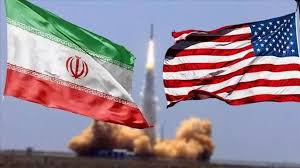
Iran has denied holding or planning any negotiations with the United States, contradicting President Donald Trump’s claim that talks between the two countries were set to begin.
Speaking aboard Air Force One on Sunday, Trump said he had opted against launching military action in favour of diplomacy, adding that negotiations with Iran would begin the following afternoon.
However, Iran’s Foreign Ministry spokesman, Esmail Baghaei, dismissed the claim, saying no talks with Washington were under way and no meetings had been scheduled.
According to Baghaei, Iran has no plans to host any U.S. delegation or send negotiators abroad in the coming days. He added that, apart from Foreign Minister Abbas Araqchi, who is on a religious pilgrimage in Iraq, all Iranian negotiators remain in the country.
The spokesman said the only discussions currently taking place involve talks with Oman on the management of the Strait of Hormuz.
A senior Iranian source also denied that negotiations with the United States were planned, saying Araqchi would remain unavailable until at least the end of the week.
The conflicting statements come amid continuing tensions following “Operation Epic Fury,” launched more than five months ago by the United States and Israel against Iran.
According to the report, Trump has repeatedly threatened military action before stepping back and citing diplomatic engagement as the preferred option.
Iran, however, has publicly ruled out negotiations with Washington since a memorandum of understanding aimed at ending the conflict collapsed in early July.
The report said the dispute over the Strait of Hormuz remains a major sticking point. While Washington wants guaranteed access through the strategic waterway, Tehran insists any agreement preserves its authority over shipping in the strait.
Oil markets reacted positively to Trump’s latest decision not to proceed with military action, with Brent crude prices reportedly falling by more than four per cent to about $84 per barrel.
Meanwhile, the United Kingdom Maritime Trade Operations (UKMTO) reported that the master of a vessel transiting the Strait of Hormuz had reported an explosion in nearby waters, although no injuries were recorded.
The issues
The latest exchange highlights the fragile state of U.S.-Iran relations, with conflicting public statements raising uncertainty over whether diplomatic engagement is genuinely under way. It also underscores the continued strategic importance of the Strait of Hormuz, a key global oil transit route whose security has significant implications for energy markets.
What’s being said
“Would I rather make a deal? I’m not looking to kill people.” — Donald Trump, U.S. President.
“No negotiations with the United States were taking place and no meetings were scheduled.” — Esmail Baghaei, Iranian Foreign Ministry spokesman.
“The only talks under way… were discussions with Oman over management of the Strait of Hormuz.” — Esmail Baghaei.
What’s next
Attention will remain on whether Washington and Tehran resume formal diplomatic contacts, while developments around the Strait of Hormuz and regional security continue to influence global energy markets.
Bottom line
Iran’s denial of planned talks has cast doubt on Trump’s assertion that diplomacy is replacing military action, leaving uncertainty over the direction of U.S.-Iran relations and the prospects for easing regional tensions.
By Boluwatife Oshadiya, Energy Correspondent | August 3, 2026
Key Points
Nigeria exported an estimated 182.2 million barrels of crude oil worth N24.02tn in the first six months of 2026
Stronger international crude oil prices boosted export value despite only modest increases in export volumes
Concerns persist over adequate crude supply for domestic refineries amid continued reliance on crude exports
Main Story
Nigeria generated an estimated N24.02tn ($17.60bn) from crude oil exports in the first half of 2026, as stronger global oil prices significantly increased the value of the country’s shipments despite ongoing concerns over crude supply to domestic refineries.
An analysis of crude oil production and export data from January to June 2026 showed that Nigeria exported approximately 182.2 million barrels of crude oil during the period. Based on an exchange rate of N1,365/$, the exports were valued at about N24.02tn, while total crude production reached an estimated 263.65 million barrels worth $25.41bn (N34.69tn), according to data from the Central Bank of Nigeria.
Production fluctuated throughout the six-month period, falling from 45.26 million barrels in January to 36.68 million barrels in February before recovering steadily through June. Average daily production also improved from 1.46 million barrels per day in January to 1.56 million barrels per day in June after dipping to 1.31 million barrels per day in February.
Crude exports mirrored the production trend, rising from 1.01 million barrels per day in January to 1.11 million barrels per day in June, although exports temporarily declined to 860,000 barrels per day in February.
The analysis indicated that Nigeria exported roughly 69 per cent of its crude production during the review period, leaving about 81.45 million barrels for domestic refining, storage, operational requirements and inventory adjustments.
Industry data showed that higher export earnings were driven primarily by elevated international crude prices, particularly between March and May, when geopolitical tensions in the Middle East and disruptions along the Strait of Hormuz pushed oil prices higher. Although prices moderated in June, they remained above levels recorded at the start of the year, sustaining the overall value of Nigeria’s crude exports.
The estimates represent the gross market value of crude produced and exported and do not reflect the Federal Government’s actual earnings, which are influenced by production-sharing agreements, royalties, taxes, operating costs, domestic supply obligations and other commercial arrangements.
The Issues
Nigeria’s strong crude export performance comes amid renewed concerns over the availability of feedstock for local refineries. Industry stakeholders have repeatedly argued that crude producers continue to prioritise exports because of stronger commercial returns despite the Domestic Crude Supply Obligation (DCSO) established under the Petroleum Industry Act.
Recent disagreements between the Federal Government and local refiners have also highlighted challenges in implementing the DCSO, raising questions about the country’s ability to simultaneously maximise export earnings and support domestic refining capacity.
What’s Being Said
“Most modular refineries obtain crude directly from private oil producers rather than through government allocations,” said Eche Idoko, Publicity Secretary of the Crude Oil Refinery Owners Association of Nigeria (CORAN).
He called on the Federal Government to fully enforce the Domestic Crude Supply Obligation to guarantee sufficient feedstock for local refineries while sustaining Nigeria’s crude production and export targets.
Earlier, Dangote Petroleum Refinery alleged that inadequate implementation of the DCSO had constrained crude supply to its facility and affected refining operations, although the Federal Government has denied the claims.
What’s Next
The Federal Government is expected to continue efforts to improve crude production while balancing export commitments with domestic refining needs
Industry stakeholders are pushing for stricter enforcement of the Domestic Crude Supply Obligation under the Petroleum Industry Act
Market participants will monitor international crude prices and production levels in the second half of 2026 for their impact on Nigeria’s oil export earnings
The Bottom Line: Nigeria’s crude exports continue to underpin the country’s foreign exchange earnings, but the figures also highlight the difficult balance between maximising export revenue and ensuring sufficient crude supply for domestic refining. Sustained improvements in both production and implementation of domestic supply obligations will be critical to achieving both objectives.
The NYSC has advised prospective corps members not to travel at night to orientation camps for security reasons.
The scheme says candidates with discrepancies in graduation dates will not be registered until the issues are resolved.
It also outlined registration and date-of-birth correction procedures ahead of the orientation exercise.
Main story
The National Youth Service Corps (NYSC) has released new guidelines for prospective corps members ahead of the forthcoming orientation exercise, urging them to avoid night travel and ensure all registration requirements are completed before reporting to camp.
In a notice published on its X handle, the scheme advised prospective corps members to prioritise their safety by travelling only during the day.
The NYSC also warned that candidates whose graduation dates on their call-up letters differ from those on their statements of results would not be registered at the orientation camp.
It directed affected candidates to resolve such discrepancies with their respective Student Affairs Officers (SAOs) before reporting for the exercise.
The scheme further instructed prospective corps members to print, sign and submit their registration forms during camp registration as part of the mandatory documentation process.
In addition, the NYSC outlined the procedure for correcting dates of birth, advising applicants to obtain a 19- or 20-digit WAEC Verification PIN and initiate the correction through their NYSC dashboard.
According to the scheme, applicants are required to access the “Correction of Date of Birth” link, enter the verification PIN, provide their WAEC examination details and submit the request for verification.
The NYSC urged all prospective corps members to comply with the guidelines to facilitate a smooth registration process and avoid unnecessary delays during the orientation exercise.
The issues
The guidelines are intended to improve the safety of prospective corps members and minimise registration challenges arising from documentation errors. The emphasis on resolving discrepancies before camp reflects the NYSC’s efforts to streamline registration and reduce administrative delays.
What’s being said
“Prospective Corps Members are advised not to travel at night to the orientation camp.” — National Youth Service Corps.
“Prospective Corps Members with discrepancies in the date of graduation on their call-up letters and the date on their statement of results will not be registered in the orientation camp.” — National Youth Service Corps.
“Prospective Corps Members are advised to print and sign the form, which is to be submitted during registration at the orientation camp.” — National Youth Service Corps.
What’s next
Prospective corps members are expected to complete the required documentation, resolve any record discrepancies and comply with the registration procedures before reporting to their assigned orientation camps.
Bottom line
The NYSC has tightened pre-camp registration requirements while reinforcing safety measures, urging prospective corps members to travel during the day and ensure their records are accurate before the orientation exercise begins.
Former JAMB Registrar Ishaq Oloyede says parents are the main drivers of examination malpractice in Nigeria.
He argues that many candidates are pressured into cheating by their parents in pursuit of academic success.
Oloyede says the Mmesoma Ejikeme controversy was one of many similar cases handled by JAMB.
Main story
Former Registrar of the Joint Admissions and Matriculation Board (JAMB), Ishaq Oloyede, has blamed parents for the growing incidence of examination malpractice, saying many introduce their children to fraudulent practices in pursuit of academic success.
Speaking during an interview on ARISE News, Oloyede described parental involvement in examination fraud as the most disturbing aspect of his time at the examination body.
According to him, most candidates are not naturally inclined to cheat but are influenced or pressured by their parents.
He said parents who facilitate examination malpractice are exposing their children to criminal behaviour instead of instilling values of honesty and integrity.
Oloyede said he often became emotional when confronted with such cases because parents were compromising the future of the next generation for short-term academic gains.
The former JAMB registrar also reflected on the 2023 controversy involving Mmesoma Ejikeme, whose claimed UTME score of 362 was later found by JAMB to have been forged, with the board stating that her actual score was 249.
He said the incident became a national issue because of the publicity it attracted, stressing that JAMB had handled many similar cases before and after the controversy.
According to Oloyede, attempts to manipulate examination results are not new, noting that the board continued to encounter such cases even after the Mmesoma incident.
He also disclosed that he had no plans to write an autobiography, saying doing so would require revealing sensitive details from his years in public service.
The issues
Examination malpractice remains a major challenge in Nigeria’s education system, with increasing concerns about the role of parents, schools and technology in facilitating academic fraud. Oloyede’s remarks shift attention from students to the wider social pressures driving the problem.
What’s being said
“The most painful period of my experience in JAMB had to do with the level of involvement of parents in the organisation of examination malpractice.” — Ishaq Oloyede, former JAMB Registrar.
“They are introducing their wards, their children, to the world of crime… The problem are the parents.” — Ishaq Oloyede.
“Mmesoma was just sensationalised… We met more than 10 Mmesoma cases.” — Ishaq Oloyede.
What’s next
Education stakeholders are expected to continue efforts to strengthen examination integrity through stricter enforcement, technological safeguards and greater public awareness on the consequences of examination malpractice.
Bottom line
Oloyede argues that tackling examination malpractice requires addressing parental involvement, insisting that lasting reforms must focus not only on students but also on the adults who encourage dishonest practices.
The exchange rate between the Naira and the US dollar, according to the data released on the FMDQ Security Exchange,the official forex trading portal, showed that the naira closed at 1372 per $1 on Monday, August 3rd 2026. The naira traded as high as 1360 to the dollar at the investors and exporters (I&E) window on Sunday. This is brought to you by Bizwatch Nigeria.
Dollar to naira exchange rate today black market (Aboki dollar rate):
The exchange rate for a dollar to naira at Lagos Parallel Market (Black Market) players sell a dollar for ₦1425 and buy at ₦1410 on Sunday 2nd August, 2026, according to sources at Bureau De Change (BDC).
Please note that the Central Bank of Nigeria (CBN) does not recognize the parallel market (black market), as it has directed individuals who want to engage in Forex to approach their respective banks.
Dollar to Naira Black Market Rate Today
Dollar to Naira (USD to NGN)
Black Market Exchange Rate Today
Selling Rate
₦1425
Buying Rate
₦1410
Dollar to Naira CBN Rate Today
Dollar to Naira (USD to NGN)
CBN Rate Today
Highest Rate
₦1372
Lowest Rate
₦1360
Please note that the rates you buy or sell forex may be different from what is captured in this article because prices vary.
The Federal Government has opened subscriptions for two FGN Savings Bonds at ₦1,000 per unit
Investors can subscribe to two-year and three-year bonds offering annual interest rates of 13.96% and 14.96%, respectively
The offer closes on August 7, with settlement scheduled for August 12
Main Story
The Debt Management Office (DMO), on behalf of the Federal Government of Nigeria, has opened subscriptions for two Federal Government of Nigeria (FGN) Savings Bonds, offering retail investors the opportunity to invest from as little as ₦1,000 per unit.
According to the DMO, the first offer is a two-year FGN Savings Bond maturing on August 12, 2028, with an annual interest rate of 13.96%, while the second is a three-year bond maturing on August 12, 2029, offering 14.96% per annum.
The offer opened on Monday, August 3, and will close on August 7. Settlement is scheduled for August 12, while coupon payments will be made quarterly on November 12, February 12, May 12 and August 12 throughout the life of the bonds.
The DMO said subscriptions are available at ₦1,000 per unit, with a minimum investment of ₦5,000 and subsequent investments in multiples of ₦1,000, up to a maximum subscription of ₦50 million.
The office added that interest will be paid quarterly, while investors will receive full repayment of their principal on the maturity date.
What’s Being Said
“Subscription is ₦1,000 per unit subject to a minimum subscription of ₦5,000 and in multiples of ₦1,000 thereafter, subject to a maximum subscription of ₦50 million. Interest is payable quarterly, and bullet repayment is on the maturity date,” the Debt Management Office said.
The DMO also noted that the bonds are backed by the full faith and credit of the Federal Government, qualify as trustee investments, enjoy relevant tax exemptions for eligible investors such as pension funds, are listed on Nigerian Exchange Limited (NGX), and qualify as liquid assets for banks’ liquidity ratio calculations.
What’s Next
Subscription will remain open until August 7.
Successful investors will receive bond allotments on the August 12 settlement date.
Quarterly coupon payments will commence on November 12, 2026, and continue until the bonds mature in 2028 and 2029, respectively.
The naira has appreciated about 4.7% against the US dollar since the beginning of 2026
Cordros Capital says the currency is now only 2% below its estimated fair value
Analysts expect the naira to trade between ₦1,350/$ and ₦1,400/$ through the second half of 2026
Main Story
The Nigerian naira strengthened by about 4.7% against the US dollar in the first seven months of 2026, supported by sustained foreign exchange (FX) interventions by the Central Bank of Nigeria (CBN), resilient foreign portfolio investment (FPI) inflows, and improved dollar liquidity from exporters and non-bank corporates.
The local currency opened the year at approximately ₦1,435/$ at the official market and closed July at about ₦1,366/$, despite recording losses during the final trading week of the month. According to Cordros Capital Limited, the naira reached its strongest level of around ₦1,335/$ in February, driven by robust foreign portfolio inflows, broad-based weakness in the US dollar, and attractive carry trade opportunities.
However, renewed geopolitical tensions following the US-Iran conflict temporarily weakened the currency, pushing it to about ₦1,407/$ by March 9 before it recovered and resumed trading within a relatively stable range of ₦1,360/$ to ₦1,380/$.
The investment firm noted that the pace of appreciation has moderated as foreign exchange liquidity conditions have become less favourable in recent months.
“We expect the naira to remain relatively stable, supported by a strong current account position and resilient FPI inflows amid still-subdued demand pressures. However, upside room from current levels has narrowed,” Cordros Capital said in its second-half 2026 macroeconomic outlook.
Cordros’ valuation model estimates that the naira is now only 2.0% undervalued, with a fair value of approximately ₦1,350.20/$ compared with the average exchange rate of ₦1,377.75/$ recorded so far in 2026. The firm said this marks a significant improvement from 2025, when it estimated the currency was undervalued by 18.7%.
What’s Being Said
“The model now suggests an undervaluation of 2.0%, with a fair value estimate of ₦1,350.20/$ compared with the average exchange rate of ₦1,377.75/$ so far in 2026. This implies that the naira has moved much closer to fair value, limiting the scope for further appreciation,” Cordros Capital Limited said.
Analysts at the firm also warned that rising geopolitical tensions, increased portfolio outflows, tighter global financial conditions, and uncertainty ahead of Nigeria’s 2027 general elections could increase exchange rate volatility, potentially pushing the naira towards ₦1,450/$ by year-end under a downside scenario.
What’s Next
Cordros expects the naira to trade within the ₦1,350/$–₦1,400/$ range during the second half of 2026.
The firm forecasts the currency to settle around ₦1,350/$ by year-end, supported by a relatively strong current account and sustained foreign portfolio inflows.
Analysts will continue to monitor pre-election spending, importer demand for foreign exchange, and global market conditions for their impact on exchange rate stability.
The Bottom Line: The naira’s strong recovery in 2026 has significantly narrowed its valuation gap, suggesting that the era of rapid appreciation may be ending. Future performance is likely to depend more on macroeconomic stability, FX liquidity, and investor confidence than on valuation-driven gains.
NACCIMA has launched applications for a $150 million offshore financing facility to support Nigerian businesses.
The fund will provide long-term, single-digit interest loans for business expansion, modernisation and technology acquisition.
Eligible companies must meet financial, governance and membership requirements to access a minimum of $10 million.
Main story
The Nigerian Association of Chambers of Commerce, Industry, Mines and Agriculture (NACCIMA) has opened applications for a $150 million offshore expansion facility aimed at improving access to long-term, low-cost financing for Nigerian businesses.
The association said the financing programme, developed in partnership with Germany-based banking group ODDO BHF SE, is designed to support business expansion, modernisation and industrial growth by providing eligible companies with single-digit interest funding.
Applications are being submitted through a dedicated digital portal unveiled during the Infrastructure Conference 2026 at the Afrexim Tower in Abuja.
According to NACCIMA, the facility targets businesses in manufacturing, agro-processing, energy, logistics, mineral beneficiation and transportation, while 20 per cent of the funding has been reserved for companies operating in the digital economy and information and communications technology (ICT) sector.
Chairman of the Joint NACCIMA-ODDO BHF Working Group Committee, Waheed Olagunju, said the initiative was created to establish a transparent investment pipeline capable of attracting international capital while supporting the growth of viable Nigerian businesses.
He explained that qualified enterprises would be eligible to access financing starting from $10 million with repayment periods of at least seven and a half years.
Under the programme, beneficiaries will be required to allocate between 35 and 50 per cent of the financing to procuring eligible machinery, equipment, goods and services from Europe, while the balance may be invested in approved projects within Nigeria or other designated markets.
To qualify, applicants must demonstrate financial viability, provide at least three years of audited financial statements, comply with environmental, social and governance (ESG) standards, and be verified financial members of recognised organised private sector associations, including NACCIMA, the Manufacturers Association of Nigeria (MAN), the Nigerian Association of Small and Medium Enterprises (NASME) or the Nigerian Association of Small Scale Industrialists (NASSI).
NACCIMA said the initiative forms part of its broader strategy to expand access to international financing and strengthen the competitiveness of Nigerian businesses.
The issues
Limited access to affordable long-term financing remains one of the biggest constraints facing Nigerian businesses, particularly manufacturers and exporters. By connecting local firms with international capital, the facility aims to address funding challenges that have slowed industrial expansion, technology adoption and productivity growth.
What’s being said
“What we are launching today is a transparent, globally aligned investment origination pipeline as a demonstration of investors’ confidence in Nigeria’s economy.” — Waheed Olagunju, Chairman, Joint NACCIMA-ODDO BHF Working Group Committee.
“The Joint NACCIMA-ODDO Committee has developed a rigorous framework that enables viable, ESG-compliant Nigerian enterprises to access capital.” — Waheed Olagunju.
“This initiative underlines NACCIMA’s commitment to building credible international financing pathways for Nigerian industries.” — NACCIMA.
What’s next
NACCIMA will begin processing applications from eligible businesses, with successful applicants expected to secure long-term financing for expansion, technology acquisition and productivity improvements under the new facility.
Bottom line
NACCIMA’s $150 million financing programme could improve access to long-term foreign capital for Nigerian businesses, supporting industrial expansion and technology upgrades while strengthening the competitiveness of the country’s private sector.
FirstBank has awarded ₦10 million in grants to women-owned businesses through the Spark A Gem Challenge.
The initiative attracted 356 applications, with eight finalists pitching after a four-day business training programme.
All participants will receive ongoing banking, advisory and financing support through the FirstGem platform.
Main story
First Bank of Nigeria Ltd. (FirstBank) has reinforced its support for women entrepreneurship by awarding ₦10 million in grants to outstanding women-owned businesses through its inaugural Spark A Gem Challenge.
The initiative, launched under the bank’s Women Preneur Pitch-A-Ton programme and FirstGem proposition, is designed to equip women entrepreneurs with business training, mentorship, networking opportunities and funding support.
According to the bank, the competition attracted 356 applications from women-led businesses operating across sectors including agriculture, education, healthcare and food services.
Following a selection process, eight finalists participated in a four-day capacity-building programme before presenting their business ideas to an independent panel of judges.
Onyinye Obayi, founder of Honeypot Confections Ltd., emerged as the overall winner and received a ₦5 million grant, while the first and second runners-up received ₦3 million and ₦2 million respectively.
FirstBank said all applicants had also been integrated into its FirstGem ecosystem, giving them access to banking services, business advisory support and future credit opportunities.
The issues
Access to finance remains a major challenge for many women-owned businesses in Nigeria. Financial institutions are increasingly complementing funding with mentorship, business development support and networking opportunities to improve enterprise sustainability, financial inclusion and women’s participation in economic growth.
What’s being said
“When women thrive, economies thrive. Women entrepreneurs play a critical role in driving economic growth, job creation and community development.” — Chuma Ezirim, Group Executive, e-Business and Retail Products, FirstBank.
“Spark A Gem was deliberately designed to identify promising women-led businesses, strengthen their financial and business capabilities and support their long-term growth.” — Chuma Ezirim, Group Executive, e-Business and Retail Products, FirstBank.
“Access to finance alone was insufficient for business success, stressing that women entrepreneurs achieved better outcomes when funding was combined with mentorship, financial literacy and strong business networks.” — Chuma Ezirim, Group Executive, e-Business and Retail Products, FirstBank.
What’s next
FirstBank is expected to continue supporting participants through its FirstGem platform, providing access to financial services, business advisory programmes and future financing opportunities as the beneficiaries scale their businesses.
Bottom line
By combining grant funding with training, mentorship and ongoing financial support, FirstBank is seeking to strengthen women-led enterprises and promote more inclusive entrepreneurial growth in Nigeria.
The CPPE says Nigeria’s productive sectors face a financing gap exceeding N50 trillion.
It attributes the shortfall to high lending costs, limited long-term credit and structural weaknesses in the financial system.
The organisation is calling for reforms to expand affordable financing for businesses and productive sectors.
Main story
The Centre for the Promotion of Private Enterprise (CPPE) has called for comprehensive reforms to Nigeria’s development finance architecture, saying the country’s productive sectors face a financing gap of more than N50 trillion.
In a policy brief, CPPE Chief Executive Officer, Muda Yusuf, said the funding deficit continues to constrain growth in manufacturing, agriculture, agribusiness, micro, small and medium enterprises (MSMEs) and export-oriented businesses.
According to Yusuf, businesses face structural financing constraints driven by high lending rates, short loan tenors and stringent collateral requirements, while limited access to long-term capital continues to hinder expansion and productivity.
He said the financing challenge reflects deeper market failures rather than a shortage of liquidity in the banking system.
Yusuf noted that agriculture contributes more than one-fifth of Nigeria’s Gross Domestic Product (GDP) but has historically received less than five per cent of total bank credit. He added that manufacturers require affordable long-term financing for investments in machinery, factory expansion, technology upgrades, energy infrastructure, automation and export development.
The CPPE chief argued that prevailing monetary conditions, including the Monetary Policy Rate (MPR) of 26.5 per cent and Cash Reserve Requirement (CRR) of 45 per cent, have pushed commercial lending rates beyond levels many productive businesses can sustain.
While acknowledging the Central Bank of Nigeria’s efforts to restore monetary stability, stabilise the exchange rate and curb inflation, Yusuf said monetary policy should also support investment, employment and economic growth.
He recommended recapitalising the Bank of Industry and the Bank of Agriculture, expanding credit guarantee schemes, introducing longer-tenor refinancing windows, promoting supply-chain financing and cash-flow-based lending, improving credit information systems and mobilising pension and insurance funds for productive investments.
Yusuf also urged the government to reduce domestic borrowing to free up more credit for private sector investment.
The issues
Nigeria’s high interest rate environment has intensified concerns over access to affordable credit, particularly for productive sectors that require long-term financing. Economists continue to debate how to balance monetary tightening aimed at controlling inflation with policies that support investment, industrialisation and economic growth.
What’s being said
“Price stability and development finance should not be treated as mutually exclusive objectives.” — Muda Yusuf, Chief Executive Officer, CPPE.
“Commercial banks alone could not finance Nigeria’s industrialisation because they largely depended on short-term deposits.” — Muda Yusuf, Chief Executive Officer, CPPE.
“Nigeria requires a modern development finance framework that is rules-based, transparent and insulated from political interference.” — Muda Yusuf, Chief Executive Officer, CPPE.
What’s next
The CPPE is urging policymakers to pursue reforms that expand access to long-term financing while maintaining macroeconomic stability, with greater attention expected on development finance as the government seeks to accelerate industrialisation and private sector growth.
Bottom line
The CPPE argues that closing Nigeria’s estimated N50 trillion financing gap will require structural reforms that improve access to affordable long-term capital, enabling productive sectors to drive investment, job creation and sustainable economic growth.
The Adeleke Campaign Council has urged the Inspector-General of Police to ensure adequate security ahead of the Aug. 15 Osun governorship election.
The council called for neutral deployment of security personnel and an end to alleged harassment of political actors.
It also alleged that members of the Accord Party were being targeted for arrest before the election.
Main story
The Imole Campaign Council (TICC), which is coordinating the re-election campaign of Osun State Governor Ademola Adeleke, has called on the Inspector-General of Police, Tunji Disu, to ensure the protection of residents and guarantee a peaceful governorship election on Aug. 15.
Speaking at a news conference in Osogbo, the council’s Deputy Director-General, Kolapo Alimi, said the police must uphold professionalism, neutrality and the rule of law to sustain public confidence in the electoral process.
Alimi urged the police high command to review security deployments across the state to ensure that only impartial and professional officers participate in election duties.
He also alleged that members of the Accord Party in Osun were being marked for arrest by the opposition ahead of the election and called on the Inspector-General to investigate the alleged harassment and arbitrary arrest of party leaders.
The campaign council appealed to its supporters and other residents to remain peaceful and law-abiding while exercising their constitutional right to vote.
The issues
As the Osun governorship election approaches, concerns over the neutrality of security agencies and the conduct of political actors are expected to remain key issues. Stakeholders have consistently emphasised that credible elections depend on impartial law enforcement and equal protection for all participants.
What’s being said
“Upholding the rule of law, maintaining professional neutrality, and protecting the rights of all citizens, regardless of political affiliation, are essential to preserving public confidence in the police and safeguarding democracy.” — Kolapo Alimi, Deputy Director-General, Imole Campaign Council.
“We call on the Inspector-General of Police to immediately issue a firm directive to the Osun State Police Command, SCID and special squads from Abuja to cease the arbitrary arrest and harassment of our leaders.” — Kolapo Alimi, Deputy Director-General, Imole Campaign Council.
“Do not allow yourselves to be provoked into violence, but stand firm in defence of your constitutional right to vote for leaders of your choice.” — Kolapo Alimi, Deputy Director-General, Imole Campaign Council.
What’s next
Attention will shift to the police and other election security agencies as preparations continue for the Aug. 15 governorship election, with stakeholders expected to monitor security deployments and compliance with electoral guidelines.
Bottom line
The Adeleke campaign is seeking assurances of a level playing field ahead of the Osun governorship election, placing the spotlight on the neutrality and professionalism of security agencies during the poll.
The Supreme Council for Shariah in Nigeria says state police should not be introduced without broad national consultations.
The council argues that insecurity stems from deeper institutional challenges requiring comprehensive security sector reforms.
It calls for constitutional safeguards to prevent political abuse if state police are eventually established.
Main story
The Supreme Council for Shariah in Nigeria (SCSN) has cautioned against rushing the establishment of state police, calling for wider national consultations before any constitutional amendment is adopted.
In a statement issued on Sunday by its Secretary General, Nafiu Baba Ahmad, the council said Nigeria’s worsening insecurity demands urgent action but warned that state police should not be viewed as a quick solution to the country’s security challenges.
According to the council, insecurity has claimed thousands of lives, displaced millions of people and disrupted farming, businesses and livelihoods across the country.
It attributed the country’s security challenges to inadequate funding, corruption, poor welfare for security personnel, obsolete equipment, weak intelligence gathering and poor coordination among existing security agencies.
The council urged the government to prioritise reforms by improving funding, recruitment, intelligence capabilities, border security, accountability, professionalism and the deployment of modern technology.
It also expressed concern over what it described as the hurried constitutional amendment process on state police, arguing that security-related constitutional reforms require transparent public hearings, extensive consultations and broad national consensus.
The council further criticised the National Assembly’s handling of the issue, saying many Nigerians considered the legislative process insufficiently open and inclusive, while commending lawmakers who advocated wider consultations and due process.
While acknowledging the need for stronger security institutions, the council warned that state police could become tools for political intimidation or discrimination if adequate safeguards were not established.
It called for constitutional protections, independent oversight, merit-based recruitment, professional training, effective complaints mechanisms, judicial and legislative oversight, sustainable funding and safeguards against abuse before the creation of state police.
The issues
The proposal to establish state police has generated national debate, with supporters arguing that decentralised policing would improve security and local intelligence, while opponents fear it could be abused by state governments for political purposes. The latest intervention adds to calls for broader stakeholder engagement before any constitutional changes are finalised.
What’s being said
“State Police should not be seen as a quick solution.” — Supreme Council for Shariah in Nigeria.
“Security-related constitutional reforms require transparent public hearings, broad consultations and genuine national consensus before implementation.” — Supreme Council for Shariah in Nigeria.
“The council warned against allowing State Police to become instruments of political intimidation or discrimination.” — Supreme Council for Shariah in Nigeria.
What’s next
The National Assembly is expected to continue deliberations on constitutional amendments relating to state policing as stakeholders push for wider consultations before any final decision is taken.
Bottom line
While acknowledging the need for urgent security reforms, the Supreme Council for Shariah says lasting solutions should focus on strengthening existing institutions and building national consensus before introducing state police.
The Presidency says Atiku Abubakar’s criticism of Tinubu’s economic reforms relies on outdated data and ignores recent economic gains.
It says Nigeria’s GDP has grown significantly in both dollar and naira terms since the reforms began.
The administration maintains that its reforms are strengthening public finances, infrastructure and social programmes despite short-term economic challenges.
Main story
The Presidency has rejected former Vice President Atiku Abubakar’s criticism of President Bola Tinubu’s economic policies, describing his assessment as outdated and inconsistent with recent economic developments.
In a statement titled Facts, Not Fear: A Point-by-Point Response to Atiku Abubakar on Nigeria’s Reform Journey, Presidential Spokesperson Bayo Onanuga said Atiku based his arguments largely on 2024 economic data while overlooking improvements recorded in 2025 and 2026.
According to Onanuga, Nigeria’s dollar-denominated Gross Domestic Product (GDP) increased from about $253 billion following the exchange-rate adjustment to approximately $377 billion, while GDP in naira terms rose from N314 trillion to about N530 trillion.
He described the Tinubu administration’s policies as necessary structural reforms aimed at correcting long-standing economic distortions, arguing that many of the country’s current challenges predated the present administration.
Onanuga also defended the country’s debt profile, saying Nigeria’s debt-to-GDP ratio remained sustainable and had improved alongside stronger revenue generation and declining debt-service obligations.
He said the removal of fuel subsidies had strengthened public finances by increasing statutory allocations to states and local governments, enabling higher spending on infrastructure, salaries, pensions and social programmes.
The presidential spokesman added that the administration had expanded investments in healthcare, education, transportation, power, housing and digital infrastructure while implementing tax reforms designed to ease the burden on low-income earners and small businesses.
Responding to Atiku’s claim that the government benefited from an N7.98 trillion oil windfall, Onanuga argued that lower-than-projected crude oil production limited potential revenue gains despite favourable global oil prices.
He also said the administration had implemented several social intervention programmes and projected that inflation would moderate further as ongoing reforms take effect.
The issues
The exchange reflects the growing debate over the impact of the Federal Government’s economic reforms, including fuel subsidy removal, exchange-rate liberalisation and fiscal restructuring. While the administration argues that the policies are laying the foundation for long-term growth, critics maintain that they have worsened the cost of living and increased economic hardship for many Nigerians.
What’s being said
“Atiku’s economic arguments remain anchored in 2024, even as Nigeria’s economy has rebounded sharply in both dollar and naira terms.” — Bayo Onanuga, Presidential Spokesperson.
“The reforms are necessary structural adjustments designed to correct long-standing distortions that persisted through earlier administrations.” — Bayo Onanuga, Presidential Spokesperson.
“The conversation about reform should be anchored on measurable outcomes, not slogans or selective interpretations of economic data.” — Bayo Onanuga, Presidential Spokesperson.
What’s next
The debate over the administration’s economic reforms is expected to continue as the government pursues its fiscal and structural policy agenda ahead of the 2027 general elections, with economic indicators and living standards likely to remain central to public discourse.
Bottom line
The Presidency has mounted a detailed defence of Tinubu’s economic reforms, arguing that recent improvements in key economic indicators validate its policy direction despite continued criticism from opposition figures.
Neveah Limited has achieved three Integrated Management System (IMS) certifications covering quality, environmental and occupational safety standards.
The certifications include ISO 9001, ISO 14001 and ISO 45001.
The company says the milestone will strengthen its competitiveness and support expansion in recycling and manufacturing.
Main story
Neveah Limited, a Nigerian commodities export and recycling company, has achieved Integrated Management System (IMS) certification under three internationally recognised standards, reinforcing its commitment to quality, environmental sustainability and workplace safety.
The certifications include ISO 9001 for Quality Management, ISO 14001 for Environmental Management and ISO 45001 for Occupational Health and Safety.
Managing Director of the company, Ibidapo Lawal, said the certifications represent a significant milestone in Neveah’s drive towards operational excellence, sustainable manufacturing and global best practices.
According to him, the achievement reflects the company’s commitment to delivering high-quality products, protecting the environment and maintaining a safe and healthy workplace for employees, contractors, partners and other stakeholders.
Lawal said the certifications come as Neveah expands its investments in recycling, metals processing and value-added manufacturing to meet growing demand for sustainably produced materials.
He added that the internationally recognised standards would enhance the company’s credibility with customers, financial institutions, development partners, regulators and international business partners.
The company also reaffirmed its commitment to continuous improvement by strengthening its management systems, operational processes, environmental practices and health and safety standards.
The issues
International certifications have become increasingly important for manufacturers seeking access to global markets, financing and strategic partnerships. Compliance with recognised quality, environmental and safety standards can improve operational efficiency, strengthen corporate governance and enhance competitiveness in export markets.
What’s being said
“Securing these ISO certifications is an important validation of the systems, discipline and culture we are building at Neveah.” — Ibidapo Lawal, Managing Director, Neveah Limited.
“As we continue to scale our recycling and manufacturing operations, our focus remains clear: to operate responsibly, deliver consistent value to our customers, protect the environment, and provide a safe workplace for our people.” — Ibidapo Lawal, Managing Director, Neveah Limited.
“This milestone strengthens our position as a trusted Nigerian company competing to global standards.” — Ibidapo Lawal, Managing Director, Neveah Limited.
What’s next
Neveah plans to build on the certifications by strengthening its management systems while expanding its recycling, metals processing and value-added manufacturing operations.
Bottom line
The achievement positions Neveah to compete more effectively in international markets while reinforcing its commitment to quality, sustainability and workplace safety as it expands its operations.