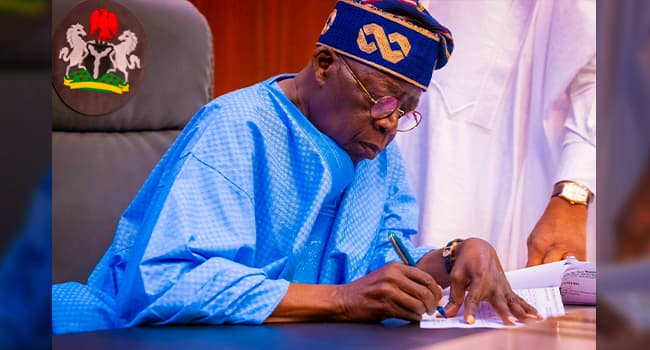
President Bola Tinubu on Tuesday night met with leaders of the Nigeria Labour Congress (NLC) at the Presidential Villa in Abuja. The discussion aimed to address concerns ahead of the union’s planned nationwide protest over rising insecurity.
The meeting included key government figures such as Governor Hope Uzodimma of Imo State, Governor Monday Okpebholo of Edo State, Governor Nasir Idris of Kebbi State, and the Minister of State for Labour and Employment, Honourable Nkeiruka Onyejeocha.
Leading the labour delegation was NLC President, Comrade Joe Ajaero.
The closed-door session comes a day before the NLC’s mass action scheduled for December 17. No official details on the outcome have been released, but the talks likely focused on finding solutions to the issues driving the planned protest.
Earlier this week, the NLC emphasized that there would be “no going back” on the demonstration, highlighting the urgency of addressing citizens’ concerns.
The naira traded on mixed signals across Nigeria’s foreign exchange market on Tuesday as year-end import demand pushed up international payments. While the local currency remained stable at ₦1,451.82 per dollar in the official window, it strengthened to ₦1,476 in the parallel market, narrowing the gap between official and unofficial rates to ₦25.
The Central Bank of Nigeria (CBN) attributed stability in the official segment to its active intervention, while limited offshore dollar flows tempered demand in the informal market. Analysts noted that this divergence reflects growing coordination between official support and market forces.
Nigeria’s gross external reserves continued an upward trend, reaching $45.472 billion, despite pressure from global commodity markets. Oil prices fell by over 2% early Tuesday, with Brent crude dipping below $60 per barrel for the first time since May, as hopes of a peace deal in Ukraine raised expectations for eased sanctions on Russian oil.
The potential increase in global oil supply from Russia, coupled with declining seaborne exports to key buyers like India, is being closely monitored by markets, influencing both commodity and foreign exchange dynamics in Nigeria.
The United States has expanded travel restrictions to include Nigeria and 14 other countries, citing concerns over national security and insufficient vetting systems. The proclamation, signed by President Donald Trump on Tuesday, places partial entry limitations on nationals from Nigeria, Angola, Antigua and Barbuda, Benin, Côte d’Ivoire, Dominica, Gabon, The Gambia, Malawi, Mauritania, Senegal, Tanzania, Tonga, Zambia, and Zimbabwe.
Full entry restrictions now apply to nationals from five additional countries—Burkina Faso, Mali, Niger, South Sudan, and Syria—alongside the original list of 12 countries already under total bans, including Afghanistan, Iran, Libya, and Yemen.
The White House said the restrictions aim to prevent entry of individuals about whom the U.S. lacks adequate information to assess potential risks. Exceptions are provided for lawful permanent residents, existing visa holders, diplomats, athletes, and others serving U.S. interests. Case-by-case waivers remain available, though family-based immigrant visas identified as high-risk are limited.
The proclamation follows concerns over poor civil and criminal records, unreliable birth-registration systems, refusal to share passport and law enforcement data, visa overstays, and security threats in affected countries. President Trump stated that the measures are necessary to protect Americans and incentivize international cooperation on document integrity, data sharing, and law enforcement.
The action is part of the Trump administration’s broader agenda to strengthen border security and restore travel restrictions on countries deemed high-risk, following Nigeria’s designation as a “country of particular concern” in October over alleged religious persecution.
The National Pension Commission (PenCom) has commenced the disbursement of a N758 billion bond approved by the Federal Government to settle outstanding pension liabilities, the commission’s Director-General, Ms. Omolola Oloworaran, announced on Monday.
Speaking at the Pension Revolution Summit in Abuja, Oloworaran said the bond, approved by President Bola Tinubu in February, has already been cashed, with over N600 billion disbursed to retirees. She noted that the country’s pension assets have grown to about N27 trillion as a result of structured reforms under the Pension Revolution 2.0 initiative.
“The past year has been defined by bold decisions, structural refunds and measurable impacts,” Oloworaran said. “We have rebuilt trust, expanded coverage, strengthened governance, and moved the contributory pension scheme into its next phase.”
She highlighted that Pension Revolution 2.0 is the most comprehensive reform of the Nigerian pension industry since 2004, encompassing new regulations, stronger supervision, governance reforms, digital transformation, and industry realignment.
To enhance benefit adequacy, PenCom introduced the Pension Post 1.0 initiative, which has added N2.68 billion to monthly pension payments for CPS retirees since June.
Oloworaran also said the commission has fully automated critical pension processes, including plan certification, benefit processing, and contribution remittance platforms. The commission has established the Pension Industry Leadership Council to drive innovation, reinforce accountability, and strengthen collaboration across the sector.
She added that the micro pension plan has been restructured and rebranded as the Personal Pension Plan (PPP) to extend coverage to artisans, traders, market women, creatives, and other informal sector workers. The commission has expanded digital enrolment and introduced accredited pension agents, which serve as both a distribution channel and an employment initiative for young Nigerians.
The D-G also reported that PenCom recovered a total of N32.27 billion through recovery agents between June 2012 and September 2025, comprising N15.87 billion in principal contributions and N16.40 billion in penalties from defaulting employers. In the third quarter of 2025 alone, the commission recovered N2.06 billion from 49 defaulters.
On compliance, Oloworaran said only eight out of 36 states have fully adopted the Contributory Pension Scheme (CPS) and that PenCom is partnering with all states to achieve full compliance. She also noted that the Nigeria Police Force has not yet exited the CPS, and the commission is working to address their concerns.
The naira depreciated to ₦1,456.20 per dollar at the official market on Tuesday as foreign exchange demand continued to outstrip supply in the Nigerian Foreign Exchange Market, NFEM.
Trading activity was affected by limited dollar inflows from exporters, non-bank corporates and foreign portfolio investors, while the Central Bank of Nigeria did not intervene to boost supply during the session.
Official market data showed that pressure from unmet demand pushed the naira weaker against the dollar. According to AIICO Capital Limited, the currency lost ₦4.38 to close at ₦1,456.20 per dollar, with transactions conducted within a range of ₦1,454.00 to ₦1,457.00 per dollar.
Despite the depreciation, market participants expect the naira to close the year relatively stable, with ₦1,500 per dollar viewed as a worst-case scenario, largely due to anticipated CBN interventions.
The apex bank has maintained a positive outlook for foreign exchange support through 2025, signalling its intention to stabilise the local currency amid improving external reserves.
Latest figures showed Nigeria’s gross external reserves rose to $45.47 billion, representing an 11.24 per cent year-to-date increase and a day-on-day gain of $32.42 million. MarketForces Africa also reported that the CBN disclosed at a forum that total external balances had climbed to $46.7 billion, although official reserve data has yet to reflect that figure.
In the global commodities market, oil prices fell below $60 per barrel on Tuesday, the lowest level since May, as expectations of a possible Russia-Ukraine peace deal raised the prospect of eased sanctions.
Brent crude declined by $1.51, or 2.49 per cent, to $59.05 per barrel, while U.S. West Texas Intermediate dropped by $1.28, or 2.26 per cent, to $55.39 per barrel.
Meanwhile, gold prices edged higher after U.S. labour data showed a rise in unemployment, strengthening expectations of interest rate cuts by the U.S. Federal Reserve and weakening the dollar.
Spot gold rose by 0.08 per cent to $4,306.22 per ounce, while U.S. gold futures gained 0.01 per cent to $4,335.45 per ounce. Analysts at AIICO Capital said market sentiment is expected to remain cautious to bearish, with oil prices still influenced by ongoing geopolitical risks.
The Central Bank of Nigeria will auction Nigerian Treasury bills worth N700 billion on Wednesday, signalling a possible further increase in stop rates following recent bond repricing in the fixed income market.
Auction details show that the apex bank will offer N100 billion in 91 day Treasury bills, targeting investors with a three month investment horizon. It will also sell N150 billion worth of 182 day bills for investors seeking a six month tenor.
Due to strong demand for longer dated instruments, the CBN plans to offer the largest portion of the auction in the 364 day segment. A total of N450 billion will be issued in one year Treasury bills aimed at investors looking to lock in returns over a longer period.
In its most recent offer, the CBN raised the spot rate on the 364 day Treasury bills to 17.95 per cent from 16.04 per cent, marking a sharp repricing within a two week period. This adjustment occurred despite expectations of easing inflationary pressure.
Spot rates on shorter tenors were also elevated, with 91 day bills printing at 15.30 per cent and 182 day bills priced at 15.50 per cent.
Market participants expect rates could rise further at the midweek auction, following similar adjustments at the bond market earlier in the week. At the bonds auction on Monday, the Debt Management Office increased stop rates on reopened five year and seven year bonds by 1.30 percentage points each.
The rate hikes came even after the National Bureau of Statistics reported a decline in headline inflation to 14.45 per cent, suggesting that investor demand and liquidity conditions continue to influence pricing in the fixed income market.
Analysts say the recent repricing indicates a market positioning for tighter financial conditions as 2025 approaches its end, with investors demanding higher yields across both Treasury bills and bonds.
Nigerian education technology researcher, Rachel Israel, has called for the introduction of mixed reality technology into primary schools, particularly in rural communities, saying it could significantly improve how science is taught and learned across the country.
Israel said many public primary schools lack laboratories, libraries and basic instructional materials, leaving pupils to memorise scientific concepts without practical understanding. According to her, this has weakened interest in science and limited early exposure to hands-on learning.
She said science education should be experiential, adding that mixed reality can help pupils see, explore and interact with scientific concepts that are otherwise inaccessible in under-resourced schools. Israel explained that the technology allows children to carry out virtual experiments, observe chemical reactions safely, explore the solar system and study plant and animal cells in three dimensions within the classroom.
According to her, pupils in remote communities could simulate laboratory activities, watch natural processes unfold visually and gain a clearer understanding of complex ideas that are difficult to grasp through textbooks alone. She noted that subjects like biology, which often rely on static diagrams, could become interactive learning journeys that build curiosity and critical thinking from an early age.
Israel, however, said technology alone would not solve Nigeria’s education challenges. She stressed that parents also have a responsibility to ensure children receive adequate care and education. She said overcrowded households often struggle to provide school fees, learning materials and attention, which affects children’s academic development.
She argued that combining responsible parenting with modern learning tools such as mixed reality would help pupils stay in school, perform better academically and develop interest in science-related careers.
Israel described the integration of mixed reality into primary education as an important step toward national development, saying children who learn science interactively are better prepared for higher education, skilled employment and leadership roles.
She said investment in modern educational tools and responsible family planning should be seen as long-term strategies for developing Nigeria’s human capital, adding that today’s pupils will shape the country’s future as scientists, engineers and innovators.
The Nigerian Civil Aviation Authority has unveiled the Go-Live phase of the EMPIC Personnel Licensing and Medical Certification platform, which will be linked to the National Identity Number.
The Director General of the NCAA, Capt. Chris Najomo, disclosed this on Monday in Abuja at the EMPIC PEL and MED Go-Live Stakeholder Engagement with the Nigerian aviation ecosystem. He described the initiative as a major digital milestone aimed at improving efficiency, transparency and global competitiveness in the aviation sector.
Najomo said the Go-Live event marked the successful completion of system deployment, configuration, testing and stakeholder readiness activities. He added that the platform would strengthen regulatory effectiveness, enhance safety oversight and support operational excellence across the industry.
He explained that while the system has gone live, full operationalisation will take effect on April 2, 2026, to allow sufficient time for stability, data integrity and stakeholder preparedness. According to him, the transition period will be used to complete final data validation and migration, as well as continued onboarding and user support for stakeholders.
The NCAA boss noted that the EMPIC platform is designed to integrate seamlessly with other digital systems, including National Identity Number verification and digital payment platforms. He said this aligns with the authority’s broader vision of building a modern, efficient and globally compliant aviation environment.
Najomo urged industry stakeholders to support the transition, stressing that the success of the digital transformation depends not only on technology but also on the cooperation and commitment of all participants in the aviation ecosystem.
A Cessna 172 aircraft operated by Skypower Express has crashed at the Sam Mbakwe International Cargo Airport, Owerri, Imo State, with four passengers and crew members onboard.
The aircraft, with registration number 5N-ASR, departed Kaduna International Airport en route to Port Harcourt before diverting to Owerri after the crew declared an emergency. The crash occurred at about 8:00 pm on the airport premises.
Confirming the incident, the Director of Public Affairs and Family Assistance at the Nigerian Safety Investigation Bureau (NSIB), Mrs Bimbo Oladeji, said the aircraft crashed on the approach area of Runway 17. She noted that no fatalities were recorded.
According to the NSIB, airport emergency services were promptly activated and responded swiftly to the incident. There was no post-crash fire, and flight operations were not disrupted, as the runway remained active with other aircraft taking off safely after the crash.
The Bureau said arrangements are underway to recover and evacuate the aircraft from the crash site to enable a detailed examination of the wreckage. It added that investigation protocols have been officially activated in line with its statutory mandate.
Director-General of the NSIB, Capt. Alex Badeh Jr., expressed sympathy with the management of Skypower Express and relief that no lives were lost. He said the Bureau’s investigation team is already working with relevant authorities to secure the site and determine the cause of the accident.
The incident comes days after a private jet owned by Flybird Aviation crash-landed at the Mallam Aminu Kano International Airport, Kano, with 11 occupants narrowly escaping death. The aircraft, which was en route to Abuja, crash-landed while approaching the airport, prompting an emergency response that ensured the safe evacuation of passengers and crew.
The Ekiti State government has called on farmers to intensify efforts toward sustainable and environmentally friendly palm oil production.
The Commissioner for Agriculture and Food Security, Ebenezer Boluwade, made the call during the opening of a three-day training programme for smallholder farmers in Ado-Ekiti. He reaffirmed the government’s commitment to supporting palm oil production through policies and legal frameworks that encourage the planting of palm trees and enhance processing capacity across the state. Boluwade described sustainable palm oil production as crucial for boosting food security, creating jobs, and driving economic growth.
The training, sponsored by the Roundtable on Sustainable Palm Oil (RSPO), was organised in collaboration with the Ekiti Africa Sustainable Commodities Initiative and Propcom+ UK International Development. With the theme: “Enhancing Stakeholders’ Knowledge on RSPO Standards to Facilitate Responsible Production, Environmental Safeguards, Sustainable Land Use Planning, and Supply Chain Traceability in Ekiti State,” the workshop aims to deepen farmers’ understanding of global standards for sustainable palm oil production.
State Project Coordinator Dr. Yemi Akinyugha and Propcom+ team leader Mr. Abib Ibrahim emphasised the need for farmers to adopt environmentally protective practices. They noted that the training would equip participants with modern skills while exposing them to partnership opportunities with national and international development agencies.
The Ekiti State Chairman of the National Palm Production Association, Adebabo Oluwagbemigun, commended the initiative, describing it as timely and capable of increasing the state’s internally generated revenue. Resource persons guided participants through improved techniques and partnership models designed to strengthen palm oil production in Ekiti State and beyond.
President Bola Ahmed Tinubu has granted the National Root Crops Research Institute, Umudike, Abia State, a Certificate of Patents for the production of three varieties of tea derived from turmeric rhizomes and leaves.
The patent follows a recent technological breakthrough by the institute in the formulation and production of turmeric-based tea products. The Executive Director and Chief Executive Officer of NRCRI, Professor Chiedozie Egesi, confirmed the development to journalists in Umuahia on Monday.
According to him, the patent certificate was presented to the institute by the Minister of Innovation, Science and Technology, Mr Kingsley Tochukwu Udeh, SAN, in line with the provisions of the Patent and Design Acts, CAP 344, Laws of the Federation of Nigeria 1990.
Professor Egesi described the approval as a landmark achievement, noting that it represents formal legal recognition of the institute’s innovation and reinforces its commitment to scientific research, agricultural value addition and the commercialisation of indigenous crops.
He said turmeric, widely known for its medicinal, antioxidant and immune-boosting properties, has been transformed by NRCRI researchers into novel tea variants with potential health and economic benefits. He added that the research was led by Dr Rachel Majekodunmi Omodamiro and her team.
Egesi stated that the innovation is expected to create new enterprise opportunities, strengthen Nigeria’s herbal wellness and nutraceutical industry and contribute to national economic growth. He added that the patent is another step towards positioning Nigeria as a hub for bio-innovation, natural products research and high-value utilisation of root and tuber crops.
He congratulated the research team and said the federal government’s recognition of the breakthrough reflects the growing strength of Nigeria’s innovation ecosystem and the potential of local crops to drive sustainable development.
The National Root Crops Research Institute has the statutory mandate to conduct research on the genetic improvement, production, processing, storage and utilisation of root and tuber crops, including yam, cassava, sweet potato, cocoyam, ginger, taro, sugar beet and rizga.
The institute also undertakes national and international research collaborations, short-term training programmes and agricultural extension services in partnership with agencies such as the National Agricultural Extension Research and Liaison Services and State Agricultural Development Projects within the Southeast agro-ecological zone.
The Nigeria Immigration Service has deployed advanced technology across 144 border points nationwide as part of efforts to combat migrant smuggling and other cross-border crimes.
The Comptroller-General of the Nigeria Immigration Service, Mrs Kemi Nandap, disclosed this on Monday at the NIS headquarters in Abuja during the flag-off of the 2025 Anti-Smuggling of Migrants Day, held to mark International Migrants Day. The event was organised under the theme “Smuggling of Migrants: Emerging Trends, Realities and National Response.”
Nandap expressed concern that human traffickers and migrant smugglers are increasingly adopting sophisticated methods, including encrypted messaging applications, falsified travel documents and coordinated evasion techniques, to avoid detection by security agencies. She described the growing sophistication of organised smuggling networks as disturbing and unacceptable.
According to her, Nigeria’s position as a country of origin, transit and destination for migrants makes it imperative for the Service to respond decisively to emerging threats. She said the activities of smuggling networks pose serious risks to human lives, national security, border integrity and public safety.
The Comptroller-General assured that the Service remains committed to dismantling all identified smuggling networks and bringing perpetrators to justice. She said this resolve has informed the deployment of cutting-edge technologies at the country’s border points and the strengthening of partnerships with both local and international stakeholders.
Represented at the event by the Deputy Comptroller-General in charge of Works and Logistics, Mrs Ada James Umannah, Nandap said the Anti-Smuggling of Migrants Week would focus on awareness creation, solidarity and renewed commitment to the global fight against migrant smuggling.
She explained that the choice of theme reflects the need to confront the evolving nature of irregular migration and intensify efforts against criminal networks that exploit vulnerable individuals. She noted that smugglers now rely heavily on digital platforms for recruitment and deception, operate complex transnational routes and expose migrants to grave dangers, including trafficking, extortion, sexual exploitation, violence and death.
Nandap said the Service has enhanced surveillance along Nigeria’s land, sea and air borders through technology-driven solutions, including a central Command and Control Centre, the Migration Information and Data Analysis System, Advanced Passenger Information Systems, Passenger Name Records, e-gates at international airports and Huawei-powered e-border solutions deployed nationwide.
She also highlighted ongoing collaboration with regional and international organisations such as ECOWAS, the African Union, the International Organization for Migration, the United Nations Office on Drugs and Crime, ICMPD, FIIAPP and FRONTEX. According to her, these partnerships support capacity-building, data sharing, joint investigations and safe return programmes.
The Immigration chief added that the Service would intensify community and institutional sensitisation on the dangers of irregular migration, noting that many migrants are lured by false promises of jobs and opportunities abroad. She said awareness campaigns target youths, students, National Youth Service Corps members, transport unions and other groups across the country.
Nandap disclosed that more than 200,000 corps members were sensitised during the 2025 campaign, alongside extensive nationwide outreach. She said the messages focus on the tactics used by smuggling networks, digital recruitment schemes, fake job offers and the importance of using safe, orderly and regular migration channels when travelling abroad.
The Abia State Government has enacted a new law aimed at positioning the state as a major hub for technology and innovation in the South East.
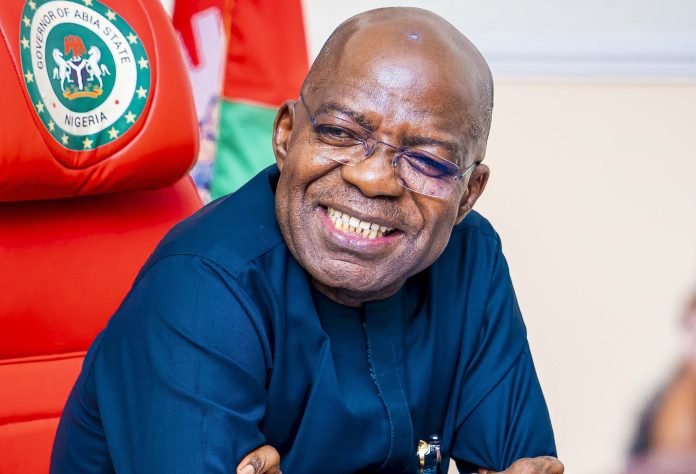
Governor Alex Otti assented to the Abia State Startup Law 2025 this week, following its passage by the State House of Assembly. The legislation domesticates the Nigerian Startup Act of 2022 at the state level and provides a legal and regulatory framework to support technology-enabled businesses operating within Abia.
The Commissioner for Information, Okey Kanu, disclosed the development on Monday while briefing journalists in Umuahia after a meeting of the State Executive Council. He said the law is designed to stimulate innovation, attract investment and nurture digital talent as the state works to diversify its economy beyond traditional sectors.
According to Kanu, the law applies to companies with significant operations in Abia as well as startups that are formally recognised and labelled under the national Startup Act. He added that the framework is expected to create a more enabling environment for tech-driven enterprises to grow and thrive in the state.
Alongside the new startup law, the state government is advancing plans to introduce electric buses as part of a broader push toward cleaner and more efficient urban transportation. Kanu said the initiative is being implemented under the Abia Transport Transformation Project, a state-owned electric mass transit scheme.
He explained that the first phase of the project will involve the deployment of about 100 electric buses, with an initial batch of 20 vehicles already delivered in November. Another 20 buses are expected to arrive early next year. Each bus has a seating capacity of 40 passengers and can travel up to 400 kilometres on a single charge.
State officials said the buses are custom-built for Abia and fitted with modern safety and comfort features, including surveillance cameras, charging ports, disability access, emergency exits and fire extinguishers. When fully rolled out, the project is expected to place Abia among the first states in Nigeria to adopt electric buses for public transportation, reflecting growing interest in cleaner energy solutions amid rising fuel costs and environmental concerns.
Kanu also outlined other initiatives approved by the State Executive Council. He said the state will unveil its Abia 25-Year Development Plan on Tuesday at the International Conference Centre in Umuahia, with development partners, traditional rulers and local government officials expected to attend.
In the health sector, he announced the commencement of the Abia Global Medical Mission, which began on Monday and will run through December 20, offering free advanced medical services at designated centres across the state. He also disclosed that 850 young people will graduate this weekend from the second cohort of the Abia Techrise ICT Training Programme, bringing the total number trained in 2025 to nearly 1,400.
As the festive season approaches, the commissioner said road rehabilitation projects are ongoing across the state, while security agencies have been placed on heightened alert to ensure public safety.
Minister of Communications, Innovation and Digital Economy, Bosun Tijani, has revealed that bandits operating across Nigeria deploy advanced technology to communicate and evade security surveillance.
Tijani made the disclosure during an interview on Channels Television’s Politics Today, where he explained that tracking the communications of criminal groups is more complex than many people assume.
According to the minister, bandits use sophisticated methods that make it difficult for security agencies to trace their locations. He said the criminals deliberately route their phone calls through multiple telecommunications towers to confuse monitoring systems and frustrate surveillance efforts.
Tijani noted that this discovery influenced the Federal Government’s decision to invest in telecommunications infrastructure in remote and underserved areas. He said the criminals often operate in locations with limited network coverage because it supports their tactics.
He added that the government is responding by strengthening Nigeria’s digital and surveillance capacity, including plans to upgrade the country’s satellite systems to improve security monitoring nationwide.
The minister stressed that the situation highlights the urgent need for greater investment in telecommunications infrastructure, pointing out that Nigeria’s capacity remains far below global standards. He said while countries like China have more than four million 5G towers, Nigeria currently has about 40,000 towers.
His comments come amid a renewed wave of insecurity in several parts of the country, particularly in the northern region. In recent weeks, bandits have abducted schoolchildren in Niger and Kebbi states, while attacks on churches and communities have been reported in Kogi and Kwara states.
The rising incidents of abductions and killings have triggered public outrage, with the Nigeria Labour Congress announcing plans for a nationwide protest on December 17 to demand improved security and better protection of lives.
Experts in the technology sector have identified low adoption as the biggest obstacle to technological advancement in Nigeria, despite the growing availability of digital solutions across industries.
They made this known in Abuja at the official launch of Abuja Tech Converge 3.0, tagged ATC 3.0, themed “Beyond Buzzwords: Demystifying Emerging Tech for Real Impact.” The event was organised in partnership with OCP Africa.
Speaking at the event, Head of Digital at OCP Africa, Akintude Akinwande, said developing digital technologies capable of helping businesses and industries thrive in Nigeria is not the real challenge. According to him, the major difficulty lies in getting people to adopt and use these solutions.
He explained that many developers have successfully built innovative tools across sectors, but convincing Nigerians to embrace and apply them remains a persistent hurdle. Akinwande stressed that this challenge is particularly evident in agriculture, where technology could significantly improve productivity.
He noted that Nigeria’s average fertiliser usage remains below 30 kilograms per hectare, far below the global benchmark of about 300 kilograms per hectare in more advanced agricultural economies. According to him, closing this gap will not be achieved through increased supply alone but by building demand and helping farmers understand the productivity benefits.
Akinwande said technology, including artificial intelligence, can easily be developed to support farmers, but ensuring that such tools reach farmers and are actively used is where the real work lies. He added that helping farmers recognise the value of productivity-driven practices is critical to addressing broader agricultural challenges.
Also speaking at the event, Chief Executive Officer of Thrive Agric, Uka Eje, said Abuja Tech Converge 3.0 was designed to highlight technology as a driver of real impact, job creation, and skills development within the ecosystem.
Eje noted that job creation remains a core focus, adding that the organisation trains and deploys young people to bridge the significant employment gap in Nigeria and across Africa. He said empowering young people with relevant technology skills is essential to ensuring that innovation translates into sustainable economic growth.
Oyo State Governor, Seyi Makinde, has urged Abiola Ajimobi Technical University, Ibadan, also known as Tech-U, to leverage its location along the emerging Rashidi Ladoja Circular Road industrial corridor to deliver research-driven solutions that support development in Oyo State and Nigeria.
The governor made the call at the institution’s 2024/2025 convocation ceremony, where he was represented by his deputy, Bayo Lawal. He said the university’s proximity to expanding industrial hubs creates strong opportunities for collaboration between academia and industry, particularly as development progresses along the Circular Road.
Makinde noted that Tech-U is well positioned to build partnerships that can translate research into practical solutions for the state and the country. He stressed the importance of strengthening the relationship between the university and its host community, adding that the institution should be known as a centre for problem-solving research, entrepreneurship, and industrial growth.
He assured the university of the state government’s continued support, especially in addressing funding and infrastructure challenges. The governor also advised graduating students to remain curious, courageous, and law-abiding, urging them to apply the knowledge and character gained during their studies to make meaningful contributions to society. He said Oyo State and Nigeria are counting on them as future innovators, creators, and leaders.
On campus safety, Makinde disclosed that the state had deployed the Amotekun security outfit and constructed perimeter fencing to improve security at the university. He said these efforts, alongside patrols and collaboration with other security agencies, have helped ensure a safer learning environment.
The governor listed other interventions by the state government, including the ALGON Scholarship Programme, the allocation of a newly built primary healthcare centre to serve the university community, and the rehabilitation of internal roads. According to him, these measures have contributed to a reduction in theft and vandalism on campus.
Earlier, the Vice-Chancellor, Professor Adesola Ajayi, praised the state government for its support but appealed for increased funding and infrastructure to cater to the institution’s growing student population. He said several programmes are still operating in shared and inadequate facilities, noting that laboratories, workshops, lecture halls, and studios require significant expansion to meet modern teaching and research standards.
Ajayi disclosed that 183 students graduated from the Faculties of Natural and Applied Sciences, Engineering and Technology, and Environmental Sciences and Management, including 50 who earned First Class honours. He urged the graduands to uphold integrity, responsibility, and innovation as they prepare to take on leadership and problem-solving roles in society.
The National Pension Commission has raised the alarm over a surge in fraudulent activities targeting retirees under the Contributory Pension Scheme, warning the public to be vigilant against scammers posing as commission staff.
PenCom said criminal elements have developed new tactics aimed at deceiving unsuspecting retirees by offering to fast-track pension payments in exchange for money. According to the commission, the fraudsters typically contact retirees through phone calls or messages, introduce themselves as PenCom officials and request that money be paid into personal bank accounts.
The commission described such claims as false and dangerous, stressing that no PenCom staff member is authorised to demand or receive payment from retirees for any service. It explained that all legitimate pension payments are processed strictly through Pension Fund Administrators and paid directly into retirees’ Retirement Savings Accounts.
In a statement titled “Beware of Scammers!”, PenCom said fraudsters posing as its staff often ask for gratification to facilitate pension payments, a practice it said does not exist within the commission. It reiterated that all payments due to retirees under the Contributory Pension Scheme are handled only by Pension Fund Administrators and credited directly to individual RSAs.
PenCom advised retirees and the general public to remain cautious and to seek clarification directly from the commission whenever they are in doubt, warning that anyone requesting money to process pension payments is a scammer.
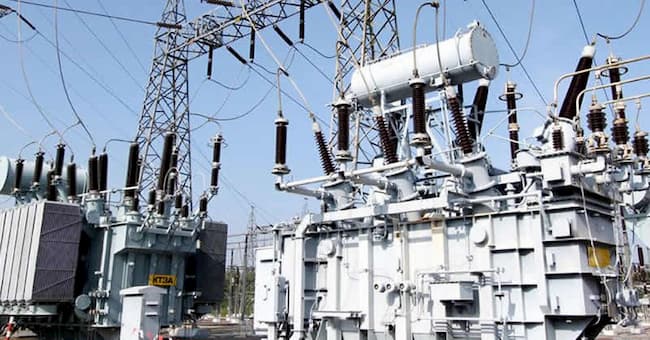
Nigeria’s power sector is facing renewed pressure, raising fears of widespread blackouts during the Yuletide, as gas suppliers have begun cutting supplies to electricity generation companies over unpaid debts and pipeline disruptions.
Electricity distribution companies across several regions confirmed a noticeable decline in power availability, attributing the situation to gas constraints affecting thermal power plants and resulting in reduced generation on the national grid.
On Tuesday, the Enugu Electricity Distribution Company (EEDC) alerted customers across the South-East to the development, citing low system frequency caused by inadequate gas supply to generation companies. The shortfall, EEDC said, had compelled the Transmission Company of Nigeria (TCN) to implement load shedding.
In a statement signed by its Group Head, Corporate Communications, Emeka Ezeh, EEDC explained that the reduced generation had significantly affected energy allocation to its network, leading to lower daily service levels for customers served by its franchise operators—MainPower, TransPower, FirstPower, NewEra and EastLand.
“The recent drop in power supply availability is due to low system frequency occasioned by gas constraints affecting the generation companies,” the statement said. “This development has necessitated the load shedding of available energy by the Transmission Company of Nigeria.”
EEDC added that industry stakeholders were working to resolve the challenge and restore normal supply, while apologising to customers for the inconvenience.
Similarly, the Port Harcourt Electricity Distribution Company (PHED) issued a notice to customers, attributing ongoing load shedding across its franchise areas to poor generation and reduced allocation from generation companies. The utility appealed for patience as efforts were underway to improve output.
Generation companies have confirmed that gas supply constraints are directly impacting operations. The Chief Executive Officer of the Association of Power Generation Companies, Joy Ogaji, disclosed that gas producers had begun cutting supplies due to mounting debts owed to them.
Nigeria experienced prolonged power outages in the first quarter of 2024 after gas suppliers halted deliveries to thermal plants over unpaid obligations. Although government intervention temporarily resolved the crisis, gas producers have since complained of continued supply without corresponding payments.
In a bid to address the liquidity crunch, the Federal Government on December 4, 2025, approved N185 billion for the settlement of outstanding debts owed to natural gas suppliers. The Minister of State for Petroleum Resources (Gas), Ekperikpe Ekpo, announced the approval in a statement issued by his media aide, Louis Ibah, noting that it was granted by the National Economic Council, chaired by Vice President Kashim Shettima.
However, the reasons gas suppliers proceeded to cut supplies despite the approval remain unclear. Efforts to obtain comments from the spokesman of the Minister of Power, Adebayo Adelabu, were unsuccessful as of the time of filing this report.
With generation constrained and distribution under strain, power supply remains unstable in many parts of the country, heightening concerns over sustained outages unless the gas-to-power liquidity crisis is urgently resolved.
Pipeline Vandalism Worsens Situation
Meanwhile, the Nigerian Independent System Operator (NISO) said electricity generation on the national grid had dropped following gas supply disruptions caused by vandalism of upstream gas pipelines.
In a statement signed by its management, NISO disclosed that the incident disrupted gas supply to several gas-fired power plants, forcing them to operate at significantly reduced capacity and leading to a sharp decline in available generation nationwide.
“The Nigerian Independent System Operator wishes to inform the general public and sector stakeholders that electricity generation on the national grid has dropped due to gas supply constraints arising from a reported incident of gas pipeline vandalisation,” the statement said.
NISO noted that the incident underscored the vulnerability of Nigeria’s power sector, where over 80 per cent of grid-connected generation capacity depends on natural gas. The operator said it had activated contingency measures to maintain grid stability, including increased dispatch from hydroelectric stations, generation re-dispatch, voltage control interventions and other operational adjustments.
The system operator added that it was closely monitoring grid conditions and working with stakeholders across the electricity value chain to mitigate the impact of the disruption, warning that the timing was particularly concerning as electricity demand typically rises during the festive season.
ICT stocks on the Nigerian Exchange emerged as one of the strongest performers in 2025, with sharp share price gains and a significant expansion in market value underscoring rising investor confidence in the sector.
Covering fibre optics, computer hardware, electronic payments, and voice and broadband services, technology companies have become a major force on the Exchange. The combined market capitalisation of performing ICT stocks rose by 58 per cent year on year to N18.61 trillion in November 2025, compared with N11.7 trillion in November 2024, placing the sector firmly in the spotlight.
Beyond share price appreciation, the firms provide critical digital infrastructure that supports banking, manufacturing, retail and services, reinforcing their relevance to the wider economy. Spread across large-, mid- and small-cap segments, several of the stocks are listed on flagship indices such as the Premium Board and the NGX 30, meaning their performance increasingly influences movements in the broader All-Share Index.
Of the nine ICT stocks listed on the Exchange, seven posted positive returns between January 1 and November 30, 2025. With the number of shares outstanding largely unchanged, rising prices translated directly into higher market capitalisation. The combined market value of these stocks stood at N11.77 trillion at the end of November 2024 and climbed to N18.61 trillion by November 2025.
MTN Nigeria accounted for the largest share of the gains, with its market capitalisation rising from about N3.5 trillion to roughly N9.8 trillion. Airtel Africa followed with a market value of around N8.5 trillion, up from N8.1 trillion. Among mid- and small-cap stocks, eTranzact’s market capitalisation increased to N132.9 billion from N69.0 billion, while CWG expanded to N45.3 billion from N14.5 billion. Chams Holdings, NCR and Omatek closed November 2025 with market values of N19.6 billion, N5.9 billion and N3.4 billion respectively.
Share price performance over the period showed particularly strong gains. NCR (Nigeria) led the sector, with its stock surging by 993 per cent from N5.00 to N54.65 per share. MTN followed with a 135.3 per cent increase to N531.70, while CWG gained 133 per cent to N17.95. eTranzact rose by 122.31 per cent to N14.45, Chams Holdings gained 61.2 per cent to N2.95, Omatek advanced by 60.27 per cent, and Airtel Africa added 5.24 per cent.
Market analysts attributed the rally to a combination of favourable macroeconomic conditions and the growing importance of ICT services. Muktar Mohammed, chief executive of Asher Investment Ltd, said a relatively stable exchange rate in 2025 provided a supportive backdrop, while the expanding role of technology firms, particularly in the banking sector, helped attract investor interest.
Samuel Oyekanmi, research and insight lead at Norrenberger Financial Group, said higher tariffs boosted profitability for some major players and also lifted sentiment across several mid- and small-cap ICT stocks. Both analysts agreed that ICT companies remain central to key sectors of the economy and continue to command increasing attention from investors on the Nigerian Exchange.
Singer and songwriter David Adeleke, popularly known as Davido, and Omah Lay have emerged with the most shared Nigerian song of 2025 on Spotify, following the success of their collaboration, “With You”.
Spotify, in its 2025 Wrapped data for Nigeria, revealed that the track was the most forwarded and reposted song across private messages, group chats and public social media platforms during the year. According to the streaming platform, the ranking highlights the role of music as a powerful social connector among Nigerians, where songs are often used to communicate emotion and presence without words.
Spotify noted that the trend reflects how Nigerians increasingly use music as a form of digital expression, describing shared songs as a “personal handshake” that conveys thoughtfulness and connection.
Rema’s “Fun” ranked second on the list, driven largely by heavy sharing on Snapchat and Instagram, platforms where music is closely tied to self-expression and identity. Burna Boy’s “Love” followed in third place, gaining widespread circulation across WhatsApp, Instagram stories and Snapchat, with listeners describing the song as one that created shared emotional warmth across digital spaces.
Faith-based songs also featured prominently, with Lawrence Oyor’s “Favour” placing fourth, while “No Turning Back II” by Gaise Baba and Lawrence Oyor ranked fifth. Spotify said the strong showing of gospel tracks underscores the role of spirituality in everyday Nigerian digital life, as the songs were widely shared through WhatsApp groups, SMS messages and social media stories for encouragement and reassurance.
The data further showed that social listening features such as Blend, Friends Mix and collaborative playlists transformed music consumption into shared rituals. Jam sessions in Nigeria increased by 145 per cent compared to 2024, as friends, families, partners and even workplaces adopted real-time listening as a bonding activity.
Industry observers said the pattern of music sharing explains why certain songs travel faster than others, noting that Nigerians often share music to feel connected, express identity, uplift one another and reinforce a sense of belonging. Spotify concluded that every forwarded song or shared link in 2025 reflected music’s role as social glue, bridging private and public spaces and weaving individuals into community.