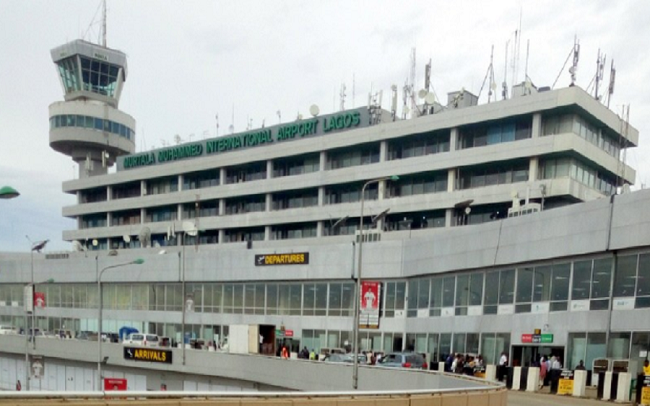
Aviation unions threaten to stop operations of airlines accused of failing to remit Ticket Sales Charges (TSC).
The unions say the unpaid statutory charges are affecting the operations of key aviation agencies.
Airline operators deny owing the agencies and warn that any disruption will hurt passengers and the industry.
Main story
Aviation unions have threatened to halt the operations of some airlines after the expiration of a seven-day ultimatum over the alleged non-remittance of Ticket Sales Charges (TSC) collected on behalf of aviation agencies.
The Air Transport Services Senior Staff Association of Nigeria (ATSSSAN) and the National Union of Air Transport Employees (NUATE) said the deadline expired on Aug. 3 after an earlier 14-day notice directing the affected airlines to remit the statutory charges.
The unions said the TSC is a levy paid by passengers to support the operations of the Nigerian Civil Aviation Authority (NCAA), the Nigerian Airspace Management Agency (NAMA), the Nigerian Safety Investigation Bureau (NSIB), the Nigerian College of Aviation Technology (NCAT) and the Nigerian Meteorological Agency (NiMet).
They alleged that despite repeated demands, some airlines had continued to withhold funds collected on behalf of the agencies, undermining the financial sustainability of institutions responsible for aviation regulation, air navigation, safety investigation, aviation training and weather services.
The unions warned that they could stop the operations of the affected airlines at airports across the country without further notice if the dispute remains unresolved.
However, the Airline Operators of Nigeria (AON) rejected the allegations, insisting that its member airlines were not indebted to aviation agencies as claimed.
The association said airline operators maintained direct engagement with regulators in line with global industry practice and urged the unions to verify the facts before taking actions capable of disrupting air travel.
AON also warned that any industrial action would inconvenience passengers and place additional pressure on the aviation sector.
The issues
Ticket Sales Charges are statutory fees collected by airlines from passengers on behalf of aviation agencies. The funds support safety oversight, air navigation, accident investigation, aviation training and meteorological services. The dispute raises concerns about funding for critical aviation institutions while increasing the risk of flight disruptions if negotiations fail.
What’s being said
“Our unions have decided to stop the operations of the affected airlines at our airports at any time from now, without any further notice.” — ATSSSAN and NUATE.
What’s next
The dispute is expected to require intervention from aviation regulators and the Federal Government to determine the status of the alleged remittances and prevent industrial action that could disrupt flight operations nationwide.
Bottom line
A standoff over Ticket Sales Charges has escalated into a potential industry shutdown, with aviation unions threatening action while airline operators deny any wrongdoing, raising the prospect of disruption for airlines and passengers if the dispute is not quickly resolved.
Ontario has opened applications for its new Workforce Priority Stream under the Ontario Immigrant Nominee Program (OINP)
Eligible foreign workers can now submit an Expression of Interest (EOI) linked to a qualifying job offer from an approved Ontario employer
Successful nominees may qualify for permanent residence and, in some cases, faster processing through Canada’s Express Entry system
Main Story
The Canadian province of Ontario has officially opened applications for its newly introduced Workforce Priority Stream, providing eligible foreign workers with a fresh pathway to permanent residence through the Ontario Immigrant Nominee Program (OINP).
The province announced that, effective August 4, 2026, eligible foreign nationals can now submit an Expression of Interest (EOI) through Ontario’s e-Filing Portal, provided they have a qualifying job offer from an employer registered under the OINP Employer Portal.
The new immigration stream, first announced on June 26, 2026, is designed to address labour shortages across key sectors while modernising Ontario’s provincial immigration system. Although the program was launched in June, applicants could not enter the selection pool until the online portal became operational this week.
According to the OINP, the Workforce Priority Stream comprises three pathways: a higher-skilled worker stream, a lower-skilled worker stream, and a dedicated pathway for self-employed physicians registered to practise in Ontario and eligible to bill the province’s public healthcare insurance plan, the Ontario Health Insurance Plan (OHIP).
Candidates will be assessed using Ontario’s new points-based ranking system, introduced on July 20, 2026, with invitations to apply issued through periodic draws. Once submitted, an EOI remains valid for up to 12 months. Candidates who are not invited within that period must submit a new Expression of Interest to remain eligible.
Applicants who receive an invitation will have 17 calendar days to submit a complete nomination application, while employers must apply for approval of the employment position within 14 calendar days of the invitation being issued.
Successful nominees will receive a provincial support letter, allowing them to apply for a federal work permit while their permanent residence application is processed. Those applying through the higher-skilled worker and self-employed physician pathways may also qualify under Canada’s Enhanced Provincial Nominee Program linked to Express Entry, potentially benefiting from faster permanent residence processing.
What’s Being Said
“Once submitted, an Expression of Interest remains valid for up to 12 months,” the Ontario Immigrant Nominee Program said, noting that candidates who are not invited within that period must register a new EOI to continue being considered.
Immigration officials also stated that successful nominees under the higher-skilled worker and self-employed physician streams may become eligible for the Enhanced Provincial Nominee Program, which is aligned with Canada’s Express Entry system and can accelerate permanent residence processing.
What’s Next
Ontario is expected to begin issuing invitations to qualified candidates through periodic draws under its new points-based selection system.
The province has announced that additional immigration pathways—including the Priority Healthcare Worker Stream, Entrepreneur Stream, and Exceptional Talent Stream—will be introduced during the second phase of the Ontario Immigrant Nominee Program’s modernisation.
Foreign workers interested in the new pathway are expected to continue registering Expressions of Interest as Ontario expands its provincial immigration programs to address labour market needs.
Bottom Line
The Bottom Line: Ontario’s Workforce Priority Stream represents a significant shift in the province’s immigration strategy by creating more targeted pathways for skilled workers and healthcare professionals. For foreign workers seeking permanent residence in Canada, the programme broadens immigration opportunities while giving Ontario greater flexibility to address persistent labour shortages across critical sectors.
NMDPRA says Nigeria’s oil and gas sector must shift focus from policy discussions to executing bankable projects.
The regulator says policy stability, investor confidence and stronger local content are critical to industry growth.
Nigeria remains on track to achieve its target of producing three million barrels of crude oil per day by 2030.
Main story
The Chief Executive of the Nigerian Midstream and Downstream Petroleum Regulatory Authority (NMDPRA), Malam Rabiu Umar, has urged Nigeria’s oil and gas industry to focus on executing reforms, saying the sector already possesses the ideas, technology and expertise needed for growth.
Speaking on Tuesday at the 2026 Nigerian Annual International Conference and Exhibition (NAICE) of the Society of Petroleum Engineers (SPE) in Lagos, Umar said the priority should now be translating reforms into bankable projects capable of attracting investment and delivering measurable economic benefits.
He said sustainable industry growth depends on striking the right balance between a competitive fiscal regime, foreign investment and strong local content development.
According to Umar, while foreign capital remains essential for financing large-scale energy projects, local content is critical for building indigenous expertise and ensuring the industry’s long-term sustainability.
He stressed that both objectives require a stable, transparent and predictable regulatory environment.
Umar said Nigeria’s fiscal, regulatory and institutional frameworks must work together to convert the country’s petroleum resources into sustainable economic growth.
He noted that investors consider regulatory certainty, contract sanctity, transparent approval processes and policy consistency as key factors when making long-term investment decisions.
The NMDPRA chief said the authority remains committed to implementing the Petroleum Industry Act (PIA) by streamlining regulatory processes, removing unnecessary administrative bottlenecks and creating a more predictable operating environment without compromising safety, environmental standards or energy security.
He described local content as an economic development strategy aimed at building Nigerian companies capable of designing, constructing, operating and maintaining critical energy infrastructure while remaining globally competitive.
Umar said indigenous operators have significantly expanded their role in onshore oil production, while international oil companies are increasingly concentrating on technically complex deepwater operations.
He expressed confidence that Nigeria could achieve its target of producing three million barrels of crude oil per day by 2030, citing increased investments in gas processing, refining, compressed natural gas (CNG), liquefied petroleum gas (LPG) and other critical infrastructure.
He also disclosed that the Midstream and Downstream Gas Infrastructure Fund (MDGIF) continues to support investments in gas processing and CNG projects to reduce investment risks and encourage greater private sector participation.
The issues
Nigeria’s oil and gas sector is implementing reforms under the Petroleum Industry Act to attract investment, expand local participation and improve regulatory efficiency. Industry stakeholders say sustained policy consistency and effective implementation will determine whether the country achieves its production and investment targets.
What’s being said
“The only thing we need to talk about is execution. We have the ideas, we have the technology and we have some of the expertise. The focus now should be on how we execute.” — Malam Rabiu Umar, Chief Executive, NMDPRA.
“The success of this discussion should be measured by the quality of practical recommendations that can be implemented to grow Nigeria’s energy industry.” — Malam Rabiu Umar.
What’s next
The NMDPRA will continue implementing the Petroleum Industry Act, supporting gas infrastructure investments and working with industry stakeholders to accelerate projects that strengthen production, local content and energy security.
Bottom line
NMDPRA says Nigeria’s energy sector has moved beyond identifying solutions, with the next phase requiring consistent execution, investor-friendly regulation and stronger collaboration to unlock sustainable industry growth.
Oando reported a 20 per cent increase in half-year revenue to N2.1 trillion, driven by higher production and improved operational efficiency.
Profit after tax rose eight per cent to N68.6 billion, while gross profit jumped 331 per cent to N101 billion.
The company remains on track to achieve average production of about 50,000 barrels of oil equivalent per day (boepd) in 2026.
Main story
Oando Plc has reported a 20 per cent increase in revenue to N2.1 trillion for the half-year ended June 30, 2026, supported by higher crude oil production, improved operational efficiency and lower production costs.
According to the company’s unaudited financial results released on Tuesday in Lagos, profit after tax increased by eight per cent to N68.6 billion, while gross profit surged by 331 per cent to N101 billion during the review period.
Average daily production rose by 16 per cent to 42,789 barrels of oil equivalent per day (boepd), compared with 36,836 boepd recorded in the corresponding period of 2025.
The increase was driven by a 19 per cent rise in crude oil production, a 14 per cent increase in gas output and a 16 per cent growth in natural gas liquids production.
Oando attributed the improved performance to the successful drilling of new wells, the restoration of 12 previously shut-in wells and improved facility uptime across Oil Mining Leases (OMLs) 60 to 63.
The company said facility uptime improved to 92 per cent from 85 per cent a year earlier, while production operating costs declined by 18 per cent to $16.83 per barrel of oil equivalent.
Its trading business also recorded a 2.1 per cent increase in volumes to 13.15 million barrels, supported by expanded crude oil marketing, increased offtake programmes and additional sourcing from marginal field producers.
Group Chief Executive Officer, Mr Wale Tinubu, said the results reflected the successful integration of the company’s expanded upstream portfolio following one of Africa’s largest upstream acquisitions.
He said the company strengthened asset integrity, improved facility reliability and accelerated its drilling programme, resulting in higher production and stronger financial performance.
Tinubu added that Oando remains on track to complete its seven-well drilling programme across OMLs 60 to 63 and achieve average production of about 50,000 boepd in 2026.
He also disclosed plans to implement a balance sheet restructuring and a $1.5 billion multi-instrument capital-raising programme to improve liquidity and support future growth.
The issues
Nigeria’s upstream oil sector is witnessing renewed investment and production growth as operators focus on improving operational efficiency, restoring idle wells and increasing output. Stronger financial performance by major operators could support higher domestic production and attract additional investment into the sector.
What’s being said
“The progress achieved during the period demonstrates that we are now delivering the operational and financial outcomes expected from that transformation.” — Wale Tinubu, Group Chief Executive Officer, Oando Plc.
“We remain on track to complete our seven-well drilling programme across OMLs 60 to 63 and achieve average production of about 50,000 boepd in 2026.” — Wale Tinubu.
What’s next
Oando plans to complete its ongoing drilling programme, execute well intervention projects and advance its $1.5 billion capital-raising initiative while pursuing its medium-term production target of about 100,000 boepd.
Bottom line
Higher production, improved operational efficiency and lower costs lifted Oando’s first-half earnings, positioning the company to pursue higher output and strengthen its financial position through new investment and capital raising.
AVA Capital says integrity concerns and poor financial literacy are slowing Nigeria’s capital market growth.
The company says stronger due diligence and investor education are needed to boost confidence and attract capital.
AVA says its recent NGX main board listing reinforces its commitment to transparency and corporate governance.
Main story
AVA Capital Plc has identified integrity concerns and inadequate capital market literacy as major obstacles to the growth of Nigeria’s financial and capital market.
The Managing Director of the company, Mr Olukayode Fadahunsi, made the remarks during a media briefing on Tuesday in Lagos.
He said sustaining investor confidence depends on matching credible investment opportunities with available capital, arguing that the biggest threat to the market is not a shortage of funds but investments flowing into unworthy ventures.
Fadahunsi said businesses with genuine investment potential could still struggle to attract funding if they lacked a proper understanding of how the capital market operates.
He stressed the need to improve financial and capital market literacy across the country, noting that Nigeria’s education curriculum has not kept pace with developments in global finance, artificial intelligence and emerging technologies.
According to him, stronger financial education would equip individuals and businesses with the knowledge needed to access investment opportunities and contribute to economic growth.
Fadahunsi also highlighted the role of regulators in maintaining market stability but said investment firms have a greater responsibility to conduct rigorous due diligence before recommending investment opportunities to investors.
He warned that fraudulent or poorly structured investments undermine investor confidence and reduce capital flows to viable businesses.
Speaking on the company’s strategy, Fadahunsi attributed AVA Capital’s growth to innovation and investment in young professionals through its graduate trainee programme, which recruits between 30 and 40 graduates annually.
He said many of the company’s departments are now led by employees who joined through the programme, adding that combining youthful innovation with industry experience has strengthened the company’s operations.
Also speaking, Chairman of AVA Capital Plc, Dr Adeyinka Adedeji, described the company’s recent listing on the Nigerian Exchange (NGX) main board as a significant milestone.
He said the listing reflects the company’s commitment to transparency, accountability and global corporate governance standards while creating long-term value for shareholders and other stakeholders.
Adedeji also expressed confidence in the long-term prospects of Nigeria’s capital market as a driver of economic growth.
The issues
Investor confidence remains a key factor in the growth of Nigeria’s capital market. Weak due diligence, poor financial literacy and governance concerns can discourage investment, while stronger transparency and investor education can improve market participation and capital mobilisation.
What’s being said
“The greatest risk in the capital market is integrity. Capital must freely meet genuine opportunities, but those opportunities must also speak the language of capital.” — Olukayode Fadahunsi, Managing Director, AVA Capital Plc.
“We are committed to building a resilient and well-governed institution that will create sustainable value for shareholders and stakeholders.” — Adeyinka Adedeji, Chairman, AVA Capital Plc.
What’s next
AVA Capital plans to continue investing in talent development and corporate governance while advocating stronger financial literacy and improved due diligence to support deeper participation in Nigeria’s capital market.
Bottom line
AVA Capital believes improving market integrity, strengthening investor education and maintaining strong corporate governance are essential to attracting long-term investment and unlocking the full potential of Nigeria’s capital market.
NCC has transferred the Digital Industrial Park and Digital Bridge Institute to the Enugu State Government under a 15-year operational lease.
The state plans to convert the facilities into an AI institute and a digital outsourcing hub.
The partnership aims to strengthen digital skills, attract investment and create technology-driven jobs.
Main story
The Nigerian Communications Commission (NCC) has handed over the Digital Industrial Park and the Digital Bridge Institute (DBI) to the Enugu State Government under a 15-year operational lease agreement.
The two digital facilities were officially transferred during a signing ceremony at the Government House in Enugu on Tuesday.
The Executive Vice Chairman and Chief Executive Officer of the NCC, Dr Aminu Maida, said the facilities were among six Digital Industrial Parks established across the country to promote innovation, entrepreneurship and human capital development.
He said the facilities were designed to deepen digital skills, support startups, attract investments and create jobs, while positioning Nigeria as a competitive destination for Business Process Outsourcing (BPO), Knowledge Process Outsourcing (KPO) and other technology-enabled services.
According to Maida, the infrastructure was built not merely as physical assets but as platforms for developing the people and enterprises that would drive Nigeria’s digital economy.
He said the success of the facilities would ultimately be measured by the skills developed, businesses created and jobs generated, rather than the quality of the infrastructure.
Maida expressed confidence that the Enugu State Government had the vision to maximise the facilities through continued investments in education, innovation, digital infrastructure and technology.
He added that the partnership aligned with the Federal Government’s digital economy agenda and President Bola Tinubu’s Renewed Hope Agenda, which seeks to build a $1 trillion economy through productivity, innovation and private sector growth.
Responding, Governor Peter Mbah described the handover as a milestone in Enugu’s drive to become Nigeria’s leading digital economy hub.
He announced that the Digital Industrial Park would be transformed into Enugu Talent City, a knowledge-driven outsourcing hub providing Business Process Outsourcing and Knowledge Process Outsourcing services to global clients.
Mbah also disclosed that the Digital Bridge Institute would be upgraded into a world-class Artificial Intelligence Institute and an AI certification centre serving the African continent.
He said the facilities would deepen innovation, create employment opportunities and equip young Nigerians with digital skills needed to compete in the global economy.
The issues
Governments are increasingly investing in digital infrastructure and skills development to attract technology investments, expand outsourcing opportunities and prepare young people for emerging industries such as artificial intelligence. Partnerships between the Federal Government and states are expected to play a key role in achieving these objectives.
What’s being said
“The success of these facilities will not be measured by the quality of the buildings or equipment, but by the skills acquired, ideas developed, businesses created and jobs generated.” — Dr Aminu Maida, Executive Vice Chairman and CEO, NCC.
“We see these assets as facilities that will deepen innovation in our state, unlock opportunities, create employment and position Enugu as a leading digital economy in this country.” — Gov. Peter Mbah.
What’s next
Enugu State will begin transforming the Digital Industrial Park into Enugu Talent City and upgrade the Digital Bridge Institute into an AI institute and certification centre as part of its digital economy strategy.
Bottom line
The 15-year lease agreement gives Enugu control of two major digital assets, with plans to use them to expand AI capabilities, grow technology-enabled services and position the state as a leading digital innovation hub in Nigeria.
NiMet forecasts thunderstorms and moderate rainfall across most parts of Nigeria from Wednesday to Friday.
Strong winds may precede thunderstorms, with residents advised to secure loose objects and avoid unnecessary travel during heavy rain.
The agency urged airline operators to obtain airport-specific weather reports for flight planning.
Main Story
The Nigerian Meteorological Agency (NiMet) has forecast thunderstorms and moderate rainfall across many parts of the country from Wednesday through Friday, warning that strong winds could accompany the storms in some locations.
In its weather outlook released on Tuesday, NiMet said northern states, including Sokoto, Kebbi, Katsina, Kano, Zamfara, Gombe, Bauchi, Taraba and Adamawa, are expected to experience thunderstorms with moderate rainfall on Wednesday morning, with the weather extending to Kaduna and the wider North-East later in the day.
The agency also predicted thunderstorms and light to moderate rainfall across parts of the North-Central, including the Federal Capital Territory, Plateau, Nasarawa, Benue, Kogi, Kwara and Niger states.
For southern Nigeria, NiMet said cloudy conditions would dominate, with light morning rainfall expected in parts of the South-South before moderate rainfall spreads later in the day to Ondo, Ekiti, Oyo, the South-East and South-South.
On Thursday, the agency forecast continued thunderstorms and moderate rainfall across much of the northern region, while the North-Central is expected to experience thunderstorms throughout the day. Moderate rainfall is also forecast across the South-South and South-East.
By Friday, thunderstorms are expected to begin in parts of Borno, Yobe, Adamawa and Taraba during the morning before extending across the northern region later in the day. Similar conditions are forecast for the North-Central, while moderate rainfall is expected across parts of the South-East, South-South, Ondo and Oyo states.
The Issues
The forecast comes during the peak of Nigeria’s rainy season, when heavy downpours and strong winds often increase the risk of flooding, traffic disruptions, property damage and flight delays.
Weather advisories are particularly important for motorists, farmers, emergency agencies and airline operators, who rely on accurate forecasts to minimise risks and plan operations.
What’s Being Said
NiMet warned that strong winds may precede thunderstorms in affected areas and advised residents to secure loose objects to prevent damage.
The agency also urged the public to avoid driving during heavy rainfall, disconnect electrical appliances from power sockets during storms and stay away from tall trees to reduce the risk of injuries from falling branches.
Airline operators were advised to obtain airport-specific weather reports from NiMet to support safe flight planning.
What’s Next
NiMet is expected to continue issuing daily weather updates as rainfall activity persists across the country. Residents are advised to monitor official forecasts and follow safety precautions, especially in areas prone to thunderstorms and flooding.
Bottom Line
NiMet’s latest forecast points to widespread thunderstorms and rainfall over the next three days, with strong winds posing additional risks. Staying informed and taking basic safety precautions will be essential for residents and businesses across affected areas.
Ogun I Area Command organised a free eye care programme for officers and men.
The initiative was sponsored by the Acting Customs Area Controller, Deputy Comptroller Oladapo Afeni.
VisionSpring partnered with the Command under its See to Be Safe (S2S) project.
Beneficiaries received eye screening, fundus examinations and free prescription glasses.
Customs says good vision is essential for effective surveillance, enforcement and border security operations.
Main Story
The Nigeria Customs Service (NCS), Ogun I Area Command, has reinforced its commitment to officers’ welfare by organising a free eye care programme aimed at promoting vision health, preventing avoidable eye conditions and enhancing operational efficiency across the Command.
The outreach, held on Tuesday, 4 August 2026, was sponsored by the Acting Customs Area Controller, Deputy Comptroller Oladapo Afeni, in collaboration with VisionSpring under its See to Be Safe (S2S) project.
During the exercise, officers and men of the Command underwent comprehensive ophthalmic examinations, including visual acuity screening, fundus examinations and the provision of free prescription glasses for beneficiaries diagnosed with vision defects.
Speaking during the programme, Deputy Comptroller Afeni said the initiative reflects the Command’s commitment to maintaining a healthy and productive workforce, noting that good eyesight is critical for officers engaged in surveillance, enforcement, cargo examination and other frontline customs operations.
He stressed that clear vision enhances vigilance, improves reaction time and accuracy during border patrols, ultimately strengthening the Service’s ability to protect Nigeria’s borders and facilitate legitimate trade.
The Team Lead of the See to Be Safe (S2S) project, Dr Obioma Uchandu, said the programme focuses on preventive eye care for Customs officers, particularly those serving in border communities, through early detection and prompt treatment of vision-related conditions.
The Issues
Customs officers operate in demanding environments where prolonged exposure to harsh weather conditions, extensive document verification, surveillance activities and border patrols place significant strain on their eyesight.
Without regular eye examinations and timely intervention, undiagnosed vision problems could affect operational effectiveness, compromise safety and reduce productivity. Preventive healthcare initiatives such as the eye care programme are therefore essential to sustaining workforce efficiency and improving officers’ overall well-being.
What’s Being Said
Deputy Comptroller Oladapo Afeni, Acting Customs Area Controller, Ogun I Area Command
“Good health remains the foundation of operational efficiency and officers’ well-being. Clear vision enhances reaction time, improves vigilance and accuracy during border patrols, and ultimately strengthens our effectiveness in protecting the nation’s borders.”
“I encourage all officers to prioritise regular eye screening because protecting your vision is essential to both your professional performance and personal well-being.”
Dr Obioma Uchandu, Team Lead, See to Be Safe (S2S) Project
“Our objective is to reduce preventable blindness by encouraging early detection and treatment. Customs officers work under demanding conditions, and preserving their vision is essential to their effectiveness and long-term well-being.”
Beneficiaries
The officers described the programme as a timely intervention that would improve their health, boost morale and enhance their readiness for duty, while commending the Command for prioritising preventive healthcare and staff welfare.
What’s Next
The Ogun I Area Command is expected to sustain welfare initiatives that support the health and operational readiness of its personnel. Continued collaboration with healthcare partners is anticipated to expand access to preventive medical services, ensuring officers remain fit to discharge their responsibilities effectively.
Bottom Line
By investing in preventive eye care, the Nigeria Customs Service, Ogun I Area Command, is strengthening officers’ welfare while enhancing operational efficiency, demonstrating that a healthy workforce remains central to effective border security and service delivery.
MTN Group Chairman Mcebisi Jonas says strong, independent public institutions are essential for sustainable economic growth.
He warns that political interference in governance weakens investor confidence and erodes public trust.
UNCTAD says Africa attracted $97 billion in foreign direct investment in 2024, driven by policy reforms.
Main story
Chairman of MTN Group, Mcebisi Jonas, has called on African governments to strengthen independent public institutions, saying credible governance and the rule of law are critical to attracting long-term investment and sustaining economic growth.
Jonas made the call on Monday during MTN Group’s The Y’ello Chair vodcast, where he discussed governance challenges and their impact on Africa’s economic transformation.
He said weak governance frameworks continue to undermine investor confidence and limit economic inclusion, stressing that institutions must be protected from political interference to support democracy and sustainable development.
According to Jonas, countries damage their long-term development prospects when governance is driven by political expediency rather than strong institutions.
Drawing on South Africa’s experience, he said judicial independence had helped prevent systemic institutional collapse, underscoring the importance of respecting court decisions and upholding the rule of law.
He identified independent courts and credible electoral bodies as key pillars of democratic governance, arguing that investors require predictable legal systems that guarantee transparency, accountability and policy certainty.
Jonas also cautioned governments against adopting short-term fiscal measures that weaken institutional credibility, saying durable economic growth depends on consistent governance and resilient public institutions.
His remarks come as the United Nations Conference on Trade and Development (UNCTAD) reported that Africa attracted $97 billion in foreign direct investment (FDI) in 2024, increasing the continent’s share of global FDI inflows from four per cent to six per cent.
According to the report, the growth was largely driven by pro-investment policy reforms, although it warned that political instability and weak institutions continue to threaten sustained investment across the continent.
The issues
African countries are competing for foreign investment to drive economic growth, but investors increasingly consider governance, policy consistency and institutional strength when making long-term investment decisions. Weak institutions can undermine reforms and reduce investor confidence.
What’s being said
“Countries weaken their development prospects when they undermine independent institutions.” — Mcebisi Jonas, Chairman, MTN Group.
“Investor confidence depends on predictable legal systems that guarantee transparency, accountability and policy certainty.” — Mcebisi Jonas.
What’s next
Governments across Africa are expected to continue implementing governance and institutional reforms as they seek to attract greater private investment and sustain economic growth.
Bottom line
MTN Group’s chairman argues that strengthening independent institutions and the rule of law is essential for Africa to sustain investor confidence, deepen economic growth and maximise the gains from ongoing investment reforms.
Nigeria Customs Service (NCS) and National Single Window (NSW) Secretariat commenced sensitisation for maritime stakeholders on electronic manifest submission.
The exercise follows the successful launch of Phase One of the National Single Window on March 27, 2026.
Customs says the initiative will improve trade facilitation, transparency, risk management and anti-smuggling efforts.
Shipping companies have been urged to submit compliant electronic manifests to support faster cargo clearance.
The NSW platform has already issued over 100,000 licences and permits and registered more than 1,000 users.
Main Story
The Nigeria Customs Service (NCS), in collaboration with the National Single Window (NSW) Secretariat, has intensified the implementation of the National Single Window initiative through a sensitisation programme for Customs officers, shipping lines and other maritime stakeholders, marking the commencement of the electronic maritime manifest submission phase.
The sensitisation exercise, held at the Apapa Area Command on Tuesday, forms part of ongoing stakeholder engagements following the successful launch of Phase One of the National Single Window on March 27, 2026, aimed at modernising Nigeria’s trade ecosystem and aligning it with global best practices.
Speaking at the event, the Deputy Comptroller-General of Customs in charge of ICT/Modernisation, Oluyomi Adebakin, said the National Single Window was already delivering measurable benefits to Nigeria by improving the country’s competitiveness in international trade while enhancing Customs operations.
She explained that beyond revenue generation, the platform would strengthen trade facilitation, improve data integrity, enhance transparency and support more effective anti-smuggling operations, stressing that electronic manifest submission would not alter Customs’ statutory responsibilities but simply provide a faster and more efficient method of processing trade documentation.
The Assistant Comptroller-General of Customs and Zonal Coordinator, Zone ‘A’, Mohammed Babandede, described stakeholder engagement as a defining feature of the Service’s operational approach, noting that Customs consistently consults industry players before introducing new policies and digital reforms.
He urged shipping companies to ensure timely and compliant submission of electronic sea manifests, describing the manifest as a critical component of cargo declaration, risk assessment and efficient cargo clearance.
The Issues
The successful implementation of the electronic maritime manifest system depends largely on stakeholder compliance, digital readiness and sustained collaboration between Customs, shipping companies, terminal operators and other players in the maritime sector.
Effective adoption is expected to improve cargo processing efficiency, strengthen risk profiling, enhance transparency and reduce opportunities for smuggling and trade bottlenecks.
What’s Being Said
Deputy Comptroller-General of Customs, ICT/Modernisation, Oluyomi Adebakin
“Since the introduction of the National Single Window, the country as a whole, not only the NCS, has begun to experience its benefits. Nigeria’s standing in international trade is improving, and the NCS remains committed to supporting the successful implementation of this initiative.”
“It is simply a more efficient and transparent method of submitting the same documents.”
Assistant Comptroller-General of Customs, Zone ‘A’, Mohammed Babandede
“The sea manifest is central to cargo declaration and risk management. I urge shipping companies to submit compliant manifests promptly to support faster cargo clearance and efficient risk profiling.”
National Coordinator, National Single Window Project, Tola Fakolade
“The platform has already achieved significant milestones, including the issuance of over 100,000 licences and permits and the registration of more than 1,000 users.”
Customs Area Controller, Apapa Area Command, Comptroller Emmanuel Oshoba
“Shipping companies, terminal operators and other stakeholders should sustain collaboration with the NCS and the NSW Secretariat to accelerate trade facilitation, improve compliance, strengthen transparency and reinforce Nigeria’s position as a competitive trading nation.”
What’s Next
The Nigeria Customs Service and the National Single Window Secretariat are expected to continue stakeholder sensitisation across the maritime industry as implementation of the electronic manifest submission progresses. Customs says sustained collaboration and compliance will be critical to achieving faster cargo clearance, improved trade efficiency and the full realisation of the National Single Window initiative.
Bottom Line
The commencement of the electronic maritime manifest submission phase marks another milestone in Nigeria’s National Single Window implementation, with Customs and industry stakeholders working together to modernise trade processes, strengthen transparency and enhance the country’s competitiveness in global commerce.
The United Nations says Africa is disproportionately affected by global biodiversity loss despite contributing relatively little to climate change.
The continent has lost an estimated 24 per cent of its species since the pre-industrial era.
The UN identifies climate change, deforestation, pollution, invasive species and overexploitation of natural resources as major drivers of biodiversity loss.
Experts warn the crisis could worsen hunger, poverty, migration and unemployment if urgent action is not taken.
African governments have been urged to integrate biodiversity conservation into national development planning.
Main Story
The United Nations has warned that Africa is bearing a disproportionate share of the global biodiversity crisis, with the continued loss of ecosystems threatening food security, livelihoods, clean water supplies and the continent’s resilience to climate change.
The Executive Secretary of the UN Convention on Biological Diversity, Astrid Schomaker, observed a major scientific and policy meeting in Nairobi, where she stressed that biodiversity loss has become an urgent development challenge for African countries.
Schomaker said the crisis is particularly severe for rural communities, farmers, fishermen and populations whose livelihoods depend directly on forests, rivers, wildlife and other natural resources.
According to her, biodiversity loss is already evident across the continent through declining agricultural harvests, shrinking fish stocks, degraded soils, polluted water sources and the disappearance of medicinal plants that support millions of livelihoods.
Africa is home to about 25 per cent of the world’s biodiversity, including extensive forests, wetlands, grasslands, coastal ecosystems and wildlife habitats. However, scientific studies indicate that the continent has lost an estimated 24 per cent of its species since the pre-industrial period.
The UN official identified climate change as the single greatest driver of biodiversity loss, noting that rising temperatures, prolonged droughts, flooding, desertification and changing rainfall patterns are increasingly disrupting ecosystems and reducing agricultural productivity.
She also cited deforestation, pollution, invasive species and the unsustainable exploitation of land and water resources as additional pressures accelerating biodiversity decline and undermining the livelihoods of rural and coastal communities.
The United Nations Environment Programme (UNEP) has similarly warned that global spending on activities that damage nature remains about 30 times higher than investments aimed at protecting and restoring ecosystems, leaving many developing countries with inadequate resources to conserve biodiversity.
The report notes that although Africa contributes comparatively little to global greenhouse gas emissions, it continues to experience some of the most severe impacts of climate change and environmental degradation.
Experts warned that continued biodiversity loss could intensify hunger, poverty, migration, conflict and unemployment across the continent unless governments implement stronger conservation measures and integrate biodiversity protection into agriculture, mining, energy, infrastructure and national development policies.
The Issues
Africa’s biodiversity is declining rapidly despite the continent contributing relatively little to global greenhouse gas emissions.
Climate change, deforestation, pollution and unsustainable resource exploitation continue to threaten ecosystems and livelihoods.
Limited funding and technological capacity constrain conservation and ecosystem restoration efforts across many African countries.
Biodiversity loss poses significant risks to food security, public health, employment and long-term economic development.
Stronger environmental governance, scientific research and sustainable resource management are needed to reverse current trends.
What’s Being Said
Astrid Schomaker, Executive Secretary, UN Convention on Biological Diversity
“Africa is bearing a disproportionate burden of global biodiversity loss.”
“For millions of Africans, the crisis is reflected in declining harvests, disappearing fish stocks, degraded soils, polluted water and diminishing medicinal plants.”
“Available scientific evidence has provided a clear understanding of the biodiversity crisis confronting Africa and the rest of the world.”
United Nations Environment Programme (UNEP)
“The world spends about 30 times more money destroying nature than protecting it.”
What’s Next
African governments are expected to strengthen environmental policies by integrating biodiversity conservation into national development planning, while increasing investments in ecosystem restoration, scientific research and sustainable resource management.
The United Nations and its partners are also expected to continue supporting countries in mobilising finance, strengthening environmental governance and enhancing community-led conservation initiatives to close Africa’s biodiversity financing gap.
Bottom Line
The UN’s warning underscores the growing urgency of biodiversity conservation in Africa. Without stronger policies, increased funding and coordinated action, continued ecosystem degradation could undermine food security, economic development and climate resilience for millions of people across the continent.
Federal Government has begun developing Nigeria’s first National Rehabilitation and Assistive Technology Strategic Plan.
The proposed five-year strategy aims to strengthen disability-inclusive healthcare and expand access to rehabilitation services nationwide.
Stakeholders say the plan will address policy gaps, funding challenges and shortages of rehabilitation professionals.
Main story
The Federal Government has commenced the development of Nigeria’s first National Rehabilitation and Assistive Technology Strategic Plan as part of efforts to strengthen disability-inclusive healthcare and improve access to rehabilitation services across the country.
The initiative was unveiled on Tuesday in Abuja during a three-day stakeholders’ zero draft meeting on the proposed national strategy.
The Director of the Family Health Department at the Federal Ministry of Health and Social Welfare, Dr. Ahmed Ozi, described the exercise as Nigeria’s first coordinated national effort to establish a comprehensive framework for rehabilitation services and assistive technology.
He said the strategic plan reflects the ministry’s commitment to achieving Universal Health Coverage by ensuring that persons with disabilities and others requiring rehabilitation services have equitable access to healthcare.
According to Ozi, the strategy aligns with the World Health Organization’s guidance on rehabilitation and disability-inclusive healthcare and will serve as a roadmap for strengthening rehabilitation services nationwide.
He urged stakeholders to contribute technical expertise to improve the zero draft and ensure the development of a practical and implementable national strategy.
The Head of the Georgia Society for Healthcare Engineers (GASHE), Dr. Umeh Sunday, said work on the strategy began after the ministry established a Rehabilitation Technical Working Group.
He noted that Nigeria previously lacked a federal rehabilitation policy, leaving states without a coordinated national framework for rehabilitation services.
Sunday said the strategy aligns with the WHO Rehabilitation 2030 initiative and the World Health Assembly Rehabilitation Strategy 2025–2035.
He explained that the Technical Working Group conducted nationwide assessments using WHO guidelines before preparing the draft strategy, which is currently undergoing stakeholder review.
The Regional Rehabilitation Consultant for Africa, Dr. Nassib Tawa, said the strategic plan was informed by nearly two years of consultations and a national assessment of rehabilitation services.
According to him, the assessment identified major gaps, including the absence of a national rehabilitation policy, inadequate funding, poor infrastructure, limited clinical spaces and shortages of trained rehabilitation professionals.
Tawa said one in five Nigerians could benefit from rehabilitation services or assistive products, adding that the proposed strategy would run from 2027 to 2031.
He said the plan would define national priorities while strengthening financing, infrastructure, workforce development, partnerships and access to assistive technology.
The issues
Nigeria has no national policy dedicated to rehabilitation services, despite growing demand from persons with disabilities, accident victims and people living with chronic health conditions. A coordinated national strategy could improve access to rehabilitation, strengthen healthcare delivery and support the country’s Universal Health Coverage goals.
What’s being said
“Disability can affect anyone at any stage of life. We must therefore promote empathy, protection and support for all citizens requiring rehabilitation services.” — Dr. Ahmed Ozi, Director, Family Health Department, Federal Ministry of Health and Social Welfare.
“The assessment identified major challenges, including the absence of a national rehabilitation policy and inadequate financing.” — Dr. Nassib Tawa, Regional Rehabilitation Consultant for Africa.
What’s next
Stakeholders will refine the draft strategy before it is endorsed and officially launched. The five-year implementation plan is expected to run from 2027 to 2031.
Bottom line
The Federal Government is laying the foundation for Nigeria’s first national rehabilitation strategy, aiming to close longstanding policy gaps and expand access to rehabilitation and assistive technology for millions of Nigerians.
The Nigerian Technical Aid Corps (NTAC) says its technical assistance programme is enhancing Nigeria’s global reputation through skills transfer and diplomacy.
More than 10,000 Nigerian professionals have been deployed to over 40 countries across Africa, the Caribbean and the Pacific in the last 39 years.
NTAC says Nigerian experts have strengthened education, healthcare, legal systems and public institutions in beneficiary countries.
The agency described the programme as one of Africa’s most successful South-South cooperation initiatives.
Civil society organisations called for stronger partnerships with government institutions to promote accountability, transparency and sustainable development.
Main Story
The Nigerian Technical Aid Corps (NTAC) has said its technical assistance programme is strengthening Nigeria’s international image by deploying skilled professionals to support development and deepen diplomatic relations across Africa, the Caribbean and the Pacific.
The Director-General of NTAC, Dr Yusuf-Buba Yakub, stated this on Tuesday in Abuja during a one-day stakeholders’ engagement between Civil Society Organisations (CSOs) and Ministries, Departments and Agencies (MDAs), organised by the Civil Society Group for Good Governance (CSGGG) in collaboration with the Integrity Advocacy for Development Initiative (IADI).
Speaking on the theme, “X-raying the Achievements, Challenges and Prospects of the Nigerian Technical Aid Corps in Sustaining International Cooperation and Technical Assistance through Soft Power Diplomacy,” Yakub said the agency had deployed more than 10,000 Nigerian professionals to over 40 countries during its 39 years of operation.
According to him, Nigerian academics have strengthened universities in partner countries by supervising postgraduate research, introducing new academic programmes and improving educational standards, while Nigerian medical professionals have enhanced healthcare delivery, particularly in underserved communities.
He added that legal experts deployed under the scheme had contributed to judicial reforms, legislative drafting and institutional development, citing the example of a former NTAC volunteer who drafted the legislative code currently used by The Gambia’s Parliament.
Yakub described the Technical Aid Corps as one of Africa’s most successful models of South-South cooperation, enabling developing countries to exchange expertise and technical knowledge without relying solely on support from developed nations.
He noted that Nigeria currently serves on the 27-member steering committee of the Total Official Support for Sustainable Development (TOSSD), underscoring the country’s growing influence in international development cooperation.
The NTAC Director-General said the programme had expanded significantly under the administration of President Bola Tinubu, with hundreds of Nigerian professionals currently serving in beneficiary countries and additional deployments planned before the end of the year.
He maintained that beyond skills transfer, the programme has promoted regional stability, strengthened bilateral relations, enhanced Nigeria’s international reputation and supported the country’s foreign policy objectives through soft power diplomacy.
Also speaking, a civil society resource person, Mr Okpanachi Jacob, identified equality, solidarity, sovereignty and demand-driven partnerships as the guiding principles of South-South cooperation, while noting that leadership challenges, insecurity, corruption and ideological differences continue to hinder collaboration among developing countries.
Earlier, the Executive Director of IADI, Mr Ofomhi Christopher, said the engagement reflected a shared commitment by government institutions and civil society organisations to deepen collaboration in advancing transparency, accountability and citizen participation in governance.
The Issues
Sustaining Nigeria’s influence through soft power diplomacy requires continued investment in technical cooperation programmes.
Leadership challenges, insecurity, corruption and ideological differences remain obstacles to effective South-South cooperation.
Stronger collaboration between government institutions and civil society is essential to improving transparency, accountability and sustainable development.
Expanding technical assistance programmes could further strengthen Nigeria’s diplomatic and development partnerships across developing nations.
What’s Being Said
Dr Yusuf-Buba Yakub, Director-General, Nigerian Technical Aid Corps
“More than 10,000 Nigerian professionals have been deployed to over 40 countries across Africa, the Caribbean and the Pacific in the past 39 years.”
“Many universities, hospitals and technical institutions owe significant improvements to Nigerian experts deployed under the TAC scheme.”
“We have consistently promoted regional stability, enhanced Nigeria’s international reputation, supported African integration, pursued cost-effective foreign policy and strengthened bilateral relations.”
Mr Okpanachi Jacob, CSO Resource Person
“The core principles of South-South cooperation include equality, solidarity, sovereignty and demand-driven partnerships.”
Mr Ofomhi Christopher, Executive Director, IADI
“Civil society organisations remain critical stakeholders in promoting transparency, accountability, policy advocacy and citizen participation in governance.”
What’s Next
NTAC is expected to continue deploying Nigerian professionals to beneficiary countries while expanding its technical assistance programme under Nigeria’s foreign policy agenda.
The agency also plans to strengthen collaboration with civil society organisations and international partners to promote South-South cooperation, institutional development and sustainable development across participating countries.
Bottom Line
NTAC says its technical assistance programme has become a key instrument of Nigeria’s soft power diplomacy, using the expertise of thousands of professionals to strengthen international partnerships, promote development and enhance the country’s global standing.
The Federal Government has allocated N2.47 trillion in the 2026 budget for the rehabilitation and reconstruction of 124 strategic roads across Nigeria.
Major projects include the Abuja-Lokoja Road, Enugu-Port Harcourt Road, Kano-Katsina Road and Ota-Idiroko Road.
The investments are aimed at improving agricultural supply chains, cross-border trade and industrial logistics.
Experts say improved road infrastructure could lower transportation costs and stimulate economic growth.
Economists, however, warn that budget implementation remains a major challenge.
Main Story
The Federal Government has earmarked N2.47 trillion in the 2026 Appropriation Bill for the rehabilitation, reconstruction and dualisation of 124 critical road projects across the country as part of efforts to strengthen transportation infrastructure and stimulate economic growth.
An analysis of the 2026 budget shows that the projects are spread across Nigeria’s six geopolitical zones, targeting strategic highways that support agriculture, manufacturing, commerce and regional trade.
Among the flagship projects is the Lokoja-Abuja Road, a vital transport corridor linking northern and southern Nigeria, with N12.6 billion allocated for its rehabilitation and construction across two sections.
The government also set aside N19.6 billion for Sections III and IV of the Enugu-Port Harcourt Road, a major highway connecting the South-East and South-South regions and facilitating industrial, commercial and logistics activities.
In the North, N23.6 billion has been budgeted for the dualisation of the Kano-Katsina Road, a strategic highway linking two major commercial centres and providing access to neighbouring Niger Republic for cross-border trade.
Similarly, N13.3 billion has been allocated for the dualisation of the 105-kilometre Borno-Kano Road, expected to improve the movement of agricultural produce from Borno, Yobe, Jigawa and Bauchi states to Kano.
To promote regional trade, the government also budgeted N4.2 billion for the rehabilitation of the Gbagi-Apa-Owode Road in Badagry, Lagos State, which connects communities to the Seme Border with the Republic of Benin.
Other key allocations include N25.2 billion for the construction of the four sections of the Ota-Idiroko Road, N17.8 billion for the dualisation of the Benin-Akure-Ilesha Road, N12.6 billion for the rehabilitation of the Onitsha-Owerri Road, and N7.7 billion for the reconstruction of the Aba-Owerri-Ikot Ekpene Road.
The budget also provides N1.4 billion for access roads linking the Second Niger Bridge to Onitsha and Asaba, N1.4 billion for the rehabilitation of the Ikorodu-Shagamu Road, and another N1.4 billion for repairs to the Iganmu Bridge in Lagos.
In addition, N7 billion has been allocated for the rehabilitation of the Abeokuta-Ibooro Road, N7 billion for the Kano-Dayi Road, N4.2 billion for the construction of the Ibi Bridge in Taraba State, and N3.5 billion for the upgrade of the Ekiti Cargo Airport.
The government also plans to construct rural feeder roads in farming communities, including Ikirun, with N1.75 billion earmarked to improve access to markets and reduce post-harvest losses.
The Issues
Nigeria continues to face a significant infrastructure deficit estimated at 30 to 35 per cent of GDP, well below the World Bank’s recommended benchmark of 70 per cent for emerging economies.
Budget implementation remains a major concern, with experts questioning whether the allocated funds will be fully released.
Poor road infrastructure continues to increase transportation costs, reduce productivity and weaken Nigeria’s competitiveness.
Closing the country’s infrastructure financing gap will require sustained public investment and greater private sector participation.
What’s Being Said
Ike Ibeabuchi, Emerging Markets Analyst
“Infrastructure can be an enabler for most of the roads in the 2026 budget.”
Chukwunonso Iheoma, Consultant Economist
“It is not just about how much is budgeted; it is how much is released.”
“There is no guarantee that half of the budget will be implemented.”
Nigerian Economic Summit Group (NESG)
“Nigeria’s weak physical and technological infrastructure continues to erode its competitiveness relative to peer economies.”
What’s Next
The proposed road projects are expected to move into various stages of procurement and execution following the approval and implementation of the 2026 budget.
Industry stakeholders will closely monitor fund releases and project execution, as effective implementation will determine whether the investments translate into improved connectivity, lower logistics costs and stronger economic growth.
Bottom Line
The Federal Government’s N2.47 trillion allocation for 124 strategic road projects underscores its commitment to improving Nigeria’s transport infrastructure. While the planned investments could boost trade, agriculture and industrial development, their impact will depend largely on timely funding and effective execution.
The National Insurance Commission (NAICOM) has presented new licence certificates to insurance companies that met the revised minimum capital requirements.
NAICOM said the licences mark a new phase of regulation centred on stronger capitalisation, sound corporate governance and product innovation.
The Commission urged insurers to leverage their enhanced capital base to improve insurance penetration and deliver better returns.
NAICOM announced that its next major regulatory reform will be the implementation of the Risk-Based Capital (RBC) framework.
A total of 43 insurance companies declared compliant are expected to receive the new licences.
Main Story
The National Insurance Commission (NAICOM) has presented new operating licence certificates to insurance companies that successfully complied with the Commission’s revised minimum capital requirements, marking a major milestone in the recapitalisation of Nigeria’s insurance industry.
The Commissioner for Insurance, Mr Olusegun Omosehin, disclosed this in a statement issued on Wednesday in Abuja, describing the issuance of the licences as the beginning of a new regulatory era aimed at strengthening the industry’s financial resilience and global competitiveness.
According to Omosehin, the recapitalisation exercise is designed to build stronger insurance companies with improved corporate governance, greater operational efficiency and enhanced capacity to develop innovative products for the Nigerian market.
He urged the newly licensed firms to utilise their stronger capital base to expand insurance coverage, introduce innovative products and improve insurance penetration across the country.
The Commissioner said the Commission expects higher standards of professionalism, innovation, operational excellence and stronger returns on investment from the recapitalised firms.
He explained that the successful completion of the recapitalisation programme would pave the way for the next phase of regulatory reforms, particularly the implementation of the Risk-Based Capital (RBC) framework.
According to him, the RBC framework will align insurers’ capital requirements with the level of risks inherent in their respective business portfolios, thereby strengthening the industry’s financial stability.
Omosehin also reaffirmed NAICOM’s commitment to eliminating unnecessary regulatory bottlenecks while maintaining effective oversight and enforcing standards that safeguard policyholders’ interests.
The News Agency of Nigeria (NAN) reports that 43 insurance companies declared compliant with the new capital requirements are expected to receive their operating licences under the exercise.
The recapitalisation programme is expected to improve the financial capacity, solvency and claims-paying ability of insurance operators, thereby boosting public confidence in Nigeria’s insurance sector.
The Issues
Nigeria’s insurance penetration remains among the lowest in Africa despite the sector’s growth potential.
Stronger capitalisation is expected to improve insurers’ ability to settle claims promptly and withstand financial shocks.
The planned implementation of the Risk-Based Capital framework will require insurers to strengthen risk management and capital adequacy.
Sustained regulatory oversight will be critical to ensuring compliance and protecting policyholders.
What’s Being Said
Mr Olusegun Omosehin, Commissioner for Insurance
“The issuance of the new licences marks a significant milestone in the recapitalisation programme.”
“The development signals the beginning of a new regulatory era focused on stronger capitalisation, improved corporate governance and enhanced product innovation.”
“The successful completion of the recapitalisation programme will position the industry for the next phase of regulatory reform.”
“Our next major regulatory initiative will be the implementation of the Risk-Based Capital framework.”
What’s Next
NAICOM is expected to complete the issuance of licence certificates to all 43 compliant insurance companies before commencing the implementation of the Risk-Based Capital framework.
The Commission will also continue monitoring compliance while encouraging insurers to introduce innovative products, strengthen corporate governance and expand insurance coverage across Nigeria.
Bottom Line
The issuance of new licences to recapitalised insurance companies marks a significant step in strengthening Nigeria’s insurance industry. With stronger capital bases and the planned introduction of risk-based regulation, the sector is expected to become more resilient, financially stable and better positioned to meet policyholders’ expectations.
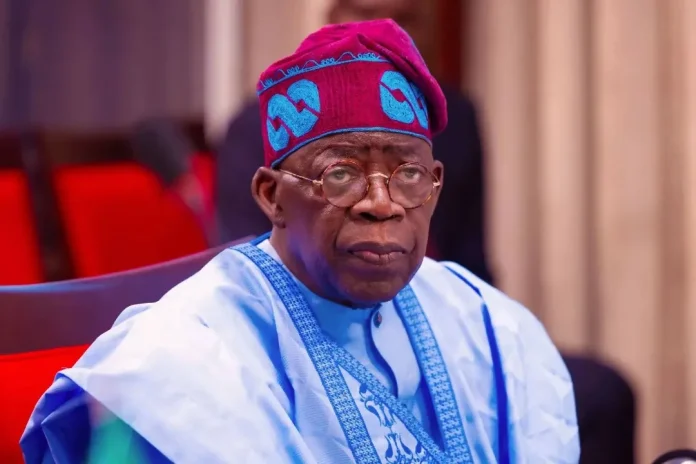
President Bola Tinubu has approved salary increases of between 30% and 80% for about 250,000 Nigerian Armed Forces personnel
The new salary structure takes effect from September 1, increasing the military wage bill from ₦660 billion to ₦924 billion annually
The Presidency says the move is part of broader efforts to improve troop welfare and strengthen Nigeria’s security architecture
Main Story
President Bola Tinubu has approved a new salary structure for members of the Nigerian Armed Forces, granting pay increases ranging from 30% to 80% across different ranks as part of efforts to improve troop welfare and bolster national security.
The new salary package, which will benefit approximately 250,000 military personnel, will take effect from September 1, according to a statement issued on Tuesday by the President’s Special Adviser on Information and Strategy, Bayo Onanuga. The adjustment will increase the Federal Government’s annual military salary bill from ₦660 billion to ₦924 billion.
Under the approved structure, officers above the rank of Colonel—including Brigadier Generals, Major Generals, Lieutenant Generals and Generals—will receive a 30% salary increase. Personnel from the rank of Colonel to Warrant Officer will enjoy a 50% increase, while soldiers from Private to Staff Sergeant will receive the highest adjustment of 80%.
The Presidency said the review forms part of the Tinubu administration’s commitment to improving the welfare of military personnel amid ongoing operations against terrorism, banditry, kidnapping and other security threats across the country.
“The men and women who help to keep us safe in our homes must be supported and appreciated in the course of their duties to our nation. Our administration will continue to prioritise troops’ welfare and modernise the armed forces by providing the weapons and technological tools needed to discharge their duties,” President Tinubu said.
The latest salary increase comes as the Federal Government continues to intensify military operations across several regions, with security agencies confronting insurgency in the North-East, banditry in the North-West and kidnapping incidents in parts of North Central and southern Nigeria.
What’s Being Said
President Tinubu said the salary review reflects the government’s appreciation for the sacrifices made by military personnel in protecting the country.
“Our administration believes that no nation can achieve greatness without security. We remain resolute in mobilising all military and law enforcement assets to eliminate security threats and protect the lives and property of all Nigerians. I urge our servicemen to take our gesture as a sign of our deep appreciation of the services they render to our fatherland. Together we shall prevail over the enemies intent on destroying the fabric of our nation,” the President said.
What’s Next
The revised salary structure is scheduled to take effect on September 1, with implementation expected across all branches of the Armed Forces.
The Federal Government is expected to make the necessary budgetary adjustments to accommodate the increase in annual personnel costs.
The administration says it will continue investing in military equipment, technology and welfare as part of its broader security reform agenda.
The Bottom Line: The salary increase represents one of the most significant welfare packages approved for Nigeria’s military in recent years. Beyond improving troop morale, the move signals the Federal Government’s strategy of combining enhanced personnel welfare with increased investment in security as it seeks to address the country’s persistent security challenges.
Fitch Ratings says new U.S. student visa rules could reduce international enrollment and pressure tuition revenue at some colleges
Universities with heavy reliance on international students and student fees face the greatest financial risks
Institutions are expanding overseas recruitment and cutting costs as they prepare for the policy changes
Main Story
New U.S. immigration rules governing F-1 student visas could weaken enrollment and increase financial pressure on some American colleges and universities, according to Fitch Ratings, as institutions brace for potential declines in international student admissions.
The credit rating agency said the policy changes could trigger sustained fluctuations in international enrollment, threatening tuition revenue for universities that depend heavily on foreign students. While the overall credit impact on the higher education sector is expected to remain limited, Fitch warned that institutions with weaker financial positions and greater reliance on student fees could face heightened risks.
International students accounted for 6.1% of total enrollment during the 2024–2025 academic year, representing a 4.5% increase from the previous year, according to Open Doors data. However, enrollment trends reversed in Fall 2025, with the total number of international students declining by 1%, while new international student enrollment dropped by 17%.
Fitch noted that international students typically pay full tuition or receive less institutional financial aid than domestic students, making them a significant source of revenue for many universities. Because higher education institutions also operate with substantial fixed costs, even modest declines in enrollment could weaken operating margins and debt-service capacity.
“Sustained drops in new international student enrollment can have outsized revenue effects, as international students often pay full tuition or receive less institutional aid than domestic students,” Fitch Ratings said in its latest sector analysis.
The agency added that the greatest pressure is likely to fall on universities where international students account for 10% to 15% or more of total enrollment, particularly institutions with large graduate and STEM programmes that require longer completion periods and higher recruitment costs.
To reduce exposure, many U.S. colleges are expanding recruitment beyond traditional source countries, strengthening partnerships with overseas institutions, introducing online learning pathways and implementing spending cuts to preserve financial stability.
What’s Being Said
Fitch Ratings said institutions with diversified revenue streams, strong enrollment demand and healthy financial reserves are expected to absorb moderate fluctuations in international student numbers without significant credit deterioration.
The agency also noted that universities are responding by broadening their recruitment strategies and adopting alternative academic pathways, including allowing students to begin studies abroad before transferring to U.S. campuses.
What’s Next
The new student visa regulations are expected to take effect later this year, subject to the U.S. government’s implementation timeline.
Legal challenges from higher education organisations and immigration advocacy groups could delay or modify the new rules.
Universities are expected to continue adjusting recruitment strategies and financial plans ahead of the next international admissions cycle.
Bottom Line
The Bottom Line: The proposed visa reforms highlight how dependent many U.S. universities have become on international tuition revenue. While elite institutions are likely to withstand the disruption, colleges with narrower revenue bases and significant international enrollment could face growing financial and operational pressures if student inflows continue to weaken.
Nigeria’s external reserves climbed above $52.5 billion, their highest level in 17 years, according to the Central Bank of Nigeria (CBN)
The CBN says recent monetary and foreign exchange reforms have helped stabilise the naira, narrow exchange rate disparities and ease inflation
The apex bank urged Nigerians to rely only on its verified communication channels for information on monetary policies and financial services
Main Story
The Central Bank of Nigeria (CBN) says recent reforms in the country’s monetary and foreign exchange markets are delivering positive results, citing stronger external reserves, improved exchange rate stability and moderating inflation as key indicators of progress.
Speaking on Tuesday at the CBN Fair in Gombe, CBN Governor Dr Olayemi Cardoso, represented by the Acting Director of Corporate Communications and Investor Relations, Mrs Hakama Sidi-Ali, said Nigeria’s external reserves had risen above $52.5 billion as of July 17, 2026, exceeding the bank’s annual target and marking the country’s highest reserve level in 17 years.
Cardoso said the improvement reflects sustained foreign exchange inflows and renewed investor confidence in Nigeria’s economy following a series of monetary policy and market reforms implemented over the past 34 months.
He added that inflationary pressures continue to ease, with headline inflation declining slightly from 15.93 per cent in May to 15.91 per cent in June 2026, while both core and food inflation also recorded modest declines.
According to the CBN governor, the reforms have also strengthened the naira, with the spread between the official foreign exchange market and Bureau de Change (BDC) rates falling below two per cent, a development he attributed to improved market transparency and exchange rate reforms.
The reforms highlighted by the apex bank include the unification of Nigeria’s foreign exchange market, banking sector recapitalisation, the introduction of the Non-Resident Bank Verification Number (NRBVN), deployment of the B-Match foreign exchange trading platform, implementation of the Nigeria Payments System Vision 2028, and a 75 per cent Cash Reserve Ratio (CRR) on non-Treasury Single Account (TSA) public sector deposits to improve liquidity management and curb inflation.
Cardoso also noted that the CBN, in collaboration with the Financial Markets Dealers Association (FMDA), introduced the Nigerian Overnight Financing Rate (NOFR) to provide a transparent, market-based benchmark for short-term funding transactions and align Nigeria’s money market with international standards.
The governor said the Gombe fair forms part of the bank’s nationwide public engagement programme aimed at promoting financial inclusion through alternative payment channels while creating opportunities for Nigerians to better understand the CBN’s policies and operations.
What’s Being Said
“The naira continues to strengthen, with the spread between official and Bureau de Change rates now below two per cent,” said Dr Olayemi Cardoso, Governor, Central Bank of Nigeria, represented by Mrs Hakama Sidi-Ali, Acting Director of Corporate Communications and Investor Relations.
“The fair is one of the bank’s platforms for engaging the public on its policies and programmes,” Cardoso said, urging Nigerians to seek information only from the CBN’s verified communication channels while discouraging acts such as spraying, mutilating, hawking or counterfeiting the naira.
Earlier, Yunusa Buba-Mubi, CBN Branch Controller in Gombe, said the fair was designed to educate citizens on the bank’s policies while providing stakeholders with an opportunity to offer feedback on its programmes.
What’s Next
The CBN is expected to continue implementing its monetary and foreign exchange reforms as it seeks to sustain exchange rate stability and further moderate inflation.
The apex bank will expand public engagement through subsequent editions of the CBN Fair to deepen financial inclusion and promote the adoption of digital payment channels.
Investors and market participants will closely monitor upcoming inflation data and future monetary policy decisions for indications of the next phase of the CBN’s policy direction.
Bottom Line
The Bottom Line: The CBN is increasingly pointing to stronger reserves, a narrower official-parallel market exchange rate gap and easing inflation as evidence that its reform agenda is gaining traction. The sustainability of these gains, however, will depend on continued foreign capital inflows, fiscal discipline and the bank’s ability to maintain confidence in the foreign exchange market.
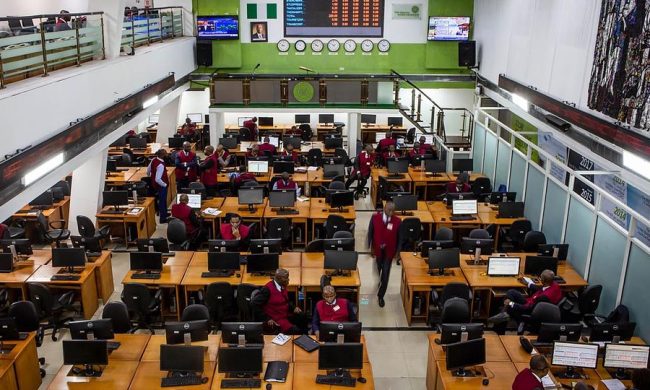
Nigerian equities reversed Monday’s gains as investors lost ₦599 billion in market value
The NGX All-Share Index fell 0.38% to 244,802.83 points, while market capitalisation declined to ₦158.02 trillion
Selloffs in Multiverse Mining, LivingTrust Mortgage Bank, McNichols and Eterna outweighed gains in AVA Capital, NREIT and Livestock Feeds
Main Story
The Nigerian Exchange (NGX) closed lower on Tuesday as renewed profit-taking erased the previous session’s gains, wiping ₦599 billion off investors’ wealth and ending a one-day bullish run.
Market capitalisation declined by 0.38 per cent, falling from ₦158.614 trillion at the previous close to ₦158.015 trillion, while the NGX All-Share Index (ASI) shed 927.70 points, or 0.38 per cent, to settle at 244,802.83 points, down from 245,730.53 points. The decline trimmed the market’s year-to-date return to 57.32 per cent.
The bearish sentiment was driven by widespread selloffs across medium- and small-cap stocks, with 40 equities closing in the red against 13 gainers, reflecting weak market breadth.
Leading the losers’ chart were Multiverse Mining and LivingTrust Mortgage Bank, which each declined by 10 per cent to close at ₦22.95 and ₦3.42 per share, respectively. They were followed by McNichols Plc, which dropped 9.92 per cent to ₦5.45, Thomas Wyatt Nigeria Plc, down 9.87 per cent to ₦3.56, and Eterna Plc, which fell 9.09 per cent to ₦33.00 per share.
On the gainers’ table, AVA Capital led with a 9.94 per cent appreciation to ₦9.95 per share. Nigeria Real Estate Investment Trust (NREIT) advanced 9.71 per cent to ₦113.00, while Livestock Feeds Plc gained 9.49 per cent to close at ₦8.65. Neimeth International Pharmaceuticals Plc rose 8.43 per cent to ₦9.00, while AIICO Insurance Plc added 3.47 per cent to settle at ₦4.18 per share.
Despite the market’s decline, trading activity strengthened considerably. Total volume traded rose 69.25 per cent to 1.56 billion shares valued at ₦28.73 billion, exchanged in 54,160 deals.
Japaul Gold & Ventures Plc emerged as the most actively traded stock by volume with 904.42 million shares, accounting for nearly 58 per cent of total market turnover by volume. MTN Nigeria Communications Plc recorded the highest value of trades at ₦3.25 billion, representing 11.31 per cent of the day’s total transaction value.
What’s Being Said
Market data released by the Nigerian Exchange showed that investor sentiment weakened as decliners significantly outnumbered gainers, reversing the previous session’s positive performance.
“Market capitalisation declined by ₦599 billion to close at ₦158.015 trillion, while the All-Share Index fell by 927.70 points to 244,802.83,” according to official NGX trading statistics released after Tuesday’s trading session.
What’s Next
Investors are expected to monitor upcoming corporate earnings releases for fresh trading cues.
Analysts will watch whether bargain hunting returns after Tuesday’s broad-based selloff or if profit-taking persists in the near term.
Attention will also remain on macroeconomic indicators and monetary policy expectations, which continue to influence investor sentiment across the equities market.
Bottom Line
The Bottom Line: Tuesday’s decline underscores the fragile nature of current market sentiment despite the NGX’s strong year-to-date performance. While trading activity remains robust, sustained gains will likely depend on stronger corporate earnings, improving macroeconomic conditions, and renewed investor confidence.
President Bola Tinubu has inaugurated Africa’s first Barefoot Renewable Energy College (BARECKS) and the Green Hydrogen Research and Demonstration Pilot Plant in Kogi State.
The college is designed to train technicians and professionals in renewable energy technologies to support Africa’s energy transition.
Tinubu said the institution would help convert Nigeria’s abundant renewable resources into jobs and economic opportunities.
Graduates will receive internationally recognised certificates to enhance global employability.
The Federal Government called on development partners and the private sector to support research, innovation and technical training.
Main Story
President Bola Tinubu has inaugurated Africa’s first Barefoot Renewable Energy College (BARECKS) and the Green Hydrogen Research and Demonstration Pilot Plant in Osara, Kogi State, describing the institution as a world-class facility that will drive Nigeria’s renewable energy ambitions and address the continent’s shortage of skilled technical manpower.
The President, represented by Vice President Kashim Shettima at the inauguration ceremony held at the Confluence University of Science and Technology, Osara, said the college marks a major milestone in Nigeria’s transition to clean energy and positions the country as a continental leader in renewable energy capacity development.
Tinubu said Nigeria, despite its abundant endowment of sunlight, wind, biomass and water resources, has struggled to convert those natural assets into electricity generation and employment opportunities, adding that the new institution would help bridge that gap.
According to him, the college is modelled after India’s renowned vocational renewable energy institutions, which successfully trained rural women as solar engineers, a model he believes can be replicated across Nigerian communities.
The President noted that the institution was completed within two years of its groundbreaking, describing it as evidence that the Federal Government is committed to delivering projects that directly impact citizens and national development.
He explained that the college was established primarily to close Africa’s critical technical skills deficit in the renewable energy sector by producing technicians, installers, operators and maintenance professionals with practical competencies in modern renewable energy technologies.
Tinubu added that graduates of the institution would earn internationally recognized professional certificates, enabling them to secure employment, establish renewable energy businesses or compete for opportunities globally.
He also called on development partners, private sector organizations, international agencies, and research institutions to collaborate with the college in expanding research, innovation, and technical training, assuring them of Nigeria’s readiness to lead such partnerships.
The President commended the Minister of Innovation, Science and Technology, Dr Kingsley Udeh, the Director-General of the Energy Commission of Nigeria, Dr Mustapha Abdullahi, and the Kogi State Government for ensuring the successful completion of the project.
In his remarks, Governor Ahmed Ododo described the college as a strategic investment in human capital development that would strengthen Nigeria’s energy sector, attract investment and create employment opportunities.
Also speaking, Dr Kingsley Udeh said the project reflects the Federal Government’s commitment to building a knowledge-driven economy, noting that Nigeria’s aspiration of becoming a one-trillion-dollar economy depends on developing skilled professionals in strategic sectors such as renewable energy.
The Director-General of the Energy Commission of Nigeria, Dr Mustapha Abdullahi, disclosed that the college is equipped with smart classrooms, battery energy laboratories, energy efficiency laboratories, and a mini-grid simulation centre to provide practical training for students.
The Ohinoyi of Ebiraland, Dr Ahmed Tijjani Anaje, welcomed the project, saying it would equip young Nigerians with the technical skills needed to contribute meaningfully to national development.
The Issues
Africa continues to face a shortage of skilled technical personnel required for renewable energy deployment.
Nigeria’s abundant renewable energy resources remain underutilized due to limited technical capacity.
Investments in technical education and vocational training are essential to achieving the country’s clean energy and industrialization goals.
Strong partnerships between government, academia, development partners, and the private sector will be crucial for the institution’s long-term success.
Producing globally competitive renewable energy professionals could enhance employment opportunities and support economic diversification.
What’s Being Said
President Bola Tinubu
“This is the first institution of its kind on the African continent, modelled on the celebrated vocational colleges of India that turned unlettered grandmothers into solar engineers.”
“Nigeria assumes, from today, the position of pacesetter in renewable energy capacity development across Africa.”
“Our continent has never suffered a deficit of intention. We have suffered the scarcity of hands trained to execute them.”
“A certificate issued in Osara must one day command respect in Nairobi and in Frankfurt.”
Governor Ahmed Ododo
“The inauguration of the college is a clear indication that Nigeria is on the path to sustainable development through investment in human capital.”
Dr Kingsley Udeh, Minister of Innovation, Science and Technology
“The project reflects the Federal Government’s commitment to building a knowledge-driven economy.”
Dr Mustapha Abdullahi, Director-General, Energy Commission of Nigeria
“The facility is equipped with smart classrooms, battery energy laboratories, a mini-grid simulation centre, energy efficiency laboratories and other modern training facilities.”
What’s Next
The Barefoot Renewable Energy College is expected to commence training its pioneer students in renewable energy technologies while the Green Hydrogen Research and Demonstration Pilot Plant begins supporting research and innovation.
The Federal Government will also seek partnerships with development agencies, research institutions and private investors to expand technical training, strengthen renewable energy research and build a skilled workforce capable of supporting Nigeria’s energy transition.
Bottom Line
The inauguration of Africa’s first Barefoot Renewable Energy College marks a significant step in Nigeria’s drive towards clean energy, technical education and economic diversification. By investing in renewable energy skills development, the Federal Government aims to position Nigeria as a continental hub for innovation, job creation and sustainable energy solutions.