





Home Blog Page 86

Osundare warns Nigeria risks losing future to ‘Japa’, poverty

Key points

  • Prof. Niyi Osundare says Nigeria’s worsening conditions are driving skilled professionals abroad.
  • He warns that poverty, inequality and the out-of-school children crisis threaten the country’s future.
  • The renowned poet urges Nigerians to confront national challenges rather than abandon the country.

Main story

Renowned Nigerian poet and University of New Orleans scholar, Prof. Niyi Osundare, has expressed concern over Nigeria’s worsening socio-economic conditions, warning that the country risks losing its future to mass emigration, poverty and growing inequality.

Speaking on Wednesday during a conversation on his latest book, Truth Is Trouble, in Ibadan, Osundare said one of the book’s recurring themes is the increasing migration of skilled Nigerians to Europe, the United States and other developed countries in search of better opportunities.

He described the “Japa” phenomenon as a major national concern, warning that Nigeria cannot continue losing its best talents without addressing the conditions driving them abroad.

According to him, Nigeria has the potential to become a better country, but meaningful progress will require deliberate effort rather than wishful thinking.

Osundare argued that the countries attracting Nigerian migrants were also built through collective commitment, adding that Nigerians must work together to rebuild their own nation instead of abandoning it.

He said the book combines intellectual, creative and humanist perspectives, with a strong focus on protecting human dignity and improving people’s welfare.

The literary icon also linked rising insecurity and violence to widespread poverty, inequality and the failure to provide educational and economic opportunities for young people.

He warned that Nigeria’s growing population of out-of-school children poses a serious long-term risk, saying a generation denied education and opportunity could become alienated from society.

Explaining the title of his book, Osundare said truth often becomes uncomfortable because it challenges those in positions of authority.

Reflecting on his experiences during military rule, he recalled facing harassment for speaking against dictatorship and advocating democratic values, insisting that writers and citizens must continue holding leaders accountable.

He urged Nigerians to confront the country’s realities honestly rather than normalise hardship, saying lasting national progress depends on acknowledging and addressing the country’s challenges.

The issues

Nigeria continues to grapple with rising emigration, widespread poverty, insecurity and an education crisis that has left millions of children out of school. Analysts warn that unless these structural challenges are addressed, the country could face deeper human capital losses and slower economic and social development.

What’s being said

“The solution to Nigeria’s problems lies in confronting them rather than abandoning the country.” — Prof. Niyi Osundare.

“Truth often becomes troublesome when it challenges those in positions of power.” — Prof. Niyi Osundare.

What’s next

Osundare urged government, civil society and citizens to work collectively to tackle the underlying causes of migration, improve access to education and create opportunities that encourage Nigerians to build the country’s future at home.

Bottom line

Osundare believes Nigeria’s greatest challenge is not a lack of potential but a failure to confront its realities, warning that reversing brain drain and rebuilding the nation will require honest leadership and collective action.
CBN says 2025 monetary policy kept inflation in check

Key points

  • CBN says restrictive monetary policy helped moderate money supply growth and supported disinflation in 2025.
  • Foreign capital inflows rose by 93.7% to $23.4bn as investor confidence improved.
  • External reserves increased to $45.75bn while the naira ended the year stronger against the dollar.

Main story

The Central Bank of Nigeria (CBN) says its monetary policy remained focused on maintaining price stability in 2025, using orthodox policy tools while initiating a gradual easing cycle after inflationary pressures began to subside.

The apex bank disclosed this in its 2025 Annual Report, noting that although its monetary policy stance remained largely restrictive during the year, persistent disinflation enabled the Monetary Policy Committee (MPC) to begin easing measures from September.

According to the report, reserve money and broad money growth moderated to 15.60 per cent and 15.16 per cent respectively, compared with 32.09 per cent and 16.42 per cent recorded in 2024.

The CBN attributed the increase in broad money to higher net domestic assets and lower net foreign assets, reflecting improved foreign exchange market stability and stronger economic activity.

It also reported that consumer credit outstanding declined by 19.89 per cent due to lower personal loan balances, while the financial system remained stable and resilient under both mild and moderate stress scenarios.

The report highlighted a strong performance in the Nigerian capital market, with the All-Share Index rising by 51.19 per cent to 155,613 points, supported by robust corporate earnings and improved investor sentiment.

Market capitalisation also increased by 37.01 per cent to N149.74 trillion during the year.

On the external sector, the CBN reported a balance of payments surplus of $4.23 billion, supported by a current and capital account surplus of $14.04 billion.

Although the financial account recorded lower net lending than in 2024 due mainly to residents withdrawing foreign currency deposits, capital inflows into the economy rose by 93.71 per cent to $23.40 billion.

The bank attributed the increase to attractive domestic market returns, ongoing foreign exchange reforms and the introduction of the FX Code, which strengthened investor confidence.

According to the report, Nigeria’s external reserves rose to $45.75 billion, providing import cover of 8.77 months for goods and services.

The CBN also said continued reforms in the foreign exchange market improved price discovery, with the naira appreciating to N1,435.76 per dollar at the end of 2025 from N1,535.82 per dollar a year earlier.

The issues

The CBN maintained a tight monetary policy stance through most of 2025 to curb inflation while implementing reforms aimed at improving foreign exchange market transparency and restoring investor confidence. The report suggests those measures contributed to stronger capital inflows, improved external reserves and greater exchange rate stability.

What’s being said

“Although monetary policy was largely restrictive in 2025, an easing cycle was initiated at the September MPC, as disinflation persisted.” — Central Bank of Nigeria.

“Sustained reforms in the FX market continued to foster stability and price discovery in the market.” — Central Bank of Nigeria.

What’s next

The CBN is expected to continue balancing inflation control with supporting economic growth while sustaining foreign exchange reforms, maintaining financial system stability and monitoring capital flows.

Bottom line

The CBN says its combination of tight monetary policy and foreign exchange reforms helped stabilise key macroeconomic indicators in 2025, laying a stronger foundation for investor confidence and economic stability.

Oyo to deploy 50 electric buses to cut transport costs

Oyo State Healthcare Services
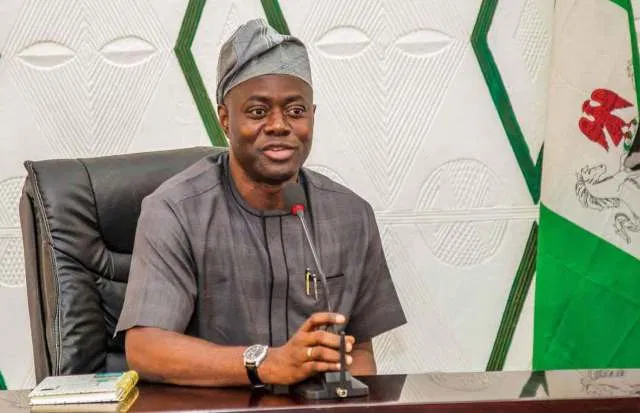
Seyi Makinde Commits to Restore State Healthcare Services

Key points

  • Oyo State will deploy 50 electric buses for intra-city and inter-local government transport.
  • The initiative aims to reduce transport costs and improve mobility for residents.
  • The government says it remains committed to fiscal discipline and implementing people-focused projects.

Main story

Oyo State Governor, Seyi Makinde, has announced plans to deploy 50 electric buses across the state to reduce transportation costs and improve mobility for residents.

Makinde made the announcement on Wednesday in Ibadan during the presentation of the first and second quarter budget performance reports, organised by the state Ministry of Budget and Economic Planning.

Represented by the Secretary to the State Government, Prof. Musibau Babatunde, the governor said the buses would operate on intra-city routes while also improving transportation between local government areas.

He said the initiative was designed to make transportation more affordable and convenient for residents.

Makinde described the electric buses as part of broader people-oriented projects aimed at delivering direct benefits to citizens.

The governor also reaffirmed his administration’s commitment to fiscal discipline and sustainable development.

He said the government was closely monitoring revenue and expenditure to ensure priority sectors received additional funding before the end of the year.

According to him, the 2026 budget framework seeks to achieve revenue targets while limiting expenditure to 77.5 per cent, with emphasis on projects capable of generating significant economic benefits.

Makinde added that projects identified by residents during town hall meetings were already being implemented across the state.

He urged residents to continue supporting government policies and disclosed that a high-level committee had been established to address concerns raised during the budget performance review.

The issues

Many Nigerians face rising transportation costs due to inflation and higher fuel prices. State governments are increasingly exploring electric mobility as a way to lower operating costs, reduce emissions and provide more affordable public transport.

What’s being said

“Our initiative is aimed at bringing down the cost of transportation and making movement easier and cheaper for the people.” — Gov. Seyi Makinde.

What’s next

The state government is expected to commence the deployment of the 50 electric buses while continuing the implementation of priority projects under the 2026 budget.

Bottom line

Oyo State is betting on electric mobility as part of its strategy to reduce transport costs, improve public transportation and deliver infrastructure projects with direct economic and social benefits.

FG seeks stronger collaboration to accelerate Nigeria’s energy transition

Key points

  • Presidency says stronger collaboration is essential to accelerate Nigeria’s transition to clean energy.
  • Government says renewable energy can expand electricity access, create jobs and drive industrialisation.
  • Stakeholders call for better coordination to scale solar adoption and close Nigeria’s electricity access gap.

Main story

The Federal Government has reaffirmed its commitment to accelerating Nigeria’s energy transition, saying stronger collaboration among public and private sector stakeholders is critical to expanding renewable energy adoption and improving electricity access.

The Senior Special Assistant to the President on Climate Technology, Mr Olamide Fagbuji, stated this on Wednesday at the Lagos Solar Forum 2026, a high-level policy dialogue convened under the Solar Power Nigeria Coalition in Lagos.

Speaking on the theme, “Building Consensus for Nigeria’s Just Energy Transition Future,” Fagbuji said Nigeria’s transition to cleaner energy presents both an environmental necessity and an economic opportunity.

He urged government agencies, private investors, development partners, academia, civil society organisations and the diplomatic community to work together to expand energy access, promote industrialisation, create sustainable jobs, strengthen food security and build a resilient low-carbon economy.

According to him, improving access to solar and other renewable energy sources is central to achieving sustainable development, boosting industrial competitiveness and enhancing national energy security.

Fagbuji said climate change had evolved into a major economic, social and security challenge, making it imperative for Nigeria to build more resilient energy systems.

He noted that global investment in clean energy now exceeds investment in fossil fuels, presenting Nigeria with an opportunity to attract investment and participate more actively in the global energy transition.

While acknowledging that millions of Nigerians still rely on diesel generators and traditional cooking fuels due to inadequate electricity supply, he said the country’s abundant solar resources provide a strong foundation for achieving universal energy access.

Fagbuji also commended recent policy reforms, particularly the Electricity Act 2023, saying the legislation has created a stronger legal framework for decentralised electricity generation and increased private sector participation.

He added that renewable energy should be pursued not only as an environmental objective but also as an industrial strategy capable of supporting local manufacturing, technology transfer, export opportunities and employment.

Other speakers also stressed the importance of stronger coordination across the renewable energy ecosystem.

Senior Director of the Secure Energy Project, Mr Chris Kiff, said numerous organisations were implementing valuable energy initiatives across Nigeria but often worked independently, reducing their overall impact.

He explained that the forum was designed to create a platform for aligning existing initiatives, encouraging collaboration and reducing duplication of efforts.

Founder of AfriEnergy Tracker, Mr Daniel Awolaja, said Nigeria has about 14 gigawatts of installed electricity generation capacity but consistently delivers only about five gigawatts through the national grid.

He added that nearly 90 million Nigerians still lack reliable electricity, resulting in widespread dependence on petrol and diesel generators despite improvements in installed generation capacity.

In his opening remarks, Executive Director of the Global Initiative for Food Security and Ecosystem Preservation, Dr Michael Terungwa, said energy poverty continues to limit economic growth and human development across Nigeria.

He cited World Bank estimates showing that about 86.8 million Nigerians remain without electricity access, describing solar energy as one of the country’s most viable pathways to closing the electricity access gap.

The issues

Nigeria is pursuing a just energy transition to improve electricity access while reducing dependence on fossil fuels. Although policy reforms and private investment are gathering momentum, stakeholders say stronger collaboration, local manufacturing and coordinated implementation will be necessary to achieve universal energy access and maximise the economic benefits of renewable energy.

What’s being said

“Nigeria’s energy transition represents both an environmental necessity and a significant economic opportunity.” — Olamide Fagbuji, Senior Special Assistant to the President on Climate Technology.

“Rather, the meeting seeks to provide a platform where stakeholders can identify existing efforts, share experiences and explore opportunities for greater coordination under a common framework.” — Chris Kiff, Senior Director, Secure Energy Project.

What’s next

Stakeholders are expected to strengthen collaboration, align existing renewable energy initiatives and support policies that expand solar deployment, attract investment and increase local manufacturing capacity as Nigeria advances its energy transition agenda.

Bottom line

The Federal Government says achieving a successful energy transition will depend not only on policy reforms but also on stronger collaboration that expands renewable energy access, stimulates local industry and delivers reliable electricity to millions of Nigerians.

EFCC freezes Osun government account before poll

Key points

  • Vanguard reports that the EFCC has frozen an Osun State Government account domiciled with First Bank.
  • Gov. Ademola Adeleke describes the reported action as an attempt to disrupt government activities ahead of the Aug. 15 governorship election.
  • The EFCC has yet to issue an official statement on the reported account restriction.

Main story

The Economic and Financial Crimes Commission (EFCC) has frozen an Osun State Government account domiciled with First Bank, according to a report by Vanguard newspaper.

The account, reportedly used for the payment of workers’ salaries, was placed on “Post No Debit” status about 10 days before the state’s governorship election scheduled for Aug. 15.

The development followed allegations by Gov. Ademola Adeleke that the anti-graft agency planned to freeze the state government’s accounts and those of senior government officials.

In a statement issued on Wednesday by the Commissioner for Information and Public Enlightenment, Mr Kolapo Alimi, the governor described the reported move as an attempt to cripple government activities ahead of the election.

Adeleke maintained that there was no legal basis for freezing the accounts of the state government, arguing that the EFCC lacked the statutory powers to take such action.

A source close to the governor, who requested anonymity because they were not authorised to speak publicly, told Vanguard that the account had already been frozen.

“I can confirm that the state government account has been frozen by the EFCC. It is no longer an allegation. The governor will address the press shortly to update the public on the situation,” the source was quoted as saying.

As of the time of filing the report, the EFCC had not issued an official statement on the development, while the reason for the account restriction was not immediately known.

The issues

The reported account freeze comes days before the Aug. 15 Osun State governorship election and has heightened political tension in the state. While the state government questions the legality of the action, the EFCC has yet to publicly explain the reported restriction.

What’s being said

“There is no legal basis for freezing the accounts of the state government.” — Gov. Ademola Adeleke.

“I can confirm that the state government account has been frozen by the EFCC. It is no longer an allegation.” — Anonymous source quoted by Vanguard.

What’s next

Attention is expected to shift to the EFCC for an official response on the reported account restriction, while Gov. Adeleke is expected to brief the public on the development.

Bottom line

According to Vanguard, the reported freezing of an Osun State Government account has introduced a fresh point of contention ahead of the state’s governorship election, with the EFCC yet to publicly clarify the reason for the action.

WAEC withholds 167,486 2026 wassce results over examination malpractice

WASSCE: How To Check 2021 WAEC Result

By Boluwatife Oshadiya | August 5, 2026

Key Points

  • WAEC withheld 167,486 WASSCE results, representing 8.59% of candidates, over alleged examination malpractice
  • A total of 1.2 million candidates obtained at least five credits, including English Language and Mathematics, representing a 61.54% pass rate
  • WAEC warned that candidates sponsored by indebted state governments will not receive their results until outstanding payments are settled

Main Story

The West African Examinations Council (WAEC) has withheld the results of 167,486 candidates who sat the 2026 Computer-Based West African Senior School Certificate Examination (WASSCE) for School Candidates over alleged examination malpractice.

The withheld results account for 8.59% of the 1,950,726 candidates who sat the examination, marking an improvement from the 9.7% malpractice rate recorded in the 2025 examination.

Announcing the release of the results in Lagos on Wednesday, Head of the WAEC National Office, Dr. Amos Dangut, attributed the withheld results to several forms of malpractice, including the continued use of mobile phones inside examination halls despite an existing ban and organised cheating in some schools.

“The increasing use of cell phones in the examination hall, in spite of the existing ban, and organised cheating in some schools, are other nagging issues,” Dr. Amos Dangut, Head, WAEC National Office, said.

According to WAEC, 1,959,668 candidates from 24,207 schools across Nigeria, the Benin Republic, Côte d’Ivoire and Equatorial Guinea registered for the examination, while 1,950,726 eventually sat for the papers conducted between April 24 and June 19, 2026.

Performance data released by the council showed that 1,200,514 candidates, representing 61.54% of those who sat the examination, obtained credits and above in at least five subjects, including English Language and Mathematics. Meanwhile, 1,687,378 candidates, or 86.50%, earned credits in at least five subjects irrespective of English Language and Mathematics.

Female candidates accounted for 641,631 of those who obtained five credits including English and Mathematics, while 558,883 successful candidates were male.

WAEC also disclosed that 1,834,695 candidates, representing 94.05%, had their results fully processed and released, while the results of 116,031 candidates remain under processing.

The council said 1,213 candidates with special needs participated in the examination, including visually impaired, hearing-impaired, physically challenged, and spastic or mentally challenged candidates.

What’s Being Said

Dr. Dangut said supervisors and invigilators found aiding examination malpractice had been arrested and would face disciplinary action through the appropriate state ministries of education.

He also announced that the 2026 WASSCE featured several technological improvements, including the Digital Examiner Mark System to speed up result processing, serialised question papers aimed at reducing malpractice, and a new portal allowing candidates to generate e-PINs directly for checking their results.

What’s Next

  • Candidates whose results were withheld will undergo WAEC’s investigation process before final decisions are taken on their status.
  • WAEC said results belonging to candidates sponsored by state governments indebted to the council will remain unreleased until the outstanding financial obligations are settled.
  • Candidates whose results have been released can access them through WAEC’s result-checking platform using the newly introduced e-PIN system.

The Bottom Line: While the proportion of withheld results declined compared with 2025, the continued prevalence of examination malpractice underscores the challenges facing Nigeria’s secondary school examination system. WAEC’s expanded use of digital tools and tighter examination controls signals a stronger push to protect the credibility of the WASSCE while improving the speed and integrity of result processing.

Overnight rate falls as system liquidity rises to ₦5.33tn ahead of OMO settlements

By Boluwatife Oshadiya | August 5, 2026, 2:49 PM

Key Points

  • Financial system liquidity increased by 5.46% to ₦5.33 trillion, supporting lower overnight funding costs
  • Overnight lending rate declined by one basis point to 22.14%, while the Nigeria Overnight Financing Rate remained steady at 22.20%
  • The Central Bank of Nigeria allotted ₦2.17 trillion in OMO bills despite offering ₦600 billion, reflecting sustained investor demand

Main Story

Nigeria’s overnight lending rate eased marginally as liquidity in the financial system strengthened to ₦5.33 trillion, supported by surplus cash balances ahead of the settlement of the Central Bank of Nigeria’s (CBN) recent Open Market Operation (OMO) bill auction.

Opening system liquidity rose by 5.46% from ₦5.05 trillion to ₦5.33 trillion, creating ample cash within the banking system and reducing pressure on short-term funding rates.

The improvement in liquidity followed recent OMO operations by the CBN. Although the apex bank offered ₦600 billion worth of OMO bills at its latest auction, it eventually allotted ₦2.17 trillion, with stop rates settling at 20.35% and 20.15%, highlighting strong investor appetite for the securities.

Despite the sizeable OMO allotment, liquidity conditions remained elevated. Consequently, the Nigeria Overnight Financing Rate (NOFR) held steady at 22.20%, while the Overnight (O/N) rate declined by one basis point to 22.14%.

Activity at the CBN’s Standing Deposit Facility (SDF) also slowed considerably. Deposit Money Banks reduced placements to ₦2.61 trillion from ₦4.62 trillion, suggesting that banks retained more liquidity within the interbank market following Tuesday’s OMO settlement.

Data released by Cowry Asset Management Limited showed that the Nigerian Interbank Offered Rate (NIBOR) remained unchanged across key maturities. Overnight, one-month, three-month and six-month tenors closed at 22.21%, 22.64%, 23.22% and 23.59%, respectively.

In the Treasury bills secondary market, trading produced mixed yield movements. Yields on the one-month, three-month and 12-month instruments declined by one basis point, one basis point and 10 basis points, respectively, while the six-month tenor rose by three basis points. Overall, sustained investor demand kept the average Treasury bill yield unchanged at 18.15%.

What’s Being Said

“Opening liquidity improved to ₦5.33 trillion from ₦5.05 trillion, while the Nigerian Interbank Offered Rates remained unchanged across all monitored tenors,” Cowry Asset Management Limited said in its daily market update.

What’s Next

  • Market participants will monitor whether the CBN conducts additional OMO auctions to absorb excess liquidity in the banking system.
  • Investors are expected to continue tracking interbank funding rates and Treasury bill yields for signs of changing liquidity conditions.
  • Money market analysts expect liquidity to remain relatively strong in the near term if there are no significant CBN liquidity-tightening operations.

The Bottom Line:

The rise in banking system liquidity continues to ease short-term funding pressures despite the CBN’s aggressive OMO issuance. If excess liquidity persists without additional sterilisation measures, money market rates are likely to remain relatively stable while supporting continued demand for government securities.

Oil prices fall below $80 as USA-Iran talks ease supply concerns

By Boluwatife Oshadiya | August 5, 2026

Key Points

  • Brent crude fell below $80 per barrel as optimism over renewed US-Iran talks reduced geopolitical risk premiums
  • Markets reacted to reports that Washington, Tehran and Oman are nearing an interim agreement to reopen the Strait of Hormuz
  • Investors are awaiting official US crude inventory data after industry figures showed an unexpected rise in oil stockpiles

Main Story

Global oil prices extended losses on Wednesday, with Brent crude slipping below the $80-per-barrel mark as investors responded to renewed diplomatic engagement between the United States and Iran and easing concerns over potential supply disruptions in the Middle East.

International benchmark Brent crude futures for October delivery traded at $79.29 per barrel, down from the previous session’s close of $80.36, while US benchmark West Texas Intermediate (WTI) crude futures declined to $75.40 per barrel, compared with $75.77 previously.

The decline follows reports that the United States, Iran and Oman are close to reaching an interim agreement aimed at restoring a ceasefire between Washington and Tehran and reopening the Strait of Hormuz, one of the world’s most strategic oil shipping routes. According to Axios, an announcement could come as early as Wednesday.

Market sentiment also improved after US President Donald Trump said negotiations with Iran had made significant progress.

“They had an all-day negotiation today, and it looks like things are very good,” Trump said, adding later that the United States was “moving along very nicely” with Iran and that developments could become clearer within 48 hours.

Trump also reiterated that Iran would not be allowed to develop a nuclear weapon and warned Tehran of severe consequences should negotiations collapse after previously agreeing to pursue diplomacy instead of military action.

The easing of tensions has reduced fears of supply disruptions through the Strait of Hormuz, a critical maritime route responsible for transporting roughly 20% of global oil supplies, prompting traders to unwind the geopolitical risk premium that had supported crude prices during recent Middle East tensions.

Adding further pressure to prices, data from the American Petroleum Institute (API) indicated that US crude oil inventories increased by approximately 2.69 million barrels last week, contrary to market expectations for a drawdown of about 2 million barrels. The unexpected build reinforced expectations of softer near-term demand in the US oil market.

What’s Being Said

“They had an all-day negotiation today, and it looks like things are very good,” said US President Donald Trump, describing ongoing discussions between Washington and Tehran.

Market analysts said easing geopolitical tensions have reduced concerns over immediate supply disruptions through the Strait of Hormuz, encouraging traders to scale back the geopolitical premium previously built into oil prices.

What’s Next

  • Investors are awaiting official US crude inventory data from the Energy Information Administration (EIA) later on Wednesday for confirmation of market supply trends.
  • Markets will closely monitor any formal announcement on the proposed interim agreement between the United States and Iran.
  • Traders will also watch developments surrounding the reopening of the Strait of Hormuz, which could significantly influence global oil prices and energy market sentiment.

Bottom Line: The sharp decline in oil prices reflects a market that is increasingly pricing in diplomacy rather than conflict in the Middle East. While geopolitical risks have not disappeared, progress in US-Iran negotiations and expectations of uninterrupted oil flows through the Strait of Hormuz are shifting market attention back to supply-demand fundamentals.

REA, Ecotech sign deal to boost local solar manufacturing

Key points

  • REA and Ecotech sign agreement for annual offtake of 200MW of locally manufactured solar panels and 200MWh of battery storage systems.
  • Government says the partnership will reduce import dependence, create jobs and deepen local manufacturing.
  • REA says 85 million Nigerians still lack reliable access to grid electricity.

Main story

The Rural Electrification Agency (REA) and Ecotech Development Nigeria Limited have signed a Joint Development Agreement aimed at expanding local solar manufacturing, strengthening technology transfer and accelerating Nigeria’s renewable energy industrialisation.

The agreement establishes a framework for the annual offtake of up to 200 megawatts (MW) of locally manufactured solar photovoltaic modules and 200 megawatt-hours (MWh) of battery energy storage systems.

The initiative is expected to reduce Nigeria’s dependence on imported renewable energy equipment while creating jobs, conserving foreign exchange, expanding local technical capacity and supporting the Federal Government’s clean energy and industrial development agenda.

Speaking at the signing ceremony in Abuja, the Minister of State for Industry, Sen. John Enoh, described the agreement as a strategic partnership that aligns with the Nigeria First Policy by promoting local manufacturing, innovation and value addition.

Enoh said the success of the policy would depend on the collective commitment of government, businesses and citizens to patronise locally manufactured products and services.

He added that the Federal Government would increasingly use public procurement to stimulate demand for locally produced goods and support industrial development.

According to him, Nigeria also has an opportunity to leverage declining global solar technology costs to become a competitive manufacturing hub for solar panels, batteries, inverters and other clean energy technologies.

The Managing Director of REA, Abba Aliyu, described the agreement as a watershed for Nigeria’s renewable energy sector, noting that it represented the first commitment by a Tier-One Chinese renewable energy company to establish manufacturing and assembly operations in the country.

Aliyu said more than 85 million Nigerians, representing about 40 per cent of the population, still lacked reliable access to grid electricity, making local manufacturing critical to accelerating electrification.

He said the agreement would allow REA, through its renewable asset management subsidiary, to facilitate the annual offtake of up to 200MW of solar modules and 200MWh of battery energy storage systems manufactured locally by Ecotech.

He clarified that the arrangement was a non-exclusive framework rather than a procurement mandate and that all purchases would continue to comply with public procurement regulations based on quality, pricing and reliability.

Aliyu said the partnership would reduce import dependence, shorten project delivery timelines, strengthen local technical expertise, conserve foreign exchange and support Nigeria’s industrialisation agenda.

Managing Director of Ecotech Development Nigeria Limited, Mr John Zhao, said the company would manufacture and assemble high-efficiency solar panels, battery storage systems and hybrid inverters in Nigeria for residential, commercial and industrial applications.

He said the company would also provide engineering design, installation, commissioning, system integration and long-term maintenance services.

According to Zhao, the locally manufactured products would include bifacial solar modules, integrated energy storage systems, hybrid inverters and large-scale battery storage solutions capable of powering homes, businesses, hospitals, public institutions and interconnected mini-grid projects.

The issues

Nigeria continues to rely heavily on imported solar equipment despite growing demand for renewable energy. Industry stakeholders say developing local manufacturing capacity will reduce import dependence, strengthen domestic supply chains, create skilled jobs and improve energy security while supporting wider industrial growth.

What’s being said

“The success of the policy will depend not only on government interventions but also on a collective commitment to patronise locally manufactured products and services.” — Sen. John Enoh, Minister of State for Industry.

“More than 85 million Nigerians—about 40 per cent of the population—still lack reliable access to grid electricity.” — Abba Aliyu, Managing Director, REA.

What’s next

REA and Ecotech are expected to begin implementing the agreement through local manufacturing and assembly of solar panels and battery storage systems, while future transactions will be carried out under existing public procurement rules.

Bottom line

The REA-Ecotech agreement marks a significant step towards building Nigeria’s domestic renewable energy manufacturing industry while supporting electrification, job creation and the country’s broader industrialisation objectives.

Five myths stopping Nigerian farmers from buying agricultural insurance

FG's Agricultural Programme To Reduce Poverty, Create Employment

When floods submerged farmlands in parts of Nigeria last year, many farmers lost crops, livestock and months of investment almost overnight. Others watched poultry diseases spread through their farms or saw prolonged dry spells reduce harvests.

These risks have made agricultural insurance a bigger talking point within Nigeria’s farming sector. Guinea Insurance Plc recently disclosed that it had insured about 50 farmer groups, including agritech firms, within six months, saying more farmers were beginning to seek protection against production risks.

Yet, insurance penetration among Nigerian farmers remains low. While affordability plays a role, misconceptions about how agricultural insurance works also continue to discourage many from signing up.

Some of these beliefs are exaggerated. Others stem from genuine concerns based on past experiences. Here is a closer look at five of the most common myths.

Myth 1: Agricultural insurance is only for big commercial farms

Many smallholder farmers assume insurance is designed for large mechanised farms with significant capital investments.

The perception is understandable. Commercial farms are more visible, more likely to access bank loans and often have stronger relationships with financial institutions. Insurance products have historically been marketed more aggressively to this segment, reinforcing the impression that small farms are excluded.

However, eligibility is not necessarily determined by farm size. Several insurers, including the Nigerian Agricultural Insurance Corporation (NAIC), offer products for smallholder farmers. Development programmes supported by governments and donor agencies have also used agricultural insurance to protect small-scale producers.

The bigger challenge is often awareness and accessibility rather than eligibility. Many rural farmers simply do not know what products exist or how to access them.

Myth 2: Insurance companies don’t pay claims

This is probably the most widespread belief among farmers, and unlike some other myths, it did not emerge in a vacuum.

Across different sectors, delayed claims, disputes over policy terms and poor customer experiences have contributed to public distrust of insurance. Agriculture is no exception.

However, it is also true that insurers reject claims that fall outside policy conditions or where losses cannot be verified. Agricultural insurance usually requires field assessments to determine whether the damage resulted from an insured event.

That means the issue is more complicated than the blanket statement that insurers never pay. Some claims are honoured, some are disputed, and some are rejected because they fall outside the agreed cover. For farmers, understanding exactly what a policy covers before paying for it may be just as important as deciding whether to buy insurance in the first place.

Myth 3: Insurance covers every farming loss

Some farmers believe insurance guarantees compensation whenever a farm records poor yields.

That is rarely the case.

Agricultural insurance is designed to protect against specific risks listed in the policy. Depending on the product, these may include flooding, drought, fire, windstorms, disease outbreaks or other defined events.

A poor harvest caused by poor agronomic practices, late planting, poor-quality seeds or inadequate farm management may not qualify for compensation simply because production was low.

This distinction is important because many disputes arise when farmers expect broader protection than the policy actually provides.

Myth 4: It is too expensive to be worthwhile

For many farmers, particularly smallholders, insurance is another cost added to seeds, fertiliser, labour, transportation and land preparation.

Given rising production costs, choosing not to buy insurance can seem like a practical way to reduce expenses.

But this calculation depends on how a farmer views risk. A producer farming in a flood-prone area may weigh the premium differently from someone operating in a relatively stable environment. Likewise, a commercial poultry farmer with thousands of birds faces different financial risks from someone cultivating a few hectares of cassava.

The question is therefore less about whether insurance is universally affordable and more about whether the potential loss justifies the cost of protection in a particular farming enterprise.

Myth 5: Farming has always been risky, so insurance won’t change much

Many experienced farmers have accepted crop failures, pests and unpredictable weather as part of agriculture.

But the nature of those risks is changing.

Climate scientists have repeatedly warned that extreme weather events are becoming more frequent and more intense. Floods that once occurred occasionally now affect farming communities more regularly, while prolonged dry spells and heat stress are disrupting planting calendars across several parts of the country.

As agricultural risks become less predictable, traditional coping mechanisms such as savings, family support or borrowing may no longer be enough after a major loss.

That does not automatically make insurance the right solution for every farmer. But it does explain why insurers, financial institutions and policymakers are paying greater attention to risk-sharing mechanisms that can help farmers recover after severe shocks.

Agricultural insurance is unlikely to gain widespread acceptance through advertising alone. Farmers will judge it by how transparent policies are, how fairly claims are handled and whether compensation reaches affected farmers when disasters occur.

Until those issues are consistently addressed, skepticism will remain. But so too will the need for practical ways to manage the growing risks facing Nigerian agriculture.

Bottom Line

Agricultural insurance is neither a silver bullet nor a scam. It is one of several risk management tools available to farmers. As climate-related shocks become more frequent, the real challenge is ensuring that insurance products are affordable, transparent and trusted enough for more farmers to see value in them.

Farmers embrace agricultural insurance to shield investments from climate risks

Insurance

Key points

  • Guinea Insurance has insured about 50 farmer groups, including agritech firms, within six months.
  • The insurer says demand is rising as farmers seek protection against floods, drought, diseases and other production risks.
  • Smallholder farmers stand to benefit most because of their greater exposure to risks and limited access to finance.

Main story

Farmers are increasingly adopting agricultural insurance to protect their investments against climate-related risks, with Guinea Insurance Plc saying it has insured about 50 farmer groups, including agritech firms, within the past six months.

The company’s Managing Director, Ademola Abidogun, said demand has grown since its Agricultural Insurance Desk became fully operational in 2023, with coverage now extending to crop, poultry, livestock, fishery and farm property owners.

He said smallholder farmers remain the biggest beneficiaries because they are more exposed to production risks and often lack the financial resources to recover from losses.

To improve adoption, the insurer has expanded awareness campaigns through agritech partners and community engagements, particularly in rural areas. According to Abidogun, recent sensitisation programmes have encouraged more farmers to purchase insurance against risks such as floods, drought, pests, diseases and fire.

He also dismissed the perception that insurers fail to honour genuine claims, saying verified agricultural insurance claims are paid within one week after field assessments and completion of documentation.

The issues

Climate change, extreme weather events and production risks continue to threaten agricultural output in Nigeria. Despite these challenges, agricultural insurance penetration remains relatively low because of limited awareness and misconceptions about affordability and claims settlement. Insurers are increasing outreach efforts to encourage more farmers to adopt risk protection.

What’s being said

“Both sets of farmers benefit from our products. However, smallholder farmers benefit more because they are more exposed to risks and their limited access to finance.” — Mr Ademola Abidogun, Managing Director, Guinea Insurance Plc.

“Agricultural insurance helps to de-risk farmers’ investments and provides compensation when unforeseen losses occur.” — Mr Ademola Abidogun.

What’s next

Guinea Insurance plans to deepen awareness campaigns through agritech partnerships and rural engagement programmes to increase agricultural insurance adoption, while expanding coverage across the agricultural value chain.

Bottom line

As climate and production risks intensify, agricultural insurance is becoming an increasingly important tool for protecting farmers’ investments, improving resilience and supporting sustainable agricultural production.

Neymar undecided on retirement as Santos contract nears end

Key points

  • Neymar says he has not decided whether to retire when his Santos contract expires in December.
  • The former Brazil forward says his priority is to honour his current deal before making any decision.
  • Despite recent injury setbacks, Neymar says he is physically improving and remains grateful for his career.

Main story

Brazil forward Neymar says he remains undecided about his future after his contract with Brazilian club Santos expires in December, insisting that retirement is not currently on his mind.

The 34-year-old, who recently ended his international career following Brazil’s World Cup campaign, said his immediate focus was to fulfil his contractual obligations with his boyhood club before deciding on the next step.

Speaking on his YouTube channel during the Neymar Jr. Institute auction, Neymar said he was taking his future “one step at a time.”

“I don’t know how long I’ll keep playing. I’m not thinking about stopping, nor do I know how long I’ll carry on,” he said.

“I have a contract with Santos until December.

“I intend to see it through, to honour the Santos shirt as best I can, and then I’ll think about it when my contract ends — whether I stay at Santos, leave, move on, stop playing or carry on.

“I really don’t know what I’m going to do.

“There’s still a long way to go until December, so let’s take it one step at a time.”

Neymar recently retired from international football after Brazil’s World Cup campaign, during which recurring muscular injuries limited him to just two appearances.

Despite those injury concerns, Brazil’s all-time leading goalscorer said he was pleased with his current physical condition and remained motivated to improve.

“I’m feeling good physically, more and more so, out on the pitch. And that’s what matters.

“I want to always improve even if I’m at the end of my career.

“I’m very happy to have experienced what I’ve experienced up to now.

“I’m very grateful to God for what he has given me.

“I have nothing to complain about my career.”

The issues

Neymar’s contract situation has fuelled speculation over whether the veteran forward will extend his stay at Santos, seek another club or bring an end to a career that has included spells with Santos, Barcelona and Paris Saint-Germain, as well as becoming Brazil’s all-time leading scorer.

What’s being said

“I intend to see it through, to honour the Santos shirt as best I can, and then I’ll think about it when my contract ends.” — Neymar.

“I’m not thinking about stopping… I really don’t know what I’m going to do.” — Neymar.

What’s next

Neymar is expected to remain with Santos until the end of his contract in December before deciding whether to extend his stay, join another club or retire from professional football.

Bottom line

Neymar says no decision has been made about the next chapter of his career, with his immediate priority remaining helping Santos before weighing his options at the end of the season.

Army seeks stronger partnership with local defence manufacturers

Key points

  • Army Chief urges deeper collaboration with indigenous defence manufacturers to strengthen national security.
  • Nigerian Army identifies local production as key to military modernisation, innovation and self-reliance.
  • Proforce reaffirms commitment to expanding locally developed defence technologies for the Armed Forces.

Main story

The Chief of Army Staff (COAS), Lt.-Gen. Waidi Shaibu, has called for stronger collaboration between the Nigerian Army and indigenous defence manufacturers to enhance Nigeria’s defence capabilities, improve military self-reliance and strengthen national security.

Shaibu made the call while receiving the Group Managing Director of Proforce Group, Mr Ade Ogundeyin, during a courtesy visit to Army Headquarters in Abuja, according to a statement issued on Tuesday by the Acting Director of Army Public Relations, Col. Appolonia Anele.

He described indigenous defence production as a strategic pathway to building a more resilient military, noting that increased patronage of local manufacturers would improve operational effectiveness, encourage innovation, create skilled jobs and conserve foreign exchange.

Shaibu congratulated Proforce on its growth and international recognition since its establishment in 2008, describing the company as “an institution that elicits national pride.”

He said the Nigerian Army’s expansion from eight to 12 divisions had significantly increased demand for sustainable local production and cost-effective procurement.

The army chief urged Proforce to continue developing technologies tailored to Nigeria’s evolving security challenges, identifying counter-improvised explosive device systems, ground-penetrating radar and foliage-penetrating surveillance technologies among priority areas.

He also advocated stronger collaboration in signal intelligence, facial recognition, unmanned systems and dark web exploitation to improve intelligence-led operations against criminal and terrorist networks.

Responding, Ogundeyin thanked the Nigerian Army for its continued confidence in indigenous defence solutions and longstanding partnership with Proforce.

He said the company had evolved into a multi-domain defence technology enterprise with capabilities spanning armoured vehicles, unmanned aerial systems, tactical equipment, weapons manufacturing, intelligence solutions and maintenance, repair and overhaul services.

Ogundeyin said indigenous manufacturing improves operational security, shortens logistics timelines and provides responsive technical support suited to operational requirements.

He reaffirmed Proforce’s commitment to supporting the Armed Forces of Nigeria with innovative locally developed solutions designed to address contemporary security challenges.

The issues

Nigeria has intensified efforts to strengthen local defence manufacturing as part of its broader strategy to reduce dependence on imported military equipment, improve operational readiness and build a sustainable defence industrial base. Increased collaboration between the military and indigenous manufacturers is expected to accelerate technology development, enhance national security and create economic opportunities.

What’s being said

“It will also strengthen the nation’s economy while ensuring the Armed Forces have reliable and responsive defence solutions.” — Lt.-Gen. Waidi Shaibu, Chief of Army Staff.

“Indigenous manufacturing enhances operational security, shortens logistics timelines and provides responsive technical support tailored to operational requirements.” — Ade Ogundeyin, Group Managing Director, Proforce Group.

What’s next

The Nigerian Army is expected to deepen engagement with indigenous defence manufacturers as it expands local procurement, strengthens technology partnerships and develops advanced capabilities to address evolving security threats.

Bottom line

The Army says closer collaboration with indigenous defence manufacturers will strengthen Nigeria’s defence capabilities, accelerate military modernisation and support long-term national security through locally developed solutions.

Dollar To Naira Exchange Rate Today, August 5th, 2026

Stears Africa FX Monitor Predicts Continued Naira Volatility

The exchange rate between the Naira and the US dollar, according to the data released on the FMDQ Security Exchange,the official forex trading portal, showed that the naira closed at 1364 per $1 on Wednesday, August 5th 2026. The naira traded as high as 1361 to the dollar at the investors and exporters (I&E) window on Tuesday. This is brought to you by Bizwatch Nigeria.

How much is a dollar to naira today in the black market?

Dollar to naira exchange rate today black market (Aboki dollar rate):

The exchange rate for a dollar to naira at Lagos Parallel Market (Black Market) players sell a dollar for ₦1425 and buy at ₦1410 on Tuesday 4th  August, 2026, according to sources at Bureau De Change (BDC).

Please note that the Central Bank of Nigeria (CBN) does not recognize the parallel market (black market), as it has directed individuals who want to engage in Forex to approach their respective banks.

Dollar to Naira Black Market Rate Today

Dollar to Naira (USD to NGN)Black Market Exchange Rate Today
Selling Rate₦1425
Buying Rate₦1410

Dollar to Naira CBN Rate Today

Dollar to Naira (USD to NGN)CBN Rate Today
Highest Rate₦1364
Lowest Rate₦1361

Please note that the rates you buy or sell forex may be different from what is captured in this article because prices vary.

LAAC conference to tackle balancing aviation growth with government revenue

Key points

  • Aviation leaders will discuss how to balance government revenue generation with sustainable industry growth.
  • Festus Keyamo, Wale Babalakin and Allen Onyema will headline the conference.
  • Stakeholders will examine policies affecting investment, competitiveness and long-term sustainability.

Main story

Nigeria’s aviation industry will gather on Sept. 10 to discuss how government can raise revenue from the sector without slowing its growth, as policymakers and industry leaders meet at the 30th Annual Conference of the League of Airports and Aviation Correspondents (LAAC).

The conference, themed “Towards a Sustainable Aviation Industry: Balancing Government Revenue Demands with Sector Growth,” will bring together government officials, regulators, airline operators, airport managers and other stakeholders to examine policy options for building a more competitive aviation sector.

According to a statement issued on Sunday, the Minister of Aviation and Aerospace Development, Mr Festus Keyamo (SAN), is expected to lead discussions on the government’s policy direction for the industry.

Chairman of Bi-Courtney Aviation Services Ltd., Dr Wale Babalakin (SAN), will chair the event, while Air Peace Chairman, Dr Allen Onyema, will deliver the keynote address, focusing on strategies for achieving sustainable growth in Nigeria’s aviation industry.

Chairman of the conference, Mr Wole Shadare, said the aviation sector had reached a point where government revenue objectives must be carefully balanced with policies that encourage investment, competitiveness and long-term development.

He said increasing fiscal pressures and multiple charges had intensified conversations around creating a regulatory environment that supports both public revenue generation and industry expansion.

Shadare said the conference would provide a platform for policymakers, regulators and operators to develop practical recommendations capable of strengthening the industry’s competitiveness.

LAAC Chairman, Mr Sulaiman Idris, said the annual conference had, for three decades, served as an important platform for shaping aviation policy discussions and promoting stakeholder engagement.

He said this year’s edition would continue that tradition by addressing current challenges affecting the industry and encouraging dialogue that supports sustainable growth and operational efficiency.

The conference is expected to attract participants from across Nigeria’s aviation ecosystem, with discussions covering sustainable financing, regulatory policies, infrastructure development and the investment climate.

The issues

Nigeria’s aviation industry continues to grapple with high operating costs, multiple charges and infrastructure funding needs. Industry stakeholders have consistently called for policies that strike a balance between government revenue generation and creating an environment that attracts investment, improves competitiveness and supports sustainable growth.

What’s being said

“The aviation industry remains a strategic driver of economic development, trade, tourism and national integration. However, increasing fiscal pressures and multiple charges have continued to generate conversations about the need to strike a balance between government revenue generation and the growth of the industry.” — Mr Wole Shadare, Conference Chairman.

“Our annual conference has earned the confidence of industry stakeholders because it consistently addresses contemporary issues affecting aviation.” — Mr Sulaiman Idris, LAAC Chairman.

What’s next

Stakeholders at the Sept. 10 conference are expected to develop recommendations on fiscal policies, regulation, financing and investment that could shape future reforms in Nigeria’s aviation industry.

Bottom line

As Nigeria seeks to strengthen its aviation industry, the LAAC conference will focus on finding practical ways to balance government revenue objectives with policies that encourage investment, competitiveness and sustainable sector growth.

NGX ETFs rebound in july as Greenwich Alpha ETF posts 30.41% gain

By Boluwatife Oshadiya | August 5, 2026

Key Points

  • Greenwich Alpha ETF led NGX-listed ETFs in July with a 30.41% monthly gain
  • Nine of the 12 listed ETFs posted positive returns as the segment recovered from H1 2026 losses
  • Total ETF trading value reached ₦2.39 billion, with 12.74 million units exchanged during the month

Main Story

Exchange Traded Funds (ETFs) listed on the Nigerian Exchange (NGX) recorded a broad recovery in July 2026, with nine of the 12 tracked funds closing the month higher, led by the Greenwich Alpha ETF, which gained 30.41%.

Data compiled by Nairametrics Research from NGX trading activity showed the Greenwich Alpha ETF advanced to ₦917.98 in July from ₦703.92 in June, while its market capitalisation increased to ₦5.27 billion from ₦4.04 billion, making it the best-performing ETF during the period.

The positive performance extended across much of the ETF market, with the Vetiva Banking ETF rising 28.29%, followed by the Vetiva Industrial ETF, which gained 24.68%. Other notable performers included the Meristem Growth ETF (+19.28%), SIAML Pension ETF 40 (+18.98%), NewGold ETF (+15.31%), Lotus Halal Equity ETF (+6.50%), Vetiva Consumer Goods ETF (+4.07%) and Meristem Value ETF (+1.41%). The Vetiva S&P Nigeria Sovereign Bond ETF closed largely unchanged.

Overall, ETFs generated a total trading volume of 12.74 million units, valued at ₦2.39 billion during the month. The Vetiva Banking ETF recorded the highest traded volume at 5.73 million units, while the Stanbic IBTC ETF 30 posted the highest transaction value of ₦823.92 million, reflecting its relatively high unit price.

Despite the broad market recovery, two ETFs finished the month in negative territory. The Vetiva Griffin 30 ETF declined 0.56%, while the Stanbic IBTC ETF 30 recorded the sharpest monthly loss, falling 9.62% after delivering exceptional gains during the first half of the year.

Market analysts note that ETF prices on the NGX can sometimes diverge from their underlying Net Asset Value (NAV) because of relatively low market liquidity, meaning price movements may be driven by trading activity rather than changes in the value of the underlying assets.

What’s Being Said

Nine of the twelve tracked ETFs recorded gains in July, marking a meaningful reversal from the broad correction witnessed during the latter stages of the first half of 2026, according to data compiled by Nairametrics Research from Nigerian Exchange trading activity.

Analysts also note that relatively thin liquidity within the ETF market means price movements do not always reflect changes in the underlying value of constituent assets, making trading activity a significant driver of short-term performance.

What’s Next

  • Investors will monitor whether July’s rebound can be sustained as trading activity on the NGX strengthens in the third quarter.
  • Market participants are also expected to watch second-half corporate earnings and broader equity market performance, which could influence ETF returns in the coming months.
  • Liquidity trends across the ETF market will remain a key indicator of whether recent price gains are supported by stronger investor participation.

Bottom Line

The Bottom Line: July’s performance suggests investor sentiment toward NGX-listed ETFs is improving after a difficult first half of 2026. While the broad-based gains point to renewed market confidence, relatively low liquidity means investors should continue to evaluate ETF performance alongside underlying asset values rather than price movements alone.

Aviation unions threaten shutdown over unpaid ticket sales charges

Union Protest Termination Of 34 Aviation Workers At Lagos Int'l Airport

Key points

  • Aviation unions threaten to stop operations of airlines accused of failing to remit Ticket Sales Charges (TSC).
  • The unions say the unpaid statutory charges are affecting the operations of key aviation agencies.
  • Airline operators deny owing the agencies and warn that any disruption will hurt passengers and the industry.

Main story

Aviation unions have threatened to halt the operations of some airlines after the expiration of a seven-day ultimatum over the alleged non-remittance of Ticket Sales Charges (TSC) collected on behalf of aviation agencies.

The Air Transport Services Senior Staff Association of Nigeria (ATSSSAN) and the National Union of Air Transport Employees (NUATE) said the deadline expired on Aug. 3 after an earlier 14-day notice directing the affected airlines to remit the statutory charges.

The unions said the TSC is a levy paid by passengers to support the operations of the Nigerian Civil Aviation Authority (NCAA), the Nigerian Airspace Management Agency (NAMA), the Nigerian Safety Investigation Bureau (NSIB), the Nigerian College of Aviation Technology (NCAT) and the Nigerian Meteorological Agency (NiMet).

They alleged that despite repeated demands, some airlines had continued to withhold funds collected on behalf of the agencies, undermining the financial sustainability of institutions responsible for aviation regulation, air navigation, safety investigation, aviation training and weather services.

The unions warned that they could stop the operations of the affected airlines at airports across the country without further notice if the dispute remains unresolved.

However, the Airline Operators of Nigeria (AON) rejected the allegations, insisting that its member airlines were not indebted to aviation agencies as claimed.

The association said airline operators maintained direct engagement with regulators in line with global industry practice and urged the unions to verify the facts before taking actions capable of disrupting air travel.

AON also warned that any industrial action would inconvenience passengers and place additional pressure on the aviation sector.

The issues

Ticket Sales Charges are statutory fees collected by airlines from passengers on behalf of aviation agencies. The funds support safety oversight, air navigation, accident investigation, aviation training and meteorological services. The dispute raises concerns about funding for critical aviation institutions while increasing the risk of flight disruptions if negotiations fail.

What’s being said

“Our unions have decided to stop the operations of the affected airlines at our airports at any time from now, without any further notice.” — ATSSSAN and NUATE.

What’s next

The dispute is expected to require intervention from aviation regulators and the Federal Government to determine the status of the alleged remittances and prevent industrial action that could disrupt flight operations nationwide.

Bottom line

A standoff over Ticket Sales Charges has escalated into a potential industry shutdown, with aviation unions threatening action while airline operators deny any wrongdoing, raising the prospect of disruption for airlines and passengers if the dispute is not quickly resolved.

Canada’s Ontario opens new permanent residence pathway for foreign workers

Hope For Nigerian Applicants As Canada Immigration Workers Suspend Strike

By Boluwatife Oshadiya | August 5, 2026

Key Points

  • Ontario has opened applications for its new Workforce Priority Stream under the Ontario Immigrant Nominee Program (OINP)
  • Eligible foreign workers can now submit an Expression of Interest (EOI) linked to a qualifying job offer from an approved Ontario employer
  • Successful nominees may qualify for permanent residence and, in some cases, faster processing through Canada’s Express Entry system

Main Story

The Canadian province of Ontario has officially opened applications for its newly introduced Workforce Priority Stream, providing eligible foreign workers with a fresh pathway to permanent residence through the Ontario Immigrant Nominee Program (OINP).

The province announced that, effective August 4, 2026, eligible foreign nationals can now submit an Expression of Interest (EOI) through Ontario’s e-Filing Portal, provided they have a qualifying job offer from an employer registered under the OINP Employer Portal.

The new immigration stream, first announced on June 26, 2026, is designed to address labour shortages across key sectors while modernising Ontario’s provincial immigration system. Although the program was launched in June, applicants could not enter the selection pool until the online portal became operational this week.

According to the OINP, the Workforce Priority Stream comprises three pathways: a higher-skilled worker stream, a lower-skilled worker stream, and a dedicated pathway for self-employed physicians registered to practise in Ontario and eligible to bill the province’s public healthcare insurance plan, the Ontario Health Insurance Plan (OHIP).

Candidates will be assessed using Ontario’s new points-based ranking system, introduced on July 20, 2026, with invitations to apply issued through periodic draws. Once submitted, an EOI remains valid for up to 12 months. Candidates who are not invited within that period must submit a new Expression of Interest to remain eligible.

Applicants who receive an invitation will have 17 calendar days to submit a complete nomination application, while employers must apply for approval of the employment position within 14 calendar days of the invitation being issued.

Successful nominees will receive a provincial support letter, allowing them to apply for a federal work permit while their permanent residence application is processed. Those applying through the higher-skilled worker and self-employed physician pathways may also qualify under Canada’s Enhanced Provincial Nominee Program linked to Express Entry, potentially benefiting from faster permanent residence processing.

What’s Being Said

“Once submitted, an Expression of Interest remains valid for up to 12 months,” the Ontario Immigrant Nominee Program said, noting that candidates who are not invited within that period must register a new EOI to continue being considered.

Immigration officials also stated that successful nominees under the higher-skilled worker and self-employed physician streams may become eligible for the Enhanced Provincial Nominee Program, which is aligned with Canada’s Express Entry system and can accelerate permanent residence processing.

What’s Next

  • Ontario is expected to begin issuing invitations to qualified candidates through periodic draws under its new points-based selection system.
  • The province has announced that additional immigration pathways—including the Priority Healthcare Worker Stream, Entrepreneur Stream, and Exceptional Talent Stream—will be introduced during the second phase of the Ontario Immigrant Nominee Program’s modernisation.
  • Foreign workers interested in the new pathway are expected to continue registering Expressions of Interest as Ontario expands its provincial immigration programs to address labour market needs.

Bottom Line

The Bottom Line: Ontario’s Workforce Priority Stream represents a significant shift in the province’s immigration strategy by creating more targeted pathways for skilled workers and healthcare professionals. For foreign workers seeking permanent residence in Canada, the programme broadens immigration opportunities while giving Ontario greater flexibility to address persistent labour shortages across critical sectors.

NMDPRA urges industry to prioritise execution over policy debates

Key points

  • NMDPRA says Nigeria’s oil and gas sector must shift focus from policy discussions to executing bankable projects.
  • The regulator says policy stability, investor confidence and stronger local content are critical to industry growth.
  • Nigeria remains on track to achieve its target of producing three million barrels of crude oil per day by 2030.

Main story

The Chief Executive of the Nigerian Midstream and Downstream Petroleum Regulatory Authority (NMDPRA), Malam Rabiu Umar, has urged Nigeria’s oil and gas industry to focus on executing reforms, saying the sector already possesses the ideas, technology and expertise needed for growth.

Speaking on Tuesday at the 2026 Nigerian Annual International Conference and Exhibition (NAICE) of the Society of Petroleum Engineers (SPE) in Lagos, Umar said the priority should now be translating reforms into bankable projects capable of attracting investment and delivering measurable economic benefits.

He said sustainable industry growth depends on striking the right balance between a competitive fiscal regime, foreign investment and strong local content development.

According to Umar, while foreign capital remains essential for financing large-scale energy projects, local content is critical for building indigenous expertise and ensuring the industry’s long-term sustainability.

He stressed that both objectives require a stable, transparent and predictable regulatory environment.

Umar said Nigeria’s fiscal, regulatory and institutional frameworks must work together to convert the country’s petroleum resources into sustainable economic growth.

He noted that investors consider regulatory certainty, contract sanctity, transparent approval processes and policy consistency as key factors when making long-term investment decisions.

The NMDPRA chief said the authority remains committed to implementing the Petroleum Industry Act (PIA) by streamlining regulatory processes, removing unnecessary administrative bottlenecks and creating a more predictable operating environment without compromising safety, environmental standards or energy security.

He described local content as an economic development strategy aimed at building Nigerian companies capable of designing, constructing, operating and maintaining critical energy infrastructure while remaining globally competitive.

Umar said indigenous operators have significantly expanded their role in onshore oil production, while international oil companies are increasingly concentrating on technically complex deepwater operations.

He expressed confidence that Nigeria could achieve its target of producing three million barrels of crude oil per day by 2030, citing increased investments in gas processing, refining, compressed natural gas (CNG), liquefied petroleum gas (LPG) and other critical infrastructure.

He also disclosed that the Midstream and Downstream Gas Infrastructure Fund (MDGIF) continues to support investments in gas processing and CNG projects to reduce investment risks and encourage greater private sector participation.

The issues

Nigeria’s oil and gas sector is implementing reforms under the Petroleum Industry Act to attract investment, expand local participation and improve regulatory efficiency. Industry stakeholders say sustained policy consistency and effective implementation will determine whether the country achieves its production and investment targets.

What’s being said

“The only thing we need to talk about is execution. We have the ideas, we have the technology and we have some of the expertise. The focus now should be on how we execute.” — Malam Rabiu Umar, Chief Executive, NMDPRA.

“The success of this discussion should be measured by the quality of practical recommendations that can be implemented to grow Nigeria’s energy industry.” — Malam Rabiu Umar.

What’s next

The NMDPRA will continue implementing the Petroleum Industry Act, supporting gas infrastructure investments and working with industry stakeholders to accelerate projects that strengthen production, local content and energy security.

Bottom line

NMDPRA says Nigeria’s energy sector has moved beyond identifying solutions, with the next phase requiring consistent execution, investor-friendly regulation and stronger collaboration to unlock sustainable industry growth.

Oando grows half-year revenue by 20% to N2.1tn

SEC, Oando Find Common Ground, Settle Legal Battle

Key points

  • Oando reported a 20 per cent increase in half-year revenue to N2.1 trillion, driven by higher production and improved operational efficiency.
  • Profit after tax rose eight per cent to N68.6 billion, while gross profit jumped 331 per cent to N101 billion.
  • The company remains on track to achieve average production of about 50,000 barrels of oil equivalent per day (boepd) in 2026.

Main story

Oando Plc has reported a 20 per cent increase in revenue to N2.1 trillion for the half-year ended June 30, 2026, supported by higher crude oil production, improved operational efficiency and lower production costs.

According to the company’s unaudited financial results released on Tuesday in Lagos, profit after tax increased by eight per cent to N68.6 billion, while gross profit surged by 331 per cent to N101 billion during the review period.

Average daily production rose by 16 per cent to 42,789 barrels of oil equivalent per day (boepd), compared with 36,836 boepd recorded in the corresponding period of 2025.

The increase was driven by a 19 per cent rise in crude oil production, a 14 per cent increase in gas output and a 16 per cent growth in natural gas liquids production.

Oando attributed the improved performance to the successful drilling of new wells, the restoration of 12 previously shut-in wells and improved facility uptime across Oil Mining Leases (OMLs) 60 to 63.

The company said facility uptime improved to 92 per cent from 85 per cent a year earlier, while production operating costs declined by 18 per cent to $16.83 per barrel of oil equivalent.

Its trading business also recorded a 2.1 per cent increase in volumes to 13.15 million barrels, supported by expanded crude oil marketing, increased offtake programmes and additional sourcing from marginal field producers.

Group Chief Executive Officer, Mr Wale Tinubu, said the results reflected the successful integration of the company’s expanded upstream portfolio following one of Africa’s largest upstream acquisitions.

He said the company strengthened asset integrity, improved facility reliability and accelerated its drilling programme, resulting in higher production and stronger financial performance.

Tinubu added that Oando remains on track to complete its seven-well drilling programme across OMLs 60 to 63 and achieve average production of about 50,000 boepd in 2026.

He also disclosed plans to implement a balance sheet restructuring and a $1.5 billion multi-instrument capital-raising programme to improve liquidity and support future growth.

The issues

Nigeria’s upstream oil sector is witnessing renewed investment and production growth as operators focus on improving operational efficiency, restoring idle wells and increasing output. Stronger financial performance by major operators could support higher domestic production and attract additional investment into the sector.

What’s being said

“The progress achieved during the period demonstrates that we are now delivering the operational and financial outcomes expected from that transformation.” — Wale Tinubu, Group Chief Executive Officer, Oando Plc.

“We remain on track to complete our seven-well drilling programme across OMLs 60 to 63 and achieve average production of about 50,000 boepd in 2026.” — Wale Tinubu.

What’s next

Oando plans to complete its ongoing drilling programme, execute well intervention projects and advance its $1.5 billion capital-raising initiative while pursuing its medium-term production target of about 100,000 boepd.

Bottom line

Higher production, improved operational efficiency and lower costs lifted Oando’s first-half earnings, positioning the company to pursue higher output and strengthen its financial position through new investment and capital raising.