









Keypoints
- President Bola Tinubu has inaugurated Africa’s first Barefoot Renewable Energy College (BARECKS) and the Green Hydrogen Research and Demonstration Pilot Plant in Kogi State.
- The college is designed to train technicians and professionals in renewable energy technologies to support Africa’s energy transition.
- Tinubu said the institution would help convert Nigeria’s abundant renewable resources into jobs and economic opportunities.
- Graduates will receive internationally recognised certificates to enhance global employability.
- The Federal Government called on development partners and the private sector to support research, innovation and technical training.
Main Story
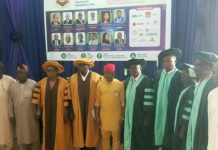
President Bola Tinubu has inaugurated Africa’s first Barefoot Renewable Energy College (BARECKS) and the Green Hydrogen Research and Demonstration Pilot Plant in Osara, Kogi State, describing the institution as a world-class facility that will drive Nigeria’s renewable energy ambitions and address the continent’s shortage of skilled technical manpower.
The President, represented by Vice President Kashim Shettima at the inauguration ceremony held at the Confluence University of Science and Technology, Osara, said the college marks a major milestone in Nigeria’s transition to clean energy and positions the country as a continental leader in renewable energy capacity development.
Tinubu said Nigeria, despite its abundant endowment of sunlight, wind, biomass and water resources, has struggled to convert those natural assets into electricity generation and employment opportunities, adding that the new institution would help bridge that gap.
According to him, the college is modelled after India’s renowned vocational renewable energy institutions, which successfully trained rural women as solar engineers, a model he believes can be replicated across Nigerian communities.
The President noted that the institution was completed within two years of its groundbreaking, describing it as evidence that the Federal Government is committed to delivering projects that directly impact citizens and national development.
He explained that the college was established primarily to close Africa’s critical technical skills deficit in the renewable energy sector by producing technicians, installers, operators and maintenance professionals with practical competencies in modern renewable energy technologies.
Tinubu added that graduates of the institution would earn internationally recognized professional certificates, enabling them to secure employment, establish renewable energy businesses or compete for opportunities globally.
He also called on development partners, private sector organizations, international agencies, and research institutions to collaborate with the college in expanding research, innovation, and technical training, assuring them of Nigeria’s readiness to lead such partnerships.
The President commended the Minister of Innovation, Science and Technology, Dr Kingsley Udeh, the Director-General of the Energy Commission of Nigeria, Dr Mustapha Abdullahi, and the Kogi State Government for ensuring the successful completion of the project.
In his remarks, Governor Ahmed Ododo described the college as a strategic investment in human capital development that would strengthen Nigeria’s energy sector, attract investment and create employment opportunities.
Also speaking, Dr Kingsley Udeh said the project reflects the Federal Government’s commitment to building a knowledge-driven economy, noting that Nigeria’s aspiration of becoming a one-trillion-dollar economy depends on developing skilled professionals in strategic sectors such as renewable energy.
The Director-General of the Energy Commission of Nigeria, Dr Mustapha Abdullahi, disclosed that the college is equipped with smart classrooms, battery energy laboratories, energy efficiency laboratories, and a mini-grid simulation centre to provide practical training for students.
The Ohinoyi of Ebiraland, Dr Ahmed Tijjani Anaje, welcomed the project, saying it would equip young Nigerians with the technical skills needed to contribute meaningfully to national development.
The Issues
Africa continues to face a shortage of skilled technical personnel required for renewable energy deployment.
Nigeria’s abundant renewable energy resources remain underutilized due to limited technical capacity.
Investments in technical education and vocational training are essential to achieving the country’s clean energy and industrialization goals.
Strong partnerships between government, academia, development partners, and the private sector will be crucial for the institution’s long-term success.
Producing globally competitive renewable energy professionals could enhance employment opportunities and support economic diversification.
What’s Being Said
President Bola Tinubu
“This is the first institution of its kind on the African continent, modelled on the celebrated vocational colleges of India that turned unlettered grandmothers into solar engineers.”
“Nigeria assumes, from today, the position of pacesetter in renewable energy capacity development across Africa.”
“Our continent has never suffered a deficit of intention. We have suffered the scarcity of hands trained to execute them.”
“A certificate issued in Osara must one day command respect in Nairobi and in Frankfurt.”
Governor Ahmed Ododo
“The inauguration of the college is a clear indication that Nigeria is on the path to sustainable development through investment in human capital.”
Dr Kingsley Udeh, Minister of Innovation, Science and Technology
“The project reflects the Federal Government’s commitment to building a knowledge-driven economy.”
Dr Mustapha Abdullahi, Director-General, Energy Commission of Nigeria
“The facility is equipped with smart classrooms, battery energy laboratories, a mini-grid simulation centre, energy efficiency laboratories and other modern training facilities.”
What’s Next
The Barefoot Renewable Energy College is expected to commence training its pioneer students in renewable energy technologies while the Green Hydrogen Research and Demonstration Pilot Plant begins supporting research and innovation.
The Federal Government will also seek partnerships with development agencies, research institutions and private investors to expand technical training, strengthen renewable energy research and build a skilled workforce capable of supporting Nigeria’s energy transition.
Bottom Line
The inauguration of Africa’s first Barefoot Renewable Energy College marks a significant step in Nigeria’s drive towards clean energy, technical education and economic diversification. By investing in renewable energy skills development, the Federal Government aims to position Nigeria as a continental hub for innovation, job creation and sustainable energy solutions.










 and the Green Hydrogen Research and ...)