By Boluwatife Oshadiya | August 5, 2026
Key Points
- Brent crude fell below $80 per barrel as optimism over renewed US-Iran talks reduced geopolitical risk premiums
- Markets reacted to reports that Washington, Tehran and Oman are nearing an interim agreement to reopen the Strait of Hormuz
- Investors are awaiting official US crude inventory data after industry figures showed an unexpected rise in oil stockpiles
Main Story
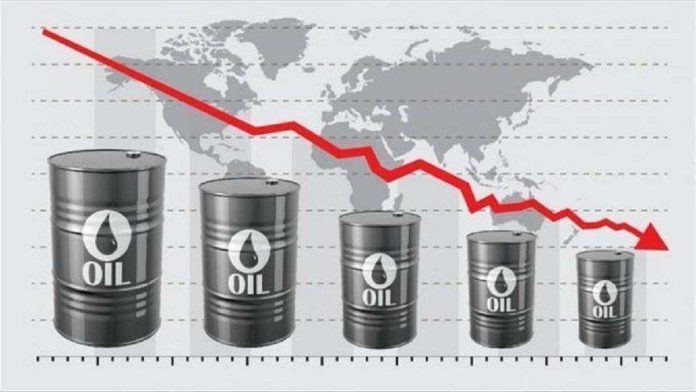
Global oil prices extended losses on Wednesday, with Brent crude slipping below the $80-per-barrel mark as investors responded to renewed diplomatic engagement between the United States and Iran and easing concerns over potential supply disruptions in the Middle East.
International benchmark Brent crude futures for October delivery traded at $79.29 per barrel, down from the previous session’s close of $80.36, while US benchmark West Texas Intermediate (WTI) crude futures declined to $75.40 per barrel, compared with $75.77 previously.
The decline follows reports that the United States, Iran and Oman are close to reaching an interim agreement aimed at restoring a ceasefire between Washington and Tehran and reopening the Strait of Hormuz, one of the world’s most strategic oil shipping routes. According to Axios, an announcement could come as early as Wednesday.
Market sentiment also improved after US President Donald Trump said negotiations with Iran had made significant progress.
“They had an all-day negotiation today, and it looks like things are very good,” Trump said, adding later that the United States was “moving along very nicely” with Iran and that developments could become clearer within 48 hours.
Trump also reiterated that Iran would not be allowed to develop a nuclear weapon and warned Tehran of severe consequences should negotiations collapse after previously agreeing to pursue diplomacy instead of military action.
The easing of tensions has reduced fears of supply disruptions through the Strait of Hormuz, a critical maritime route responsible for transporting roughly 20% of global oil supplies, prompting traders to unwind the geopolitical risk premium that had supported crude prices during recent Middle East tensions.
Adding further pressure to prices, data from the American Petroleum Institute (API) indicated that US crude oil inventories increased by approximately 2.69 million barrels last week, contrary to market expectations for a drawdown of about 2 million barrels. The unexpected build reinforced expectations of softer near-term demand in the US oil market.
What’s Being Said
“They had an all-day negotiation today, and it looks like things are very good,” said US President Donald Trump, describing ongoing discussions between Washington and Tehran.
Market analysts said easing geopolitical tensions have reduced concerns over immediate supply disruptions through the Strait of Hormuz, encouraging traders to scale back the geopolitical premium previously built into oil prices.
What’s Next
- Investors are awaiting official US crude inventory data from the Energy Information Administration (EIA) later on Wednesday for confirmation of market supply trends.
- Markets will closely monitor any formal announcement on the proposed interim agreement between the United States and Iran.
- Traders will also watch developments surrounding the reopening of the Strait of Hormuz, which could significantly influence global oil prices and energy market sentiment.
Bottom Line: The sharp decline in oil prices reflects a market that is increasingly pricing in diplomacy rather than conflict in the Middle East. While geopolitical risks have not disappeared, progress in US-Iran negotiations and expectations of uninterrupted oil flows through the Strait of Hormuz are shifting market attention back to supply-demand fundamentals.