Sheba tells Ricky to replace Araga as director after Araga falls ill
Ricky rejects the role and says the position should be removed
Housemates clash over energy, choreography and coordination during Wager rehearsals
Main Story
BBNaija housemates have debated Araga’s replacement ahead of Thursday’s Wager presentation after Araga fell ill during preparations for the task. By 8am, Barry had prepared spaghetti for Araga and Goddessa, who were both reportedly unwell, and took a bowl upstairs for Araga. He later told Bluethopia that the food had been prepared specifically for the two housemates.
Bluethopia subsequently refused the meal. Chimsom Chuka offered to prepare a burger for her, but she declined, saying she did not like burgers. The focus shifted to Araga’s role during Wager preparations around 9am. Cassi went to the HoH lounge to call Sultex because the housemates were waiting for him to begin preparations.
Sheba then told Ricky that he would take Araga’s place as director. Ricky questioned the decision and, after being told that the directors had selected him, rejected the replacement role and said the position should instead be removed.
Yusuf also raised concerns about changing his original assignment, saying he was not a good dancer and preferred to retain his existing role. Cassi, however, told him he would still perform the role.
By 10am, rehearsals had begun, with housemates working through their assigned scenes. Chimsom Chuka asked for someone to monitor costume changes between scenes, while Cassi volunteered for the responsibility.
Neche called on housemates involved in the first scene to get into position and questioned their level of preparedness. Sheba also criticised the dance performance, saying the group was not delivering enough energy. Cassi agreed that housemates assisting from the sidelines should also contribute to the dance.
Yusuf later asked the housemates to maintain their energy while acknowledging that some participants were injured and needed to rest.
What’s Being Said
“He is taking Araga’s place.” Sheba told Ricky during the discussion over Araga’s replacement.
“The dance is not giving.” Sheba told the housemates during rehearsals, criticising the group’s performance and energy.
In the Diary Room, Gerard also told Biggie that he was concerned the housemates could blame his idea if they lost the Wager. He said his relationship with Kamsy had experienced ups and downs and that he was unsure whether it could distract him from his game.
What’s Next
Housemates are expected to complete their Wager rehearsals ahead of the 7pm presentation
Ricky’s decision on whether to take Araga’s role remains a point of discussion among the housemates
The group will need to resolve concerns over choreography, energy and costume coordination before the presentation
The Bottom Line:
Araga’s absence has introduced an additional coordination challenge as the housemates approach their Wager presentation. With disagreements over roles and concerns about rehearsal quality, the group has limited time to settle its performance structure before 7pm.
Brent and WTI pull back after a six-session rally as Trump-Iran talks stall over the world’s most important oil chokepoint, leaving Nigeria’s fuel import bill exposed to further shocks
What’s happening
Global crude benchmarks eased on Thursday after a sharp run-up, with Brent crude trading near $88 a barrel and West Texas Intermediate below $83, both down more than 1 percent on the day. The pullback follows a six-session rally in which Brent had climbed roughly 12 percent, driven by escalating rhetoric between Washington and Tehran over the Strait of Hormuz, the narrow waterway through which about a fifth of global oil supply moves daily.
President Donald Trump said on Wednesday that the United States had “total control” of the strait, declaring “We own it” and warning that any Iranian move against shipping would be met with force. Talks between the two sides remain deadlocked, with both parties hardening their positions. The standoff follows deadly attacks on vessels in the Red Sea and Gulf of Oman that have already heightened concern over shipping risk along the route.
The International Energy Agency’s latest monthly report flagged a global supply shortfall of 1.8 million barrels a day this quarter as the Middle East conflict persists, even as US crude inventories posted their largest weekly build since early 2023, adding a note of uncertainty to the demand outlook.
Why it matters for Nigeria
Nigeria sits on both sides of this shock. As a major crude exporter, higher benchmark prices widen the country’s fiscal headroom: with the 2026 budget built on a benchmark of $64.85 a barrel, every dollar above that level adds to potential revenue, and Nigeria has been earning an estimated $22 per barrel in excess of the budget assumption at current prices.
But that upside is offset, and arguably outweighed, on the downstream side. Nigeria imports the bulk of its refined petroleum needs despite being a crude producer, and depot-level petrol prices have already been climbing as global freight and crude costs rise. Depot operators raised rates by between N20 and N50 a litre in the past week alone, with most majors now selling petrol in the N1,200–N1,260 per litre range in Lagos, and some independent marketers quoting above N1,500.
The Dangote Refinery’s move to dollar-denominated pricing in July, prompted by a mismatch between naira-denominated crude receipts and dollar-denominated costs, has removed one of the buffers Nigerians had counted on to insulate them from exactly this kind of import-cost volatility.
By the numbers
– Brent crude: ~$88/bbl, down 1.2 percent on the day, up over 31 percent year-on-year
– WTI crude: ~$82/bbl, down 1.4 percent on the day, up over 28 percent year-on-year
– Global supply shortfall: 1.8 million barrels a day this quarter, per the IEA
– Nigeria’s 2026 budget benchmark: $64.85/bbl at 1.84 million bpd production
– Excess revenue to Nigeria at current prices: ~$22/barrel above budget assumption
– OPEC output: rose 1.17 million bpd in July as Gulf producers restored shut-in capacity
– Petrol depot prices (Lagos): N1,180–N1,260/litre at major operators; independents above N1,500
What’s being said
Bloomberg reported that <cite index=”8-1″>oil held the bulk of its six-session gain as traders waited for signs of progress toward reopening the strait.</cite> Energy marketers in Lagos have warned that pump prices could rise further if crude stays elevated and logistics costs keep climbing, according to industry data cited by local outlets tracking depot movements this week.
What to expect
Three scenarios are worth watching into next week. A negotiated de-escalation over Hormuz would likely pull Brent back toward the low $80s, easing pressure on Nigeria’s import bill within days given how fast the market has been repricing headlines. A prolonged standoff without actual disruption to tanker traffic would probably keep prices rangebound in the high $80s, similar to current levels, with depot operators continuing incremental hikes. The tail risk is an actual interdiction of shipping through the strait, which historical precedent from April’s blockade episode suggests could send Brent above $100 within a single session and trigger a much sharper, faster pass-through to Nigerian pump prices than the market has priced in so far.
For BizWatch’s coverage, the numbers to track closely are NNPCL’s monthly feedstock allocation to Dangote Refinery, the naira-dollar rate given the refinery’s new dollar pricing template, and any signal from the CBN on FX support for fuel importers if the standoff drags into a second week.
The bottom line
The Strait of Hormuz remains the single biggest swing factor in global energy markets right now, and Nigeria’s exposure cuts both ways: a fiscal windfall on the crude side, a consumer cost shock on the refined products side. Until Washington and Tehran move off their current positions, expect continued volatility rather than a clear directional trend.
Nigeria’s formal job market expanded more in 2025, with job postings rising from 90,666 in 2024 to 109,434 in 2025 a 21% year-on-year increase.
· But more vacancies have not eliminated the country’s biggest employment problem, a persistent gap between what graduates know and what employers can immediately use.
· Nigerian employers are increasingly looking beyond degrees and job titles toward demonstrable skills, practical experience, problem-solving ability and workplace readiness.
MAIN STORY
The Nigerian job market is entering one of its most competitive periods in years. There is more hiring activity than there was a year ago. There are more companies recruiting. There are more digital jobs. There are more opportunities to work remotely.
There are more technology-driven businesses than at almost any other point in Nigeria’s economic history, And yet, for many graduates, getting hired still feels remarkably difficult. That apparent contradiction is the defining feature of Nigeria’s 2026 employment market.
THE ISSUES
The most important finding from the Nigerian labour market is not that one particular technology has suddenly become fashionable. It is that the definition of employability is changing, For years, the traditional Nigerian formula was relatively straightforward: Degree + NYSC + CV + interview = job.
That formula is becoming less reliable. Today, employers increasingly want evidence that a candidate can actually perform the work, Don’t just tell employers what you have learned. Show them what you can do.
THE SKILLS
Artificial Intelligence & AI-Powered Productivity
AI is no longer simply a career category for machine-learning engineers. It is becoming a workplace competency. The most valuable AI skill for many Nigerian professionals in 2026 may not be the ability to build an AI model from scratch. It may be knowing how to use existing AI systems to perform ordinary business tasks faster, better and more intelligently, Knowing how to combine AI with your existing profession. That is much more valuable than simply knowing how to open an AI chatbot.
Data Analysis — Excel, SQL, Power BI & Python
Nigeria is becoming increasingly data-driven. Banks track transactions. Fintechs track customers. Telecommunications companies track usage. FMCGs track sales. Hospitals track patients. Government agencies collect increasingly large amounts of information. The problem is not necessarily the absence of data. It is the shortage of people who can turn that data into decisions. That is where data analysis becomes valuable.
An HR professional can analyse employee turnover.
A sales executive can identify which products generate the most revenue.
A communications professional can measure audience behaviour.
The tool matters, but the ability to answer the business question matters more.
Content Creation
Content Creation involves the process of creating and publishing contents such as videos, audios, photos, and writing to engage, educate, and attract audience through the media. It usually involves the use of tiktok or youtube videos, instagram reels, blog posts, captions, memes, educational posts or brand contents. Content Creation is a very relevant skill because employers wants reliable creators who can combine storytelling, social media strategy, video production, to produce content that is attractive and engaging and delivers a measurable business result. In 2026 job market, it is evolving into a hybrid business skill that combines all forms of content creation , employers wants a person who can take an idea from concept to publication and then use performance data to understand what worked.
Efficiency in microsoft office
This means more than simply knowing how to operate microsoft word, excel, or powerpoint and all other microsoft offices quickly, accurately, and professionally, to complete real workplace task and save time. It involves creating and organising spreadsheets, sorting and filtering information, formatting documents properly, creating templates and so on. In 2026 job market, this remains a valuable workplace skill because employees are expected to work with data, prepare reports, communicate properly and professionally, present information with increasing speed and accuracy. It isnt all about just knowing how to use microsoft office, but it is knowing how to use its advanced features to automate tasks, analyse information, produce professional documents and make better business decisions.
Copywriting
Copywriting is the skill of using words strategically to make people pay attention, understand an idea, feel something and ultimately take an action. In 2026 nigeria’s job market, copywriting makes much more than simply writing good english. Businesses need people who can turn products, services and ideas into messages that customers understand and respond to from video scripts, social media captions, advertising campaigns to website copy and brand stories. The strongest copywriters understand their audience, research the market, write compelling stories, communicate benefits clearly and use calls to action to move people from attention to action. Copywriting combines with content creation, digital marketing and use of ai and analytics that becomes very versatile and can be applied across all industries.
Graphic Design
Graphic design involves the ability to communicate ideas, information, or messages visually. It involves combining images, colors, illustrations, typography, layouts and other visual elements to create materials that communicate effectively. Every organisation needs a graphic designer for visual contents like social media, advertising, branding, websites, presentations, events and marketing campaigns. It is importants for a company’s visual identity. Graphic design is valuable because it combines creativity, with a practical business need helping organisations communicate, market their products and maintain a professional visual identity.
Bottom Line
Skills are important in 2026 job market, whether you are an undergraduate or graduate, nysc corp member or looking for a job, it is important to have any of these skills to be able to enter into the work industry. we at Bizwatch Nigeria have done our research and have listed some of the necessary skills that we know is important in todays work industry.
Ranking places Access first nationwide by candidate enrolment and second by charterholders, as talent depth becomes a new competitive front in Nigerian finance
Access has emerged as the single largest source of Chartered Financial Analyst (CFA) candidates in Nigeria, according to new data from CFA Society Nigeria that is reshaping how the country’s financial sector approaches talent development.
The rankings, published as part of CFA Society Nigeria’s Where Nigeria’s Finance Professionals Work series in a national daily, placed Access first among employers of CFA candidates nationwide and second among employers of CFA charterholders. The data was compiled from the Society’s Salesforce Membership Database as at June 2026.
By the numbers
82 — CFA candidates currently enrolled at Access, the highest of any employer nationwide
38 — candidates at the next-placed institution, less than half Access’s total
11 — CFA charterholders at Access who have completed all three levels of the programme and met its experience and ethics requirements, placing the institution second nationwide on this measure
What’s being said
Access Holdings Group Chief Executive Officer Innocent C. Ike framed the achievement in institutional rather than recruitment terms: “Every candidate on that list represents our commitment to building institutions and professionals that endure.”
CFA Society Nigeria described the exercise as a way of recognising employers whose people bring rigour, integrity and global best practices into the workplace every day.
Why it matters
For an industry long measured by balance sheet size and branch count, the rankings point to a different axis of competition: which institutions are building the deepest bench of certified, globally credentialed talent. Analysts following the sector say the outcome is notable less for the ranking itself than for what it signals about talent strategy across Africa’s financial services industry.
A single institution developing more aspiring charterholders than the rest of the market combined raises the floor for professional standards nationally, not just within one balance sheet. Every candidate who advances through the CFA Programme adds to a shared pool of ethics-trained, analytically rigorous professionals that Nigeria’s capital markets, pension funds and asset managers all eventually draw from.
Context
The CFA charter is widely regarded as the global benchmark credential in investment management, requiring candidates to clear three rigorous exam levels alongside relevant work experience and adherence to a code of ethics. Employer-level enrolment data of this kind is relatively rare in the Nigerian market, making CFA Society Nigeria’s series one of the few external benchmarks for comparing institutional investment in staff development.
Outlook
The rankings sit at the centre of Access’s stated ambition to become the World’s Most Respected African Financial Services Group. If the CFA numbers are an indication, the Group’s route to that goal is running as much through the calibre of the people inside its offices as through the scale of its branch network — a bet that Nigeria’s finance professionals, and the institutions that will one day hire them, appear increasingly willing to place alongside Access.
Hello, my fellow Ballot-Box Analysts, Electoral Forensics, and Surviving Citizens. Welcome back to our weekly sanctuary! Today is Thursday, August 13, 2026. If you spent your morning staring at a political map wondering how a whole ruling party vanished off the ballot paper, or if you are currently counting down the 48 hours until the high-stakes Osun State Governorship Election this Saturday, August 15, pull up a plastic chair. You are in the safest room on the internet.
Forget routine governance, quiet policy speeches, or standard party manifestos; this week, Osun State—the heartland of the Living Spring, has officially transformed into the undisputed capital of Nigerian political drama.
Between a governor running under a brand-new party banner, court battles over local government bank accounts, endorsements from spiritual chiefs, and an 84-year-old grandma throwing her hat into the ring, let’s break down the explicit, hilarious, and mind-boggling realities of Saturday’s showdown.
If you took a nap in early 2025 and woke up in August 2026, reading the Independent National Electoral Commission (INEC) final candidates list for Osun State will make you question your own memory.
Incumbent Governor Ademola Adeleke, the world-famous “Dancing Governor”—startled political scientists when he parted ways with the People’s Democratic Party (PDP) and secured the governorship ticket under the Accord Party. When INEC released the official final list of six cleared candidates, the PDP was nowhere to be found!
The political lineup itself reads like a Nollywood blockbuster cast: 1. Ademola Adeleke (Accord): Running on a 5-point agenda, heavy infrastructure claims, and a relentless “Buga” victory dance. 2. Munirudeen Bola Oyebamiji, aka “AMBO” (APC): The former NIWA boss backed by the main opposition machinery, promising a total corporate overhaul. 3. Najeem Salaam (ADC): The former Speaker of the House bringing legislative experience into the three-way battle. 4. Mama Adegabo Opawoye Yemisi (ADP): At 84 years old, Mama is officially the oldest candidate on the ballot! Paired with a 43-year-old running mate, she proves that age is truly just a number when it comes to chasing the keys to the government house.
In Osun State, political loyalty isn’t tied to party logos, it’s tied to the rhythm! Yesterday you were under an umbrella, today you are playing the Accordion, and tomorrow you might be driving a tractor. The only constant thing in Osogbo is electoral vigilance!
No off-cycle election in Nigeria comes without heavy pre-game institutional warfare, and Osun 2026 has delivered maximum drama across all branches of government.
First came the legal battles over the sacked local government “Yes/No” chairmen, complete with court rulings, police command warnings, and bank affidavit disputes involving local government allocation accounts. Then, Governor Adeleke held an emergency press briefing raising an alarm over alleged plots by federal anti-graft agencies (EFCC) to freeze state bank accounts right before voting day to paralyze campaign and administrative logistics!
While lawyers were filing injunctions in Abuja and Osogbo, the campaign trail took an even more colorful turn with traditional security endorsements.
In a viral Osogbo gathering, Governor Adeleke received formal re-election endorsements from: 1. Chief Lukman Ayodeji (popularly known as “Sango of Africa”) leading traditional security outfits. 2. The Agbekoya Farmers Association and Local Hunters, who publicly declared they would form an “electoral shield” around polling units to prevent ballot snatching. 3. A group of recently pardoned convicts, who literally showed up at the state annex to thank the governor for their freedom and promised to mobilize their entire extended family to vote Accord!
To ensure every citizen had a chance to pick up their Permanent Voter Cards, the state government declared an official work-free day dedicated strictly to PVC collection. In Osun, getting your PVC isn’t just a civic duty—it’s your VIP pass to the ultimate Saturday spectacle.
Why does this single state election feel like a national world cup final? Because it is an Off-Cycle Governorship Election.
Because the election isn’t diluted by presidential or parliamentary polls happening on the same day, the entire national apparatus—INEC national commissioners, thousands of police officers, election observers, and party heavyweights from Abuja—is concentrated entirely within the borders of Osun State.
Behind the satire lies a crucial truth: off-cycle elections act as a live laboratory for Nigerian democracy. How INEC handles logistics, how security agencies maintain neutrality, and how quickly results are transmitted electronically from rural polling units in Ayedire, Olaoluwa, and Ila to the central portal will set the benchmark for the upcoming 2027 general elections.
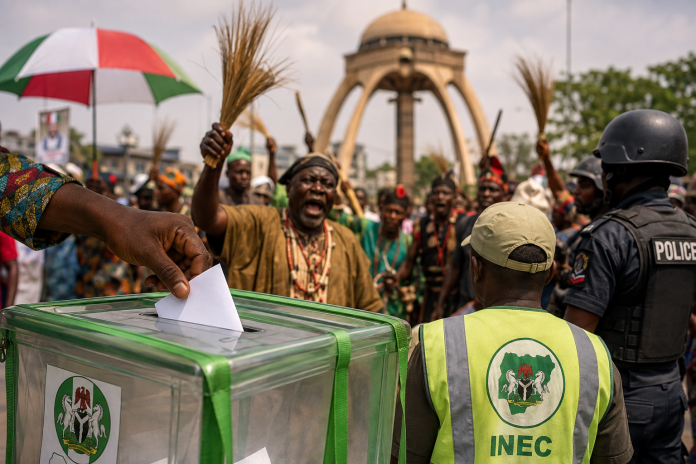
Civic Protocols for Saturday, August 15 Cast Your Vote Peacefully: If you are a registered voter in Osun State, step out early on Saturday, cast your ballot for your chosen candidate, and maintain order at your polling unit. Filter the Pre-Results Noise: Social media will be flooded with fake “early victory” claims on Saturday night. Resist the urge to share unverified figures—trust only official, INEC-stamped announcements. Reject Vote-Buying: A single ₦10,000 cash gift at a polling booth cannot buy roads, healthcare, or quality education for four years. Protect the integrity of your ballot!
See you next Thursday—hopefully with a peaceful election result, a certified winner, and zero timeline drama!
WHO says the Ebola outbreak in the Democratic Republic of the Congo has become the second-largest recorded.
Most reported cases and deaths are concentrated in Ituri Province.
WHO is expanding treatment, surveillance and contact tracing efforts across affected areas.
Funding shortages and insecurity are complicating the response.
Main Story
The World Health Organisation (WHO) says the Ebola outbreak in the Democratic Republic of the Congo (DRC) has become the second-largest recorded, with thousands of cases and deaths reported across affected provinces.
WHO Director-General, Dr Tedros Ghebreyesus, disclosed this on Wednesday during an online media briefing on Ebola and other global health issues.
He said 4,449 confirmed cases and 2,061 deaths had been recorded across five provinces and 53 health zones, with more than 90 per cent of cases and 80 per cent of deaths occurring in Ituri Province.
Tedros said sustained transmission had been reported in Bunia, Rwampara, Nizi and Lita, raising concerns about continued spread within communities.
He said the number of deaths occurring outside treatment centres and among people who were not on known contact lists suggested that some transmission chains had not yet been identified.
According to him, delayed treatment and unsafe handling of bodies after death were contributing to the spread of the virus.
He said early access to treatment, safe burials and stronger community engagement remained essential to containing the outbreak.
Tedros said authorities and response partners were expanding surveillance, treatment and contact tracing in affected areas, with efforts underway to increase contact tracing coverage from about 80 per cent to 95 per cent.
He said treatment capacity was also being expanded, with a target of providing 3,000 beds within 12 weeks.
The WHO chief said the response would require thousands of additional health workers, noting that at least 21,000 community health workers had already been trained to support activities in affected communities.
He said treatment centres, laboratories, burial teams and community engagement programmes were operating across the affected provinces.
Despite the challenges, Tedros said 886 patients had recovered from the disease, while research into vaccines and treatments continued.
He said two vaccines developed specifically against the Bundibugyo virus had entered Phase I human safety trials.
Tedros also recommended that a Zaire ebolavirus vaccine be assessed in a Phase III trial following evidence of possible cross-protection from animal studies, while noting that its effectiveness against Bundibugyo virus in humans remained uncertain.
He disclosed that the WHO-sponsored PARTNERS trial had enrolled 100 patients as researchers continued efforts to establish effective treatments.
The WHO director-general said the response was being supported by governments, WHO, the Africa Centres for Disease Control and Prevention (Africa CDC) and other international partners.
He, however, identified funding as a major challenge, saying only 264 million dollars of the 518 million dollars required under the Continental Preparedness and Response Plan had been disbursed.
He also called for improved security and access to affected communities, particularly in parts of eastern DRC where armed conflict was affecting response operations.
The Issues
The outbreak is being driven by continued community transmission, delayed treatment, unidentified transmission chains and unsafe burials. Insecurity and inadequate funding are also limiting the ability of health authorities and partners to reach affected communities and expand response capacity.
What’s Being Said
“Late-stage illness outside treatment centres and unsafe handling of bodies after death are major drivers of Ebola transmission.” – Tedros Ghebreyesus, WHO Director-General
What’s Next
WHO and its partners are expected to expand surveillance, contact tracing, treatment capacity and community engagement while efforts continue to secure additional funding and improve access to affected areas.
Bottom Line
The Ebola outbreak in the DRC has reached a critical stage, with sustained community transmission and a large concentration of cases and deaths in Ituri. WHO says faster identification of transmission chains, early treatment, safe burials, adequate funding and stronger community cooperation will be necessary to contain the outbreak.
Lagos CPS pensioners have issued a 19-day ultimatum to the state government.
The union says it may protest on August 31 if the demands are not met.
Pensioners are seeking implementation of pension enhancement and wage award.
LASPEC says the governor has directed action on the pension increase.
Main Story
Contributory Pension Scheme (CPS) pensioners in Lagos State have threatened to protest over the delayed implementation of pension enhancement and wage award approved for retirees.
The Nigeria Union of Pensioners, Contributory Pension Scheme (NUPCPS), Lagos State Council, said it had given the state government 19 days to implement the benefits or face a demonstration.
The union’s chairman, Michael Omisande, said the protest had been tentatively scheduled for Aug. 31, 2026, if the government failed to meet the demands within the ultimatum.
Omisande disclosed this after a meeting with officials of the Public Service Office and the Lagos State Pension Commission (LASPEC).
He urged members to prepare for the planned action, describing it as necessary to press for improved financial welfare.
The chairman said the union had earlier written to Gov. Babajide Sanwo-Olu over the delay, adding that the pension enhancement implementation template was submitted to the state government in January 2026.
He said LASPEC later informed the union that approval had been given for an actuary to determine the modalities for implementing the pension increase.
Omisande said the Aug. 3 meeting with government officials focused on the delay in implementing the pension enhancement, wage award and other welfare measures for CPS retirees.
LASPEC Director-General, Babalola Obilana, told the meeting that Sanwo-Olu had summoned him and given directives concerning the pension increase.
He, however, did not indicate when implementation of the increase would begin.
Omisande said the union had also informed the Speaker of the Lagos State House of Assembly, Mudashiru Obasa, and the state Commissioner of Police about the proposed protest.
He said the notifications were intended to facilitate adequate security arrangements for the demonstration.
The Lagos State Council of the Nigeria Labour Congress (NLC), represented by its chairman, Agnes Sessi, supported the pensioners’ demands and appealed to government officials to expedite implementation.
The union said its national leadership had endorsed the Lagos council’s position and would support the planned protest if the government failed to meet the demands within the 19-day ultimatum.
The Issues
The dispute centres on the delayed implementation of pension enhancement and wage award for CPS retirees in Lagos. The pensioners say the delay has persisted despite an implementation template submitted to the state government in January 2026 and subsequent steps by LASPEC.
What’s Being Said
“It is a sacrifice we must all make for our financial emancipation.” – Michael Omisande, Lagos NUPCPS chairman
What’s Next
The pensioners have given the Lagos State Government 19 days to implement the pension enhancement and wage award. If the demands are not met, the union says it will proceed with the planned Aug. 31 protest.
Bottom Line
Lagos CPS pensioners are demanding action on pension increases and wage awards they say have been delayed despite earlier administrative steps. The union has indicated that it will resort to protest if the government does not implement the benefits within the ultimatum period.
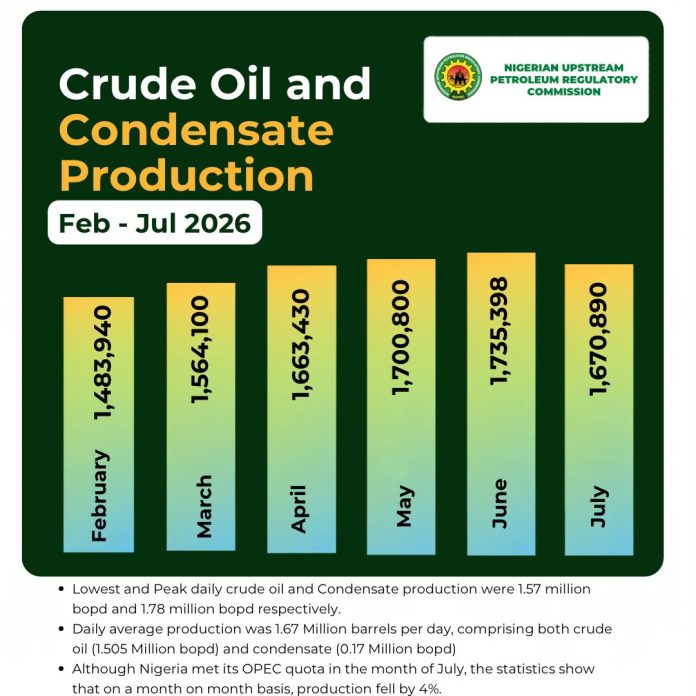
Nigeria produced 1.505 million barrels of crude oil per day in July, above its 1.5 million OPEC quota
Combined crude and condensate output reached 1.67 million barrels per day despite a 4% monthly decline
NUPRC attributed the decline to operational challenges at the Erha and Akpo fields
Main Story
Nigeria exceeded its Organisation of the Petroleum Exporting Countries (OPEC) crude oil production quota for the third consecutive month in July 2026, despite a four per cent month-on-month decline in overall output.
The Nigerian Upstream Petroleum Regulatory Commission (NUPRC) reported that the country produced an average 1.505 million barrels of crude oil per day during the month, compared with its 1.5 million barrels-per-day OPEC quota.
Including condensate production of about 0.17 million barrels per day, total daily output reached 1.67 million barrels, according to the commission’s July production statistics. The NUPRC also reported a daily production peak of 1.78 million barrels and a low of 1.57 million barrels during the month.
Forcados Terminal was the largest-producing stream, averaging 322.34 thousand barrels per day, followed by Bonny Terminal at 303.72 thousand barrels per day. Qua Iboe Terminal recorded 158.02 thousand barrels per day, while Escravos and Bonga averaged 131.41 thousand and 100.23 thousand barrels per day respectively.
The production decline was linked to operational challenges at the Erha and Akpo fields, which constrained output during the review period. The commission said operations across other assets remained relatively stable.
“Routine production activities and crude evacuation operations were largely sustained across the sector,” the Nigerian Upstream Petroleum Regulatory Commission said.
The July performance continues a recent improvement in Nigeria’s ability to meet its OPEC allocation. Nairametrics reported that Nigeria’s crude production also exceeded its quota in May, when output reached 1.53 million barrels per day, marking the country’s return above the quota after a period of underperformance.
The Issues
Nigeria’s latest performance presents two different signals for the upstream sector. Meeting the OPEC quota supports export capacity and potential government revenue, but the four per cent monthly decline shows that production remains vulnerable to asset-level disruptions.
The NUPRC’s identification of Erha and Akpo as sources of the July disruption also highlights the importance of maintaining mature producing assets. Sustaining output above quota will therefore depend not only on production targets but on the reliability of individual fields, evacuation infrastructure and operators’ ability to resolve operational constraints quickly.
The production level also remains below the higher output assumptions used for Nigeria’s fiscal planning, meaning continued increases in production remain important for strengthening oil revenues and foreign-exchange supply.
What’s Being Said
“Routine production activities and crude evacuation operations were largely sustained across the sector,” the Nigerian Upstream Petroleum Regulatory Commission said.
CardinalStone has projected average Nigerian oil production of 1.67 million barrels per day for 2026, citing improved security conditions and additional export volumes as potential supports for output.
What’s Next
NUPRC and operators are expected to address the operational problems affecting the Erha and Akpo fields
Industry operators will need to sustain production reliability across major terminals and producing assets
Future monthly production data will show whether Nigeria can maintain output above its OPEC allocation while reversing the July decline
The Bottom Line:
Nigeria’s third consecutive month above its OPEC quota is a positive production signal, but the July decline shows that the recovery remains vulnerable to operational disruptions. The priority now is converting quota compliance into sustained, reliable production growth rather than short-term gains.
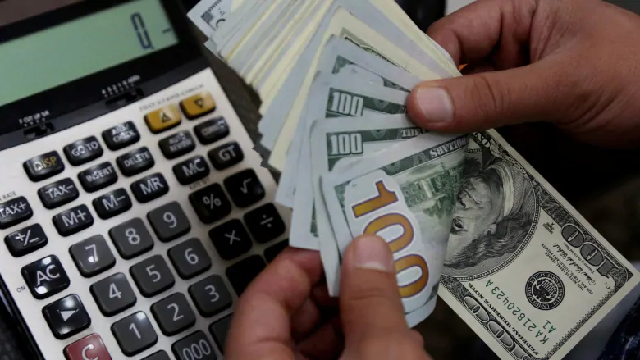
The exchange rate between the Naira and the US dollar, according to the data released on the FMDQ Security Exchange,the official forex trading portal, showed that the naira closed at 1362 per $1 on Thursday, August 13th 2026. The naira traded as high as 1359 to the dollar at the investors and exporters (I&E) window on Wednesday. This is brought to you by Bizwatch Nigeria.
Dollar to naira exchange rate today black market (Aboki dollar rate):
The exchange rate for a dollar to naira at Lagos Parallel Market (Black Market) players sell a dollar for ₦1430 and buy at ₦1415 on Wednesday 12th August, 2026, according to sources at Bureau De Change (BDC).
Please note that the Central Bank of Nigeria (CBN) does not recognize the parallel market (black market), as it has directed individuals who want to engage in Forex to approach their respective banks.
Dollar to Naira Black Market Rate Today
Dollar to Naira (USD to NGN)
Black Market Exchange Rate Today
Selling Rate
₦1430
Buying Rate
₦1415
Dollar to Naira CBN Rate Today
Dollar to Naira (USD to NGN)
CBN Rate Today
Highest Rate
₦1362
Lowest Rate
₦1359
Please note that the rates you buy or sell forex may be different from what is captured in this article because prices vary.
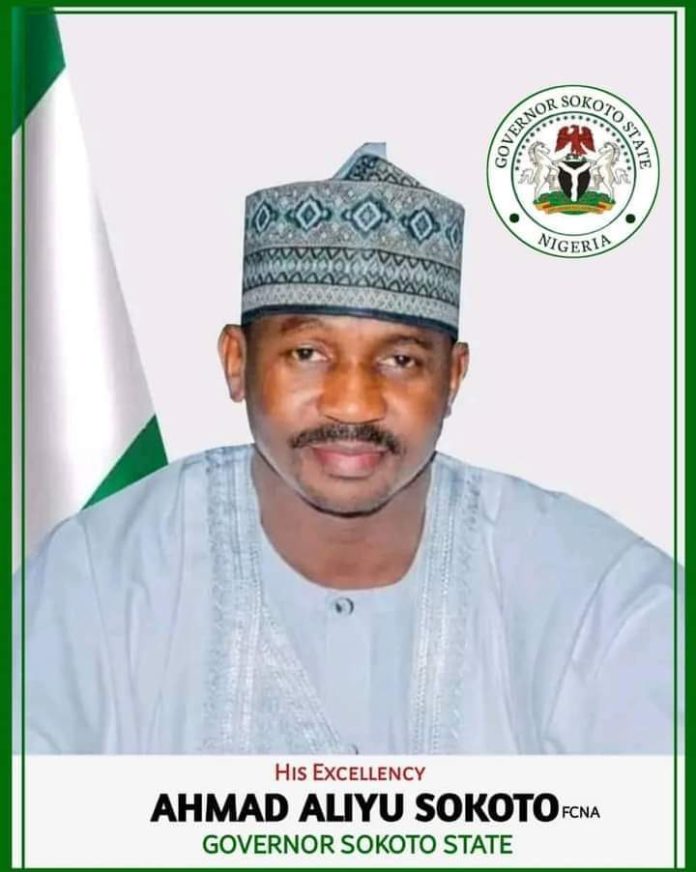
The Sokoto State Government has approved N1.759 billion for the procurement of 1,000 Bajaj motorcycles for security agencies.
The motorcycles are expected to improve the mobility of security personnel in difficult terrains and communities affected by banditry.
The procurement comes after the state acquired 62 armoured vehicles at a cost of N27 billion for security agencies.
The State Executive Council also approved more than N2.4 billion for education, healthcare, vocational training and water infrastructure.
The approvals were made at the sixth regular meeting of the Sokoto State Executive Council for 2026, chaired by Deputy Governor Idris Muhammad Gobir.
Main Story
The Sokoto State Government has approved N1.759 billion for the procurement of 1,000 Bajaj motorcycles to strengthen security operations and improve the fight against banditry across the state.
The approval was one of the resolutions reached during the sixth regular meeting of the Sokoto State Executive Council for 2026, chaired by the Deputy Governor, Idris Muhammad Gobir.
The Director-General, Media and Publicity, Government House, Abubakar Bawa, disclosed the decision in a statement issued on Thursday.
According to the government, the motorcycles will be distributed to security agencies to complement the 62 armoured vehicles recently procured at a cost of N27 billion.
The motorcycles are expected to provide security personnel with greater mobility, particularly in rural communities, narrow routes and difficult terrains where larger security vehicles may face operational limitations.
The procurement comes against the backdrop of persistent security challenges in parts of Sokoto and the wider North-West, where banditry, kidnapping and attacks on rural communities have continued to place pressure on security agencies.
The government said providing appropriate logistics and mobility assets was necessary to enable security personnel to respond more quickly to threats, patrol vulnerable communities and conduct operations in hard-to-reach locations.
The Issues
The decision highlights the growing financial commitment required by state governments to support security agencies amid persistent insecurity.
While motorcycles can offer security personnel greater mobility in rural and difficult terrain, their effectiveness will ultimately depend on proper deployment, maintenance, fuel availability, personnel training and coordination among the various security agencies.
There is also the broader question of whether increased spending on security equipment will translate into sustained improvements in public safety.
Beyond mobility, effective intelligence gathering, community engagement, inter-agency cooperation and timely response remain critical to tackling banditry and kidnapping.
The scale of the expenditure also underscores the need for transparency and accountability in the procurement and distribution of security equipment.
What’s Being Said
The Sokoto State Executive Council said the procurement was intended to strengthen the operational capacity of security agencies.
“The procurement of the 1,000 motorcycles is aimed at complementing the recently procured armoured vehicles and enhancing the operational capacity of security agencies across the state.”
The Director-General, Media and Publicity, Abubakar Bawa, said the procurement formed part of the government’s broader effort to provide security agencies with the logistics required to tackle criminal activities effectively.
Security Investment
The N1.759 billion motorcycle procurement adds to the state government’s recent investment in security infrastructure.
The state has already procured 62 armoured vehicles for N27 billion, which have been distributed to security agencies.
The latest procurement suggests a strategy that combines heavily protected vehicles for major operations with smaller, more mobile vehicles for rural patrols and difficult terrain.
With 1,000 motorcycles costing N1.759 billion, the average procurement cost works out at approximately N1.76 million per motorcycle, based on the government’s stated figure.
Beyond Security
The Executive Council also approved several projects covering education, healthcare, vocational development and water supply.
The approved projects include:
N723.17 million for the renovation of Government Technical College, Runjin Sambo.
N498.99 million for the rehabilitation of A.A. Raji Special School.
N489.32 million for Phase I renovation of the College of Nursing Sciences.
N229.36 million for the renovation of male and female hostels at the College of Basic and Remedial Studies.
N174.64 million for the renovation of staff quarters and upgrading of the perimeter fence at the College of Agriculture and Animal Science, Wurno.
N133.67 million for the construction of a perimeter fence at Wamakko Primary Health Centre.
N93.88 million for vocational learning equipment for 46 women’s vocational centres across the state’s 23 local government areas.
N90.21 million for PVC pipes and plumbing fittings to maintain 142 semi-urban water supply schemes.
The projects indicate that the government’s spending priorities extend beyond security to human capital development and essential infrastructure.
What’s Next
The immediate priority will be the procurement and distribution of the 1,000 motorcycles to designated security agencies.
Security agencies are expected to deploy the motorcycles to areas where mobility remains a major operational challenge, particularly communities affected by banditry.
The effectiveness of the investment will depend on how the motorcycles are allocated, maintained and deployed, as well as the level of coordination between security agencies operating across the state.
The state government is also expected to commence the approved education, healthcare, vocational and water projects.
Bottom Line
Sokoto’s approval of N1.759 billion for 1,000 motorcycles represents another major investment in the state’s response to insecurity. The motorcycles are expected to complement the recently acquired armoured vehicles by giving security personnel greater mobility in rural and difficult-to-access areas.
At the same time, the additional approvals for schools, healthcare, vocational centres and water infrastructure show an attempt to balance security spending with broader socio-economic development.
The real measure of the investment, however, will be whether the additional equipment translates into faster security response, safer communities and a sustained reduction in banditry and other criminal activities.
SEC requires eligible equities and commodities transactions to be fully settled by 5:00 p.m. on T+1
Brokers and dealers without sufficient funds will be subject to CSCS default management procedures
Foreign portfolio investors are exempt from mandatory prefunding but their operators must ensure timely settlement
Main Story
The Securities and Exchange Commission (SEC) has fixed 5:00 p.m. on the first business day after trading as the settlement deadline for eligible equities and commodities transactions under Nigeria’s T+1 framework.
The Commission disclosed the requirement in a circular issued to capital market operators and other market participants, directing that all affected transactions must be fully funded by the 5:00 p.m. T+1 deadline.
Nigeria commenced its transition from T+2 to T+1 settlement for eligible equities and commodities transactions on June 1, 2026, as part of the SEC’s market modernisation programme. The regulator said the shorter cycle is intended to improve market efficiency, reduce counterparty exposure, strengthen liquidity and align Nigeria with international settlement standards.
Under the new requirement, transactions must comply with the delivery-versus-payment (DvP) settlement process, which requires the delivery of securities and corresponding payment to be completed within the prescribed settlement framework.
“Accordingly, all transactions in the affected securities must be fully paid by 5:00 p.m. T+1,” the Securities and Exchange Commission said.
The SEC warned that brokers or dealers whose trading accounts lack sufficient funds to meet settlement obligations would be treated as defaulters under the Central Securities Clearing System (CSCS) Default Management Procedure.
The Commission also clarified that foreign portfolio investors would not be required to prefund their accounts before executing trades in Nigeria. However, capital market operators acting for such investors must maintain effective controls to ensure that funds are available and settlement obligations are completed within the prescribed timeframe.
The directive places greater emphasis on operational readiness among brokers, custodians, settlement banks and other market participants as the market adjusts to the shorter settlement window.
What’s Being Said
“The Commission’s priority is to ensure strict delivery-versus-payment discipline across brokers, custodians, settlement banks, and the Central Securities Clearing System (CSCS) Plc as the market adapts to the shortened settlement cycle,” said Emomotimi Agama, Director-General, Securities and Exchange Commission.
Market analysts have previously linked the early adjustment period under T+1 to changes in trading activity, with some experts saying foreign investors were initially staying on the sidelines while assessing the operational impact of the new framework.
What’s Next
Capital market operators are expected to maintain systems and controls capable of meeting the 5:00 p.m. T+1 settlement deadline
The SEC is targeting a sustained near-zero trade-failure rate during the second half of 2026.
FTSE Russell is expected to provide an update by the end of August 2026 on Nigeria’s planned reclassification, following its assessment of the impact of T+1 on international investors.
The Bottom Line:
The 5:00 p.m. deadline turns Nigeria’s T+1 reform from a broad settlement-cycle change into a tighter operational requirement for market participants. Its success will depend on whether brokers, custodians and settlement institutions can consistently meet the compressed funding window without creating avoidable settlement failures or barriers for international investors.
India says Nigeria’s participation can strengthen Africa’s representation in BRICS.
Nigeria is expected to attend the 18th BRICS Summit in New Delhi.
India-Nigeria bilateral trade rose to about $9 billion in 2025-2026.
More than 200 Indian companies currently operate in Nigeria.
Main Story
India has advocated a stronger role for Nigeria within BRICS, saying the country’s economic and demographic weight would strengthen the bloc’s representation of developing countries.
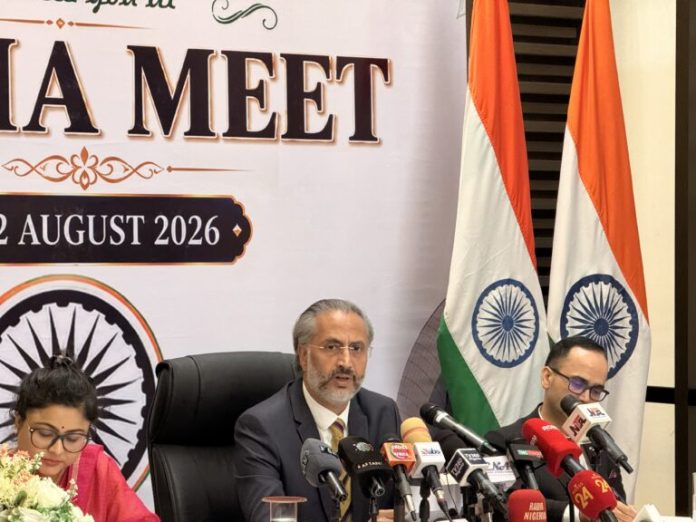
Indian High Commissioner to Nigeria, Amb. Abhishek Singh, made the position known on Wednesday at a media meeting in Abuja.
Singh said Nigeria’s position as Africa’s largest economy and one of the world’s most populous countries made its participation strategically significant to BRICS.
He said Nigeria had been invited as a partner to the 18th BRICS Summit scheduled for Sept. 12 and 13 in New Delhi, and expressed hope that President Bola Tinubu would lead a high-level delegation.
The envoy said greater Nigerian involvement would give Africa a stronger voice in discussions on global economic governance and provide another avenue for developing countries to pursue common interests.
He noted that India and Nigeria shared similar positions on several Global South issues, including calls for reforms to international institutions.
Singh linked the push for closer BRICS engagement with the expanding economic relationship between India and Nigeria.
He disclosed that bilateral trade increased from $7.13 billion in the 2024-2025 financial year to about $9 billion in 2025-2026.
The envoy said the increase demonstrated the potential for further economic cooperation between both countries.
He added that more than 200 Indian companies were operating across different sectors in Nigeria and had contributed to employment and economic activity.
According to him, the companies employ nearly 100,000 Nigerians.
Singh described India-Nigeria relations as a partnership between equal parties, stressing that both countries had opportunities to benefit from each other’s economic strengths and experience.
He said Nigeria’s growing influence on the continent and its leadership role in Africa made it an increasingly important partner for India.
The Issues
Nigeria’s participation in BRICS comes as developing countries seek greater representation in global economic decision-making. India believes Nigeria’s population, economic size and position in Africa could strengthen the bloc’s engagement with the Global South.
What’s Being Said
“Because as Africa’s largest economy and one of the most populous nations in the world, Nigeria brings immense strategic, demographic and economic weight to BRICS.” – Abhishek Singh, Indian High Commissioner to Nigeria
What’s Next
Nigeria is expected to participate in the 18th BRICS Summit in New Delhi in September. Closer engagement could also provide opportunities for expanded trade, investment and cooperation between Nigeria, India and other BRICS partners.
Bottom Line
India sees Nigeria as an important partner in strengthening the Global South’s influence within BRICS. The position also reflects the growing economic ties between both countries, with bilateral trade reaching about $9 billion in 2025-2026.
ECOWAS says climate impacts could displace about 32 million people in West Africa.
Region’s climate financing needs are estimated at $294 billion.
ECOWAS is developing a regional carbon market to attract climate finance.
Nigeria backs the initiative as a way to increase climate investment.
Main Story
The Economic Community of West African States (ECOWAS) says climate change could force about 32 million people in the region into internal displacement, highlighting the need for increased climate financing and regional action.
Dr Kalilou Sylla, ECOWAS Commissioner for Economic Affairs and Agriculture, disclosed this at a regional workshop in Abuja on Wednesday to validate a framework for establishing a West African carbon market platform.
Sylla, represented by Christophe Deguénon, ECOWAS Director of Environment and Natural Resources, said the region was particularly vulnerable to climate change, with temperatures projected to increase by between 1.5 and three degrees Celsius by 2050.
He said the ECOWAS regional climate financing strategy adopted in 2022 estimated the funding required to address the region’s climate needs at $294 billion.
According to him, the scale of the challenge made regional cooperation necessary, particularly as member states continue to raise their climate ambitions through updated Nationally Determined Contributions.
Sylla said West Africa had significant resources that could support the generation of carbon credits, including more than 350 million hectares of agricultural land, forest areas, mangroves and degraded landscapes with restoration potential.
He, however, said the region remained underrepresented in international carbon markets because of weaknesses in regulation, technical expertise, monitoring systems and certification.
He said ECOWAS began developing a harmonised regional carbon market framework in 2024 as part of the ECOWAS Vision 2050 and the African Union’s Agenda 2063.
Sylla said the proposed platform would be built around transparency, environmental integrity, inclusive governance and recognition of member states’ climate efforts.
He added that the framework would support the implementation of Article 6 of the Paris Agreement and help member states mobilise additional financing for their climate commitments.
The commissioner urged participants at the workshop to critically assess the draft framework and ensure that the proposed market was credible, transparent and capable of attracting investors.
Nigeria’s Minister of Environment, Balarabe Lawal, said West Africa faced significant climate risks despite contributing relatively little to global greenhouse gas emissions.
Represented by Iniagbon Abiola-Awe, a director in the ministry, Lawal said the region’s common climate challenges required coordinated responses.
He said Nigeria supported the creation of a regional carbon market and believed a properly designed platform could help member states attract climate investment and support nature-based solutions.
Lawal said Nigeria would work with ECOWAS, other member states and development partners to ensure the initiative produced practical benefits for economies and communities across the region.
The Issues
West Africa faces growing climate risks while struggling to mobilise the financing required to respond. ECOWAS believes a regional carbon market could help unlock climate finance by creating a more coordinated framework for generating and trading carbon credits.
What’s Being Said
“Nearly 32 million West African people could be forced into internal displacement as a result of climate impacts.” – Kalilou Sylla, ECOWAS Commissioner for Economic Affairs and Agriculture
“We can generate high-integrity carbon credits. Yet we remain under-represented in international carbon markets.” – Kalilou Sylla
“A well-designed regional carbon market platform can strengthen the capacity of member states to attract climate investments.” – Balarabe Lawal, Minister of Environment
What’s Next
ECOWAS will continue work on the proposed regional carbon market framework following the validation process. Member states and stakeholders are expected to help refine the framework and strengthen the systems needed for credible carbon credit generation and trading.
Bottom Line
ECOWAS is looking to carbon markets as a way to close part of West Africa’s large climate financing gap. The proposed regional platform could help attract investment, but its success will depend on credible regulation, effective monitoring, technical capacity and investor confidence.
Nigeria produced 1.67 million barrels of crude and condensate daily in July.
Output exceeded the country’s 1.5 million barrels per day OPEC quota.
Production nevertheless fell four per cent from the previous month.
NUPRC attributed the decline mainly to operational problems at Erha and Akpo fields.
Main Story
Nigeria exceeded its Organisation of Petroleum Exporting Countries (OPEC) crude production quota for the third consecutive month in July, according to data from the Nigerian Upstream Petroleum Regulatory Commission (NUPRC).
The commission, in its July production report released on Wednesday, said the country produced an average of 1.505 million barrels of crude oil per day during the month.
It recorded an additional 170,000 barrels per day of condensate, bringing combined crude and condensate production to 1.67 million barrels daily.
The figure was above Nigeria’s OPEC quota of 1.5 million barrels per day.
NUPRC said daily production peaked at 1.78 million barrels during the month, while the lowest recorded output was 1.57 million barrels per day.
Forcados Terminal recorded the highest average production at 322.34 thousand barrels per day, followed by Bonny Terminal with 303.72 thousand barrels.
Qua Iboe Terminal produced an average of 158.02 thousand barrels daily, while Escravos Oil Terminal recorded 131.41 thousand barrels per day.
Bonga was the fifth-highest producing stream, with average daily crude production of 100.23 thousand barrels.
Despite remaining above its OPEC quota, Nigeria’s overall production declined by four per cent compared with the previous month.
NUPRC attributed the reduction mainly to operational challenges at the Erha and Akpo oil fields, which affected production volumes during the period.
The commission said production across other assets remained relatively stable, with operators taking measures to limit the impact of the disruptions.
It said routine production and crude evacuation activities were largely maintained across the sector.
NUPRC added that industry operators were working to resolve the problems affecting the two fields and restore their production capacity.
The commission said efforts were also being directed at improving asset reliability and preventing operational disruptions from affecting future output.
The Issues
Nigeria has maintained production above its OPEC quota despite a month-on-month decline in July. The latest figures also highlight the effect that operational problems at individual oil fields can have on overall national production.
What’s Being Said
“In the month under review, the daily peak production of crude oil and condensate was 1.78mbpd.” – Nigerian Upstream Petroleum Regulatory Commission
“Routine production activities and crude evacuation operations were largely sustained across the sector.” – Nigerian Upstream Petroleum Regulatory Commission
What’s Next
Operators are expected to address the operational problems affecting the Erha and Akpo fields while efforts continue to improve asset reliability and sustain production levels.
Bottom Line
Nigeria remained above its OPEC production quota in July, but the four per cent monthly decline shows that operational disruptions continue to affect output. Restoring affected production capacity will be important to sustaining the country’s recent production gains.
The Presidency will close public submissions on the proposed National Policing Bill at 5pm today, Thursday, August 13, 2026.
The consultation is seeking Nigerians’ views on the proposed establishment of State Police Services alongside a restructured Federal Police Service.
The proposed reform is designed to bring policing closer to communities while establishing national standards for recruitment, training, accountability, human rights and professional conduct.
The Presidency has identified political interference, police misconduct, independent oversight, intelligence-sharing and funding as critical issues requiring safeguards.
The constitutional amendment required to establish state police has already passed through the National Assembly and is now at the state Houses of Assembly stage.
At least 24 of Nigeria’s 36 state Houses of Assembly must approve the constitutional amendment before it can proceed to the President for assent.
Individual states will not automatically have their own police forces even if the constitutional amendment and National Policing Bill become law; each state must establish its own legal, institutional and funding framework and satisfy national conditions.
The proposed reform could fundamentally alter Nigeria’s policing architecture, ending the country’s long-standing reliance on a single centrally controlled police structure.
Main Story
The Presidency will today, Thursday, August 13, 2026, close public submissions on the proposed National Policing Bill, marking another important stage in the Federal Government’s push to establish a new policing architecture for Nigeria.
The deadline, set for 5pm, was announced by the Chief of Staff to the President and Chairman of the Presidential Working Group on the National Policing Bill, Femi Gbajabiamila, who urged Nigerians to contribute their views to the proposed legislation.
The consultation is taking place as Nigeria moves towards a possible dual policing structure comprising a Federal Police Service and State Police Services.
The proposed reform follows the National Assembly’s advancement of a constitutional amendment to permit states to establish and operate their own police services alongside the federal police. Both chambers have considered and approved the proposed constitutional changes, with the amendment now requiring approval from the state Houses of Assembly before the process can move to the President.
The reform represents one of the most significant proposed changes to Nigeria’s security architecture since the return to democratic rule.
At present, Section 214 of the 1999 Constitution provides for the Nigeria Police Force as the country’s police institution. Consequently, establishing state police requires constitutional alteration before individual states can begin creating their own services.
Gbajabiamila said the public consultation was intended to ensure that the experiences, concerns and professional knowledge of Nigerians are reflected in the proposed legal framework.
He said particular attention must be paid to how state police can operate effectively without becoming instruments of political control.
Why State Police, Why Now?
The renewed push for state police comes against the backdrop of persistent security challenges across Nigeria, including kidnapping, banditry, communal violence and other forms of organised crime.
Supporters of decentralised policing argue that officers recruited and deployed closer to the communities they serve could have better knowledge of local geography, languages, relationships and crime patterns.
Such proximity, they argue, could improve intelligence gathering, shorten response times and allow law enforcement to respond more effectively to security threats that are often highly localised. Analysts have similarly argued that the centralised policing model can slow emergency responses because state governments have limited operational control over policing despite bearing much of the political responsibility for security.
The proposed reform, however, is not simply about creating more police officers or transferring control from Abuja to the states.
It seeks to establish a new institutional framework governing how policing is organised, funded, supervised and held accountable across the federation.
The Issues
Political Interference
Perhaps the most sensitive issue is the fear that governors could use state police to intimidate political opponents, suppress protests, harass journalists or target minority communities.
Gbajabiamila acknowledged that concern, stressing that bringing policing closer to citizens must not come at the expense of citizens’ rights.
“But proximity does not guarantee justice.”
He said the proposed law must contain safeguards against the abuse of state police by political authorities.
“The concern that governors might use state police against political opponents, minority communities or dissenting voices is serious and must be answered in the design of the law.”
This concern has also featured in wider discussions about the proposed constitutional amendment. Legal experts and civil society advocates have stressed that decentralisation must be accompanied by effective checks and balances.
Oversight and Accountability
Another major question is who will police the police.
The proposed framework is expected to address complaints, disciplinary procedures, independent oversight, professional standards and mechanisms for investigating serious misconduct.
The government says these safeguards are necessary to ensure that state police officers remain accountable under the Constitution, human rights obligations and the rule of law.
Recruitment and Training
The proposed National Policing Bill is expected to establish national minimum standards for the recruitment, vetting and training of police officers.
This could prevent individual states from creating dramatically different standards of policing and ensure that officers across the country operate within a common professional framework.
Funding
Funding is another major consideration.
State governments would be expected to establish and finance their police services, raising questions about the ability of poorer states to maintain adequate personnel, equipment, training, welfare and operational infrastructure.
The proposed framework therefore places emphasis on state readiness and certification before a state police service can begin operations.
What’s Being Said
Gbajabiamila said Nigeria should not be forced to choose between effective community policing and protection from political abuse.
“For too long, the debate has been framed as a choice between effective local policing and protection from political abuse. Nigeria needs both.”
He added:
“We can bring policing closer to the people while building strong national standards, independent oversight and firm safeguards for every citizen.”
The Presidential Working Group chairman said officers familiar with a community’s language, geography and crime patterns could be better positioned to gather intelligence and respond to threats.
But he insisted that the reform must not compromise citizens’ rights.
“The law must protect citizens regardless of who holds office.”
He said the framework should make unlawful orders easier for officers to resist, misconduct easier to investigate and political interference more difficult to conceal.
What Will the National Policing Bill Do?
The proposed Bill is expected to provide the operational framework that will make the constitutional reform workable.
According to the Presidency, it will address:
National minimum policing standards;
State readiness and certification;
Recruitment and vetting;
Training and professional development;
Remuneration and pensions;
Equipment and operational standards;
Use of force;
Police complaints and discipline;
Independent oversight;
Human rights safeguards;
Intelligence-sharing;
Federal-state cooperation; and
Accountability mechanisms.
The Federal Government launched a seven-week roadmap for developing the Bill, with the Presidential Working Group expected to work on the framework from July 27 to September 14, 2026.
This means today’s deadline for public submissions is not the end of the reform process but part of a broader consultation and legislative-development exercise.
Constitutional Hurdle Remains
Despite the momentum around state police, the proposed system is not yet operational.
The constitutional amendment must complete the remaining legislative stages before state police can become legally possible.
The amendment requires approval by at least two-thirds of the 36 state Houses of Assembly — 24 states — before it can be transmitted to the President for assent.
The National Assembly has already advanced the amendment, and the process has moved to the state legislatures.
The Senate has also expressed an intention to complete the constitutional amendment process before the end of 2026.
Until the constitutional process is completed, the Nigeria Police Force remains the country’s constitutionally recognised police institution.
State Police Will Not Be Automatic
One important distinction in the proposed framework is that constitutional approval will not automatically create 36 state police forces.
According to the Presidency, each state that decides to establish its own police service will need:
An enabling state law;
Appropriate institutional structures;
Sustainable funding;
Properly recruited and trained personnel; and
Compliance with nationally established conditions before operations can commence.
States that do not establish their own police services will continue to rely on the Nigeria Police Force.
This approach is intended to prevent a situation where every state is compelled to establish a police service regardless of its financial or institutional capacity.
Federal Police Will Remain Relevant
The proposed system is not designed to abolish federal policing.
Instead, it envisages a dual structure in which the Federal Police Service and State Police Services operate within defined jurisdictions and cooperate on matters that cross state boundaries.
This makes intelligence-sharing particularly important.
Criminal networks do not operate according to state borders, meaning kidnapping, trafficking, organised crime and other offences can quickly move from one jurisdiction to another.
The proposed Bill is therefore expected to establish rules governing cooperation and intelligence exchange between federal and state police authorities.
The Bigger Picture
Nigeria’s proposed state police system is part of a broader debate about whether the country’s security architecture is sufficiently responsive to its federal structure.
Supporters see decentralised policing as an opportunity to bring law enforcement closer to communities, improve intelligence gathering and strengthen responses to local security challenges.
Critics, however, fear that without strong institutional safeguards, state police could become vulnerable to political capture.
The challenge, therefore, is not merely to create state police, but to build a system in which local control does not undermine professional independence, constitutional rights and accountability.
As senior lawyer Olisa Agbakoba has argued, decentralisation without adequate safeguards could turn state police into instruments of oppression.
What’s Next
The immediate deadline is 5pm today, when the Presidency will stop receiving public submissions on the proposed National Policing Bill.
The Presidential Working Group will then continue its work on the proposed framework, incorporating relevant submissions into the legislative process.
Meanwhile, the constitutional amendment will proceed through the state Houses of Assembly.
If at least 24 states approve the amendment, it can move to the President for assent.
After the constitutional hurdle is cleared, states will still have to decide whether they are ready and willing to establish their own police services.
The National Policing Bill will also need to complete its own legislative journey before the new policing framework can become operational.
Bottom Line
Nigeria is standing at the threshold of a potentially historic transformation of its policing system.
The proposed State Police framework promises closer policing, faster responses and better use of local intelligence, but it also presents serious questions about political interference, human rights, funding, accountability and institutional independence.
The success of the reform will ultimately depend not on how quickly state police is created, but on how carefully the system is designed and how effectively its safeguards are enforced.
For now, Nigerians have until 5pm today, August 13, 2026, to help shape the rules that could determine how policing is conducted across the country for decades to come.
NGX Group proposes closer cooperation with HKEX to deepen Africa-Asia capital market links.
Proposed areas include cross-border listings, ETFs, investor access and market integration.
NGX seeks knowledge transfer in AI, surveillance, technology and digital infrastructure.
Both markets could collaborate on sustainable finance, research and investment promotion.
Main Story
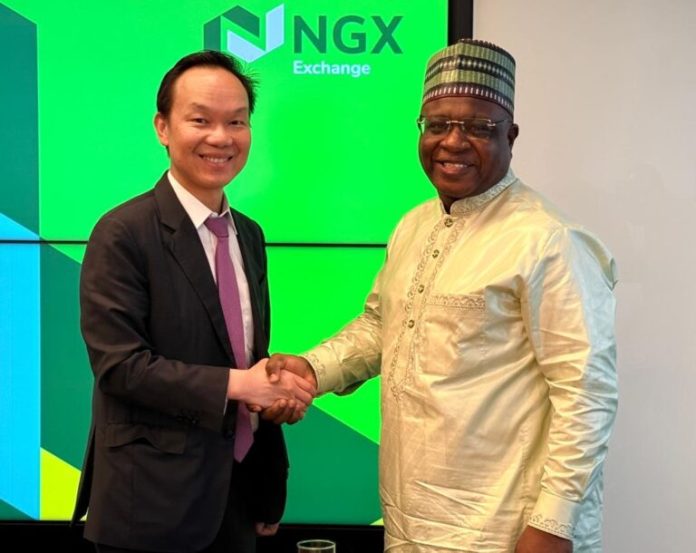
The Nigerian Exchange Group (NGX Group) has proposed deeper institutional cooperation with Hong Kong Exchanges and Clearing (HKEX) to strengthen investment and capital market connections between Africa and Asia.
The Chairman of NGX Group, Dr Umaru Kwairanga, made the proposal during a meeting with HKEX officials in Hong Kong on Wednesday.
Kwairanga said stronger ties between the two exchange groups could create new channels for investors, issuers and market operators across both regions.
He proposed a formal cooperation arrangement covering regular executive engagements, technical working groups and programmes for sharing expertise.
The NGX chairman said the partnership could also support cross-border listings, depositary receipts, exchange-traded funds and initiatives aimed at improving investor access.
He identified HKEX’s experience in exchange technology, artificial intelligence, market surveillance and digital infrastructure as areas from which NGX could benefit.
Kwairanga also expressed interest in cooperation on data commercialisation, product development and advanced market operations.
He said sustainable finance presented another opportunity for collaboration, particularly in green finance, climate-related disclosures, environmental, social and governance reporting, transition finance and carbon markets.
The NGX Group chairman proposed staff training, technical secondments, executive exchange programmes and joint research to strengthen the capacity of both institutions.
He also suggested annual investment forums, joint investor conferences and issuer roadshows to promote investment opportunities in African and Asian markets.
Kwairanga said joint research publications could further improve international awareness of investment opportunities in both regions.
He described exchanges as increasingly important to economic development, saying modern capital markets now support innovation, sustainable finance and the movement of investment across borders.
He said stronger cooperation between NGX and HKEX would help deepen market integration, increase investor participation and support economic growth.
The Issues
African and Asian capital markets have opportunities to attract more cross-border investment, but stronger institutional and market connections are needed to facilitate investor access, knowledge exchange and product development. NGX is seeking to build such links through proposed cooperation with HKEX.
What’s Being Said
“I propose the establishment of a formal cooperation framework between NGX and HKEX, including annual executive meetings, technical working groups and knowledge-sharing programmes.” – Umaru Kwairanga, Chairman, NGX Group
What’s Next
NGX has proposed a range of cooperation mechanisms with HKEX, including technical exchanges, staff training, joint research, investor forums and initiatives focused on cross-border market access.
Bottom Line
NGX Group wants stronger cooperation with HKEX to improve connections between African and Asian capital markets, expand investment opportunities and strengthen market capabilities through technology and knowledge transfer.
SEC sets 5pm on T+1 as the settlement deadline for eligible equities and commodities.
Market operators must ensure affected transactions are fully funded within the timeframe.
Foreign portfolio investors will not be required to prefund trades.
SEC says the reform will reduce settlement risks and improve market efficiency.
Main Story
The Securities and Exchange Commission (SEC) has set 5:00 p.m. on the first business day after trading as the deadline for settling eligible equities and commodities transactions in Nigeria’s capital market.
The commission announced the requirement in a circular issued on Wednesday to capital market operators and other market participants.
The directive is part of the implementation of the T+1 settlement cycle, under which eligible securities transactions must be completed one business day after the trade date.
SEC said all affected transactions must be fully funded by 5:00 p.m. on T+1 to comply with the market’s Delivery versus Payment (DvP) settlement procedure.
It said brokers and dealers whose trading accounts do not have sufficient funds to meet their settlement obligations would be subjected to default procedures under the Central Securities Clearing System (CSCS) Default Management Procedure.
The commission also clarified that foreign portfolio investors would not be required to prefund their accounts before executing trades in the Nigerian market.
It, however, directed capital market operators handling transactions for foreign investors to maintain adequate controls to ensure that funding and settlement are completed within the prescribed period.
According to SEC, operators are expected to establish processes that prevent delays and ensure compliance with the T+1 settlement timeframe.
The commission said the shorter settlement cycle would strengthen market infrastructure and improve operational efficiency.
It added that the reform would reduce counterparty risks, improve settlement efficiency and support greater liquidity in the capital market.
SEC said the move would also bring Nigeria’s post-trade environment closer to international standards and enhance the competitiveness of the country’s capital market.
The Issues
The shift to T+1 reduces the time between executing a trade and completing its settlement. The new requirement places greater emphasis on timely funding and operational controls by brokers, dealers and other market participants.
What’s Being Said
“Accordingly, all transactions in the affected securities must be fully paid by 5:00 p.m. T+1.” – Securities and Exchange Commission
What’s Next
Capital market operators will be required to ensure that eligible transactions are fully funded and settled within the new T+1 timeframe. Operators handling foreign portfolio investments must also maintain controls to ensure timely settlement.
Bottom Line
The SEC’s T+1 settlement framework shortens the settlement period for eligible securities and commodities transactions, with the commission expecting the reform to improve efficiency, reduce counterparty risk and strengthen Nigeria’s capital market.
Nigerian faction asks EFCC to investigate alleged $300 million investment claim.
Dispute centres on ownership and development of River Park Estate, Abuja.
Petitioner seeks financial and corporate records to verify the alleged investment.
Faction alleges the claim is part of an ongoing ownership and arbitration dispute.
Main Story
The Nigerian faction of JonahCapital Nigeria Limited has petitioned the Economic and Financial Crimes Commission (EFCC) to investigate an alleged $300 million investment claim linked to River Park Estate in Abuja.
The petition, signed by the company’s founder and director, Dr Adeniran Ogunmuyiwa, alleged that a Ghanaian-led faction had falsely claimed that JonahCapital invested more than $300 million in infrastructure at the estate.
Ogunmuyiwa asked the EFCC to establish whether the claimed investment was actually brought into Nigeria and used for the development of the disputed property.
He requested that the commission examine documents including Certificates of Capital Importation, bank statements, foreign remittance records, Central Bank of Nigeria records, foreign exchange documentation, investment agreements, audited accounts and payment records.
The petitioner also asked the EFCC to verify alleged payments for the acquisition, development and financing of the River Park project, including payments to contractors and suppliers.
The petition comes amid a dispute over Plot 4, Cadastral Zone E30, Lugbe West, Abuja, which was acquired by JonahCapital Nigeria Limited through a Development Lease Agreement in 2007.
The dispute has also extended to international arbitration after the termination of the lease agreement last year. The Ghanaian faction reportedly challenged the termination before the International Chamber of Commerce (ICC), arguing that the agreement remained valid until 2030.
The Minister of the Federal Capital Territory, Nyesom Wike, had confirmed that Nigeria was facing arbitration proceedings in France over the property.
Ogunmuyiwa, however, maintained that the company he represents had not funded infrastructure development at River Park Estate and disputed the authority of the Ghanaian faction to act on behalf of JonahCapital Nigeria Limited.
He alleged that an internal ownership dispute had led to competing claims over the company between 2024 and 2026.
According to him, Samuel Jonah was admitted as a shareholder in 2007 on the understanding that he would contribute capital but was removed from the company in 2008 after failing to do so.
Ogunmuyiwa further alleged that Jonah was never appointed a director of the company but later presented himself as one and signed documents in that capacity.
He also disputed the claim that JonahCapital funded infrastructure worth more than $300 million at River Park Estate, saying the development was financed by Paulo Homes Limited under an agreement with JonahCapital, with the financial commitment running into billions of naira.
The petitioner also asked the EFCC to investigate Kojo Mensah’s relationship with Jonah and determine whether documents used in the arbitration proceedings were false or fabricated.
He argued that if individuals without legitimate ownership interests were presenting an alleged investment history before an international tribunal to obtain financial benefits, the matter should be treated as more than a commercial dispute.
Ogunmuyiwa therefore urged the EFCC to investigate Jonah, Mensah and any other persons involved and prosecute anyone found culpable.
The Issues
The dispute involves competing claims over the ownership and control of JonahCapital Nigeria Limited, the development of River Park Estate and an alleged $300 million investment. The matter has also moved into international arbitration following the termination of the lease covering the Abuja property.
What’s Being Said
“This is a clear fraud,” – Adeniran Ogunmuyiwa, founder and director, JonahCapital Nigeria Limited.
“It is a blatant attempt to defraud the Federal Government by foreign actors who have no right whatsoever,” – Adeniran Ogunmuyiwa.
What’s Next
The EFCC is being asked to verify the alleged investment through financial, banking, corporate and project records and investigate the parties identified in the petition.
Bottom Line
The JonahCapital dispute has escalated from an ownership and lease disagreement into an EFCC petition and international arbitration, with the Nigerian faction challenging claims that more than $300 million was invested in River Park Estate.
Naira strengthens to N1,360.5292 per dollar at the Nigerian Foreign Exchange Market
NFEM turnover jumps 481% to $168.758 million from $29.060 million
Number of FX deals rises to 190 as banks increase interbank market activity
Main Story
The naira strengthened to N1,360.5292 per US dollar at the Nigerian Foreign Exchange Market (NFEM) on Wednesday as foreign exchange turnover surged 481%, according to Central Bank of Nigeria (CBN) data.
The local currency appreciated from N1,364.8992 per dollar recorded at the official window previously, representing a gain of about 0.32%. Transactions at the NFEM were executed between N1,359.5500 and N1,362 per dollar, according to official market data.
The stronger exchange rate coincided with a sharp increase in activity among banks and other market participants. CBN data showed that interbank foreign exchange turnover rose to $168.758 million from $29.060 million recorded on Tuesday.
The increase represents a 481% jump in daily turnover, indicating significantly higher transaction volumes in the interbank market. The number of deals also increased to 190 from 47 a day earlier, pointing to a broader rise in market activity.
The intraday range also improved from the previous day’s rates of N1,361 and N1,365.5000 per dollar, suggesting that increased trading activity was accompanied by relatively stronger naira pricing during the session.
The movement comes against a backdrop of continued efforts to deepen liquidity and improve price discovery in Nigeria’s foreign exchange market. The NFEM remains the primary market through which eligible foreign exchange transactions are conducted and reported.
What’s Being Said
CBN market data showed that banks’ increased activity as intermediaries for customers was the main driver of the sharp rise in interbank FX turnover.
The available market data also points to increased participation, with the number of recorded deals rising more than fourfold from the previous session.
Editorial note: A direct quote from the CBN or an independent foreign-exchange analyst should be added before publication if one is available. The supplied source material does not contain a verifiable direct quotation.
What’s Next
Market participants will monitor whether the higher NFEM turnover is sustained in subsequent trading sessions
The naira’s performance will remain closely watched alongside changes in FX liquidity, demand and bank intermediation activity
Subsequent CBN market data will show whether the sharp increase in transaction volumes represents a sustained improvement in market depth
The Bottom Line:
The naira’s move to N1,360.5292 is significant not only because of the modest appreciation but because it occurred alongside a sharp expansion in FX market activity. If higher turnover is sustained without renewed pressure on the exchange rate, it would provide a stronger indication of improving liquidity and market functioning.
43 insurance companies that met the July 31, 2026, recapitalisation deadline have raised at least N720 billion, according to figures gathered by Nairametrics.
Experts say the exercise will strengthen insurers’ ability to underwrite larger risks and improve confidence in the sector.
NICON Insurance Limited and Nigeria Re have challenged aspects of the recapitalisation process in court.
Analysts have warned that prolonged legal disputes with the industry regulator, NAICOM, could create uncertainty for affected operators.
Eight additional firms are reportedly awaiting regulatory verification, potentially pushing total capital raised beyond N800 billion.
Main Story
Nigeria’s insurance industry has raised at least N720 billion through the recently concluded recapitalisation exercise, with experts describing the development as a major step towards strengthening the sector’s financial capacity.
The exercise, which had a July 31, 2026 deadline, was designed to increase insurers’ ability to absorb larger risks, improve claims-paying capacity and strengthen the industry’s resilience against economic shocks.
However, the exercise has been accompanied by legal challenges from NICON Insurance Limited and Nigeria Re, which are contesting aspects of the implementation by the National Insurance Commission (NAICOM).
The companies petitioned the Federal Government over some of NAICOM’s requirements under the Nigerian Insurance Industry Reform Act (NIIRA) 2025, including a 1 per cent capital injection fee as well as processing and verification charges contained in the Commission’s Minimum Capital Requirement Guidelines.
The companies argued that the requirements were inconsistent with Section 16(3) of NIIRA 2025, which provides for a 10 per cent statutory deposit with the Central Bank of Nigeria.
NICON and Nigeria Re maintained that they had satisfied the July 31 deadline by injecting N20 billion into NICON Insurance and N30 billion into Nigeria Re through Mudaraba Term Deposit accounts with Lotus Bank Limited.
NAICOM, however, has disputed the interpretation, maintaining that the capital injections alone did not amount to full compliance with the recapitalisation framework.
Despite the dispute, experts say the broader outcome of the exercise could significantly improve the strength and competitiveness of Nigeria’s insurance industry.
The Issues
The central issue is whether the recapitalisation requirements and implementation process have been applied in line with the legal framework governing the industry.
While operators have the right to seek judicial interpretation, experts caution that prolonged disputes with the regulator could create uncertainty and potentially affect business operations and investor confidence.
Another concern is the ability of weaker insurers to meet the new capital thresholds. Firms unable to raise sufficient funds may be forced to merge, consolidate or exit the market.
At the same time, the higher capital requirements could eliminate financially weak operators and create a more resilient industry with stronger capacity to support major sectors of the economy.
What’s Being Said
Dr Jerry Igwilo, Chief Executive Officer of Nisela Capital Limited, acknowledged the right of companies to seek legal interpretation but cautioned against confrontation with the regulator.
“The regulator is the one who makes the rules of the game.”
Igwilo said the recapitalisation could also provide an opportunity for weaker operators to consolidate with stronger entities.
“It’s an opportunity for them to consolidate with other entities and have a much stronger insurance sector.”
Economist and Chief Executive Officer of the Centre for the Promotion of Private Enterprise, Dr Muda Yusuf, said the exercise would improve the industry’s ability to underwrite major risks.
He noted that inadequate capital had previously limited the participation of Nigerian insurers in sectors such as oil and gas and telecommunications.
“One of the shortcomings of our insurance sector is a very limited capacity to underwrite big risk.”
Yusuf added that stronger capitalisation would improve confidence in the industry.
“The bigger capitalization enhances the reputation of the sector, their confidence that this sector has capacity to absorb any shock because of their strong capitalization.”
At Least N720bn Raised
According to NAICOM’s compliance figures, the 43 operators that met the deadline collectively raised approximately N720 billion.
Category Compliant firms Capital raised
Non-life insurers 23 N345bn
Life insurers 10 N100bn
Composite insurers 8 N200bn
Reinsurers 2 N75bn
Total 43 N720bn
Under the new framework, non-life insurers are required to maintain a minimum capital base of N15 billion, life insurers N10 billion, composite insurers N25 billion, while reinsurers must maintain at least N35 billion.
Industry estimates suggest that total capital raised could exceed N800 billion once eight firms currently undergoing verification are cleared.
Some Firms Await Regulatory Clearance
Several operators that were not included in NAICOM’s initial compliance list have said they have met the required thresholds and are awaiting regulatory verification.
African Alliance Insurance Plc said it remained under regulatory intervention until June 16, 2026, when control was returned to shareholders. The company said it had submitted its recapitalisation plan to NAICOM and was awaiting further directives.
Staco Insurance Plc said it remained engaged with the regulator and was implementing measures towards full compliance.
Sovereign Trust Insurance Plc also said it had met the required capital threshold as of July 31 and was awaiting regulatory verification.
Guinea Insurance Plc announced a N12.6 billion hybrid capital raise through a rights issue and private placement, saying the transaction placed it above the minimum requirement for non-life insurers, subject to NAICOM’s final verification.
Regency Alliance Insurance Plc disclosed that it raised N6.04 billion through a combination of rights issue and private placement, positioning it above the N15 billion minimum capital threshold for general insurance operators.
What’s Next
Attention will now shift to NAICOM’s verification of the remaining operators and the resolution of outstanding disputes.
The regulator is expected to determine the compliance status of firms still under verification, while affected companies may pursue legal or regulatory avenues over disputed aspects of the exercise.
For weaker operators, the next phase could involve mergers, acquisitions or further capital raising as they seek to remain viable under the new framework.
What You Should Know
The recapitalisation exercise is intended to strengthen insurers’ financial capacity, improve their ability to pay claims and make the sector more resilient to economic shocks.
The exercise follows the banking sector recapitalisation programme, under which 33 Nigerian banks raised N4.66 trillion over 24 months.
Nigeria’s pension industry is also undergoing a similar recapitalisation process, with the National Pension Commission (PenCom) setting December 31, 2026 as its compliance deadline.
Bottom Line
The N720 billion raised by 43 compliant insurers marks a significant strengthening of Nigeria’s insurance industry. While legal disputes over NAICOM’s implementation remain a concern, the higher capital base could enable insurers to underwrite larger risks, improve policyholder protection and compete more effectively in major sectors of the economy. The outcome of the remaining verification process and any court proceedings will determine the final shape of the industry.