NAICOM verified seven additional insurance companies under NIIRA 2025.
The companies include four non-life and three life insurers.
The latest verification brings the number of compliant insurers to 48.
Two reinsurance companies have also been verified under the recapitalisation exercise.
Main Story
The National Insurance Commission (NAICOM) has verified seven additional insurance companies as having met the minimum capital requirements under the Nigerian Insurance Industry Reform Act (NIIRA) 2025.
NAICOM disclosed this in a statement issued by its management on Thursday in Abuja.
The newly verified companies are emPLE General Insurance Limited, emPLE Life Assurance Limited, Sovereign Trust Insurance Plc, Tangerine Life Insurance Limited, Alliance & General Insurance Plc, Guinea Insurance Plc and Regency Alliance Insurance Plc.
emPLE General Insurance Limited, Sovereign Trust Insurance Plc, Alliance & General Insurance Plc, Guinea Insurance Plc and Regency Alliance Insurance Plc were verified under the non-life category, while emPLE Life Assurance Limited and Tangerine Life Insurance Limited were verified under the life category.
The companies were assigned licence numbers LIC 042 to LIC 048 by the commission.
The latest verification brings the number of insurance companies confirmed and verified as compliant with the minimum capital requirements under NIIRA 2025 to 48.
Two reinsurance companies have also been confirmed and verified as compliant.
NAICOM said the verified companies were issued the applicable insurance laws and guidelines as part of the recapitalisation process.
The Issues
The verification forms part of NAICOM’s implementation of the minimum capital requirements introduced under NIIRA 2025 for insurance companies operating in Nigeria.
What’s Being Said
NAICOM said the latest verification brings the insurance industry recapitalisation exercise to a successful conclusion.
What’s Next
The verified insurers are expected to operate in line with the applicable insurance laws and regulatory guidelines issued by NAICOM.
Bottom Line
NAICOM has verified seven additional insurers under the new minimum capital requirements, bringing the number of compliant insurance companies to 48, alongside two verified reinsurance companies.
NUATE says airlines have failed to remit about N25 billion in Ticket Sale Charges.
The union says the funds are needed for aviation agencies’ operations and workers’ welfare.
NUATE says workers’ rights and freedom of association also contributed to recent industrial action.
NCAA and FAAN have urged stakeholders to resolve the dispute through dialogue.
Main Story
The National Union of Air Transport Employees (NUATE) has raised concerns over the alleged non-remittance of about N25 billion in Ticket Sale Charges (TSC), saying the shortfall is affecting the operations and welfare responsibilities of aviation agencies.
NUATE Chairman in the Federal Capital Territory, Ahmed Yusuf, disclosed this in an interview with the News Agency of Nigeria (NAN) on Thursday in Abuja.
Yusuf said the funds represented the five per cent TSC collected from passengers for distribution among relevant aviation agencies.
He said the failure of airline operators to remit the charges had denied the agencies revenue required to meet operational expenses and provide adequate welfare for their employees.
Yusuf questioned how the aviation sector could remain financially sustainable if funds meant for agencies were not remitted.
He said the affected agencies relied on the revenue to provide services, meet running costs and sustain their workforce.
The NUATE chairman also linked the recent industrial action by aviation unions to unresolved issues involving workers and airline operators.
He said the action, jointly undertaken by NUATE and the Air Transport Services Senior Staff Association of Nigeria (ATSSSAN), disrupted flight operations before it was suspended following discussions aimed at resolving the dispute.
The unions had shut terminal entrances at some airports, leading to flight cancellations by affected airlines.
Yusuf said the dispute also involved the alleged refusal of Air Peace to allow its employees to unionise, stressing that the unions were defending workers’ rights to freedom of association and collective representation.
He cited Section 40 of the 1999 Constitution, as amended, which guarantees freedom of association.
According to him, airline operators have established platforms to advance their collective interests and workers should similarly be allowed to organise.
Meanwhile, the Nigeria Civil Aviation Authority (NCAA) had appealed to the aviation unions to suspend their industrial action.
The NCAA Director-General, Capt. Chris Najomo, said the Minister of Aviation and Aerospace Development, Festus Keyamo, was working to resolve the issues.
Najomo said the authority was concerned about the impact of the dispute on passengers and other aviation stakeholders.
He disclosed that a meeting convened by the minister could not hold because airline operators failed to attend.
The NCAA assured passengers that flight safety remained unaffected and that it continued to carry out its statutory safety oversight responsibilities.
The authority also urged the parties to pursue dialogue and cooperation to resolve the dispute and restore normal operations.
The Federal Airports Authority of Nigeria (FAAN) similarly assured passengers that airport operations would continue despite the industrial action.
FAAN said it was monitoring the labour dispute and working with stakeholders to limit its impact on airport operations.
The authority said it supported efforts by Keyamo and other stakeholders to resolve the issues and was collaborating with aviation agencies, airlines, security agencies and other stakeholders to maintain uninterrupted airport operations.
The Issues
The dispute centres on the alleged non-remittance of about N25 billion in TSC and unresolved labour issues involving aviation workers and airline operators. NUATE says both issues have implications for agency funding, workers’ welfare and the stability of aviation operations.
What’s Being Said
NUATE says the unremitted charges are needed by aviation agencies to meet operational responsibilities and workers’ welfare, while the NCAA and FAAN have called for dialogue to resolve the wider dispute.
What’s Next
Stakeholders are expected to continue discussions aimed at resolving the issues between aviation unions and airline operators, while aviation authorities work to minimise disruptions to passengers and airport operations.
Bottom Line
NUATE says about N25 billion in unremitted Ticket Sale Charges is putting pressure on aviation agencies, while a separate dispute over workers’ unionisation rights has contributed to industrial action. Aviation authorities are pushing for dialogue to restore normal operations.
Nigeria and the US reviewed defence and security cooperation in Washington.
Talks focused on military relations, intelligence sharing and counter-terrorism.
Officials also reviewed progress under the Nigeria-US Joint Working Group.
Both countries pledged continued dialogue and cooperation against regional and global threats.
Main Story
Nigeria and the United States have reaffirmed their commitment to strengthening defence and security cooperation following high-level bilateral talks in Washington, D.C.
The discussions focused on military-to-military relations, intelligence cooperation, counter-terrorism and greater coordination between the two countries, according to a statement issued on Thursday by the Special Adviser to the Minister of Defence, Leah Katung-Babatunde.
The Minister of Defence, Gen. Christopher Musa, led the Nigerian delegation, which included the Minister of Finance and Coordinating Minister of the Economy, Taiwo Oyedele, and the Chief of Defence Staff, Gen. Olufemi Oluyede.
Also on the delegation were the Chief of Defence Intelligence, Lt.-Gen. Parker Udiandeye, and other senior officers of the Armed Forces of Nigeria.
The Nigerian officials met senior representatives of the U.S. Department of Defence led by Julia Sokol, Acting Principal Deputy Assistant Secretary of Defence for International Security Affairs.
The meeting formed part of the Nigeria-US Joint Working Group Defence Bilateral Talks, with both sides examining areas of cooperation in security architecture, intelligence sharing and military operations.
The engagement coincided with the second meeting of the US-Nigeria Joint Working Group, led by National Security Adviser Nuhu Ribadu.
Ribadu co-chaired the meeting with the U.S. Under Secretary of State for Political Affairs, Allison Hooker.
The meeting reviewed progress on agreed actions and strategic frameworks following Nigeria’s designation as a Country of Particular Concern.
The two countries reaffirmed their commitment to sustained engagement, mutual respect and closer strategic cooperation in addressing security threats affecting Nigeria, the region and the wider international community.
The Issues
The talks come amid efforts by Nigeria and the US to strengthen coordination on defence, intelligence and counter-terrorism, with both countries seeking closer military and security cooperation.
What’s Next
Nigeria and the US are expected to continue engagements through the Joint Working Group and other bilateral security channels, with emphasis on implementing agreed areas of cooperation.
Bottom Line
Nigeria and the US are seeking deeper defence and security cooperation through closer military relations, intelligence sharing and coordinated efforts against terrorism and other security threats.
FG wants China-Africa health partnerships to focus on capacity development.
Salako identifies technology transfer, training and local manufacturing as priorities.
Nigeria seeks stronger cooperation in medical technology, diagnostics and digital health.
Minister urges partners to move from exhibitions to practical implementation.
Main Story
The Federal Government has called for deeper health cooperation between China and African countries, with greater emphasis on building sustainable capacity rather than supplying medical equipment alone.
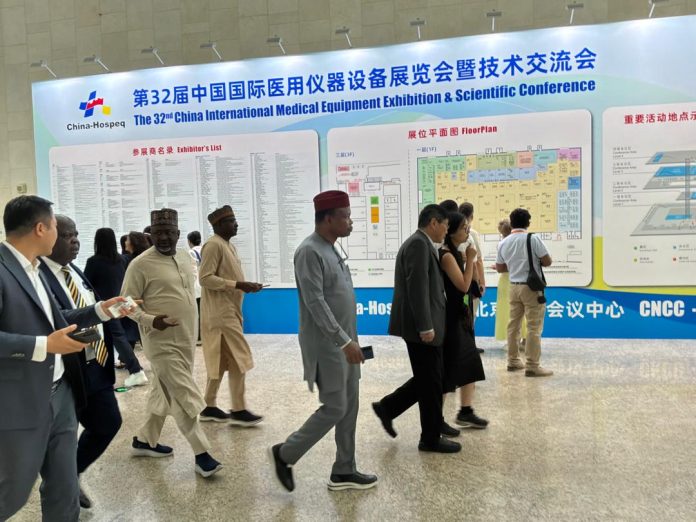
The Minister of State for Health and Social Welfare, Dr Iziaq Salako, made the call at China-Hospeq 2026, the China International Medical Equipment Exhibition and Scientific Conference, in Beijing.
Salako said investments in equipment would have limited impact without trained health workers, maintenance systems, quality assurance and technologies suited to local health needs.
He said Nigeria was interested in expanding cooperation with China in medical equipment, hospital development, clinical engineering, laboratory medicine, diagnostics, digital health and artificial intelligence.
Other areas identified by the minister included research and innovation, health workforce development, technology transfer, knowledge exchange and local manufacturing.
He also called for stronger partnerships in health value-chain development, emergency preparedness and global health security.
Salako said Nigeria welcomed the growing focus on China-Africa health cooperation, particularly initiatives that promote direct collaboration between healthcare institutions.
He identified the China-Africa Hospital Collaborative Development initiative as an opportunity for institutions to work together on strengthening health systems.
According to him, the China-Africa Hospitals Alliance and its network of joint working groups could support long-term institutional cooperation when partnerships are built around local needs and capacity development.
The minister said Nigeria-China health cooperation had expanded into areas including hospital development, medical technology, diagnostics, digital health, research and health workforce development.
He added that joint ventures in pharmaceutical manufacturing, medical equipment procurement and maintenance, as well as specialised training, were creating further opportunities for collaboration.
Salako said Nigeria was implementing health sector reforms under President Bola Tinubu’s Renewed Hope Agenda, with priorities including stronger primary healthcare, wider access to affordable services, improved diagnostics and specialised care.
He said the government was also pursuing digital health transformation, health workforce development and increased local production of medicines, medical devices and diagnostics.
Salako said these reforms would require increased investment, stronger institutions, sustainable financing, skilled personnel and strategic international partnerships.
He described China-Hospeq as an opportunity for Nigeria to identify technologies that were affordable, scalable and suited to the country’s health system.
The minister also said international cooperation was becoming increasingly important as countries confronted shared health challenges, including pandemics, antimicrobial resistance, emerging infectious diseases, non-communicable diseases and climate-related health threats.
He urged participants at the exhibition to develop partnerships capable of producing practical results after the event.
The Issues
Nigeria’s health system faces the challenge of ensuring that investments in medical technology translate into sustainable improvements in healthcare delivery. Salako said equipment supply must therefore be accompanied by training, maintenance, quality assurance, technology transfer and institutional capacity.
What’s Being Said
“Let us move from exhibition to implementation, from innovation to impact, and from partnership to sustainable capacity,” Salako said.
What’s Next
The Federal Government plans to deepen health cooperation with China in areas including medical technology, diagnostics, digital health, research, workforce development and local manufacturing, while pursuing stronger institution-to-institution partnerships.
Bottom Line
Nigeria wants China-Africa health cooperation to move beyond equipment supply towards partnerships that build local skills, technology capacity, manufacturing and stronger health institutions. China-Hospeq 2026 runs from Thursday to Saturday in Beijing.
‘Black Market’ will premiere on Sept. 26 at Tafawa Balewa Square, Lagos.
Organisers are targeting 50,000 viewers for the premiere.
The film follows five market women involved in cross-border smuggling.
The crime drama features Lateef Adedimeji, Linda Ejiofor-Suleiman and Uzor Arukwe.
Main Story
Nollywood film, ‘Black Market’, is set to premiere on Sept. 26 at Tafawa Balewa Square, Lagos, with its producers targeting a Guinness World Record for the largest audience at a film screening.
Rixelstudios, the production company, announced the planned premiere on its Instagram page, saying it expected 50,000 people to attend the screening.
The film, directed by Fatimah Gimsay, follows five market women who turn to cross-border smuggling as they struggle with fuel scarcity and economic pressure.
Their operation takes a dangerous turn when a rival kidnaps the daughter of one of the women, forcing the group to risk their lives to secure her release.
Written by Gimsay and Abdul Tijani-Ahmed, the film explores crime, survival and the bond among the women.
‘Black Market’ was produced by Rixelstudios in collaboration with FilmOne Studios, Signet Ring Studios and Switch Visuals Production.
The cast includes Lateef Adedimeji, Linda Ejiofor-Suleiman, Itele D Icon, Scarlet Gomez, Omowunmi Dada, Teniola Aladese, Susan Pwajok and Uzor Arukwe.
The Issues
The planned screening is built around an attempt to attract 50,000 viewers at a single premiere, with the organisers seeking to establish a Guinness World Record.
What’s Being Said
Rixelstudios urged movie lovers to attend the Sept. 26 screening at Tafawa Balewa Square, describing the event as an opportunity to “break & set a new Guinness World Record”.
What’s Next
The film will premiere on Sept. 26 at Tafawa Balewa Square, where organisers are targeting an audience of 50,000 people.
Bottom Line
‘Black Market’ combines crime, drama and action with a large-scale premiere that its producers hope will secure a Guinness World Record.
Yuan’s central parity rate strengthened by 10 pips against the dollar.
The rate stood at 6.7878 per dollar on Friday.
The rate is determined from prices offered by market makers.
The Yuan can trade within a two per cent range of the central parity rate.
Main Story
The central parity rate of the Chinese Yuan strengthened by 10 pips to 6.7878 against the U.S. dollar on Friday, according to the China Foreign Exchange Trade System.
The central parity rate is determined using a weighted average of prices quoted by market makers before the opening of China’s interbank foreign exchange market each business day.
In the country’s spot foreign exchange market, the Yuan is permitted to appreciate or depreciate by up to two per cent from the central parity rate during each trading day.
The Issues
The central parity rate serves as the reference point for daily trading of the Yuan against the dollar in China’s spot foreign exchange market.
What’s Next
The Yuan will continue to trade within the permitted two per cent daily band around the central parity rate.
Bottom Line
The Yuan recorded a marginal strengthening against the dollar on Friday, with its central parity rate rising 10 pips to 6.7878.
Super Falcons lose 2-1 to South Africa in Casablanca to miss the 2027 FIFA Women’s World Cup
Nigeria’s defeat ends its record of appearing at every Women’s World Cup since 1991
South Africa advances to the inter-confederation playoffs for another route to Brazil 2027
Main Story
Nigeria’s Super Falcons have missed the 2027 FIFA Women’s World Cup after losing 2-1 to South Africa’s Banyana Banyana in the continental playoff in Casablanca on Thursday.
The defeat ends Nigeria’s uninterrupted participation at every edition of the Women’s World Cup since the competition began in 1991 and leaves South Africa with a place in the inter-confederation playoffs.
The Super Falcons entered the playoff after losing 1-0 to Cameroon in the quarter-finals of the 2026 Women’s Africa Cup of Nations (WAFCON), while South Africa had suffered a 2-1 defeat to hosts Morocco.
Nigeria created opportunities in the first half through counter-attacking moves involving Asisat Oshoala and Francisca Ordega. Michelle Alozie also came close to opening the scoring but dragged her effort narrowly wide.
South Africa took the lead in the 56th minute when Thembi Kgatlana converted an opportunity following a quick attack. Refiloe Jane doubled the advantage in the 77th minute after a rebound deflected off substitute Christy Ucheibe.
Nigeria were handed a late opportunity when Jane handled Alozie’s goal-bound header inside the penalty area. Following a Video Assistant Referee (VAR) review, Nigeria were awarded a penalty and Jane was sent off after receiving a second yellow card.
Ucheibe converted the spot-kick in added time, but Nigeria could not find an equaliser before the final whistle.
What’s Being Said
“We came, did the best that we could, but our best was not good enough. We take full responsibility for everything that happened,” said Justine Madugu, Super Falcons head coach.
Madugu also identified poor finishing and defensive errors as major factors in the defeat, saying South Africa were more clinical with the opportunities they created.
What’s Next
South Africa will advance to the inter-confederation playoffs for one of the remaining places at the 2027 Women’s World Cup
Nigeria’s World Cup qualification campaign ends with no further route to the tournament
The defeat leaves the Super Falcons with a four-year gap before the next opportunity to qualify for the competition
The Bottom Line:
Nigeria’s failure to convert chances and prevent decisive defensive errors has ended a 35-year run of World Cup appearances. The result is not only a qualification setback but a significant break in the continuity of the country’s most successful women’s football programme.
Naira strengthens 0.22% to ₦1,357.65 per dollar at the Nigerian Foreign Exchange Market
Interbank FX turnover falls 53% to $79.097 million as completed deals drop to 98
Improved FX liquidity and weaker dollar demand support the naira despite renewed oil-market uncertainty
Main Story
The naira strengthened 0.22% to ₦1,357.65 per US dollar at the Nigerian Foreign Exchange Market (NFEM) on Thursday as reduced corporate demand and improved FX liquidity eased pressure on the local currency.
Data from the Central Bank of Nigeria (CBN) showed that transactions at the interbank FX market fell sharply, with turnover declining to $79.097 million from $168.758 million recorded on Wednesday.
The number of completed FX deals also dropped to 98 from 190 a day earlier, indicating weaker demand for US dollars among banks and their customers. Intraday transactions were executed between ₦1,356 and ₦1,359.50 per dollar.
The naira’s latest gain also reflected improved FX receipts and a more favourable external environment, including elevated oil prices and weakness in the US dollar.
The dollar’s decline was linked to reduced demand for safe-haven assets and differing expectations over the timing of the US Federal Reserve’s next interest-rate decision.
Oil-market developments, however, remain a potential source of pressure for Nigeria’s external position. US West Texas Intermediate crude fell 2.4% on Thursday to $81.25 per barrel, while Brent crude declined about 2% to $87.07.
The International Energy Agency (IEA) expects global oil demand to fall by 1.6 million barrels per day in 2026, while supply disruptions linked to renewed conflict in the Gulf have continued to affect global markets.
What’s Being Said
“Many private businesses undercount the number of ships leaving the Strait of Hormuz due to ships moving covertly through the waterway,” said Chris Wright, US Energy Secretary.
The CBN’s latest transaction data points to weaker dollar demand at the interbank market, while the decline in oil prices highlights the continued sensitivity of Nigeria’s FX outlook to developments in global energy markets.
What’s Next
Market participants will monitor whether lower corporate FX demand persists in coming sessions
The naira’s performance will remain sensitive to oil prices, foreign-exchange inflows and movements in the US dollar
Traders will also watch developments around the Strait of Hormuz and their potential effect on global crude supply
The Bottom Line:
The naira’s latest gain is being supported by reduced dollar demand and improved liquidity rather than a broad surge in FX transactions. Sustaining the rally will therefore depend on whether foreign-exchange inflows remain strong enough to offset weaker oil-market conditions and external volatility.
CBN allots ₦2.603 trillion from ₦4.649 trillion in total demand for two OMO maturities
Investors submit ₦1.268 trillion for the 103-day bill and ₦3.657 trillion for the 138-day bill
Strong demand reflects continued investor interest in naira fixed-income assets amid elevated market yields
Main Story
The Central Bank of Nigeria (CBN) allotted ₦2.603 trillion at its latest Open Market Operations (OMO) auction after investors submitted ₦4.649 trillion in bids for ₦600 billion of bills.
According to the auction results reviewed in the supplied market report, the CBN offered ₦300 billion each of 103-day and 138-day OMO bills as it moved to absorb excess liquidity from the financial system.
The auction attracted significantly more demand than the amount offered, with investors submitting ₦1.268 trillion for the 103-day instrument. The CBN allotted ₦449.740 billion at a spot rate of 20.39%.
Demand was considerably stronger for the longer-dated instrument. Investors submitted ₦3.657 trillion for the 138-day OMO bill against the ₦300 billion offer, while the CBN allotted ₦2.154 trillion at a spot rate of 20.01%.
The combined ₦2.603 trillion allotment represents about 56% of total subscriptions received at the auction, leaving approximately ₦2.046 trillion of submitted bids unallotted based on the auction figures.
The strong subscription was attributed in the supplied market commentary to continued demand for naira-denominated fixed-income assets, particularly as elevated yields make money-market instruments attractive to banks and foreign portfolio investors.
The auction also forms part of the CBN’s liquidity-management operations, with excess liquidity in the banking system reported at about ₦7 trillion in the supplied material.
What’s Being Said
The supplied market commentary indicates that banks and foreign portfolio investors have increased their participation in OMO bills as higher yields continue to support demand for naira assets.
No direct quotation from the CBN or a named independent market analyst was provided in the source material.
What’s Next
The ₦2.603 trillion allotment is expected to be settled against the financial system’s credit balance
Investors will monitor subsequent CBN liquidity operations for changes in OMO supply, yields and allotment patterns
Market participants will continue to assess whether elevated fixed-income yields sustain demand for naira assets
The Bottom Line:
The auction demonstrates that investor demand for naira fixed-income instruments remains substantially above the amount initially offered by the CBN. The preference for the longer 138-day bill also suggests that investors are willing to lock in funds for longer periods at attractive yields.
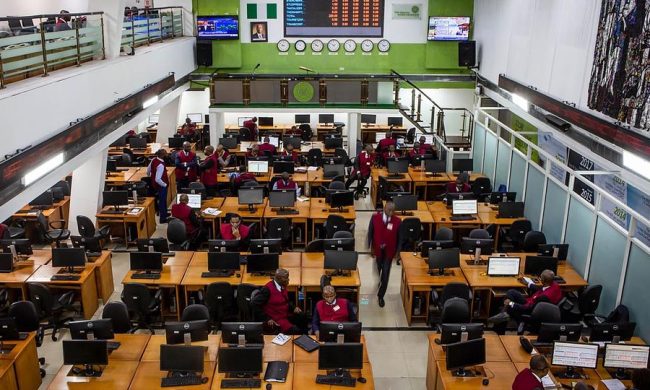
NGX All-Share Index falls 0.39% to 243,017.38 as consumer goods and insurance stocks lead declines
Market capitalisation drops ₦613.08 billion to ₦156.88 trillion while year-to-date return moderates to 56.17%
Trading activity strengthens sharply, with volume rising to 4.24 billion shares and turnover reaching about ₦50.6 billion
Main Story
The Nigerian Exchange (NGX) closed lower on Thursday as selloffs across consumer goods, insurance, banking and oil and gas stocks pushed market capitalisation down by ₦613.08 billion.
The NGX All-Share Index fell 949.71 points, or 0.39%, to close at 243,017.38, according to data from the Nigerian Exchange trading platform. Market capitalisation consequently declined by the same percentage to ₦156.88 trillion.
The decline moderated the NGX year-to-date return to 56.17%, as the buying momentum associated with half-year earnings appeared to weaken.
Market breadth remained negative, with 42 stocks declining against 16 gainers. Intenegins led the gainers with a 10% increase, followed by Johnholt at 9.89% and Transexpr at 9.75%.
Unilever recorded the largest decline, falling 9.97%, while Chellaram and NIDF dropped 9.66% and 9.55%, respectively.
Trading activity, however, strengthened considerably despite the market’s negative close. Total volume increased to 4.24 billion shares, while turnover reached about ₦50.6 billion and deal count rose to more than 41,000 transactions.
The Nigerian Exchange data showed Cornerst dominating both volume and value rankings, with 3.64 billion units traded at a value of ₦18.37 billion.
Sector performance was broadly negative. Consumer Goods declined 1.22%, Insurance fell 0.55%, Banking lost 0.27%, and Oil & Gas declined 0.07%. Industrial and Commodity stocks ended flat.
What’s Being Said
Stockbrokers cited in the supplied market commentary expect the bearish trend to persist as investor sentiment becomes increasingly cautious. However, they also noted that portfolio rebalancing and strategic repositioning could provide support for a recovery.
No direct, named stockbroker quotation was provided in the source material.
What’s Next
Investors will monitor upcoming corporate earnings and other company disclosures for fresh valuation signals
Portfolio managers are expected to reassess positions following the moderation in post-earnings buying momentum
Further sessions will show whether the current selling pressure broadens or gives way to renewed buying interest
The Bottom Line:
The NGX’s decline signals a cooling in the aggressive buying that supported the market’s strong year-to-date performance. The sharp rise in trading activity suggests investors remain active, but the negative breadth indicates that repositioning is currently tilted toward risk reduction rather than broad-based accumulation.
China has announced a ¥200 million (RMB 200 million) grant to Nigeria to support development projects jointly agreed by both governments.
The grant is valued at approximately N40.32 billion, based on the exchange rate referenced in the report.
The announcement was made during talks between Chinese Ambassador to Nigeria Yu Dunhai and Nigeria’s Permanent Secretary, Ministry of Foreign Affairs, Dr Dunoma Umar Ahmed.
China has not yet disclosed the specific projects that will receive funding.
Beijing said the grant forms part of efforts to deepen the China-Nigeria Comprehensive Strategic Partnership.
Nigeria pledged to ensure that the grant is effectively utilised for the agreed projects.
China remains Nigeria’s largest trading partner, with bilateral trade reaching N5.68 trillion in Q1 2026.
Despite the strength of the relationship, Nigeria recorded a N4.51 trillion trade deficit with China during the quarter.
Main Story
China has announced a ¥200 million grant to Nigeria to support the implementation of development projects agreed upon by both countries, in another indication of the deepening economic and diplomatic relationship between Abuja and Beijing.
The announcement was made during a meeting between Chinese Ambassador to Nigeria, Yu Dunhai, and the Permanent Secretary of Nigeria’s Ministry of Foreign Affairs, Dr Dunoma Umar Ahmed, in Abuja.
According to the Chinese Embassy, the grant will be used to support projects jointly agreed by the two governments as part of broader efforts to promote Nigeria’s economic development and strengthen bilateral cooperation.
However, Beijing did not disclose the specific projects that will be financed with the grant or when disbursement and implementation will begin.
The announcement comes as Nigeria and China seek to translate their longstanding diplomatic relationship into increased infrastructure, investment and development cooperation.
What’s Being Said
Chinese Ambassador Yu Dunhai said China and Nigeria had maintained strong relations for more than five decades, describing the partnership as an important component of China-Africa relations.
He said the relationship had entered a new phase under the leadership of Chinese President Xi Jinping and Nigerian President Bola Ahmed Tinubu.
“China will provide RMB 200 million in grant assistance to Nigeria for the implementation of projects agreed upon by the two governments.”
The ambassador said both countries had maintained close communication while working to implement agreements reached by their respective leaders.
He added that Beijing and Abuja were also working to implement the outcomes of the 2024 Forum on China-Africa Cooperation (FOCAC) Beijing Summit, with the objective of ensuring that bilateral cooperation produces tangible benefits for citizens.
On Nigeria’s part, Dunoma thanked China for its support and pledged that the grant would be effectively utilised.
The Permanent Secretary said the assistance demonstrated China’s commitment to Nigeria’s economic and social development and reflected the longstanding friendship between both countries.
The Issues
While the grant represents additional development financing for Nigeria, the absence of details about the projects means the immediate economic impact cannot yet be fully assessed.
The effectiveness of the intervention will ultimately depend on project selection, transparency, implementation and monitoring.
There is also a broader question surrounding Nigeria’s economic relationship with China.
Although China provides significant infrastructure financing, investment and development support, Nigeria’s trade relationship with the Asian economic giant remains heavily tilted in China’s favour.
The challenge for Nigeria is therefore to ensure that development assistance and investment translate into stronger domestic production, technology transfer, employment and export capacity rather than deepen dependence on imported goods.
Nigeria-China Economic Relationship
China’s relationship with Nigeria extends well beyond diplomatic ties.
Chinese companies have become major participants in Nigeria’s infrastructure, manufacturing, energy and construction sectors, while Chinese goods account for a substantial share of Nigeria’s imports.
In Q1 2026, Nigeria-China trade stood at approximately N5.68 trillion, according to data from the National Bureau of Statistics.
Nigeria imported goods worth about N5.10 trillion from China during the period, while exports to China amounted to approximately N582.20 billion.
That produced a trade deficit of about N4.51 trillion in China’s favour.
The figures demonstrate the enormous scale of the relationship, but they also highlight one of its most persistent challenges: Nigeria buys significantly more from China than it sells to the country.
China as Nigeria’s Major Trading Partner
China retained its position as Nigeria’s largest trading partner in Q1 2026, having moved up from second place in the corresponding quarter of 2025.
Chinese products imported into Nigeria include machinery, electronics, industrial equipment, chemicals and a wide range of manufactured goods.
Nigeria’s exports to China, meanwhile, remain more concentrated around mineral and energy-related commodities.
This structure creates an opportunity for Nigeria to use its relationship with China to expand its productive capacity and diversify exports.
The latest grant could contribute to that objective if the funded projects are strategically targeted at infrastructure, industrial development, human capital and productive sectors.
The Wider Investment Picture
China’s engagement with Nigeria also includes major construction and energy projects.
A 2025 assessment by China energy expert Christoph Nedopil estimated Nigeria’s Belt and Road Initiative construction contracts at about $24.6 billion during the year.
The figure represented a significant increase from the previous year and placed Nigeria among the largest destinations for Chinese BRI construction activity.
A substantial portion of the estimated commitments was linked to the proposed Ogidigben Gas Revolution Industrial Park in Delta State.
The 2,700-hectare industrial park is designed to accommodate gas-based industries including fertiliser, methanol, petrochemicals and aluminium production.
If fully implemented, the project is expected to generate substantial employment and deepen Nigeria’s industrial capacity.
The Development Assistance Dimension
The latest ¥200 million grant adds another layer to China’s growing engagement with Nigeria.
Unlike commercial loans, grants do not ordinarily carry the same repayment obligation, making them potentially valuable for development projects where direct financial returns may be limited.
China has also previously provided humanitarian assistance to Nigeria. In August 2025, the Chinese government donated $1 million to support communities affected by severe flooding.
The new grant, however, appears to be more closely tied to bilateral development priorities agreed by the two governments.
What’s Next
The immediate next step will be for Nigeria and China to identify and implement the projects covered by the grant.
The Nigerian government will need to ensure transparent project selection, effective monitoring and proper utilisation of the funds.
For Nigeria, the larger strategic objective should be to use its relationship with China to secure technology transfer, local manufacturing, infrastructure development and export opportunities.
For China, the grant reinforces its broader strategy of strengthening economic and diplomatic partnerships across Africa.
Bottom Line
The ¥200 million Chinese grant provides Nigeria with additional resources for development while reinforcing the increasingly strategic relationship between Abuja and Beijing.
But the bigger opportunity lies beyond the value of the grant itself.
With China accounting for a substantial share of Nigeria’s imports and remaining its largest trading partner, Nigeria must increasingly seek to convert the relationship from one dominated by imports and infrastructure projects into a more balanced partnership built around production, technology, investment and exports.
The success of the latest grant will therefore depend not merely on how much money is provided, but on what it builds, who benefits and whether it helps Nigeria expand its productive capacity.
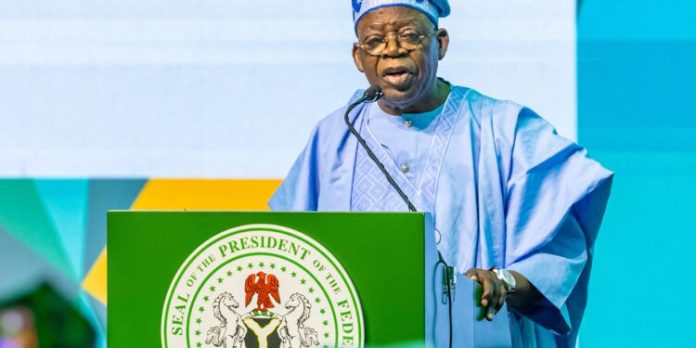
President Bola Tinubu has pledged that Nigeria’s state-owned refineries will return to operation, but stressed that production alone will not be enough without profitability and long-term viability.
The Port Harcourt, Warri and Kaduna refineries are expected to undergo a further “reset and structural reworking” of their economics.
The pledge comes after about $2.9 billion was approved under the previous administration for refinery rehabilitation, with the facilities failing to sustain production.
NNPCL has entered into a technical equity partnership arrangement aimed at rehabilitating, restarting and expanding the Port Harcourt and Warri refineries.
PENGASSAN recently argued that the state-owned refineries were shut partly because they were economically unprofitable, rather than simply because they could not operate.
Separately, the Federal Ministry of Finance has told the Senate that it lacks some records needed to answer queries raised in the NEITI 2021–2023 Oil and Gas Industry Audit Report.
NEITI flagged unresolved issues involving a $3 billion pre-export financing facility, $722.6 million in NLNG dividends and interest, and about N200 billion spent on refinery rehabilitation.
The Finance Ministry has engaged Arthur Andersen LLP to conduct a forensic audit and reconcile outstanding financial records, but lawmakers have questioned repeated extensions to the exercise.
Main Story
President Bola Tinubu has assured Nigerians that the country’s government-owned refineries will return to operation, but warned that simply restarting the facilities will not constitute success unless they can operate profitably and remain economically sustainable.
The President made the declaration in Abuja during a meeting with the leadership of the Nigeria Union of Petroleum and Natural Gas Workers (NUPENG), where he acknowledged concerns over the performance of the state-owned refineries.
Tinubu said the Port Harcourt, Warri and Kaduna refineries would undergo what he described as a firm reset and structural reworking of their economics to ensure that they deliver sustainable value to Nigerians.
“The refineries you mentioned are going to come back to work. We are just building a very firm reset and structural reworking of the economics of it.”
The President said the mere sight of a functioning refinery was not sufficient evidence of success if the facility could not generate sustainable returns.
“Ordinary flame and smoke of a refinery doesn’t mean that it is working until it is profitable and yields the value for which it was built.”
His comments mark an important shift in the conversation around Nigeria’s state-owned refineries — from whether they can be restarted to whether they can operate as commercially viable assets.
Tinubu said he had accepted responsibility for the assets and liabilities inherited by his administration and would focus on making the facilities productive.
“No matter what has happened in the years past, it is my responsibility now as the president to fix it.”
The $2.9bn Rehabilitation Question
The President’s pledge comes after years of government expenditure on refinery rehabilitation with limited sustained results.
Under the administration of former President Muhammadu Buhari, approximately $2.9 billion was approved for rehabilitation of the country’s refineries.
Despite the substantial investment, the facilities struggled to achieve sustained production and were subsequently shut down again.
The development has raised fundamental questions about the cost, effectiveness and commercial viability of maintaining government ownership of the refineries.
The latest policy direction suggests that future interventions will have to go beyond mechanical repairs to address the economics of refinery operations, including production costs, crude supply, maintenance, management and profitability.
NNPCL’s New Approach
The Nigerian National Petroleum Company Limited (NNPCL) has also begun pursuing a different model for the rehabilitation of some of the facilities.
In May, NNPCL signed a Memorandum of Understanding with Sanjiang Chemical Company Limited and Xingcheng (Fuzhou) Industrial Park Operation and Management Co. Ltd.
The arrangement is intended to facilitate the rehabilitation, restart and expansion of the Port Harcourt and Warri refineries through a technical equity partnership model.
The partnership approach could reduce the reliance on government-funded rehabilitation alone while bringing external technical expertise and potentially stronger commercial discipline into refinery operations.
However, the success of the model will depend on the final structure of the partnership, financing arrangements, crude supply, operational efficiency and the ability of the facilities to compete in a changing domestic refining market.
The Profitability Problem
The latest debate has also been shaped by comments from the Petroleum and Natural Gas Senior Staff Association of Nigeria (PENGASSAN).
PENGASSAN President, Festus Osifo, recently said the government-owned refineries were shut because they were losing money, rather than simply because they were incapable of functioning.
His position highlights a crucial issue in the refinery debate: technical functionality does not necessarily equal commercial viability.
A refinery can be mechanically capable of processing crude and still lose money if its operating costs are too high, crude supply is unreliable, production efficiency is low or its refined products cannot compete effectively in the market.
This appears to be the economic challenge Tinubu is seeking to address with his call for a “reset” of the refineries’ economics.
The Issues
The refinery question is no longer simply about infrastructure.
It encompasses commercial viability, transparency, crude supply, management efficiency, maintenance, financing and accountability.
Repeated rehabilitation without sustained output raises questions about whether Nigeria has adequately addressed the structural problems that caused the refineries to fail in the first place.
There is also the question of opportunity cost: billions of dollars and naira spent on rehabilitation must ultimately be justified by measurable improvements in domestic refining capacity, reduced dependence on imported petroleum products and stronger returns to the Nigerian state.
The latest government approach will therefore face a significant test: whether it can deliver reliable production without repeating the cycle of rehabilitation, commissioning and eventual shutdown.
NEITI Raises Fresh Financial Questions
While the President was pledging to make the refineries commercially viable, a separate development was raising fresh questions about the financial management of Nigeria’s oil sector.
The Federal Ministry of Finance has told the Senate that it has been unable to provide complete records needed to respond to several queries contained in the Nigeria Extractive Industries Transparency Initiative (NEITI) 2021–2023 Oil and Gas Industry Audit Report.
The Permanent Secretary of the ministry, Raymond Omachi, made the disclosure before the Senate Committee on Public Accounts.
Omachi said the ministry was not directly involved in some of the transactions queried by NEITI and had experienced difficulties obtaining relevant records from agencies including the NNPCL and Nigerian Upstream Petroleum Regulatory Commission (NUPRC).
The $3bn Pre-Export Financing Query
One of the major issues identified by NEITI concerns a $3 billion pre-export financing facility obtained in 2012 to settle petroleum subsidy-related payments.
The audit questioned the manner in which the facility was recovered from monthly Federation revenue proceeds under the Pre-Export Financing and Project Eagle agreements.
The unresolved issue raises questions about how the facility was structured, repaid and reflected in government financial records.
The Finance Ministry says it requires additional records from the agencies involved to provide a comprehensive response.
The $722.6m NLNG Dividends
NEITI also queried $722.6 million in dividends and interest paid by Nigeria LNG Limited (NLNG) to the then Nigerian National Petroleum Corporation in 2021.
According to the audit, the funds belonged to the Federation but were not remitted to the Federation Account or adequately accounted for.
The issue is particularly significant because NLNG dividends constitute public-sector revenue, meaning that questions surrounding their custody, remittance and utilisation have direct implications for transparency in the management of Nigeria’s oil wealth.
N200bn Refinery Expenditure
NEITI also questioned approximately N200 billion spent on refinery rehabilitation.
The audit noted that none of the country’s refineries was operational in 2021 despite the substantial expenditure.
The finding adds another layer to the current refinery debate.
As the government seeks to make the facilities profitable and sustainable, unresolved questions surrounding previous rehabilitation expenditure continue to raise concerns about value for money and accountability.
Other Financial Queries
The NEITI audit also raised questions about approximately $221.283 million in overhead costs incurred by the National Petroleum Investment Management Services (NAPIMS) in 2021.
The Finance Ministry was unable to provide complete explanations for all the transactions, citing the absence of records from agencies directly involved.
Omachi told the Senate:
“We don’t have direct involvement in all the issues raised, and the required financial records from the affected agencies, particularly NNPCL, NUPRC, etc., are not there.”
The ministry has subsequently engaged Arthur Andersen LLP to conduct a forensic audit of the transactions and reconcile outstanding financial records.
Senate Demands Answers
Members of the Senate Committee on Public Accounts questioned the repeated extensions granted for the completion of the forensic audit.
The committee, chaired by Senator Ibrahim Hassan Dankwambo, sought clarification on when the audit would be completed after the deadline was reportedly extended twice, from six months to one year.
Omachi assured the committee that the ministry was prepared to cooperate but urged the Senate to compel the NNPCL and NUPRC to appear alongside the ministry.
According to him, the outstanding questions cannot be fully resolved without the agencies that directly handled the transactions.
What’s Being Said
President Tinubu said his administration would focus on making the refineries productive rather than dwelling on the failures of previous administrations.
“I have accepted the assets and liabilities of my predecessors.”
He said the ultimate objective was to ensure that the facilities delivered value to Nigerians.
PENGASSAN President Festus Osifo, meanwhile, has highlighted the economic dimension of the problem, arguing that government refineries had struggled because they were losing money.
The Finance Ministry has also acknowledged difficulties in reconciling some historical oil-sector transactions because relevant records remain outstanding.
What’s Next
The immediate focus will be on the proposed restructuring and rehabilitation of the Port Harcourt and Warri refineries under NNPCL’s technical equity partnership model.
The government will also need to clarify the future of the Kaduna refinery and determine how all three state-owned facilities can operate within a commercially sustainable framework.
At the same time, the Finance Ministry’s forensic audit is expected to provide answers to the outstanding NEITI queries.
The Senate Committee on Public Accounts is likely to continue its scrutiny of the NNPCL, NUPRC and other relevant agencies until the financial records are reconciled.
The outcome of these processes could have significant implications for future government spending on the petroleum sector.
What You Should Know
Nigeria’s refinery debate is unfolding at a particularly important point in the country’s downstream petroleum sector.
The emergence of privately owned refining capacity, particularly the Dangote Refinery, has changed the competitive environment and raised expectations that domestic refining should become commercially viable rather than remain dependent on repeated government intervention.
This means the state-owned refineries will have to demonstrate not just technical functionality, but also efficiency, reliable crude supply, competitive operating costs and sustainable profitability.
At the same time, historical spending on the facilities remains subject to accountability questions.
The two developments — Tinubu’s renewed profitability pledge and the NEITI financial queries — therefore converge on one fundamental question:
Can Nigeria turn its refinery investments into productive commercial assets while also accounting transparently for the money already spent?
Bottom Line
President Tinubu’s pledge to restart Nigeria’s state-owned refineries represents a renewed attempt to end years of uncertainty surrounding the country’s strategic petroleum assets.
But the President’s emphasis on profitability rather than simply restarting the plants is significant. After billions of dollars and naira have been committed to rehabilitation with limited sustained results, Nigerians will expect the next intervention to deliver measurable and lasting value.
At the same time, the NEITI queries demonstrate that the refinery challenge is inseparable from the broader question of transparency and accountability in Nigeria’s oil sector.
The real test for the government will therefore be twofold: make the refineries work and make the economics work, while accounting for what happene
Nigeria and the United States have reaffirmed their commitment to strengthening defence, intelligence and counter-terrorism cooperation following high-level talks in Washington, D.C.
Defence Minister Gen. Christopher Musa led a Nigerian delegation comprising senior military and economic officials.
The talks focused on strengthening military-to-military relations, intelligence collaboration and operational coordination.
The engagement formed part of the Nigeria–US Joint Working Group Defence Bilateral Talks.
National Security Adviser Nuhu Ribadu and US Under Secretary of State for Political Affairs Allison Hooker co-chaired the wider Joint Working Group meeting.
Discussions also reviewed progress and strategic responses following Nigeria’s designation as a Country of Particular Concern (CPC).
Both countries reaffirmed their commitment to sustained dialogue and cooperation in addressing regional and global security threats.
Main Story
Nigeria and the United States have reaffirmed their commitment to deepening defence and security cooperation following high-level bilateral engagements in Washington, D.C., as both countries seek to strengthen their response to terrorism and other emerging security threats.
The discussions brought together senior Nigerian defence, military, intelligence and economic officials and representatives of the US Department of Defence.
The Nigerian delegation was led by the Minister of Defence, Gen. Christopher Musa, and included the Minister of Finance and Coordinating Minister of the Economy, Taiwo Oyedele, and the Chief of Defence Staff, Gen. Olufemi Oluyede.
Also participating were the Chief of Defence Intelligence, Lt.-Gen. Parker Udiandeye, and other senior officers of the Armed Forces of Nigeria.
The delegation met senior officials of the US Department of Defence led by Julia Sokol, Acting Principal Deputy Assistant Secretary of Defence for International Security Affairs.
The engagement formed part of the continuing Nigeria–United States Joint Working Group Defence Bilateral Talks, with discussions centred on shared security priorities, intelligence cooperation and greater operational coordination between the two countries.
The Issues
Nigeria continues to face complex security threats, including terrorism, banditry, kidnapping and other forms of organised violence.
For the Nigerian military, stronger international partnerships can provide access to intelligence, training, technical expertise, equipment and operational support.
However, effective security cooperation requires more than the acquisition of military hardware. Intelligence sharing, joint planning, institutional coordination and the ability to translate intelligence into timely action remain critical.
The talks also come against the backdrop of increased international scrutiny of Nigeria’s handling of religious freedom, terrorism and human rights concerns following its designation by the United States as a Country of Particular Concern.
The designation has added a diplomatic dimension to the security relationship, making continued engagement and clear communication between both governments particularly important.
What’s Being Said
The Nigerian Ministry of Defence said the Washington engagement was aimed at strengthening military-to-military relations and counter-terrorism cooperation.
The two sides reaffirmed their commitment to sustained dialogue, mutual respect and strategic partnership in confronting regional and global security threats.
The engagement also reflected a broader effort to align Nigeria’s security priorities with international cooperation mechanisms while preserving the country’s strategic interests.
Joint Working Group
The wider diplomatic engagement was led by National Security Adviser Nuhu Ribadu, who headed the Nigerian mission for the second meeting of the US–Nigeria Joint Working Group.
Ribadu co-chaired the meeting with US Under Secretary of State for Political Affairs Allison Hooker.
The meeting reviewed progress on agreed areas of cooperation and considered strategic frameworks following Nigeria’s designation as a Country of Particular Concern.
The Joint Working Group provides a platform for both countries to examine security challenges, identify areas for cooperation and assess progress on commitments reached during previous engagements.
Defence and Economic Interests
The inclusion of Finance Minister Taiwo Oyedele in the Nigerian delegation highlights the increasingly broad nature of Nigeria’s engagement with the United States.
Security cooperation is closely connected to economic stability, investment confidence and development.
Persistent insecurity can disrupt agricultural production, trade, infrastructure development and investment, while improved security can create a more stable environment for economic activity.
For Nigeria, therefore, deeper security cooperation with the United States has implications beyond military operations.
What’s Next
The immediate focus will be on translating the outcomes of the Washington meetings into practical areas of cooperation.
This could include stronger intelligence-sharing mechanisms, improved military coordination, counter-terrorism support, capacity building and other forms of technical cooperation.
Both countries are also expected to maintain diplomatic engagement through the Joint Working Group as they address outstanding security and human rights concerns.
Nigeria will equally need to demonstrate measurable progress in addressing the security challenges that continue to affect communities across the country.
Bottom Line
The Washington talks reinforce the strategic importance of the Nigeria–US security relationship at a time when Nigeria faces increasingly complex security threats.
While the reaffirmation of cooperation is significant, the real test will be whether the renewed partnership produces stronger intelligence, better operational coordination and measurable improvements in Nigeria’s capacity to combat terrorism and other forms of insecurity.
For Washington and Abuja, sustained dialogue will remain essential to balancing security cooperation, national sovereignty, human rights and shared regional interests.
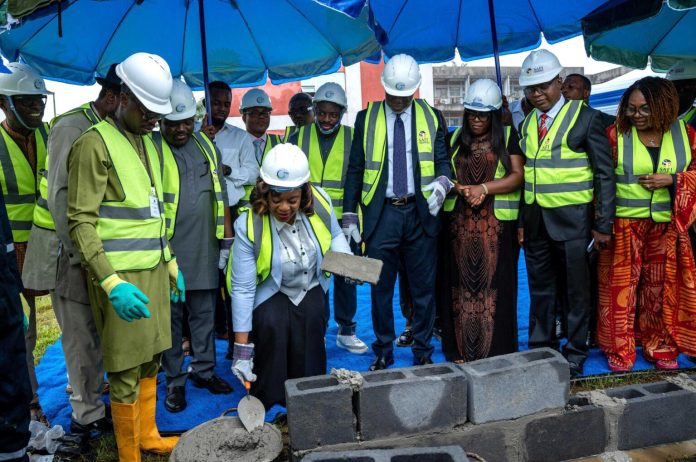
Nigeria LNG Limited (NLNG) and the Nigeria Content Development and Monitoring Board (NCDMB) have unveiled plans for a state-of-the-art Research and Innovation Centre for Computer and Electrical Engineering (RICCEE) in Port Harcourt.
The facility will occupy about 9,336 square metres within the Rivers State University (RSU) campus.
The centre is designed to strengthen indigenous research, technological innovation and specialised engineering training.
RICCEE will focus on practical solutions to challenges in Nigeria’s energy and industrial sectors.
The facility will house specialised laboratories for robotics, embedded systems, electronic and signal processing, software engineering, digital forensics and cybersecurity.
The centre will also deepen collaboration between universities and industry, with research outcomes expected to have potential for commercialisation.
The facility will incorporate solar power and energy-efficient technologies to reduce operating costs and support environmental sustainability.
Main Story
Nigeria LNG Limited (NLNG) and the Nigeria Content Development and Monitoring Board (NCDMB) have unveiled plans to establish a state-of-the-art indigenous research and innovation centre aimed at strengthening Nigeria’s engineering and technological capacity.
The Research and Innovation Centre for Computer and Electrical Engineering (RICCEE) will be located within the Rivers State University (RSU) campus in Port Harcourt and will occupy approximately 9,336 square metres.
The groundbreaking ceremony for the project was held on Thursday, with stakeholders describing the centre as a strategic investment in Nigeria’s human capital, research and industrial development.
NLNG Managing Director, Adeleye Falade, represented at the event by the company’s General Manager, External Relations and Sustainable Development, Sophia Horsfall, said the project would enhance the university’s capacity to undertake advanced, industry-relevant research and develop technological solutions for the energy and industrial sectors.
According to him, RICCEE will provide specialised training while creating an environment where academics, researchers and industry professionals can work together to address practical challenges facing Nigerian industries.
He said the collaboration could produce innovations with both commercial and developmental value, potentially allowing successful research outcomes to be transformed into products, technologies and services.
The Issues
Nigeria’s engineering and technology sectors continue to face challenges linked to inadequate research infrastructure, limited industry-academia collaboration and the difficulty of converting academic research into commercially viable solutions.
RICCEE is intended to address some of these gaps by providing researchers and students with specialised laboratories and facilities capable of supporting practical experimentation and innovation.
However, the long-term impact of the project will depend on sustained funding, effective equipment maintenance, access to modern research tools and strong partnerships with industry.
There will also be a need to ensure that research conducted at the centre addresses actual industrial challenges rather than remaining largely within academic settings.
What’s Being Said
NLNG Managing Director, Adeleye Falade, described the project as a strategic investment in Nigeria’s technological future.
“The centre is designed to enhance the university’s capacity for advanced, industry-relevant research, specialised training and technological solutions for Nigeria’s energy and industrial sectors.”
He said RICCEE would also operate as a research and development hub focused particularly on challenges affecting the energy industry.
“The RICCEE will also host a professional chair and operate as a research and development centre focused on industry-related challenges, particularly those affecting the energy sector.”
NCDMB Executive Secretary, Felix Ogbe, represented by the Director of Capacity Building, Abayomi Bamidele, described the initiative as a milestone in the board’s human capital development objectives.
“We expect the centre to inspire students to innovate, enable researchers to solve real-world challenges and provide industry with reliable research and development partners.”
The Vice Chancellor of Rivers State University, Prof. Zeb-Obipi, said the project aligned with the university’s 2026–2030 strategic development plan, particularly its emphasis on research, innovation, entrepreneurship and collaboration.
“We envisage the centre as world-class hub where researchers and students can develop practical solutions to engineering and technological challenges.”
What the Centre Will Offer
RICCEE is expected to provide specialised infrastructure for research, teaching and technological development.
The planned facility will include laboratories dedicated to:
Electronic and signal processing
Robotics and embedded systems
Software engineering
Digital forensics
Cybersecurity
The centre will also contain offices, storage areas and technical facilities required for equipment management, research and academic activities.
Beyond laboratory work, the facility is expected to function as a bridge between academic research and industry by allowing researchers to work directly on practical engineering problems.
This could be particularly significant for Nigeria’s energy sector, where technological innovation and locally developed engineering solutions remain important to improving efficiency and reducing dependence on imported expertise and technology.
Industry-Academia Collaboration
A major objective of the project is to strengthen the relationship between Nigerian universities and industry.
NLNG said the centre would allow researchers to engage directly with industry professionals and focus research activities on challenges affecting real-world operations.
The model could help move university research beyond academic publications towards commercialisation, intellectual property development and practical industrial applications.
For NCDMB, the project also forms part of its institutional strengthening and human capital development efforts aimed at building partnerships with higher institutions.
The board said such partnerships should strengthen teaching, research, innovation and practical skills development.
Sustainability Built Into the Project
The proposed facility will incorporate environmentally sustainable features.
According to the News Agency of Nigeria, RICCEE will be powered by solar energy and equipped with energy-efficient lighting and other sustainability measures.
The approach is expected to reduce the facility’s dependence on conventional electricity sources while lowering long-term operating costs.
For a research centre expected to rely heavily on computers, specialised laboratory equipment and other energy-intensive systems, a reliable and cost-efficient power supply will be critical to its effectiveness.
What’s Next
Construction of the RICCEE facility will be followed by the installation and commissioning of specialised laboratory equipment and the development of research programmes.
The university is expected to integrate the centre into its academic and research activities while developing partnerships with industry and other institutions.
NLNG and NCDMB are also expected to continue supporting the centre as part of their broader investments in human capital development, indigenous capacity and Nigerian content.
The success of the project will ultimately be measured by its ability to produce engineers, researchers and technological solutions capable of addressing Nigeria’s industrial challenges.
Bottom Line
The RICCEE project represents more than the construction of another university facility. It is an attempt to create a direct pipeline between Nigerian education, engineering research and industrial innovation.
With specialised laboratories covering robotics, embedded systems, software engineering, signal processing and cybersecurity, the centre could help develop the technical talent and locally relevant solutions required by Nigeria’s increasingly technology-driven economy.
Its real value, however, will depend on what happens inside the facility — the quality of research produced, the engineers trained, the partnerships established and, most importantly, how successfully Nigerian innovations move from the laboratory into the marketplace and industry.
The Sea Empowerment and Research Centre (SEREC) has called for reforms and optimisation of Nigeria’s National Single Window (NSW) rather than its abandonment.
The centre said criticism of the NSW, “dual clearing” and manual interventions at the nation’s ports should be based on evidence and a clear understanding of agencies’ statutory responsibilities.
SEREC acknowledged implementation challenges but said they do not, by themselves, demonstrate that the NSW policy is fundamentally defective.
The group called for a transparent framework to monitor physical interventions and distinguish legitimate risk-based examinations from unnecessary or arbitrary cargo interference.
It advocated a “One Cargo, One Digital Identity” system through which Customs and other government agencies can access shared cargo data.
SEREC said interoperability, harmonised processes, common data standards and intelligent risk management would be critical to the success of the NSW.
It urged stakeholders to conduct a Phase-One lessons-learned review before further expansion of the system.
Main Story
The Sea Empowerment and Research Centre (SEREC) has urged stakeholders to focus on reforming and strengthening Nigeria’s National Single Window (NSW) rather than abandoning the initiative in response to implementation challenges at the nation’s ports.
The centre made its position known in a statement signed and issued to newsmen in Lagos on Thursday, following commentaries questioning the operation of the NSW, alleged “dual clearing” and continued manual interventions in cargo clearance.
SEREC acknowledged that constructive criticism and independent scrutiny were necessary for a major national reform of such scale to succeed. However, it cautioned against broad conclusions that could misrepresent the architecture of the NSW or the statutory responsibilities of government agencies operating at the ports.
According to the centre, the NSW remains a strategic reform capable of improving trade facilitation, reducing inefficiencies and strengthening Nigeria’s competitiveness in international commerce.
It argued that challenges encountered during the first phase of implementation should be treated as evidence of areas requiring refinement rather than as proof that the entire policy should be discarded.
SEREC therefore called for an approach centred on evidence-based diagnosis, integration and continuous optimisation.
The Issues
One of the major concerns raised in the debate is the continued physical intervention in cargo after electronic processes have been completed.
SEREC said such intervention does not automatically constitute “dual clearing”, noting that the Nigeria Customs Service and other relevant agencies retain statutory powers to conduct risk management, intelligence, security and compliance checks.
The centre said the more important questions should be whether an intervention is authorised, necessary, documented and risk-based, rather than assuming that every physical examination is evidence of systemic failure.
It nevertheless condemned arbitrary interference with cargo and stressed that legitimate trade facilitation should not be used as a justification for preventing lawful examinations, particularly where security and public safety are involved.
The centre noted that Nigeria’s trading environment is still not completely compliant and therefore called for a proper compliance audit before attributing every physical intervention to corruption or institutional resistance.
Rethinking “Dual Clearing”
SEREC argued that the debate over “dual clearing” requires greater precision.
The centre said electronic processing through the NSW should not necessarily eliminate every physical interaction with cargo. Rather, the objective should be to ensure that physical interventions are limited, justified and targeted, particularly where intelligence or risk assessment indicates that examination is necessary.
It advocated a transparent Trade Compliance and Intervention Performance Framework capable of measuring the frequency, justification and outcome of physical interventions.
Such a framework, it said, would allow legitimate interventions to be distinguished from unnecessary duplication and provide a basis for progressively reducing avoidable physical checks.
One Cargo, One Digital Identity
SEREC also proposed the adoption of a “One Cargo, One Digital Identity” approach in which relevant government agencies operate with shared and consistent cargo information.
The centre said the effectiveness of the NSW should not be measured simply by whether government agencies are connected to a common portal.
Rather, genuine transformation would require interoperability, harmonised processes, common data standards and intelligent risk assessment.
Under the proposed approach, information supplied by traders would be available to authorised agencies through an integrated digital environment, reducing repetitive documentation and unnecessary physical interactions.
Manual Processes and Risk Management
SEREC called for the intelligent reduction of manual processes rather than their elimination regardless of circumstances.
It said the goal should be to achieve the minimum level of physical intervention necessary for effective enforcement, with particular attention to high-risk consignments involving items such as arms and narcotics.
The centre maintained that a modern trade facilitation system must balance speed and efficiency with national security, revenue protection and regulatory compliance.
This means that legitimate risk-based examinations should remain possible even as routine and unnecessary manual procedures are progressively eliminated.
Institutional Resistance or Implementation Gaps?
SEREC also cautioned against describing every delay or operational difficulty as evidence of “institutional resistance”.
It argued that claims of wrongdoing should be supported by evidence and investigated where necessary.
According to the centre, implementation challenges could also arise from inadequate integration, inconsistent procedures, data gaps, unclear responsibilities or weaknesses in system design.
Distinguishing these factors from deliberate obstruction would allow policymakers to address the actual source of the problem instead of relying on broad accusations.
What’s Being Said
SEREC said constructive criticism should remain part of the reform process but warned against conclusions that could undermine a potentially transformative national initiative.
The centre’s position is that the NSW should be subjected to continuous scrutiny and improvement rather than either being uncritically celebrated or outright rejected.
It argued that the critical question is not whether problems exist, but whether those problems can be identified, measured and corrected.
What’s Next
SEREC called for a comprehensive Phase-One lessons-learned review before further expansion of the National Single Window.
The review should identify implementation gaps, examine the causes of delays and manual interventions, evaluate agency interoperability and establish measurable performance indicators.
The centre also wants the proposed Trade Compliance and Intervention Performance Framework to provide greater transparency around physical cargo examinations.
The next phase of the NSW, according to SEREC’s position, should therefore focus on improving data sharing, harmonising agency processes, strengthening risk management and eliminating unnecessary duplication.
Bottom Line
SEREC’s intervention shifts the debate over Nigeria’s National Single Window from whether the reform should survive to how it should work better.
The centre acknowledges genuine implementation problems but argues that abandoning the NSW would be the wrong response. Instead, it wants the system subjected to rigorous review, stronger digital integration and transparent performance monitoring.
For Nigeria’s ports to become genuinely faster and more competitive, the objective should be clear: one cargo, one digital identity, fewer unnecessary physical interventions and smarter risk-based enforcement — without compromising revenue protection or national security.
PwC has raised legal and enforcement concerns over Nigeria’s new virtual asset tax guidelines.
The firm questioned the authority to impose some withholding tax obligations through administrative guidelines.
It warned that peer-to-peer crypto transactions could create enforcement gaps.
PwC also highlighted compliance requirements covering VAT, stamp duty, Tax IDs and record keeping.
Main Story
PwC Nigeria has raised legal and compliance concerns over the Nigeria Revenue Service’s new guidelines for taxing virtual assets, particularly around withholding tax, enforcement of peer-to-peer transactions, valuation and implementation.
The firm said the guidelines provide a clearer framework for taxing cryptocurrencies, stablecoins, investment and utility tokens, governance tokens and non-fungible tokens (NFTs), but noted that several aspects require further clarification.
One of the major concerns relates to the withholding tax provisions. PwC said virtual asset service providers (VASPs) are required to deduct one per cent withholding tax from gross disposal proceeds involving cryptocurrencies, investment tokens and NFTs.
It said income from activities including staking, mining, airdrops and decentralised finance rewards would attract 10 per cent withholding tax.
PwC, however, questioned whether the Nigeria Revenue Service could impose such obligations through administrative guidelines where the relevant provisions were not expressly contained in the 2024 Withholding Tax Regulations.
The firm said the issue could have implications for VASPs as they configure their systems to automatically deduct taxes from transactions.
PwC also identified difficulties in enforcing the tax regime on peer-to-peer transactions conducted outside regulated platforms.
It said transactions carried out directly between wallets, through messaging applications or in person may not involve an intermediary capable of identifying the parties and collecting the applicable taxes.
Such transactions would largely depend on taxpayers declaring their liabilities through self-assessment, creating a potential enforcement gap given the scale of informal peer-to-peer activity.
Under the new framework, VASPs are also expected to play a central role in tax collection by deducting withholding tax, collecting stamp duty, enforcing Tax Identification Number requirements, filing returns and maintaining transaction records.
They are also required to account for VAT on taxable services and remit taxes within prescribed timelines.
PwC said these obligations could substantially increase the operational and compliance burden on virtual asset platforms.
The firm noted that non-compliance by VASPs and peer-to-peer marketplaces attracts a penalty of ₦10 million for the first month of default and ₦1 million for each subsequent month.
Failure to deduct tax at source attracts a penalty of 40 per cent of the amount that should have been deducted, while failure to remit tax already deducted could attract additional penalties and interest.
PwC also highlighted the treatment of the one per cent withholding tax, noting that it is calculated on gross disposal proceeds rather than only the profit made from a transaction.
It said this would require taxpayers to properly reconcile tax deducted at the transaction stage with their final tax liabilities.
The firm said the guidelines also impose a 7.5 per cent VAT on taxable virtual asset-related services, including exchange fees, brokerage commissions, custody fees and advisory services.
However, transferring ownership of a virtual asset does not by itself constitute a taxable supply for VAT purposes. Where a digital asset is used to pay for goods or services that are otherwise taxable, VAT would still apply to the underlying transaction.
The guidelines also provide for a 1.5 per cent stamp duty on token-to-fiat and fiat-to-token transfers, with VASPs responsible for deducting and remitting the duty.
PwC noted that transactions of ₦10 million or less should not attract the stamp duty.
The firm welcomed the use of US dollar values in calculating gains on virtual assets, saying the approach could prevent taxpayers from being taxed on gains created solely by naira depreciation.
Under the methodology, the dollar value of an asset at acquisition is compared with its dollar value at disposal, after which the resulting gain is converted to naira using the applicable CBN/NAFEM exchange rate on the disposal date.
PwC also noted that simply holding virtual assets would not trigger tax under the guidelines.
Certain transactions that do not involve a change in beneficial ownership, including transfers between wallets owned by the same individual, staking lock-ups, NFT minting and some decentralised finance transactions, are covered by safe-harbour provisions.
The firm, however, pointed out that the wallet-transfer safe harbour applies to individuals but not companies or partnerships, potentially creating uncertainty for businesses managing assets across multiple wallets.
The guidelines also allow losses from virtual asset disposals to be offset against virtual asset gains, while such losses cannot be used to reduce income from unrelated activities.
PwC said capital losses could be carried forward indefinitely for the purpose of offsetting future virtual asset gains, while the First-In, First-Out method would apply as the default cost-base methodology.
Taxpayers may instead elect to use a weighted-average-cost method, but must apply their chosen method consistently.
The firm further said taxpayers would be required to retain relevant records for at least six years, making proper documentation important for users with transactions across multiple exchanges, wallets and digital assets.
PwC also identified Tax Identification Numbers as a key part of the new compliance regime, with VASPs required to enforce Tax ID requirements before activating accounts.
Another issue raised by the firm concerns the valuation of virtual assets. The guidelines require taxpayers to use an aggregator approved by the NRS, but PwC said the list of approved aggregators had not yet been published.
It warned that the absence of an approved list could create uncertainty, particularly for highly volatile assets where different pricing sources could produce different taxable values.
PwC also flagged the absence of a clearly stated effective date for the guidelines, saying this could make it difficult for VASPs and taxpayers to determine when the new requirements become operational.
The firm said platforms may need to modify their technology systems, customer onboarding procedures, tax calculations and reporting processes to comply with the framework.
The guidelines also address cross-border transactions involving virtual assets. PwC said converting naira into virtual assets for cross-border settlement would not constitute a taxable disposal, although stamp duty could still arise at the conversion stage.
The firm further questioned whether the tax collection responsibilities assigned to VASPs create an uneven compliance burden compared with other financial intermediaries.
Despite its concerns, PwC described the guidelines as an important baseline for taxation in Nigeria’s virtual asset market.
The firm said the framework provides greater clarity on taxable events, asset classification, gain calculations, withholding tax, VAT, stamp duty and transactions that are not immediately taxable.
It, however, said the effectiveness of the regime would depend on further clarification from the NRS, particularly on its legal authority, implementation timelines, valuation mechanisms and enforcement of transactions conducted outside regulated platforms.
The Issues
The main challenges identified by PwC are the legal basis for some withholding tax obligations, enforcement of informal peer-to-peer transactions, the compliance burden placed on VASPs, the absence of an approved valuation aggregator list and uncertainty over the effective date of the guidelines.
What’s Being Said
PwC considers the framework a significant step towards formalising taxation of Nigeria’s virtual asset market, but says important legal and implementation questions remain unresolved.
What’s Next
VASPs and other affected taxpayers will need to review their systems, records and tax processes against the new requirements, while further clarification from the NRS will be important on implementation, valuation, enforcement and the legal basis for some provisions.
Bottom Line
Nigeria’s new virtual asset tax framework provides clearer rules for crypto-related taxation, but PwC says its effectiveness will depend on resolving legal uncertainties and addressing the difficulty of enforcing tax obligations on transactions conducted outside regulated platforms.
FCT residents say excessive screen time is widening communication gaps between parents and children
Parents reduced face-to-face interaction as children and adults spend more time on mobile devices
Psychologist urges families to establish screen-free periods and prioritise activities that strengthen communication and relationships
Main Story
Parents and residents in the Federal Capital Territory (FCT) have raised concerns that excessive use of mobile phones and other digital devices is reducing face-to-face communication between children and their families.
The residents made the observations in separate interviews with the News Agency of Nigeria (NAN) on Thursday in Abuja, saying prolonged screen time was limiting opportunities for meaningful family conversations and shared activities.
Queeneth Hilbert, a mother of three in Durumi, said children now spent long hours on their phones instead of interacting with their parents. She added that excessive device use was not limited to children, as some parents also became engrossed in their phones after returning from work.
“At home, children can stay alone in their rooms for hours while their parents remain in the sitting room. You may think they are sleeping, but they are not. They stay awake until the middle of the night and then struggle to wake up in the morning, even for family prayers, because they slept late.” — Queeneth Hilbert, mother of three, Durumi.
Hilbert said the issue cut across different age groups and educational backgrounds, urging families to deliberately create time for meaningful conversations and shared activities.
Solomon Peter, a civil servant, said increased screen time had reduced the face-to-face interactions that previously allowed family members to express emotions and resolve issues, Peter said digital communication could also make it harder to interpret facial expressions, body language and other non-verbal cues.
“When you communicate face-to-face, you can read a person’s facial expressions and body language to know whether they are serious, joking or truly understand what you are saying.” — Solomon Peter, civil servant.
Ngozi Okafor, a trader and mother at Garki International Market, said excessive phone use among her undergraduate children had reduced interaction within her family, as they spent much of their time on their devices after returning from school.
Ibrahim Musa, a secondary school teacher in Karu, said although mobile phones offered benefits, excessive screen time was affecting students’ communication skills, classroom participation and interpersonal relationships.
What’s Being Said
“Technology is important, but we should encourage young people to strike a balance between screen time and real-life conversations.” — Ibrahim Musa, secondary school teacher, Karu.
A clinical psychologist, Amina Yaro, said excessive screen time could affect children’s emotional development, communication skills and family relationships if not properly managed.
“Parents must also model responsible digital behaviour because children often imitate what they see. Establishing screen-free periods during meals, family discussions and before bedtime can help rebuild family connections.” — Amina Yaro, Clinical Psychologist.
Yaro said regular face-to-face communication could help children develop empathy, emotional intelligence and healthy social skills. She also encouraged parents to engage children in outdoor recreation, reading and other family activities that promote interaction.
What’s Next
Families are encouraged to establish screen-free periods during meals, family discussions and before bedtime
Parents are urged to model responsible digital behaviour and create more opportunities for face-to-face interaction
Outdoor recreation, reading and other shared family activities can be used to promote communication and strengthen relationships
Bottom Line
The Bottom Line: The concerns raised by FCT residents point to a family communication challenge driven not simply by children’s device use, but by screen habits across households. The emphasis from the psychologist is therefore on establishing healthier digital boundaries while preserving technology’s benefits for learning and communication.
Nestlé Nigeria marks the 10th edition of its Empowering Rural Women Initiative
The Zaria edition provided 50 women entrepreneurs with business training and Nestlé product grants
Beneficiaries will receive three months of mentorship to support business growth and sustainability
Main Story
Nestlé Nigeria has marked the fifth anniversary and 10th edition of its Empowering Rural Women Initiative, supporting 50 women entrepreneurs in Zaria with practical business training, product grants and mentorship.
The company said in a statement that the initiative started in 2021 and is designed to support women retailers seeking to grow their businesses but facing limited access to training, mentorship and resources.
With the addition of the 50 Zaria beneficiaries, Nestlé Nigeria said the programme has now reached 482 women entrepreneurs across communities in Nigeria. Before the Zaria edition, 432 women had benefited from the initiative.
Nestlé Nigeria said monitoring of previous beneficiaries showed that more than 80 per cent had sustained and grown their businesses beyond their initial stock support. It added that many participants had subsequently expanded their inventories, increased turnover and customer numbers, and improved their financial and business management practices.
The company said the Zaria beneficiaries received training in bookkeeping, merchandising, stock management, financial management and customer service. They will also participate in a three-month mentorship programme focused on applying the skills acquired, managing increased stock and reinvesting profits.
Speaking at the event, Boladale Odunlami, Commercial Manager, Nestlé Nigeria, said women account for about 60 per cent of retailers in the company’s retail network.
“Every day, they help us reach consumers, build trust within communities and keep our business moving. Their contribution is significant, and we value them as important business partners.” — Boladale Odunlami, Commercial Manager, Nestlé Nigeria.
Odunlami said the initiative reflected Nestlé Nigeria’s commitment to helping women who contribute to the company’s growth strengthen their own businesses.
What’s Being Said
Victoria Uwadoka, Corporate Communications, Public Affairs and Sustainability Lead, Nestlé Nigeria, said the impact of the programme should be measured by what beneficiaries build with the support provided.
“Five years on, we are seeing women sustain their growth, expand their businesses and create greater economic security for themselves and their families.” — Victoria Uwadoka, Corporate Communications, Public Affairs and Sustainability Lead, Nestlé Nigeria.
Uwadoka added that stronger businesses and improved livelihoods among beneficiaries would also strengthen the retail network connecting Nestlé Nigeria with communities across the country.
What’s Next
The 50 Zaria beneficiaries will undergo a three-month mentorship programme to apply their training and manage their expanded stock
Nestlé Nigeria said it will build on the progress recorded over the past five years and support more women in developing stronger and sustainable businesses
Bottom Line
The Bottom Line: Nestlé Nigeria’s rural women empowerment programme has moved beyond initial product support to combine business training, mentorship and access to resources. The reported growth among previous beneficiaries indicates that sustained support can help women retailers strengthen their businesses while reinforcing the company’s distribution network in local communities.
Iran says there has been no progress on efforts to revive its interim agreement with the United States
Tehran maintains that the Strait of Hormuz will remain closed until its conditions are met
Oil markets face continued supply risk as the key Gulf shipping route remains disrupted
Main Story
Iran says efforts to revive an interim agreement with the United States have stalled, leaving the Strait of Hormuz effectively closed and increasing the risk of further volatility in global oil markets.
A senior Iranian source said there had been no progress on negotiations to revive the memorandum of understanding reached in June or establish a timeframe for implementing its commitments.
The deadlock centres on competing demands from Washington and Tehran. The United States has accused Iran of failing to reopen the Strait of Hormuz as agreed, while Iran says Washington has failed to lift its blockade of Iranian ports and release frozen Iranian assets.
The June 17 agreement, signed by U.S. President Donald Trump and Iranian President Masoud Pezeshkian, called for an immediate and permanent end to military operations. The arrangement later unravelled, with Trump declaring the agreement over on July 7, followed by Iran’s foreign ministry describing it as suspended a week later.
The Iranian source also rejected reports that the agreement’s initial 60-day period for reaching a final understanding on Iran’s nuclear programme and sanctions relief had been extended.
The dispute has significant implications for energy markets. The Strait of Hormuz handled about one-fifth of global oil and liquefied natural gas flows before the conflict began, according to the supplied report. Brent crude, which reached $126 per barrel in April, was trading around $88 on Wednesday, while West Texas Intermediate stood near $83 following volatile trading.
The Issues
The central issue is whether Washington and Tehran can restore the interim agreement sufficiently to reopen the Strait and reduce the risk facing global energy supplies.
The dispute also highlights the strategic importance of the Strait of Hormuz, a major transit route for oil and liquefied natural gas. Continued disruption could keep supply concerns elevated and expose crude prices to further swings, particularly if attacks on shipping and regional military assets continue.
What’s Being Said
“There has been absolutely no progress on this issue,” the Iranian source said, referring to efforts to return to the interim agreement and establish a timeframe for implementing commitments.
U.S. President Donald Trump said the United States has “total control” over the Strait of Hormuz and described Iran as “all talk and no action.”
Iran’s Persian Gulf Strait Authority said the waterway remains closed until Iran’s conditions are met.
What’s Next
Mediators are considering a 10-day de-escalation proposal aimed at salvaging the interim agreement
Further negotiations will determine whether Washington and Tehran can agree on implementation timelines and conditions for reopening the Strait
Oil markets will continue to monitor shipping activity and military developments across the Gulf for signs of a sustained supply disruption
The Bottom Line:
The stalled negotiations leave the Strait of Hormuz at the centre of both the diplomatic dispute and the global energy market risk. Until Tehran and Washington resolve their competing demands, oil prices remain exposed to renewed volatility and the possibility of prolonged supply disruption.
Nigeria’s six listed agricultural stocks posted a combined profit after tax of N123.48 billion in H1 2026 — already 70.75% of their full-year 2025 earnings — as revenue surged 20% ahead of the prior full year
The sector’s total market capitalisation reached N3.884 trillion as of August 10, 2026, reflecting an average year-to-date gain of 377%, but the headline number masks four very different investment cases
Presco emerges as the clearest long-term buy; Okomu Oil is a quality stock priced for patience; Zichis is a short-term momentum play only; Ellah Lakes is a watch-and-wait; while FTN Cocoa and Livestock Feeds earn a firm avoid
Main Story
Nigeria’s agricultural sector just delivered one of the most compressed earnings performances in recent NGX history. The six listed agro-allied companies — Zichis, Ellah Lakes, FTN Cocoa, Livestock Feeds, Okomu Oil Palm, and Presco — completed their H1 2026 results season with a combined profit after tax of N123.48 billion, equivalent to more than seven-tenths of everything they earned across the whole of 2025.
According to Nairametrics’ analysis of the companies’ financial statements, the sector posted a combined profit after tax of N123.48 billion in H1 2026 alone — accounting for 70.75% of their entire N174.51 billion full-year 2025 profit, achieved in just six months. Revenue moved even faster, with a combined N688.88 billion in H1 2026, about 20% ahead of their full N574.09 billion full-year 2025 revenue.
The market has taken notice. The six companies added about N1.03 trillion in market capitalisation to reach a total of N3.884 trillion as of the close of trading on August 10, 2026 — equivalent to 2.42% of the broad market capitalisation of N160.42 trillion — reflecting an average year-to-date gain of 377%.
But that average disguises as much as it reveals. Behind the single sector tag are six companies with profoundly different financial profiles, valuation realities, and investment cases. Some are genuine compounders. Some are momentum plays that have already peaked. Others are value traps dressed in agricultural sector colours. One is a tentative turnaround story that hasn’t yet earned a position.
Here is the breakdown, stock by stock.
The Issue
Why This Sector Has Exploded — and Why Caution Is Still Warranted
The 2025-to-2026 rally in Nigerian agricultural stocks did not emerge from a vacuum. The rise in global edible oil prices, triggered by supply disruptions in major producing regions, boosted the revenue of palm oil processors in Nigeria. Sustained depreciation of the naira also increased investor interest in companies with strong export potential or import-substitution advantages, leading to renewed inflows into agro-industrial stocks as investors sought protection against inflation and currency volatility.
Nigeria was the world’s largest palm oil producer in the 1960s, but output — now around 1.57 million tonnes — still trails domestic demand, a deficit producers are spending billions of naira in retained earnings to close. That structural gap underpins the long-term bullish case for the sector’s best operators.
The risk, however, is that the average 377% sector gain this year has bundled very different risk profiles into one headline number. Earnings for some names have declined by 29% per year over the past five years, yet share prices have increased by 184% annually over three years — tracking significantly ahead of earnings growth. That gap between price and fundamentals is precisely the trap investors need to identify before putting money to work in H2.
What’s Being Said
The View From the Market
On Presco’s sustained earnings growth, investors have rewarded Presco’s consistent profitability, strong margins and ability to capitalise on favourable palm oil market dynamics, according to a BusinessDay analysis of the company’s five-year performance.
On the Okomu-Presco palm oil boom, Kayode Eseyin, lead consumer goods and agricultural sector research analyst at Lagos-based CardinalStone, noted: “CPO prices rose across the globe and were higher compared to last year, as there was capacity expansion by these players. Presco, in particular, made several acquisitions that supported the topline.”
On Ellah Lakes’ ongoing expansion phase, Chuka Mordi, Chief Executive Officer of Ellah Lakes, stated: “We recorded continued revenue growth, completed a major balance sheet restructuring and advanced key operating initiatives across processing and livestock. These developments provide a stronger platform for Ellah Lakes as we continue to move deeper into commercial execution.”
On Zichis’ extraordinary rise and the questions it raised, the NGX stated at the time of its regulatory investigation: “Our primary responsibility is to maintain a level playing field where market participants can trade with confidence, backed by timely and accurate information.”
On the market’s appetite for speculative small caps, a market review of April 2026 noted that Zichis’ inclusion among the top 10 gainers that month underscored investor appetite for speculative-grade small caps, even after regulatory intervention.
The Six Stocks: A Company-by-Company Verdict
1. Presco — BUY (Long-Term)
Of all six agricultural stocks, Presco makes the clearest case for a long-term investor who wants quality growth without paying a valuation premium that has already run well ahead of fundamentals.
Presco reported a profit before tax of N122.2 billion for the six months ended June 30, 2026 — an increase of 9.3% from N111.9 billion recorded in the corresponding period of 2025. The result was supported by a significant reduction in finance costs and improved finance income. The board also proposed an interim dividend of N10.00 per ordinary share.
Key H1 2026 financial highlights include revenue of N198.8 billion — broadly stable versus N198.7 billion — an EBITDA of N123.1 billion representing a margin of 61.9%, and total equity increasing 13.8% to N503.6 billion.
The company’s five-year track record speaks for itself. Presco delivered a 2,070% return over the five-year period from August 2021, with its share price surging from N74.50 to N2,070 as of August 4, 2026. Revenue climbed almost ninefold from N21.46 billion in the first half of 2021 to N198.75 billion by H1 2026, while profit after tax rose to N82.27 billion.
Yet despite that track record, Presco’s year-to-date gain of 41.74% is the most restrained in the sector — a signal that the market has not yet stampeded into the stock the way it has into some peers. The company trades at approximately 20 times earnings, but with a PEG ratio of roughly 0.34 against its five-year earnings growth rate, the price being paid for that growth remains modest relative to its history. Its price-to-book of about 4.76 times is well below the sector average of 16.15 times, and its balance sheet has close to two-thirds of assets funded by equity.
The verdict: Presco is a long-term growth buy. It is not the momentum trade of the moment — it is the stock you hold for years.
2. Okomu Oil Palm — WAIT
Okomu Oil Palm is arguably the most fundamentally sound company in the NGX agricultural sector. It has compounded profit at around 50% annually over five years alongside 52% annual revenue growth, and its return on equity of nearly 65% is the highest in the sector — driven by the strength of the underlying business rather than leverage.
Okomu Oil Palm reported a 12.03% decline in pre-tax profit for the first half of 2026 as weaker domestic and export sales, higher production costs, and increased operating expenses weighed on profitability, even as the company strengthened its balance sheet with higher cash reserves and a return to a positive working capital position. Pre-tax profit fell to N58.99 billion for the six months ended June 30, 2026, from N67.05 billion in the corresponding period of 2025. Profit after tax declined even more sharply, dropping 16.42% year-on-year to N39.73 billion.
Despite weaker earnings, Okomu Oil’s financial position improved during the period. Total assets increased 20.06% to N166.71 billion, while cash and cash equivalents rose 65.34% to N21.40 billion, strengthening the company’s liquidity position. The company also moved from a net current liability position of N2.49 billion at the end of 2025 to a net current asset position of N19.09 billion by the end of June, reflecting stronger short-term liquidity.
The quality, however, comes at a premium. Okomu trades at approximately 26.97 times earnings and 18.22 times book value — above the sector’s 16.15 times P/B average and nearly four times Presco’s multiple. At 29.50% year-to-date, its gain is also the smallest in the sector — not because the market has ignored it, but because the market had already priced in much of its quality before this year’s rally began.
The verdict: Okomu is a quality long-term growth stock, but not one to chase at current levels. A pullback offers the more rational entry point.
3. Zichis — TRADE Carefully
Zichis is the sector’s most extraordinary story of 2026, and also its most dangerous for the uninitiated.
Since its IPO price of N1.99 at listing in January 2026, the stock surged over 800% in a matter of weeks, peaking at N17.36 on February 20, 2026. The rapid price rise led to regulatory concerns, prompting the NGX to suspend trading in the shares in February pending an investigation. The NGX subsequently lifted the suspension following a month-long investigation by NGX Regulation Limited (NGX RegCo) into the extraordinary price movement.
There is some fundamental story beneath the hype. Zichis delivered strong financial performance for the three months ended March 31, 2026, driven by significant revenue expansion across agricultural segments including poultry, eggs, palm oil, and feed production. Revenue surged 256% year-on-year to N420 million, reflecting increased production capacity and stronger demand across core agro-allied products.
But the valuation stretches credulity for any long-term investor. The stock trades at approximately 36 times earnings — nearly three times the sector average of 12.89 times — yet it only listed in January 2026 and therefore carries no meaningful public-market track record. Analysts have flagged that among the NGX’s biggest small-cap movers in 2026, the earnings rarely supported the price action, with the fundamentals in most cases telling a very different story from the rally.
The verdict: Zichis may appeal to short-term momentum traders, but the trade has already cooled from its peak. Treat it as a momentum play with a defined exit, not a conviction bet.
Ellah Lakes is the only agricultural stock in the red this year — down 35.07% against a sector average gain of around 191% — yet it is also the most structurally interesting for a patient investor who can tolerate waiting for a story to play out.
Ellah Lakes reported an operating loss of N782.63 million for the six months ended June 30, 2026 — an improvement from the operating loss of N3.84 billion reported for the 17-month audited period ended December 31, 2025. Revenue increased significantly to N533.86 million as the company scaled commercial operations across its agribusiness platform. Management attributed revenue growth primarily to oil palm sales, supported by contributions from palm kernel-related sales, livestock operations and sludge sales.
The balance sheet is, by far, the most conservative in the sector — with roughly 98% of assets funded by shareholders’ equity rather than debt. Its price-to-book ratio of 2.15 times is the lowest in the sector, well below the 16.15 times average. Loss per share has narrowed from approximately N0.71 in 2024 to N0.28 in H1 2026, a trajectory that, if sustained, eventually points toward profitability.
But the keyword remains if. The turnaround has not yet fully translated into self-sustaining revenues and earnings. Without profitable operations, a clean balance sheet and a low P/B do not alone make the stock undervalued.
The verdict: Long-term investors should watch Ellah Lakes closely but hold off on a position until profitability is demonstrated. Short-term investors should avoid it entirely — there is no price momentum here to trade.
5. FTN Cocoa — AVOID
FTN Cocoa’s price-to-book ratio of 40.31 times is the highest in the sector — a striking figure for a company whose shareholders’ equity represents only about 3.3% of total assets. In other words, the balance sheet is funded overwhelmingly by liabilities, not by genuine equity value.
FTN Cocoa’s Q1 2026 results revealed that total liabilities of N22.9 billion far exceed total equity of N1.1 billion, with the company operating with a high debt-to-equity ratio. While a foreign exchange gain contributed to Q1 profitability, future currency movements could lead to significant losses.
The earnings trend over five years has been declining, with the company recording losses in multiple periods. Any profits that have appeared have been driven significantly by foreign exchange gains — not by underlying operational strength. There is no dividend history to cushion investors who get the call wrong.
The verdict: FTN Cocoa does not earn a place in either a long-term or short-term portfolio. The combination of an almost entirely liability-funded balance sheet, inconsistent earnings, and a 40-times price-to-book ratio makes it a stock to sidestep regardless of price momentum.
6. Livestock Feeds — AVOID
Livestock Feeds carries similar concerns to FTN Cocoa, though in less extreme form. Shareholders’ equity represents only about 10% of total assets, the company has recorded losses in three of the past five years, and its return on equity is currently negative. Like FTN Cocoa, there is no dividend track record to offer downside protection.
The risk-reward calculus simply does not work — either for someone building a long-term portfolio on earnings fundamentals, or for a short-term trader looking for momentum with some fundamental anchoring underneath it.
The verdict: Livestock Feeds, like FTN Cocoa, belongs outside the portfolio. The structural weaknesses are too significant to overlook, regardless of how the share price moves.
What’s Next
Three items for investors to track into H2 2026:
Presco’s full-year 2026 earnings: With H1 pre-tax profit already at N122.2 billion and an interim dividend of N10.00 per share declared, the company’s H2 results — expected in early 2027 — will determine whether the five-year compounding trajectory holds.
Okomu Oil Palm’s price correction: Given that its H1 2026 profit declined 16.42% year-on-year, a pullback from its current elevated valuation would provide the cleaner entry point for long-term investors.
Ellah Lakes’ profitability timeline: The company’s CEO has flagged continued progress in its scale-up phase. The next quarterly result will be the earliest signal of whether the revenue growth is beginning to outpace operating losses consistently enough to call a turning point.
Bottom Line
The Bottom Line: Six companies share the NGX agricultural sector tag, but they represent four completely different investment realities — and the 377% average year-to-date sector gain papers over that distinction in a way that will hurt undiscerning investors in H2. Presco is the quality compounder still trading at a rational price; Okomu is worth every naira it will cost after a pullback; Zichis is a trading vehicle, not an investment; Ellah Lakes is a watch, not a buy; and FTN Cocoa and Livestock Feeds are the sector’s value traps — attractive in headline numbers, hollow underneath. In a market where momentum has run far ahead of fundamentals for several names, the most important skill in H2 is not identifying the winners — it is identifying which stocks to avoid.