The National Youth Service Corps (NYSC) has released the official deployment schedule for prospective members of the 2025 Batch C, confirming that call-up letters are now available for download.
According to the update, prospective corps members (PCMs) originally posted to Lagos will have their orientation programmes in Ekiti, Kwara, Ondo, Ogun, and Osun, while those posted to the FCT will attend camps in Kaduna, Niger, and Nasarawa.
The adjustment follows an earlier report, which revealed that only about 40% of registered PCMs can be accommodated in state camps during the upcoming orientation exercise, owing to space constraints across the country’s orientation facilities.
The NYSC also issued a travel guideline, warning PCMs against embarking on overnight journeys while heading to their assigned camps. It reminded them to print and sign all required documents ahead of camp registration, noting that these materials must be presented upon arrival.
The mobilisation timetable also indicates that physical verification for foreign-trained corps members will be conducted from November 9 to 13, while ICT-related processing will run from November 12 to 15. Institutions responsible for producing corps members are expected to facilitate both online and physical distribution of call-up letters between November 16 and 18, during which PCMs are to print their deployment details.
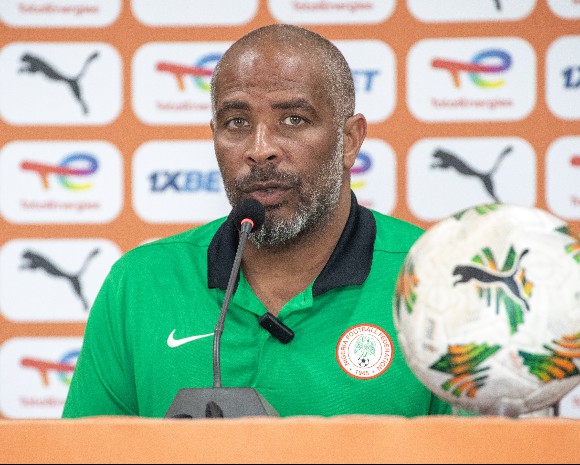
Nigeria’s head coach, Eric Chelle, has sparked widespread debate after alleging that a member of DR Congo’s technical team engaged in “voodoo-like” gestures during the tense penalty shootout that ended Nigeria’s hopes of qualifying for the 2026 FIFA World Cup.
Nigeria were eliminated on Sunday night after a nerve-racking 4-3 penalty defeat in Rabat, following a 1-1 draw across 120 minutes at the Prince Moulay Abdellah Stadium. The loss confirmed that the Super Eagles will miss consecutive World Cup tournaments.
A clip shared by ESPN Africa on X on Monday captured the Nigerian coach speaking to journalists shortly after the match. Chelle claimed he became uneasy during a VAR review for a penalty incident when he noticed the repeated motions of a DR Congo staff member standing near the touchline.
“During every penalty decision, someone from the DR Congo bench kept making some kind of voodoo gesture… over and over,” Chelle said in the video. “That’s why I reacted the way I did. It irritated me.”
When pressed to describe the specific act he observed, Chelle motioned with his hands and said: “Something like this. I don’t know if it was water or something else.”
There has been no independent confirmation to support his claims.
Bizwatch Nigeria earlier reported that Nigeria took the lead just three minutes into the match through Frank Onyeka, before DR Congo equalised in the 32nd minute via Meschack Elia. Both teams battled intensely through extra time, creating chances but failing to score.
The penalty shootout began on a shaky note for Nigeria. Calvin Bassey and Moses Simon both missed their early spot kicks. Stanley Nwabali kept Nigeria in contention with a save from DR Congo’s first penalty, while Akor Adams later scored to keep the Super Eagles alive. But the Congolese converted their fourth kick, sealing a 4-3 win and advancing to the intercontinental playoffs.
Nigeria, who had earlier reached the playoff final after defeating Gabon 4-1 in extra time, saw their qualifying dreams collapse in a dramatic and controversial fashion.
Nigeria’s campaign for a spot at the 2026 FIFA World Cup came to a painful end on Sunday night following a dramatic penalty shootout defeat to DR Congo during their CAF qualifying playoff showdown in Rabat, Morocco.
After a tense 120-minute battle that ended 1-1, the Congolese side secured a 4-3 win on penalties, advancing to the intercontinental playoffs. For the Super Eagles, the outcome means they will miss back-to-back World Cup tournaments.
Nigeria started brightly, with Frank Onyeka converting a well-worked team move in the third minute to hand the Super Eagles an early lead. DR Congo, however, gradually gained momentum and equalised in the 32nd minute when Meschack Elia — who replaced Yoane Wissa — punished Nigeria’s defensive error inside the box after an attempted build-up from the back went wrong.
From that point, the match developed into a cautious affair, with both sides creating intermittent chances. Nigeria’s goalkeeper, Stanley Nwabali, delivered several crucial saves to keep the Eagles’ hopes alive, including a dramatic stop to deny Chancel Mbemba in the dying moments of extra time. Nigeria, on their part, missed a huge opportunity when substitute Tolu Arokodare headed over the bar from close range.
With the stalemate unresolved after extra time, the contest went to penalties, heightening the tension inside the stadium. Nigeria faltered early, with Calvin Bassey firing his effort over the bar and Moses Simon seeing his attempt saved. Nwabali restored some hope by stopping two DR Congo penalties, keeping Nigeria in the contest.
In sudden death, Semi Ajayi stepped up but had his shot saved by Congolese goalkeeper Timothy Fayulu. DR Congo captain, Chancel Mbemba, then sealed the victory by smashing home the decisive penalty, sending the Leopards and their supporters into jubilation.
The result dashed Nigeria’s ambitions of returning to the global stage and compounded the disappointment felt after missing the 2022 World Cup.
Nigeria’s headline inflation rate is projected to fall below the 18% mark in October, as analysts anticipate that the Consumer Price Index (CPI) will maintain its gradual downward movement for another consecutive month.
Ahead of Monday’s official release of the October 2025 CPI report by the National Bureau of Statistics (NBS), Cowry Research has forecast that headline inflation will decline further, settling at approximately 17.83%.
In a detailed market note, the investment research group explained that the anticipated easing is largely influenced by the naira’s continued stability, a more liquid foreign exchange environment, and steady food supply driven by harvest season activities across the country.
Despite the upward price adjustment of petrol motor spirit (PMS) recorded in early October — a development that raised some cost pressures — analysts at Cowry Research noted that the impact on overall inflation should remain small. This is attributed to PMS having relatively low weight within the CPI basket.
According to the firm, the latest estimate aligns with Nigeria’s broad disinflation trend that has been gaining traction throughout the year.
In September 2025, headline inflation slowed to 18.02%, easing from 20.12% in August — the sixth straight month of moderation. The figure came in lower than Cowry Research’s projection of 19.73%, reinforcing expectations that inflation may continue softening towards year-end.
Month-on-month inflation also decelerated slightly, printing 0.72% in September compared to 0.74% in August, reflecting milder price increases across several key spending categories.
Annually, headline inflation was 14.68 percentage points lower than the 32.70% documented in September 2024, the lowest year-on-year inflation reading recorded since May 2022’s 17.71%.
The main contributors to annual inflation remained Food & Non-Alcoholic Beverages (7.21%), Restaurants & Accommodation Services (2.33%), and Transport (1.92%). On a monthly basis, food inflation led the pack once again, adding 0.29%, while restaurants contributed 0.09% and the transport segment added 0.08%.
Food prices saw some of the most significant relief in September. Year-on-year food inflation slipped to 16.87%, down sharply from 37.77% recorded a year earlier, supported by high base effects and increased availability of produce during harvest. Prices of beans, onions, garri, maize, and other key staples fell noticeably. On a monthly basis, food inflation posted –1.57%, compared with 1.65% in August — signalling rare deflation in food prices.
Core inflation also eased, dropping to 19.53% year-on-year, compared to 27.43% in September 2024. Month-on-month core inflation moderated to 1.42%, just below the 1.43% recorded in August. Analysts attributed this trend to a more stable FX market and improved access to dollars, which helped ease import cost pressures.
Market data showed that Bonny Light crude averaged $66.15 per barrel in October 2025, representing a 5.77% drop from September’s $70.20 per barrel.
Meanwhile, PMS prices rose from N865 per litre in early October to N992 per litre by mid-month following supply disruptions attributed to the ongoing PENGASSAN industrial action. Prices later dropped to about N922 per litre as distribution normalised. The temporary spike in petrol prices drove increases in transportation, food services, and hospitality — sectors that are highly sensitive to energy costs.
The naira, however, recorded strong performance in the FX market in October, appreciating by 2.55% to average N1,459.54/$1, compared with N1,497.79/$1 in September. This helped moderate the price of some imported goods, including imported rice, which fell by 0.71% month-on-month.
Cowry Research believes that the persistent cooling of inflation, combined with the Central Bank of Nigeria’s policy rate cut in September, creates room for an additional rate reduction when the Monetary Policy Committee (MPC) convenes in November 2025.
Analysts expect another 50-basis-point cut, citing improving macroeconomic indicators. Although concerns such as policy uncertainties and public commentary may generate slight risks, market watchers remain optimistic that timely interventions will cushion any spillovers.
Nigeria’s cement sector recorded a significant decline last week as sell pressure on Dangote Cement and BUA Cement wiped out more than N1.47 trillion from the combined market value of listed cement firms on the Nigerian Exchange (NGX).
Trading figures show that the two dominant industry players lost a combined N1.520 trillion in market capitalization, overshadowing modest gains recorded by Lafarge Africa.
Market sentiment deteriorated sharply after uncertainty around the implementation of Nigeria’s newly introduced capital gains tax triggered broad selloffs across the equities market. Although the market recovered partially following regulatory clarification, the NGX still closed the week N1.5 trillion lower at a total market value of N93.5 trillion.
Dangote Cement Plc emerged as the biggest loser as its share price fell by 10%, slashing its market valuation by N1.113 trillion. With 16.873 billion outstanding shares, Dangote Cement’s market cap settled at N10.022 trillion—well below its highest level in the past year.
BUA Cement Plc also posted sharp losses, shedding N406.372 billion in market value as its stock price dropped from N180 to N168. With 33.864 billion shares outstanding, the company saw a week-on-week decline of 6.67%, ending the week at N5.689 trillion.
In contrast, Lafarge Africa Plc (WAPCO) saw renewed investor interest despite the overall bearish sentiment. The company’s share price climbed from N131 to N134, adding N48.323 billion in value. Lafarge Africa now stands at a market capitalization of N2.158 trillion, still 13.15% below its 52-week high.
Overall, the cement index closed the week deep in negative territory as investors exited their positions in reaction to shifting tax policies and broader market uncertainty.
Bitcoin (BTCUSD) dropped below the $95,000 mark as bearish sentiment continued to dominate the cryptocurrency market, with investors remaining cautious in the absence of fresh catalysts to spark a rebound.
The pessimism weighed heavily across major digital currencies, with Ethereum (ETHUSD) slipping to $3,095 and Ripple (XRPUSD) falling below $2.20 as widespread selling pressure intensified.
Despite earlier expectations that the reopening of the U.S. government could stimulate a recovery rally, traders appear to have dismissed the outlook, instead continuing profit-taking that has kept markets in negative territory.
CoinMarketCap data shows that Bitcoin declined 1.44% in the past 24 hours, trading around $94.3k with a total turnover exceeding $50.589 billion. Over the last seven trading sessions, Bitcoin’s market value has shed 9%, bringing its valuation to $1.884 trillion.
Ethereum recorded a 12% weekly decline, with its market cap falling to $373.7 billion and daily trading volume hitting $23.5 billion. XRP slid 2.5% to $2.18 on trading activity worth $3.292 billion, losing roughly 6% of its value in one week.
Other major altcoins—including Solana (SOLUSD), Binance Coin (BNBUSD), TRON (TRXUSD), Dogecoin (DOGEUSD), and Cardano (ADAUSD)—also trended lower as the broader market extended its correction.
At press time, the global cryptocurrency market capitalization stood at $3.23 trillion, reflecting a 1% decline in the last 24 hours amid persistent risk-off trading.
Nigeria’s external reserves have climbed to their highest level in six years, with the Central Bank of Nigeria (CBN) confirming a gross reserve balance of $43.535 billion. The uptick, supported by stronger remittances, improved foreign inflows, and steady hydrocarbon earnings, has boosted the country’s usable reserves.
Fresh data from S&P shows that Nigeria’s usable reserves have risen sharply, now providing approximately five months of coverage for current account payments (CAP)—a significant improvement from 3.4 months recorded in 2024. This expanded buffer strengthens the nation’s capacity to manage short-term external obligations without borrowing.
Breakdown of CBN figures reveals that $42.950 billion of the reserves are liquid, while $585.110 million represents blocked funds—down from a peak of $1.002 billion in Q1 2025. Analysts attribute the decline in blocked funds to the central bank’s ongoing FX reforms, which have eased long-standing repatriation bottlenecks for foreign investors.
The improved FX liquidity marks a reversal of the conditions that once led to Nigeria’s removal from the MSCI Index. Multinational firms and portfolio investors seeking to repatriate capital are reportedly receiving more consistent FX support.
As of early November, total gross reserves had risen by $338 million from levels recorded at the end of October. The position was aided by firmer oil receipts, stronger non-oil inflows, and a persistent trade surplus.
S&P data also indicates that Nigeria’s usable reserves increased to $36.042 billion, up from $29.358 billion in 2024. The ratings agency noted that it deducts approximately $8 billion—borrowed domestically through forwards—from its usable reserve calculation. However, short-term FX borrowed from offshore markets is classified as external public sector debt rather than deducted from reserve totals.
S&P projects that Nigeria’s usable reserves will average about $40 billion between 2025 and 2028, up from earlier estimates of $33 billion.
Economic analysts forecast that the external reserve balance could surpass $44 billion in 2025, supported by improvements in oil production and sustained inflows from non-oil sectors.
On the global commodities front, oil prices climbed sharply after renewed Ukrainian drone strikes targeted Russia’s Novorossiysk export hub, raising concerns over fresh supply disruptions. U.S. WTI crude jumped 2.71% to $60.28 per barrel, while Brent crude advanced to $64.54.
Analysts warn of potential additional price increases as U.S. sanctions on major Russian firms Rosneft and Lukoil come into effect on November 21, posing further supply risks.
The Central Bank of Nigeria (CBN) is preparing to issue Nigerian Treasury Bills worth N700 billion across its usual short-term maturities—91-day, 182-day, and 364-day tenors—as investors position ahead of this week’s inflation report.
The auction, scheduled for Wednesday, is expected to attract strong demand, especially as analysts project that headline inflation could ease below the 18% mark. With expectations of a cooling inflation environment, market watchers believe that stop rates on Treasury bills may moderate further.
Fixed income traders anticipate heavy oversubscription, driven by renewed interest in naira-denominated assets. Market appetite for the one-year paper, in particular, is projected to surge as investors seek longer-duration instruments to lock in yields before potential rate adjustments.
Activity in the fixed income market closed the previous week on a bullish note, supported by robust system liquidity. As a result, the average yield across all instruments fell by 35 basis points week-on-week to settle at 19.3%.
Treasury bill yields declined significantly, dropping by 41 basis points to 17.0%, while OMO bill yields slid by 51 basis points to 21.7%, according to analysts at Cordros Capital, who attributed the movement to intensified bargain hunting by investors.
Investor sentiment has already begun to reflect expectations of a disinflationary trend, with the secondary market trading in mixed territory but leaning bullish last week.
AAG Capital noted that demand was particularly strong at the mid-segment of the yield curve. During the week, the CBN conducted an OMO auction featuring mid-tenor bills of 152 days and 173 days.
The 152-day offer closed at a stop rate of 20.59%, with a total allotment of ₦640.15 billion against subscriptions of ₦645.15 billion. Meanwhile, the 173-day paper cleared at 20.69%, with ₦1.91 trillion allotted—below the total subscription level of ₦2.45 trillion.
Total demand at the auction reached ₦3.09 trillion, far surpassing the ₦600 billion on offer, underscoring the intensity of investor appetite for fixed-income securities.
Stitches Africa, an AI-powered e-commerce platform for bespoke and ready-to-wear African clothing, has secured fifty million dollars to scale its operations and support fashion entrepreneurs across the continent.
The financing partnership was led by JF Advisory Group, with Cedius Trustees Limited serving as Custodian and Security Trustee.
In a statement, the company said the funds will support expansion into new international markets, strengthen logistics, and provide designers with both capital and digital tools.
The company, which officially launched in Lagos, said it plans to connect African designers with customers around the world.
It added that the platform is designed to close long-standing gaps in the fashion value chain by combining technology, sustainability, and cultural authenticity.
“The platform allows users to browse, customize, and purchase tailor-made African wear from anywhere in the world using AI-driven body measurement technology. It generates accurate digital fittings for seamless and precise tailoring,” the statement said.
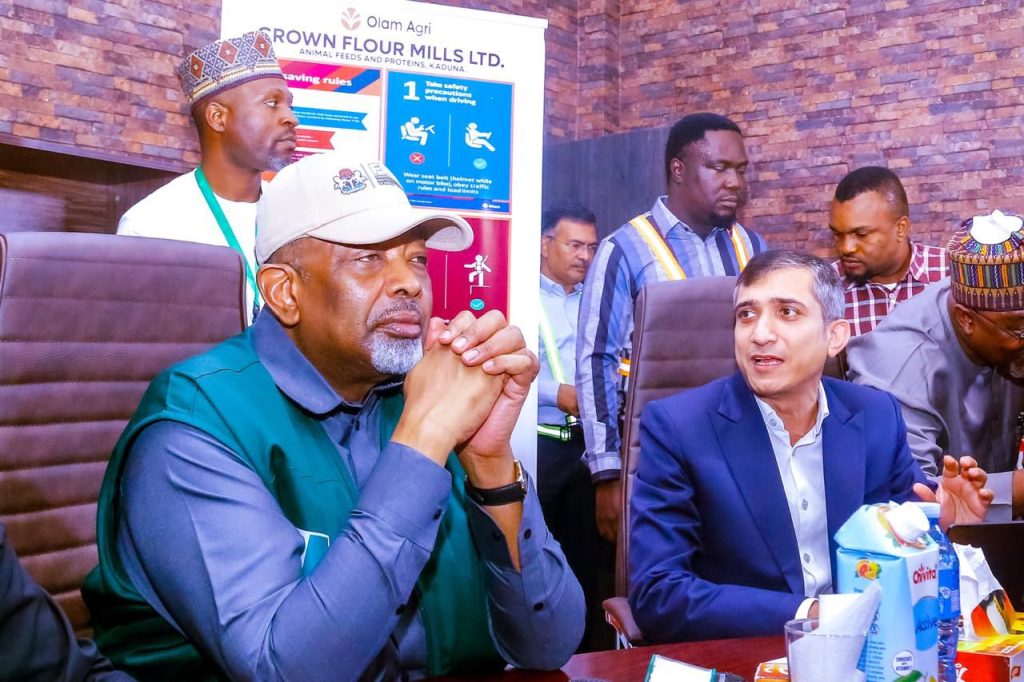
The National Council on Agriculture and Food Security (NCAFS), Nigeria’s apex policy-making and coordinating body for the agricultural sector, convened its annual summit with a renewed commitment to achieving national food sovereignty and security in Kaduna this week.
The Council, comprising federal and state ministries of agriculture, development partners, research institutions, and private sector stakeholders, continues to drive strategic initiatives aimed at reducing reliance on food imports and ensuring universal access to safe and nutritious food for all Nigerians.
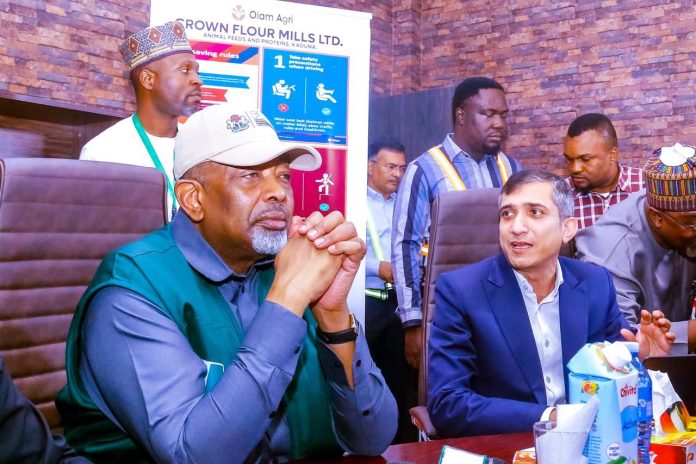
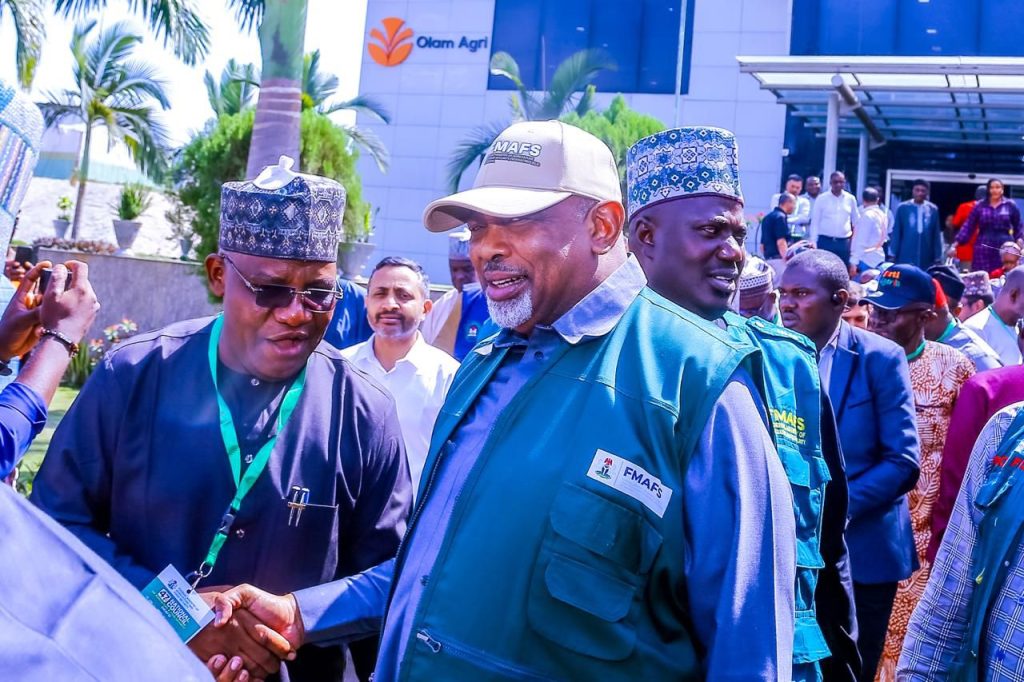
As part of the summit’s official activities, the Honourable Minister of Agriculture, Senator Abubakar Kyari; the Honourable Minister of State for Agriculture, Senator Dr. Aliyu Sabi Abdullah; the Permanent Secretary of the Federal Ministry of Agriculture, Dr. Marcus Olaniyi Ogunbiyi; and all 36 State Commissioners of Agriculture undertook a courtesy visit to the Olam Integrated Feed and Protein (IFP) facility in Kaduna State on 5th November 2025. The visit served as a recognition of Olam’s exemplary contribution to Nigeria’s agricultural transformation.
As one of the largest integrated agribusinesses in the country, Olam operates across the entire agricultural value chain—from feed milling and poultry production to rice processing, grain trading, and animal protein development.
During the visit, Olam Agri – IFP Business Head, Amit Agarwal, provided the delegation with a comprehensive overview of the facility’s layout, operational capacity, and strategic growth projections.
The Council commended Olam’s commitment to innovation, scale, and sustainability, positioning the company as a model for private sector engagement in strengthening Nigeria’s food systems.
This engagement underscores the Council’s commitment to fostering public-private partnerships that drive agricultural development and enhance food security nationwide.
As conversations around deepening financial inclusion and expanding access to credit gain fresh momentum, Interswitch Group, Africa’s leading integrated payments and digital commerce company, has reaffirmed its commitment to the advancement of Nigeria’s digital finance landscape through its renewed partnership with the Committee of e-Business Industry Heads (CeBIH) as Gold Sponsor of the 2025 CeBIH Annual Conference.
The two-day conference, themed “Reimagining Financial Inclusion through Cultural Shifts in Consumer Credit,” will take place from Tuesday, December 2 to Wednesday, December 3, 2025, at the Eko Convention Centre, Victoria Island, Lagos and will feature keynote addresses, panel discussions, and case studies that collectively aim to reframe Nigeria’s consumer credit culture and foster a more inclusive economy.
Bringing together policymakers, banking executives, technology innovators, and thought leaders, the conference will examine how shifting cultural attitudes toward credit, alongside technology and data-driven solutions, can accelerate access to finance for millions of unbanked and underbanked Nigerians.
As part of the event’s robust agenda, Verve, a subsidiary of Interswitch Group, will feature prominently on Day 1 (December 2) in a high-impact panel session titled “Alternative Credit Scoring for the Underserved.” The session will convene industry experts to interrogate the limitations of traditional credit models and explore innovative approaches that leverage alternative data to unlock new pathways for financial inclusion.
Speaking ahead of the conference, Mitchell Elegbe, Founder and Group Managing Director of Interswitch Group, said:
“We are delighted to once again collaborate with CeBIH in advancing the conversations that are shaping the future of financial access in Nigeria. At Interswitch, we recognize that inclusion goes beyond connectivity, it is about creating credit systems that reflect the realities and aspirations of everyday people. Through technology and data intelligence, we can reimagine lending models that empower individuals and businesses previously excluded from the financial ecosystem, unlocking prosperity at scale.”
Established to promote collaboration and thought leadership within Nigeria’s digital financial services industry, CeBIH continues to play a pivotal role in influencing the direction of e-business and payments innovation. This year’s theme reflects a growing recognition that financial inclusion extends beyond digital access to encompass the development of responsible and culturally attuned credit systems that enable economic participation and growth.
Interswitch’s continued sponsorship of the CeBIH Annual Conference underscores its strategic commitment to driving financial empowerment, fostering innovation, and shaping a sustainable digital economy in Nigeria and across Africa.
For more information about the conference, please visit www.cebih.org
Sundry Markets Limited, owners of the Marketsquare supermarket chain, has been named Most Sustainable Retail Organisation at the Africa Retail Awards 2025.
The award highlights the company’s growing reputation for responsible retailing and its investment in environmental, social, and governance (ESG) standards across its operations.
The organisers of the awards; Africa Retail Academy, Lagos Business School, Nairametrics, and KPMG, said Sundry Markets stood out for its structured approach to sustainability and its impact on employees, communities, and the environment.
Sundry Markets’ sustainability model is built around ethical labour practices, community support programmes, and environmental responsibility. The company has implemented policies on fair worker treatment, responsible sourcing, waste reduction, and energy efficiency.
It also provides regular sustainability reports to improve transparency and stakeholder trust.
Speaking after the announcement, Mrs. Dubem Kekachi, Sustainability Lead at Sundry Markets, said the recognition reinforces the company’s long-term commitments.
“This achievement reflects our belief that retail can be a force for good,” she said. “We are proud to lead the way in creating a greener, more inclusive future for Africa’s retail industry.”
The Africa Retail Awards celebrate innovation and outstanding performance within the continent’s retail sector. The organisers said Sundry Markets’ model shows how large retail chains can expand while reducing waste, improving labour outcomes, and supporting local communities.
Sundry Markets thanked its employees, partners, and customers, noting that the award reflects joint efforts across the business. The company added that it will continue investing in sustainability projects and aims to set “new benchmarks” for the sector.
The Nigerian National Petroleum Company Limited has introduced a new health insurance scheme for attendants working across its retail fuel stations nationwide.
In a statement issued by the Chief Corporate Communications Officer, Andy Odeh, the company said the initiative is part of a broader effort to improve staff welfare and raise the standard of customer service across its outlets.
According to the statement, the Attendants Health Insurance Scheme, launched by NNPC Retail in partnership with NNPC HMO, will provide healthcare coverage for more than seven thousand attendants who operate at the company’s stations across the country. The programme places all eligible workers on the NNPC HMO platform, giving them access to medical services in approved hospitals.
Speaking at the launch ceremony at the NNPC Mega Station in Abuja, the Executive Director of Retail Operations and Mobility, Baba Shettima Kukawa, who represented the Managing Director of NNPC Retail, Huub Stokman, said the scheme marks an important step in the company’s plan to strengthen customer engagement and service delivery.
Kukawa said attendants are the first point of interaction with customers and that better welfare support will translate to improved performance at the stations.
He said the new package, called the Attendant Framework, is designed to address key welfare needs and includes the rollout of HMO coverage from this month. He added that the goal is to improve the quality of service, build customer loyalty and support sustainable business growth across NNPC’s retail network.
Also speaking at the event, the Deputy Director of Information Technology, Ademola Adebusuyi, who represented the Managing Director of NNPC HMO, said the company has partnered with reliable healthcare providers to ensure that beneficiaries receive quality medical attention.
He explained that the scheme gives attendants access to a wide network of hospitals and urged workers to make full use of the opportunity. He said the initiative is meant to guarantee that workers can seek care whenever required, regardless of their station location.
A customer service attendant at the Abuja Mega Station, Dorcas Luke Onyeche, who spoke on behalf of her colleagues, commended the management for prioritising their welfare. She said the scheme would boost staff morale and improve their ability to serve customers effectively.
The Manufacturers Association of Nigeria says the country’s manufacturing output will grow by 3.1 per cent in 2026. The association links the expected growth to new tax incentives, the harmonisation of levies under the new tax regime taking effect in January, and increased government patronage.
The projection is contained in the Manufacturers’ CEOs Confidence Index released in October. MAN says the forecasted 3.1 per cent growth compares to the 1.6 per cent recorded in the second quarter of 2025. It also expects the sector’s contribution to real Gross Domestic Product to rise to 10.2 per cent next year.
The Director of the Research and Economic Policy Division, Dr. Oluwasegun Osidipe, said the outlook depends on how well the new tax laws are implemented. He highlighted the National Single Window Project and the alignment of the Nigeria Industrial Policy with the Nigeria First framework as key factors.
Osidipe said manufacturers have struggled with multiple taxation. He noted that companies often paid various levies while moving goods across local government areas, adding that most of those charges have now been removed under the new tax laws.
He said the elimination of redundant taxes and the introduction of targeted incentives for small and medium manufacturers would help firms retain more funds and reinvest in production.
He added that most MAN members are small and medium industries. According to him, the tax incentives will boost their liquidity, expand operations, and strengthen output.
The MAN report shows an improvement in capacity utilisation. It rose from 57.6 per cent in the second half of 2024 to 61.3 per cent in the first half of 2025. MAN links the increase to government support programmes, including access to single-digit loans under the N75bn industrial fund.
Osidipe said credit access has widened as loans that previously attracted interest rates of 32 to 35 per cent are now available at much lower rates. He said cheaper credit would help manufacturers produce more, employ more people, and increase sales.
He also said higher government patronage would accelerate sector growth. He cited Cross River State’s commitment to buying locally assembled vehicles and urged other states to adopt similar policies.
Other projections in the MAN outlook include an appreciation of the naira to between N1,300 and N1,400 per dollar in 2026. MAN links this to stronger oil prices, improved reserves, and rising foreign investment.
The association expects headline inflation to drop to about 14 per cent, supported by stable food and energy prices. It also anticipates that the Central Bank of Nigeria will cut the benchmark interest rate to about 23 per cent to stimulate credit and output.
MAN forecasts overall GDP growth of up to four per cent in 2026, driven by higher oil production, better fiscal performance, growth in manufacturing and financial services, and increased consumer spending during the election season in the fourth quarter.
Nigeria’s new tax laws will take effect in January 2026. President Bola Tinubu signed four related bills into law on June 26, 2025. The reforms aim to streamline levies, end multiple taxation, and provide targeted incentives for small and medium businesses.
Mediacraft Associates, a leading PR and integrated marketing agency, has announced that Amina Omoike, Senior Manager and Group Head of Media Services, has been named one of The Industry’s Top 50 Women in 2025. The recognition comes under the Industry Changemakers Awards, with the grand unveiling set for Friday, December 12, in Lagos.
The awards highlight women making significant impact across business, entrepreneurship, PR, sustainability, finance, tourism, culture, and governance. Amina was recognized for her leadership, dedication, and influence in Nigeria’s PR and media sector.
John Ehiguese, CEO of Mediacraft Associates, said: “We are proud to see Amina receive this recognition. Her strategic insight and dedication have shaped our media services and inspired the wider communications community.”
Amina described the recognition as a “team achievement,” adding: “This milestone reflects the collective effort of our talented team at Mediacraft and our shared commitment to telling meaningful stories.”
Since joining Mediacraft in 2018, Amina has managed media relations for major clients including Stanbic IBTC, Interswitch, Verve, Quickteller, Olam Agri, Crown Flour Mills, ICAEW, Truecaller, Pfizer, and Sanofi. Prior to Mediacraft, she was an award-winning journalist with expertise in brand, marketing, and lifestyle reporting.
The Industry Changemakers Awards, powered by The Industry Women Conference (TinW), celebrates women driving progress in PR and across Nigerian business sectors. According to convener Goddie Ofose, the Top 50 list was curated by the newspaper’s editorial team alongside select brand marketing editors.
Amina now joins 49 other women leaders shaping business, communications, culture, and governance in Nigeria.
The Petroleum and Natural Gas Senior Staff Association of Nigeria (PENGASSAN) has called on the National Pension Commission and major oil companies to resolve long-standing pension disparities that continue to affect retirees in the oil and gas sector.
Speaking at a one-day pension summit in Abuja, PENGASSAN president Festus Osifo said many former workers under the Defined Benefit Scheme have been left behind by an economy marked by rising inflation and a weakening naira.
“We have observed with deep concern that many of our retirees are going through hardship because their pensions have remained static for years,” Osifo said.
He explained that pensioners who left service decades ago now receive benefits that no longer match the current cost of living. “Some retired as far back as 1990 or 2010. What they take home monthly today has lost its value due to inflation and the fall of the naira,” he added.
Osifo also noted that most Closed Pension Fund Administrators have not adjusted benefits in line with economic realities. He said only a small number of schemes conduct periodic reviews, while many retirees rely entirely on management decisions for any increase.
“In about 90 per cent of the closed pension schemes, the benefits do not grow,” he said.
The association urged PenCom and oil companies such as Chevron, TotalEnergies, ExxonMobil and NNPC to reassess the assumptions behind their pension structures and improve the welfare of former employees.
Osifo said PENGASSAN will continue to advocate for equitable treatment of both active workers and retirees. “We will engage the management of these organisations to restore dignity to our retirees. We will not rest until retirees in the oil and gas sector are treated with the dignity they deserve,” he said.
Responding at the event, PenCom Director-General Omolola Oloworara said the commission will intensify oversight of Closed Pension Fund Administrators to ensure compliance and stronger governance of pension assets.
“Our goal is to sustain confidence in the pension system while ensuring that retirees’ funds are safe and managed responsibly,” she said.
Oloworara was represented by Abdulqadir Dalhatu, head of investment supervision at PenCom.
Nigeria’s music industry generated ₦901 billion in revenue in 2024, according to a new market intelligence report released by the National Council for Arts and Culture in partnership with RegalStone Capital. The publication offers the most detailed financial and structural mapping of the sector so far and projects that the industry could reach ₦1.5 trillion by 2033.
The report, titled Basslines to Billions, was unveiled by the Minister of Art, Culture, Tourism and the Creative Economy, Hannatu Musa Musawa, and the Director General of the NCAC, Obi Asika. It combines financial modelling, platform analytics and interviews with industry executives to assess the true size of Nigeria’s music economy.
According to the findings, live performances and touring remain the backbone of artist income, accounting for more than sixty five percent of total earnings. Streaming and social media monetisation contribute thirty percent, while brand partnerships, publishing and sync deals make up only three percent. Analysts described the latter category as a missed opportunity for revenue growth.
The report draws data from labels, promoters and executives across platforms such as Spotify, YouTube, Boomplay and MTN, as well as music companies including The Plug, Duke Concept and Megaletrics. It establishes a baseline for measuring performance across the value chain, including touring, licensing and digital monetisation.
Despite the strong revenue figures, the publication identifies several weak points that could stall future growth. These include poor copyright enforcement, inefficient publishing systems and ongoing challenges within collection societies. It calls for strategic investment in touring venues, broadband expansion and payment infrastructure to support a more competitive creative economy.
The findings will form part of industry-wide discussions at NECLive 2025 on 28 November, where artists and executives are expected to review the data and explore opportunities for policy reform and private sector funding.
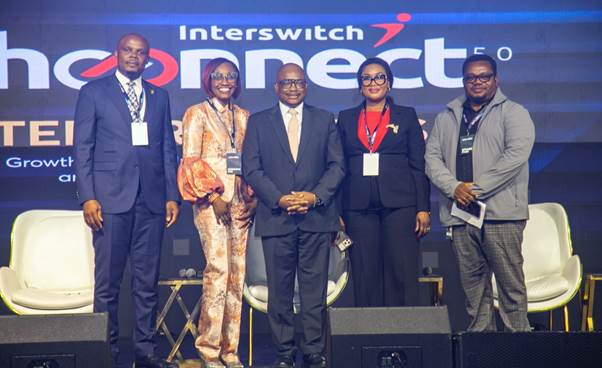
L-R: Dr. Harrison Nnaji (PhD), Chief Information Security Officer, FirstBank; Oremeyi Akah, Chief Customer Officer, Interswitch; Ajibade Laolu-Adewale, Chief Partnering &Ecosystems Officer, Wema Bank/Chairman, Committee of e-Business Industry Heads (CeBIH); Celestina Appeal, GH, Card Business & Solutions, Zenith Bank; Griffith Ehebha, EVP, Group Risk & Information Security, Interswitch during the Interswitch TechConnect 5.0 recently held at the Federal Palace Hotel, Lagos.
TechConnect 5.0 series concluded on a high note in Lagos as Interswitch, one of Africa’s leading integrated payments and digital commerce companies, hosted the grand finale of its multi-city innovation and engagement platform. The event convened regulators, financial institutions, fintech innovators, and technology leaders to advance conversations around innovation, collaboration, and compliance across Nigeria’s digital economy.
Hosted at the Federal Palace Hotel, Victoria Island, the Lagos edition, themed “United Frontiers: Growth Powered by Innovation, Collaboration and Compliance”, marked the culmination of a multi-city journey that had previously made stops in Enugu and Abuja. It reinforced Interswitch’s commitment to fostering synergy among ecosystem stakeholders to build a trusted, inclusive, and innovation-driven financial landscape.
Delivering the keynote address, Akeem Lawal, Managing Director, Payment Processing & Switching (Interswitch Purepay), reflected on the evolution of the TechConnect platform and its growing influence across Nigeria’s fintech and payments landscape.
“At Interswitch, we’ve always believed that innovation thrives best in an environment built on trust, collaboration, and shared purpose. Through TechConnect, we’ve created a space for regulators, banks, fintechs, and innovators to connect, exchange ideas, and explore how compliance can become a true enabler of scalable growth.
When we talk about powering Africa’s digital economy, it’s not just about technology, it’s about people, partnerships, and purpose. This is how we build the frameworks that will define Africa’s digital future and ensure that the progress we make today sets the foundation for inclusive growth tomorrow,” Lawal said.
Welcoming participants to the grand finale, Cherry Eromosele, Executive Vice President, Group Marketing and Corporate Communications, Interswitch Group, highlighted how TechConnect has evolved into a dynamic platform for meaningful dialogue and partnership across Africa’s digital ecosystem.
“Over the past few weeks, TechConnect has journeyed through Enugu and Abuja, sparking ideas, strengthening partnerships, and connecting innovation with policy in powerful ways. And now, as we conclude this incredible series in Lagos, the commercial heartbeat of Africa, we do so with a renewed sense of purpose and momentum.
This year’s theme, ‘United Frontiers’, embodies what TechConnect stands for. It’s not just an event, it’s a catalyst that unites the innovators shaping Africa’s future, the regulators ensuring safe, sustainable growth, and the businesses transforming lives through technology. For over two decades, Interswitch has remained committed to powering Africa’s digital evolution, and through platforms like TechConnect, we continue to drive collaboration, trust, and shared growth across the ecosystem,” Eromosele said.
A key highlight of the Lagos event was a fireside chat featuring Ajakaiye Itanola, Deputy Director, Payments System Policy , Central Bank of Nigeria (CBN) who represented Mr. Jimoh Musa, the Director, Payment Systems Department, CBN. In his remarks, he underscored the importance of continued collaboration between the regulator and industry stakeholders to strengthen Nigeria’s payment systems and accelerate the country’s digital transformation agenda.
“At the CBN, we are committed to developing clearer and more inclusive regulations, a deliberate shift from the old ways of doing things. We are now involving more industry players in the process. For instance, we have revolutionized agent banking; it is no longer what it used to be.
Moving forward, we are not only setting the rules for the present but also revisiting and refining existing ones to provide greater clarity and direction for the industry. The CBN is taking a forward-looking approach, anticipating future needs and framing the regulations required to support innovation. We believe that well-defined regulations serve as a catalyst for innovation, helping to shape the future and ensure that collective efforts remain sustainable and impactful,” Itanola said.
The day’s discussions included two high-impact panel sessions. The first, “De-risking Innovation with Regulatory Compliance and Strategic Partnership for Growth,” explored how institutions can balance agility with accountability to drive sustainable expansion. The second, “Compliance as a Catalyst: Unlocking Scalable Innovation, Growth, and Collaboration in the Financial Ecosystem,” delved into how governance and regulatory foresight can become foundational drivers of innovation and scalability.
Industry leaders across the financial and fintech sectors shared actionable insights on cybersecurity, open banking, artificial intelligence, and collaborative frameworks that enable responsible innovation and inclusive growth.
Beyond the discussions, the Lagos finale also featured interactive product showcases, where Interswitch unveiled its latest digital payment solutions designed to enhance efficiency, scalability, and customer experience across multiple industries. The event concluded with an awards presentation, recognising outstanding partners and key contributors who continue to drive innovation and inclusion within Nigeria’s fintech landscape.
With its Lagos finale, TechConnect 5.0 has cemented its place as a cornerstone of industry collaboration, connecting innovation, policy, and partnership to accelerate Africa’s digital transformation journey.
Amazon announced the launch of its new Amazon Bazaar app in Nigeria, bringing customers a dedicated shopping experience with hundreds of thousands of affordable products across fashion, home, and lifestyle categories.
Building on the success of Amazon Haul in countries such as the U.S., UK, Germany, France, Italy, Spain, Japan, and Australia, and Amazon Bazaar in Mexico, Saudi Arabia, and the UAE, this expansion introduces the low-price shopping experience to more destinations worldwide.
The Amazon Bazaar app is now available in 15 new countries, including Nigeria, Hong Kong, the Philippines, Taiwan, Kuwait, Bahrain, Oman, Qatar, Peru, Ecuador, Argentina, Costa Rica, the Dominican Republic, and Jamaica.
Most items on the app cost under ₦15,000, with some starting as low as ₦3,000. New customers get 50% off their first order, and orders above ₦30,000 qualify for free delivery, while smaller purchases attract a standard fee. Deliveries typically arrive within two weeks, supported by Amazon’s 24/7 multilingual customer service.
Customers can shop confidently using their existing Amazon credentials and enjoy features such as reviews, star ratings, and Amazon’s trusted compliance standards. The app also supports payments in naira (₦) and accepts Visa, Mastercard, and American Express.
Amazon Bazaar blends value-focused shopping with interactive entertainment, including social lucky draws and promotions. The app is available for download now on iOS and Android app stores in Nigeria.
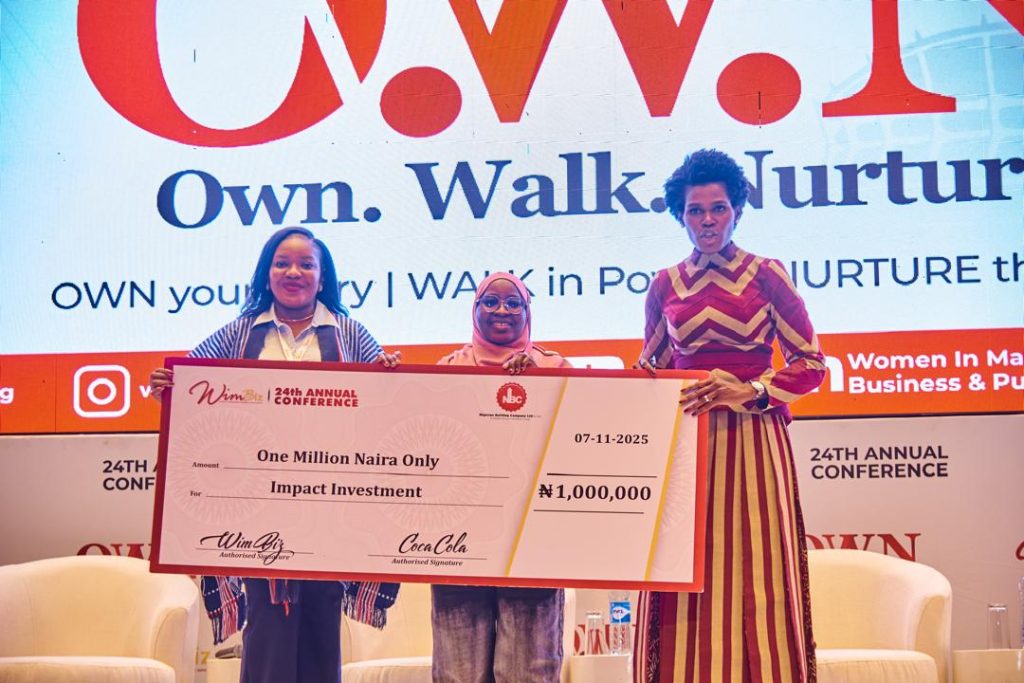
Nigerian Bottling Company (NBC) Ltd., a leading consumer packaged goods company and member of the Coca-Cola HBC group, reinforced its commitment to women’s leadership and inclusion by partnering with Women in Management, Business, and Public Service (WIMBIZ) for the organisation’s 24th Annual Conference. The event, themed “Own. Walk. Nurture.”, was held on 6–7 November 2025 at Eko Hotels and Suites, Victoria Island, Lagos.
At a panel session titled “Leading from the Inside Out: Balancing Ambition, Vulnerability & Purpose,” Oluwasoromidayo George, NBC’s Director of Corporate Affairs and Sustainability, joined other notable women leaders to share insights on navigating leadership from a place of purpose.
Drawing on her background in corporate leadership and sustainability, George stressed the need to be intentional, strategic, and authentic throughout one’s career journey. She noted that today’s workplaces must evolve to support people through both personal and professional challenges, giving them room to grow and deliver meaningful contributions.
She also highlighted that authenticity, emotional intelligence, and vulnerability are not just soft skills but powerful qualities that help women build influence and maintain trust within their organisations.
“When we talk about vulnerability, I would equate it to being open and confident at work; it draws connection and trust, especially when you engage with people of power and influence. Be authentic, stay true to yourself, and align your values wherever you find yourself. Be kind to yourself and to others. As a woman, you have to show up, and you have to show up good,” she said.
Reaffirming its dedication to women-led enterprises, NBC awarded the WIMBIZ Entrepreneurship Masterclass N1 million grant to two entrepreneurs: Toyibah Shehu Mohammed of FarhM’s Food and Sauce Global Limited and Helen Gabriel of Ogy’s Cakes. Both recipients were recognised for their potential to create economic impact through their resilience, creativity, and drive. In their remarks, they expressed gratitude to NBC for its ongoing support and for providing a platform that helps women scale their businesses.
Presenting the grant, Jolomi Fawehinmi, NBC’s People & Culture Director, restated the company’s belief in the transformative power of female entrepreneurship.
“At NBC, we believe that women-led businesses contribute immensely to the economy, and when that happens, communities also thrive. To every woman who participated in the Entrepreneurship Masterclass, you have already demonstrated your commitment to growth, excellence, and impact,” she said.