Morocco delivered one of its strongest statements yet on the African football stage as the nation swept multiple major honours at the CAF Awards 2025 held in Rabat. The highlight of the night was Achraf Hakimi’s groundbreaking victory as African Player of the Year — a historic feat that made him the first defender in over five decades to claim the continent’s most prestigious individual football prize.
Hakimi’s long-awaited triumph represented the culmination of an outstanding run for the Moroccan star. After narrowly missing out on the award in both 2023 and 2024 — where Victor Osimhen and Ademola Lookman edged him — the 27-year-old finally ascended to African football’s peak. His victory ends Morocco’s decades-long wait since Mustapha Hadji last brought the honour home in 1998, placing Hakimi among the very few defenders to achieve the accolade in the award’s modern era.
The ceremony, hosted at Mohammed VI Polytechnic University, showcased Morocco’s rising football pedigree across both men’s and women’s categories. Ghizlane Chebbak earned the Women’s Player of the Year title, while Yassine Bounou was distinguished as Men’s Goalkeeper of the Year, reinforcing Morocco’s dominance.
Emerging Moroccan talent also took centre stage as Othmane Maamma clinched the Young Player of the Year award. On the women’s side, Doha El Madani secured the Women’s Young Player accolade, affirming the nation’s depth of future stars.
In the coaching category, Cape Verde’s Bubista was recognised as Coach of the Year, while Egypt’s Pyramids FC earned their first-ever Club of the Year award. Nigeria enjoyed its share of the spotlight as well — the Super Falcons emerged as Women’s Team of the Year, adding another continental honour to their record.
Nigeria’s Chiamaka Nnadozie, who currently plays for Brighton, extended her dominance by winning the Women’s Goalkeeper of the Year title for the third consecutive year, solidifying her reputation as one of Africa’s most consistent talents.
Full List of Winners – CAF Awards 2025
Player of the Year (Men): Achraf Hakimi
Player of the Year (Women): Ghizlane Chebbak
Goalkeeper of the Year (Men): Yassine Bounou
Goalkeeper of the Year (Women): Chiamaka Nnadozie
Youth Player of the Year (Men): Othmane Maamma
Women’s Youth Player of the Year: Doha El Madani
Interclub Player of the Year: Ibrahim Mayele
Women’s Interclub Player of the Year: Shamirah Nabbadda
Coach of the Year (Men): Bubista
Club of the Year (Men): Pyramids FC
Team of the Year (Men): Morocco U-20 National Team
Team of the Year (Women): Nigeria Women’s National Team (Super Falcons)
Goal of the Year: Clement Mizize
Referee of the Year (Men): Omar Abdulkadir Artan
Referee of the Year (Women): Liban Abdulrazack
Women’s Referee of the Year: Shamirah Nabbadda
CAF Women’s Assistant Referee of the Year: Tabara Moodji
CAF Assistant Referee of the Year (Men): Liban Abdulrazack
The National Social Security Fund (NSSF) Uganda has announced a partnership with Interswitch Group, one of Africa’s leading digital payment and e-commerce companies, to extend social security services to more Ugandans through Quickteller, one of Interswitch’s flagship consumer financial and agency banking service platforms.
The National Social Security Fund (NSSF) Uganda is a multi-trillion Fund mandated by the Government through the NSSF Act, as amended, to provide social security services to all eligible employees in Uganda and regulated by the Uganda Retirement Benefits Regulatory Authority, while the Minister of Gender, Labour & Social Development, and the Minister of Finance, Planning & Economic Development are responsible for policy oversight.
The Fund manages assets worth over UGX 25 trillion, invested in Fixed Income, Equities, and Real Estate assets within the East Africa region. The partnership launched in Kampala aims to onboard over 100,000 new voluntary savers onto the Fund’s SmartLife Flexi product through Interswitch’s countrywide Quickteller Agent Network, which comprises 20,000 teller agents.
The NSSF SmartLife Flexi is a flexible, goal-driven savings plan designed to help Ugandans achieve their financial goals with the freedom to choose savings period and frequency while earning a competitive monthly return, accrued daily.
Speaking at the unveiling ceremony, NSSF Managing Director, Patrick Ayota, said the partnership will accelerate the Fund’s drive to expand social security coverage in both the formal and informal sectors, in line with the Fund’s expanded mandate.
“One of the key pillars of our new 10-year strategic direction, informed by our mandate to provide social security services to all eligible Ugandans, is to increase national social security coverage to 50% of Uganda’s workforce by 2035, representing over 15 million people,” Ayota said.
He added that, “We have in the past partnered with telecoms and commercial banks, which enabled us to avail all our services on USSD, mobile and online, and provided convenience for remittances of contributions. However, there remains a large number of people who prefer a human interface, yet our 21 branches might not be within their proximity. Quickteller agents are the bridge to the informal economy.”
He noted that the partnership responds to the continued need to simplify savings and payments amid the country’s growing cash economy.
According to the Bank of Uganda’s June 2025 report, the value of cash currency in circulation increased from Shs8.21 trillion in FY2023/24 to Shs8.98 trillion by June 2025, a 9% rise, even as digital transactions continued to rise.
“This partnership will ease how our members and new savers onboard onto SmartLife Flexi and make contributions to their accounts using digital payment channels they already trust, such as Quickteller. It’s about meeting Ugandans where they are, digitally and physically,” Ayota explained.
He revealed that customers can now enroll and register for SmartLife Flexi free of charge at any nearby Quickteller agent. The minimum initial deposit is Shs10,000, and members can make subsequent contributions conveniently at affordable Quickteller transaction rates.
In addition, employers can also remit their mandatory contributions through the same network of Quickteller agents, making the process faster and more accessible.
Interswitch Country General Manager, Moris Seguya, said the collaboration reinforces the company’s mission to simplify and deepen financial inclusion.
“This partnership is pivotal to our primary objectives at Interswitch Group. We are driven by the need to see every Ugandan access financial services easily and affordably. With over 20,000 agents spread across the country, Quickteller is strategically placed to serve everyone, especially Ugandans in the informal sector,” Seguya said.
“Today, about 80% of our population is employed in the informal sector, where benefits to do with savings are limited. Partnering with NSSF allows us to ensure that Smartlife customers, especially those in the informal sector, can deposit their savings at the Quickteller agents within their neighbourhood, making saving easy and convenient. In addition, our systems, which are reviewed by the regulator, Bank of Uganda, regularly, are secure and robust to ensure the safety of our customers’ transactions,” he added.
Flavia Namutamba, a Quickteller agent located in Kampala, said that the partnership will provide a solution to some of their customers who do not have easy access to formal banking services, bringing them into the fold of a modern financial services system.
“Some people always inquire whether they can register or send money to their NSSF accounts through Quickteller since we are located nearer to them. This solution helps us bridge this gap in the market,” she said.
In June 2025, the company officially launched Interswitch PensionRemit, a fully automated platform designed to help employers comply with the recently introduced Pension Contribution Remittance System in Nigeria. The new system, mandated by the National Pension Commission and the Pension Fund Operators Association of Nigeria, took effect on June 1, 2025.
With this latest milestone in East Africa, Interswitch continues to consolidate its integral role as a driver of social sector value-creation in Africa, and as a trusted transaction solutions partner across multiple countries, combining innovation, scale, continental reach, security, and deep market expertise, to enable governments, communities, businesses and individuals to unlock value across different spheres of endeavour, in line with its mission to facilitate transactions solutions that drive prosperity across the continent.
Interswitch is a leading technology-driven company focused on the digitization of payments and commerce across Africa. Founded in Nigeria in 2002, Interswitch disrupted the traditional cash-based payments value chain in Nigeria by supporting the introduction of electronic payments processing and switching services, also launching Verve, Africa’s premier and leading domestic EMV-standard chip and pin payments card scheme.
Today, Interswitch is a leading player with critical mass across Africa’s developing financial ecosystem and is active across the payments value chain, providing a full suite of omni-channel payment solutions. Interswitch’s vision is to make payments a seamless part of everyday life in Africa, and its mission is to create transaction solutions that enable individuals and communities to prosper across Africa. Interswitch’s broad network and robust payments platform have been instrumental to the development of the Nigerian payments ecosystem and provide Interswitch with the infrastructure to expand across Africa.
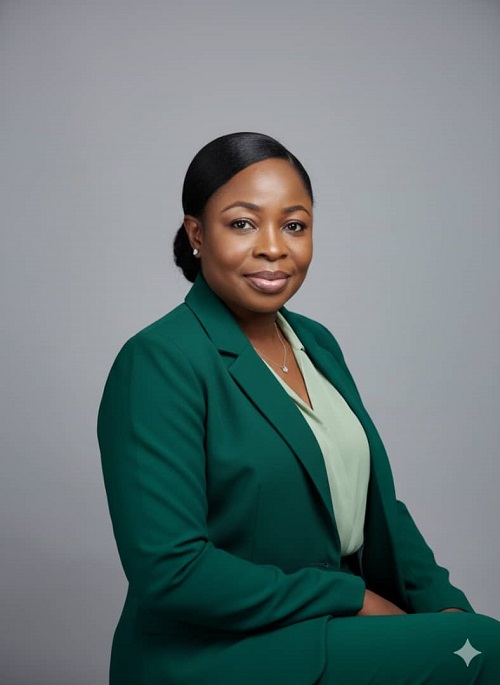
Federal Government Girls College, Benin, Old Girls’ Association (Fediben OGA) proudly celebrates the appointment of our distinguished alumna, Engr. Elozino Olaniyan, as the first female Chief Executive Officer of Midwestern Oil and Gas. This milestone appointment marks a significant moment in the organisation’s history. It is also a powerful inspiration for young girls as she is the second Fediben alumna to become CEO of an oil and gas company.
Olaniyan, a graduate in Chemical Engineering from the University of Benin, has built an exceptional career characterized by vision, integrity, and transformational leadership. Her appointment is a testament to her unwavering dedication and to the remarkable professional standards she continues to uphold.
Speaking on the appointment, President of the Fediben OGA, Stephanie “StephREDD” Kadiri said: “This achievement is more than a personal milestone; it is a moment of pride for every Fediben girl whose dreams are still unfolding. Snr. Elo – as we fondly call her – has lifted our banner high with courage, grace, excellence, and quiet strength, and for that, we honour and celebrate her deeply. As the President who succeeded her in the Lagos Chapter, I have had the privilege of witnessing her leadership, her commitment, her empathy, and the integrity she carries effortlessly, and I have no doubt that she will excel significantly in this new role. With this achievement, she has broken a ceiling that stood unshaken for over two decades, and in doing so, she has widened the pathway for generations of young women – beyond the Fediben community – who will come after her.”
Also adding her felicitations, Chairman of the Fediben OGA Board of Trustees, Mrs Eyono Fatayi-Williams, said: “We are delighted at the appointment of Engr. Elo Olaniyan as the new CEO of Midwestern Oil and Gas. With her exceptional technical expertise, proven leadership skills, and a strong track record of driving innovation, she is poised to lead the company to new heights. Her appointment is a testament to her hard work, dedication, and passion for excellence, and we are confident that she will make a significant impact on the industry and the country as a whole.
“Her appointment marks a significant milestone in the country’s pursuit of gender equality in the energy sector, and we are confident that her leadership will inspire a new generation of women in STEM.”
In the same vein, the President of the Edo State Chapter, Rev. Mrs Olayinka Aken’Ova, noted that “the achievement is a testament of Mrs. Olaniyan’s hard work, dedication, and exceptional leadership skills. We are honoured to have her leading and are confident that her expertise will take the Midwestern Oil and Gas Company to greater heights.”
The Association commends Midwestern Oil and Gas for recognising Snr. Elo’s outstanding capabilities and for taking a groundbreaking step toward gender inclusion at the highest level of corporate leadership.
The entire Fediben OGA community extends its warmest congratulations to Elozino Olaniyan. We look forward to her continued success and to the innovations and impact she will bring in this new role.
The Federal Government has commended the International Community for Education Technology (ICEDT) for its contributions to modernising Nigeria’s education system. The praise came during the flag-off of the pilot phase of the ‘Teachers on Artificial Intelligence (AI)’ training programme in Abuja.
Minister of Education, Dr. Tunji Alausa, represented by the Permanent Secretary, Mr. Abel Enitan, said the initiative aims to equip educators with skills to integrate AI-powered solutions into classrooms. He described the programme as a critical step in aligning teaching and learning with the demands of a 21st-century digital economy.
“Teachers participating in this pilot, particularly those from Federal Unity Colleges, occupy a strategic place in Nigeria’s education landscape. Their engagement will generate insights to guide scaling the programme to all six geopolitical zones,” Alausa said.
Mrs. Larai Nana Ahmed, Director of Education Support Services, represented by Mrs. Ogbuke Njideka Dorothy, emphasized the initiative’s alignment with the National EdTech Strategy and the government’s vision to prepare learners for a digital economy. She noted that Federal Unity Colleges serve as the flagship of secondary education, making them ideal participants.
Dr. Abdurrahman Orasanye, Head of Strategic Partnership and Learning Scientist at ICEDT, reaffirmed the organisation’s commitment to supporting the government in equipping Nigerian teachers with the competencies needed to thrive in a digitally driven world.
The pilot programme will inform the nationwide rollout of AI training for teachers, positioning Nigeria to better integrate digital technology in education and strengthen the skills of the next generation.
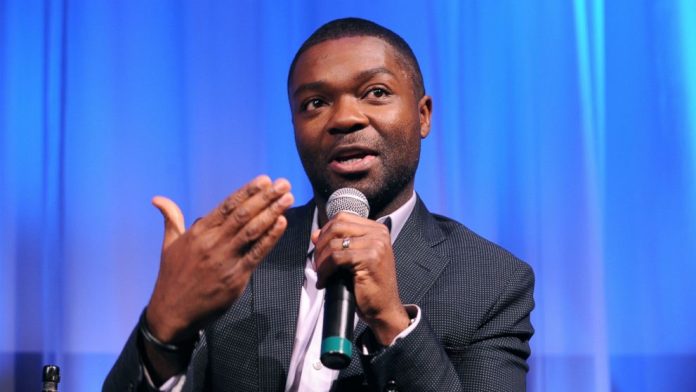
British Nigerian filmmaker David Oyelowo has proposed a 10 million dollar investment plan to strengthen Nollywood’s global competitiveness. He announced the strategy at the 14th Africa International Film Festival in Lagos, saying the industry has the talent to reach international markets but needs structured funding and stronger accountability.
Oyelowo said the model would support ten filmmakers with one million dollars each for script development and production. He explained that five million dollars could come from institutions such as Afreximbank while the remaining half would come from private investors. According to him, the goal is to create high quality films backed by reliable distribution through companies such as FilmOne and MultiChoice.
He told the audience that Nollywood is close to global breakout but must present bankable projects. He offered to guide script quality through his Hollywood experience and urged financiers to adopt clear structures that ensure funds reach real creators.
His proposal comes at a time of renewed interest by lenders in the creative industry. Afreximbank launched a 200 million dollar Nigerian facility in 2024 to support production and film exports under its two billion dollar CANEX initiative. The bank followed up in 2025 with a one billion dollar film fund tied to infrastructure and distribution. Other deals, including its equity partnership with D’Banj’s platform, have targeted talent development.
The federal government’s five billion naira Creative Fund through Providus Bank has also continued disbursements. Four producers received one point five billion naira in 2024. More projects are being screened this year. Officials say the fund targets viable films with commercial potential.
Despite these initiatives, filmmakers say execution has remained slow. Oyelowo noted that earlier talks with Afreximbank did not progress. Another director on the AFRIFF panel said many funds are announced but rarely accessible. They argued that this weakens confidence among producers who release more than two thousand films yearly.
Oyelowo’s proposal focuses on reliable distribution as a safeguard for investors. He said strong channels would reduce risk and mirror the strategy behind the global spread of Korean films and dramas. He added that Hollywood is paying closer attention to African stories and that Nigeria must position itself for that demand.
Analysts say a structured blend of institutional funding and private capital could unlock more value for the industry. The Central Bank’s creative sector loans announced this year have also increased interest among investors. If executed, Oyelowo’s plan could strengthen Nigeria’s position as a creative hub and support long term growth for the film sector.
Leaders in Nigeria’s film and creative sectors have called for a shift from high-volume production to quality-driven content to strengthen Nollywood’s global competitiveness. The statement was made during the 5th Peace Ayiam-Osigwe Digital Content Regulation Conference in Lagos, held in honour of the late filmmaker and industry icon.
The two-day event, themed “From Volume to Value: The Future of Nollywood in the Digital Age,” highlighted strategies to build a knowledge-driven, globally visible film ecosystem. Dr. Shaibu Husseini, Executive Director of the National Film and Video Censors Board (NFVCB), unveiled reforms aimed at improving digital monitoring, compliance, and film classification efficiency. He said approvals now take less than 24 hours, with some processed in as little as five hours, and warned that unclassified online content violates the NFVCB Act.
Representing the Ooni of Ife, Olori Tsemi Tokpe Enitan Ogunwusi stressed that cultural dignity and identity should remain central to Nigerian storytelling. She called for more support for young creatives, stronger intellectual property protection, and expanded digital infrastructure to enhance global reach.
Filmmaker Bolanle Austen-Peters highlighted structural challenges, including limited financing, weak infrastructure, and audience preferences, which push filmmakers toward high-volume production. She said quality content is achievable with stronger planning, script development, and long-term investment.
Ali Nuhu, Executive Director of the Nigerian Film Corporation, representing the Minister of Art, Culture and Creative Economy, reaffirmed government backing for policies promoting digital innovation, AI adoption, and broadband-powered distribution.
Panelists agreed on a unified approach to balance Nollywood’s output with cultural preservation, meaningful value creation, and globally competitive storytelling.
President Bola Tinubu will today (Wednesday) depart Nigeria for Johannesburg, South Africa, and Luanda, Angola, to participate in two major international summits—the G20 Leaders’ Summit and the AU–EU Summit.
The Special Adviser to the President on Information and Strategy, Bayo Onanuga, disclosed this in a statement on Tuesday evening, noting that the President’s first stop will be Johannesburg for the 20th G20 Leaders’ Summit.
The meeting is scheduled to hold at the Johannesburg Expo Centre from Saturday, November 22, to Sunday, November 23, after which Tinubu will proceed to Angola for the AU–EU Summit slated for November 24–25.
Invited by South Africa’s President and this year’s G20 Chair, Cyril Ramaphosa, Tinubu will join global leaders under the theme “Solidarity, Equality, Sustainability”—the first G20 gathering to be hosted on African soil.
The summit will focus on inclusive and sustainable growth, debt and development financing, disaster-risk reduction, climate action and just energy transitions, food systems, critical minerals, decent work, and artificial intelligence. The Presidency also confirmed that Tinubu will hold a series of bilateral meetings on the sidelines of the G20 in line with the administration’s Renewed Hope Agenda, particularly on issues of regional peace, security and economic development.
The African Union, now a full member of the G20 alongside the European Union, is expected to participate actively in the Johannesburg sessions.
Following the G20, President Tinubu will travel to Luanda to join other Heads of State and Government for the AU–EU Summit, which will bring together leaders, innovators, and development actors to engage on climate cooperation, inclusive growth, infrastructure, digital transformation, the creative economy, manufacturing, and agribusiness.
Tinubu will be accompanied by senior government officials, including the Ministers of Foreign Affairs, Finance and the Economy, Solid Minerals, and Trade and Investment, as well as the Director-General of the National Intelligence Agency.
According to Onanuga, the President is expected to return to Nigeria at the conclusion of both meetings. While this trip marks Tinubu’s third visit to South Africa since assuming office, it will be his first official visit to Angola as President.
The United Nations and global leaders have issued a stark warning that the Paris Agreement is at risk of falling behind the accelerating pace of the climate crisis, calling on governments to intensify implementation and deliver measurable progress.
As the 30th Session of the Conference of the Parties to the UN Framework Convention on Climate Change (COP30 UNFCCC) entered its political phase in Belém, Brazil, pressure mounted on negotiators to move beyond slow deliberations and fast-track a global shift to clean energy. Officials insisted that further delays are no longer acceptable given the scale of climate impacts already unfolding across the world.
UNFCCC Executive Secretary, Simon Stiell, and Brazil’s Vice President, Geraldo Alckmin, led the renewed call for urgency, stressing that the next decade must shift decisively from commitments to delivery. Their remarks follow widespread concern that implementation under the Paris Agreement remains far too slow to match the intensifying risk climate change poses to vulnerable populations and global stability.
Alckmin cautioned that the world had reached a dangerous inflection point, saying incremental progress would no longer protect communities or ecosystems from worsening harm.
“This must be the conference of truth, of implementation, and above all, of responsibility,” he said. “Every decision—political, economic, industrial, or environmental—must preserve the conditions for life on Earth, protect biodiversity, and ensure justice between generations.”
He warned that the era of promises had ended, noting that each fraction of a degree of additional warming threatens lives, widens inequality, and increases irreversible losses for the world’s poorest.
“This COP must mark the beginning of a decade of acceleration and delivery—the moment when rhetoric gives way to concrete action, and when all parties move from setting targets to achieving them,” he added.
Stiell echoed the urgency, urging ministers to avoid pushing critical decisions to the final hours of the conference. “I urge you to swiftly engage with the most challenging issues. When these matters are deferred, we all lose,” he said. “Tactical delays and procedural obstructions are no longer tenable. The time for formal diplomacy has passed. Now is the moment to roll up our sleeves, unite, and deliver.”
Against the backdrop of growing geopolitical tensions and weakened multilateral cooperation, Stiell called for renewed global solidarity. He described the Paris Agreement as “humanity’s only lifeline” for confronting the climate emergency and ensuring that the benefits of climate action are equitably shared.
Brazil used the platform to spotlight its own climate leadership. Alckmin highlighted the country’s status as having the most renewable energy-rich mix among major economies and its pioneering role in biofuels and bioenergy. He also referenced the Belém 4X Commitment—endorsed by 25 countries and international organisations—aimed at quadrupling the use of sustainable fuels by 2035.
Additionally, he announced that Brazil is spearheading efforts to establish the Global Coalition on Regulated Carbon Markets, which seeks to harmonise standards and strengthen the integrity of international carbon trading systems.
The Federal Government has appointed Barrister Adenike Adeyele Iyelolu as the new Registrar of Ships for the Federal Republic of Nigeria, following the approval of the Minister of Marine and Blue Economy, Adegboyega Oyetola.
Her four-year appointment was recommended by the Director General of the Nigerian Maritime Administration and Safety Agency (NIMASA), Dr Dayo Mobereola.
In accordance with the NIMASA Act 2007, the Registrar of Ships reports directly to the Director General for the effective administration of the Nigerian Ship Registry. The Act stipulates that the Registrar must be appointed from among the agency’s staff with the approval of the Minister.
A statement issued by NIMASA’s Head of Public Relations, Edward Osagie, described Iyelolu, currently a Deputy Director at the agency, as a seasoned legal and maritime governance expert with over 25 years of post-call experience. Her professional background spans maritime law, arbitration, procurement, contract administration, corporate governance, and institutional leadership.
Her appointment follows the retirement of the former Registrar of Ships, Barrister Tajudeen Giwa, who exited service after years of meritorious contribution to the nation’s maritime administration.
Pic.7. Minister of Education, Dr Tunji Alausa (R) and Minister of State for Education, Prof. Suwaiba Ahmad, during a news conference on update of the ongoing negotiations between the Federal Government and the Academic Staff Union of Universities (ASUU ) in Abuja on Wednesday (8/10/25).0049WED/OCT/8/2025/Deborah Bada/JAU/NAN
The Academic Staff Union of Universities (ASUU), Benin Zone, has rejected the salary increment proposed by the Federal Government, describing it as grossly inadequate and incapable of addressing the deep-rooted challenges confronting the nation’s university system.
The Zonal Coordinator of ASUU, Prof. Monday Lewis Igbafen, stated this in Benin during a press briefing on the union’s position regarding the ongoing negotiations with the government.
Igbafen said the proposed salary adjustment amounted to “a mere drop in the ocean” and fell far short of what was required to halt the persistent brain drain affecting Nigerian universities. He expressed disappointment that the government had once again shown “a blatant unwillingness” to holistically address longstanding issues.
“The Federal Government must be serious, for once, about putting these unresolved issues behind us by satisfactorily concluding the renegotiation of the 2009 FGN/ASUU agreement and genuinely addressing all other outstanding matters,” he said.
According to him, the salary and conditions of service remain critical concerns requiring urgent and radical intervention to avert an impending breakdown in the system.
“We have rejected the proposed salary increment because it is incapable of reversing the brain drain syndrome currently bedevilling university education in the country. Enough is enough of the back-and-forth approach to this negotiation. This repeated ‘we are talking with ASUU’ without tangible results must stop,” he added.
Igbafen further lamented that university lecturers have been on the same salary structure since 2009, when the exchange rate was N120 to the US dollar. He noted that, despite significant economic shifts, salaries in other sectors had been reviewed upward multiple times, while those of university academics had remained stagnant.
He warned that the continued delay in conclusively renegotiating the 2009 agreement was worsening the conditions of service for academics and undermining the quality and stability of university education across the country.
The United Nations Children’s Fund (UNICEF) has called on the Federal Government to secure the immediate release of the 25 schoolgirls abducted in Kebbi State and to fully implement the Safe Schools Declaration amid renewed concerns over attacks on learning environments in Nigeria.
Gunmen on Monday stormed a Government Girls School in Maga, Danko-Wasagu Local Government Area, killing the vice-principal and abducting the students. The incident adds to a growing pattern of assaults on schools across the Northwest.
In a statement on Tuesday, UNICEF Nigeria’s Communication Specialist, Sussan Akila, condemned the attack and described the killing and abductions as a grave violation of children’s rights.
“UNICEF strongly condemns the reported attack on a Government Girls School in the Maga community of Kebbi State, which resulted in the death of the school’s Vice-Principal and the abduction of 25 students,” Akila said. “This tragic incident is yet another stark reminder of the urgent need to protect children, schools, and the personnel they rely upon to learn safely.”
She expressed condolences to the families of the victims and wished the injured a full recovery, while urging the authorities to ensure the swift and safe release of the abducted pupils.
Akila reaffirmed that schools, students, and education personnel are protected under international law and insisted that perpetrators of such attacks must be held accountable under national and international standards.
Referencing Nigeria’s commitment to the Safe Schools Declaration in 2015, she said the framework provides clear steps to safeguard educational institutions and ensure uninterrupted learning during conflict. She stressed the need for full implementation of the declaration.
UNICEF added that it is working closely with government agencies and communities to reinforce child protection systems and strengthen school safety.
“No child should be put at risk while pursuing an education,” the agency stated.
The Safe Schools Declaration, endorsed by 121 countries including Nigeria, is an inter-governmental commitment to protect students, teachers, schools, and universities from the impacts of armed conflict. Despite this, concerns over its implementation persist. In 2021, the House of Representatives resolved to investigate the alleged abandonment of the Federal Government’s Safe School Initiative, including the N500m earmarked for rehabilitating Government Secondary School, Chibok. Later that year, the then Senate President, Ahmad Lawan, criticised the initiative, saying it was designed to fail.
Nigeria’s pension fund assets rose to N26.09 trillion at the end of the third quarter of 2025, marking a year-on-year growth of 22.03 per cent. The increase, which amounts to more than N4.71 trillion, reflects higher investment by Pension Fund Administrators in Federal Government securities. This is according to the latest Monthly Industry Report released by the National Pension Commission.
The figures showed that the assets grew from N21.38 trillion in September 2024 to N26.09 trillion in September 2025. Nigeria’s pension fund crossed the N25 trillion mark in July when it closed at N25.79 trillion. It climbed further in August, rising by about N97.88 billion.
Federal Government securities remained the largest investment destination for PFAs. These include bonds, Sukuk, treasury bills and agency securities. According to PenCom, the instruments accounted for about 60 per cent of total pension assets. PFAs increased their exposure to government securities by about N3 trillion within the one-year period. Analysts say this trend reflects confidence in Federal Government instruments as the broader economy faces persistent uncertainties.
Investment in Domestic Ordinary Shares also recorded strong growth. PenCom’s data showed that equity holdings increased by around N1.6 trillion year-on-year. Improved market valuations, better liquidity and fresh investor appetite contributed to the gains recorded in the equities market.
Corporate debt instruments received more attention as well. PFAs allocated more funds to corporate bonds as credit conditions improved for highly rated issuers and activity in the corporate debt market picked up.
The pension sector also recorded growth in Retirement Savings Accounts. RSA membership rose to about 10.9 million due to stricter compliance checks, increased onboarding of private sector employees and improved interest in the rebranded Personal Pension Plan.
The new figures follow an earlier development reported by BizWatch Nigeria in which PenCom confirmed that more than N130 billion of pension funds had been invested in infrastructure. The Commission said the investment was part of a long-term plan to fund critical national projects while safeguarding contributors’ funds.
Industry analysts note that the growth in pension assets suggests a stronger domestic savings base. They add that the increased allocation to government securities and infrastructure could provide the Federal Government with more room to raise capital for development projects.
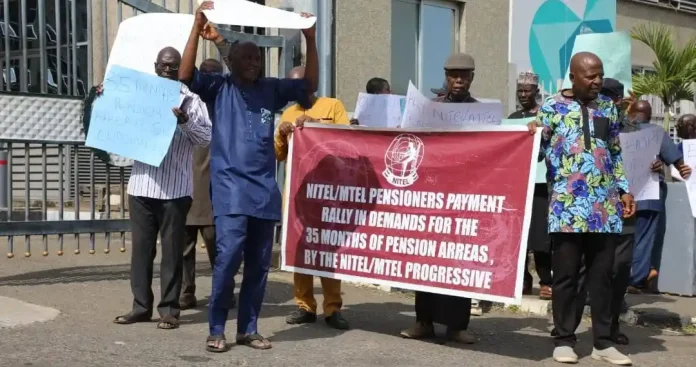
Pensioners of the defunct Nigerian Telecommunications Limited and its mobile subsidiary, M-Tel, gathered at the Federal Ministry of Finance in Abuja on Tuesday to protest the non-payment of their pensions and arrears. Many of the protesters are between 65 and 80 years old. They said they have waited more than two decades for full compensation after their disengagement during the privatisation of the telecom company.
The group arrived at the ministry at 9 a.m. carrying placards and calling for the intervention of the finance minister, Wale Edun. They said they had served the country loyally for more than 20 years but were left without financial support after the company was restructured.
Some pensioners said that they have been unable to meet basic needs or seek medical care. A former staff member said he spent many years working for NITEL but is now unable to afford housing or transportation. Another protester, bemoaned many losses as a result of the delayed retirement benefits.
Others described years of writing letters to the Pension Transitional Arrangement Directorate and the Ministry of Finance without receiving a clear response. Many accused both offices of pushing them back and forth without resolving their claims.
One also said pensioners from other defunct government-owned institutions under the Defined Benefits Scheme have been cleared. He listed New Nigerian Newspapers, NICON Insurance, Nigeria Reinsurance, Delta Steel and the Nigerian National Shipping Line as examples. He said NITEL-MTEL retirees are the only group left unpaid.
The protesters revealed that they were owed 35 months of pension and arrears, including a 12.95 per cent increase approved in 2020, a 10.66 per cent adjustment approved in 2015 and the release of a N25,000 palliative for verified pensioners. They also said they were excluded from the N32,000 pension increase approved for all DBS pensioners.
According to another of the protesters, retirees now live on less than N17,000 monthly. He said some widows eat once a day, while others depend on neighbours for food. He added that several pensioners have died while waiting for their benefits.
NITEL and M-Tel were privatised following years of debt and mismanagement. Around 7,000 of the company’s 11,000 workers were laid off during the restructuring. The brand later re-emerged as ntel, a 4G mobile service operator.
A Special Adviser to the Permanent Secretary at the Ministry of Finance, Sheu Garbar, addressed the protesters. He asked them to compile their demands and return for a meeting. However, these protesters indicate little confidence in the promise.
They said the group had received similar assurances in the past without results.
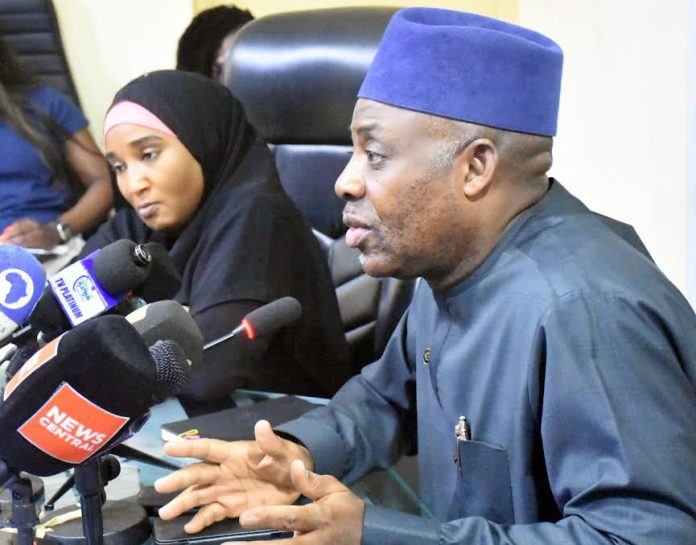
The Manufacturers Association of Nigeria (MAN) has raised concerns over the persistent structural challenges undermining manufacturing growth in the Niger Delta and across the country, warning that high energy costs, poor electricity supply, weak transport infrastructure, escalating logistics expenses, multiple taxation, inconsistent regulatory frameworks, and increasing pressure from host communities continue to stifle industrial productivity.
The association also called on the governments of Rivers and Bayelsa states to fully develop and harness the blue economy, describing it as a strategic gateway for sustainable economic growth. MAN urged both states to strengthen cross-border partnerships with neighbouring regions to boost trade, enhance security, and improve environmental management.
These resolutions were contained in a communiqué issued at the end of the 2025 Annual General Meeting (AGM) and conference of the Rivers/Bayelsa branch of MAN, held in Bayelsa. The meeting, themed ‘Trade, Technology, and the Future of Manufacturing in the Niger Delta’, emphasised the blue economy as a viable pathway to Nigeria’s industrialisation.
The communiqué, signed by the Rivers/Bayelsa Branch Chairman, Vincent Okuku; Vice Chairman and Chairman of the AGM Planning Committee, Michael Nosa Agana; and the Executive Secretary, Chibuzor Eze, underscored the urgent need to strengthen human capital development through technical and vocational training tailored to modern industrial demands.
It added that emerging opportunities in fish processing, seaweed cultivation, ship repairs, and marine technology must be prioritised to reposition the region for inclusive economic growth.
According to MAN, the future of the Niger Delta economy depends on deliberate diversification away from extractive industries. “Technology and innovation, value addition and local processing, strategic infrastructure, and a skilled workforce are essential pillars for the future of manufacturing in the region,” the communiqué stated.
The association further urged governments across the region to intensify support for manufacturing activities, noting that stronger collaboration between public and private sectors is critical for long-term industrial development.
Lagos is preparing to welcome speakers, innovators, and advocates as the city hosts TEDx Admiralty Way 2025, an event positioned to examine the changing landscape of masculinity and reimagine traditional perceptions of manhood, organisers announced.
The gathering, scheduled for Wednesday, 19 November 2025, will take place at Filmhouse Cinemas on Admiralty Way, Lekki, where thought leaders from various fields will convene to discuss emotional wellbeing, leadership, and societal transformation.
Anchored on the theme “Transforming Masculinity Through Infrastructure,” the programme seeks to create an open environment where men can discuss vulnerability, develop healthier emotional frameworks, and challenge long-standing stereotypes. Organisers noted that masculinity should not be equated with emotional hardness but seen through the lens of balanced strength, empathy, and intentional living.
The speaker lineup features prominent figures such as H.E. Caleb Muftwang, Governor of Plateau State; Abubakar Suleiman, Managing Director of Sterling Bank; Tunde Onakoya, Founder of Chess in Slums Africa; Dr. Maymunah Kadiri, Consultant Psychiatrist & Emotional Wellness Specialist; Dr. Toyosi Akerele-Ogunsiji, Founder of Rise Networks; alongside various leaders in impact-driven fields.
Commenting on the event’s purpose, the organising committee highlighted the deeper mission behind the initiative: “This platform is about redesigning the systems that shape boys and men, and helping them rediscover clarity, emotional balance, and purpose. We aim to nurture a generation of men who lead with empathy, accountability, and inclusion.”
The event will include interactive segments, community engagement opportunities, and networking spaces for participants including parents, educators, policymakers, and individuals committed to advancing societal change. Virtual participation will also be available through Quilo for attendees unable to join physically.
TEDx Admiralty Way 2025 is convened by Kelechi Nwaozuzu and Obinna Ukachukwu, with sponsorship from brands such as Cafe One, Filmhouse Cinemas, Sterling Bank, Coca-Cola, Red Bull, Hollandia, and other partners that support conversations aimed at redefining masculinity and inspiring progressive change.
Nigeria’s economic landscape continued to shift this month as the country posted another slowdown in headline inflation, which eased to 16.05%, a notable drop from 18.02% recorded previously.
The decline, largely influenced by the moderation in energy and food prices, reinforces the emerging trend that inflationary pressures are gradually tapering after months of intense strain on households and the productive sector.
But the encouraging macro data has failed to lift market sentiment. After rallying briefly to 151,000 basis points, the NGX All-Share Index has retreated to about 145,159 basis points, with losses spreading across multiple sectors. Banking stocks have borne the brunt of the downturn as investors cash out from earlier gains and reassess exposure due to tighter liquidity conditions, shifting credit expectations, and evolving interest-rate outlooks.
Key implications of the disinflation trend
Improved Real Yields for Investors As inflation cools, investors stand to benefit from better real returns, opening a pathway for more attractive valuations, particularly in dividend-driven blue-chip stocks.
Room for Monetary Policy Easing A lower inflation profile provides policymakers with flexibility to gradually relax interest rates—an eventual boost for banks, industrial players, and other sectors sensitive to credit conditions.
Investor Caution Persists The market’s retreat in spite of favourable macro conditions indicates caution persists. A meaningful recovery may only emerge when inflation stabilises further and corporate earnings begin to reflect reduced production and financing costs.
What to watch as Q4 earnings approach
Banking – Gradual Accumulation of Strong Players Recent sell-offs have created entry points in fundamentally sound Tier-1 banks with robust liquidity and diversified revenue streams.
Consumer Goods – Potential for Margin Expansion As food inflation eases, leading consumer goods firms may see improved input cost conditions and volume growth moving into the final quarter.
Industrials – Long-Term Steady Performers Cement producers, construction-linked firms, and industrial giants remain supported by ongoing reforms, capital inflows, and infrastructure priorities.
High-Dividend and Defensive Stocks Telecom-related and utility-oriented equities continue to offer stability while the broader market recalibrates.
Maintain Strategic Cash Buffers Holding liquidity will enable quick repositioning as volatility creates favourable accumulation windows.
As Nigeria approaches the final phase of 2025, the economic narrative increasingly points toward gradual stabilisation rather than accelerated growth. Sustained disinflation and eventual easing of monetary conditions may provide the fuel for equities to rebound toward year-end—particularly if Q4 earnings reveal improving cost profiles and evidence of resilient consumer demand.
Investors who remain selective, disciplined, and responsive to macro signals will be best placed to tap into the next wave of market recovery.
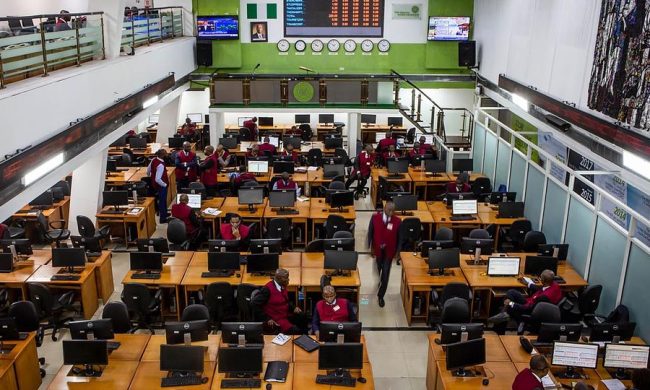
The Nigerian Exchange (NGX) shed more than N110 billion in market value as investor confidence continued to slip, dragging the year-to-date performance down to 40.86%.
The All-Share Index recorded another decline, pressured by losses across major sectoral indices. The persistent retreat highlights the cautious trading stance adopted by investors who are still processing the long-term implications of the recently introduced capital gains tax, despite policy clarifications issued by authorities.
Sentiment remained poor across several blue-chip counters, especially within the financial services sector. The benchmark index dropped by 173.26 basis points, closing at 144,986.51, while total market capitalization dipped by ₦110.19 billion — a 0.12% slide — settling at ₦92.21 trillion.
Stockbrokers confirmed that investors collectively lost about ₦110 billion. Market activity showed a mixed performance: the total traded volume climbed by 5.72%, but the value of trades fell sharply by 45.89%.
Data from Atlass Portfolio revealed that roughly 381.23 million units, valued at ₦16,717.22 million, were exchanged across 21,827 transactions.
TANTALIZER dominated market activity, accounting for 16.08% of total traded volume. It was trailed by STERLINGNG (8.59%), UNIVINSURE (7.69%), VERITASKAP (6.91%), and ACCESSCORP, which contributed 4.23%.
On the value chart, ARADEL took the lead, representing 19.23% of the total transaction value. NCR topped the gainers’ log with a 9.95% jump, closely followed by UPL (+9.80%), TANTALIZER (+9.79%), CAVERTON (+9.57%), UNIONDICON (+9.52%), and UNIVINSURE (+9.24%). More than twenty other stocks also closed in the green.
A separate group of twenty-eight equities depreciated as sell pressure spread across the market. LIVINGTRUST led the losers’ list with a 9.90% decline, followed by MCNICHOLS (-9.00%), LIVESTOCK (-7.75%), REGALINS (-6.56%), UPDC (-6.14%), and DAARCOMM (-5.94%).
Consequently, market breadth closed negative, with 26 gainers and 28 losers. Sectoral indices delivered a mixed outcome: Banking, Consumer Goods, and Oil & Gas fell by 0.90%, 0.02%, and 0.04%, respectively, while the Insurance index posted a mild 0.13% uptick.
The industrial goods and commodity indices ended flat. Overall market sentiment remained subdued, mirroring the negative price trend. Although trading volume rose 5.72% to 381 million units, both the volume of deals and total traded value slumped by 21.98% and 45.89%, closing at 21,827 deals and ₦16.71 billion, respectively.
The naira posted a slight rebound against the US dollar at the official market on Monday, supported by an uptick in Nigeria’s external reserves, according to newly released Central Bank data.
The currency’s appreciation remained modest, with trading activity on the parallel market staying largely subdued as market watchers anticipated additional FX liquidity injections from the CBN.
The naira has considerably weakened throughout November, slipping from N1,426 to N1,448 at the official window despite continued FX interventions. Market pressure persisted as the spot rate touched an intraday high of N1,459 — a significant jump from the N1,450 recorded the previous session. Some trades closed at an intraday low of N1,440, unchanged from prior levels.
This trading pattern suggests that the CBN supplied dollars into the official market to prevent the spot rate from breaching its current band.
The forex market eventually closed with the naira settling at N1,447.35 per dollar — a 4-basis-point improvement from Friday’s N1,448.03. In contrast, the parallel market remained unchanged at N1,470 per dollar.
Nigeria’s external reserves increased to $43.971 billion on Monday, up from $43.64 billion, the CBN confirmed.
Meanwhile, global commodity markets saw mixed movement. Oil prices strengthened on Tuesday amid volatile trading as investors assessed the effects of Western sanctions on Russian crude and comments by U.S. President Donald Trump confirming that interviews had commenced for the next Federal Reserve chair.
Brent crude gained 67 cents, or 1.04%, to reach $64.87 per barrel, while U.S. West Texas Intermediate (WTI) crude climbed 88 cents, or 1.47%, to $60.74.
Gold prices also rose from a one-week low, backed by soft U.S. employment figures. Investors monitored the likelihood of a Federal Reserve rate cut in December as multiple U.S. data releases faced delays.
Spot gold advanced 0.81% to $4,077.57 per ounce, while U.S. gold futures saw a marginal increase of 0.04% to $4,075.96 per ounce.
Analysts anticipate continued volatility across commodities, noting that oil prices may face renewed pressure as Russian shipments resume and geopolitical risks persist, while gold could struggle due to a firmer U.S. dollar and reduced expectations of early Fed easing.
Nigeria’s external reserves have climbed beyond the $46 billion threshold, according to Central Bank of Nigeria (CBN) Governor Yemi Cardoso, who delivered the update at a public forum.
Cardoso — represented by Dr. Muhammad Abdullahi, Deputy Governor of the Economic Policy Directorate — made the disclosure during the opening session of the Monetary Policy Department’s 20th anniversary colloquium held at the CBN headquarters in Abuja.
He announced that the reserves have hit a level last recorded in 2018, noting that the volume is capable of financing more than 10 months of import demand. Dr. Abdullahi added that lending rates are likely to ease in the near term as inflation moderates, boosting credit access and supporting stronger investment inflows.
Fresh data published by the CBN showed that the naira weakened slightly by 0.4% at the official window, where the US dollar traded at N1,448.03 on Monday, compared to N1,442.43 on Friday in the Nigerian Foreign Exchange Market (NFEM).
However, the currency appreciated marginally in the parallel market, gaining N2 to close at N1,455 on Monday from N1,457 the previous trading day. The rise in reserves, which has now reached $46.7 billion, has been linked to recent Eurobond issuances by the federal government and improved foreign exchange inflows.
October 2025 emerged as the strongest month for FX inflows since May, supported by better macroeconomic stability and heightened interest from offshore investors seeking opportunities in Africa’s largest economy.
Despite the improvement in inflows, Foreign Direct Investment (FDI) numbers dipped by 25% month-on-month to $222 million, underscoring persistent structural hurdles such as insecurity and policy inconsistencies that continue to discourage long-term capital.
Updated figures from the CBN portal further indicated that total external reserves stood at $43.971 billion as of November 17.
The internal crisis within the Peoples Democratic Party (PDP) intensified on Tuesday after a faction of the National Executive Committee (NEC), led by Alhaji Abdulrahman Mohammed, announced the expulsion of key party leaders, including Governors Seyi Makinde of Oyo, Bala Mohammed of Bauchi, and Dauda Lawal of Zamfara.
The group also declared the removal of the party’s newly appointed National Chairman, Senator Tanimu Turaki, alongside Board of Trustees Chairman, Senator Adolphus Wabara, and Deputy National Chairman (South), Taofeek Arapaja.
Others affected by the expulsion include South-South Caretaker Committee Chairman Emmanuel Ogidi and several additional party figures, all accused of engaging in anti-party activities.
Tensions escalated earlier in the day when factions loyal to Makinde and Mohammed clashed with another bloc aligned with the Minister of the FCT, Nyesom Wike, as both attempted to hold separate meetings at the PDP national headquarters in Abuja.
Senator Samuel Anyanwu, the embattled National Secretary, disclosed the decisions while presenting the communiqué of the contentious 103rd NEC meeting convened by the faction.
He stated that the factional NEC affirmed the expulsions, citing alleged violations of court rulings that have thrown the party into disarray.
According to Anyanwu, the actions of the expelled members — including organizing and participating in what he described as an illegal and unauthorized convention — resulted in heightened confusion, factional divisions, and the defection of several governors and lawmakers.
He further explained that the acting National Chairman’s report identified breaches of Articles 58(1) and 59(1), encompassing anti-party actions, failure to comply with court orders, and conduct that brought the PDP into public disrepute.
Anyanwu said the NEC authorized disciplinary proceedings against several prominent figures, including Adolphus Wabara, Olabode George, Ben Obi, Kabiru Tanimu Turaki (SAN), Bala Mohammed, Oluseyi Makinde, Dauda Lawal, Taofiq Arapaja, and Setonji Koshoedo, among others.
The NEC also directed Chief Ali Odefa to refund all salaries and allowances received after his expulsion on December 12, 2024.
Furthermore, the faction endorsed the dissolution of party State Executive Councils in Bauchi, Oyo, Zamfara, Yobe, Lagos, Edo, and Ekiti.
Caretaker committees are to be appointed immediately to oversee fresh congresses, with the Edo State executive led by Nosa Ogieva declared the only valid structure.
The NEC also ordered deputy officeholders in all affected National Working Committee (NWC) positions to assume acting roles and continue as substantive NWC members.
Additionally, the faction formally confirmed Alhaji Mohammed Abdulrahman as Acting National Chairman of the PDP.
The legal department and NWC were instructed to initiate constitutional processes to reclaim seats held by all elected officials who have defected, in accordance with Sections 68(1)(g) and 109(1)(g) of the 1999 Constitution.
The NEC announced a reconciliation initiative aimed at unifying the party without compromising discipline. A nationwide membership audit and revalidation exercise is also set to start ahead of the 2027 elections.
Anyanwu assured party members that the decisions were necessary to restore order, reiterating that the PDP would no longer tolerate indiscipline or disregard for established rules.
Earlier, BoT Chairman Senator Mao Ohuabunwa and Abdulrahman urged members to remain resolute, maintaining that the party would overcome its challenges.