





Key Points
• Stakeholders call for faster disbursement of the Cabotage Vessel Financing Fund to indigenous operators.
• Only 20 of 92 CVFF applications have reached banks for processing.
• Maritime stakeholders seek stronger collaboration, skills development and regional integration.
Main Story
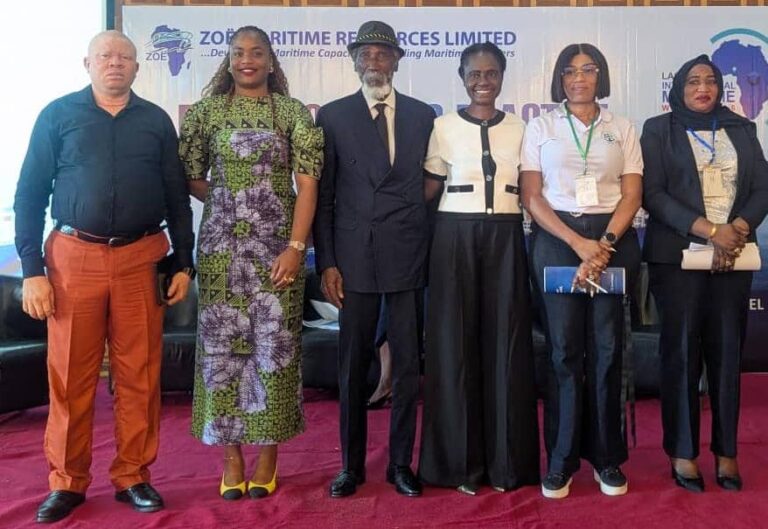
Stakeholders at the 2026 Lagos Maritime Week roundtable have urged the Federal Government to accelerate disbursement of the Cabotage Vessel Financing Fund (CVFF) to strengthen indigenous participation in Nigeria’s shipping industry.
The call was made on Tuesday during discussions on the gap between maritime policies and their implementation across West and Central Africa.
Ms Iroghama Ogbeifun, Managing Director of Starz Investment Company Ltd. and a Board Member of the Nigeria Maritime Administration and Safety Agency (NIMASA), said delayed access to the fund was limiting the ability of Nigerian operators to acquire vessels and compete effectively.
She disclosed that 20 of the 92 CVFF applications had reached the banks for processing and urged authorities to speed up approvals.
According to Ogbeifun, timely access to the fund would enable local operators to acquire vessels, reduce dependence on foreign ships and increase Nigerian participation in domestic shipping.
She also identified human capacity as another constraint, calling for stronger cadetship programmes and partnerships between Nigerian operators and foreign organisations to train seafarers, engineers and shipyard technicians.
Ogbeifun further urged maritime companies to invest in developing their workforce instead of recruiting trained personnel from competitors.
Capt. Niyi Labinjo, moderator of the session, said stakeholders needed to move beyond discussions and establish mechanisms that would translate maritime policies into practical outcomes.
He called for regular engagement between regulators, operators and regional maritime organisations instead of relying mainly on annual industry events.
Mrs Tokunbo Jakande, NIMASA’s Head of Shipping Operations, identified fragmented governance and weak data sharing as operational challenges affecting the sector.
She said automation and innovation should be aligned with policy objectives, noting that NIMASA’s command, control, communication and computer systems already provide real time information on vessel movements and compliance.
Jakande said such data should be converted into actionable intelligence without introducing additional bureaucratic delays.
The Issues
The stakeholders’ concerns point to two major gaps in Nigeria’s maritime development: access to financing and the capacity to implement existing policies.
For indigenous operators, delayed CVFF disbursement can restrict vessel acquisition and limit expansion in domestic shipping. At the same time, shortages in specialised skills could reduce the sector’s ability to make effective use of new vessels, technology and infrastructure.
Regional integration also remains a challenge, with differences in language, systems and national approaches affecting cooperation among West and Central African maritime authorities.
What’s Being Said
“Policy without practice remains a document.” – Iroghama Ogbeifun
“Technology without skilled people cannot deliver results.” – Olimotou Malang
“There are enormous responsibilities before state procurement authorities; public procurement plays a critical role in budget implementation and the delivery of government projects at all levels.” – Abdulallateef Shittu
What’s Next
Ms Olimotou Malang, Director General of the Gambia Maritime Authority, called for stronger regional cooperation and proposed a single maritime window for West and Central Africa under the Maritime Organisation for West and Central Africa (MOWCA).
Dr Kingsley Igwe, Registrar of the Council for the Regulation of Freight Forwarding in Nigeria (CRFFN), represented by Mr Peter Akunubi, also called for greater resilience during the transition to digital systems.
He said manual procedures remained necessary during system failures and disclosed that CRFFN was training freight forwarders in manual inventory procedures.
The stakeholders resolved that regional cooperation, capacity development and sustained engagement between government and the private sector were necessary to move maritime policies from paper to implementation.
Bottom Line
Stakeholders say faster CVFF disbursement, stronger skills development and better coordination are necessary to turn Nigeria’s maritime policies into practical gains for indigenous operators and the wider economy.