









KEY POINTS
• CBN says foreign exchange reforms have narrowed the gap between official and parallel market rates from 68.2 per cent in early 2023 to below two per cent.
• The apex bank says 33 banks met revised capital requirements and raised N4.65 trillion during the recapitalisation programme.
• CBN says stronger capital, improved regulation and deeper financial markets must translate into productive lending, better services and greater resilience.
MAIN STORY
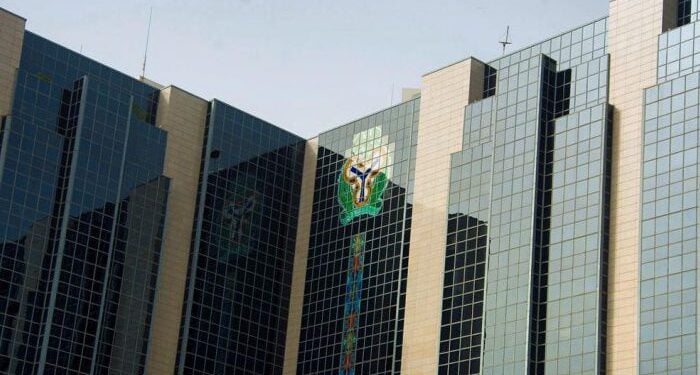
The Central Bank of Nigeria (CBN) says reforms to the foreign exchange market and banking sector have strengthened the country’s financial system, while cautioning that the gains must be sustained through stronger supervision and responsible banking.
Deputy Governor, Corporate Services, Muhammad Abdullahi, made the assessment on Tuesday at the 38th Seminar for Finance Correspondents and Business Editors Association of Nigeria (FICAN) in Abuja.
Abdullahi said the reforms were introduced after the CBN leadership inherited significant weaknesses in 2023, including a fragmented foreign exchange market, heavy liquidity pressures and large outstanding financial obligations.
He said the FX market at the time operated through multiple official windows alongside a parallel market, with the difference between official and parallel rates averaging more than 60 per cent in 2022 and exceeding 100 per cent at some points.
The deputy governor said the World Bank had estimated that the implicit subsidy associated with the exchange rate regime cost Nigeria about three per cent of GDP in 2022. Net usable foreign reserves, after identified short-term obligations, stood at $859 million in the second quarter of 2023, while outstanding FX forward claims exceeded $7 billion.
The CBN subsequently consolidated existing FX windows in June 2023, removed restrictions affecting 43 import categories and reviewed outstanding FX claims. Abdullahi said valid claims worth more than $5 billion were settled, while new trading and reporting rules were introduced to improve transparency.
Other measures included an electronic FX matching system for interbank transactions and the Nigeria FX Code, which established clearer standards of conduct and was intended to discourage speculative activity.
The CBN also tightened monetary policy, strengthened liquidity management and began reducing development finance interventions. Abdullahi said these measures contributed to a substantial narrowing of the exchange rate gap, which fell from an average 68.2 per cent between January and May 2023 to below two per cent currently.
Foreign exchange inflows have also become more diversified, he said, with autonomous sources accounting for $7.3 billion of the $10.8 billion recorded in July. Remittances through international money transfer operators reached $950 million in the same month, while gross external reserves stood at $55.6 billion as of Sept. 11.
Abdullahi said the broader economic indicators had also improved, with inflation falling from a peak of 34.8 per cent in December 2024 to 15.43 per cent in July 2026, while real GDP expanded by 4.43 per cent in the second quarter of 2026, driven largely by non-oil activities.
He, however, stressed that improved indicators had not eliminated the pressures facing households and businesses.
On banking sector reform, Abdullahi said the recapitalisation programme launched in 2024 was designed to create institutions with sufficient capital to finance larger economic activities and withstand periods of financial stress.
By the end of the two-year programme, 33 banks had met the revised minimum capital requirements and raised N4.65 trillion, he said.
The deputy governor said stronger bank balance sheets could support infrastructure, industrial expansion and international trade, while also giving lenders greater capacity to absorb losses and invest in digital transformation.
He said recapitalisation alone would not be sufficient, however, stressing the need for stronger corporate governance, internal controls and risk management. Banks must manage credit, market, liquidity and operational risks alongside cybersecurity and dependence on third-party service providers.
The CBN will continue monitoring governance, asset quality, liquidity and large exposures, while banks are expected to protect customer information, maintain reliable payment systems and improve their ability to recover from disruptions.
Abdullahi also urged banks to ensure that the benefits of recapitalisation reach productive sectors, including agriculture, manufacturing, services and infrastructure. He called for wider access to financial services for rural communities, women and young entrepreneurs.
He said consumer protection and financial inclusion remained central to building a resilient financial system.
Earlier, CBN Director, Stakeholder Engagement and Institutional Relations, Hakama Sidi-Ali, commended financial journalists for their role in communicating the bank’s policies and providing feedback that had helped improve its engagement with the public.
She pledged continued collaboration with the media and urged journalists to extend similar support to the new Director of Corporate Communications, Michael Akuka.
Akuka said the recapitalisation exercise had moved the banking sector into a new phase in which attention should shift from raising capital to determining how the additional funds would be deployed.
He urged journalists to examine the context behind financial sector developments rather than stopping at headlines.
THE ISSUES
- The narrowing of the FX rate gap and increase in reserves point to improved market conditions compared with the situation described by the CBN in 2023. However, the apex bank itself acknowledged that households and businesses continue to face economic pressures.
- The N4.65 trillion raised by banks gives the sector a larger capital base, but the CBN says the significance of the exercise will depend on how banks deploy that capacity. Productive lending, risk management, digital investment and stronger customer services remain key expectations.
- Greater digitalisation of financial services is creating additional risks that banks must manage. Cybersecurity, data protection, operational resilience and business continuity are now part of the wider requirements for maintaining financial stability.
WHAT’S BEING SAID
“The World Bank estimated that the implicit subsidy from the exchange-rate regime cost Nigeria about three per cent of GDP in 2022.” — Muhammad Abdullahi, CBN Deputy Governor, Corporate Services.
“The CBN consequently consolidated existing foreign exchange windows in June 2023 and removed restrictions affecting 43 categories of imports.” — Muhammad Abdullahi, CBN Deputy Governor, Corporate Services.
“The concern is how stronger balance sheets can translate into a financial system that can block shops, finance real economic activities, and maintain the confidence of the Nigerian people.” — Michael Akuka, CBN Director of Corporate Communications.
“Go past the headline, ask follow-up questions. You can ask the second question, the third, the fourth and as many as you need to ask.” — Michael Akuka, CBN Director of Corporate Communications.
WHAT’S NEXT
The CBN is expected to continue monitoring banks’ capital positions, asset quality, liquidity, governance and large exposures while pushing for stronger risk management and financial-sector resilience.
Banks, meanwhile, will face greater expectations to deploy their stronger capital bases toward productive economic activity, improve financial inclusion and strengthen digital and cybersecurity infrastructure.
BOTTOM LINE
The CBN says its reforms have moved Nigeria’s financial system away from some of the severe imbalances recorded in 2023. The next test is whether stronger banks and a more transparent FX market can translate into durable stability, productive financing and better outcomes for businesses and households.



 says reforms to the foreign exchange market and banking sector have strengthened ...)