





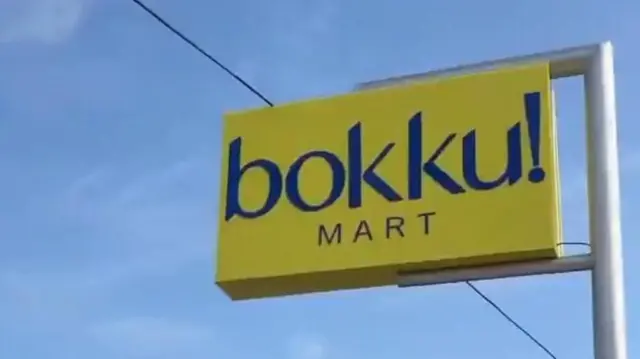
Walk into almost any Lagos neighbourhood right now and you will likely find a Bokku Mart nearby. Launched in September 2022, the chain opened its 200th store in May 2026 at the Kingsway Building in Marina, making it the largest supermarket chain in Nigeria by store count, with outlets now spread across Lagos, Ogun and Oyo states.
In a macroeconomic climate where inflation has squeezed purchasing power, Bokku has built a following on price. Groceries, toiletries, cooking oil, drinks and body care products at its stores run roughly 22 per cent cheaper than the open market, with uniform pricing across all regions — savings visible on staples like cooking oil, seasoning cubes and pasta, where Bokku’s shelf price consistently undercuts the market by a wide margin.
How? Shoppers call it “commonsensical prices.” In the boardroom, it is the hard-discount model, a framework pioneered by global operators like Aldi and Lidl. Let’s take a closer look at the operations and the microeconomic levers driving “Bokkunomics”.
The Five Pillars of Bokkunomics
1. Real estate: the micro-format density play
Traditional supermarkets anchor themselves in multi-billion-naira malls, paying premium square-metre leases that are eventually passed to the consumer. Established players like Shoprite built their model on exactly this logic, anchoring large malls as a destination experience that shoppers drove to and spent time in.
Bokku does the opposite. It typically secures long-term leases of 15 to 20 years on bare land or ground-floor retail space, running a micro-format density strategy that Estate Intel’s research finds significantly more cost-efficient than leasing large mall spaces.
The maths: early outlets ran 200 to 250 square metres, though the company’s current expansion criteria specify slightly larger footprints of 300 to 500 square metres, still a fraction of the 4,000-square-metre-plus format a chain like Shoprite typically leases. The saving: compact, localised stores that are quick to deploy, usually within one to three months, let the chain open several suburban hubs for the cost of a single mega-destination.
2. The cold chain boycott
In Nigeria, electricity overheads can break a retail business. Traditional superstores run banks of open-air chillers and commercial beverage refrigerators, burning diesel or high-tariff grid power around the clock.
Bokku made a radical trade-off to bypass this. On visits to several outlets, I found no chilled beverage cabinets on the shop floor, beverages sit on dry shelves at ambient temperature instead, cutting a large share of a standard grocery store’s daily electricity load. The chain appears to protect that low-energy baseline even as it expands into frozen protein, running one or two mid-sized chest freezers per store rather than a bank of them. This keeps power demand low and, just as importantly, predictable.
3. Extreme SKU discipline
A premium supermarket can carry upwards of 30,000 unique product variations, stocking ten brands of dishwashing liquid or five sizes of the same milk. Bokku launched with a far tighter range, around 350 essential grocery commodities against its 200-to-250-square-metre footprint, well below the 2,000 SKUs a wider-format some competitors carry in nearly four times the space. That range has likely grown with Bokku’s private-label push, but the store still runs on a fraction of a conventional supermarket’s catalogue.
Instead of ten brands of an item, it stocks one or two “hero” products with reliable, high-volume turnover. The leverage is in the concentration: routing purchasing volume into a handful of suppliers secures bulk discounts and volume bonuses smaller stores cannot access.
4. Private label and the vertical integration margin
Bokku does not only resell other companies’ products; it manufactures its own, under house brands that trace back to Atreos, its parent holding company. Treos White Bread (800g) retails for ₦1,100 and Treos Whole Wheat (600g) for ₦900, alongside a private-label cleaning line, REOS Bleach, sold exclusively at Bokku for ₦1,600 a litre.
The bread has become the chain’s signature draw. In one 11-month stretch, the bakery operation employed 200 bakers to meet demand, and retailers in open markets buy it in bulk to resell at a markup. Manufacturing internally cuts out third-party distributors, letting the chain capture the manufacturer’s margin and return part of it to the customer as a shelf discount, while Treos and REOS also build brand recognition that keeps shoppers inside the Bokku ecosystem for products they’d otherwise buy elsewhere.
5. Stripping away the frills
Hard discounting means eliminating embellishment: uniform layouts, minimalist self-service, no free carrier bags. Even before Lagos’s 2023 single-use plastics ban forced the issue sector-wide, Bokku already required shoppers to bring their own bags, reuse empty cartons, or buy nylon bags at the store, the policy was a deliberate cost lever, not a regulatory afterthought. A sign in one outlet put the philosophy plainly: wherever possible, the store avoids any cost that could raise the sales price.
The checkout counter captures that philosophy best. Rather than hand out free branded plastic bags, Bokku charges a nominal fee for them while offering discarded product shipping cartons free of charge. The practice does two things at once. It converts a cost into a saving: disposing of bulk shipping cartons is an operational expense in traditional retail, requiring staff hours and paid waste-management logistics, and Bokku turns that liability into something customers are glad to carry out of the store. And it aligns the shopper psychologically, the message is that the company refuses to spend on packaging, proof that every shortcut exists to protect the customer’s wallet.
The Ledger’s Operational Comparison
| Operational lever | Traditional superstores | The Bokku model |
| Location archetype | Prime malls, high-traffic avenues | Suburban residential neighbourhoods |
| Store footprint | 4,000m²+ | 200–250m² (up to 500m² in newer formats) |
| Product variety (SKUs) | 30,000+ variants | Roughly 350 at launch; still a fraction of a conventional store today |
| Cold chain footprint | Rows of open-air beverage chillers | No cold drinks observed; one to two chest freezers |
| Supply chain flow | Multi-tiered wholesale and distributor networks | Direct bulk sourcing plus in-house manufacturing (Treos, REOS) |
The Executive Bottom Line
Bokku Mart’s rise to Nigeria’s largest supermarket chain by store count proves a structural point about Nigerian consumer behaviour under pressure: in an inflationary squeeze, cost-efficiency beats premium ambiance every time.
By treating electricity, store sizing and product variety not as fixed necessities but as variables to be optimised, Bokku has built an asset-light model that is unusually resistant to macroeconomic shocks. It did not lower prices by sacrificing profitability. It lowered them by systematically engineering waste out of its operational plumbing.
For executives across manufacturing and distribution, that is the new benchmark.