





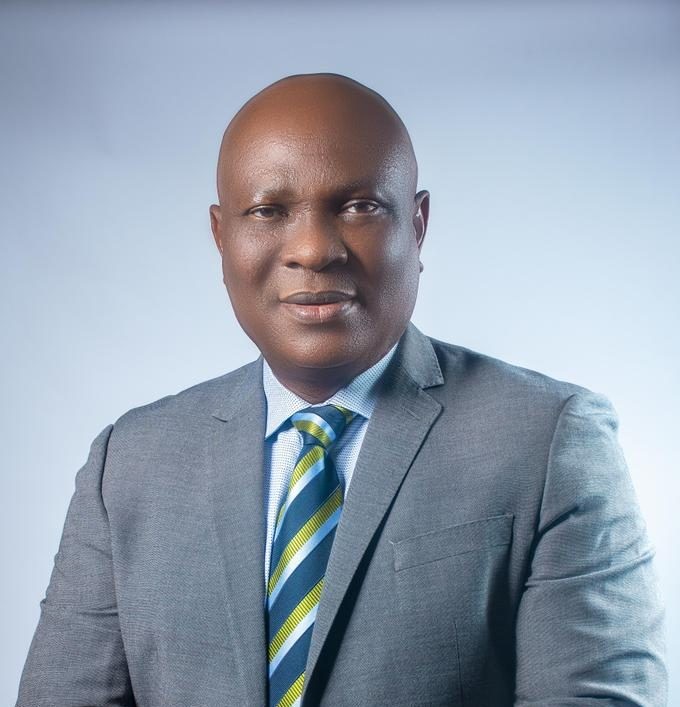
OPINION By Dr. Steve Olusegun Ogidan, mni, FNIM, FIMC, PhD
“A platform built on algorithms cannot survive in a market that runs on deception. Uber did not merely encounter a difficult operating environment — it collided with a culture that systematically undermined the very trust on which its entire business model was constructed.”
I. An Exit 12 Years in the Making
On September 2, 2026, Uber Technologies — the San Francisco-headquartered global mobility giant that once seemed invincible — quietly withdrew from Nigeria, ending a 12-year chapter that began with great fanfare in Lagos in 2014. In its terse statement, the company cited “evolving business priorities and investment focus across the continent.” Corporate euphemisms rarely tell the full story, and this one is no exception.
I have used Uber’s services in more than 24 countries across four continents — from the orderly streets of Zurich to the bustling boulevards of Nairobi, from New York’s grid-locked avenues to the sprawling highways of Dubai. I have sat in the back seats of Uber vehicles in cities where the drivers do not even know your language, yet the interaction remains seamless, predictable, and trustworthy. In all of those experiences across four continents, I have never once had a driver ask me to cancel my booking so we could “arrange something privately.” Not once.
But in Nigeria? It was almost a rite of passage.
Commentators have blamed the exchange rate crisis, fuel subsidy removal, regulatory friction, high vehicle maintenance costs, Uber’s commission structure, and the general harshness of Nigeria’s operating environment. These are real and valid pressures. But they do not tell the complete story. As a management consultant with over 24 years of operations across 18 African countries, and as the President of the Turnaround Management Association of Nigeria, I will argue what many are too polite — or too tribal in their sentiments — to say: a significant and decisive contributor to Uber’s failure in Nigeria was a systemic integrity deficit embedded in the behaviour of both drivers and passengers on the platform. Uber did not just lose the battle against macroeconomics. It lost the war against human dishonesty.
II. How the Uber Model Works — and Why Integrity is NonNegotiable
To understand why dishonesty was so fatal to Uber Nigeria, one must first appreciate the architecture of Uber’s business model. Uber does not own cars. It does not employ drivers. It is, at its core, a technology trust intermediary — a platform that earns revenue by connecting riders who trust that a vetted driver will arrive safely, and drivers who trust that a legitimate passenger will pay the agreed fare, all within a framework of GPS tracking, insurance coverage, two-way ratings, and digital payment. Remove trust from that equation, and what remains is not Uber. What remains is an ordinary taxi business with a smartphone interface.
In mature markets — the United States, the United Kingdom, Germany, France, Australia, the UAE — this model operates with remarkable efficiency precisely because all parties accept the discipline of the platform. Drivers do not circumvent the app. Passengers do not conspire to evade digital payments. The rating system functions as a genuine accountability mechanism. When a driver in Chicago or Amsterdam accepts a trip request, that driver completes the trip through the app. Full stop. Asking a passenger to cancel so the driver can negotiate a private fare is not only professionally unthinkable — in many jurisdictions, it would breach the driver’s service agreement with Uber and be grounds for immediate deactivation.
In Nigeria, the same model met a fundamentally different cultural ecosystem — one in which the informal “arrangement” is king, where the system exists to be gamed, and where short-term individual gain routinely trumps long-term collective benefit. This is not a sweeping moral condemnation of Nigerians. It is a diagnosis, and like all honest diagnoses, it is the necessary precondition for any meaningful cure.
III. The Anatomy of a Broken Compact: Drivers, Passengers, and the Offline Conspiracy
Research into ride-hailing in Lagos has documented with clinical precision exactly how drivers resisted the platform’s accountability mechanisms. Academic studies on the algorithmic politics of gig work in Lagos describe drivers asking riders to cancel a trip so drivers are not penalised for cancelling it themselves, after which they take the passengers on the trip anyway offline. Drivers persuaded passengers to cooperate by invoking traffic, dangerous roads, or inconvenient destinations. They then suggested a private fare at what appeared to be a discount. What seemed like a mutually beneficial arrangement was, in reality, a coordinated act of platform fraud.
Social media groups on WhatsApp, Facebook, and Telegram became coordination hubs where drivers shared techniques for circumventing the algorithm, rated the cooperativeness of specific passengers, and advised one another on how to price offline rides. What Uber designed as a safety and accountability infrastructure — GPS tracking, driver ratings, digital payment trails, insurance coverage — was being systematically neutralised by the very people the platform sought to empower.
But let us be absolutely clear: this was not a crisis of driver integrity alone.
Passengers were willing co-conspirators. Many Nigerian riders gleefully accepted the offer to “go offline,” calculating that a slightly lower cash fare was worth abandoning the safety net the platform provided. In doing so, they voided their insurance coverage, tracking protections, ability to raise a dispute, and contribution to the overall health of the platform that served them. The passenger who agreed to cancel a legitimate ride request to save a few hundred naira was, wittingly or not, chipping away at the structural foundation that made the entire service viable.
Bolt Nigeria, to its credit, documented the scale of this problem. A safety crackdown in 2025 reduced offline trips by 42 percent — a statistic that is simultaneously impressive and damning. If a 42 percent reduction is hailed as a major achievement, it implies that before the crackdown, offline trips constituted a staggering proportion of the market’s activity. Bolt’s General Manager, Osi Oguah, put it plainly: “If you’re not transacting within the app, you’re exposing yourself to danger.” But for many Nigerian users — drivers and passengers alike — the danger of an untracked ride was evidently less threatening than the discomfort of paying platform commissions or fares.
IV. The Operating Environment Argument — True, But Incomplete
It would be intellectually dishonest to dismiss Nigeria’s macroeconomic realities as irrelevant. They are not. Between 2014 and 2026, the Nigerian naira collapsed from approximately ₦160 to over ₦1,600 to the US dollar — a decimation of purchasing power that made Uber’s dollar-denominated operational costs incompatible with a naira-denominated consumer market. Fuel subsidy removal sent transportation costs soaring. Vehicle maintenance in a country with deplorable road infrastructure became prohibitively expensive. Uber drivers reported that high commission rates— at 25 percent on some service tiers—made the economics of platform loyalty unworkable, particularly as operational costs rose steeply in local currency terms.
Drivers protested in 2017, again in 2023, and once more in 2025 — each round of strikes a testament to a deepening structural mismatch between Uber’s global pricing architecture and Nigeria’s increasingly stressed local economy. Regulatory tensions compounded the picture. The Federal Airports Authority of Nigeria’s attempts to impose a framework on ride-hailing at airports created operational friction. And by the time Uber exited, the market had fragmented into a chaotic landscape of over 2,500 registered ride-hailing apps, most of which could barely sustain viable economics for anyone in the ecosystem.
These are real. But here is the inconvenient truth: Uber faces difficult operating environments in many of the countries it operates in. India has regulatory complexity, currency pressures, and intense local competition. Parts of Latin America are economically fragile. Southeast Asian markets have deeply embedded informal transport cultures. Yet Uber continues to operate in those markets — adapting, pivoting, and enduring — because the fundamental compact between platform, driver, and passenger broadly holds. The macroeconomic headwinds Nigeria faced were harsh, but not uniquely catastrophic. What was uniquely Nigerian was the systematic and institutionalised defection from platform integrity.
V. Nigeria’s Trust Deficit — A Structural Disease, Not a Situational Ailment
The Uber crisis did not occur in a vacuum. It is a manifestation of a far deeper national pathology — what scholars and economists are increasingly calling Nigeria’s trust deficit. According to recent global polling, only 14 percent of Nigerians believe that most people can be trusted, placing Africa’s largest economy near the very bottom of the worldwide league table of social trust. For comparison, Nordic societies, where interpersonal trust levels exceed 65 percent, have built extraordinary digital economies precisely because citizens trust that counterparts — whether a ridehailing driver, an e-commerce seller, or a fintech platform — will honour their commitments.
Nigeria’s trust deficit is not an accident of fate. It is the compound product of decades of institutional failure — governments that made promises and broke them, corporations that signed contracts and dishonoured them, leaders who asked for loyalty and rewarded it with betrayal. Over generations, Nigerians have rationally adapted to an environment where the formal system cannot be relied upon, by developing informal workarounds, personal networks, and transactional relationships that bypass official structures. What was once an adaptive survival strategy has hardened into a cultural default—one that now undermines every effort to build the formal, rules-based institutions a modern economy requires.
BusinessDay has noted that Nigeria’s corporate governance landscape is infected by an ethical deficit at the very top of its organisations — a culture where leadership behaviour signals that ethics are optional, a nice-to-have until they conflict with financial performance. When the fish rots from the head, the entire body follows. Uber drivers who gamed the app were not operating in isolation from this broader cultural context. They were expressing, at the micro-level of individual transactions, the same ethical calculus that pervades boardrooms, government ministries, and professional associations across the country: extract maximum short-term value; let the institution bear the systemic cost.
As researchers at the London School of Economics’ Africa at LSE platform have observed, Nigeria ranks 109th out of 132 countries on the latest Global Innovation Index—far behind smaller African peers such as Kenya and Rwanda. Innovation, like finance, runs on confidence. When investors, engineers, or consumers doubt that counterparts will play fair, or that contracts will be enforced, they demand collateral, slow their decisions, or simply walk away. Uber walked away.
VI. The Comparative Lens — What the Rest of the World Teaches Us
My experience as a frequent Uber user across more than 24 countries on four continents is not anecdotal decoration. It is empirical evidence. In the United States, where I have used Uber in New York, Washington D.C., Houston, Atlanta, and Los Angeles, the interaction is transactional and clean. The app works. The driver arrives. The fare is charged digitally. No negotiation, no persuasion, no invitation to circumvent the system. In European cities — London, Paris, Amsterdam, Madrid — the same discipline applies, amplified by stricter regulatory oversight that makes informal diversion an even higher-risk proposition for drivers.
In South Africa — where Uber continues to operate — I have used the service in Johannesburg, Cape Town, and Durban. The cultural compliance is materially higher. In Kenya and Egypt, where Uber also remains active, the platform maintains operational integrity because both driver communities and passenger communities understand, at a collective level, that defecting from the system destroys the system. This is not to suggest those markets are perfect. It is to suggest that the level of systematic, institutionalised, socially normalised defection from platform rules that characterised the Nigerian market was in a category of its own.
Consider also the case of India — a market with enormous complexity, massive currency depreciation risks, regulatory unpredictability, and ferocious local competition from Ola and Rapido. Uber has not exited India. It has adapted. The critical difference is that informal defection from platform rules—what Indian drivers call “khep” trips, or offline rides—is sufficiently contained that Uber can still build a sustainable business around its core model. When Uber introduced subscription plans for moto drivers in Bangladesh and India to reduce offline trips, it was a targeted intervention against a contained problem. In Nigeria, the problem was neither contained nor targeted — it was ambient and pervasive.
VII. The Cost of Our Complicity — What Nigeria’s Actors Must Own
We must resist the comfortable temptation to cast Uber’s exit purely as a story of Western corporate indifference to African economic realities. That framing is emotionally satisfying but strategically dangerous, because it assigns all agency to Uber and none to us. The truth is more uncomfortable, and more actionable: Nigerian actors — drivers, passengers, regulators, and the broader cultural ecosystem — made choices that collectively destroyed the conditions for Uber’s viability.
The driver who asked a passenger to cancel a ride request so he could negotiate a private fare did not merely cheat Uber. He cheated the passenger of safety protections. He cheated the Uber ecosystem of the revenue it needed to maintain competitive pricing and service quality. He cheated every other driver on the platform by inflating cancellation rates and degrading algorithmic reliability. And he cheated Nigeria — by proving to a global company that the Nigerian market was too corrupt to be worth the investment of continued engagement.
The passenger who gleefully accepted the offline offer bears equal moral responsibility. The culture of “I am smart because I avoided the system” is one of the most self-destructive elements of Nigeria’s social character. What feels like individual cunning is, in aggregate, collective suicide. Every naira saved through an offline transaction was an investment in the eventual collapse of the platform that provided the service. Every cancelled booking that was redirected to a private arrangement was a vote for the destruction of the infrastructure that Nigerians are now mourning.
BusinessDay has written with admirable directness about Nigeria’s culture of delayed payments and broken business contracts — arguing that payment reflects character and that non-payment reflects a lack of integrity. The same logic extends to platform compliance. Whether it is an unpaid invoice, a violated contract clause, or a cancelled Uber ride rerouted offline — the underlying moral failure is identical: the prioritisation of individual short-term advantage over collective institutional integrity. And the consequences, as BusinessDay correctly notes, are identical:
capital seeks safer environments. Nigeria loses growth opportunity quietly, without dramatic headlines.
VIII. What Uber’s Exit Means for Nigeria’s Digital Economy Ambitions
Uber’s exit is not merely a transportation story. It is a signal — loud, clear, and deeply consequential — to every global technology company that has considered Nigeria as an investment destination. The narrative Nigeria sends to the world when a 12-year-old platform that pioneered ride-hailing on the continent packs its bags is this: this market has not yet built the cultural and institutional infrastructure necessary to sustain global platform capitalism.
This matters enormously, because Nigeria’s economic future is inextricably tied to its ability to attract, retain, and grow global technology platforms. The digital economy is not a luxury sector — it is the primary infrastructure of 21st-century economic development, the platform upon which jobs, financial inclusion, logistics, healthcare delivery, education, and governance innovation are all built. If Nigeria cannot maintain the trust environment necessary to sustain a ride-hailing app, the prospect of sustaining the far more complex trust requirements of fintech, insurtech, healthtech, and e-commerce platforms must be viewed with sober concern.
Already, the Uber departure leaves thousands of drivers without income and millions of passengers without a reliable mobility option. The competitors that remain — Bolt, inDrive, LagRide, Rida — are inheriting the same structural contradictions. Unless the integrity problem is confronted directly, they are not inheriting a market. They are inheriting a trap.
IX. A Pathway Forward — Rebuilding the Architecture of Trust
The question is not whether Nigeria can afford to address its integrity deficit. Nigeria cannot afford not to. The pathway forward requires action at three levels: institutional, corporate, and individual.
At the institutional level, regulators must stop treating ride-hailing platforms as revenue extraction opportunities and start treating them as critical public infrastructure requiring thoughtful governance. The FAAN airport access dispute that preceded Uber’s exit was symptomatic of a regulatory culture that prioritises control over enablement. Nigeria needs a dedicated, technically competent ridehailing regulatory framework — one that enforces platform compliance from all actors (including drivers), establishes clear consumer protection standards, and creates genuine incentives for platform integrity. Enforcement of offline trip prohibitions must be treated not as a platform policy issue but as a public safety and economic governance issue.
At the corporate level, surviving platforms must invest heavily in trust architecture — not merely as a compliance exercise but as a competitive differentiator. Bolt’s crackdown on offline trips is a step in the right direction. But the measures must be structural, not episodic. Platforms must develop indigenous approaches to driver economic sustainability — addressing the legitimate grievances about commission rates and fare structures — while simultaneously maintaining absolute non-negotiability about the core platform rules. An economically secure driver who still conducts offline trips is not a partner. An economically stressed driver who is given the tools to compete fairly within the app is.
At the individual level, the change required is cultural and attitudinal — and it is the hardest of all. Nigerians must collectively recognise that the informal shortcuts they celebrate as street wisdom are, in aggregate, the chains that bind the country to underdevelopment. The passenger who refuses the next offline invitation — who says “no, let us complete this through the app” — is not being naive. They are making an investment in the future. The driver who declines to game the algorithm — even when it costs him a short-term fare — is building the reputational capital that will sustain his livelihood over the long term. These are not abstract moral arguments. They are practical economic decisions with compounding consequences.
X. Conclusion — The Mirror Uber Holds Up to Nigeria
In turnaround management — my professional discipline — we have a fundamental diagnostic principle: the presenting problem is rarely the real problem.
Organisations in crisis always have a story they tell themselves and a story the data tells. The leader’s job is to close the gap between those two narratives.
Nigeria’s story about Uber’s exit — the one it is telling itself — is a story of external aggression: a foreign company that could not handle the realities of a difficult market, that misjudged the operating environment, that failed to adapt to Nigerian conditions. There is truth in this narrative. But it is not the whole truth.
The data’s story — the uncomfortable, actionable, transformative story — is that Nigeria contributed materially to its own abandonment. Drivers who gamed a platform that had given them economic opportunity. Passengers who cooperated in that deception for marginal savings. A regulatory environment that added friction without building trust. A cultural ecosystem that treats compliance as weakness and deception as intelligence. All of these forces converged to make Nigeria inhospitable to a business model built entirely on trust.
The good news — and there is good news — is that culture is not destiny. It is a product of incentives, institutions, leadership, and time. Countries have transformed trust cultures before. South Korea’s extraordinary economic transformation from the 1960s onwards was partly a story of building institutional trust frameworks in a lowtrust society. Rwanda’s emergence as one of Africa’s most attractive investment environments reflects deliberate, sustained investment in governance integrity. Nigeria has the talent, the creativity, the demographic vitality, and the market scale to achieve the same transformation. What it lacks, at this moment in its history, is the collective willingness to hold a mirror up to itself and confront what it sees.
Uber’s departure is one such mirror. It is expensive, painful, and embarrassing. It is also precisely the kind of signal that a nation serious about transformation uses as a turning point rather than a talking point.
The next time a global platform looks at Nigeria and asks whether the market is trustworthy enough for investment, the answer it finds will be written not by government press releases or investment promotion agencies. It will be written by the daily decisions of millions of ordinary Nigerians — drivers, passengers, regulators, business leaders — who either choose to honour the systems that serve them, or choose to undermine them for marginal personal advantage.
The choice, as always, is ours.
About the Author
Dr. Steve Olusegun Ogidan (mni, FNIM,FIMC, PhD) is the Managing Director/CEO of Successory Nigeria Limited (SNL), a pan-African development consulting and capacity-building firm headquartered in Abuja with over 24 years of operations across 18 African countries. He is the President of the Turnaround Management Association of Nigeria (TMA-Nigeria), a Forbes Business Council Member, and an Independent Non-Executive Director at Dignity Finance and Investment Limited. A graduate of Ahmadu Bello University, University of Lagos, Trinity College Malaga, and executive programmes at Harvard Business School, Columbia Business School, and Wharton, Dr. Ogidan is the published author of Breaking the Value Trap and Defining Identity, Direction & Destiny. He is an alumnus of NIPSS Senior Executive Course 44 (mni). He has used Uber services in more than 24 countries across four continents.