





Key Points
- IMION says logistics weaknesses are preventing Nigeria from fully exploiting its maritime resources.
- Stakeholders call for digital systems and closer coordination across the maritime trade chain.
- Supply-chain expert says port inefficiencies are costing Nigeria significant economic value.
Main Story
Nigeria’s extensive maritime resources may not deliver their full economic potential unless the country addresses weaknesses in logistics and trade facilitation, the International Maritime Institute of Nigeria (IMION) has said.
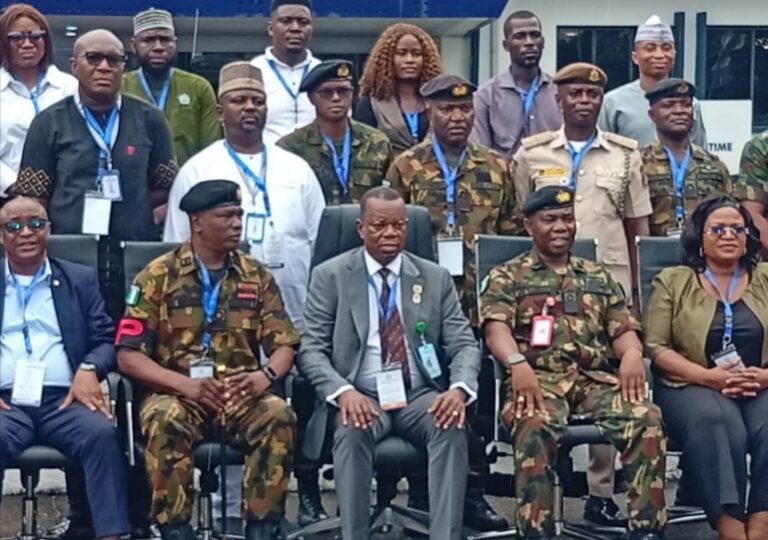
The institute’s Director-General, Rear Adm. Thaddeus Udofia (rtd), raised the concern on Monday in Apapa, Lagos, while opening a three-day executive programme focused on logistics and trade facilitation for blue economy growth.
Udofia said Nigeria had the geographical assets needed to build a stronger maritime economy, including an 853-kilometre coastline, a 200-mile Exclusive Economic Zone, inland waterways, creeks, estuaries and the Niger Delta basin.
The challenge, he said, was converting those assets into economic activity.
That would require systems capable of moving people, goods, information and services efficiently across the maritime economy, he said.
Udofia said logistics was central to international commerce, supporting between 80 and 90 per cent of global sea-borne trade and economic activities.
He identified inefficient logistics and weak trade facilitation as major obstacles to extracting greater value from Nigeria’s maritime sector.
The problem extends beyond ports and shipping companies, according to Udofia. He said customs authorities, regulators, port operators, shipping lines, freight forwarders and transport companies would all need to work together, alongside technology providers and financial institutions.
He therefore called for greater coordination across the sector, as well as wider use of digital systems, improved transparency and better alignment of policies.
The IMION chief said the executive training was intended to give participants practical knowledge that could help address some of these challenges. The programme covers areas including customs procedures, port operations, multimodal transport, supply-chain management and modern approaches to trade facilitation.
He urged participants to examine existing practices critically and use their experiences to develop solutions that could be implemented within the maritime sector.
Prof. Ogochukwu Ugboma of the Lagos State University School of Transport and Logistics said the value of Nigeria’s blue economy would remain limited if the logistics system could not efficiently support it.
She noted that the flow of information and finance was as important as the physical movement of goods and services.
Dr Obiora Madu of the African Centre for Supply Chain Management also drew attention to inefficiencies at Nigerian ports, saying they cost the country significant sums annually.
He argued that ports should be treated as strategic economic corridors rather than simply points for the movement of cargo, because their efficiency has a direct bearing on trade costs and Nigeria’s competitiveness.
The Issues
Nigeria’s blue economy covers a wide range of maritime resources and activities, but access to those opportunities depends on the efficiency of the systems connecting production, ports, transport and markets.
Delays, fragmented processes and poor coordination can increase the cost of moving goods and make Nigerian trade less competitive.
What’s Being Said
“The Blue Economy represents one of the most significant opportunities for sustainable growth, job creation, trade expansion and regional integration across Nigeria and Africa.”
Rear Adm. Thaddeus Udofia (rtd), Director-General, IMION
“Our maritime domain also includes inland waterways, creeks, estuaries and the Niger Delta basin.”
Rear Adm. Thaddeus Udofia (rtd), Director-General, IMION
“Ports should be viewed as strategic corridors.”
Dr Obiora Madu, African Centre for Supply Chain Management
What’s Next
The three-day IMION programme will train participants in modern maritime logistics and trade facilitation, with attention to customs processes, port operations, multimodal transportation and supply-chain management.
Participants are also expected to exchange experiences and develop practical approaches to challenges affecting the maritime sector.
Bottom Line
IMION says Nigeria’s maritime resources alone will not deliver a stronger blue economy without an efficient logistics system. It is calling for coordinated action, digitalisation and greater transparency across the maritime trade chain.