Key Points
- FG wants China-Africa health partnerships to focus on capacity development.
- Salako identifies technology transfer, training and local manufacturing as priorities.
- Nigeria seeks stronger cooperation in medical technology, diagnostics and digital health.
- Minister urges partners to move from exhibitions to practical implementation.
Main Story
The Federal Government has called for deeper health cooperation between China and African countries, with greater emphasis on building sustainable capacity rather than supplying medical equipment alone.
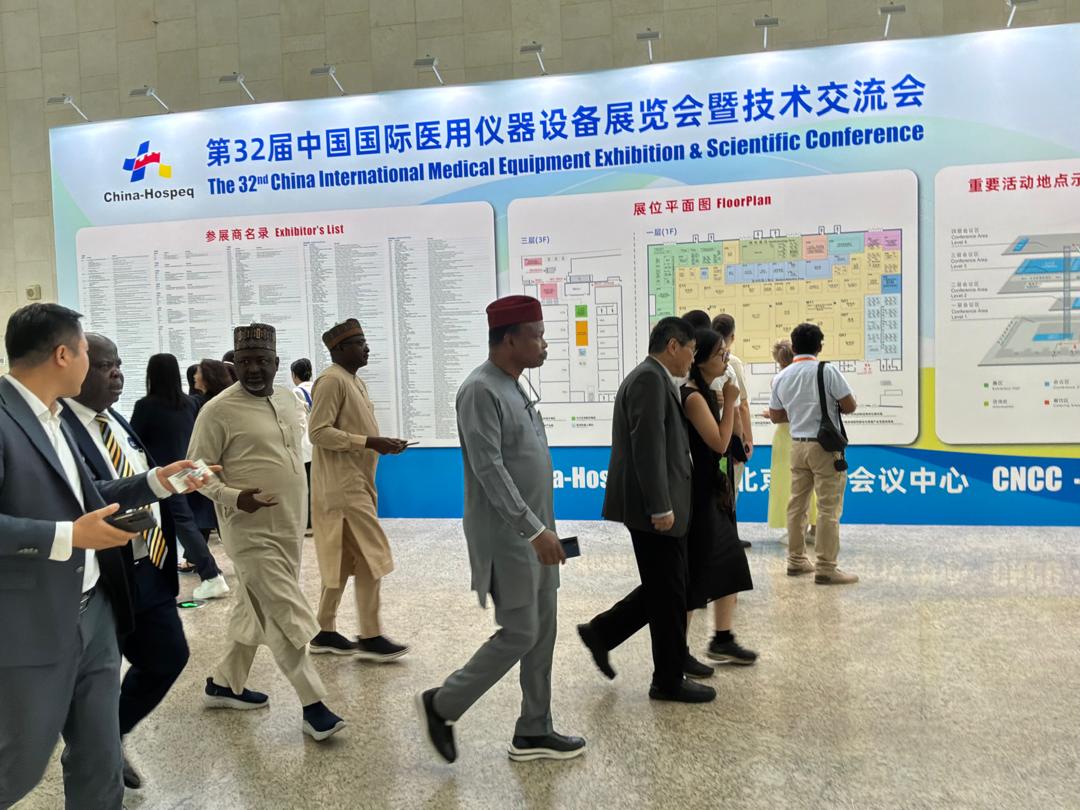
The Minister of State for Health and Social Welfare, Dr Iziaq Salako, made the call at China-Hospeq 2026, the China International Medical Equipment Exhibition and Scientific Conference, in Beijing.
Salako said investments in equipment would have limited impact without trained health workers, maintenance systems, quality assurance and technologies suited to local health needs.
He said Nigeria was interested in expanding cooperation with China in medical equipment, hospital development, clinical engineering, laboratory medicine, diagnostics, digital health and artificial intelligence.
Other areas identified by the minister included research and innovation, health workforce development, technology transfer, knowledge exchange and local manufacturing.
He also called for stronger partnerships in health value-chain development, emergency preparedness and global health security.
Salako said Nigeria welcomed the growing focus on China-Africa health cooperation, particularly initiatives that promote direct collaboration between healthcare institutions.
He identified the China-Africa Hospital Collaborative Development initiative as an opportunity for institutions to work together on strengthening health systems.
According to him, the China-Africa Hospitals Alliance and its network of joint working groups could support long-term institutional cooperation when partnerships are built around local needs and capacity development.
The minister said Nigeria-China health cooperation had expanded into areas including hospital development, medical technology, diagnostics, digital health, research and health workforce development.
He added that joint ventures in pharmaceutical manufacturing, medical equipment procurement and maintenance, as well as specialised training, were creating further opportunities for collaboration.
Salako said Nigeria was implementing health sector reforms under President Bola Tinubu’s Renewed Hope Agenda, with priorities including stronger primary healthcare, wider access to affordable services, improved diagnostics and specialised care.
He said the government was also pursuing digital health transformation, health workforce development and increased local production of medicines, medical devices and diagnostics.
Salako said these reforms would require increased investment, stronger institutions, sustainable financing, skilled personnel and strategic international partnerships.
He described China-Hospeq as an opportunity for Nigeria to identify technologies that were affordable, scalable and suited to the country’s health system.
The minister also said international cooperation was becoming increasingly important as countries confronted shared health challenges, including pandemics, antimicrobial resistance, emerging infectious diseases, non-communicable diseases and climate-related health threats.
He urged participants at the exhibition to develop partnerships capable of producing practical results after the event.
The Issues
Nigeria’s health system faces the challenge of ensuring that investments in medical technology translate into sustainable improvements in healthcare delivery. Salako said equipment supply must therefore be accompanied by training, maintenance, quality assurance, technology transfer and institutional capacity.
What’s Being Said
“Let us move from exhibition to implementation, from innovation to impact, and from partnership to sustainable capacity,” Salako said.
What’s Next
The Federal Government plans to deepen health cooperation with China in areas including medical technology, diagnostics, digital health, research, workforce development and local manufacturing, while pursuing stronger institution-to-institution partnerships.
Bottom Line
Nigeria wants China-Africa health cooperation to move beyond equipment supply towards partnerships that build local skills, technology capacity, manufacturing and stronger health institutions. China-Hospeq 2026 runs from Thursday to Saturday in Beijing.