


Key points
- WTO chief says Africa must invest in AI, renewable energy and critical minerals to remain competitive.
- She urges governments to add value to strategic minerals instead of exporting raw materials.
- CBN Governor Olayemi Cardoso says macroeconomic stability remains key to attracting investment.
Main story
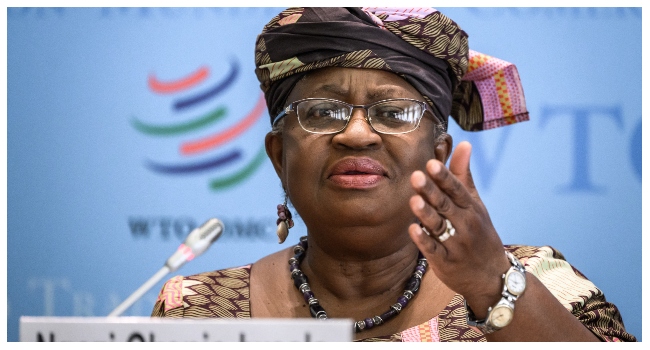
Africa must urgently reposition itself for the next phase of global economic growth by investing in artificial intelligence, renewable energy and value-added critical mineral industries, according to World Trade Organization (WTO) Director-General Ngozi Okonjo-Iweala.
Speaking at the 7th Africa Emerging Markets Forum, Okonjo-Iweala warned that the continent risks missing another major economic transformation if it continues to rely on exporting raw commodities instead of building competitive industries.
She said although African economies are recovering from the effects of the COVID-19 pandemic, inflation, supply chain disruptions and geopolitical tensions, current growth rates remain insufficient to generate the jobs and industrial expansion required for the continent’s rapidly growing population.
The WTO chief urged governments to prioritise investments in digital infrastructure, education, research, artificial intelligence and renewable energy to strengthen long-term competitiveness.
She also called on African countries to move beyond exporting raw lithium, cobalt, manganese, graphite and rare earth minerals by developing local processing industries capable of capturing greater value from the continent’s abundant natural resources.
According to Okonjo-Iweala, the global transition towards clean energy and advanced technologies presents Africa with a rare opportunity to become a key player in future supply chains if the right investment and industrial policies are implemented.
She further cautioned that rising public debt continues to constrain economic transformation, urging governments to strengthen fiscal discipline while directing limited resources towards productive investments.
Speaking at the same forum, Central Bank of Nigeria Governor Olayemi Cardoso said macroeconomic stability remains essential for attracting investment and sustaining economic growth.
He said the apex bank would continue implementing policies aimed at maintaining price stability, strengthening investor confidence and safeguarding Nigeria’s financial system despite growing global economic uncertainty.
The issues
The global economy is increasingly being shaped by artificial intelligence, clean energy technologies and competition for critical minerals. While Africa possesses significant natural resources and a young population, analysts argue that weak industrial capacity and limited value addition continue to prevent the continent from capturing greater economic benefits from these emerging industries.
What’s being said
“Africa must move urgently to position itself at the centre of the next global economic transformation or risk being left behind once again.” — Dr. Ngozi Okonjo-Iweala, Director-General, World Trade Organization (WTO).
“The future belongs to economies that innovate, create value and invest in people.” — Dr. Ngozi Okonjo-Iweala, Director-General, WTO.
“The apex bank would continue pursuing policies aimed at maintaining price stability, strengthening investor confidence and safeguarding Nigeria’s financial system despite increasing global economic uncertainty.” — Mr. Olayemi Cardoso, Governor, Central Bank of Nigeria (CBN).
What’s next
African policymakers are expected to continue discussions on strategies to attract investment into digital infrastructure, renewable energy and mineral processing as countries seek to strengthen economic resilience amid rising geopolitical and trade uncertainties.
Bottom line
The forum reinforced a growing consensus that Africa’s long-term competitiveness will depend less on exporting raw materials and more on building technology-driven industries that create jobs, attract investment and retain more value within the continent.