







Nigeria turns 66 with a subsidy debate in which every speaker means something different by the word
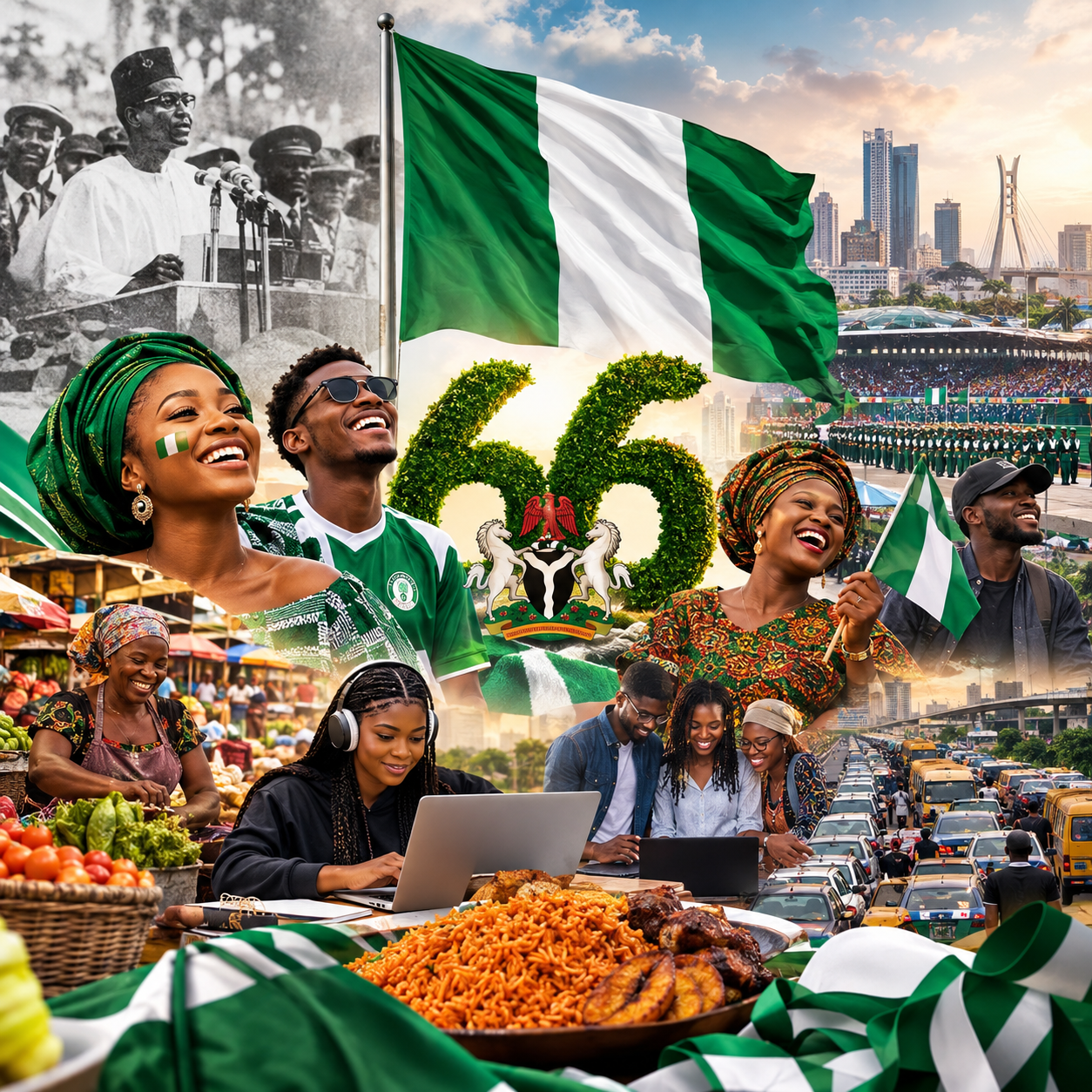
Today October 1 2026, Nigeria turns 66. The mood in the country is generally sombre and this anniversary lands in the middle of a debate the country has conducted for decades without defining its terms. The word is subsidy, and almost every politician who uses it means something different by it.
Three years ago, President Bola Tinubu ended the petrol subsidy in his inaugural address. The pump price rose from about ₦190 a litre to more than ₦850 by mid-2025. His government credits removal for a surge in FAAC distributions, which ran between roughly ₦700 billion and ₦1 trillion a month before removal and have since passed ₦2 trillion, and says the money has helped states pay salaries regularly.
On July 31, Power Minister Joseph Tegbe said the power-sector subsidy would end next year, and in the same briefing said there was no immediate plan to raise tariffs. Both cannot hold unless someone else absorbs the gap, and nobody has said who.
Now look at what the men who want the job are saying ahead of the January 16 election. Atiku Abubakar, who backed removal in 2023, now promises a subsidy, which his camp describes as crude supplied to Nigerian refineries at an incentivised price. In the economist’s sense that is a subsidy, because revenue the state could have earned is given up, but it has no budget line and no pump-price label. Then on Monday in Sokoto, Peter Obi promised to “bring back subsidy” once corruption is dealt with. In August he had told the Nigerian Bar Association that removal should stand.
Politicians have learnt that “subsidy” draws attention in Nigeria and that the detail can wait until after the vote.
The question no one is answering is – who pays for it? If a subsidy returns, what happens to the larger allocations states now depend on? Under the old arrangement, subsidy costs were netted off before the Federation Account was shared, the drain removal was meant to end. A barrel subsidy has no cheque, but no one has published a costing, and crude sold below market price to refiners must mean less revenue reaching the pool. Nor is the FAAC rise only a subsidy story, since exchange-rate reforms and stronger oil receipts contributed.
What most Nigerians regard as subsidy is akin to a man who owns a farm and thinks only of surplus food for himself. Because he produces it, he eats more and wastes more. Yet the same farm could sell that surplus and pay for the tractor, the roof and the children’s school fees. Every bag he eats for free is a bag he cannot sell. Nigeria is that farmer, and crude oil is the harvest. The demand for cheap fuel treats the resource as something to consume when its value lies in what it can build.
However, consider Norway and how differently it handles it’s crude oil. It sells abroad nearly all of the roughly two million barrels of oil and liquids it produces each day. At home it taxes fuel heavily, and the state saves the petroleum income in a fund worth about NOK 20 trillion in March 2026, roughly $2.1 trillion at recent exchange rates, spending from it only under a fiscal rule. Norway does subsidise: public transport, openly, with county and state money financing 51 per cent of it in the Oslo region in 2023, and household electricity, through capped support such as the Norgespris fixed-price scheme. The design is the lesson. Norway subsidises services and shocks, in public, with caps and accounts. It does not subsidise the pump.
The outcomes are not close.
| Indicator | Norway | Nigeria |
| Life expectancy at birth (2024, years) | 83.2 | 54.6 |
| Cost of living plus rent index (New York = 100) | 59.3 | 16.6 |
| Local purchasing power index | 123.2 | 8.8 |
| Population | about 5.5 million | over 200 million |
Sources: World Bank; Numbeo mid-2026 (crowd-sourced); WHO.
A Norwegian born in 2024 can expect to live 28 years longer than a Nigerian. Nigeria looks cheap on Numbeo’s cost-of-living index, but the purchasing power index tells the real story. Nigeria is not cheap for Nigerians.
Norway has about 5.5 million people and Nigeria more than 200 million, but the parts worth copying do not depend on scale: revenue counted in public, institutions that separate policy, regulation and commercial operation, savings governed by rules, and subsidies that are targeted, capped and reported. Nigeria has the engineers, economists and lawyers to build these. What it lacks is the vision to want them and the institutional capital to make them last. A Stanford study of oil governance found that separating these functions works where state capacity and political competition are both strong, which a thinned-out democracy erodes. In Nigeria today under our democracy, the three arms of government too often bear semblance to an unholy trinity instead of a checks and balancing mechanism.
Rules bind only when leaders submit to them first, and leadership by example is scarce. Public structures carry the names of officeholders who are still in office, as though they doubt anyone will memorialise them later. Wealth that no salary explains is alleged to sit offshore in the names of relatives and associates, and public contracts are steered to political cronies without due process.
The president’s last three annual leaves, in 2024, 2025 and this year, were all spent in Europe. This year’s ran for more than three weeks across London and Paris and was then extended. The Presidency calls them working vacations. A president who took his leave at home and promoted what the country has to offer would tell citizens that Nigeria is worth staying in. Instead, the over-indulged politicians who run the country are shielded from the reality of the common man, from the Villa to the local councils. They live in comfort at home yet surround themselves with battalions of state security personnel, which betrays the unease beneath the comfort, and abroad they move like free birds. They seem to have spurned the old proverb: East, west, home’s best.
Consider health care. This week a video went viral of former Head of State Abdulsalami Abubakar recovering from knee replacement surgery at Krishna Shalby Hospital in Ahmedabad, India, which is using it to advertise its services. Vice-President Kashim Shettima visited him there. Federal law entitles former heads of state to treatment abroad at public expense where necessary, and it is not clear who paid here. The pattern is the point: from decaying infrastructure to brain drain, few of those who run Nigeria’s health system would stake their own lives on it.
Mining shows what happens when the state cannot count what it owns. NEITI estimates that Nigeria loses about $9 billion a year to illegal mining and gold smuggling. A former minister of state for mines said roughly that much gold leaves illegally each year, some of it on private jets, and the current minister has blamed “powerful Nigerians”. The Ministry of Solid Minerals reported ₦28 billion in revenue for 2024. The figures differ in year and source. What the state cannot count, it cannot tax, and what it cannot tax, it polices by force. Less than two weeks ago in Minna, Niger State, 37 suspected illegal miners were found dead on September 17 in the custody of the Nigeria Security and Civil Defence Corps. The Corps first cited a suspected disease outbreak, and witnesses alleged beatings. The federal government has set up a panel and suspended the state commandant and 20 other personnel. Whatever it finds, 37 people are dead, none of them charged with anything.
Nigeria is not officially at war, yet its people are dying as though it were. Amnesty International counted at least 10,217 people killed in attacks by gunmen in the two years after President Tinubu took office, roughly 5,100 a year, across jihadist, bandit and communal violence in the north and centre. The UN has verified 17,257 civilian deaths in Ukraine between February 2022 and July 2026, about 3,900 a year. The counts differ in scope, but a country not at war is losing people at a higher annual rate than the one that is. Given a chance at reincarnation, it is obvious how those killed by bandits would choose their nationality. That is the grim truth behind the jokes about being born a Nigerian by mistake.
When Nigeria gets resource management right, celebrating nationhood will stop being gloomy and the preserve of a few, and become the joy of all. The jokes about being born a Nigerian by mistake will stop, Nigerians will become proud of a globally respected international passport. Until then, Nigeria is 66 and cannot afford a glowing patriotic smile on its independence anniversary. There is no subsidy for happiness or national pride, and the mood from the Villa to the IDP camps says so.


This is more than an Independence Day article; it is a sobering examination of what national pride actually means when citizens are struggling with the realities of everyday life.
Emmanuel Ogbonnaya has done something valuable here: he has taken the often-emotional debate around subsidies and connected it to the bigger questions of resource management, accountability, institutional strength and the quality of life Nigerians experience.
The comparison with Norway is particularly thought-provoking. The lesson is not simply about oil wealth, but about the institutions, transparency and discipline required to turn natural resources into lasting national value.
A very timely piece, well argued and worth reading beyond October 1. Nigeria needs more journalism that asks not only what government is doing, but who ultimately pays, who benefits, and what kind of country those decisions are building.
Well done, Emmanuel Ogbonnaya. This is the kind of editorial that should provoke serious conversation.