







Key points
- Education Minister Dr Tunji Alausa says President Bola Tinubu’s education reforms require stronger collaboration between the Federal Government and states.
- The government is deploying digital data platforms to improve planning, budgeting and accountability across the education sector.
- States have been urged to complete the Annual School Census and meet requirements to access the World Bank’s $552 million HOPE Education Programme.
- Alausa proposed quarterly review meetings to monitor reform implementation and promote accountability.
- Education stakeholders stressed policy continuity, reliable data and sustained investment as critical to long-term sector reforms.
Main Story

The Minister of Education, Dr Tunji Alausa, has said the success of President Bola Tinubu’s education reforms will depend on stronger collaboration between the Federal Government and state governments, supported by data-driven decision-making and improved accountability.
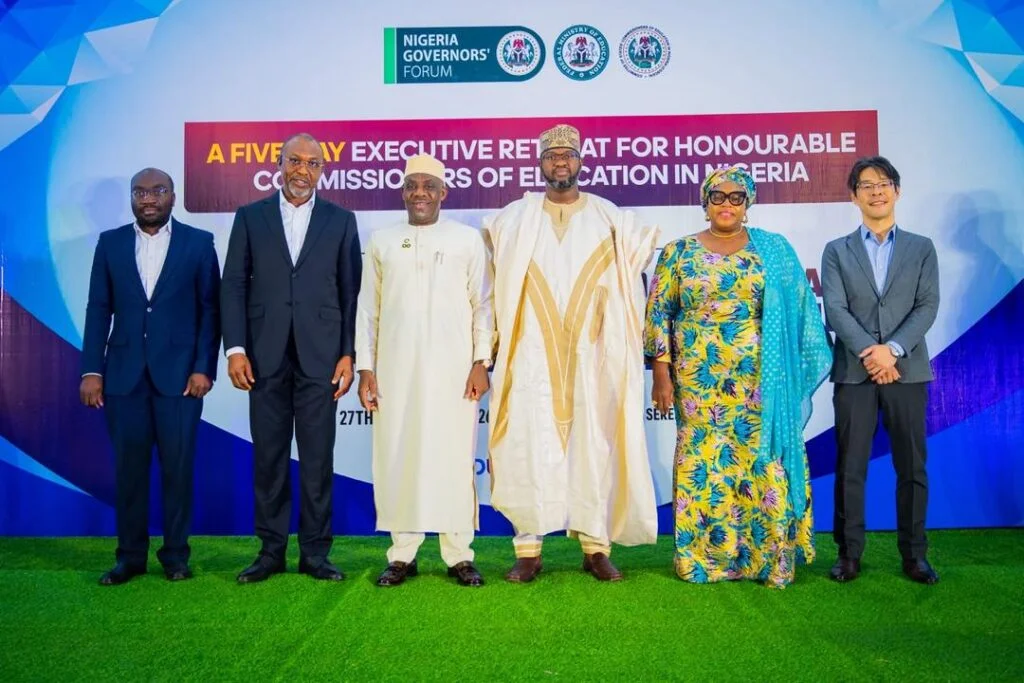
Alausa stated this on Tuesday at the opening of a five-day Executive Retreat for Commissioners of Education in Abuja, organised by the Committee of States’ Commissioners of Education (COSCEN).
He described education as Nigeria’s most powerful tool for economic growth, national security and sustainable development, adding that the Tinubu administration has placed the sector at the centre of its Renewed Hope Agenda through far-reaching reforms.
According to the minister, while the Federal Government provides policy direction and strategic interventions, state governments are primarily responsible for delivering quality education, making effective collaboration essential to achieving lasting reforms.
Alausa said the Federal Ministry of Education is replacing assumption-based planning with evidence-based governance through the National Education Data Infrastructure (NEDI) and the Digitalised Nigeria Education Management Information System (DNEMIS).
He explained that the platforms would provide real-time information on school enrolment, teacher deployment, infrastructure and learning outcomes to improve planning, budgeting, monitoring and resource allocation across the country.
“The integrated digital ecosystem will consolidate education data from schools, local governments, states and federal institutions into a single interoperable platform, improving accountability, transparency and service delivery,” he said.
The minister urged all states to complete their Annual School Census using the digitised platform and commended Kaduna and Borno states for their progress in implementing the initiative.
He also disclosed that the ministry had deployed digital dashboards and smart boards, with support from the National Bureau of Statistics, to strengthen evidence-based planning across the education sector.
Alausa called on commissioners to maximise opportunities under the World Bank-supported HOPE Education Programme, which provides $552 million in performance-based financing for eligible states.
Although all 36 states qualify for the programme, he said several were yet to complete key requirements, including signing Subsidiary Loan Agreements, opening designated programme accounts and fulfilling mandatory data reporting obligations.
To sustain the ongoing reforms, the minister proposed quarterly review meetings for commissioners to assess progress, exchange best practices and strengthen accountability nationwide.
He also cautioned against excessive investment in costly smart school infrastructure without adequate maintenance plans, stressing that quality teaching materials, effective teacher support and conducive learning environments remain the key drivers of improved learning outcomes.
In a keynote address titled “Beyond the Tenure of Commissioners: Sustaining Education Reforms in the Era of Digital Disruption,” former Minister of Aviation, Osita Chidoka urged commissioners to implement reforms capable of outlasting political administrations through policy continuity, stronger accountability, reliable education data and sustained investment in teachers and learning outcomes.
Also speaking, the World Bank Country Director, Matthew Verghis, represented by Senior Economist and Task Team Leader for the HOPE Education Programme, Shin Nomura, reaffirmed the Bank’s commitment to supporting Nigeria’s education reforms and urged states to complete all preparatory requirements to facilitate timely access to programme funding.
The Issues
Despite ongoing reforms, Nigeria’s education sector continues to face challenges, including inadequate data for planning, uneven implementation across states, weak accountability mechanisms and limited access to funding. Delays in meeting the conditions for performance-based financing could also slow the pace of reforms and affect efforts to improve learning outcomes nationwide.
What’s Being Said
Minister of Education, Dr Tunji Alausa:
“The integrated digital ecosystem will consolidate education data from schools, local governments, states and federal institutions into a single interoperable platform, improving accountability, transparency and service delivery.”
He also urged states to complete the Annual School Census and fulfil the requirements needed to access funding under the World Bank-supported HOPE Education Programme.
Former Minister of Aviation, Osita Chidoka:
He called on education commissioners to implement reforms that would outlive political administrations through policy continuity, reliable data systems, teacher development and sustained investment in learning outcomes.
World Bank (represented by Shin Nomura):
The World Bank reaffirmed its commitment to supporting Nigeria’s education reforms and encouraged states to complete all preparatory requirements to enable timely access to the HOPE Education Programme funds.
What’s Next
State governments are expected to complete the digitised Annual School Census, meet the eligibility requirements for the HOPE Education Programme and strengthen collaboration with the Federal Ministry of Education. The proposed quarterly review meetings are also expected to provide a framework for monitoring progress, sharing best practices and ensuring greater accountability in the implementation of education reforms nationwide.
Bottom Line
The Federal Government is placing data, digital technology and stronger federal-state collaboration at the centre of Nigeria’s education reforms, with success expected to depend on effective implementation by states, improved accountability and sustained investment in quality teaching and learning.