








Key Points
- Expert links recent petrol price movements to volatility in global crude prices.
- US-Iran tensions are driving speculation in the international oil market.
- He urges government to channel subsidy savings into public services.
Main Story
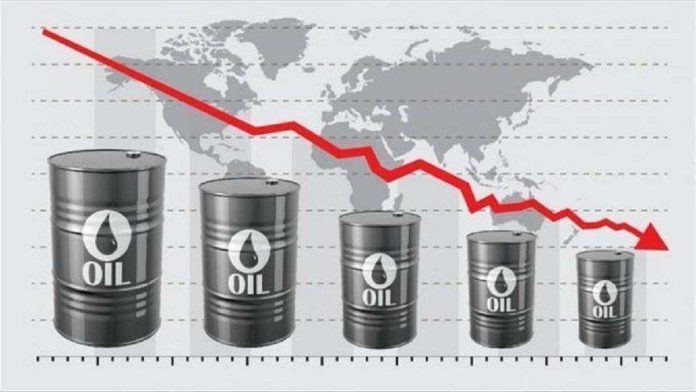
An oil and gas expert, Mr Chinedu Okoronkwo, has linked recent fluctuations in the pump price of Premium Motor Spirit (PMS), popularly known as petrol, to movements in the international crude oil market.
Okoronkwo, Treasurer of the Board of Trustees of the Independent Petroleum Marketers Association of Nigeria (IPMAN), said this in an interview with the News Agency of Nigeria (NAN) on Sunday in Abuja.
His comments come amid a rise in Brent crude prices, which stood at 96.28 dollars per barrel, with geopolitical tensions in the Middle East contributing to market uncertainty.
Petrol currently sells for between N1,299 and N1,350 per litre in the Federal Capital Territory, following upward adjustments in the Dangote Refinery’s gantry, or ex-depot, price to between N1,265 and N1,290 per litre.
Okoronkwo said the latest movements in crude prices were being influenced significantly by speculation surrounding renewed tensions and confrontation between the United States and Iran.
He explained that traders were responding not only to actual developments but also to statements and expectations arising from the confrontation.
“The traders are now dealing on speculations. The sentiment is basically on the American and Iranian confrontation,” he said.
According to him, even statements that are not followed by immediate developments can affect crude prices as traders react to changing market sentiment.
He said fluctuations in international crude prices were consequently reflected in the domestic petroleum market, where refiners and marketers had to adjust to changing market conditions.
On the frequent changes in the Dangote Refinery’s petroleum product prices, Okoronkwo said the refinery was operating as a commercial enterprise and would take anticipated crude price movements into account when setting its prices.
He said the refinery also had to recover the substantial investment made in establishing its facilities.
Okoronkwo said greater competition in domestic refining would eventually give marketers and consumers more options and reduce the pressure created when there were only a few major players.
“By the time we have another strong refinery challenging what these ones are doing now, one man will not stress the system,” he said.
On the removal of fuel subsidy, the IPMAN official said the policy itself was not necessarily wrong, but stressed that government needed to ensure that the resulting savings were properly deployed.
He identified improved availability of petroleum products and the disappearance of long queues at filling stations as major benefits Nigerians had experienced since the removal.
Okoronkwo urged government to direct the funds saved from subsidy removal towards healthcare, agriculture, education and road infrastructure.
He said better public services and living conditions could make Nigerians less concerned about the removal of subsidy.
He, however, opposed a return to the previous subsidy regime, arguing that resources saved through its removal should instead be used to improve critical sectors.
The Issues
Nigeria’s petrol prices remain exposed to movements in international crude prices because changes in the cost of crude can affect the economics of refining and petroleum products.
Okoronkwo’s comments also highlight the role of market competition in the downstream sector. He argued that the emergence of additional strong refineries would give consumers and marketers more alternatives.
On subsidy removal, his position is that the issue is less about restoring the former system and more about ensuring that the savings are visibly deployed to improve public services and living conditions.
What’s Being Said
“Any statement, even if there has not been any actual development, appears to trigger movements in the market,” Okoronkwo said.
“By the time we have another strong refinery challenging what these ones are doing now, one man will not stress the system,” he said.
“For me, reintroduction of the type of subsidy we had at that time will not be the best for this country,” he said.
What’s Next
Crude price movements will continue to influence the domestic petroleum market as international traders respond to developments and expectations surrounding global geopolitical tensions.
Okoronkwo also called for greater competition in domestic refining and urged government to ensure that subsidy savings are directed towards healthcare, agriculture, education and road infrastructure.
Bottom Line
An oil and gas expert says speculation linked to US-Iran tensions is contributing to crude price volatility, with implications for petrol prices in Nigeria. He also argues that stronger domestic refining competition and better use of subsidy savings are needed to ease pressure on consumers.



, ...)