FirstBank will hold the inaugural public lecture of the Samuel Asabia Professorial Chair on Sept. 3.
The lecture will focus on ethics, governance and Nigeria’s economic future.
Academics, policymakers, business leaders and other stakeholders are expected at the event.
Main Story
FirstBank is set to hold the inaugural public lecture of its Samuel Asabia Professorial Chair in Business Ethics and Governance at the University of Lagos on Sept. 3.
The lecture, themed Business Ethics and the Future of Nigeria’s Economy, will bring together representatives from academia, government and the private sector to examine how ethical business practices can influence Nigeria’s economic development.
Participants are expected to discuss issues including integrity, accountability, sustainability, responsible leadership and corporate governance, as they relate to the country’s economic prospects.
The Samuel Asabia Professorial Chair was established in honour of Samuel Asabia, FirstBank’s first indigenous managing director.
The university chair provides a platform for research, teaching and thought leadership in areas including business ethics, corporate governance, responsible leadership and sustainable business practices.
Olusegun Alebiosu, Managing Director and Chief Executive Officer of FirstBank, will chair the lecture.
The event is expected to provide a forum for academics, students, entrepreneurs, business executives, policymakers and other stakeholders to exchange views on the role of ethical leadership in strengthening institutions and supporting sustainable economic development.
The Issues
The lecture comes against the backdrop of continuing discussions around corporate governance, institutional accountability and responsible business practices in Nigeria.
Its focus on ethics and governance reflects the argument that economic growth depends not only on investment and policy but also on the quality of leadership and institutions guiding businesses and public organisations.
What’s Being Said
Alebiosu said FirstBank viewed ethical leadership, effective governance and responsible enterprise as important foundations for sustainable economic progress.
He said the Samuel Asabia Professorial Chair reflected the bank’s commitment to promoting research and discussion on issues affecting business and society.
According to him, the inaugural lecture would provide an opportunity for stakeholders to examine how integrity-based leadership could strengthen institutions, improve economic resilience and support a more inclusive economy.
What’s Next
The inaugural public lecture will take place at the University of Lagos on Sept. 3, with stakeholders from the academic, business and public sectors expected to participate.
Bottom Line
FirstBank’s inaugural Samuel Asabia Professorial Chair public lecture will focus on how business ethics, governance and responsible leadership can contribute to Nigeria’s economic future.
The Federal Government says it generated N15.8tn in additional resources from petrol subsidy removal and foreign exchange reforms between June 2023 and December 2025.
The Federal Government’s incremental expenditure during the period stood at N30.64tn.
Only N5.4tn, or 34 per cent of the N15.8tn subsidy savings, accrued to the Federal Government, while states received N6.5tn and local governments N3.9tn.
Additional resources available to the Federal Government totalled N20.4tn, comprising subsidy savings, independent revenue and borrowing.
Wage adjustments, external debt servicing and strategic infrastructure accounted for more than 82 per cent of incremental expenditure.
The government said the reforms created fiscal space but did not produce idle cash because the resources were absorbed by rising obligations.
Main Story
Thirty months after President Bola Tinubu removed the petrol subsidy and introduced major economic reforms, the Federal Government says it generated N15.8tn in additional resources but spent N30.64tn on incremental government expenditure during the period.
The figures were contained in the Federal Government’s Nigeria Reform Scorecard, titled “The Benefits, Costs and Harm Prevented,” released on Wednesday. Finance Minister and Coordinating Minister of the Economy, Taiwo Oyedele, said the N15.8tn in additional resources resulted from the combined effects of petrol subsidy removal and foreign exchange reforms between June 2023 and December 2025.
However, only N5.4tn, representing 34 per cent of the subsidy savings, accrued to the Federal Government. States received N6.5tn, while the 774 local government areas received N3.9tn under the Federation Account allocation formula.
The Issues
The figures provide the government’s latest explanation of what happened to the savings generated by the removal of petrol subsidy, amid persistent public concerns over the utilisation of the funds. The government said the N15.8tn was not held in a separate account labelled “subsidy savings”, but appeared through increased naira revenues accruing to the Federation as a result of the reforms.
Oyedele explained that the foreign exchange reforms also increased the naira value of dollar-denominated revenues collected by agencies such as Customs and the Nigeria Revenue Service. He added that the reforms eliminated an implicit exchange-rate subsidy which, according to the government, had benefited rent-seekers rather than ordinary Nigerians and manufacturers.
What’s Being Said
Oyedele said the Federal Government’s total incremental resources stood at N20.4tn, comprising N11.9tn in additional borrowing, N3.1tn in independent revenue and its N5.4tn share of the subsidy savings.
He said N9.39tn of the N30.64tn incremental expenditure went into wage adjustments, minimum wage increases and allowances for public servants, while N9.37tn was spent on additional external debt servicing resulting from naira depreciation. Another N6.47tn was allocated to strategic infrastructure development.
The Finance Minister said the government was providing an account of the reforms rather than declaring victory, acknowledging that the policies had imposed real costs on households and businesses, including higher prices and a sharp adjustment in the value of the naira.
What’s Next
The Federal Government said the reforms were intended to create greater fiscal capacity for investment in infrastructure, security, education, human capital and social interventions. It also said the policies prevented a deeper fiscal crisis and reduced reliance on monetary financing.
According to the scorecard, other incremental expenditure included N3.14tn in additional electricity subsidy costs, N1.24tn in increased domestic debt servicing, N423.8bn in social welfare transfers and N419.1bn for the Federal Capital Territory, Ecological Fund, Natural Resource Fund and other interventions.
Bottom Line
The government’s latest scorecard shows that while the subsidy and foreign exchange reforms generated N15.8tn in additional resources for the Federation, the Federal Government’s share was only N5.4tn. With incremental expenditure reaching N30.64tn, the administration says the reforms created fiscal space that was largely absorbed by wages, debt servicing, infrastructure and other rising government obligations.
REA says Nigeria can use its electricity deficit to attract digital and industrial investment.
Rising power demand from AI and data centres is creating new opportunities for countries with reliable electricity.
REA proposes linking generation, storage, digital infrastructure and productive users within the same locations.
Main Story
Nigeria can transform its electricity shortage from an economic constraint into an investment opportunity by linking power infrastructure with digital technology, industry and other productive activities, the Managing Director of the Rural Electrification Agency (REA), Abba Aliyu, has said.
Aliyu made the case in an article titled From Megawatts to Prosperity: Rural Electrification in the Age of AI, where he argued that the rapid expansion of artificial intelligence was changing the way countries should think about electricity.
He said the growing energy requirements of data centres and other digital infrastructure were prompting technology companies to secure dedicated power supplies, making electricity availability an increasingly important factor in decisions on where digital investments are located.
According to him, Nigeria should therefore move beyond treating electricity primarily as a social development service and recognise its role in driving economic activity, digital infrastructure and national competitiveness.
Aliyu cited an International Energy Agency projection that electricity consumption by data centres globally could reach about 945 terawatt-hours by 2030, nearly twice current levels.
He said the trend would increasingly favour countries capable of supplying dependable and competitively priced electricity, creating an opportunity for Nigeria to use its substantial unmet power demand as a basis for attracting investment.
The REA chief executive pointed to initiatives involving major technology companies, including Meta, Microsoft, Google, Amazon, OpenAI and xAI, as evidence that the relationship between computing infrastructure and electricity generation was becoming increasingly integrated.
He cited xAI’s development of dedicated electricity supply around its computing infrastructure and Meta’s agreements involving nuclear power as examples of technology companies seeking greater certainty over their energy requirements.
Aliyu also referred to Microsoft’s agreement with Constellation to support the restart of the former Three Mile Island Unit 1 nuclear plant in Pennsylvania, arguing that such developments demonstrate the importance of having adequate transmission infrastructure alongside generation capacity.
He said Nigeria’s electricity strategy should therefore focus less on the amount of power generated and more on whether reliable electricity reaches businesses and other productive users and contributes to measurable economic activity.
The REA boss said major electricity consumers such as data centres, telecommunications companies, industrial parks, universities, mining operations and manufacturing clusters could serve as anchor customers for distributed generation projects.
He explained that reliable demand from large customers could provide investors with the certainty needed to finance new generation assets.
Aliyu also advocated a technology-neutral approach to electricity development, saying Nigeria should combine different sources and systems according to their ability to deliver reliable and affordable power.
He identified solar and battery systems, gas generation, grid supply and demand management as technologies that could work together rather than being treated as competing solutions.
Beyond generation, he said electricity systems were increasingly facing constraints around transmission lines, transformers, substations, interconnection capacity, grid flexibility and storage.
He noted that developments in the United States and China showed that the ability to generate electricity did not necessarily guarantee that it could reach consumers or be converted into economic value.
Aliyu consequently proposed the creation of Nigerian Digital Energy Zones, where electricity generation, storage, digital infrastructure and productive users could be developed within the same geographical areas.
He said such an approach could allow Nigeria to bypass some of the limitations associated with traditional electricity infrastructure by building energy and economic infrastructure together.
The REA chief executive argued that the rise of AI had made reliable electricity an increasingly important determinant of where digital capital, businesses and jobs would be located.
He warned that countries with skilled AI workers but inadequate electricity infrastructure could struggle to fully benefit from the emerging digital economy, while countries with sufficient energy could use it as a foundation for attracting technology investment.
The Issues
Nigeria’s electricity challenge is no longer only about generating more power. Transmission capacity, distribution infrastructure, storage, grid flexibility and the ability to connect electricity supply to productive users are also becoming critical to economic growth.
The rapid expansion of AI and data centres could further increase electricity demand, making reliable and affordable power an increasingly important factor in attracting investment.
What’s Being Said
Aliyu said Nigeria should measure the success of its electricity strategy by the amount of reliable power reaching productive customers and the economic activity generated from it, rather than focusing only on installed generation capacity.
He argued that combining solar, batteries, gas, grid electricity and demand management would provide a more practical approach to meeting Nigeria’s power needs.
Meanwhile, Minister of Power Joseph Tegbe identified AI and data centres as emerging sources of significant electricity demand, particularly around the Lekki corridor in Lagos.
Tegbe said government investments in power infrastructure would increasingly target locations where reliable electricity could stimulate production, investment, employment and wider economic activity.
What’s Next
The proposed Digital Energy Zones would require coordination between the power, technology and investment sectors, alongside infrastructure capable of connecting generation and storage to major electricity users.
Government policy and private investment will also determine whether Nigeria can turn growing demand from AI and data centres into new generation capacity and wider economic opportunities.
Bottom Line
The rise of AI is creating a new economic value for reliable electricity, and the REA says Nigeria can use its power deficit as an opportunity to attract investment by developing energy infrastructure alongside digital and productive industries.
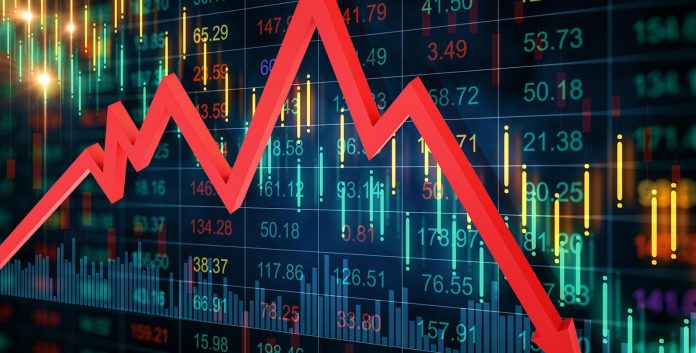
Market capitalisation fell from N160.42tn on Aug. 10 to N155.42tn on Aug. 19.
Nigeria dropped to third among the world’s best-performing stock markets.
Analysts link the sell-off to profit-taking, investor repositioning and expectations around the Dangote Refinery IPO.
Main Story
Nigeria’s equities market has surrendered about N5tn in value in seven trading sessions as investors continued to reduce positions in major stocks.
Market capitalisation, which reached N160.42tn on Aug. 10, declined to N155.42tn by Aug. 19, according to the report.
The retreat followed a strong rally that had pushed the market beyond the N160tn level and had made Nigeria the world’s best-performing stock market for five consecutive weeks.
Bloomberg data covering 92 exchanges showed that Nigeria’s dollar-denominated year-to-date return stood at 65.23 per cent as of Aug. 14. South Korea ranked first with 68.52 per cent, while Ghana was second at 66.68 per cent.
The reversal has raised questions about whether the market’s earlier gains can be sustained as investors reassess their positions following the sharp rise in equity prices.
Dr Paul Uzum, Executive Director of Halo Capital Management Ltd., attributed part of the selling pressure to investor repositioning ahead of the proposed Dangote Refinery initial public offering.
He said some foreign investors were also reducing their exposure to Nigerian equities as they positioned their portfolios ahead of the next general election.
According to Uzum, domestic investors are equally becoming more selective after the substantial gains recorded by several equities this year.
He said some investors were taking profits from stocks they considered fully valued and moving funds into alternative investment opportunities.
Uzum added that the anticipated Dangote Refinery IPO could be encouraging investors to sell existing holdings to generate liquidity for participation in the offer.
The selling pressure was reflected across several major sectors during the seven trading sessions under review.
In banking, Access Bank fell 3.24 per cent from N28.06 on Aug. 10 to N27.15 by Aug. 19, while United Bank for Africa slipped 0.54 per cent from N46.25 to N46.
First HoldCo recorded a sharper decline, dropping from N142 to N132, representing a 7.04 per cent loss.
BUA Foods was the biggest decliner among the selected fast-moving consumer goods stocks, falling 10 per cent from N845.10 to N760.60.
Honeywell Flour Mills recorded a smaller decline of 0.58 per cent, moving from N17.30 to N17.20.
Insurance stocks also came under pressure. NEM Insurance declined 5.21 per cent from N31.65 to N30, while AIICO Insurance fell 3.66 per cent from N4.10 to N3.95.
AXA Mansard Insurance recorded a 9.16 per cent decline, falling from N13.10 to N11.90.
The Issues
The market’s decline comes after a prolonged rally that delivered substantial gains to investors and pushed Nigeria to the top of global performance rankings.
The latest sell-off suggests that some investors may now be locking in profits, while others are repositioning ahead of major economic and political developments.
What’s Being Said
Uzum said foreign investors were adjusting their portfolios ahead of the next general election, while the proposed Dangote Refinery IPO was also influencing investment decisions.
He said some domestic investors were taking profits after strong gains and considering other asset classes that could offer better opportunities at current equity valuations.
What’s Next
The market’s direction will depend on how investors respond to prevailing valuations, the expected Dangote Refinery IPO and broader economic and political developments.
Continued profit-taking or portfolio repositioning could maintain pressure on major stocks, while renewed investor demand could help stabilise the market.
Bottom Line
Nigeria’s stock market has lost about N5tn in seven sessions after crossing the N160tn capitalisation mark, with profit-taking and investor repositioning contributing to a broad decline across major equities.
Eighty-three Nigerian returnees arrived in Lagos from Johannesburg aboard a South African Airways flight on Wednesday.
The returnees were accompanied by two officials from the Nigerian Consulate-General in Johannesburg.
Private individuals provided funding for the returnees’ flight tickets.
The returnees were received by the Ministry of Foreign Affairs and handed over to relevant government agencies for documentation and profiling.
The Federal Government reaffirmed its commitment to the welfare and safe return of Nigerians abroad.
Main Story
A total of 83 Nigerian returnees from South Africa have arrived at the Murtala Muhammed International Airport, Lagos, aboard a South African Airways flight from Johannesburg.
The Ministry of Foreign Affairs disclosed this in a statement issued by its spokesperson, Kimiebi Ebienfa, who said the returnees were accompanied by two officials from the Nigerian Consulate-General in Johannesburg.
Ebienfa said the repatriation was facilitated through the procurement of flight tickets by public-spirited private individuals whose support enabled the returnees to return safely to Nigeria.
Upon arrival, the returnees were received by the Director of the African Affairs Department at the Ministry of Foreign Affairs, Amb. Haruna Ali-Gombe, who welcomed them on behalf of the Federal Government.
The Issues
The repatriation highlights the need for continued consular support for Nigerians facing difficult circumstances abroad and stronger coordination among government agencies to ensure their safe return and reintegration.
What’s Being Said
Ebienfa said the returnees were handed over to relevant government agencies for necessary documentation and profiling ahead of their reunification with their families.
He reiterated the Federal Government’s commitment to protecting the welfare of Nigerians abroad and ensuring their safe return when necessary.
What’s Next
The relevant government agencies are expected to complete the documentation and profiling of the returnees before their reunification with their families. The Ministry of Foreign Affairs also expressed appreciation to the Nigerian Mission in South Africa, the private sponsors and other agencies involved in facilitating the return and reception process.
Bottom Line
The arrival of the 83 Nigerians marks another coordinated repatriation effort, with government agencies and private sponsors working together to facilitate their safe return, documentation and eventual reunification with their families.
The FCTA Transportation Secretariat has partnered with the National Union of Dispatch Riders and Mail Operators of Nigeria to identify and eliminate criminal elements operating as dispatch riders.
The partnership is supported by a membership database, identification portal and unique body numbers for registered riders.
The FCTA said the system would help distinguish legitimate riders from unidentified operators who may use dispatch services to conceal illegal activities.
NUDRMON said dispatch riding provides livelihoods for thousands of Nigerian youths and supports businesses and households across the FCT.
The union called for a more harmonised regulatory framework to address multiple permits and other operational challenges.
Main Story
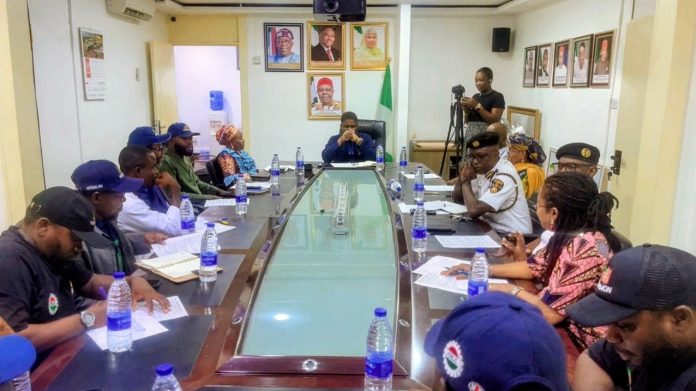
The Federal Capital Territory Administration has partnered with the National Union of Dispatch Riders and Mail Operators of Nigeria to identify criminal elements operating within the dispatch-riding sector and strengthen security in the territory.
The Mandate Secretary of the FCTA Transportation Secretariat, Chinedum Elechi, disclosed this during a meeting with members of the union in Abuja on Wednesday. He said the partnership followed the development of a membership database, identification portal and unique identification numbers designed to distinguish registered riders from unidentified operators.
Elechi said the presence of unidentified dispatch riders operating in the FCT was a security concern, particularly where illegal items could be concealed in delivery boxes. He commended the union for developing the identification system, describing it as crucial to distinguishing genuine riders from criminal elements.
The Issues
Dispatch riding has become an important source of employment for young Nigerians and a critical part of the logistics ecosystem, supporting restaurants, pharmacies, e-commerce businesses, financial institutions and households. However, the sector faces concerns including criminal activities by unregistered operators, traffic violations, accidents, multiple operational permits and the absence of a unified identification system.
What’s Being Said
Elechi pledged the support of FCT Minister Nyesom Wike and the Transportation Secretariat for the initiative, saying stronger collaboration would enable authorities to identify and isolate criminal elements while protecting legitimate riders.
The NUDRMON National President, Emmanuel Kwaghdega, said the initiative was based on the principle of “one ride, one identity and one verifiable body number”. He said credible data would strengthen security, accountability and responsible riding while providing government with reliable information for planning and regulation.
What’s Next
The union is expected to continue building and maintaining its database of registered riders, while the FCTA Transportation Secretariat works with the organisation to strengthen regulation and security within the sector.
Kwaghdega said greater government involvement could transform the initiative from a union-led project into a collaborative solution to transportation and security challenges in the FCT. He also called for engagement towards harmonising multiple operational permits into a more efficient and rider-friendly framework.
Bottom Line
The FCTA-NUDRMON partnership seeks to combine rider identification with stronger government oversight, making it easier to distinguish legitimate dispatch operators from criminals while improving security, accountability and regulation in Abuja’s growing delivery sector.
President Bola Tinubu has directed the transfer of liquid funds recovered by the EFCC to the Nigerian Education Loan Fund.
FEC also approved the transfer of unclaimed dividends from the Capital Market Trust Fund and Dormant Account Trust Fund to NELFUND.
Unclaimed dividends currently stand at approximately N242bn.
The directive excludes seized properties, non-liquid assets and funds subject to ongoing legal disputes.
NELFUND says more than 1.2 million students have benefited from its interventions, with over N93bn disbursed as student stipends and more than N250bn paid as institutional fees.
FEC also approved an entrepreneurship and innovation programme for 14 federal universities and funding augmentation for the National Library headquarters project.
Main Story
President Bola Tinubu has directed the transfer of all cleared and liquid funds recovered by the Economic and Financial Crimes Commission, alongside unclaimed dividends from two trust funds, to the Nigerian Education Loan Fund to strengthen its long-term financial sustainability.
The Minister of Education, Dr Tunji Alausa, disclosed this while briefing State House correspondents after the Federal Executive Council meeting presided over by Tinubu at the Presidential Villa, Abuja. The meeting was the council’s first sitting since June 29.
Alausa said the President directed that cash recoveries by the EFCC be transferred to NELFUND, stressing that the directive does not cover seized properties or other non-liquid assets. He added that funds still subject to legal challenges would also be excluded, with only cleared and unencumbered funds eligible for transfer.
The Issues
The move is aimed at providing NELFUND with a stronger and more sustainable funding base as demand for education financing continues to grow. The transfer of unclaimed dividends, currently estimated at about N242bn, will also require compliance with the laws governing the Capital Market Trust Fund and Dormant Account Trust Fund.
What’s Being Said
Alausa said more than 1.2 million Nigerian students had benefited from NELFUND, which has disbursed over N93bn in stipends and more than N250bn in institutional fees to public tertiary institutions.
He said the President had directed the Attorney-General of the Federation, Lateef Fagbemi, to work with the Ministries of Finance and Education and the Debt Management Office to determine how the unclaimed dividend funds could legally be transferred to NELFUND.
What’s Next
The Attorney-General, Ministry of Finance, Ministry of Education and Debt Management Office are expected to work on the legal and administrative framework for transferring eligible funds. The EFCC will also be expected to identify recovered cash that is cleared of legal encumbrances.
Meanwhile, FEC approved the rollout of an Entrepreneurship, Innovation and Business Incubation Certification Programme across 14 federal universities. The programme, already tested at the University of Lagos, is designed to provide students with entrepreneurship, innovation, digital learning, mentorship and business incubation skills.
The 14 institutions are Ahmadu Bello University, Bayero University Kano, Nnamdi Azikiwe University, Obafemi Awolowo University, University of Abuja, University of Benin, University of Ibadan, University of Ilorin, University of Jos, University of Lagos, University of Maiduguri, University of Nigeria, Nsukka, University of Port Harcourt and Usmanu Danfodiyo University.
Council also approved about N155bn in additional funding for the completion of the National Library of Nigeria headquarters in Abuja, comprising N118.309bn for construction and about N37bn for furnishing. The project, initiated in 2006, was abandoned after construction stopped in 2008.
FEC further approved the establishment of the Academy for Gifted and Talented Children by transforming the existing Suleja Academy into an autonomous institution with its own governing board and council. The Attorney-General has been directed to prepare an executive bill for transmission to the National Assembly.
Bottom Line
The Federal Government’s decision to channel eligible EFCC cash recoveries and unclaimed dividends into NELFUND represents a major attempt to create a more sustainable funding stream for student financing, while complementary education initiatives approved by FEC target entrepreneurship, infrastructure and the development of gifted Nigerian children.
REAN is partnering with GreenPath Africa for Climate Careers Festival 2026.
The initiative will expose participants to opportunities in solar, clean technology and decentralised energy.
Organisers aim to connect young talents with renewable-energy professionals and career pathways.
Main Story
The Renewable Energy Association of Nigeria (REAN) has partnered with GreenPath Africa for the 2026 Climate Careers Festival, an initiative aimed at helping young people explore career opportunities in the growing clean-energy sector.
REAN announced the partnership on Wednesday, saying the Climate Careers Festival 2026 (CCF26) would provide participants with opportunities to gain industry knowledge, technical insights and career guidance.
The association said areas covered through the collaboration would include solar energy, clean technology and decentralised energy systems.
According to REAN, the initiative is also designed to bring young talents closer to industry leaders and help participants understand the skills and career pathways available within Africa’s expanding green economy.
The association said its participation reflected its commitment to supporting initiatives that equip young professionals with knowledge and practical opportunities to build careers in renewable energy.
The partnership comes as opportunities within the clean-energy sector expand across areas including renewable power generation, energy technology and decentralised energy solutions.
The Issues
A major challenge for young people seeking careers in renewable energy is access to industry knowledge, technical exposure and meaningful connections with professionals already working in the sector.
The Climate Careers Festival is intended to help address this gap by creating a platform where participants can learn about the industry and explore potential career pathways.
What’s Being Said
REAN said it was proud to support an initiative focused on connecting young people with opportunities in the clean-energy sector.
The association said participants would gain industry insights, technical knowledge and career guidance while having opportunities to learn, build and explore careers within the green economy.
What’s Next
The partnership will support the delivery of Climate Careers Festival 2026, with participants expected to engage with industry leaders and gain exposure to career opportunities across renewable energy and related fields.
Bottom Line
REAN and GreenPath Africa are joining forces for Climate Careers Festival 2026 to help young people gain industry knowledge, connect with clean-energy professionals and explore career opportunities in Africa’s growing green economy.
Housemates woke up to the mystery of missing spoons and forks.
Araga suspected Abi may have hidden the cutlery, while others blamed the Ninjas.
Keivo told Sheba that he no longer considers Temi Nkem a friend and does not want an apology.
Oyin clashed with Bells after refusing to leave Team Gerard’s meeting.
Gerard’s team continued preparations for the weekly wager presentation.
Oyin and Flora complained about housemates disturbing their personal spaces.
Bells reflected on Neche’s voluntary exit and the reasons behind her departure.
The missing cutlery remained an unresolved issue in the House.
Mainstory:
Day 23 in the Show Ya Sef house began with the housemates adjusting to life after the latest nominations, but a simple kitchen problem quickly became the morning’s biggest mystery, After his workout, Araga went to prepare breakfast and discovered that the spoons and forks were missing. Gerard confirmed that he had also struggled to find a spoon while trying to eat cereal.
Some housemates suspected the Ninjas had taken the cutlery, while Araga believed Abi could have hidden it. The mystery quickly became a talking point around the House.
The issues:
Beyond the missing cutlery, tensions from the nominations continued to affect relationships, Cassi expressed disappointment that the housemates did not save him from the nomination list, while Keivo made it clear that his relationship with Temi Nkem had reached a breaking point.
Oyin also found herself at the centre of a disagreement after refusing to leave Team Gerard’s meeting. The situation eventually escalated when Bells raised the matter with HoH Abi, Abi acknowledged Oyin’s frustration but also told her that disrupting another team’s meeting was wrong.
Whats being said:
The housemates are clearly feeling the pressure of nominations, relationships and the need to work together, Bells also reflected on Neche’s voluntary exit, saying she was devastated by the decision. She also discussed her own position in the House and questioned why some housemates still viewed her as the Gambit.
Whats next:
Attention now turns to the weekly wager presentation, with Gerard’s team already working on its storyline and other teams refining their performances, The unresolved relationships, nomination pressure and growing disagreements could also create more tension as the week progresses.
Bottom line:
Day 23 showed that life in the Big Brother house can turn even a missing spoon into a major talking point. With wager preparations underway and tensions from nominations still fresh, the housemates have plenty to deal with before the next major showdown.
NISO and NBET plan closer cooperation to improve electricity market operations.
Both agencies identified liquidity, settlement and revenue coordination as areas for collaboration.
The partnership is aimed at improving power reliability and attracting investment.
Main Story
The Nigerian Independent System Operator (NISO) and the Nigerian Bulk Electricity Trading (NBET) have agreed to strengthen their working relationship as part of efforts to improve the country’s electricity market.
NISO Managing Director, Mr Abdu Mohammed, made this known on Tuesday in Abuja, saying closer coordination between the two agencies would help create a more efficient, transparent and investment-friendly market.
Mohammed said the agencies had complementary responsibilities within the electricity market, making cooperation between them essential to achieving a more effective system.
He explained that while NISO was responsible for managing the service side of the market, NBET handled the energy component.
According to him, both organisations ultimately share the objective of ensuring that Nigerians have access to a stable and reliable electricity supply.
Mohammed said NISO was prepared to work with NBET and other industry stakeholders to tackle liquidity challenges affecting the electricity sector.
He noted that the two agencies had historically worked together and that the current leadership intended to strengthen that relationship.
The NISO managing director also called for greater cooperation under the leadership of the Minister of Power, Joseph Tegbe, saying stakeholders had a responsibility to work together to address persistent challenges in the sector.
He said closer collaboration between NISO and NBET would also support the objectives of the electricity sector reforms introduced under the Electricity Act 2023.
NBET Managing Director, Mr Akinola Odeyemi, commended NISO for its efforts to improve the electricity market and pledged his agency’s continued cooperation.
Odeyemi said he visited NISO following his appointment to identify areas where both agencies could work more closely.
He said discussions between the two organisations focused on market settlement, revenue coordination and other measures for improving the overall operation of the electricity market.
Odeyemi said NBET would maintain a strong working relationship with NISO and other sector agencies to support the continued development of the market.
According to him, a stronger electricity market would help attract investment and ultimately contribute to improved power supply across the country.
The Issues
The collaboration comes against the backdrop of challenges affecting the electricity market, particularly liquidity and coordination among key institutions.
Improved cooperation between NISO and NBET is expected to support more effective market operations, settlement processes and revenue coordination.
What’s Being Said
Mohammed said NISO and NBET had closely connected responsibilities and needed to work together to make the electricity market more efficient and attractive to investors.
Odeyemi said NBET would work with NISO to preserve existing gains while identifying further opportunities to improve the market.
What’s Next
NISO and NBET are expected to deepen cooperation around market settlement, revenue coordination and other aspects of electricity market management.
Both agencies are also expected to work with other stakeholders to address sector challenges and support investment in the electricity market.
Bottom Line
NISO and NBET are strengthening their partnership to improve electricity market operations, address liquidity and coordination challenges, attract investment and support more reliable power supply in Nigeria.
Abi has emerged as the third female Head of House of the season.
Chimsom Chuka finished second for the second consecutive week and earned immunity.
Abi defeated Chimsom in the final “Copy and Paste” memory challenge.
Nomy was excluded from the challenge after arriving late at the Arena.
Abi was given a surprise Veto decision that changed the nomination outcome.
Aikou and Flora are safe from eviction, while other housemates face possible eviction.
Mainstory:
Abi has won the Head of House challenge for Week Three, continuing the strong run of female housemates taking charge in the Show Ya Sef house, She defeated Chimsom Chuka in the final round of the challenge after both housemates advanced from the semi-final. The final test, “Copy and Paste”, required them to correctly position a series of images from memory, Chimsom, who has now finished second in the HoH challenge two weeks in a row, earned immunity for his performance.
The issues:
The biggest twist came during Live Nominations. Big Brother initially told the winning team that all its members would receive immunity, but later gave Abi the power to name three housemates from her own winning team who would face possible eviction, The winning team also had the opportunity to save two housemates from the losing team. Their votes saved Bells and Bluethopia, Abi was then instructed to use her HoH Veto to replace those saved housemates with three members of her own team. She selected Aikou, Araga and Yusuf.
Whats being said:
Abi’s victory gives her significant influence over the House this week, while the nomination twists have made the eviction race less predictable, Nomy also paid a price for arriving late to the Arena, as Big Brother ruled that she could not participate in the first round of the challenge.
Whats next:
Aikou and Flora are safe from eviction, alongside Abi, Barry, Bells, Bluethopia, Chimsom Chuka, Keivo, Oyin, Ricky, Sheba and Sultex, who earned immunity as the Most Influential Player of the Week, The remaining housemates now face the possibility of eviction, with Abi’s decisions adding another layer of tension to the week.
Bottom line:
Abi has secured the HoH crown and major influence over the week’s nominations. With Chimsom also protected by immunity and several other housemates safe, attention now turns to those left vulnerable ahead of the next eviction.
Big Brother has deducted ₦5 million from the Season 11 cash prize.
The prize has dropped from ₦100 million to ₦95 million.
The deduction followed repeated transgressions and violations by the housemates.
The House had successfully protected the full prize during Week One.
Big Brother warned that further violations could lead to more deductions.
Mainstory:
The Big Brother Naija Season 11 housemates have lost ₦5 million from their cash prize after Big Brother found too many transgressions and repeated violations, The deduction brings the available prize money down from ₦100 million to ₦95 million.
At the start of Week Two, Big Brother explained that the ₦100 million prize was not guaranteed. The housemates would have to protect it through their performance in tasks, challenges and other activities, as well as their teamwork, commitment and entertainment, After successfully keeping the full prize intact in Week One, the House has now suffered its first financial penalty.
The issues:
The deduction shows that the housemates must take Big Brother’s rules and expectations more seriously. Their entertainment value and progress were acknowledged, but repeated violations came at a cost.
The prize-money system means that housemates are not only competing against one another. They are also collectively responsible for protecting the value of the final cash prize, That creates an additional layer of pressure because the actions of individual housemates can potentially affect the entire House.
Big Brother’s decision also shows that entertainment alone will not necessarily protect the prize. Although the housemates were recognised for their contribution to the show, their repeated violations were enough to trigger the penalty.
Whats being said:
Big Brother’s message is clear, every action has consequences, and the remaining ₦95 million must be protected, The House has been given opportunities to protect the money, but those opportunities come with expectations. Performance, teamwork, commitment and entertainment matter, but so does compliance with the rules.
The latest deduction reinforces the idea that the prize is something the housemates must continually protect rather than something they can simply assume will remain untouched until the finale, The housemates have also been shown that Big Brother is monitoring their overall conduct and not just their performance during major competitions.
The fact that the House successfully kept all ₦100 million during Week One before losing ₦5 million in the following week makes the contrast particularly significant. It shows how quickly the prize can change when the House fails to maintain the required standard.
Whats next:
The immediate challenge for the housemates is to prevent another deduction, They will have more tasks, challenges and activities in the weeks ahead, giving them further opportunities to rebuild confidence and demonstrate that they can protect the remaining prize.
The housemates will need to work more effectively as a group while also taking greater responsibility for their individual behaviour, Big Brother’s warning means future violations could carry another financial consequence. If the housemates continue to repeat the same mistakes, the ₦95 million could continue to shrink.
At the same time, the pressure to entertain will remain. The housemates cannot simply focus on avoiding punishment; they must continue participating actively in the activities and creating the kind of entertainment expected inside the House, The coming weeks will therefore test whether the housemates can find the right balance between competition, entertainment, teamwork and discipline.
Bottom line:
The Season 11 housemates have lost their first ₦5 million, reducing the cash prize from ₦100 million to ₦95 million, The deduction is a direct consequence of what Big Brother described as too many transgressions and repeated violations. After successfully protecting the entire prize in Week One, the House has now been reminded that every week brings a fresh opportunity to either preserve the money or lose another ₦5 million, With the prize now standing at ₦95 million, the pressure is firmly back on the housemates. Their ability to follow the rules, work together, perform during tasks and continue entertaining will determine how much money ultimately remains.
Iran says it will keep the Strait of Hormuz closed until the United States fulfils conditions under their June memorandum
Brent crude rises to around $91.72 per barrel while West Texas Intermediate (WTI) trades at $84.71
A reported 3.3-million-barrel fall in US crude inventories adds to concerns over tightening supply
Main Story
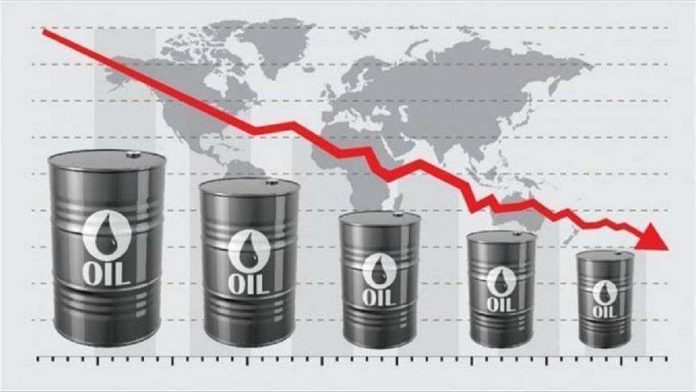
Oil prices rose on Wednesday as Iran maintained that the Strait of Hormuz will remain closed until the United States fulfils commitments under a June memorandum, heightening concerns over global crude and fuel supplies.
Brent crude futures for October delivery traded at $91.72 per barrel, up 0.8% from $91.02, while US benchmark West Texas Intermediate (WTI) crude futures for September delivery rose 0.2% to $84.71 from $84.51.
Iranian Parliament Speaker and top negotiator Mohammad Bagher Qalibaf said Tuesday that Tehran would not reopen the strategic waterway until Washington fulfils the conditions contained in the memorandum, including lifting the blockade on Iranian ports, removing oil sanctions and releasing frozen Iranian assets.
“Until the US fulfills its commitments under the memorandum of understanding … the Strait will not reopen,” Qalibaf said, according to Iran’s state news agency IRNA.
The memorandum, signed on June 17, provided for temporary arrangements covering commercial passage through the Strait and opened a 60-day period for negotiations towards a broader agreement. The deadline has since expired without a final settlement, leaving the status of the waterway disputed between Tehran and Washington.
The Strait of Hormuz remains central to the oil market because it previously carried roughly one-fifth of global oil and liquefied natural gas flows. Shipping activity has remained heavily disrupted, with many shipowners avoiding the route amid continuing security concerns.
Supply concerns were reinforced by US inventory data. The American Petroleum Institute (API) estimated that commercial crude inventories fell by 3.3 million barrels last week, against expectations for a 200,000-barrel increase.
The market is awaiting official US Energy Information Administration (EIA) inventory data, scheduled for Wednesday, for confirmation of the latest supply position.
What’s Being Said
“Until the US fulfills its commitments under the memorandum of understanding … the Strait will not reopen.” — Mohammad Bagher Qalibaf, Speaker of the Iranian Parliament and Iran’s top negotiator.
Market analysts say uncertainty surrounding the Strait is maintaining a geopolitical risk premium in crude prices, with continued disruption capable of keeping oil prices elevated.
What’s Next
The US Energy Information Administration is due to release its weekly crude inventory data on Wednesday, providing a more authoritative reading of US stock levels.
Markets will continue to monitor developments between Washington and Tehran, particularly any movement towards reopening the Strait of Hormuz or restarting negotiations.
Traders will also watch shipping activity through the Strait for evidence of whether supply disruptions are easing or becoming more prolonged.
Bottom Line
The Bottom Line: Oil markets are being driven by the combination of geopolitical supply risk and tighter-than-expected US inventory signals. Until there is greater clarity on the Strait of Hormuz, crude prices are likely to remain highly sensitive to developments between Iran and the United States.
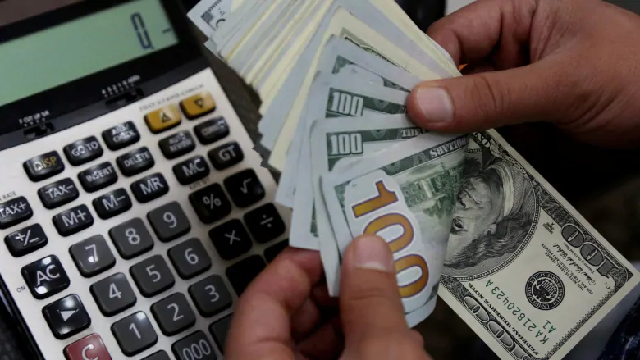
The exchange rate between the Naira and the US dollar, according to the data released on the FMDQ Security Exchange,the official forex trading portal, showed that the naira closed at 1353 per $1 on Wednesday, August 19th 2026. The naira traded as high as 1340 to the dollar at the investors and exporters (I&E) window on Tuesday. This is brought to you by Bizwatch Nigeria.
Dollar to naira exchange rate today black market (Aboki dollar rate):
The exchange rate for a dollar to naira at Lagos Parallel Market (Black Market) players sell a dollar for ₦1415 and buy at ₦1405 on Tuesday 18th August, 2026, according to sources at Bureau De Change (BDC).
Please note that the Central Bank of Nigeria (CBN) does not recognize the parallel market (black market), as it has directed individuals who want to engage in Forex to approach their respective banks.
Dollar to Naira Black Market Rate Today
Dollar to Naira (USD to NGN)
Black Market Exchange Rate Today
Selling Rate
₦1415
Buying Rate
₦1405
Dollar to Naira CBN Rate Today
Dollar to Naira (USD to NGN)
CBN Rate Today
Highest Rate
₦1353
Lowest Rate
₦1340
Please note that the rates you buy or sell forex may be different from what is captured in this article because prices vary.
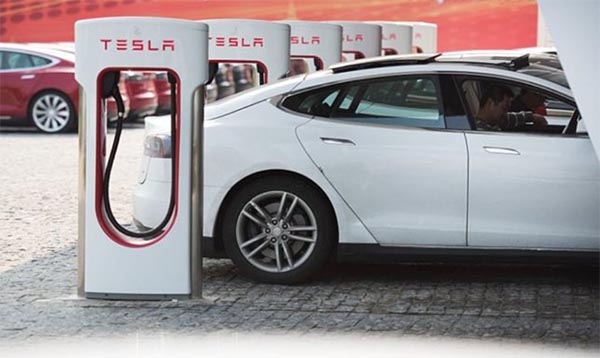
An electric car, a Tesla Model S being charged at a car dealership in Shanghai China: the future of petrol cars dim
By Boluwatife Oshadiya | August 19, 2026
KEY POINTS
A Chinese-built electric hypercar — the BYD Yangwang U9 Xtreme — is now independently verified as the fastest production car ever made, at 496.22 km/h, dethroning Bugatti
Global electric vehicle sales hit approximately 20.7 million units in 2025, up from just 0.5% of new car sales a decade ago, according to the IEA
China now accounts for nearly 75% of global EV manufacturing capacity, and only three of its 30-plus EV brands turned a profit in 2025, even as exports surge 41% in 2026
MAIN STORY
Ten years ago, electric vehicles were a curiosity — slow-charging, short-range compliance cars that serious drivers dismissed. Today, a Chinese EV holds the outright production-car speed record, Ferrari has crossed into electric territory for the first time in its history, and China has quietly become the workshop of the world for battery-powered mobility, reshaping global trade, triggering a new wave of tariffs, and applying financial pressure on some of the most storied names in the automobile business.
The transformation has been one of the fastest large-scale technology transitions in industrial history. In 2015, battery-electric vehicles (BEVs) represented roughly 0.5% of global passenger car sales. By 2025, that figure had reached nearly 20–25% of all new cars sold worldwide, with global EV sales hitting approximately 20.7 million units — more than a quarter of total new-car sales — according to the International Energy Agency’s Global EV Outlook 2025. The IEA projects the number will climb to 23 million units in 2026, representing 28% of total car sales.
But the story is not only about quantity. It is about what kind of car the electric vehicle has become: faster, more technologically ambitious, and now commercially dominant in a way that is rewriting industry hierarchies that held for a century.
Here are eight developments — drawn from verified data and industry reporting — that define where this battle now stands.
THE ISSUES
The electric vehicle transition is not a simple, linear story of progress. It is a collision of technological disruption, trade politics, legacy brand identity, and competitive overcapacity — all unfolding simultaneously. Legacy Western automakers built their business models on combustion-engine expertise, dealership structures, and brand heritage that took decades to establish. China built its EV industry with state support, rapid iteration, and a willingness to absorb losses in pursuit of market share. The tension between these two models — and what happens when China’s export machine collides with Western protectionism — is the defining industry story of this decade.
1. Electric Vehicles Now Hold the Outright Production-Car Speed Record
On 14 September 2025, the Yangwang U9 Xtreme — the luxury sub-brand of BYD — set a new global production-car top-speed record of 496.22 km/h at the ATP Automotive Testing Papenburg test track in Germany. The record eclipses the previous benchmark held by the Bugatti Chiron Super Sport 300+, which recorded 490.48 km/h in 2019.
The U9 Xtreme packs four electric motors producing a combined 2,978 hp, each capable of spinning up to 30,000 rpm. A Bugatti Chiron Super Sport 300+ costs nearly $4 million. The regular Yangwang U9 is priced at about $270,000.
BYD Executive Vice President Stella Li said: “This is an incredibly proud moment for everyone in the research and development division. YANGWANG is a brand that does not recognise the impossible, and only through this commitment to what’s coming next can you end up with a vehicle like the U9X.”
The record-run driver, German track specialist Marc Basseng, was even more direct. He said: “This record was only possible because the U9 Xtreme simply has incredible performance. Technically, something like this is not possible with a combustion engine.”
The U9 Xtreme will only be produced in a limited batch of 30 units — the exact same number Bugatti produced of the Chiron Super Sport 300+.
2. EVs Dominate Acceleration — And It Is Not Even Close
The Croatian-built Rimac Nevera R holds the title of the world’s fastest-accelerating production car of any kind. Limited to 40 units worldwide, the Nevera R has set no less than 24 performance records, including a new 0-60 mph time of 1.66 seconds and a 0-249 mph time of 17.35 seconds, on the way to a top speed of 268 mph.
Mate Rimac, Founder and President of the Rimac Group and CEO of Bugatti Rimac, said: “When we first introduced Nevera, it almost seemed like the pinnacle of hypercar performance had been reached. In a single generation, we had created a performance jump that previously would have taken decades. But now, through relentless innovation, Nevera R goes even faster, while still maintaining much of the comfort and practicality that makes the Nevera a real, usable daily car. Breaking records is in our DNA, and we won’t stop here.”
The Nevera R is joined at the top of the acceleration rankings by the Xiaomi SU7 Ultra (sub-2-second 0-100 km/h), the Pininfarina Battista (1.8 seconds, 1,900 hp), the Lucid Air Sapphire, and the Porsche Taycan Turbo GT — all of which dip under two seconds in top trim while remaining practical, road-legal vehicles.
The physical reason is well understood: electric motors deliver maximum torque instantaneously, with no gear shifts, no rev-building, and no turbo lag. Even the fastest combustion hypercars — the Hennessey Venom F5, with its 1,817 hp twin-turbo V8, is rated at 2.6 seconds 0–60 mph — cannot compete with top EVs in a drag race. The 0-60 mph battle is settled.
3. Ferrari Has Gone Electric — And the Market Reacted Badly
Ferrari unveiled the Luce electric vehicle in Rome in May 2026. Priced at around 550,000 euros (roughly $640,000), it features a quad-motor drivetrain and is Ferrari’s first fully electric production car and the brand’s first five-seater.
The reaction was immediate and harsh. Ferrari’s shares fell sharply on the day of launch. Anthony Dick, an auto analyst at Oddo BHF, said the stock price response was “by far the sharpest reaction we’ve seen for a car design.”
Michael Field, chief equity strategist at Morningstar, told CNBC: “Ultimately many fans are disappointed that Ferrari is embracing the EV concept, believing it dilutes the supercar brand, which has modelled itself around classic design and raw, combustion-engine power.”
Former Ferrari executive Luca di Montezemolo went further. He said on the sidelines of a business conference in Rome: “I hope that they take off the prancing horse [logo] from that car.”
Ferrari CEO Benedetto Vigna has defended the move. He told CNBC the launch was “a very, very important day” that symbolised “a new chapter” in the company’s history.
Some analysts urged patience. Stephen Reitman, an auto industry analyst with Bernstein, wrote in a note to clients: “If Ferrari builds the car, the clients will come. That has been the Ferrari Way. We believe the recipe will continue to work.”
The episode illustrates a genuine strategic split: brands like Rolls-Royce and Ferrari are using electrification as a statement of technical ambition, while rivals such as Lamborghini are moving cautiously, betting that combustion’s emotional theater still has commercial value.
4. Lamborghini Cancelled Its EV — And Feels Vindicated
After the intense backlash following Ferrari’s Luce reveal, Lamborghini’s CEO said cancelling the company’s own EV plans was the correct choice. Lamborghini had originally targeted an all-electric model for 2028 before shelving the plan, citing limited customer appetite for zero-emission supercars.
The Lamborghini position reflects a calculated wager: that high-net-worth buyers for whom a Lamborghini is a statement of identity and sensory experience will not accept a silent drivetrain, at least not yet. The Revuelto — a hybrid V12 — remains Lamborghini’s flagship, combining electric assist with combustion drama rather than replacing one with the other.
The debate between Ferrari and Lamborghini effectively maps the entire luxury segment’s strategic dilemma onto two adjacent factories in the Motor Valley of northern Italy.
5. EVs Have Gone From 0.5% to 25% of Global Car Sales in One Decade
According to the IEA, global EV sales grew from roughly 0.5% of all passenger car sales in 2015 to approximately 20–25% in 2025 — a roughly 45-fold increase in market share in ten years, at an average annual sales growth rate of approximately 45%. The IEA projects global EV sales will reach 23 million units in 2026 and could represent more than 50% of global car sales by 2035.
Several structural barriers have been dismantled along the way. Average usable range has climbed from roughly 100–150 miles a decade ago to 300–450+ miles on many mainstream models, with luxury EVs exceeding 500 miles. Battery pack costs have fallen dramatically, with industry projections pointing to approximately $60 per kWh by 2030. Ultra-fast charging systems (150 kW and above) have cut 80% charge times from over an hour to 15–20 minutes on the best systems.
Critically, this growth is no longer a story only about China, Europe, and the United States. Roughly 60% of 2025’s global EV growth came from markets outside those three regions, with Southeast Asia, Brazil, and other emerging economies posting 30–60% annual growth.
6. China Has Become the World’s EV Factory — But Its Home Market Is Struggling
China’s rise in the EV industry is the most consequential shift in global automotive trade in at least a generation. BYD overtook Tesla in full-year battery-electric vehicle sales for 2025, delivering roughly 2.26 million BEVs versus Tesla’s approximately 1.64 million.
China’s domestic market remains the world’s largest — but the picture is more complicated than the headline numbers suggest. China EV sales fell 13% in the first half of 2026 as subsidy withdrawal hit demand, with only BYD, Xiaomi, and Leapmotor confirmed profitable among China’s 30-plus NEV-focused manufacturers.
Throughout 2025, the profit margin for China’s auto industry plunged to 4.4% and dropped further to a historic low of 3.2% in early 2026, with gross profit per vehicle plummeting to approximately $2,000.
To absorb excess production, Chinese automakers have pivoted aggressively to exports. AlixPartners projects that Chinese brands will export close to 10 million vehicles in 2026, up from 7.1 million in 2025 — a 41% increase that is not simply a tactical response to domestic weakness.
“Chinese automakers are eyeing higher profit margins overseas,” said Ron Zheng, a partner at global consultancy Roland Berger.
The EU imposed tariffs on Chinese-made EVs in 2024, citing unfair subsidies. Canada and the United States imposed 100% tariffs. The United States additionally maintains a national-security-based restriction on most Chinese EV software and hardware.
7. Tech Companies Are Now Car Companies — and Changing the Competitive Rules
Xiaomi — the Chinese smartphone maker — invested roughly $1.4 billion to build its own EVs from scratch. The SU7 sedan launched in 2024, with a top variant capable of 0–100 km/h in as little as 1.98 seconds. The company has since launched additional models, with an explicit goal of becoming one of the world’s top five automakers within 15–20 years.
Huawei took a different route — rather than building its own cars, it partners with automakers, supplying HarmonyOS cockpit software, Kirin chips, and autonomous-driving systems, effectively becoming a technology supplier embedded inside traditional manufacturing partners.
Sony formed a joint venture with Honda (the AFEELA brand) to combine Honda’s manufacturing expertise with Sony’s sensing, software, and entertainment technology. Foxconn, Apple’s primary manufacturing partner, has entered through its Foxtron joint venture with Yulon Motor.
The competitive implication is significant: traditional automakers compete on chassis engineering, manufacturing scale, and brand heritage. Technology entrants compete on software, artificial intelligence, connectivity, and ecosystem integration — treating the car as an extension of a smartphone rather than primarily a mechanical object.
8. Legacy Automakers Are Feeling Real Financial Pain — Porsche’s Collapse Is the Starkest Example
Porsche — for years one of the most profitable automakers per vehicle in the world — saw its operating profit margin collapse from 14.1% in 2024 to just 1.1%, squeezed simultaneously by US tariffs and collapsing demand in China from local EV rivals. It represents, in numerical terms, one of the most dramatic margin compressions for a premium automaker in the modern era.
The Bugatti Rimac joint venture — explicitly designed to combine Bugatti’s combustion hypercar expertise with Rimac’s electric mobility engineering — itself became a casualty. In April 2026, Porsche fully exited the joint venture, selling its stakes to a US-led investor consortium as part of a broader cost-cutting push. Volkswagen and Rivian formed a joint venture (up to €4.68 billion) to share EV technology and software platforms — a sign that legacy manufacturers know they cannot build the software-defined car alone.
Detroit’s Big Three — GM, Ford, and Stellantis — have seen their combined global market share fall from 21.4% in 2019 to an estimated 15.7% in 2025, a decline widely attributed to China’s EV rise and the United States’ comparatively slower EV transition.
WHAT’S BEING SAID
“This is an incredibly proud moment for everyone in the research and development division. YANGWANG is a brand that does not recognise the impossible.” — Stella Li, Executive Vice President, BYD
“Ultimately many fans are disappointed that Ferrari is embracing the EV concept, believing it dilutes the supercar brand, which has modelled itself around classic design and raw, combustion-engine power.” — Michael Field, Chief Equity Strategist, Morningstar
“Chinese automakers are eyeing higher profit margins overseas.” — Ron Zheng, Partner, Roland Berger
“We need to bear in mind that true innovation does not look for immediate consensus, nor does it stem from it.” — Benedetto Vigna, CEO, Ferrari, responding to Luce criticism via LinkedIn
“If Ferrari builds the car, the clients will come. That has been the Ferrari Way. We believe the recipe will continue to work.” — Stephen Reitman, Auto Industry Analyst, Bernstein
WHAT’S NEXT
The IEA projects global EV sales will reach 23 million units in 2026 — 28% of total car sales — with the milestone of EVs representing over 50% of global car sales expected around 2035 if current trends hold.
Ferrari customer deliveries for the Luce are scheduled to begin from the fourth quarter of 2026; initial demand will be closely watched by investors who remain sceptical after the launch-day share price drop.
Trade friction between China and Western markets is expected to intensify as Chinese automakers approach 10 million export units in 2026 — nearly double the 5.79 million exported in 2025. Canada is currently reviewing its tariff structure; EU and US policy positions remain under active political debate.
Solid-state battery commercial deployment — promised by Toyota, BMW, and Hyundai for 2026–2028 — would represent the next step-change in EV range and charging speed if timelines hold.
THE BOTTOM LINE
The Bottom Line: The electric vehicle transition has moved from a policy experiment to an industrial fait accompli — and a Chinese-built, battery-powered hypercar now holds the speed record that Bugatti guarded for six years, for roughly one-eighth the price. The real battle is no longer about whether EVs will replace petrol cars. It is about which companies, and which countries, will control the new industry — and the financial wreckage accumulating at legacy brands like Porsche, and the brutal profitability squeeze inside China itself, makes clear that this transition will leave few players untouched on either side of the divide.
Sources: IEA Global EV Outlook 2025/2026; BYD official press release (Papenburg record); Rimac Newsroom; CNBC; Fortune; AlixPartners 23rd Annual Global Automotive Outlook; Rest of World; EV Central; Zecar; Evo; Robb Report; Car and Driver; Roland Berger; China Passenger Car Association (CPCA); Automobility; TechTimes. All data current as of August 2026.
The Federal Competition and Consumer Protection Commission (FCCPC) has directed manufacturers, importers, distributors and retailers to comply strictly with mandatory product-labelling requirements.
The Commission warned that misleading, incomplete or deceptive labels could expose consumers to health, safety and financial risks.
Businesses have been directed to review their inventories and withdraw non-compliant products from sale.
The FCCPC said continued distribution or sale of non-compliant goods could attract regulatory enforcement action.
Main Story
The Federal Competition and Consumer Protection Commission (FCCPC) has directed manufacturers, importers, distributors and retailers to immediately comply with mandatory product-labelling requirements, warning that businesses selling non-compliant goods risk regulatory sanctions.
The Commission, in a public advisory issued on Wednesday, said its market surveillance, routine inspections and quality assurance activities had uncovered an increasing circulation of consumer products carrying misleading, deceptive or incomplete information.
According to the FCCPC, some products in circulation lack essential information such as production dates, expiry or best-before dates, batch numbers, manufacturer details, ingredient lists, allergen information and country of origin.
The Commission said the directive is issued pursuant to relevant provisions of the Federal Competition and Consumer Protection Act (FCCPA) 2018, which mandate it to promote consumer safety and protect consumers’ right to accurate information.
The Issues
The FCCPC said inadequate or misleading product labelling can prevent consumers from making informed purchasing decisions while exposing them to significant health, safety and economic risks.
The Commission stressed that product labels are particularly important for enabling consumers to verify the identity, composition, safety and validity of goods before purchase.
It added that labelling requirements must comply with applicable standards established by competent regulatory authorities, including the Standards Organisation of Nigeria (SON) and the National Agency for Food and Drug Administration and Control (NAFDAC).
What’s Being Said
The FCCPC warned that deceptive, incomplete or misleading labelling violates consumers’ right to the information required to make informed choices.
It therefore directed businesses to review their inventories and immediately withdraw from sale any consumer goods that fail to meet applicable labelling requirements.
The Commission also advised consumers to carefully inspect product labels before making purchases and avoid goods with missing, illegible, altered or poor-quality labels, as well as products carrying false claims or misleading information.
Consumers who suspect violations were encouraged to report them through the Commission’s official complaint channels.
What’s Next
The FCCPC said it will intensify nationwide market surveillance and enforcement operations in collaboration with relevant regulatory authorities.
The Commission is expected to continue monitoring manufacturers, importers, distributors and retailers to ensure that consumer goods entering and circulating in the Nigerian market meet prescribed labelling standards.
Businesses that fail to comply with the directive could face appropriate regulatory enforcement measures.
Bottom Line
The FCCPC’s directive signals a tougher regulatory stance on product labelling as the government moves to strengthen consumer protection. For businesses, compliance with mandatory labelling requirements is no longer simply a branding obligation but a critical part of regulatory compliance and consumer safety.
Nigerian Afrobeats star David Adeleke, popularly known as Davido, will perform at an “Oriadé” show in Paris, France.
The event is scheduled for August 22, 2026.
The show, tagged “Oriadé: Une Nuit Royale à Paris,” will take place at Gate Club Paris.
Davido will perform alongside Ecool, Lass, Uncle Dee, Drozzy, HSBO and MC Moya.
The event will feature Afrobeats, rap, R&B, dancehall and other African music genres.
The Paris performance follows the release of Davido’s latest album, “Oriadé.”
Main Story
Nigerian Afrobeats icon David Adeleke, popularly known as Davido, is set to stage a live performance titled “Oriadé” in Paris, France, on August 22, 2026, Davido announced the event on Tuesday through his Instagram Story, where he shared the promotional flyer for the show, The event, tagged “Oriadé: Une Nuit Royale à Paris,” is scheduled to hold at Gate Club Paris, 2 Place de la Porte Maillot, from midnight to 6 a.m, Davido will perform alongside other artistes and entertainers, including Ecool, Lass, Uncle Dee, Drozzy, HSBO and MC Moya.
The Issues
The Paris show forms part of Davido’s activities following the release of his latest album, “Oriadé, The event also highlights the continued international reach of Nigerian Afrobeats, with the Paris performance bringing together different African music styles and audiences, The show is expected to provide fans in Paris with an opportunity to experience the new project in a live setting.
What’s Being Said
Davido announced the performance through social media, sharing details of the event and its promotional material with his followers, The announcement has generated reactions from fans on social media, with anticipation building ahead of the August 22 performance.
What’s Next
Davido is expected to continue promotional activities around “Oriadé” as he connects with fans internationally, The Paris performance will be another opportunity for the singer to showcase the album and strengthen its presence among international audiences.
Bottom Line
Davido is set to bring his “Oriadé” project to Paris on August 22 with a live show featuring several other entertainers. The event comes as the Afrobeats star continues promoting his latest album and expanding his connection with fans outside Nigeria.
L-R; Rafiat Onitiri, Chief Host, Association of Professional Women Bankers Nigeria; Oremeyi Akah, Chief Customer Officer, Interswitch Group; and Funmi Ekundayo, MD, STL Trustees as Interswitch receives the Digital Finance Excellence Award at the Association of Professional Women Bankers Marquee Event held at Civic Centre, Lagos.
By Annette Ikponmwonba | August 19, 2026
Key Points
Women account for nearly 70 per cent of the global health workforce.
Despite their dominance in the sector, women remain concentrated in lower paid health professions.
The global health workforce nearly tripled between 1990 and 2023.
An estimated 34.4 million additional doctors, nurses, midwives, dentists and pharmacists are needed to achieve moderate universal health coverage.
South Asia and sub Saharan Africa face some of the largest health workforce shortages.
The study calls for greater investment in education, recruitment, retention and gender responsive workplace policies.
Leadership development, paid parental leave and flexible working arrangements were identified as measures that could help reduce gender inequalities.
Main Story
Women now make up nearly 70 per cent of health workers worldwide but continue to face significant inequalities in pay, professional advancement and access to leadership positions, according to a new Global Burden of Disease study, The study, conducted by the Institute for Health Metrics and Evaluation and published in The Lancet, examined health workforce data across 204 countries and territories from 1990 to 2023.
It provided the first global, sex disaggregated estimates covering 20 health worker categories, including doctors, nurses, midwives, pharmacists, dentists and community health workers, Although the global health workforce nearly tripled during the period studied, researchers found that major shortages remained across many parts of the world, The study estimated that 34.4 million additional health professionals would be required to achieve moderate universal health coverage, with South Asia and sub Saharan Africa among the regions facing the greatest shortages.
The Issues
The central issue is that women’s large presence in healthcare has not translated into equal economic or professional opportunities, Women remain heavily concentrated in lower-paid occupations and have fewer opportunities to move into leadership positions despite their critical role in healthcare delivery.
The workforce shortage is another major challenge. In regions such as sub-Saharan Africa, inadequate numbers and uneven distribution of trained professionals continue to limit access to healthcare and threaten progress towards universal health coverage, The study also highlights the need to address working conditions, retention and the distribution of health workers, rather than focusing only on increasing overall numbers.
What’s Being Said
The researchers said closing global health workforce gaps would require sustained investment in education, recruitment and retention, alongside policies that address gender inequalities, The study recommended gender-responsive measures such as leadership development, workplace protections, paid parental leave and flexible working arrangements, It also stressed that governments need to plan not only for the number of health workers required but also for the composition and distribution of the workforce.
What’s Next
Governments are expected to use workforce data to identify shortages and improve the planning, recruitment and distribution of health professionals, For sub-Saharan Africa, greater investment in training, recruitment and retention could help increase the number of qualified professionals while improving access to healthcare in underserved communities, Policymakers will also need to strengthen workplace support and create clearer pathways for women to advance into leadership positions.
Bottom Line
Women dominate the global health workforce, but their representation has not translated into equal pay or leadership opportunities. At the same time, the world faces a projected shortage of 34.4 million health professionals. The study argues that expanding healthcare access will require governments to invest in more workers while also ensuring they are fairly treated, properly supported and effectively distributed.
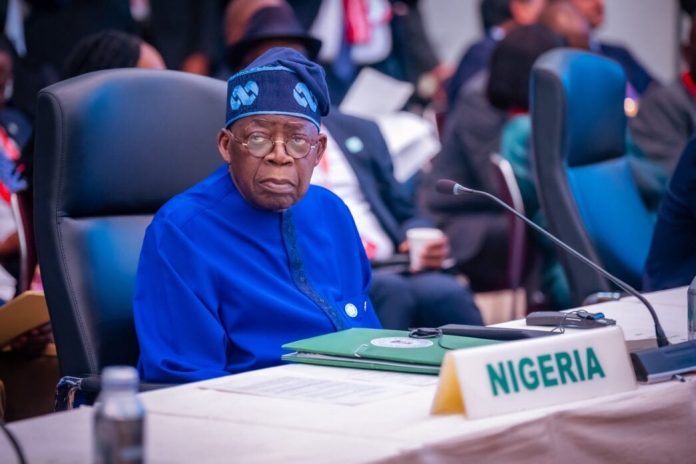
President Bola Tinubu is scheduled to address the 81st United Nations General Assembly on September 23rd, 2026.
He is expected to speak as the 10th speaker during the morning session on the second day of the high level General Debate.
Tinubu is expected to speak between 11:30am and noon New York time, or 4:30pm Nigerian time.
The UNGA 81 theme is “Restoring trust, managing transformation: A United Nations that delivers for all.”
Tinubu is expected to participate in meetings and events focused on climate action, sea-level rise and pandemic preparedness.
Nigeria plans to use the gathering to promote its reforms and seek international support for regional border policing.
Tinubu could also meet with U.S. President Donald Trump on the sidelines of the assembly.
Main Story
President Bola Tinubu is scheduled to join world leaders at the 81st session of the United Nations General Assembly in New York, where he will deliver Nigeria’s national statement on September 23, 2026, According to a provisional list of speakers obtained by the News Agency of Nigeria, Tinubu is scheduled as the 10th speaker during the morning session on the second day of the high level General Debate.
The Nigerian president is expected to speak between 11:30am and noon New York time, equivalent to about 4:30pm Nigerian time, The General Debate will bring together representatives from all 193 UN member states, including more than 150 heads of state and government.
The Issues
Tinubu’s appearance at UNGA 81 will provide Nigeria with an opportunity to present the administration’s reforms to the international community and seek greater cooperation on regional security, One major issue expected to feature in Nigeria’s diplomatic engagements is border policing in West Africa. Nigeria has described porous regional borders as a significant security challenge and is seeking broader international backing for a regional border-policing initiative, Tinubu is also expected to participate in discussions on climate action, rising sea levels, pandemic preparedness and other global issues.
What’s Being Said
Nigeria’s Permanent Representative to the UN, Ambassador Jimoh Ibrahim, confirmed Tinubu’s attendance and said the president’s participation would allow Nigeria to showcase reforms being implemented by his administration, Ibrahim also said Nigeria would engage stakeholders on border policing and seek international support for the regional initiative.
The ambassador disclosed that a meeting between Tinubu and U.S. President Donald Trump could take place on the sidelines of the assembly, Tinubu is also expected to meet outgoing UN Secretary-General António Guterres and Nigeria’s Amina Mohammed, the outgoing UN Deputy Secretary-General.
What’s Next
The 81st session of the UN General Assembly will officially open on September 8, while the high level General Debate will take place from September 22 to September 28, Tinubu is expected to hold several bilateral meetings, participate in high-level events and engage international leaders during the week, His September 23 address is expected to focus attention on Nigeria’s domestic reforms, regional security priorities and the country’s role in international affairs.
Bottom Line
Tinubu’s planned appearance at UNGA 81 gives Nigeria a major international platform to present its reforms, strengthen diplomatic relationships and seek support for regional security initiatives. His September 23 address will be one of the key moments of Nigeria’s participation in the 2026 General Assembly.
The Federal Government, 36 states and 774 local government councils shared a record N3.007tn from the Federation Account in July 2026.
The July allocation is the highest monthly FAAC distribution recorded in 2026.
Gross statutory revenue increased by N658.087bn, or 17.8 per cent, to N4.359tn in July from N3.700tn in June.
Gross VAT revenue fell slightly by N5.778bn, or 0.7 per cent, to N793.968bn.
The increase was supported by stronger receipts from petroleum and non-oil revenue sources.
Total FAAC allocations for January to July 2026 reached N15.997tn.
The government is urging the three tiers of government to turn higher allocations into productive investments.
Main Story
The Federal Government, 36 states and 774 local government councils shared a record N3.007tn from the Federation Account in July 2026, pushing monthly FAAC allocations above the N3tn mark for the first time, The allocation was approved at the August 2026 meeting of the Federation Account Allocation Committee held in Owerri, Imo State.
According to the Office of the Accountant General of the Federation, gross statutory revenue rose to N4.359tn in July from N3.700tn in June. The N658.087bn increase represents a 17.8 per cent rise and reflects stronger collections from several petroleum and non oil revenue sources, However, gross Value Added Tax revenue declined marginally from N799.746bn in June to N793.968bn in July, a reduction of N5.778bn or 0.7 per cent.
Several revenue streams recorded increases during the month, including Petroleum Profit Tax, Hydrocarbon Tax, Companies Income Tax, Capital Gains Tax, Stamp Duty Tax, petroleum royalties, mineral royalties, excise duty and gas-flaring penalties, The July allocation brings the total amount shared by the three tiers of government between January and July to N15.997tn.
The Issues
The record allocation highlights the significant increase in government revenues following major fiscal changes, including the removal of the petrol subsidy, foreign exchange reforms and efforts to expand the country’s tax base, The major challenge, however, is whether higher FAAC allocations will translate into stronger economic performance and improved living conditions.
The government is concerned that increased monthly revenue could simply lead to higher recurrent spending unless states and local governments use the additional funds to invest in infrastructure, human capital and productive economic activities, The FAAC meeting therefore placed emphasis on improving internally generated revenue, commercialising public assets, attracting private investment, expanding economic activity and strengthening transparency in public finances.
What’s Being Said
The Office of the Accountant General of the Federation said the July figures point to a strengthening underlying revenue base, particularly because of improved statutory collections, Officials also stressed that revenue generating agencies must improve collection and remittance discipline to sustain the gains, States were encouraged to use the stronger revenue position to develop comprehensive asset registers, verify payrolls and publish audited financial accounts on time.
The committee also highlighted changes under the Nigeria Tax Act 2025, which took effect on January 1, 2026. Under the new framework, states’ share of VAT revenue increased from 50 per cent to 55 per cent, while the Federal Government’s share fell from 15 per cent to 10 per cent, The new arrangement also allocates 30 per cent of the states’ VAT pool according to the location where consumption occurs rather than where a company’s headquarters is registered.
What’s Next
The Federal Government and subnational governments are expected to focus on sustaining revenue collection while reducing dependence on crude oil, Solid minerals and other non-oil revenue sources are expected to remain important areas of focus as authorities seek to build a more diversified and predictable revenue base.
States will also face pressure to demonstrate that increased FAAC receipts are being converted into infrastructure, social services and other productive investments, The FAAC committee is expected to continue working with revenue-generating agencies to close collection gaps and improve remittance compliance.
Bottom Line
Nigeria’s three tiers of government shared a record N3.007tn in July, bringing total FAAC distributions for the first seven months of 2026 to N15.997tn. While the revenue surge provides governments with greater fiscal space, the bigger test will be whether the additional money is used to strengthen infrastructure, public services and economic activity rather than simply finance higher government spending.