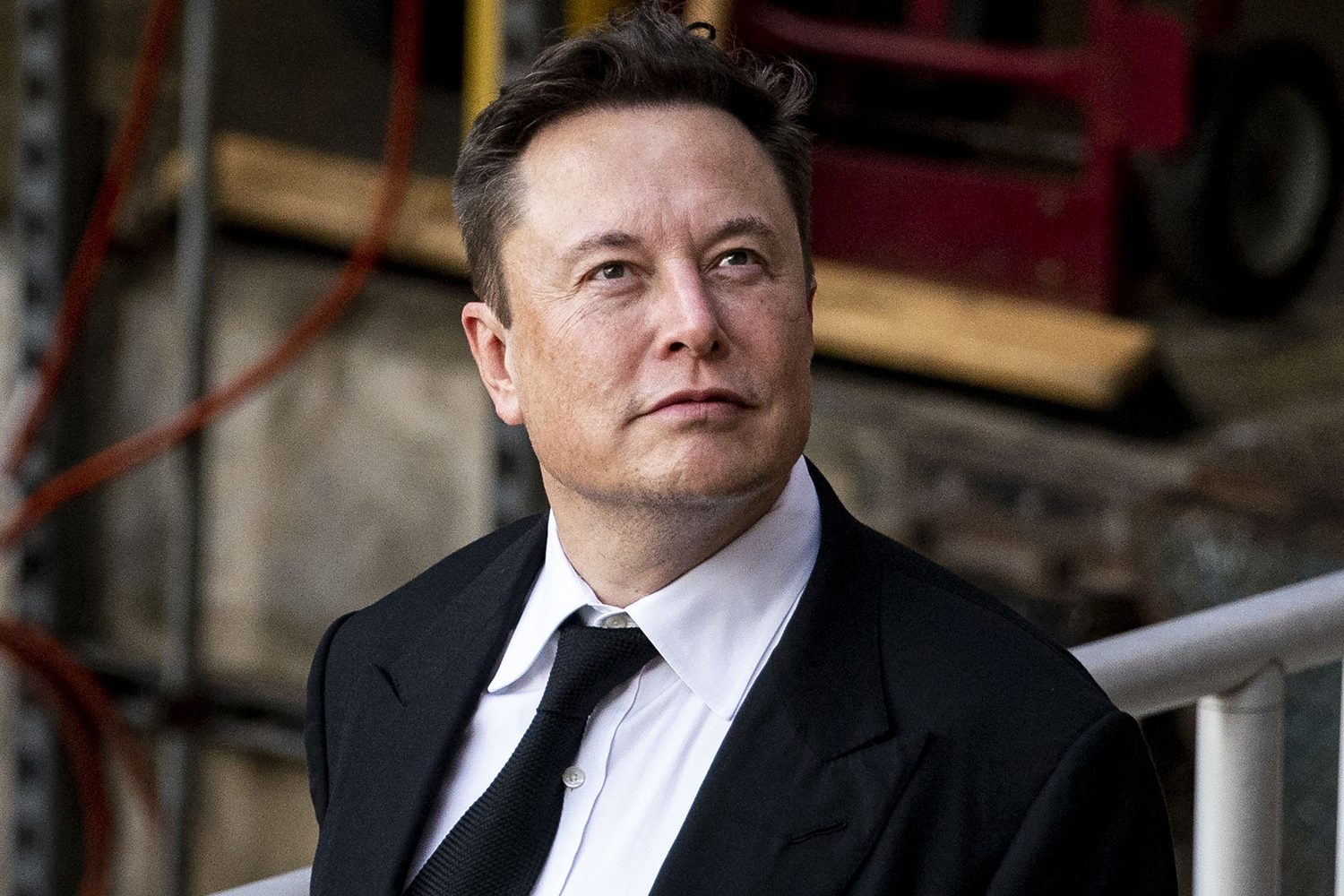
Elon Musk has officially set a new milestone in the world of wealth accumulation, becoming the first person ever to be valued at half a trillion dollars, according to estimates released by Forbes on Thursday. The majority of Musk’s fortune is tied to his stakes in the electric vehicle powerhouse Tesla and the aerospace leader SpaceX.
The U.S. business magazine assessed Musk’s net worth at around $500 billion, placing him approximately $150 billion ahead of Oracle co-founder Larry Ellison. Shortly after releasing its estimate, Forbes revised the figure slightly downward to $499.1 billion.
Unlike other billionaires, Musk’s net worth is far more complex to track because several of his companies remain privately owned, making precise valuations difficult.
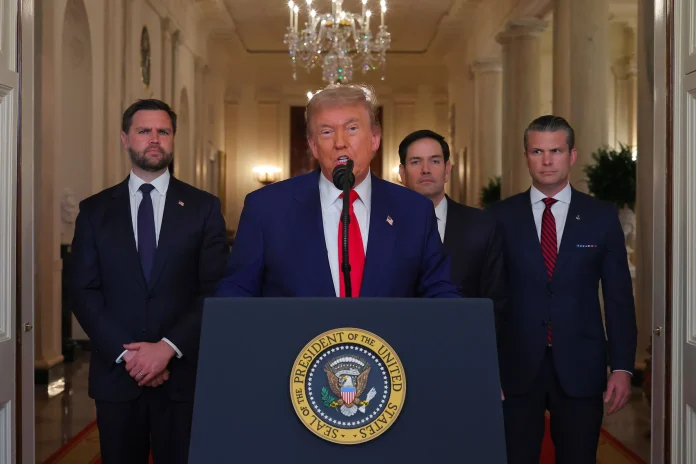
Musk first crossed the $400 billion threshold in December 2024, when speculation swirled among investors that Tesla would benefit from his ties to then newly elected U.S. President Donald Trump. Musk frequently appeared at the White House during the early months of Trump’s administration, though the relationship later soured, with Trump threatening to strip Musk’s ventures of federal support.
At the same time, Tesla faced weaker sales as some buyers were reportedly deterred by Musk’s political leanings and involvement in Trump’s cost-cutting and federal layoff programs.
Despite those setbacks, Tesla’s stock has staged a strong rebound. Analysts point to optimism around the company’s robotics and automation innovations, as well as a rush in electric vehicle purchases ahead of the September deadline for federal EV tax incentives.
Musk’s empire extends beyond Tesla and SpaceX to include the social media platform X, artificial intelligence firm xAI, and brain-implant startup Neuralink. Still, Tesla remains the central pillar of his massive fortune.
In addition, Tesla has unveiled a staggering executive compensation package for Musk, potentially worth $1 trillion, tied to strict conditions such as achieving eightfold market growth, maintaining his position as CEO, and delivering on ambitious performance milestones.
The Kwara State Government has urged residents in parts of the state to remain vigilant and limit unnecessary movements as security forces step up operations against kidnappers in several local government areas.
In a statement issued on Wednesday, the Commissioner for Communications, Bolanle Olukoju, advised communities in Ekiti, Ifelodun, Isin, Oke Ero, and Irepodun local government areas to take extra precautions as armed groups continue to flee hideouts under pressure from ongoing raids.
“This is to avoid being caught unawares as the kidnappers are fleeing their hideouts. We do not want law-abiding citizens to be affected,” Olukoju said.
The advisory comes amid a rise in abductions across Nigeria’s North-Central region, including Kwara, where criminal gangs have exploited forested terrain as operational bases. The situation escalated on Sunday when gunmen killed no fewer than ten people, including a village head (Baale), in Oke-Ode, Ifelodun Local Government Area.
Governor AbdulRahman AbdulRazaq’s administration has in recent months partnered with federal security agencies, including the Nigeria Police Force and the Department of State Services (DSS), to dismantle criminal networks. These efforts have resulted in several arrests and the rescue of abducted victims, though officials acknowledge the threat persists.
Olukoju expressed regret over the inconvenience the measures may cause, especially for farmers and traders, but stressed that the government’s priority remains the protection of lives.
“The safety of our people is paramount,” she said, adding that citizens should stay alert, cooperate with security personnel, and promptly report suspicious activity.
The government also pledged to provide regular updates on the security operations while reaffirming its commitment to eliminating criminal groups from the forests and restoring peace to affected communities.
“We commend the security forces for their renewed efforts to rout out the criminals and charge them to continue until they are totally neutralised and flushed out of our forests,” Olukoju stated.
Nigeria has allocated a total of $2.86 billion to service its external debt in the first eight months of 2025, according to international payments data released by the Central Bank of Nigeria (CBN) on Wednesday. The figure represents 69.1% of the country’s total foreign payments of $4.14 billion during the period.
A year earlier, between January and August 2024, Nigeria spent $3.06 billion on debt servicing, accounting for 70.7% of its foreign outflows. While this year’s debt payments are lower by $198 million, debt obligations remain the dominant driver of Nigeria’s international payments, with nearly seven out of every ten dollars directed toward servicing loans.
The monthly breakdown underscores the erratic nature of Nigeria’s debt repayment schedule. In January 2025, the country spent $540.67 million compared with $560.52 million in the same month of 2024. February stood at $276.73 million, marginally lower than the $283.22 million recorded in February 2024.
Debt servicing surged in March 2025, reaching $632.36 million—more than double the $276.17 million spent in March 2024. April followed with $557.79 million, representing a 159% rise from the $215.20 million paid a year earlier.
In May, external debt servicing fell sharply to $230.92 million, down from $854.37 million in May 2024. June rose to $143.39 million compared with $50.82 million a year earlier, while July dropped to $179.95 million from $542.5 million in July 2024. By August, repayments stood at $302.3 million, slightly above the $279.95 million of August 2024.
Overall, the figures highlight that debt remains Nigeria’s largest foreign payment obligation, despite fluctuations across individual months.
Fitch Ratings recently projected that Nigeria’s external debt servicing will rise from $4.7 billion in 2024 to $5.2 billion in 2025. This includes $4.5 billion in amortizations and a $1.1 billion Eurobond repayment due in November. However, the agency expects the figure to decline to $3.5 billion in 2026.
The agency also flagged concerns over Nigeria’s fiscal management, citing a delay in a Eurobond coupon repayment in March 2025 as evidence of ongoing vulnerabilities. Fitch further warned that high interest costs, weak revenue collection, and limited fiscal space could continue to strain public finances.
Nigeria’s debt-to-GDP ratio is projected to hover around 51% in both 2025 and 2026. However, Fitch noted that with government revenues averaging only 13.3% of GDP in those years, interest payments alone could consume more than 30% of national income, with federal government ratios nearing 50%.
Oil prices ticked upward on Thursday in the global commodities market after the Group of Seven (G7) industrialized nations unveiled fresh measures aimed at tightening restrictions on countries purchasing crude oil from Russia.
Geopolitical instability in the Middle East and weakening demand from China continue to weigh on global supply, even as India maintains strong energy ties with Moscow. This ongoing trade relationship has drawn further scrutiny from the United States, which has imposed sanctions to limit Russia’s energy revenues.
The rebound in prices came as traders assessed a larger-than-expected build-up in US crude inventories alongside renewed signals that the G7 intends to intensify financial pressure on Moscow’s oil exports.
Brent crude climbed to $65.46 per barrel, slightly above its previous close of $65.32, while West Texas Intermediate (WTI), the US benchmark, advanced 0.25% to $61.77 from $61.61 in the earlier session.
In a statement following a virtual meeting on Wednesday, G7 finance ministers confirmed plans to target buyers of Russian crude and entities accused of helping Russia bypass existing sanctions.
“Now is the time to maximize pressure on Russia’s oil exports, which remain a critical source of revenue,” the ministers declared, adding that countries expanding their Russian oil purchases since the Ukraine invasion could face consequences.
The group said it would gradually phase out remaining Russian hydrocarbon imports, consider restrictions on refined oil products, and evaluate penalties for nations providing Moscow with indirect support. The matter is expected to be discussed further during the IMF and World Bank annual meetings in Washington on October 15.
Market analysts noted that the threat of stricter sanctions heightened concerns about potential supply disruptions, offering some price support.
Meanwhile, data from the US Energy Information Administration showed commercial crude inventories rose by 1.8 million barrels last week to 416.5 million, exceeding forecasts of a 1.5 million-barrel increase. Gasoline stockpiles also expanded, rising by 4.1 million barrels to 220.7 million. Strategic petroleum reserves climbed by 700,000 barrels to 406.7 million.
Investors are now turning their attention to the upcoming October 5 OPEC+ meeting, where major producers including Saudi Arabia, Russia, Iraq, and the UAE will decide on November production quotas. Last month, the alliance agreed to increase output by 137,000 barrels per day for October. Analysts suggest expectations of continued production hikes may fuel concerns of oversupply in the months ahead.
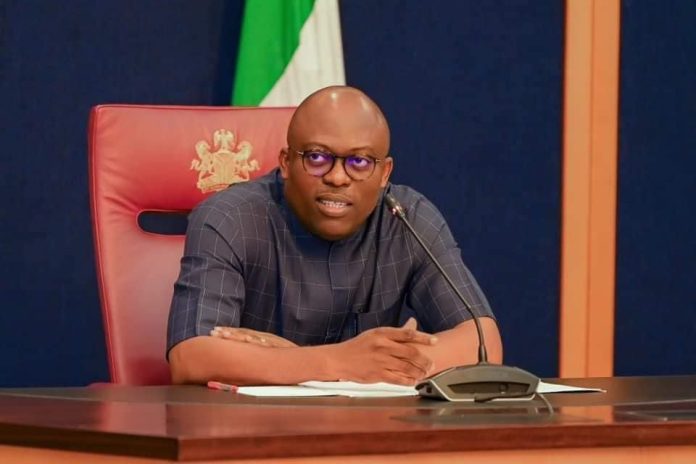
Rivers State Governor, Siminalayi Fubara, has dismissed all commissioners and public office holders serving in his administration, citing the need to restructure governance following a recent Supreme Court ruling.
The announcement, made through a statement issued by Chief Press Secretary Nelson Chukwudi on Wednesday evening in Port Harcourt, takes immediate effect.
Governor Fubara, who addressed members of his outgoing cabinet during a valedictory session marking Nigeria’s 65th Independence Anniversary at the Government House, expressed gratitude for their dedication to state development over the past two years.
“The governor thanks members of his cabinet for their services and contributions to the growth of Rivers State in the last two years,” the statement read.
He also urged Nigerians to embrace unity and support President Bola Tinubu in efforts to build a more peaceful and prosperous nation. The governor emphasized that the cabinet shake-up is aligned with his renewed commitment to serve the people of Rivers with “greater vigour.”
The development follows months of uncertainty surrounding the tenure of Fubara’s appointees. Earlier, Vice Admiral Ibok-Ete Ibas (retd.), who was installed during an emergency rule declared by the federal government, had suspended all commissioners, advisers, and board members appointed by Fubara.
With the lifting of emergency rule in September, the Rivers State House of Assembly subsequently called on Governor Fubara to present a new list of nominees for screening, along with the 2025 state budget.
The governor’s decision to dissolve his cabinet is now expected to pave the way for a reconstitution of the state’s executive team in the coming weeks.
The United States federal government initiated a partial shutdown on Wednesday after congressional leaders and President Donald Trump were unable to resolve a persistent funding dispute amid heated discussions centered on Democratic calls for increased healthcare allocations.
Both Republican and Democratic parties swiftly pointed fingers at one another for the stalemate, which is set to affect hundreds of thousands of federal employees and the countless citizens relying on the public services they deliver.
This operational halt, affecting numerous federal departments and agencies, arrives amid intensifying political rifts in the nation’s capital, fueling concerns about the potential duration and repercussions of the interruption.
President Trump issued warnings about retaliating against Democrats and their supporters by slashing progressive initiatives and implementing widespread layoffs in the public sector during this initial disruption since a similar event in his prior administration.
“We’re going to see a significant number of individuals furloughed, and they’ll feel the impact deeply. Many of them align with Democratic views,” Trump remarked to journalists from the Oval Office.
He added that shutdowns could yield positive outcomes, proposing to leverage the downtime to eliminate unwanted programs, particularly those favored by Democrats.
Federal activities started winding down at 12:01 a.m. (0401 GMT) on Wednesday, following a chaotic yet unsuccessful effort in the Senate to endorse a temporary funding extension that had already cleared the House. Senate Minority Leader Chuck Schumer shared a social media clip featuring a countdown clock superimposed on the U.S. Capitol.
“The shutdown led by Republicans has commenced because they refused to safeguard America’s healthcare system,” he stated. “We’ll persist in advocating for everyday Americans.”
Essential services such as the U.S. Postal Service, military operations, and entitlement programs including Social Security and nutrition assistance will remain operational during the shutdown.
However, estimates from the Congressional Budget Office indicate that as many as 750,000 employees might be furloughed daily without compensation until the situation resolves. Associated Developments Senate Turns Down Proposal to Resolve Government Shutdown U.S. Embassy Confirms Passport and Visa Processing Will Proceed Amid Shutdown for Nigerians Precious Metal Gold Reaches All-Time Peak as U.S. Shutdown Commences
This marks the initial such closure since the record-setting 35-day episode nearly seven years prior, during Trump’s earlier presidency. Prospects for an agreement teetered precariously since Monday, when a final White House summit produced no advancements. Congress frequently encounters tight deadlines for approving expenditure blueprints, with talks often tense, yet lawmakers typically manage to prevent actual shutdowns.
With Democrats holding minority status in both legislative branches, they’ve aimed to exert influence over federal operations roughly eight months into Trump’s second term, which has involved the dissolution of several entire agencies.
– Duration Uncertainty – Trump’s suggestions of additional workforce reductions have heightened unease among federal staff, already rattled by substantial dismissals directed by billionaire Elon Musk’s Government Efficiency Department earlier this year.
Following the shutdown’s onset, House Speaker Mike Johnson posted on X, questioning, “How much longer will Chuck Schumer prolong this hardship for personal motives?”
“Consequences: Families lose access to WIC food support. Veterans miss out on medical care and anti-suicide initiatives. FEMA faces funding gaps amid storm season. Military personnel and airport security staff work without pay,” Johnson noted.
Kamala Harris, the former Democratic vice president and presidential candidate, posted on X that Republicans control the executive branch and both congressional chambers.
“This shutdown belongs to them,” Harris declared.
In the 100-seat Senate, funding legislation needs 60 affirmative votes—exceeding the Republican majority by seven. Republicans suggested prolonging existing budgets through late November to allow time for broader spending discussions.
Democrats, however, pushed for the reinstatement of hundreds of billions in healthcare investments, especially for the Affordable Care Act program aiding lower-income families, which the Trump team plans to dismantle.Nearly every Senate Democrat opposed the House-approved, seven-week interim funding bill just before the midnight cutoff. The shutdown’s length remains unpredictable.
Since 1976, when the contemporary budgeting framework was established by Congress, the federal government has experienced 21 closures. The most extended one started on December 22, 2018, amid a deadlock between Democrats and Trump over his request for $5.7 billion to construct a border wall in his first term.
Nigeria’s domestic bond market witnessed unprecedented demand in September 2025, as the Federal Government’s monthly auction recorded a 530% oversubscription, even amid a cut in the Monetary Policy Rate (MPR) by the Central Bank of Nigeria (CBN).
According to the Debt Management Office (DMO), total bids hit N1.26 trillion against the N200 billion initially offered, marking a significant leap from August’s N268.16 billion. Allotments also surged to N576.62 billion, more than four times the N136.16 billion recorded in the previous month.
Investors Target 7-Year Bonds
The auction featured two reopenings: the 17.945% FGN AUG 2030 (5-year) and the 17.95% FGN JUN 2032 (7-year), each with an offer size of N100 billion. Investor appetite leaned heavily toward the 7-year bond, which attracted N1.03 trillion in subscriptions compared to just N165.81 billion in August. The 5-year bond also saw bids rise to N231.79 billion, more than double the previous month’s N102.36 billion.
This translated into a bid-to-offer ratio of 6.3 times, highlighting excess liquidity in the financial system and limited alternatives for high-yielding investments.
Allotments Quadruple
The DMO allocated N576.62 billion across both tenors, with the 7-year bond receiving the lion’s share at N488.83 billion—up from N90.16 billion in August. The 5-year tenor saw allotments rise to N87.80 billion compared to N46.01 billion in the prior month.
This reflects the government’s preference for raising funds through longer-dated securities while balancing financing needs with yield management.
Yields Trend Lower
Despite the overwhelming demand, stop rates moderated. The 5-year cleared at 16.00%, down from 17.945% in August, while the 7-year tenor settled at 16.20%, compared to 18.00% previously.
Bid ranges also tightened, signaling more clarity in investor expectations. The 5-year paper, which had a bid range of 12.50%–21.50% in August, narrowed to 15.00%–17.95% in September. Similarly, the 7-year bond compressed from 15.00%–22.00% to 14.95%–19.20%.
Rate Cut and Market Sentiment
The record subscriptions came just days after the CBN reduced the MPR from 27.5% to 27%, its first rate cut since 2020. The decision followed five consecutive months of slowing inflation, which eased to 20.12% in August from 22.64% in March.
To maintain monetary discipline, the CBN paired the rate cut with stricter liquidity measures, including a steeper 75% cash reserve requirement on non-TSA public deposits and a narrower interest rate corridor.
Analysts say the September auction reflects investor optimism about Nigeria’s macroeconomic outlook, with strong confidence in lower inflation and more accommodative monetary policy in the months ahead.
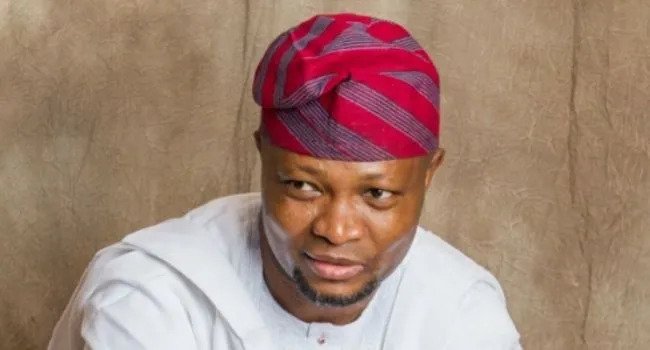
Olajide Adediran, popularly known as Jandor, has officially announced his decision to run for the 2027 Lagos State governorship election under the platform of the All Progressives Congress (APC).
The former governorship candidate of the Peoples Democratic Party (PDP), who contested against Governor Babajide Sanwo-Olu in the 2023 election with Nollywood star Funke Akindele as his running mate, rejoined the APC in March 2025, just weeks after leaving the PDP.
Speaking during Nigeria’s 65th Independence Day celebration, Jandor declared his support for President Bola Ahmed Tinubu’s re-election campaign, describing the president as a “progressive and visionary leader” deserving of a second term.
“As for Lagos State, I am once again offering myself to serve. I am indeed running for the Lagos governorship in 2027,” Jandor stated.
He dismissed speculations surrounding other potential aspirants, including President Tinubu’s son, Seyi Tinubu, and former Lagos State Governor Akinwunmi Ambode, stressing that his political journey had always been intentional.
Reflecting on his entry into politics, he noted:
“When it was time for me to make a move, I did so boldly, and we shook Lagos politics. Activities will soon commence to mobilize support for President Tinubu and the party. But let it be clear, I am running in 2027.”
Jandor also hailed President Tinubu’s leadership, describing him as courageous and determined to steer the country on the path of stability. He called on Lagos residents and Nigerians across the country to back Tinubu’s 2027 re-election bid, saying it would consolidate ongoing reforms.
In his words:
“President Bola Ahmed Tinubu has shown he has the vision and courage to lead this country. Nigerians should ensure he returns for another term so we can all continue to enjoy his progressive leadership.”
He further urged Nigerians to remain hopeful, insisting that the nation’s future “holds brighter promises” under Tinubu’s leadership.
Running a business or leading a team can feel like you’re constantly putting out fires while trying to build a bonfire. Your schedule? It’s more like a puzzle where pieces keep shifting. But here’s the kicker: those at the top don’t just survive this chaos—they thrive in it.
They’ve got tricks up their sleeves that turn overwhelming days into manageable ones. And no, it’s not about working harder; it’s about working smarter. If you’re an executive staring down a packed calendar, these seven techniques might just change how you approach your time. Let’s break them down, one by one, and see why they’re game-changers.
Time-Blocking Like It’s Sacred
You know how some mornings you hit the ground running, and others feel like wading through mud? That’s where time-blocking comes in. Executives treat their calendars like holy ground, reserving chunks for specific tasks. Take Jeff Bezos—he used to save his sharpest thinking for early hours, pushing routine stuff to later. It’s not just about meetings; it’s carving out space for strategy or even quiet reflection. Picture your day as a garden: without fences, everything overruns. By blocking time, you protect what grows your business. Sure, emergencies pop up, but with blocks in place, you bounce back faster. And honestly, it reduces that nagging guilt when you finally log off.
The Two-Minute Rule
Ever had those tiny tasks that linger like uninvited guests? David Allen nailed it in his book Getting Things Done with the two-minute rule. If something takes under two minutes—signing off on an expense, shooting a quick response, or passing along a note—handle it right then. Executives love this because it clears the mental clutter. No more inbox avalanches or forgotten follow-ups eating into your focus. It’s simple, but that’s the beauty. You might think, “I’m too busy for this,” but skipping it just creates bigger messes. Pair it with a solid task app like Todoist, and watch how your day smooths out. A little discipline here pays off big time.
Ruthless Delegation
Delegation sounds easy until you’re the one handing over the reins. But top leaders know it’s essential—it’s like building a machine where every part runs smoothly without you cranking every gear. The key? Trust your team. Assign tasks clearly, give them the tools, and step back. If you’re hovering over every detail, you’re not leading; you’re hindering. Think about it: Warren Buffett delegates so much that he focuses on big-picture investing. A mild contradiction here—some say delegation risks mistakes, but those slip-ups often teach more than perfection ever could. Explain why you’re passing it on, and you’ll build loyalty too. It’s emotional, yeah—letting go feels vulnerable—but it frees you for what only you can do.
Not everything on your plate deserves equal attention. That’s the Pareto Principle in action: 20% of your efforts yield 80% of the results. Savvy executives scan their to-do lists through this lens, zeroing in on high-impact stuff like sealing deals or innovating products. The rest? Delegate or drop. Saying no becomes your superpower—it’s tough at first, like turning down dessert when you’re starving. But it prevents overload. Elon Musk applies this by focusing on core missions at SpaceX and Tesla, ignoring distractions. Here’s a tip: review your week Fridays, asking what truly moved the needle. It might surprise you how much “busywork” sneaks in. This approach isn’t just logical; it brings a sense of calm amid the storm.
Shorter Meetings, Sharper Agendas
Meetings: the black hole of productivity. We’ve all been in those endless ones where tangents rule and nothing gets resolved. Forward-thinking executives flip the script by capping them at 15 or 30 minutes, armed with tight agendas. Outcomes are king—end with action items, not vague promises. Some companies, like Basecamp, even ditch meetings on certain days for uninterrupted work. You feel the difference immediately: more energy for execution, less drained from chit-chat. Imagine treating meetings like quick huddles in a game—get in, strategize, get out. If a topic veers off, park it for later. This keeps things crisp and respects everyone’s time, including yours.
Tools aren’t just gadgets; they’re your behind-the-scenes allies. From Calendly automating bookings to apps like Otter.ai transcribing calls, tech handles the grunt work. Executives who lean on these cut down on mental fatigue—think AI sorting emails or reminding you of priorities. Microsoft’s Copilot, for instance, can summarize reports in seconds. But beware: if you’re drowning in notifications, dial it back. Tech should whisper advice, not shout demands. A quick story—I’ve heard leaders say switching to one dashboard app like Notion transformed their workflow. It frees your brain for creative leaps, not rote tasks. And in a world buzzing with updates, that’s golden.
Protecting Personal Time Without Guilt
Finally, the one that hits home: boundaries. High-achievers like Richard Branson start days with kitesurfing, or Indra Nooyi made family dinners sacred. It’s not selfish; it’s sustainable. Without recharge, your decisions suffer, and so does your team. Block evenings for walks, hobbies, or nothing at all. Guilt creeps in— “Shouldn’t I be working?”—but push through. Exercise boosts clarity; rest sparks ideas. In fall, with holidays approaching, it’s even more crucial to guard this time amid year-end rushes. Leaders who do this model balance, inspiring others. It’s the foundation for everything else.
So, wrapping this up, these techniques aren’t magic—they’re habits honed by those who’ve been there. Start small: try time-blocking tomorrow, or enforce that two-minute rule. You’ll notice the shift. Time management for executives? It’s less about clocks and more about choices. Make yours count, and you’ll lead not just effectively, but with some spark left over.
Week 14 pool results 2025: Football pools results, live football pool result today, pool result today saturday matches, pool results for this week, british and aussie pool result, football pools results and fixtures, pools panel results today, pool panel results and live score pool result today. We publish half-time results first of its kind.
Week 14 Pool Results: Football pools results for this week 14 2025 are published on this website immediately after full-time confirmation of live score results. We also publish the outcome of postponed matches by the football pools panel at half-time as decided by the football pools. This week’s Week 14 Pool Results are made available in partnership with Bizwatch Nigeria.
WEEK: 14; SEASON: UK 2025/2026; DATE: 04-October-2025
Excess liquidity in the Nigerian money market surged to about ₦6.6 trillion after the Central Bank of Nigeria (CBN) refunded some banks for excess cash reserve ratio (CRR) holdings, even as it stayed out of the market despite heavy inflows from maturing instruments.
The apex bank’s absence allowed liquidity to build up, with deposit money banks (DMBs) channeling placements into the CBN’s Standing Deposit Facility (SDF). Following its recent interest rate adjustment, the CBN’s refunds bolstered system liquidity further.
Interbank rates eased to below 35%, reflecting the scale of available liquidity and the impact of the new monetary policy rate asymmetric corridor. Until the next Monetary Policy Committee (MPC) meeting, banks will borrow from the CBN at 29.5%—a 50-basis-point cut—while deposits at the apex bank now attract 24.5%, above the average one-year Treasury bill yield.
According to AIICO Capital Limited, system liquidity improved to ₦6.57 trillion on Tuesday, boosted by a ₦731.14 billion inflow from the September 30 OMO maturity and higher DMB deposits with the CBN. Banks placed a total of ₦5.54 trillion at the SDF window at 24.5%.
On the FMDQ platform, the Open Repo Rate (OPR) closed flat at 24.50%, while the Overnight Rate (OVN) dipped by eight basis points to 24.92%. AIICO Capital noted that interbank rates are expected to remain stable at current levels in the absence of fresh open market operations.
The Nigeria Immigration Service (NIS) has launched a nationwide crackdown on foreign nationals who have overstayed their visas or breached entry conditions, following the expiration of a three-month amnesty granted by the Federal Government.
The amnesty, which ran from July 5 to September 30, allowed foreigners with irregular immigration status to regularise their stay without penalties. With the window now closed, enforcement actions took effect from October 1, 2025.
“Effective October 1, 2025, enforcement actions will commence nationwide against foreign nationals who have overstayed their visas or violated their entry conditions,” NIS spokesperson Akinsola Akinlabi said in a statement on Wednesday.
The crackdown targets holders of expired visas on arrival, expired short-visit or business visas, and individuals with expired Comprehensive Expatriate Residence Permits and Automated Cards. Offenders face removal, daily fines, or entry bans.
According to the guidelines, foreigners who overstay for less than three months risk deportation, a $15 daily fine, or a two-year entry ban. Those who remain beyond three months but less than a year face removal, daily fines, or a five-year ban, while overstays exceeding one year may result in deportation and up to a 10-year or permanent entry ban.
The NIS said the measures are designed to safeguard national security and ensure strict compliance with immigration laws.
Interior Minister Olubunmi Tunji-Ojo had earlier urged diplomats to advise their nationals to take advantage of the amnesty, stressing that Nigeria’s immigration rules “are not meant to be abused but respected.” The crackdown forms part of broader reforms introduced in April, including a $15 daily surcharge on visa overstays, which was temporarily waived to encourage compliance.
Nigeria spent a total of $2.86 billion servicing external debt in the first eight months of 2025, according to international payments data released by the Central Bank of Nigeria (CBN). The figure accounted for 69.1% of the country’s total foreign payments of $4.14 billion within the period.
Comparatively, in the same eight-month stretch of 2024, debt service obligations stood at $3.06 billion—70.7% of $4.33 billion in total foreign payments. While debt service fell by $198 million year-on-year, its share of overall foreign outflows has remained persistently high, with about seven out of every ten dollars leaving Nigeria spent on debt repayments.
Volatile Repayment Trend
The repayment schedule in 2025 showed sharp fluctuations. Debt service stood at $540.67 million in January, dropped to $276.73 million in February, and then spiked to $632.36 million in March. April recorded $557.79 million, before plunging to $230.92 million in May and further to $143.39 million in June. Payments slightly recovered to $179.95 million in July and rose again to $302.3 million in August.
Compared with 2024, March and April 2025 posted significant increases—up 129% and 159% respectively—while May and July saw steep declines of 73% and 67%.
Debt Dominates FX Outflows
Overall, debt servicing remained the dominant component of Nigeria’s foreign obligations. In 2025, $2.86 billion out of $4.14 billion went to debt repayment, compared to $3.06 billion out of $4.33 billion in 2024.
Analysts warn this trend highlights Nigeria’s vulnerability, as nearly three-quarters of foreign exchange outflows are being channelled into debt servicing rather than imports or productive investments.
Fitch Outlook
Fitch Ratings projects Nigeria’s external debt service will rise from $4.7 billion in 2024 to $5.2 billion in 2025, including $4.5 billion in amortisation and a $1.1 billion Eurobond repayment due in November. The figure is expected to ease to $3.5 billion in 2026.
The rating agency noted a minor delay in Nigeria’s Eurobond coupon payment in March 2025, citing weak revenue mobilisation and fiscal pressures. Fitch warned that despite general government debt being stable at around 51% of GDP in 2025–2026, high interest costs and structurally low revenues remain risks.
Government revenue is projected to average 13.3% of GDP in 2025–2026, with interest payments consuming over 30% of total income and the Federal Government’s ratio nearing 50%.
Nigeria’s gaming industry is entering a new era of efficiency and trust, powered by Interswitch, one of Africa’s leading integrated payments and digital commerce companies. Interswitch has unveiled a new suite of payment and collection solutions designed to make gaming transactions faster, safer, and more efficient.
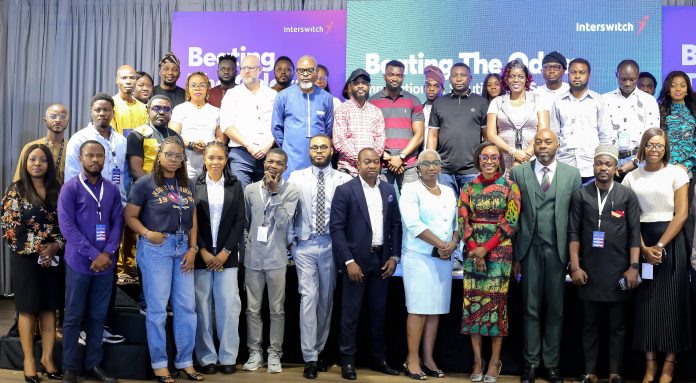
The unveiling which took place at the recently held Bookmakers’ Breakfast Meeting with the theme “Beating the Odds: Innovation and Solutions for Smarter Betting Operations”,washosted at the Radisson Blu Hotel, Victoria Island in Lagos. The event brought together industry regulators, operators, and stakeholders to explore the future of financial technology in gaming and served as a platform for unveiling Interswitch’s bespoke innovations tailored for the gaming ecosystem.
Gaming is no longer limited to shopfront counters or paper slips. Today’s digital-first consumers expect every transaction to be fast, secure, and convenient. For operators, however, the real challenge lies in meeting these rising expectations while ensuring compliance and maintaining operational efficiency.
That’s where Interswitch’s latest innovations make a difference. With solutions such as the Interswitch Payment Gateway, Paydirect collections platform, Quickteller’s instant funds transfer service, and Static Virtual Accounts, Interswitch is addressing long-standing industry pain points. These include delayed payouts, reconciliation bottlenecks, transaction errors, and the inefficiencies of fragmented payment channels.
During his welcome address, Osasere Atohengbe, Vice President, Sales and Account Management at Interswitch, spoke on how technology is a powerful enabler, and Interswitch’s integrated suite of solutions not just for gaming operators but also for players, he said,
“With our integrated suite of solutions, we’re simplifying backend operations, from reconciliation and payouts to collections and tracking, ultimately unlocking greater value in today’s competitive market.”
The unveiling was not just about technology; it also underscored the growing partnership between regulators and innovators. Delivering the keynote address on behalf of the Lagos State Lotteries and Gaming Authority (LSLGA), Adetoun Adeyemi, Director of Legal, highlighted how solutions like Interswitch’s could transform the gaming landscape. She said,
“These innovations will not only provide operators with smarter, more efficient tools but also empower us, as regulators, to foster a transparent, compliant, and well-structured ecosystem. This supports our collective goal of building a responsible and sustainable gaming industry in Lagos State.”
The Interswitch Payment Gateway enables seamless, real-time transactions across multiple channels including cards, bank transfers, USSD, Quickteller, Google Pay, OPay, and more through a single, unified integration. With Paydirect, operators can consolidate collections from diverse touchpoints such as online platforms, bank branches, agent networks, and POS terminals, all accessible from a centralised dashboard for easy monitoring and reconciliation.
The Quickteller Funds Transfer service ensures instant disbursements, allowing operators to promptly pay out winnings or transfer funds, fostering greater trust and customer satisfaction. Meanwhile, Static Virtual Accounts assign unique account numbers to individual customers, eliminating referencing errors, simplifying deposit identification, and automating reconciliation for improved accuracy and control.
For Interswitch, the launch marks another bold step in its long-standing commitment to strengthening Nigeria’s financial technology backbone. Beyond just product innovation, the company has positioned itself as a strategic partner to industries for digital disruption.
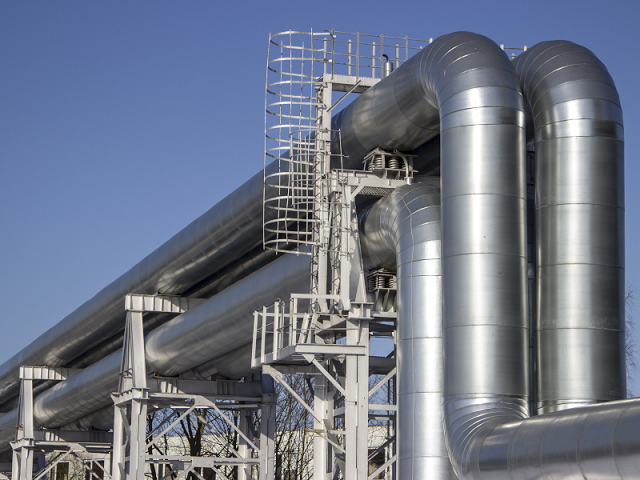
The $25 billion Nigeria-Morocco Gas Pipeline project is moving into a new phase with the creation of a dedicated project company and expanded backing from international financiers.
The nearly 6,000-kilometre pipeline will connect Nigeria’s gas reserves to Europe via West Africa, enhancing regional energy security and supply. It is designed to transport between 15 and 30 billion cubic metres of gas annually, serving 13 coastal states and up to 400 million people. Domestic connections will also extend the line to landlocked countries such as Niger, Burkina Faso, and Mali before linking with the Maghreb-Europe Pipeline.
Amina Benkhadra, Director-General of Morocco’s National Office of Hydrocarbons and Mines (ONHYM), confirmed that establishing the project company is a key step toward structuring financing and supervising implementation. Technical studies completed this year have confirmed the pipeline’s route.
The project will adopt a layered governance framework, with a parent company overseeing regional entities responsible for specific segments. The Economic Community of West African States (ECOWAS) has approved this structure.
In July, Togo formally joined the initiative as a public partner through an additional protocol signed with the Nigerian National Petroleum Company Limited (NNPC) and ONHYM. On financing, Moroccan Energy Minister Leïla Benali announced that the United Arab Emirates will join existing partners, including the European Investment Bank, the Islamic Development Bank, and the OPEC Fund.
The project company will be tasked with mobilising funds, with a final investment decision expected by the end of 2025.
Manchester City were denied a second straight Champions League victory after Eric Dier’s stoppage-time penalty salvaged a dramatic 2-2 draw for Monaco at the Stade Louis II on Wednesday night.
Despite a superb brace from Erling Haaland, Pep Guardiola’s men were forced to settle for a point after conceding in the final moments following a lengthy VAR check.
Haaland had fired City into an early lead, taking his season tally to 11 goals in just eight appearances. His opener came after Josko Gvardiol floated a precise ball over the top, which the Norwegian forward met with a clever lob over goalkeeper Philipp Köhn.
Monaco, however, struck back almost immediately. In the 18th minute, Krepin Diatta laid the ball off to Jordan Teze, who unleashed a thunderous right-footed drive from 20 metres, leaving Gianluigi Donnarumma with no chance.
Just before halftime, City restored their advantage when Nico O’Reilly swung in a cross that Haaland powerfully headed home, marking his 52nd goal in only 50 Champions League appearances.
The game appeared to be heading for a City win until the 90th minute when referee Jesus Gil Manzano awarded Monaco a controversial penalty after VAR judged Nico González guilty of a high boot on Dier inside the box. Dier stepped up confidently, sending Donnarumma the wrong way to secure Monaco’s first point of the group stage.
The result leaves City on four points from two matches, having beaten Napoli in their opener, while Monaco picked up their first group-stage point. Former Manchester United midfielder Paul Pogba watched from the stands as he edges closer to full fitness following his summer move.
The match also marked the first meeting between the sides since their iconic 2017 last-16 clash, which ended 6-6 on aggregate, famously won by Monaco on away goals.
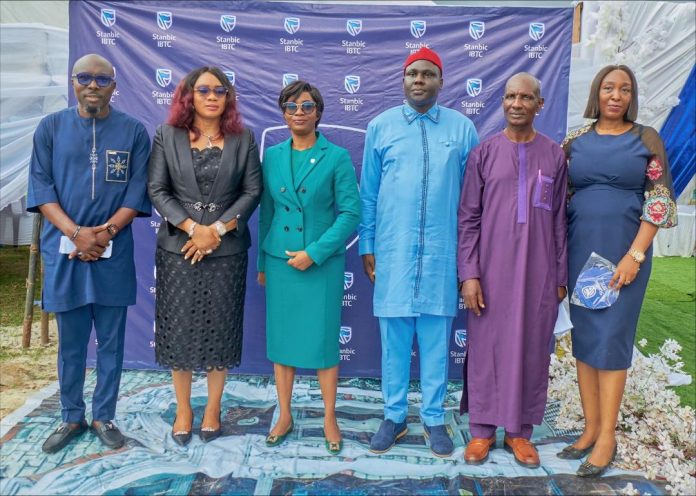
Stanbic IBTC Holdings has renovated Alegbo Primary School in Delta State, as part of its Adopt-A-School initiative, marking another milestone in the financial institution’s steadfast commitment to educational excellence across Nigeria. The comprehensive renovation and expansion project represents a holistic approach to educational development, addressing critical infrastructure needs while creating an environment that enables quality learning.
The transformative initiative encompassed an extensive scope of work designed to elevate the standard of education at rural primary schools. The project included the complete renovation of a three-classroom block. Each of the renovated classrooms received brand-new furniture designed to accommodate 40 students per class, with 20 carefully selected desks and chairs to enhance the learning experience. These upgrades will benefit more than 581 students and staff members.
Kunle Adedeji, Acting Chief Executive, Stanbic IBTC Holdings, emphasised the project’s commitment to enhancing education in Nigeria.
“This project represents our deep-seated belief in the transformative power of education and our commitment to nurturing the next generation of Nigerian leaders. By providing comprehensive infrastructure that addresses multiple aspects of the educational environment, we are not just building classrooms – we are building futures and empowering communities to thrive.”
Bunmi Dayo -Olagunju, Deputy Chief Executive, Stanbic IBTC Bank, highlighted that the success at Alegbo Primary School demonstrates the need for quality education through a blend of infrastructure, technology, and environmental awareness.
“Our approach to educational philanthropy goes beyond mere infrastructure provision – we believe in creating holistic learning environments that inspire excellence and foster innovation. The success of this project at Alegbo Primary School reflects our understanding that quality education requires a combination of proper infrastructure, technology integration, and environmental consciousness.”
Recognising the importance of digital literacy in contemporary education, Stanbic IBTC constructed a fully equipped computer laboratory, complete with ten modern computers and ten custom-built workstations, providing students with essential technological skills for the digital age.
Understanding the fundamental importance of proper sanitation facilities in educational settings, the bank constructed eight modern toilet facilities; four dedicated to girls and four to boys ensuring privacy, and improved hygiene standards for all students.
The initiative extended beyond traditional classroom infrastructure to include the establishment of a mini-library, creating a dedicated space for reading culture and academic research. Recognising the importance of physical education and recreation in child development, the project also featured the development of a bore hole, providing students with opportunities to clean water supply and contributing to their overall well-being.
Environmental beautification efforts formed an integral component of the project, with the planting of 50 trees and flowers across the school grounds. This initiative not only creates a more pleasant and inspiring learning atmosphere but also promotes environmental consciousness among students, teachers, and the broader community.
The Alegbo Primary School transformation marks the 10th school to benefit from Stanbic IBTC’s systematic approach to educational development across Nigeria, demonstrating the organisation’s commitment to diverse geographic representation in its educational support initiatives. The organisation has consistently focused its Adopt-A-School programme on comprehensive interventions that address multiple aspects of the educational environment, from basic infrastructure to technological integration and environmental sustainability.
The project was officially inaugurated during a ceremony attended by local government officials, traditional rulers, representatives of the parent-teacher association, and community stakeholders, who witnessed the handover ceremony, highlighting the importance of partnership in driving meaningful changes in the education sector.
The Stanbic IBTC Adopt-A-School programme continues to demonstrate the bank’s leadership in corporate social responsibility, with a particular focus on educational development as a catalyst for national growth and development. The initiative aligns with Nigeria’s educational policy objectives while addressing critical infrastructure gaps that have historically limited access to quality education in rural and underserved communities.
Paris Saint-Germain created history on Wednesday night by becoming the first club to defeat Barcelona in three consecutive European away fixtures, securing a 2-1 Champions League triumph at the Olympic Stadium.
The encounter began with a frenetic tempo, highlighted by 16-year-old Lamine Yamal dazzling early on with a dazzling solo run past multiple PSG defenders. Barcelona appeared dominant in possession, but PSG’s counterattacks were menacing, with Illia Zabarnyi going close from a corner and Achraf Hakimi testing Wojciech Szczęsny with a dangerous free-kick.
Barcelona eventually struck first in the 19th minute when Marcus Rashford sliced open PSG’s defence with a precise through-ball for Ferran Torres, who slotted home with confidence. The Catalans looked in control, yet PSG refused to fade. Nuno Mendes’ explosive run won a foul and booking for Frenkie de Jong, before the left-back surged forward again to set up Senny Mayulu’s equaliser.
The first half ended with both sides trading missed opportunities—Bradley Barcola squandered a golden chance for PSG, while Szczęsny was called into action again to deny Hakimi.
Barcelona started the second half cautiously, allowing PSG to dictate play. Dani Olmo received a yellow card for halting another PSG break, while Rashford attempted to lift Barça with bursts of energy down the flank. Lee Kang-in nearly restored PSG’s lead, rattling the post with a fierce strike.
Eventually, the breakthrough arrived when Gonçalo Ramos exploited Barcelona’s high defensive line, breaking clear to calmly slot home the decisive goal.
The win extended PSG’s run to six victories in their last seven Champions League outings, while it ended Barcelona’s remarkable streak of 12 group-stage home matches with only one loss.
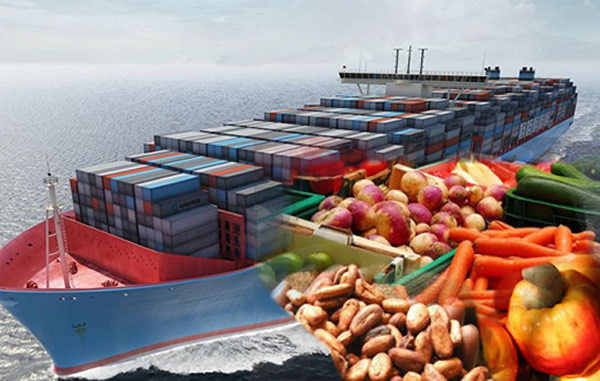
Nigeria’s fiscal outlook recorded a historic shift as the Federal Government announced that it had exceeded its N20 trillion non-oil revenue target by August 2025. President Bola Tinubu disclosed the achievement during his Independence Day address, underscoring the administration’s economic reforms and emphasis on domestic productivity.
In his national broadcast marking Nigeria’s 65th Independence Anniversary, Tinubu said the country has now achieved trade self-sufficiency, becoming a net exporter for the first time in recent history. According to him, Nigeria is “selling more to the world than it is buying,” a development that has helped stabilise the naira and strengthen economic resilience.
“Our nation must become a hub of productivity, not just consumption. The Federal Government is committed to repairing the plumbing of our economy, but we need citizens and businesses alike to open the taps of innovation and enterprise,” Tinubu declared.
The president revealed that non-oil revenues for September stood at N3.65 trillion, marking a 411 percent rise compared with collections in May 2023. He added that Nigeria’s trade surplus has now been sustained for five consecutive quarters, rising 44.3 percent in the second quarter of 2025 to N7.46 trillion – the highest in three years.
Highlighting diversification efforts, Tinubu said exports of locally manufactured goods surged by 173 percent, with non-oil exports now contributing 48 percent of total export earnings, compared to oil’s 52 percent. “This is proof that we are reducing our overdependence on crude oil and expanding our foreign exchange sources,” he explained.
The Minister of Industry, Trade, and Investment, Dr. Jumoke Oduwole, in her Independence Day remarks, urged Nigerians to actively support domestic industries. “Buying what we produce and producing what we consume is the pathway to national growth, job creation, and sustainable development,” she said.
Echoing this sentiment, the Director-General of the Nigerian Export Promotion Council (NEPC), Dr. Nonye Ayeni, reaffirmed the agency’s commitment to strengthening export capacity from production to market access.
Tinubu concluded his address with a renewed call for citizens to patronise Made-in-Nigeria goods and fulfil their tax obligations, stressing: “Nigeria first – let us build a nation of producers, not just consumers.”
Nigeria’s local currency, the Naira, delivered one of its most stable performances in months throughout September 2025, consistently trading below the N1,500 per dollar mark for more than two weeks straight.
Data obtained from the Central Bank of Nigeria (CBN) revealed that the Naira closed the month at N1,478/$1 on September 30, showing a significant improvement from its opening rate of N1,527.9/$1 on September 1.
Sustained Performance Throughout September
According to the CBN figures, the turning point came on September 15, when the exchange rate dipped to N1,495/$1, breaking below the N1,500 threshold for the first time that month. From that date, the currency continued to gain ground, closing at N1,486.8/$1 on September 24, N1,485/$1 on September 25, N1,480/$1 on September 26, and N1,480.15/$1 on September 29, before settling at N1,478/$1 to wrap up the month. The performance marked a stretch of consistency not seen in months, reflecting relative stability in the foreign exchange market.
Comparing Monthly Movements
Looking at month-to-month movements, September’s trajectory highlighted a sharp contrast with earlier months in 2025.
December 2024 ended at N1,535/$1.
January 2025 improved to N1,475/$1 — the best monthly close recorded so far this year.
February weakened slightly to N1,500/$1, while March and April saw further depreciation to N1,537/$1 and N1,602/$1 respectively.
May was the worst month of the year with the Naira closing at N1,585.5/$1.
June saw a moderate rebound to N1,532/$1, while July and August closed at N1,534/$1 and N1,531/$1 respectively.
By comparison, September’s closing rate of N1,478/$1 represented the strongest performance since January 2025. Unlike January, however, where only two days recorded sub-N1,500 levels, September offered a more sustained run of stability throughout the second half of the month.
Foreign Reserves Cross $42 Billion
Another highlight during September was the performance of Nigeria’s external reserves, which surged above $42 billion for the first time in over six years. CBN data showed reserves reached $42.3 billion as of September 29, 2025, representing an increase of more than $692 million within just 18 days. The last time reserves reached a similar level was on September 27, 2019, when they stood at $41.992 billion.
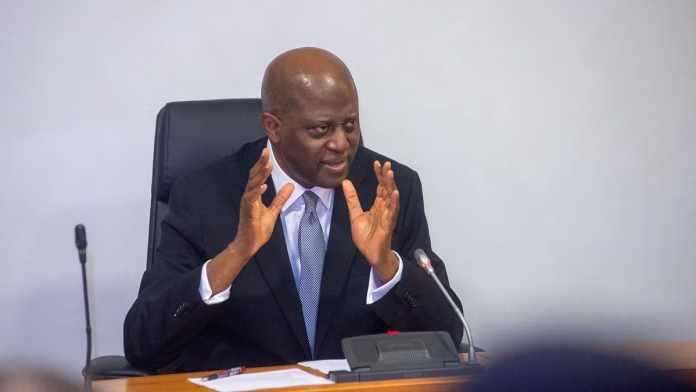
CBN Governor, Olayemi Cardoso, speaking at the conclusion of the Monetary Policy Committee (MPC) meeting on September 22, attributed the boost to growing investor confidence spurred by ongoing reforms, enhanced transparency, and the adoption of a more market-driven exchange rate system. He reiterated the Bank’s focus on reducing inflation to single digits while ensuring exchange rate stability and fiscal discipline, especially as the country heads into a politically sensitive pre-election year in 2026.
“Exchange rate stability is key. If we are going to continue to moderate inflation the way we have, exchange rate stability is key. Fiscal discipline is key,” Cardoso stressed.
Monetary Policy Decisions
The MPC also introduced new policy adjustments during the month to consolidate economic stability.
The Monetary Policy Rate (MPR) was cut by 50 basis points from 27.5% to 27%.
The asymmetric corridor around the MPR was adjusted to +250/-250 basis points, from the previous +500/-100 basis points.
The Cash Reserve Ratio (CRR) for commercial banks was maintained at 45%, while merchant banks’ CRR remained at 16%.
These measures, according to the apex bank, were designed to strike a balance between stimulating economic activity and ensuring price stability. With the Naira showing renewed resilience and foreign reserves reaching record highs, September 2025 has emerged as one of the most encouraging months for Nigeria’s macroeconomic outlook in recent times.