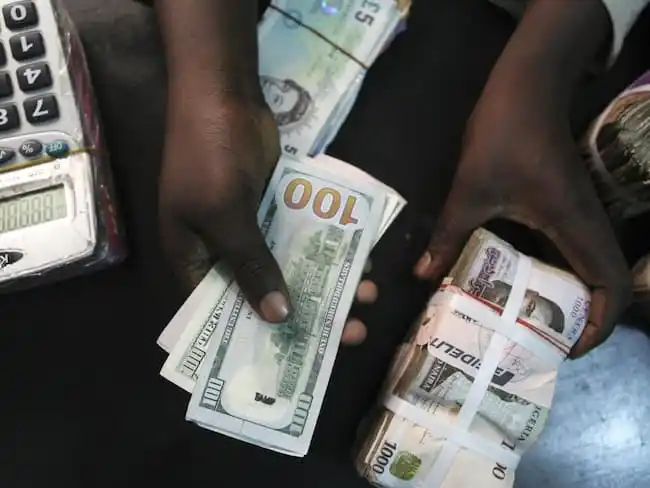
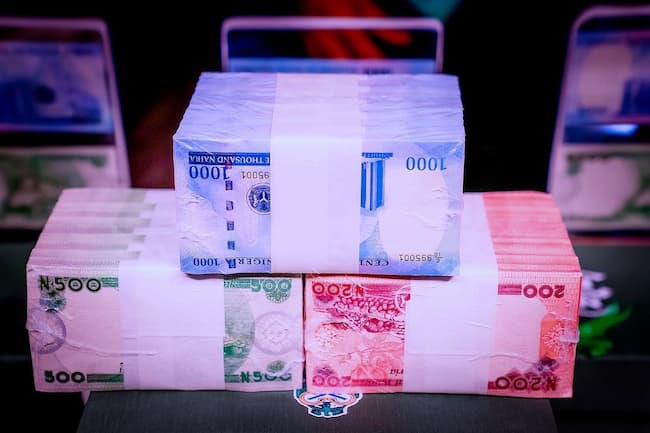
The exchange rate between the Naira and the US dollar, according to the data released on the FMDQ Security Exchange, the official forex trading portal, showed that the naira closed at 1445.00 per $1 on Wednesday, November 5th , 2025. The naira traded as high as 1430.00 to the dollar at the investors and exporters (I&E) window on Tuesday.
Dollar to naira exchange rate today black market (Aboki dollar rate):
The exchange rate for a dollar to naira at Lagos Parallel Market (Black Market) players sell a dollar for ₦1459 and buy at ₦1445 on Tuesday 4th November, 2025, according to sources at Bureau De Change (BDC).
Please note that the Central Bank of Nigeria (CBN) does not recognize the parallel market (black market), as it has directed individuals who want to engage in Forex to approach their respective banks.
Dollar to Naira Black Market Rate Today
Dollar to Naira (USD to NGN)
Black Market Exchange Rate Today
Selling Rate
₦1459
Buying Rate
₦1445
Dollar to Naira CBN Rate Today
Dollar to Naira (USD to NGN)
CBN Rate Today
Highest Rate
₦1442
Lowest Rate
₦1430
Please note that the rates you buy or sell forex may be different from what is captured in this article because prices vary.
The Federal Government has unveiled plans to inject N12 billion into research projects aimed at accelerating Nigeria’s digital economy and strengthening the country’s global competitiveness in technology-driven innovation.
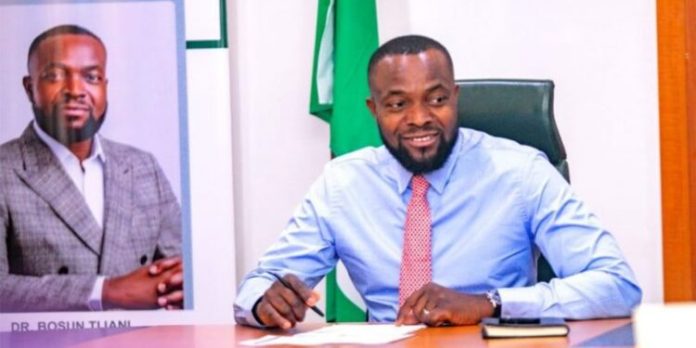
Minister of Communications, Innovation and Digital Economy, Dr Bosun Tijani, disclosed this on Tuesday at the opening of the 18th International Conference on Theory and Practice of Electronic Governance (ICEGOV) in Abuja. The four-day conference, themed “Shaping the Future of Digital Governance Through Cooperation, Innovation and Inclusion,” is being hosted by the National Information Technology Development Agency (NITDA).
Tijani said the funding would support three research clusters across six Nigerian universities, with focus areas including artificial intelligence, digital connectivity, and digital skills and literacy.
“Immediately after ICEGOV last year, we funded over 55 research projects,” he said. “We are now putting together about N12 billion to fund further research projects focused on the digital economy. One cluster is centred on artificial intelligence, another on connectivity—which remains one of our biggest national challenges—and the third on digital skills and literacy.”
The Minister said the initiative would strengthen Nigeria’s research ecosystem and ensure digital innovation delivers inclusive socio-economic impact.
Tijani stressed that digital transformation has become fundamental to human and national development, adding that platforms like ICEGOV provide an avenue to responsibly shape emerging technologies and create appropriate regulatory frameworks. He noted that Nigeria’s strong participation in last year’s conference earned it the hosting rights for the 2025 edition.
Chair of the ICEGOV Steering Committee, Ms Elsa Estevez, called for stronger global collaboration in managing the outcomes of emerging technologies, especially artificial intelligence. She warned that innovation must remain ethical and people-centred to prevent distortions in society.
“Innovation dramatically changes the way we live, work and interact,” she said. “Governments must engage citizens in shaping public policy and counter misinformation by building digital spaces grounded in information ethics.”
Director-General of NITDA, Malam Kashifu Inuwa, also disclosed that the Federal Government plans to integrate digital literacy into the national school curriculum from 2026 as part of its Knowledge Policy and Digital Literacy Framework.
He added that ministries, departments and agencies were being equipped to ensure public servants acquire relevant digital competencies to support service delivery in an increasingly digitised public sector.
The naira appreciated on Tuesday, gaining about ₦3 against the U.S. dollar at the official foreign exchange window as market liquidity improved and external reserves rose.
According to market data, the local currency closed at ₦1,433 per dollar, strengthening from the previous session amid increased dollar supply and reduced demand pressure.
The rebound in liquidity was driven by inflows from foreign portfolio investors seeking opportunities in the week’s Treasury bill auction, which boosted market confidence and supply balance.
Earlier, the spot rate had weakened to ₦1,436 per dollar following strong demand, but stabilized later in the day as inflows picked up. The intraday high reached ₦1,442.45 per dollar, while the lowest rate was ₦1,430.
Meanwhile, Nigeria’s gross external reserves rose to $43.259 billion from $43.197 billion recorded at the end of October, supported by stronger hydrocarbon revenue and improved foreign exchange inflows.
Market analysts attributed the development to renewed confidence in the naira, noting that sustained inflows and policy consistency could further strengthen the currency in coming sessions.
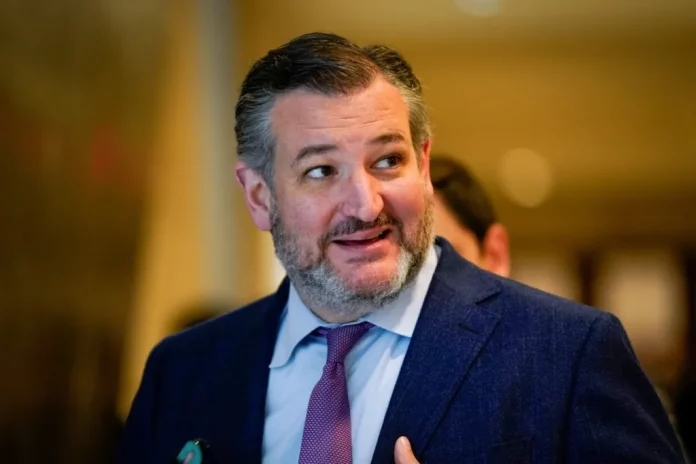
United States Senator Ted Cruz says he will introduce new legislation aimed at sanctioning Nigerian government officials who promote or enforce Sharia and blasphemy laws, which he argues have fuelled the persecution of Christians in the country.
In a statement posted on social media, the Texas lawmaker expressed appreciation to former US President Donald Trump for designating Nigeria as a “Country of Particular Concern” on religious freedom, describing the action as an essential step towards holding Nigerian leaders accountable.
“I am deeply gratified to President Trump for making this determination, I have fought for years to counter the slaughter and persecution of Christians in Nigeria, and this year introduced legislation that will lock in the designation made today.”
According to him, the proposed bill will strengthen US measures against religious oppression in Nigeria by directly targeting officials who enforce legislation that criminalises blasphemy or imposes Sharia-based penalties.
“My legislation implements additional steps, including targeting those who implement blasphemy and Sharia laws in Nigeria, and I am committed to working with the administration and my colleagues to advance my bill and implement these necessary measures,” he added.
Cruz praised Trump’s intervention as “a great one,” insisting that the move underscores decisive leadership on the issue and would help reinforce protections for Christians and other religious minorities.
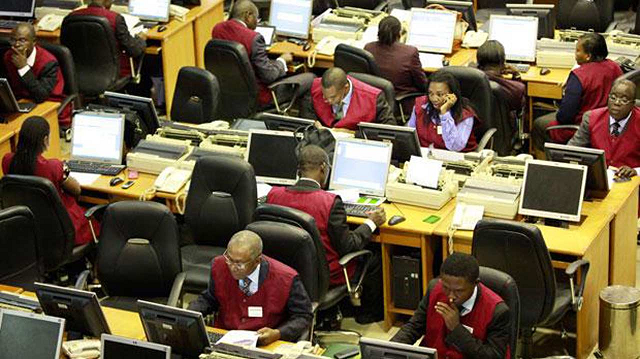
The Nigerian Exchange (NGX) continued its losing streak on Tuesday as sustained sell-offs dragged the market further into the red, wiping out ₦611.97 billion in investors’ wealth.
The persistent bearish sentiment has been attributed to weak third-quarter earnings reports from key banking and consumer goods firms, which have dampened investor confidence and discouraged bargain hunting.
Data from the NGX revealed that the All-Share Index fell by 0.72%, closing at 152,629.60 points, while the total market capitalization declined to ₦96.97 trillion.
Market breadth remained negative as 40 stocks recorded losses compared to only 17 gainers, resulting in a weak 0.4x breadth ratio.
Trading volume rose by 8.99% to 683.92 million shares, but the total value of transactions dropped by 18.5% to ₦20.38 billion. The number of deals also declined by 8.61% to 33,288, signaling reduced participation from institutional investors.
Top gainers included EUNISELL, SUNUASSUR, HONYFLOUR, LIVESTOCK, and TIP, while NASCON, SKYAVN, OANDO, UPDC, and LEARNAFRICA led the list of losers with significant price declines.
Sectoral performance remained broadly negative, with the Insurance (-3.76%), Banking (-2.05%), Consumer Goods (-1.49%), Oil & Gas (-0.78%), and Industrial (-0.01%) indices all closing lower. The Commodity sector was the only segment that remained unchanged.
Analysts say the market’s trajectory may remain bearish in the short term as investors await stronger earnings outlooks and macroeconomic stability.
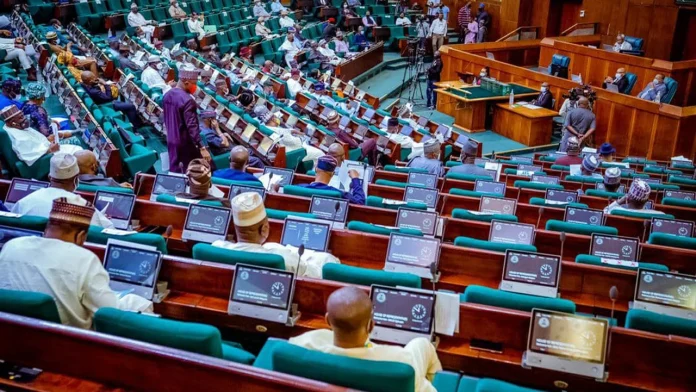
The House of Representatives has given the Minister of Finance, Wale Edun, and the Minister of Budget and Economic Planning, Atiku Bagudu, a seven-day deadline to ensure the immediate payment of outstanding debts owed to local contractors for projects executed under the 2024 and 2025 budgets.
The decision followed a motion of urgent public importance raised by Minority Leader Kingsley Chinda (PDP–Rivers) during plenary on Tuesday.
Chinda told the House that the protests by aggrieved contractors at the National Assembly gates reflected their frustration over delayed payments despite several promises by government officials.
He recalled that the ministers, alongside the Accountant General of the Federation, had earlier appeared before a high-level committee chaired by Deputy Speaker Benjamin Kalu, where they pledged to release funds promptly.
Chinda further disclosed that President Bola Tinubu had also directed the ministers to prioritize the payment of contractors to ease economic hardship and boost project delivery. However, he said that implementation had been slow, deepening the contractors’ financial distress.
“The continued non-payment of these contractors has caused severe economic strain, leading to job losses and widespread hardship across the country,” Chinda said.
The House subsequently resolved to give the Finance and Budget Ministers, along with the Accountant General, seven days to clear all pending payments and ensure full implementation of the 2025 budget.
In support of the resolution, Rep. Kabiru Mai-Palace (PDP–Zamfara) proposed a one-week adjournment to allow parliamentary leaders to interface with the Executive for faster resolution. The motion was seconded by Rep. Francis Waive (APC–Delta).
Deputy Speaker Benjamin Kalu approved the adjournment, moving the next plenary to November 11, 2025.
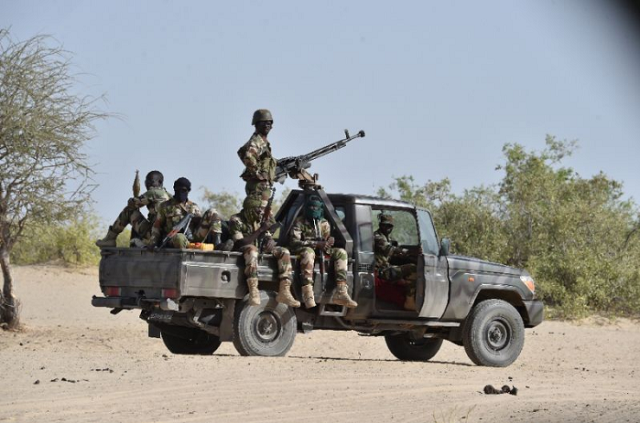
Troops under Operation Hadin Kai (OPHK) have repelled a major Boko Haram and Islamic State West Africa Province (ISWAP) assault on a Forward Operating Base in Mallam Fatori, Borno State, killing several fighters and forcing the insurgents to retreat.
According to a statement by OPHK Media Information Officer, Lt-Col Sani Uba, the terrorists launched the coordinated attack around 4:30 a.m. on Monday, using drones and mortar fire to target the Kangar base. He said the troops — reinforced by a main force from Sector 3 — displayed “exceptional gallantry and tactical superiority” to overwhelm the attackers.
The army said Nigerien fighter jets also provided close air support, compelling the terrorists to flee towards the Tumbun waterways while evacuating dead and wounded fighters.
After the confrontation, troops recovered six corpses of terrorists and seized five AK-47 rifles, eight magazines, over 250 rounds of ammunition, rocket-propelled grenades, drone bombs, hand grenades and an Android device. Additional terrorists were reportedly killed by subsequent joint Nigerian–Nigerien airstrikes.
A number of soldiers and members of the Civilian Joint Task Force sustained minor injuries and have been evacuated for medical care.
The Defence Headquarters commended the troops for their resilience and reiterated the military’s commitment to restoring peace in the North-East.
Suspected Terror Leaders’ Trial Resumes 19 November
Meanwhile, the trial of two suspected terror kingpins — Mahmud Usman (also known as Abu Bara’a) and Abubakar Abba (also known as Isah Adam and Mahmud Al-Nigeri) — will resume on 19 November before Justice Emeka Nwite of the Federal High Court, Abuja.
Deputy Director of Public Relations and Strategic Communications at the Department of State Services (DSS), Favour Dozie, confirmed the development.
Both men — believed to be leaders of Jama’atu Ansarul Muslimina fi-Biladis Sudan (ANSARU), an Al-Qaeda affiliate — were arrested in July in an intelligence-driven counter-terrorism operation.
Court filings allege that Usman, described as the self-styled Emir of ANSARU, coordinated terror sleeper cells nationwide and financed operations from proceeds of kidnappings and armed robberies. His deputy, Abba, allegedly led the “Mahmudawa” cell operating around Kainji National Park and along the Niger–Kwara–Benin corridor.
The Office of the National Security Adviser earlier disclosed that Usman received training in Libya between 2013 and 2015 under foreign jihadist instructors specialising in weapons and improvised explosive devices.
Usman and Abba are facing 32 counts bordering on terrorism. Usman has already pleaded guilty to one count relating to illegal mining and is serving a 15-year sentence. Abba has pleaded not guilty to all charges.
The DSS is also prosecuting Khalid Al-Barnawi, alleged mastermind of the 2011 bombing of the United Nations Building in Abuja, which killed 20 people and injured over 70.
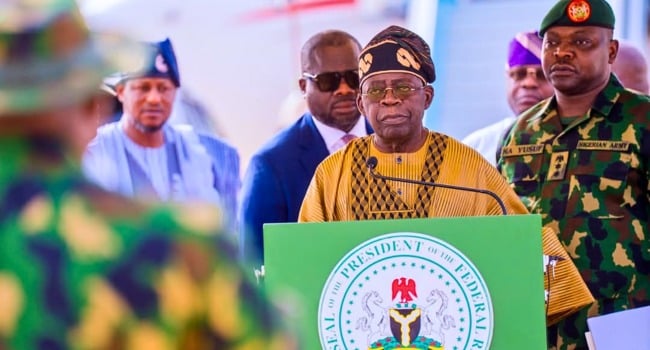
President Bola Ahmed Tinubu has written to the Senate seeking approval for a fresh ₦1.15 trillion loan from the domestic debt market to bridge the 2025 budget deficit.
In a letter addressed to Senate President Godswill Akpabio and read during Tuesday’s plenary session, Tinubu explained that the proposed borrowing would support the full implementation of government projects and programmes captured in the 2025 fiscal plan.
The president noted that the additional funds were necessary to close the gap between expected revenues and expenditure obligations, ensuring that essential national development projects are not stalled.
Following the reading of the letter, Akpabio referred the loan request to the Senate Committee on Local and Foreign Debt for further legislative scrutiny and recommendations.
The committee has been directed to review the proposal and report back to the chamber within one week.
If approved, the ₦1.15 trillion borrowing will add to Nigeria’s growing domestic debt profile as the government continues efforts to stimulate economic growth amid fiscal pressures and infrastructure financing needs.
The Federal Government has said it will not allow public universities to be shut again over labour disputes, pledging to do ‘everything humanly possible’ to prevent fresh industrial action by the Academic Staff Union of Universities (ASUU).
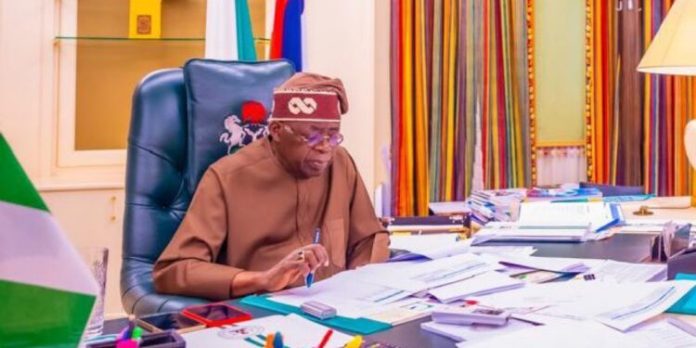
Speaking to State House correspondents on Tuesday, the Minister of Education, Dr Tunji Alausa, said President Bola Tinubu had issued a clear directive to keep students in classrooms while accelerating transparent, data-driven reforms across Nigeria’s tertiary education system.
“The President has mandated us that he doesn’t want ASUU to go on strike. We are doing everything possible to ensure students stay in school,” Alausa said. “The last strike of about six days was unnecessary. We have met almost all their demands, and we are back at the negotiation table.”
Alausa noted that he had earlier briefed the President on ongoing discussions with the union and secured further concessions aimed at securing a peaceful resolution.
He added that the administration is committed to strengthening accountability in tertiary institutions, driving reforms with evidence-based governance.
“Tertiary institutions receive almost 100 per cent of their funding from the Federal Government. If you don’t have data, you are flying blind,” he said. “You need data to know where the problems are, how to intervene, and how to monitor outcomes.”
As part of efforts to entrench transparency, the government on Tuesday launched the Federal Tertiary Institution Governance and Transparency Dashboard — a digital platform mandating federal universities, polytechnics and colleges of education to publicly disclose key institutional data, including student enrolment, personnel and capital allocations, TETFund and NELFund interventions, and endowments.
The portal, Alausa said, is publicly accessible and will help restore Nigeria’s universities to global competitiveness. The platform will later be extended to state-owned and private institutions, with the NUC, NBTE and NCCE expected to enforce compliance.
To further tighten oversight, the ministry also invited the Director-General of the Bureau of Public Procurement, Dr Adebowale Adeokun, to brief heads of tertiary institutions on procurement rules and standards.
Alausa blamed previous instability on fragmented negotiation frameworks that placed universities, polytechnics and colleges of education under separate committees, creating conflict and delays. He said the Federal Government has now collapsed all negotiations under the Alhaji Yayale Ahmed-led committee — which is engaging all academic and non-academic unions, including ASUU, ASUP and COEASU.
“The same committee is talking to ASUU, ASUP and COEASU. Everything is calm,” he said. “I spoke to the ASUP president yesterday; there is no ultimatum from any union.”
Alausa linked the reforms to broader macroeconomic adjustments under the Tinubu administration — including subsidy removal, foreign exchange reforms, and new tax legislation — adding that GDP grew by 4.23 per cent in the last quarter, which he described as proof that the economy is recovering.
Despite the assurances, lecturers and students remain cautious after years of disruptions. But the government insists it is putting in place structures to guarantee uninterrupted learning.
For now, the message from the Presidency is clear: universities must remain open — and there should be no return to prolonged ASUU strikes.
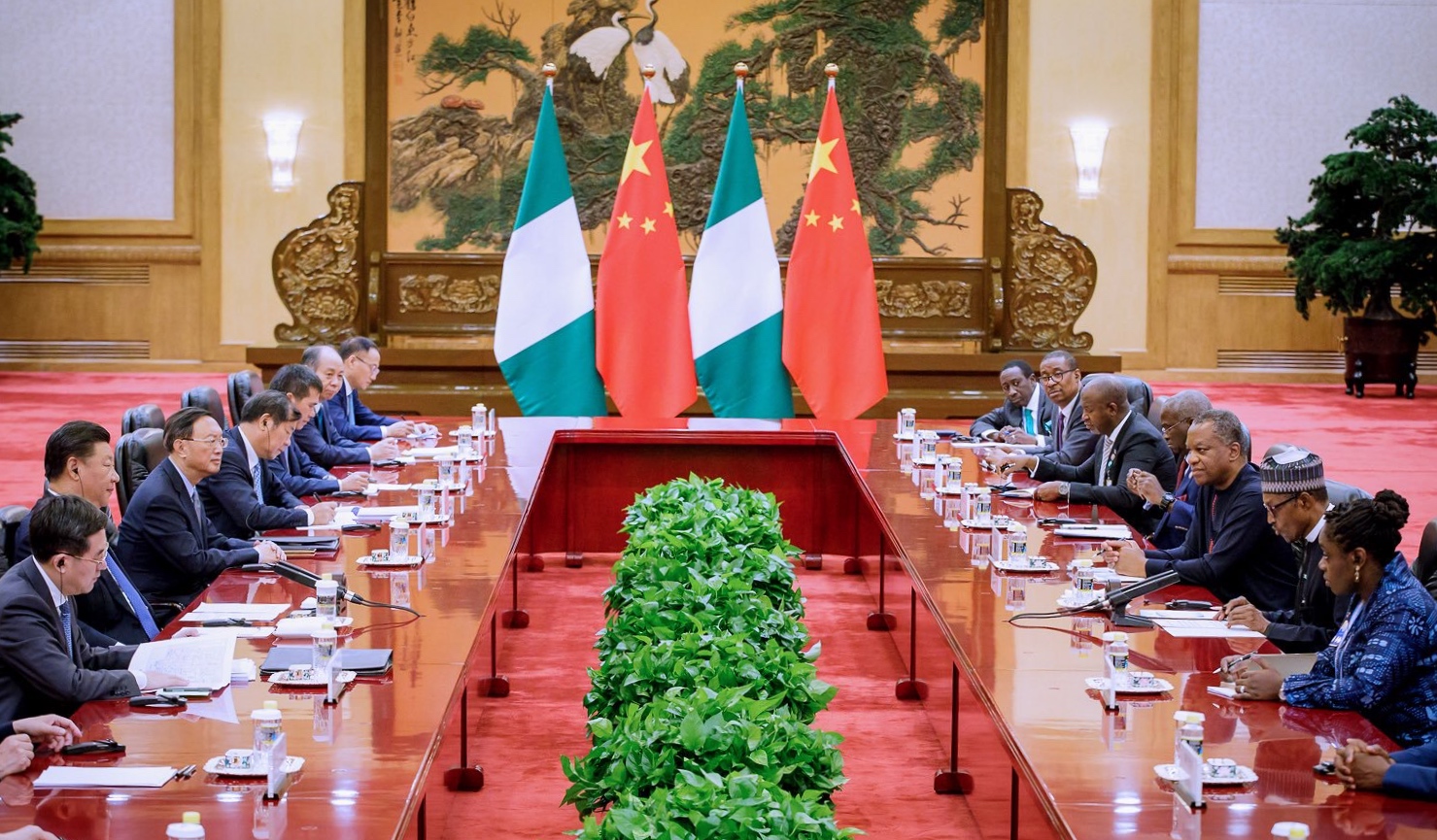
China has reaffirmed its unwavering support for Nigeria, cautioning the United States against any form of military intervention or external meddling in the West African nation’s domestic affairs.
The statement came after recent U.S. criticisms over Nigeria’s handling of religious freedom, with Beijing stressing that every country must be allowed to determine its development path without foreign interference.
Chinese Foreign Ministry spokesperson Mao Ning, speaking at a press conference in Beijing and quoted in a statement on the ministry’s website on Tuesday, said that China, as Nigeria’s comprehensive strategic partner, “firmly backs the Nigerian government in leading its people toward a development trajectory that aligns with the nation’s realities.”
She emphasized that China “opposes any interference in another country’s internal affairs under the guise of religion or human rights” and denounced threats of sanctions or the use of force as “unacceptable violations of sovereignty.”
Mao’s comments followed U.S. President Donald Trump’s recent declaration naming Nigeria a “country of particular concern” for alleged persecution of Christians. Trump had warned that Washington could halt aid or even take military action if Abuja “continues to allow the killing of Christians.”
Posting on his Truth Social account, Trump claimed that if such violence persists, the United States “will immediately suspend all aid and may move in with full military force to eliminate the Islamic terrorists responsible for these atrocities.”
The remarks have stirred global diplomatic reactions, with Beijing’s statement seen as a strong message against Western interventionism and a clear sign of China’s growing influence in African geopolitics.
Nigeria’s Excess Crude Account (ECA) has grown by 13 per cent over a two-year period, while balances in the Stabilisation Account and the Development of Natural Resources Fund recorded even sharper increases, an analysis of presentations made by the Accountant-General of the Federation to the National Economic Council (NEC) has shown.
A review of briefings to the council from June 15, 2023, to October 23, 2025, indicates that the ECA rose from $473,754.57 at the inaugural NEC under President Bola Tinubu to $535,823.39, an increase of $62,068.82.
Over the same period, the Stabilisation Account surged from N26.63bn to N87.67bn, representing a 229 per cent jump, while the Development of Natural Resources Fund expanded from N96.90bn to N141.59bn — up 46 per cent.
Month-on-month variations show periods of volatility. The Stabilisation Account fell to N17.21bn in April 2024 before rebuilding through 2025, while the Natural Resources Fund declined to N26.85bn in November 2024 and then recovered steadily to N141.59bn by October 2025. The ECA remained largely flat for much of the period before edging higher in the second half of 2025.
Created in 2004 during the Obasanjo administration, the ECA is designed to warehouse oil earnings above the benchmark price for stabilisation and future investments. At the height of the 2008 oil boom under President Umaru Yar’Adua, it exceeded $20bn — but successive withdrawals and price collapses eroded the balance over the following decade.
The Stabilisation Account is used to cushion sub-national governments against shortfalls and fiscal shocks, while the Development of Natural Resources Fund supports diversification programmes — including solid minerals — approved by the Federation Accounts Allocation Committee and NEC.
The movements in the funds mirror policy decisions taken by the NEC during the period under review, including reforms in the oil sector, the reconstitution of committees on crude theft, the approval of the $617.7m i-DICE programme, sectoral reforms in the power market, and a nationwide crackdown on gold smuggling. The council also backed food security measures and approved efforts to strengthen training schools for security agencies.
States also leaned heavily on statutory transfers through a period of high inflation and foreign-exchange volatility, adding pressure on naira-denominated accounts despite reforms such as petrol subsidy removal and FX market unification intended to stabilise macroeconomic fundamentals.
The NEC, chaired by the Vice President and comprising the 36 state governors, the CBN Governor, and relevant ministers, has met at least 15 times since June 2023. Its most recent session was held on 23 October 2025.
President Bola Tinubu has approved the appointment of Dr John Nwabueze as Nigeria’s first Tax Ombudsman, in line with the Joint Revenue Board of Nigeria (Establishment) Act, 2025.
The announcement was contained in a statement issued by the Special Adviser to the President on Information and Strategy, Bayo Onanuga, who said the appointment aligns with the administration’s broader fiscal reform agenda aimed at strengthening public trust in Nigeria’s revenue system and improving compliance through fairness and due process.
Nwabueze, from Oshimili South Local Government Area of Delta State, is an experienced tax and fiscal governance expert with decades of work spanning the private and public sectors. His career has included serving as Managing Partner of a tax advisory firm, Technical Adviser to the Joint Senate Committees on the Federal Capital Territory and Finance, and Technical Adviser to the Chief Economic Adviser to former President Olusegun Obasanjo.
He holds a Doctorate in Public Administration (Finance) from Walden University, Minneapolis, a Master’s degree in Accounting from Strayer University, Washington D.C., and Bachelor’s degrees in Accounting and Mathematics from the University of Jos.
President Tinubu, in congratulating the new appointee, expressed confidence in his ability “to discharge the responsibilities of the office with integrity, diligence, and utmost professionalism.”
According to the statement, the Office of the Tax Ombudsman has been established to enhance transparency and accountability within Nigeria’s tax ecosystem, and to provide an impartial mechanism for resolving disputes between taxpayers and revenue authorities.
The office will receive and review complaints relating to taxes, levies, regulatory fees, customs duties, excise matters and related issues — ensuring fair and non-adversarial resolution processes. It will also serve as a watchdog to prevent abuse of power and arbitrary conduct by tax officials — a move expected to boost confidence, reduce litigation, and encourage voluntary tax compliance.
“The creation of this office is a crucial step toward a more transparent and citizen-friendly tax administration,” the statement said, noting that similar structures already exist in several advanced economies as recognised oversight mechanisms balancing revenue targets with taxpayer rights.
Immediate priorities for Nwabueze include establishing the institutional framework for the new office, developing standard operating procedures for complaints resolution, and strengthening coordination with revenue bodies including the Federal Inland Revenue Service (FIRS), Nigeria Customs Service, and state revenue agencies.
The appointment comes as Nigeria intensifies fiscal reforms aimed at broadening the tax base, reducing leakages, and improving service delivery across revenue-generating institutions.
The new tax reform laws — signed on 26 June 2025 and recently published in the government gazette — form part of the administration’s effort to overhaul Nigeria’s fiscal framework and create a more business-friendly regulatory environment.
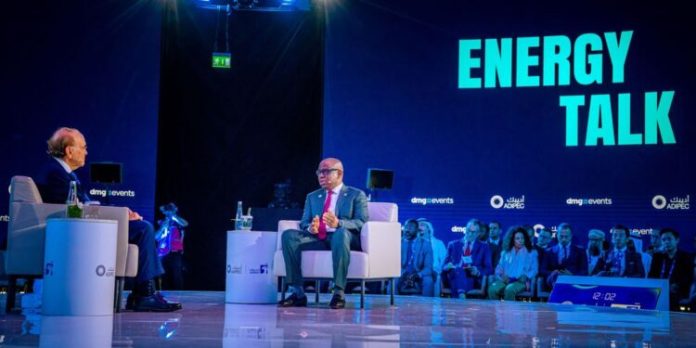
The Nigerian National Petroleum Company Limited (NNPC Ltd) says it is targeting between $30 billion and $60 billion in fresh investments by 2030 as part of its strategy to accelerate Africa’s energy transformation and reposition Nigeria as a leading player in the global energy transition.
Group Chief Executive Officer of NNPC Ltd, Engr Bashir Bayo Ojulari, disclosed this on Tuesday during an “Energy Talk Session” at the ongoing Abu Dhabi International Petroleum Exhibition and Conference (ADIPEC 2025) in the United Arab Emirates. He spoke while responding to questions from Pulitzer Prize-winning energy author, Daniel Yergin.
Ojulari said Nigeria holds significant oil, gas, and renewable energy potential which, under President Bola Tinubu’s Renewed Hope Agenda, is being repositioned from an extractive economy into a diversified, investment-driven energy hub.
“Africa’s energy future must be built on pragmatism, partnerships, and purpose,” Ojulari said. “At NNPC Limited, we are not just participating in the energy transition — we are shaping it from an African perspective. Our focus is pragmatic: grow production, monetise gas, deepen partnerships, and deliver value to Nigerians and global partners alike.”
The NNPC chief said crude oil output has risen to 1.7 million barrels per day, with targets of two million barrels per day by 2027 and three million barrels per day in the long term. He attributed the production rebound to strengthened engagement with international oil companies (IOCs) and independents, removal of legacy bottlenecks, and renewed alignment on shared value.
Ojulari further stated that NNPC Ltd is working closely with OPEC stakeholders, African national oil companies and international financial institutions to unlock the planned $60 billion capital inflow by the end of the decade. He added that new incentives introduced to complement the Petroleum Industry Act (PIA) are already stimulating renewed foreign interest in deep-water exploration, gas development and operational efficiency.
A statement issued by NNPC’s Chief Corporate Communications Officer, Andy Odeh, listed ongoing priority projects including upstream revitalisation, fast-tracked new field developments, and major gas infrastructure schemes — notably the Ajaokuta–Kaduna–Kano (AKK) pipeline and the Obiafu–Obrikom–Oben (OB3) gas pipeline.
Referencing the opening remarks by the UAE Minister of Industry and ADNOC CEO, Dr Sultan Ahmed Al Jaber — who called for “pragmatic, not performative” energy policies and noted that $4 trillion in annual investments is needed globally — Ojulari urged the global energy community to co-invest in Africa’s growth.
“Our message to the world is clear: Nigeria is open for business, NNPC Limited is fit for the future, and we invite the world to co-invest in Africa’s energy transformation,” he said.
ADIPEC is one of the world’s largest energy conferences, hosted annually by ADNOC. The 2025 edition, the 41st is themed “Energy. Intelligence. Impact.”
The Nigeria Civil Aviation Authority (NCAA), in partnership with several insurance providers, has introduced a new policy to protect aviation professionals against the loss of their licences. The initiative aims to improve welfare and safety standards across the sector.
The policy provides financial support to pilots, engineers, and air traffic controllers who may lose their certification due to illness, injury, or other unforeseen circumstances.
The NCAA explained that the scheme would extend to cover more aviation roles and operate under transparent guidelines to ensure timely claims and fair compensation. It is also expected to ease the financial burden on airlines and operators, as insurance costs will now be shared through a collective framework.
Many within the aviation sector see the initiative as a major step toward aligning Nigeria’s aviation industry with international standards. It also answers long-standing appeals from pilots and engineers for stronger social and financial protection in cases where their licences are revoked for health or safety reasons.
This new cover comes at a time when stakeholders are pushing for broader reforms to improve working conditions and financial stability across the industry. It marks another effort by the government to build a more resilient and investor-friendly aviation environment.
Aviation expert Capt. Samuel Caulcrick has called on the Federal Government to introduce clear and consistent policies that will strengthen Nigeria’s aviation sector. He said reforms are needed to attract investment, develop local maintenance capacity, and reduce the nation’s dependence on foreign facilities.
Caulcrick explained that Nigerian airlines spend close to $1 billion every year on aircraft maintenance abroad. According to him, this practice weakens the economy and prevents local engineers from gaining the experience required to sustain a modern aviation industry.
He urged regulators, especially the Nigerian Civil Aviation Authority (NCAA), to review current guidelines and promote the use of certified local maintenance, repair, and overhaul (MRO) centres. Such a move, he said, would save foreign exchange, create jobs, and make local operators more competitive.
Caulcrick, who is also a former rector of the Nigerian College of Aviation Technology (NCAT), highlighted the shortage of skilled personnel and equipment as major challenges. He added that without better support for technical training and infrastructure, Nigeria could lose its chance to become a regional aviation hub.
He emphasised that the sector has strong growth potential if government agencies and private investors align their efforts. By improving policy consistency and financing access, he said, the industry could regain stability and unlock new opportunities for local participation.
The business environment in Nigeria continued its upward trend in October, led by gains in the manufacturing and trade sectors, according to the latest data from the Nigerian Economic Summit Group (NESG).
The NESG–Stanbic IBTC Business Confidence Monitor (BCM) recorded a rise to 111.3 points in October, up from 107.9 in September and 76.8 in the same month last year.
A sectoral breakdown showed manufacturing led with an 8.8-point gain, while trade improved by 7.8 points. Non-manufacturing, agriculture and services also posted growth, though at slower rates.
Despite the positive trend, the BCM noted that some challenges persist. Businesses continue to report difficulties in accessing credit, high commercial property costs, unclear policy signals, and unreliable power supply.
Bizwatch Nigeria reported earlier this year that the manufacturing sector in Nigeria is struggling due to high inflation, rising interest rates, and the depreciation of the naira.
The NESG noted that sustaining this upward trend will require deliberate policy actions that promote investor confidence, remove trade barriers, and enhance access to finance for small and medium enterprises. Consistent implementation of economic reforms, the group added, will be key to ensuring that the current momentum translates into lasting growth across Nigeria’s business landscape.
Gold prices slipped under a critical technical support level amid rising caution over U.S. interest-rate policy and weak manufacturing data. The downturn signals rising uncertainty for traders in the precious-metals market.
According to analysts at FXStreet, uncertainty over how quickly the Federal Reserve may cut rates is pushing investors out of gold. Fed Chair Jerome Powell recently indicated that further easing this year is not guaranteed. That stance has undermined the outlook for gold as a hedge against inflation.
At the same time, U.S. manufacturing activity has lost momentum. The latest Institute for Supply Management (ISM) index fell to 48.7 in October, marking its fourth month of contraction. The soft data further complicate the economic picture and add extra pressure on gold.
Technically, gold remains within a long-term bullish structure, but the recent pull-back tests key support zones. If those levels give way, the next leg higher may be delayed. If support holds, gold could resume its uptrend once market confidence returns.
For Nigerian investors and commentators, the price move matters on two fronts. First, changes in global monetary policy can affect the Nigerian naira and inflation, both of which influence local gold demand. Second, a weaker gold rally may reduce appeal for investment in gold‐linked assets and savings instruments that rely on global safe-haven themes.
Companies and high-net-worth individuals in Nigeria who view gold as part of their portfolio should watch for signs of renewed risk-off sentiment, a weaker dollar or stronger inflation data. Any of these may trigger a rebound in gold prices and change the current slide into a new buying phase.
President Bola Tinubu has nominated Kingsley Tochukwu Ude (SAN) as the new Minister of Science, Innovation, and Technology. Ude is to replace Uche Nnaji, who resigned from the position in October.
The president’s nomination was contained in a letter read by Senate President Godswill Akpabio during Tuesday’s plenary. The letter was referred to the Committee of the Whole for screening and confirmation.
If confirmed, Ude will take over the ministry at a crucial time for Nigeria’s push in science, research, and innovation. He currently serves as the Attorney-General and Commissioner for Justice in Enugu State, where he is known for his policy and legal expertise.
Analysts say the appointment is significant for two reasons. First, it restores Enugu’s representation at the federal level. Second, it puts an experienced lawyer in charge of a ministry driving Nigeria’s industrial and technology ambitions.
However, some observers note that Ude’s legal background may present an early challenge. They believe he will need strong technical advisors and clear policy direction to succeed in a science-led ministry.
The Ministry of Science and Technology plays a key role in developing Nigeria’s manufacturing and innovation ecosystem. Stakeholders expect Ude to focus on research investment, technology transfer, and partnerships between government and the private sector.
His appointment also comes at a time when the federal government is working to deepen local production and innovation. Recently,BizWatch Nigeria reported that the Federal Government and the European Union are set to hold a High-Level Health Investment Forum to strengthen Nigeria’s manufacturing base.
Ude’s leadership will be closely watched by investors and industry players. His ability to link science, technology, and economic growth could determine how fast Nigeria achieves its industrial goals.
The Senate is expected to begin Ude’s confirmation process in the coming days.
The Chief Executive Officer of Innoson Vehicle Manufacturing (IVM) (IVM), Innocent Ifediaso Chukwuma, has praised the federal government’s “Buy Nigeria” product policy as a vital tool for strengthening the country’s industrial base. He however warned that its potential remains untapped due to weak execution and systemic obstacles.
Speaking in an interview, Chukwuma described the policy as “one of the best things that has happened to this country,” underlining its capacity to create jobs, reduce reliance on imports and empower local manufacturers. Yet, he also expressed frustration over the policy’s limited impact so far, attributing the stagnation to a banking sector. He opines that the banks do not fully support indigenous industry. “The banks are still a major obstacle to industrial growth,” he said.
Highlighting key hurdles, Chukwuma pointed to the limited access to financing for local manufacturers. He noted that without adequate credit support, domestic producers cannot expand operations or compete effectively with imported products. Even with good policies in place, he said, the absence of funding continues to slow industrial growth.
In a related development,BizWatch Nigeria reported that the Federal Government and the European Union plan to host a High-Level Health Investment Forum to boost local pharmaceutical production and strengthen Nigeria’s manufacturing base. The initiative reflects a wider push to develop local industries and reduce reliance on imports.
Meanwhile, Innoson plans to set up a compressed natural gas (CNG) assembly plant in Bayelsa State. The project, according to Chukwuma, will create jobs, enhance mobility, and link the company to the growing renewable energy space. It is also expected to build local capacity in assembly, maintenance, and logistics.
The company recently unveiled its first locally produced electric vehicle at its Nnewi, Anambra State facility. The move signals Innoson’s commitment to innovation and its drive to strengthen Nigeria’s manufacturing value chain.
Chukwuma’s remarks highlight a recurring issue in Nigeria’s industrial policy — strong intentions but uneven implementation. He stressed that for the Buy Nigeria agenda to achieve its goals, financial institutions and government agencies must work together to help local firms compete on cost, quality, and scale.
Global retailer Sinomart has officially opened its first Nigerian flagship outlet at The Palms Shopping Mall, Victoria Island, marking a significant entry into Nigeria’s evolving retail market.
At the launch event, Sinomart’s Managing Director/CEO, Sky Chunming Huang, stated that the store represents the company’s commitment to delivering global-class shopping experiences in Nigeria. He described the new outlet as a vision to bring international retail standards closer to Nigerian consumers, with a focus on quality, variety, affordability, and convenience.
The event also highlighted Sinomart’s efforts to connect with its host communities. Traditional leaders, including representatives of the Oniru-in-Council and the Ikate Kingdom, attended the ceremony to lend their support. Chief Olalekan Bakare, representing the Ikate Kingdom, noted that Sinomart’s choice of location reinforces Lagos’s image as a hub for commerce and innovation.
Activities at the launch included a guided tour of the new facility, special offers for opening-day shoppers, and a ribbon-cutting session that symbolised the retailer’s formal debut in Nigeria. According to company representatives, Sinomart’s expansion plan will see additional outlets rolled out across major Nigerian cities — a move that signals the brand’s long-term confidence in the country’s retail growth potential.
Industry analysts say Sinomart’s arrival reflects a broader trend, as international and regional retailers increasingly target Nigeria’s growing consumer base and urban centres. However, they caution that sustained success will depend on supply-chain efficiency, pricing strategy, and how well the brand adapts to local market conditions.
For now, Sinomart’s Lagos launch stands as a strategic step into modern retailing in Nigeria — one that could challenge established players and reshape consumer expectations in the years ahead.