Retired police officers protesting their continued inclusion in the Contributory Pension Scheme (CPS) may soon get relief, as the Senate has pledged to fast-track their removal from the system.
For weeks, the retirees have camped at the Mopol Gate of the National Assembly, sleeping in makeshift tents to draw attention to their grievances.
Senate President Godswill Akpabio, while receiving the leadership of the retired officers on Thursday, assured them that the Senate would give the matter urgent legislative attention. He noted that the Senate would align with the House of Representatives, which has already passed a bill to remove the police from the CPS.
In a statement issued by his Special Assistant on Media, Jackson Udom, Akpabio said: “The policy, from what you have told us, was not well thought out. Take it that you have to disperse from the gate. That problem, as far as the law is concerned, is over.”
He added that the Senate would, by Tuesday next week, concur with the House’s decision and transmit a final Act for presidential assent. “I am confident that President Bola Tinubu, being a listening President, will sign it into law. The Scheme is certainly not good for the security personnel,” he said.
Akpabio also questioned why the police remained under the CPS while other security agencies have exited. “If the Military, DSS, NIA, and others have exited, I see no reason why the Police should remain while those in the echelon of the service are out of it… What is good for the goose is also good for the gander,” he added, stressing that pension arrangements must be uniform “from the Inspector General to the last constable.”
Leader of the retirees, CSP Mannir Lawal Zaria, expressed gratitude to the Senate President and said they were hopeful that the issue would be resolved.
Senate Leader Opeyemi Bamidele (APC, Ekiti Central), in his vote of thanks, commended Akpabio for his swift intervention in the plight of the retired officers.
The Lagos State Government has disclosed that an estimated 160,000 residents are currently living with the Human Immunodeficiency Virus (HIV), based on the latest data covering January to September 2025.
The Lagos State AIDS Control Agency (LSACA) revealed the figure during its World AIDS Day 2025 media briefing held on Thursday in Alausa, Ikeja.
Presenting the state’s progress report, the Chief Executive Officer of LSACA, Dr. Folakemi Animashaun, said 147,466 of those living with the virus are currently receiving antiretroviral therapy.
“As of January to September 2025, Lagos State currently has an estimated 160,000 residents living with HIV, of whom 147,466 persons are on antiretroviral treatment,” she said.
Animashaun commended Governor Babajide Sanwo-Olu for his continued support, noting that his administration’s commitment “strengthens both our health systems and community networks, ensuring that every effort to prevent, detect, and treat HIV is empowered and sustained.”
She said this year’s theme, “Overcoming Disruptions: Sustaining Nigeria’s HIV Response,” reflects the challenges encountered in Lagos, particularly following the Stop Work Order issued by the United States Government, which halted several community-level HIV interventions.
In March, The PUNCH reported that the U.S. Government terminated its agreement with UNAIDS as part of a broader review of foreign aid programmes ordered by President Donald Trump under the Executive Order titled “Reevaluating and Realigning U.S. Foreign Aid.” The directive triggered a 90-day halt to all foreign aid, significantly slowing HIV testing and counselling services in Lagos.
“These pauses in community activities slowed essential interventions, limiting access to testing, counselling, and psychosocial support,” Animashaun said, adding that vulnerable populations were hardest hit.
During the reporting period, the state conducted 222,415 HIV tests—representing only 28.9 per cent of the previous year’s testing output—underscoring how disruptions affected service delivery.
Animashaun noted that the decline “reinforces the need to sustain engagement, early testing, and strong community support.”
Despite the setbacks, she praised community groups for their swift adaptation, saying their dedication enabled the state to “regain lost momentum.”
Providing updates on LSACA’s ongoing Statewide Community HIV Testing Campaign, which began on 18 November, Animashaun said 9,943 residents have so far been tested, with a 2.0 per cent positivity rate, and all identified cases have been linked to care.
“Women are showing strong participation, particularly in Ikorodu, Badagry, Ojo, and Mushin, demonstrating the success of market-based and community-cluster strategies,” she said.
She added that positive cases have been detected across several local governments, reaffirming that HIV remains a major public health concern in Lagos.
Animashaun also highlighted intensified anti-stigma campaigns and outlined activities planned for this year’s World AIDS Day commemoration, including a Jumat service, a novelty football match, church outreach, a public awareness walk, and a stakeholder symposium.
“Together, we can sustain the HIV response for a healthier, stronger Lagos,” she said, calling for renewed collective action in the fight against HIV/AIDS.
The Federal Inland Revenue Service (FIRS) has announced a three-day shutdown of its information technology (IT) systems to enable the agency carry out scheduled maintenance across all its applications and digital infrastructure.
In a notice issued on Thursday, the service said the downtime will run from Friday, 28 November to Sunday, 30 November 2025.
“The general public should note that there will be an FIRS IT services downtime,” the statement read. “The shutdown of applications and IT infrastructure will commence on 28th November and end on 30th November, 2025. We apologise for any inconvenience this may cause.”
The notice comes just days after the service held an interactive webinar on upcoming adjustments to corporate income tax obligations for small companies.
The session, titled “Income Taxes: Expected Changes in 2026 and How to Stay Compliant,” focused on the difference between tax exemption and zero-per-cent tax liability.
Kehinde Kajesomo, a Deputy Director at FIRS, explained that from 2026, small companies—though still paying zero per cent corporate income tax—will no longer be classified as tax-exempt. Instead, they will be required to compute taxable income and file self-assessment returns.
“From 2026, small companies will pay tax, but at zero per cent,” Kajesomo said. “Before, they were exempt from tax, but now they are liable to tax, though at zero percent. What this means is that they will undergo the process of computing their taxable profits and file returns with the tax authority, but the tax payable will be zero.”
The clarification, he added, is part of efforts to strengthen compliance, improve reporting accuracy and ensure all entities—whether tax-paying or not—remain within the formal tax net.
Under recent revisions, firms with annual turnover of up to ₦50 million and fixed assets not exceeding ₦250 million now qualify as small companies. These companies will also fall under the Additional Tax Rule (ATR) in Section 57 of the Nigerian Tax Act.
In addition, a new Development Levy of 4 per cent on accessible profits will replace several existing levies, including the Tertiary Education Tax, IT Levy, Police Trust Fund Levy and NASENI Levy.
The planned IT downtime is expected to support broader system upgrades as FIRS prepares for the implementation of these rule changes in 2026.
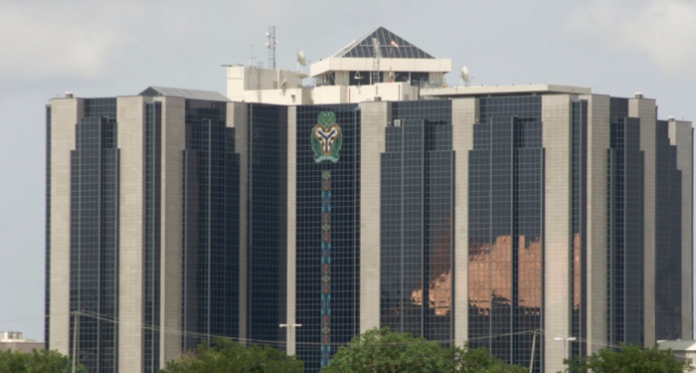
The Central Bank of Nigeria (CBN) has ordered banks, payment service banks and other regulated financial institutions to immediately withdraw all advertisements and promotional materials that fall short of established consumer-protection and fair-marketing standards.
The directive was contained in a circular dated 27 November 2025 and signed by Olubunmi Ayodele-Oni on behalf of the Director, Compliance Department.
According to the apex bank, the order followed a thematic industry review which revealed widespread inconsistencies in how financial institutions interpret disclosure, transparency and fair-marketing obligations under the Consumer Protection Regulations (2019) and the Guidelines on Advertisements by Deposit-Taking Financial Institutions (2000).
The CBN stated that several institutions continue to disseminate promotional content that exaggerates benefits, omits key product information, minimises or conceals risks, or references unaudited financial results. It warned that such practices mislead consumers, distort competition and threaten confidence in the financial system.
The regulator reiterated that all bank advertisements must be factual, balanced and transparent. It prohibited the use of comparative, superlative or de-marketing claims—whether direct or implied—and banned all chance-based promotional inducements, including lotteries, prize draws and lucky dips. Such tactics, it noted, could pressure consumers into decisions without fully understanding associated risks.
Under the strengthened compliance framework, financial institutions must now notify the CBN before releasing any advertisement or marketing material. The notification must detail the advert’s duration, creative format, proposed publication channels, target demographic and geographic segments, as well as written confirmation of internal approval by both compliance and legal departments.
Institutions are also required to present evidence that the product or service being advertised has already received CBN approval. However, the apex bank clarified that the notification process is strictly for monitoring and does not constitute endorsement of the advert. Banks will remain fully accountable for compliance with all regulatory requirements.
The CBN directed all institutions to immediately withdraw non-compliant advertisements. Additionally, within 30 days, they must submit a compliance attestation jointly signed by the Managing Director or Chief Executive Officer, the Executive Compliance Officer and the Chief Compliance Officer. The attestation must confirm that all current advertising and promotional practices meet regulatory and internal governance standards.
The apex bank announced that from January 2026, it will conduct a follow-up compliance review across the sector. Any institution found in violation of the rules will face sanctions as stipulated in the Banks and Other Financial Institutions Act (2020) and the Consumer Protection Regulations.
The CBN reaffirmed its commitment to promoting fairness, transparency and responsible marketing within the financial system.
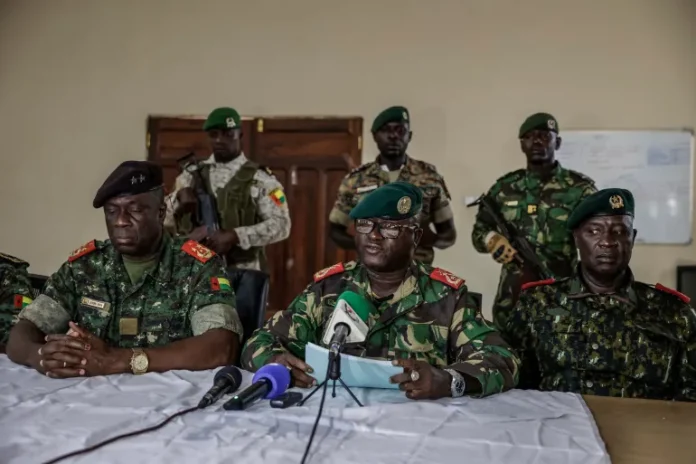
Soldiers in Guinea-Bissau say they have taken control of the country and detained President Umaro Sissoco Embaló following gunfire in the capital, Bissau.
Government sources told the BBC that the president was arrested shortly after shots were heard near the presidential palace on Wednesday afternoon.
The military officers appeared on state television to announce that they had suspended the electoral process, closed national borders, and imposed a night-time curfew.
They alleged that unnamed politicians, backed by “a well-known drug baron,” were plotting to destabilise the country.
Background
Guinea-Bissau, located between Senegal and Guinea, has a long history of coups. Since independence from Portugal in 1974, the military has played an influential role, and the country has gained a reputation as a transit hub for cocaine trafficked from Latin America to Europe. The United Nations has previously described it as a “narco-state.”
Election Context
The country was awaiting the final results of Sunday’s presidential election, which were expected on Thursday. Both Embaló and his main rival, Fernando Dias, had claimed victory.
Dias is politically aligned with former Prime Minister Domingos Pereira, who was barred from contesting the election.
Developments After the Arrest
Before the military announcement, Embaló told France 24 by phone: “I have been deposed.”
Government sources later said Dias, Pereira, and Interior Minister Botché Candé had also been arrested. The coup leaders reportedly detained the army chief, Gen Biague Na Ntan, and his deputy, Gen Mamadou Touré.
General Denis N’Canha delivered the televised statement establishing a “High Military Command for the Restoration of Order” and urged residents to remain calm. Soldiers then set up checkpoints across Bissau.
Regional and International Reactions
Election observers from the African Union and Ecowas said they were “deeply concerned” by the coup announcement, noting that the voting process had been peaceful.
They said both leading candidates had earlier assured them they would accept the election results.
Portugal called for a swift return to constitutional order and urged all actors to avoid violence.
About President Embaló
Embaló, 53, was elected in 2019 and has previously claimed to have survived several coup attempts. Opposition parties argued that his mandate legally ended in February 2025, after he initially said he would not seek re-election.
Guinea-Bissau remains one of the poorest countries in the world, with a population of about two million and large uninhabited islands along its coast, often exploited by drug traffickers.
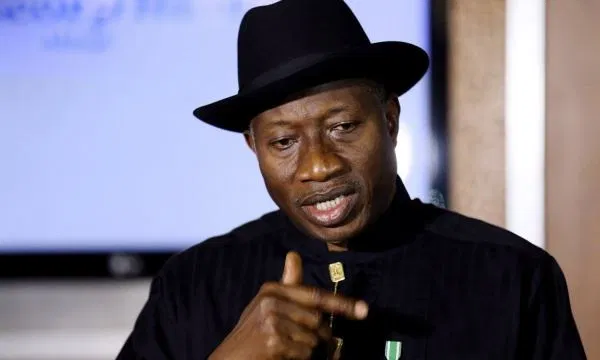
Former President Goodluck Jonathan of Nigeria and former Mozambican President Filipe Nyusi were stranded in Guinea-Bissau on Wednesday after soldiers announced a takeover and shut the country’s borders.
Both leaders, who were in Bissau as heads of election observer missions, were confirmed safe in their hotel rooms. Flights were suspended, leaving several observers unable to leave the country.
A group of military officers appeared on state television, declaring that they had removed President Umaro Sissoco Embaló from office. They said they had suspended the electoral process, closed the borders, and imposed a night-time curfew.
Embaló later told France 24 by phone, “I have been deposed.” His exact location remained unknown as of last night.
The officers said they acted to stop a destabilisation plot involving local politicians and drug traffickers. They announced the formation of a “High Military Command for the Restoration of Order,” which they said would run the country until further notice.
Gunfire was heard earlier near the electoral commission headquarters, the presidential palace, and the interior ministry. Witnesses reported panic as people fled the streets. There were no confirmed casualties.
The military statement came a day before the expected announcement of provisional results from Sunday’s presidential election, in which Embaló and opposition candidate Fernando Dias had both claimed victory.
A spokesperson for Embaló accused unidentified gunmen linked to Dias of attacking the electoral commission. Allies of Dias denied the claim, saying he was in a meeting with observers when shots were heard.
Guinea-Bissau has a long history of political instability. The country has experienced at least nine coups or attempted coups since independence from Portugal in 1974. Embaló, elected in 2019, has said he survived multiple coup attempts. His critics accuse him of exaggerating threats to justify crackdowns.
The nation of two million people remains one of the poorest in the world. Its remote islands and weak institutions have made it a major transit point for Latin American cocaine headed to Europe.
Jonathan, Nyusi, and other observer mission leaders issued a joint statement condemning the military action. They said the voting process had been peaceful and called for a return to constitutional order.
They urged the release of detained officials involved in the election process and warned that the coup threatened the country’s democratic progress.
Welcome, my people, to another Thursday, when we gather to laugh, reflect, and, if life has been particularly dramatic, deeply exhale. Nigeria is already a full-time job, but somehow, relationships and social media have come together to form a second employment we never applied for.
Today’s Chronicle touches two hot topics that many pretend don’t exist: the pressure to keep up online and the emotional palaver that comes with real-life friendships. Because let’s be honest, sometimes the real drama is not even on Instagram, it’s inside the house.
Social media has turned life into one big talent show. Everywhere you look, someone is soft-launching a new relationship, unboxing a new perfume, eating brunch in a place you didn’t even know existed, or posting motivational quotes that don’t match their behavior offline. While scrolling, one begins to wonder: “When did life turn into a competition of who is suffering quietly and shining loudly?”
But the real gist is what happens behind the scenes, those complicated, layered, sometimes sweet, sometimes bitter friendships that nobody ever posts about. We all know relationships that look peaceful from afar, but up close? Ah. It’s like Nollywood and Netflix had a baby.
There are friendships that start with love, warmth, and unshakable closeness. Until one day, without warning, small cracks begin to appear. Maybe it’s subtle disrespect disguised as jokes. Maybe it’s constant misunderstandings. Maybe it’s the kind of two-faced behaviour that can make a person question if they accidentally offended the gods. One minute, somebody is laughing with you in the living room; the next minute, they are outside telling stories about you that even you didn’t know happened.
And the funny part? It’s always the people who shout “I’m loyal!” on social media who have the most PhD in two-faced behaviour. Offline, they forget conversations, twist events, sprinkle unnecessary drama, and somehow always paint themselves as the saints in every story. If acting were money, some people would be richer than Dangote by now.
In Nigeria, where friendship is sometimes a survival strategy, sharing space, costs, meals, or just emotional support, the weight of a friendship going left hits hard. One day, everything seems fine; the next day, someone packs their bags with the speed of Rapture and sends a polite WhatsApp message minutes later like, “Thank you for everything, God bless you.” Meanwhile, the house is still warm from where they sat.
It’s almost comical how humans can switch roles faster than NEPA switches off lights. They smile with you at home but feed others a whole documentary about you outside. And somehow, the same people who act like villains offline become motivational speakers online, posting “protect your peace” while actively disturbing other people’s peace.
Mix that with social media pressure, and life becomes a full movie.
Because when friendships shake, the timeline does not pause. Instagram is still shouting “new car,” “new job,” “new hair,” “new vacation,” while real life is teaching unsolicited life lessons. And yet, somehow, everyone must still look composed. Nobody must know that emotions are doing boxing practice inside your chest. Everyone must maintain aesthetic feed and cute captions like “God is good” when deep down, it is God and restraint holding the situation together.
Still, beneath the humour and sarcasm lies a simple truth: real life is messy. Friendships are unpredictable. Humans will shock you. And social media? Social media will deceive you if you let it. But none of these things should define self-worth or disrupt inner peace.
Sometimes relationships end quietly because they have run their course. Sometimes people leave because they were never meant to stay. Sometimes peace comes not from keeping people around, but from letting their chapter close with dignity and without unnecessary noise.
And truthfully, not all departures are tragedies. Some are deliverance.
At the end of the day, life continues—both online and offline. There will always be pressure to look successful, friendships that test emotional strength, and unexpected plot twists that Nollywood scriptwriters would envy. But there will also always be laughter, growth, and the freedom that comes from choosing peace over performance.
And that’s today’s Thursday Chronicle, my people. Friendships may be dramatic, social media may be loud, but peace of mind? Priceless.
Until next Thursday, same time, same energy, same premium gist.
The Lagos State Film and Video Censors Board (LSFVCB) has held its fifth Stakeholders’ Conference, reaffirming its commitment to transforming the agency into a world-class regulator and enabler of the film and creative industry.
The conference, held on Wednesday, brought together government officials, industry practitioners, and stakeholders to discuss strategies for promoting compliance, creativity, and cultural integrity in Lagos’ film sector.
Speaking at the event, the Commissioner for Tourism, Arts and Culture, Mrs. Toke Benson-Awoyinka, said the administration of Governor Babajide Sanwo-Olu remains dedicated to supporting the film industry while ensuring adherence to regulations. She was represented by the Permanent Secretary of the Ministry, Mrs. Adebopo Oyekan-Ismaila, who highlighted the importance of collaboration between government and industry players.
The Executive Secretary of LSFVCB, Mrs. Adebukola Agbaminoja, said the board aims to serve not only as a regulator but also as a partner in developing the industry. She said the agency plans to foster more co-productions in Lagos and promote Nigerian films on the global stage.
This year’s conference was themed “Navigating the Future of Film: Balancing Creativity, Compliance, and Cultural Integrity.” Sessions included discussions on reimagining compliance as a catalyst for creative excellence, addressing violence and abuse on film sets, and promoting digital citizenship and online etiquette.
A panel moderated by filmmaker Victor Okhai examined the impact of streaming platforms on traditional distribution models. Panelists Chioma Ude, Moses Babatope, and Uche Agbo shared insights on the evolving role of the film market and the opportunities for Nigerian content in global markets.
The conference also showcased Lagos’ cultural vibrancy with dance and drama performances by the LSFVCB troupe and the Lagos State Council for Arts and Culture. Attendees commended the state government for its continued support and urged deeper collaboration to further develop the film sector.
LSFVCB was established to regulate, monitor, and guide the film and video industry in Lagos. The board issues permits, ensures content compliance, and works with producers to promote quality and culturally relevant productions. Lagos is considered Nigeria’s creative hub, hosting numerous film productions, festivals, and media initiatives that contribute significantly to the state’s economy.
Stakeholders at the conference highlighted the need for ongoing training for filmmakers, stronger partnerships with international markets, and investment in infrastructure to enhance production quality. The board said it will continue to implement policies that support the growth and global competitiveness of Lagos’ film industry.
Interswitch Group, Africa’s leading integrated payments and digital commerce company, announced its sponsorship and participation at the 2025 edition of the CIO & C-Suite Conference & Awards Africa, which held on Saturday, 22 November 2025, at The Civic Centre, Victoria Island, Lagos.
The CIO & C-Suite Conference & Awards Africa is the continent’s premier platform that celebrates visionary technology leadership, innovation, and enterprise transformation. Now in its sixth year, the event convened senior technology and business leaders from across the continent, including Chief Information Officers (CIOs), Chief Technology Officers (CTOs), Chief Executive Officers (CEOs), and other C-Suite executives who are shaping Africa’s digital future.
Over the years, Interswitch has consistently featured as an active contributor to the event’s agenda, reinforcing its long-standing commitment to advancing digital transformation in the ecosystem, fostering technological excellence, and empowering enterprises across the region.
As a recurring supporter and participant in the conference, Interswitch has leveraged the platform to engage industry leaders, share insights on emerging technologies, and contribute to high-level conversations on shaping Africa’s digital economy. The 2025 edition presented yet another opportunity for the company to deepen its thought leadership, showcase innovation, and highlight its role in driving enterprise-level transformation, cybersecurity evolution, and infrastructure modernization across the continent.
As part of the announcement, the Executive Vice President (EVP), Group Operations & Technology, Interswitch, Babafemi Ogungbamila reaffirmed the company’s commitment to supporting platforms that accelerate enterprise innovation and strengthen Africa’s technology leadership landscape. He noted that the sponsorship reflects the organisation’s long-standing dedication to building resilient digital ecosystems across the continent.
“Our sponsorship of this awards platform aligns seamlessly with Interswitch’s broader mission of powering sustainable innovation across Africa. It reflects our conviction that the continent’s competitive advantage will be increasingly defined by how effectively organisations navigate digital transition, strengthen technology agility, and cultivate innovation-led leadership; an agenda we have consistently championed for over two decades.”
Ogungbamila added that beyond celebrating excellence, the CIO & C-Suite Awards Africa provided a critical environment for leaders to exchange insights, spotlight transformative ideas, and shape the blueprint for Africa’s next phase of digital growth. He reiterated that Interswitch remains committed not only to building the infrastructure that powers digital commerce but also to supporting initiatives that drive enterprise transformation across the region.
This year, Interswitch also celebrated the recognition of its Chief Information Officer, Patrick Okebu, who was nominated in the Fintech Category (Nigeria) at the 2025 CIO & C-Suite Awards Africa. His nomination and win acknowledged his strategic leadership, forward-thinking approach to enterprise technology, and significant contribution to advancing Africa’s digital payments ecosystem.
Okebu, who has played a critical role in Interswitch’s technology evolution and infrastructure resilience, has been instrumental in steering the company’s digital transformation, enterprise architecture, infrastructure, , data strategy, automation, IT governance and AI transformation. The company views this recognition not only as a testament to its internal culture of excellence but also as an encouragement to further push the boundaries of innovation and technology enablement.
Within the ecosystem, Interswitch is poised strategically to engage industry stakeholders, celebrate innovation across sectors, and reinforce its mission to continuously power Africa’s digital transformation.
The Central Bank of Nigeria (CBN) conducted a series of FX interventions amounting to $250 million last week as it moved to protect the naira amid mounting currency pressures in the official market.
The intervention followed a week of heavy selloffs, during which the naira weakened by N14 despite the CBN’s efforts to increase market liquidity. The central bank sold the dollar volume to authorised dealers and banks, absorbing the equivalent naira liquidity as part of its currency defence strategy.
According to Cordros Capital, strong FX demand from corporates looking to secure imports ahead of the festive season contributed to the currency’s depreciation. The firm noted that demand outpaced the CBN’s injection, leaving the naira vulnerable despite earlier gains that saw rates briefly strengthen below N1430.
Nigeria’s external reserve position improved slightly during the week, rising by 1.10% from $43.64 billion to $44.12 billion, supported by oil inflows, non-oil receipts, and a solid trade surplus, according to Cowry Asset.
Analysts expect that the FX market will likely remain cautious, reacting primarily to inflow strength rather than speculation. They warn that unless inflows pick up, the naira may continue to face intermittent pressure.
However, the gradual uptick in reserves and consistent CBN interventions are expected to help stabilise the market, even though structural imbalances in supply and demand still remain.
Cordros Capital projects that stronger reserves, a positive current account position, and global monetary easing will help improve investor sentiment and attract fresh FX inflows.
Global market conditions also weighed on currencies and commodities. Oil prices dipped nearly 1% as U.S.-led peace efforts in the Russia–Ukraine conflict raised prospects of higher future crude supply.
Brent crude: down 2.84% to $62.56
WTI: down 3.15% to $58.06
Gold also posted a modest drop as bets on a December U.S. rate cut increased following dovish Federal Reserve signals. Spot gold fell 0.34% to $4,065.90/oz, while U.S. gold futures slipped 1.79% to $4,009.80.
Analysts expect commodity prices to show mixed trends next week as investors continue to hedge expectations around a potential December rate cut and evolving supply conditions.
Vivajets, a business aviation company, has expressed confidence in the long-term prospects of Africa’s aviation sector even as policy and structural barriers continue to slow its growth.
The Chief Executive Officer of the company, Chukwuerika Achum, made the remarks at the Africa Financial Summit (AFIS 2025) in Morocco. The summit brought together more than 1,000 leaders from the financial industry, including bankers, insurers and policymakers, to discuss ways to strengthen the pan-African financial services landscape.
Achum acknowledged improvements in technology and regional cooperation within the aviation sector. However, he said the industry cannot make meaningful progress without policy harmonisation, regulatory clarity and stronger financial trust among African operators.
He noted that the sector still struggles with complex regulations, visa restrictions and low trust in business transactions.
“The trust currency is very low in Africa. While European operators receive 30-day credit terms, African operators are required to pay upfront. That imbalance speaks for itself,” Achum said.
He also criticised the visa barriers faced by African airline crews despite Annex 9 of the International Civil Aviation Organization which provides facilitation for crew movement. “Despite global aviation standards, Nigerian crews still need visas to enter countries such as Morocco. There is no clear explanation for this requirement,” he said.
Achum further highlighted inconsistent regulatory processes, including delayed landing and overflight permits, high insurance premiums and unfavourable currency conversions that increase operational costs. “Intra-African flights still face 72-hour landing permits without clear criteria, extra insurance premiums on African-based aircraft and currency conversions that make us pay twice,” he said.
He called for unified aviation reforms supported by governments, regulators and financial institutions. He said that standardising aviation regulations, improving insurance capacity and simplifying cross-border payments would boost efficiency and improve competitiveness.
“Africa’s skies should connect us, not divide us. We have the people, the planes and the passion. What we need now is trust, coordination and the courage to reform,” he said.
Nigeria’s foreign exchange market received another round of support as the Central Bank of Nigeria (CBN) released $36.60 million to authorised dealers and commercial banks, continuing its effort to stabilise the naira through targeted interventions.
According to newly updated FX market data, the CBN maintained its consistent strategy of supplying dollar liquidity to curb volatility and offset market demand. This latest tranche follows the $40 million supplied the previous week, reinforcing the Apex Bank’s push to keep the currency market balanced.
Wednesday’s official trading data showed the naira strengthened by 23 basis points—equivalent to N3.40—closing at N1,442.9201/$ after trading between N1,445.00/$ and N1,436.50/$ during the session. Analysts attributed the slight appreciation to improved dollar availability that exceeded prevailing market demand.
Market watchers say the outlook for the naira remains generally upbeat, helped by growing external buffers and steady foreign currency inflows.
Fresh figures from the CBN indicated that Nigeria’s gross external reserves rose by $48.4 million in a single day, reaching $44.5 billion as of November 25, 2025, despite global oil market instability and fluctuating production levels.
On the international energy scene, crude oil prices steadied on Wednesday after dropping to a one-month low in the previous trading session. Investors in the U.S. weighed concerns over potential oversupply and reports of ongoing diplomatic dialogue aimed at advancing a Russia-Ukraine peace framework.
Brent crude edged upward by 74 cents, or 1.20%, to settle at $62.54 per barrel, while the U.S. West Texas Intermediate (WTI) crude inched up by 12 cents, or 0.21%, to close at $58.07 per barrel.
Meanwhile, gold prices hovered just below their highest point in more than a week as expectations of a possible U.S. Federal Reserve rate cut in the coming month kept investors favouring non-yielding assets. Spot gold advanced by 0.93% to $4,169.42 per ounce, while U.S. gold futures climbed 0.63% to $4,203.80 per ounce.
Analysts expect financial markets to retain a cautiously optimistic tone, buoyed by stronger expectations of Fed rate cuts and firmer gold and oil prices. However, they warn that uncertainties around global energy supply and demand could continue to influence market mood in the weeks ahead.
Nigeria’s money market continued to trade under steady conditions Wednesday as system liquidity remained amply supplied, despite a major outflow linked to the settlement of federal government bonds.
The day’s trading opened with a liquidity surplus of ₦2.3 trillion—up by ₦30.6 billion from the previous level—according to a market note issued by AIICO Capital. This improvement followed a remarkable jump in Deposit Money Banks’ (DMBs) placements at the Central Bank of Nigeria’s Standard Deposit Facility (SDF).
Updated data from TrustBanc Financial Group Limited showed that banks’ SDF placements surged by 150% to ₦2.64 trillion at the close of business on Wednesday, indicating that banks continued to park excess cash at the CBN despite recent monetary adjustments.
Market analysts at AIICO Capital noted that the trend persisted even though the Monetary Policy Committee (MPC) recently revised the Standard Facility Corridor (SFC) to +50/-450 basis points from its previous +250/-250 bps range.
The money market’s direction was also shaped by significant system liquidity inflows triggered by the CBN’s asymmetric corridor policy shift and the previous day’s ₦360 billion in OMO bill maturities.
As a result, the average interbank funding rate held flat, with the Open Repo Rate (OPR) unchanged at 22.50% and the Overnight (O/N) rate steady at 22.75%. Analysts expect funding rates to remain within this band unless unexpected liquidity withdrawals occur.
In the Treasury Bills secondary market, yields declined across all major tenors. The 1-month, 3-month, 6-month, and 12-month bills dipped by 2 bps, 10 bps, 11 bps, and 1 bp respectively. Nonetheless, the overall NT-Bills average yield remained stable at 16.85%, underscoring a measured risk appetite and a cautious tone among fixed-income investors.
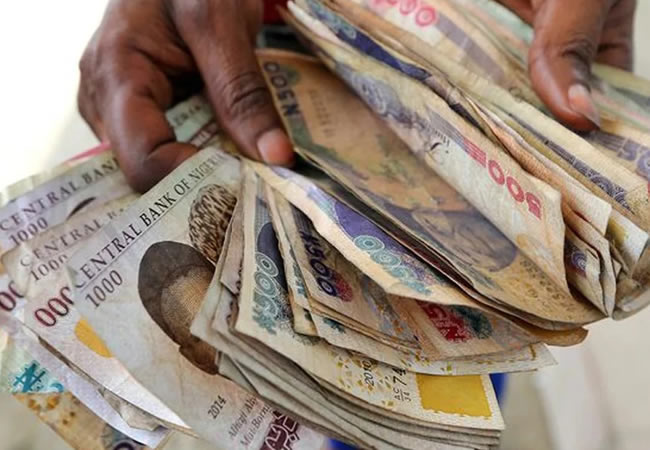
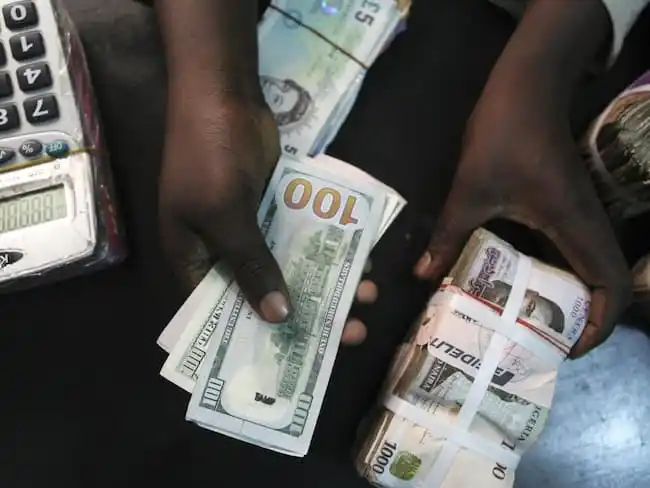
The exchange rate between the Naira and the US dollar, according to the data released on the FMDQ Security Exchange, the official forex trading portal, showed that the naira closed at 1460.00 per $1 on Thursday, November 27th , 2025. The naira traded as high as 1436.00 to the dollar at the investors and exporters (I&E) window on Wednesday.
Dollar to naira exchange rate today black market (Aboki dollar rate):
The exchange rate for a dollar to naira at Lagos Parallel Market (Black Market) players sell a dollar for ₦1470 and buy at ₦1460 on Wednesday 26th November, 2025, according to sources at Bureau De Change (BDC).
Please note that the Central Bank of Nigeria (CBN) does not recognize the parallel market (black market), as it has directed individuals who want to engage in Forex to approach their respective banks.
Dollar to Naira Black Market Rate Today
Dollar to Naira (USD to NGN)
Black Market Exchange Rate Today
Selling Rate
₦1470
Buying Rate
₦1460
Dollar to Naira CBN Rate Today
Dollar to Naira (USD to NGN)
CBN Rate Today
Highest Rate
₦1445
Lowest Rate
₦1436
Please note that the rates you buy or sell forex may be different from what is captured in this article because prices vary.
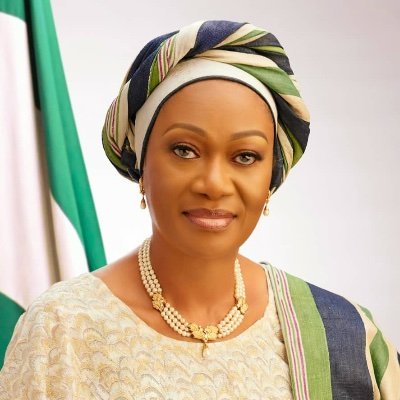
The First Lady, Senator Oluremi Tinubu, has called on global leaders, educators, and innovators to ensure that modern technology reflects human values.
Speaking at the “Education Above All” plenary of the 12th World Innovation Summit for Education (WISE) in Doha, Qatar, Mrs. Tinubu said humanity must remain at the centre of technological advancement. She warned that innovation without ethics could undermine progress.
In a statement by her Senior Special Assistant on Media, Busola Kukoyi, the First Lady said: “We should be the drivers of technology. Technology must lead; we should not remove human values from technology.” She emphasised that digital tools should safeguard human dignity, connection, and purpose.
Sharing the stage with her counterparts from Lebanon and Syria, Mrs. Tinubu praised Qatar’s achievements in education and reaffirmed Nigeria’s commitment to expanding access to schooling, particularly for girls. She noted that no religion prohibits the education of girls and stressed that the Federal Government remains focused on unlocking the potential of quality learning.
Mrs. Tinubu highlighted the global footprint of Nigerian youth in arts, technology, fashion, agriculture, and creative industries. She credited President Bola Ahmed Tinubu’s prioritisation of innovation and technology as a key driver for human capital development. She also noted that Nigeria has benefited from digital literacy but cautioned that young people must be continuously empowered to use technology positively.
The summit’s Chairperson, Sheikha Moza bint Nasser of the Qatar Foundation, emphasised that education should connect young people to new opportunities and enable communities to thrive. Other speakers at the summit, which hosted over 150,000 participants from around the world, stressed that human values and ethics must guide the use of artificial intelligence to ensure meaningful technological progress.
The World Innovation Summit for Education, launched in 2009, is a global forum that brings together education leaders, policymakers, and innovators to discuss strategies for improving access to quality education. The summit focuses on using technology and innovation to address educational challenges and promote inclusive learning. Nigeria has increasingly integrated digital tools in its education sector to expand reach and improve literacy, especially among girls and underserved communities.
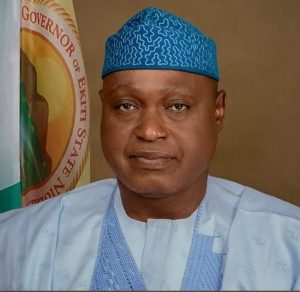
The Ekiti State Government has approved N8.78 billion for road reconstruction works and electricity extension projects across several communities in the state. The decisions were taken at the 12th meeting of the State Executive Council held virtually on Wednesday.
According to a statement issued in Ado Ekiti by the Special Adviser on Information, Taiwo Olatunbosun, the council approved N7.72 billion for the reconstruction of road networks surrounding the new flyover bridge in Ado Ekiti. The government said the intervention is intended to ease traffic flow and support economic activities around the flyover and adjoining areas of the state capital.
Roads listed for rehabilitation include Mathew Road to St. Paul’s Anglican Church, Ijigbo to Odo Ado, Mugbagba Roads, Ojumose to Post Office via Ewi’s Palace Road, and Atikankan to Baptist Church Road. The scope of work involves site clearing, earthworks, drains, pavement strengthening and asphalt overlay. The contract will be executed by Step Development Limited, the company currently handling the flyover project.
The council also approved N1.06 billion for the extension of electricity supply and installation of transformers in underserved communities. Olatunbosun said the move aligns with the administration’s objective of improving electricity access to enhance productivity and public safety.
Communities captured in the electricity intervention include Ise Ekiti and Orun Ekiti with N113 million; Fiwasaye, Abe Koko axis and Onala communities off Afao Road with N136.7 million; and Oke Ureje and Itamo communities with N4.5 million. Others include Agelusi Crescent and Judges Quarters with N69.5 million; Technology Incubation Centre and Old Technical College with N62.8 million; Iwaro at Ilokun with N153 million; Marina and Fabian communities with N127.4 million; Irona Tuntun community with N104 million; Okemesi Ekiti to Ijebu Jesha feeder connection with N160 million; and Temidire community in Iyin Ekiti with N72 million. Ekiti State has intensified infrastructure investments since 2022, focusing on roads, power, water access and urban renewal. The Ado Ekiti flyover project forms part of efforts to modernise the capital city and reduce congestion. The state has also prioritised rural electrification to support small businesses and reduce dependence on community-funded transformers. The latest approvals follow ongoing attempts by the state government to improve transportation efficiency and expand electricity coverage as part of its long-term development plan.
OpenAI has said the death of a 16-year-old California boy was the result of “misuse” of its ChatGPT system, rejecting claims that the chatbot caused the teenager’s suicide.
The company stated this in its formal reply to a lawsuit filed by the family of Adam Raine, who died in April after months of conversations with the AI tool.
The lawsuit alleges the teen repeatedly discussed suicide methods with ChatGPT, received feedback on whether they would work, and was even helped to draft a suicide note.
OpenAI, in documents filed at the California Superior Court, said the boy’s harm “was caused or contributed to” by his “misuse, unauthorised use, unintended use, unforeseeable use, and/or improper use” of the system.
It cited its terms of use, which prohibit users from seeking self-harm advice, and noted that users are warned not to rely on ChatGPT output as factual guidance.
The case is one of several legal challenges OpenAI now faces over the behaviour of its models. Rising global adoption of generative AI has intensified scrutiny on safety systems, especially after long user conversations were found to weaken safety responses.
In August, OpenAI acknowledged that ChatGPT could produce unsafe guidance during long chats despite initially directing users to suicide hotlines. The company said it was strengthening safeguards to prevent such breakdowns.
Since early November, at least seven other lawsuits have been filed in California accusing ChatGPT of providing harmful or dangerous responses, including claims that it acted as a “suicide coach.”
OpenAI said it remains focused on improving safety and submitted Raine’s full chat transcripts to the court under seal, arguing the family had quoted selective portions without context.
The family’s lawyer, Jay Edelson, called OpenAI’s response “disturbing”, saying the company was blaming a teenager for using the system “in the very way it was programmed to act.”
Suicide support resources were included in the court filings. In the US, help is available through the 988 Suicide & Crisis Lifeline.
The Minister of Aviation and Aerospace Development, Festus Keyamo, has described aviation as the connecting tissue that drives commerce, tourism, manufacturing and regional integration across Africa. He made the statement on Tuesday during a high-level virtual dialogue hosted by law firm Aluko and Oyebode.
The webinar, titled “Navigating the African Skies: Legal, Economic and Trade Pathways for the Future of Aviation in Africa,” brought together aviation, legal and economic experts from Nigeria and other African countries. Keyamo said aviation should be treated as core economic infrastructure because of its role in linking markets and supporting continental trade.
The minister renewed calls for the full implementation of the Yamoussoukro Decision and the Single African Air Transport Market. He said Africa risks economic isolation if open-skies reforms continue to stall, adding that the benefits of liberalised air transport are measurable and urgent.
Keyamo highlighted Nigeria’s recent legal reforms, including new Federal High Court practice directions aligned with the Cape Town Convention, which he said will improve investor confidence and reduce aircraft financing costs. He urged African governments to harmonise legal frameworks to support leasing, dispute resolution and asset protection.
He also stressed the need for modern aircraft fleets and deeper partnerships with manufacturers and lessors. Keyamo referenced Nigeria’s recent Memorandum of Understanding with Boeing as an example of collaboration that can build technical capacity and strengthen supply chains.
The minister called for stronger safety oversight, fair competition and investment in local aviation capacity through maintenance facilities, training centres and technical workforce development. He outlined a five-point strategy for accelerating Africa’s aviation growth: phased implementation of SAATM, harmonised legal systems, innovative financing models, sustainability-focused fleet upgrades, and investment in people and institutions.
Keyamo warned that Africa will remain economically disadvantaged if the continent fails to modernise its aviation systems. He reaffirmed Nigeria’s commitment to improving aviation infrastructure, expanding international partnerships and lowering logistics costs.
Africa’s aviation sector has long struggled with limited intra-African connectivity, high operating costs and fragmented regulatory systems. The Yamoussoukro Decision of 1999 and the Single African Air Transport Market launched in 2018 were created to open Africa’s skies, reduce barriers to travel and increase economic integration. However, only a few countries have fully implemented the agreements, slowing regional growth and restricting competition. Nigeria has recently positioned aviation as a key growth sector, with reforms aimed at improving safety, access to finance and infrastructure.
Dr. Yakubu Adam Kofarmata has officially assumed duty as the new Permanent Secretary of the Federal Ministry of Aviation and Aerospace Development, with a call for stronger collaboration among staff, agencies, and stakeholders across the aviation sector.
Speaking at the ministry’s headquarters, Kofarmata said effective coordination was essential for advancing Nigeria’s aviation and aerospace agenda. He pledged to strengthen staff development, promote professionalism, and prioritise staff welfare while building on the foundations laid by his predecessor.
In his remarks, the outgoing Permanent Secretary, Dr. Ibrahim Abubakar Kana, described the ministry as one with highly skilled and dedicated personnel. He urged staff to give Kofarmata the same level of cooperation and support to ensure continuity and progress.
The Director of Air Traffic Management delivered the vote of thanks, expressing appreciation to Kana for his open leadership style and contributions to the ministry’s growth. He assured the new permanent secretary of full cooperation from management and staff.
The ceremony ended with the formal signing of the handing-over and taking-over documents. The Ministry of Aviation and Aerospace Development oversees Nigeria’s aviation policies, airport infrastructure, air safety standards, and the emerging aerospace development agenda. Permanent secretaries play a major role in driving reforms, coordinating agencies such as the NCAA, NAMA, FAAN, and NiMET, and ensuring alignment with national transport and economic development goals. Leadership transitions in the ministry are considered significant due to ongoing sector reforms, safety upgrades, and infrastructural expansion efforts.
President Bola Ahmed Tinubu has forwarded a new list of ambassadorial nominees to the Nigerian Senate, marking a significant step toward restoring full diplomatic representation across the country’s foreign missions.
Senate President Godswill Akpabio announced the president’s request during Wednesday’s plenary session, which was broadcast on the National Assembly’s official YouTube channel. The nominees include Kayode Are from Ogun State, Aminu Dalhatu from Jigawa State, and former intelligence chief Ayodele Oke.
Akpabio read from the president’s letter titled “Request for Confirmation of Appointments of Non-Career Ambassador Designates,” which cited Section 171 (1), (2c), and (4) of the 1999 Constitution as the basis for the appointments. “In accordance with the Constitution, I hereby present the following individuals for confirmation as non-career ambassador designates,” the letter stated.
After reading the names, Akpabio added, “These are the initial nominees. Additional submissions from the President are expected.” He instructed the Senate Committee on Foreign Affairs to complete its screening report within one week.
The nominations come after persistent criticism of the administration’s prolonged delay in filling key diplomatic positions. Since assuming office in 2023, President Tinubu had yet to appoint ambassadors, even after recalling all diplomats from Nigeria’s 109 foreign missions in September 2023. The recall affected 76 embassies, 22 high commissions, and 11 consulates as part of a “comprehensive review” of the nation’s foreign policy framework.
With most missions operating under chargés d’affaires and senior consular officials—who have limited authority in international negotiations—the absence of ambassadors had raised concerns within diplomatic circles. Officials familiar with the process indicated that security and background checks for the nominees had been finalised and that the list required only presidential approval before transmission to the Senate.
One senior government official, speaking anonymously, said, “Everything is ready. The nominees have been vetted thoroughly. It’s now awaiting the President’s final nod.”
The delay in appointing ambassadors had fuelled speculation that it contributed to diplomatic friction, including Nigeria’s designation as a Country of Particular Concern by former US President Donald Trump, who had warned of possible intervention over alleged attacks on Christian communities.
President Tinubu has previously acknowledged the challenges in balancing political considerations and professional competence in making diplomatic appointments. During a meeting with The Buhari Organisation, led by former Nasarawa State Governor Tanko Al-Makura, on September 2, 2025, the president said, “It isn’t easy to harmonise all interests. I couldn’t appoint everyone at once, and I appreciate your patience. We still have several ambassadorial slots that many people are eager to fill.”