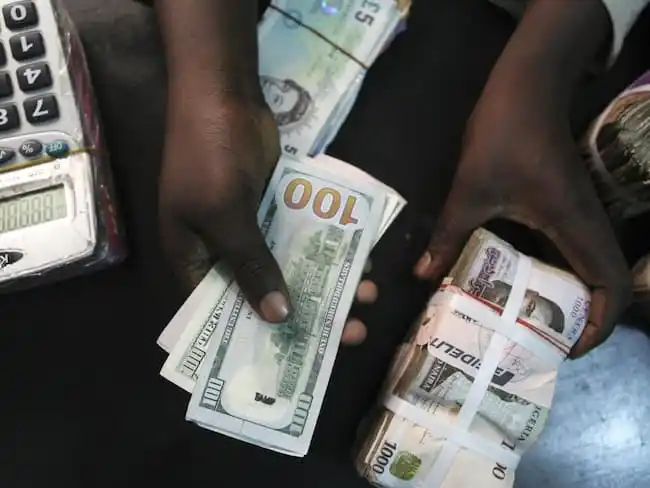
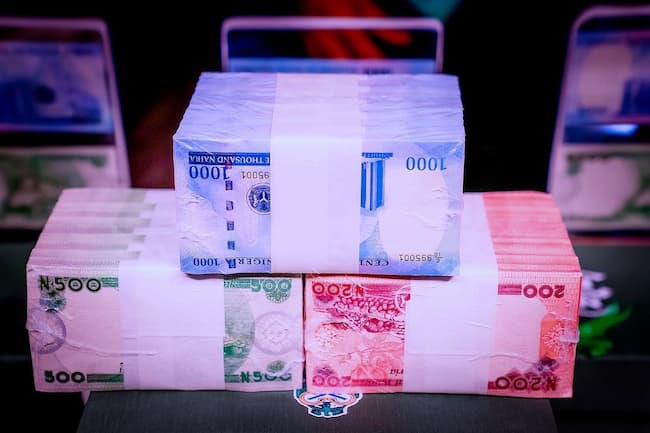
The exchange rate between the Naira and the US dollar, according to the data released on the FMDQ Security Exchange, the official forex trading portal, showed that the naira closed at 1465.00 per $1 on Friday, December 5th , 2025. The naira traded as high as 1446.00 to the dollar at the investors and exporters (I&E) window on Thursday.
Dollar to naira exchange rate today black market (Aboki dollar rate):
The exchange rate for a dollar to naira at Lagos Parallel Market (Black Market) players sell a dollar for ₦1475 and buy at ₦1465 on thursday 4th December, 2025, according to sources at Bureau De Change (BDC).
Please note that the Central Bank of Nigeria (CBN) does not recognize the parallel market (black market), as it has directed individuals who want to engage in Forex to approach their respective banks.
Dollar to Naira Black Market Rate Today
Dollar to Naira (USD to NGN)
Black Market Exchange Rate Today
Selling Rate
₦1475
Buying Rate
₦1465
Dollar to Naira CBN Rate Today
Dollar to Naira (USD to NGN)
CBN Rate Today
Highest Rate
₦1450
Lowest Rate
₦1446
Please note that the rates you buy or sell forex may be different from what is captured in this article because prices vary.
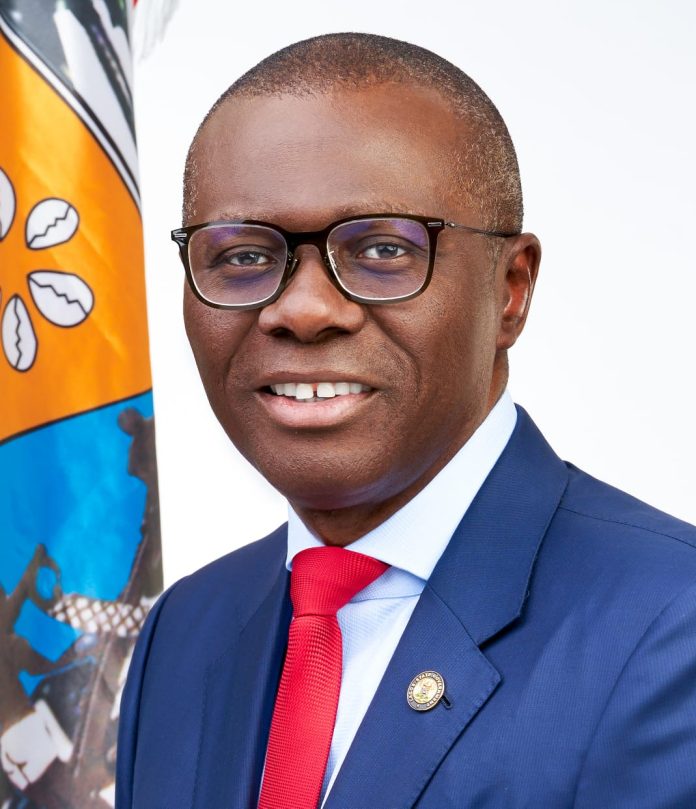
The Lagos State Government has restated its commitment to strengthening relations with the Russian Federation as both sides explore new cooperation in energy, technology and economic development. Governor Babajide Sanwo Olu conveyed the position during a courtesy visit by the Russian Ambassador to Nigeria, Andrey Podyolyshev, in Lagos. The governor was represented by the Deputy Governor, Dr Obafemi Hamzat.
Sanwo Olu highlighted the long history of diplomatic and development ties between both countries. He cited the construction of the Ajaokuta and Osogbo Steel Mills as part of the partnership that has shaped Nigeria’s industrial growth. He noted that Lagos contributes about 30 per cent of Nigeria’s gross domestic product and serves as a strategic gateway for international investment.
The governor expressed interest in the range of technological and energy solutions presented by the Russian delegation. These include digital innovations, solar power technologies and a floating nuclear power plant model with a capacity of up to 200 megawatts and a lifespan of as long as 60 years. He said such projects could benefit Lagos, where 30 per cent of the landmass is water and space constraints require creative approaches such as floating solar installations.
Sanwo Olu confirmed that the Lagos State Ministry of Commerce, Cooperative, Trade and Industry is in direct engagement with its Russian counterpart. He added that both sides are also holding discussions related to the Lekki Free Trade Zone.
Ambassador Podyolyshev said Russia is prepared to deepen its economic relationship with Lagos State. He explained that fostering closer collaboration is important for development, noting that Moscow and Lagos face similar challenges in transport, urban infrastructure, utilities and social services. He said it would be reasonable to explore bilateral ties between cities such as Moscow and Lagos or Saint Petersburg and Lagos, with the possibility of partner city or sister city arrangements.
The ambassador identified artificial intelligence, education, infrastructure, power and the economy as priority areas where cooperation could be expanded.
The new Chairman of the National Population Commission, Dr Aminu Yusuf, has assumed office with a pledge to provide Nigeria with credible and technology-driven demographic data that will guide national planning.
Dr Yusuf, who was sworn in by President Bola Ahmed Tinubu on Wednesday along with new commissioners representing Nasarawa and Yobe states, addressed staff at the commission’s headquarters in Abuja. He said the President had given a clear mandate that requires the commission to rebuild public trust, modernise demographic systems and deliver a transparent census that produces reliable data for national development.
He described President Tinubu’s message as a call to national renewal rather than a routine directive. He expressed gratitude for the confidence reposed in him and his colleagues by the President, saying their appointments reflect trust in competence, integrity and commitment to service.
“This trust is both a privilege and a solemn responsibility. It is with profound gratitude to Almighty Allah that I stand before you today, filled with humility, honour and a deep sense of duty, as I assume the responsibility of serving as Chairman of this esteemed Commission, an institution at the centre of Nigeria’s development journey,” he said.
Dr Yusuf also recognised the work of his predecessor, Hon Nasir Isa Kwarra, describing his leadership as instrumental in strengthening Nigeria’s demographic governance and laying a solid foundation for future efforts.
He emphasised that fulfilling the commission’s mandate depends on the collective commitment of Federal Commissioners, the Director-General and all management and staff. He called for unity and cooperation as the commission embarks on what he described as a transformative phase.
Highlighting the scope of the National Population Commission’s responsibilities, Dr Yusuf noted that its mandate extends beyond national censuses. He explained that the commission is also responsible for maintaining a functional Civil Registration and Vital Statistics system, building a comprehensive National Geospatial Frame, conducting specialised surveys that generate reliable data and providing evidence-based advice to government on population matters.
The chairman said his immediate priority is to strengthen the commission’s internal systems and enhance coordination across all departments and state offices. He announced a Seven Point Agenda that will serve as the strategic framework for improving capacity, restoring public confidence and positioning the commission as a modern and globally competitive institution.
As 2025 comes to a close, Apple Music has revealed the most-streamed albums in Nigeria, showing a year where listeners gravitated toward projects with emotion, depth, and replay value.
The top five albums were dominated by Nigeria’s leading stars: Wizkid, Davido, Asake, BNXN, and Burna Boy.
1. ‘Morayo’ – Wizkid Wizkid leads the chart with Morayo, a tribute to his late mother. The album’s reflective tone and gentle production resonated with fans. Themes of loss, healing, and gratitude made it a favourite for quiet mornings and late-night listening.
2. ‘5ive’ – Davido Davido’s 5ive holds the second spot. The album balances his signature energy with catchy hooks and lively beats. Its songs quickly found their way into clubs, weddings, and social media trends, making it one of the year’s most replayed projects.
3. ‘Lungu Boy’ – Asake Asake’s Lungu Boy blends amapiano, fuji chants, and his unique vocal style. The rhythm-heavy album became the soundtrack for parties and road trips, capturing the essence of 2025’s youth-driven music scene.
4. ‘Captain’ – BNXN BNXN’s Captain takes fourth place. The mid-tempo album features tender lyrics and smooth delivery. Its relatable themes of love, ambition, and personal growth struck a chord with younger listeners and fueled viral TikTok and Instagram moments.
5. ‘No Sign of Weakness’ – Burna Boy Burna Boy rounds out the top five with No Sign of Weakness. The Afrofusion project mixes reggae, rap, and live instrumentation. Its themes of strength and identity resonated with fans in Nigeria and the diaspora.
Apple Music’s 2025 data shows Nigerians favoured albums with warmth, storytelling, and emotional depth over fast-paced singles. Despite the rise of new talent, the year belonged to long-standing stars who continued to dominate streams across the country.
Prince Adelaja Adeoye, CEO of Fendini Group, has called on engineers, architects, developers, and other building professionals to prioritise safety and comply fully with planning regulations to prevent disasters in Nigeria’s built environment.
Adeoye made the appeal in an interview shortly after receiving his Master’s Degree in Property Development and Management from Lead City University, Ibadan. He warned that rising cases of building collapse and structural failure highlight the urgent need for adherence to zoning laws, building codes, and physical planning requirements.
“Prioritising safety from the project planning stage is key. Once professionals follow zoning regulations and obtain the required physical planning permits, many disasters can be prevented,” he said.
He added that industry players must equip themselves with the right knowledge to collaborate effectively with regulators, government agencies, and investors.
On his academic achievement, Adeoye said, “I am proud to have earned a Master’s Degree in Property Development and Management from the prestigious Lead City University, Ibadan. This achievement has sharpened my expertise and strengthened my career as a property developer specialising in upscale residential, commercial, industrial, and hospitality developments.”
He noted that the qualification will further enhance his ability to drive compliance and excellence within Fendini Homes, the real estate subsidiary of Fendini Group. Adeoye expressed gratitude to God, his family, mentors, lecturers, and the Lead City University community for their support throughout his academic journey.
Spotify’s 2025 Wrapped has highlighted a new era in Nigerian music, revealing the country’s most-streamed artistes, albums, and songs. Wizkid emerged as the most-streamed artiste in Nigeria for the year, while his album Morayo topped the list of most-streamed albums.
Davido’s hit single With You (feat. Omah Lay) was named Nigeria’s most-streamed song in 2025. The top five songs also included Fido’s viral anthem Joy is Coming, Kunmie’s debut Arike, Faceless’ Venus, and Spotify RADAR artist FOLA’s Lost. These placements signal the rise of fresh voices shaping the country’s music landscape.
Other top artistes included Seyi Vibez, Asake, Burna Boy, and Odumodublvck, reflecting a mix of street-driven hits and globally recognized performances. Asake, notably, had three albums in the top 10, showing the strong engagement with his catalogue.
Among female artistes, Ayra Starr retained her position as the most-streamed woman in Nigeria, joined in the Top 10 by Tems, Smur Lee, Tiwa Savage, and gospel star Sunmisola. Smur Lee’s rise was fueled by high-profile collaborations, while Sunmisola’s popularity highlights the country’s growing appetite for faith-based music alongside mainstream Afrobeats.
Spotify reported an 82% year-on-year increase in local music streaming, showing strong loyalty to Nigerian sounds. Afrobeats also grew globally by 22%, cementing its international reach. Beyond music, Nigerian podcast consumption jumped 97% year-on-year, with a 48% increase in podcast creation. Faith and personal reflection were prominent themes in top-streamed podcasts, indicating a strong spiritual dimension to Nigerian audio habits.
Overall, Nigerians spent more than 1.3 billion hours on Spotify in 2025, supporting a generation of homegrown artistes who continue to redefine the country’s music scene. Phiona Okumu, Spotify’s Head of Music for Sub-Saharan Africa, said: “Nigeria’s 2025 Wrapped paints a picture of a music scene that is absolutely thriving. It’s incredible to see how fast Nigerians embrace fresh voices right alongside the legends.”
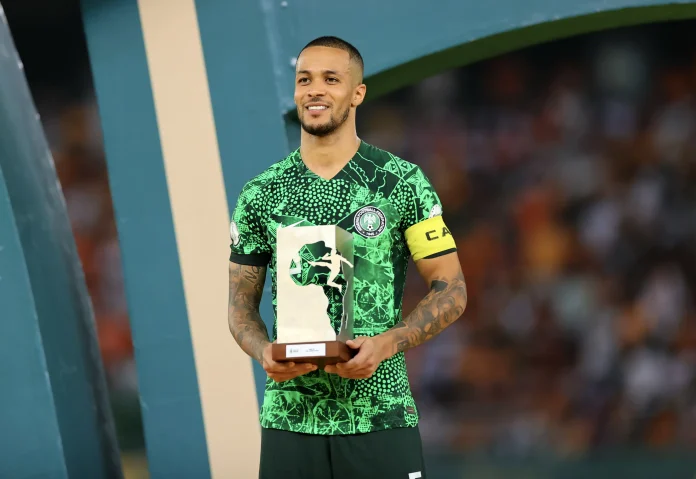
Super Eagles captain William Troost-Ekong has officially drawn the curtain on his international career, ending a ten-year journey with Nigeria’s senior national team. The defender confirmed his decision in a heartfelt message shared on Instagram on Thursday.
In the emotional statement, Troost-Ekong described representing Nigeria as the highest honour of his professional career and expressed deep gratitude to fans, teammates, and the nation. He noted that while he has stepped away from the pitch, his support for the Super Eagles remains unwavering as he embraces a new phase of his life.
“Honoured. Grateful. Forever a Super Eagle,” he wrote. “Playing for Nigeria has been the greatest privilege of my life. The journey may end here, but my support never will. Here’s to the next chapter.”
His announcement came shortly after football transfer expert Fabrizio Romano reported the development, stating that the centre-back had elected to retire after earning 83 caps, securing three medals, and participating in five major tournaments.
Troost-Ekong, who plies his trade with Al-Kholood in the Saudi Pro League, was born in the Netherlands to a Dutch mother and Nigerian father. After representing the Netherlands at youth level, he committed his senior career to Nigeria and made his debut on June 13, 2015, in an AFCON qualifier against Chad.
He leaves the national team with a distinguished record, including five goals at the Africa Cup of Nations—a tally that stands as the highest ever by a defender in the tournament’s history. His final appearance came in November as a late substitute against Gabon.
Troost-Ekong’s involvement with the squad had diminished in recent months under head coach Eric Chelle, with the defender dropping behind Benjamin Fredrick in the team’s defensive line-up. He was also an unused substitute during Nigeria’s World Cup play-off loss to DR Congo, which ultimately cost the country a spot at the global finals.
The 30-year-old was listed in Nigeria’s provisional 54-man squad for the upcoming AFCON tournament scheduled to begin in Morocco this December. The final 28-man list is expected to be confirmed soon, with the team set to commence camp in Egypt on December 10.
His departure marks the end of an era for the Super Eagles’ backline as Chelle prepares to finalize his squad without one of the team’s longest-serving leaders.
The naira registered only a marginal shift against the US dollar across various foreign exchange (FX) segments on Thursday, as demand and supply dynamics moved closer to equilibrium amid renewed market interventions.
The currency has experienced recurring pressure in recent weeks due to year-end payment obligations and increased foreign portfolio outflows, compounded by limited US dollar inflows in the official market.
Fresh figures released by the Central Bank of Nigeria (CBN) showed a slight weakening of the official spot rate by 0.01%, settling at ₦1,447.83 per dollar. The adjustment underscores persistent demand for hard currency despite ongoing FX interventions and inflows from Foreign Portfolio Investors (FPIs).
During Thursday’s session, the official window recorded a modest dip of 18 kobo per dollar to close at ₦1,447.8263/$, with trades fluctuating between ₦1,446.00 and ₦1,450.00. The intraday high of ₦1,450 mirrored the previous day’s peak, influenced largely by heightened international payment requirements linked to year-end commercial activities.
In the parallel market, the naira also edged lower to ₦1,460 per dollar, highlighting a widening contrast between the regulated FX window and informal trading channels.
On the global front, oil prices climbed on Thursday as traders priced in expectations of an imminent US Federal Reserve rate cut. Lingering diplomatic deadlock over Ukraine further reduced optimism around a potential deal that could restore Russian oil exports.
Brent crude advanced by 76 cents (1.21%) to $63.43 per barrel, while US West Texas Intermediate (WTI) rose 89 cents (1.51%) to $59.84.
Gold prices also saw mild gains, supported by a softer US dollar but restrained by rising Treasury yields. Market participants are now awaiting Friday’s inflation data from the United States for clearer direction ahead of the Federal Reserve’s upcoming December policy meeting.
Spot gold climbed 0.18% to $4,213.81/oz, while US gold futures rose 0.28% to $4,244.50/oz. Analysts expect oil to find additional support from geopolitical risks, while gold may trade cautiously as investors await new macroeconomic signals.
Aviation stakeholders have urged the federal government to review the new tax regime taking effect in January 2026, saying it could bankrupt airlines and allied businesses if not aligned with industry standards.
Under the new rules, commercial aircraft, engines, spare parts, and airline transportation will no longer be exempt from Value Added Tax (VAT). The Federal Inland Revenue Service said Nigerian aviation companies will be taxed like any other business.
Industry leaders warned that this comes on top of high insurance premiums, costly aircraft maintenance abroad, and rising spare part prices due to exchange rates. Dr. Samson Fatokun, IATA’s representative for West and Central Africa, said Nigeria must respect international treaties and avoid double taxation. “International transportation of passengers cannot be taxed,” he said. He noted that ECOWAS is already working to reduce air travel costs in the region, while the new Nigerian tax would increase fares.
Amos Akpan, Managing Director of Flights and Logistics Solutions, said airlines already pay cargo and passenger sales taxes, charter taxes, passenger service charges, customs duties, state company taxes, and fuel levies. He explained that for a one-way ticket with a base fare of N148,000, taxes add about N55,000.
Dr. Allen Onyema, Vice-President of Airline Operators of Nigeria and CEO of Air Peace, warned at the Nigeria International Airshow that the tax could cripple airlines. Captain Ado Sanusi, CEO of Aero Contractors, said higher taxes would increase fares, reduce passenger numbers, and force airlines to cut staff. “Any tax regime that adds to the fare paid by passengers will automatically lead to 4 to 6 percent reduction in passenger demand,” he said.
Sanusi also cited ICAO rules that prohibit double taxation and said aviation revenue should be reinvested to grow the industry. He added that the new tax could reduce VAT collection, hurt NAMA and FAAN revenues, and negatively impact tourism.
There are reports that FIRS may meet with airlines to adjust the policy and prevent widespread bankruptcies in the sector.
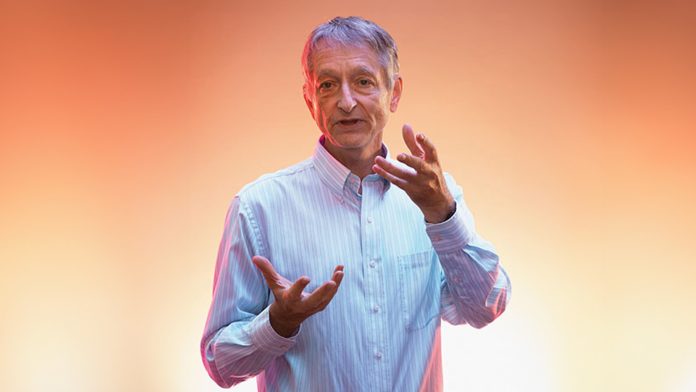
Geoffrey Hinton, the British computer scientist known as the Godfather of AI, has warned that artificial intelligence could lead to massive unemployment. He said tech giants are betting on AI to replace many workers.
“It seems very likely to a large number of people that we will get massive unemployment caused by AI,” Hinton told Senator Bernie Sanders at Georgetown University. “And if you ask where are these guys going to get the roughly trillion dollars they are investing in data centers and chips… one of the main sources of money is going to be by selling people AI that will do the work of workers much cheaper.”
Hinton criticized big tech for focusing on short-term profits rather than long-term scientific progress. He said AI will create some new jobs but not nearly as many as it will eliminate.
“Trying to predict the future of it is going to be very difficult,” he said. “It is a bit like when you drive in fog. You can see clearly for 100 yards and at 200 yards you can see nothing. We can see clearly for a year or two, but 10 years out, we have no idea what is going to happen.”
Senator Bernie Sanders said nearly 100 million U.S. jobs could be displaced by automation. Workers in fast food, customer service, manual labor, and even white-collar roles like accounting, software development, and nursing are at risk.
“It is not just economics,” Sanders wrote in an op-ed. “Work, whether being a janitor or a brain surgeon, is an integral part of being human. The vast majority of people want to be productive members of society and contribute to their communities. What happens when that vital aspect of human existence is removed from our lives?”
Senator Mark Warner also warned that AI disruption could hit young people hardest. He said unemployment among recent college graduates could reach 25 percent in the next two to three years if no safeguards are put in place.
Apple’s head of artificial intelligence, John Giannandrea, is stepping down after a turbulent seven-year run that included delays, restructuring and a slow entry into the generative AI era. He will leave the company completely in the spring after a short transition period.
Giannandrea, who joined Apple from Google, oversaw machine learning strategy and early development of Apple Intelligence. However, the company struggled to keep pace with rivals such as OpenAI, Google and Microsoft during his tenure.
Apple entered the generative AI race two years after ChatGPT reshaped the industry, and its first version of Apple Intelligence was widely described as underwhelming. A major upgrade to the Siri voice assistant was also delayed.
Instead of naming a replacement, Apple is dividing its AI organisation. Staff will now report to Craig Federighi, Sabih Khan and Eddy Cue, depending on their functions.
AI researcher Amar Subramanya has joined the company as Vice President of Artificial Intelligence and will lead foundation models, AI research, safety and evaluation.
What Apple’s Turbulent AI Era Meant for Customers
Giannandrea’s leadership had direct effects on how Apple users experienced their devices. Here is how the slow AI rollout appeared on the customer side.
1. Siri Fell Behind While Competitors Improved
While ChatGPT and Google Assistant evolved into conversational and context-aware tools, Siri barely improved. Customers were left with an assistant that required rigid and exact phrasing, offered only shallow understanding of context, and frequently produced errors even with simple tasks. It also lacked generative abilities such as summarising, rewriting or basic reasoning. Over time, Siri became widely seen as the weakest link in an otherwise premium Apple ecosystem.
2. Apple Intelligence Arrived Late and Felt Limited
By the time Apple launched Apple Intelligence, the market had already matured, and users noticed the difference. They saw fewer generative features than competitors, a slower and more limited rollout across devices, and models that were not as powerful as those on Android and Windows. Many early features were also missing or marked as “coming soon.” All of this created consumer frustration and lowered the excitement around Apple’s “AI moment.”
3. Inconsistent Experience Across Devices
Because Apple’s AI strategy wasn’t unified, features varied widely across devices, and customers noticed the inconsistency. Some AI features appeared only on the latest iPhones, while older but still expensive models were excluded. This created gaps between expected functionality and what was actually available. The experience contradicted Apple’s usual promise of seamless consistency.
4. Unclear AI Identity and Messaging
Apple traditionally defines categories like smartphones, tablets, and wearables, but in AI the company struggled to present a clear vision. Users felt uncertainty about what Apple Intelligence actually is, found the messaging about its capabilities unclear, and received mixed signals about Apple’s direction. This made the company appear reactive rather than innovative.
5. The Delayed Siri Upgrade Affected Daily Use
The Siri overhaul, intended as Apple’s AI comeback, was delayed from Spring 2025 to Spring 2026. For users, this meant the daily assistant remained outdated, improved automation, reasoning, and task handling stayed unavailable, and competing assistants offered features that Apple users could only watch from afar. The delay further damaged perceptions of Apple’s technological leadership.
What Comes Next for Customers
Apple is now restructuring in order to correct these weaknesses. Subramanya will oversee foundational AI work. Craig Federighi will manage software level integration. Apple is also preparing a stronger version of Siri and deeper generative features across iPhone and Mac.
Customers can expect:
A more unified and consistent AI strategy
A clearer rollout of Apple Intelligence features
A significant upgrade to Siri in 2026
More advanced on device intelligence powered by Apple Silicon
The Lagos Chamber of Commerce and Industry (LCCI) has elected Mr Leye Kupoluyi as its new President and Chairman of Council. His emergence was announced on Thursday by the Director-General of the chamber, Dr Chinyere Almona, during LCCI’s 137th Annual General Meeting in Lagos.
Kupoluyi succeeds Mr Gabriel Idahosa, whose tenure was marked by significant contributions to private-sector advocacy and economic policy reform.
Dr Almona described the newly elected President as an accomplished professional with an outstanding track record in engineering services, trade promotion, and industrial development. She noted that his election reflects the chamber’s confidence in his steadfast commitment to its mission and values.
“We are delighted to welcome Engr. Kupoluyi as President of the LCCI,” she said. “As a council member and key officer of the chamber, he has consistently contributed his expertise and provided valuable insights during strategic deliberations. We are confident that his presidency will further strengthen the chamber’s role as a leading advocate for sound business policies and practices, while advancing the interests of our members and the wider business community.”
Kupoluyi brings over 40 years of professional experience across engineering, project management, and executive leadership. He has served as Managing Director of Universal Power Systems Nigeria Limited since November 1994.
Before this, he held several senior positions including General Manager at Witt + Busch Limited (1988–1994), Project Manager at Honeywell Enterprises Limited (1986–1988), and earlier roles as Senior Engineer and Service Manager at Witt + Busch. He began his career in 1979 as an Engineer at the Ministry of Communications in Ilorin, Kwara State.
His wealth of experience, analysts say, positions him to steer the chamber’s strategic engagements, deepen its policy influence, and strengthen its advocacy for a more competitive business environment.
Founded in 1888, the Lagos Chamber of Commerce and Industry is Nigeria’s oldest and one of its most influential private-sector organisations. It provides a platform for business leaders to collaborate, engage the government on policy issues, and promote trade and industrial growth.
The chamber also supports small and medium-sized enterprises through capacity-building initiatives, advisory services, and networking opportunities aimed at fostering sustainable business development.
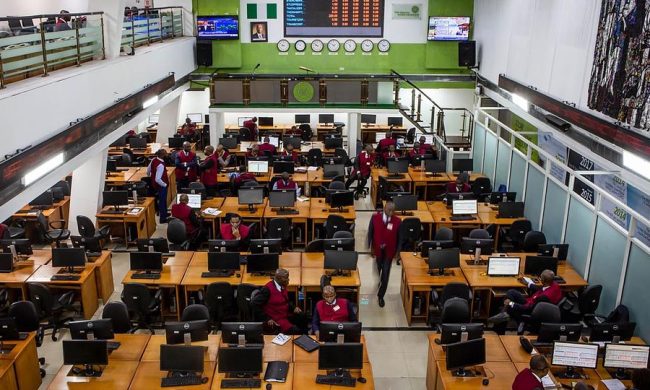
The Nigerian Exchange (NGX) continued its upward trajectory on Thursday, with equity investors recording fresh gains of more than N92 billion as the bullish momentum extended into its third consecutive session.
The trading day ended in positive territory, with renewed bargain-hunting activity lifting the market’s major performance indicators by 0.10%. The All-Share Index (ASI) climbed by 152.28 points, representing a 0.10% increase, to settle at 145,476.15 basis points.
In addition, the NGX total market capitalisation advanced by N97.06 billion, ending the day at N92.73 trillion. Although market breadth closed negative, analysts noted that the continued rally reflects sustained investor interest in selective equities, supported by cautious optimism across the market.
Brokers reported increased demand for notable stocks including OANDO, WAPIC, UACN, TRANSCORP, and GTCO, among others across various sectors.
Despite the positive close, market activity declined, as total traded volume and total trade value fell by 14.15% and 8.47% respectively. Investors exchanged approximately 1.93 billion units worth N19.19 billion across 23,369 deals.
FIDELITYBK dominated trading volumes, representing 9.04% of all shares traded. Other top volume contributors included GTCO (8.25%), ZENITHBANK (7.90%), ETI (6.38%), and ACCESSCORP (5.16%).
GTCO led the value chart, accounting for 19.52% of the total market value traded—making it the most actively traded stock in monetary terms.
UACN headed the gainers list with a full-day appreciation of 10.00%. Close behind were MORISON (+9.94%), ETI (+8.53%), WAPIC (+8.47%), MANSARD (+7.75%), and FTNCOCOA (+7.10%), among others.
Meanwhile, twenty-eight stocks closed lower. ELLAHLAKES and EUNISELL topped the losers’ chart with a 10.00% decline each, followed by TRANSCOHOT (-9.95%), OMATEK (-9.23%), GUINEAINS (-8.46%), and CAP (-6.16%).
In total, the session closed with 23 gainers and 28 losers. Sector performance remained broadly positive, with all five major indices ending higher. The insurance index led with a 1.56% gain, followed by banking (+0.91%), industrial goods (+0.48%), consumer goods (+0.28%), and oil & gas (+0.08%).
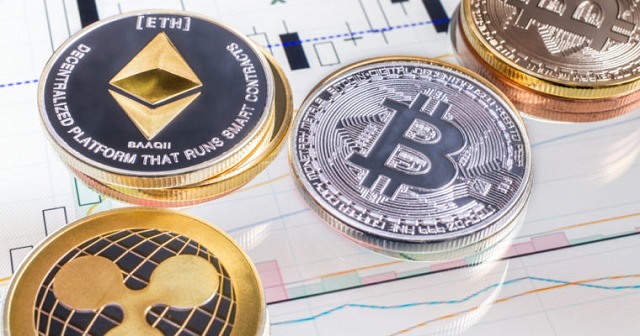
In today’s digital asset market, building an investment base no longer requires large capital outlays. Many new investors delay entering the crypto space because they assume significant funds are required. However, wealth creation in any asset class often begins with a willingness to take calculated risks—and cryptocurrency remains one of the most accessible risk-driven markets available.
Crypto’s price movement is notoriously sharp, and this volatility forms the foundation of its business appeal. Unlike forex trading, which shares similar characteristics but operates within defined trading hours, cryptocurrency markets run non-stop—24 hours a day, seven days a week—without any downtime.
The first rule for beginners is simple: stepping into the crypto economy without fully understanding its risks can lead to painful losses. While the upside potential can be impressive, critics argue that the lack of regulation still places digital assets closer to high-stakes gambling than traditional investment. Even within investment circles, some asset managers maintain reservations about crypto due to its unregulated structure.
Allocating a $100 Budget
With a starting capital of $100, entry-level investors typically cannot target blue-chip tokens such as Bitcoin, Ethereum, or Ripple. Instead, understanding market trends and the ease of price movement becomes crucial. For instance, a 1% movement in the BTC/USD pair can escalate anxiety—particularly among investors in developing economies facing exchange-rate pressure.
If Bitcoin trades around $100,000, a 1% drop equals a $1,000 decline. By contrast, holding a small position in a low-cost token like Dogecoin provides more psychological comfort. A $20 position in Dogecoin can retain stability even during small market dips.
Patience becomes a survival tool. Much like penny stock investors, crypto newcomers must maintain discipline during price swings. Significant volatility in Bitcoin can prompt rushed decisions, forcing investors into premature exits. A typical scenario might involve watching BTC drop from $100,000 to $95,000 and regretting not selling earlier when the loss was smaller.
Fear and greed shape every investor’s behaviour. Asset choices directly reflect the size of an investor’s wallet. Individuals whose net worth matches the price of a single Bitcoin should avoid such exposure unless they are prepared for speculative risk.
At a December 4 trading price of $0.1492, a $100 investment yields roughly 670 units of Dogecoin. However, purchasing during an upward rally often backfires due to the natural law of market correction. Still, many crypto traders jump in aggressively during rallies. Timing becomes a critical skill because an uptrend can quickly evolve into a seller-dominated market.
Experienced investors—often referred to as “crypto whales”—tend to go against public sentiment. They offload assets during surges and accumulate more during declines. While this strategy can be profitable, it requires experience and the ability to absorb risk.
Building a $200 Portfolio
With $200, diversification becomes more realistic. Investors are advised not to concentrate solely on Dogecoin. Spreading risk allows the decline in one asset to be offset by gains in another. A simple calculation helps determine overall performance at any given moment.
Cardano (ADA/USD), priced at $0.4450, represents one suitable alternative. Allocating $100 to ADA secures about 225 units. With this combination, investors would have a portfolio comprising Dogecoin and Cardano—two assets with different market behaviours.
At this point, portfolio management becomes about monitoring price direction. If Cardano experiences an upward trend while Dogecoin declines, investors should examine broader market sentiment. News reports, regulatory actions, liquidation events, and large whale transactions often determine price direction.
For instance, a single announcement from a major influencer—such as Elon Musk offering a discount to Tesla buyers who pay with Dogecoin—could trigger immediate market reactions. Such developments highlight the influence of news and public figures on cryptocurrency valuation.
With inflation currently hovering around 16.05%, many Nigerians are increasingly questioning whether fixed-income instruments—now offering between 16% and 18%—still provide meaningful value. The simple answer is yes, and the reasoning is grounded in economic logic.
Even when yields cluster around inflation levels, fixed-income investments continue to offer practical advantages. A return of 16–18% against an inflation rate of 16.05% may appear narrow, but it still translates into a small positive real yield. This is far better than leaving cash idle, where inflation steadily erodes purchasing power.
Fixed-income assets remain a reliable safe haven for conservative investors. Unlike equities, where returns can fluctuate significantly due to market sentiment or economic cycles, fixed-income instruments provide predictable payouts and reduced volatility. For individuals prioritising safety and stability, this dependability carries significant weight.
These elevated yields also reflect government monetary efforts to stabilise the economy. By offering rates slightly higher than inflation, authorities encourage investors to tie up excess liquidity, thereby reducing money supply and easing inflationary pressure. Investors, in turn, benefit from predictable income while indirectly supporting economic balance.
In addition, locking in high fixed rates today can be advantageous if inflation gradually declines. Should inflation fall, the real value of existing fixed-income returns becomes more attractive, effectively increasing purchasing power over time.
Although equities may outperform inflation over long periods, they come with enhanced volatility. For investors whose primary objective is capital preservation rather than aggressive growth, the current fixed-income environment is both rational and prudent.
In conclusion, while fixed-income yields of 16–18% may not produce dramatic real wealth in the short term, they offer an important blend of stability, capital protection, and inflation-level returns. For many risk-averse investors navigating today’s economic realities, fixed-income remains a dependable anchor in their broader investment strategy.
Detty December isn’t just a vibe—it’s a movement. What started as a Lagos‑based party season has become a global cultural phenomenon, drawing thousands of Nigerians abroad and Afrobeat lovers from around the world. From concerts and food festivals to raves, art shows, and religious gatherings, December in Nigeria is now a nonstop celebration of identity, creativity, and connection.
BizWatch Nigeria has curated this day‑by‑day guide to help you navigate the madness. Whether you’re an IJGB (I Just Got Back), a local explorer, or a first‑time visitor, this listicle is your passport to the most exciting month of the year.
December 1–3
No major events scheduled. Use these days to rest, plan, and hydrate.
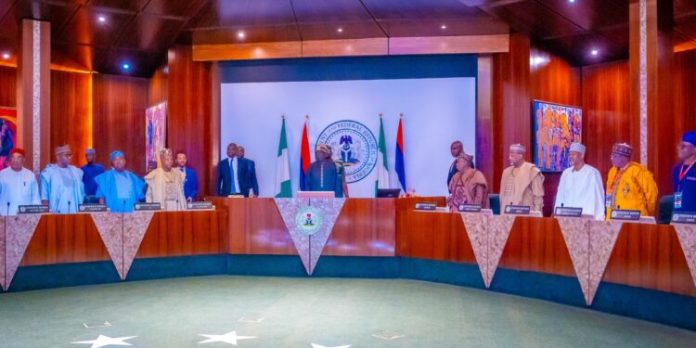
The Federal Government has approved the payment of N185 billion in long-standing debts owed to natural gas producers, in a move aimed at revitalising the gas sector and improving electricity generation across the country.
The intervention, authorised by President Bola Tinubu and endorsed on Wednesday by the National Economic Council (NEC) chaired by Vice-President Kashim Shettima, is regarded as one of the most significant financial commitments to Nigeria’s energy sector in recent years.
In a statement on Thursday, the Minister of State for Petroleum Resources (Gas), Dr Ekperikpe Ekpo, said the settlement of the debts would deliver wide-ranging benefits, beginning with the restoration of investor confidence in Nigeria’s gas value chain.
He explained that the N185 billion arrears—accrued over years from unmet gas supply obligations—had weakened producers’ cash flow, slowed operations, and discouraged exploration and new investments. The backlog, he noted, also reduced gas supply to power plants, exacerbating electricity shortages nationwide.
The approved settlement will be executed through a royalty-offset mechanism designed to reassure domestic and international suppliers who have repeatedly expressed concerns over the government’s indebtedness.
Describing the approval as a “decisive step towards revitalising Nigeria’s gas sector and strengthening its power-generation capacity,” Ekpo said the intervention aligns with the Decade of Gas initiative, which targets more than 12 billion cubic feet per day (bcf/d) of gas supply by 2030.
“Settling the debts is crucial to rebuilding trust between the government and gas producers, many of whom have withheld or slowed new investments due to uncertainty over payments,” he said.
He added that improved financial stability in the sector would accelerate upstream activity, boost exploration and production, and ultimately increase Nigeria’s overall gas output.
According to him, enhanced gas supply will support power generation, easing the chronic electricity shortages that continue to hinder households and businesses across the country. The anticipated improvements, he noted, should stimulate broader economic growth, given the central role of reliable energy in industrialisation, job creation, and competitiveness.
Ekpo also emphasised that strengthened fiscal discipline and greater transparency would help attract new investments from local and foreign stakeholders.
Tinubu administration showing commitment, says Decade of Gas Secretariat
The Coordinating Director of the Decade of Gas Secretariat, Mr Ed Ubong, welcomed the approval, saying it demonstrated the administration’s resolve to address structural weaknesses in the gas-to-power value chain.
“This decision underlines the Federal Government’s determination to clear legacy liabilities and gives gas producers the confidence that supplies to power generation will be honoured,” Ubong said. “It could unlock stalled projects, revive investor interest, and rebuild momentum behind Nigeria’s transition to a gas-driven economy.”
Background
The approval comes as the Federal Government finalises implementation frameworks for a N4 trillion government-backed bond to settle verified arrears owed to power Generation Companies (GenCos) and gas suppliers.
In 2024, the Managing Director of the Shell Petroleum Development Company of Nigeria (SPDC), Osagie Okunbor, disclosed that gas producers were grappling with outstanding payments totalling $1.3 billion.
In December 2024, Nairametrics reported that the Nigerian Midstream and Downstream Petroleum Regulatory Authority (NMDPRA) had directed gas producers to suspend supply to indebted GenCos following the accumulation of more than N2 trillion in debts owed by the Federal Government and various power generation companies.
The latest intervention is expected to ease tensions in the sector and provide a pathway towards more reliable electricity supply for Nigerians.
The Federal Government on Thursday moved to ease mounting tensions among road contractors, pledging to clear all outstanding payments before 20 December 2025. The assurance follows days of protests by contractors over accumulated debts and stalled project financing.
Minister of Works, David Umahi, announced the reopening of the repaired Keffi Flyover in Nasarawa State, stating that President Bola Tinubu had acknowledged the backlog and approved the establishment of a special committee to verify and settle all pending claims.
Contractors handling federal road projects had, in recent days, staged demonstrations at the Ministry of Finance under the banner of the All Indigenous Contractors Association of Nigeria, alleging prolonged non-payment for completed and ongoing works. The group, which claims the government owes contractors about N4 trillion, is specifically demanding the release of N760 billion reportedly promised by the Minister of Finance, Wale Edun, in September.
In a symbolic act highlighting their frustration, the contractors placed a coffin at the ministry’s entrance, claiming it represented the hardship and deaths some members had suffered due to delayed payments.
Umahi, however, urged the contractors to halt their protests, insisting that President Tinubu had ordered that all verified debts be settled within days.
“Mr President has recognised that you have been owed and is setting up a committee to review all the debts,” he said. “Please, there should be no more protests. You will be paid. Before the 20th of December, you’ll be paid.”
He acknowledged that some contractors on the Maraba–Keffi corridor, including China Harbour Engineering Company, were among those yet to be paid but assured that they would be captured in the forthcoming disbursement.
In a rare move aimed at strengthening transparency and accountability, the minister disclosed that the ministry had invited the Independent Corrupt Practices and Other Related Offences Commission (ICPC) and the Economic and Financial Crimes Commission (EFCC) to audit all ongoing and completed federal road projects across the 36 states and the Federal Capital Territory.
“I wrote to ICPC and submitted all the projects of Mr President and the Ministry of Works from the day I assumed office. We asked them to go through all the states and verify those projects. This is the first of its kind,” Umahi said, adding that the same documentation had been forwarded to the EFCC.
He further revealed plans to introduce an online platform for real-time monitoring of federal road projects, enabling citizens to track progress and report concerns.
At the reopening of the Keffi Flyover—which collapsed on 4 July after a truck conveying an excavator damaged its structural components—Umahi commended President Tinubu for approving emergency repair funds within 24 hours of being briefed.
“Within 24 hours of briefing him, Mr President released the money for this bridge. It’s unprecedented,” he said.
The rebuilt structure, a critical link between Abuja and Nasarawa, underwent extensive repairs including reconstruction of the beam, parapet, and walkway, along with installation of a new gantry crash-prevention barrier. Technical officials confirmed that the bridge had passed safety tests, noting that the new protection systems had already stopped attempted truck collisions.
Responding to recent public criticism of the pace of work on the Abuja–Kano Road, Umahi described the concerns as unfair. He said the original design was flawed and required modification to include full concrete shoulders. According to him, more than 44 kilometres of the route have now been completed under existing funding.
He noted that sections one and three currently have about eight kilometres of completed concrete pavement, while a solar-lit 12-kilometre stretch around Kano is nearing completion.
Reiterating the ministry’s commitment to quality and transparency, Umahi said the adoption of concrete pavement technology, stricter monitoring, and upcoming tolling reforms would ensure durable roads and improved cost efficiency. He added that the government was enforcing a rigorous defect-liability regime, maintaining a 2.5 per cent retention fee until contractors fully comply with project standards.
Nigeria’s newly inaugurated Minister of Defence, General Christopher Musa (rtd), on Thursday pledged a swift and measurable improvement in national security, vowing to strengthen collaboration within the armed forces and across security agencies while mobilising citizens in the collective effort to tackle insecurity.
The assurance came as the Catholic Bishop of Sokoto Diocese, Rev. Matthew Hassan Kukah, expressed confidence in President Bola Tinubu’s appointment of Gen. Musa, insisting that the country’s security crisis demands urgent, decisive, and uncompromising action.
Speaking shortly after taking the oath of office at the State House, Abuja, Gen. Musa said his immediate priority is to reposition the nation’s defence architecture and ensure its central role in safeguarding the country.
“My immediate priority is to ensure that Defence takes its rightful place in the country,” he said. “The synergy between the armed forces, between the military and other security agencies, and with all Nigerians must be strengthened. Security is everybody’s responsibility, and that synergy is what we are going to build.”
The former Chief of Defence Staff expressed gratitude for what he described as overwhelming public goodwill, promising to justify the confidence reposed in him through decisive and sustained action.
“Nigerians have shown me love, and I assure them that I will work, whatever it takes, to ensure that Nigeria is secured. Within the shortest possible time, Nigerians will see results,” he said.
Gen. Musa added that President Tinubu has issued firm and non-negotiable directives on restoring security nationwide.
“I just met Mr President, and he reiterated that we must make sure Nigeria is secured,” he noted. “Nigerians should be able to sleep with their eyes closed, return to their farms, send their children to school without fear, and live their lives without being molested.”
He emphasised that the President’s Renewed Hope agenda situates national security as the foundation for economic growth and social development.
“Everyone must be carried along to ensure Nigeria grows in line with the Renewed Hope programme of Mr President,” he said.
At the ceremony, Bishop Kukah said he attended “wearing two caps”—representing both the Sultan of Sokoto, who shares ties with the new minister’s birthplace, and the people of Southern Kaduna, where Musa also has deep connections.
“I’m representing the Sultan of Sokoto because General Musa was born in Sokoto, and I’m from Southern Kaduna where he also has roots. The Sultan knows I’m here and sends his greetings,” he said.
Kukah maintained that Nigeria’s security challenges are already well understood and require no further diagnosis.
“Everybody knows what the problem is. We just need the restoration of normalcy in this country by any means possible. And I think this job is in very good hands,” he stated.
He further aligned with the minister’s earlier comments during his Senate screening, where Musa advocated tougher, more punitive measures against terrorists.
“I missed that part of the screening, but on that issue we are on all fours,” he said. “Rain, thunder, sunshine—whatever it takes to get this mess under control. These guys need to be flushed out. Normalcy must return to our country. Laughter and joy must come back to Nigeria within the shortest possible time.”
Kukah assured that the Church would continue to pray for peace and stability, adding: “All we do is pray for the best. We just want our country back.”
Gen. Musa assumes office at a time of persistent insecurity, with heightened public expectations for reforms capable of curbing terrorism, banditry, and violent crime nationwide. His tenure is expected to test the administration’s resolve to deliver tangible progress in restoring peace across the country.
When Tosin Ojo looks back at the past decade of his career, what emerges isn’t a conventional rise through the ranks, it’s a story of intentional evolution. Today, he stands out as one of the rare voices shaping Africa’s digital transformation agenda: an innovation strategist, STEM education architect, analytics leader, and ecosystem builder whose work consistently sits at the crossroads of technology, learning, and business design.
His journey from a mathematics degree to a senior analytics engineer, youth development pioneer, and continental thought leader is guided by curiosity, clarity of purpose, and an instinct for building systems that empower people.
The Early Language of Numbers
Tosin’s relationship with numbers began long before he ever touched a spreadsheet. With a first degree in Applied Mathematics, he learned early that numbers weren’t merely academic tools, they were a lens for understanding problems. He approached data with that same philosophical curiosity, long before analytics became a buzzword.
After university, he entered the growing field of business intelligence at a time when few African companies fully understood data’s strategic value.
“I didn’t plan to enter tech,” he says, “but I quickly discovered that data is really just a language and I could speak it fluently.”
Years later, he has worked across analytics, strategy, and technical functions in Nigeria and the UK. His credibility grew not from titles or certifications, but from his ability to transform boring and disjointed patterns into operational clarity and strategy.
Building Intelligent Systems and the Architecture of Insight
In the UK, where Tosin currently works as a Senior analytics engineer, he plays a critical role in developing frameworks that support real-time digital decision-making. His approach blends engineering discipline, analytical depth, and strategic foresight, a hybrid skill set that allows him to translate business needs into technical architecture and technology into actionable insight.
His work on customer and product intelligence systems, transforming raw, unstructured feedback into models that influence quality, operations, and innovation, illustrates his broader philosophy: technology is most powerful when it helps businesses understand people better.
“I’ve always been drawn to the problems that sit between disciplines,” he says. “That’s usually where the next breakthroughs happen.”
Championing Africa’s Next Generation of Digital Thinkers
Beyond his technical career, Tosin remains deeply committed to democratizing digital opportunity for African youths. His contributions to STEM education began as volunteer weekend programmes and evolved into a suite of learning tools, digital literacy modules, and curriculum-style resources used by schools and youth organizations across Nigeria, East Africa, and Central Africa.
His STEM workbook originally designed as a personal experiment has become a foundational resource for teachers seeking practical, accessible content for early digital education. It is now used by institutions, youth-focused NGOs, and skills-development initiatives across the continent.
In 2022, his work received significant recognition when he led a U.S. Consulate–funded digital transformation project designed to empower youths with future-facing technology skills.
Designing the Future: Where Technology, Education & Strategy Converge
Tosin’s work increasingly sits at the intersection of digital transformation and human capability. He has led innovation programmes funded by the U.S. Consulate that equip educators, professionals, and students with the competencies needed for a rapidly evolving digital economy.
His platform, AI4Educators, helps educators understand how artificial intelligence, automation, and intelligent systems can be integrated into assessments, lesson planning, and student engagement. For many educators across Africa, it served as their first structured exposure to AI as a practical teaching companion.
He has also convened data and innovation hackathons for early-career professionals, creating spaces where young Africans solve real-world problems using analytical and algorithmic thinking. These initiatives reinforce his core belief: Africa’s future will be shaped by people who can learn, adapt, and build, not merely observe.
Strategic Thinking as a Superpower
If there is one thread running through Tosin’s work, it is the ability to blend technical depth with strategic clarity. He excels at designing systems that make technology not only functional, but meaningful whether in analytics engineering, educational innovation, or digital transformation.
His work is defined by one recurring question: “How do we make this simpler, smarter, and more impactful?”
This clarity has positioned him as a trusted voice for young professionals navigating the digital economy and for organizations seeking direction in the age of AI.
“I don’t think technology should intimidate people,” he says. “Its purpose is to give clarity, not take it away.”
What Comes Next
The next phase of Tosin’s journey is focused on scale and continental impact. He is developing a learning companion platform that blends roadmaps, visual learning systems, and personalized digital skills development. He is expanding the reach of his STEM innovation toolkit, strengthening the AI4Teachers model, and contributing deeper research and thought leadership on Africa’s evolving digital workforce.
Tosin represents a new generation of African innovators not just building tools, but building the human and strategic systems that will define the continent’s digital future. His story is still unfolding, but the trajectory is unmistakable: a leader shaping the next era of digital transformation, where technology, education, and business innovation converge to expand opportunity for millions.