



Home Blog Page 166

Thursday Chronicles: How To Stay Sane In Nigeria (Or At Least Try)

It’s another Thursday for our weekly Thursday Chronicles, where reality slaps and laughs meet storytelling and sarcasm. Buckle up, because this one might hit too close to home.

Let’s face it, being Nigerian is not for the faint-hearted. Living in this blessed country is like being in a never-ending episode of a reality show where the rules keep changing, the host is confused, and the audience is just watching for vibes. Whether it’s navigating the economy, surviving Lagos traffic, or dodging POS agents that charge like landlords, being sane in Nigeria is an extreme sport.

But don’t worry. I’ve created a survival guide for the mentally exhausted but still holding on. This isn’t your regular “drink water and mind your business” advice, this is real-time coping strategies that even your therapist would clap for.

1Laugh at the Madness, or It Will Laugh at You

Ever been stuck in traffic for three hours, only to discover the cause was one broken-down danfo and a stubborn goat? In Nigeria, if you don’t laugh, you’ll cry, and the price of tissue paper isn’t smiling either.

Laughter is free, portable therapy. From Twitter (sorry, X) to skits on TikTok, Nigerians have mastered the art of turning pain into premium content. If you can’t change the situation, at least get content from it.

2Master the Art of “God When” and “God Abeg”

There’s something humbling about being Nigerian. One minute you’re praying for fuel, the next minute you’re praying not to get fuel because the price has become ₦1,200 per litre. We are the only people who can say “God when” while posting someone else’s jollof rice, and then follow it with “God abeg” when we remember our account balance.

Keep your faith strong. God must answer somebody, and we claim it’s you next.

3Stay Informed, But Not Too Informed

News in Nigeria is like pepper soup, hot, unpredictable, and not for everyone. One headline says “Nigeria’s Economy is Growing,” and the next says “Egg Now ₦200.” The best advice? Stay informed enough not to be scammed, but not too informed to the point that you start talking to your ceiling fan about national issues.

Be smart. Know what’s going on. But also, know when to switch to a funny reel.

4Create Your Own Soft Life… Even If It’s on a Budget

Soft life in Nigeria is relative. For some, it’s flying business class to the Maldives. For others, it’s buying Gala and La Casera without checking your account first. Learn to romanticize your own life. Light a candle while eating Indomie. Play “Essence” while hand-washing clothes. Pretend that sachet water is Fiji water, because peace of mind is more important than packaging.

The cost of living is rising, but your imagination is still free.

5Find Your People, and Vent Together

Life is better when you have someone to complain to. Whether it’s your best friend, your roommate, or that one cousin who sends you memes at 1 a.m., build your tribe. Nigerians don’t heal in isolation, we heal through group chat therapy and “have you eaten?” messages.

Don’t bottle everything up. There’s no light to power the fridge anyway.

6Protect Your Mental Health Like It’s Your Last Naira

This is not motivational talk, this is survival. Take breaks. Log off. Sleep. Say no. Block that friend who always wants to borrow money and “will pay back soon.” There’s only one you, and this country will move on whether you’re tired or not.

In short: rest. Nigeria is not going anywhere.

7Pray, Hope, and Hustle (In That Order)

Yes, it sounds cliché. But prayer keeps you sane, hope keeps you going, and hustle keeps you alive. Combine all three and wear them like bulletproof. Life in Nigeria may not be easy, but somehow, we keep showing up, stronger, funnier, and slightly more sarcastic every day.

Being Nigerian is a full-time job. You wake up every day hoping for peace, but life throws ₦1,500 plantain at you. You dream of soft life, but the only thing soft is your bank app crashing again.

But through it all, we laugh, we cry, we jollof, we tweet, we dance, we hustle… and most importantly, we survive.

That’s it for this week’s Thursday Chronicles, because if we don’t talk about it, we’ll explode. Catch you next week, same sarcasm, same chaos. Until then… may your data last longer than Nigerian promises.
MAN, Marketers Urge FG To Sell Off Unproductive Plants

Amid growing concerns over Nigeria’s struggling economy and the persistent failure of its state-owned refineries, the Manufacturers Association of Nigeria (MAN), crude oil marketers, and energy experts have renewed calls for the Federal Government to privatise the Port Harcourt, Warri, and Kaduna refineries.

Despite over $3 billion reportedly spent on their rehabilitation, the refineries remain idle, prompting stakeholders to describe them as a monumental drain on national resources.

The Federal Government has consistently pumped funds into the nation’s four refineries over the years, with little to show in return. In 2021 alone, $1.5 billion was approved for the rehabilitation of the Port Harcourt refinery, $897 million for Warri, and $586 million for Kaduna. Additionally, ₦100 billion was spent in the same year, with ₦8.33 billion allocated monthly to refinery maintenance. Between 2013 and 2017, a total of $396.33 million was spent on Turn Around Maintenance.

Yet, the plants remain largely non-operational. The recently re-opened Port Harcourt refinery, hailed as a milestone in December 2023, was again shut down in May for maintenance and has yet to resume operations. The Warri refinery also ceased functioning one month after its reopening.

“Refineries Are a National Liability” – MAN

Appearing on a live television programme on Wednesday, MAN Director-General, Segun Ajayi-Kadiri, described the refineries as “a pure drain on the Nigerian economy.” He stressed that state ownership had become synonymous with inefficiency, fraud, and wastage.

“We must speak the truth. These four refineries are unfair to Nigerians. They bleed public funds and deliver nothing. The government should encourage private sector investment by selling them off,” Ajayi-Kadiri said.

He argued that full privatisation would not only eliminate corruption and mismanagement but also foster competition—particularly with the Dangote Refinery, which recently began operations.

“If you go private, it becomes harder for anyone to steal or be unaccountable. These refineries should be competitors with Dangote’s plant, not dormant liabilities,” he added.

Echoing the position of MAN, the Publicity Secretary of the Crude Oil Refineries Association of Nigeria, Eche Idoko, said the refineries had become outdated and should be sold—if necessary—as scrap.

“Billions have been wasted on these refineries with zero productivity. Sell them. Use the proceeds to invest in modular and private refineries where the government can hold equity but not ownership,”

Idoko maintained that the current ownership model remains unsustainable due to rising overheads and poor management.

“The government keeps paying salaries and running costs for inactive facilities. This is unacceptable.”

MEMAN Recommends Professional Management

Also weighing in, the Executive Secretary of the Major Oil Marketers Association of Nigeria (MEMAN), Clement Isong, said the solution lies in handing over the refineries to professional refinery managers, either via outright sale or concession agreements.

“We need these refineries to work, not to remain in the news as financial blackholes. They must be run by professionals, not politicians. Political interference and bloated staffing are killing them,” Isong said.

He added that competition in the downstream oil sector is essential, especially with the Dangote Refinery now in operation.

“Nobody can bully Dangote because he runs a private business. That’s the advantage of private ownership. Refineries should not be managed as social projects.”

Energy Experts, Economists Support Sale

Ibrahim Tajudeen, Director of Research and Strategy at Chapel Hill Denham, proposed a Public-Private Partnership (PPP) model to revive the refineries.

“The MAN is right. Either through complete sale or PPP, we need the efficiency and discipline of the private sector. The government can maintain minority stakes but should hand operational control to professionals,” he said.

Similarly, former Chief Economist at Zenith Bank, Marcel Okeke, said the proposed sale of the refineries is “long overdue.”

“They have not produced in years. All efforts to refurbish them have failed. They should be sold as-is. Private investors know how to turn them around. Government has no business in business,” Okeke argued.

NNPC Refineries: Once Open, Now Shut Again

The push for privatisation intensified after the Port Harcourt refinery, which was briefly declared operational in December 2023, was shut down again in May 2024 for maintenance that has now entered its second month. The Warri refinery, reopened in December last year, also ceased operations barely a month after.

The Nigerian National Petroleum Company Limited (NNPC), which manages the refineries, is yet to provide a comprehensive explanation for the repeated shutdowns.

Public frustration over the lingering state of the refineries is on the rise, with many Nigerians questioning how the country, one of the world’s top crude oil producers, still relies heavily on imported refined products.

The Federal Government has yet to issue a formal response to the renewed calls for privatisation, but pressure is mounting ahead of the 2025 fiscal year.

Liquidity Pressures Trigger Money Market Rate Swings As Banks Remit Corporate Taxes

How Much Money Is Spent On Groceries In Nigeria, Other Countries?

Amidst ongoing fiscal obligations, Nigeria’s money market witnessed fluctuating rates this week as deposit money banks completed their corporate tax payments to the Federal Inland Revenue Service (FIRS), leading to notable cash outflows and liquidity adjustments in the financial ecosystem.

Despite the strain from these tax-related outflows, market liquidity remained relatively stable, bolstered by expectations of substantial capital inflows in July from maturing fixed income instruments.

In a market intelligence report, Erad Partners Limited projected that about ₦949.73 billion will flow into the system through matured Nigerian Treasury Bills (NTBs) and Federal Government bonds next month. The firm noted that in the absence of immediate funding pressure, short-term rates have stayed largely consistent.

The interbank segment of the financial market reflected ample liquidity on Wednesday, particularly as the Central Bank of Nigeria (CBN) opted not to proceed with a treasury bills auction, following its earlier Open Market Operation (OMO) offer worth ₦600 million at the start of the trading week.

Analysts at AIICO Capital Limited confirmed that the money market absorbed heavy liquidity outflows linked to corporate tax remittances by Nigerian banks. However, the volume of liquidity circulating in the system ensured these outflows did not exert undue strain on the market.
Consequently, money market rates showed minimal movement. The Overnight Policy Rate (OPR) remained anchored at 26.50%, while the Overnight (O/N) lending rate saw a marginal uptick of 4 basis points, closing at 27.00%. AIICO Capital’s analysts expect these rates to hover around current levels barring any unexpected liquidity shocks.

Meanwhile, the Nigerian Interbank Offered Rate (NIBOR) reflected a moderate increase across all tenors, indicating a subtle tightening in short-term liquidity conditions, according to a market update from Cowry Asset Management Limited.

On the Nigerian Treasury Bills Yield (NITTY) curve, performance was mixed across various tenors, showing uneven yield direction in both short- and medium-term instruments. Despite this divergence, the secondary market maintained a bullish tone. Analysts reported a dip in average yields by 20 basis points, bringing it to 19.85%.

Overall, while tax season exerted temporary pressure on market liquidity, sustained investor confidence and anticipated inflows in July are expected to reinforce stability in short-term money market rates.

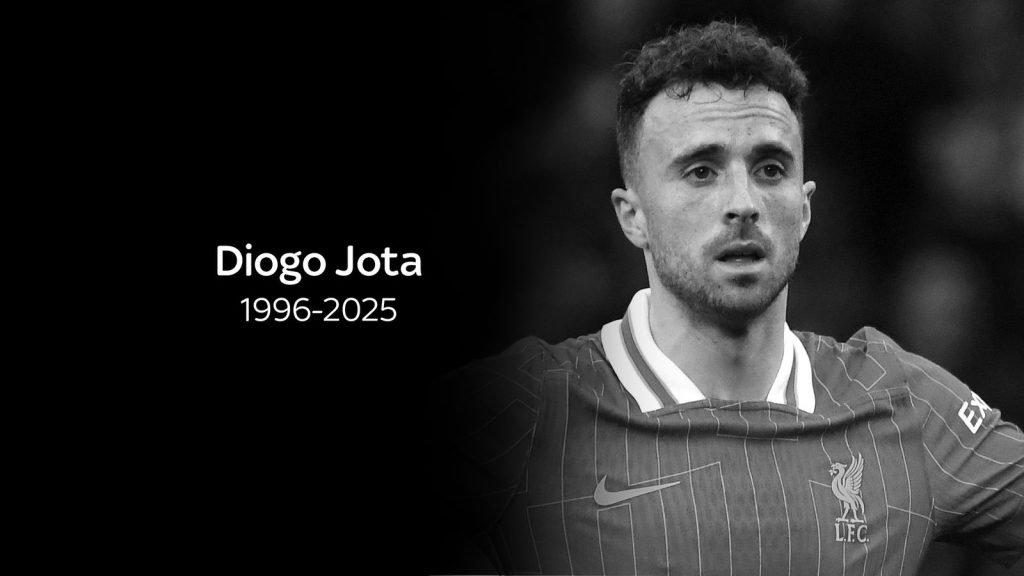
Breaking News: Liverpool Star Diogo Jota And Brother Andre Silva Killed In Zamora Car Crash

In a devastating development that has rocked the football world, Portuguese international and Liverpool FC forward Diogo Jota has died following a car crash in Spain. The 28-year-old footballer was travelling with his brother, Andre Silva, who also lost his life in the tragic accident. Silva, 26, was a professional footballer playing for Portuguese side Penafiel in the Liga Portugal 2.

The fatal incident occurred in the early hours of Thursday morning in the province of Zamora, located in northwest Spain. According to Spanish law enforcement agency Guardia Civil, the crash happened at approximately 12:30 a.m. local time. Reports indicate that the brothers’ Lamborghini veered off the road while overtaking another vehicle, following a suspected tyre blowout, and subsequently caught fire.

The Portuguese Football Federation (FPF) issued a deeply emotional statement expressing its profound grief:

“The Portuguese Football Federation and the entire football community are overwhelmed with sorrow. Diogo Jota, more than a remarkable talent with nearly 50 caps for the national team, was an exceptional human being. His energy, humility, and impact extended far beyond the pitch.”

Jota had recently celebrated a significant milestone in his personal life, marrying his longtime partner Rute Cardoso on June 22. The couple shared three children together. The footballer had taken to social media to share moments from the ceremony, now immortalised in heartbreaking contrast to his untimely death.

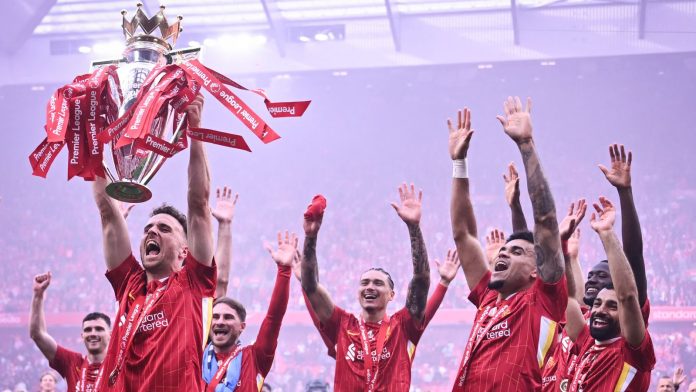
Jota was an integral part of Liverpool’s title-winning squad in the previous Premier League season and was also instrumental in Portugal’s Nations League triumph over Spain in June.

Andre Silva, who began his youth career with FC Porto during the 2016–17 season when Jota was on loan there, followed in his brother’s footsteps in professional football. The tragic loss of both brothers is being mourned deeply across Portugal.

Liverpool FC also extended its condolences, stating:

“We are stunned and heartbroken by the loss of Diogo and Andre. Our deepest sympathies go out to their family, friends, and loved ones. Rest in peace, champions.”

As a mark of respect, the FPF has asked UEFA to hold a minute’s silence ahead of Portugal’s Women’s Euro fixture against Spain on Thursday evening.

The entire football community continues to reel from this shocking loss, with tributes flooding in from teammates, opponents, clubs, and fans across the globe—all honouring two young lives tragically cut short.

Outrage As Customs Proposes ₦14.39bn For Luxury Vehicles For Senior Officers In 2025

Automation of Customs Service
FEC Approves $3.1 billion for Automation of Customs Service

The Nigeria Customs Service (NCS) has come under fire from civil society groups and anti-corruption advocates following the revelation of its proposed ₦14.39 billion expenditure on luxury vehicles for senior officers in its 2025 budget.

The controversial allocation is part of a larger ₦35.27 billion provision for the procurement of 579 official vehicles, with a significant share earmarked for officers at the highest ranks, including Comptrollers, Assistant Comptroller-Generals (ACGs), and Deputy Comptroller-Generals (DCGs).

According to the proposed budget document obtained by our correspondent on Wednesday, unit costs for these top-tier vehicles range between ₦44 million and ₦75 million, sparking widespread criticism amid the country’s worsening economic conditions.

Among the most expensive items in the proposal are:

20 CHANGAN CS95 SUVs for ACGs at ₦68 million each – totaling ₦1.36 billion

15 MAXUS D90 SUVs for DCGs at ₦70 million each – totaling ₦1.05 billion

20 QIN BYD Hybrid sedans for ACGs at ₦65 million each – totaling ₦1.3 billion

15 HAN BYD Hybrid sedans for DCGs at ₦75 million each – totaling ₦1.125 billion

180 sedans for Comptrollers, including NORD C3, MIKANO CHAGGAN EADO, and NISSAN MG5 models, at ₦44.625 million each – totaling ₦9.55 billion

Other vehicles proposed include 50 NORD TUSK trucks, 50 NISSAN NAVARA trucks, 100 JIM 4WD trucks, and 10 30-seater buses for administrative and operational logistics.

The list features high-end brands such as BYD hybrids, CHANGAN, MAXUS, MIKANO, and NORD—many of which are considered luxury-class in the Nigerian auto market.

“Obscene Opulence” Amid National Hardship

The proposal has sparked a storm of criticism from watchdog groups who slammed it as “wasteful”, “insensitive”, and “immoral,” especially at a time when millions of Nigerians are battling inflation, food insecurity, and rising poverty.

Debo Adediran, Executive Director of the Centre for Anti-Corruption and Open Leadership (CACOL), described the spending as “obscene opulence” and accused the Customs of lacking empathy.

“It is not at a time like this that one should engage in frivolity. They are too ostentatious for the economic reality of Nigeria. This is a time when the government should empathise with the people, not rob them and flaunt it,” Adediran said.

He added that many of the vehicles currently in use by Customs officials are still functional and should not be replaced unnecessarily.

“That’s what they do in government: keep buying vehicles, even when existing ones are still serviceable. The funds could have been channelled to health, education, or economic relief for the poor.”

Anti-Corruption Groups Suggest Alternative

Transparency and Accountability Group (TAG), another civil society organisation, questioned why the Customs could not refurbish seized vehicles for official use instead of importing new ones.

“Customs claim to be generating revenue for the country, yet they waste the same funds through extravagant vehicle purchases,” a TAG representative said.

“If the Service has seized thousands of vehicles for violations such as duty evasion, why not use some of those for official purposes? Repairing a few impounded vehicles would cost far less than buying brand new luxury cars.”

In 2024 alone, the Nigeria Customs Service seized 397 vehicles with a duty-paid value of ₦5.64 billion, while 3,491 vehicles were seized in 2023, valued at over ₦2 billion. Critics argue that these seized assets could be rehabilitated and utilised, rather than auctioned or left idle, while the Service spends billions importing new ones.

The Comptroller-General of Customs, Adewale Adeniyi, had earlier boasted about the Service’s aggressive stance against smuggling and import violations, but activists say such achievements are undermined by financial recklessness within the agency.

The proposed vehicle procurement adds to growing concerns about the Nigerian government’s recurrent pattern of high-profile spending on official luxuries, even as citizens struggle with rising unemployment, a weakened naira, and an overstretched healthcare and education system.

Many analysts view the Customs budget as a symbol of misplaced priorities in public governance.

“This kind of reckless spending is a slap in the face to ordinary Nigerians,” said a political economist, who requested anonymity. “At a time when the government is preaching austerity and subsidy removal, senior officials are budgeting billions for SUVs.”

As the National Assembly begins deliberation on the 2025 budget proposals, civil society groups are calling for a downward review of the vehicle procurement allocation and a policy shift towards more frugal, transparent, and responsible public spending.

Seme Customs Engages Yoruba Leader, Media to Strengthen National Security

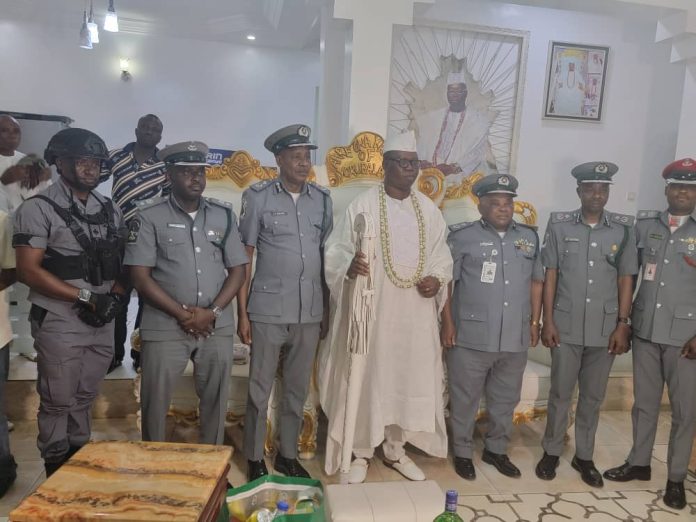
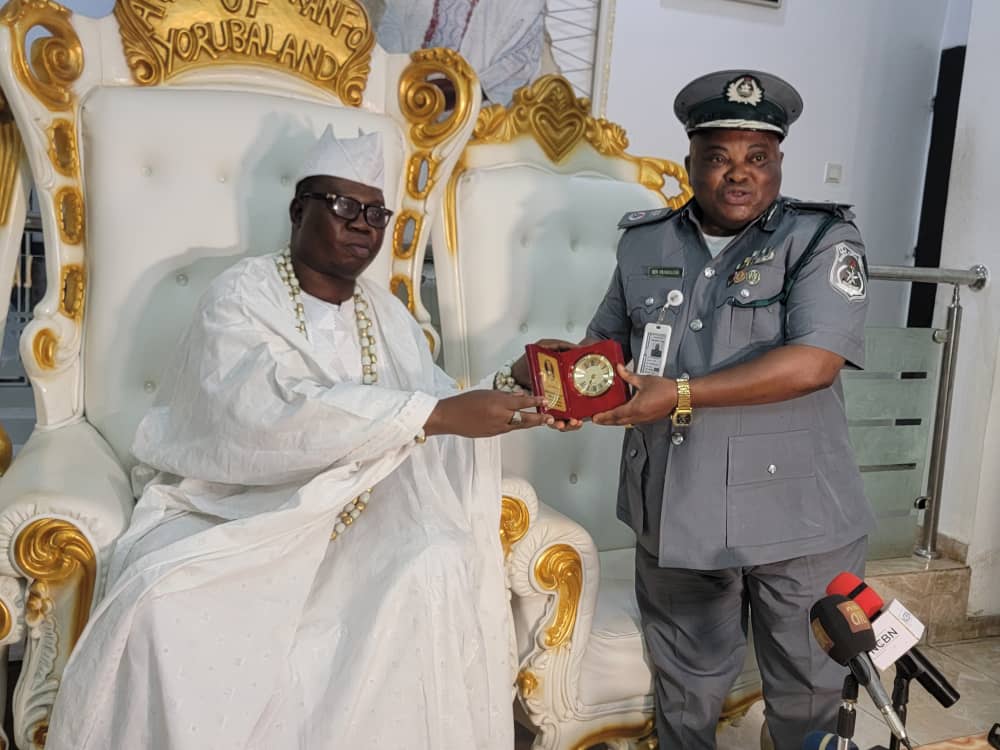
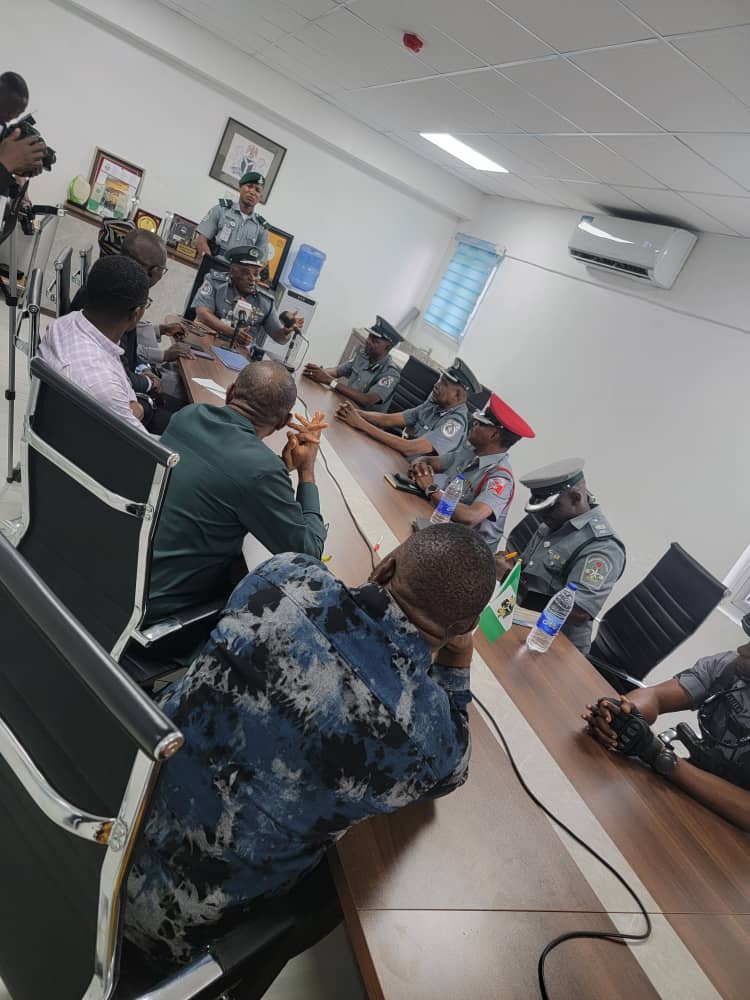
The Nigeria Customs Service (NCS), Seme Area Command, has intensified it’s stakeholder engagement efforts with courtesy visits to the Aare Onakakanfo of Yorubaland, Gani Adams, and the editorial headquarters of The Guardian newspaper in Lagos.

Speaking during his visit to the Aare’s Lagos residence, on Wednesday 2 July 2025, the Customs Area Controller (CAC), Comptroller Ben Oramalugo, said the visit is in line with the directive of the Comptroller General of Customs (CGC), Adewale Adeniyi, to build partnerships with key stakeholders and institutions across the country.

He said, “My Comptroller-General instructed me to interact with major stakeholders, and I know the Aare Onakakanfo is one of the most significant figures in Yorubaland.”

““I’m here to seek your support because you’re not only a cultural leader but also a security advocate and human rights champion”, he added.

He briefed the Aare on recent developments at the Seme border, including heightened anti-smuggling operations, revenue generation, trade facilitation, and the seizure of illicit drugs and contraband.

The CAC also praised the CGC’s leadership, describing him as “a humane and robust reformer.”

“The CGC is a performer, robust in anti-smuggling, humane and accessible. He has provided the command with necessary resources to help carry out our duties effectively, including the provision of 10 Hilux waiting for us in Abuja.”

“I also appreciate the way the Aare received us. We’re leaving here richer than we came because he has been able to educate us on Yoruba history and practice”, he added.

In his remarks, Gani Adams commended the CGC’s reform efforts and the CAC’s performance at Seme.

The Aare pledged his support to the Service and vowed to promote synergy between his institution and the NCS.

“This is the first time a Seme Controller is visiting my office. It has encouraged me to support their work. This synergy will go a long way in strengthening security in the South-West and Nigeria at large”.

Similarly, Comptroller Oramalugo visited The Guardian newspaper headquarters, where he was warmly received by Weekend Editor Dr. Kabir Garba and other senior editorial staff.

Comptroller Oramalugo reiterated the impact of the CGC leadership and sought the continued support of the Guardian in projecting the agency’s positive strides.

Dr. Garba also expressed appreciation for the visit, while also the assuring to CAC of his support in spotlighting Customs successes.

ADC’s 2023 Presidential Candidate, Kachikwu, Rejects Coalition “Hijack”, Slams Atiku, Obi, Others

The African Democratic Congress (ADC)’s presidential candidate in the 2023 general elections, Dumebi Kachikwu, has vehemently rejected the decision by a new political coalition to adopt the ADC as its platform for the 2027 presidential race, accusing prominent opposition leaders of “entering the party through the back door.”

Kachikwu, in a strongly worded statement issued on Wednesday, described the move as an illegitimate “takeover” of the ADC by what he referred to as a group of “yesterday’s men” with questionable motives. His comments came hours after opposition leaders including former Vice President Atiku Abubakar, Labour Party’s 2023 candidate Peter Obi, and former Senate President David Mark formally unveiled a coalition under the ADC banner to challenge the All-Progressives Congress (APC) in 2027.

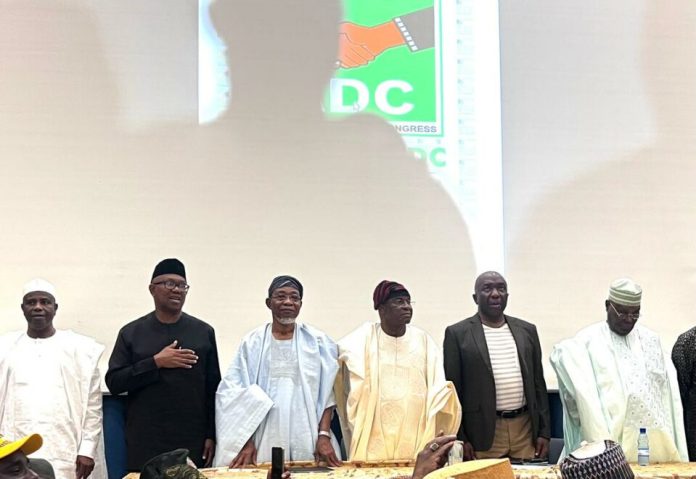
At a high-profile gathering at the Yar’Adua Centre in Abuja on Tuesday, the coalition appointed David Mark as interim National Chairman of the ADC and former Osun Governor Rauf Aregbesola as interim National Secretary. Bolaji Abdullahi, a former Minister of Sports, was named spokesperson of the coalition. The meeting also featured a host of political heavyweights including ex-Governors Sule Lamido, Aminu Tambuwal, Liyel Imoke, Babangida Aliyu, and former PDP National Chairman, Uche Secondus.

Kachikwu, however, dismissed the gathering and appointments as a farce lacking in legitimacy. He accused the coalition of colluding with Ralph Nwosu, a former ADC National Chairman whose tenure, according to Kachikwu, expired in 2022.

“Can you build something on nothing? Can you shave a man’s hair in his absence? Can you enter a man’s house through the back door and declare yourself the landlord?” Kachikwu queried in the statement.

He added, “These yesterday’s men, who represent a bad chapter in Nigeria’s past, have bought a bad market from a man who represents a bad chapter in ADC’s past.”

The ADC flagbearer did not mince words in describing the motivations of the opposition coalition, stating that the group was comprised of politicians desperate to remain relevant in Nigeria’s political space.

“Nigerians have watched in amazement as this group of mostly geriatrics shopped around for a party to prosecute their ‘chopping must continue’ ambition,” he said.

He warned that unless the coalition follows due process and engages with the legitimate organs of the party, it will face resistance.

“If you seek to be a part of the ADC, do the proper thing and come through the front door. We are a party of decent and well-behaved people,” Kachikwu declared.

Emphasising the ADC’s philosophy, Kachikwu argued that the party’s “brand of opposition” is one that not only criticises but also proposes meaningful alternatives — an approach he says the new coalition is unfamiliar with.

“Our brand of opposition is one that not only opposes but proposes, something that your group is not conversant with,” he added.

Kachikwu concluded his statement by predicting the eventual collapse of the coalition and their possible defection to yet another political party.

“I strongly suspect that you will be shopping for another party very soon, and as you do that, we, the members of the African Democratic Congress, wish you bon voyage. Thank you, and God bless.”

The opposition coalition’s adoption of the ADC as a vehicle for the 2027 presidential contest has already triggered internal dissent within the party. While founding chairman Ralph Nwosu claimed that the ADC leadership voluntarily stepped aside to allow Mark and Aregbesola take charge, Kachikwu and a faction of ADC loyalists argue that the move lacked transparency and due process.

With the dust yet to settle, the internal crisis threatens to undermine what was expected to be a historic opposition alliance against the APC-led government, as 2027 looms on the political horizon. Whether the coalition can overcome these early hurdles remains to be seen.

Sean ‘Diddy’ Combs: Full Timeline Of The Diddy Federal Sex Trafficking Case

Sean “Diddy” Combs, once revered as a titan of the music industry, has undergone a devastating fall from grace as he faces a cascade of civil lawsuits and, now, a landmark federal criminal conviction. The saga that began with explosive accusations in 2023 has culminated in a partial guilty verdict in a New York courtroom in July 2025.

This report provides a comprehensive overview—from the first lawsuit filed under the New York Adult Survivors Act to the recent federal verdict—and outlines everything known so far about the complex legal journey of one of hip-hop’s most iconic figures.

The Beginning: Civil Lawsuits Emerge Against Diddy (2023–2024)

The wave of legal trouble began on November 16, 2023, when R&B singer and Diddy’s former partner, Cassie Ventura, filed a lawsuit alleging a decade of sexual abuse, physical violence, and coercion. She claimed that Combs raped her in 2018 after she attempted to end their relationship. Within 24 hours of filing, the lawsuit was settled privately, though Combs denied all wrongdoing.

This opened the floodgates.

Multiple Women Come Forward

Over the following months, more than 30 women filed lawsuits accusing Combs of various forms of sexual abuse, trafficking, drugging, coercion, and assault. Allegations stretched as far back as 1990 and involved minors, models, music industry professionals, and former partners.

Among the plaintiffs:

  • Derrick Lee Cardello-Smith: Awarded a $100 million default judgment in September 2024 after claiming he was drugged and assaulted by Combs at a 1997 party.
  • Joie Dickerson-Neal: Alleged Combs drugged, raped, and recorded her while she was a college student in 1991.
  • Rodney “Lil Rod” Jones: A music producer who filed a lawsuit in 2024 claiming a year-long span of sexual harassment and being coerced into sex parties, filmed by Combs’ staff.
  • Anonymous Plaintiff (Jane Doe): Claimed she was trafficked and gang-raped at age 17 after being flown to New York by Combs in 2003.
  • April Lampros: A former fashion student who alleged repeated assaults between 1995 and 2003.
  • Crystal McKinney: A model who said Combs drugged her in a studio bathroom and forced her to perform oral sex.
  • Dawn Richard: A former member of Danity Kane, who accused Combs of years of physical abuse, financial coercion, and career sabotage.

The New York Adult Survivors Act (ASA) allowed these decades-old claims to surface before its expiration in late November 2023. The act created a 12-month legal window for adult survivors of sexual abuse to file lawsuits irrespective of time limitations.

2016 Surveillance Footage Shocks the Public

In May 2024, CNN obtained surveillance footage from March 2016 showing Diddy violently assaulting Cassie Ventura in a Los Angeles hotel. The video appeared to corroborate her original lawsuit claims. In response, Combs posted an apology video on Instagram, calling his behavior “inexcusable” and one of the darkest moments of his life.

Federal Agents Raid Combs’ Properties (March 2025)

On March 25, 2025, Homeland Security agents raided Diddy’s homes in Los Angeles and Miami as part of a sprawling investigation into sex trafficking and other criminal offenses. Agents seized digital evidence, hard drives, and footage believed to be related to the alleged assaults.

Federal Indictment: Sex Trafficking and Racketeering Charges

In June 2025, federal prosecutors unsealed an indictment accusing Combs of:

  • Sex trafficking,
  • Transporting individuals for prostitution,
  • Racketeering under the RICO Act,
  • Obstruction of justice,
  • Kidnapping, arson, and bribery.

The indictment detailed how Combs allegedly used his wealth, influence, and business empire to build a criminal organization that controlled and exploited women through intimidation, drugs, and coercion. The term “freak offs”—used by Combs to describe forced sex acts filmed with baby oil and narcotics—was a recurring theme in multiple testimonies.

The Trial Begins: May–July 2025

The high-profile federal trial began in May 2025 in Manhattan and lasted seven weeks. Prosecutors called 34 witnesses, including alleged victims, former staff, music industry insiders, and investigators.

Key exhibits included:

  • Surveillance video of the Cassie assault
  • Flight logs
  • Digital footage of sex parties
  • Testimonies referencing underage girls, narcotics, and coercion

The defense countered that many relationships were consensual, and characterized the prosecution’s case as built on exaggerated or fabricated claims from opportunistic plaintiffs.

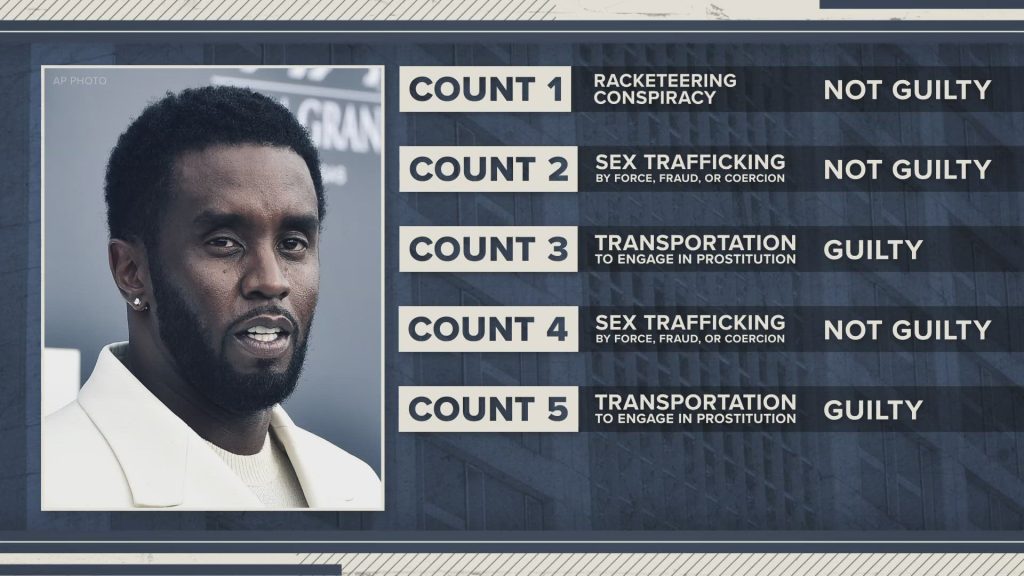
Verdict: Guilty and Not Guilty — July 2, 2025

On July 2, 2025, the jury delivered a split verdict:

Guilty on:

  • Two counts of transporting individuals for prostitution (Mann Act violations)

Not Guilty on:

  • Sex trafficking
  • Racketeering conspiracy under RICO
  • Additional trafficking-related charges

Combs, surrounded by his family and legal team, collapsed into prayer upon hearing the mixed outcome. Outside the courthouse, some supporters chanted his name, while survivor advocates decried the partial acquittal as “a failure to fully hold him accountable.”

Combs’ Detainment and Sentencing Outlook

Combs is currently detained at Brooklyn’s Metropolitan Detention Center pending his bail hearing. Prosecutors argue he’s a flight risk and danger to witnesses; his attorneys proposed a $1 million bond with strict conditions.

Though the maximum sentence is 20 years, legal experts estimate Combs could face 15–21 months under federal sentencing guidelines, though prosecutors may push for more.

Civil Lawsuits Still Active

Despite the criminal trial, more than 30 civil suits remain ongoing, including multiple cases from women who claim they were exploited or trafficked by Combs and his associates.

Combs has categorically denied all civil and criminal allegations. His attorney, Marc Agnifilo, insists the legal battle is far from over: “Sean Combs is innocent. We are disappointed with the outcome, but we will appeal and fight to clear his name.”

Public and Industry Fallout

Combs’ business relationships, music partnerships, and branding deals have suffered major blows. Multiple organizations have distanced themselves, and public opinion remains sharply divided.

His apology video following the Cassie assault footage further fueled debates about accountability in the entertainment industry.

“Let me be absolutely clear: I did not do any of the awful things being alleged,” Combs said in December 2024. “I will fight for my name, my family, and for the truth.”

Conclusion

Sean “Diddy” Combs now awaits sentencing on two federal convictions, remains entangled in civil litigation, and continues to face public scrutiny. While he has avoided conviction on the most severe charges, the once-untouchable mogul’s reputation has been irreversibly tarnished. The coming months will determine not only the length of his sentence but also how the legal system balances celebrity influence against survivor justice.

2027 Elections: Atiku, Obi, Mark, Aregbesola Unveil ADC Coalition To Challenge Tinubu’s Re-election Bid

In a historic political twist ahead of the 2027 general elections, leading opposition figures including former Vice President Atiku Abubakar, Labour Party’s 2023 presidential candidate Peter Obi, and former Senate President David Mark have joined forces to form a coalition under the African Democratic Congress (ADC) in a bid to unseat President Bola Ahmed Tinubu.

The coalition, which was formally unveiled on Wednesday at the Shehu Musa Yar’Adua Centre in Abuja, marked the official adoption of the ADC as the opposition’s political platform ahead of the 2027 polls. At the event, David Mark was named interim National Chairman of the ADC, while former Osun State Governor Rauf Aregbesola was appointed interim National Secretary.

The development, which has sparked national debate, is seen as the most formidable attempt yet to unify Nigeria’s fragmented opposition ahead of a crucial election. It comes amid growing discontent over economic hardship, rising insecurity, and perceived authoritarian tendencies under Tinubu’s administration.

Speaking during the unveiling, David Mark declared that the coalition transcends partisan ambitions and is driven by a deeper desire to rescue Nigeria’s democracy and governance.

“This coalition of national political opposition groups goes beyond gaining political power. It is a concerted effort to rebuild the crumbling pillars of Nigeria’s democracy, we have never seen a government so much at home with corruption… so totally consumed with politicking that governance is abandoned, while the majority of our people wallow in hunger and poverty.”  Mark said.

Mark accused the APC-led government of consolidating power through state capture, undermining democratic institutions, and reducing the National Assembly to an appendage of the presidency.

“We are determined to offer Nigerians a path to security, prosperity, peace, and progress, adding that the coalition will contest the 2027 general elections under the ADC banner.

Again, Former Minister of Transportation and ex-Rivers State Governor, Rotimi Amaechi, also announced his resignation from the APC, citing the unbearable cost of living and deepening inflation. He advocated for a mass movement rather than a mere political transition.

“Nigeria is destroyed. People can’t eat. Inflation is at its peak. It’s not about changing the government, it’s about changing Nigeria,” Amaechi said.

Other key political heavyweights present included former PDP National Chairman Prince Uche Secondus, Labour Party’s 2023 vice-presidential candidate Datti Baba-Ahmed, former Inspector-General of Police Mohammed Abubakar, and media entrepreneur Chief Dele Momodu.

Governors and former governors such as Nasir El-Rufai, Gabriel Suswam, Aminu Tambuwal, Liyel Imoke, and Emeka Ihedioha were also in attendance, signalling widespread support from across Nigeria’s political geography.

However, the coalition launch did not go unchallenged. Dumebi Kachikwu, ADC’s 2023 presidential candidate, strongly opposed the coalition, accusing Atiku, Obi, and others of attempting to hijack the party.

He described the new coalition as “a bunch of greedy and selfish old men” who had failed Nigeria for decades and were now repackaging themselves under a different banner. “You are not a fire brigade; you are the arsonists,” Kachikwu declared.

In a similar vein, a faction of ADC stakeholders including youth and women leaders—rejected Aregbesola’s appointment, alleging it lacked transparency and legitimacy.

In a statement signed by the party’s National Publicity Secretary, Dr Musa Isa Matara, the group warned against what they described as the imposition of leaders under the guise of reform.

“We are not opposed to coalitions. But we are opposed to hijack, imposition, and elitist agendas cloaked in revolutionary rhetoric,” the group stated.

Responding to these criticisms, ADC founding chairman Ralph Nwosu dismissed Kachikwu’s objections, stating that all current members of the coalition are legitimate stakeholders and that anyone opposing the move has ceased to be a member of the party.

Reacting to the coalition, the Acting National Chairman of the Peoples Democratic Party (PDP), Umar Damagum, insisted that the PDP remains united and will take disciplinary action against members undermining the party in the name of coalition-building.

“To those contemplating leaving, they should know there is no other party as accommodating as the PDP,” Damagum said. “We will take appropriate actions at the right time.”

Although the PDP National Working Committee and its governors have officially distanced themselves from the ADC coalition, prominent figures such as Atiku, Mark, and Sule Lamido have continued to endorse the alliance, urging Nigerians to support the movement for national renewal.

In a communiqué signed by Mark following a PDP-coalition strategy meeting, party leaders called for cooperation between the PDP and the ADC, highlighting the urgency of presenting a united front in 2027.

Meanwhile, the ruling All Progressives Congress (APC) has downplayed the significance of the coalition. Speaking to The PUNCH, APC’s Director of Publicity, Bala Ibrahim, described the coalition leaders as “retired politicians who refuse to retire.”

“They are the same people who brought Nigeria to where it is today,” Ibrahim said. “The APC is not in any way worried. We are confident Nigerians will continue to support us.”

With less than two years to the next general election, the unveiling of the ADC coalition marks a critical shift in Nigeria’s political dynamics. While the alliance boasts an impressive line-up of political stalwarts, internal dissent, party loyalty battles, and public perception will determine whether it can mount a credible challenge to Tinubu’s re-election.

Nigeria Records 3.7% Economic Growth In First Half Of 2025

"FG Is Committed To Improving The Economy" - National Planning Minister

Nigeria’s economy has posted a robust 3.7% growth in the first half of 2025, underpinned by stronger oil output and improving business conditions, according to the latest report by Stanbic IBTC Bank Nigeria’s Purchasing Managers’ Index (PMI), compiled by S&P Global.

The development aligns closely with the World Bank’s earlier projection of 3.6% GDP growth for the full year, outperforming the 3.4% growth recorded in 2024. However, this remains more conservative than the Central Bank of Nigeria’s forecast of 4.17% and the Nigerian Economic Summit Group’s bold estimate of 5.5% growth announced at the start of the year.

Commenting on the data, Muyiwa Oni, Head of Equity Research for West Africa at Stanbic IBTC Bank, stated that the 3.7% year-on-year GDP estimate aligns with expectations of a 3.5% annual growth pace.

“Insights derived from monthly PMI figures and production data released by the Nigerian Upstream Petroleum Regulatory Commission (NUPRC) point to a steadily growing economy,” Oni said. “This is largely supported by rising crude oil production and improved momentum in manufacturing and services, although agriculture still trails its long-term growth average of 3.6%.”

Addressing inflation and interest rate trends, Oni projected that easing inflation in comparison to 2024’s average will likely prompt the Central Bank to ease interest rates. “We foresee a 150 to 200 basis point rate cut in 2025, with further reductions of 200 to 250 basis points anticipated in 2026,” he noted.

He added that medium-term economic performance will benefit from structural reforms, reduced protectionist measures, and the diminishing impact of previous policy shocks.

Oni further commented, “While we maintain a baseline projection of 3.5% real GDP growth for 2025, a post-GDP rebasing scenario could see growth figures surge to around 4.2%.”

The June PMI data revealed that Nigeria’s business climate remained in expansion mode for the seventh straight month, though growth has decelerated for the third month in a row since peaking in March. June’s headline PMI score stood at 51.6 points, a dip from 52.7 in May and below the 2025 average of 53.1.

The slight decline was largely attributed to reduced manufacturing output. Nevertheless, other sectors remained on a positive growth trajectory. “Where output expanded, it was driven by increased orders and customer acquisition,” the report said. “New business volumes saw solid gains in June, although growth slowed to the lowest rate in five months.”

Business sentiment saw a boost, with optimism hitting its highest level since August 2022—close to the long-term series average. Many firms voiced plans to scale operations and invest in infrastructure.

Employment levels stabilized in June, following a modest dip in May. However, the backlog of work continued to climb for the third consecutive month, linked to challenges such as material shortages, delayed payments, and erratic power supply.

Supply chain efficiency remained relatively flat, though poor road infrastructure was cited by some firms as a factor behind delivery delays.

The Stanbic IBTC PMI is compiled using responses from a diverse panel of around 400 private-sector companies across sectors including agriculture, mining, manufacturing, construction, retail, and services. This index has been tracking Nigeria’s private-sector performance since January 2014.

Naira Strengthens As IMF Backs Nigeria’s FX Reforms

Federation Account Amasses Over ₦5trn In 6months- RMAFC

The Nigerian naira appreciated to ₦1,526.15 against the US dollar on Wednesday, bolstered by lower demand pressures and sustained foreign exchange liquidity in the market.

The strengthening of the local currency has been largely attributed to improved investor confidence and the effectiveness of recent reforms in the country’s FX market, including the introduction of the BMatch system by the Central Bank of Nigeria (CBN) late last year.

According to analysts from Broadstreet, speculative hoarding of foreign currency is becoming riskier, with increased forex allocations to Bureau de Change (BDC) operators contributing to exchange rate stability.

Recent updates from the CBN showed that the naira appreciated from ₦1,529.57 recorded the previous day to ₦1,526.15 on Wednesday, marking a steady gain in the official FX market.

Despite the challenges of the global economic landscape, Nigeria’s medium-term outlook remains optimistic, with growth projected to hover around 3.5%, anchored by domestic reform efforts and macroeconomic policy adjustments.

The International Monetary Fund (IMF), in its latest assessment, applauded Nigeria’s progress in stabilizing its currency. The global financial institution acknowledged the positive impact of FX market reforms, including enhanced transparency, improved portfolio flows, and a stronger current account balance.

According to the IMF, “Reforms implemented by Nigerian authorities in the foreign exchange market have contributed to naira stability. These, combined with a rebound in food production, helped reduce inflation to 23.7% year-on-year in April 2025, down from the 2024 average of 31%, based on the backcasted rebased CPI released by the National Bureau of Statistics.”

The Fund projects further inflation easing in the medium term, driven by disciplined monetary policy and potential reductions in fuel prices.

IMF executive directors also acknowledged Nigeria’s efforts to rebuild external reserves and boost investor confidence through decisive foreign exchange market reforms. These reforms, they noted, have aided in price discovery and liquidity enhancement.

However, the IMF also urged Nigerian authorities to implement a comprehensive FX intervention strategy designed to curb excessive volatility. The directors emphasized that the exchange rate remains a crucial buffer against external economic shocks.

The appreciation of the naira, coupled with improving macroeconomic indicators, has sparked optimism about Nigeria’s economic direction as the country continues to recover from years of structural and policy challenges.

Nigerian Exchange Sees Select Stocks Soar In H1 2025, Despite Market Cooling

The Nigerian Exchange (NGX) clocked a year-to-date return of 16.57% by the end of June, a sharp slowdown from the 33.81% rally recorded over the same period last year. Yet, a handful of standout companies far surpassed the benchmark, achieving remarkable share price gains.

Analysts attribute this disparity to:

  • Earnings surprises: Several companies posted Q1 results that dramatically exceeded expectations.
  • Valuation rerating: Stocks previously trading at low P/E multiples attracted fresh attention due to improving fundamentals.
  • Momentum trades: Certain penny and less liquid names surged amid speculative fervor.
  • Sector reshuffling: Capital rotated into agri-business, healthcare, and industrials as investors branched out from banking and oil.

From Beta Glass’s fundamental-powered surge to speculative rallies in penny stocks, the H1 2025 winners come from diverse corners of the market—some grounded in strong financials, others riding expectation.

Top 10 NGX Stocks by Price Gain, H1 2025

RankStockH1 Gains
10SCOA Nigeria+161.65%
9Champion Breweries+162%
8Presco+168%
7Fidson Healthcare+183.87%
6Neimeth Pharmaceuticals+185%
5Smart Products Nigeria+200%
4Vitafoam+222%
3The Initiates Plc (TIP)+230%
2Honeywell Flour Mills+241%
1Beta Glass+415%

10. SCOA Nigeria – 161.65%

Beginning the period at ₦2.06, SCOA shares rocketed to ₦5.40 by June-end, with January alone contributing a 97.6% jump. Trading at a modest 0.5x price-to-sales but sporting a lofty 22.5x P/E and atypical beta of −0.11, the stock is priced for a turnaround. Watch Q2 earnings closely.

9. Champion Breweries – +162%

The brewer followed suit with a 162% rise, propelled by robust Q1 numbers signaling improved profitability and renewed investor confidence.

8. Presco – +168%

Palm oil giant Presco garnered strong sectoral flow, boosting its stock considerably over the half-year.

7. Fidson Healthcare – +183.87%

Fidson’s recovery in Nigeria’s pharmaceutical market and bullish Q1 results helped catapult the stock toward the top ten.

6. Neimeth Pharmaceuticals – +185%

Strong earnings and investor optimism in the healthcare segment powered Neimeth’s impressive share price climb.

5. Smart Products Nigeria – +200%

A speculative standout, Smart Products doubled in value on thin volume, underscoring sentiment-driven moves in small-cap equities.

4. Vitafoam – +222%

The foam manufacturer attracted investor attention for its consistent performance and recovering margins, driving a substantial rally.

3. The Initiates Plc (TIP) – +230%

TIP emerged as a top mid-cap performer, delivering sturdy financials and strong market sentiment throughout H1.

2. Honeywell Flour Mills – +241%

A dramatic turnaround from losses to profitability fueled a 241% surge. Fresh Q1 numbers and sector rotation into consumer staples played a key role.

1. Beta Glass – +415%

Claiming H1’s top spot, Beta Glass rallied over 400%. It posted a 639% jump in Q1 pre-tax profit to ₦15.2 billion—mirroring its FY 2024 performance. Investors responded enthusiastically to its powerful rebound.

What Lies Ahead?

Although the broader NGX index has cooled from 2024’s torrid pace, these top-performers offer intriguing insights:

  • Beta Glass combines strong fundamentals with a favorable valuation.
  • Sector plays in healthcare, agriculture, and manufacturing continue to pay off.
  • Speculative bets present rich upside—but often carry higher risk

While Nigeria’s stock market posted healthier returns earlier in the year, it’s the select few—driven by earnings surprises, rerated valuations, and speculative interest—that attracted the most eyes and capital. As investors strategize for the second half of 2025, these high-fliers offer both inspiration and caution: a reminder that stock-specific dynamics can vastly outperform aggregate trends.

Nigerian Stocks Climb As Zenith Bank And Cadbury Lead Market Recovery With ₦379bn Boost

Stock Exchange Closes Trading Week With N30bn Gain

Investors in Nigeria’s equities market recorded significant gains on Wednesday, as a surge in share prices across major sectors—led by Zenith Bank and Cadbury Nigeria—helped the local bourse rebound from a four-day decline, adding ₦379 billion to market capitalization.

The Nigerian Exchange (NGX) saw a positive close as the benchmark All-Share Index advanced by 598.67 points, reflecting a 0.50% increase to end trading at 120,339.90.

Analysts reported renewed investor appetite for medium and large-cap stocks, with particular interest in financials. Zenith Bank alone added more than ₦39 billion in market value, bolstering overall investor confidence.

Trading volumes surged impressively, with total transaction volume and value rising by 104.20% and 10.73% respectively. According to Atlass Portfolio Limited, a total of 1.05 billion shares worth ₦12.17 billion were exchanged in 21,964 trades.

ROYALEX topped the volume chart, contributing 20.87% of total shares traded, followed by JAPAULGOLD (16.61%), ELLAHLAKES (7.96%), WEMABANK (6.79%), and CHAMS (3.59%). In terms of value, WEMABANK emerged as the most traded stock, accounting for 8.78% of total trade value.

The gainers’ list was led by CILEASING, ELLAHLAKES, NSLTECH, SMURFIT, THOMASWY, CUTIX, INTENEGINS, and OMATEK—all appreciating by 10% each. Other notable advancers included CAVERTON (+9.98%), MEYER (+9.95%), FTNCOCOA (+9.95%), HONYFLOUR (+9.94%), and LEARNAFRCA (+9.92%).

Significant bargain hunting was recorded in several stocks, including NEIMETH, MAYBAKER, CAP, CADBURY, and ZENITHBANK, driving bullish sentiment across key sectors.

Conversely, fifteen equities declined. DEAPCAP led the laggards with a -9.09% drop, followed by DANGSUGAR (-5.32%), OANDO (-4.73%), VFDGROUP (-4.11%), STANBIC (-2.35%), and FIDSON (-0.45%).

Market breadth closed strongly positive, with 61 stocks advancing against 15 decliners. Sectoral indices mirrored this performance: the Consumer Goods sector rose 1.78%, Insurance gained 0.76%, Industrials increased 0.52%, and Banking edged up 0.19%. The Oil & Gas index, however, slipped by 0.45%.

Overall, the Nigerian Exchange added ₦378.98 billion in value, extending a positive outlook as investors respond to earnings optimism and undervalued opportunities across the board.

US Dollar Index Suffers Worst First Half Performance In Over Five Decades

BREAKING: US, FG Sign Agreement To Return $23m Abacha-loot

The US dollar is reeling from its steepest six-month decline since 1973, as currency markets absorb the impact of controversial domestic policies and investor flight from the greenback. The dollar index (DXY), which tracks the currency against six major counterparts, was down 0.4% on Tuesday, falling to 96.38.

This marks a staggering 11% loss since the beginning of the year, reflecting the weakening appeal of the US dollar among forex traders and global investors who now view the currency as increasingly unstable amid political interference and inflation fears.

Market confidence has been eroded by the Trump administration’s intense pressure campaign on the Federal Reserve to ease interest rates. Trump has consistently criticized Fed Chair Jerome Powell for maintaining high borrowing costs, despite economic headwinds.

In a revealing move, White House Press Secretary Karoline Leavitt shared a handwritten note by the president highlighting central bank interest rates worldwide. Trump’s note pointed to a preferred US rate range between 0.5% and 1.75%, well below the Fed’s current 4.5% to 4.75% target.

The administration’s proposed fiscal plan, recently approved in the Senate, is also raising eyebrows. The Republican tax-and-spending bill, expected to balloon the national deficit by trillions, has added further strain on the dollar.

Speculators were further rattled by reports that Trump plans to appoint a shadow Fed chairman tasked with monitoring monetary policy before Powell steps down next spring. The move raises fresh questions about central bank independence and could contribute to continued volatility in currency markets.

The dollar index reached a new low of 96.38 in overnight trading—the weakest level since February 2021—and confirms a dramatic 11% decline since January 1, making this the worst start to a year in more than 50 years.

Though markets are betting on a potential interest rate cut in September, Powell has reiterated that persistent inflation and a solid labor market offer little justification for imminent monetary easing. “We are in no hurry,” Powell stated, reflecting the Fed’s cautious approach to rate decisions.

Crude Oil Prices Decline As US Trade Policies And Inflation Concerns Rattle Markets

Global oil markets saw renewed volatility on Wednesday, with crude prices edging lower amid rising investor unease over US economic signals, including trade policy uncertainty, inflation risks, and softening energy demand from the world’s top oil consumer.

International benchmark Brent crude slipped by 0.1% to settle at $66.99 per barrel, retreating from $67.09 at the previous session’s close. In parallel, the US West Texas Intermediate (WTI) crude price dipped approximately 0.2%, ending the day at $64.78 per barrel compared to $64.94 earlier.

The price retreat came as US President Donald Trump reaffirmed his administration’s intent to proceed with tariffs initially set for July 9. “No, I’m not thinking about the pause. I’ll be writing letters to a lot of countries,” Trump asserted on Tuesday, sending ripples through global markets wary of Washington’s hardline trade tactics.

Trump’s tariff rollout, which began with a base rate of 10% on April 2—labeled “Liberation Day” by the administration—has already disrupted global trade dynamics. Though a temporary 90-day exemption followed on April 9, excluding China, analysts warn that this policy stance could hamper economic momentum and depress energy consumption in the near term.

Additional pressure mounted as US Federal Reserve Chair Jerome Powell spoke at the European Central Bank’s forum in Portugal. Powell hinted that without Trump’s aggressive trade policies, the Fed might have eased interest rates. “In effect, we went on hold when we saw the size of the tariffs, and essentially all inflation forecasts for the US went up materially as a consequence,” he remarked.

Although inflation remains within expected bounds when tariffs are excluded, Powell cautioned that elevated inflation readings may continue through the summer months. The Fed’s current interest rate range stands at 4.25% to 4.5%, a level that tends to dampen appetite for riskier assets like crude oil.

Adding to bearish sentiment, the American Petroleum Institute (API) disclosed a surprise increase in US oil inventories—reporting a 680,000-barrel build last week, in contrast to expectations of a 2.26 million-barrel draw. This unexpected rise points to weaker demand conditions in the US energy market.

Traders are now closely watching for the official inventory figures from the US Energy Information Administration (EIA), due later today. A confirmed inventory build could deepen the prevailing bearish outlook, while a significant drawdown might provide some upside support for prices.

Sean ‘Diddy’ Combs Cleared Of Sex Trafficking And Racketeering Charges, Convicted On Lesser Offenses

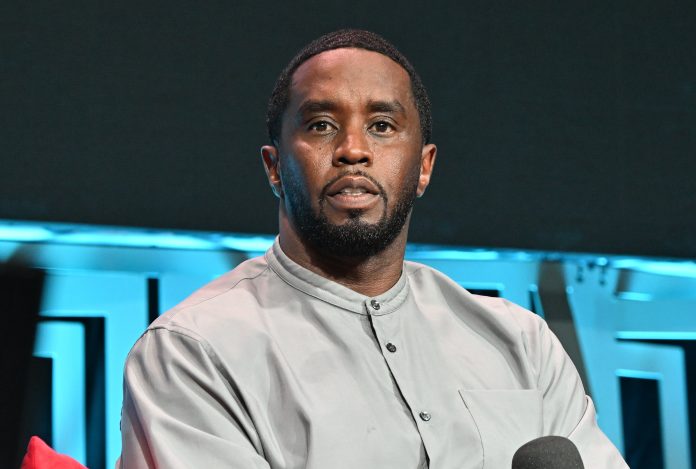
ATLANTA, GEORGIA - AUGUST 26: Sean "Diddy" Combs attends Day 1 of 2023 Invest Fest at Georgia World Congress Center on August 26, 2023 in Atlanta, Georgia. (Photo by Paras Griffin/Getty Images)

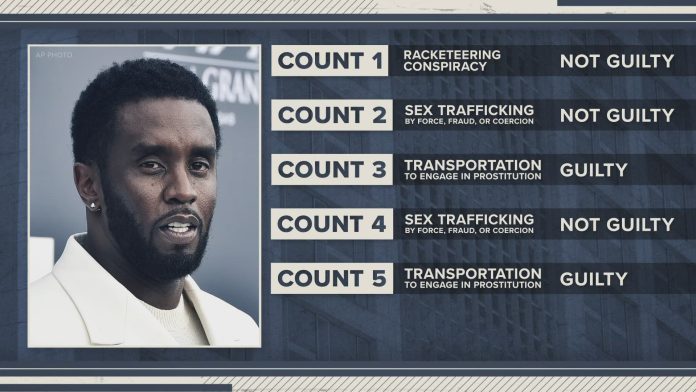
In a dramatic conclusion to a high-profile federal case, music mogul Sean “Diddy” Combs was acquitted of the most serious allegations brought against him, including sex trafficking and racketeering conspiracy, but was convicted on two lesser charges involving the transportation of individuals across state lines for the purpose of prostitution.

The jury delivered its mixed verdict earlier today, finding Combs guilty of two counts of interstate transportation to engage in prostitution—charges that carry a maximum sentence of 10 years each. However, the panel cleared him of two sex trafficking charges—one involving longtime partner Cassie Ventura and the other related to a woman known only by the pseudonym “Jane”—as well as a racketeering conspiracy charge, which could have resulted in a life sentence.

Former Assistant District Attorney and legal analyst Julie Grant told CNN that the jury’s decision suggests they found the evidence insufficient to meet the burden of proof for the most severe charges. “For whatever reasons, the men and women on the jury did not find there was enough evidence to prove these crimes in that federal court of law,” she stated.

Grant emphasized that the acquittals do not necessarily indicate innocence. “It doesn’t mean it didn’t happen,” she added. In her analysis, Grant opined that the prosecution may have legally substantiated its claims, but acknowledged that jurors’ personal perspectives and interpretations likely played a role. “Jurors may not see the enterprise or the sex trafficking for what it literally is by law,” she said.

Interestingly, Combs’ defense opted not to call any witnesses during its case, a move Grant described as a “stunning legal strategy” that indicated confidence in the perceived weakness of the prosecution’s arguments. She noted the air of certainty in the courtroom during the closing statements. “There was visible confidence from Diddy’s legal team—and from Combs himself. Some jurors seemed to resonate with the defense’s position.”

Defense Requests Bond Release, Citing Time Served and Low Flight Risk

Following the partial conviction, Combs’ legal team submitted a formal letter to the presiding judge seeking his release on bond while awaiting sentencing. The letter outlines a proposed $1 million bond, co-signed by members of Combs’ family, including his mother, sister, and the mother of his eldest daughter.

Additional conditions proposed by the defense include restricted travel to New York, New Jersey, California, and Florida—states where Combs has homes or where legal proceedings and counsel meetings would occur. The team also offered the surrender of Combs’ passport, regular drug testing, and compliance with all other standard pretrial supervision terms.

The defense argued that, since Combs was not convicted of charges that would have brought life sentences, the current sentencing guidelines suggest a range of 21 to 27 months. Noting that Combs has already spent 10 months in custody, his attorneys assert that continued incarceration is unwarranted.

“This results in an expected guidelines range of 21 to 27 months,” the letter reads. “Mr. Combs has already been incarcerated for 10 months. His sentencing exposure — which we fully respect and do not seek to minimize — is in fact low, and so is any corresponding risk of flight.”

The Conviction: What the Two Counts Entail

Although he avoided the most severe penalties, Combs was convicted on two federal counts of transporting individuals for prostitution, a violation that could still see him serve significant time if sentenced to the maximum penalty.

The charges centered on his relationships with Cassie Ventura and “Jane,” both of whom testified under oath. According to prosecutors, Combs arranged and financed interstate travel for both women—along with male escorts—for the purpose of orchestrating paid sexual encounters.

Cassie Ventura, who was in a relationship with Combs from 2007 to 2018, testified to participating in orchestrated sexual sessions, referred to by Combs as “Freak Offs.” Jane, who used a pseudonym and dated Combs between 2021 and 2024, similarly described what she called “hotel nights,” where she was encouraged or directed to engage in sexual acts with male entertainers, often in Combs’ presence.

Jane testified that these events occurred across numerous locations including Los Angeles, New York, Miami, and Turks and Caicos between May 2021 and October 2023. Ventura corroborated similar experiences, naming additional cities such as Atlanta and Las Vegas.

Ventura’s testimony included statements that male escorts were paid between $1,500 and $6,000 in cash by Combs after these encounters. Her account was supported by a cache of corroborating evidence, including hotel receipts, American Express charges, and flight records.

The prosecution also presented video footage allegedly showing both Ventura and Jane engaging in sexual activities with male escorts, footage that was matched against documented travel and lodging records. Despite the graphic nature of the evidence, the defense argued that there was no conclusive proof the payments constituted prostitution rather than compensation for time or companionship.

Next Steps

As the case moves toward sentencing, Combs’ legal team remains hopeful that the court will grant conditional release. Legal analysts predict that the outcome of the bond hearing will signal the court’s stance on how serious it views the remaining convictions.

Whether Combs ultimately serves additional prison time remains to be seen, but the verdict marks a turning point in one of the entertainment industry’s most publicized legal battles in recent memory.

Sean ‘Diddy’ Combs Faces Uncertain Sentencing After Mixed Federal Verdict

Although music mogul Sean “Diddy” Combs was cleared of the most serious allegations during his recent federal trial, legal experts say he may still be heading to prison following his conviction on two felony counts of transporting individuals for the purpose of prostitution.

While a sentencing date is yet to be confirmed, the convictions carry significant weight — each charge is punishable by up to 10 years in federal prison. If served consecutively, Combs could theoretically face a 20-year sentence. However, legal professionals caution that the actual penalty could be much less severe than the statutory maximum.

“It’s highly unusual for judges to issue the full sentence allowed under the law,” said Daniel Richman, a Columbia Law School professor and former federal prosecutor in Manhattan. He noted that sentencing in federal cases involves a complex analysis shaped by numerous legal and personal factors.

Presiding over Combs’s trial is U.S. District Judge Arun Subramanian, who is expected to begin his assessment using federal sentencing guidelines. These provide a structured framework based on the type of offense, specific circumstances of the case, and the defendant’s background, such as criminal history.

Despite the guidelines being a standard reference, adherence varies widely across jurisdictions. Nationwide, federal judges issued sentences within the guideline ranges in 67% of cases during the 2024 fiscal year. Yet, in the Southern District of New York, only 34.5% of sentences followed those benchmarks, with judges there often opting for lighter punishments.

According to Richman, Judge Subramanian will ultimately have significant discretion. “He can use the guidelines as a guidepost, especially after calculating them, but he is not bound by them,” Richman explained.

Douglas Berman, a sentencing law scholar at Ohio State University, emphasized that a wide spectrum of factors can be weighed during sentencing. “A judge may consider everything — from the defendant’s philanthropic efforts and business accomplishments to the severity of his actions or potential threat to society,” Berman noted.

Importantly, judges may also examine evidence tied to charges that did not result in a conviction, provided it is deemed relevant. Additionally, considerations about the defendant’s likelihood of reoffending will influence the final decision.

In court on Wednesday, Combs responded to the partial acquittal with a visible sense of relief — raising his fist and offering thanks to jurors. But analysts warn that his celebration may be premature.

“The real test lies in how assertive the prosecution is when it submits sentencing recommendations,” Berman added. “That can shape the tone of the entire process and sway the final outcome.”

As the entertainment world watches closely, the sentencing phase promises to be another dramatic chapter in the legal saga of one of hip-hop’s most influential figures.

Leaders Converge At Intra-African Trade Forum To Explore Businesses Opportunities

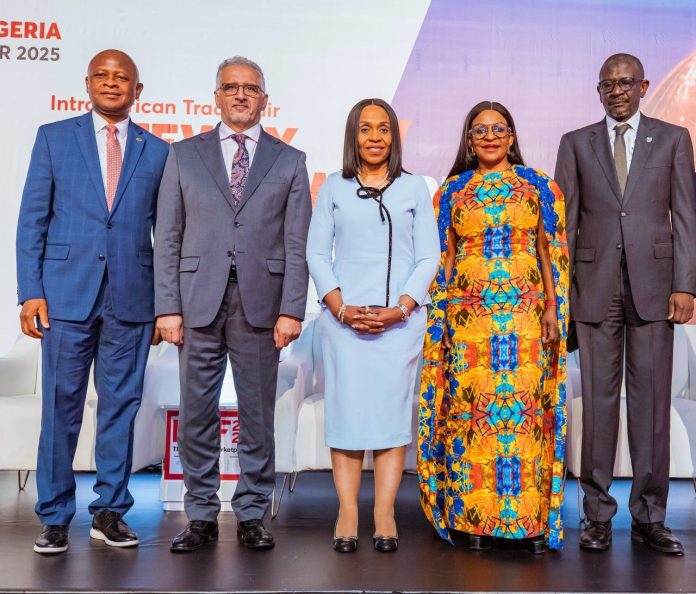
Executive Vice President, Intra-African Trade and Export Development, Afreximbank, Mrs. Kanayo Awani (centre) poses with speakers at the Nigeria IATF2025 High-Level Business Roadshow in Lagos (left to right), Special Advisor to the Managing Director/CEO, Bank of Industry, Mr. Leonard Kange; Ambassador of Algeria to Nigeria, H.E. Hocine Mezoued; Executive Director/CEO, Nigeria Export Promotion Council, Ms. Nonye Ayeni; and Managing Director, Nigeria Export-Import Bank Mr. Abubakar Bello.

Nigeria is working towards fast-tracking implementation of the African Continental Free Trade Area (AfCFTA) to unlock opportunities across the continent for businesses in the country. Nigeria’s Minister of the Federal Ministry of Industry, Trade and Investment, Hon. Jumoke Oduwole noted that intra-African trade has been improving.

“Intra African trade exports grew by over 13% from last year supported by new trade corridors and the initial success of AfCFTA’s guideline initiatives. Nigerian businesses are already key participants, exporting, ceramics, garments, pharmaceuticals and agro products across the continent,” Hon. Jumoke said in a keynote address delivered to the Nigeria IATF2025 Business Roadshow that brought together government officials, the trade community, including businesses and investors, and executives from African Export-Import Bank (Afreximbank). The event focused on promoting intra-African trade under the theme: ‘Harnessing Regional and Continental Value Chains: Accelerating Africa’s Industrialisation and Global Competitiveness through AfCFTA.’

The Nigeria IATF2025 roadshow is one of the five in a series of five high-level events in key cities including Nairobi, Accra, Johannesburg, and Algiers ahead of the fourth edition of the biennial Intra-African Trade Fair (IATF) that will be held in Algiers, Algeria from 4 – 10 September 2025 under the theme ‘Gateway to New Opportunities’. IATF is Africa’s premier trade and investment event that serves as a crucial platform for fostering economic growth, collaboration, and innovation across the continent.

Addressing the forum, Executive Director/CEO of the Nigerian Export Promotion Council (NEPC), Nonye Ayeni noted that the IATF offers an unparalleled platform for the exchange of trade and investment information and is a marketplace of ideas, opportunities, and partnerships.

“With frameworks like AFCFTA and platforms like IATF we now have the tools to bridge the trade gap, boost Intra African trade and tremendously grow our economies in a sustainable and inclusive way. We need to build structured, sustainable and competitive value chains that can power inclusive growth both here in Nigeria and across the continent in Africa. We know that AfCFTA promises to be the largest single market in the world, connecting 1.3 billion people across 54 countries in Africa,” Ms Ayeni said

Building on this, Executive Vice President, Intra-African Trade and Export Development at Afreximbank, Kanayo Awani highlighted the tangible results the platform has already delivered across the continent and in Nigeria especially.

“In just three editions, IATF has achieved what once felt aspirational: over $100 billion in trade and investment deals, more than 70,000 participants, and 4,500+ exhibitors from across 130 countries. This is not a conference, it is Africa’s trade engine, designed to connect our producers, unlock demand, and operationalise the promise of the AfCFTA. And in every edition—whether in Cairo, Durban, or beyond, Nigeria has not just participated. Nigeria has led. At IATF2023 alone, Nigerian enterprises generated over $11 billion in signed deals, the highest of any country. Nigeria always shows up. Nigeria delivers,” Mrs Awani added.

IATF is a platform for boosting trade and investment in Africa. The last edition held in Cairo attracted nearly 2,000 exhibitors from 65 countries and generated US$43.7 billion in trade and investment deals.

Some of the activities lined up for the week-long IATF2025 include a trade exhibition by countries and businesses; the Creative Africa Nexus (CANEX) programme with a dedicated exhibition and summit on fashion, music, film, arts and craft, sports, literature, gastronomy and culinary arts; a four-day Trade and Investment Forum featuring leading African and international speakers; and the Africa Automotive Show for auto manufacturers, assemblers, original equipment manufacturers and component suppliers.

“As we talk about expanding and unlocking new the trade markets, we must recognize the creative economy as a serious trade frontier. Platforms such as CANEX led by Afreximbank are proving that African culture is bankable not just beautiful.” The Minster of the Federal Ministry of Industry, Trade and Investment added in her address.

Special Days will also be held at IATF2025, dedicated for countries as well as public and private entities to showcase trade and investment opportunities, and tourism and cultural attractions, as well as Global Africa Day to highlight commercial and cultural ties between Africa and its diaspora, featuring a Diaspora Summit, market and exhibition, cultural and gastronomic showcase.

Also planned is a business-to-business (B2B) and business-to-government (B2G) platform for matchmaking and business exchanges; the AU Youth Start-Up programme showcasing innovative ideas and prototypes; the Africa Research and Innovation Hub @IATF targeting university students, academia and national researchers to exhibit their innovations and research projects; the Trade Exhibition offering large corporations and SME’s the opportunities to showcase their goods and services, the Trade and Investment Forum, a four day conference featuring sessions and training discussing trade opportunities and barriers, the Creative Africa Nexus (CANEX), a showcase of African and Diaspora creative talent, the Special Days segment offering countries, private and public sectors the opportunity to sponsor their special event on specific days, the Africa Automotive show, a platform for auto manufacturers to exhibit their products and interact with potential buyers, IATF Virtual, an interactive online platform that will continue after the live event is over, Diaspora Day highlighting the commercial and cultural ties between Africa and its diaspora and the African Sub-Sovereign Governments Network (AfSNET) to promote trade, investment, educational and cultural exchanges at the local level. The IATF Virtual platform is already live, connecting exhibitors and visitors throughout the year.

To participate in IATF2025 please visit www.intrafricantradefair.com.

Debunking Money Myths: Stanbic IBTC Asset Management Empowers Nigerians With Financial Knowledge

In an effort to enhance financial literacy and empower Nigerians to make informed financial decisions, Stanbic IBTC Asset Management is addressing prevalent money myths that often hinder wealth creation and financial security.

Money myths, ranging from the belief that only the wealthy can invest, to the misconception that one cannot invest with small amounts, often shape financial behaviour in ways that limit long-term growth. These misconceptions prevent individuals, particularly young people, and aspiring investors, from seizing wealth-building opportunities available within the formal economy. Instead, they are drawn to quick and misleading Ponzi schemes that exploit their lack of knowledge.

Recognising these challenges, Stanbic IBTC Asset Management launched a campaign to inspire individuals to rethink their financial habits by exploring how money “thinks” about investing. The campaign, designed to demystify investment fears and misconceptions, encourages people to reassess their attitudes towards money and make strategic decisions to grow it. With inflation eroding the value of uninvested cash and financial markets offering long-term growth opportunities, experts suggest that now is the time to put money to work.

Busola Jejelowo, Chief Executive of Stanbic IBTC Asset Management, recently shared insights on the company’s mission to provide clarity by addressing misleading financial narratives and replacing them with practical advice. In her statement, she emphasised, “In an era of financial uncertainty, it is crucial to make informed, confident investment choices. We believe that financial growth is a journey of partnership, and many people make financial decisions based on myths rather than facts, which can limit their ability to build sustainable wealth. With the ‘Money’s Mind’ campaign, we aim to correct these misconceptions and provide individuals with the right tools and knowledge to take control of their financial future.”

Busola further mentioned that these tools have been housed in BluNest, Stanbic IBTC Asset Management’s intuitive digital investment platform. BluNest offers new and existing investors access to a variety of investment portfolios, including Money Market Portfolios, Commercial Papers, Treasury Bills, and Bonds. Some notable features of BluNest include The Wallet, a feature that allows customers to fund and purchase any investment instrument seamlessly; Auto-Invest, which helps automate investments periodically to keep users on track to meet their financial goals; and Target Savings, which assists customers in saving and making goal-oriented investments for specific milestones.

In today’s digital era, accessibility to financial information is more crucial than ever. BluNest by Stanbic IBTC Asset Management leverages technology to enhance financial education, ensuring that Nigerians can access valuable resources anytime, anywhere. Users can monitor investments, gain real-time market insights, and receive expert guidance tailored to their financial objectives.

Stanbic IBTC Asset Management remains committed to building a financially literate society where individuals can take charge of their financial futures. The organisation has shown a particular interest in nurturing young investors through Beyond Dreams, a youth-centric community focused on sharing relatable investment insights with a younger demographic, equipping them with the right tools to make more informed investment decisions.

The “Money’s Mind” campaign reflects this commitment, fostering a shift from financial myths to financial empowerment. By prioritising education, accessibility, and expert-backed solutions, the company reinforces its role as a trusted partner in financial planning, helping Nigerians navigate their journey toward long-term financial security.

Top 81 Students Emerge In The InterswitchSPAK 7.0 National Qualifying Examinations  

The seventh edition of the InterswitchSPAK National Science Competition has reached an exciting milestone, with the emergence of the top 81 finalists who will proceed to the televised stage of the renowned STEM-focused competition. This follows the successful conclusion of the nationwide pre-qualifying examinations, which recorded over 18,200 student registrations, a 12.5 per cent increase in registrations from the previous year.

Organised by Interswitch Group, one of Africa’s leading integrated payments and digital commerce companies, the science-focused competition has come to be regarded as a fixture on the Nigerian education landscape.

The two-stage pre-qualifying exam phase was held between June 17th and 27th, 2025, drawing participants from thousands of secondary schools across Nigeria. The first round tested students on core science subjects including Physics, Chemistry, Biology, and Mathematics. The top 500 students who scored 75 per cent and above progressed to the second stage of the examinations, which drilled down to the top 81 finalists.

These top 81 outstanding students, drawn from across the country, will proceed to compete in the televised InterswitchSPAK STEM quiz show, where they will battle for the top prize and the coveted title of Nigeria’s Best STEM Student. The show will air nationwide in the coming weeks.

Speaking on the milestone, Cherry Eromosele, Executive Vice President, Group Marketing and Communications, Interswitch, expressed her excitement over the turnout of this year’s participation from students and reaffirmed Interswitch’s continued commitment to the initiative. She said:

“The quality of performance and commitment we have seen from students across the country has been nothing short of inspiring. InterswitchSPAK continues to deliver on its mission to identify and nurture the next generation of leaders in STEM, and the emergence of these 81 finalists marks a major milestone in this journey. We look forward to showcasing their brilliance during the televised broadcast as they compete not only for prizes, but for a chance to make their imprint in the sands of time.”

Now in its seventh year, InterswitchSPAK is a flagship CSR initiative of Interswitch Group to support and empower young Africans through STEM education. The programme is designed to build a pipeline of future scientists, engineers, inventors, and technology innovators who will help shape Africa’s future.

The 81 finalists will participate in the InterswitchSPAK TV quiz show, which will be broadcast for 13 weeks across major stations nationwide. At the finale, the ultimate winner will be awarded a five-year university scholarship worth 15 million Naira, a brand new laptop, and the bragging rights as Nigeria’s Best STEM Student.

The second prize winner will receive a four-year university scholarship and a stipend worth 10 million Naira, along with a brand new laptop, while the third prize winner will be awarded a three-year university scholarship worth 5 million Naira and a brand new laptop.

For more updates on the finalists, competition schedule, and TV broadcast, follow InterswitchSPAK on social media platforms including YouTube and Instagram. The televised quiz competition will premiere nationwide on Sunday, 9th November 2025, showcasing the brilliance and potential of Nigeria’s future STEM leaders.

BizWatchNigeria.Ng
Privacy Overview

This website uses cookies so that we can provide you with the best user experience possible. Cookie information is stored in your browser and performs functions such as recognising you when you return to our website and helping our team to understand which sections of the website you find most interesting and useful.