The Securities and Exchange Commission (SEC) has reiterated that accountability and transparency remain central to sustaining investor trust in Nigeria’s capital market.
Dr. Emomotimi Agama, Director-General of the Commission, stressed that investors’ willingness to commit funds is largely influenced by how transparent and accountable market participants and institutions remain.
In a statement issued on Sunday, the SEC underscored that robust internal control systems over financial reporting play a vital role in safeguarding market integrity. “Financial disclosures anchored on strong internal control mechanisms are fundamental to promoting transparency and ensuring that accountability is maintained,” the Commission stated.
Agama further explained that investors are primarily concerned with evidence of stewardship and the assurance that corporate leaders are fulfilling their responsibilities. “When management demonstrates accountability and commitment to integrity, confidence grows, and investors are more inclined to participate,” he said.
The SEC boss also highlighted reforms introduced under the new Investment and Securities Act (ISA) 2025, describing them as key drivers of market efficiency and transparency. According to him, the reforms have already strengthened investor sentiment and encouraged fresh capital inflows.
He reaffirmed the SEC’s commitment to professionalism, market discipline, and adherence to regulatory standards, noting that these principles are reshaping Nigeria’s capital market and driving sustainable growth.
When news broke that Japan had officially designated Kisarazu as the “hometown” for Nigerians, it didn’t just sound like another diplomatic headline. It felt personal. For thousands of Nigerians considering relocation—whether for work, study, or simply a fresh start—this could very well be the bridge between two worlds.
On August 21, 2025, during the ninth Tokyo International Conference on African Development (TICAD9), Japan’s government unveiled this new partnership. At the heart of it is a special visa scheme designed to welcome skilled Nigerian workers, artisans, and young professionals into Kisarazu, a coastal city not far from Tokyo. But what does this mean in real terms? And more importantly, what’s life actually like in Kisarazu? Let’s unpack it.
A City by the Bay – Where Kisarazu Sits
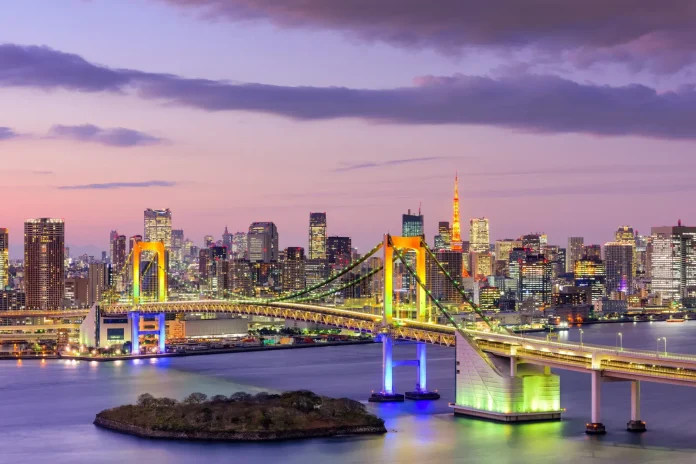
Imagine living close to Tokyo without paying Tokyo’s sky-high rents—that’s the deal in Kisarazu. Located about 70 km from Japan’s capital, the city is connected through the Tokyo Bay Aqua-Line, a 23.7 km bridge-and-tunnel highway. This means you can finish work in Kisarazu, hop on the Aqua-Line, and still meet friends for dinner in Tokyo without breaking much of a sweat.
The city itself is nestled on the coast, offering sweeping sea views, breezy summers, and a more relaxed pace compared to the bustle of Tokyo. For Nigerians used to Lagos’ constant energy, Kisarazu might feel quieter, but not in a boring way—more like a calm escape.
Olympic Ties That Started It All
Kisarazu isn’t a stranger to Nigerians. During the 2020 Tokyo Olympics (remember that odd COVID-delayed event?), the Nigerian contingent used the city as its training base. Athletes held pre-game camps here, mixing with locals and leaving behind a small cultural footprint. That familiarity probably laid the groundwork for today’s hometown designation.
Population and Workforce Potential
With about 136,000 residents (as of 2020), Kisarazu faces a challenge that plagues much of Japan: an ageing population. Simply put, they need younger, skilled hands to keep the city vibrant. Nigerians coming in through this hometown visa program are expected to play a critical role—working in industries, filling skill gaps, and breathing fresh energy into the community.
It’s not just Japan benefiting here. For Nigerians, this is a chance to enter one of the world’s most advanced economies through a pathway that values both professional skills and cultural exchange.
Safety First—And Yes, It Matters
One of Japan’s biggest selling points, which extends to Kisarazu, is safety. Violent crime rates are extremely low. The city has community policing, and petty crimes like pickpocketing are rare but, of course, possible in public areas. For Nigerians relocating with families, that sense of security can’t be overstated. It’s not perfection, but it’s a massive improvement compared to global averages.
A Taste of Kisarazu – Food and Fashion
Now, let’s talk lifestyle because no one moves abroad for visas alone. Kisarazu is famous for its clams harvested at Egawa Beach. Seafood dominates menus here—think ramen with local clams, fresh sushi, or street snacks like takoyaki. Nigerians with a taste for pepper soup and suya may need time to adjust, but food culture here is rich enough to spark curiosity.
Fashion-wise, expect a mix of modern casual wear—jeans, jackets, sneakers—with traditional Japanese kimono and yukata reserved for festivals. For Nigerians who love vibrant Ankara prints, blending styles during cultural events could actually turn into a fashion statement.
Work, Business, and Opportunities
Kisarazu sits within the Keiyō Industrial Zone, meaning industries like steel, chemicals, and electronics are present. There’s also agriculture and fishing—still important to the local economy. On the business side, the Mitsui Outlet Park is a retail hotspot, drawing shoppers from across Chiba Prefecture.
For Nigerians thinking long-term, this isn’t just about finding jobs. It could also mean setting up small businesses, trading cultural products, or tapping into Japan’s tech-driven economy.
Culture, Festivals, and Little Surprises
Japan loves festivals, and Kisarazu is no different. The Yassai Mossai dance parade and the Kisarazu Minato Port Festival, which features massive fireworks displays, give the city its own cultural flavor. And fun fact—there’s even a TV drama, Kisarazu Cat’s Eye, that made the city famous in pop culture.
Landmarks like the Nakanoshima Bridge (Japan’s tallest pedestrian bridge with views of Mount Fuji on clear days) and historic Kōzō-ji Temple add to the city’s charm. For weekend getaways, Egawa Beach or Kurkku Fields are perfect spots.
Marriage, Money, and Everyday Life
Thinking of settling down fully? Here’s the practical bit. Marriages are legally recognized only when registered at the city hall. Minimum age is 18 for both men and women, and polygamy isn’t allowed under Japanese law. Nigerians marrying here need proof of single status.
Currency-wise, Japan runs on yen (¥), and you’ll mostly use notes like ¥1,000, ¥5,000, and ¥10,000, along with coins. Living costs in Kisarazu are lower than central Tokyo—cheaper rent, groceries, and transportation. According to LivingCost.org, the median after-tax salary is about $2,585, enough to cover living expenses for more than two months.
Health, Education, and Governance
Healthcare in Japan is universal. Nigerians relocating will need to enroll in National Health Insurance. Kisarazu has multiple hospitals, including Kisarazu City Hospital.
Education-wise, there’s Seiwa University, Kisarazu National College of Technology, and Gyosei International School, which is bilingual (Japanese-English). For families with kids, that’s a big plus.
The city is governed by Mayor Yoshikuni Watanabe and a municipal assembly, handling welfare, urban planning, and disaster preparedness. Governance here is structured and responsive—very different from the bureaucratic delays Nigerians may be used to.
Religious Life and Spiritual Communities
Japan is largely Shinto and Buddhist, but Christianity and Islam exist in small numbers. In Kisarazu, there are small churches and gatherings, while larger mosques and congregations can be found in Chiba and Tokyo. Nigerians moving here will still find opportunities to connect spiritually, though not as frequently as back home.
Language and Time Difference
Japanese is the dominant language. English isn’t widely spoken outside Tokyo, so learning Japanese is almost a necessity for anyone planning to integrate. For Nigerians, it may take effort, but the payoff is smoother work, easier friendships, and deeper cultural understanding.
Also, don’t forget the time difference—Kisarazu is eight hours ahead of Nigeria. So, while it’s noon in Lagos, it’s already 8 pm in Kisarazu. This will matter for those working remotely or keeping close ties back home.
Why This Matters – Beyond Visas and Passports
Japan’s Prime Minister Shigeru Ishiba made it clear during TICAD9: the country needs new partnerships as it faces an ageing population and shrinking workforce. Nigeria, with its young, energetic population, fits into that vision. For Nigerians, the benefit is not just about jobs abroad, but access to a country that invests heavily in technology, education, and innovation.
In many ways, Kisarazu represents more than just a hometown designation. It’s a cultural handshake—a chance for Nigerians to leave their imprint on Japanese soil while carrying home lessons, skills, and new perspectives.
Final Thoughts
So, what should Nigerians expect in Kisarazu? A calm, coastal city with real opportunities, lower living costs compared to Tokyo, and a visa scheme that values their skills. It’s safe, it’s connected, and it’s culturally vibrant. Sure, the language barrier might be tough at first, and the food may feel unfamiliar. But with patience, adaptability, and community spirit, Nigerians could turn Kisarazu into something more than a “hometown” on paper.
Japan has formally named the city of Kisarazu as the designated hometown for Nigerians wishing to reside and work in the East Asian nation, opening the door to new cultural and economic opportunities.
The announcement was made on Thursday, August 21, 2025, during the ninth Tokyo International Conference on African Development (TICAD9). According to the Nigerian State House, the move forms part of Japan’s broader strategy to expand cultural diplomacy, strengthen bilateral cooperation, and boost workforce productivity.
In a statement issued on Friday by Abiodun Oladunjoye, Director of Information at the State House, Japan confirmed that the initiative will come with a special visa program for skilled and talented Nigerians interested in relocating to Kisarazu.
Visa Opportunities for Skilled Nigerians
Under the new arrangement, the Japanese government will create a visa category specifically for young, innovative, and highly skilled Nigerians who want to live and work in Kisarazu. The program will also extend to artisans and blue-collar workers from Nigeria who are willing to undergo professional training and upskilling in Japan.
“This initiative will allow Nigerian artisans and workers seeking growth opportunities to benefit from a special dispensation visa, enabling them to contribute to Japan’s economy while acquiring advanced skills,” the statement highlighted.
The Japan International Cooperation Agency (JICA) also revealed that similar hometown designations were granted to other African countries. Nagai in Yamagata Prefecture was named the hometown of Tanzania, Sanjo in Niigata Prefecture became the hometown of Ghana, while Imabari in Ehime Prefecture was designated as the hometown of Mozambique.
By assigning these symbolic hometowns, Japan aims to promote manpower exchanges, strengthen ties with African countries, and reinforce mutual development.
Kisarazu’s Historical Connection With Nigeria
Nigeria’s Charge d’Affaires and Acting Ambassador to Japan, Mrs. Florence Akinyemi Adeseke, received the certificate of designation on behalf of the Nigerian government from Yoshikuni Watanabe, Mayor of Kisarazu.
Officials noted that these partnerships are designed to serve as a platform for mutual development and cooperation, adding value to economic growth in both Japan and Africa. Local authorities also hope the initiative will encourage population growth in their municipalities and support regional revitalisation.
Kisarazu has previously hosted Nigerian athletes during the 2020 Tokyo Olympics, where Team Nigeria held its pre-games training camp and acclimatisation sessions before the COVID-19-delayed competition. This long-standing bond, Japanese officials said, influenced the city’s designation as Nigeria’s hometown.
Japan’s Broader Commitment to Africa
During his keynote address at TICAD9, Japanese Prime Minister Shigeru Ishiba announced a fresh $5.5 billion investment pledge to Africa, stressing Japan’s focus on private sector-led sustainable growth, youth and women empowerment, and regional integration.
Ishiba underscored the importance of building localised solutions that address Africa’s needs, while also acknowledging Japan’s domestic challenges, including an ageing population and shrinking agricultural workforce.
“Japan is committed to building solutions in collaboration with Africa. Through this co-creation platform at TICAD9, we are focusing on sustainable growth, empowerment, and regional integration. We hope that African countries will, in turn, support Japan as we tackle demographic and economic challenges at home,” Ishiba said.
With this new visa initiative and hometown designation, Japan is positioning itself as both a strategic partner and a destination for African talent, marking a new chapter in Japan-Nigeria relations.
Interswitch, one of Africa’s leading integrated payments and digital commerce companies, will take centre stage at Moonshot by TechCabal 2025 as a platinum sponsor, owning the Big Tech and Enterprise Stage and driving high-level conversations on enterprise innovation and Africa’s next phase of digital growth.
The flagship conference, hosted by African technology publication TechCabal, will take place from October 15–16, 2025 at the Eko Convention Centre, Lagos, under the theme “Building Momentum: Africa’s Tech Ecosystem Positions Itself for Its Next Big Leap.”
Moonshot by TechCabal is a premier platform where Africa’s brightest tech minds converge to exchange ideas, network, and collaborate. It offers a unique opportunity for stakeholders to drive growth in Africa’s payment ecosystem while celebrating the innovations shaping the continent’s digital future. Now in its third edition, Moonshot will convene policymakers, innovators, founders, and business leaders to explore how Africa’s tech ecosystem can scale sustainably and structurally.
As a Platinum Sponsor, Interswitch will feature in a high-level panel session on enterprise innovation and scaling the digital economy. The company will also participate in an exclusive closed-door gathering of top policymakers, industry leaders, and innovators, a strategic forum for shaping Africa’s digital future.
Speaking on the forthcoming event and partnership, Akeem Lawal, Managing Director, Payment Processing & Switching (Interswitch Purepay) said:
“Africa’s tech ecosystem is at a pivotal inflection point, moving from resilience to intentional, scalable growth and shaping the continent’s digital future. At Interswitch, we believe this is the right moment to deepen conversations on scale, structure, and sustainability, while championing the partnerships and innovations that will drive lasting impact. Moonshot provides the ideal platform to ensure these conversations translate into transformative action.”
As a pioneer in payments and digital commerce, Interswitch continues to demonstrate leadership through strategic partnerships, innovation and ecosystem collaboration. With its platinum sponsorship, Interswitch reinforces its commitment to driving Africa’s digital future through innovation, strategic partnerships, and ecosystem collaboration. By aligning with TechCabal’s vision, Interswitch’s participation goes beyond sponsorship, contributing meaningfully to the conversations, alliances, and actions that will define Africa’s next phase of digital advancement.
Moonshot by TechCabal 2025 promises two days of dynamic panels, thought-leadership sessions, high-impact networking, and solution-driven dialogue, with Interswitch at the forefront of the enterprise innovation narrative.
Stanbic IBTC Bank is once again raising the bar to reward customer loyalty with the much-anticipated return of its Save and Enjoy Promo, Season 2, specially designed for its Private Banking clients.
This refreshed campaign builds on the established success of its maiden edition where high-net-worth individuals were rewarded with exclusive benefits such as open business class tickets to a word-class destination, priority passes, and other consolation prizes.
The Save and Enjoy Promo underscores Stanbic IBTC Bank’s commitment to celebrating trust and loyalty while encouraging a culture of saving and financial discipline among its esteemed Private Banking clientele. Season 2 promises to be bigger, more rewarding and memorable. Customers stand a chance to win luxury business class tickets to the United States of America, United Kingdom or Canada; airport priority passes valid for one year; luxury vintage travel boxes and more exciting consolation prizes.
Layo Ilori-Olaogun, Head, Private Banking, Stanbic IBTC Bank, expressed her enthusiasm ahead of the launch. In her statement, she re-emphasised the importance of building strong connections with the bank’s Private Banking clients. According to Layo, ‘Our Private Banking clients deserve experiences that match their ambitions. Our Save and Enjoy Promo Season 2 is a celebration of success, luxury and lifestyle and we are thrilled to create a more rewarding journey for our clients this season’.
By participating in the campaign, clients can experience firsthand the personalised services and financial solutions tailored specifically for their needs. The focus is on delivering exceptional value and ensuring that each client’s banking experience aligns with their unique financial goals and aspirations.
To qualify, clients are invited to make a minimum deposit of N10million in their current accounts and maintain the balance for the promotional period – between 01 September and 30 November 2025.
Stanbic IBTC Bank is a leading financial institution dedicated to providing exceptional banking services to individuals and businesses. With a strong heritage of excellence, innovation and customer focus, the bank continues to deliver unique financial solutions that empower clients to achieve more.
For additional details regarding the Save and Enjoy campaign and qualification criteria, customers are encouraged to visit www.stanbicibtcbank.com or reach out to platinumsupport@stanbicibtc.com .
Barcelona produced a dramatic fightback to overturn a two-goal deficit and defeat Levante 3-2 at the Estadio Ciudad de Valencia, keeping their perfect LaLiga start intact with a ninth consecutive away victory.
The Catalan giants began positively, with Marcus Rashford making his first start alongside Lamine Yamal. Yet Levante struck first after Iván Romero shrugged off three defenders to beat Joan García. Barça nearly equalised through Ferran Torres, who rattled the crossbar, before Adrián de la Fuente missed a free header that could have doubled Levante’s lead.
The hosts did not waste their next opportunity. Deep in first-half stoppage time, VAR awarded a penalty for handball against Alejandro Balde, which José Luis Morales dispatched confidently to make it 2-0.
Hansi Flick responded with bold halftime changes, introducing Dani Olmo and Gavi. Within three minutes, Pedri unleashed a long-range thunderbolt to spark the comeback, followed swiftly by Torres volleying home from a corner to level proceedings.
Barça’s relentless pressure continued, with Torres and Eric García both denied by inspired Levante goalkeeping. The decisive blow came in stoppage time when Yamal’s floated cross forced defender Unai Elgezabal into an own goal, completing the turnaround.
The victory extended Barcelona’s streak of scoring two or more goals in 13 of their last 16 LaLiga fixtures, while Levante remain winless since their top-flight return.
Arsenal stormed to the top of the Premier League table after dismantling Leeds United 5-0 at the Emirates, extending their unbeaten run against the visitors to seven straight matches.
Captain Martin Ødegaard set the tone early, narrowly missing from range before injury forced him off later in the half. Leeds responded with a dangerous header from Pascal Struijk, but David Raya’s sharp save kept Arsenal level. Moments later, the Gunners broke through. Declan Rice’s pinpoint corner found Jurriën Timber, who powered in a header — Arsenal’s 32nd goal from a set piece since the start of 2023/24.
Timber turned provider minutes before halftime, setting up Bukayo Saka to smash home with his weaker foot for a 2-0 cushion. The hosts resumed after the break in ruthless fashion, as Riccardo Calafiori’s incisive pass released Viktor Gyökeres, who cut inside to net his first Arsenal goal.
Although Saka’s injury briefly dampened spirits, Arsenal quickly extended their dominance. Another corner caused chaos, and Timber bundled home his second of the afternoon. With the contest settled, 15-year-old Max Dowman was handed a dream league debut — and the teenager won a penalty in stoppage time. Gyökeres converted confidently to seal a brace.
The emphatic win propelled Arsenal to the summit and matched a Premier League record of 43 consecutive home matches unbeaten against newly promoted clubs. Leeds, meanwhile, saw their seven-match winning streak end in brutal fashion.
Chelsea secured their first win of the Premier League season in style, dismantling West Ham United 5-1 at the London Stadium, despite the late withdrawal of Cole Palmer due to injury.
The hosts stunned the visitors early when Lucas Paquetá rifled a thunderous strike past Djordje Petrović inside six minutes. But the Blues struck back swiftly, Marc Cucurella flicking on a Pedro Neto corner for João Pedro to nod home. Niclas Füllkrug thought he had restored West Ham’s lead, only for VAR to intervene and rule it out for offside.
From there, Chelsea took control. Neto ghosted unmarked into the box to volley home Pedro’s delivery, before teenage sensation Estêvão — Palmer’s replacement — teed up Enzo Fernández for a tap-in, becoming the youngest Chelsea player to record a Premier League assist.
The Hammers’ defensive frailties were ruthlessly exposed again as goalkeeper Mads Hermansen fumbled a corner, allowing Moisés Caicedo to pounce for Chelsea’s fourth. Trevoh Chalobah added a fifth shortly after the hour, capping a dominant showing that had many home supporters heading for the exits.
West Ham rallied briefly, with Kyle Walker-Peters forcing a goalmouth clearance, but Chelsea threatened a sixth as Estêvão’s late strike was deflected wide.
The heavy defeat piled more pressure on West Ham boss Graham Potter, who remains winless in eight meetings against Chelsea. For Maresca’s men, the emphatic display marked their 33rd league victory over the Hammers — more than against any club other than Tottenham.
Tottenham Hotspur delivered a statement performance in Manchester, securing a 2-0 victory over reigning champions Manchester City at the Etihad Stadium, ending a six-match away drought in the Premier League.
Both sides entered the clash buoyed by opening-day wins — Spurs easing past Burnley 3-0 and City dismantling Wolves 4-0. The odds favored Pep Guardiola’s side at home, but history suggested caution: Tottenham had lost just once in their previous four trips to the Etihad.
City began brightly, spearheaded by Omar Marmoush, whose relentless pressing and attacking flair tested goalkeeper Guglielmo Vicario. The Egyptian saw two attempts denied, including a one-on-one chance. Yet Spurs’ pragmatic approach under new boss Thomas Frank — replacing the attack-minded Ange Postecoglou — paid off. Playing compact and countering with pace, they drew first blood when Mohamed Kudus flicked into Richarlison’s path, who squared for Brennan Johnson to fire Spurs ahead.
City’s woes deepened moments later. Under pressure, goalkeeper James Trafford’s poor distribution gifted possession to Richarlison, whose interception led to João Palhinha rifling home his first goal for Tottenham. By halftime, Spurs were firmly in control.
Despite City’s possession dominance after the break, Tottenham’s disciplined defensive structure frustrated the champions. Johnson squandered a chance to extend the lead, but it hardly mattered as Guardiola’s men failed to register meaningful efforts on Vicario’s goal.
The result not only gave Spurs six points from their opening two games without conceding, but also highlighted City’s vulnerability. Guardiola, remarkably, has now lost more matches (10) to Tottenham than to any other side in his managerial career.
Now you can find the Week 11 pool fixtures 2025: pool fixtures for this week, this week pool fixtures, football pools results and fixtures, pool fixtures this week, classic pool fixtures, Aussie pool fixtures, UK pool fixtures, advance pool fixtures, Australia pool fixtures, pool panel results, pool result today Saturday, pool results and fixtures this week, fortune soccer pool fixtures.
Find all the Week 11 pool fixtures on Bizwatchnigeria.ng as soon as they are released by the FPA (Football Pools Authority).
Pool Fixtures For This Week: 11; SEASON: UK 2025/2026
The National Bureau of Statistics (NBS) has reported that the average retail price of diesel fell to N1,789.45 per litre in July 2025, down from N1,813.81 per litre recorded in June.
According to the agency’s Diesel Price Watch for July, released on Friday in Abuja, the figure represents a 1.34 per cent month-on-month decline. However, on a year-on-year basis, diesel prices surged by 29.72 per cent, compared to N1,379.48 per litre in July 2024.
A breakdown by state showed that Benue recorded the highest average price at N2,341.46 per litre, followed by Adamawa (N2,163.88) and Plateau (N2,029.71). In contrast, the lowest prices were reported in Ondo (N1,465.71), Zamfara (N1,470.35), and Gombe (N1,485.00).
On a zonal basis, the South-South posted the highest average price at N1,941.98 per litre, while the South-West recorded the lowest at N1,619.06.
The Federal Government, states, and local government councils have shared a total of N2.001 trillion from the federation revenue for July 2025.The Federation Account Allocation Committee (FAAC), chaired by the Minister of Finance and Coordinating Minister of the Economy, Wale Edun, made the disbursement at its August 2025 meeting in Abuja.
The allocation came from a gross revenue of N3.836 trillion, comprising statutory revenue, Value Added Tax (VAT), Electronic Money Transfer Levy (EMTL), and exchange differences.
Out of the N2.001 trillion shared, the Federal Government received N735.081 billion, states got N660.349 billion, while local government councils received N485.039 billion. Oil-producing states also received N120.359 billion as 13 per cent derivation from mineral revenue. In addition, N152.681 billion was set aside for the cost of collection, while N1.683 trillion was earmarked for transfers, interventions, and refunds.
FAAC noted that gross revenue from VAT stood at N687.940 billion in July, higher than the N678.165 billion recorded in June, representing an increase of N9.775 billion. From this amount, N27.517 billion was deducted as the cost of collection and N19.813 billion for transfers and interventions. The balance of N640.610 billion was distributed, with the Federal Government receiving N96.092 billion, states N320.305 billion, and local councils N224.214 billion.
Meanwhile, gross statutory revenue dropped to N3.070 trillion in July from N3.485 trillion in June, indicating a decline of N415.108 billion.
Investors in the Nigerian stock market exchanged 4.773 billion shares valued at N107.426 billion in 152,965 deals this week on the floor of the Nigerian Exchange (NGX). The NGX weekly report, released in Lagos, showed a decline in trading volume compared to last week’s 8.564 billion shares worth N99.936 billion across 177,870 deals. Despite the lower turnover, the value of transactions rose by 7.50 per cent.
The Financial Services Industry dominated activity with 3.734 billion shares worth N60.627 billion traded in 72,977 deals, accounting for 78.24 per cent of total volume and 56.44 per cent of total value. It was followed by the Consumer Goods Industry with 370.404 million shares worth N14.025 billion in 17,997 deals, and the Services Industry with 176.285 million shares worth N1.279 billion in 8,790 deals.
The top three traded equities were Universal Insurance Plc, Zenith Bank Plc, and FCMB Group Plc, which jointly accounted for 1.201 billion shares worth N29.433 billion in 10,537 deals, representing 25.16 per cent of total volume and 27.40 per cent of total value.
However, the market closed the week on a bearish note, as the NGX All-Share Index (ASI) and Market Capitalisation declined by 2.51 per cent, settling at 141,004.14 points and N89.209 trillion, respectively. Most indices finished lower except for the NGX Consumer Goods Index (+0.83 per cent) and NGX Growth Index (+4.14 per cent), while the NGX ASeM and NGX Commodity Indices closed flat.
Market breadth also weakened, with 43 equities gaining against 50 in the previous week. Meanwhile, 54 equities declined, compared to 49 last week, while 49 equities remained unchanged, slightly higher than the 47 recorded in the prior week.
The week’s top five gainers were Austin Laz (+20.83 per cent), NCR Nigeria (+20.69 per cent), Nigerian Enamelware (+19.45 per cent), Guinea Insurance (+18.79 per cent), and Mutual Benefits Assurance (+14.29 per cent). Their respective price gains were 50k, N1.80, N6.35, 28k, and 55k.
On the losers’ chart, Thomas Wyatt Nigeria (-70k), NEM Insurance (-N5.90), Stanbic IBTC Holdings (-N17.10), Lasaco Assurance (-59k), and RT Briscoe (-55k) topped the decliners.
Meta has entered a six-year cloud computing agreement with Google worth more than $10 billion, making it one of the largest deals in Google Cloud’s 17-year history.
Under the partnership, Meta will rely on Google Cloud’s servers, storage, networking, and other infrastructure to advance its fast-growing artificial intelligence projects. The move solidifies Google as a key provider in Meta’s broader AI strategy, which includes building massive data centers and scaling cutting-edge models.
Meta CEO Mark Zuckerberg has pledged to invest “hundreds of billions of dollars” in AI infrastructure, with the company projecting 2025 capital expenditures of between $66 billion and $72 billion.
The deal also marks another win for Google’s cloud unit, which reported nearly 32% revenue growth in the second quarter, outpacing market expectations. Analysts expect the partnership to further accelerate Google Cloud’s momentum while deepening its ecosystem for machine learning and data processing.
The agreement follows a similar Google deal with OpenAI, highlighting a growing trend of collaboration among rival tech giants as they race to meet the soaring costs and demands of AI development. For Meta, tapping external partners like Google offers a way to offset the immense financial pressures of building next-generation AI systems at scale.
The National Information Technology Development Agency (NITDA) has warned Nigerians of a critical security vulnerability affecting embedded SIM (eSIM) technology, which could expose over two billion devices worldwide to large-scale cyberattacks.
In a public advisory issued at the weekend, the agency said the flaw stems from the GSMA TS 48 Generic Test Profile (version 6.0 and earlier), commonly used in radio compliance testing of embedded Universal Integrated Circuit Card (eUICC) chips.
NITDA explained that the vulnerability could allow attackers to gain either physical or remote access to affected devices, enabling them to install malicious applets, extract sensitive cryptographic keys, and even clone eSIM profiles.
“If exploited, this flaw could result in large-scale interception of communications, persistent device control, and the deployment of stealth backdoors at the SIM card level,” the agency said.
Mitigation Measures
The agency urged device manufacturers and service providers to deploy Kigen OS patches through over-the-air (OTA) updates to secure affected eUICCs. Stakeholders were also advised to adopt the latest GSMA TS.48 version 7.0 standard and remove outdated test profiles to block malicious applet installations.
NITDA emphasised that swift action was critical to safeguard users from what could become one of the most far-reaching cybersecurity threats in recent years.
Nigeria’s eSIM Landscape
eSIM adoption in Nigeria began in 2020 when the Nigerian Communications Commission (NCC) approved MTN and 9mobile to conduct pilot trials involving 5,000 eSIMs under strict regulatory conditions. Both operators later rolled out the service commercially, with Airtel joining in January 2023.
While no official figures exist on the number of Nigerians currently using eSIM, industry experts see the technology as the future of mobile connectivity.
Unlike physical SIM cards, eSIMs are built into smartphones, wearables and IoT devices, offering consumers greater flexibility and freedom without the need for physical card swaps.
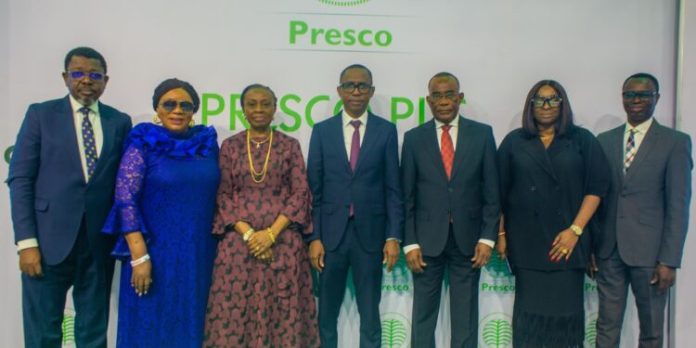
Presco Plc, Nigeria’s leading integrated agro-industrial company, has reported landmark growth for the 2024 financial year, with revenue more than doubling to ₦207.5 billion. The company also unveiled bold expansion plans across West Africa at its 2025 Annual General Meeting (AGM) held in Lagos.
Shareholders at the meeting approved the audited financial statements for the year ended December 31, 2024, alongside resolutions covering dividend declaration, board appointments, directors’ re-election, and remuneration disclosures.
Presco posted a 102.6 per cent increase in revenue to ₦207.5 billion from ₦102.4 billion in 2023. Profit Before Tax grew by 128.7 per cent to ₦113.2 billion, while gross profit rose by 120 per cent to ₦142 billion. EBITDA stood at ₦119.1 billion, up 125.2 per cent, reflecting operational discipline and efficiency.
Earnings per share advanced 57.5 per cent, while the company’s market valuation surged 146 per cent, signalling strong investor confidence.
Shareholders approved a final dividend of ₦42 per 50 kobo share (₦42 billion in total), payable on August 19, 2025.
Looking ahead, Presco set out an ambitious roadmap to triple its cultivated land, diversify its customer base, and deepen its presence across West Africa’s edible oils and fats market.
The company said its expansion drive could reduce Nigeria’s edible oil and fat imports by 40 per cent and Ghana’s by 30 per cent.
“Our ambition goes beyond today’s results,” said Felix O. Nwabuko, Group CEO of SIAT Group, Presco’s parent company. “Presco is building the future of Africa through agriculture—a future where we produce more of what we consume, reduce import dependence, and create sustainable value chains for farmers and host communities.”
As part of this strategy, Presco announced the acquisition of Ghana Oil Palm Development Company Limited (GOPDC) and Saro Oil Palm, describing the deals as a foundation for regional scale, synergies, and long-term profitability.
Chairman, Olakanmi Rasheed Sarumi, reaffirmed the company’s commitment to governance and sustainability despite economic headwinds.
“Our 2024 performance is a landmark in Presco’s journey. It demonstrates resilience in the face of economic pressures and validates our long-term strategy,” he said. “As we expand our footprint in Nigeria and West Africa, we remain committed to growth anchored in operational excellence, environmental stewardship, and shared prosperity with stakeholders.”
The Federation Account Allocation Committee (FAAC) has disbursed ₦2.001 trillion to the federal, state and local governments for August 2025, representing revenue accrued in July.
The figure reflects a modest rise compared to the ₦1.81 trillion shared in the previous month.
According to a communiqué issued at the end of FAAC’s August meeting in Abuja, the distributable revenue comprised ₦1.283 trillion from statutory allocations, ₦640.61 billion from Value Added Tax (VAT), ₦37.60 billion from the Electronic Money Transfer Levy (EMTL), and ₦39.74 billion from exchange differences.
From the total, the Federal Government received ₦735 billion, the states ₦660 billion, and local government councils ₦485 billion. A further ₦120 billion was allocated to oil-producing states as 13 per cent derivation revenue.
The committee disclosed that the gross revenue available for July stood at ₦3.8 trillion. Out of this, ₦152.68 billion was deducted as the cost of collection, while ₦1.68 trillion went into transfers, interventions, refunds and savings.
Breakdown of Allocations
Of the ₦1.283 trillion distributable statutory revenue, the Federal Government received ₦613.81 billion, the states ₦311.33 billion, and local councils ₦240.02 billion. Oil-producing states got ₦117.71 billion as derivation.
From the ₦640.61 billion VAT pool, the Federal Government received ₦96.09 billion, states ₦320.31 billion, and councils ₦224.21 billion.
For the ₦37.60 billion EMTL, the Federal Government got ₦5.64 billion, states ₦18.80 billion, and councils ₦13.16 billion.
On the ₦39.74 billion exchange difference, the Federal Government received ₦19.54 billion, states ₦9.91 billion, councils ₦7.64 billion, while ₦2.64 billion was shared as derivation to oil-producing states.
FAAC noted that gross statutory revenue in July was ₦3.07 trillion, lower by ₦415 billion compared with the ₦3.49 trillion recorded in June.
Despite the decline in gross statutory inflows, officials say improved VAT receipts and exchange earnings provided a buffer, lifting total distributable revenue to the ₦2 trillion mark.
The August allocation comes as the federal, state and local governments prepare for a larger windfall in the months ahead, with FAAC projecting stronger inflows that could push disbursements closer to ₦4 trillion.
The Nigerian National Petroleum Company (NNPC) Limited and a consortium of upstream gas suppliers have signed long-term Gas Supply Agreements (GSAs) with Nigeria Liquefied Natural Gas (NLNG) Limited for the delivery of 1.29 billion standard cubic feet per day (bscf/d) of feedgas.
The 20-year agreements, which carry options for extension, were concluded on Friday at the NNPC Towers in Abuja.
Signatories to the deal include Amni International Petroleum Development Company Limited, Sunlink Energies and Resources Limited, First Exploration & Petroleum Development Company Limited, Shell Nigeria Exploration and Production Company (SNEPCo), NNPC Gas Marketing Limited, NNPC E&P Limited, Shell Nigeria Gas Solutions Limited, Oando Group, and Aradel Holdings.
Group Chief Executive Officer of NNPC, Bayo Ojulari, described the agreements as a milestone for the nation’s energy sector.
“These GSAs have opened up opportunities for the growth of our industry both locally and internationally. They are hinged on collaboration, synergies and shared opportunities. We need to leverage economies of scale and collective risk-taking if we are to attain the President’s Decade of Gas vision,” Ojulari said.
He commended recent policy interventions by the Federal Government, noting that executive orders issued by President Bola Tinubu had created a more supportive environment for investment.
“It is important to commend the President’s tremendous effort that has enabled the business through the issuance of executive orders targeted at gas development and the ease of doing business,” he added.
Ojulari reaffirmed NNPC’s commitment to accelerating implementation of the directives, pledging to work with partners to unlock more opportunities for gas production.
Managing Director of NLNG, Philip Mshelbila, hailed the deal as a turning point for the company and the gas industry.
“These agreements are a turning point in NLNG’s journey, restoring supply reliability and keeping us firmly on the path of growth and expansion. We could not have achieved this without the deliberate efforts of our shareholders and stakeholders,” he said.
According to him, the GSAs will boost local gas production capacity, enhance supply reliability, and support Nigeria’s industrialisation and economic growth agenda, while reinforcing the country’s role in the global energy market.
The agreements will secure feedgas for NLNG’s Bonny Island plant, underpin its expansion drive, and help address persistent supply constraints that have hampered both domestic utilisation and exports in recent years.
Nigeria holds over 200 trillion cubic feet (tcf) of proven natural gas reserves — the largest in Africa and ninth-largest globally. However, supply bottlenecks have limited domestic consumption and LNG exports, with NLNG’s six-train Bonny plant struggling in recent years to operate at full capacity.
Analysts say the new agreements mark a significant step towards bridging upstream gas shortages, strengthening Nigeria’s energy transition agenda, and advancing federal gas reforms aimed at driving industrialisation and economic prosperity.
The Economic and Financial Crimes Commission (EFCC) has declared Abdullahi Bashir Haske, a businessman and son-in-law of former Vice-President Atiku Abubakar, wanted over alleged criminal conspiracy and money laundering.
The commission, in a notice issued on Friday, appealed to members of the public with useful information on his whereabouts to contact its offices across the country.
According to EFCC spokesperson, Dele Oyewale, Haske, 38, was last known to reside at No. 6 Mosley Road, Ikoyi, Lagos, and 952/953 Idejo Street, Victoria Island, Lagos.
“Anybody with useful information as to his whereabouts should please contact the commission at its Ibadan, Uyo, Sokoto, Maiduguri, Benin, Makurdi, Kaduna, Ilorin, Enugu, Kano, Lagos, Gombe, Port Harcourt or Abuja office, or through 08093322644; its email address: info@efcc.gov.ng; or the nearest police station and other security agencies,” Oyewale said.
The anti-graft agency did not provide further details on the allegations against Haske.
The Federal Government has forecast a 20 per cent growth in Nigeria’s equipment leasing sector in 2025, following a new partnership aimed at deepening asset-based financing and strengthening credit access across the country.
The Equipment Leasing Registration Authority (ELRA) disclosed the projection after signing a collaboration agreement with the National Collateral Registry (NCR) to enhance the registration and use of movable assets as loan security.
In a statement issued on Saturday, ELRA’s Head of Media and Corporate Communication, Brookslyn Adebola, said the initiative would create a more secure and inclusive credit environment, particularly for small and medium-sized enterprises (SMEs).
ELRA’s Registrar and Chief Executive Officer, Donald Wokoma, described the partnership as “timely and essential,” noting that leased equipment would now serve as credible collateral for financing.
“The leasing sector recorded ₦5.1 trillion in lease volume in 2024, and we project 20 per cent growth in 2025,” Wokoma said. “Sustainable financing will enable lessors to expand operations while giving SMEs the tools they need to grow. This aligns with the Renewed Hope Agenda on wealth creation and revenue generation.”
He urged the NCR to scale up sensitisation campaigns and ensure stakeholders register all lease transactions with ELRA to strengthen transparency in the sector.
Responding, NCR’s Registrar, Xavier-Itam Okon, reaffirmed the registry’s commitment to working with banks and financial institutions to promote secured lending.
“Our goal is to ensure movable assets are fully recognised as bankable collateral. This partnership will deepen financial inclusion and expand opportunities for entrepreneurs who would otherwise struggle to access credit,” he said.
Both agencies expressed confidence that the collaboration would deliver long-term benefits, including job creation, SME empowerment and nationwide economic growth.