




Home Blog Page 102

PDP Zoning: Makinde, Obi And The Battle For 2027

When the Peoples Democratic Party (PDP) gathered for its 102nd National Executive Committee (NEC) meeting in Abuja, the resolutions that emerged were not entirely surprising, yet they set the tone for what promises to be another round of political intrigue ahead of the 2027 general elections.

The party resolved to zone its presidential ticket to the South, a move that instantly placed Oyo State Governor, Seyi Makinde, and other southern aspirants in pole position to challenge President Bola Tinubu at the next polls. In the same breath, NEC confirmed Umar Damagum as substantive National Chairman and upheld the zoning formula that preserves current National Working Committee (NWC) arrangements ahead of the November 2025 convention in Ibadan.

A Familiar Pattern of Disputes

For close to a decade, zoning has shaped the PDP’s fortunes, often triggering internal discord. In 2015, northern members opposed Goodluck Jonathan’s re-election bid, insisting power must return to their region. Their revolt weakened the party and paved the way for the All Progressives Congress (APC) to claim power.

A similar episode played out in 2023 when the G-5 governors, led by Nyesom Wike, resisted Atiku Abubakar’s candidacy, arguing that the South deserved consideration after eight years of Muhammadu Buhari. The resulting division deepened the party’s electoral woes.

From leadership tussles to high-profile defections—including those of David Mark, Dino Melaye, and Gabriel Suswam—disputes over zoning have repeatedly pushed the PDP to the brink.

NEC’s Calculated Move

On Monday, Bayelsa State Governor, Douye Diri, presented the zoning committee’s report to NEC. The communiqué, read by PDP National Publicity Secretary, Debo Ologunagba, confirmed that national offices would remain in their existing regional blocs, with the presidential ticket zoned southward.

The decision effectively silenced speculations and opened the door for a southern contest. Makinde, who has long been tipped as a frontrunner, now stands alongside other potential aspirants—among them former President Goodluck Jonathan and ex-Anambra Governor, Peter Obi.

Ologunagba noted that NEC commended the work of party organs in preparing for the 2025 convention and reaffirmed Damagum’s leadership in stabilising the PDP. In a pointed criticism of the ruling party, he accused the APC of “state capture” through intimidation and manipulation in recent by-elections, warning against what he described as an attempt to impose a one-party state.

Obi, Wike and the South’s Calculus

While the PDP’s zoning resolution appears to vindicate Wike—who had long insisted that the 2023 arrangement undermined southern chances—it also reignites questions about Peter Obi’s next move.

Obi, who left the PDP for Labour Party ahead of the last election, has held a series of quiet meetings with Atiku Abubakar and other opposition figures. His loyalists maintain that he needs time to weigh his options, particularly with Labour’s November governorship race looming.

Tanko Yunusa, national coordinator of the Obidient Movement, told The PUNCH that Obi would “study the dynamics” before making any declaration. Still, many within PDP see his return as a potential game-changer, especially with southern zoning now in place.

Within the PDP, reactions are mixed. While Makinde’s aides argue that the governor has “paid his dues” and kept the party afloat during turbulent years, some chieftains warn that zoning to the South may inadvertently boost Tinubu’s chances of re-election.

Former presidential candidate, Gbenga Olawepo-Hashim, described the decision as “a default campaign for Tinubu,” contending that those pushing the zoning agenda may ultimately back the incumbent.

Yet party elders such as Adolphus Wabara, chairman of the Board of Trustees, insist the PDP must embrace unity, sacrifice, and reconciliation if it is to offer Nigerians a credible alternative. “The hopes of millions are tied to our capacity to rebuild and reconcile,” he said.

APC’s Counterpoint

Predictably, the APC has dismissed PDP’s zoning as inconsequential. Its Director of Publicity, Bala Ibrahim, argued that Tinubu’s “national outlook” and performance would secure his re-election regardless of where PDP fields its candidate.

“The issue is not zoning,” he declared. “The APC will beat them hands down because it is meeting the expectations of Nigerians, while PDP failed the people when it had the chance.”

With the November convention in Ibadan approaching, the PDP faces a critical test of cohesion. Its decision to zone the 2027 ticket southward may calm old grievances, but it also raises fresh questions: Will Obi return to the fold? Can Makinde consolidate support across regions? And will zoning, once again, become the party’s undoing?

For a party that has struggled to reconcile internal divisions since 2015, the answers to these questions may determine whether the PDP emerges as a credible challenger in 2027—or continues its descent into political irrelevance.
Interswitch Empowers Gaming Operators With Tech-Driven Solutions For Smarter Operations

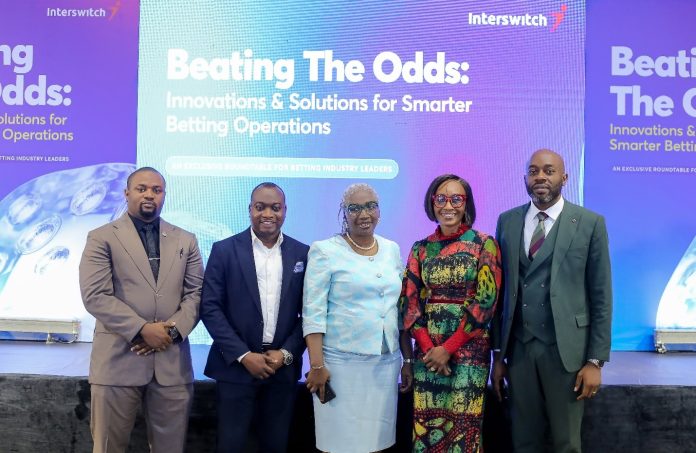
As part of its ongoing drive to optimise financial transactions across key sectors, Interswitch, one of Africa’s leading integrated payments and digital commerce companies, is transforming Nigeria’s gaming landscape with the introduction of a bespoke suite of payment and collection solutions. Unveiled at an exclusive industry event themed “Beating the Odds: Innovation and Solutions for Smarter Betting Operations,” the new offerings are tailored to optimise payment flows, simplify collections, enable instant payouts, and personalise the player experience through reliable, tech-driven processes.

Hosted at the Radisson Blu Hotel, Victoria Island, Lagos, the session convened key stakeholders, regulators, and operators from across the gaming ecosystem, all seeking smarter, more efficient ways to serve Nigeria’s fast-growing digital-first consumer base.

With a deep understanding of the unique challenges and opportunities in the gaming sector, Interswitch’s integrated solutions are designed to boost operational efficiency, streamline collections, and improve customer satisfaction through seamless transactions, faster payouts, and personalised rewards.

In his welcome address, Osasere Atohengbe, Vice President, Sales and Account Management, Interswitch, reaffirmed the company’s commitment to empowering businesses with intelligent and scalable solutions. He said:

“At Interswitch, our mission is to enable businesses with the right tools to thrive. We see technology as a powerful enabler, not just for gaming operators, but also for the players who expect fast, secure, and frictionless experiences. With our integrated suite of payment and collection solutions, we’re helping gaming platforms simplify backend operations, from reconciliation and payouts to collections and tracking, ultimately unlocking greater value and scalability in today’s competitive market.”

Delivering the keynote address, Adetoun Adeyemi, Director of Legal, Lagos State Lotteries and Gaming Authority, who represented Bashir Are, Chief Executive Officer, Lagos State Lotteries and Authority, lauded the initiative and emphasised its potential to transforming the entire gaming ecosystem:

“We are truly excited about the potential of Interswitch’s Integrated Solutions Suite to significantly impact the gaming industry. These innovations will not only provide operators with smarter, more efficient tools but also empower us, as regulators, to foster a transparent, compliant, and well-structured ecosystem. This initiative supports our collective goal of building a responsible and well-structured gaming industry in Lagos State.”

At the core of the offering is the Interswitch Payment Gateway, which facilitates seamless, real-time payments across a wide range of channels, including cards, bank transfers, USSD, Quickteller, Google Pay, OPay, and more, via a single, unified integration. This simplifies onboarding and transaction processing for operators while elevating the payment experience for end-users across touchpoints.

Also featured is the Interswitch collections platform, Paydirect, a multi-channel collection platform that allows operators to accept payments through online platforms, physical bank branches, agent networks, and Point-of-Sale (POS) terminals. All transactions are consolidated into a centralised dashboard, enabling simplified tracking, real-time monitoring, and error-free reconciliation.

To support real-time disbursements, the Quickteller-powered funds transfer service allows operators to instantly pay winnings or transfer funds to bank accounts across Nigeria. This not only fosters trust but also improves player satisfaction by ensuring timely settlements. Also integral to the suite of solutions is the Static Virtual Account (Pay with Transfer) feature, which assigns unique virtual account numbers to individual customers. This innovation eliminates referencing errors, simplifies deposit identification, and enables automated reconciliation, giving operators greater visibility, control, and accuracy in managing inflows.  

Beyond payments, Interswitch showcased an expanded portfolio of business-enabling solutions designed to drive operational efficiency, enhance customer engagement, and improve user experience for gaming operators. The Interswitch Corporate 360 (IC360) platform was highlighted as a comprehensive tool that consolidates financial operations, covering everything from tax compliance and vendor payments to real-time account visibility and ERP integration, helping operators streamline processes and reduce redundancy.

In addition, Interswitch’s Enterprise Rewards Solution offers a digital rewards platform that incentivises customer behaviour with instant airtime, data, vouchers, and other perks, backed by intelligent analytics for targeted engagement. The USSD and offline solutions ensure uninterrupted access to gaming services even without internet connectivity, reducing transaction drop-offs, while the Salary Lending Solution provides employees of partner firms with quick, short-term salary advances via Quickteller.

Complementing these offerings, the broader suite also incorporates advanced tools such as Digital Escrow Services for secure transactions, Fraud Management Systems to mitigate risks, and API Integration Tools that enable seamless incorporation of Interswitch’s capabilities into operators’ existing infrastructure. Together, these solutions underscore Interswitch’s commitment to delivering not only smarter payments but also comprehensive business enablement for gaming operators.

Through its combination of cutting-edge payment solutions and a wide array of operational tools, Interswitch is redefining the future of Nigeria’s gaming industry. With smarter, tech-enabled operations, the company is empowering gaming operators to enhance compliance, increase efficiency, and build deeper relationships with customers.

By leading conversations on smarter payment solutions and enabling tech-powered growth in gaming, Interswitch is reinforcing its role as a trusted partner in shaping the future of digital financial services, not only in Nigeria but across Africa.

Week 9 Pool Result For Sat 30, Aug 2025, UK 2025/2026

Week 9 Pool Fixtures for Sat 3 Sept 2022 – UK 2022/2023

Week 9 pool results 2025: Football pools results, live football pool result today, pool result today saturday matches, pool results for this week, british and aussie pool result, football pools results and fixtures, pools panel results today, pool panel results and live score pool result today. We publish half-time results first of its kind.

Week 9 Pool Results: Football pools results for this week 9 2025 are published on this website immediately after full-time confirmation of live score results. We also publish the outcome of postponed matches by the football pools panel at half-time as decided by the football pools. This week’s Week 9 Pool Results are made available in partnership with Bizwatch Nigeria. Stay tuned for reliable and accurate updates throughout the week.

WEEK: 9; SEASON: UK 2025/2026; DATE: 30-August-2025
Football Pools ResultsHTFTStatus
1BrightonMan City-:--:-Sunday
2ChelseaFulham-:--:-EKO
3LeedsNewcastle-:--:-LKO
4LiverpoolArsenal-:--:-Sunday
5Man UnitedBurnley-:--:-Saturday
6Nott’m For.West Ham-:--:-Sunday
7SunderlandBrentford-:--:-Saturday
8TottenhamBournemouth-:--:-Saturday
9WolvesEverton-:--:-Saturday
10BlackburnNorwich-:--:-Saturday
11Bristol C.Hull-:--:-Saturday
12IpswichDerby-:--:-Saturday
13MiddlesbroSheff Utd.-:--:-EKO
14MillwallWrexham-:--:-Saturday
15Oxford Utd.Coventry-:--:-Saturday
16PortsmouthPreston-:--:-Saturday
17Q.P.R.Charlton-:--:-EKO
18Sheff Wed.Swansea-:--:-Saturday
19StokeWest Brom-:--:-EKO
20WatfordSouthampton-:--:-Saturday
21BarnsleyHuddersfield-:--:-Saturday
22BlackpoolBolton-:--:-Saturday
23Bradford C.A.Wimbledon-:--:-Saturday
24Burton A.Luton-:--:-Saturday
25CardiffPlymouth-:--:-EKO
26DoncasterRotherham-:--:-EKO
27ExeterPeterboro-:--:-Saturday
28Leyton O.Northampton-:--:-Saturday
29LincolnMansfield-:--:-Saturday
30ReadingPort Vale-:--:-Saturday
31StevenageWycombe-:--:-Saturday
32Wigan A.Stockport-:--:-Saturday
33BarnetColchester-:--:-Saturday
34BarrowFleetwood-:--:-EKO
35BromleyHarrogate-:--:-Saturday
36Cambridge U.Newport Co.-:--:-Saturday
37ChesterfieldCrawley-:--:-Saturday
38CreweSwindon-:--:-EKO
39GrimsbyBristol R.-:--:-Saturday
40Milton K.D.Walsall-:--:-Saturday
41OldhamGillingham-:--:-Saturday
42ShrewsburyAccrington-:--:-Saturday
43TranmereNotts Co.-:--:-Saturday
44AberdeenFalkirk-:--:-Sunday
45DundeeDundee Utd.-:--:-Sunday
46HibernianSt Mirren-:--:-Sunday
47LivingstonHearts-:--:-Saturday
48MotherwellKilmarnock-:--:-Saturday
49RangersCeltic-:--:-Sunday

Crude Oil Prices Rally On Supply Risks Following Ukraine’s Drone Strikes

Oil Prices Drop, Here's Why

Global crude oil prices experienced a modest uptick early Monday amid growing concerns over supply disruptions triggered by recent drone attacks targeting Russian energy infrastructure.

Brent crude futures edged up 0.07% to trade at $67.37 per barrel, slightly higher than the previous close of $67.32. Meanwhile, the U.S. benchmark West Texas Intermediate (WTI) saw a 0.08% increase to $63.71, up from $63.66.

The escalation emerged after Ukrainian drones struck the Kursk Nuclear Power Plant in Russia, igniting a fire and damaging a transformer. The incident forced a 50% output reduction at one of the plant’s reactors, as confirmed by the facility’s press office early Sunday. The Kursk facility is critical, supplying power to 19 regions within Russia’s Central Federal District.

Further compounding supply fears, a fire broke out at the terminal in Ust-Luga, in Russia’s Leningrad region near St. Petersburg, following drone attacks. Regional Governor Aleksandr Drozdenko reported that 10 Ukrainian drones were intercepted over the port area close to the Estonian border. Novatek, Russia’s natural gas producer overseeing operations at the terminal, has commenced repairs post-incident.

Ukraine’s military and security forces confirmed damage inflicted on the Ust-Luga terminal, describing it as a vital logistics hub facilitating Russia’s energy exports via the Baltic Sea. The terminal reportedly supports a “shadow fleet” circumventing oil sanctions imposed on Moscow.

Meanwhile, former U.S. President Donald Trump announced intentions to evaluate progress toward resolving the Russia-Ukraine conflict within two weeks, hinting at potential new sanctions on Russia.

These geopolitical developments, combined with dovish remarks from U.S. Federal Reserve Chair Jerome Powell at the Jackson Hole symposium, where expectations soared for a September interest rate cut, bolstered crude demand sentiment. Lower rates typically encourage economic growth and energy consumption, further underpinning oil prices.

Nigerian Varsity Basketball Player Dies During Training In The Philippines

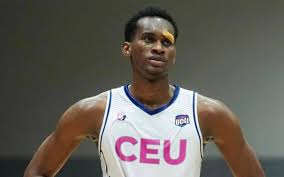
The University of the Philippines (UP) community has been plunged into mourning following the sudden death of its Nigerian basketball recruit, Israel Osamudiame Friday.

The 19-year-old athlete collapsed on Tuesday during a training session at the Varsity Training Centre in Diliman. He was rushed to a nearby hospital but was later pronounced dead by attending doctors.

Friday, who would have turned 20 on September 6, had recently joined the Fighting Maroons basketball program as one of its newest recruits.

Confirming the tragedy, Bo Perasol, Director of the UP Office for Athletics and Sports Development, said the entire university was in shock.

“UP is heartbroken to confirm that one of our newest recruits, Israel Osamudiame, collapsed during practice yesterday. He was immediately brought to a nearby hospital where, despite the efforts of medical personnel, he passed away,” Perasol said.

He added that the school is offering full support to the young player’s family during this difficult time.

“UP is in close contact with his family and is extending its full support. We ask everyone to respect their privacy as they grieve this painful loss,” he stated.

Standing at 6-foot-10, Friday was a promising forward from Abuja, Nigeria. Before transferring to UP, he played for Centro Escolar University’s Scorpions in the Universities and Colleges Athletic League.

Though he was expected to sit out a one-year residency before competing in UAAP Season 89, his size, talent, and potential had already drawn attention, marking him as one of the most promising young frontcourt players in Philippine college basketball.

Nigerian Government Bond Yields Climb Ahead Of New Auction Supply

Ahead of Monday’s primary market auction introducing fresh securities, yields on Nigerian government bonds edged higher by eight basis points, signaling investor cautiousness. Trading activity in the secondary market showed fluctuations, while authorities successfully raised approximately N1.2 trillion through Open Market Operations (OMO) and Treasury bill sales.

Market participants concluded the week on a subdued bearish tone, reflecting apprehension over the unexpectedly high stop rates seen in the recent Nigerian Treasury bills auction. Analysts specializing in fixed income noted that sentiment was mildly negative during most trading sessions.

Most transactions centered around mid-duration bonds maturing between 2029 and 2033. However, overall turnover remained modest, according to investment firm AIICO Capital Limited. Early-week trading displayed mixed movements, with some pressure observed on the short and mid ends of the yield curve. Later in the week, selling interest intensified on benchmark papers such as those due in 2031, 2032, and 2033, exerting upward pressure on yields.

There was sporadic demand for longer-dated issues like May 2033 and February 2034 bonds, but volumes were limited. Investors were also cautious due to the recent release of the August 2025 FGN Bond Offer Circular, presenting an offer size of N200 billion.

Consequently, the average bond yield increased by 8 basis points to reach 16.7%. Yield increments were observed across the yield curve: short tenors rose by 2 basis points, mid-curve climbed 11 basis points, and long-term bonds saw a 5 basis point increase. Significant sell-offs in APR-2029 (+42 bps), FEB-2031 (+24 bps), and JUN-2038 (+38 bps) were noted, contributing to the upward trajectory.

Looking ahead, analysts at Cordros Capital Limited project a gradual easing of yields moderated by anticipated dovish stances in monetary policy and evolving supply-demand fundamentals. The Debt Management Office (DMO) is set to reopen bond issues worth between N80 billion and N100 billion and debuted a new borrowing instrument at similar offer sizes. Upcoming sales include a new August 2030 issue and a reopening of the June 2032 bond, each with a target of N100 billion. Experts believe that upward adjustments in yields may be constrained by ongoing disinflation trends.

The DMO remains committed to lowering borrowing costs by reducing spot rates on government bonds, aiming to optimize debt servicing expenses. Market participants are expected to maintain a cautious approach as liquidity conditions are evaluated ahead of the forthcoming FGN bond auction.

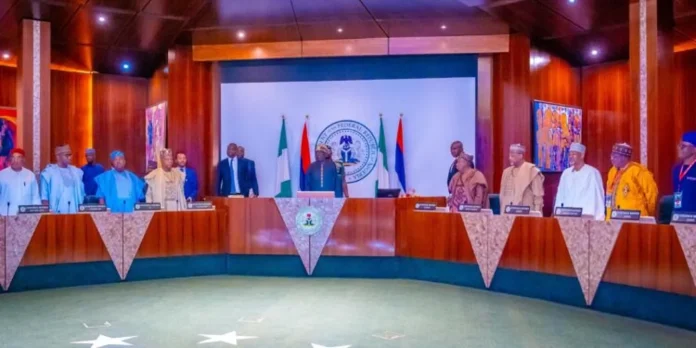
NLC Rejects Planned Pay Rise for Political Office Holders, Warns of Wider Inequality

The Nigeria Labour Congress (NLC) has asked the Federal Government to suspend plans for an upward review of remuneration packages for political office holders, describing the proposal as “insensitive, unjust and inequitable.”

In a statement issued on Sunday and signed by its President, Joe Ajaero, the union warned that the move could spark public outrage, deepen inequality, and entrench political office as a sanctuary for wealth rather than service.

The NLC called for full disclosure of the current earnings of political office holders, as well as the benchmarks being used for the review by the Revenue Mobilisation Allocation and Fiscal Commission (RMAFC). It urged the commission to halt the exercise “before it triggers a tsunami,” stressing that the justification offered by RMAFC Chairman, Mohammed Usman, was “ill-advised and puerile.”

According to the union, the arguments ignore the “humongous advantages” already attached to public office, including allowances and perquisites, while ordinary Nigerians—millions of whom have been categorised as multi-dimensionally poor—are left with “hopes and dreams.”

The NLC also questioned the timing of the proposed review, noting that promotions and salary increments remain frozen across many public subsectors, while workers continue to grapple with inflation, steep tariff hikes, and a minimum wage of ₦70,000.

“We recall the last time a wage review (not minimum wage) was done for civil servants, it was not more than 50 per cent. However, when that of political office holders was done a year or so later, it was in excess of 800 per cent,” the statement read.

The congress further criticised the uniform pay structure for political office holders, pointing out that councillors in states with widely differing revenue profiles—such as Yobe and Rivers—earn the same salaries, while civil servants’ pay varies by location.

While acknowledging the importance of fair compensation, the union insisted that any review must be across board. “One of the most heinous crimes against humanity is the institution and promotion of apartheid in any human setting, no matter how subtle,” it added.

Several civil society groups have also joined calls for the suspension of the proposed adjustment.

Meanwhile, the RMAFC has defended the exercise, noting that the President earns about ₦1.8 million monthly, while ministers take home less than ₦1 million.

FAAC Reconciliation: NNPC, FIRS, Others Remit ₦1.49 Trillion Arrears In Six Months

Nigeria’s Federation Account has received ₦1.49 trillion in reconciled arrears from revenue-generating agencies in the first half of 2025, fresh data from the Federation Accounts Allocation Committee (FAAC) has revealed.

According to the FAAC Post-Mortem Sub-Committee (PMSC), which reviews inflows from statutory agencies, the remittances came from reconciled arrears previously owed by the Nigerian National Petroleum Company Limited (NNPC), the Nigerian Upstream Petroleum Regulatory Commission (NUPRC), the Federal Inland Revenue Service (FIRS), and other agencies.

Between January and June 2025, the arrears totalled exactly ₦1,490,778,578,480.61, averaging over ₦248 billion monthly and providing additional fiscal space at a time of growing debt service obligations.

January recorded the highest inflow at ₦367.37 billion, followed by ₦227.15 billion in February, ₦175.99 billion in March, and ₦259.85 billion in April. The trend slowed to ₦247.05 billion in May and ₦213.37 billion in June.

For June alone, FAAC confirmed a reconciled arrears payment of $41.07 million (₦213.37 billion at the official exchange rate of ₦1,528.705/$) alongside local currency receipts of ₦150.59 billion. This comprised $5.19 million (₦7.92 billion) from FIRS in Petroleum Profit Tax arrears, $35.43 million (₦54.15 billion) from NUPRC’s royalty arrears, $459,226 (₦702.9 million) from NNPC’s joint venture royalty, and ₦150.59 billion from NUPRC royalty receipts.

Despite the inflows, the report warned that much larger sums remain outstanding. At an inter-agency reconciliation meeting in August 2025, unresolved arrears were put at $78.23 million and ₦1.72 trillion from FIRS/NNPC, alongside ₦2.32 trillion owed by other agencies—bringing the outstanding figure to about ₦6.75 trillion.

Of this, NNPC alone accounted for $11.24 million and ₦164.7 billion, while NUPRC/NNPC jointly owed $66.99 million. Additional liabilities included ₦1.72 trillion linked to FIRS/NNPC reconciliation and ₦2.03 trillion from other statutory bodies.

The document further disclosed unresolved arrears of about ₦2.54 trillion dating back before June 2023. These older balances have been referred to the Stakeholders’ Alignment Committee and the FAAC Sub-Committee for further reconciliation, pending a technical review by the Ministry of Finance.

The reconciliation exercise, officials noted, is part of ongoing efforts to strengthen accountability in public finance and close loopholes in agency remittances.

For years, FAAC allocations to the federal, state, and local governments have been hampered by underpayments, with NNPC frequently accused of withholding funds or delaying transfers. Tensions over its revenue declarations—especially deductions for subsidies, pipeline repairs, and joint venture obligations—have repeatedly stalled FAAC meetings.

The problem escalated in 2022 and 2023, when large arrears piled up as unremitted balances. The current reconciliation drive is aimed at clearing the backlog and ensuring revenues due to the Federation are fully captured and distributed among the three tiers of government.

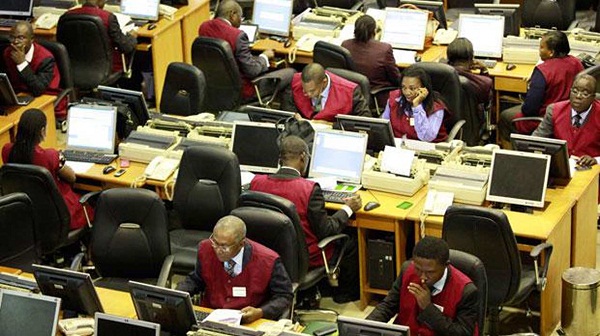
Nigerian Equities Stabilize On China, Japan Partnerships Ahead Of Tuesday’s GDP

Decline In Nigeria's Equity Market Creating Entry Opportunity For Investors - Analysts

Nigerian equities showed signs of stabilization, with the NGX All Share Index rising 0.48% to 141,004.14 points on Friday. Gains were broad-based, led by electronic technology, consumer durables, and health technology, while commercial services, non-energy minerals, and producer manufacturing lagged.

Top performers included BUA Foods, Guaranty Trust Holding, Zenith Bank, and International Breweries, while MTN Nigeria Communications, Dangote Cement, and Aradel ended unchanged, and Lafarge Cement and Stanbic IBTC Holdings closed lower.

Nigeria strengthened strategic ties with Japan at the Ninth Tokyo International Conference on African Development (TICAD 9), securing a USD 190 million renewable energy loan from JICA and advancing grid expansions, new substations, and off-grid solutions. These initiatives may support the local stock market by boosting industrial productivity, utilities, and renewable energy sectors.

Meanwhile, the Federal Roads Maintenance Agency (FERMA) also signed a two-year Long-Term Strategic Framework Agreement with the Global Cooperation Promotion Research Centre (GCPRC) to modernize roads and deepen Nigeria-China collaboration. Joint project planning, technology transfer, and capacity building could benefit domestic equities in the construction, materials, and engineering services sector.

Looking ahead, market participants await Nigeria’s Q2 GDP figures. In Q1 2025, the economy grew 3.13% YoY, led by services and industry, while the oil sector slowed to 1.87% and agriculture rebounded slightly. A stronger GDP could support industrial and consumer sectors, while a weaker reading may weigh on cyclical areas such as manufacturing and oil.

BizWatch Nigeria: News of the Week in 5 Minutes | Sun, 10th August – Sat, 16th August, 2025

From major business shifts to political highlights, tech buzz, and social trends, we’ve wrapped up the week’s hottest stories in just 5 minutes.

No long talk, just the news you need to stay sharp and informed.

🎥 Hit play and catch up now!

#BizWatchWeekly #NigeriaNews #TopStories #NewsIn5 #Politics #Business #Economy #Tech #ViralUpdates #StayInformed #TrendingNow #FYP #MustWatch #NewsRecap #SmartNews #YouTubeShorts

🎥 Watch here –

Bizwatch Nigeria: News of the Week in 5 Minutes | Sun, 3rd August – Sat, 9th August, 2025

From key economic updates to viral stories making waves across Nigeria, this week’s roundup brings you all the top headlines in just 5 minutes.

Straight to the point, no fluff, just the news you need to stay informed and ahead.

🎥 Hit play and get caught up now!

#BizWatchWeekly #NigeriaNews #TopStories #NewsIn5 #Politics #Business #Economy #Tech #ViralUpdates #StayInformed #TrendingNow #FYP #MustWatch #NewsRecap #SmartNews #YouTubeShorts

🎥 Watch here

How Social Media Histories Could Decide Nigerians’ American Dream

…The new reality of visa application

The United States has long been a beacon of hope for countless Nigerians aspiring to study, work, or reunite with loved ones abroad. Today, however, digital footprints, not just academic or financial credentials, sit at the centre of many migration journeys.

Nigerian (and other) visa applicants are now required to submit five years of social media history via the DS-160 form, listing usernames across platforms such as Facebook, Instagram, Twitter (X), LinkedIn, TikTok, YouTube, and more. The rule applies to both immigrant and non-immigrant visa categories, including study, work, and exchange visas. For certain categories, specifically F (student), M (vocational), and J (exchange), applicants must additionally make their social media accounts public for consular review.

Their content may then be screened for indicators such as “hostility toward U.S. values,” support for extremist groups, antisemitic rhetoric, political activism, and any inconsistencies with application materials.

 The U.S. government frames this as a necessary component of modern security protocols—intended to verify identity and flag potential threats or misrepresentations. Failure to disclose accurate social media information—or refusal to make accounts public- can lead to visa denial, additional administrative processing, or even longer-term ineligibility for future visas.

On the other hand, national security is a legitimate concern. Ensuring the integrity of visa issuance is crucial, particularly in a world where online behaviour can reflect radical or unlawful associations. Yet, this surveillance model is deeply flawed when applied indiscriminately to law-abiding applicants. Casting a wide net over personal expression risks ensnaring individuals whose social media merely reflects normal political opinions, cultural commentary, or youthful experiments.

Privacy is a right, not a luxury. By forcing applicants to make private accounts public, the policy erases personal boundaries and exposes individuals—and their associates—to risks ranging from identity theft to political vulnerability in unstable contexts. The internet’s permanence means that early-career or unfiltered reflections may now weigh heavily in a consular decision made years later. Moreover, the opacity of the review process is alarming. Applicants do not know which posts might flag “hostility” or “ideological divergence.” With no clear standards, decisions can hinge on subjective interpretations—a dangerous proposition for anyone seeking entry.

Seen through the lens of civil liberties, this policy is not just about visas; it is a statement on surveillance in the digital age. If one’s social media can determine travel eligibility, the boundary between public life and government scrutiny has irreversibly blurred.

Ultimately, while states must safeguard borders, they must also uphold the freedoms that define them. A system that punishes dissent or privacy under the guise of vetting invites a quiet erosion of democratic values. Nigeria’s digital citizens deserve transparency, fairness, and respect—not inference by algorithm and assumption.

Bizwatch Nigeria: News of the Week in 5 Minutes | Sun, 27th July – Sat, 2nd August, 2025

Another week, another round of hot headlines, served fast and smart. From economic updates and political twists to tech trends and the latest social media buzz, our 5-minute roundup brings you all the news that matters, minus the information overload.

Stay informed. Stay sharp. No long reads required.

🎥 Watch now and catch up in minutes.

#BizWatchWeekly #NigeriaNews #TopStories #NewsIn5 #Politics #Business #Economy #Tech #ViralUpdates #StayInformed #TrendingNow #FYP #MustWatch #NewsRecap #SmartNews #youtubeshorts

Crown Flour Mills @15 : How Olam Agri Transformed Crown Flour Mill into a Top African Brand

Crown Flour Mill (CFM), under the Olam Agri umbrella, marks 15 years of innovation, resilience, and excellence in Nigeria’s milling industry. In this exclusive interview, key leaders reflect on CFM’s transformative journey since its acquisition in 2009.

Discover how the company:

✅ Became one of Africa’s top-ranked millers

✅ Pioneered backward integration in local wheat sourcing

✅ Launched popular products like Mama Gold Flour, Supreme Semolina & Crown Premium Pasta

✅ Maintains product quality and consumer trust

✅ Is planning for the future with sustainability and expansion goals towards 2030

🎯 Don’t miss this inspiring story of impact, food security, and industrial strength in Nigeria.

🔔 Subscribe for more insightful industry stories.

watch here

#OlamAgri #CrownFlourMill #FoodSecurity #MadeInNigeria #15YearsOfImpact #AgriBusiness #NigerianFoodIndustry #MamaGoldFlour #NigerianWheat #SustainabilityGoals #BizWatchNigeria

Bizwatch Nigeria: News of the Week in 5 Minutes | Sun, 6th July – Sat, 12th July, 2025

It’s been a whirlwind week and Bizwatch Nigeria packed all the big stories into just 5 minutes!

“Get the scoop on the week’s hottest headlines in just 5 minutes! 🎥 Our BizWatchWeekly roundup delivers the most important news, from economic shifts and political developments to tech innovations and social media trends. Stay ahead of the curve without getting overwhelmed. Watch now and stay informed in minutes! 🚀

🎥 Watch now and stay ahead of the curve.

#BizWatchWeekly #NigeriaNews #TopStories #NewsIn5 #Politics #Business #Economy #Tech #ViralUpdates #StayInformed #TrendingNow #FYP #MustWatch #NewsRecap #SmartNews #youtubeshorts

watch here

Bizwatch Nigeria: News of the Week in 5 Minutes | Sun, 29th June – Sat, 5th July, 2025

Another week, another round of hot headlines, served fast and smart. From economic updates and political twists to tech trends and the latest social media buzz, our 5-minute roundup brings you all the news that matters, minus the information overload.

Stay informed. Stay sharp. No long reads required.

🎥 Watch now and catch up in minutes.

#BizWatchWeekly #NigeriaNews #TopStories #NewsIn5 #Politics #Business #Economy #Tech #ViralUpdates #StayInformed #TrendingNow #FYP #MustWatch #NewsRecap #SmartNews #youtubeshorts

watch here

Bizwatch Nigeria: News of the Week in 5 Minutes | Sun, 22nd June – Sat, 28th June, 2025

Too busy to keep up with the news? Bizwatch Nigeria got you.Been swamped all week? No stress, we’ve got you covered. Forget the endless scrolling and tab-hopping; we’ve packed the biggest headlines into one quick, engaging 5-minute recap.

From trending national updates and policy shifts to thrilling sports moments and viral social buzz, it’s all here in one place. Fast, clear, and just how you like it.

Watch now and stay sharp!

#BizWatchWeekly #NigeriaNews #TopStories #NewsIn5 #Politics #Business #Economy #Tech #ViralUpdates #StayInformed #TrendingNow #FYP #MustWatch #NewsRecap #SmartNews

Watch here-

Priscilla Ojo And Juma Jux Welcome Baby Boy In Canada

Nollywood actress Iyabo Ojo is celebrating a new chapter as a grandmother following the arrival of her daughter, Priscilla Ojo’s first child with Tanzanian musician, Juma Jux. The couple welcomed a baby boy, Rakeem Ayomide Mkambala, on Sunday, August 24, 2025, in Canada.

Iyabo confirmed the news on her social media pages, expressing gratitude for the safe delivery of both mother and child. The joyful announcement immediately drew congratulatory messages from fans and celebrities across Nigeria and Tanzania.

Labour Room Experience

Priscilla later shared her delivery experience on Snapchat, revealing she was rushed to the hospital at 3 a.m. after contractions began. She admitted that labour pains quickly overpowered her plans to “slay” and create content for the big day.

“We had to rush to the hospital at 3 a.m.! Contractions isn’t a joke. All plans to slay at the hospital and create content were cancelled,” she wrote.

The new mum also disclosed that baby Rakeem arrived earlier than expected, missing his father’s birthday, which was meant to be his due date.

“Me: Rakeem, your due date is the same as Papa. Rakeem: Please, this woman, I want my day alone. #juma_jux sorry, my love, your son wants to shine alone,” she joked.

A Love Story in the Spotlight

Priscilla, a Nigerian influencer and entrepreneur, and Juma Jux, one of East Africa’s most celebrated singers, tied the knot earlier this year in a lavish six-part wedding that spanned Nigeria and Tanzania between February and May. Their pregnancy was first announced on Instagram in July, followed by a blue-themed gender reveal party in Tanzania confirming they were expecting a boy. In the days leading up to the delivery, Priscilla was also celebrated with a baby shower in Canada, attended by Iyabo Ojo, actress Lola Alao, and close friends.

Baby Rakeem’s Instant Fame

Baby Rakeem has already become a social media sensation. Hours after his arrival, his Instagram account @rakeem_mk was unveiled, amassing over 100,000 followers within its first day. Managed by his parents, the page currently features a collaborative post with Priscilla, though his face has yet to be revealed, as shared photos remain blurred.

Despite the limited content, the account has already crossed 112,000 followers, with fans eagerly awaiting his first official photo. Rakeem’s growing popularity is also tied to his unique multicultural identity—holding Nigerian, Tanzanian, and Canadian roots.

Iyabo Ojo, who is presently in Canada with her daughter, announced that a naming ceremony will be held soon in Lagos.

For now, both families remain in high spirits, celebrating the safe arrival of baby Rakeem, while social media continues to buzz with congratulatory messages and anticipation for the little one’s first public appearance.

Victory And Gigi Jasmine Exit Big Brother Naija Season 10 House: Nominations And Votes Result

Big Brother Naija Season 10’s competitive lineup has been reduced as Victory Okokon and Nicole Simon-Ogan, popularly known as Gigi Jasmine, were evicted following the reveal of lowest votes during week four’s nomination round. Their departure was confirmed during Sunday’s live show hosted by Ebuka Obi-Uchendu.

Victory secured 2.15% of the votes while Gigi Jasmine received just 1.51%, placing them at the bottom of the voting poll independently verified by Deloitte in partnership with M-Net. Ivatar narrowly escaped elimination, bagging 2.22%.

Victory, a 28-year-old psychologist from Akwa Ibom, leaves behind a memorable tenure characterized by a Head of House stint, an ex-girlfriend drama, and a marriage proposal storyline. He had shared ambitions to showcase his life’s cinematic qualities to viewers.

Gigi Jasmine, a 31-year-old DJ also from Akwa Ibom, was known for her vibrant energy and firm personality, aiming to leverage the platform to reach and impact her audience. Their intertwined yet complicated connection in the house added an emotional layer to their simultaneous exit.

Earlier in the week, an immunity card search initiative was launched but proved fruitless, leading to automatic nominations except for the Head of House Zita, intensifying the eviction tension.

FG Approves New Debt Management Strategy For 2024–2027

The Federal Government has approved Nigeria’s Medium-Term Debt Management Strategy (MTDS) for 2024–2027, designed to strengthen fiscal stability, ensure debt sustainability, and deepen the domestic securities market.

The Debt Management Office (DMO), in a statement issued at the weekend, confirmed that the framework was endorsed by the Federal Executive Council (FEC) and developed with technical input from the World Bank and International Monetary Fund (IMF).

According to the DMO, the strategy seeks to balance government financing needs with sustainability considerations while minimising borrowing costs and associated risks.

“The key objectives of the MTDS are to meet government financing needs and debt service obligations in the short to medium term, while achieving an optimal composition of the public debt portfolio that guarantees sustainability,” the agency said.

It added that the framework would also help deepen the domestic securities market through the introduction of new debt instruments.

New Debt Benchmarks

The 2024–2027 strategy sets fresh targets across fiscal and risk indicators:

Debt-to-GDP ratio: to rise from 52.25 per cent in 2024 to a ceiling of 60 per cent by 2027.

Interest payments-to-GDP: capped at 4.5 per cent, up from 3.75 per cent in 2024.

Sovereign guarantees-to-GDP: not to exceed 5 per cent, compared with the current 2.09 per cent.

Domestic-to-external debt mix: adjusted from 48:52 to 55:45 to reduce exposure to foreign exchange risk.

Refinancing risk: limited to 15 per cent of debt maturing within a year, with total debt maturing capped at 5 per cent of GDP.

Average maturity: minimum of 10 years to lengthen repayment cycles.

Foreign exchange debt exposure: reduced to 45 per cent of total debt, from 51.75 per cent.

The DMO noted that the strategy was developed through consultations with the Central Bank of Nigeria (CBN), the Federal Ministry of Finance, and other key stakeholders, in line with global best practices.

Investor Confidence

Officials believe the framework will reinforce investor confidence, strengthen Nigeria’s credit ratings, and assure international partners of the country’s commitment to prudent debt management.

The 2024–2027 MTDS builds on the previous 2020–2023 plan, which shifted the focus of borrowing more towards the domestic market. It provides a structured approach for future borrowing, ensuring that government financing decisions are guided by cost, risk, and sustainability considerations.

BizWatchNigeria.Ng
Privacy Overview

This website uses cookies so that we can provide you with the best user experience possible. Cookie information is stored in your browser and performs functions such as recognising you when you return to our website and helping our team to understand which sections of the website you find most interesting and useful.