








Key points
- DSS witness tells court NSA Nuhu Ribadu confirmed discussion referenced by Nasir El-Rufai in TV interview.
- Court plays Arise TV interview where ex-governor allegedly discussed intercepted conversation.
- El-Rufai denies wrongdoing, insists he did not personally intercept any communication.
Main story
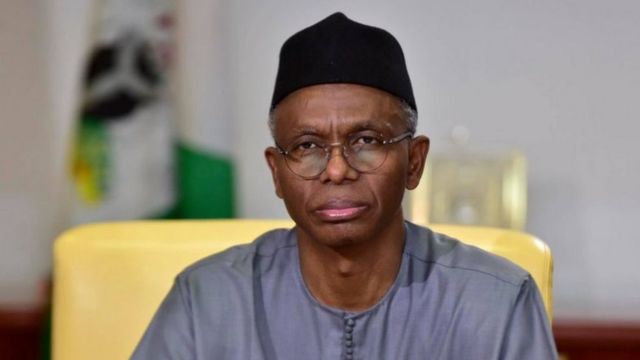
A witness for the Department of State Services (DSS) on Tuesday told the Federal High Court in Abuja that the National Security Adviser (NSA), Nuhu Ribadu, confirmed the authenticity of a conversation referenced by former Kaduna State Governor, Nasir El-Rufai, during a media interview.
The witness, identified only as “APC” for security reasons, testified before Justice Joyce Abdulmalik as the first prosecution witness in the ongoing trial involving alleged breach of national security against the former governor.
According to the witness, investigators interviewed Ribadu following the television broadcast, and the NSA verbally confirmed that the discussion referenced by El-Rufai had indeed taken place between him and the Chairman of the Independent Corrupt Practices and Other Related Offences Commission (ICPC), Musa Aliyu.
During proceedings, DSS counsel, Oluwole Aladedoye (SAN), tendered a silver flash drive containing the interview aired on Arise News, alongside a certificate of compliance. The court admitted the materials in evidence and directed that the 43-minute interview be played in open court.
In the interview, El-Rufai allegedly stated that someone intercepted a conversation involving the NSA and later forwarded it to him. He reportedly argued during the broadcast that governments routinely engage in surveillance activities.
The witness further told the court that investigators also questioned Arise News anchor Charles Aniagolu, lawyer Deji Adeyanju, and cameraman Ugochukwu Agalayana over the interview.
According to him, Aniagolu confirmed that El-Rufai openly admitted during the programme that the conversation had been intercepted and sent to him. Statements obtained from the media personnel and lawyer were subsequently tendered and admitted in evidence without objection from the defence.
The DSS witness said investigators concluded that El-Rufai’s remarks during the interview amounted to what they described as an “open confession” concerning the interception of the NSA’s communication, which they considered capable of undermining national security.
However, under cross-examination by defence counsel Paul Erokoro (SAN), the witness admitted that investigators neither conducted forensic analysis nor examined communication devices linked to the alleged interception.
He also acknowledged that El-Rufai never directly claimed during the interview that he personally carried out the interception.
Despite this, the witness maintained that the former governor repeatedly stood by the assertion that the conversation was intercepted and shared with him.
When asked whether the remarks could have been political rhetoric made during a heated television appearance, the witness stated that he regarded El-Rufai as a man of integrity and believed he meant what he said.
Justice Abdulmalik subsequently adjourned the matter until June 22 and June 23 for the continuation of trial.
The issues
The trial raises broader legal and political questions around surveillance, national security, admissibility of media interviews as evidence, and the limits of political speech in Nigeria’s democratic environment. It also highlights concerns over alleged unlawful interception of private communications involving senior government officials.
What’s being said
The DSS maintains that El-Rufai’s televised remarks amounted to an admission linked to unlawful interception of sensitive communications, warranting prosecution on national security grounds.
The defence, however, has questioned the depth of the investigation, particularly the absence of forensic analysis or direct evidence linking the former governor to the alleged interception.
What’s next
The trial will continue in June with further presentation of evidence and witness testimonies. The court is expected to examine whether the prosecution can establish a direct connection between El-Rufai and the alleged interception activities.
Bottom line
The ongoing trial of Nasir El-Rufai has moved into a critical evidentiary stage, with the prosecution relying heavily on his televised statements while the defence challenges the absence of technical proof linking him to any unlawful interception of communications.









 on Tuesday told the Federal High Court in Abuja that the National Security ...)