Something significant is happening beneath the global economy, and it has less to do with climate politics than most people think.
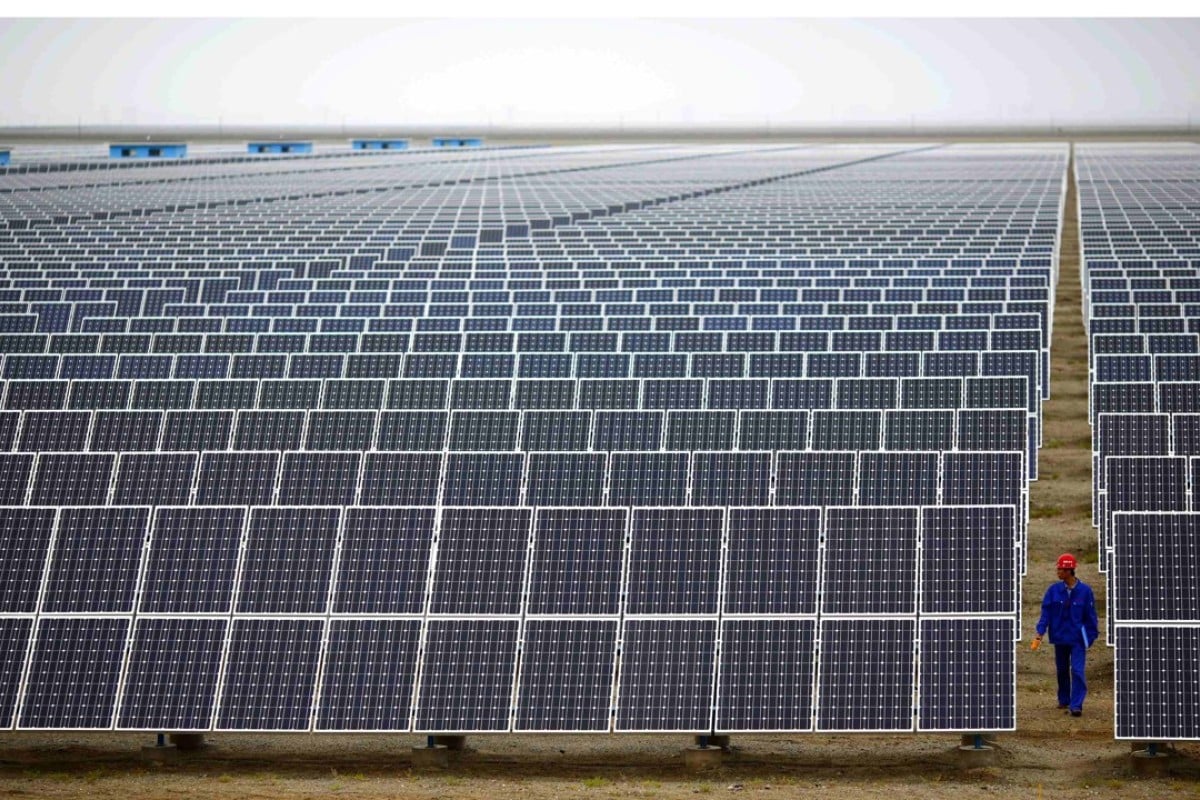
According to BloombergNEF’s New Energy Outlook 2026, solar power is on track to become the world’s single largest source of electricity by 2032. That prediction would have sounded unrealistic a decade ago. Solar was still widely treated as expensive, unreliable, and dependent on government goodwill. Today, the economics have shifted so dramatically that the conversation is no longer about whether solar can compete. In many parts of the world. it already does.
Why the world suddenly needs fa more electricity
The change is being driven by a problem every major economy now shares: electricity demand is rising much faster than expected.
Artificial intelligence systems require enormous data centers that run continuously. Electric vehicles are pushing transportation onto the grid. Factories are electrifying. Growing cities are consuming more power as incomes rise. BloombergNEF expects global electricity demand to rise nearly 30% by 2035 and close to 70% by 2050.
That surge creates a difficult question for governments and businesses alike: how do you produce huge amounts of electricity quickly and cheaply enough to keep economic growth moving?
Right now, solar appears to have the strongest answer.
As BloombergNEF’s head of energy economics, Matthias Kimmel, puts it:
“As EVs, data centers, population growth and industrial activity spur electricity demand, the world is in a race to meet rising energy demand with the most efficient, least-cost technologies.”
For years, renewable energy discussions were framed around emissions and sustainability. Those concerns still matter, but cost is increasingly becoming the decisive factor. Solar panels have become dramatically cheaper to manufacture, partly because of massive industrial scale and partly because the technology itself has steadily improved. Building a solar project is now often faster and less expensive than constructing new fossil-fuel infrastructure.
That matters enormously for tech companies.
Large cloud providers and AI firms are becoming some of the world’s biggest electricity consumers. Their business models depend on securing stable, affordable energy supplies over very long periods. Waiting a decade for a new nuclear facility or large gas project is often commercially impractical. Solar, by comparison, can be deployed much faster.
The problem solar hasn’t fully solved
But solar’s rise also introduces a serious problem.
Electricity demand usually peaks in the evening, long after the strongest sunlight hours have passed. A grid heavily dependent on solar cannot function properly unless excess daytime electricity is stored and released later when demand rises.
This is why battery storage is becoming just as important as solar generation itself.
BloombergNEF projects global battery storage capacity could grow from 223GW in 2025 to 3.8TW by 2035. That is an extraordinary scale-up in barely a decade. Without storage, large portions of solar electricity would simply go unused during periods of oversupply.
The challenge is that scaling batteries introduces another layer of complexity. Manufacturing enough storage systems will require huge volumes of lithium, nickel, cobalt, and other critical minerals. That creates exposure to mining bottlenecks, geopolitical disputes, trade restrictions, and supply-chain concentration.q
In other words, the world may be reducing dependence on oil-rich regions while simultaneously increasing dependence on mineral supply chains controlled by a relatively small number of countries.
Even then, solar is unlikely to eliminate fossil fuels entirely anytime soon.
BloombergNEF expects natural gas to continue playing an important role, particularly as backup generation during periods when renewable output drops or storage reserves run low. In many energy systems, gas plants may increasingly operate less as constant power providers and more as emergency stabilizers for the grid.
That shift alone changes the long-term investment picture.
Traditional fossil-fuel infrastructure was built around the assumption that plants would operate steadily for decades. But if solar continues getting cheaper while batteries become more capable, some conventional assets may struggle to remain economically competitive over their full lifespans.
This is one reason capital is beginning to move beyond simply financing solar farms. Increasing attention is going toward the surrounding infrastructure that makes renewable-heavy grids workable at scale: battery systems, transmission networks, smart-grid technologies, and integrated energy campuses built around large industrial users and data centers.
The policy implications are equally significant.
For decades, energy security largely meant securing fuel imports. Countries worried about oil supply disruptions, pipeline politics, and price shocks. Renewable-heavy systems change that equation somewhat because sunlight itself cannot be embargoed or interrupted by foreign conflict.
David Hostert, BloombergNEF’s chief economist, argues that this gives governments more flexibility than they had during previous energy crises:
“We’re living in another moment of crisis, but unlike in past decades, today there are real options for countries to react. Through clean power and electrification we can strengthen energy security and reduce harmful emissions along the way.”
Still, reaching these targets will require more than installing solar panels. Many electricity grids were designed decades ago around centralized fossil-fuel plants, not highly distributed renewable systems. Transmission networks will need expansion. Permitting processes for new power lines may need reform. Utility pricing structures will likely have to evolve to properly reward storage and grid-balancing services.
Bottom Line
For businesses, especially large industrial operators and technology companies, electricity is increasingly becoming a strategic concern rather than a background operating cost. Securing reliable long-term power contracts could become just as important as securing financing or supply chains.
By the early 2030s, the debate around solar may look very different from today. The technology is no longer competing as a niche alternative sitting at the edge of the global economy. It is increasingly moving toward the center of it.
Whether every BloombergNEF projection unfolds exactly as expected remains uncertain. Energy systems are shaped by politics, regulation, trade disputes, technological breakthroughs, and economic shocks. But the broader direction is becoming difficult to ignore: the world is electrifying rapidly, electricity demand is accelerating, and solar is emerging as one of the fastest and cheapest ways to meet it.