Key points:
- Minister of Solid Minerals Development, Dele Alake, says Nigeria’s current economic hardship is a painful but necessary phase of broader structural reforms.
- He says the Federal Government is repositioning the mining sector through digitisation, enforcement against illegal mining, and investment in value addition.
- Over 2,000 mining marshals have been deployed nationwide as part of efforts to curb illegal mining and strengthen sector regulation.
Main story
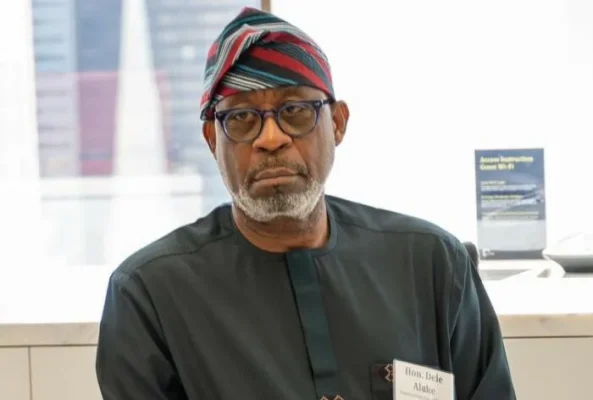
The Minister of Solid Minerals Development, Dele Alake, has described Nigeria’s current economic hardship as a difficult but necessary stage in the country’s ongoing economic transformation.
Alake made the remarks in Abuja during the maiden edition of the Solid Minerals Excellence Awards (SOMEA), where stakeholders gathered to recognise achievements in Nigeria’s mining sector.
He said the administration of President Bola Tinubu remains committed to implementing reforms aimed at addressing corruption, institutional weaknesses, economic instability and Nigeria’s longstanding dependence on oil revenue.
According to him, the ongoing reforms are designed to reposition the economy for long-term sustainability, industrial growth and national development.
“Effective leadership must be driven by vision, knowledge and courage,” he said, stressing that meaningful progress requires prioritising long-term national interest over short-term political gains.
Alake added that the mining sector has been identified as a key pillar in the government’s economic diversification agenda under the Renewed Hope programme.
He noted that the ministry had introduced reforms targeting illegal mining, weak regulatory frameworks, insecurity at mining sites and lack of transparency in licensing processes.
The minister also disclosed that the digitisation of mining operations has improved transparency, streamlined licensing procedures and attracted increased investor confidence.
He further revealed that the government has intensified enforcement operations through the deployment of over 2,000 mining marshals across the country, leading to arrests, prosecutions and improved compliance among operators.
Alake also emphasised the need for local value addition and domestic processing of minerals, saying it would boost industrialisation, create jobs and promote technology transfer.
The issues
Nigeria’s economic reforms continue to generate debate as citizens grapple with rising living costs, inflationary pressures and structural adjustments linked to policy changes.
While government officials argue that reforms are necessary for long-term stability, critics often point to the immediate social and economic hardship faced by households and businesses.
In the solid minerals sector, challenges such as illegal mining, weak enforcement, regulatory gaps and limited infrastructure have historically hindered growth and revenue potential.
Stakeholders say that without sustained reforms, improved governance and investment in value chains, the sector may struggle to achieve its full economic contribution.
What’s being said
Minister of Solid Minerals Development, Dele Alake, maintained that the reforms underway are unavoidable and necessary for national progress.
He said previous administrations avoided difficult reforms due to political resistance, but insisted that the current government is taking bold steps to reposition the economy.
Alake also drew comparisons with Lagos State’s economic transformation, noting that early resistance to reforms eventually gave way to stronger revenue generation and institutional growth.
Permanent Secretary of the Ministry, Yusuf Yabo, said the awards ceremony reflects the Federal Government’s commitment to building a globally competitive mining sector.
President of SOMEA, Oludunmi Owo, described the initiative as a platform to recognise innovation, sustainability and contributions to sectoral reforms.
Chief Executive Officer of D-Gold, Omar Sahinolu, emphasised the importance of responsible mining practices, transparency and technological innovation in driving sector growth.
What’s next
The Federal Government is expected to continue implementing reforms in the solid minerals sector, particularly in enforcement, digital licensing systems and investment promotion.
Authorities are also likely to expand efforts to curb illegal mining and encourage greater private sector participation in mineral processing and value addition.
Stakeholders anticipate increased collaboration between government, investors and industry operators to position Nigeria’s mining sector as a major driver of economic diversification.
Bottom line
Minister Dele Alake says Nigeria’s economic hardship is a necessary phase in a broader reform agenda aimed at long-term stability and growth.
While the government pushes structural changes in the mining and wider economy, the success of these reforms will ultimately depend on how effectively they translate into improved livelihoods and sustainable development.