









Keypoints
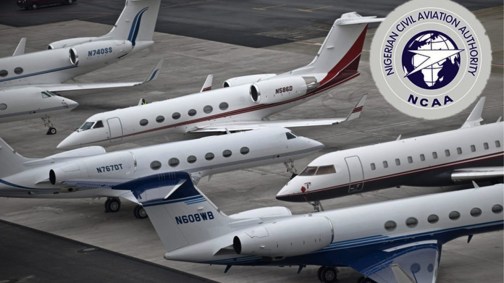
- The Airline Operators of Nigeria has rejected claims that domestic carriers are indebted to the civil aviation regulator.
- Management executives clarified that all official regulatory services are fully paid for in advance on a cash-before-service basis.
- Disputes over outstanding charges relate strictly to the five percent Ticket Sales Charge collected from passengers.
- Global crises involving the Iran/Israel/U.S. conflict have created severe financial stress and increased fuel costs for operators.
- Airline leaders are requesting legislative changes to allow direct collection of passenger taxes by the regulatory agency.
Main Story
The Airline Operators of Nigeria (AON) has reacted to the claim that its members are indebted to the Nigeria Civil Aviation Authority (NCAA) for services the agency rendered.
The association said in a statement in Lagos on Monday that all services rendered by NCAA to domestic airline operators were fully paid for in advance on a cash-before-service basis. AON also said that NCAA issued invoices for all regulatory services it provided, including validation of crew operating licences, aircraft inspections and documentation renewals.
It emphasised that airline operators were required to settle such charges in advance, saying that compliance had been strict.
To evaluate intermediate operational frameworks, the association explained that several airlines maintained dedicated accounts from which the NCAA drew monthly remittances until the forced majeure caused by the Iran/Israel/U.S. conflict that affected global aviation.
According to AON, the operators have appealed to the Federal Government through the office of Minister of Aviation and Aerospace Development to temporarily suspend payment of all statutory charges. It said the suspension was to assist airline operators in managing cash flows during the period of severe financial stress caused by increased cost of Jet A1 (aviation fuel).
Furthermore, the domestic carriers called for a comprehensive review of historical policy instruments that add transaction expenses to their strained balance sheets.
It said that President Bola Tinubu had granted a 30 per cent concession, adding that AON was waiting for the Federal Government’s decision on other aspects of the association’s request for intervention.
The association called on the Federal Government to review all forms of levies imposed on domestic airline operators, stating that the survival of the crucial aviation sector demands urgent and deliberate policy action.
The Issues
- Relieving domestic airlines of high banking transfer charges incurred while acting as tax collection agents for the government.
- Managing extreme cash flow constraints triggered by rising Jet A1 aviation fuel prices and global geopolitical conflicts.
- Reconciling a 45-year-old passenger tax policy with modern international aviation standards and multi-agency service fees.
What’s Being Said
- Defending the payment compliance of domestic carriers, the Airline Operators of Nigeria stated: “In practice, no domestic airline in Nigeria receives NCAA regulatory services without first making full payments. This long-standing policy and procedure remains firmly in place.”
- Clarifying the exact origin of the financial dispute, the statement maintained: “Consequently, suggestions that domestic airline operators are indebted to the NCAA for regulatory services are factually inaccurate. What the NCAA refers to as ‘outstanding charges’ relates solely to the five per cent Ticket Sales Charge (TSC), a tax imposed by NCAA on passengers for no services rendered to passengers,”
- Separating consumer levies from active operational costs, the association added: “This is entirely different from regulatory service fees,”
- Proposing a permanent systemic fix to the collection process, the group urged the government “to amend the Civil Aviation Act to empower NCAA to collect appropriate charges directly from passengers without routing such through domestic airlines, with effect from June.”
- Outlining the current overhead burdens removed by direct collection, the operators explained: “This will relieve domestic airlines of the financial burden of acting as collection agents for the NCAA, since airlines currently bear banking transfer charges and other transaction costs in the process of transmitting funds to the NCAA.”
- Criticizing the legislative introduction of the historic passenger levy, the AON noted: “Meanwhile, the five per cent TSC, which was originally a policy instrument was surreptitiously introduced into the legislation by the NCAA, despite vehement opposition from the AON and other industry stakeholders.”
- Emphasizing that carriers are already billed multiple times by separate aviation boards, the text noted: “Domestic airlines, in addition to this five per cent TSC, still pay separately and directly for services provided by the various agencies, including the NCAA.”
What’s Next
- Airline executives will wait for the final executive decision from the Ministry of Aviation regarding the remaining parts of their intervention request.
- Legal teams within the industry will draft proposed amendment texts for the Civil Aviation Act ahead of the proposed June timeline.
- Financial departments across domestic airlines will calculate the cost offsets provided by the newly approved 30 percent concession.
Bottom Line
Rejecting debt claims by clarifying that all core regulatory services are strictly prepaid, the Airline Operators of Nigeria has appealed for a temporary suspension of statutory charges due to soaring Jet A1 fuel costs and the Iran/Israel/U.S. crisis, while demanding a June amendment to the Civil Aviation Act to stop airlines from acting as tax collection agents.



 has reacted to the claim that its members are indebted to the Nigeria Civil Aviation Authority ...)