










Key points
- AFAN urges government intervention to restore Nigeria’s declining cocoa industry.
- Association advocates value addition through cocoa processing instead of raw bean exports.
- Farmers blame low earnings on poor support systems and exploitative market structures.
Main story
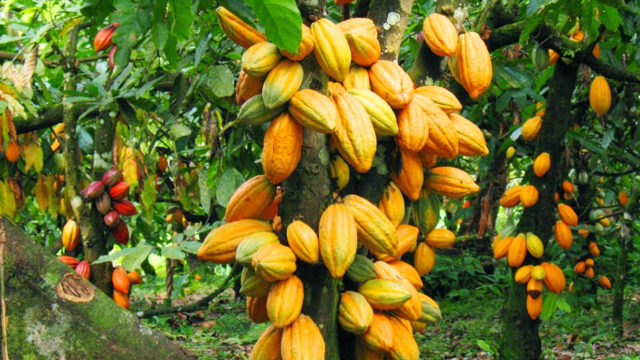
The All Farmers Association of Nigeria (AFAN) has called for urgent measures to revive the country’s cocoa sector and reposition it as a major contributor to Nigeria’s Gross Domestic Product (GDP).
The National Publicity Secretary of AFAN, Mr Femi Oke, made the appeal in an interview with the News Agency of Nigeria (NAN) in Lagos, where he lamented the declining state of one of Nigeria’s historically important cash crops.
According to Oke, cocoa once generated substantial revenue for both farmers and government, but the sector has lost its prominence despite sustained global demand for cocoa products.
“Cocoa has historically been one of the most profitable commodities for farmers. Both the government and farmers recorded substantial returns from its cultivation and sale in the past,” he said.
He noted that Nigerian cocoa farmers were increasingly falling behind competitors in other producing countries, stressing that urgent reforms and investments were needed to restore the industry’s competitiveness and global relevance.
Oke also emphasised the importance of value addition, urging farmers and investors to move beyond exporting raw cocoa beans to processing cocoa into finished and semi-finished products such as cocoa powder and other derivatives.
According to him, the export of raw beans significantly limits farmers’ earnings and reduces the sector’s overall economic impact.
“There are several high-value products that can be derived from cocoa. When farmers rush to sell raw beans, they reduce their potential earnings and the sector’s contribution to the GDP,” he added.
The AFAN spokesperson further identified financing challenges as a major obstacle confronting cocoa farmers, noting that many producers are forced into unfavourable advance payment arrangements with buyers and middlemen.
He explained that while farmers bear the burden of cultivation and production, intermediaries often reap the highest profits from the cocoa value chain.
The issues
Nigeria’s cocoa industry has struggled with ageing plantations, inadequate government support, limited access to financing, and weak local processing capacity. The sector also faces stiff competition from major global producers such as Côte d’Ivoire and Ghana, both of which have invested heavily in value addition and production expansion.
What’s being said
AFAN is calling on the Federal Government to support the planting of new cocoa trees, strengthen collaboration with farmers’ associations, and implement policies that encourage local processing and improved productivity.
The association insists that reviving the cocoa sector could significantly boost export earnings, create jobs, and diversify Nigeria’s economy away from overdependence on crude oil.
What’s next
Stakeholders are expected to intensify advocacy for reforms and investment in cocoa production and processing. Government agencies may also face renewed pressure to introduce targeted interventions aimed at revitalising the sector.
Bottom line
AFAN’s call highlights growing concerns over the decline of Nigeria’s cocoa industry and underscores the need for strategic investment, value addition, and stronger government support to restore the sector’s economic relevance.





 has called for urgent measures to revive the country’s cocoa sector and reposition...)