



By Boluwatife Oshadiya | August 4, 2026
Key Points
- INTERPOL says 55% of cybercrimes reported across Africa are now enabled by artificial intelligence
- Cybercrime-related financial losses in Africa have surged to $484 million, more than double the 2024 figure
- Financial institutions, telecom operators and government agencies remain the continent’s most targeted sectors
Main Story
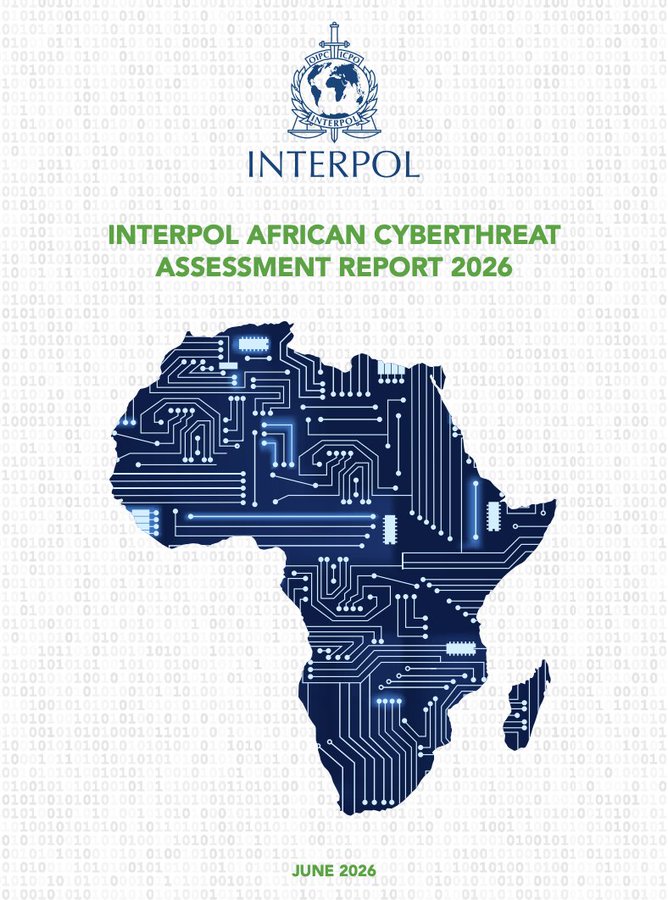
Artificial intelligence is now driving more than half of reported cybercrime cases across Africa, with attacks becoming faster, more sophisticated and increasingly difficult to detect, according to INTERPOL’s African Cyberthreat Assessment Report 2026.
The 40-page report found that 55% of reported cybercrimes on the continent are AI-enabled, highlighting a significant shift from isolated cyber incidents to what the international policing body describes as an industrialised and borderless criminal ecosystem.
The assessment comes as Africa’s digital economy continues to expand rapidly, supported by more than 1.1 billion mobile subscribers recorded in 2025. However, INTERPOL warned that fragmented cybercrime legislation and limited AI capabilities among law enforcement agencies have left many countries vulnerable to increasingly sophisticated attacks.
The report showed that online scams remained the most commonly reported cybercrime in 2025, with criminals exploiting mobile money platforms, social media networks and AI-powered social engineering techniques to target victims.
Financial losses linked to cybercrime have also risen sharply, climbing from $192 million in 2024 to $484 million, largely driven by AI-assisted scams, credential theft and automated phishing campaigns.
INTERPOL further disclosed that 72% of surveyed African countries reported the existence of organised scam centres, with Southern and West Africa recording the highest concentration.
Among the sectors most affected are financial services, telecommunications companies and government institutions, all of which continue to face growing threats from ransomware attacks, business email compromise schemes and AI-generated identity fraud.
One of the report’s major concerns is the increasing use of AI-generated synthetic identities, where criminals combine genuine personal information with fabricated data to bypass biometric verification systems. According to INTERPOL, these identities have been used to open bank accounts, obtain mobile loans and register SIM cards under false identities.
What’s Being Said
“Cybercrime has emerged as one of the most significant criminal threats to the region. AI is automating every stage of a cyberattack from reconnaissance and phishing to extortion and evasion. However, when countries work together, cybercriminal infrastructure can be identified, disrupted and dismantled,” said Neal Jetton, Director of INTERPOL’s Cybercrime Directorate.
The report also noted that coordinated international enforcement efforts are beginning to produce results. Four major operations—Operation Serengeti 2.0, Operation Contender 3.0, Operation Sentinel and Operation Red Card 2.0—resulted in more than 1,500 arrests, the seizure of hundreds of digital devices and the recovery of over $100 million linked to cybercrime.
What’s Next
- INTERPOL is urging African governments to strengthen cross-border cooperation and standardise digital forensic capabilities.
- The organisation also recommends greater investment in AI training for law enforcement agencies and stronger public-private partnerships involving banks, telecom operators and technology companies.
- As African economies continue to digitise, policymakers are expected to face growing pressure to modernise cybercrime legislation and improve information sharing between financial institutions, telecommunications operators and security agencies.
Bottom Line
The Bottom Line: INTERPOL’s latest assessment underscores how artificial intelligence is reshaping Africa’s cyber threat landscape faster than many institutions can respond. Unless governments accelerate legal reforms, strengthen regional cooperation and invest in AI-powered cybersecurity capabilities, the continent’s expanding digital economy could become increasingly exposed to more organised and financially damaging cybercrime.