The Securities and Exchange Commission (SEC) has issued a fresh warning to Nigerians over the growing spread of Artificial Intelligence (AI)-powered scams targeting unsuspecting investors.
In a statement released on Sunday, the regulator disclosed that it had deployed an upgraded surveillance system designed to identify fraudulent investment activities in real time.
According to the SEC, fraudsters are increasingly using AI-generated content and manipulated videos to deceive potential victims. Many of these fake clips feature fabricated endorsements from well-known politicians, celebrities, and media personalities, which are being widely circulated via Facebook ads, Instagram reels, and Telegram channels.
The commission specifically pointed out that several unregistered platforms, including CBEX, Silverkuun, and TOFRO, have been operating illegally. These platforms promoted AI-driven trading schemes that promised unrealistic returns, prompting SEC to issue multiple disclaimers against their activities.
“Scammers are exploiting AI to create false testimonials and endorsements that appear authentic,” the commission stated. “This has reduced the effectiveness of traditional fraud detection methods, which is why we are adopting predictive oversight to strengthen investor protection.”
To combat the trend, SEC revealed it is working with social media companies to clamp down on misleading advertisements. The regulator also warned influencers and bloggers to desist from promoting unlicensed investment products, adding that anyone found complicit will face sanctions or prosecution.
The SEC urged Nigerians to be cautious, stressing that any scheme offering daily profits, zero risks, or celebrity-backed endorsements should immediately raise red flags.
It further noted that collaborations with the Central Bank of Nigeria (CBN) and the Nigerian Financial Intelligence Unit (NFIU) are being reinforced to improve data sharing and joint enforcement operations.
Nigeria’s foreign reserves climbed by over $5 billion in the third quarter of 2025, reaching $42.225 billion as of September 25, according to new figures from the Central Bank of Nigeria (CBN).
The reserves, now at their highest level in six years, were boosted by increased oil exports, robust remittance inflows, and renewed investor confidence. Analysts also cited successful reforms and enhanced transparency measures introduced by the apex bank as key drivers.
Despite fluctuations in global oil prices and the CBN’s interventions in the foreign exchange market, September saw consistent inflows that helped bolster the reserves. The inflows were further strengthened by Dangote Refinery’s export activities and improved crude production that enabled Nigeria to meet its OPEC quota.
TrustBanc Financial Group noted that total FX inflows into Nigeria reached $35.21 billion within the first eight months of 2025, already surpassing the full-year 2024 figure of $31.11 billion. This marks the highest inflow level in eight years.
The distribution of inflows has also become more balanced, with foreign investors contributing 33% and the CBN accounting for 14%. This has reduced risks associated with concentration.
The CBN also rolled out the Bloomberg BMatch system under its Electronic Foreign Exchange Matching System (EFEMS), a reform that has increased efficiency and visibility in FX transactions.
While monthly interventions by the apex bank averaged $605.6 million since September 2024, analysts stressed that these were only targeted at correcting short-term distortions, not fixing the exchange rate at any particular level.
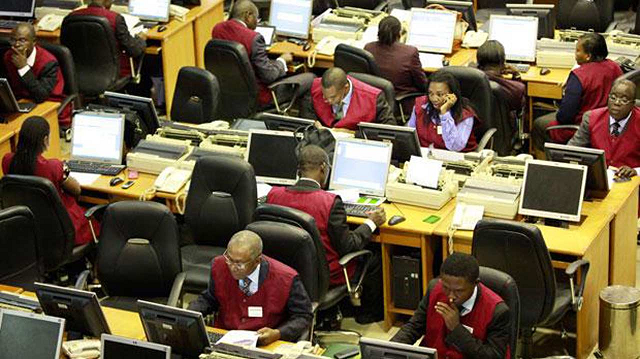
The Nigerian Exchange (NGX) closed the trading week ended September 26 on a positive note, as the All-Share Index (ASI) advanced by 287.68 points to finish at 142,133.03. This marks a 0.20% increase compared to the previous week’s close of 141,845.35. The rally, largely fuelled by gains in heavyweight stocks, pushed the month-to-date performance to 1.31%.
Trading activity also picked up momentum, with the total traded volume climbing to 2.9 billion shares, slightly above the 2.7 billion shares recorded in the preceding week. Market capitalization inched higher as well, rising to ₦89.96 trillion from ₦89.74 trillion the previous week, reflecting a modest but broad-based upward movement in share prices.
Market Breadth
The breadth of the market leaned bearish despite the overall positive close. A total of 32 equities recorded gains, a decline from the 40 that appreciated the prior week. Conversely, 51 stocks shed value, compared to 41 the week before, while 64 remained unchanged.
Weekly Trading Pattern
The ASI began the week on a weak footing, with losses on Monday and Tuesday dragging the index down to 140,716 by Wednesday. A rebound on Thursday restored positive sentiment, which was further sustained on Friday, enabling the index to close the week above 142,000 points. Quarter-to-date, the ASI has climbed 18.47%, while year-to-date gains stand at an impressive 38.09%.
Major Indices Performance
The NGX Premium Index rose 0.48%, supported by strong performances from:
Zenith Bank: +9.14%
Lafarge Africa: +4.00%
Dangote Cement: +1.72%
UBA: +1.58%
The NGX Main Board Index added 0.03%, while the NGX 30 Index appreciated by 0.24%.
Sectoral Performance
Industrial Goods Index: Up 1.33%, driven by Lafarge (+4%) and Dangote Cement (+1.72%).
Banking Index: Rose 1.19%, boosted by Zenith Bank (+9%) and Stanbic IBTC (+9%), with support from UBA and FCMB.
Consumer Goods Index: Advanced 1.15%, led by International Breweries, which surged over 10%.
Oil & Gas Index: Declined 1.62%.
Insurance Index: Fell 0.91%.
Top Gainers of the Week
Thomas Wyatt Nigeria Plc: +22.68% to close at ₦3.30
Secure Electronic Technology Plc: +21.33% to ₦0.91
Mecure Industries Plc: +20.83% to ₦26.10
Chellarams Plc: +11.30% to ₦16.25
Royal Exchange Plc: +10.29% to ₦2.25
The Initiates Plc: +10.17% to ₦13.22
International Breweries Plc: +10.08% to ₦13.65
Eunisell Interlinked Plc: +9.98% to ₦33.60
Chams Holding Company Plc: +9.68% to ₦3.40
Stanbic IBTC Holdings Plc: +9.29% to ₦107.10
Top Losers of the Week
Wema Bank Plc: -12.41% to close at ₦18.00
Fidelity Bank Plc: -11.08% to ₦18.45
Eterna Plc: -10.00% to ₦27.90
Ikeja Hotel Plc: -9.80% to ₦20.70
Africa Prudential Plc: -9.09% to ₦14.50
Cutix Plc: -8.57% to ₦3.20
Deap Capital Management & Trust Plc: -8.51% to ₦1.72
Union Dicon Salt Plc: -8.16% to ₦9.00
May & Baker Nigeria Plc: -7.43% to ₦16.20
Caverton Offshore Support Group Plc: -5.30% to ₦6.25
Corporate Developments
Several notable corporate announcements shaped investor sentiment during the week:
Stanbic IBTC Holdings released its half-year results and declared an interim dividend of ₦2.50.
GTCO published its H1 2025 financial performance.
First HoldCo appointed a new Group Secretary and disclosed insider share acquisitions by Chairman Femi Otedola.
Julius Berger approved the lease of its cashew processing assets.
Aradel Holdings announced that Capital Alliance divested its 15.9% equity stake in the company.
Market Outlook
Despite a slow start to the week, strong recoveries in banking and industrial blue-chip stocks ensured that the ASI closed firmly above the 142,000 mark. Analysts suggest that if momentum in the banking sector continues, the index could retest the 143,000 and 144,000 thresholds in the coming sessions.
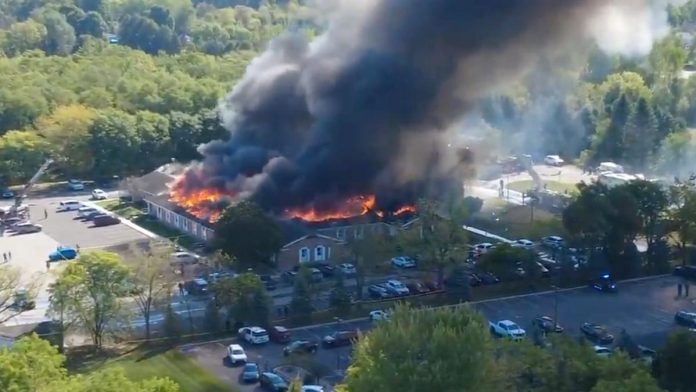
A Sunday morning worship service in Grand Blanc Township, Michigan, turned into a scene of horror after a gunman stormed The Church of Jesus Christ of Latter-day Saints, leaving one person dead and nine others injured before being fatally shot by police.
According to Grand Blanc Township Police Chief William Renye, the 40-year-old suspect drove a pickup truck into the church’s front entrance before exiting the vehicle and opening fire on congregants. The assailant then appeared to deliberately set the church on fire, sparking chaos among the hundreds of worshippers present.
Law enforcement officers quickly pursued the attacker after he fled the building. The confrontation escalated into an exchange of gunfire, during which police fatally shot the suspect.
Flames and Fear
For several hours, flames and thick smoke engulfed the church structure as firefighters battled to control the blaze. Emergency crews later began combing through the debris for possible additional victims.
“We do believe we will find some additional victims once we find the area where the fire was,” Chief Renye stated during a press briefing.
Authorities have yet to release a motive and are currently investigating the suspect’s residence in nearby Burton. Officials have not confirmed whether the attacker was affiliated with the church.
National Attention and Political Response
U.S. President Donald Trump said he had been briefed on the incident and praised the FBI’s swift deployment of 100 agents to assist local authorities. In a social media post, Trump urged Americans to support the victims’ families and called for an end to escalating violence across the nation. “PRAY for the victims, and their families. THIS EPIDEMIC OF VIOLENCE IN OUR COUNTRY MUST END, IMMEDIATELY!” he wrote.
Local Leaders Express Shock
The violent attack has left deep scars on the Grand Blanc community, home to around 40,000 residents near Flint.
“Although we are two separate governmental units, we are a very cohesive community,” said Grand Blanc Mayor John Creasey. “This sort of thing is painful for our entire community. I’m struggling to digest all that has happened, and my heart goes out to all of the affected families.”
Michigan Governor Gretchen Whitmer also released a statement condemning the violence, saying, “My heart is breaking for the community. Violence anywhere, especially in a place of worship, is unacceptable.”
Church Leaders Respond Amid Transition
The shooting came just one day after the passing of Russell M. Nelson, the 101-year-old president of The Church of Jesus Christ of Latter-day Saints. Per church tradition, his successor is expected to be Dallin H. Oaks. Doug Anderson, a spokesperson for the church, confirmed that the institution is in close communication with local authorities as investigations unfold.
“Places of worship are meant to be sanctuaries of peacemaking, prayer and connection. We pray for peace and healing for all involved,” Anderson said.
Community Solidarity
The tragedy also drew acts of compassion from unexpected quarters. Some striking nurses from Henry Ford Hospital temporarily abandoned their picket line to rush to the church and assist first responders.
“Human lives matter more than our labor dispute,” said Dan Glass, president of Teamsters Local 332. The once-peaceful churchyard, surrounded by suburban homes and a nearby Jehovah’s Witness congregation, is now the center of grief and resilience as Michigan grapples with another act of senseless violence.
Oil prices surged on Friday as Moscow moved to restrict fuel exports following Ukrainian strikes on Russia’s critical energy infrastructure, heightening global supply concerns.
Brent crude rose 4% to $68.76 per barrel, up from the previous close of $66.12, while U.S. benchmark West Texas Intermediate (WTI) inched up to $65.08 from $65.07.
Ukraine has intensified drone attacks on Russian refining and distribution facilities, disrupting operations and fueling shortages. Strikes targeted the Salavat petrochemical complex in Bashkortostan, one of Russia’s largest plants operated by Gazprom, as well as oil depots in the Bryansk and Samara regions. Regional Governor Radiy Khabirov confirmed the Salavat facility was hit early on September 24.
Amid these disruptions, Russia is grappling with reduced refining capacity and fuel scarcity. Deputy Prime Minister Aleksandr Novak announced that Moscow would extend its gasoline export ban until year-end and impose restrictions on diesel exports for non-producers over the same period. The measures follow a temporary ban between July 28 and August 31, which failed to halt record fuel price hikes.
Domestic fuel prices remain under pressure due to refinery outages and rising demand, particularly from the agricultural sector. Russia, one of the world’s top energy exporters, produces more than 40 million tons of gasoline annually.
Adding to upward momentum, U.S. crude stockpiles declined unexpectedly. The U.S. Energy Information Administration reported a 600,000-barrel drawdown last week, bringing commercial inventories to 414.8 million barrels, against forecasts of an 800,000-barrel build.
Meanwhile, Iraq’s Kurdistan Regional Government announced the reopening of its oil wells for export under an agreement with oil producers, Iraq’s Oil Ministry, and state-owned SOMO. The KRG’s Ministry of Natural Resources said exports would resume within 48 hours, helping ease some supply concerns and tempering price gains.
The Debt Management Office (DMO) has announced plans to open N200 billion worth of Federal Government of Nigeria (FGN) bonds for subscription at its monthly primary market auction scheduled for next week.
According to the circular, the DMO will raise N100 billion each from the 17.945% FGN AUG 2030 bond and the 17.95% FGN JUNE 2032 bond on September 29. Both instruments are reopened local bonds with maturities of five and seven years, respectively.
Market analysts expect spot rates at the auction to trend lower, reflecting the Central Bank of Nigeria’s dovish stance at its most recent Monetary Policy Committee meeting.
In secondary trading, the bond market maintained a calm tone with moderate demand, especially in the mid- to long-end of the curve. The 2027, 2033, and 2053 papers were quoted around 16.91%, 16.52%, and 15.88%, respectively, leaving the average yield relatively flat at 16.52%.
FGN bonds are backed by the full faith and credit of the Federal Government and charged upon the general assets of Nigeria.
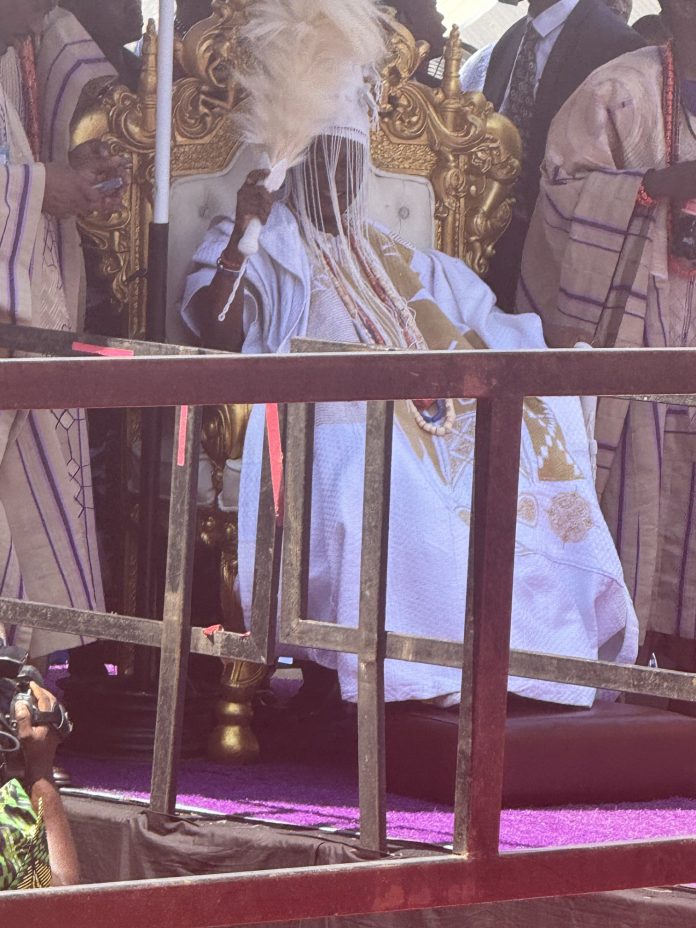
A former Governor of Oyo State, Oba Rashidi Ladoja, has officially been crowned the 44th Olubadan of Ibadanland.
The coronation took place at the Ose Meji Temple in Ibadan South-East Local Government Area of the state.
Before his crowning, Ladoja had received the traditional Akoko leaf at the Labosinde Compound, Oja’ba, Ibadan. He is expected to be formally presented with the staff and instrument of office by Governor Seyi Makinde at the historic Mapo Hall. Governor Makinde reportedly cut short his annual leave on Thursday to personally attend the coronation ceremony.
Ladoja ascended the throne following the passing of the 43rd Olubadan, Oba Owolabi Olakulehin, who joined his ancestors on Monday, July 7, 2025.
Apple’s iPhone 17 launch wasn’t just a tech event—it was a masterclass in how to make people want something. Sure, it’s a phone with faster chips and slicker design, but peel back the layers, and you’ll see a blueprint for winning markets.
Whether you’re a startup founder, an investor, or just someone who wonders why people camp out for a new iPhone, there’s something here for you. Let’s break it down.
1. Innovation Doesn’t Need a Full Makeover
You know what? Apple didn’t reinvent the wheel with the iPhone 17. They tweaked—better cameras, smarter AI, longer battery life. And yet, it feels new. That’s the magic of iteration. Businesses often think they need to start from scratch to stand out, but small, consistent upgrades can pack the same punch. It’s like adding a pinch of spice to a recipe—sometimes, that’s all it takes to steal the show.
For smaller companies, this means focusing on what you can improve now. Don’t wait for a grand overhaul. What’s one feature you can polish to make customers notice?
2. Scarcity Turns Want into Need
Ever notice those lines snaking around Apple stores on launch day? That’s not an accident. Apple could flood the market with iPhones, but they don’t. Limited stock creates buzz—pre-order wars, news headlines, even scalpers cashing in. It’s all part of the theater.
Here’s the thing: scarcity isn’t just for tech giants. Small businesses can use it too—think limited-edition products or exclusive early access. For investors, it’s a reminder that supply constraints can shape demand in fascinating ways. Ever wonder how much of “sold out” is strategy, not chance?
3. Loyalty Lives in Feelings, Not Features
Ask an iPhone fan why they upgraded. Bet they won’t say, “Oh, the new chip’s 3 nanometers!” It’s more like, “It just feels better.” Apple’s selling a vibe—a sense of being part of something sleek, modern, maybe even elite. That’s emotional branding at its finest.
This works everywhere. Whether you’re selling coffee or software, tap into what makes people feel connected. Are your customers buying a product, or are they buying a story they want to tell?
4. AI’s Power Is in the Background
The iPhone 17 is packed with AI—photo tweaks, a sharper Siri, real-time call translations. But Apple doesn’t scream “AI!” like it’s a sci-fi movie. They focus on what it does for you, like editing a video faster than you can say “Instagram Reels.” That’s smart marketing.
For businesses, the lesson is simple: don’t sell the tech, sell the ease. Investors, take note—companies that weave AI into practical benefits, not buzzwords, are the ones to watch. How can you make complex tech feel like a breeze for your customers?
5. Green Isn’t Optional Anymore
Apple’s big on sustainability these days—recycled aluminum, greener supply chains, even smaller boxes. Some roll their eyes and call it PR. But for younger buyers, it’s a dealbreaker. They want brands that care about the planet.
This isn’t just feel-good stuff. Regulators in places like Europe are cracking down, demanding proof of eco-friendly practices. If your business isn’t thinking green, you’re already behind. How can you show customers you’re part of the solution, not the problem?
6. Price Is a Story, Not a Number
Let’s be real: the iPhone 17 isn’t cheap. But millions fork over the cash. Why? Apple spins it as an investment in your life—productivity, style, status. They also play the pricing game cleverly, with base models, Pro, and Pro Max tiers making the middle option feel like a steal.
This strategy isn’t just for phones. Whether you’re selling subscriptions or houses, it’s about framing the cost as value. Ever notice how a “premium” option makes the standard one seem like a bargain?
7. Hype Is Your Secret Weapon
Apple doesn’t just drop a product—they build a saga. Leaks start months early, influencers drop hints, keynotes tease just enough. By launch day, the internet’s practically vibrating. That’s hype done right.
Businesses, take note: marketing starts long before the sale. A well-timed teaser or a clever social media post can turn a launch into an event. For startups, it’s about creating buzz on a budget—maybe a sneaky X post or a collab with a local influencer. How can you get people talking before your big reveal?
So, What’s the Big Takeaway?
The iPhone 17 isn’t just a phone—it’s a playbook. Apple shows us that success blends psychology, strategy, and a touch of showmanship. For entrepreneurs, it’s a call to think beyond the product. For investors, it’s a hint at what drives markets. And for the rest of us? Well, it’s a nudge to question why we’re so eager to hit “pre-order.”
Next time you see those Apple store lines, don’t just see fans—see a strategy that’s been winning for years. What’s one lesson you can borrow for your own goals?
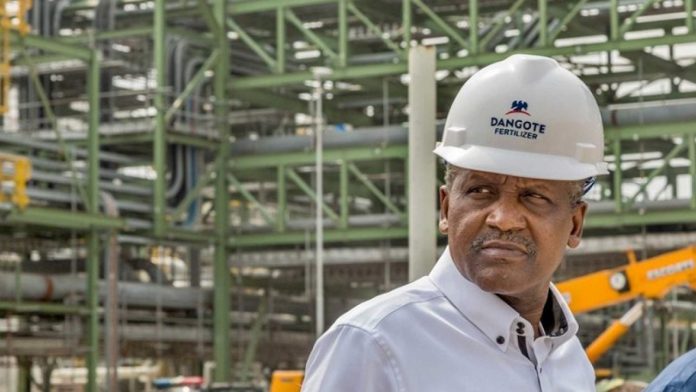
The management of Dangote Petroleum Refinery and Petrochemicals has announced a major restructuring of its workforce and operations, citing repeated incidents of sabotage that posed risks to the facility’s safety.
The 650,000 barrels-per-day refinery, which began operations in 2024, said the decision became necessary to address security breaches within the plant. In a letter dated September 24, 2025, signed by Femi Adekunle, Chief General Manager of Human Asset Management, the company stated it was “constrained to carry out a total reorganisation of the plant” due to “several recent cases of sabotage in different refinery units leading to serious safety concerns.”
Affected employees were instructed to return all company property to their supervisors and obtain clearance before receiving their benefits, which would be processed in accordance with their employment terms.
Company Denies Mass Sack Allegations
Despite the circulation of the disengagement letter, a senior official at Dangote Petroleum Refinery & Petrochemicals dismissed reports of mass sackings, insisting that the development should not be misinterpreted.
“Yes, the letter is authentic, but its interpretation has been twisted. It affects certain individuals due to specific issues discovered at the refinery. It has nothing to do with union activities or mass retrenchment,” the official clarified. The official explained that the exercise was intended to safeguard company assets, block operational leakages, and address sabotage within the system.
“This is not a mass sack. It is a strategic clean-up. Once the issues are resolved, affected staff may be reabsorbed. That’s why the word ‘sack’ wasn’t used. It’s a temporary measure to protect the refinery’s assets,” he said. He further revealed that the reorganisation was carried out abruptly to prevent suspected saboteurs from concealing evidence of their actions.
“You cannot issue two weeks’ notice for such an exercise; otherwise, those involved would cover their tracks. The company acted quickly to protect its operations,” the official explained.
Refinery Operations Continue Uninterrupted
The refinery stressed that operations were ongoing and unaffected by the restructuring. Both Nigerian and expatriate staff are still actively engaged at the facility. “As we speak, work continues at the refinery. Those affected know themselves, and employees who did not receive the letter remain unaffected. Anyone not involved in sabotage has no reason for concern,” the official assured.
A copy of the disengagement notice obtained by our correspondent was addressed to employees of Dangote Petroleum Refinery & Petrochemicals FZE and Dangote Industries Free Zone Development Company.
The letter read in part: “In view of the recent cases of sabotage in different units of the Petroleum Refinery, leading to safety risks, management is compelled to carry out a total reorganisation of the plant. Consequently, your services are no longer required as of September 25, 2025. Please surrender all company property to your line manager and obtain exit clearance. The Finance Department will compute your benefits in line with your terms of employment.”
Rising Tensions With Labour Unions
The latest move comes as the refinery continues to grapple with industrial disputes and regulatory scrutiny. Earlier, the facility clashed with the Nigeria Union of Petroleum and Natural Gas Workers (NUPENG) over labour practices and safety standards. The union accused the company of “high-handedness” and flagged what it described as unfair labour practices.
Additionally, Dangote Refinery has been at odds with the Depot and Petroleum Products Marketers Association of Nigeria (DAPPMAN) over distribution and pricing policies. Marketers alleged that the company imposed rigid conditions that could disrupt Nigeria’s downstream oil market. The refinery, hailed at its commissioning as a potential solution to Nigeria’s decades-long dependence on imported petroleum products, is now facing operational turbulence alongside industrial and market disputes.
Week 13 pool results 2025: Football pools results, live football pool result today, pool result today saturday matches, pool results for this week, british and aussie pool result, football pools results and fixtures, pools panel results today, pool panel results and live score pool result today. We publish half-time results first of its kind.
Week 13 Pool Results: Football pools results for this week 13 2025 are published on this website immediately after full-time confirmation of live score results. We also publish the outcome of postponed matches by the football pools panel at half-time as decided by the football pools. This week’s Week 13 Pool Results are made available in partnership with Bizwatch Nigeria.
WEEK: 13; SEASON: UK 2025/2026; DATE: 27-September-2025
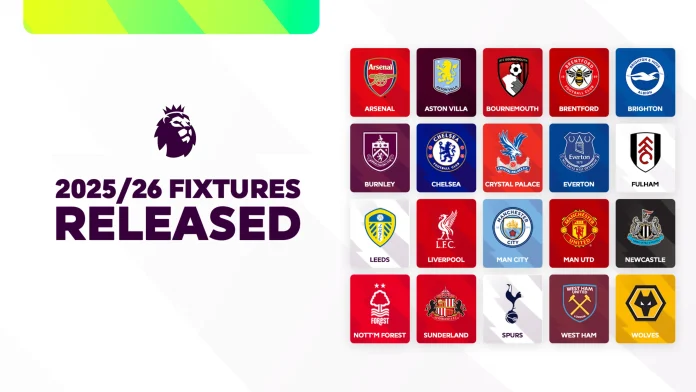
The Premier League enters Matchday 6 this weekend with a lineup of high-profile clashes across England, as football fans prepare for another round of drama and excitement. The action kicks off in Saturday’s early fixture, where Manchester United face a tricky test away at Brentford. United, under Ruben Amorim, have shown flashes of quality but remain inconsistent, and Merson believes the Bees will prove tough opponents. His verdict: a 1-1 draw at the Gtech Community Stadium.
Over in West London, Chelsea welcome Brighton to Stamford Bridge. Both sides are still searching for rhythm this season, but Merson tips the Blues to come out on top in a close contest, predicting a 2-1 win for Mauricio Pochettino’s men.
Champions Manchester City are expected to maintain their dominance when they host Burnley at the Etihad. Merson has little doubt about the outcome, forecasting a straightforward 2-0 victory for Pep Guardiola’s side.
One of the weekend’s most intriguing fixtures sees Crystal Palace take on Liverpool at Selhurst Park. While many expect Jürgen Klopp’s Reds to overpower the Eagles, Merson has gone against the grain, suggesting a 1-1 stalemate.
Elsewhere on Saturday, Nottingham Forest will lock horns with Sunderland, Tottenham host Wolves in North London, while Aston Villa, Fulham, and Arsenal all feature later in the weekend. The standout clash of the round comes on Sunday, with Newcastle United welcoming Arsenal to St. James’ Park. Merson predicts a tight affair in the North East, calling it another 1-1 draw.
The round concludes on Monday night when Everton play host to West Ham at Goodison Park. Backing Sean Dyche’s men to deliver in front of their home crowd, Merson has tipped the Toffees for a solid 2-0 win.
Premier League Matchday 6 Fixtures and Predictions
Saturday, 27 September
Brentford vs Manchester United – 12:30 pm | Prediction: 1-1
Leeds United vs Bournemouth – 3:00 pm | Prediction: 1-3
Chelsea vs Brighton – 3:00 pm | Prediction: 2-1
Manchester City vs Burnley – 3:00 pm | Prediction: 2-0
Crystal Palace vs Liverpool – 3:00 pm | Prediction: 1-1
Nottingham Forest vs Sunderland – 5:30 pm | Prediction: 1-0
Tottenham vs Wolves – 8:00 pm | Prediction: 2-0
Sunday, 28 September
Aston Villa vs Fulham – 2:00 pm | Prediction: 1-1
Newcastle vs Arsenal – 4:30 pm | Prediction: 1-1
Monday, 29 September
Everton vs West Ham – 8:00 pm | Prediction: 2-0
With crucial points at stake, Matchday 6 could prove defining for several clubs looking to build momentum in the early stages of the season.
Now you can find the Week 15 pool fixtures 2025: pool fixtures for this week, this week pool fixtures, football pools results and fixtures, pool fixtures this week, classic pool fixtures, Aussie pool fixtures, UK pool fixtures, advance pool fixtures, Australia pool fixtures, pool panel results, pool result today Saturday, pool results and fixtures this week, fortune soccer pool fixtures.
Find all the Week 15 pool fixtures on Bizwatchnigeria.ng as soon as they are released by the FPA (Football Pools Authority).
Pool Fixtures For This Week: 15; SEASON: UK 2025/2026
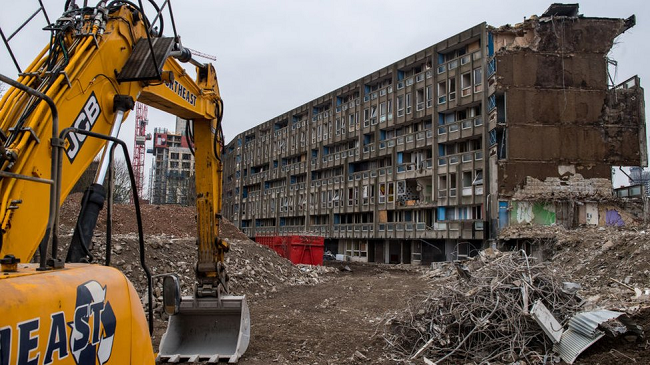
The Lagos State Government has commenced the demolition of unlawful and unsafe structures within the Trade Fair Complex in Ojo, intensifying its crackdown on unapproved developments that threaten safety and urban order.
The exercise, which began on Thursday, was confirmed by Jubril Gawat, Senior Special Assistant on New Media to Governor Babajide Sanwo-Olu, via a post on X. He explained that the operation specifically targeted structures without official approvals, buildings obstructing drainages and road setbacks, and defective constructions deemed hazardous.
“The Lagos State Government has started removing illegal developments, unsafe buildings, and unapproved constructions inside the Trade Fair Complex, Ojo,” Gawat said, adding that the state could no longer overlook violations that compromise critical infrastructure and endanger residents.
The enforcement action was carried out jointly by several agencies, including the Ministry of Physical Planning, the Lagos State Building Control Agency (LASBCA), the Lagos State Urban Renewal Agency, and the Lagos State Physical Planning Permit Authority. Officials from the Office of Infrastructure, members of the Lagos State House of Assembly, and security operatives were also present to provide oversight and support.
Bulldozers moved into the complex, pulling down marked buildings, while traders and shop owners watched anxiously, many expressing fears about the disruption to their businesses.
The Sanwo-Olu administration has repeatedly cautioned Lagosians against erecting buildings without obtaining proper permits or blocking drainage systems. Officials argue that such violations worsen flooding, traffic congestion, and disorder in Africa’s most populous city.
Thursday’s demolition aligns with the government’s broader urban renewal drive to restore order in densely populated areas, protect road networks, and prevent recurrent flooding caused by blocked water channels.
However, similar enforcement exercises in the past have drawn criticism. In areas such as Oworonshoki, affected residents complained about inadequate notice and claimed that their properties were destroyed without sufficient relocation time.
To address such concerns, the government previously introduced a regularisation scheme, offering property owners an amnesty period to legalise unapproved structures without penalties. That window, which was extended multiple times, has since expired—prompting renewed enforcement actions across Lagos.
With LASBCA now leading demolitions citywide, authorities insist the goal is not displacement but safety, sustainability, and orderly urban growth.
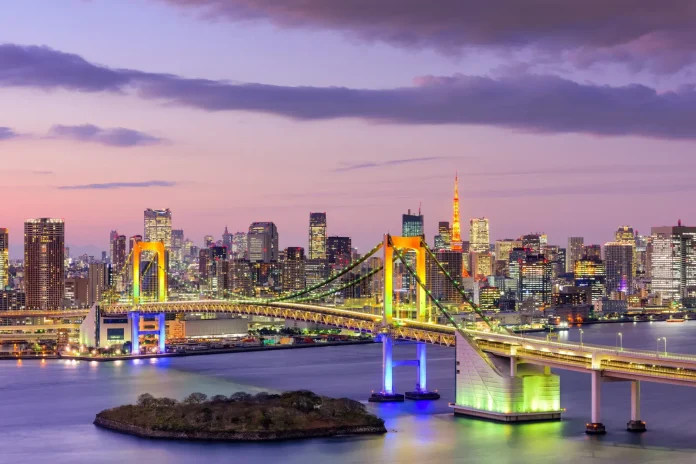
The Japan International Cooperation Agency (JICA) has officially scrapped its ‘JICA Africa Hometown’ project following widespread confusion over its objectives, particularly regarding visa opportunities for Africans.
In a statement released on Thursday, JICA confirmed it was discontinuing the initiative, acknowledging that misinterpretations surrounding the programme had sparked controversy within Japan and Africa.
Earlier reports had suggested that the Japanese government was preparing to launch a “special visa category” that would allow skilled Nigerians to relocate to Kisarazu, a city chosen under the scheme as a symbolic “hometown” for Africans. However, Tokyo quickly denied such claims, clarifying that no immigration pathway had ever been part of the arrangement.
The misunderstanding intensified on August 26, when Nigeria’s State House issued a statement claiming Japan intended to create a new visa category for talented young Nigerians interested in moving to Kisarazu. That announcement was swiftly refuted by the Japanese Ministry of Foreign Affairs, which emphasised that the programme was never linked to migration.
JICA explained that the concept of designating municipalities as “hometowns” for African nations had placed undue strain on the four participating Japanese cities.
According to the agency: “From the beginning, the initiative was designed to facilitate cultural and educational exchange programmes between Japanese local governments, African countries, and JICA. However, the wording around ‘hometown’ and the notion of JICA assigning that designation to municipalities caused misunderstandings, leading to confusion domestically. We sincerely apologise to the affected cities for the situation.”
The project had been unveiled in August during the 9th Tokyo International Conference on African Development (TICAD), with the goal of deepening ties between four Japanese municipalities and four African countries through academic and cultural partnerships.
Despite cancelling the initiative, JICA reiterated that it has never promoted immigration policies and does not intend to do so in the future. Instead, the agency reaffirmed its commitment to other forms of international cooperation and exchange.
The controversy escalated further when Nigeria’s Chargé d’Affaires in Japan, Florence Akinyemi Adeseke, alongside Kisarazu’s Mayor, Yoshikuni Watanabe, received a certificate recognising Kisarazu as the “hometown” of Nigerians—a move that fuelled speculation about possible migration opportunities.
Japanese authorities have now drawn a clear line, stressing that while the Africa Hometown project was aimed at fostering development-oriented exchanges, it carried no immigration benefits or visa privileges.
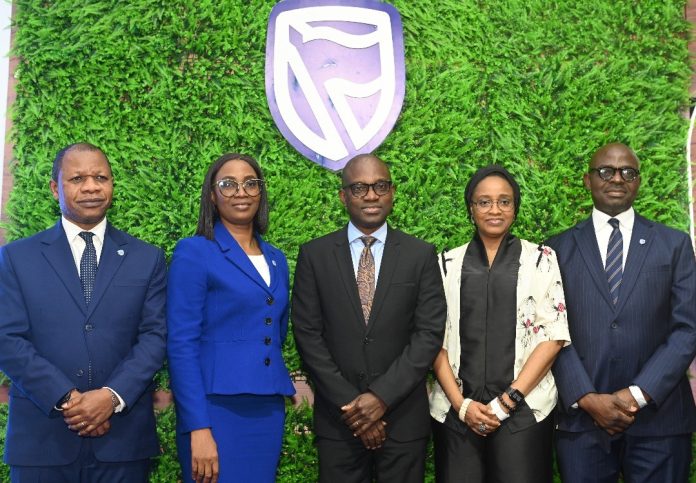
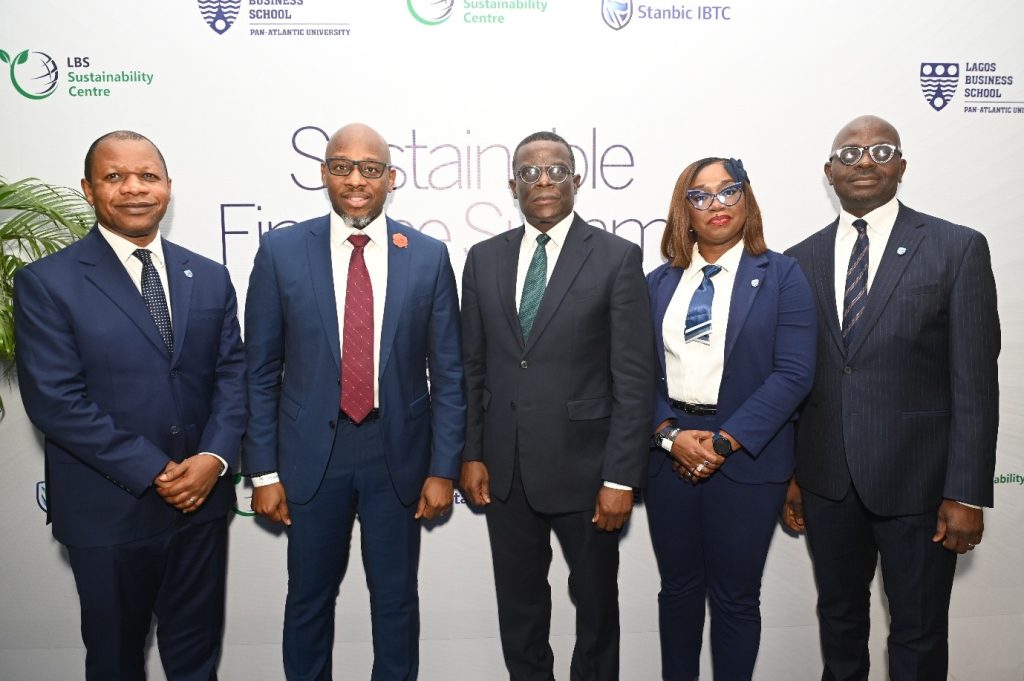
L-R: Wole Adeniyi, Chief Executive, Stanbic IBTC Bank; Bunmi Dayo-Olagunju, Deputy Chief Executive, Stanbic IBTC Bank; Segun Ajayi, Country Director, Oracle Nigeria; Ms Rabi Isma, Independent Non-Executive Director, Stanbic IBTC Bank; and Kunle Adedeji, Acting Chief Executive, Stanbic IBTC Holdings Plc, during the Stanbic IBTC Sustainable Finance Summit 2.0, recently held at the Civic Centre, Victoria Island, Lagos.
Stanbic IBTC Holdings Sustainable Finance Summit 2.0, held in partnership with the Lagos Business School Sustainability Centre (LBSSC), concluded with unprecedented success, establishing new benchmarks for sustainable finance discourse and innovation in Nigeria and across Africa to tackle climate challenges.
The hybrid summit, themed “Financing Resilience: Digital Innovation and AI for Climate Smart Communities,” attracted over three thousand participants both physically at the Civic Centre, Victoria Island, and through YouTube live streaming, representing diverse sectors from across Nigeria and internationally.
The summit delivered significant value across multiple dimensions. Industry impact included the unveiling of innovative AI-powered climate risk assessment tools being developed by leading Nigerian fintech companies.
L-R: Wole Adeniyi, Chief Executive, Stanbic IBTC Bank; Lawrence Amadi, Partner, Tech Risk and Assurance, KPMG Nigeria; Olu Akanmu, Adjunct Faculty and Director, Tech-Leap Initiative, Lagos Business School; Tosin Leye-Odeyemi, Head, Sustainability, Risk and Capital Management, Stanbic IBTC Holdings Plc; and Kunle Adedeji, Acting Chief Executive, Stanbic IBTC Holdings Plc, during the Stanbic IBTC Sustainable Finance Summit 2.0, recently held at the Civic Centre, Victoria Island, Lagos.
Kunle Adedeji, Acting Chief Executive, Stanbic IBTC Holdings, expressed, “The overwhelming success of this summit validates our vision of positioning Nigeria at the forefront of sustainable finance innovation. We have witnessed remarkable collaboration between financial institutions, technology innovators, and policymakers, resulting in concrete commitments and actionable solutions. This event has not only strengthened our position as industry leaders but has also demonstrated the transformative power of bringing together diverse stakeholders around our shared commitment to climate-smart financial solutions.”
Wole Adeniyi, Chief Executive, Stanbic IBTC Bank also reiterated that the summit delivered concrete value to all participant categories. Financial professionals gained practical insights into implementing AI-driven ESG assessment tools and accessing new sustainable investment opportunities—technology innovators connected with potential investors and partners, with several startups securing follow-up meetings for funding discussions. Regulators participated in productive policy dialogues and gained exposure to international best practices in sustainable finance regulation.
The summit’s emphasis on meaningful dialogue and active participation proved phenomenally successful. Live Q&A sessions generated probing questions and insightful answers, networking sessions facilitated new business connections and potential partnerships, technology demonstration zones attracted significant engagement with firsthand exploration of climate finance tools, and panel discussions sparked animated debates on the future of sustainable finance in Africa.
In her presentation titled “The Power of digitisation in Stanbic IBTC’s climate risk management and opportunity discovery,” Bunmi Dayo-Olagunju, Deputy Chief Executive, Stanbic IBTC Bank, highlighted the significance of digitisation. She emphasised that data digitisation enables more precise and timely measurement of climate risks across various portfolios. She described how AI and machine learning facilitate predictive modelling for various scenarios, including floods, droughts, and credit stress situations.
According to her, “Nigeria must persist in implementing strong and effective measures to combat climate risks. We should prioritise sustainable land use practices, promote environmental education, and strengthen policies that support climate adaptation and mitigation. Collective action at all levels; government, businesses, and civil society is essential to ensure a sustainable future for our nation in the face of climate change,” Bunmi stated.
Speaking during the event, Prof Kemi Ogunyemi, Business Ethics and Members, Management Board, Lagos Business School, stated, “At the Lagos Business School Sustainability Centre, we believe that collaboration between academia and industry is vital in addressing the pressing challenges posed by climate change. The success of the Stanbic IBTC Sustainable Finance Summit 2.0 highlights the collective potential of diverse stakeholders coming together to drive innovation in sustainable finance. As we continue to foster meaningful dialogue and partnership, we are excited to see the tangible impact our efforts will have on creating climate-smart communities across Nigeria and beyond.” The success of the Sustainable Finance Summit 2.0 reinforces Stanbic IBTC’s position as Nigeria’s leading innovator in sustainable finance. It demonstrates the powerful impact of academic-industry collaboration in addressing climate challenges.
In his keynote address titled “Artificial Intelligence and Sustainable Finance: Steps for a Climate-Resilient Economy,” Segun Ajayi, Country Director, Oracle Nigeria, emphasised the transformative potential of artificial intelligence (AI) in reshaping Africa’s economic landscape. He articulated a vision where AI acts as a catalyst for the continent’s transition from being viewed primarily as a region characterised by high risks to one abundant with high potential.
“With AI, Africa can transition from being perceived as high risk to being seen as high potential.”
Through his address, Ajayi called for collaboration among governments, the private sector, and technology providers to effectively harness the power of AI. He emphasised the importance of developing the right policies and frameworks that facilitate the implementation of AI solutions while upholding ethical standards. In conclusion, Ajayi’s insights serve as a hopeful reminder of the role technology can play in paving the way for a climate-resilient economy in Africa, fostering an environment where potential is recognised and nurtured.
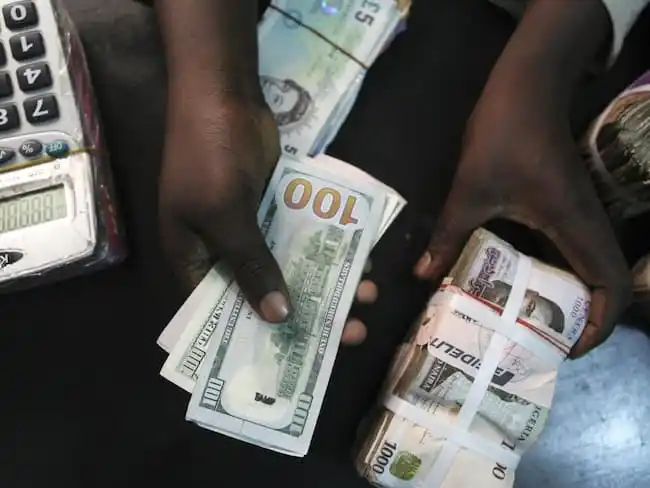
The exchange rate between the Naira and the US dollar, according to the data released on the FMDQ Security Exchange, the official forex trading portal, showed that the naira closed at 1510.00 per $1 on Friday, September 26th , 2025. The naira traded as high as 1485.00 to the dollar at the investors and exporters (I&E) window on Thursday.
Dollar to naira exchange rate today black market (Aboki dollar rate):
The exchange rate for a dollar to naira at Lagos Parallel Market (Black Market) players buy a dollar for ₦1520 and sell at ₦1515 on Thursday 25th September, 2025, according to sources at Bureau De Change (BDC).
Please note that the Central Bank of Nigeria (CBN) does not recognize the parallel market (black market), as it has directed individuals who want to engage in Forex to approach their respective banks.
Dollar to Naira Black Market Rate Today
Dollar to Naira (USD to NGN)
Black Market Exchange Rate Today
Buying Rate
₦1520
Selling Rate
₦1510
Dollar to Naira CBN Rate Today
Dollar to Naira (USD to NGN)
CBN Rate Today
Highest Rate
₦1491
Lowest Rate
₦1485
Please note that the rates you buy or sell forex may be different from what is captured in this article because prices vary.
The naira closed relatively stable against the US dollar on Thursday, reflecting balanced foreign exchange (FX) flows at the Nigerian Autonomous Foreign Exchange Market (NAFEM).
The local currency gained 30 kobo to settle at ₦1,488.26 per dollar, compared with ₦1,488.56 recorded the previous day. According to trading data, the spot rate reached an intraday high of ₦1,491, marking an appreciation from ₦1,498 quoted earlier in the week.
Analysts noted that the limited movement in the spot rate highlights a stable FX environment, supported by the Central Bank of Nigeria’s oversight on dollar liquidity and steady export inflows channeled through the official market window.
Parallel market activity also reflected optimism, with the naira strengthening by 0.29% to close at ₦1,514 per dollar. This resilience is being attributed to CBN’s sustained interventions, rising capital inflows, and an uptick in external reserves.
Foreign reserves inched up to $42.202 billion on Wednesday from $42.169 billion, buoyed by oil receipts, remittances, and investment inflows.
Meanwhile, foreign portfolio investors (FPIs) increased their activity on the Nigerian Exchange (NGX) in August, with inflows rising by 17.7% to ₦171.81 billion ($112.18 million) compared to July’s ₦145.95 billion ($95.17 million). FPIs accounted for 18.91% of total market turnover of ₦908.38 billion, while domestic participation fell by 55.9% to ₦736.57 billion.
The decline in local participation was largely attributed to the absence of large institutional block trades that had previously boosted July’s volumes.
The Nigerian stock market swung back into positive territory on Thursday, delivering a ₦279 billion boost to investors following four straight sessions of losses.
Driven by bargain-hunting and renewed appetite for equities, the NGX All-Share Index rose by 0.31% or 432.94 points to close at 141,149.04, up from 140,716.10 the previous day. Market capitalization equally advanced from ₦89.063 trillion to ₦89.342 trillion.
Market breadth was upbeat, with 34 gainers outperforming 22 decliners. Mecure Industries led the advancers with a 9.89% gain, closing at ₦26.10, followed by Oando (+9.50%), McNicholas (+9.31%), CHAMS (+9.24%), and Legend Internet (+9.18%).
Conversely, Eterna topped the losers’ chart, shedding 10% to finish at ₦27.90. Sovereign Trust Insurance, The Initiates, Caverton Offshore, and Fidson also recorded declines.
Trading activity was heightened, as investors exchanged 5.5 billion shares worth ₦419.7 billion across 20,399 deals. This was a sharp increase from Wednesday’s 442.6 million shares valued at ₦16.9 billion in 21,684 deals. Aradel Holdings led both in volume and value, trading 693.3 million shares worth ₦388.2 billion.
Sectoral performance was largely bullish, with the Banking Index (+1.02%) leading the advance on the back of GTCO (+1.98%) and STANBIC (+3.09%). The Oil & Gas Index (+0.74%) also gained, supported by Oando’s surge, while the Consumer Goods Index (+0.31%) inched higher on DANGSUGAR’s rise. The Insurance Index (-0.41%) bucked the trend, pressured by losses in AIICO.
The Nigerian stock market staged a recovery on Thursday, buoyed by renewed interest in top banking and consumer goods stocks, with Zenith Bank and GTCO leading the rally.
The Nigerian Exchange (NGX) All-Share Index (ASI) climbed by 0.31%, closing at 141,149.04 points, as investors repositioned in response to recent monetary policy easing. The rebound brought relief after a stretch of losses earlier in the week.
Market activity surged significantly, with trading volume spiking by 160.35% to 1.1 billion units. Transactions were valued at ₦405 billion across 19,635 deals. FCMB was the most active stock by volume, recording 202 million units traded, while also topping the value chart with ₦2.1 billion in transactions.
Bullish momentum spread across key sectors, with notable buying interest in ZENITHBANK, GTCO, and MTNN lifting the benchmark. Market breadth reflected strong investor sentiment as 31 gainers outpaced 21 losers, producing an advance-to-decline ratio of 1.48.
Overall, market capitalization expanded by 0.31% to settle at ₦89.34 trillion, pushing year-to-date returns to 37.14%. Despite Oando’s decline on persistent negative sentiment, strong sector-wide demand underpinned Thursday’s rally.
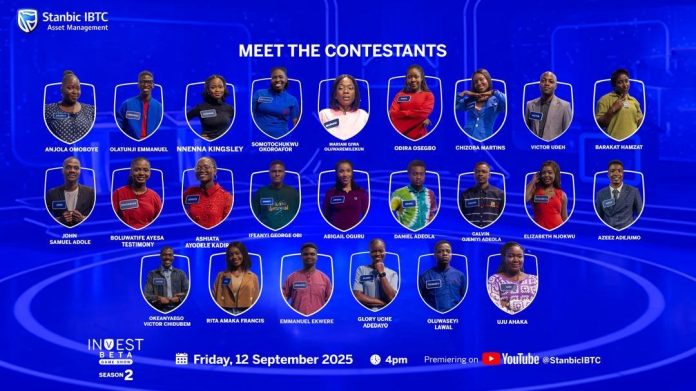
Stanbic IBTC Asset Management, a subsidiary of Stanbic IBTC Holdings PLC, has officially launched Season 2 of its financial literacy game show, InvestBeta, with the premiere episode now streaming on the Stanbic IBTC Group’s official YouTube channel.
The new season kicked off in thrilling fashion as three contestants raced through three competitive rounds: rapid questions, quick fingers, and risk & reward. Each round pushed the contestants closer to a chance at winning investment funds worth ₦2 million, a stake higher than the inaugural season. The stakes proved higher than ever, with the very first winner walking away with a ₦1.4 million investment portfolio.
InvestBeta continues to blend entertainment and financial education, challenging contestants with questions that test their knowledge of saving, budgeting, and investing, while offering viewers practical insights and fun quizzes. Building on the momentum of Season 1, which captured the attention of Gen Z audiences nationwide, Season 2 delivers even more action, relatable contestants, and valuable money lessons.
Speaking on the significance of the show, Busola Jejelowo, Chief Executive, Stanbic IBTC Asset Management, said: “InvestBeta reflects our deep commitment to making financial education both accessible and exciting. Season 2 is bigger in every way; it has more compelling challenges, more relatable contestants, and more practical lessons for everyday life. We believe that when young people are equipped with real-world financial skills and the confidence to act, they are better prepared to create lasting wealth and achieve their dreams. This show is one of the many ways we are investing in the future of Nigeria’s youth.”
Beyond the show itself, viewers can immerse themselves in Beyond Dreams, Stanbic IBTC’s digital lifestyle and finance community. The community aims to help young people turn their aspirations into reality through secure, timely and smart investment choices. Since its inception, Beyond Dreams has grown to a network of over 90,000 young members, generated 2,100+ new investment accounts, and continues to position the Group as a trusted partner in the financial futures of Nigeria’s youth.
To catch all episodes of InvestBeta Season 2, visit the official Stanbic IBTC YouTube channel at youtube.com/@StanbicIBTC. New episodes premiere every Friday, giving viewers across Nigeria a front-row seat to the nation’s most exciting youth investment competition.
Open your first investment account with as little as ₦5,000 via blunest.stanbicibtcassetmanagement.com or 02012805595 and take the first step toward building your future.