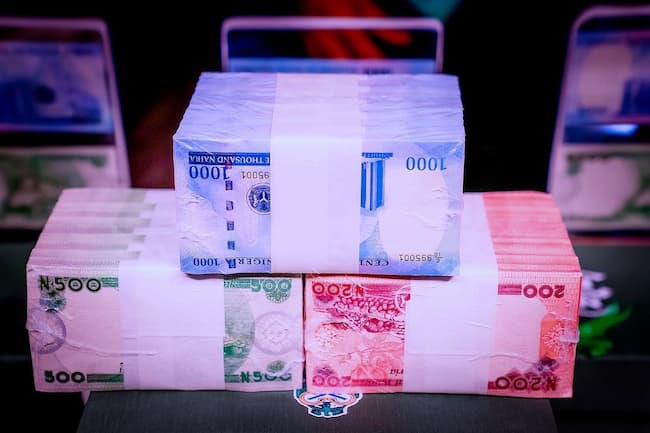
The naira appreciated further on Wednesday after Nigeria’s foreign reserves rose to $42.669 billion, marking the highest level recorded since September 2019, up from $42.589 billion at the beginning of the week.
This development came after the local currency had experienced consistent depreciation, largely driven by elevated demand for the U.S. dollar in the official foreign exchange (FX) market amid shrinking liquidity.
The Central Bank of Nigeria (CBN)’s latest FX data revealed that total foreign exchange sales to authorised dealer banks in September stood at $150 million, a measure aimed at balancing the widening demand-supply gap. Analysts, however, anticipate a decline in dollar sales this October.
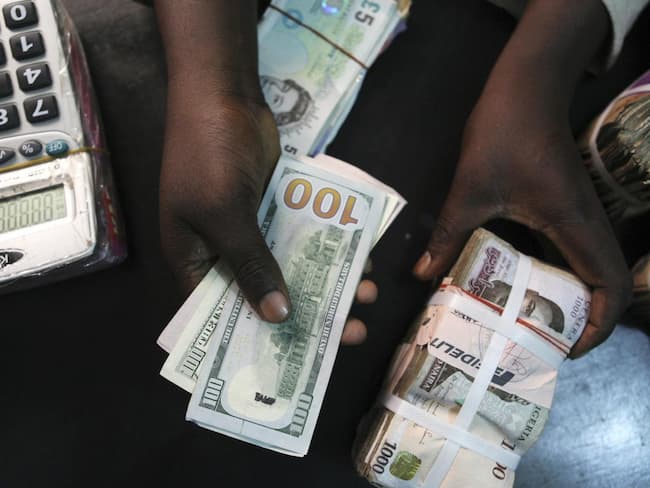
Following improved dollar supply, the naira strengthened by 0.15%, closing at ₦1,471.03 per dollar at the official market window. The day’s trading range was between ₦1,464.42 and ₦1,475.00, with the spot rate peaking at ₦1,475 before settling lower.
Similarly, the naira appreciated 0.17% in the parallel market, ending the day at ₦1,486 per dollar. The foreign reserves expansion—an increase of around $18 million—came amid fluctuating global oil prices.
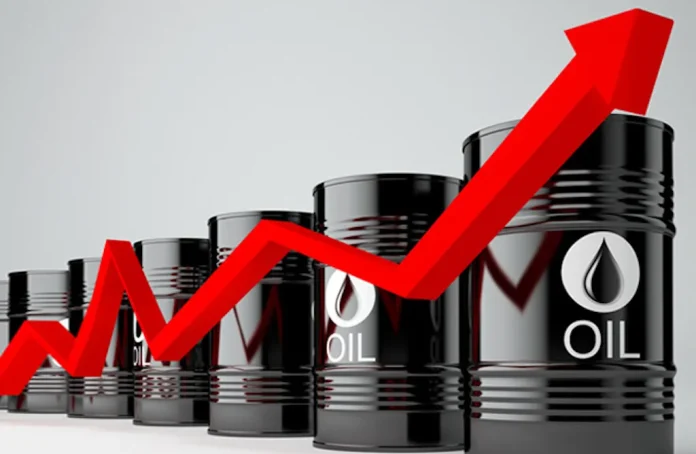
In global commodity markets, oil prices edged lower as traders weighed potential disruptions to Russian crude exports to India. Brent crude fell by $1.02 or 1.65% to $60.89 per barrel, while U.S. West Texas Intermediate (WTI) slipped by 54 cents or 0.93% to $57.30 per barrel.
Conversely, gold prices soared for the fourth consecutive session as concerns over U.S.-China trade tensions and a possible U.S. government shutdown spurred safe-haven demand. Spot gold climbed 1.48% to $4,285.56 per ounce, while U.S. gold futures advanced 1.84% to $4,300.99 per ounce.
Experts expect commodities to remain buoyant in the near term, supported by strong gold demand and oil’s potential rebound as global trade dynamics evolve.
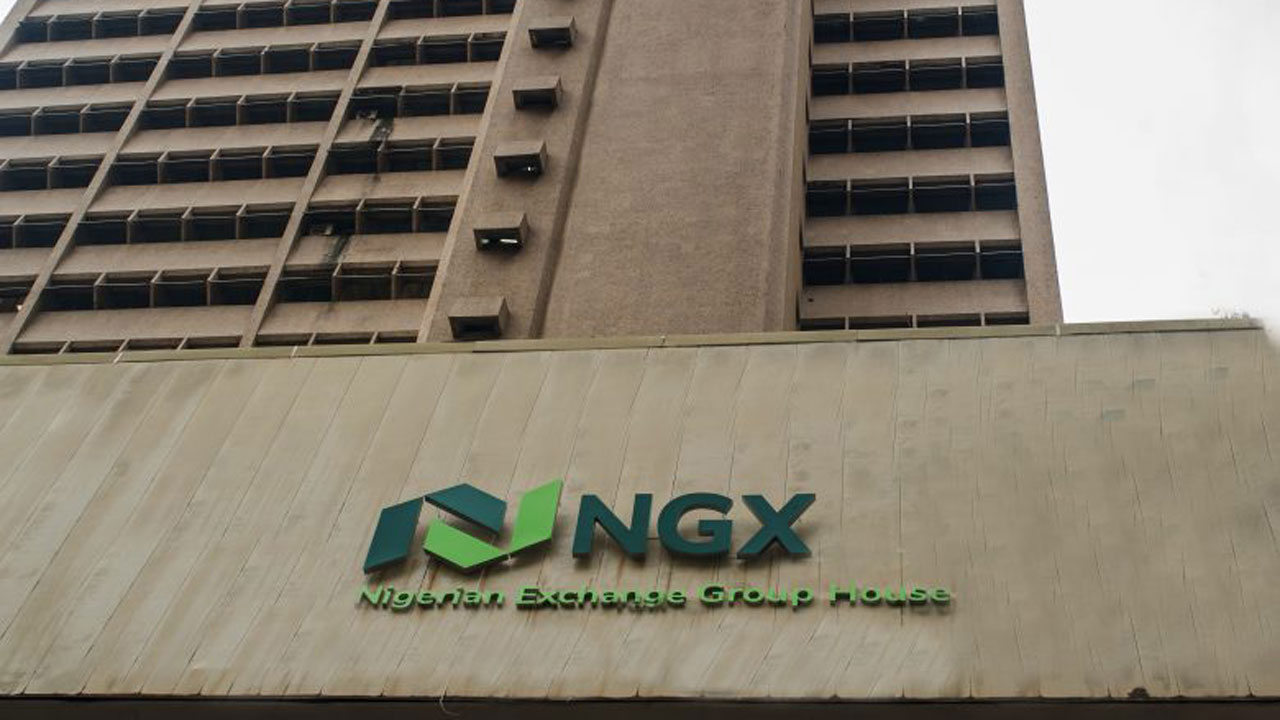
The Nigerian Exchange (NGX) recorded a significant milestone on Thursday, surpassing ₦94 trillion in market capitalisation as renewed investor interest in cement and banking stocks fueled a rally ahead of the 2025 third-quarter earnings season.
Investors shifted capital from the fixed-income segment to equities amid declining naira asset yields and repriced spot rates in the debt market. This movement spurred risk-on sentiment, driving the NGX’s key performance indicators up by 41 basis points and lifting the year-to-date return to 44.1%.
Major contributors to the market’s upswing included FirstHoldco, Sterling Financial Holdings (STERLINGNG), May & Baker, Dangote Cement (DANGCEM), and Lafarge Africa (WAPCO), among others. Their performance collectively boosted investors’ wealth by approximately ₦389 billion in a single session.
The NGX All-Share Index (ASI) gained 612.82 basis points, representing a 0.41% rise, to close at a new all-time high of 148,355.04. Consequently, market capitalisation jumped by ₦388.96 billion to ₦94.17 trillion.
Trading activity also improved, with total volume and value rising by 11.13% and 35.47%, respectively. According to data from Atlass Portfolio Limited, roughly 432.43 million shares worth ₦16.91 billion were exchanged across 23,665 transactions.
CONHALLPLC topped the activity chart by volume, representing 9.51% of all traded shares, followed by ACCESSCORP (9.37%), GTCO (6.40%), ZENITHBANK (5.82%), and TANTALIZER (5.16%). GTCO emerged as the day’s most traded stock by value, accounting for 15.36% of total turnover.
On the gainers’ list, NSLTECH led with a 7.06% increase, followed by STERLINGNG (+6.49%), LIVESTOCK (+5.53%), TIP (+5.18%), MAYBAKER (+4.99%), and JAPAULGOLD (+4.72%).
Meanwhile, 26 stocks closed in the red, led by SUNUASSUR, which dipped 9.71%, followed by CUSTODIAN (-4.55%), CHAMS (-3.66%), VERITASKAP (-2.78%), DANGSUGAR (-2.51%), and FIDELITYBK (-0.25%).
The market breadth was positive with 30 gainers against 26 losers. Sectoral performance also ended largely bullish, with the industrial goods index rising 1.44%, consumer goods up 0.24%, banking up 0.21%, and oil & gas advancing 0.18%. The insurance sector, however, declined by 1.35%.
Global oil prices climbed on Thursday following U.S. President Donald Trump’s announcement that India plans to cease purchasing seaborne crude from Russia. The decision, which is expected to reshape energy trade dynamics, helped ease fears of an oil surplus and improved market sentiment despite persistent global trade uncertainties.
Russia’s seaborne crude exports have been constrained by a combination of increased output volatility and geopolitical tensions, including ongoing Ukrainian drone attacks on refining facilities and the impact of Western sanctions such as the G7-imposed price cap. Sanctions from both the U.S. and European Union have significantly curtailed Moscow’s oil revenue streams.
India and China have been among the largest importers of discounted Russian crude since the onset of these restrictions. However, with India’s potential withdrawal, global supply expectations are shifting. Brent crude futures rose by 0.24% to $62.39 per barrel, up from $62.24 in the previous session, while U.S. benchmark West Texas Intermediate (WTI) gained 0.29% to $58.50 per barrel.
The modest rebound in oil prices reflected changing market fundamentals and revived geopolitical tensions. Earlier in the week, the International Energy Agency (IEA) had warned of a possible global oversupply due to increased output from OPEC+ members and U.S. shale producers.
However, President Trump’s statement on India’s forthcoming cessation of Russian imports helped ease those oversupply concerns. He said that while India’s withdrawal process wouldn’t happen overnight, it would be completed “soon.” Trump also called on China to follow India’s lead and end purchases of Russian oil.
Market participants, however, remained cautious as new trade tensions emerged between the U.S. and China. Last week, the White House announced a 100% tariff on Chinese goods effective November 1, in retaliation for Beijing’s export restrictions on rare earth minerals. Although Trump later assured that the dispute “will be resolved,” investor sentiment remained mixed.
Adding to the uncertainty, U.S. Treasury Secretary Scott Bessent criticized Beijing, claiming that China “cannot be trusted” and urged U.S. allies to diversify their trade and supply dependencies.
Oil prices were also supported by growing expectations of a potential Federal Reserve rate cut in October. Fed Chair Jerome Powell’s dovish remarks earlier this week triggered a pullback in the U.S. dollar, further supporting oil prices.
Crude, which had plunged to a five-month low earlier this week, is now staging a mild recovery as a weaker dollar and reduced oversupply fears bolster investor confidence.
Speaking to reporters at the White House, Trump confirmed that Indian Prime Minister Narendra Modi had agreed to phase out Russian oil purchases following a phone conversation between the two leaders. Trump described the decision as “a big step,” adding that “you can’t stop immediately—it’s a process, but it will be over soon.”
He reiterated his demand that Russian President Vladimir Putin end the war in Ukraine, saying, “All we want from President Putin is to stop this—stop killing Ukrainians, and stop killing Russians. It’s a war that should have been over in one week, but he’s going into his fourth year now.”
Trump has consistently emphasized that curbing Russian oil sales on international markets could accelerate an end to the Kremlin’s war efforts. He added that his next objective is persuading China to take similar action by halting its purchases of Russian crude.
Africa’s leading homegrown payment card, Verve has announced its robust line up of partners for the eighth edition of VerveLife, Africa’s Biggest Fitness Party scheduled to take place on the 1st of November at the Eko Hotel Convention Centre in Lagos.
Other partners joining Verve and Google Play, the co-headline sponsors for this edition, are Interswitch, Quickteller, Carloha Chery, Hygeia HMO, Pocari Sweat and Reelfruit.
The inclusion of Google Play brings a digital lifestyle edge to this year’s edition, weaving fitness, wellness, and entertainment into seamless everyday experiences through its vast ecosystem of apps and digital content. In the same vein, Carloha’s partnership adds a premium mobility dimension, with participants set to experience Chery’s brand first-hand, a dynamic blend of technology, innovation, and modern lifestyle. Quickteller, Interswitch’s consumer payments platform, will ensure seamless and secure transactions across all event touchpoints, reinforcing VerveLife’s hallmark of convenience and innovation.
Hygeia HMO will join the movement as the event’s official health and wellness partner, offering on-site health checks, preventive care insights, and wellness resources designed to help participants sustain healthy lifestyles beyond the event. Meanwhile, Reelfruit, the healthy and tasty dried fruit snack brand, will keep the energy high with nutrient-packed, wholesome snacks that perfectly complement the event’s commitment to healthy living. Finally, Pocari Sweat, the Japanese isotonic drink will be on ground to replenish attendees during the workout sessions.
Speaking on the partnerships, Tomi Ogunlesi, Divisional Head, Brands, Communications, Content and CSR, Interswitch Group, said:
“Over the years, VerveLife has grown into more than a fitness event. It is now a holistic lifestyle movement. We are excited to welcome Google Play, Carloha Chery, Hygeia HMO and Reelfruit as partners for VerveLife 8.0, as the partnership highlights their alignment with our vision of blending lifestyle, wellness, and technology. This year’s edition promises a rich and rewarding experience that transcends fitness to touch on every aspect of everyday life.”
In addition to the signature workouts, wellness masterclasses, health conversations, and the electrifying afterparty that VerveLife is known for, this year’s edition will deliver deeper lifestyle integrations through its wide variety of partner brands, each adding unique value to elevate the participant journey.
Now in its 8th year, VerveLife stands as one of Africa’s most anticipated fitness and lifestyle gatherings, uniting thousands of fitness enthusiasts, lifestyle brands, and wellness advocates in an electrifying celebration of health, style, culture and community.
This year’s edition promises to raise the bar even higher, fusing fitness with technology, mobility, and wellness into one immersive experience that reflects the evolving lifestyles, passions and pace of modern African living. To register for VerveLife and to receive updates or updates and details, visit myverveworld.com/life or follow @VerveLife_ and @Vervecard on Instagram, TikTok and X.
The Nigerian Senate has officially confirmed Professor Joash Amupitan as the new Chairman of the Independent National Electoral Commission (INEC), following a screening and voice vote led by Senate President Godswill Akpabio.
Amupitan’s confirmation took place on Wednesday after a session that saw him respond to a series of questions from lawmakers regarding his vision for electoral transparency, institutional reforms, and the integration of technology into Nigeria’s voting process.
The Professor of Law from the University of Jos was accompanied to the National Assembly by Kogi State Governor Ahmed Ododo and other dignitaries. He arrived at the Senate complex around 12:50 p.m. and was ushered into the chamber by the Presidential Adviser on National Assembly Matters (Senate), Senator Abubakar Lado.
Senate Leader Opeyemi Bamidele (APC, Ekiti Central) moved a motion to suspend Order 12 to allow visitors into the chamber, seconded by Senate Minority Leader Abba Moro (PDP, Benue South). Akpabio then welcomed Amupitan, his family, and his supporters to the Red Chamber, commending their presence during the proceedings.
Before the screening began, Akpabio informed his colleagues that Amupitan had successfully undergone security vetting by key national security agencies. He noted that the nominee had been cleared by the National Security Adviser’s office, the Department of State Services (DSS), and the Nigeria Police Force, which confirmed that Amupitan had no criminal records after a fingerprint search.
The screening session began shortly after, with lawmakers questioning the nominee on his strategies for conducting free and fair elections, improving staff integrity within INEC, and leveraging digital innovations to enhance voter confidence.
Following a unanimous voice vote, the Senate confirmed Professor Amupitan as INEC Chairman, succeeding Professor Mahmood Yakubu. His tenure is expected to focus on strengthening Nigeria’s electoral system and ensuring credibility in the forthcoming off-cycle governorship elections and the 2027 general elections.
President Bola Ahmed Tinubu had earlier forwarded Amupitan’s nomination letter to the Senate, describing him as a distinguished academic and legal scholar. A Senior Advocate of Nigeria and former Dean of the Faculty of Law at the University of Jos, Amupitan is widely recognised for his contributions to constitutional and international law.
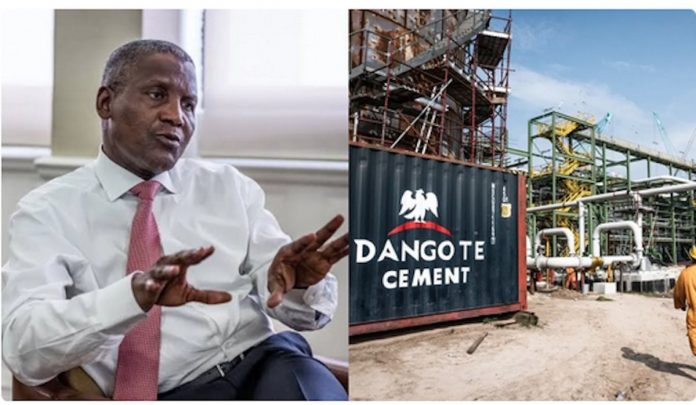
Dangote Cement Plc’s market valuation crossed the ₦10 trillion threshold on Thursday, marking a new milestone for the cement giant as investors’ demand pushed the share price to a 52-week high.
The company’s stock climbed by 2.42% to ₦599.80 per share, with over 1.695 million units valued at ₦1.003 billion traded on the Nigerian Exchange (NGX). This performance lifted Dangote Cement’s market value to ₦10.12 trillion, reflecting a 4.31% gain since the start of the week.
Investors’ optimism stems from expectations ahead of the company’s upcoming financial disclosures. The Board of Directors is scheduled to meet on October 30, 2025, to review the unaudited financial statements for the quarter ending September 30, 2025, and other corporate matters.
In line with regulatory compliance, Dangote Cement announced the commencement of a closed trading period effective October 1, 2025, which will last until 24 hours after the Q3 results and board resolutions are made public.
The company clarified that during this period, insiders or any individuals in possession of material non-public information are prohibited from trading the company’s securities.
Dangote Cement’s consistent upward trajectory reinforces its position as Nigeria’s most valuable listed company, with analysts projecting sustained investor interest pending the Q3 earnings release.
Nigeria’s capital markets extended their bullish run on Thursday, October 16, 2025, as sustained investor confidence lifted both equities and fixed income segments. The NGX All-Share Index (ASI) climbed by 0.41% to close at 148,355.04 points, maintaining momentum after surpassing the 145,000-point mark earlier this month.
Market capitalisation expanded to ₦94.17 trillion, reflecting strong buying pressure in key sectors such as banking, oil and gas, industrials, and telecommunications. On the other hand, the fixed income market also advanced to ₦51.51 trillion, underpinned by steady macroeconomic indicators, moderate inflation, and ample liquidity.
Institutional investors, including pension funds, have been actively rebalancing their portfolios toward medium-tenor bonds, taking advantage of favourable yield conditions and stable returns.
Market sentiment remains upbeat as investors anticipate robust third-quarter results, particularly from Tier-1 banks and large-cap industrials. The naira’s recent stability and improving global rate outlook have further strengthened foreign inflows into Nigerian assets.
Although Exchange Traded Products (ETPs) dipped slightly to ₦1.95 billion, analysts believe this reflects a strategic shift toward more liquid and high-yielding investments.
With the All-Share Index now eyeing the 150,000-point threshold, analysts predict continued resilience through Q4 2025. Nonetheless, they caution that investors should remain selective amid global uncertainties and domestic policy risks.
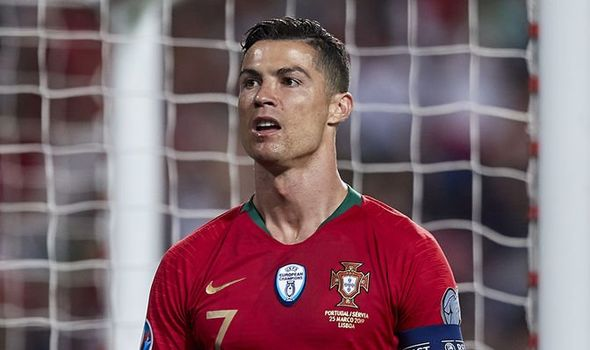
Portuguese football icon and Al-Nassr forward Cristiano Ronaldo is closing in on a record-shattering milestone — becoming the first male footballer in history to reach 1,000 career goals.
According to a report by Sky Sports, Ronaldo’s brace against Hungary in the recent World Cup qualifiers pushed his total to an astonishing 948 goals — comprising 805 goals at club level and 143 for Portugal.
This achievement also solidified his place as the all-time leading scorer in World Cup qualifying history, surpassing Guatemala’s Carlos Ruiz, who scored 39, while Lionel Messi follows with 36 goals.
At 40 years old, Ronaldo continues to defy age and expectations, maintaining elite performance levels across both domestic and international competitions. Since joining Saudi club Al-Nassr, he has netted 104 goals in 117 appearances across four seasons — an impressive feat that underscores his sustained dominance in front of goal.
Ronaldo’s goal-scoring record has remained remarkably consistent for over a decade. Since 2010, he has averaged more than 50 goals per calendar year. His most prolific year came in 2013, when he scored 69 goals and clinched the Ballon d’Or.
Incredibly, Ronaldo’s annual goal tally has dipped below 39 only once in the past 15 years — a testament to his relentless discipline and physical longevity.
With Portugal poised to qualify for the next FIFA World Cup and two years left on his contract with Al-Nassr, projections indicate that Ronaldo could reach the 1,000-goal mark by October 2026, making him the first player ever to achieve such a feat.
Fans and analysts alike continue to marvel at his unmatched work ethic, professionalism, and ability to redefine the limits of sporting excellence — even as he enters the fifth decade of his life.
Africa’s leading homegrown payment card, Verve has announced its robust line up of partners for the eighth edition of VerveLife, Africa’s Biggest Fitness Party scheduled to take place on the 1st of November at the Eko Hotel Convention Centre in Lagos.
Other partners joining Verve and Google Play, the co-headline sponsors for this edition, are Interswitch, Quickteller, Carloha Chery, Hygeia HMO, Pocari Sweat and Reelfruit.
The inclusion of Google Play brings a digital lifestyle edge to this year’s edition, weaving fitness, wellness, and entertainment into seamless everyday experiences through its vast ecosystem of apps and digital content. In the same vein, Carloha’s partnership adds a premium mobility dimension, with participants set to experience Chery’s brand first-hand, a dynamic blend of technology, innovation, and modern lifestyle. Quickteller, Interswitch’s consumer payments platform, will ensure seamless and secure transactions across all event touchpoints, reinforcing VerveLife’s hallmark of convenience and innovation.
Hygeia HMO will join the movement as the event’s official health and wellness partner, offering on-site health checks, preventive care insights, and wellness resources designed to help participants sustain healthy lifestyles beyond the event. Meanwhile, Reelfruit, the healthy and tasty dried fruit snack brand, will keep the energy high with nutrient-packed, wholesome snacks that perfectly complement the event’s commitment to healthy living. Finally, Pocari Sweat, the Japanese isotonic drink will be on ground to replenish attendees during the workout sessions.
Speaking on the partnerships, Tomi Ogunlesi, Divisional Head, Brands, Communications, Content and CSR, Interswitch Group, said:
“Over the years, VerveLife has grown into more than a fitness event. It is now a holistic lifestyle movement. We are excited to welcome Google Play, Carloha Chery, Hygeia HMO and Reelfruit as partners for VerveLife 8.0, as the partnership highlights their alignment with our vision of blending lifestyle, wellness, and technology. This year’s edition promises a rich and rewarding experience that transcends fitness to touch on every aspect of everyday life.”
In addition to the signature workouts, wellness masterclasses, health conversations, and the electrifying afterparty that VerveLife is known for, this year’s edition will deliver deeper lifestyle integrations through its wide variety of partner brands, each adding unique value to elevate the participant journey.
Now in its 8th year, VerveLife stands as one of Africa’s most anticipated fitness and lifestyle gatherings, uniting thousands of fitness enthusiasts, lifestyle brands, and wellness advocates in an electrifying celebration of health, style, culture and community.
This year’s edition promises to raise the bar even higher, fusing fitness with technology, mobility, and wellness into one immersive experience that reflects the evolving lifestyles, passions and pace of modern African living. To register for VerveLife and to receive updates or updates and details, visit myverveworld.com/life or follow @VerveLife_ and @Vervecard on Instagram, TikTok and X.
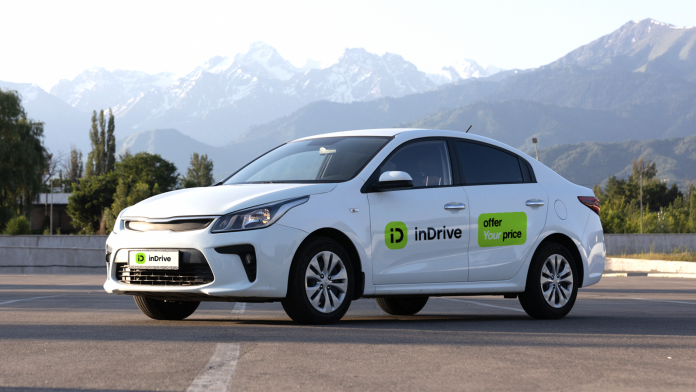
inDrive, a leading global ride-hailing platform operating in nine African countries, has launched “The Heart That Drives Us”, a nationwide campaign running from October 13 to December 24, 2025, to celebrate and reward Nigeria’s most dedicated drivers this holiday season.
The initiative aims to recognize the resilience and commitment of drivers who keep Nigeria’s cities moving. Through a series of raffles and bi-weekly entertainment events, top-rated and most active drivers will be rewarded with valuable prizes including smartphones, televisions, shopping vouchers, family trips, and school fee sponsorships for their children.
In his remarks, the Country Representative, inDrive Nigeria, Oladimeji Timothy, stated that the campaign reflects the company’s ongoing commitment to empowering drivers and ensuring they feel seen, valued, and supported.
Timothy explained that beyond offering rewards, the initiative is also an opportunity to highlight the human stories behind every ride and the people whose daily efforts make mobility possible.
“Our drivers are the true heartbeat of our platform. Through The Heart That Drives Us, we want to express our gratitude and celebrate the incredible people behind the wheel — those who work hard, care deeply for their families, and keep our communities connected. At inDrive, we understand that our success is built on the dedication of our driver community. This campaign is our way of saying ‘thank you’ and of creating moments of joy and recognition for those who make the platform what it is,” he said.
To further amplify the excitement,the bi-weekly live shows will be hosted as part of the campaign — transformed into full-scale entertainment events with celebrity guest appearances and live raffles. Viewers can join the celebrations and follow the weekly draws every Wednesday on inDrive’s official Facebook page.
As the year draws to a close, “The Heart That Drives Us” stands as a heartfelt tribute to Nigeria’s driver community — honoring the men and women whose dedication, courage, and compassion keep the nation moving.
The Central Bank of Nigeria (CBN) has reaffirmed the federal government’s commitment to sustaining reforms and creating a stable environment that encourages long-term foreign investment and economic growth.
Speaking at the Nigeria Investors Forum in Washington D.C. on Wednesday, held on the sidelines of the International Monetary Fund (IMF) and World Bank annual meetings, CBN Governor Yemi Cardoso assured investors that Nigeria’s economic fundamentals are strengthening, with external reserves rising to $43.4 billion — the highest in five years.
Cardoso emphasized that the CBN is working closely with the Ministry of Finance to maintain policy alignment, macroeconomic stability, and clarity for investors.
“Nigeria’s focus remains clear — we are consolidating our fundamentals, deepening reforms, and unlocking new opportunities for sustainable investment and inclusive growth,” he said.
He added that the progress achieved so far was a sign that the country’s ongoing reforms are laying a stronger foundation for a resilient and diversified economy.
CBN Deputy Governor for Economic Policy, Mohammed Abdullahi, echoed the governor’s optimism, noting that Nigeria’s foreign exchange inflows had seen significant improvement as a result of reform measures.
According to Abdullahi, the monthly turnover in the foreign exchange (FX) market increased by 56.4 percent to $8.6 billion in 2025, up from $5.5 billion in 2024. He said the improved FX supply was driven by order-based quotations, enhanced remittance inflows, and structural reforms in the FX market.
“Between January 2023 and July 2025, average net flows into the economy have doubled. The official window has witnessed stronger liquidity, while we have worked hard to clear outstanding FX backlogs and obligations,” Abdullahi stated.
He explained that capital inflows, which had declined by over 75 percent between 2019 and 2020, have rebounded significantly, strengthening Nigeria’s external position.
“Our financial markets are now deeper, more transparent, and increasingly functional. The CBN is currently a net buyer in the market and continues to rebuild external buffers to cushion against external shocks,” Abdullahi said.
He further disclosed that Nigeria’s gross external reserves — at $43.4 billion — can now cover approximately 11 months of imports, the highest level since 2020. He added that between 2024 and 2025, the apex bank released nearly $13 billion back to local and international banks to support the organic growth of reserves and enhance financial system resilience.
Also speaking at the forum, Special Adviser to the President on Finance and Economy, Sanyade Okoli, reaffirmed the federal government’s ambition to achieve a 7 percent economic growth rate by 2027–2028 through diversification and infrastructure investment.
“Our medium-term target is 7 percent growth by 2027 to 2028. When the IMF raised its forecast for 2025, we projected a 4 percent growth rate, increasing to about 5 percent next year. This reflects our economic resilience and reform momentum,” she said.
Okoli noted that 13 percent of economic sectors recorded growth above 7 percent in the second quarter (Q2) of 2025, a strong indicator of expanding diversification across the economy.
She further revealed that Nigeria’s dependence on oil exports continues to decline, dropping to 57.5 percent in the first half of 2025, compared to previous years. Oil’s share of GDP has also reduced to 4 percent, down from 8 percent in 2021.
“Our goal is to sustain this trajectory by mobilising investment into infrastructure, power, and digital technology through public-private partnerships,” Okoli said.
She explained that under the federal government’s highway development and management initiative, over 10 key road corridors have been identified for public-private partnership execution.
On power sector reforms, Okoli disclosed that Nigeria is partnering with the World Bank and the African Development Bank (AfDB) to mobilize around $32 billion in funding aimed at improving electricity access and reliability.
She added that ongoing digital infrastructure expansion, particularly fiber-optic coverage, would enhance nationwide connectivity and create opportunities for Nigerian youths.
With Nigeria’s macroeconomic landscape showing signs of stability, policymakers reiterated that consistent reforms and investor-focused collaboration remain critical to sustaining growth and investor confidence in Africa’s largest economy.
As the 2027 general elections draw nearer, President Bola Ahmed Tinubu’s political influence appears to be expanding across southern Nigeria following a sweeping wave of defections by governors and top political figures from opposition parties into the ruling All Progressives Congress (APC).
The latest defections have triggered growing fears of an emerging one-party state, with leaders of the opposition—including former Vice President Atiku Abubakar and 2023 Labour Party presidential candidate Peter Obi—criticising the movement as a sign of desperation and political survivalism.
Both opposition figures declared that the “battle line has been drawn,” vowing that Nigerians will express their discontent at the ballot box in 2027 by voting against what they described as “an administration deepening economic hardship and national decline.”
Sources within the APC revealed to The PUNCH that more governors from southern Nigeria are expected to announce their defection to the ruling party in the coming weeks, further consolidating Tinubu’s political grip ahead of the next electoral cycle.
On Tuesday, Enugu State Governor Peter Mbah formally defected from the Peoples Democratic Party (PDP) to the APC, accompanied by members of his State Executive Council. Barely 24 hours later, Bayelsa State Governor Douye Diri also resigned his PDP membership, along with State Assembly Speaker Abraham Ingobere and 21 lawmakers.
According to his Chief Press Secretary, Daniel Alabrah, Diri confirmed his resignation during a State Executive Council meeting, though he did not disclose his next political destination. His defection follows months of speculation regarding his political future.
Diri’s move came just days after Bauchi State Governor Bala Mohammed, who also chairs the PDP Governors’ Forum, expressed alarm over the increasing exodus of governors and senior party members to the APC.
Insiders within both parties hinted that Rivers State Governor Siminalayi Fubara and Abia State Governor Alex Otti are next in line to declare for the ruling party, while Plateau State Governor Caleb Mutfwang and Taraba State Governor Agbu Kefas are reportedly in advanced talks with APC officials.
A senior APC official disclosed that “negotiations are ongoing with several PDP governors across the South and North. Governors from Abia, Rivers, and even Bayelsa are aligning with the APC. Discussions are also in progress with governors from the North Central and North East zones.”
Another party source added that the defections are part of a broader strategy to weaken the PDP’s influence nationwide and strengthen Tinubu’s base before the 2027 polls.
In recent months, several high-profile politicians have joined the APC from the opposition, including Akwa Ibom State Governor Umo Eno, Delta State Governor Sheriff Oborevwori, and the PDP’s 2023 vice-presidential candidate, Ifeanyi Okowa.
With the latest wave of defections, APC now controls 11 of the 17 states in southern Nigeria—Lagos, Ogun, Ekiti, Ondo, Edo, Akwa Ibom, Cross River, Delta, Imo, Ebonyi, and Enugu. The Labour Party holds Abia, while the All Progressives Grand Alliance (APGA) governs Anambra. The PDP maintains control in Oyo, Rivers, and Osun, while Bayelsa remains politically unsettled.
In the northern region, APC dominates 13 of the 19 states, including Kwara, Niger, Nasarawa, Kogi, Benue, Kaduna, Katsina, Sokoto, Kebbi, Gombe, Borno, Yobe, and Jigawa. The PDP governs Zamfara, Plateau, Taraba, Adamawa, and Bauchi, while the New Nigeria People’s Party (NNPP) retains Kano.
Reacting to the growing defections, Bauchi State Governor Bala Mohammed admitted in Abuja on Saturday that the development had shaken the PDP but insisted that internal reconciliation efforts were ongoing ahead of the party’s national convention scheduled for November 15–16 in Ibadan.
“If you ask whether I’m concerned about our governors leaving for the APC, I am more than concerned,” Mohammed said. “But leadership comes with responsibility, and while I cannot dictate my colleagues’ choices, much is being done behind the scenes to hold the party together.”
Meanwhile, the Minister of the Federal Capital Territory (FCT), Nyesom Wike—himself a PDP member who has long been accused of aligning with the ruling party—reacted to the defections with sarcasm, saying that those who once accused him of betraying the PDP are now joining the APC.
Speaking at the flag-off of the construction of the Main Carriageways on the Outer Southern Expressway in Abuja on Wednesday, Wike quipped that his critics should commend him for “paving the way” for their eventual alignment with the APC.
“I’ve been watching on television and social media. The same people who said I wanted to destabilize the PDP and work for the APC are now in the APC. If that’s true, then they should thank me for helping them get there,” Wike said.
The FCT Minister further praised President Tinubu’s “decisive leadership,” noting that his policies had stabilized fiscal flows and empowered states financially.
“Today, under the current leadership, every state has sufficient resources not only to pay salaries but also to carry out major development projects. This was not the case before. Banks are now courting states instead of the other way around,” he added.
Wike described the ongoing political realignments as a positive development for national progress, asserting that governors now have better financial capacity to deliver on their mandates without leaving behind huge debts.
“If more governors are aligning with the president’s vision, that is commendable. What this country needs now is visionary and purposeful leadership that can take bold decisions for long-term stability,” he said.
As the political landscape continues to shift, analysts believe that the coming months will determine whether Nigeria’s multiparty democracy can withstand the growing consolidation of power within the ruling APC. The Punch Newspaper
Nigeria’s interbank money market witnessed mixed movements on Wednesday as deposit money banks adjusted their liquidity strategies, following a slowdown in placements at the Central Bank of Nigeria (CBN) window. The overnight rate dipped by 0.2 percent to 24.83 percent, driven by improved system liquidity, which exceeded ₦1.6 trillion.
Market analysts attributed the liquidity boost to the maturity of ₦300 billion worth of Open Market Operation (OMO) bills on Tuesday, which injected fresh cash into the banking system. Despite this inflow, overall funding levels closed lower compared to the more than ₦2 trillion surplus recorded previously.
Commercial banks have continued to channel surplus funds to the CBN’s standing deposit facility (SDF) to earn the benchmark deposit rate of 24.5 percent—considerably higher than the returns currently available on Nigerian Treasury Bills (NTBs).
However, industry watchers observed that despite positive macroeconomic indicators, many banks have become more conservative in their lending activities. This shift, analysts noted, stems from rising loan defaults and recent regulatory measures tightening the single obligor limit and phasing out previous forbearance policies.
AIICO Capital Limited, in a market update, disclosed that the value of banks’ placements at the CBN’s deposit window declined to ₦1.4 trillion, even after accounting for a ₦194.3 million bond coupon inflow. The report also highlighted that some liquidity-constrained banks resorted to borrowing from the CBN’s Standing Lending Facility (SLF) to meet their short-term obligations.
By the end of the trading session, the overnight rate had inched up by three basis points to 24.90 percent, while the open purchase rate (OPR) remained steady at 24.85 percent. Analysts expect funding costs to remain broadly stable in the near term, barring significant market interventions or large-scale liquidity shifts.
In the Treasury Bills secondary market, yields reflected divergent trends. Short-term tenors, including the 1-month, 3-month, and 6-month papers, dropped by 1 bp, 4 bps, and 6 bps respectively. Conversely, the 12-month tenor advanced by 10 bps, signaling selective investor repositioning towards longer-dated instruments.
Despite these mixed patterns, the average yield on Nigerian Treasury Bills fell marginally by 1 bp to settle at 17.37 percent. This downward movement underscores sustained bullish sentiment and resilient investor appetite in the fixed-income secondary market.
Market analysts anticipate that if liquidity remains robust and inflation expectations moderate, the bullish momentum in the Treasury Bills market may persist in the short term.
It’s funny how social media feels free until you start using it for business. Suddenly, there are ads to run, designers to pay, and endless hours of “content brainstorming” that somehow don’t go anywhere. But here’s the truth — building an effective social media strategy doesn’t have to drain your wallet. What it really demands is creativity, clarity, and a bit of consistency.
For small businesses trying to compete with larger brands, the challenge isn’t access — it’s execution. You don’t need a million-naira ad budget to build an engaged audience; you just need to show up smartly. So, let’s unpack seven practical ways to create a cost-effective social media strategy that still delivers results.
1. Know Who You’re Talking To (and Where They Hang Out)
If you’re posting everywhere, you’re probably reaching no one. The foundation of any successful social strategy starts with knowing who your audience really is. Are they working professionals scrolling LinkedIn during lunch? Or are they university students spending hours on TikTok at night?
Here’s the thing — demographics are useful, but behavior tells the real story. Tools like Meta Insights, Google Trends, and X Analytics can help you understand what your audience likes, when they’re active, and even what tone of voice they respond to.
And don’t underestimate cultural nuance. A bakery in Lagos shouldn’t market itself the same way as one in London. The Lagos crowd loves humour and storytelling; they connect with real people behind brands. When you understand that emotional layer — not just the numbers — your strategy becomes sharper and much more personal.
2. Content Is Still King, But Consistency Is Queen
Everyone talks about content, but not enough people talk about rhythm. Posting three brilliant videos in one week and then disappearing for a month won’t cut it. The internet rewards consistency.
You don’t need a full-time content team to stay active — just some structure. Use scheduling tools like Buffer, Later, or even Canva’s free planner to map out your posts in advance. Start small: three quality posts a week can outperform seven random ones.
And remember, not everything needs to look perfect. A slightly grainy photo that feels genuine can perform better than a polished studio shot. People crave authenticity. So, mix up your content — behind-the-scenes clips, customer stories, product demos, and a bit of humour if your brand allows it. For many African audiences, warmth and relatability drive connection far more than flawless branding ever could.
3. Don’t Just Post — Talk Back
Social media isn’t a megaphone; it’s a conversation. You can have 10,000 followers, but if no one’s talking to you, you’re shouting into a void. Engagement is the heartbeat of growth. Reply to comments, ask questions, and run polls. Make your audience feel seen. A simple “thank you” in the comments or reposting a customer’s story can spark a ripple of loyalty.
Take a cue from brands like PiggyVest or Zikoko — their social success isn’t just about aesthetics; it’s about tone. They sound human. They listen. They tease, laugh, and sometimes admit mistakes. And that’s what makes people trust them. So, the next time someone leaves a comment on your post, don’t just like it — respond. That’s free marketing disguised as relationship building.
4. Lean on User-Generated Content (UGC)
Here’s a secret: your customers can be your best marketing team — if you let them. Encourage them to share their experience with your product and tag your brand. Then, repost it. This not only gives you free content but also builds trust. People believe people more than they believe ads. Offer small incentives if needed — discounts, giveaways, or even a simple repost can go a long way.
Think about it: one genuine customer video of your handmade soap can outperform a paid influencer ad because it feels real. That’s the power of user-generated content — affordable, authentic, and persuasive.
5. Go Local, Go Real
When you’re on a budget, local relevance is your best friend. Instead of trying to appeal to everyone, focus on your community. Show your audience you understand their culture, humour, and lifestyle.
Use local hashtags like #NaijaBiz, #ShopLocalNigeria, or location-based tags to tap into nearby audiences. Share stories about your journey as a local entrepreneur or spotlight other small businesses around you. Collaboration breeds visibility. And here’s the magic part — people love to support what feels familiar. When your brand voice sounds like “us” instead of “them,” customers rally around it. You’re not just selling; you’re belonging.
The internet’s attention span is shrinking faster than ever, and short videos are now the undisputed champions of engagement. Instagram Reels, TikTok, and YouTube Shorts are free stages for creativity — no camera crew needed.
A 15-second clip of your product in action, a quick tutorial, or even a customer testimonial can travel far beyond your follower count. The trick? Keep it real and slightly unpredictable. You don’t need a cinema-grade production. Some of the most viral videos were filmed on phones with good lighting and clear sound. Focus on storytelling — why your product exists, who it helps, and how it fits into real life. The goal isn’t perfection; it’s connection.
And don’t panic over low numbers. Social media is a long game. The goal is steady growth, not overnight fame. Adjust, refine, repeat — that’s how even small budgets create big results.
Final Thoughts: Strategy Beats Spending
Here’s the truth most marketers won’t tell you: money amplifies a message, but it doesn’t create one. A thoughtful, consistent social media strategy can do more for your small business than a flashy campaign with no direction.
Start where you are. Use what you have. Listen to your audience, and let your authenticity lead the way. Because, really — small budgets can still build big brands. You just need a strategy with heart, consistency, and a bit of patience.
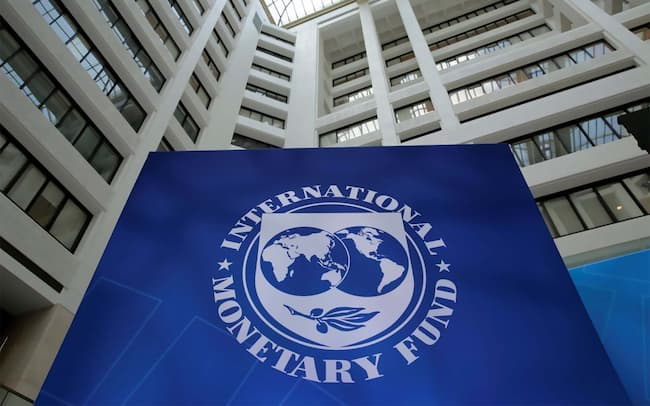
The International Monetary Fund (IMF) has projected that Nigeria’s debt-to-GDP ratio will ease to 35 percent by 2026, down from an estimated 39.3 percent in 2024 and 36.4 percent in 2025, signaling growing fiscal stability and improved debt management.
According to the IMF’s latest Fiscal Monitor report, the projection includes Nigeria’s total public debt—covering Central Bank overdrafts and liabilities of the Asset Management Corporation of Nigeria (AMCON). The report reflects a gradual strengthening of Nigeria’s fiscal position, supported by enhanced revenue mobilisation, prudent spending, and steady economic growth.
The IMF noted that the anticipated decline in Nigeria’s debt ratio underscores progress in public financial management and reduced reliance on borrowing, as fiscal consolidation and economic reforms continue to take hold.
Speaking during a press briefing on the report, the IMF’s Director of Fiscal Affairs, Vitor Gaspar, described Nigeria’s fiscal stance as “broadly consistent with efforts to curb inflation while maintaining sustainable growth.” He was joined by Era Dabla-Norris, Deputy Director; Davide Furceri, Division Chief; and Tatiana Mossot, Senior Communications Officer, all of the IMF Fiscal Affairs Department.
Gaspar commended Nigeria’s ongoing tax and fiscal reforms, noting that the country has made significant strides in broadening its revenue base without imposing excessive burdens on low-income households or businesses. “The policies being implemented in Nigeria are consistent with a structural fiscal framework that strengthens both the revenue and expenditure sides of government operations,” he said.
He stressed that while progress has been recorded, there remains ample room to enhance tax administration, streamline expenditure, and expand social safety nets to protect vulnerable citizens. “Improving spending efficiency and revenue collection is key to sustaining growth and addressing social vulnerabilities,” Gaspar added.
The IMF’s broader outlook, however, offered a cautious view of global fiscal dynamics. Gaspar revealed that global public debt has worsened since the April 2025 meeting, with total debt expected to surpass 100 percent of global GDP—the highest level since 1948. Under adverse economic scenarios, the ratio could climb to 124 percent by 2029.
He noted that while advanced economies such as the United States, Japan, France, and the United Kingdom have debt levels exceeding 100 percent of GDP, they remain cushioned by deep financial markets and stronger institutional credibility. In contrast, many emerging and low-income economies, including those in Africa, face mounting fiscal pressures due to limited access to financing and weaker policy buffers.
Rising global interest rates, Gaspar warned, have significantly increased borrowing costs, constraining government budgets and threatening fiscal sustainability. Global interest payments are projected to rise from 2 percent of GDP in 2020 to 2.9 percent in 2025, driven by higher financing needs and persistent spending pressures from defence, climate adaptation, and disaster response.
He emphasised that rebuilding fiscal buffers is critical to safeguarding economies from shocks and ensuring long-term financial stability. “Starting from already high deficits and debts, the persistence of spending above revenue will push debt to ever higher levels,” he cautioned. “Countries must act now to strengthen fiscal discipline, build resilience, and foster growth through effective public spending and institutional reforms.”
Gaspar urged countries, including Nigeria, to prioritise growth-oriented investments such as education, infrastructure, and innovation while maintaining budgetary prudence. He also underscored the importance of transparency, governance, and accountability in building public trust and investor confidence.
Reaffirming the IMF’s commitment to member countries, Gaspar said the Fund would continue to support Nigeria in implementing fiscal and structural reforms that promote inclusive growth, macroeconomic stability, and public trust in government institutions.
The exchange rate between the Naira and the US dollar, according to the data released on the FMDQ Security Exchange, the official forex trading portal, showed that the naira closed at 1490.00 per $1 on Thursday, October 16th , 2025. The naira traded as high as 1465.00 to the dollar at the investors and exporters (I&E) window on Wednesday.
Dollar to naira exchange rate today black market (Aboki dollar rate):
The exchange rate for a dollar to naira at LagosParallel Market (Black Market) players sell a dollar for ₦1510 and buy at ₦1490 on Wednesday 15th October, 2025, according to sources at Bureau De Change (BDC).
Please note that the Central Bank of Nigeria (CBN) does not recognize the parallel market (black market), as it has directed individuals who want to engage in Forex to approach their respective banks.
Nigeria and Brazil have reaffirmed their commitment to strengthening bilateral relations, particularly in the areas of climate change and sustainable development, ahead of the 30th Conference of the Parties on Climate Change (COP30) to be hosted by Brazil.
Minister of Environment, Balarabe Lawal, disclosed this when he received the Brazilian Ambassador to Nigeria, Carlos Garcete, and his delegation at the ministry’s headquarters in Abuja.
Lawal noted that the forthcoming COP30, convened under the United Nations Framework Convention on Climate Change (UNFCCC), presents an opportunity to reinforce collaboration between both nations, especially in implementing the Paris Agreement.
He highlighted that Nigeria and Brazil have shared longstanding ties in trade, culture, tourism, and economic development since Nigeria’s independence. “Brazil is globally recognised for its vast forest cover, rich biodiversity, and unique ecosystem. We look forward to exploring new partnerships in these areas,” the minister said.
Lawal further expressed optimism that the bilateral relationship would deepen as both countries leverage COP30 to advance cooperation on climate adaptation, mitigation, biodiversity conservation, and environmental sustainability.
The minister also commended the Brazilian government for resuming direct flights between both countries, describing the move as a step that will enhance trade, tourism, and diplomatic relations.
He congratulated Brazil for securing the hosting rights of COP30 and the G20 Summit, noting that such milestones underscore the nation’s growing global leadership in climate diplomacy and economic cooperation.
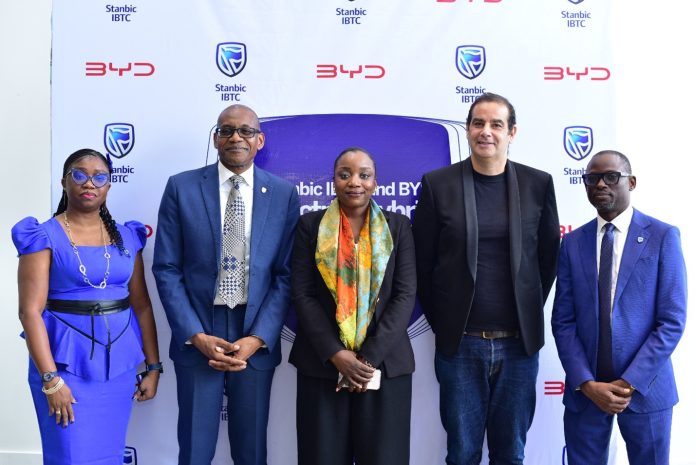
In a strategic move to advance Nigeria’s shift toward sustainable transportation, Stanbic IBTC Bank has announced a partnership with LOXEA Nigeria, the exclusive distributor of BYD electric and hybrid vehicles in Nigeria and a subsidiary of CFAO Mobility. This collaboration is aimed at making eco-friendly mobility more accessible to Nigerians through innovative and flexible financing solutions, reinforcing both organisations’ commitment to renewable energy and environmental sustainability.
The partnership was officially launched at an exclusive product showcase held at the BYD showroom in Victoria Island, Lagos. Attendees had the opportunity to explore BYD’s cutting-edge electric vehicle models, engage with industry experts, and learn about tailored vehicle financing options from Stanbic IBTC. To encourage early adoption, the initiative includes one-month special incentives, such as vendor discounts and reduced interest rates on vehicle financing.
The event featured compelling addresses from executives of both organisations, highlighting their shared vision for a cleaner, more efficient transport ecosystem in Nigeria.
Olu Delano, Executive Director at Stanbic IBTC Bank, stated: “This alliance underscores our dedication to empowering Nigerians with green alternatives that not only address environmental concerns but also offer practical, cost-effective solutions for everyday mobility. By combining LOXEA BYD’s innovative electric and hybrid vehicles with our flexible financing, we are not just offering cars, we are driving a cleaner future.”
Mehdi Slimani, Managing Director of LOXEA Nigeria, added: “At LOXEA, we are proud to lead the transition toward cleaner mobility in Nigeria. Distributing BYD’s cutting-edge electric vehicles, along with our comprehensive suite of fleet and mobility solutions, allows us to offer a truly future-ready alternative. This partnership with Stanbic IBTC is a significant step forward in making electric mobility more accessible and practical for Nigerian drivers. Together, we are not just introducing new vehicles, — we are shaping a smarter, greener transportation ecosystem.”
The event sparked enthusiasm among attendees from various sectors, reflecting growing interest in sustainable automotive solutions. Models like the BYD ATTO 3 and BYD Dolphin were showcased as practical options for urban mobility, offering reduced reliance on fossil fuels, lower operational costs, and a smaller environmental footprint.
Looking ahead, this partnership positions Stanbic IBTC Bank as a key enabler of Nigeria’s renewable energy transition, expanding access to sustainable transport for a broader audience. Through strategic collaborations like this, the bank continues to drive innovation in financial services tailored to eco-conscious consumers.
The International Monetary Fund (IMF) has upgraded its projection for Nigeria’s economic growth to 3.9% in 2025, citing positive outcomes from recent macroeconomic reforms and improved fiscal management.
In its latest World Economic Outlook report released during the IMF/World Bank Annual Meetings in Washington D.C., the global financial body said it now expects Nigeria’s economy to grow by 3.9% in 2025 and 4.2% in 2026 — reflecting respective upward revisions of 0.5 and 0.9 percentage points from its earlier forecasts.
The IMF attributed the improved projections to a stronger naira exchange rate, better fiscal discipline, increased crude oil production, and enhanced security in key energy-producing regions. The report also highlighted Nigeria’s limited exposure to recent U.S. tariffs, which shielded its economy from external trade shocks.
According to data from the National Bureau of Statistics (NBS), Nigeria’s Gross Domestic Product (GDP) expanded by 4.2% year-on-year in Q2 2025, outperforming CSL Stockbrokers’ forecast of 3.9% and Bloomberg’s consensus estimate of 3.6%. This represents a rebound from the 3.1% growth recorded in Q1 2025, driven largely by notable recoveries in the oil and agriculture sectors.
The oil sector, in particular, recorded a 20.5% year-on-year growth, a sharp jump from the 1.9% growth in the previous quarter, lifting industrial output by 7.5% despite mild weaknesses in manufacturing. Crude oil production averaged 1.68 million barrels per day (mbpd), compared to 1.41 mbpd a year earlier — the result of tighter security measures and a significant drop in pipeline vandalism and oil theft to their lowest levels since 2009.
The agriculture sector also regained momentum, expanding by 2.8% in Q2, up from just 0.1% in Q1. Growth in livestock (+1.6%) and fishing (+2.6%) helped drive a 3.6% rise in non-oil GDP, demonstrating the resilience of Nigeria’s domestic economy and the effectiveness of targeted reforms.
Looking ahead, CSL Stockbrokers projects Nigeria’s GDP to grow by 3.6% in Q3 2025, maintaining a full-year forecast of 3.7%. The firm expects continued recovery in oil production, supported by a favorable base effect, which could push annual oil growth to around 11.1%.
However, challenges persist. September data showed a 3.09% month-on-month drop in oil output to 1.58 mbpd, while structural bottlenecks and logistical inefficiencies remain key downside risks. Nonetheless, the non-oil sector—particularly agriculture and ICT—is expected to sustain growth momentum.
To boost agricultural productivity, the government recently announced the deployment of 2,000 tractors and 9,000 specialized farming tools to support farmers and enhance food production across the country.
Overall, analysts agree that Nigeria’s economic outlook for 2025 remains positive and resilient, buoyed by stable oil output, expanding agricultural activity, and ongoing structural reforms. CSL Stockbrokers emphasized that continuous investment in infrastructure, stronger security in oil-producing regions, and support for key non-oil sectors will be crucial to ensuring broad-based, inclusive growth in the years ahead.
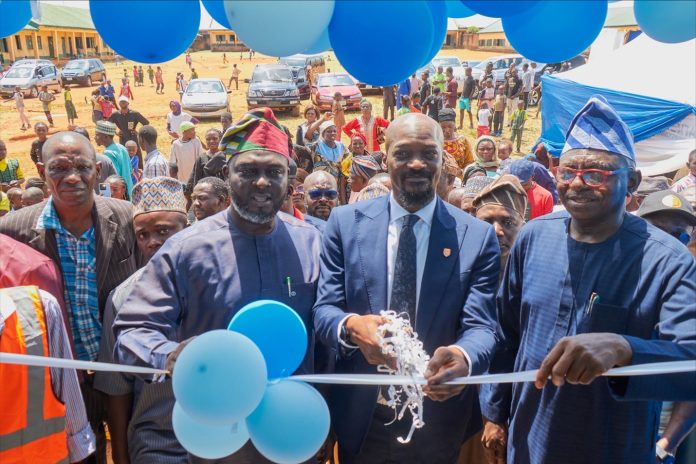
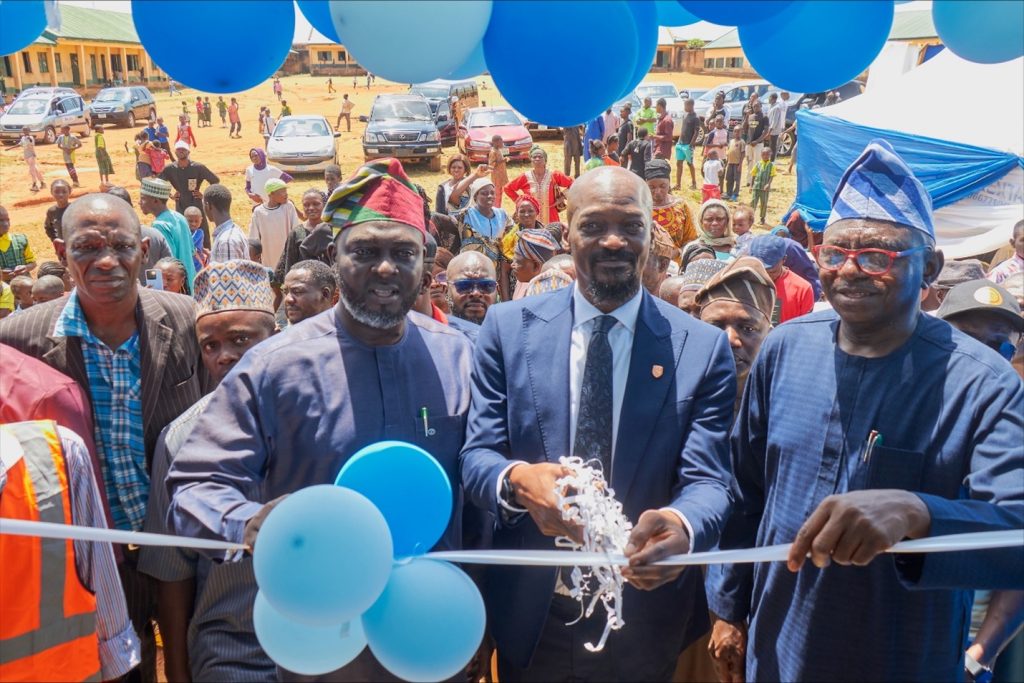
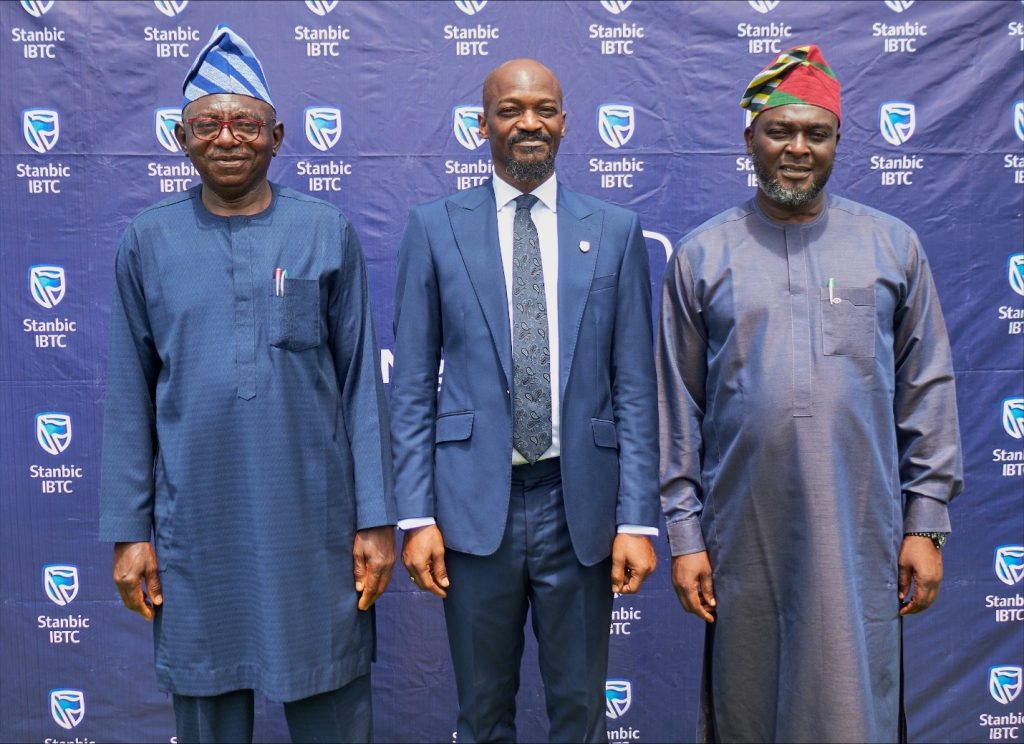
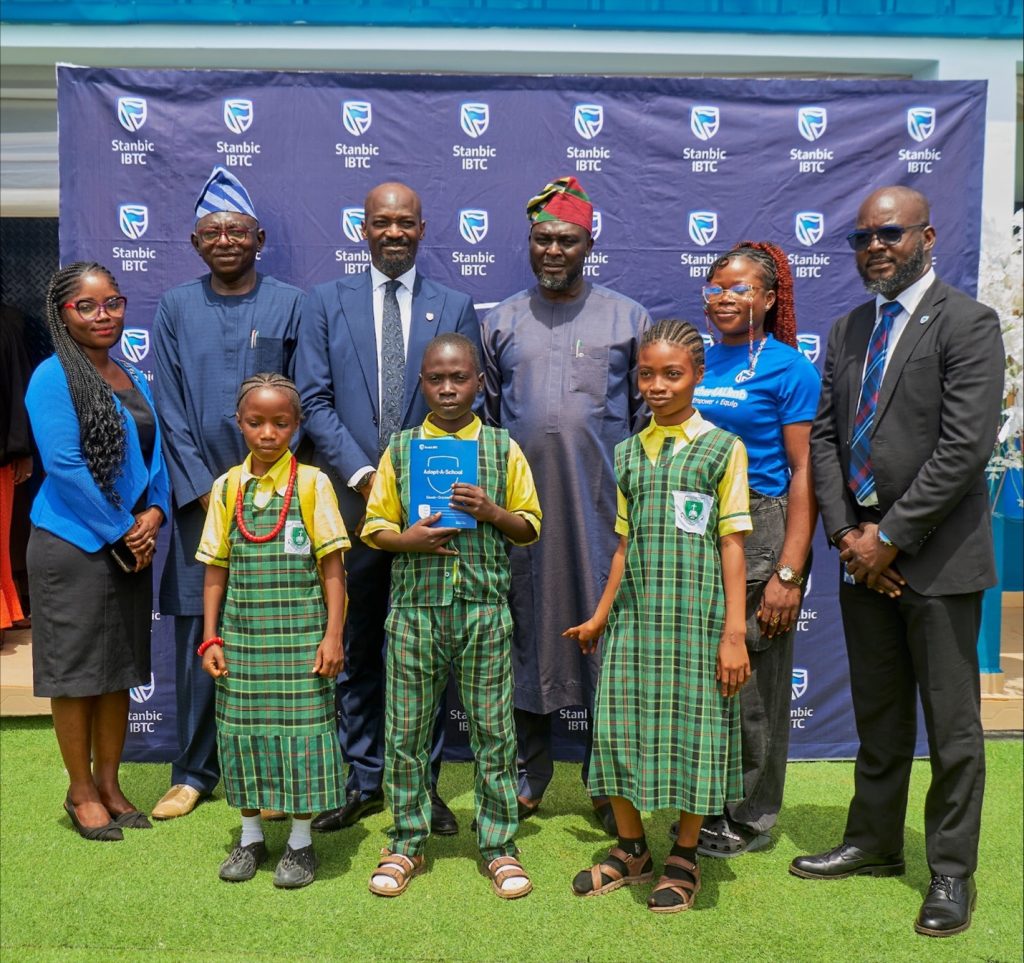
Stanbic IBTC Holdings has completed the renovation and upgrade of Chwelnyap Primary School in Plateau State under its Adopt-A-School initiative, reaffirming its unwavering commitment to advancing educational excellence across Nigeria. The extensive renovation and infrastructure enhancement project underscores the institution’s belief in the transformative power of education as a key driver for national development.
The intervention at Chwelnyap Primary School featured a wide-ranging scope of work designed to foster a holistic learning environment. The project included the full renovation of Block B, comprising a three-classroom structure and two offices; the Headmaster’s office and a staff room, both of which were upgraded as part of the expanded project scope.
Each classroom was fitted with brand-new furniture, with 20 desks and chairs per class, accommodating up to 40 students in each room. In total, the furniture provision caters to 120 students, promoting a more conducive and engaging learning experience.
Chuma Nwokocha, Chief Executive, Stanbic IBTC Holdings, highlighted the organisation’s vision for sustainable educational development through impactful initiatives.
“This project is a testament to our belief that every child deserves access to quality education in an environment that inspires learning and growth. At Stanbic IBTC, we recognise that education is the foundation upon which future leaders are built, and our commitment to nurturing this potential remains steadfast,” he stated.
In alignment with global trends in digital education, Stanbic IBTC constructed a fully equipped computer laboratory and mini library to strengthen students’ technological and intellectual capacities. The lab features 10 modern computers and 10 workstations, providing pupils with essential digital literacy skills to thrive in the modern world.
Further supporting the creation of a well-rounded learning environment, the institution also constructed eight modern toilets: four for girls and four for boys, to ensure proper sanitation, privacy, and hygiene. Additionally, a mini football pitch was developed to encourage sportsmanship, teamwork, and physical fitness among students.
Environmental sustainability was also integrated into the project’s design. The bank planted 30 trees and flowers across the school premises, contributing to a greener and more inspiring environment while instilling environmental awareness among the pupils.
Wole Adeniyi, Chief Executive, Stanbic IBTC Bank, noted that the project exemplifies the organisation’s approach to holistic educational support.
“Our Adopt-A-School projects are not merely about physical structures but about building environments that nurture curiosity, creativity, and character. The transformation of Chwelnyap Primary School reflects our dedication to creating learning spaces where children can dream, discover, and achieve,” she said.
The handover ceremony was attended by government officials, community leaders, representatives of the Parent-Teacher Association, and other stakeholders, all of whom lauded the initiative’s positive impact on the community.
The renovation of Chwelnyap Primary School stands as another remarkable milestone in Stanbic IBTC’s Adopt-A-School journey, underscoring the bank’s leadership in corporate social responsibility and its unwavering dedication to expanding access to quality education across Nigeria. With this ongoing commitment, Stanbic IBTC continues to close educational gaps by integrating infrastructure development, technological advancement, and environmental sustainability, a holistic approach that mirrors its long-term vision for national progress and human capital growth.
Through the initiative, Stanbic IBTC remains devoted to promoting sustainable educational development; one community, one school, and one child at a time.