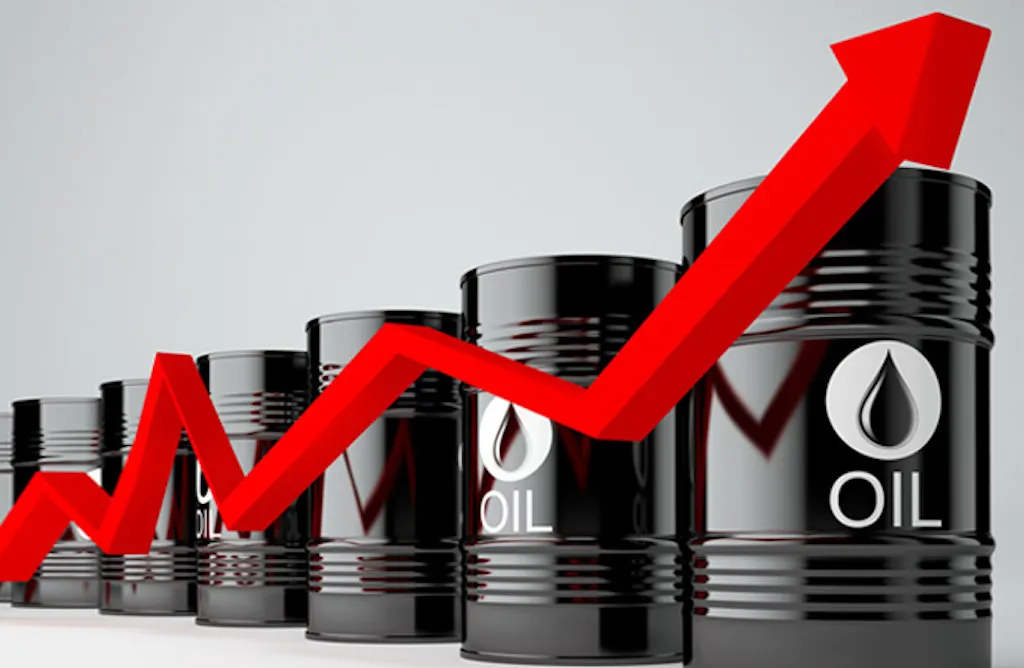
Global oil prices climbed on Thursday following U.S. President Donald Trump’s announcement that India plans to cease purchasing seaborne crude from Russia. The decision, which is expected to reshape energy trade dynamics, helped ease fears of an oil surplus and improved market sentiment despite persistent global trade uncertainties.
Russia’s seaborne crude exports have been constrained by a combination of increased output volatility and geopolitical tensions, including ongoing Ukrainian drone attacks on refining facilities and the impact of Western sanctions such as the G7-imposed price cap. Sanctions from both the U.S. and European Union have significantly curtailed Moscow’s oil revenue streams.
India and China have been among the largest importers of discounted Russian crude since the onset of these restrictions. However, with India’s potential withdrawal, global supply expectations are shifting. Brent crude futures rose by 0.24% to $62.39 per barrel, up from $62.24 in the previous session, while U.S. benchmark West Texas Intermediate (WTI) gained 0.29% to $58.50 per barrel.
The modest rebound in oil prices reflected changing market fundamentals and revived geopolitical tensions. Earlier in the week, the International Energy Agency (IEA) had warned of a possible global oversupply due to increased output from OPEC+ members and U.S. shale producers.
However, President Trump’s statement on India’s forthcoming cessation of Russian imports helped ease those oversupply concerns. He said that while India’s withdrawal process wouldn’t happen overnight, it would be completed “soon.” Trump also called on China to follow India’s lead and end purchases of Russian oil.
Market participants, however, remained cautious as new trade tensions emerged between the U.S. and China. Last week, the White House announced a 100% tariff on Chinese goods effective November 1, in retaliation for Beijing’s export restrictions on rare earth minerals. Although Trump later assured that the dispute “will be resolved,” investor sentiment remained mixed.
Adding to the uncertainty, U.S. Treasury Secretary Scott Bessent criticized Beijing, claiming that China “cannot be trusted” and urged U.S. allies to diversify their trade and supply dependencies.
Oil prices were also supported by growing expectations of a potential Federal Reserve rate cut in October. Fed Chair Jerome Powell’s dovish remarks earlier this week triggered a pullback in the U.S. dollar, further supporting oil prices.
Crude, which had plunged to a five-month low earlier this week, is now staging a mild recovery as a weaker dollar and reduced oversupply fears bolster investor confidence.
Speaking to reporters at the White House, Trump confirmed that Indian Prime Minister Narendra Modi had agreed to phase out Russian oil purchases following a phone conversation between the two leaders. Trump described the decision as “a big step,” adding that “you can’t stop immediately—it’s a process, but it will be over soon.”
He reiterated his demand that Russian President Vladimir Putin end the war in Ukraine, saying, “All we want from President Putin is to stop this—stop killing Ukrainians, and stop killing Russians. It’s a war that should have been over in one week, but he’s going into his fourth year now.”
Trump has consistently emphasized that curbing Russian oil sales on international markets could accelerate an end to the Kremlin’s war efforts. He added that his next objective is persuading China to take similar action by halting its purchases of Russian crude.