









Home Blog Page 5

Quickteller’s Insomniaq Debuts With Powerful Line-Up Of Top Nigerian Artists

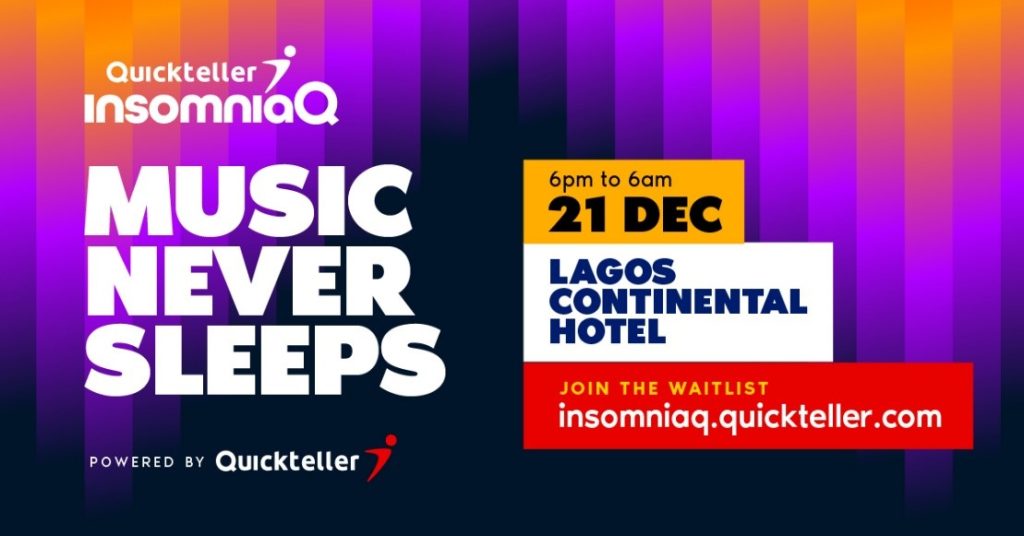
Quickteller, one of Africa’s foremost digital payments platforms under the Interswitch Group, has announced the official artist line-up for the maiden edition of InsomniaQ, a first-of-its-kind, all-night music and entertainment experience set to elevate Lagos’ iconic December experience.

The unveiling sets the stage for an electrifying night of unforgettable performances and immersive moments. The maiden edition will run from the evening of December 21 into the early hours of December 22, 2025, at the Ballroom of the Lagos Continental Hotel, Victoria Island.

Leading the lineup is Made Kuti and his band, whose distinct Afrobeat rhythms will set a powerful musical tone for the night. Joining him are some of Nigeria’s most celebrated acts, including Patoranking, Dr Sid, Niniola, Loud Urban Choir, Alternate Sound, and the soulful Brymo. Guests will also enjoy energetic DJ sets from DJ Xray, DJ Toh Bhad, and Maze Xtreme, ensuring non-stop music from dusk till dawn.

InsomniaQ is designed to keep audiences awake, connected, and fully immersed in culture-rich, high-octane entertainment. With a line-up this dynamic, the event reaffirms Quickteller’s commitment to creating extraordinary experiences that bring people together.

Speaking on the announcement, Olawale Akanbi, Divisional Head, Growth Marketing (Merchants and Ecosystem), Interswitch, highlighted the brand’s intention to curate a line-up that truly resonates with its audience.

“We are proud to present a lineup that reflects the richness and diversity of our music culture. For the first edition of InsomniaQ, it was important to select artists whose craft, energy, and artistry connect deeply with our audience. Each performer brings something distinct, and together, they embody the quality and cultural depth we envisioned for this experience. We are excited to deliver a night that will be unforgettable in every sense,” Akanbi said.

Attendees can look forward to high-energy performances, soulful renditions, dance-floor moments, and artistic collaborations that elevate the experience beyond a typical performance showcase. From live bands to powerhouse vocalists and dynamic DJs, InsomniaQ is shaping up to be one of the season’s most anticipated entertainment highlights.

With the line-up now revealed, anticipation continues to build as fans prepare for a night filled with rhythm, culture, and pure adrenaline. Quickteller invites the public to join the experience and create lasting memories at the debut edition of InsomniaQ.

Interswitch Group Unveils Quickteller InsomniaQ Vision At Media Briefing Ahead Of December 21st Debut

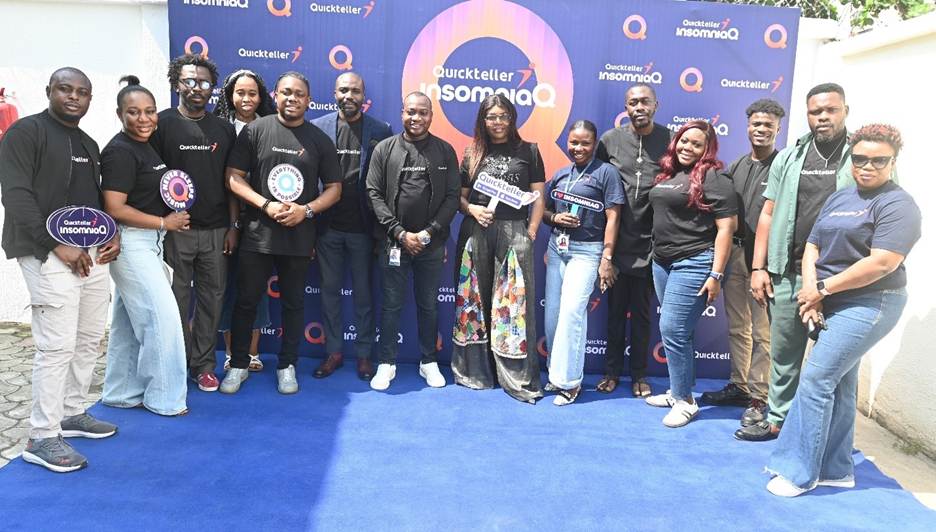
Quickteller, Africa’s leading digital payments platform powered by the Interswitch Group, has unveiled InsomniaQ, its new music and culture experience, at a media briefing held recently, in Lagos.

The briefing brought together members of the media and key stakeholders for an exclusive preview of InsomniaQ, a first-of-its-kind, all-night music and lifestyle experience designed to redefine Lagos’ December entertainment calendar. Scheduled to run from the evening of December 21 into the early hours of December 22, InsomniaQ is positioned as a 12-hour non-stop celebration of African music, creativity, and cultural expression.

Speaking at the briefing, Cherry Eromosele, Executive Vice President, Group Marketing and Communications, Interswitch Group, described InsomniaQ as a natural extension of Quickteller’s deep connection to moments that matter most to its consumers.

“InsomniaQ represents a cultural statement for us. Quickteller has always shown up in people’s everyday lives as an enabler of convenience and connection, and with InsomniaQ, we are stepping into culture in a way that feels authentic, immersive, and reflective of the energy that defines Lagos in December. The experience has been intentionally created to spotlight African talent, creativity, and storytelling, while offering attendees an unforgettable, all-night journey through sound, art, and lifestyle,” Eromosele said.

Also speaking at the briefing, Olawale Akanbi, Divisional Head, Growth Marketing (Quickteller Ecosystem), Interswitch, shared the thinking behind the event’s distinctive all-night format. He said:

“InsomniaQ was born from a desire to do something truly different. Something bold that mirrors the rhythm, energy, and spirit of Lagos in December. This is a city that doesn’t sleep during the festive season, and InsomniaQ was designed to reflect that pulse by creating an immersive, all-night experience that brings people together through music, culture, and shared moments. Beyond the performances, it’s about community, creative expression, and celebrating African talent in a way that feels fresh, exciting, and culturally relevant.”

Designed to appeal to music lovers, cultural enthusiasts, and December returnees alike, InsomniaQ blends diverse African soundscapes with immersive experiences, reinforcing its positioning as a new must-attend destination within Nigeria’s December entertainment landscape.

According to Interswitch, ‘Quickteller InsomniaQ conceptually taps straight into the circadian rhythm – that invisible metronome that signals alertness and productivity in daylight, and as night falls, it cues rest and recovery. While biology whispers rest, ideas, creativity and hustle pulse after dark, and InsomniaQ exists for that exact hour when inspiration ignores bedtime. Because if your rhythm says night is for dreaming, Quickteller InsomniaQ says some dreams are built wide awake…’

The media briefing also highlighted Quickteller’s broader commitment to initiatives that go beyond payments, supporting lifestyle experiences, creativity, and the continued growth of Africa’s entertainment ecosystem.

As anticipation builds toward the maiden edition of InsomniaQ, Quickteller has encouraged the public to stay connected and be part of what promises to be one of December’s most anticipated cultural experiences.

Interested attendees can join the waitlist via http://insomniaq.quickteller.com/ and follow Quickteller on social media for real-time updates via @Quickteller on (Facebook & X/Twitter), and @quicktellerng (Instagram).

Electronic Payments Push FG Revenue Above Target By N88.73bn

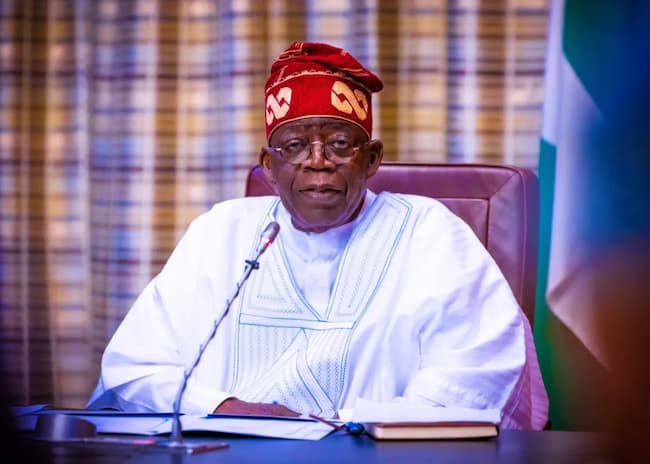
Tinubu Authorizes Appointment Of New CEOs

The Federal Government has exceeded its revenue target by N88.73 billion for the first half of 2025, driven largely by a surge in electronic transactions. The data is from the 2025–2027 Medium Term Expenditure Framework released by the Budget Office.

Based on a full-year EMTL revenue projection of N230 billion, the half-year target of N134.17 billion surged to N222.90 billion, representing a 66.1 percent outperformance. Corporate Income Tax collections of N5.86 trillion slightly exceeded the prorated target of N5.44 trillion, a 7.6 percent overperformance. Value-Added Tax receipts also surpassed expectations, reaching N4.82 trillion, N439.22 billion above the half-year target.

Despite these gains, net non-oil revenue, including solid minerals, totalled N12.14 trillion by June 2025, falling short of projections by N1.81 trillion, or 13 percent. The shortfall highlights ongoing challenges in tax collection and economic activity outside the oil sector.

Oil and gas revenue underperformed significantly. Gross receipts were projected at N51.04 trillion for 2025, but by July only N11.17 trillion had been realised, a performance rate of just 37.5 percent. After statutory deductions, net inflows to the Federation Account stood at N9.61 trillion, N15.78 trillion below the half-year target. Weak crude production, price volatility, and limited refining margins contributed to the shortfall, increasing pressure on non-oil revenue to fill the gap.

The strong performance of the EMTL line reflects the growing adoption of digital financial services in Nigeria. Electronic transactions through mobile money, bank transfers, and other channels have deepened, with the Nigeria Inter-Bank Settlement System reporting N284.9 trillion spent electronically in the first quarter of 2025. This represents a 22 percent increase from N234.4 trillion recorded in Q1 2024.

The NIBSS Instant Payment platform, launched in 2011, enables real-time interbank transactions across multiple electronic channels including internet banking, mobile apps, USSD, POS, and ATMs. The surge in digital payments has helped the government exceed its non-oil revenue target despite weak oil earnings.

Tinubu Seeks Repeal Of 2024 And 2025 Budgets, Extends 2025 Cycle

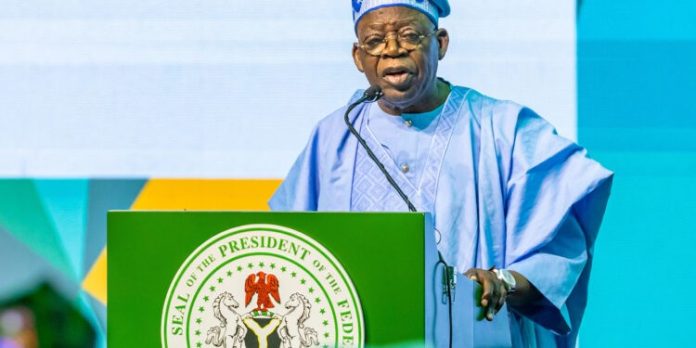
President Bola Tinubu has asked the House of Representatives to repeal and re-enact the 2024 and 2025 budgets and extend the 2025 budget implementation cycle to 31 March 2026.

The request was contained in a letter from the President read by Speaker Rt. Hon. Abbas Tajudeen on Friday. This comes ahead of Tinubu’s presentation of the 2026 Appropriation Bill to the National Assembly.

In the letter, the President explained that the bills seek to repeal the 2024 Appropriation Act of N35.06 trillion and re-enact it with a revised total expenditure of N43.56 trillion. The revised 2024 budget authorises N1.74 trillion for statutory transfers, N8.27 trillion for debt service, N11.27 trillion for recurrent spending, and N22.28 trillion for capital projects up to 31 December 2025.

For 2025, Tinubu proposed reducing the budget from N54.99 trillion to N48.32 trillion while extending it to 31 March 2026. The President said the move is part of a broader fiscal reform measure aimed at eliminating overlapping budgets and strengthening planning, execution, and accountability across government expenditure cycles.

Tinubu said the proposed bills would accommodate expenditure items not previously recognised and introduce a revised capital implementation target of 30 percent. Extending the 2025 budget would ensure full release of the 30 percent capital allocation to Ministries, Departments, and Agencies, improving project execution and budget performance. He described the move as part of fiscal reforms to end overlapping budgets that weaken planning, execution, and accountability.

In June, the Senate approved a second extension of the implementation period for the 2024 capital component of the national budget from June 30, 2025 to December 31, 2025. The January-to-December budget implementation cycle was established during the tenure of the 9th National Assembly. On December 18, 2024, the National Assembly approved extending the 2024 budget’s lifespan to June 2025. Last week, the federal government directed Ministries, Departments, and Agencies to carry over 70 percent of their approved 2025 capital allocations to 2026. A circular issued by the Budget Ministry instructed that 2026 budget proposals must largely be composed of funds already allocated in 2025 and that new capital projects are not permitted.

Sanwo-Olu Attracts Global Investors At Lagos Housing Marketplace

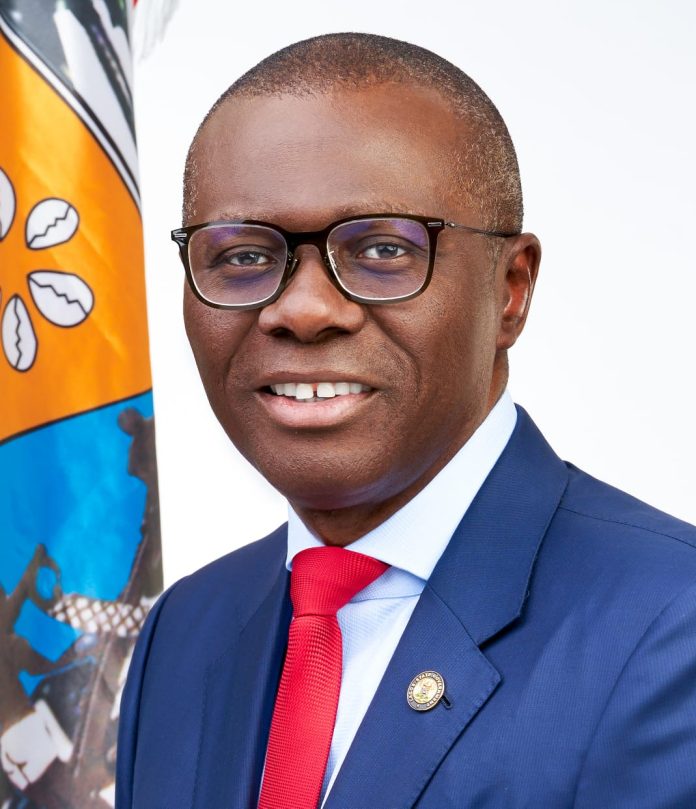
Governor Babajide Sanwo-Olu has called on multinational real estate investors to partner with Lagos State in providing dignified and affordable housing, as the city positions itself to become a thriving 21st-century mega city.

The governor made the appeal at the Sixth Lagos Real Estate Marketplace Conference, held at Eko Hotels and Suites, Victoria Island, which attracted over 2,000 participants, including investors from America, the Middle East, and Asia. The event was organised by the Lagos State Real Estate Regulatory Authority (LASRERA) under the Office of the Special Adviser to the Governor on Housing. The theme of the conference was: “Shaping the Future of Lagos Megacity: Infrastructure, Innovation and Affordable Housing.”

Sanwo-Olu said Lagos had evolved into one of the world’s most dynamic urban economies but noted that accelerated growth has brought new challenges that must be addressed. He stressed that housing is central to the state’s development agenda, linked closely to transportation, infrastructure, energy, climate resilience, and economic opportunities.

“Provision of housing in the 21st century is not just about buildings; it is about human dignity, economic productivity, social stability, and the kind of city we choose to become,” the governor said. He added that affordable housing must be accessible, close to workplaces, and integrated with enabling infrastructure such as roads, rail, power, water, and drainage.

Sanwo-Olu encouraged the use of Public-Private Partnerships, structured finance, land optimisation, and demand-led planning to bridge the housing gap. He emphasised the government’s role as enabler, regulator, and partner, rather than sole provider, assuring investors of transparency and improved security to safeguard their investments.

“To our local developers, Lagos believes in you. To our international partners, Lagos is open, ready and serious. This state remains one of the safest, most stable, and best-governed investment destinations in Africa,” he said.

Barr. Barakat Odunuga-Bakare, Special Adviser to the Governor on Housing, described the conference as an “intellectual theatre of ideas,” noting that previous editions had prompted regulatory reforms and policy shifts, including the New Tenancy Bill now under review by the Lagos House of Assembly.

Keynote speaker Dr. Muiz Banire, SAN, former Lagos Commissioner for Environment, stressed that the government’s housing vision must outlive individual policies. He also called for strict adherence to the unified master plan, protection of highway setbacks, and stronger environmental laws to ensure the city remains habitable.

15.2 Million Housing Units In Nigeria Structurally Defective – Minister

Real Estate: Govt Needs To Pay Attention To Housing Deficit - Fagbadebo

The Federal Government has revealed that about 15.2 million housing units across Nigeria are structurally inadequate, raising concerns about safety, habitability, and access to basic services.

The disclosure was made by the Minister of Housing and Urban Development, Ahmed Musa Dangiwa, in a statement on Wednesday. According to the minister, the affected homes physically exist but fail to meet minimum standards for safety, durability, decent living conditions, and access to essential infrastructure such as water, sanitation, and electricity.

Dangiwa said the findings were produced under the National Housing Data Initiative and presented by the National Housing Data Technical Committee in Abuja. The assessment used internationally recognised tools including the Household Crowding Index, Adequate Housing Index, and Composite Index Methodology, drawing data from the National Population Commission, National Bureau of Statistics, Central Bank of Nigeria, and other housing institutions in line with World Bank standards.

The minister emphasised that Nigeria’s housing challenge extends beyond the shortage of new homes and includes widespread structural inadequacy in existing buildings. He called for a focus not only on constructing new houses but also on upgrading existing housing stock, regenerating deteriorating neighbourhoods, and improving infrastructure and public services.

Dangiwa noted that housing inadequacy is also linked to affordability gaps, limited access to land, weak housing finance systems, and regional disparities. Data shows Kano State has the highest level of housing inadequacy, while Bayelsa State has the lowest, based on the Adequate Housing Index.

To tackle the problem, the ministry is establishing a National Housing Data Centre, expected to become operational by mid-January 2026. The centre will support policymaking, housing finance access, investment planning, and large-scale housing delivery.

The minister highlighted ongoing initiatives under the Renewed Hope Estates and Cities Programme. Renewed Hope Cities are large-scale developments across the six geopolitical zones and the Federal Capital Territory, implemented through public-private partnerships. Renewed Hope Estates are smaller housing clusters of about 250 units, funded directly by the Federal Government with state governments providing land and subsidised infrastructure.

Despite these efforts, Dangiwa said Nigeria still faces a severe housing deficit, estimating that closing the gap would require at least 550,000 new units annually at a projected cost of ₦5.5 trillion over the next decade.

Nigeria’s Music Industry Generates $600m Annually, Minister Says

Nigeria’s music industry generates an estimated $600 million annually and is projected to more than double in size over the next decade, reaching $1.03 billion by 2033, the Minister of Art, Culture, Tourism and the Creative Economy, Hannatu Musawa, has said.

The figures were revealed in the foreword to Basslines to Billions: Nigeria’s Music Market Intelligence Report, the first-of-its-kind publication designed to provide hard data on the country’s music ecosystem.

Developed in collaboration between the National Council for Arts and Culture and investment advisory firm RegalStone Capital, the report examines revenue streams, employment potential, and Nigeria’s position in the global music value chain.

“Nigeria’s music is more than an art form,” Musawa wrote. “It is an engine of enterprise and soft power.” The report estimates current annual revenues at roughly $600.7 million (about N901.6 billion) and projects growth at an average annual rate of 7%, reaching approximately $1.03 billion (N1.5 trillion) by 2033.

The report situates music within Nigeria’s broader creative economy, which is projected to generate more than 2.5 million new jobs by 2030. Digital exports in music, film, design, and other creative sectors are rising steadily, reinforcing Nigeria’s cultural influence across the continent.

Revenue for Nigerian artists flows from multiple channels, including streaming royalties, live performances, festivals, brand partnerships, publishing, songwriting, and social media monetization. Live performances remain the dominant source of income, accounting for between 65.7% and 74% of total earnings in 2024.

Despite its growth, the sector faces structural challenges such as gaps in financing, infrastructure, and policy coordination. Musawa described the report as a “signal of intent” to ground cultural policy in evidence and improve access to sustainable financing for creators.

The report’s release coincides with a string of high-profile achievements by Nigerian artists globally. Notably, singer Ayra Starr surpassed one billion total views on YouTube, becoming the first Nigerian female artist to achieve the milestone, driven largely by her hit “Rush,” which has amassed more than 458 million views.

Earlier data from Nairametrics showed Nigerian artists earned over N58 billion in Spotify royalties in 2024, more than doubling the 2023 figures and marking a fivefold increase from 2022.

Burna Boy, Olamide Make Former President Obama’s Favourite Music Of 2025

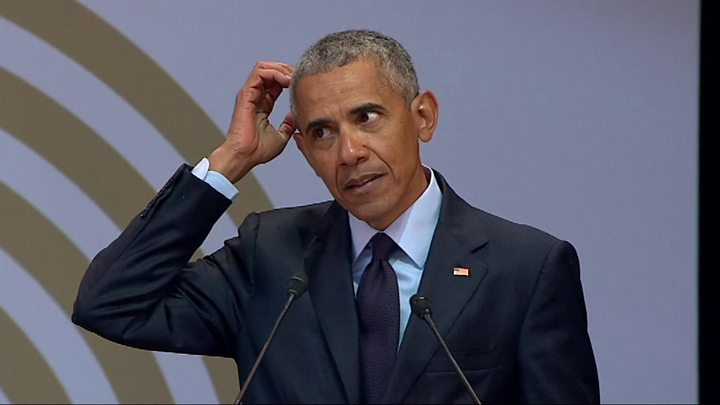
Former United States President Barack Obama has included songs by Nigerian Afrobeats stars Burna Boy and Olamide in his annual list of favourite music for 2025.

The lists, released on Thursday, also featured books and movies selected by Obama. On the music list, he named Burna Boy’s Tatata featuring Travis Scott and Olamide’s 99 featuring Daecolm, Seyi Vibez, Asake, and Young John.

British-Nigerian singer Obongjayar’s Not In Surrender was also among the selections. American artists Kendrick Lamar, SZA, Lady Gaga, Gunna, and Canadian rapper Drake were included as well.

Sharing the lists via his X handle, Obama wrote: “As 2025 comes to a close, I’m continuing a tradition that I started during my time in the White House: sharing my annual lists of favorite books, movies, and music. I hope you find something new to enjoy.”

The annual lists have become a highly anticipated tradition, giving fans insight into Obama’s cultural interests and introducing global audiences to a mix of established and emerging artists.

Lere Paimo Raises Alarm Over Alleged Plan To Reshoot ‘Ogbori Elemoso’

Veteran Yoruba actor and filmmaker Lere Paimo has raised concerns over an alleged attempt to remake his classic historical film Ogbori Elemoso without his consent, describing the move as a violation of his intellectual property rights.

Ogbori Elemoso is one of the few notable Yoruba historical films that dramatises events leading to the establishment of Ogbomosoland.

Paimo, who wrote and produced the film in 1987, raised the alarm at a press conference in Ibadan, Oyo State, on Wednesday. The film was distributed by Eda Films Ltd and featured prominent Nollywood and theatre veterans, including Jide Kosoko, Kareem Adepoju, Idowu Philips (Iya Rainbow), Isola Ogunsola, Dento, Deji Olofa Ina and Ogun Majek.

He said the Soun of Ogbomosoland, Oba Ghandi Olaoye, had earlier contacted him to inquire about the cost of remaking the historical work to meet global standards. According to Paimo, he quoted ₦100 million and was awaiting a response.

However, he alleged that while discussions were still ongoing, a film producer, Benedict Ayoola, popularly known as Ben O Ben, alongside others, visited his residence and informed him that they already had the monarch’s approval to proceed with the remake.

“They told me they had obtained permission from Oba Ghandi Afolabi Olaoye to remake Ogbori Elemoso and that my consent was no longer required,” he said.

Paimo further alleged that the group described a payment made to him as a “gift” rather than compensation for the intellectual property. He said ₦7.5 million was paid into his account, but his children rejected the money, describing it as manipulation and robbery, after which he returned the sum to Fewchore Studio.

He said his lawyer subsequently issued a cease-and-desist letter to the producers, but they allegedly insisted they had royal backing and warned that legal action would be futile.

Efforts to get a response from Mr Ayoola were unsuccessful as of press time.

Describing Ogbori Elemoso as a project produced through deep personal sacrifice, Paimo said the film brought him national recognition, including the Member of the Order of the Federal Republic (MFR) honour, but left him financially strained.

“I suffered greatly to produce this movie. I incurred heavy debts, and my car was even seized because of the loans I took to complete the project,” he said.

He appealed to Oyo State Governor Seyi Makinde, the General Overseer of the Redeemed Christian Church of God, Pastor Enoch Adeboye, and other prominent Nigerians to intervene to protect his legacy and intellectual property rights.

The 1987 Yoruba classic tells the story of Idagiri, a feared warlord whose reign of terror forced the Olugbon to seek help from Soun Ogunlola of Ogbomoso. Although Soun initially declined, he later confronted and defeated Idagiri.

The story further recounts betrayal, conflict and heroism, culminating in Soun’s defeat of Elemoso, a dreaded monster terrorising Oyo, an act that secured his place in Yoruba history.

FilmOne Triumphs At 2025 Nollywood Awards

Film4climate

FilmOne Entertainment recorded a strong showing at this year’s Best of Nollywood (BON) Awards, winning nine awards across multiple categories at the industry event celebrating excellence in Nigerian cinema.

The awards ceremony recognised outstanding achievements in filmmaking, storytelling, performance and technical craft, highlighting the creative depth that continues to shape Nollywood’s growing influence across Africa and beyond.

FilmOne’s productions were widely acknowledged across key categories, underscoring the company’s role in driving quality filmmaking and promoting diverse narratives to audiences.

The company’s winning titles and categories included Best Supporting Actress for Mercy Aigbe (My Mother Is a Witch), Best Soundtrack (Iyalode), Best Use of Food (Owambe Thieves), Best Indigenous Film (Abanisete), Best Screenplay (My Mother Is a Witch), Best Use of Makeup (Labake Olododo), Best Editing (Reel Love), Movie of the Year (Farmer’s Bride), and Director of the Year (Farmer’s Bride).

Commenting on the achievement, the Chief Content Officer of FilmOne Entertainment and FilmOne Studios, Ladun Awobokun, described the awards as a reflection of the company’s commitment to excellence and collaboration within the industry.

“This remarkable haul of nine awards reflects our commitment to excellence and the immense talent and vision within our team and collaborators,” Awobokun said. “We are proud to champion stories that resonate deeply with audiences across West Africa and beyond.”

The success comes on the back of strong box office performances by both Nigerian and international titles distributed by FilmOne, alongside the company’s continued efforts to elevate Nollywood through strategic acquisitions and high-profile premieres.

FilmOne Entertainment has continued to expand its footprint in the African entertainment industry through partnerships, original productions and an extensive distribution network that supports the cross-border reach of African cinema.

A Very Dirty Christmas’: CAN Blasts Title Of New Nollywood Movie

Ini Edo

The Christian Association of Nigeria (CAN) has expressed outrage over the title of a new Nollywood movie, A Very Dirty Christmas, describing it as offensive and disrespectful to the Christian faith.

CAN said Christmas is a sacred season that marks the birth of Jesus Christ and symbolises purity, peace, love and redemption, adding that linking such a holy celebration with the word “dirty” diminishes its spiritual meaning and reduces a solemn religious observance to something crude and sensational.

In a statement signed by its President, Archbishop Daniel Okoh, the Christian body said while it respects creative freedom and artistic expression, such freedom must be exercised with responsibility and sensitivity, particularly in a religiously diverse society like Nigeria.

According to CAN, creativity should promote understanding and unity rather than provoke or offend deeply held religious beliefs.

The association said it was concerned that a film bearing such a title passed through regulatory and professional channels without adequate scrutiny, especially during the Christmas season.

CAN therefore called on the National Film and Video Censors Board (NFVCB) to explain how the title was approved for public exhibition.

It also urged industry bodies, including the Actors Guild of Nigeria (AGN) and other stakeholders in Nollywood, to take a clear stand on the use of religious themes and symbols in ways that may offend faith communities.

Furthermore, CAN called on the producers and promoters of the movie to reconsider the title, issue a public apology and take deliberate steps to ensure that religious symbols and sacred seasons are treated with dignity.

The association specifically urged the producer of the film, Ini Edo, to show sensitivity and address the concerns raised by the Christian community.

“At a time when the nation is already facing serious moral and social challenges, actions that trivialise sacred values only deepen division and erode mutual respect,” CAN said.

Aviation Ministry Ends Paper-Based Processes With Digital Shift

The Federal Ministry of Aviation and Aerospace Development has begun the transition to a fully digital workflow in a move aimed at eliminating paper-based processes, reducing approval delays and improving service delivery across the ministry.

The Minister of Aviation and Aerospace Development, Mr Festus Keyamo, disclosed this on Thursday in Abuja at the launch of the Enterprise Content Management System (ECMS), a platform designed to replace manual documentation and approvals within the ministry.

According to Keyamo, the deployment of the ECMS will eliminate manual bottlenecks, shorten approval cycles and strengthen service delivery across all units of the ministry.

He said the system would also guarantee national sovereignty over the country’s digital infrastructure by providing a unified and secure platform for official records and correspondence.

“From this point forward, the era of paper-based processing within this Ministry must give way to disciplined digital practice,” Keyamo said, adding that all official correspondence should henceforth be routed through designated electronic registry channels.

Speaking at the event, the Head of the Civil Service of the Federation, Mrs Didi Walson-Jack, commended the leadership of the ministry for embracing digital transformation, describing the shift as both timely and necessary.

She said reliance on paper files was no longer sustainable in a sector where safety, accuracy and timeliness were critical, noting that documentation plays a central role in aviation safety standards and international obligations.

“In a technically intensive ministry where documentation underpins safety standards and international obligations, choosing to go digital is not just progressive but essential,” she said.

Walson-Jack noted that the aviation ministry occupies a strategic position in Nigeria’s development architecture, enabling connectivity, trade, tourism, security and technological advancement.

She described the ECMS launch as more than the deployment of a digital tool, saying it signalled the ministry’s commitment to modernising public service delivery across aviation regulation, airport development, air transport services, meteorology and the broader aerospace ecosystem.

According to her, the deployment of the ECMS on the Federal Government’s 1Gov Cloud platform represents a fundamental shift in how public service business is conducted, offering secure digital records, automated workflows, electronic approvals, interoperability and real-time collaboration.

She added that decisions would increasingly be driven by timely access to information rather than the physical location of files.

Walson-Jack said the milestone places the ministry on track to meet the Federal Government’s directive for full digitalisation of work processes by December 31, 2025.

She noted that the initiative also advances Pillar Five of the Federal Civil Service Strategy and Implementation Plan 2021–2025, which prioritises the digitalisation of work processes across ministries, departments and agencies, and aligns with President Bola Tinubu’s Renewed Hope Agenda for a more efficient, accountable and digitally enabled public service.

Interswitch Showcases Technology Leadership At The 2025 Delta Tech Week

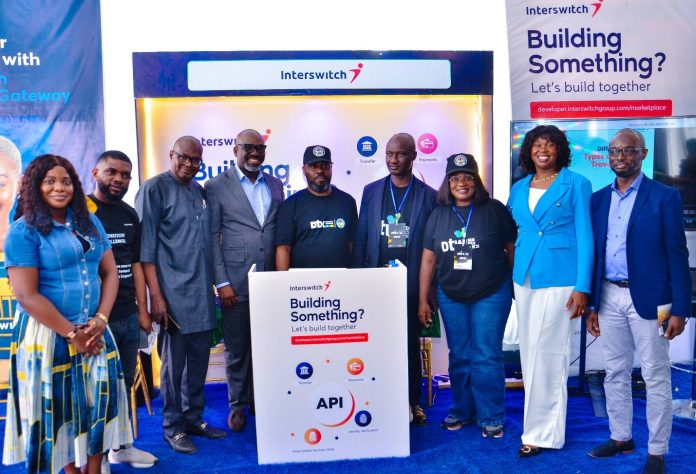
Interswitch, one of Africa’s leading integrated payments and digital commerce companies, played a significant role at the inaugural Delta Tech Week 2025, the flagship innovation, technology, and entrepreneurship festival convened by the Delta State Government through the Ministry of Science and Technology. The five-day event, held in Asaba from December 1st to 5th, brought together startups, corporates, academia, investors, developers, and ecosystem enablers from across Nigeria.

As a sponsor of the festival, Interswitch delivered a strong presence through product demonstrations, panel discussions, and developer-focused engagements, reinforcing its commitment to strengthening Nigeria’s digital infrastructure and enabling innovation across the South-South region. The company’s participation aligned with Delta State’s goal of positioning itself as an emerging technology hub through collaboration, capacity-building, and ecosystem development.

A key highlight of Interswitch’s involvement was its showcase of the API Marketplace and the Interswitch Payment Gateway, where the team demonstrated how businesses and developers can seamlessly integrate for payments, collections, merchant services, reconciliations, and commerce expansion. These sessions offered hands-on insights into how Interswitch’s technology is powering secure, frictionless checkout experiences and enabling enterprises to scale quickly across the country.

The company also featured prominently across panel discussions exploring financial inclusion, digital commerce enablement, the evolution of developer culture, and the role of infrastructure in driving socio-economic growth. These conversations underscored Interswitch’s continued leadership in shaping Nigeria’s digital economy.

Speaking on the company’s participation at the event, Olayinka Oluwadamilare, Head, Operations Strategy, Interswitch, noted the importance of multi-stakeholder collaboration in accelerating regional innovation.

‘’Delta Tech Week reflects the power of collective action in building a stronger digital future. Interacting with developers, startups, and the public sector in one space reaffirmed the importance of reliable infrastructure in driving innovation. Interswitch remains committed to supporting Delta State’s tech ecosystem and empowering its builders with secure, seamless payment solutions.”

Throughout the event, Interswitch maintained strong visibility across key gatherings, including DevFest, the Women in Tech Summit, and various breakout sessions focused on infrastructure, entrepreneurship, payments, and the future of software development.

Representing the company across these engagements were Adeyinka Adekoya, Vice President, Energy Ecosystem; Blessing Ogbonna James, Head, Digital Payments; Chidi Opara Ndudu, Partner Manager; and Esohe Obaseki, Executive, Growth Marketing.

As the maiden edition of Delta Tech Week came to a close, Interswitch reaffirmed its commitment to supporting Delta State’s fast growing technology ecosystem and to enabling individuals and businesses with secure, reliable, and future ready digital payment solutions.

Dollar To Naira Exchange Rate For 19th December 2025

Dollar To Naira Exchange Rate For 8th Dec 2023

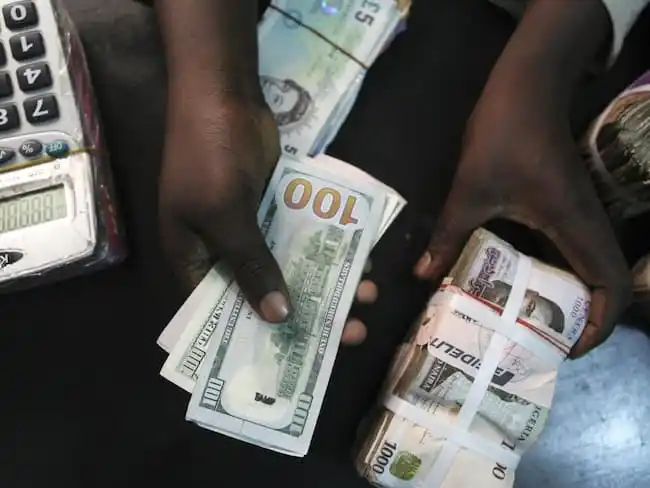
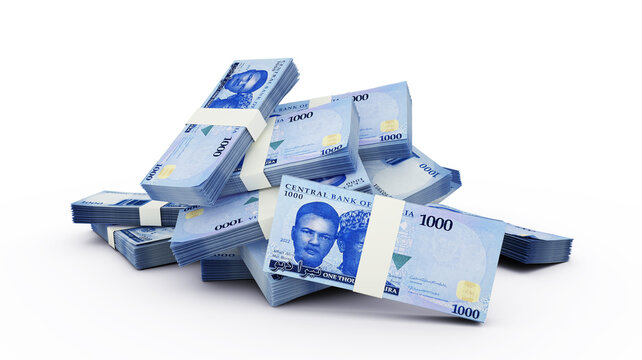
The exchange rate between the Naira and the US dollar, according to the data released on the FMDQ Security Exchange, the official forex trading portal, showed that the naira closed at 1480.00 per $1 on Friday, December 19th , 2025. The naira traded as high as 1456.00 to the dollar at the investors and exporters (I&E) window on Thursday.

How much is a dollar to naira today in the black market?

Dollar to naira exchange rate today black market (Aboki dollar rate):

The exchange rate for a dollar to naira at Lagos Parallel Market (Black Market) players sell a dollar for ₦1489 and buy at ₦1480 on Thursday 18th December, 2025, according to sources at Bureau De Change (BDC).

Please note that the Central Bank of Nigeria (CBN) does not recognize the parallel market (black market), as it has directed individuals who want to engage in Forex to approach their respective banks.

Dollar to Naira Black Market Rate Today

Dollar to Naira (USD to NGN)Black Market Exchange Rate Today
Selling Rate₦1489
Buying Rate₦1480

Dollar to Naira CBN Rate Today

Dollar to Naira (USD to NGN)CBN Rate Today
Highest Rate₦1462
Lowest Rate₦1456

Please note that the rates you buy or sell forex may be different from what is captured in this article because prices vary.

Nigerian Stock Market Adds ₦331bn As Consumer And Industrial Stocks Drive Fourth Straight Rally

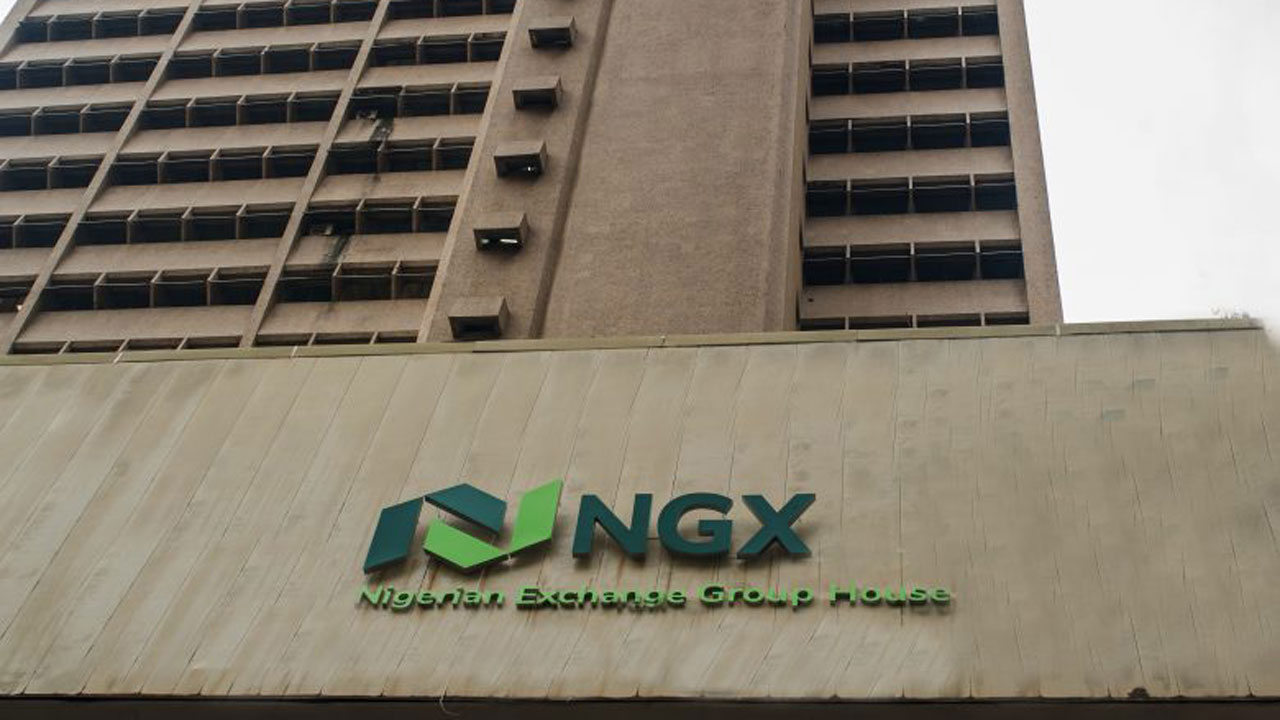
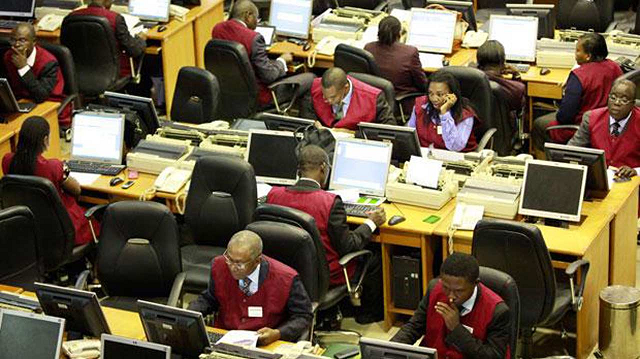
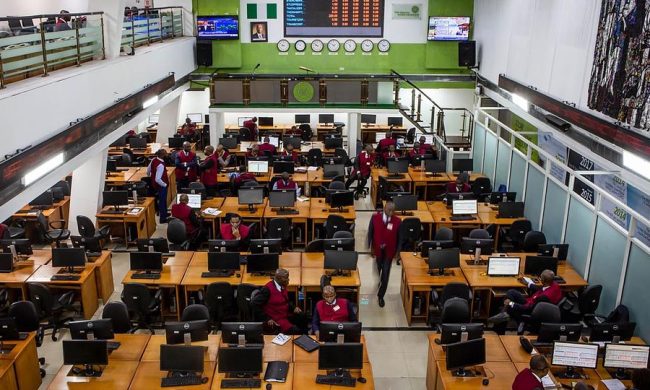
Nigeria’s equities market sustained its bullish momentum on Thursday, delivering fresh gains to investors as renewed buying interest in heavyweight consumer and industrial stocks lifted overall market performance. The rally marked the fourth consecutive session of positive movement during the trading week, reinforcing growing optimism on the Nigerian Exchange (NGX).

Market capitalization expanded significantly during the session, rising by ₦331 billion to close at ₦95.856 trillion, compared with the previous opening level of ₦95.525 trillion. This growth reflected a 0.35 per cent increase, underscoring the continued appetite for select equities amid improving market sentiment.

In tandem with the rise in market value, the NGX All-Share Index (ASI) advanced by 520.23 points, representing a 0.35 per cent gain. The benchmark index settled at 150,363.05 points, up from the 149,842.82 points recorded at the close of trading on Wednesday. As a result of the sustained rally, the market’s year-to-date return strengthened further to 46.09 per cent.

Investor participation was notably skewed toward stocks in the consumer goods, industrial, and services sectors, where price appreciation was driven by sustained demand. Nestlé Nigeria emerged as the session’s top performer, posting a 10 per cent increase to close at ₦1,958 per share. Guinness Nigeria followed closely with a 9.98 per cent gain, ending the day at ₦289.70.

Aluminium Extrusion Industries also recorded a strong performance, rising by 9.76 per cent to settle at ₦11.25 per share. Daar Communications gained 9.20 per cent, closing at 95 kobo, while MeCure Industries appreciated by 9.13 per cent to finish at ₦55 per share.

Market breadth closed on a positive note, reflecting broader participation across listed equities. A total of 35 stocks recorded price gains during the session, while 26 stocks closed in negative territory.

On the losing side, Stanbic IBTC Holdings led the decliners after shedding 9.33 per cent to close at ₦95.20 per share. LASACO Assurance followed with a 9.09 per cent decline, ending the session at ₦2.50. Africa Prudential also recorded notable losses, dipping by 8.82 per cent to settle at ₦12.40 per share.

AustinLaz fell by 8.33 per cent to close at ₦2.20, while Sterling Financial Holdings declined by 6.12 per cent, finishing at ₦6.90 per share.

Trading activity for the day showed a moderation compared with the previous session. A total of 839.8 million shares, valued at ₦32.8 billion, were exchanged across 23,211 transactions. This represented a decline from the 5.9 billion shares worth ₦216.2 billion traded in 25,205 deals recorded earlier.

First HoldCo emerged as the most actively traded stock by both volume and value, with 385.62 million shares changing hands, amounting to a turnover of ₦15.54 billion.

Despite softer trading volumes, Thursday’s performance reinforced the market’s bullish undertone, with sustained interest in fundamentally strong stocks continuing to support price appreciation across key sectors.

Bulls Retain Control As Nigerian Equities Extend Uptrend On Renewed Investor Confidence

NGX Records N256bn Loss Last Week

The Nigerian equities market closed Thursday’s trading session firmly in positive territory, extending its upward trend as sustained buying pressure across multiple sectors reinforced bullish dominance on the Nigerian Exchange (NGX). The session reflected renewed investor confidence, supported by selective accumulation of both large-cap and mid-cap stocks.

At the close of trading, the NGX All-Share Index settled higher at 150,363.03 points, compared with 149,842.82 points in the previous session. This movement represented a gain of approximately 0.26 per cent, signaling a continued, albeit measured, advance in overall market performance.

Trading opened with noticeable bullish momentum, as early demand for key equities set a positive tone that was maintained throughout the session. The sustained intraday strength was driven by buying interest in consumer goods, financial services, and select industrial counters, reflecting a mix of strategic positioning and portfolio rebalancing by investors.

Leading the charge were stocks such as Nestlé Nigeria and Guinness Nigeria, alongside Alex, Daar Communications, MeCure Industries, NPF Microfinance Bank, and First HoldCo. Other advancing equities included Ellah Lakes, Omatek Ventures, Champion Breweries, and several mid-tier stocks, contributing to a broad-based rally that extended beyond a narrow group of market heavyweights.

In total, more than two dozen stocks closed in positive territory, highlighting the depth of participation in the day’s upward move. Market analysts noted that the pattern of gains suggested increasing confidence in corporate fundamentals and expectations of improved earnings performance as the year progresses.

However, the session also reflected a degree of caution, as profit-taking emerged in several stocks that had previously enjoyed strong price appreciation. On the decliners’ table, Stanbic IBTC Holdings recorded losses, alongside LASACO Assurance, Africa Prudential, AustinLaz, and UPDC.

Other stocks that closed lower included Sterling Financial Holdings, Red Star Express, Honeywell Flour Mills, CWG, Guinea Insurance, and Regal Insurance, among others. These declines underscored selective selling pressure as some investors opted to lock in gains amid valuation concerns and short-term market uncertainties.

Despite the mixed performance across individual stocks, overall market sentiment remained tilted in favor of the bulls. The sustained upward movement of the All-Share Index pointed to underlying resilience, even as investors exercised greater discrimination in stock selection.

Market observers noted that the current trend reflects a balance between optimism and caution, with liquidity flows and macroeconomic signals expected to play a critical role in shaping near-term market direction. As the trading year advances, portfolio adjustments and corporate earnings expectations are likely to continue influencing market behavior.

Nonetheless, Thursday’s positive close reinforced the Nigerian equities market’s capacity to absorb profit-taking while maintaining upward momentum, suggesting that opportunities remain for investors with a disciplined and selective approach.

Trump Promises Economic Boom, Shifts Blame To Biden As Voters Worry About Rising Costs

Trump Pardons Lil Wayne, Kodak Black, Others (See Full Statement)

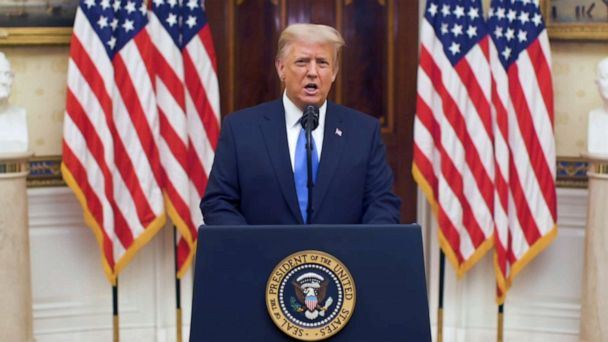
U.S. President Donald Trump has pledged a sweeping economic resurgence, promising Americans a period of unprecedented growth while attributing persistent cost-of-living pressures to policies implemented by his Democratic predecessor, Joe Biden.

In a nationally televised address delivered from the White House on December 17, marking the completion of his first year back in office, the 79-year-old president struck an optimistic tone while seeking to deflect mounting public dissatisfaction over affordability.

“Eleven months ago, I inherited a disaster, and we are fixing it,” Trump declared, framing his administration’s economic record as one of recovery and progress.

Despite these assurances, Trump faces increasing voter frustration over inflation and household expenses, an issue Republicans fear could negatively affect their prospects in the 2026 midterm elections. Although the president has previously dismissed concerns about affordability as politically motivated, polling data suggests the issue remains a dominant voter concern.

Trump insisted that prices for essential goods such as fuel and groceries were declining, telling viewers that costs were “falling rapidly” and that progress was accelerating.

In a surprise policy announcement, the president revealed that 1.45 million U.S. military service members would receive one-time “warrior dividend” payments of $1,776 before Christmas. According to Trump, the payments would be financed through tariff revenues and symbolically tied to the year of America’s founding.

Looking ahead, Trump projected an economic surge in 2026, describing it as “an economic boom the likes of which the world has never seen,” coinciding with the United States co-hosting the FIFA World Cup alongside Canada and Mexico.

While the White House billed the address as an opportunity to outline Trump’s economic agenda for the remainder of his second term, much of the speech revisited familiar themes, including criticism of Biden, Democrats, and immigration policies. Trump accused migrants of taking American jobs and blamed previous administrations for economic imbalances.

The address capped a turbulent year marked by an aggressive use of executive power, including intensified immigration enforcement and legal actions targeting political opponents.

Economists remain divided on the impact of Trump’s tariff policies. While some acknowledge that tariffs have contributed to higher prices for select goods, others note that the broader inflationary effect has been less severe than earlier forecasts suggested.

Trump defended his tariff strategy, arguing that it has spurred domestic manufacturing investment and generated revenues used for national priorities. However, the president delivered mixed messages on inflation, alternately claiming rapid price declines while acknowledging that inflation persists, albeit at a pace he says is being outstripped by wage growth.

U.S. labour market data has also raised concerns. Hiring momentum has weakened in recent months, with job growth largely concentrated in healthcare. November’s employment report showed the addition of 64,000 jobs, driven primarily by healthcare and a notable rebound in construction employment. Manufacturing, however, continued to shed jobs for the seventh consecutive month.

Polling data underscores voter unease. A PBS News/NPR/Marist survey released on December 17 found that 57 per cent of Americans disapproved of Trump’s handling of the economy, marking his lowest approval rating on the issue to date. A separate YouGov poll published a day earlier showed that a majority of respondents believed the economy was deteriorating under his leadership.

The president has also faced internal criticism from segments of his MAGA base, who argue that foreign policy initiatives and peace efforts abroad have distracted from pressing domestic economic challenges.

With the 2026 midterm elections approaching, Trump and his allies appear to be recalibrating their messaging. The president has increased domestic travel to promote his economic agenda, recently pledging in Pennsylvania to “make America affordable again.”

Vice President JD Vance has also taken on a more prominent role, urging patience during a speech on December 16 as he positions himself as a leading voice on economic policy ahead of a potential presidential run in 2028.

Naira Weakens At Official And Parallel Markets Despite Ongoing FX Intervention

The Nigerian naira recorded fresh losses at the official foreign exchange window, underscoring persistent pressure in the currency market as demand for U.S. dollars continued to outweigh available supply despite ongoing intervention by the Central Bank of Nigeria (CBN).

At the Nigerian Foreign Exchange Market (NFEM), official data showed that the naira depreciated by 0.16 per cent to close at ₦1,457.84 per dollar, compared with ₦1,455.49 recorded in the previous trading session.

Market participants attributed the weakening to insufficient dollar inflows from key sources, including the apex bank, exporters, foreign portfolio investors, and non-bank corporates. These inflows, according to analysts, remain inadequate to significantly rebalance the foreign exchange market.

Intraday trading data revealed that the naira touched a session low of ₦1,462.90 per dollar, marking the highest exchange rate recorded in December and highlighting the continued strain on the local currency. Spot rates were also quoted around ₦1,456 per dollar, the weakest level seen in the past two weeks.

Although the monetary authority has sustained its FX intervention sales, traders noted that the impact has only tempered volatility rather than eliminated demand-driven pressure. While the naira’s short-term outlook remains broadly stable, the currency has continued to relinquish earlier gains recorded in recent weeks.

The depreciation trend extended to the parallel market, where the naira slipped by 0.20 per cent to trade at ₦1,474 per dollar. This movement reflects heightened currency pressures across both regulated and informal segments of the foreign exchange market.

In global commodity markets, oil prices advanced sharply, supported by rising geopolitical tensions following an announcement by U.S. President Donald Trump ordering a comprehensive blockade of sanctioned oil tankers entering and leaving Venezuela.

Brent crude rose by $1.17, or 1.99 per cent, to settle at $59.84 per barrel, while U.S. West Texas Intermediate (WTI) crude climbed 97 cents, representing a 1.76 per cent gain, to $56.10 per barrel.

Gold prices also extended their rally, recording one of their strongest performances in decades. The precious metal has more than doubled over the past two years, marking its biggest sustained advance since the 1979 oil crisis.

Spot gold increased by 0.79 per cent to $4,337.85 per ounce, while U.S. gold futures rose by 0.88 per cent to $4,370.50 per ounce. Analysts noted that the strength in gold prices reflects heightened investor demand for safe-haven assets amid geopolitical and macroeconomic uncertainty.

Market sentiment suggests commodities could remain firm in the near term, with gold expected to continue strengthening on bullish forecasts extending into 2026, while oil prices remain supported by supply risks linked to geopolitical developments.

Nigerian Stock Market Adds ₦332bn As Banking And Consumer Stocks Dominate Trading

Stock Exchange Closes Trading Week With N30bn Gain

Equity investors on the Nigerian Exchange (NGX) closed Thursday’s trading session in profit territory, with market capitalisation rising by approximately ₦332 billion as financial and consumer stocks continued to anchor market activity ahead of the fourth-quarter earnings season.

The benchmark NGX All-Share Index maintained its upward trajectory, reflecting renewed positioning by investors amid sustained bargain hunting across selected equities. Market performance indicators ended the session higher, underscoring continued optimism among traders despite a notable slowdown in trading volumes.

Data from the exchange showed that the All-Share Index advanced by 520.23 points, representing a 0.35 per cent gain, to close at 150,363.05 points. In tandem, total market capitalisation climbed by ₦331.65 billion, also up 0.35 per cent, settling at ₦95.86 trillion.

Market analysts attributed the sustained rally to selective buying interest, particularly in fundamentally strong stocks that had previously traded at discounted levels. Shares of NESTLE, ELLAH LAKES, UACN, MECURE, and UBA recorded significant demand across multiple sectors of the market.

Despite the positive price movement, overall market activity moderated significantly. Trading statistics revealed a sharp contraction in transaction volumes and values as investor participation thinned compared with previous sessions.

A total of 839.77 million shares valued at ₦32.81 billion were exchanged in 23,211 deals during the session. This represented an 85.83 per cent decline in traded volume and an 84.83 per cent drop in transaction value, while the number of deals slipped by 7.91 per cent.

FIRSTHOLDCO dominated trading activity, accounting for 46.23 per cent of total market volume. It was followed by FCMB Holdings with 9.11 per cent, LASACO Assurance at 5.22 per cent, Access Holdings at 3.55 per cent, and CHAMS at 2.97 per cent.

In terms of value, FIRSTHOLDCO also emerged as the most traded stock, contributing 47.51 per cent of the total value of transactions executed on the exchange, reinforcing its position as the day’s most actively traded equity.

On the gainers’ chart, NESTLE led the rally with a 10.00 per cent price appreciation. GUINNESS followed closely with a 9.98 per cent gain, while ALEX, DAAR Communications, and MECURE rose by 9.76 per cent, 9.20 per cent, and 9.13 per cent respectively. NPF Microfinance Bank also recorded an 8.02 per cent increase, alongside 29 other advancing stocks.

Conversely, twenty-six equities closed in negative territory. STANBIC IBTC Holdings topped the losers’ table after shedding 9.33 per cent of its share price. LASACO Assurance declined by 9.09 per cent, while AFRIPRUD, AUSTINLAZ, STERLINGNG, and REDSTAREX recorded losses of 8.82 per cent, 8.33 per cent, 6.12 per cent, and 5.43 per cent respectively.

Overall market breadth remained positive, with 35 gainers outweighing 26 decliners, reflecting a moderately bullish sentiment.

Sectoral performance was mixed. The Consumer Goods sector posted the strongest advance with a 1.23 per cent gain, followed by the Banking index, which rose by 0.56 per cent. The Oil and Gas sector edged higher by 0.05 per cent. Meanwhile, the Insurance sector declined by 0.23 per cent, while the Industrial and Commodity indices closed flat.

₦400 Million In Rewards Up For Grabs In PalmPay’s Festive Campaign

PalmPay, Nigeria’s leading digital banking platform, has announced the launch of its ₦400 million festive rewards campaign, designed to reward users with cash prizes and fully sponsored international travel experiences for everyday transactions on the PalmPay app.

The campaign will run from December 17, 2025, to January 8, 2026. The campaign is designed to reward everyday transactions with extraordinary experiences. It runs alongside PalmPay’s Purple December brand campaign, which focuses on wrapping up the company’s key brand and community initiatives for the year.

At the centre of the rewards campaign is the PalmPay World Travel Carnival, an interactive card collection experience that allows users to earn city cards by completing transactions on the app. Users are required to collect five city cards – London, New York, Dubai, Sydney, and Cape Town and combine them into a World  Card, which unlocks a share of the prize pool.

The more World Cards a user creates, the larger their share of the cash rewards. Any extra uncombined cards can be swapped with friends and other PalmPay users to help complete additional World Cards.

Beyond cash rewards, the Carnival also offers Free Global Trips. In each round, the top two users with the highest number of eligible transactions (₦100 and above) and at least one World Card will win an all-expense-paid international trip.


 The travel grand prize covers:

  1. Visa fees
  2. Round-trip international airfare
  3. 5-day, 4-night hotel accommodation
  4. Side attraction
  5. Meal expenses
  6. Airport pick-up and drop-off
  7. All transportation for scheduled tour activities during the trip

Winners will be determined through a transparent leaderboard system, with prizes credited automatically at the end of each round on December 25, December 31, and January 8.

Participation is simple:

  1. Complete tasks on the PalmPay app, such as Airtime, Data, Transfers, and other specific transactions listed in the app, to earn cards.
  2. Collect all five city cards.
  3. Swap cards with friends to complete your collection.
  4. Combine cards to form a World Card and earn cash rewards.
  5. Perform more transactions to climb the leaderboard for a chance at the global trip prize.

To ensure fairness, PalmPay has instituted strict rules: no cheating, bots, fake accounts, or manipulation. Any violations may lead to disqualification or account bans. Additionally, the Free Travel Prize is limited to one per user throughout the campaign.

Speaking on the launch, Femi Hanson, Head of Marketing & Communication, “This festive rewards campaign is about turning everyday banking into meaningful value for our users. With the World Travel Carnival as the headline activation, we are reinforcing PalmPay’s promise of being the smarter way to bank—where smart financial decisions unlock bigger opportunities.” For more information, download PalmPay

BizWatchNigeria.Ng
Privacy Overview

This website uses cookies so that we can provide you with the best user experience possible. Cookie information is stored in your browser and performs functions such as recognising you when you return to our website and helping our team to understand which sections of the website you find most interesting and useful.