









Home Blog Page 18

Health Analyst Calls for New Strategy to Reduce Smoking Harm in Nigeria

Public-health experts are urging Nigeria to adopt a science-driven, risk-proportionate tobacco harm reduction (THR) framework to significantly curb smoking-related diseases, warning that traditional anti-tobacco campaigns alone are unlikely to achieve substantial results.

The call follows the World Health Organisation’s Global Adult Tobacco Survey (GATS 2023), which shows that 3.7 per cent of Nigerian adults continue to smoke despite years of anti-tobacco measures. Health analyst and epidemiologist Dr. Yusuff Adebayo said Nigeria must strengthen existing tobacco-control strategies while also providing safer, regulated alternatives for adults who are unable or unwilling to quit.

“Decades of global tobacco-control efforts have shown one clear reality: a segment of adult smokers will continue to seek nicotine,” Adebayo explained. “The goal should be to encourage them toward less harmful, scientifically substantiated products. Tobacco harm reduction is a pragmatic, evidence-based tool that complements, not replaces, traditional control measures.”

Citing a 2022 review by Public Health England, Adebayo noted that vaping is considered at least 95 per cent less harmful than conventional smoking because it eliminates combustion—the main driver of conditions such as cancer, chronic lung disease, and heart disease. He also referenced U.S. Food and Drug Administration rulings that authorized specific heated-tobacco and oral-nicotine products as Modified Risk Tobacco Products (MRTPs), meaning they expose users to significantly fewer toxicants than cigarettes.

“These global precedents provide a scientific basis for Nigeria to develop its own risk-proportionate regulatory framework,” Adebayo said. He stressed that clear regulations, product standards, consumer safety rules, and fiscal policies reflecting relative risk are essential. “Excessive taxation or ambiguous rules could push smokers toward unregulated, unsafe products,” he warned.

Harm reduction is already recognized in Article 1(d) of the WHO Framework Convention on Tobacco Control. Countries such as the United Kingdom, Sweden, and Japan have significantly reduced smoking rates by adopting risk-proportionate approaches that make low-risk products more accessible than cigarettes.

Beyond regulation, Adebayo highlighted the importance of public trust and scientific communication. A 2024 study in the International Journal of Medical Students found widespread uncertainty among Nigerian medical trainees regarding THR principles. He recommended updating medical curricula, providing professional training, and creating independent advisory bodies to oversee post-market surveillance, monitor product use, and track unintended consequences.

Industry observers say that a well-structured THR policy could also boost economic outcomes by reducing illicit tobacco flows, attracting compliant manufacturers, stimulating innovation in low-risk nicotine technologies, and lowering healthcare costs associated with smoking-related illnesses.

“With the right mix of science, regulation, and public education, Nigeria can meaningfully reduce the health impacts of smoking while empowering adults with safer choices,” Adebayo said. “The country now has an opportunity to embrace a balanced, evidence-based pathway to better health outcomes.”

Thursday Chronicles: The Cost Of Living And The Cost Of Surviving In Nigeria

Welcome back, my people! Another Thursday, another reason to gather your mind, grab a seat, take a deep breath, and gist with me like we always do. As usual, we’re going straight into the matter, no long introduction, because Nigeria itself is already doing too much.

Today, let’s talk about a general issue affecting every Nigerian, whether you’re living in Lagos, Ibadan, Kaduna, Port Harcourt, Ijebu-Ode, or even abroad, but still sending money home. Yes, we are talking about the cost of living in Nigeria, also known as the “if you no strong, you go cry” phenomenon.

You see, Nigeria has turned all of us into mathematicians. We are calculating everything, the cost of food, transport, electricity, water, data, fuel, and even oxygen, is looking suspicious these days. You want to buy something, but before you bring out your wallet, you will pause, check your bank balance, check the price again, calculate the difference, whisper a short prayer, and then ask yourself, “Do I really need this thing?” That is how eggs turned from a basic ingredient to a luxury item. These days, to fry 3 eggs, you must think carefully. Is it hunger talking or greed?

Even garri, our last hope, is now behaving like it’s attending private university. And bread? Bread that used to be a comfort food is now a high-ranking officer. You see it on the shelf and you greet it with respect: “Good afternoon, sir. I’m just passing by.”

Transport fare too has joined the movement. Entering a bus in Lagos is now part of your cardio exercise. By the time you reach your destination, you’ve done a half-day workout: jump in, jump out, calculate change, hold your bag, check your phone, observe your surroundings, and pray silently. Then the conductor will still be shouting as if he bought the air you are breathing.

Electricity? Nigeria gives you two options: either you use light or you use your sense. Because if you leave everything plugged in, the next time you buy units, you will understand the true meaning of heartbreak. NEPA will bring light for 15 minutes and take it again, but the bill will show as if they powered your village for one week.

Let’s not even talk about fuel. Nigerians have suffered so much with fuel prices that nobody reacts again. You just see a new price and sigh like someone who has accepted fate. And the queues, ah! You’ll think it’s a movie premiere. Everybody is sweating, arguing, calculating, praying, and still buying.

Despite all this, Nigerians still find a way to laugh. Someone will say, “The country is hard,” and another will respond, “My sister, e go better,” even though both are silently asking God, “When exactly?” Nigerians will find humor even in the middle of economic chaos. We joke, we banter, we drag politicians, we advise each other, and we encourage ourselves.

But the truth is, the cost of living is not just about money. It affects our mental health. It affects our relationships. It affects our productivity. It affects our dreams. Some people are not angry; they are just hungry. Some people are not moody; their account balance is. Some people are not avoiding you; transport fare is avoiding them.

Yet, in all of this, Nigerians remain some of the strongest people you will ever meet. We improvise. We survive. We adapt. We look out for each other. If there’s one thing insecurity couldn’t snatch from us, it’s our resilience and our ability to keep going no matter the weight on our shoulders. We hustle, we pray, we laugh, we share, we hope, because hope is the one thing Nigeria has not taxed yet.

And that’s the beauty of this place: despite the struggles, we still believe that one day, things will work. One day, food will be affordable again. One day, salaries will match the cost of living. One day, we will enter supermarket without calculating like accountants. One day, our parents won’t have to do mathematics before buying pepper. One day, we will look back and say, “Ah, we survived.”

But until then, my people, hold on. Be smart with your spending. Eat well (as well as your account allows). Check on your people. Laugh when you can. Rest when you need to. And don’t let this country drain the softness out of you.

Another Thursday, another truth.
Same time next week, same seat, same vibe, same chronicles.

FAAN Sets New Course For Aviation Reform At Abuja Retreat

FAN Identifies, Bans 2 Immigration Officers Over Extortion

The Federal Airports Authority of Nigeria has unveiled a broad plan designed to strengthen the future of the country’s aviation system. The plan was presented at a four day FAAN Board and Stakeholders Retreat in Abuja, where senior officials examined the state of airports, regulatory coordination, policy direction and long term industry resilience.

The Chairman of the FAAN Governing Board, Dr Abdullahi Umar Ganduje, said the retreat was organised to confront the persistent gaps in Nigeria’s aviation structure while preparing the agency for global competition. He explained that the theme, “Future Proofing FAAN: Leadership, Modernization and Strategic Renewal”, reflects the urgent need for the organisation to evolve with new standards in safety, technology and service delivery.

“We cannot afford to operate as if the aviation sector is static. It is changing every day and Nigeria must keep pace with the rest of the world. This retreat gives us the chance to reflect deeply and build a FAAN that is resilient and internationally competitive,” Ganduje said.

He added that discussions at the retreat would focus on airport infrastructure development, improved interagency collaboration, operational efficiency and better policy alignment. According to him, these areas remain central to positioning FAAN for long term success.

Ganduje also expressed gratitude to President Bola Ahmed Tinubu, stating that the administration’s Renewed Hope Agenda has been instrumental in revitalising airports across the country. He said the President’s emphasis on modern facilities, digital transformation, safety enhancement and operational reforms has strengthened the aviation ecosystem. He also praised the Minister of Aviation and Aerospace Development, Chief Festus Keyamo, describing his leadership as “bold and decisive at a time when the sector needs clear direction”.

FAAN Managing Director and Chief Executive, Mrs Olubunmi Kuku, said the agency is undergoing internal renewal and must examine the foundations that will sustain its relevance. She highlighted leadership, modernization and strategic reinvention as the core pillars that will shape FAAN’s future.

Kuku said, “Leadership remains the first pillar because every major improvement begins with clarity of vision and accountability. My administration runs an open door policy because innovation thrives only when people are encouraged to speak, exchange ideas and challenge old patterns.”

She noted that modernization is strongly tied to the quality of personnel and the need to equip staff with tools that match evolving global standards. She added that the retreat offers an important moment for introspection. “We have an opportunity within these four days to evaluate our strategies, recognise our weaknesses and craft solutions that are sustainable and agile,” she said.

Both officials reaffirmed that FAAN is committed to strengthening Nigeria’s aviation landscape and transforming airports into efficient, modern facilities capable of competing with regional and global hubs.

NAICOM Pushes For Customer-Focused Practices And Faster Claim Settlements

NAICOM Revokes 2 Insurance Firms License

The National Insurance Commission (NAICOM) is urging insurance and reinsurance companies in Nigeria to place greater emphasis on prompt claims settlement and customer-centric operations. The directive comes as part of broader efforts to strengthen public confidence in the sector and to build a resilient, trustworthy insurance industry.

Speaking from Abuja, the Commissioner for Insurance, Mr. Olusegun Omosehin, emphasized that timely claim resolution is not just a regulatory requirement but a strategic necessity. “NAIRA 2025 is our collective pact with the Nigerian people; a commitment to resilience, trust, and innovation,” he said. “Insurance must serve the people efficiently and transparently. Every claim paid on time strengthens confidence in the industry and signals that we are serious about reform.”

The directive aligns with the Nigerian Insurance Industry Reform Act (NIIRA) 2025, which seeks to modernize regulatory frameworks and introduce technology-driven solutions across the sector. Omosehin highlighted that insurers should adopt sound risk management frameworks, invest in digital solutions, and improve operational efficiency to meet the expectations of policyholders.

He further urged actuarial professionals and firms to collaborate closely with insurers in implementing IFRS 17 standards, liability valuation, and Risk-Based Capital readiness. “Developing robust pricing models for both compulsory insurance schemes and emerging risks is crucial. Collaboration across the sector will strengthen actuarial capacity and ensure sustainable growth,” the Commissioner noted.

Omosehin framed compliance not as a burden but as an opportunity for the Nigerian insurance industry to transform into a digitally native, globally respected, and regionally competitive sector. “The NAICOM of today stands ready to guide, engage, and collaborate,” he said. “Innovation, transparency, and customer satisfaction must remain at the heart of everything we do. Together, we can redefine the future of insurance in Nigeria and across Africa.”

With this renewed focus on service delivery and strategic reforms, NAICOM is signaling a decisive shift toward an insurance sector that is more accountable, technologically empowered, and oriented toward the needs of the people it serves.

NAAPE’s New Leadership Sets A Safety-First Tone For Nigeria’s Skies

The newly elected leadership of the National Association of Aircraft Pilots and Engineers stepped into office with a clear message: Nigeria’s aviation sector must evolve, and safety has to remain its central organizing principle.

At the inaugural gathering of the National Executive Council in Abuja, the association’s president, Captain Bunmi Gindeh, positioned NAAPE’s mandate as part of a larger national responsibility. He told members that their work affects not only their own careers but the safety and reliability of every aircraft that leaves the ground.

In his words, “The decisions we make in this council will directly impact not only our members but also the safety and efficiency of air travel in our nation.” It was a reminder that NAAPE’s influence stretches far beyond internal concerns. It touches every passenger, every crew member, and every aircraft that depends on the expertise of pilots and engineers.

Gindeh described NAAPE members as the backbone of the aviation ecosystem. According to him, they are central to flight safety, operational discipline, and the advancement of aviation technology in Nigeria. Their work shapes the level of trust the public places in the industry, and it defines how the sector grows in the coming years.

In a statement released by the association’s spokesperson, Engr. Blessing Ahmadu, NAAPE’s role was framed as both technical and strategic. Ahmadu noted that the association is the “engine room” of the sector, responsible for protecting members’ interests, building constructive engagement with regulators and operators, promoting professional development, and sustaining strong institutional structures.

The tone of the meeting made one thing clear. This new council intends to combine advocacy with accountability. Gindeh urged members to embrace transparency, diligence and collaboration, calling on them to place collective progress above personal preference. He reminded them that aviation is an industry where errors are costly and excellence is non-negotiable.

By the end of the meeting, one message stood out. NAAPE is not just adjusting to a new leadership cycle. It is signaling a renewed commitment to shaping a safer, more competent, and more respected aviation sector for the country.

FG Unveils N54.43tn 2026 Budget As Debt Service Rises To N15.91tn

The Federal Government has unveiled a proposed N54.43 trillion budget for 2026, even as debt servicing is projected to consume N15.91 trillion, signalling growing fiscal strain and a widening gap between revenue and expenditure.

According to the 2026–2028 Medium-Term Expenditure Framework and Fiscal Strategy Paper approved by the Federal Executive Council on Wednesday, the government expects to generate N50.74 in revenue next year and achieve an economic growth rate of 4.68 per cent. However, the projected N20.10tn deficit marks a sharp expansion, exceeding the entire 2022 national budget by N2.78tn, The PUNCH reports.

Analysts warn that such a steep deficit — which accounts for 36.9 per cent of the spending plan — could intensify Nigeria’s fiscal vulnerability, strain the macroeconomic environment, and heighten pressure on households and businesses in 2026.

Briefing State House correspondents after the FEC meeting, the Minister of Budget and Economic Planning, Atiku Bagudu, said the MTEF/FSP would be transmitted to the National Assembly on Monday. He noted that the fiscal assumptions were informed by extensive consultations with ministries, private sector stakeholders, civil society groups and development partners.

Conservative Oil Benchmarks and Dual Production Estimates

Bagudu explained that the framework was built on a cautious oil price benchmark of $64.85 per barrel and an exchange rate assumption of N1,512/$ for 2026. He added that for the first time, government adopted dual crude oil production figures: an industry target of 2.06 million barrels per day and a conservative budget benchmark of 1.8 million barrels per day, offering a 12.6 per cent buffer against supply disruptions.

He cautioned that increased political spending ahead of the 2027 elections could intensify pressure on the naira, adding, “Given that 2026 is a pre-election year, there is a lot of election activity spending that can typically affect the exchange rate.”

Revenue Allocation and Rising Obligations

Of the projected N50.74tn Federation revenue:

N22.60tn is allocated to the Federal Government,

N16.30tn to state governments, and

N11.85tn to local governments.

The Federal Government expects to receive N34.33tn from all revenue sources, including N4.98tn from government-owned enterprises — a figure 16 per cent lower than the 2025 estimate.

Key spending areas include:

about N3tn in statutory transfers,

N15.27tn in non-debt recurrent expenditure,

N15.91tn for debt servicing.

Debt service will account for 29.2 per cent of total spending, meaning nearly three in every ten naira spent next year will go toward servicing existing obligations.

The scale of the projected deficit means Nigeria intends to borrow more than one-third of its total 2026 expenditure. By comparison, the 2025 budget of N54.99tn carries a deficit of N9.22tn, making the 2026 gap more than double — a rise of 118 per cent.

Historical comparisons also highlight the growing burden: the amended 2022 budget stood at N17.32tn, with a debt service bill of N3.98tn. The 2026 debt service projection of N15.91tn represents a 299 per cent increase in four years. Recurrent spending has risen from N7.11tn in 2022 to N15.27tn proposed for 2026, an increase of 115 per cent, while capital spending has grown at a slower pace.

Bagudu said the fiscal framework reflects insights from the 2025 budget performance review and expert consultations across critical sectors. He added that President Bola Tinubu had secured National Economic Council support for stronger coordination between fiscal and monetary authorities and renewed investment in security infrastructure and revenue protection across the oil, gas and solid minerals sectors.

Economists Warn of Heightened Fiscal Risks

Economists who spoke to The PUNCH have expressed concern that the Federal Government’s plan to run a N20.10tn deficit in 2026 could reverse the fragile macroeconomic stability recorded in recent months.

The CEO of the Centre for the Promotion of Private Enterprise, Dr Muda Yusuf, warned that Nigeria is edging closer to a “debt trap” if it continues to accumulate obligations at the current pace.

“We need to worry about debt sustainability,” he said. “High levels of deficits and high levels of debt can choke the fiscal space and lead to a vicious circle of debt.”

He noted that Nigeria had recently achieved modest macroeconomic stability, cautioning that a sharp rise in borrowing could fuel inflation and intensify exchange rate pressures.

Similarly, economist and professor at Olabisi Onabanjo University, Sheriffdeen Tella, questioned the timing and basis of the 2026 budget, arguing that the government had barely begun implementing the 2025 budget before rolling out new projections.

“There is no basis for any budget because what they had, they have not implemented,” he said, warning that Nigeria risks operating multiple budgets concurrently — a sign of fiscal disorder.

He added that the sharp rise in the deficit suggests that the figures were not grounded in performance indicators, describing the process as unclear and poorly aligned.

The President of the Nigerian Economic Society, Prof. Adeola Adenikinju, also raised concerns about the breakdown of the January–December budget cycle, saying the late approval of the MTEF shows that Nigeria is drifting further off course.

“The 2026 budget should have been in the National Assembly for consultation so that we can keep to this January 1st timeline,” he said.

Adenikinju noted that the proposed deficit violates the Fiscal Responsibility Act, which caps the deficit at 3 per cent of GDP, and expressed worry that excessive domestic borrowing will raise interest rates, crowd out private investment and worsen economic hardship.

He also questioned the efficacy of government spending, pointing out that late capital releases undermine the developmental impact of projects despite rising borrowing levels.

A Challenging Fiscal Path Ahead

With debt servicing consuming a growing share of the budget, recurrent expenditure rising steadily and deficits expanding faster than revenues, experts say Nigeria must urgently re-establish fiscal discipline, restore predictability to the budget process, and prioritise productive spending to avoid deeper macroeconomic instability in the coming years.

Meta Begins Removing Under-16 Users In Australia Ahead Of Landmark Social Media Ban

Meta To Launch Paid Verification Service For Facebook, Instagram

Tech giant Meta has begun removing users under the age of 16 from Instagram, Facebook, and Threads in Australia, as the country prepares to implement a world-first ban on social media access for young teenagers.

Under the new law, which takes effect on December 10, major digital platforms — including Meta, TikTok and YouTube — must block under-16 users or face penalties of up to A$49.5 million (US$32 million) for failing to take “reasonable steps” to comply.

A Meta spokesperson confirmed on Thursday that the company had started offboarding affected users, describing the rollout as the start of a “multi-layered” compliance process.

“We are working hard to remove all users who we understand to be under the age of 16 by 10 December,” the spokesperson said.

“Before you turn 16, we will notify you that you will soon be allowed to regain access to these platforms, and your content will be restored exactly as you left it.”

The company added that young users will be able to download and save their account history before removal.

The new rules are expected to affect hundreds of thousands of Australian adolescents. Instagram alone reports approximately 350,000 users aged 13 to 15.

Some popular platforms — including Roblox, Pinterest and WhatsApp — are exempt from the ban, though the exemption list is still under review.

Meta Calls for App Store Responsibility

While Meta maintains it will comply with the law, the company argued that responsibility for age verification should shift to app stores such as Google Play and Apple’s App Store.

“The government should require app stores to verify age and obtain parental approval whenever teens under 16 download apps,” the company said, adding that this approach would prevent teens from repeatedly verifying their ages across multiple platforms.

Meta said social media companies could then rely on verified age information from app stores to ensure age-appropriate experiences.

YouTube voiced its own concerns this week, claiming the ban could make children “less safe”, as under-16s might still access its website anonymously but without the platform’s safety filters.

Australia’s Communications Minister Anika Wells dismissed the argument as “weird”.

“If YouTube is reminding us that there is content not appropriate for age-restricted users on their website, that’s something YouTube needs to fix,” she said.

Wells noted that harmful algorithmic content had contributed to the deaths of some Australian teenagers, eroding their self-esteem.

“This law will not fix every harm occurring on the internet, but it will make it easier for kids to chase a better version of themselves,” she added.

Legal Challenge and Global Impact

The Digital Freedom Project, an internet rights organisation, has launched a High Court challenge against the legislation, describing it as an “unfair” restriction on freedom of expression.

Authorities acknowledge that determined teens may attempt to bypass the restrictions using fake IDs or AI-modified photos. Platforms have been instructed to design their own safeguards, though Australia’s online safety regulator admits that “no solution is likely to be 100 percent effective”.

The enforcement of Australia’s sweeping restrictions is being closely watched internationally. Malaysia has indicated plans to block under-16s from joining social media next year, while New Zealand is set to introduce a similar ban.

The success or failure of Australia’s approach could shape global efforts to regulate the risks social media poses to younger users.

FEC Approves 2026–2028 MTEF, Projects ₦50.7tr Revenue And ₦20.1tr Fiscal Deficit

The Federal Executive Council (FEC) has approved the 2026–2028 Medium-Term Expenditure Framework (MTEF), setting out Nigeria’s fiscal assumptions, revenue projections and expenditure priorities for the three years.

Minister of Budget and National Planning, Atiku Bagudu, disclosed this to State House correspondents after Wednesday’s FEC meeting presided over by President Bola Tinubu. He said the framework was jointly prepared by the Budget Office of the Federation and his ministry.

According to Bagudu, the council adopted an oil production benchmark of 2.06 million barrels per day (bpd) for 2026, though fiscal planning will be anchored on a more conservative 1.8 million bpd. The oil price benchmark was set at $64 per barrel, with an exchange rate assumption of ₦1,512 to the dollar. Inflation is expected to average 18 per cent in 2026.

He explained that the exchange rate projection reflects underlying macroeconomic modelling as well as political dynamics ahead of the general elections.

Based on these assumptions, total federation revenue for 2026 is estimated at ₦50.74 trillion. The federal government is expected to receive ₦22.6 trillion, states ₦16.3 trillion, and local governments ₦11.85 trillion.

“When revenues from all federal sources are consolidated, including ₦4.98 trillion from government-owned enterprises, total federal government revenue for 2026 is projected at ₦34.33 trillion — a decline of ₦6.55 trillion or 16 per cent from the 2025 budget estimate,” Bagudu said.

Statutory transfers are projected at about ₦3 trillion, while debt servicing is expected to cost ₦10.91 trillion. Non-debt recurrent expenditure — covering personnel, pensions and overheads — is pegged at ₦15.27 trillion.

The fiscal deficit for 2026 is projected at ₦20.1 trillion, representing 3.61 per cent of GDP.

Economy Targeted to Hit ₦690tr in 2026

The MTEF forecasts a nominal GDP of over ₦690 trillion in 2026, rising to ₦890.6 trillion by 2028. GDP growth is projected at 4.6 per cent in 2026. Non-oil GDP is expected to grow from ₦550.7 trillion in 2026 to ₦871.3 trillion in 2028, while oil GDP is projected to expand from ₦557.4 trillion to ₦893.5 trillion over the same period.

Bagudu said President Tinubu is confident that sustaining ongoing reforms and implementing the MTEF faithfully will strengthen macroeconomic stability and place Nigeria on a more robust growth trajectory.

FEC also reviewed submissions from ministries before approving the Medium-Term Fiscal Expenditure Ceiling (MFTEC), a tool designed to ensure prudent public spending and reinforce fiscal discipline over the medium term.

Tinubu Declares Security Emergency As FEC Approves N160bn Telecoms Rollout For Underserved Communities

President Bola Tinubu has declared a national security emergency as the Federal Executive Council (FEC) approved a N160 billion plan to deploy 4,000 telecommunications towers across underserved and hard-to-reach communities in Nigeria.

The initiative, expected to significantly expand digital connectivity and bolster security operations, was announced by the Minister of Information and National Orientation, Mohammed Idris, after the FEC meeting at the State House, Abuja.

Idris said the large-scale rollout aligns with the administration’s commitment to inclusive development and national security reinforcement.

“The Federal Executive Council has taken a decision that 4,000 of such towers be established in these very underserved communities across this country,” he stated.

According to the minister, the project is designed not only to improve access to voice and data services but also to enhance security surveillance, commercial activity and digital inclusion for millions of Nigerians.

At an estimated N40 million per tower—covering infrastructure and equipment but excluding land and licensing fees—the investment targets more than 23 million Nigerians currently cut off from basic telecommunications services. Many of these citizens live in remote areas where connectivity gaps undermine emergency response, digital banking, education, and economic participation.

The initiative will be driven by the Ministry of Communications and Digital Economy and is projected to transform rural connectivity while providing crucial support to security agencies operating in volatile regions, particularly the North-East and Middle Belt.

Nigeria’s telecoms landscape has seen substantial growth since liberalisation in 2001. The Nigerian Communications Commission (NCC) reports that 53,460 3G and 4G base transceiver stations (BTS) have been deployed in the last five years. However, experts estimate that between 70,000 and 80,000 stations are needed for optimal nationwide coverage, especially in preparation for deeper 5G penetration.

The additional 4,000 towers could extend service to 20–30 percent of Nigeria’s underserved landmass, offering improved connectivity in areas most affected by insurgency and banditry.

Logistical Challenges Persist

Despite the ambitious plan, industry players warn that implementation hurdles could impede progress. Deploying a single base station incurs significant challenges—from the rising cost of diesel, which has surged by 300 percent since the 2023 subsidy removal, to frequent power outages in off-grid regions.

Vandalism remains a major threat, with more than 1,200 towers attacked in 2024 alone. These incidents—often driven by scrap metal theft or community-related reprisals—have cost operators an estimated N50 billion in repairs and revenue losses.

Right-of-way (RoW) charges imposed by state and local governments add an extra 20–30 percent to deployment costs, while bureaucratic inconsistencies can delay approvals for up to six months per site. Environmental and terrain-related obstacles, such as flooding in the South-South and erosion in northern states, compound installation difficulties.

Telecom operators, including MTN and Airtel Africa, have repeatedly called for reforms to ensure cost-effective rollout. Their recommendations include harmonised RoW charges capped at N140 per kilometre, incentives for tower co-location among operators, and mandatory hybrid solar-diesel power systems, which could cut fuel use by nearly 70 percent.

Stakeholders argue that without these policy interventions, the N160 billion initiative may fail to deliver its intended impact.

The rollout forms part of the administration’s wider strategy to improve national security, enhance economic activities in rural areas and reduce Nigeria’s longstanding digital divide.

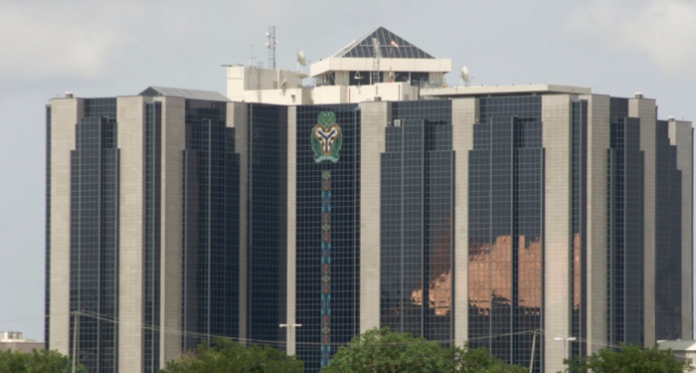
CBN Raises Treasury Bills Yield Above Inflation As Investors Target Higher Returns

The Central Bank of Nigeria (CBN) increased spot rates on Nigerian Treasury bills by 146 basis points during Wednesday’s primary market auction, following a period of tepid subscription across shorter-dated instruments.

The revised rate on the 364-day Treasury bills has now moved above Nigeria’s 16.05% inflation rate by 145 basis points, aligning with the apex bank’s decision to maintain the Monetary Policy Rate at 27%.

At the latest auction, the CBN offered N700 billion worth of Treasury bills across the standard 91-day, 182-day, and 364-day maturities.

Auction data revealed that total subscription marginally exceeded the offer, signalling investors’ growing preference for higher-yielding naira assets despite ongoing disinflation. Total bids amounted to approximately N775 billion against the N700 billion offered.

Demand was heavily skewed toward longer tenors, with nearly 90% of bids targeting the 364-day bills. The CBN opened N100 billion worth of 91-day paper, but the offer attracted only N44.17 billion in bids. A total of N42.80 billion was allotted at a spot rate of 15.30%, unchanged from the previous auction.

For the 182-day tenor, subscription came in at N33.38 billion compared with the N150 billion on offer. The CBN allotted N30.36 billion at a steady rate of 15.50%.

The bulk of investor activity concentrated on the 364-day bills, which drew N697.29 billion in bids against the N450 billion offered. The CBN eventually allotted N636.46 billion at a new spot rate of 17.50%, up from 16.04% at the last auction.

Naira Weakens As U.S. Dollar Supply Shrinks Across Official And Parallel FX Markets

Dollar To Naira Exchange Rate For 5th Dec 2023

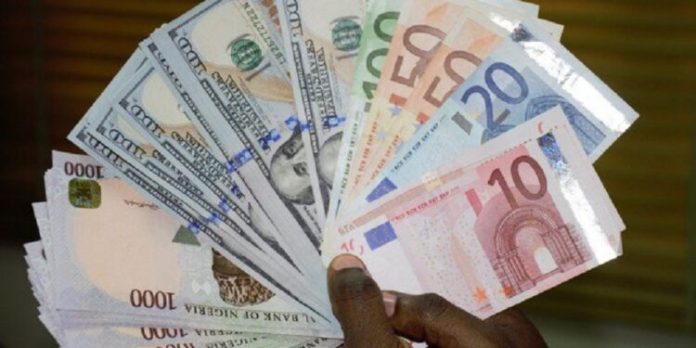
The naira retreated further against the U.S. dollar on Wednesday as reduced FX liquidity triggered fresh pressure in both the regulated and informal currency markets.

The domestic currency depreciated due to tightening dollar supply, with analysts noting that demand for the greenback continues to outpace available inflows. The decline persisted despite expectations that diaspora remittances ahead of the festive season may cushion FX availability in the coming weeks.

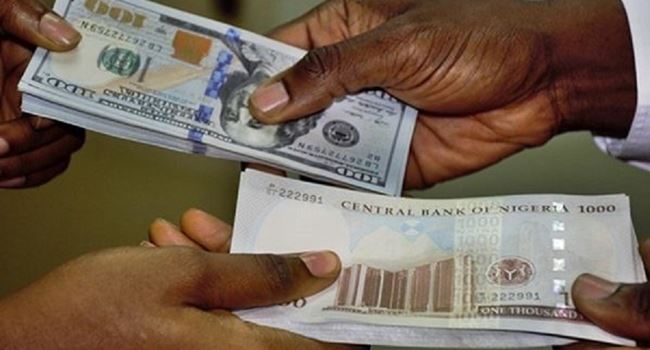
At the official window, the spot exchange rate weakened by 0.16% to close at N1,447.65 per dollar. In the parallel market, the naira slipped by 18 basis points, settling at N1,460 per dollar.

Market sentiment remained subdued as currency traders reported renewed pressure across both FX segments. The intraday high touched N1,450 per dollar, while the naira briefly strengthened to N1,443.5000 amid indications of the Central Bank’s presence in the market.

Latest figures from the CBN dashboard showed that Nigeria’s external reserves saw fresh accretion, bringing the balance to $44.914 billion as of Tuesday. Analysts believe ongoing reserve growth could push total reserves above the $45 billion mark in December.

CBN Governor Yemi Cardoso recently revealed that Nigeria’s foreign reserves had climbed to $46.70 billion in November, although the figure is yet to be reconciled with official data releases.

On the global stage, the U.S. dollar traded with a firmer bias after a period of heavy selling, consolidating in a tight range ahead of key monetary policy updates.

Meanwhile, gold prices resumed their upward trajectory following a strong rebound, reaching as high as $4,240 per ounce during early U.S. trading hours. Market experts attribute the rally to rising expectations of imminent monetary easing by the U.S. Federal Reserve.

Current projections show an 88% probability of an interest rate cut by December, with the broader market pricing in roughly 90 basis points of easing through 2026.

NGX Records Fresh Upswing As Equities Investors Add N252bn Amid 0.27% Index Rally

NGX Records N256bn Loss Last Week

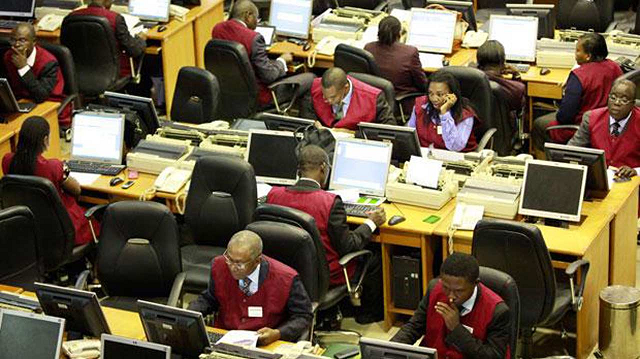
The Nigerian Exchange (NGX) extended its positive performance on Wednesday, as the benchmark All-Share Index advanced by 0.27% to close at 145,323.87 points. Market capitalisation climbed to ₦92.38 trillion, reflecting an N252 billion increase in investor wealth. Analysts noted that market sentiment remained broadly upbeat, supported by a market breadth of 1.9x after 30 listed equities appreciated against 16 decliners.

According to market dealers, renewed interest in heavily discounted stocks across major sectors helped sustain the bullish trend. Top gainers during the session included GUINNESS, NCR, NGXGROUP, MULTIVERSE, and SKYAVN, while the biggest laggards were VERITASKAP, LASACO, PRESTIGE, ROYALEX, and ETI.

Stockbrokers also highlighted notable upward movements in BUACEMENT, UBA, WEMABANK, STERLINGNG, and others. The All-Share Index added 395.51 basis points, settling at 145,323.87 points at the close of trade.

Trading activity showed mixed directions. Share volume surged by 271.27% to 2.25 billion units, while the total number of deals rose by 45.45% to 21,513 transactions. However, the total value of trades dropped significantly by 47.17% to ₦20.97 billion.

ACCESSCORP dominated the activity chart, accounting for 13.60% of total volume, followed by ZENITHBANK (13.17%), GTCO (8.70%), STERLINGNG (6.27%), and FIDELITYBK (5.25%).

In terms of value, ZENITHBANK led the chart with 20.54% of the day’s total market turnover.

GUINNESS topped the gainer’s list, advancing by +10.00%, closely trailed by NCR (+9.98%), NGXGROUP (+9.96%), MULTIVERSE (+9.95%), SKYAVN (+9.74%), OMATEK (+5.69%), along with 24 others.

On the downside, fifteen stocks recorded price declines. VERITASKAP led the losers with a drop of -4.47%, followed by LASACO (-3.77%), PRESTIGE (-3.03%), ROYALEX (-2.56%), ETI (-1.88%), and CORNERST (-1.75%).

Consequently, market breadth closed on a strong positive note with 30 gainers and 15 losers.

Sector performance showed a mixed outing: the Banking Index appreciated by 0.65%, Industrial Goods advanced 0.47%, Consumer Goods climbed 0.38%, and the Insurance Index gained 0.27%. Meanwhile, Oil & Gas fell by 0.47%, and the Commodities Index dipped 0.24%.

Money Market Rates Move In Split Directions Despite Higher System Liquidity

How Much Money Is Spent On Groceries In Nigeria, Other Countries?

Nigeria’s money market recorded mixed movements across key short-term interest rates on Tuesday, even as overall liquidity levels in the financial system rose sharply due to substantial inflows.

Short-term benchmark interest rates have remained below 23% following the adjustment to the asymmetric corridor around the Monetary Policy Rate introduced in November. Despite elevated liquidity, rate movements continued to show divergence across several tenors.

Market liquidity opened with a surplus of ₦3 trillion—an increase of ₦847.7 billion from the previous day—driven largely by a ₦772.9 billion OMO maturity and a ₦10.2 billion bond coupon inflow, according to figures from AIICO Capital Limited.

Deposit Money Banks have also reduced placements at the Central Bank’s Standing Deposit Facility (SDF), following a rate adjustment from 24.50% down to 22.50%. Total placements at the window slipped by 0.2% to ₦1.99 trillion. Analysts noted that banks may continue adjusting positions intermittently as they assess opportunities to increase treasury-related investments.

Data from Cowry Asset Limited showed that the Nigerian Interbank Offered Rates rose across all tenors. The overnight rate increased by 2 basis points to 22.80%, signalling tightening liquidity across the system. The 1-month, 3-month, and 6-month rates also climbed by 31, 45, and 33 basis points, respectively.

Funding costs in the money market displayed varying patterns, with the Overnight rate easing slightly by 6 basis points to 22.79%, while the Open Repo Rate remained unchanged at 22.50%.

Treasury-bill activity was subdued as the average yield on Nigerian Treasury Bills edged up 1 basis point to 16.83%, reflecting cautious positioning among investors and limited appetite for short-term debt instruments.

Proposed 48-Hour Refund Mandate Set To Reshape Banks’ Response To APP Fraud Cases

Nigeria’s financial sector may soon witness a major shift in its consumer-protection framework as the Central Bank of Nigeria (CBN) has released a new draft policy that could compel banks and regulated financial institutions to compensate victims of Authorised Push Payment (APP) fraud within 48 hours once their investigations are completed.

APP fraud occurs when criminals manipulate, deceive, or psychologically pressure victims into sending money to them directly. Unlike classic cyber intrusions, the victim’s banking credentials remain uncompromised—the transfer is authorised by the customer but under misleading circumstances. This loophole has historically prevented customers from receiving refunds under conventional fraud-protection systems.

The CBN’s newly issued exposure draft, dated November 26, 2025, introduces strict timelines and liability structures designed to provide faster redress, especially as social-engineering and deception-based scams continue rising across Nigeria’s digital-payment ecosystem.

Under the proposed framework, financial institutions must conclude all investigations into reported APP fraud within 14 working days. Once eligibility is confirmed, the bank must process a refund to the affected customer within 48 hours. The apex bank cautioned that institutions that fail to identify suspicious activity, delay escalation, or allow fraudulent proceeds to move through their systems will be held financially responsible.

The draft highlights that APP fraud is fundamentally different from traditional account breaches because victims are persuaded—sometimes emotionally, sometimes through impersonation or false investment offers—into authorising the transfers themselves. These schemes have grown increasingly sophisticated amid the expansion of instant-payment channels nationwide.

According to the CBN, the initiative aims to deepen trust in Nigeria’s digital-transactions landscape, where instant transfers dominate everyday financial activity. Stakeholders have a three-week window to submit feedback before the final policy is issued.

To strengthen institutional accountability, the guidelines require board-level oversight over fraud-risk controls. Banks must develop improved monitoring systems, enhance escalation protocols, and carry out comprehensive post-incident analysis for every confirmed case.

The proposed rules further mandate banks to deploy Early Warning Systems capable of detecting behavioural anomalies, unusual transaction flows, repeat fraud claims, market-intelligence signals, and accounts previously associated with suspicious patterns. Dedicated fraud-analytics units are expected to regularly update frameworks and document red-flag triggers.

In multi-bank fraud cases, the institution that initiated the transfer is obligated to begin inquiries immediately and notify all involved banks within 30 minutes of receiving a complaint. Where delays exceed the 14-day period, the case will be taken over by the CBN’s Consumer Protection and Financial Inclusion Department, which will issue a binding decision.

Eligibility requirements are clearly defined. Customers must have authorised transfers due to misrepresentation, deception, or lack of reasonable suspicion of fraud. They must also report incidents within 72 hours; however, exceptions apply in cases involving illness, force majeure, security threats, or unavailable reporting channels. Banks are required to provide round-the-clock reporting platforms, including email, mobile apps, USSD channels, hotlines, and physical branches.

To deepen public understanding of fraud risks, the CBN is mandating quarterly awareness campaigns delivered in multiple local languages across different media platforms. The guidelines also outline a cost-sharing model: where neither bank is at fault yet the customer qualifies for reimbursement, the refund burden will be split evenly. All institutions must comply with the Nigeria Data Protection Act 2023 in their handling of sensitive information.

Exchange-Rate Spread Widens As Divergence Persists Across Nigeria’s FX Markets

Nigeria’s foreign-exchange market experienced a wider spread on Tuesday as the naira moved in opposite directions across official and informal trading segments, causing market participants to readjust expectations amid fluctuating liquidity conditions.

Data from the day’s session showed that the gap between the official Nigerian Foreign Exchange Market (NFEM) rate and parallel-market rate increased to 1.70%, up from the previous 1.14%. The divergence reflects ongoing volatility even as speculative pressure continues to decline.

In the official window, the naira recorded an appreciation of ₦3.04, closing at ₦1,445.39 per dollar as supply flows remained steady. Market observers attributed the improvement to robust liquidity and strengthened demand-management measures enforced by the Central Bank of Nigeria.

However, in the parallel market, the currency weakened by ₦5 to settle at ₦1,470 per dollar. The contrasting performance between both markets widened the FX spread and signalled persistent structural challenges affecting price convergence.

Central Bank data indicated slight gains in the NFEM rate, which climbed by ₦3.04 to close at ₦1,445.3929, reversing earlier mild losses. Analysts noted that this movement reflects temporary relief in FX pressures.

Meanwhile, Nigeria’s external reserves increased to $44.67 billion, representing a 9.3% growth since the start of the year. The reserves have continued to provide critical support for currency defence initiatives and FX market stability.

Analysts expect the naira to continue trading in line with prevailing demand-supply dynamics, noting that healthy reserves could cushion short-term volatility.

Global commodities also trended softer. International oil benchmarks recorded a decline as markets re-evaluated geopolitical risks and monitored oversupply concerns. Brent crude dipped by 76 cents or 1.20% to close at $62.41 per barrel, while U.S. West Texas Intermediate (WTI) lost 71 cents or 1.20% to settle at $58.61.

Gold prices also retreated as investors engaged in profit-taking after recent multi-week gains. Spot gold dropped 0.85% to $4,196.96 per ounce, while U.S. gold futures declined 1.07% to $4,229.00 per ounce. Analysts believe gold may remain pressured in the short term due to firmer U.S. yields and expectations ahead of the Federal Reserve’s upcoming policy announcement.

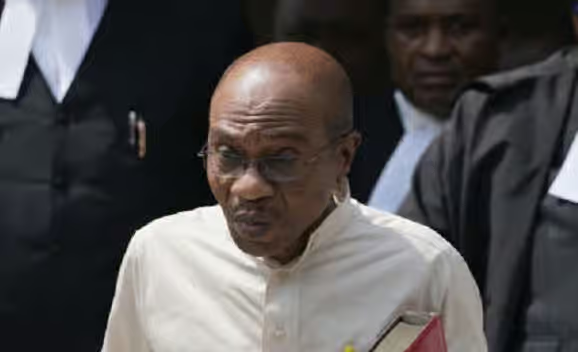
Emefiele $4.5bn Fraud Trial: EFCC Witness Denies Omoile’s Statements Were Made Under Duress

 The Economic and Financial Crimes Commission (EFCC) on Tuesday told the Special Offences Court in Ikeja that the second defendant in the ongoing $4.5 billion fraud trial of former Central Bank of Nigeria (CBN) Governor Godwin Emefiele, Henry Omoile, did not make his statements under duress.

Emefiele faces a 19-count charge involving allegations of receiving gratification and corrupt demands, while Omoile is facing a three-count charge for the unlawful acceptance of gifts as an agent. Both defendants have pleaded not guilty.

During the resumed proceedings, EFCC witness Alvan Gurumnaan testified in a trial-within-trial, asserting that EFCC operatives are trained professionals who do not extract statements through threats, violence, or intimidation.

“The second defendant did not make any statement under duress,” Gurumnaan told the court. “Our officers do not force statements through violence.”

Gurumnaan also admitted that there was no video recording of Omoile’s statement, adding that it is the responsibility of the defendant to prove any claim of duress.

The trial-within-trial was ordered following objections by Omoile’s defence counsel, Adeyinka Kotoye (SAN), during the last sitting on October 9, 2025. At that session, prosecuting counsel Rotimi Oyedepo (SAN) had sought to tender Omoile’s extra-judicial statements as evidence, but Kotoye argued that the statements were not voluntary.

Justice Oshodi subsequently directed the court to conduct a trial-within-trial to determine the voluntariness of the statements before they could be admitted as evidence.

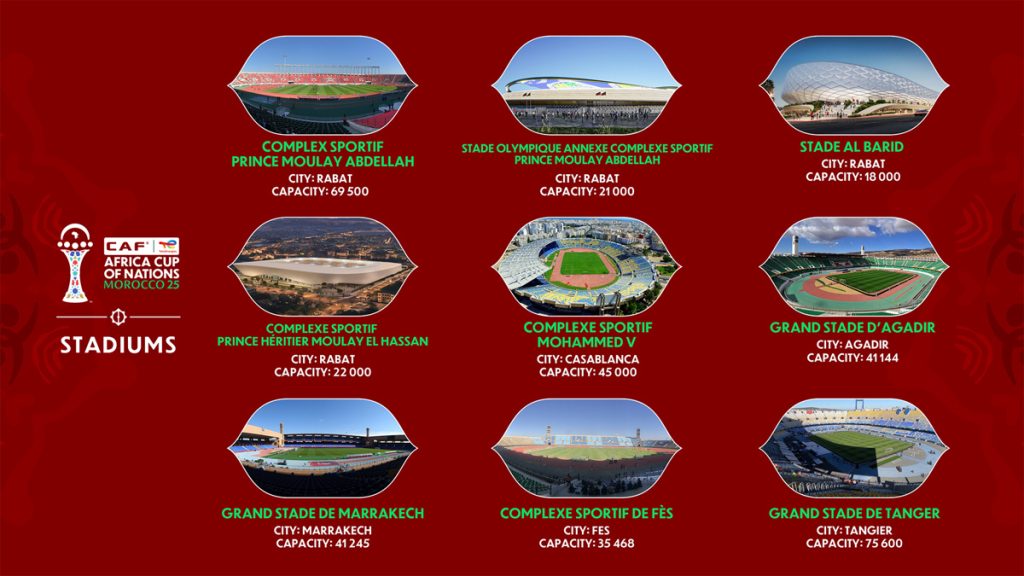
Morocco Prepares World-Class Stadium Lineup Across Five Cities Ahead Of AFCON 2025

With the 2025 Africa Cup of Nations drawing closer, Morocco is finalizing a series of stadiums that many observers believe will elevate the tournament’s standards to new heights.

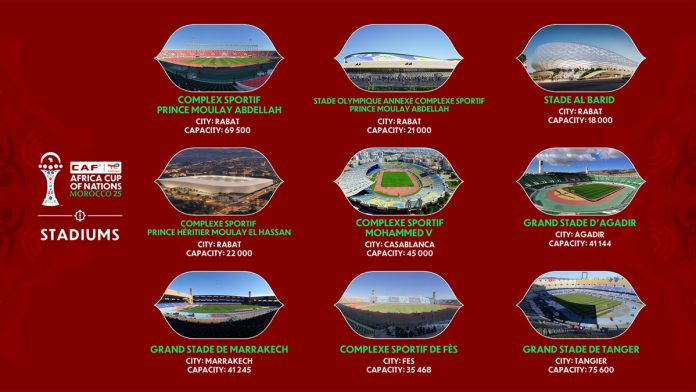
Scheduled to run from 21 December 2025 to 18 January 2026, the continental showpiece is already building anticipation as national team rosters emerge. Attention has now turned to Morocco’s host venues, with stadiums spread across five major cities — each blending modern architecture with the country’s rich cultural identity. CAF has confirmed the venues and full match schedule, offering fans a detailed look at what awaits.

Rabat: The Heart of AFCON 2025

Rabat is set to host a substantial portion of the competition, led by the recently revamped Complexe Sportif Prince Moulay Abdellah. The 69,500-seat stadium reopened on September 5, 2025, following a significant renovation. Located just minutes from the city center, it has a strong pedigree, having hosted AFCON 1988 and the FIFA Club World Cup.

It will stage the opening match between Morocco and Comoros on December 21 and is also slated to host multiple knockout fixtures, including the semi-final and the final on January 18.

Also in Rabat is the newly built Tade Annexe Olympique, a 21,000-capacity arena completed in an impressive nine months. Featuring a natural-grass playing surface, world-class lighting systems and dedicated cryotherapy recovery rooms, it stands among the country’s most advanced sporting complexes. Teams such as Tunisia, Uganda, Benin and Botswana will contest group-level matches at this venue.

Another standout facility is the Complexe Sportif Prince Héritier Moulay El Hassan, built on the historic FUS Rabat grounds. Showcasing Berber-inspired architectural elements, the stadium will host Group E matches — including Algeria’s games — and a Round of 16 encounter.

Rabat’s stadium lineup is completed by Stade El Barid, located in the Agdal district. Known for its excellent sightlines and compact 18,000-seat design, it will welcome DR Congo, Benin, Uganda, Tanzania and Botswana for group-stage fixtures, in addition to hosting a Round of 16 match.

Casablanca: A Historic Football Fortress

Casablanca contributes the celebrated Stade Mohammed V, a stadium originally opened in 1955 and regarded as one of Africa’s most atmospheric footballing cathedrals. With its 67,000-seat capacity, the venue will host key group matches featuring Mali, Zambia, Burkina Faso and Sudan, as well as the third-place game scheduled for January 17.

Agadir, Fes, Marrakech and Tanger Gear Up for Packed AFCON Nights

On Morocco’s Atlantic coastline, the Grand Stade d’Agadir will host several high-profile encounters, including Egypt’s matches against Zimbabwe, South Africa and Angola. The stadium is also set to stage a quarter-final fixture on January 10.

Fes will play a central role in Nigeria’s Group C campaign, with the Complexe Sportif de Fès hosting all three group matches for the Super Eagles. Nigeria will begin their journey against Tanzania on December 23 before taking on Tunisia and Uganda at the same venue.

Further south, the Grand Stade de Marrakech — a 45,240-seater equipped with advanced media and medical facilities — will host matches involving South Africa, Côte d’Ivoire, Mozambique and Angola, plus a Round of 16 duel.

To the north, the Grand Stade de Tanger, named after famed explorer Ibn Battuta, stands as one of Morocco’s most imposing arenas. With a seating capacity of 68,000, it will host all Group D games — including Senegal’s tournament openers — and a knockout-stage matchup.

Erling Haaland Sets New Benchmark As Fastest Player To Reach 100 Premier League Goals

Manchester City forward Erling Haaland carved his name even deeper into English football history on Tuesday, becoming the quickest player ever to register 100 Premier League goals — a milestone he reached with astonishing speed and trademark ruthlessness.

The Norwegian international hit the landmark figure during City’s clash with Fulham at Craven Cottage, bringing a brief period without goals to an abrupt end in emphatic fashion.

Haaland opened the scoring midway through the first half, putting City ahead with a clinical finish. The strike elevated him to the century mark in just 111 league matches, smashing Alan Shearer’s long-standing record. Shearer, who famously represented Newcastle United and Blackburn Rovers, required 124 appearances to hit the same milestone.

Since arriving at Manchester City from Borussia Dortmund in 2022, Haaland has relentlessly collected individual records, each one enhancing his reputation as one of the most explosive forwards of his generation. Although he had gone three games without a goal — against Newcastle, Bayer Leverkusen and Leeds — his latest finish was a clear reminder of his destructive instincts inside the penalty area.

The breakthrough began with Jeremy Doku, who drove into the box before cutting the ball back with precision. Haaland took a momentary glance before unleashing a powerful strike from close range, firing from around 12 yards and leaving Fulham goalkeeper Bernd Leno helpless as the ball rocketed past him.

The goal marked his 15th Premier League strike of the season and his 20th across all competitions.

Among his 100 Premier League goals, Haaland has netted 71 with his formidable left foot, while 17 have come from headers — reinforcing his reputation as a multidimensional finisher.

While Shearer’s iconic all-time Premier League record of 260 goals remains a steep mountain to climb, Haaland’s extraordinary scoring frequency suggests that even the division’s most enduring landmarks may face serious threat in the years ahead.

Osun Governor Adeleke Resigns From PDP Amid National Leadership Crisis

Governor Ademola Adeleke of Osun State has formally resigned from the Peoples Democratic Party (PDP), citing a “current crisis” within the party’s national leadership.

The governor, who was elected on the PDP platform, confirmed his resignation in a letter dated November 4, 2025, addressed to the party chairman in Ward 2, Sagba Abogunde, Ede North Local Government Area. “I hereby resign my membership of the PDP with immediate effect,” Adeleke wrote.

In the letter, Adeleke expressed gratitude for the opportunities the party afforded him, first as Senator for Osun West and subsequently as Governor of Osun State. His spokesperson, Mallam Olawale Rasheed, later signed a public statement confirming the resignation.

Political analysts describe Adeleke’s exit as one of the most significant resignations in the PDP since internal tensions escalated at the national level. The development is expected to reshape the political landscape in Osun State and could trigger fresh alignments ahead of the 2026 electoral cycle.

The resignation also highlights wider questions regarding the PDP’s cohesion, as several senior members have voiced dissatisfaction with the party’s direction.

Speaking to NigeriaUpdates, political commentator Dr. Kemi Ajayi called the move “a warning signal the party can no longer ignore.” She added, “When serving governors begin to leave, it indicates deeper structural decay within the party.”

Reactions among Osun residents were mixed but largely unsurprised. “The crisis in the PDP has been obvious for months,” said Mukaila Adebisi, a resident of Osogbo. “People expected something like this to happen sooner or later.”

Meanwhile, a senior PDP official, speaking on condition of anonymity, expressed confidence that the party “will survive the turbulence,” noting ongoing engagements to resolve internal disputes.

What’s Next for Governor Adeleke?

Adeleke has yet to announce his next political move. Analysts suggest several possible paths, including functioning as a neutral governor, operating with an alternative political coalition, or defecting to another major party.

For Osun residents, the immediate concern is whether the resignation will impact governance, budget allocations, and ongoing state projects.

NCDMB, BOI Seal $100m Local Content Equity Fund Agreement

311,000 Beneficiaries Benefit From Payroll Support Programme - BOI

The Nigerian Content Development and Monitoring Board (NCDMB) and the Bank of Industry (BoI) on Tuesday formalised a major financing initiative, signing a Memorandum of Understanding (MoU) to launch the $100 million Nigerian Content Intervention Fund (NCIF) Equity Scheme.

The agreement was signed by NCDMB Executive Secretary Felix Ogbe, and BoI Managing Director Dr. Olasupo Olusi, marking a new phase in Nigeria’s push to enhance indigenous participation in the energy and industrial sectors.

Ogbe described the deal as a significant milestone for local content financing, noting that the scheme will provide equity investment to high-growth Nigerian energy service firms while diversifying the Board’s revenue streams.

He added that the Board had concluded the framework for issuing the Nigerian Content Equipment Certificate, which will validate companies’ compliance with the mandatory 1% remittance policy. The certificate will become a requirement for major permits and approvals beginning January 1, 2026.

BoI MD Dr Olusi commended the partnership, highlighting that the equity and quasi-equity structure of the fund is designed to strengthen the capacity of Nigerian businesses to scale, compete, and innovate within the oil and gas value chain.

He said the fund aligns with BoI’s investment strategy built on rigorous due diligence, disciplined oversight, and structured post-investment monitoring—ensuring that capital deployment yields sustainable returns while supporting national economic goals such as job creation, technology transfer, and manufacturing expansion.

Olusi affirmed that both institutions remain committed to empowering indigenous enterprises that can compete globally and drive long-term economic prosperity.

BizWatchNigeria.Ng
Privacy Overview

This website uses cookies so that we can provide you with the best user experience possible. Cookie information is stored in your browser and performs functions such as recognising you when you return to our website and helping our team to understand which sections of the website you find most interesting and useful.