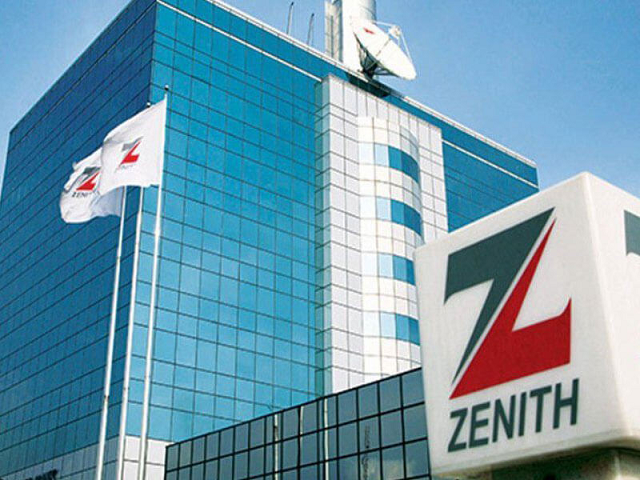
Zenith Bank Plc has indicated strong intent to resume dividend payments to shareholders as it prepares to exit the Central Bank of Nigeria’s (CBN) regulatory forbearance regime by mid-2025.
In a corporate disclosure filed with the Nigerian Exchange, the bank provided clarity on the status of its compliance with CBN’s capital adequacy and credit exposure guidelines.
According to Company Secretary Michael Out, Zenith Bank has already surpassed the new regulatory capital threshold of ₦500 billion. “The forbearance granted by the CBN on Single Obligor Limit (SOL) pertains to a single client exposure, which will be fully addressed by June 30, 2025,” the statement explained.
Furthermore, the lender disclosed that forbearance on other credit exposures involves just two customers. “We have implemented significant provisioning measures and expect to achieve full provisioning compliance by June 30, 2025. Following that, the bank will no longer operate under any forbearance obligations,” the statement added.
Zenith Bank assured investors that once it exits all CBN-imposed constraints, it will be well-positioned to distribute dividends during the current financial year.
In a circular dated June 13, 2025, and signed by the Director of Banking Supervision, Dr. Olubukola Akinwunmi, the CBN directed all banks under forbearance to suspend dividend payments, executive bonuses, and offshore investments until full compliance is achieved.
The directive is part of a broader regulatory roadmap aimed at reinforcing capital buffers and ensuring sufficient provisioning for non-performing exposures.
To ease market concerns, the apex bank reiterated the temporary nature of the restrictions, affirming that they will be lifted upon independent verification of capital strength and loan provisioning metrics.
Acting Director of Corporate Communications, Mrs. Hakama Sidi Ali, emphasized that the move is integral to the broader recapitalization agenda launched in 2023 and forms part of a sequenced plan to stabilize the Nigerian banking sector post-forbearance.
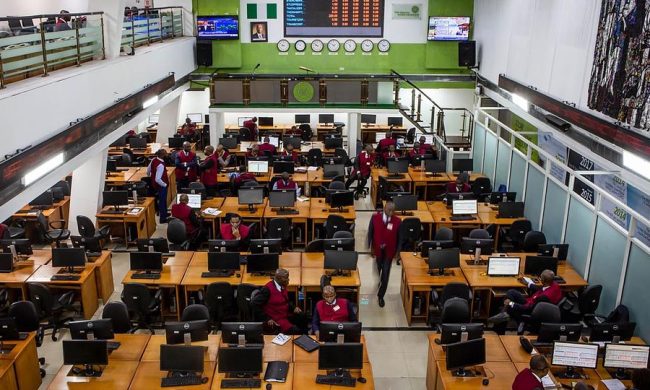
The Nigerian Exchange (NGX) continued its bullish momentum, closing the trading day with a substantial rally that added ₦1.18 trillion to investors’ portfolios. The All-Share Index and total market capitalization reached historic peaks, fueled by heightened interest in major blue-chip stocks.
Market activity surged as the year-to-date return hit 13.47%, with institutional investors aggressively targeting value opportunities in large-cap and mid-tier equities. The robust rally reversed recent losses, according to stockbrokers who attributed the trend to strong earnings sentiment and renewed investor confidence.
Heavyweights like MTN Nigeria (+4.79%) led the charge, along with renewed buying pressure on energy-related stocks such as SEPLAT (+9.78%), TRANSPOWER (+8.22%), and ARADEL (+7.36%). These movements pushed the benchmark index up by 1.63%, closing at 116,786.87 points, while the market capitalization climbed to ₦73.68 trillion.
Banking equities also recorded a resurgence after recent concerns over regulatory limits eased. GTCO (+4.43%), ZENITHBANK (+5.32%), UBA (+5.59%), and ACCESSCORP (+4.49%) all posted gains amid favorable market sentiment.
Total market turnover showed mixed signals, with trade volume dropping 18.70% while transaction value rose 1.34%. Data from Atlass Portfolios Limited indicated that 640.08 million shares worth ₦26.01 billion were exchanged across 19,727 transactions.
ZENITHBANK led in both volume and value terms, accounting for 23.44% of total trades and 27.70% of value. Other heavily traded stocks included ACCESSCORP, UBA, NB, and FIDELITYBK.
On the winners’ chart, NEM gained 10.00%, followed closely by BETAGLAS (+9.99%), THOMASWY (+9.73%), and REGALINS (+8.62%). However, 29 stocks closed lower, with ETERNA suffering a 10.00% decline. Others like LEGENDINT and IKEJAHOTEL also posted losses.
The broader market saw 37 gainers against 29 losers, resulting in a positive market breadth. Sector-wise, Oil & Gas (+7.49%), Commodities (+5.63%), Banking (+3.25%), and Insurance (+2.02%) outperformed. Industrial Goods eked out a 0.09% rise, while Consumer Goods slid by 0.16% due to pressure on NB shares (-1.19%).
In a move to sustain the financial stability of Nigeria’s three tiers of government, the Federation Account Allocation Committee (FAAC) has disbursed a total of N1.659 trillion as revenue generated in May 2025. This figure reflects a moderate drop of N22 billion or 1.31% compared to the N1.681 trillion allocated in April 2025.
The allocation was confirmed in a press release issued on Wednesday by Bawa Mokwa, the Director of Press and Public Relations at the Office of the Accountant General of the Federation, following the monthly FAAC meeting held in Abuja in June 2025.
The disbursed revenue was distributed across the Federal Government, 36 state governments, and 774 local government areas (LGAs), adhering to the established sharing framework.
Revenue Components and Disbursement Structure
For May 2025, the gross revenue accrued to the Federation stood at N2.942 trillion, marking an increase from N2.084 trillion recorded in April. However, after deducting N111.908 billion as cost of collection and another N1.171 trillion for statutory transfers, refunds, and interventions, the net distributable amount was N1.659 trillion.
The composition of the May revenue is as follows:
Statutory Revenue: N863.895 billion
Value Added Tax (VAT): N691.714 billion
Electronic Money Transfer Levy (EMTL): N27.667 billion
Exchange Rate Gains: N76.614 billion
The statutory revenue component, which typically forms the bulk of monthly FAAC allocations, experienced a slight increase. Gross statutory inflows rose to N2.094 trillion, compared to N2.084 trillion in April.
The VAT receipts also witnessed significant growth, climbing from N642.265 billion in April to N742.820 billion in May, an increase of over N100 billion.
How the N1.659 Trillion Was Shared
From the distributable revenue pool:
The Federal Government received N538.004 billion
State Governments were allocated N577.841 billion
Local Government Councils got N419.968 billion
An additional N124.076 billion was paid as 13% derivation revenue to oil-producing states.
Breaking it down further:
Statutory Revenue – N863.895 billion:
FG: N393.518 billion
States: N199.598 billion
LGAs: N153.881 billion
Derivation Revenue: N116.898 billion (13% to oil-producing states)
VAT Revenue – N691.714 billion:
FG: N103.757 billion
States: N345.857 billion
LGAs: N242.100 billion
EMTL – N27.667 billion:
FG: N4.150 billion
States: N13.833 billion
LGAs: N9.683 billion
Exchange Difference Revenue – N76.614 billion:
FG: N36.579 billion
States: N18.553 billion
LGAs: N14.304 billion
Derivation Revenue: N7.178 billion
Mixed Performance in Revenue Sources
A performance review of the revenue inflows for May 2025 revealed positive movements in certain revenue lines. Companies Income Tax (CIT), VAT, and Import Duty all recorded appreciable increases.
However, several streams reported declines including Common External Tariff (CET) Levies, Petroleum Profit Tax (PPT), Oil and Gas Royalties, and the EMTL.
Excise Duty experienced only a slight improvement during the period under review.
Sustaining Government Funding Amid Revenue Fluctuations
Despite the month-on-month drop in total distributable revenue, the current allocation of N1.659 trillion reaffirms the federal government’s ongoing commitment to ensuring equitable fiscal transfers to sub-national governments. NThe robust allocations to all tiers of government are expected to support critical public sector operations and service delivery efforts across the country.
The revenue-sharing structure remains a critical mechanism in maintaining financial balance among the federal, state, and local governments in Nigeria, especially in the face of global economic challenges and domestic revenue pressures.
Access Bank has announced it is on course to meet the Central Bank of Nigeria’s (CBN) deadline for regulatory forbearance compliance, scheduled for June 30, 2025. The assurance came via a formal statement issued by its parent company, Access Holdings Plc, and signed by the Group Company Secretary, Sunday Ekwochi.
The statement clarified that the bank remains steadfast in aligning with all directives issued by the apex bank. These directives pertain to dividend declarations, bonus issuance, and investments in offshore subsidiaries—key focus areas of the CBN’s evolving regulatory strategy.
“The bank will ensure full compliance with the CBN’s directive by June 30, 2025, while maintaining a robust capital position and continuing to reward its shareholders,” the statement read.
Access Holdings further disclosed that Access Bank has already surpassed the newly prescribed capital base for international commercial banks as mandated by the Central Bank. “As at December 31, 2024, Access Bank Plc was the first Nigerian bank to meet and exceed the CBN’s minimum capital requirement of ₦500 billion for international authorization,” the company revealed.
The public update follows a circular issued by the CBN on June 13, 2025, which introduced enhanced rules regarding the Single Obligor Limit and other prudential guidelines designed to fortify the sector.
“In compliance with the CBN’s directive, the bank currently adheres to the Single Obligor Limit and is committed to sustaining this compliance going forward,” the company assured stakeholders.
Access Holdings concluded the statement by reinforcing its commitment to long-term value creation and thanked its shareholders for their ongoing confidence in the institution.
This proactive compliance positions Access Bank as a leading Tier-1 institution well-prepared to navigate the CBN’s stricter financial regime aimed at improving the resilience and health of Nigeria’s banking sector.
The Nigerian naira weakened significantly on Wednesday as demand for U.S. dollars outpaced supply in the official foreign exchange window. Central Bank of Nigeria (CBN) data showed the naira closed at ₦1,549.20/$, a sharp drop from ₦1,345.26 the previous day.
This depreciation underscores persistent liquidity constraints in the market, even as the CBN continues its intervention efforts to stabilize the naira. Nigeria’s foreign reserves have now dipped below the $38 billion mark, reflecting sustained pressure on the apex bank’s external buffers.
While the central bank injected approximately $580 million into the market during May, analysts observed a reduced pace of intervention compared to prior months. However, forex market watchers are concerned that this strategy may not be sustainable over time.
Commenting on the situation, analysts at Verto noted, “The CBN’s injections appear more focused on ensuring liquidity rather than controlling the exchange rate directly. But prolonged support at this level may have long-term consequences.”
Projections suggest the exchange rate could settle near ₦1,600/$ in 2025, buoyed by anticipated economic recovery and fiscal discipline. In the parallel market, the naira also weakened, closing at ₦1,565/$.
Market analysts are urging the CBN to adopt more transparent market practices and resist excessive interventions that could widen the gap between official and parallel rates. As pressure builds, clarity on policy direction will be key to ensuring long-term exchange rate stability.
The Debt Management Office (DMO) has confirmed plans to raise ₦100 billion via Federal Government bonds at its upcoming auction scheduled for June 24, 2025. The offer, detailed in a newly released circular, includes ₦50 billion each for a re-tap of 2029 notes and a fresh issue of 2032 bonds.
Investor interest has already intensified in the secondary market, especially for 2033 bonds, following the announcement. Analysts believe the auction will attract strong participation, supported by excess liquidity within the banking system and easing inflationary pressures.
While inflation has moderated slightly, there is division among analysts over whether spot rates will rise or hold steady. Some argue that the soft inflation trend could pave the way for lower rates, while others point to cautious fiscal policies that may limit downward movement in yields.
“For reopened bonds, successful bidders will pay a price aligned with the yield-to-maturity that clears the auction volume, along with any accrued interest,” the DMO explained.
The average yield on sovereign bonds has slipped to 18.5%, raising concerns that lower returns could lead to capital flight by foreign investors. Across the yield curve, short- and mid-tenor instruments held steady, while long-dated bonds recorded slight declines, led by the JUN-2053 note, which dropped 18 basis points.
As Nigeria continues to manage its debt cost and market expectations, all eyes will be on the June auction to gauge appetite for local government securities and the future direction of yields.
In a move reflecting its strategic monetary stance, the Central Bank of Nigeria (CBN) has reduced yield rates across all tenors of Nigerian Treasury bills following a significantly oversubscribed auction. The apex bank had offered a total of ₦162.02 billion across the 91-day, 182-day, and 364-day tenors during its latest primary market auction, but investor appetite far exceeded expectations.
According to auction data released midweek, total subscriptions skyrocketed to ₦1.233 trillion, more than seven times the offer. Most of the demand targeted long-term instruments, underscoring investors’ preference for higher-yielding assets.
For the 91-day paper, the CBN had initially put forward ₦22.02 billion worth of instruments. However, bids came in at a whopping ₦72.63 billion, prompting the central bank to allot ₦37.98 billion for that tenor.
Meanwhile, ₦40 billion worth of 182-day treasury bills was floated, with total subscriptions coming in at ₦63.56 billion. Allotments were subsequently made to the tune of ₦40.54 billion, indicating strong demand across medium-term securities.
The largest interest was recorded in the 364-day bills, where demand surged to unprecedented levels. Against a planned offer of ₦100 billion, investors placed bids totaling ₦1.097 trillion — more than tenfold the initial offer. Despite the surge, the CBN stuck to its original issuance plan, maintaining fiscal discipline.
In total, the apex bank received bids amounting to ₦1.23 trillion for an issuance of ₦162.02 billion. This aggressive interest allowed the central bank to cut its stop rates across all categories, thereby reducing government borrowing costs.
The stop rate for the 91-day bills dropped by 18 basis points to 17.80%. Similarly, yields for the 182-day tenor fell by 15 basis points to 18.35%. For the longest tenor — the 364-day bill — the stop rate was trimmed to 18.84%, down from the previous 19.35%.
This latest auction indicates a strategic shift by the CBN to take advantage of robust market liquidity while managing the cost of public debt. The aggressive rate cuts suggest a push to stabilize fiscal expenditure amid broader economic reforms.
Global oil prices fell on Wednesday as geopolitical tensions in the Middle East showed signs of de-escalation, while investors remained cautious about the U.S. Federal Reserve’s interest rate path.
Brent crude, the global benchmark, declined by 1.2% to $74.80 per barrel—down from $75.70 at the close of the previous session. Similarly, West Texas Intermediate (WTI) dropped 1.3%, settling at $72.64 compared to $73.60 previously.
The easing of crude prices follows renewed diplomatic efforts toward a temporary truce in the Gaza conflict. Reports from Washington indicated that the U.S. had proposed a 60-day ceasefire deal involving a prisoner swap between Israel and Hamas. Israeli sources confirmed that the proposal is under government review.
While no formal statements have been issued, early signs of progress prompted investors to scale back geopolitical risk premiums. Israeli Prime Minister Benjamin Netanyahu acknowledged “significant progress” in recent negotiations during a public briefing on June 10.
Nonetheless, volatility returned briefly after Israeli forces conducted airstrikes on June 13 targeting senior military assets and critical infrastructure—including sensitive sites—in multiple Iranian cities. The escalation triggered swift diplomatic outreach across the region.
In Cairo, Egypt’s Foreign Minister Badr Abdulati called for calm in discussions with U.S. envoy Steve Witkoff and Iran’s Foreign Minister Abbas Araghchi. Qatar’s foreign ministry, through spokesman Majid Al-Ansari, emphasized that another escalation could critically destabilize energy infrastructure.
Meanwhile, China’s Foreign Ministry spokesperson Guo Jiakun urged international actors to exercise restraint to prevent broader regional fallout.
Market sentiment also remains pressured by uncertainty surrounding U.S. monetary policy and the impact of protectionist trade measures. Analysts noted that if tensions re-escalate, oil prices could spike again, reigniting global inflation risks.
Although the Federal Reserve is expected to maintain current interest rates at its meeting, the probability of a rate cut by September has slipped to 71%, down from earlier projections. A delay in monetary easing, coupled with dollar strength, could dampen crude demand globally.
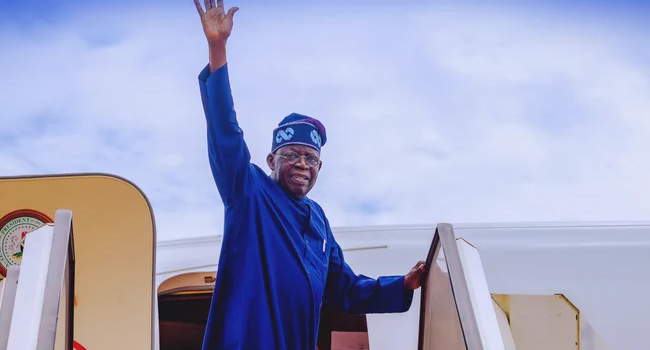
President Bola Tinubu is expected in Kaduna State today, Thursday, for the official commissioning of major infrastructural and developmental projects executed by Governor Uba Sani’s administration.
The visit is part of activities marking the governor’s second year in office, and it underscores the state government’s commitment to healthcare, infrastructure, and economic development.
Among the projects scheduled for inauguration is a 300-bed Specialist Hospital in Millennium City, Kaduna, aimed at improving access to quality healthcare. Also on the list is the Institute of Vocational Training and Skills Development in Rigachikun, designed to equip young people with market-ready skills.
Tinubu will also commission several road projects across the state, including those in Soba and Samaru Kataf Local Government Areas, the 24-kilometre Kafanchan Township Road, the Tudun Biri Road, and a 22-kilometre link road connecting Kauru and Kubau LGAs.
In a bid to modernise Kaduna’s public transport system, the president will unveil 100 Compressed Natural Gas (CNG) buses.
The state government described the visit as a milestone in its development journey and an opportunity to showcase ongoing efforts to drive progress through infrastructure and human capital investment. Since assuming office in 2023, Governor Sani has focused on rural development, youth empowerment, and job creation.
Originally scheduled for Wednesday, Tinubu’s visit to Kaduna was moved to Thursday following his trip to Benue State, where he met with victims of recent attacks and consulted with community stakeholders to seek sustainable peace.
During the Benue visit, Tinubu condemned the violence, urging unity and peaceful coexistence among residents.
The ongoing foreign exchange crisis in Nigeria has again come under scrutiny as the country’s aviation sector reels from the effects of limited access to forex, rising operational costs, and policy inconsistencies.
In recent weeks, both domestic and international airlines operating in Nigeria have been forced to scale down operations, delay refunds, and cancel scheduled flights due to their inability to access foreign currency needed to meet critical obligations such as aircraft leases, maintenance, and insurance.
Industry players say the persistent volatility in Nigeria’s foreign exchange market, coupled with a multi-tiered FX regime, continues to disrupt planning and operations. Operators have raised concerns over the widening gap between the official and parallel market rates, and the administrative bottlenecks that plague forex allocation.
“Airlines are dollar-dependent businesses, and if you cannot access forex in a predictable manner, it becomes difficult to maintain schedules and pay for international services,” one airline executive told reporters.
Despite earlier claims by the Federal Government that a backlog of forex owed to foreign carriers had been cleared, the International Air Transport Association (IATA) and other aviation stakeholders say fresh backlogs are already building up.
Experts believe the crisis in the aviation sector is a reflection of broader issues within Nigeria’s forex management system. Calls for a single, transparent exchange rate regime have intensified, with stakeholders warning that continued disruptions in critical sectors like aviation could undermine investor confidence and economic growth.
The aviation sector has become one of the most visible casualties of the country’s forex challenges, as consumers face higher fares, fewer flight options, and declining service quality.
Analysts have urged the Central Bank of Nigeria to fast-track efforts to stabilise the naira and adopt market-driven reforms that can ease pressure on the FX market and restore confidence across all dollar-dependent sectors.
Until such structural reforms are implemented, experts say, the turbulence experienced by Nigeria’s aviation industry may persist—serving as a reminder of the country’s deeper macroeconomic instability.
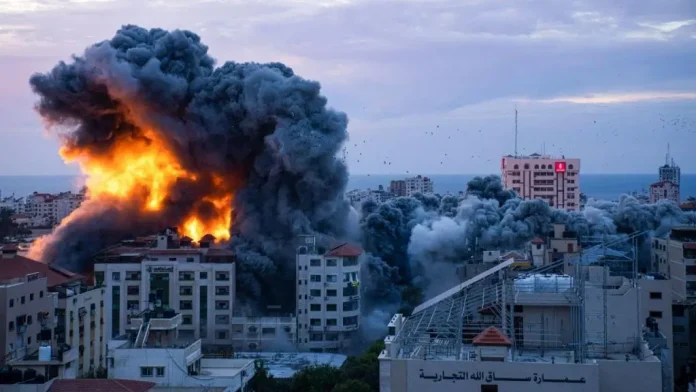
The Israel-Iran conflict entered its sixth day on Tuesday with both countries sustaining significant casualties following waves of missile strikes, drone attacks, and aerial bombardments in one of the region’s most dangerous escalations in decades.
The war, triggered by Israel’s preemptive strike on Iranian nuclear and military facilities on Friday, June 13, has since spiraled into a direct confrontation, with Iran retaliating with ballistic missiles and drones targeting major Israeli cities.
Israel Launches Preemptive Strikes
The conflict began with the launch of “Operation Rising Lion,” a coordinated Israeli assault on Iranian military and nuclear infrastructure. Israeli jets, accompanied by drones, struck Iran’s Natanz and Fordow nuclear enrichment facilities, missile factories, military airbases, and strategic command centers in Tehran and Isfahan.
According to Israel Defense Forces (IDF), more than 1,100 Iranian targets have been destroyed, including 120 missile launchers and several Iranian Revolutionary Guard Corps (IRGC) facilities. Israeli intelligence claims 40% of Iran’s missile-launch capabilities have been degraded.
Iranian Death Toll and Infrastructure Damage
Iranian authorities report at least 585 fatalities as of Tuesday, with over 1,000 others wounded. The casualties include at least 239 civilians, with numerous women and children among the dead, according to human rights monitors. Iranian state media confirmed heavy damage to military complexes, oil refineries, and energy plants.
The International Atomic Energy Agency (IAEA) later confirmed damage to underground centrifuge halls at Natanz, raising fresh concerns about nuclear material security and radiation containment.
Iran Retaliates with Missile and Drone Strikes
Within hours of the Israeli bombardment, Iran launched hundreds of ballistic missiles and drones targeting Tel Aviv, Haifa, Ramat Gan, Rehovot, and other urban centers. As of June 18, Israel reports intercepting over 90% of these projectiles, thanks to the Iron Dome, Arrow, and David’s Sling missile defense systems.
Despite high interception rates, Iranian strikes have caused significant civilian casualties and property damage.
Israeli Casualties and Civilian Impact
The Israeli Ministry of Health confirmed between 24 and 63 fatalities since the conflict began, with at least 592 people injured—10 of them critically. Hospitals in Tel Aviv and central districts continue to treat victims of collapsing buildings, flying debris, and fires caused by missile impacts.
June 14: 5 killed, 172 injured.
June 15: 9 killed, 200 injured; 42 wounded in Rehovot after a residential building was struck.
June 16–18: Additional 10 fatalities reported, with over 100 cumulative injuries.
A missile strike in Ramat Gan leveled nine buildings, while another projectile destroyed a passenger bus in Herzliya, killing several onboard.
Air Supremacy and Ongoing Attacks
Israel claims it now has air supremacy over Tehran, allowing its air force to continue deep-strike operations with minimal resistance. On Monday and Tuesday, Israeli jets resumed bombing oil refineries, IRGC training sites, and storage depots in western Iran.
Iran responded with a reduced number of missile launches on Tuesday, indicating a possible depletion of its missile stockpiles. Intelligence sources suggest Iran is running low on precision-guided munitions and resorting to older, less accurate models.
U.S. Response and Military Movements
President Donald Trump has declared full support for Israel, stating over the weekend that the United States will defend Israeli skies if the conflict escalates further. The U.S. military has repositioned assets in the Gulf, including missile defense systems and aerial refueling tankers, though it has not yet directly engaged.
Trump also claimed that Iran expressed interest in ceasefire negotiations but warned Supreme Leader Ayatollah Ali Khamenei of “irreparable consequences” if the Islamic Republic continues its attacks.
Iran has warned that any direct U.S. military intervention would trigger an “all-out war.”
Regional and International Reactions
Several Middle Eastern nations have closed their airspace, and commercial airlines have suspended flights over Iran and Israel. Qatar, Oman, and the European Union have called for immediate de-escalation and offered to mediate talks.
Meanwhile, Iranian opposition figures, including exiled crown prince Reza Pahlavi, have called for regime change, stating that the conflict may present an opportunity for a political transition in Tehran.
Israel 24–63 592–1,000+ Residential buildings, bus routes, public facilities
The continued exchange of fire has triggered international alarm over the possibility of broader conflict in the Middle East, especially if Hezbollah or other Iranian proxies join the fray.
Outlook
Military analysts say the intensity of the conflict may reduce in coming days as both sides face missile and drone stockpile depletion. However, neither side has announced a willingness to halt operations. Israel says its campaign will continue until Iran’s offensive capacity is neutralized.
Iran, on the other hand, insists it will not surrender and has summoned the Swiss envoy (representing U.S. interests) to lodge a formal protest against American threats. The conflict has already caused significant humanitarian, economic, and geopolitical strain, with fuel prices rising sharply and stock markets fluctuating across Europe and Asia. nAs of Tuesday night, no formal ceasefire has been brokered.
The Lagos State Police Command has officially stated that the controversial item seen in a viral video featuring Pastor Paul Adefarasin is a stun gun, not a conventional firearm.
Public attention was drawn earlier this week to a video circulating on social media showing the senior pastor of House on the Rock Church brandishing a gun-like object while driving an unregistered vehicle. The incident raised significant alarm and led to widespread speculation.
According to a formal statement released by the Lagos State Police Command via its verified X (formerly Twitter) account, Pastor Adefarasin voluntarily presented himself at the police headquarters to clarify the situation. Authorities confirmed that he cooperated fully with investigators and provided a cautionary statement.
Following a review and forensic examination of the object in question, police determined that the item was a stun gun — a non-lethal self-defense device categorized as prohibited under Nigerian anti-riot regulations.
The statement emphasized, “Pastor Paul Adefarasin, who turned himself in today at the Lagos State Police Command over a viral video where he was seen holding a gun-like object against another road user, was interrogated and he volunteered a cautionary statement to the police investigators.”
It continued, “What was recovered from him — the object seen in the viral video — is not a lethal weapon or firearm but a stun gun which is a prohibited anti-riot equipment.”
The pastor has since been released on administrative bail as investigations continue. The authorities assured the public that the outcome of the ongoing probe would be transparently communicated upon conclusion.
While stun guns are generally regarded as non-lethal, Nigerian law prohibits civilians from possessing or using them due to their classification under riot control gear. Legal analysts say this may influence the direction of the investigation, depending on whether any other infractions — such as improper vehicle registration — come to light.
The incident has sparked wider debate about civilian access to restricted self-defense devices and the responsibilities of public figures when seen wielding such items in public settings.
Manchester City opened their 2025 Club World Cup campaign with a decisive 2-0 victory over Moroccan champions Wydad Casablanca, although their performance was overshadowed by a late red card to Rico Lewis.
The Group G match, hosted at Lincoln Financial Field in Philadelphia, saw goals from Phil Foden and Jeremy Doku secure City’s win in a match played under sweltering conditions. However, the dismissal of Lewis in the closing minutes took some gloss off what had otherwise been a commanding display from the English champions.
Foden capitalised on a spilled save from Wydad goalkeeper El Medhi Benabid, converting after Savinho’s deflected cross in the 11th minute. Jeremy Doku added the second just before half-time, volleying home a Foden corner in the 42nd minute after escaping his marker in the box.
Despite the stadium falling short of its 67,000-seat capacity, the 37,446 fans in attendance generated a lively environment, especially from the spirited Wydad supporters draped in red, complete with flags and percussion instruments.
Pep Guardiola opted to test new talents in the opening match, handing first appearances to Tijjani Reijnders and Rayan Cherki, while star players Erling Haaland and Rodri were benched initially. Still, the newcomers slotted in seamlessly with City’s trademark passing rhythm.
Wydad responded well after conceding early, with Mohamed Moufid and Thembinkosi Lorch linking up dangerously in the final third. Cassius Mailula nearly pulled one back for the Moroccan side, but his close-range strike was denied by Ederson.
After Doku’s second goal, he nearly added a third for City, only for Benabid to make another sharp save. When Guardiola eventually introduced Haaland and Rodri in the 60th minute, the crowd roared in excitement, especially as Haaland danced past two defenders before narrowly missing the target.
The match seemed destined to conclude without controversy until the 88th minute, when Rico Lewis was shown a straight red card for a sliding challenge on Samuel Obeng. Although Lewis won the ball, his follow-through made contact with Obeng’s face, leading the referee to brandish the red — a decision that left Guardiola visibly furious on the touchline.
City now prepare for their next group stage fixture, with Lewis’s availability uncertain due to the disciplinary consequences of his sending-off.
Week 5 pool results 2025: Football pools results, live football pool result today, pool result today saturday matches, pool results for this week, british and aussie pool result, football pools results and fixtures, pools panel results today, pool panel results and live score pool result today. We publish half-time results first of its kind.
Week 51 Pool Results: Football pools results for this week 50 2025 are published on this website immediately after full-time confirmation of live score results. We also publish the outcome of postponed matches by the football pools panel at half-time as decided by the football pools. This week’s Week 51 Pool Results are made available in partnership with Bizwatch Nigeria. Stay tuned for reliable and accurate updates throughout the week.
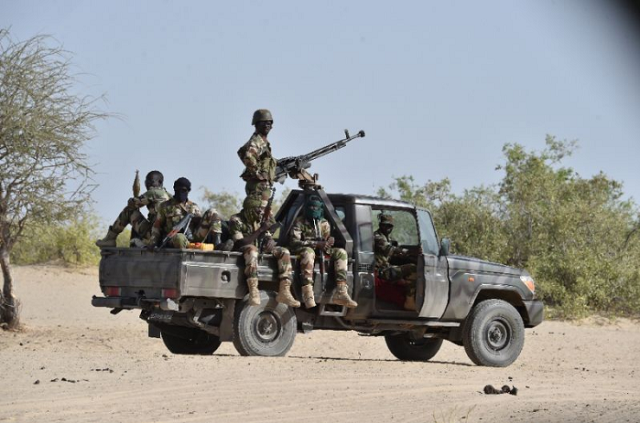
Troops of the Maritime Component of Operation Hadin Kai successfully thwarted a predawn assault by suspected Boko Haram insurgents on a Nigerian Navy base located at Fish Dam, Baga, in Kukawa Local Government Area of Borno State.
According to intelligence sources cited by counter-insurgency expert Zagazola Makama, the insurgents launched the attack around 1:00 a.m. on Wednesday, allegedly targeting newly procured Swamp Buggies deployed by the Borno State Government to support waterways clearance operations in the Lake Chad region.
Naval personnel at the base responded swiftly, engaging the assailants in a fierce gun duel. Reinforcements were immediately mobilised from nearby Baga, resulting in an intense firefight that lasted over two hours before the terrorists were forced to retreat.
“The swift response by the troops ensured the base held its ground,” a source confirmed. “While the attackers failed to access or damage the Swamp Buggies, an ambulance and two other vehicles were destroyed, and a number of personnel sustained injuries.”
The Air Component Command has since launched follow-up aerial operations along the Lake Chad waterways to track and neutralise the fleeing insurgents.
Military authorities are yet to release an official statement as further details of the foiled attack continue to emerge.
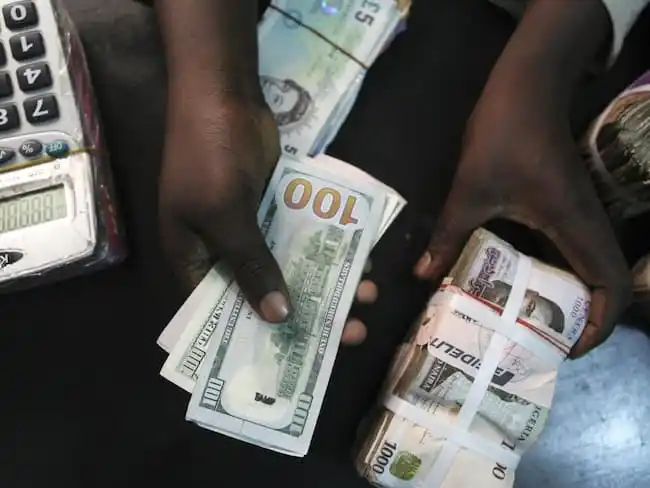
The exchange rate between the Naira and the US dollar, according to the data released on the FMDQ Security Exchange, the official forex trading portal, showed that the naira closed at 1595.00 per $1 on Wednesday, June 18th, 2025. The naira traded as high as 1541.00 to the dollar at the investors and exporters (I&E) window on Tuesday.
Dollar to naira exchange rate today black market (Aboki dollar rate):
The exchange rate for a dollar to naira at Lagos Parallel Market (Black Market) players buy a dollar for ₦1576 and sell at ₦1595 on Tuesday 17th June, 2025, according to sources at Bureau De Change (BDC).
Please note that the Central Bank of Nigeria (CBN) does not recognize the parallel market (black market), as it has directed individuals who want to engage in Forex to approach their respective banks.
Dollar to Naira Black Market Rate Today
Dollar to Naira (USD to NGN)
Black Market Exchange Rate Today
Buying Rate
₦1576
Selling Rate
₦1595
Dollar to Naira CBN Rate Today
Dollar to Naira (USD to NGN)
CBN Rate Today
Highest Rate
₦1547
Lowest Rate
₦1541
Please note that the rates you buy or sell forex may be different from what is captured in this article because prices vary.
Indian authorities have arrested a Nigerian national, identified as Chukwuma, in connection with a major drug trafficking operation in Bengaluru.
According to India Today, the arrest was made during a coordinated raid by the Narcotics Wing of the Central Crime Branch (CCB) in the Avalahalli area of northern Bengaluru. The suspect was apprehended while allegedly attempting to distribute a consignment of illicit drugs.
During the operation, officers seized a significant quantity of MDMA and crystal substances valued at over ₹1.2 crore—approximately ₦214 million.
Preliminary investigations indicate that Chukwuma has been involved in drug trafficking since 2013, reportedly importing narcotics from overseas and distributing them to various parts of Bengaluru, with a focus on the city’s outskirts.
The arrest underscores growing concerns about transnational drug networks operating in India and the increasing involvement of foreign nationals in the illicit trade. Authorities say further investigations are underway to uncover the full extent of Chukwuma’s operations and possible links to an international drug syndicate.
The countdown to the 2025/26 Premier League campaign has officially begun, with fixtures released for what promises to be one of the most thrilling seasons in recent years. Manchester United will welcome Arsenal to Old Trafford in a high-stakes Super Sunday clash that headlines the opening weekend.
United, now under the full-time management of Ruben Amorim, will kick off their title ambitions on Sunday, August 17, as they square off against Mikel Arteta’s Arsenal. This mouthwatering fixture is one of several key encounters slated for a jam-packed weekend that also features Liverpool, Manchester City, Chelsea, and FA Cup champions Crystal Palace.
The Red Devils face a tough start to their campaign, with early meetings against Manchester City and Chelsea lined up within their first five matches. Meanwhile, Arsenal faces a daunting run of games to open the season. In their first six matchdays, they will lock horns with Leeds, Liverpool, Nottingham Forest, Manchester City, and Newcastle.
Reigning champions Liverpool will launch the new season at home against Bournemouth in a Friday night clash on August 15, while Manchester City will hit the road to face Wolves on Saturday evening, August 16, in a highly anticipated showdown.
Chelsea will square off against FA Cup winners Crystal Palace on Super Sunday, preceding the Man United vs Arsenal clash, while Leeds United returns to Premier League action at Elland Road for the first time since May 2023 with a Monday night meeting against Everton.
Full Opening Weekend Fixtures – Premier League 2025/26:
Friday, August 15
Liverpool vs Bournemouth (8:00 PM)
Saturday, August 16
Aston Villa vs Newcastle (12:30 PM)
Brighton vs Fulham (3:00 PM)
Nottingham Forest vs Brentford (3:00 PM)
Sunderland vs West Ham (3:00 PM)
Tottenham vs Burnley (3:00 PM)
Wolves vs Manchester City (5:30 PM)
Sunday, August 17
Chelsea vs Crystal Palace (2:00 PM)
Manchester United vs Arsenal (4:30 PM)
Monday, August 18
Leeds vs Everton (8:00 PM)
The return of Sunderland to Premier League action adds an exciting dynamic, as they host West Ham at the Stadium of Light. Tottenham Hotspur will also begin a new chapter under manager Thomas Frank, starting their campaign at home against newly-promoted Burnley.
In other fixtures, Brentford will travel to Nottingham Forest, and Fulham will face Brighton away in the traditional 3pm Saturday slots.
Boxing Day Clarifications and Holiday Schedule
This season, no Premier League games have been scheduled for Boxing Day (December 26). However, matches listed for Saturday, December 27 may be rescheduled for Boxing Day to accommodate live broadcasts, per Premier League guidance.
A complete round of English Football League (EFL) fixtures is expected to take place on Boxing Day, ensuring festive football remains part of the calendar. The Premier League has assured that no team will be required to play twice within a 48-hour window between December 27 and December 30, when another full round of league matches will be held.
Each club will play at home on either December 27 or January 3, with minimized travel demands around the holiday season.
Final Day of the Season – Sunday, May 24
All matches on the final day of the 2025/26 season will kick off simultaneously at 4:00 PM on Sunday, May 24, 2026. The title race, relegation battles, and top-four race are all set to reach a dramatic conclusion.
Key Dates to Remember – 2025/26 Football Calendar
Premier League Season: Friday, August 15, 2025 – Sunday, May 24, 2026
Carabao Cup Final: Sunday, March 22, 2026
FA Cup Final: Saturday, May 16, 2026
UEFA Champions League Final: Saturday, May 30, 2026
UEFA Europa League Final: Wednesday, May 20, 2026 (Istanbul)
UEFA Conference League Final: Wednesday, May 27, 2026 (Germany)
FIFA World Cup 2026: Thursday, June 11 – Sunday, July 19, 2026
BizWatch Nigeria will provide comprehensive coverage of the Premier League’s return, including live updates, tactical insights, and exclusive analysis throughout the season. Football fans across Nigeria and beyond are set for a year filled with fierce rivalries, rising stars, and unmissable action.
The naira extended its recent gains in the parallel market, trading below the N1,600/$ threshold amid signs of easing inflation and global weakness in the U.S. dollar.
By midweek, the local currency exchanged at N1,585–N1,590 per dollar in Lagos, Nigeria’s commercial capital, continuing a bullish trend driven by improving economic indicators and higher oil prices.
According to the National Bureau of Statistics, Nigeria’s inflation rate eased to 22.97% in May, down from 23.71% in April—a decline of 0.74 percentage points. Analysts see this as a sign that inflation may have peaked, creating a more favorable environment for the naira.
Economist Bismarck Rewane of Financial Derivatives Company noted that the naira is expected to fluctuate between N1,600/$ and N1,650/$ on the official foreign exchange market through June and July. His outlook is based on data reflecting the Central Bank of Nigeria’s efforts to tighten money supply, which reached a peak in May.
A rebound in global oil prices has also contributed to the naira’s performance, as Nigeria relies heavily on crude oil exports for its foreign exchange earnings.
Meanwhile, escalating tensions in the Middle East have rattled investors. The ongoing conflict between Israel and Iran—driven by Israeli pressure on Tehran to halt its nuclear programme—has injected volatility into global markets.
Reports suggest that the U.S. is increasing its military presence in the region, raising fears of deeper conflict that could disrupt vital oil supply routes. Two oil tankers reportedly collided and caught fire near the Strait of Hormuz, which carries about one-fifth of global seaborne oil shipments. The UK’s Maritime Trade Operations has issued warnings over potential electronic interference affecting navigation systems.
Iran, the third-largest oil producer in OPEC, pumps around 3.3 million barrels per day. Analysts believe that other OPEC members may ramp up production to offset any significant shortfall from Iran.
Despite the turmoil, the U.S. dollar has shown some resilience, gaining about 1% against the euro, Swiss franc, and Japanese yen since last week. However, it remains down more than 8% year-to-date, weighed by investor concerns over U.S. trade policy under President Donald Trump.
Investor focus is now on the U.S. Federal Reserve, which is set to announce its next interest rate decision. Although the Fed is expected to hold rates steady, traders will be closely watching its economic projections and policy outlook.
Slowing U.S. growth, coupled with President Trump’s unpredictable policy moves and rising global oil prices, are complicating the Fed’s policy calculations. A key unemployment claims report is also due later in the day.
Elsewhere, central banks in Switzerland, Norway, and Sweden are expected to make rate announcements that could further influence currency markets.
The Central Bank of Nigeria (CBN) is set to float ₦162.02 billion worth of Treasury Bills (T-Bills) in its second auction for the month, targeting investors across short, medium, and long-term tenures. This comes ahead of a scheduled ₦27.19 billion maturity.
The auction, slated for Wednesday, will feature ₦22.02 billion in 91-day bills, with analysts projecting an expected stop rate between 17.84% and 17.94%. The CBN will also offer ₦40 billion in 182-day instruments, with cut-off rate estimates ranging from 18.44% to 18.54%.
At the longer end, the apex bank plans to issue ₦100 billion in 364-day bills, with yields anticipated between 18.84% and 19.04%.
Market analysts are forecasting a mixed yield outlook due to Nigeria’s continued disinflation trajectory, now in its second consecutive month of decline. At the previous auction, the 91-day stop rate declined slightly to 17.98%, the 182-day held steady at 18.50%, while the 364-day bill dropped 21 basis points to 19.35%.
Analysts at AAG Capital noted that strong demand for short-term debt, a liquid interbank environment, and reduced bond issuance are creating a bullish outlook for T-Bill subscriptions. However, the CBN’s recent issuance of Open Market Operation (OMO) bills at a 28% yield could dampen investor appetite for the 364-day bills.
“OMO instruments are significantly more attractive to institutional investors, particularly those with appetite for higher returns,” said AAG Capital. “This dynamic could suppress liquidity in the one-year T-Bill market, with effective yields struggling to compete.”
The auction results are expected to serve as a barometer for market sentiment amid ongoing monetary tightening and an evolving interest rate environment.















 LiverpoolLiverpool
 BournemouthBournemouth
 Aston VillaAston Villa
 NewcastleNewcastle
 BrightonBrighton
 FulhamFulham
 SunderlandSunderland
 West HamWest Ham
 TottenhamTottenham
 BurnleyBurnley
 Nottm ForestNottm Forest
 BrentfordBrentford
 WolvesWolves
 Man CityMan City
 ChelseaChelsea
 Crystal PalaceCrystal Palace
 Man UnitedMan United
 ArsenalArsenal
 Leeds UnitedLeeds United
 EvertonEverton