The Senate Committee on the Niger Delta Development Commission (NDDC) has commenced an inspection of ongoing road projects in Cross River State as part of its oversight responsibilities.
On Thursday, the committee visited several sites, including the 20-kilometre Okomita–Uyanga–Ehom Road in Akamkpa and Biase Local Government Areas, the 1.5km Idundu Junction–Idundu Bridge Road in Akpabuyo, and the 10.8km Aking–Osomba Road in Akamkpa. The projects are being executed by Messrs Faith Plant Nigeria Ltd.
The delegation, led by the committee chairman and senator representing Cross River South, Asuquo Ekpenyong, also included other members of the committee, NDDC Managing Director, Dr Samuel Ogbuku, and the Executive Director of Projects, Obong Victor Antai. They were received by the Chairman of Akamkpa Local Government, Felix Akposi, along with state lawmakers Okon Owuna and Linus Bassey, as well as councillors from host communities.
Speaking during the visit, Senator Ekpenyong said the projects reflect the NDDC’s renewed commitment to infrastructure delivery in the Niger Delta. He noted that the roads, once completed, would enhance trade, improve access to schools and healthcare facilities, and serve as vital evacuation corridors for rural communities.
“The 10th Senate, under the leadership of Senator Godswill Akpabio, is committed to ensuring that these projects are completed to the highest standards,” he said, adding that the intervention has the full backing of the Senate leadership. He also commended Governor Bassey Otu for his infrastructural drive across the state.
Ogbuku, in his remarks, reaffirmed the Commission’s commitment to accountability and quality delivery. “The NDDC is determined to deliver durable infrastructure that will ease transportation burdens and drive socio-economic growth in Cross River and beyond,” he assured.
As part of renewed efforts to entrench intelligence-led policing in Nigeria’s internal security framework, the Inspector-General of Police (IGP), Kayode Adeolu Egbetokun, on Thursday, inspected newly installed intelligence infrastructure at Idu community in Abuja.
According to the press statement signed by the Deputy Commissioner of Police, Olumuyiwa Adejobi, mnipr, the Force Public Relations Officer, on Thursday, 21st August, 2025, the visit formed part of strategic engagements with indigenous security firms, notably EIB STRATOC, a local security solutions provider, aimed at strengthening collaboration between the Nigeria Police Force and the private sector in tackling emerging security threats.
The IGP, who was accompanied by senior officers including DIG Ben Okolo (Force Intelligence Department), DIG Adebowale Williams (ICT), AIG Adeleke Taiwo (Operations), and CP Felix Obe (Federal Operations), described intelligence gathering as the cornerstone of effective policing in the 21st century.
Egbetokun noted that the Force under his leadership remains committed to deploying technology, innovation and expertise—both local and international—to enhance operational capacity and public trust. He lauded the competence of EIB STRATOC and called on other security stakeholders and Nigerians to embrace closer collaboration with the Police and sister agencies to advance a technology-driven intelligence architecture for national security.
The Inspector-General reiterated his resolve to deepen the use of cutting-edge technology in policing, assuring that such initiatives would bolster crime prevention, early warning, and rapid response across the country.
The Lagos State Police Command has arrested five men for allegedly snatching a taxi driver’s vehicle in Lekki and selling it for ₦500,000. The suspected buyer has also been apprehended.
According to the Police, the incident occurred on 1 August when three men boarded a taxi along Platinum Way, Jakande, Lekki. Midway through the trip, one of the suspects reportedly pulled out a locally made pistol and forced the driver out before fleeing with his black Toyota Corolla.
Following investigations, operatives of the Ilasan Division arrested five suspects: Favour Sunday (25), Ikot Moses (28), Dickson Ighobue Harrison (35), Joshua Adedamola (27) and Daniel Jonathan (26).
Police spokesperson, Chief Superintendent of Police, Benjamin Hundeyin, in a press statement signed on Thursday, 21st August, 2025 said further enquiries revealed that the vehicle was sold to one Wasiu Arinola (40), who dismantled the car and resold the parts. Arinola was later arrested in Ibadan, Oyo State.
According to the statement, ‘’Efforts are ongoing to recover the firearm used in the robbery, trace other vehicles linked to the syndicate, and prosecute all suspects’’.
The Commissioner of Police, Lagos State Command, CP Olohundare Jimoh, assured residents that the Command remains committed to their safety, urging members of the public to share timely information with the police for quick response.
The Nigerian Export Promotion Council (NEPC) has described loan and grant facilities provided by the Federal Government as viable tools for expanding Nigeria’s export trade. Mr. Anthony Ajuruchi, NEPC Coordinator in Imo State, stated this at an engagement forum with non-oil exporters and trade-related agencies, organised by the council in Owerri on Wednesday.
Ajuruchi said government support would enable the export market in Imo and across the country to expand and compete globally. He urged exporters in the state to take advantage of the soft loans and grants available to grow their businesses.
Also speaking, Mr. Austin Ikeh, Imo/Abia Coordinator of the Nigeria Incentive-Based Risk Sharing System for Agricultural Lending (NIRSAL), said the forum created an opportunity to engage stakeholders across the export value chain. He noted that collaboration with the Nigeria Export-Import (NEXIM) Bank would strengthen government’s support for farmers and exporters.
Ikeh advised exporters to obtain the necessary certifications from regulatory agencies and deepen their knowledge of export processes to fully access government interventions.
On his part, Mr. Freeman Godwin, Chief Executive Officer of Belarhem Dynamic International Ventures, an exporter of edible food items, highlighted poor handling of goods by airline operators as a key challenge.
“Sometimes, I’ve had to count my losses after damages to my goods at warehouses due to poor preservation and management by airlines. Exporters cannot afford to waste loan facilities under such conditions,” he said.
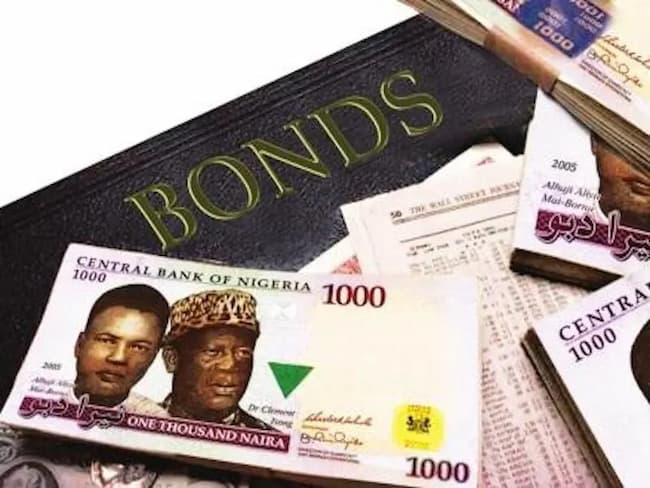
Yields on Federal Government of Nigeria (FGN) bonds edged lower in the secondary market on Wednesday as mild bargain hunting emerged across the curve ahead of next week’s Debt Management Office (DMO) primary auction.
Trading activity was largely quiet but carried a bullish undertone, with selective demand at the short (-2 bps) and mid (-1 bp) segments of the curve, according to fixed-income traders at CardinalStone Securities Limited.
Investors showed particular interest in bonds maturing in 2026, 2033, and 2034, driving the average yield down by one basis point to 16.64%. Analysts noted isolated trades on the May 2033s at 17.50% and February 2034s at 17.20%, though most offers went unexecuted.
Across the benchmark curve, yields contracted on the JAN-2026 (-9 bps) and JUN-2033 (-5 bps) instruments, while the long end remained unchanged.
Looking ahead, sentiment in the fixed-income market is expected to stay mixed to bearish as investors react to the higher stop rate on the one-year NTB and position cautiously for the DMO auction. The debt office will offer ₦80 billion in reopening bonds and an additional ₦80 billion in fresh supply in August, doubling its bond issuance compared to the July auction.
Analysts said rates could face repricing pressure as disinflation lifts the real interest rate to 5.62%, with the Monetary Policy Rate (MPR) at 27.5%, well above the inflation rate of 21.88%.
Stanbic IBTC Insurance Limited, a subsidiary of Stanbic IBTC Holdings, has once again reaffirmed its dedication to enhancing the quality of life for retirees following the successful hosting of the 2025 edition of its Annuitant Forum. Themed “Making the Most of Life in Retirement”, the virtual gathering brought together annuitants from across Nigeria for an engaging and insightful dialogue on how to maximise opportunities in retirement.
The annual Annuitant Forum serves as a platform for Stanbic IBTC Insurance to connect directly with its annuitant clients, providing guidance, inspiration, and practical advice to help them navigate this important life stage. This year’s edition was designed to inspire attendees to safeguard their financial well-being and also to embrace holistic fulfilment – physically, emotionally, and socially, in retirement.
Speaking during the event, Akinjide Orimolade, Chief Executive, Stanbic IBTC Insurance, reiterated the company’s commitment to being a trusted partner in every retiree’s journey. He said, “Our mission is to help our annuitants make the most of this chapter, not just financially but in every aspect of their lives. Through forums like this, we reaffirm our role as partners in their well-being.”
The discussions explored topics relevant to modern-day retirees, including maintaining financial stability in a changing economy, embracing healthy lifestyle practices, setting up Wills, and Estate Planning. Attendees were encouraged to approach retirement as a season of reinvention – one where purpose and passion can be redefined.
Participants also had the opportunity to share personal experiences, exchange practical tips, ask direct questions about their annuity products, and broaden retirement planning needs. This two-way engagement underscored Stanbic IBTC Insurance’s client-focused approach, ensuring that retirees feel heard, valued, and empowered to make informed decisions.
The Stanbic IBTC Insurance Annuitant Forum is one of the many touchpoints through which Stanbic IBTC Insurance strengthens its relationship with clients, offering them tools, knowledge, and encouragement to thrive. The company continues to innovate its client engagement initiatives, reinforcing its reputation as a thought leader in the insurance sector.
With the success of the 2025 edition, Stanbic IBTC Insurance has further solidified its position as more than just an annuity provider. It is a life partner for retirees, committed to ensuring that the post-work years are filled with security, purpose, and joy.
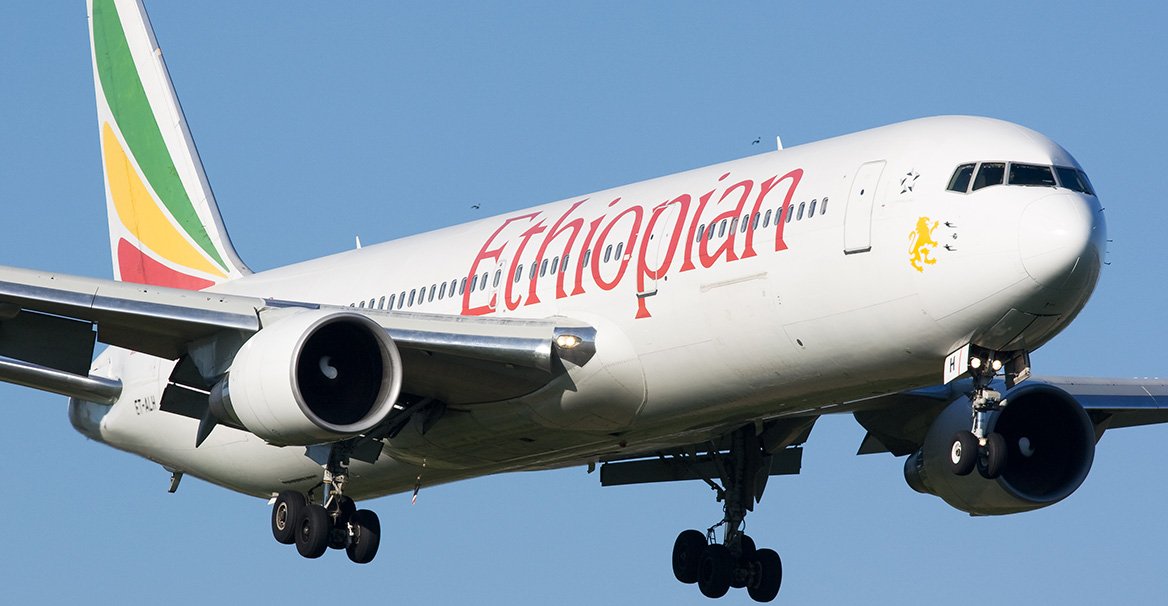
Ethiopian Airlines has announced plans to introduce additional flights on its Abuja route beginning October 28, 2025. Mrs. Firiehiwot Mekonnen, Area Manager for Nigeria, disclosed this in a statement on Wednesday in Abuja. She explained that three extra weekly evening flights would be added to the existing daily midday service, expanding options for passengers traveling from the Nigerian capital.
According to her, the additional flights will depart Abuja at 10 p.m. (ET 957) and arrive in Addis Ababa at 5 a.m., offering seamless connections to African and Asian destinations, including Dubai (DXB), Tel Aviv (TLV), São Paulo (GRU), and several others.
“Passengers from Abuja will have increased options. The extra flights come with added benefits such as more baggage allowance, double miles for frequent flyers, and reduced total flight times,” Mekonnen said.
She noted that passengers traveling to Mumbai, Delhi, Hyderabad, Madras, and Dubai will enjoy special baggage concessions on the new evening flights.
The area manager added that the decision was part of Ethiopian Airlines’ commitment to improving service delivery, lowering travel costs, and supporting Nigeria’s Meetings, Incentives, Conferences, and Exhibitions (MICE) industry.
“Abuja is becoming an important destination for international conferences and tourism businesses. Recently, the Nigerian government re-opened the Abuja International Conference Centre, complementing facilities offered by hotels in the city. To support this growing trend, Africa’s largest airline is adding extra flights to Abuja,” she explained.
Ethiopian Airlines, which has operated in Nigeria since 1960, currently connects Abuja, Lagos, Enugu, and Kano to over 150 global destinations using modern aircraft, including the Airbus A350-1000 and Boeing 787 Dreamliner.
The National Insurance Commission (NAICOM) and the Securities and Exchange Commission (SEC) have agreed to collaborate to ensure a seamless recapitalisation process for Nigeria’s insurance industry.
Speaking during a courtesy visit to the SEC Director-General in Abuja on Tuesday, the Commissioner for Insurance, Mr. Olusegun Omosehin, said the ongoing recapitalisation exercise was designed to transform and strengthen institutions within the sector.
Omosehin described the visit as a step toward deepening collaboration between the two regulators. He explained that recapitalisation would reposition the insurance industry for growth and enhance service delivery.
In his remarks, SEC Director-General, Dr. Emomotimi Agama, pledged the Commission’s full support, stressing that SEC would provide technical expertise and guidance to facilitate industry reforms.
“The Commission’s operations are now fully digitised. I encourage insurance operators to embrace digitisation as a means of improving efficiency and accelerating transformation in the sector. SEC should be seen as a strategic partner, and we are willing to provide assistance during the recapitalisation process and beyond,” Agama said.
He further noted that the signing of the Nigerian Insurance Industry Reform Act (NIIRA, 2025) by President Bola Tinubu signaled a new dawn for the sector, expressing optimism that the law would drive meaningful reforms across the broader financial services landscape.
The Nigerian Communications Commission (NCC) and the Nigeria Governors’ Forum (NGF) have agreed to strengthen collaboration aimed at accelerating broadband penetration and expanding the country’s digital economy.
Executive Vice Chairman of the NCC, Dr. Aminu Maida, who led a delegation to the NGF Secretariat in Abuja, commended the governors for their willingness to engage on critical issues shaping Nigeria’s digital future.
“The openness of the NGF to engage with us reflects a shared belief in the impact digital solutions can have on subnational development,” Maida said.
He stressed the need for stronger alignment between federal and state-level digital infrastructure, describing it as a “game changer” for Nigeria’s economy.
Push to Ease Right of Way Fees
A major focus of discussions was the high Right of Way (RoW) charges, currently pegged at ₦145 per linear metre, which telecom operators say constrain fibre-optic deployment.
Maida urged state governments to waive or reduce the fees, noting: “The Right of Way is a critical element in opening up the digital economy, and this lies within the purview of the states.”
NGF Director-General, Abdulateef Shittu, backed the call, emphasising that broadband and secure digital infrastructure are now “foundational public goods” and no longer optional for development.
Four Pillars of Collaboration
Shittu outlined four areas for deepened partnership with the NCC:
Institutional alignment through State Broadband Coordinating Councils.
Policy harmonisation to standardise RoW rules.
Critical National Information Infrastructure (CNII) resilience with state-level protection plans.
Information sharing and capacity building for stronger state participation.
He cited the World Bank’s SABER initiative as a proven model, highlighting states that harmonised RoW fees, coordinated trenching, and waived excessive charges, which led to rapid fibre expansion and improved connectivity.
“These policy choices have delivered socio-economic benefits, from job creation and productivity gains to better access to education and health services,” Shittu said.
Economic and Social Impact
Both the NCC and NGF agreed that reducing barriers to fibre rollout would unlock greater value chains for telecom operators, broaden state tax bases, and improve citizens’ access to digital services.
“Expanded fibre coverage raises productivity, supports job creation, and enlarges the taxable base available to state governments,” Shittu added.
Maida assured that the NCC would provide regulatory clarity and technical leadership, while governors bring the political will and coordination capacity to ensure broadband expansion.
The NGF proposed using the forthcoming NCC Business Roundtable to secure concrete state-level commitments, followed by joint workshops to translate best practices into actionable toolkits for lagging states.
“This landmark engagement sets the stage for bridging Nigeria’s digital divide,” Shittu
The National Information Technology Development Agency (NITDA) says global tech giants Google, Microsoft, and TikTok have closed or deactivated more than 13 million accounts in Nigeria, in compliance with the country’s Code of Practice for online platforms.
Mrs. Hadiza Umar, Director of Corporate Communications and Media Relations at NITDA, disclosed this in a statement on Wednesday in Abuja.
She explained that the Code of Practice for Interactive Computer Service Platforms and Internet Intermediaries requires the annual submission of compliance reports. The framework, jointly issued by the Nigerian Communications Commission (NCC), National Broadcasting Commission (NBC), and NITDA, provides clear guidelines for promoting online safety and tackling harmful content.
According to Umar, the 2024 compliance reports highlighted the following:
754,629 registered complaints from users.
58,909,112 pieces of content taken down.
420,439 pieces of content removed and re-uploaded following user appeals.
13,597,057 accounts closed or deactivated.
She noted that the submissions marked a significant step towards building a safer and more responsible digital environment in Nigeria while reflecting the platforms’ commitment to user safety.
“This achievement reflects the provisions of the Code of Practice, which mandates large service platforms to register in Nigeria and comply with relevant laws, including tax obligations,” Umar said.
While commending the platforms’ efforts, she stressed the need for sustained collaboration among stakeholders to strengthen digital safety measures, enhance literacy, and build trust in Nigeria’s digital ecosystem.
The Nigerian Bulk Electricity Trading Company (NBET) Plc has revealed that the country’s 11 electricity distribution companies (DisCos) are indebted to the Federal Government to the tune of ₦2.7 trillion for power supplied as of September 30, 2020.
The figure, which includes interest at the Nigerian Interbank Offered Rate (NIBOR) plus four per cent, was disclosed in a document submitted by NBET to the House of Representatives Committee on Public Accounts.
According to the submission, the DisCos also under-remitted about ₦166 billion, falling short of the Nigerian Electricity Regulatory Commission’s (NERC) minimum remittance threshold.
NBET Managing Director, Johnson Akinnawo, who appeared before the committee on Tuesday, said the debts were part of issues raised in the 2021 Auditor-General’s report, which flagged multiple irregularities in the power sector.
DisCos in Receivership Among Biggest Debtors
A breakdown of the debt shows Abuja Electricity Distribution Company owing ₦330.4 billion; Benin DisCo, ₦233.2 billion; Kaduna DisCo, ₦277.7 billion; Kano DisCo, ₦211.7 billion; Ibadan DisCo, ₦325.7 billion; and Ikeja DisCo, ₦310 billion. These six firms are already in receivership.
Others include:
Eko DisCo — ₦231 billion
Enugu DisCo — ₦258.3 billion
Jos DisCo — ₦161.7 billion
Port Harcourt DisCo — ₦239.7 billion
Yola DisCo — ₦107.4 billion
Other Irregularities
The Auditor-General’s report also cited other financial lapses, including:
₦100 billion paid by NBET to Generation Companies (GenCos) for power not delivered to the grid.
₦30 billion in uncollected debt by market operators.
₦26 billion owed by two foreign firms for electricity exported to Togo, Benin and Niger.
₦2.7 billion in unpaid invoices by the 11 DisCos.
Reps Move to Summon DisCos
At the investigative hearing, committee member Yahya Kusada moved a motion for all indebted DisCos to be summoned to explain their failure to settle obligations to the Federation Account.
“With the magnitude of liabilities before us, these companies must appear before the Committee to clarify their positions and outline repayment plans,” Kusada said.
The committee also resolved to invite other market operators and participants mentioned in the report. Dates for the appearances are yet to be fixed.
The Rivers State Police Command has arrested a 23-year-old man, Kingsley Chinamezu, popularly known as Power Sharp, for allegedly killing his girlfriend, Miss Confidence Sunny, with a machete in Etche Local Government Area of the state.
Police spokesperson, SP Grace Iringe-Koko, confirmed the arrest in a statement issued in Port Harcourt on Wednesday. She said the incident occurred on July 30 in Umuebule community, where Chinamezu reportedly hacked the 44-year-old woman to death before fleeing the state.
According to her, the suspect continued to threaten the victim’s family after the murder, boasting that he could harm them without consequence.
Following a complaint by the deceased’s relatives, Commissioner of Police, Olugbenga Adepoju, directed the Anti-Kidnapping Unit (AKU) to investigate. Acting on credible intelligence, operatives tracked Chinamezu to Egbeta village in Edo State, where he was arrested on August 15.
Iringe-Koko disclosed that the suspect confessed to the crime during interrogation and provided details of the circumstances surrounding the killing. She added that investigators were compiling evidence and profiling him for possible involvement in other criminal activities.
Commending the AKU operatives, CP Adepoju vowed that Rivers would not be allowed to serve as a safe haven for criminals.
“Perpetrators of heinous crimes should desist, as the law will eventually catch up with them and they will face its full wrath,” the police chief warned.
President Bola Ahmed Tinubu has approved the appointment of Rotimi Pedro from Lagos State as the new Director-General of the Nigerian Television Authority (NTA).
The President also named three new Executive Directors to head key departments within the national broadcaster. The announcement, which ended days of speculation over leadership changes at the NTA, was made yesterday through the Presidency’s official X handle.
According to the statement, Karimah Bello from Katsina State was appointed Executive Director of Marketing, while Stella Din from Plateau State was named Executive Director of News. Sophia Mohammed, representing the North-East from Adamawa State, was appointed Managing Director of NTA Enterprises Limited.
The Presidency noted that the appointments, which take immediate effect, reflect President Tinubu’s commitment to repositioning national broadcasting as a tool for unity, national cohesion, and soft diplomacy.
Nigeria’s money market recorded sharp declines in lending rates on Wednesday, following a significant improvement in liquidity within the banking system.
According to the Central Bank of Nigeria (CBN), financial system liquidity jumped from a deficit of about ₦95 billion to a positive balance of ₦1.015 trillion, buoyed by inflows totaling ₦1.110 trillion.
Data from the FMDQ Securities Exchange showed that money market rates trended downward as a result. The Open Repo Rate (OPR) dropped by 580bps to 26.50%, while the Overnight Lending Rate fell 570bps to 27.00%.
The boost in liquidity was largely driven by the maturity of OMO bills worth ₦854.5 billion, which were not refinanced by the CBN as initially anticipated. Analysts believe this decision helped ease funding pressures in the banking sector.
Further inflows are expected from a ₦392.74 billion Federal Government bond coupon payment, due Thursday, which will add to system liquidity and potentially sustain the current downward trend in rates.
As liquidity conditions improved, banks’ reliance on the CBN’s standing lending facility reduced, keeping borrowing costs under control.
Cowry Asset Limited reported that Nigerian Interbank Offered Rates (NIBOR) fell across board: the overnight rate dipped by 2.57%, while the 1-month, 3-month, and 6-month tenors declined by 0.92%, 0.95%, and 0.89%, respectively.
However, the Nigerian Interbank Treasury Bills True Yield Curve trended upward, with yields rising by 13bps (1-month), 24bps (3-month), 18bps (6-month), and 20bps (12-month) maturities.
Nigeria’s treasury bills market witnessed a marginal decline in yields on Wednesday, despite subdued trading in the secondary market. The drop was driven by investor positioning ahead of the Central Bank of Nigeria’s (CBN) ₦230 billion treasury bills auction.
Market activity showed a bullish undertone, particularly at the long end of the curve, where yields fell by 7 basis points. Overall, average yield eased by 3 basis points to close at 18.08%.
Traders noted that interest was mainly focused on short-term Nigerian Treasury Bills (NTBs) maturing in November and December, as well as a few Open Market Operations (OMO) maturities dated 6-Jan, 17-Feb, and 7-Apr.
Despite limited transactions, investors remained attentive to the auction outcome, with expectations that unsuccessful bids would spill into the secondary market. The auction attracted strong demand, recording total subscriptions of ₦396.42 billion, out of which ₦303.79 billion was allotted.
Stop rates moved higher for two tenors: the 91-day bill closed at 15.35% (+35bps), while the 364-day paper advanced to 17.44% (+94bps). The 182-day instrument held steady at 15.50%.
Analysts predict a mixed to mildly bearish session in coming days as investors react to the upward revision in stop rates, potentially shifting demand away from lower-yielding papers to more attractive options.
Segment-wise, the short (-1bp) and long (-7bps) ends of the curve saw yield contractions, particularly on the 78-day (-1bp) and 302-day (-24bps) maturities. The mid-segment remained flat due to minimal trades.
In the OMO bills segment, yields declined by 3bps to 24.8%, mirroring increased investor appetite.
The Nigerian naira weakened against the United States dollar on Wednesday, following a sharp rise in foreign currency transactions by market participants. Latest data from the Central Bank of Nigeria (CBN) showed the local unit closing at ₦1,536.73/$1 at the official foreign exchange window, as demand for the greenback intensified.
The spot exchange rate touched an intraday peak of ₦1,538.50/$1, reversing from the previous session’s high of ₦1,535.50/$1, a clear indication of mounting pressure on the market amid limited dollar inflows.
Analysts at AIICO Capital Limited, in a market note, attributed the decline in the naira’s value to rising FX demand coupled with restricted supply. According to the firm, the currency traded between ₦1,534.00/$1 and ₦1,538.50/$1, depreciating by 12 basis points at the close of trade. AIICO added that the naira is expected to maintain its current range in the near term.
At the parallel market, the exchange rate slid to ₦1,550/$1 as speculative demand persisted. However, the premium between the official and parallel markets narrowed to less than ₦20. Commercial banks continued to sell the dollar between ₦1,545 and ₦1,550/$1, reflecting relatively stable activity in the retail segment.
Meanwhile, CBN’s reserves report showed that Nigeria’s gross external reserves climbed back above $41 billion, boosted by sustained inflows from oil sales and other foreign exchange sources, despite global price fluctuations.
In the international commodities market, oil prices surged by nearly 2% on Wednesday after U.S. crude inventories recorded a sharper-than-expected drop. Brent crude futures rose by $1.02 to $66.81 per barrel, while U.S. West Texas Intermediate (WTI) increased by 95 cents to $63.30 per barrel.
Gold also strengthened as the dollar softened and traders awaited signals from the Jackson Hole Symposium. Spot gold advanced 0.9% to $3,344.37 per ounce, while U.S. gold futures rose to $3,388.50.
Market watchers predict oil prices will remain elevated as Russia confirmed continued crude exports to India despite U.S. pressure, with potential trilateral talks involving China expected soon.
Nigeria’s Federal Government bond yields recorded a mild decline in the secondary market on Wednesday, following selective bargain hunting across the short, mid, and long ends of the yield curve. The slight movement came just before the Debt Management Office (DMO) prepares to float fresh bond offerings at the upcoming August primary market auction.
Trading activity remained largely subdued, but analysts described the market sentiment as leaning bullish. Market notes from CardinalStone Securities Limited highlighted that investor demand was noticeable in the short and mid-segments of the curve, where yields fell by 1 basis point (bp) and 2 bps respectively.
According to dealers, the highest buying activity was concentrated on Federal Government bonds maturing in 2026, 2033, and 2034. As a result, the average yield fell by 1 bp to close at 16.64% for the session.
Traders noted that while offers appeared on the May 2033 papers at 17.50% and the February 2034 bonds at 17.20%, only a limited number of trades were executed. Across benchmark instruments, the average yield compressed further in the short (-2 bps) and mid (-1 bp) ends of the curve, largely due to buying interest in the January 2026 (-9 bps) and June 2033 (-5 bps) notes. However, the long end of the market held steady without any significant yield movement.
Looking ahead, analysts expect sentiment in the fixed-income market to be mixed to slightly bearish as investors respond to the recent increase in the one-year Nigerian Treasury Bill (NTB) stop rate and adopt a cautious stance before the DMO’s August bond auction.
The auction, scheduled for next week, will make available N80 billion in reopening bonds and an additional N80 billion in fresh issuance. The DMO doubled its August bond supply after increasing the allotment size in the July auction, indicating stronger supply pressure in the market.
Market watchers also highlighted that Nigeria’s real interest rate — calculated by subtracting inflation from the benchmark interest rate — has expanded. With the Central Bank of Nigeria’s Monetary Policy Rate (MPR) fixed at 27.5% and headline inflation slowing to 21.88%, the real interest rate has improved to 5.62%. This development could influence investor appetite, potentially impacting demand patterns at upcoming auctions.
The Nigerian banking industry is on track to attract an additional N900 billion in fresh capital inflows before the end of 2025, as lenders intensify efforts to meet the recapitalisation requirements set by the Central Bank of Nigeria (CBN).
This projection was contained in the latest Nigerian Banking Industry Report released by Agusto & Co., which also assigned a “stable” outlook to the sector.
The recapitalisation mandate, announced by the CBN in March 2024, requires commercial banks with international authorisation to raise their minimum capital to N500 billion, while those with national licences must meet a N200 billion threshold. Regionally authorised banks are expected to attain N50 billion, while non-interest banks are required to scale up to N20 billion (national) and N10 billion (regional) respectively. The deadline for compliance is March 2026.
Analysts estimate that Nigerian banks will collectively need to raise approximately N4.2 trillion within the stipulated timeframe. As of December 2024, the Securities and Exchange Commission confirmed that around N1.7 trillion had already been mobilised from the capital market.
CBN Governor Olayemi Cardoso recently disclosed that eight banks have already surpassed the recapitalisation benchmark. Others have since launched additional rounds of capital raises to meet the March 2026 deadline.
Agusto & Co. noted that the recapitalisation directive has spurred aggressive fundraising across the industry. “In 2024, about N1.7 trillion was raised by 16 banks. A further N800 billion was mobilised in the first seven months of 2025. Consequently, eight banks had already met the minimum capital requirements by July 31, 2025, though CBN and SEC verifications are still pending on some of these inflows,” the report stated.
The agency projects that another N900 billion will be injected into the industry before the close of 2025, providing banks with a buffer against current business risks and bolstering capacity for future expansion. Domestic investors have accounted for the majority of the capital raised so far, underscoring strong local confidence in the banking system.
However, the report also warned that the termination of regulatory forbearance by the CBN in June 2025 could weigh on industry profitability. As of December 2024, the sector’s non-performing loan (NPL) ratio had risen to 5.2% from 4% the previous year, partly due to the 40.4% depreciation of the naira. With forbearance now withdrawn, all loans are expected to be classified fully under regulatory standards, with appropriate provisions made.
Agusto & Co. further projected that the industry’s NPL ratio could spike to 6.9% in the short term, but should improve before the end of 2026 as impaired loans are resolved and write-offs are executed under transitional reliefs granted by the regulator.
On profitability, the firm expects 2025 to be a challenging year for banks. It forecasts a 19.2% decline in profit before tax, with pre-tax return on average equity likely to fall sharply from 48.2% in 2024 to 27.3% in 2025. The pressures stem largely from higher impairment charges and lower foreign currency revaluation gains. However, profitability is expected to rebound in 2026 once capital-raising proceeds are fully deployed.
The CBN has already moved to tighten oversight, issuing directives in June 2025 that barred certain banks from paying dividends, awarding bonuses, or investing in foreign subsidiaries until recapitalisation milestones are achieved. Banks are now required to submit capital restoration plans, outlining strategies such as cost optimisation, risk reduction, and business model restructuring.
Additionally, lenders must provide quarterly disclosures on critical financial metrics, including loan provisioning, capital adequacy ratio (CAR) with and without transitional reliefs, and details of Additional Tier 1 (AT1) instruments issued. These measures are designed to enhance transparency and regulatory supervision ahead of the 2026 deadline.
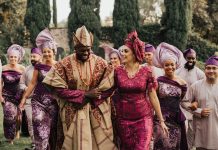
Nigerians love weddings. Let’s be honest—nothing quite compares to the grandeur of a Nigerian owambe. From the aso-ebi that lights up entire neighborhoods to the endless jollof rice debates, weddings here aren’t just personal milestones; they’re cultural showcases.
But here’s the million-naira question: does spending big on your wedding actually guarantee a long and happy marriage? According to insights from wedding experts and a growing body of research, the answer is not as straightforward as many assume. In fact, there’s a strong argument that financial choices made during a wedding might do more harm than good if couples aren’t careful.
Planning a wedding in Lagos, Abuja, or Port Harcourt isn’t for the faint-hearted—or for the faint-wallet. The average Nigerian wedding now costs anywhere between ₦10 million and ₦25 million, depending on location, scale, and family expectations. Some even shoot beyond ₦40 million, especially for high-profile society weddings.
Venue rental: Hotels, event centers, or even traditional halls in major cities can gulp anywhere from ₦1.5 million to ₦5 million.
Catering: Food is the heart of Nigerian celebrations. Feeding 500–1,000 guests can easily cost ₦3 million to ₦7 million.
Aso-ebi & fabrics: Guests expect coordinated outfits. Printing and distributing fabrics can run into several millions, depending on the design and fabric quality.
Decoration & lighting: From flower walls to chandeliers, decorators charge anywhere between ₦2 million and ₦6 million.
Entertainment: Live bands, DJs, MCs, and cultural troupes can collectively cost ₦1 million–₦3 million.
Photography & videography: Couples spend up to ₦1.5 million on professionals to capture the big day.
Bridal wear & accessories: A designer dress in Nigeria ranges from ₦500,000 to ₦2 million. The groom isn’t left out either—bespoke suits and agbada designs add another ₦300,000–₦800,000.
Security, logistics & “miscellaneous”: In Lagos especially, these “little” things quietly rack up an extra ₦1 million.
Now, that’s already a mountain of expenses, and we haven’t even factored in traditional marriage ceremonies, which often require bride price payments, cultural rites, and community celebrations.
The Debt Factor: Starting Marriage on the Wrong Foot
Here’s the uncomfortable truth many couples don’t like to admit: a lot of Nigerian weddings are funded through loans or family debt. Parents borrow, siblings chip in, and couples themselves max out their savings or take salary advances just to “meet expectations.”
And the consequences? They can be heavy. Studies abroad already show that couples who start married life with debt face more arguments and higher divorce risks. Nigeria isn’t any different. With inflation biting hard, starting marriage with millions owed can create tension from day one.
Think about it: how do you enjoy newlywed bliss when creditors are knocking or when in-laws are grumbling about unpaid aso-ebi balances?
So, Does Spending More Guarantee Longer Marriages?
The evidence says no. Nigerian marriages don’t magically last longer just because the wedding day was lavish. In fact, the opposite might be true. Some regions in Nigeria where couples spend less—say in smaller towns or rural areas—often report more stable unions. Why? Because the focus is less on spectacle and more on building the relationship itself.
On the flip side, Lagos couples who splash ₦30 million on an extravagant show sometimes struggle to sustain the lifestyle that such spending sets up. Pressure mounts, reality hits, and cracks begin to show.
What Actually Predicts a Strong Marriage
Interestingly, research highlights a few things that matter more than money:
Taking a honeymoon: Nigerian couples who carve out time—whether it’s a week in Dubai or a few days in Obudu Mountain Resort—report higher marital satisfaction. It’s not about where you go; it’s about slowing down and connecting after the chaos.
Guest list size: This may surprise you. Data suggests that couples with bigger guest lists sometimes enjoy stronger marriages because community support acts like glue. Nigerians already live in communal systems where extended families matter—so this makes sense.
Open financial communication: This is huge. Couples who talk about money honestly—how much they earn, where they want to invest, and what their goals are—tend to avoid resentment later. In a country where money arguments rank high among divorce triggers, this cannot be overstated.
Shared values & emotional intimacy: Whether you’re Igbo, Yoruba, Hausa, or from a minority tribe, the long haul depends less on flashy events and more on shared beliefs, respect, and daily companionship.
Nigerian Wedding Trends: Local Flavour, Global Influences
There’s a growing wave of Nigerians cutting back on unnecessary spending. Some now prioritize intimate weddings with 100–200 guests, focusing instead on travel, buying land, or investing in joint businesses after the ceremony.
Still, others insist on grandeur—3,000 guests, imported champagne, and multiple outfit changes. And while that’s fine if you can afford it, experts warn that “status weddings” don’t predict marital longevity.
Globally, this pattern holds true. British couples spend the equivalent of ₦38 million on weddings, yet marriages last just over a decade. In Australia, couples average ₦60 million, but their unions often break down earlier than Nigerian marriages, which, culturally, tend to last longer—though not always happily.
The Engagement Ring Debate
Even engagement rings haven’t escaped scrutiny. A 2023 international study found that men who spent excessive amounts on rings faced higher risks of divorce than those who bought modest but meaningful ones.
In Nigeria, imported diamond rings can cost upwards of ₦3 million. But does a bigger stone guarantee commitment? Hardly. Many Nigerian brides actually prefer thoughtful, culturally relevant gestures—like gold jewelry, family heirlooms, or symbolic traditional items—over a flashy ring that stretches the budget.
What Couples Should Spend On—and What They Can Skip
If you’re planning a wedding in Nigeria, here’s a candid breakdown:
Worth spending on:
Good food (people never forget the rice and meat quality).
Photography/videography (memories last longer than décor).
A comfortable, functional venue.
Music and entertainment (after all, Nigerians live to dance).
What you can scale down:
Oversized guest lists (do you really need 1,500 people?).
Multiple outfit changes for the bride and groom.
Imported décor pieces that don’t add real value.
Lavish destination weddings, unless you can comfortably afford them.
Final Take: Time Together Outlasts the Party
Here’s the bottom line: marriages in Nigeria don’t last longer because of how much was spent on the wedding. They last because couples communicate, support each other, and build shared lives after the guests have gone home.
As one wedding expert put it, “It’s not about the money you spend, it’s about the time you spend—together—once the party ends.”
So, for Nigerian couples eyeing marriage, maybe the smartest investment isn’t the ₦15 million ballroom or the 10-layer cake. It’s the honeymoon, the conversations, the small daily choices that strengthen a bond far more than a glamorous one-day event ever could.
The Nigerian passport, ranked 94th globally and 43rd in Africa by the 2025 Henley Passport Index, now gives citizens access to 45 destinations worldwide. While mobility still lags behind European and North American counterparts, Nigerians can enter these countries through visa-free access, visa-on-arrival, or electronic travel authorization (eTA).