









Key points
- The Nigeria Customs Service (NCS) is set to launch intelligence-driven special operations to curb vegetable oil smuggling across Nigeria’s borders.
- Over 88 seizures worth about ₦1.314 billion have been recorded in 2025 and 2026, according to Customs officials.
- Industry stakeholders warn that smuggling threatens local production, investment, and thousands of jobs in the agricultural value chain.
Main story
The Nigeria Customs Service (NCS) has intensified efforts to combat the illegal importation of vegetable oil, announcing plans to roll out special intelligence-driven operations aimed at protecting local investments, safeguarding jobs, and strengthening Nigeria’s agricultural value chain.
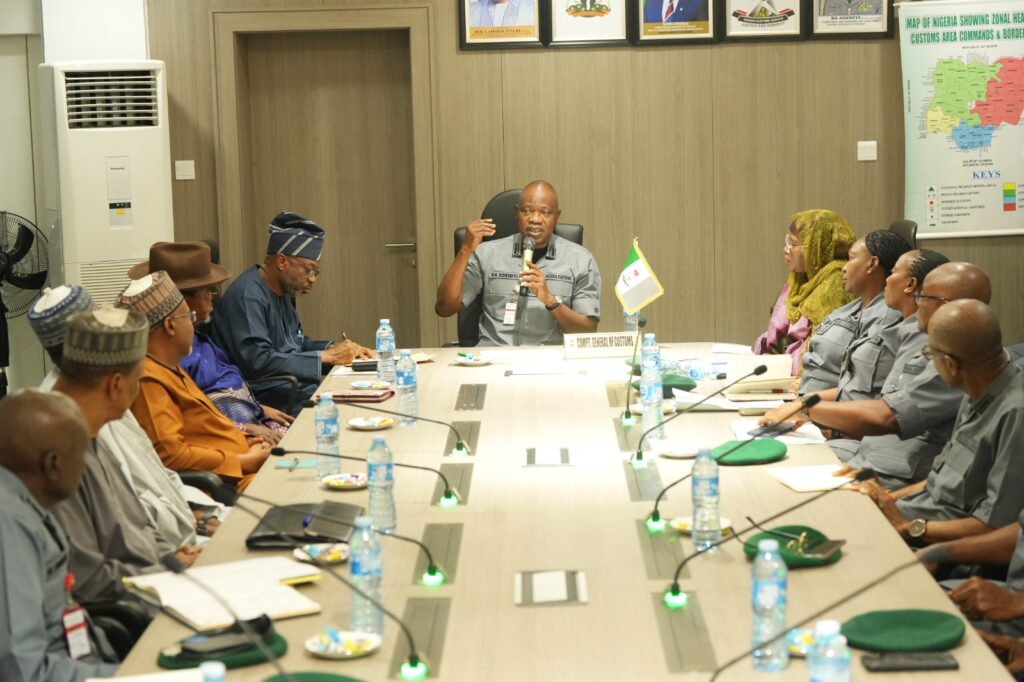
The Comptroller-General of Customs, Adewale Adeniyi, disclosed this on Friday, June 5, 2026, during a stakeholders’ meeting with players in the vegetable oil industry held at the Customs Headquarters in Maitama, Abuja.
Adeniyi said the Service is adopting a more strategic enforcement approach that combines intelligence gathering, targeted operations, and stronger collaboration with industry stakeholders to curb smuggling activities.
He stressed that both Customs and legitimate operators share a common objective of protecting investments and promoting national economic growth, particularly in sectors critical to employment generation.
According to him, sustained cooperation between government agencies and the private sector remains essential in addressing smuggling, especially along Nigeria’s porous borders.
Adeniyi therefore called on stakeholders to support enforcement efforts by providing credible intelligence on smuggling routes and illegal trading networks.
“Fighting smuggling is a continuous process that requires intelligence, policy support and collaboration. We value constructive engagement with stakeholders and will continue to strengthen our partnership with the private sector,” he said.
Also speaking, the Deputy Comptroller-General of Customs in charge of Enforcement, Inspection and Investigation, Timi Bomodi, said the Service had recorded significant successes in recent anti-smuggling operations targeting vegetable oil products.
Bomodi revealed that Customs recorded 65 seizures in 2025 and 23 additional seizures in 2026, with a combined Duty Paid Value (DPV) of approximately ₦1.314 billion.
He noted that most of the interceptions occurred along major smuggling corridors, particularly the Seme and Idiroko borders, adding that surveillance operations would be expanded to other vulnerable entry points nationwide.
Bomodi assured stakeholders that the Service would continue strengthening monitoring and intelligence-led enforcement to close gaps exploited by smugglers.
The issues
The persistent smuggling of vegetable oil into Nigeria continues to undermine local production, distort market prices, and discourage investment in the agricultural sector.
Industry stakeholders say illegal imports create unfair competition for domestic producers, many of whom rely on government support and protection to remain viable.
There are also concerns that weak border control systems and porous entry points allow smugglers to sustain illicit supply chains that undermine national revenue and job creation.
What’s being said
The Comptroller-General of Customs maintains that collaboration with stakeholders is critical to achieving lasting success in the fight against smuggling.
He emphasized that enforcement alone is not sufficient without intelligence sharing and active participation from industry players.
Leading industry voices, including the Founder of the Plantation Owners Forum of Nigeria, Dr. Fatai Afolabi, commended Customs for engaging stakeholders but urged stronger action to curb smuggling.
Afolabi warned that continued influx of illegally imported vegetable oil could destabilize local production and threaten thousands of jobs across the value chain.
“Smuggling of vegetable oil will undermine local production, discourage investment and threaten thousands of jobs across the value chain,” he said.
What’s next
The Nigeria Customs Service is expected to commence its planned special operations, focusing on intelligence-led raids, surveillance expansion, and tighter border monitoring across identified smuggling routes.
Stakeholders are also expected to deepen collaboration with Customs by providing actionable intelligence to support enforcement efforts.
The initiative is anticipated to strengthen protection for local producers and align with broader government efforts to boost agricultural productivity and industrial growth.
Bottom line
The Customs Service’s planned crackdown on vegetable oil smuggling signals a renewed push to protect Nigeria’s domestic industries and agricultural investments. While enforcement efforts are being strengthened, long-term success will depend on sustained collaboration between government agencies and private sector stakeholders to close loopholes fueling illicit trade.




 has intensified efforts to combat the illegal importation of vegetable oil, announcing plans)