







KEY POINTS
- CBN Governor Olayemi Cardoso says financial inclusion must translate into better financial wellbeing.
- Financial inclusion rose to 74 per cent in 2023 from 64 per cent in 2020, according to the CBN.
- Rural communities and women still face significant gaps, while credit, insurance and pension products remain underused.
- CBN is developing NFIS 4.0 and plans geospatial mapping of financial access points and underserved areas.
- Moniepoint called for more use of gender disaggregated data to improve financing for women entrepreneurs.
MAIN STORY
The Central Bank of Nigeria has said expanding access to financial services is no longer enough, stressing the need for financial inclusion to produce measurable improvements in Nigerians’ financial wellbeing.
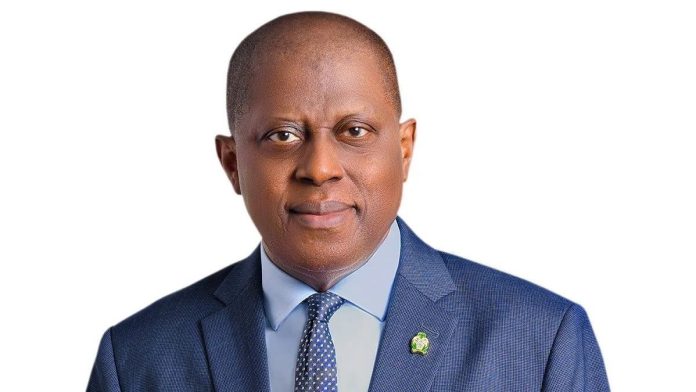
CBN Governor Olayemi Cardoso stated this at the 2026 Access to Financial Services in Nigeria survey in Abuja on Wednesday. He was represented by the Director, Consumer Protection and Financial Inclusion at the CBN, Dr Aisha Olatinwo.
Cardoso described the survey by Enhancing Financial Innovation and Access as an accountability tool for tracking participation, usage, barriers and the effects of financial services on Nigerians.
He said the evidence generated through the survey was important for policy design, market development, consumer protection and the targeting of reforms.
According to Cardoso, financial inclusion reached 74 per cent in the 2023 survey, compared with 64 per cent in 2020, while financial exclusion declined to 26 per cent.
He attributed the improvement to the expansion of digital payments and agent banking, better identity infrastructure, financial education and regulatory reforms. However, he said the gains had not been evenly distributed, with rural communities and women still experiencing significant gaps.
He also noted that financial products that could strengthen long term financial resilience, particularly credit, insurance and pensions, remained underused.
“The policy challenge is now to ensure meaningful usage, affordability, reliability, safety and trust,” he said.
Cardoso linked the broader financial inclusion challenge to economic conditions, saying persistent inflation reduced purchasing power, weakened savings and increased borrowing costs, particularly for low income Nigerians.
He also cited exchange rate volatility as a constraint on business planning, investment and the cost of essential inputs, arguing that price stability and confidence were necessary for sustainable financial inclusion.
The CBN governor said the bank had refocused its core mandate on monetary and price stability since 2024, while strengthening liquidity management, monetary policy operations, data analysis and communication.
He said the bank was also moving towards an inflation targeting framework centred on transparency, accountability and price stability.
Beyond monetary policy, Cardoso said financial system resilience remained part of the CBN’s reform agenda, including its multi sector recapitalisation programme.
He said stronger financial institutions, effective supervision and reliable payment infrastructure were necessary to protect depositors and support innovation.
On financial inclusion policy, Cardoso said work had begun on the National Financial Inclusion Strategy 4.0 following the review of NFIS 3.0.
The new strategy, he said, would focus on data driven and accountable inclusion, with consumer protection and digital safety forming part of the framework.
He also disclosed plans for geospatial mapping to establish a national repository of financial access points and underserved locations. The data, he said, would help the CBN improve supervision, policy design and targeted investment.
The CBN governor said the bank was also strengthening support for women owned micro, small and medium enterprises through gender inclusive finance initiatives.
He cited the Women Entrepreneurs Finance Code and the Women Financial Inclusion Dashboard as tools for improving gender disaggregated data and identifying gaps in access to finance.
Cardoso said BVN enrolment had reached 67.8 million by December 2025, while the Shared Agent Network Expansion Facility had supported more than two million agents.
He also highlighted a nationwide financial literacy programme designed to help Nigerians make informed financial decisions and protect themselves against fraud.
According to him, the CBN merged its consumer protection and financial inclusion functions in 2025 to improve redress for underserved bank customers.
He said the complaints management system was being upgraded into a unified tracking platform capable of providing real time visibility into banking complaints and their resolution.
The CBN governor urged banks, fintechs, payment providers, telecommunications companies and development partners to strengthen collaboration around financial inclusion.
He said the objective was to build a financial system that enables Nigerians to save securely, make payments efficiently and access responsible credit.
At the event, Vice President, Corporate Affairs, Moniepoint, Edidiong Uwemakpan, also called for greater use of data to improve financial access, particularly for women entrepreneurs.
Uwemakpan said gender disaggregated data could help financial institutions better understand women owned businesses and design products suited to their needs.
She also said digital transaction records and cash flow assessments could provide alternatives to traditional collateral requirements when assessing businesses for credit.
According to her, 62 per cent of female entrepreneurs surveyed through Moniepoint’s inclusive lending programmes accessed their first formal business loan through the platform.
She said trust remained essential to meaningful financial inclusion and added that Moniepoint would continue working with EFInA and regulators to develop products that address collateral barriers, improve cyber hygiene and support entrepreneurs.
THE ISSUES
- Rising financial inclusion does not automatically mean Nigerians are benefiting equally from financial services. The CBN’s figures show broader participation, but rural communities and women continue to face access gaps, while some products that support long term financial resilience remain underused.
- Economic stability remains closely connected to financial inclusion. Inflation can reduce household purchasing power and savings, while higher credit costs and exchange rate volatility can make it harder for businesses and individuals to plan and invest.
- Data is becoming more important to how financial institutions identify underserved groups and design products. The planned geospatial mapping and gender focused data initiatives are intended to give policymakers and providers a clearer picture of where access gaps exist and who is affected.
- Consumer trust is another part of the inclusion challenge. The CBN’s focus on financial literacy, digital safety and a unified complaints tracking system is intended to strengthen confidence and improve the ability of customers to obtain redress when problems occur.
WHAT’S BEING SAID
“The policy challenge is now to ensure meaningful usage, affordability, reliability, safety and trust.” – Olayemi Cardoso
“83 per cent of Moniepoint users reported improved quality of life, while 85 per cent expressed greater confidence achieving financial goals.” – Edidiong Uwemakpan
“Moniepoint will continue to work with EFInA and the regulators to translate the 2026 survey findings into inclusive financial products.” – Edidiong Uwemakpan
WHAT’S NEXT
The CBN is expected to continue work on NFIS 4.0, including the planned geospatial mapping of financial access points and underserved areas. The bank will also continue its financial literacy, consumer protection and women focused inclusion initiatives.
BOTTOM LINE
Nigeria has recorded wider participation in formal financial services, but the CBN says the next phase must focus on whether those services are affordable, reliable, safe and useful enough to improve financial wellbeing.