





Key points
- President Bola Tinubu has pledged that Nigeria’s state-owned refineries will return to operation, but stressed that production alone will not be enough without profitability and long-term viability.
- The Port Harcourt, Warri and Kaduna refineries are expected to undergo a further “reset and structural reworking” of their economics.
- The pledge comes after about $2.9 billion was approved under the previous administration for refinery rehabilitation, with the facilities failing to sustain production.
- NNPCL has entered into a technical equity partnership arrangement aimed at rehabilitating, restarting and expanding the Port Harcourt and Warri refineries.
- PENGASSAN recently argued that the state-owned refineries were shut partly because they were economically unprofitable, rather than simply because they could not operate.
- Separately, the Federal Ministry of Finance has told the Senate that it lacks some records needed to answer queries raised in the NEITI 2021–2023 Oil and Gas Industry Audit Report.
- NEITI flagged unresolved issues involving a $3 billion pre-export financing facility, $722.6 million in NLNG dividends and interest, and about N200 billion spent on refinery rehabilitation.
- The Finance Ministry has engaged Arthur Andersen LLP to conduct a forensic audit and reconcile outstanding financial records, but lawmakers have questioned repeated extensions to the exercise.
Main Story
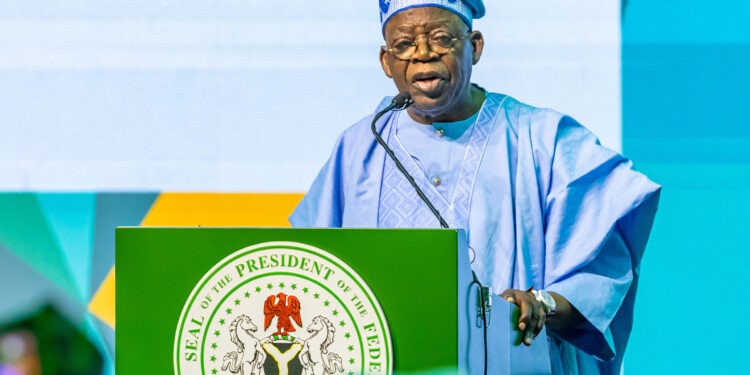
President Bola Tinubu has assured Nigerians that the country’s government-owned refineries will return to operation, but warned that simply restarting the facilities will not constitute success unless they can operate profitably and remain economically sustainable.
The President made the declaration in Abuja during a meeting with the leadership of the Nigeria Union of Petroleum and Natural Gas Workers (NUPENG), where he acknowledged concerns over the performance of the state-owned refineries.
Tinubu said the Port Harcourt, Warri and Kaduna refineries would undergo what he described as a firm reset and structural reworking of their economics to ensure that they deliver sustainable value to Nigerians.
“The refineries you mentioned are going to come back to work. We are just building a very firm reset and structural reworking of the economics of it.”
The President said the mere sight of a functioning refinery was not sufficient evidence of success if the facility could not generate sustainable returns.
“Ordinary flame and smoke of a refinery doesn’t mean that it is working until it is profitable and yields the value for which it was built.”
His comments mark an important shift in the conversation around Nigeria’s state-owned refineries — from whether they can be restarted to whether they can operate as commercially viable assets.
Tinubu said he had accepted responsibility for the assets and liabilities inherited by his administration and would focus on making the facilities productive.
“No matter what has happened in the years past, it is my responsibility now as the president to fix it.”
The $2.9bn Rehabilitation Question
The President’s pledge comes after years of government expenditure on refinery rehabilitation with limited sustained results.
Under the administration of former President Muhammadu Buhari, approximately $2.9 billion was approved for rehabilitation of the country’s refineries.
Despite the substantial investment, the facilities struggled to achieve sustained production and were subsequently shut down again.
The development has raised fundamental questions about the cost, effectiveness and commercial viability of maintaining government ownership of the refineries.
The latest policy direction suggests that future interventions will have to go beyond mechanical repairs to address the economics of refinery operations, including production costs, crude supply, maintenance, management and profitability.
NNPCL’s New Approach
The Nigerian National Petroleum Company Limited (NNPCL) has also begun pursuing a different model for the rehabilitation of some of the facilities.
In May, NNPCL signed a Memorandum of Understanding with Sanjiang Chemical Company Limited and Xingcheng (Fuzhou) Industrial Park Operation and Management Co. Ltd.
The arrangement is intended to facilitate the rehabilitation, restart and expansion of the Port Harcourt and Warri refineries through a technical equity partnership model.
The partnership approach could reduce the reliance on government-funded rehabilitation alone while bringing external technical expertise and potentially stronger commercial discipline into refinery operations.
However, the success of the model will depend on the final structure of the partnership, financing arrangements, crude supply, operational efficiency and the ability of the facilities to compete in a changing domestic refining market.
The Profitability Problem
The latest debate has also been shaped by comments from the Petroleum and Natural Gas Senior Staff Association of Nigeria (PENGASSAN).
PENGASSAN President, Festus Osifo, recently said the government-owned refineries were shut because they were losing money, rather than simply because they were incapable of functioning.
His position highlights a crucial issue in the refinery debate: technical functionality does not necessarily equal commercial viability.
A refinery can be mechanically capable of processing crude and still lose money if its operating costs are too high, crude supply is unreliable, production efficiency is low or its refined products cannot compete effectively in the market.
This appears to be the economic challenge Tinubu is seeking to address with his call for a “reset” of the refineries’ economics.
The Issues
The refinery question is no longer simply about infrastructure.
It encompasses commercial viability, transparency, crude supply, management efficiency, maintenance, financing and accountability.
Repeated rehabilitation without sustained output raises questions about whether Nigeria has adequately addressed the structural problems that caused the refineries to fail in the first place.
There is also the question of opportunity cost: billions of dollars and naira spent on rehabilitation must ultimately be justified by measurable improvements in domestic refining capacity, reduced dependence on imported petroleum products and stronger returns to the Nigerian state.
The latest government approach will therefore face a significant test: whether it can deliver reliable production without repeating the cycle of rehabilitation, commissioning and eventual shutdown.
NEITI Raises Fresh Financial Questions
While the President was pledging to make the refineries commercially viable, a separate development was raising fresh questions about the financial management of Nigeria’s oil sector.
The Federal Ministry of Finance has told the Senate that it has been unable to provide complete records needed to respond to several queries contained in the Nigeria Extractive Industries Transparency Initiative (NEITI) 2021–2023 Oil and Gas Industry Audit Report.
The Permanent Secretary of the ministry, Raymond Omachi, made the disclosure before the Senate Committee on Public Accounts.
Omachi said the ministry was not directly involved in some of the transactions queried by NEITI and had experienced difficulties obtaining relevant records from agencies including the NNPCL and Nigerian Upstream Petroleum Regulatory Commission (NUPRC).
The $3bn Pre-Export Financing Query
One of the major issues identified by NEITI concerns a $3 billion pre-export financing facility obtained in 2012 to settle petroleum subsidy-related payments.
The audit questioned the manner in which the facility was recovered from monthly Federation revenue proceeds under the Pre-Export Financing and Project Eagle agreements.
The unresolved issue raises questions about how the facility was structured, repaid and reflected in government financial records.
The Finance Ministry says it requires additional records from the agencies involved to provide a comprehensive response.
The $722.6m NLNG Dividends
NEITI also queried $722.6 million in dividends and interest paid by Nigeria LNG Limited (NLNG) to the then Nigerian National Petroleum Corporation in 2021.
According to the audit, the funds belonged to the Federation but were not remitted to the Federation Account or adequately accounted for.
The issue is particularly significant because NLNG dividends constitute public-sector revenue, meaning that questions surrounding their custody, remittance and utilisation have direct implications for transparency in the management of Nigeria’s oil wealth.
N200bn Refinery Expenditure
NEITI also questioned approximately N200 billion spent on refinery rehabilitation.
The audit noted that none of the country’s refineries was operational in 2021 despite the substantial expenditure.
The finding adds another layer to the current refinery debate.
As the government seeks to make the facilities profitable and sustainable, unresolved questions surrounding previous rehabilitation expenditure continue to raise concerns about value for money and accountability.
Other Financial Queries
The NEITI audit also raised questions about approximately $221.283 million in overhead costs incurred by the National Petroleum Investment Management Services (NAPIMS) in 2021.
The Finance Ministry was unable to provide complete explanations for all the transactions, citing the absence of records from agencies directly involved.
Omachi told the Senate:
“We don’t have direct involvement in all the issues raised, and the required financial records from the affected agencies, particularly NNPCL, NUPRC, etc., are not there.”
The ministry has subsequently engaged Arthur Andersen LLP to conduct a forensic audit of the transactions and reconcile outstanding financial records.
Senate Demands Answers
Members of the Senate Committee on Public Accounts questioned the repeated extensions granted for the completion of the forensic audit.
The committee, chaired by Senator Ibrahim Hassan Dankwambo, sought clarification on when the audit would be completed after the deadline was reportedly extended twice, from six months to one year.
Omachi assured the committee that the ministry was prepared to cooperate but urged the Senate to compel the NNPCL and NUPRC to appear alongside the ministry.
According to him, the outstanding questions cannot be fully resolved without the agencies that directly handled the transactions.
What’s Being Said
President Tinubu said his administration would focus on making the refineries productive rather than dwelling on the failures of previous administrations.
“I have accepted the assets and liabilities of my predecessors.”
He said the ultimate objective was to ensure that the facilities delivered value to Nigerians.
PENGASSAN President Festus Osifo, meanwhile, has highlighted the economic dimension of the problem, arguing that government refineries had struggled because they were losing money.
The Finance Ministry has also acknowledged difficulties in reconciling some historical oil-sector transactions because relevant records remain outstanding.
What’s Next
The immediate focus will be on the proposed restructuring and rehabilitation of the Port Harcourt and Warri refineries under NNPCL’s technical equity partnership model.
The government will also need to clarify the future of the Kaduna refinery and determine how all three state-owned facilities can operate within a commercially sustainable framework.
At the same time, the Finance Ministry’s forensic audit is expected to provide answers to the outstanding NEITI queries.
The Senate Committee on Public Accounts is likely to continue its scrutiny of the NNPCL, NUPRC and other relevant agencies until the financial records are reconciled.
The outcome of these processes could have significant implications for future government spending on the petroleum sector.
What You Should Know
Nigeria’s refinery debate is unfolding at a particularly important point in the country’s downstream petroleum sector.
The emergence of privately owned refining capacity, particularly the Dangote Refinery, has changed the competitive environment and raised expectations that domestic refining should become commercially viable rather than remain dependent on repeated government intervention.
This means the state-owned refineries will have to demonstrate not just technical functionality, but also efficiency, reliable crude supply, competitive operating costs and sustainable profitability.
At the same time, historical spending on the facilities remains subject to accountability questions.
The two developments — Tinubu’s renewed profitability pledge and the NEITI financial queries — therefore converge on one fundamental question:
Can Nigeria turn its refinery investments into productive commercial assets while also accounting transparently for the money already spent?
Bottom Line
President Tinubu’s pledge to restart Nigeria’s state-owned refineries represents a renewed attempt to end years of uncertainty surrounding the country’s strategic petroleum assets.
But the President’s emphasis on profitability rather than simply restarting the plants is significant. After billions of dollars and naira have been committed to rehabilitation with limited sustained results, Nigerians will expect the next intervention to deliver measurable and lasting value.
At the same time, the NEITI queries demonstrate that the refinery challenge is inseparable from the broader question of transparency and accountability in Nigeria’s oil sector.
The real test for the government will therefore be twofold: make the refineries work and make the economics work, while accounting for what happene